
加载中...
共找到 25,634 条相关资讯
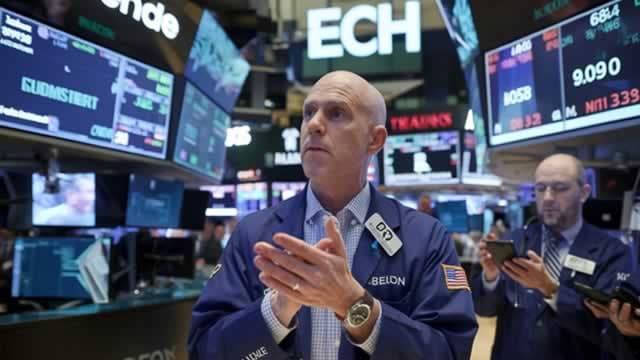
The S&P 500 experienced a volatile Friday, which ultimately ended with the index posting a minor weekly gain of 0.1%. Over the past 20 days, the average percent change from the intraday low to the intraday high is 0.96%.


'Mad Money' host Jim Cramer looks ahead to next weeks potentially market moving moments.

'Mad Money' host Jim Cramer looks ahead to next weeks potentially market moving moments.

Federal Reserve board governor Stephen Miran explains why he believes interest rates should be cut on ‘Making Money.' #fox #media #breakingnews #us #usa #new #news #breaking #foxbusiness #makingmoney #stephenmiran #federalreserve #fed #interestrates #ratecuts #economy #finance #markets #business #inflation #monetarypolicy #economicgrowth #wallstreet #stocks #investing #economicoutlook #money #financialnews

CNBC's Eamon Javers joins 'Fast Money' with breaking news on tariff changes from the White House.

It is walking back levies on imports including beef and coffee in what critics say is an admission that tariffs raised prices in the first place.

Order exempting coffee, beef, bananas and other items comes as White House fights off concerns about rising costs

The 'Fast Money' traders talk their takeaways from this week's market action.

Fairlead's Katie Stockton talks technical signals coming from the market.

The AI Narrative, which has fueled stock market gains recently, is showing signs of weakness across several fronts. Multiple vulnerabilities are emerging that could challenge the sustainability of AI-driven market optimism.

Tech took a beating this week but a lot of stocks rebounded into Friday to close the trading week. One asset that did not recover: Bitcoin, as the cryptocurrency remained below $100,000.

Major indexes reversed course early Friday to finish the week mixed.

Trump cuts tariffs on goods like coffee, bananas and beef in bid to slash consumer prices

Investors battered bitcoin this week, rotating out of riskier assets, sending the largest cryptocurrency by market value below a key technical level.

Requisite Capital's Bryn Talkington and Northwestern Mutual's Matt Stucky join 'Closing Bell' to discuss the latest news affecting markets.

The Bureau of Labor Statistics will release the September jobs report Thursday, after it was delayed due to the government shutdown. Investors are hoping the new data can shed light on the state of the US economy.
Operator: Greetings. Welcome to the AirJoule Technologies Third Quarter 2025 Earnings Call. [Operator Instructions]. Please note, this conference is being recorded. It is now my pleasure to turn the conference over to your host, Tom Divine, Vice President of Investor Relations and Finance. Thank you. You may begin. Tom Divine: Thank you, and good morning. With me today for our third quarter earnings call are Matt Jore, Chief Executive Officer; Pat Eilers, Executive Chairman; Bryan Barton, Chief Commercialization Officer; and Stephen Pang, Chief Financial Officer. During this call, we'll be referring to a presentation, which is available on the webcast platform and on the Investors section of our website. I would like to point out that many of the comments made during the prepared remarks and during the Q&A section are forward-looking statements that involve risks and uncertainties that could affect our actual results and plans. Many of these risks are beyond our control and are discussed in more detail in the Risk Factors and the forward-looking statements sections of our filings with the SEC. Although we believe the expectations expressed are based on reasonable assumptions, they are not guarantees of future performance, and actual results or developments may differ materially. And now I'll turn it over to Matt Jore. Matthew Jore: Thanks, Tom, and thanks, everyone, for dialing in this morning. Before I turn it over to Pat, who's going to review some of our recent milestones and Bryan, who will discuss our ongoing productization activities and customer engagements, I'd like to talk about some of the powerful macro trends that are fundamentally reshaping global water, and energy markets. These converging forces are creating significant demand for the exact solutions that our AirJoule platform technology is designed to deliver. And AirJoule is well positioned to play a meaningful role in this transformation. The explosive growth of artificial intelligence is driving massive data center development across North America and globally. What's becoming increasingly clear and creating urgent challenges for hyperscalers and data center operators is that AI infrastructure has an enormous water and energy footprint. Modern data centers require millions of gallons of water annually for their cooling systems. And as AI workloads intensify, these requirements are escalating dramatically, especially in air environments. Data centers are facing constraints relating to the availability of water in the quantity and quality that they require. This has some real operational impacts. Additionally, we're seeing mounting concern from some local communities over data center water consumption. In regions already experiencing water stress, data center developers often face having to truck in water at significantly higher expense in order to satisfy water requirements for data center operations and expansion. Some projects even face permitting delays and even outright opposition from local stakeholders. And there's growing recognition across the industry that water security isn't just an operational concern. It's becoming a fundamental constraint on AI infrastructure development. This was reinforced by AirJoule's selection as a winner of the Net Zero Innovation Hub for Data Centers technology competition, which validated AirJoule as a critical solution for sustainable data center operations. We also saw the recent launch of the Water-AI Nexus Center of Excellence led in part by Amazon and the Water Center at the University of Pennsylvania that explicitly acknowledges the intersection of AI infrastructure growth and water resource challenges. And beyond data centers, the CHIPS Act and other industrial policy initiatives are incentivizing billions of dollars in domestic manufacturing investment, batteries, semiconductors, advanced electronics. These facilities have 2 critical requirements, substantial high-purity water for manufacturing and precise humidity control for product quality and yield. Traditional approaches rely on municipal water infrastructure and energy-intensive dehumidification. AirJoule's platform addresses both requirements simultaneously, dehumidification with high-purity water generation, positioning us in a multibillion-dollar opportunity as domestic manufacturing scales. Underlying these trends is the fundamental challenge of water scarcity. Population growth and changing environmental conditions are exacerbating water stress across the United States and globally. The Western U.S., in particular, is facing severe and persistent drought conditions that are constraining development, agriculture and industrial activity. Water scarcity is not just an environmental issue. It's an economic development constraint. Communities wanting to attract data centers, manufacturing or residential development face constraints on water availability. Traditional approaches, deeper wells, pipelines, water transport are expensive, environmentally problematic and even politically contentious. And the military is increasingly focused on water resilience. Bases in water-stressed regions face operational constraints and forward deployed troops require reliable water supplies where traditional logistics are challenging. Our collaborations with the ERDC and across the defense sector for anticorrosion reflect recognition that AirJoule addresses critical national security challenges. At the same time, rising electricity costs are driving renewed focus on energy efficiency. Industrial facilities, commercial buildings and data centers face intense pressure to reduce energy consumption, both for economic reasons and to meet corporate sustainability commitments. Traditional HVAC and water management systems are energy-intensive, representing significant operational expenses and environmental footprints. AirJoule's platform technology is designed to deliver step change improvements in energy efficiency. By leveraging waste heat to produce water from air and utilizing advanced sorption materials for dehumidification, we can reduce energy consumption by up to 50% compared to traditional refrigerant-based systems. In an environment where every kilowatt hour matters for both cost and sustainability, this efficiency advantage is increasingly valuable to customers. And lastly, we're benefiting from significant regulatory tailwinds. Governments globally are mandating the phaseout of high global warming potential refrigerants as part of climate mitigation efforts. The American Innovation and Manufacturing Act and similar regulations worldwide are forcing HVAC and indoor air quality companies to fundamentally rethink their technologies. Traditional dehumidifiers, air conditioners and cooling systems rely heavily on these refrigerants, and these refrigerants are being phased out or face escalating costs and regulatory restrictions. This is creating urgent demand for alternative technologies that can deliver comparable or even superior performance. AirJoule's sorption-based platform can unlock a refrigerant-free system, positioning us as a solution to this regulatory transition. This is why we partnered with Carrier to integrate AirJoule technology into their next-generation HVAC systems. What makes this moment particularly compelling is that these trends are not isolated. They're converging and they're reinforcing each other. AirJoule's platform sits at the intersection of all these pressures, providing solutions that address multiple needs for industrial, commercial, defense and data center customers. This is why we're seeing accelerating interest from diverse industries why prestigious partners like GE Vernova and Carrier are collaborating with us and why defense organizations are engaging on multiple AirJoule applications. The market is recognizing that AirJoule is a transformational platform for a water and energy-constrained world. Now I'd like to turn it over to Pat Eilers to discuss some of our recent milestones towards our path to commercialization. Patrick C. Eilers: Thanks, Matt. During the third quarter, we achieved several milestones that represent critical validation of our technology, demonstrate strong market demand across multiple sectors and are advancing us toward multisystem deployments and commercialization in 2026. Our Hubbard, Texas deployment is operating 24 hours a day, 7 days a week across diverse environmental conditions, generating critical performance data. This isn't laboratory testing. It's real-world operation with full variability. The data we're collecting is helping us optimize system design, validate our performance and water quality expectations and demonstrate to customers that our technology works reliably in demanding environments. This track record is increasingly important as we advance commercial discussions with customers who need confidence in consistent and reliable operation. During the quarter, AirJoule was selected as a winner of technology competition sponsored by the Net Zero Innovation Hub for data centers, which is a consortium founded by Google, Microsoft, DATA4, Vertiv, Schneider Electric and Danfoss. These are some of the most influential companies in global data center infrastructure, and this prestigious recognition validates our technology as a critical solution for sustainable data center operations. We look forward to collaborating with these partners on sustainable data center design and showcasing our AirJoule system at the Innovation Hubs test bed facility in Europe this coming year. At the end of October, we delivered an AirJoule system to Arizona State University's Global Center for Water Technology led by Dr. Paul Westerhoff, this is one of the leading research institutions in the field of atmospheric water harvesting. This collaboration with ASU will generate rigorous independent research data on AirJoule's performance and potential applications. Dr. Westerhoff also plans to demonstrate our AirJoule system for industrial customers and operations in the Southwest United States. We also announced a cooperative research and development agreement known as ACRADA with the United States Army Engineer Research and Development Center to integrate AirJoule's waste heat to water capability for military applications. The military has rigorous requirements for reliability and performance in extreme environments. The fact that the ERDC has committed to AirJoule for this program demonstrates confidence that our platform can meet these exacting standards. Beyond the immediate research program, this partnership positions AirJoule for broader adoption across wider military applications. On our last earnings call, we mentioned a collaboration with the United States Defense contractor to evaluate AirJoule's technology for anticorrosion applications in high-value military storage environments. I'm pleased to say that those discussions have come to fruition, and we now have an agreement in place with that defense contractor. Under the agreement, we'll work together to establish a deployment project at a military storage facility and demonstrate how AirJoule provides dehumidification capabilities and substantial cost savings to the American taxpayer. This represents a significant expansion of our opportunities beyond water generation across military applications globally. These milestones provide the operational track record and customer validation needed to advance commercial deployments in 2026. Now I'll turn it over to Bryan to discuss our ongoing customer conversations and productization activities. Bryan Barton: Thanks, Pat. The milestones and partnerships that Pat and Matt discussed are translating directly into commercial opportunities as companies realize the value we can bring by delivering distilled water and compelling economics. Our water generation system is fundamentally unlike anything else on the market in that it produces clean distilled water with no contaminants. A critical differentiator driving these conversations is water quality. AirJoule delivers distilled quality water with 0 dissolved solids, meeting EPA and FDA bottled water standards. Our assortment-based process natively features 3 purification steps, and our hovered system is consistently demonstrating excellent water quality. This is important because our technology works best for customers lacking reliable sources of clean pure water, and that's exactly who we're targeting. For many industrial customers in water-stressed areas, municipal water sources may not be reliable or have the desired quality and trucking water, a $50 billion market is often the only viable option. We're actively engaged in discussions with customers to lock in additional deployments in 2026. And the breadth of this commercial pipeline demonstrates how the AirJoule platform can deliver across multiple industry verticals, including data centers, advanced manufacturing and the military. We look forward to providing more specific guidance on deployment time lines as we are able. Through these customer conversations, a compelling business model has emerged with the introduction of water purchase agreements or WPAs. Several of our customers are exploring this structure as an alternative to traditional capital equipment purchases. Under a WPA, customers purchase water on a volumetric basis, dollars per gallon rather than purchasing the capital equipment. AirJoule owns, operates and maintains the systems and customers pay for the water delivered. This is directly analogous to a power purchase agreement that has driven massive value in the power sector. For customers, WPAs eliminate upfront capital requirements and align economics with performance. They only pay for water actually delivered, and WPAs can improve project economics by converting capital expenditures to operating expenses. For AirJoule, WPAs create recurring revenue streams and can accelerate customer adoption. We're actively discussing WPA structures with several customers, and we believe this could become a significant component of our commercial strategy. Before I move to our productization efforts, I should mention that we're also making progress in adjacent markets beyond the industrial and commercial applications I've discussed, specifically in the residential dehumidifier market. This is an opportunity that would leverage our sorbent technology for high-volume consumer application in a multibillion-dollar market. We'll have more details to share on that soon. In preparation for these commercial deployments in 2026, we've been making significant progress on scaling our manufacturing readiness and productization of the AirJoule platform. During the third quarter, we celebrated the ribbon cutting of our manufacturing facility in Newark, Delaware, which is designed to support productization, assembly, quality assurance and performance validation as we transition from demonstrating systems to commercially viable products. We also expanded our testing infrastructure with an additional environmental test chamber, enabling us to validate system performance across a broader range of conditions and accelerate our product development cycles. Productization is absolutely critical to achieving our commercialization objectives. We have proven technology that works in the field. Our current deployments have demonstrated that. We have strong customer interest across multiple sectors. But to convert that interest into revenue, we must deliver systems that are economical and reliable with minimum maintenance costs. To this end, we are focused on 3 objectives: increasing our water output, reducing our overall system cost and ensuring reliability. First, maximizing water output from our chambers. We're focused on optimizing our solvent chambers to extract as much water as possible from each cycle. This isn't just about incremental gains, improving water output per chamber directly translates to better economics for our customers and a more competitive positioning for AirJoule. Currently, our sorbent chambers in Hubbard are each producing 100 liters per day at 60% relative humidity. We expect this to increase to 150 liters per day per chamber -- and with this 50% improvement, we can expect our 16 chamber A1000 product to deliver more than 2,000 liters of water per day or around 500 gallons. Second, reducing overall system costs. We have extensive design for manufacturing efforts and supply chain activities underway to identify cost-effective components, optimize our bill of material and establish relationships with suppliers who can support our volume production. Our goal is to ensure competitive economics for our customers while maintaining the performance and reliability standards they require. Third is our focus on ensuring reliability. Our customers, whether they're data centers, industrial facilities or military installations need systems that work consistently over extended periods with minimum maintenance costs. We're implementing rigorous quality assurance protocols, stress testing components and building redundancy into critical systems to ensure that when we deploy these units, they will perform as promised. The productization work we're doing now is directly enabling our 2026 commercialization goals. When we engage with customers about multiunit deployments, whether it's tens to hundreds of units we're discussing at individual data centers and industrial sites or defense deployments, they need confidence that we can deliver reliable, cost-effective systems. As we move through Q4 and into 2026, productization will remain a top priority. Every improvement in water output, every dollar we take out of our system and every enhancement to reliability directly strengthens our competitive position and accelerates our path to commercialization. Now I'll turn it over to Stephen for the financial update. Sze-Yin Pang: Thank you, Bryan. We can turn to Slide 11 of the presentation for a review of our financial results for the third quarter. As a reminder, AirJoule Technologies accounts for its 50% ownership in the JV using the equity method. These numbers in the table are only reflected for AirJoule Technologies. And the results from the joint venture reflected in the loss from investment in AirJoule JV line, which was $1.9 million for the third quarter. This is slightly lower than a $2.2 million loss in the first quarter and the $2.1 million loss reflected in the second. AirJoule's net operating expenses during the third quarter were $3-point million. This is inclusive of approximately $487,000 in administrative and engineering expenses reimbursed to us by the joint venture under our statement of work. Operating expenses were lower in the third quarter, primarily due to professional fees normalizing after our equity-related transactions in the second quarter, along with lower noncash share-based compensation expense. We also amended our licensing agreement with Pacific Northwest National Lab and as a result, reversed $475,000 worth of accrued royalty expenses, which resulted in a negative R&D expenses for the third quarter. Our net loss for the quarter was $4 million compared to net income of $2.5 million for the second quarter. And the main driver of this difference is primarily the noncash losses associated with an increase in the fair value of our earn-out liabilities and subject vesting shares, which are both noncash. During the third quarter, AirJoule Technologies contributed $2.75 million of capital to the JV with GE Vernova, which is being used to support the ongoing productization and commercialization activities that Matt and Bryan have touched on. AirJoule Technologies ended the third quarter with approximately $26 million of cash sitting on the balance sheet between the 2 entities. Subsequent to the quarter end, we also contributed an additional $5 million of capital into the JV. Looking ahead, I'll reaffirm that we have sufficient cash and liquidity to support both our operations and those of the JV. As you've heard on this call, we are focused on prioritizing our AirJoule system and preparing for multiple customer deployments in 2026. We expect the joint venture's full year 2025 spend to be at the higher end of the guidance I previously provided on our prior earnings call of around $17 million to $18 million. Today, as part of our ongoing capital market strategy and following our recent milestone being a timely filer for over 12 months as a public company, we have filed a shelf registration statement, which remains subject to SEC review. We view this as a prudent step that gives us flexibility and efficiency in accessing the capital markets when the timing is right. For clarity, the S-3 we filed today did not involve the issuance of any new shares. This filing simply ensures we're prepared to be opportunistic and reflects our disciplined approach to maintaining optionality and managing our access to capital. Now I'll pass it back for the Q&A portion of the call. Operator: [Operator Instructions]. Our first question is coming from Amit Dayal of H.C. Wainwright. Amit Dayal: I just want to go over a line from the press release that says data from Hubbard is accelerating commercial adoption. How should we sort of read this statement? Are you implying the potential pipeline? Or are there some pilots that are taking place like -- any clarity on this sentence would be very helpful. Bryan Barton: Thanks, Amit. I'll take the question. Yes, so the system in operation is generating immense amounts of data. And through that data and through our partnerships with customers, it's been a real catalyst to see systems operating in the field and performing very well, making clean water. At the same time, in Texas, right, there are a number of hyperscalers that are looking to build operations in Texas. And so when we talk about a lot of the data center interest and then overlaid with the fact that they're building those data centers in the broader Texas area, it's been great for us to have that system on the ground performing well. And to date, many hyperscalers have come through and have seen that system operating. Amit Dayal: Understood. Okay. And then in the last earnings call, you had sort of talked about exploring product integration opportunities with GE Vernova. How is that going? Any progress on that front? Any color on how we should see maybe that contributing to any commercialization efforts in 2026? Bryan Barton: Yes. So just as a reminder, our previous announced collaboration with GE Vernova is to really focus on the waste heat from gas turbines and integration of that waste heat into AirJoule's products and so that we can deploy at sites that have perhaps behind-the-meter power gen or just in general, the power generation capabilities of GE Vernova and then connecting to that waste heat. And so that project is in full swing. It's still in the, I would say, forming and paper exercise and really understanding how to integrate AirJoule, right? The next step would be actually integrating AirJoule's. So we can look forward to seeing the progress on like a demonstration type of system. But really, the first part is educating our customers that have these assets, these gas turbines that are generating immense amounts of heat, how to integrate those -- that waste heat directly into AirJoule. And so we can expect that this initiative with GE may first find life in the field through an actual project. Amit Dayal: Understood. Okay. And then the R&D spend was pretty low in 3Q. I mean, if I'm reading it correctly, it was around $8,000 and change. Any reason for such a low spend as you get closer to commercialization? Should we think about it in a way where most of that R&D stuff is now out of the way and you're focusing more on the commercialization part of it? Like just trying to understand why the R&D is at these levels. Sze-Yin Pang: Yes, I'll take that. As I mentioned, most of the R&D spend now is being borne at the joint venture level. So if you take a look at the earnings slide, which is a supplement to our results, you'll see that spend be pretty consistent with what we've incurred in prior quarters. And then the R&D spend directly as it relates to AirJoule Technologies corporate balance sheet, that's reflective of a reversal in the maintenance royalty expenses that we've been accruing that were previously being borne to Pacific Northwest National Labs and through a restructuring of that agreement, we were able to reverse the maintenance charges. So this quarter reflects that adjustment. But like I said, the R&D at the JV level remains pretty consistent with prior quarters, and we would expect that to continue going forward. Amit Dayal: Okay. I missed that. I appreciate it. Just last one, guys. What's the runway for the AirJoule JV? I know you put in sort of $2.5 million in 3Q. How long will that sustain? And what are your needs on that front going forward? Sze-Yin Pang: Yes. So as I also mentioned in our prepared remarks, we do expect the JV spend for the full year to come in at the higher end of the previously provided range of around $17 million to $18 million. This year, that spend also was inclusive of previously agreed upon statement of work we had with GE Vernova. We are evaluating kind of what that spend will look like for 2026. But I would expect that specific statement of work to likely come in lower from an aggregate spend standpoint for next year. From a -- on a go-forward basis, I'll also reiterate that our cash currently is sufficient to support both the corporate expenses as well as the JV spend through commercialization into 2026. Operator: The next question is coming from Jake Sekelsky of Alliance Global Partners. Jacob Sekelsky: So just starting with the water purchase agreement model, it looks like an interesting avenue for commercialization. Can you just comment on maybe the types of customers that are showing interest here? And would these be AirJoule owned and operated systems under this model? Bryan Barton: Thanks, Jake. Yes, that's accurate. We would -- AirJoule would own and operate these systems and the customer interest that we're getting is -- I'll comment on 2 respects. One, these are customers that need clean water at an operations site, and they don't have access to cheap and abundant municipal water or groundwater. So they're somehow limited on the access to water or the water that they can get is not of the right quality that they need for their operations. So that's really where we're seeing a fair bit of traction. And in those conversations, -- it typically goes like they really like what we're capable of delivering. They see the value and they want the AirJoule solution. But we're still early days in terms of deploying and demonstrating especially large amounts of water. And so to build the confidence that we can deliver the economics overall and have bankable projects, AirJoule will own and operate these assets and simply sell the water that's produced at a set dollar per gallon. Patrick C. Eilers: And I may just add, if you don't mind, Jake, this is Pat Eilers real quickly. I would just add that despite us putting up the CapEx for these projects, we're not raising capital at our cost of capital. It's a long-term offtake. We can look through to the investment-grade status of the offtake customers that are looking at these WPAs. So it's very accretive. Matthew Jore: Yes. And I was just going to add -- this is Matt, Jake. I was just going to add to what Pat and Bryan said is that I love the idea of an asset that you can make money on over a 15-year period. It just makes perfect sense to me. So that's another exciting proposition, especially, as Bryan said, as we're in total control of the operation and the data that comes out of these things. So that's another facet. Thanks for the question. Operator: The next question is coming from Ryan Pfingst of B. Riley Securities. Ryan Pfingst: Bryan, you talked about water quality in the prepared remarks. How important is that water purity advantage when you're having commercial discussions with data centers and industrial customers? And can you talk about AirJoule's differentiation a little bit compared to other atmospheric water generation approaches? Bryan Barton: Yes. Thanks, Ryan. So I'll take the first part first. And that is the water quality really depends on exactly who we're talking to, be it food and beverage customer or an industrial customer or a data center operator. Data centers actually have many different needs for water across their operation. We most often think about evaporative cooling. But if the data center puts a power generating asset on the site, they may also need what's called demineralized water, which is distilled water. So has 0 TDS water for use in, for example, a gas turbine. And so there are actually a variety of needs for clean water and distilled water depending on the industry or the use of the water. So we're really well positioned to address water for purpose and having clean water depending on who we're talking to. So that's the first part. And then -- I'm sorry, remind me the second part? Sze-Yin Pang: Just the differentiation of AirJoule compared to other approaches. Bryan Barton: Yes. Yes, thanks. So I think actually, this comes down to 2 main points. One is overall economics and reliability. Conventional atmospheric water generators work well in humid climates. But it's only humid for depending on location, half the day. But -- so we're really starting to think about this more in terms of like seasonal efficiencies. Like you could deploy a conventional system in Miami and it may work well. But even in Miami, it's not very humid in the peak midday sun. And so we -- it's really around seasonal efficiencies and operational costs for the entire duration of the year. So as we think about actual dollars per gallon, right, delivered from the asset, the asset is going to sit on the ground every month, 24/7 and operate. And so really, what we have to do to calculate levelized cost of water is think about the asset cost and how much water is generated for the entire length of the year. And so this is where AirJoule really shines because we can make water economically down to 30% relative humidity or so. And so now we have the full gamut of environmental conditions, mostly accessible to us. And the other point that I stressed on the call is really on our ability to generate clean water. When you condense water from the air, you often pick up other things, and there could be biological concerns. So you have to clean that water up quite a lot in order to get very good biological counts and very good contamination counts. And because AirJoule kind of selectively pulls water vapor out of the air and then we have a vacuum distillation process, the water that we make is natively very clean. Matthew Jore: Yes. Bryan, this is Matt. Ryan, I'm glad Bryan said that, he's a PhD in chemistry. So I'm glad that he mentioned that last part because this whole system is completely unique in that just as Bryan said, it pulls water vapor out selectively and only water vapor comes out and is condensed inside our condenser. If you think about what Bryan talked about with the DX systems that are out there, other atmospheric water generators, they do just what conventional air conditioning system. They condense on the outside of an evaporator. So all that stuff that's in the air goes right along with the water. So that's why we have this really unique advantage. So Bryan, thanks for adding that second part. Ryan Pfingst: Yes. I appreciate all that detail, guys. And then secondly, just curious, how much is the validation work you're doing with ASU and Dr. Westerhoff helped your commercial discussions? And does that project also help anything regarding regulatory approvals? Bryan Barton: Yes. I would say, first and foremost, the effort with Paul is independent validation, not just on how much water is generated per day or how much energy the system consumes, but also on the water quality side. So we'll have Paul's full academic and professional evaluation of those components. And at the same time, he is kind of the center spoke of a large network of folks interested and industries interested in atmospheric water harvesting and when it makes sense and how it makes sense, right? So there's really, I think, a mature perspective on when these types of deployments make sense. And Paul is involved in those conversations with interested industries. And so he also serves as kind of an industrial I think, a collaborator of sorts when people will come to him and ask how does the system work and he's a key voice in that conversation. So that -- those are the primary things. On the regulation side or certification side, not really involved. We're heavily pursuing this internally. We have to have certifications of the actual product from multiple perspectives and regulatory bodies. And then for individual deployments, like, for example, the one in Texas, the Texas TCEQ has to go through those validations at a particular location and then be vetted and approved as a public water -- portable water provider. So it's kind of location dependent in that respect. Matthew Jore: Ryan, one thing that you -- was stunning to me that Paul taught us is that in the greater Phoenix area, they get -- they consume about 1.2 billion gallons of water a day out of their aquifer and another 1 billion off of groundwater, surface water. And yet every day, 25 billion gallons influxes into the Greater Phoenix area in the air. That's how much water is in the atmosphere. That's something that I was stunned to hear Paul talk about. That's one of the reasons I suppose they're looking to the air for the water solution. Bryan Barton: It's actually quite obvious in the Phoenix area with the Palo Verde nuclear plant that's putting just an ungodly amount of water into the atmosphere. So you really see it. Operator: The next question is coming from Sean Milligan of Needham & Company. Sean Milligan: I just want to go back to the WPA model. I mean you gave some color earlier, but it seems like that would be a great model for you to pursue from a higher return perspective, but also from the customer in terms of like you're taking on the risk. So I mean can you frame up like how many discussions you're having there in terms of order of magnitude in your total pipeline, like percentages is it 25%, 50% -- like what are the rate of discussions you're having on the WPA model? Matthew Jore: It's an offer that we're making -- sorry, Bryan, it's an offer we're making out across the board, Sean. Bryan is going to be happy to talk about specifics here in the coming periods. But Bryan, go ahead. Bryan Barton: Yes, Sean, I would just say that in our conversations over many months, often goes to the risks of deployment and the assured guarantees. And so the WPA model kind of emerged and then we started outreach back to all interested customers. And it's in the many dozens that we've discussed with. And most of the conversations are going very well. There's a lot of positive reception on this business model for launching technology with us taking on the risk and just delivering against the water and needs. And we're in final conversations or I would say, approaching the final conversations with what we will take on in '26 and '27 and stay tuned for kind of that conversation. Matthew Jore: Yes. I will add to that Sean, I'll add to that. The thing that we learned in -- well, we're learning across the board, but in the New Orleans conference last year talking about data centers, where are we going to get all the power from. It's one of the reasons why power purchase agreements are so compelling. We realize now it's the same thing with water. Where are you going to get all the water to do all these new developments. And so these WPAs are really emulating the PPAs that you're familiar with. Sean Milligan: Yes. Like who are you -- I mean, what are you pricing against in the WPA model like other water suppliers and then just kind of like how your pricing maybe fits against that? Matthew Jore: Yes. Great. Go, Bryan. Bryan Barton: Yes. So it's really kind of unique in a situation where a customer needs distilled water and they don't have access, right? So municipal water is typically -- is quite affordable if it's available. And so we're specifically talking to folks that may have to truck in water and trucking in water can be pretty expensive. It can be $0.50 to $0.75 per gallon. And so that's really the main comparison if you want to deliver clean pure water and certainly cheaper than the cost of trucking in at those price points. Really, as we kind of like take these WPA conversations, forward, we're really in a position, I think, unique position that we can only take on so much, right? Like there's a real strategy and logic to, okay, what can we actually deliver against in 2026 for customers that really need this technology and are going to grow the pipeline and the demand signals out into the future. So while we have many conversations ongoing, we're going to be fortunate enough to be selective on who and where and how we deploy the initial WPAs. Sean Milligan: That's great color. And then one last question on the net zero innovation project. Congrats on that. But I was curious in terms of the timing of that and then just sort of -- is it a single unit? Or what's the scope of that project? And the timing in terms of like when that starts, how long that runs for and maybe what like expected outcomes for you all could be off of that project? Because it sounds like it's a chance to kind of highlight the benefit for Vista data centers. You're also doing that concurrently via other discussions. So just kind of curious about like how important that project could be in the future for you all. Bryan Barton: Yes. Thanks, Sean. It's actually, I think, a really exciting thing to be recognized as a winner for this net zero innovation hub. This kind of consortium or hub, right, founded from Google, Microsoft, DATA4, Vertiv, Schneider and Danfoss. And so there's amazing visibility to these key players in the industry to the AirJoule Technology. The project itself is a kind of a test bed center data center that will be in the Denmark area. And AirJoule will deploy into that data center and really showcase how does it take waste heat from data centers in a circular way, right, reuse that waste heat and create clean distilled water for the data center or other operations locally. And so we view it as just a great catalyst for the conversation around circularity with these key data center partners as well as a catalyst for real operational projects globally. Operator: [Operator Instructions]. The next question is coming from George Gianarikas of Canaccord Genuity. George Gianarikas: So first question is that looking at 2026, can you help us understand the sequencing? Will you see A250 dehumidification deployments first and then A1000? Or will they launch simultaneously? Bryan Barton: Yes. Thanks, George. You will likely see the A250 product launch before A1000 simply out of the simplicity of a 2-chamber system versus a 16-chamber system. Our engineering activities have started. So we're full swing in and the design and build of A1000, but A250 simply is ahead of the race because of it started earlier. So we'll see that one go into the marketplace. And as a reminder, it as a dehumidifier is the same machine as it as an atmospheric water generator. And really, it's the process of how it runs that distinguishes whether or not it's a dehumidifier or a water generator or both. In some cases, a few months. George Gianarikas: You've also talked about 2026 as an inflection point for commercialization. -- could you possibly define what success looks like by the end of next year? Bryan Barton: Yes. Thanks, George. For me, our key focus is firming the demand signals for where AirJoule will be successful and how it will be successful. So generating that and firming that pipeline for deployments in units either through the WPA or units sold. And then the product that can deliver the compelling economics is the second key milestone for those deployments. And so really, this is quite simple in that we are in those conversations to firm the demand, and then you will see and track the launch of the product and how it's capable of delivering the overall dollars per gallon or dollars per dehumidified air or the savings for those customer opportunities. So those are the key things to look for, we'll be referring against. Operator: Thank you. At this time, I'd like to turn the floor back over to Mr. Jore for closing comments. Matthew Jore: Thank you, everybody, for joining us today. The message I hope you take away from this call is straightforward. We're capitalizing on powerful converging macro trends that are creating significant demand for AirJoule solutions. We're systematically building the foundation for commercialization, validating our technology through real-world deployments, earning recognition from industry leaders, establishing critical defense partners, building a robust commercial pipeline and advancing productization to deliver cost-effective and reliable systems. The progress we've made this quarter moves us meaningfully closer to our 2026 deployment goals. We have the technology, the partnerships, the manufacturing capabilities and increasingly the customer demand to establish AirJoule as the leader in industrial scale water from air. We're executing our strategy with discipline and focus, and we look forward to updating you on our continued progress in the quarters ahead. Operator: Ladies and gentlemen, thank you for your participation and interest in AirJoule Technologies. You may disconnect your lines or log off the webcast at this time, and enjoy the rest of your day.

Operator: Good afternoon, everyone, and welcome to the AmRest Q3 2025 Results Call. My name is Brika, and I will be coordinating your call today [Operator Instructions] I would now like to hand you over to your host, Lukasz Wachelko to begin. So please go ahead, Lukasz. Lukasz Wachelko: Good afternoon, ladies and gentlemen. My name is Lukasz Wachelko, I'm representing WOOD & Company. And I have again a pleasure of moderating the call with management of AmRest to present to you the results of the third quarter of this year. The company is being represented by CFO, Mr. Eduardo Zamarripa; and IR and Strategic Director, Mr. Santiago Camarero Aguilera. Guys, the mic is yours. Eduardo Zamarripa: Thank you, Lukasz. Good afternoon, and thank you for joining us in today's third quarter 2025 AmRest results presentation. It is my pleasure to share with you an update of AmRest situation at the end of the quarter. During the third quarter of the year, despite ongoing trade tensions and geopolitical uncertainty, both global and European economies showed resilience though Europe's lagged the global average. Across Western Europe, activity stayed mute. Growth was modest, helped by public investment and easier financial conditions but weighted down by weak exports and cautious consumer spending. Inflation moved closer to the ECB 2% target, allowing monetary policy to stabilize after an earlier rate cut. However, disposable income growth remained limited due to past fiscal tightening and high living costs, keeping consumers confident fragile. In Eastern Europe, growth slowed sharply versus the previous quarter. Fiscal consolidation like VAT hikes and subsidy costs hit household consumption, while inflation stayed above target in many countries, eroding real incomes. In the case of China, its economy held steady about 4.5% year-on-year growth rate, supported by a manufacturing rebound and targeted fiscal stimulus. Household spending improved slightly, thanks to tax rebates and easier credit but confidence remained soft. With that context, we'll now review our third quarter results, financial performance and outlook before opening the floor for your questions. Please note that today's remarks may include forward-looking statements subject to risks and uncertainties. But let's start with today's presentation. If we go to Slide 2, please. As a reminder, AmRest is a leading multi-brand restaurant operator in Europe with 2,110 restaurants across 22 countries in Europe, the Middle East and China. We are proud to operate some of the world's most iconic and reputable restaurant brands. Our portfolio combines global franchise brands, KFC, Starbucks, Pizza Hut and Burger King with proprietary concepts such as La Tagliatella, Sushi Shop, Blue Frog and Bacoa, positioning our businesses across quick service, coffee, fast casual and casual dining. Every month, our restaurants welcome over 30 million guests, served by more than 44,000 AmRest colleagues, a scale that allow us to deliver consistent value and service across formats and geographies. If we move now to Slide 3, I'm going to try to summarize the most relevant financial KPIs and events for this quarter. First, we hit historic sales record of EUR 660.5 million for a third quarter with a 3.5% increase when excluding the impact of the asset disposed during the year. In this case, let me remind that we sold our equity stake in SEM business at the end of the first quarter. And as a consequence, we deconsolidated all the assets and liabilities associated to the business since then. The idea behind this transaction has been to internalize and optimize the value generated in the chain management and product quality assurance services. Second, EBITDA reached EUR 111.2 million, which a solid margin of 16.8%. The operating profit reached EUR 42.3 million with a 6.4% margin, while the net profit achieved at EUR 15.8 million. Leverage stood at 2.1x and the low end of our internal target range. Finally, during the quarter, we opened 16 new restaurants and renovated 46 units, continuing our commitment to growth and modernization. In the following slides, we will go into more depth and detail of these points. But let's start first with what we are doing in our different brands on Slide 4. The commercial position of our brands plays a crucial role in the value generation of AmRest. Let me start with the KFC, La Tagliatella and coffee brand in this Slide 4. At KFC, we continue to deliver both locally relevant experiences through dynamic campaigns and seasonal innovations. The California Summer campaign brought different offerings, complemented by a strong value proposition. We amplified engagement through the high-impact promotions. And for instance, our largest partnership of the year with the EuroBasket during the summer months. In addition, regional highlights included the Street Food Festival in Czechia and Hungary, introducing global flavors like [indiscernible] and Korean K Zinger. These initiatives strengthened brand image, boosted basket value and reinforce customer loyalty. At La Tagliatella, we continue to push culinary boundaries, partnering with Michelin-starred chef Carlos Maldonado to elevate brand perception and attract new audiences. This bold collaboration fuse Italian tradition with Maldonado's avant creativity, resulting in 4 exclusive dishes. The initiative delivered double-digit growth within our historical additions category, positioning La Tagliatella as an innovative leader in the restaurant sector. At Starbucks, we continue to strengthen our coffee leadership while embracing evolving consumer trends. Core coffee growth accelerated with espresso-based beverages reinforced by our back to Starbucks strategy centered on quality and tradition. Seasonal beverage launches continue to drive customer engagement, while growing interest in wellness and personalization is reflections in the strong appeal of matcha-based offerings. Now let's continue with our brand in Slide 5. At Sushi Shop, following the strong momentum for our Rubik's Cube collaboration during third quarter, we launched our annual summer receipts edition. The result resonated strongly with consumers prompting us to extend the offer into the September to maximize engagement. At Blue Frog, we strengthened our bar, identity and local relevance through 3 key initiatives: refresh drink menu, where we introduced higher quality creative options to elevate the all-day bar experience. Chinese Valentine's Day with a premium [indiscernible] and [ Thin ] cocktails created a festive romantic atmosphere. And third, our city-limited series locally inspired dishes and cocktails showcased authenticity and deepen the connection with regional audiences. At Pizza Hut, we strengthened innovation leadership through both consumer-focused initiatives. Globally, Pizza Hut introduced the Pizza Cheese Burger range, a mashup concept blending classic cheeseburger flavors with Pizza Hut signature pizza format. This range targeted Gen Z, and value-seeking consumers, supported by gaming and delivery partnership. These campaigns strengthened Pizza Hut reputation for both flavor innovation, resonating strongly with consumers. And finally, in third quarter, Burger King brought anime culture to life in Poland, Czechia and Romania with a special Naruto theme activation. Restaurants offer exclusive meals per with a collectible toys turning BK into a destination for anime fans and driving engagement, brand affinity and incremental sales. If we now move to Slide 6, please. Core revenues on a comparable basis grew by 3.5% year-on-year, underscoring the strength of our portfolio. In addition, we continue to see steady progress in the 12 months trailing average sales per equity store, driven by an optimized channel mix, disciplined pricing strategies and positive impact in recent renovations. These combinations of per store productivity and selective expansion reinforces our ability to consistently improve unit economics across the network. As a result, AmRest delivered resilient store level performance that supports sustainable growth despite the temporary challenges faced in several markets. Moving to Slide 7, please. In the third quarter of the year, digital orders reached 62% of total transactions, a clear testament of accelerating adoption and shifting consumer preferences. This transformation is powered by our omnichannel ecosystem which integrates proprietary kiosk, mobile apps, web ordering and third-party aggregators. By leveraging these platforms, we deliver personalized promotions, unmatched convenience and a seamless experience across every touch point. Digital remains a core pillar of our growing strategy, driving both customers' engagement and operational efficiency. In summary, our robust digital adoption underscores 2 things: challenging consumers' behaviors and our commitment to innovation. That speed of service improved consistency and drives ticket growth. In short, digital continues to be a strategic lever for sustainable value creation. Now moving to Slide 8. As we have covered in previous calls, our underlying restaurant growth is complemented by strategic adjustments to nonperforming businesses made since 2022 which have led to the end of certain commercial agreements or disposable of some businesses during this period. These decisive moves are aimed to sharpening our capital allocation and focusing the portfolio on the most resilient and profitable formats, ensuring that our footprint is configured for sustainable long-term returns. Today, AmRest operates directly or via franchisees a portfolio of 2,110 restaurants across 22 countries and 8 brands, following the opening of 16 new restaurants and the closure of 14 during the quarter. With this, Santi, if you can cover the main financial highlights, please. Santiago Aguilera: Thank you, Eduardo. Thank you, everyone, for joining us. Our objective today is to try to be clear on what is working and transparent about what is -- what we are improving in our business. We continue to see healthy sales performance despite temporary macro headwind in several markets, and this is supported by a balanced brand and market mix as for a disciplined commercial execution. In this regard, pricing remains critical as we need to balance protecting traffic and brand health while offsetting cost inflation. Digital occasions are a structural tailwind. Guests are choosing our apps and aggregators for convenience, speed and value. And this trends across global QSR, where convenience led by omnichannel ordering continues to expand. We are progressing and refining offers through a better and wiser usage of data to increase attachment and order value. Second, our operating profitability is resilient, though shy of where we expected a few quarters ago. This reflects sector-wide wage and input cost dynamics and in some markets, a more value-sensitive consumer. We are staying agile, tightening cost control, prioritizing high-return initiatives and using target promotions that reinforce value without diluting the brand. This playbook is consistent with our strategic view of value discipline, operational efficiency and risk management to protect margins through the cycles. We have delivered an improvement in terms of the operating profit, underpinned by lower impairment charges and a sharper focus on the quality of earnings. That improvement is a function of many small structural gains product at a single lever. Finally, our balance sheet remains strong. We continue to generate solid cash flow and capital expenditure is not only well controlled but trending lower, while still leaving us ample flexibility to invest in digital initiatives, operational enhancements and the most attractive new unit opportunities. All of this is achieved while maintaining prudent leverage and preserving the capacity to navigate uncertainty. So with this in mind, let's turn to the Slide 10, please, for the quarter's financial and operating highlights. Most of this has already been covered by Eduardo but let me give you a quick recap. Quarterly sales came in just under EUR 661 million, which is a 3.5% increase year-on-year when we exclude changes in the consolidation perimeter. Same-store sales held steady with the index close to 100, showing a stable performance across comparable units. EBITDA for the period was a bit over EUR 111 million, giving us a margin of 16.8%. On a non-IFRS basis, this is excluding leases effect, EBITDA was EUR 64 million with a margin of 9.7%. And operating profit reached EUR 42.3 million, which represents a margin of 6.4%. During the quarter, as addressed by Eduardo, we opened 16 new units, and we kept the CapEx below EUR 34 million, reflecting our disciplined approach to capital allocation and focus on high return opportunities. And finally, as at the end of October, our same-store sales index remains around the 100 level. Moving to the Slide 11, please. Our group delivered a record third quarter revenues of EUR 661 million. That is likely from -- this is slightly up from last year, about 0.2%. And if you adjust for businesses with this consolidated earlier, growth came in at 3.5%. Now I think that it is important to recognize the context, the quarter wasn't without challenges. Consumer confidence stayed weak and cost of living pressures continue to squeeze disposable income. That means less discretionary spending in restaurant, especially towards the end of the summer. But here is the positive. We see these conditions as an opportunity to strengthen long-term loyalty. We are focused on giving customers what they want, great flavors at a attractive price points, smart bundles and value-driven offers. And we are using our digital platforms to personalized promotions and to make the experience as convenient as possible. One last note on comparisons last year, Q3 numbers included EUR 9.3 million of extraordinary income from refunds which boost revenues and profitability. Turning now into the Slide 12, please. We will focus on EBITDA performance for the third quarter. EBITDA came in at EUR 111 million, with margins holding around 17%. This demonstrates our ability to maintain healthy profitability in a dynamic market environment. The bridge of this slide shows how we have protected unit economics through effective labor management and productivity initiatives. These actions has helped us to offset inflationary pressures and competitive challenges, keeping operational efficiency strong. In the case of the operating profit for the quarter, we delivered EUR 42 million, representing a margin of 6.4%. This is a decline of 2.7 percentage points compared to last year. Looking at the first 9 months of the year, cumulative EBITDA reached over EUR 300 million with a margin of 15.6%. Operating profit for the same period totaled almost EUR 90 million. That corresponds to a margin of 4.7% which is an improvement of 0.3 percentage points versus last year. Moving now to Slide 13, please. I would like to highlight a few important developments in our restaurant portfolio and financial performance in this slide. First, over the past 12 months, our net equity restaurant count grew by 59 units. This reflects our commitment to selective growth in markets and formats with the highest potential. At the same time, the number of franchise restaurants declined mainly due to the transfer of the Pizza Hut France business. This move was part of our ongoing strategy to optimize the portfolio and concentrate resources where they can deliver the greatest returns. From a financial perspective, Net profit for the quarter was just under EUR 16 million. That's below last year's figure. But remember that last year included some one-off items that I mentioned earlier. And finally, also as I noted before, we continue to see a gradual reduction in terms of CapEx, reinforcing our disciplined approach to capital allocation and also I covered that point before. Let's move now please to the Slide 14, which provides a detailed view of our liquidity, our leverage position. Our overall risk profile remains broadly unchanged with our net financial debt now at 40 -- sorry, EUR 503 million. Importantly, leverage stands at 2.1x, right at the low end of our internal targets. And once more, this reflects our disciplined approach to financial management and our commitment to maintaining a strong balance sheet while continuing to invest selectively. At the end of the quarter, we held nearly EUR 145 million in cash, and we have access to an additional EUR 215 million via committed credit lines. All this ensures that our liquidity position remains prudent and efficient, fully aligned with the group's operational and strategic mix. On Slide 15, you can find an overview of our financial debt structure and also the maturity profile. As you can see, there has not been significant changes compared to the previous quarters. Our funding remains stable and well balanced with the vast majority of our debt denominated in euros. The maturity schedule is well levered with a clear long-term orientation. If we move now to Slide 16. We can find the breakdown of revenue, EBITDA and the number of restaurants that we have in each geography. This segment comprises businesses in 22 countries where once again, we have observed very different commercial dynamics. So as usual, let's start with Central and Eastern Europe, our most significant region, please, that you can find all this information in the Slide 17 and 18. In the third quarter, the region delivered sales of EUR 421 million, up 7.8% year-on-year and accounting for almost 64% of total group revenue. Looking at individual markets. Hungary posted double-digit growth of 10.3%, while Poland also performed strongly with almost a 9% increase. Regional EBITDA came at EUR 86 million with a margin of 20.4 percentage that represents a decline versus last year but keep in mind that Q3 '24 included more than EUR 8 million in refunds. So excluding this one-off, the EBITDA grew by 1.3%. Finally, the restaurant portfolio in the region is totaled 1,255 units at quarter end, following 8 openings and 2 closures. For the year so far, we have opened 35 restaurants in the region and closed 8. Let's move on to the Slide 19 and 20, please, to review Western Europe. Sales in this region for the third quarter totaled EUR 219 million, which is a 2.7% decline compared to the same period of last year and once more performance embody very drastically by different markets. In the case of Germany, we delivered a solid growth of 6%. In Spain, we held steady numbers, very similar to last year, while France continued to face big challenges with sales down almost by 14% due to weak consumer confidence. EBITDA for the quarter was EUR 32 million with a margin of 14.7%. This is broadly in line with last year. The restaurant portfolio closed the quarter were 770 units following 4 openings and 6 closures. And for the first 9 months of the year, we opened 10 restaurants and closed 24. If we go now to Slide 21 and 22, we have our performance in China, where sales for the quarter were EUR 20 million down 10% in nominal terms, but on a constant currency basis, so local figures, the decline was less than half of this figure, so this is below 5%. These numbers reflect the impact of a challenging macroeconomic environment and a global slowdown in consumer spending, which weighed on business generation. To address these headwinds, we are accelerating initiatives focused on value-driven menu innovation, strengthening digital engagement and optimizing operational efficiency. These actions are designed to protect margins and reinforce brand relevance in a more price-sensitive environment. In terms of profitability, EBITDA for the quarter was EUR 3.5 million with a margin of 17.4%. And finally, at quarter end, the Blue Frog portfolio comprise 85 restaurants following 4 openings and 1 closure. Year-to-date numbers, we opened 7 restaurants and closed 9. And with this, back to you, Eduardo. Eduardo Zamarripa: Thank you, Santi. To conclude, this quarter reflects both resilience and the reality of a tougher operating environment. While we achieve record revenues and maintained solid margins Growth was tempered by persistent macroeconomic headwinds, with consumer confidence, cost of living pressures and on even regional performance. We are not satisfied with these results and we are taking decisive steps to improve. Our priorities include accelerating digital engagement, sharpening value propositions, optimizing operational efficiency and maintaining a strict discipline and capital allocation. These actions are designed to protect profitability and strengthen branded relevance in a more price-sensitive environment. In light of these dynamics, we are revisiting our revenue and profitability guidance for this year to reflect current market conditions and the timing of our improvement initiatives. This adjustment is a prudent step to ensure transparency and set realistic expectations. In this regard, we expect to close 2025 with a low single-digit growth in sales and with an EBITDA margin slightly above current year-to-date that I remind you is 15.6%. Finally, the number of restaurants to be opened will be below last year numbers. Thank you for your continued trust and partnership. We remain committed to delivering sustainable value and will now open the floor for your questions. Many thanks to everyone. And with this, we are open to any questions that you may have. Operator: [Operator Instructions] The first question we have from the phone lines comes from Jakub Krawczyk with ODDO BHF. Jakub Krawczyk: Hopefully you can hear me. Here is Jakub Krawczyk from ODDO BHF. I have a couple of questions. Question number one, can you please elaborate on these refunds that were the one-off in Q3 '24? I just want to understand what the nature of these refunds are? And is this something which maybe can occur again. And question number two, France, okay, and Sushi Shop. Can you tell us -- give us a bit more color on what is the -- what's going on there? How is the restructuring going? What's the weakness? Why has -- the measures you have undertaken so far not really materialized in terms of -- or not translated to an improvement in the numbers? And what can be done? And what's the time frame? What are your expectations for this business for Sushi Shop specifically? And I guess a follow-on how does Sushi Shop perform outside of France? Is it equally weak or not? Eduardo Zamarripa: Okay. Thank you, Jakub for your questions. Now related to the first one that you make in terms of the refund, that's something that was a onetime effect. So we should not be having any refund like this in 2025. Then related to the question that you make on Sushi Shop, I would say that we have to split this in several topics. And first, we need to consider that the situation on the French market is quite challenging. Consumer confidence is going down and consumption is also challenging. That's why also we have some plans that we have been working on in the French market, talking about Sushi Shop but also the other brand that we operate there. Now topics that we have been working on. First, in terms of the stores, we have made the deep analysis of the stores that it makes sense to keep. And we have some stores that are big bleeders which do not make sense to continue working with. So we're restructuring that and closing the stores that do not make sense to have there. And we have 3 clusters in terms of stores, the ones that are profitable. And then the ones that we have a [indiscernible] stores, the one that they have a potential to increase the performance. Because of the operations, and the others that, as I said, they are heavy losers and makes sense to close. So that's part of what we are doing of what we are doing over there. Delivery strategy. As you know, Sushi Shop is fairly highly concentrated in delivery. So negotiation with the delivery companies in order to keep being relevant in the segment and be on the first pages of the applications. And at the same time, also strengthening our own delivery channel. The application is something very relevant, creating loyalty programs for our consumers also is quite relevant for us. We are working also in terms of the menus that we are offering reviewing that, which are the SKUs that have the highest consumption and keeping those and making the analysis of the one that do not move that much, so making menu efficiencies. And also innovations, new boxes that we are launching new roles that we are launching and innovation is something that plays a big role in a segment like in a segment like sushi. One of the facts that we also have in the past and right now in procurement, we are making a lot of advances in terms of the prices of the salmon. As you know, there was a big disruption in previous year in terms of the price of salmon. And right now, our procurement team is having very good negotiations in those fronts. Also renovations of our stores a design, which we have a warm, welcoming ambience, the colors that are there that invite you to spend a very nice time. And also working on the lightning of the places. So it's having a better environment overall in order to buy -- our consumers to be there given the reality that we have, a dine-in which is a small part of the business but working a lot on the value proposition for the consumer for the delivery. Santiago Aguilera: Yes. I mean, if I may to add over here. I mean, I understand the relevance of the question, given the performance that we have seen in the French market, the situation that we have in the past with the investment in Sushi Shop. But -- there are many small levers, as Eduardo was mentioning, many different things that are really turning the boat and the situation of the brand. It's very important the question that you ask Jakub, with respect to the performance in the different regions. And just to remind you, for the Sushi Shop the core business, the origin is France. But currently, we are running business in Belgium, Switzerland, Spain, the Gulf region, Luxembourg, and in most of these markets, what we are seeing is a quite positive performance with all these initiatives that we are putting on the table that invite us to think that the situation, the macro situation that we are living in the French market is preventing to unleash the value of all these initiatives that we are deploying at the moment. Thank you very much for the question. Jakub Krawczyk: That's very useful color. Can I just -- would it be farfetched to assume that for the moment, you're not considering more radical changes to this own brand such as exit or something like that at this point. I guess you're still in a mode to fix it, correct? Eduardo Zamarripa: We are focusing all our efforts in order to deliver results in this brand in France. Operator: [Operator Instructions] Lukasz Wachelko: Okay. So maybe I will use my previous moderator and ask a couple of questions from my end. First of all, as a follow-up to Jakub's question. In France, do you see any [ signs ] of the things getting better, are there any time lines and the milestones you have set? Do you have any visibility when the things can get better? That's the first one. Eduardo Zamarripa: Thank you for the question, Lukasz. And for us right now, the most important thing is to work on the improvements that we were mentioning. We have several initiatives across that. We have a plan put in place by the Brand President of the brand, and there are direct involvement of all the functional leaders. Now the CEO is involved on that execution plan, as you can imagine, also I'm quite involved on that. Also operations. So this is a priority. This is one of the priorities of the organization. Right now, I prefer to focus more on the things that we are doing more than to enter into which is the timing. But I want to assure that this is one of the priorities that we have in the organization in this 2025 and is still a priority for 2026. Lukasz Wachelko: Okay. And I also have a question about the Polish market when we see Zabka a leading convenience chain developing pretty fast. And this year, they started the rollout of a pretty nice offer of QSR products. Do you see any impact of that? Do you find them competitors -- should we expect any impact of those developments with offering a pizza on your numbers? How do you see it? Eduardo Zamarripa: Competition is something that is in the day-to-day operations of the restaurant industry, as you say, this is one of the emerging competitions with the products that they are offering. That's why also for us, it's very important to work on the -- on our consumers to work on the development of new products, on new occasions of consumptions, on improving the experience that the consumers that our clients have. And that's why we made particularly a section in this conference call in terms of the topics that we are putting on the table to attract consumers, Generation Z, but also and all our consumers to keep our brands relevant. That's what is relatively important for us. Now how we keep our brands relevant what makes us unique what makes us different. And the value proposition that we give and the development of new products is something that is quite relevant for us. But you raised an interesting point, Zabka, as you say, but it's also supermarket, the ready-to-eat segment in supermarket is increasing. That's a reality, and we need to adjust our strategy towards new realities that are happening there. But as always, we welcome competition, and that makes us be better every day. Lukasz Wachelko: Okay. And another question from my end before I let others is regarding the Czech market. When we were seeing recent negative news flow on the problems with quality or food safety in KFC. I understand the second restaurant was under the spotlight recently. So can you shed some light on that for us? What's happening there, how serious it is and one can take us? Eduardo Zamarripa: Thank you, Lukasz, for the questions. We take matters of health and safety very seriously and we have very strict food and safety protocols in place. Our restaurants regularly undergo multiple levels of quality and safety oversight, including external audits for independent third parties, internal foodservice controls and also inspections from national and local authorities. Across these hundreds of audits in Czech market, including 250 inspections conducted year-to-date by state authorities alone, we have not found any issue related to the systematic mishandling of food products. Santiago Aguilera: No, I mean, I think that, that's the point that we are really seeing many more audits that we have before, but all of them, they are coming up with positive outcome. I think that 1 of the points that is always important to remind that the level of checks, audits, protocols that we have in terms of health safety, I mean they are unparalleled in the industry. So if 1 thing we can be very proud, I think that is this specific point. Operator: [Operator Instructions] Lukasz Wachelko: Okay. So maybe in the meantime, we'll have another question Germany, there's the market when you were [indiscernible] for longer while but, in fact, I believe it was rather the previous quarter when the things stabilized and got better. And this time around also see a decent performance there. So -- what has changed why well Germany and also Hungary are performing above the other markets? Eduardo Zamarripa: Well, for Germany we have to take one consideration still is one of the challenging markets that we have. But as we were mentioning also with Sushi Shop in Germany is exactly the same. We are working in order to improve the experience that our consumers are having over there. The main brand that we have in Germany is Starbucks, and we have work a lot in order to improve that experience, as I was saying, through the development of new products, new beverages, also increasing the offering that we have in terms of food and going back to the roots of Starbucks is what is helping us to improve the results on that market. Lukasz Wachelko: Okay. And what about Hungary? Because this market is also standing out in the perspective. Eduardo Zamarripa: And you raised a very good one. If we make the comparisons versus the third quarter of last year, among the biggest markets that we have Hungary was outstanding in terms of -- it was outstanding in terms of results. And it's execution, execution and execution over there. Santiago Aguilera: We have received some writing question. I guess some of them, they have already been addressed. So thank you for it, but I'm going to try to read the ones that they have not been addressed yet. One of the question is, one, what are the main reasons for slowing sales dynamics in Spain despite the strong tourist and macro in the country. And here, one of the point that is important to bear in mind, I think it's always we have a very strong seasonality in terms of our business, depending on where your restaurants are placed, are situated, the seasonality is going to change. So that is why I always suggest that it's important to see from an aggregated perspective, really in 12 months average, I think that provides a better picture. And there, what you have is a strong momentum in our restaurants. The challenge in terms of the situation in Spain is very similar to other countries despite of the good macro figures that we have that is the cost of living pressure that many people are suffering and this is, of course, affecting consumption. But when you see the aggregated figures and the growth that we have, we have very positive dynamics, sales growth, pricing margins, and to be honest, we are quite positive about the future of our brands in the country. We have received also another question regarding Hungary that I think that we have already addressed about the very good performance that we are recording in the country. An additional question is asking, what are the main reasons for the like-for-like performance that we have in this quarter? And I think that this has also been addressed. We have some markets, and we are having a quite poor performance. We already addressed the situation that we have in France with a drop of 14% in terms of sales. This is one of the very big markets for us. So this is, of course, affecting the like-for-like figures of the whole group. And I don't know if we have any more questions on queue, operator? Operator: We currently have no questions in the queue, [Operator Instructions] And Santi, we have another question. So I'll hand back to Santi to read that. Santiago Aguilera: Sorry, I'm just trying to see the question. I'm not sure what is referring the question, apologies. Eduardo Zamarripa: I think it is related to G&A. I think under this quarter, we have -- as we have seen the performance of the market, we have been also very focused in terms of how we control and tightening our G&A in order to balance the results. Also, we have a question in terms of if we are seeing a more cautious consumer in Poland? And I think in a certain way, we also have are we have addressed this question in terms of consumption confidence across Europe is something that we look very, very closely, and we see how we can improve through the different products that we offer in our restaurants to deliver -- been able to deliver value to our consumer. Now one of the things that, yes, we are seeing the promotional activity has increased and the promotional -- the menus that we have are having an important way in our -- weight in our mix, so we are seeing these kind of effects in the consumer. But what is relevant is that through the value proposition, the products that we deliver and the menus that we have been able to offer to our consumers, the solution that they have in terms of full consumption in our restaurants. Santiago Aguilera: If I may here, I think that it is important to highlight also one topic. So we have addressed today in previous occasions, also know what is the complex context that we have from this macro perspective, our consumer confidence is weak in many different countries. And once more, we have to reverse the effect of the cost of living standards that the accumulated inflation that we have on the latest years is having on consumption. We are not immune to this. So this is a temporary effect. This is something that at 1 point in time, it will pass. But what we are trying to convey is here is 2 things. how we are addressing this. We are addressing this, taking an agile approach in terms of adapting to our consumer needs but also taking as an opportunity to enhance, improve our structural capabilities. And this is also something that we are trying to really to show you over here how we are building a better and a more profitable company, bear in mind that right now the temporary macro factors are not helping our business. We have one final question that is about CapEx expectations for next years. This is something that we will address on the next investor call presentation when we provide the full year guidance for 2026. But as we mentioned before. And also one of the things that we are trying to push as a structural -- and structural move in our strategy is to optimize the capital allocation to be efficient in terms of this CapEx, what we are seeing is that this is translating in a lower usage of CapEx. But once more, not preventing to be investing in to have a better company to continue to be open units, to continue to be invested in digitalization and to continue to be improving our operational capabilities. Thank you for all these questions. I now think that with this, if there are not any more questions. Operator: I can confirm, we have no further questions. Eduardo Zamarripa: Good. Thank you. Thank you, operator. Thank you to all the participants in the conference call. See each other in the next quarter results, please feel free to contact the IR team if you have any follow-up questions. And we are -- we will be happy to see you in one of our restaurants in the near future. Thank you very much. Santiago Aguilera: Thank you. Operator: This does conclude the AmRest Q3 2025 Results Call. Thank you all for attending. You may now disconnect, and please enjoy the rest of your day.
Operator: Hello, and thank you for standing by. My name is Regina, and I will be your conference operator today. At this time, I would like to welcome everyone to the CES Energy Solutions Corp. Third Quarter 2025 Results Conference Call. [Operator Instructions] I'd now like to turn the conference over to Tony Aulicino, Chief Financial Officer. Please go ahead. Anthony Aulicino: Good morning, everyone, and thank you for attending today's call. I'd like to note that in our commentary today, there will be forward-looking financial information and that our actual results may differ materially from the expected results due to various risk factors and assumptions. These risk factors and assumptions are summarized in our third quarter MD&A and press release dated November 13, 2025, and in our annual information form dated March 6, 2025. In addition, certain financial measures that we will refer to today are not recognized under current general accepted accounting policies. And for a description and definition of these, please see our third quarter MD&A. At this time, I'd like to turn the call over to Ken Zinger, our President and CEO. Kenneth Zinger: Thank you, Tony. Welcome, everyone, and thank you for joining us for our third quarter 2025 earnings call. On today's call, I will provide a brief summary of our financial results released yesterday, followed by an update on capital allocation and then our divisional updates for Canada and the U.S. as well as our outlook for the remainder of 2025. I will then pass the call over to Tony to provide a detailed financial update. We will take questions, and then we will wrap up the call. As always, I will start my comments today by highlighting some of the major financial accomplishments we achieved in Q3 of 2025. These highlights include our highest ever third quarter revenue and second highest quarterly revenue ever of $623 million; our highest-ever quarterly EBITDA of $103.3 million, which represented a 16.6% margin. Total debt to trailing 12 months EBITDA was at 1.29x at the end of Q3 2025, which is well within our targeted range of 1 to 1.5x. Cash conversion cycle days in Q3 of 110 days, right at the low end of our targeted range of 110 to 115 days. U.S. revenue of $409.4 million, which was our second straight all-time quarterly record. Canadian revenue of $213.8 million, which was our third highest quarterly revenue ever. With regard to our capital allocation plans, I'm pleased to report the following. Consistent with our prior messaging, we intend to address the dividend once per year while reporting Q4 or Q1 of each year. We will continue to support the business with the necessary investments required to provide acceptable growth and returns. This includes anticipated CapEx in 2026 of $85 million to $90 million. We will continue to research and execute on strategic tuck-in acquisition opportunities into related business lines or geographies where we believe we can add value and grow returns. We intend to fully execute on our current NCIB allotment of 18.9 million shares prior to its expiry in July of 2026. We will continue to target a debt level in the 1 to 1.5x debt to trailing 12 months EBITDA range. I'll now move on to summarize Q3 performance overall and by division. Today, our rig count on North American land stands at 211 rigs out of the 716 listed as currently operating, representing an industry-leading and all-time record North American land market share of 29.5%. This market share surpasses our prior record from last quarter of 28.4%. In Q2, 66% of CES revenue was generated in the United States and 34% in Canada. As previously noted, this U.S. revenue result for Q3 2025 set a new all-time record as our highest U.S. revenue quarter ever. In conjunction with this, our Canadian divisions had their best ever revenue for a third quarter as well as their third best quarterly revenue ever. As noted during the Q2 call and messaged throughout the first half of the year, we expected margins to be under pressure in H1 2025 as tariff concerns, the negative macro outlook and our overstaffing in preparation for some large RFPs all took a toll on margins in Q1 and Q2. As shown with our Q3 performance and with the results of these new RFPs now known, we have been able to optimize metrics in order to begin to recover margins. There will also be a requirement for additional CapEx to support these business wins as indicated by our increased CapEx estimate for 2026 of $85 million to $90 million. Although we will not be identifying exactly who the recent RFP wins were rewarded by nor the exact amount of each of them, I will note the following. The new revenue will begin filtering into our Q4 2025 results, with the majority showing up in Q1 and Q2 of 2026. We previously indicated that we expected these awards to help enable EBITDA growth in the low single digits up to 10% in 2026 over 2025. We now estimate more confidently that, in a flat activity environment, the upper end of this range is the most likely outcome. In Canada, the Canadian drilling fluids division continues to lead the WCSB in market share. Today we are providing service to 73 of the 191 jobs listed as underway in Canada or a 38.2% market share. The overall active drilling rig count in Canada throughout Q3 and so far in Q4 has been trending consistently lower than 2024 by a little more than 10% year-over-year. In contrast to that, our current rig count is only down about 5% from 2024. Additionally, due to service intensity and the mix of well types being drilled, our overall revenue in Canada hit an all-time record for a Q3. We remain very optimistic about the prospects for 2025 due to the completion and full start-up of infrastructure projects and their associated takeaway capacity. We continue to view the WCSB as a basin which is in a great position to not only weather the macro pressure, but also to benefit significantly when those pressures subside. PureChem, our Canadian production chemical business, continued its run of very strong results in Q3. PureChem continued its impressive growth trajectory as well as all of the business lines continued to perform at extremely high levels. The revenue and earnings from our continued market penetration and market share growth continued to accelerate in Q3. Additionally, we have begun achieving access to the larger opportunities in the attractive heavy oil SAGD market. This is a market we have been focused on penetrating for the past 10 years. Although it is a long and complicated process to break into this market, we have persistently worked to find effective solutions. Over the past year or 2, we have finally been able to achieve some wins in treating SAGD production for a couple of the smaller operators and plants in the region. This has now given us the data to demonstrate to the larger operators that not only do we have the capability to service the production reliably, but we can also provide superior results than the status quo. This is high volume, high revenue and very sticky business due to its complexity and cost of change. We liken this business to the offshore business in the U.S.A. Different chemistry and problems but with large rewards, which we can penetrate and execute on them. In the United States, AES, our U.S. drilling fluids group, is providing chemistries and service to 138 of the 525 rigs listed as active in the U.S.A. land market today, for continually widening #1 market share of U.S. land rigs at 26.3%. At AES, we truly believe we have a unique structure within the drilling fluids space in North America. We believe we have superior technical capabilities, procurement teams as well as manufacturing and logistics people and facilities, all of which are focused on bringing value to our customers. The number of rigs drilling in the U.S.A. is flat since we last reported in August, but down by about 7.5% year-over-year. However, AES is actually up by 18 rigs year-over-year or 15%. Currently, we enjoy a basin leading 93 rigs out of the 251 listed as working in the Permian Basin or 37.1% of the market, very close to our highest market share ever in the Permian. I would also like to note that AES Completion Services, formerly Hydrolite, continues to make significant penetration into the clean-out, drill-out market in the Permian and South Texas regions. In partnership with AES, this business unit is delivering material revenue and EBITDA contributions significantly above pre-acquisition levels. As well, the Fossil Fluids Group that we acquired in Oklahoma during Q2 of 2025 is already running at much higher levels than prior to our purchase. Fossil is an impressive niche drilling fluids company that we knew very well. Their specialization in the increasingly attractive Cherokee shale, hybrid oil and gas play provides us with exposure to another growing basin and with alignment to the strong trends currently being experienced in the North American land gas market. Finally, I will note that our market share throughout the U.S.A. land market continued to grow as natural gas production continues to garner attention. Two years ago during our November 2023 earnings call, I noted that we intended to begin putting an emphasis on getting back into the Haynesville play as gas was starting to become relevant again. Currently, we are up to 7 of the 40 rigs working in the Haynesville, with 2 more moving in the next 3 weeks. This represents a market share of over 21%. Over the past year, we have constructed a blending plant and distribution facility strategically located within the basin, while also developing some niche products and systems specifically for the high-temperature, high-pressure challenges which Haynesville wells are notorious for. We anticipate further growth in this area as activity continues to ramp up in the coming months and years. One year ago, there were 33 rigs working in the Haynesville, today there are 40, which represents year-over-year activity growth of almost 20%. As well, today, we are currently servicing 14 of the 37 rigs in the Northeastern U.S.A. and we have recently been awarded 2 more, which will be moving in the next couple of weeks. This gives us close to a 40% market share in this gas-rich region, which includes the Marcellus and Utica shale plays. All of these results speak to the quality of the business we are operating throughout North America. Our focus on execution of strategy, service to customers, along with unmatched technical and logistical capabilities all explain while we now service almost 30% of all the rigs in North America. We have meaningful market shares in every basin which we are targeting. Finally, our U.S. production chemical division, Jacam Catalyst, continues its steady trend of growing market share and profitability. The division remains focused on further market penetration in all the areas in which they operate. As noted on the quarterly earnings call in August, Jacam Catalyst continued to invest in CapEx and personnel during the first half of 2025 in order to support not only its high activity levels, but also to support several potential upcoming business opportunities. It is important to note that Jacam's business, like PureChem's, is almost entirely leveraged to production-related spending by E&Ps and, therefore, the revenue and earnings are extremely durable through any cycle. As noted earlier in my comments, Jacam Catalyst has now been awarded some of the major RFP wins we were preparing for during the first half. In the coming months, we will transition into this new business as it is possible. This will be evidenced by the increased revenue, EBITDA and CapEx that we previously discussed and forecasted for 2026. Also as noted on the Q2 earnings call, Jacam Catalyst has been optimizing manufacturing, developing products and hiring some technical specialists in order to become a relevant supplier in the Gulf of America. Our initial targets in this region are the 54 deepwater platforms in the Gulf, meaning those are that are in over 1,000 feet of water. These types of platforms experience technically challenging conditions and require high-volume treatment. These conditions allow for specialized chemical solutions, which, although very different from land-based chemistries, presents opportunities for product development and solution differentiation. Although a long and steep learning curve, we are making progress as evidenced by the fact that we have recently been awarded our fourth platform, and in the coming months, we will be taking over providing the full suite of treatments for it. This now puts us on 4 of the 54 targeted deepwater platforms for a market share of approximately 7.5%. I want to reiterate the confidence I have in the resilience of our business model in the face of the current market uncertainty. Our business is countercyclical and requires minimal CapEx, especially during times of disruption in our industry. Noteworthy as well is that, in spite of the pullback in upstream activity, we have consistently experienced revenue and opportunity growth throughout 2025. Therefore, our strategy remains the same: anchored by a cautious focus on maintaining relationships with existing clients while continuing to develop products and solutions which benefit them, as well as opening doors with new clients and markets for us. And we believe our Q3 results are an early indicator of the tremendous work we have building in the business right now. We also believe that U.S. upstream activity will inevitably accelerate more than likely during the second half of 2026. In the meantime, we continue to expect 2025 to be a year of growth and positioning, with 2026 looking even stronger in North America as the oil market teams headed towards a more positive structure and natural gas demand continues to grow. With regard to U.S.A. tariffs and the suggested Canadian counter tariffs, these continue to have little to no direct effect on our business in the current state. However, we have made significant progress in restructuring our manufacturing and supply chains in order to minimize future exposures as much as possible. Where possible, we will manufacture products within the same country in which they are being sold. We will continue with this strategy until we have insulated the business as much as possible from future tariff risks. I will state again for clarity that, as noted clearly on our first -- Q1 call, the impact from tariffs announced to date continues to be immaterial to our overall business. As always, I want to extend my appreciation to each and every one of our employees for their commitment to the business, culture and success of CES. Due to the growth we are still experiencing as well as anticipate experiencing, we have increased our total number of employees from 2,530 on January 1, 2025 to 2,675 at the end of Q3. With that, I'll pass the call to Tony for the financial update. Anthony Aulicino: Thank you, Ken. CES' third quarter delivered record Q3 revenue and record adjusted EBITDAC, demonstrating a continuation of strong revenue, margin expansion, funds flow from operations and high-quality earnings despite lower rig counts and WTI price related and market volatility. These results underpin the unique resilience of CES' consumable chemicals business model and sustained profitable growth as our customers continue to adopt chemical-related improved efficiencies and require higher treatment levels for increasingly prolific wells. CES continued to effectively deploy strong surplus cash flow to return capital to shareholders while investing in strategic CapEx and working capital levels to support our current revenue run rate and position the company for identified growth opportunities. In Q3, CES generated revenue of $623 million, representing an annualized run rate of approximately $2.5 billion and a 3% increase over the prior year's $607 million. Revenue generated in the U.S. set a new record of $409 million, representing 66% of total consolidated revenue. These results compared to revenue of $406 million in Q2 and $403 million in Q3 2024. Revenue generated in Canada set a third quarter record at $214 million, compared to $168 million in Q2, and was 5% ahead of the $204 million generated a year ago. Revenue levels benefited from recent acquisition contributions and elevated service intensity and production chemical volumes, driven by increasingly complex flowing programs. Customer emphasis on optimizing production through effective chemical treatments benefited both countries and countered declines in industry rig counts, illustrating the resilience and attractiveness of our business model. Adjusted EBITDAC in Q3 came in at $103.3 million, compared to $88.3 million in Q2 and $102.5 million in Q3 2024. Q3's adjusted EBITDAC margin of 16.6% came in at the high end of our target of 15.5% to 16.5% range, versus 15.4% in Q2 and 16.9% in Q3 2024. This improving margin trend reflects the onset of growing into a cost structure supporting higher revenue levels, strong contributions from accretive tuck-in acquisitions and an attractive product mix. CES generated $52 million in cash flow from operations in the quarter, compared to $66 million in Q2 and $73 million in Q3 2024. The decrease in cash flow from operations was driven by increases in working capital requirements to support record revenue levels, offset by strong funds flow from operations. Funds flow from operations, which isolates the effect of working capital fluctuations, was $86 million in Q3, compared to $77 million in Q2 and just below the record $89 million set in Q3 2024. Free cash flow was $27 million in Q3, compared to $35 million in Q2 and $40 million in Q3 2024. As measured by a free cash flow to adjusted EBITDAC conversion rate, this equates to approximately 26% in the current quarter and 30% year-to-date. Excluding investments in working capital, CES realized a conversion rate of 59% for the quarter and 52% year-to-date. CES maintained a prudent approach to capital spending through the quarter with CapEx spend net of disposal proceeds of $13 million, representing 2% of revenue. We will continue to adjust plans as required to support existing business and attractive growth throughout our divisions. For 2025, we still expect cash CapEx to be approximately $80 million, weighted towards expansion capital to support higher activity levels and business development opportunities. For 2026, we are currently expecting a range of $85 million to $90 million, and CES maintains the flexibility to alter spending levels commensurate with changes in end markets and required support levels. During the quarter, we continued to be active in our NCIB program, purchasing 4.4 million common shares at an average price of $8.09 per share for a total cash outlay of $35.4 million, representing 2% of outstanding shares as at July 1, 2025 -- representing 31% of the outstanding shares at that time at an average price of $4.21 per share. We ended the quarter with $510 million in total debt, representing an increase of $19 million from the prior quarter and $58 million from December 31, 2024. Total debt was primarily comprised of $200 million in senior notes, a net draw on the senior facility of $204 million and $98 million in lease obligations. Total debt to adjusted EBITDAC of 1.9x at the end of the quarter, compared to 1.25x at June 30, demonstrating our continued commitment to maintaining prudent leverage levels in the 1 to 1.5x range. Subsequent to the quarter, CES completed a private placement of an additional $75 million in senior notes due May 29, 2029 at a premium of $1,031.25, acknowledging the credit quality of the business model. This issuance in conjunction with last quarter's amendment and extension to our senior facility leaves us with significant financial flexibility and no near-term maturities. This additional liquidity allows us to comfortably support recent significant business awards that Ken outlined, in addition to identified growth opportunities as CES enters its next phase of potential growth. This prudent capital structure is further illustrated by our current net draw of $125 million, which has decreased by $79 million from the end of the quarter, reflective of the private placement of $75 million in additional senior notes. We are very comfortable with our current debt level, maturity schedule and leverage in the 1 to 1.5x range, thereby enabling strong return of capital to shareholders and prioritizing a sustainable dividend and share buybacks in addition to strategic tuck-in acquisition opportunities. Our continued focus on working capital optimization has led to improvements in cash conversion cycle, which ended the quarter at 110 days compared to 112 days in Q2. This translates to an operating working capital as a percentage of annualized quarterly revenue of 28.8% compared to our historical range of 30% to 35%. Each percentage improvement at these revenue levels represents approximately $25 million on our balance sheet. We continue to remain focused on profitable growth, acceptable margins, working capital optimization and prudent capital expenditures, which collectively drive our key metric of return on average capital employed. This approach has led to a cultural adoption of these key factors allowing us to maintain a strong trailing 12-month ROCE of 21%. At current levels of activity, market share and service intensity, CES remains in a position of strength and flexibility supporting our capital allocation priorities, which are governed by adequate return metrics. We continue to prioritize capital allocation towards supporting existing and new business through investments in working capital as required and CapEx projects that deliver IRRs above our internal hurdle rates. We intend to purchase up to the maximum common shares permitted under our current NCIB. We remain very comfortable with our dividend, which represents a yield of approximately 1.7% at our current share price and is supported by a prudent 13% payout ratio, well within our target range of 10% to 20%. We will continue our annual practice of revisiting our dividend level when we report Q4 or Q1 in early 2026. And we will continue to explore prudent acquisitions with a continued focus on accretive tuck-ins, providing complementary products, markets, geographies and leadership that can benefit from our platform to realize attractive growth. At this time, I'd like to turn the call back to the operator to allow for questions. Operator: [Operator Instructions] We'll take our first question from the line of Aaron MacNeil with TD Cowen. Aaron MacNeil: Tony, maybe I'll start with you. I just heard you say in the prepared remarks that you prefer the buyback here. However, CES, its valuation multiple has increased, at least based on our estimates. So assuming you also agree with the premise of my question, how do you think about capital allocation in that context? And more specifically, do organic growth or opportunities or the potential for more tuck-in M&A start to look more attractive when compared against the buyback? Anthony Aulicino: Yes. That's a really good question. So just like stating the facts and weaving into the company's philosophy, we will always prioritize supporting the business. So supporting the business by investing in working capital and CapEx to maintain and support current as well as potential business opportunities. The guiding principle though that underpins that is maintaining a leverage level within that targeted 1x to 1.5x range. And after that, it's maximizing the free cash flow to allow us to pay a sustainable dividend, which we're very comfortable with right now in the low end of our 10% to 20% payout ratio level. And then after that, you're left with surplus free cash flow to allocate accordingly. We track the stock price, as everybody does. But what we really focus on is the implied valuation multiple. Given where The Street was most recently, and I'm sure some of the numbers were updated at that level of EBITDA estimate for 2026, the implied multiple was in the mid-6s. When we look at what we've talked about and what Ken mentioned is going to happen to EBITDA, absent any significant impacts, external impacts that are beyond our control, that multiple is much lower, lower -- probably in the low 6s range depending on what happens with FX. So from a relative valuation perspective, we're trading in the low, maybe mid-6s, depending on estimates. And that compares to our closest comp that had a multiple put out on it, which was ChampionX. And that was a 9x forward EV-to-EBITDA multiple. So we look at that. But fundamentally, what we do is we take a look at what the returns are on that dollar or those billions of dollars invested. If we could be earning a significantly higher return by executing on tuck-in M&A or by executing on some more significant CapEx projects by our divisions that are providing returns that are superior to buybacks, then we'll support that as well. But it will be governed by that 1 to 1.5x leverage. And based on where we're trading and where we believe the business is going, you're not going to see a significant slowdown in NCIB at this point. Aaron MacNeil: Fair enough and makes sense. Ken, maybe one for you. You mentioned in your prepared remarks EBITDA growing in that 10% range. I don't want to put words in your mouth. But if historically, capital spending levels largely correlated with revenue growth, you've got capital spending increasing by 9% at the midpoint. And so should we think about that growth in EBITDA as purely revenue driven, or is it a combination of revenue and margin? And again, if you agree with the premise, like is there a potential based on higher revenues for you to exceed what you've sort of outlined today? Kenneth Zinger: Good question. Thanks, Aaron. It's the latter. And we are -- that is our forecast, is sort of that 10% EBITDA growth if margins are better or, more importantly, if the operations of the business required, in order to be able to perform the work at a level that our customers expect, we will spend the money to make that happen. And I mean that will all back in the other way into the overall CapEx. Currently, we're looking at it in order to execute on the business we've achieved. We've got a few bigger projects that we were -- we knew were on the horizon that we were kind of waiting to do. But because of the recent awards and even the growth in the existing business, we're going to accelerate those. One of them, the Pecos barite facility, and we built that not that long ago, but we only built half of it. It was -- the building was built to house 2 grinding units. We only put 1 in it, because that was the sort of level we were running at. But due to the growth outside of this RFP stuff that we're talking about that we've achieved over the last couple of quarters here, we're maximizing our use of barite and we're almost to the capacity of that one as well. So we've started construction and move that spend project ahead. All kind of in anticipation of a stronger market towards the end of next year, as we talked about. The rigs that we're picking up and the business we're picking up, specifically in drilling fluids in the U.S., require more barite than the rigs we have because they're gas -- if they're coming in the Northeast or if they're coming in the Haynesville, the barite requirements for those ones can be like double to triple of what barite requirements are for a Permian rigs. So that's why we have to sort of update some of our infrastructure to accommodate them. Aaron MacNeil: Got you. And I can appreciate that my -- the premise of my question was oversimplified. So I appreciate the responses. Operator: Our next question comes from the line of Keith MacKey with RBC Capital Markets. Keith MacKey: I just wanted to start out on the contract wins that you announced for this quarter. Just to confirm, are the contracts that you were chasing, like the relatively large ones in the RFP process, have those all concluded and you won some and didn't win others? Or are there still more that could potentially be announced? Kenneth Zinger: So the ones that we were referring to that we were having to like over-hire for and get prepared for just to even be able to have a shot at them, there was 2 of those companies conducting that exercise, and they're done. We did really well at one of them. When they do those bids, they -- the RFPs, they do it by area that they operate in. So there's like 6 or 7 RFPs inside an RFP, 1 RFP. They're done. We did really well with one, not as well with the other, and the result of that is how we described it. But I will say that our RFP/tender list is longer than it normally is, and we've been doing really well at it. So when you're looking -- we keep -- we were at fault for pointing to those 2 large ones as being big drivers, but we've also got a whole bunch of other RFPs going on inside the business that we're faring really well on. Canadian production chem has been having some wins. U.S. production chem has -- have been having wins outside of the RFPs. And then as you can see by rig count, we're having some good success there as well. So there's a lot going on right now, it's pretty exciting. Keith MacKey: Yes. Got it. And just secondly, maybe turning to the financials. Pretty decent increase in accounts receivable year-over-year and quarter-over-quarter was actually larger than the revenue growth in terms of total dollars. Can you just comment on really why that happened and what we should expect for working capital going through 2026 as you continue to grow EBITDA? Anthony Aulicino: I think you'll see a much flatter year-over-year working capital level. If we do realize the increased revenue, you'll see a bit of an increase year-over-year, but not as much as you saw year-over-year Q3 2024 to Q3 2025. One thing that you should note that I probably should have included in my prepared remarks is, if you look at the year-over-year figures, our cash conversion cycle a year ago in Q3 2024 was 101. Our typical targeted range is 110 to 115. So that 101 was really an outlier. Hopefully, we'll work our way back down towards that, but that was a big factor. And the other big factor, the team provided this update that we looked at during the Board meetings, when you look at the FX delta going from 1 spot 3499 to 1 spot 3921 over that period, the FX effect alone on our AR was $10.7 million. So it's really those 2 things: having a very, very strong cash conversion cycle figure a year ago and also getting hit by FX a bit on the AR. But the FX part is unpredictable, and we'd like to get back down below 110, if possible, but we're pretty comfortable with what we've been doing with working capital. And to sum it all up, we should not see that significant an increase year-over-year going forward, unless there's a big boost in revenue. Operator: Our next question will come from the line of Tim Monachello with ATB Capital Markets. Tim Monachello: Just a quick follow-up. Did you say you're not expecting a big increase in working capital investment in '26? It sounds like you're expecting significant revenue growth alongside some of the wins that you've had. Anthony Aulicino: Yes. So you should use the same math we typically lead you guys towards. So you'll have your estimate on what's going to happen with revenue. Ken provided some narrative around the anticipated EBITDA dollar increase and also provided some color about expecting to be in the higher half of the 15.5% to 16.5% level. So you could back into what you think your revenue would be at the end of next year. And then just use the regular math, which is take that assumed quarterly revenue in a year from now and annualize that. And historically, you'd multiply it by 30% to 35%. But based on what we're doing, you should probably use something like 29%. Tim Monachello: Great. Okay. That's helpful. I guess most of my questions have been answered, but I want to think about how the year has gone so far. Like there's been some significant wins that you probably wouldn't have seen coming, and then some singles and doubles along the way that have got you to where you are today that significantly outperformed the market. And then you look at '26, and you talked these long tender list of opportunities that you're converting on and you add $85 million to $90 million of CapEx in '26 suggests that you probably see significant growth as well there. And then sort of pairing that with your margin expectations, which are already above that normalized range in this quarter, I'm just trying to figure out how do we balance that against increasing scale efficiencies to the fact that some of your new work is higher intensity and in higher-margin areas like the Gulf of America and you have a higher production chemicals mix going forward. Should we not be thinking about 16.5% being probably the lower end of the range as we go forward? Anthony Aulicino: At this point, just like last year, when we were putting up the 17s, those 17s were driven by excellent execution at all of the predictable levels. But what was unpredictable at that time was the contribution that we got from novel, new well-designed, well-accepted and adopted products, that got us through the high end. It's been similar where we've had a very attractive product mix that we experienced in Q3. And next year, you should see an increase in margins. But let's not forget, we were -- we reported around 15.5% for each of the last 2 quarters before this one. And I think it would be disingenuous for us to change that range at this point. We went as far as saying -- helping you guys a little bit by saying we're expecting to be in the high end of that range, i.e. high end of the 15.5% to 16.5% range. But to go beyond that at this point will be tough. We might be able to give more color after we have Q4 and December in particular behind us, when we see the real impact of the new business. But I think it's premature. Tim Monachello: Okay. Fair enough. I don't want you to put expectations that aren't achievable out there. It seems like we're trending in that direction. And then on -- on the CapEx for '26, understanding Pecos expansion. But can you talk about what -- how much of that is allocated in the growth portion and where else that might be going? Anthony Aulicino: Yes. It's still about 50-50, Tim. 50-50 growth and maintenance. Tim Monachello: So of the growth, you got Pecos in there. Is there anything other than else that's notable? Anthony Aulicino: So Pecos expansion is notable. There is some tweaking we're going to be doing at some of the manufacturing facility infrastructure to -- again, we don't have a broad-based utilization figure that we look at. If you look at broad-based, we're still like in the 60s. But occasionally, there are opportunities where there is significant demand for a specific type of reaction that is -- that requires the use of a specific reactor. And in cases like that, we'll be adding one or a few more. Kenneth Zinger: I can add to that too. There's -- like for specific projects, we're doing an upgrade to our scavenger plant in Edmonton. That's a couple of million dollars that was kind of on the books before and planned for '26, but something that we're -- that's a bigger project. We also recently have decided to do the blending plant in El Campo, that one, we recently had it inspected and decided that we better move ahead and get to an upgrade to that facility. That's a few million dollars. And then we also are putting in barite infrastructure in Canada in order to be able to self-support the market here as we continue to make market share gains and the work here gets tougher, using more barite. So there's a few million dollars that's recently been added in for that project as well. So there's a whole bunch of things that are a couple of $3 million, $4 million that are adding up that are, I'll call them, onetime expenses that, when we make them, we won't have to do them again for a long time. Tim Monachello: Are these sort of onesies and twosies margin enhancing or more necessary to meet the capacity of your -- of the growth expectations in terms of activity levels? Anthony Aulicino: It's the latter. Most of them are the latter. And sometimes you get the benefit of allowing -- or using that infrastructure to piggyback off of existing business. But it's mostly the latter. Tim Monachello: Great quarter, guys. Operator: Our next question comes from the line of John Gibson with BMO Capital Markets. John, your line might be on mute. Our next question will come from the line of Jonathan Goldman with Scotiabank. Jonathan Goldman: Congratulations on the quarter and congratulations on the RFIP wins. Just circling back to the margins -- yes, well done, well deserved. Maybe circling back to margins in the quarter. Nice recovery from earlier in the year, 16.6%. I guess it was in the 15s earlier. Previously, you did call out over-staffing levels, and it seems like that has persisted into Q3. Obviously, the new work hasn't started up. So what do you think drove the rebound in the margins on a sequential basis? Anthony Aulicino: Yes. When we look back at Q3, it's those things that we itemized. So number one was attractive product mix. Number two was significant contributions from the tuck-ins that we executed over the last year, both Hydrolite and Fossil Fluids, that are small, but because of their contribution margin profile, had a measurable impact on the consolidated results. And number three was some of the divisions doing a good job of containing head count additions and, in some cases, rightsizing some parts of the business to streamline SG&A and labor as it relates to COGS to improve margins. Kenneth Zinger: Yes. And we also, I've mentioned earlier, like we picked up some work that we weren't really anticipating through the quarters. Even though we were overstaffed a little bit in the U.S. production chem space, the other businesses picked it up, and that helped to offset some of that. Jonathan Goldman: Okay. That's good color. And I guess circling back to RFPs and the wins, I'm just wondering, were you able to bid on these sorts of projects in the past? And if not, what has enabled you structurally now to go after these sorts of larger projects or plays or certain customers in greater scale? Kenneth Zinger: Well, a couple of these we've mentioned before are that when we got into the offshore space, part of the justification for the acquisition of ProFlow back in '21 was getting -- being able to service some of these super-majors everywhere in order to service them anywhere. And everywhere in North America includes the Gulf of Mexico. So on a couple of these, until you can get into the Gulf of Mexico and prove that you can be competent and have some business servicing rigs there, you can't bid on the stuff on land. So it wasn't directly because of the ProFlow relationships or the ProFlow business that we got on to these bid lists, but it was because of the expertise we've acquired since acquiring ProFlow. Operator: [Operator Instructions] Our next question will come from the line of Michael Bunyaner with TLF Capital. Michael Bunyaner: Congratulations on outstanding results to you and your colleagues, especially in the environment when the rig count is down as much as it is. A couple of questions. Operationally, could you just expand on the opportunity in the SAGD and focus on both the value added that you're bringing to the clients and the length of the business that may be an opportunity for you there? Kenneth Zinger: Sure. Yes. So the SAGD market is very complicated and very sticky. When those projects with the majors in Canada sort of kicked off and they opened their plants, they worked with the bigger production chemical companies at the time to treat that production, which was uniquely different from anything that had been done before because of the temperatures involved, as well as the stickiness of the oil, call it. So back in the day, they developed that stuff. And they went with the suppliers they chose and the cost of change or the potential risk of a change is enormous because if you can't treat the production, you have to shut down the entire facility. And to shut that down requires shutting off the steam, allowing the reservoir to cool, correcting it. So it's been -- it's really difficult to break into those and get an opportunity to prove what you can do. You can recreate some in the lab, but what happens in the lab doesn't always happen in the field. So we've had to take the path as we've become a more relevant player and we've hired some more expertise in that space of going to some of the smaller operators who are new and starting up new facilities and trying to get into those just to prove that we can do it. And not only prove that we can do it, but in some cases, prove that we have better chemistry and better technology than our competitors in order to open the eyes and make it worthwhile for some of the bigger operators to take the chance on us. And that's kind of the phase we're in now. It's -- we talked about this back in 2012, '13, '14 when we were getting into production chems in Canada as being a target, and we've been working on it literally that long. It's been a much longer, harder path than we thought it would be. But the reason I pointed it out on the call is because we are actually starting to make some progress there. Michael Bunyaner: And you're starting to make progress in terms of being included in production or just being considered? Kenneth Zinger: Considered. Doing some trials at plants. Michael Bunyaner: Congratulations. That's excellent. And it's obviously a very large opportunity. And in terms of gas opportunity in the U.S., especially with what you are showing both in Haynesville and Marcellus and Utica. Are you seeing any of your customers outlining future demand for your services as it relates to the power generation to support data center expansions? Kenneth Zinger: I would say that that's not sort of the discussions we have with the level that we're talking to those companies, but you can draw the conclusion that, yes, it's related. Michael Bunyaner: Excellent. And one financial question. Tony, you were in, I believe, in the write-up, discussed the low cost or the cost of capital, the low cost of capital position that you're in. Can you just expand a little bit what that means to you? And if you're able to use that in winning more business? Anthony Aulicino: Yes, of course. So like one of the parts of the technical calculation of that cost of capital obviously is debt. And we have a leverage level that we're very comfortable with, that 1 to 1.5x range. And as we demonstrated publicly through third-party investors when we did that recent raise, our cost of debt is a lot lower than people thought, as demonstrated by our -- the implied yield of that raise, $75 million on top of the $200 million. So that's on the debt side. And then on the other side, absolutely, our cost of capital comes down, that opens up the doors to more projects, tuck-in acquisitions and uses of capital to expand the business or find new business that are able to provide incremental value because the delta between that return and the lower cost of capital or decreased WACC becomes bigger, and we're just creating more value by doing the same things that we're doing before because you're comparing them to a lower cost of capital. Michael Bunyaner: And are there any discussions among your customers to give you more business because the competitors are either focusing elsewhere too much or financially less stable than you are? Kenneth Zinger: I mean we don't -- I wouldn't say that we're having those discussions. I don't know what's happening inside boardrooms or inside management offices at operators. But I will say there's been a lot more -- with the pullback in activity, that's probably what's driving the active tender list that's going on currently and presenting some of the opportunities that maybe wouldn't have been open before. Guys are looking around a little bit and we're doing very well in that environment. Michael Bunyaner: Congratulations again to you and your colleagues, and thank you so much for excellent results. Operator: And that will conclude our question-and-answer session. I'll hand the call back over to Ken for closing comments. Kenneth Zinger: I just want to thank you to everyone for taking the time to join us here today. We appreciate your time and look forward to speaking with you all again during our Q4 update call on March 11. Operator: This concludes today's call. Thank you all for joining. You may now disconnect.
Operator: Good day, and welcome to AtlasClear Fiscal Q1 2026 Earnings Call. [Operator Instructions] Please note today's call is being recorded. Today's call will be led by John Schaible, Executive Chairman; and Craig Ridenhour, President of AtlasClear Holdings. Also joining us is Jeff Ramson, CEO of PCG Advisory, who will provide the safe harbor statement and manage the Q&A portion of today's call. Please go ahead, Jeff. Jeff Ramson: Thank you, operator. Before we begin, I'd like to remind everyone that today's call may contain forward-looking statements within the meaning of the Private Securities Litigation Reform Act of 1995. These statements are subject to various risks and uncertainties that could cause actual results to differ materially from expectations. For more details, please refer to the company's Form 10-Q for the quarter ended September 30, 2025, and other filings with the SEC. AtlasClear undertakes no obligation to update forward-looking statements, except as required by law. With that, I'll now turn the call over to AtlasClear's Executive Chairman, John Schaible. John Schaible: Thank you, Jeff, and good morning, everyone. The September quarter marks a key inflection point for AtlasClear. For the first time since our de-SPAC, we achieved positive stockholders' equity of $6.9 million, eliminated the prior going concern qualification and further reduced de-SPAC liabilities by more than 80% from fiscal 2024. This achievement reflects our focus on disciplined execution and balance sheet optimization, which now positions AtlasClear as a more stable, growth-ready public company. Together, these efforts demonstrate that the foundational work we've done since our de-SPAC is delivering tangible results, establishing a platform for long-term scalability and value creation. We also secured $20 million in new institutional financing in October, half in convertible notes and half in equity units, strengthen our liquidity and providing a foundation for growth and acquisitions. Importantly, this funding allows us to execute on our strategic road map without requiring further near-term equity dilution. This progress comes amid a dynamic market for smaller financial institutions where access to efficient clearing, funding and technology infrastructure remains critical. We see this environment as an opportunity to demonstrate how AtlasClear's model delivers scalability and cost efficiency when it's needed most. Operationally, our subsidiary, Wilson-Davis and Company continued its track record of growing profitability, delivering strong commission, clearing and stock loan results. And strategically, we continued laying the groundwork for a vertically integrated technology-enabled platform for trading and clearing settlement and banking. With that foundation in place, I'll turn it over to our President, Craig Ridenhour, to review key operational highlights from the quarter. David Ridenhour: Thanks, John. Let's take a closer look at our performance this quarter and how our operational progress continues to translate into financial strength. Operationally, we saw meaningful growth in diversification. Revenue for the quarter was $4.25 million, up 52% year-over-year. Operating loss narrowed to $877,000, an improvement from $941,000 last year. Net loss was $440,000 compared to net income in the prior year period. That benefited from onetime fair value adjustments. Total assets grew to $73.6 million, up 21% from June 30 at the consolidated level. Net capital at Wilson-Davis increased to $12.28 million, exceeding regulatory requirements by about $2 million. On the business development front, our third corresponding clearing clients signed, and we anticipate we'll begin onboarding Q1 calendar year 2026, which we expect to contribute materially to the fiscal 2026 revenues. We also are in discussions to expand our LocBox partnership for the potential launch of new product platforms next year. On the leadership side, we welcome Sandip Patel as Chief Financial Officer and General Counsel and Steven Carlson rejoined our Board as an independent director, further strengthening our governance and financial oversight framework. The consistent growing profitability at Wilson-Davis underscores the strength of our recurring revenue model and serves as the foundation for scalable growth. We now have clear visibility into an expanding pipeline of new correspondence which should deliver sustained revenue momentum going into next year and beyond. With that, I'll hand it back over to John to walk through the financial results in more detail. John Schaible: Thank you, Craig. Let me walk through the financials in a bit more detail. Revenue of $4.25 million, up 52% was driven by commissions of $2.33 million, vetting fees of $0.37 million, clearing fees of $0.71 million and other revenues of $0.83 million. Operating expenses were $5.13 million, which were primarily compensation and technology costs as we are scaling our operations for growth. Our operating loss was $877,000 versus $941,000 in the prior year. Our net loss was $440,000 versus $10.7 million net income Q1 fiscal year 2025, but that included noncash gains from fair value adjustments. Cash and restricted cash, our cash is up to $32.2 million. up from $29.6 million at June 30, stockholders' equity, positive $6.86 million versus a negative $6.8 million deficit 3 months ago, a swing of over $13 million. These results validate the progress we've made in strengthening the balance sheet, simplifying our capital structure and positioning AtlasClear Clear for profitable growth. Overall, the quarter's results demonstrate steady execution across both our operating and financial objectives, supporting our transition from stabilization to sustain growth. We continue to maintain strong inventory capital at Wilson-Davis, exceeding minimum requirements by a comfortable margin and expect this buffer to expand as profitability scales. As we move through fiscal 2026, we will remain focused on driving operating leverage, maintaining disciplined expense control and strengthening capital efficiency across all business lines. We are equally committed to new product development such as digital assets, proven risk management, compliance and operational oversight as we grow to ensure our platform meets the highest standards expected of the regulated financial institution. With that, I'll turn it back over to Craig to discuss our strategic priorities and outlook for fiscal 2026. David Ridenhour: Looking ahead to fiscal 2026, our priorities are clear: One, capitalize on our strengthened balance sheet and new growth funding. The $20 million rates in October mitigated liquidity concerns and fully resolved the going concern qualification. We expect this capital to fund the integration of our technology stack, expand our stock loan and margin lending programs and support acquisition activity. Two, accelerate client onboarding and expansion. Our third correspondent clearing client is signed and we believe we've begun onboarding in Q1 calendar year 2026, while we continue to expand our pipeline. Each new relationship adds recurring revenue, scale and operating leverage. Three, Advance Commercial Bancorp acquisition. Once complete, it will provide low-cost funding and a regulated bank charter to support our clearing and custody ecosystem. Four, enhance and deploy technology. We plan continued rollouts of our OLA digital account opening system and LocBox infrastructure, including digital asset and credit capabilities for institutional clients. Five, pursue selective M&A opportunities. We will evaluate targets that enhance product capabilities, broaden client reach or offer complementary technology and strong financial returns. In parallel, we will continue deepening our relationships with FinTech partners to expand distribution channels and integrate complementary technologies that enhance our value proposition. Looking more broadly, the market opportunity for modern technology-driven clearing and banking infrastructure continues to expand. Smaller institutions are increasingly seeking flexible, cost-efficient platforms, a space where AtlasClear is uniquely positioned to lead. With these priorities in place, fiscal 2026 is shaping up to be a pivotal year, one focused on disciplined expansion, operational scale and sustained execution. With that, I'll turn the call back over to John for closing remarks. John Schaible: To summarize, AtlasClear entered this fiscal year in its strongest position yet. We eliminated the going concern uncertainty, achieved positive equity, secured new institutional capital and maintained profitability at our core operating subsidiary. These milestones reflect a year of disciplined execution and set the stage for the next phase of growth. With a stronger balance sheet, expanding client base and a clear path toward integrating our clearing technology and banking operations, we are well positioned to scale efficiently and deliver sustained shareholder value. We are executing now from a position of strength, focused on sustainable growth and long-term value creation. With a clear strategy, a strong capital foundation and the committed team, AtlasClear is well positioned to deliver measurable progress throughout 2026 and beyond. As we continue this momentum, our emphasis will remain on disciplined execution, transparency with our shareholders and building a durable platform that can scale with our clients' success. Our mission remains unchanged, to build a vertically integrated tech-driven financial platform that modernizes clearing and banking for emerging financial institutions and other fintechs. Thank you to our employees, clients, Board of Directors, and most of all, the shareholders for your continued trust and support. Your confidence drives our progress, and we look forward to keeping you updated as we execute our 2026 road map and build long-term value. We look forward to updating you on our progress throughout fiscal 2026. Thank you. Jeff Ramson: Thank you, John and Craig. Before the call, we collected questions from analysts and investors, which we will address now. First one is, "the $20 million in Funicular financing seems pivotal. Can you elaborate on its structure and how this capital strengthens your ability to execute on both near-term client wins and longer-term platform build-out. Some investors view alternative financings warily, what should give them confidence that the structure supports growth rather than just short-term liquidity?" John Schaible: I'll take that, Jeff. Thank you for the question. The $20 million Funicular financing is pivotal, and it's not just other parties that came in. We took 2 pieces in that financing. The first was a convertible note, which has a coupon of 11% to 5-year note striking at $0.75 a share, which obviously is far above the market price today. We also took in a unit offering that was comprised of equity and warrants striking at $0.75, and that was for another $10 million roughly, give or take. I totally appreciate, especially going through the de-SPAC process, how the convertible notes can be viewed with skepticism and concern because they can cause significant dilution where we stand today and the present strikes were far above the market. And so we believe this $20 million that we took in will put us in a position to grow the company in a way that will not be nearly as dilutive as what we suffered through the de-SPAC. So we're excited about the financing. Our partners, including Funicular, have been absolutely fantastic to us. They are strategic and we look forward to 2026. Jeff Ramson: So given that the share price is currently below $1, can you provide an update on the company's compliance with New York Stock Exchange listing requirements? David Ridenhour: Sure, Jeff, I'll jump in and answer this. We get this frequently. We certainly understand the concern from investors and shareholders regarding the dollar threshold because that's kind of imprinted in everyone's mind. We certainly don't like being under $1. We understand why we're here. We don't think our current price is reflective of the value that's in the company and the numbers we're putting out, and we think that this will hopefully be a distant memory. But all that being said, the question is if we're in compliance with NYSE listing standards. We are on NYSE American, and they have no dollar threshold as a listing standard right now. So we are fine. We actually -- because we don't have to worry about that dollar and making certain decisions, we are able to continue on our path to grow it properly, make the right decisions for our shareholder base and ultimately, the long-term prosperity of the company. So although it's uncomfortable to see it down there for some people, we are in compliance with NYSE AMEX standards at this point, and we're not concerned about the dollar because that is not one of the requirements. So I do appreciate the question. Jeff Ramson: Thanks Craig. Next question I have is, "can you speak to your digital asset strategy going forward? Given recent market volatility and evolving SEC guidance, how are you thinking about near-term revenue goals for this segment over the next year? And how does the Commercial Bancorp acquisition help support that growth?" John Schaible: I'll take that question, and that's a pretty in-depth question. Digital assets are a primary focus for us coming into 2026. And what we see out of the SEC with respect to additional guidance and what we see with now presently kind of a welcoming of the idea of financial services firms being in crypto, we want to be there in the best way we can correctly as fast as we can. We see crypto as one more product line with respect to the assets that are being traded, whether it's Bitcoin or Ethereum named crypto, that's really not much different other than from a regulatory perspective, of a security or a bond or a mutual fund. We want to be the platform that absorbs all of these products and holds them in custody and use that custody to create for our customers a better opportunity for portfolio margin. And we think crypto is a critical component of that. We are looking very strongly at certain acquisitions in this space that we think might make sense. We are looking very strongly at how we tie together the crypto, TradFi and DeFi in a way that is the most efficient possible way. And to get there, we do think the Commercial Bancorp acquisition will help us do that. As a Wyoming state chartered bank, that state has been for a long time, one of the most forward-thinking states with respect to crypto, the fact that the bank is also a federal reserve member bank, we think will allow us to cash -- settle things correctly in a way that perhaps our competitors can't do quite as efficiently. And so I do hold out hope that in the second quarter, maybe third quarter of next year, we'll be delivering crypto revenues to the platform. We see crypto as almost every other asset class from the trading perspective, but I kind of also want to caution that in that the crypto settlement functions, the idea of an on-chain immutable ledger that settles instantly, we think is ultimately the future for all financial products. And so several things to your question, Jeff. We're getting in front of it. We're looking at acquisitions. We have ideas and designs on crypto lending, crypto trading and we look forward to 2026 because we think it's going to be the year of crypto for us. Jeff Ramson: Very good, very good. Great. So the last question I have is, "with regard to Commercial Bancorp, the acquisition agreement was just extended through Q1 2026. Can you give us the latest on regulatory progress and integration planning, and how confident are you in closing within that window?" David Ridenhour: Sure, Jeff. I'll take this. It's a great question. And it's one that it gets lost sometimes, we found, and people that are in the industry look at that and realize the gem that we have there and that we're fortunate to have them under contract. When you look at Commercial Bancorp, Wyoming, it's a smaller Fed member bank, but it's profitable, it's clean. It's over a 110-year-old charter. We're very excited to go down the process with the Fed for potential approval. With that in mind, our goal right now is, and we believe we will need it is, we will formally file with the Fed. We anticipate no later than January 31. That's our goal internally. Now things can change, but that is our goal. And what that means is we will begin the Fed approval process where they'll begin recruit -- reviewing our applications, going through the entire -- it can be a lengthy process, although we understand with the new administration, it may have shortened a little bit, we're hopeful, but nonetheless, we'll begin that process by January 31. And again, the time it takes is the time it takes. The ultimate goal is an effective approval. We're confident we can get there, and we'll receive that based on management's experience and the experience also growing banks in the past. So we're optimistic on that front. So -- but then you look at the integration planning, there are a lot of things that we could do: One, we have to build out the tech somewhat there to do the longer-term plans. But as John just went through a litany of reasons, why digital assets are great given the jurisdiction of Wyoming. We see a long-term plan with the digital assets and custody of a number of other things. We also see the ability to go get a Fed master account, which is incredibly valuable. We see a number of different long-term goals, but the near-term goals on integration would be upon effective approval, would just be creating that internal ecosystem where we create deposit sweeps from Wilson-Davis of cash deposits over into Commercial Bancorp or as it operates as Farmers State Bank and the extension of credit from Farmers State Bank out to Wilson-Davis and clients of Wilson-Davis that want to trade on margin in various other functions. So that's an immediate thing that doesn't take a heavy tech lift that upon effective approval, we can immediately get into and begin providing these sweeps and extensions of credit without too much lifting. There are longer-term goals and also an expansion of the footprint, right? Currently, we're located -- Commercial Bancorp, Wyoming is located in Pine Bluffs, Wyoming. And we've been very open with them about the idea that over time, we would expand our footprint given what we're looking to do. But immediately, we will put additional capital in. We'll expand their balance sheet and their ability to take additional deposits on. So we're very excited about this potential opportunity. If you look across the landscape right now, it's been noted throughout the media how a lot of the crypto companies are going out there and they're looking for Fed member firms, and there's -- that's not by accident, but we're in a situation where we already have one under contract. We're going to begin the approval process. We believe we'll be successful in that approval process. And then ultimately, Jeff, when we get through that and if we do have a successful approval, when you combine the corresponding clearing licenses that we have with NSCC DTC through Wilson-Davis, combine that with the custody powers and the Fed member firm that we have within Farmers State Bank, Commercial Bancorp of Wyoming, that gives us a licensing footprint. Again, I say it often, it's not that we can say that it's impossible to replicate, but it's incredibly difficult for a host of reasons. So we're very excited about that. We're excited to begin the approval process, and we're optimistic about it, and we look forward to updating people along the way and our shareholders and investing public. So again, thank you very much for the question, great question. Operator: This concludes today's teleconference. You may disconnect your lines at this time, and thank you for your participation.