
加载中...
共找到 13,874 条相关资讯

Dan Greenhaus, Solus Alternative Asset Management, joins 'Closing Bell' to discuss the government shutdown's impact on markets, what matters in equity markets and much more.


Wall Street soared to fresh record highs at the end of the week, brushing aside the 21st U.S. government shutdown in history and a missing jobs report, as investors doubled down on bets for interest rate cuts and cheered strong gains in pharmaceutical and AI-driven tech stocks.
The 24770-25570 target zone is reached as forecasted two weeks ago. Although slightly higher prices are still possible, a pullback to ideally 23270-25570 is now the more likely path before moving higher again.

The U.S. stock market seems unstoppable right now, and options traders are betting that the good times will keep on rolling.
Ken Murphy: Good morning, everyone, and welcome. I'm in Welling with Imran to share an update on our performance over the first half of the year as well as the progress we are making to unlock our longer-term growth opportunities. I'm pleased with the progress we've made across the half. Our strong momentum is once again down to the brilliant work our colleagues do day in, day out to put our customers first. I'd like to start today by saying a huge thank you to all of them. In the face of increased competitive intensity and additional taxes, we took decisive action to further invest in delivering the best possible value, quality and service. Our actions have resonated with customers. Satisfaction has increased. And consequentially, we have continued to grow market share, in fact, even more share than we anticipated. Alongside strengthening our competitive position, we have continued to invest in both our core business and long-term growth opportunities, enabled by our Save to Invest program. The strong response from customers to the improvements in our offer is reflected in our financial performance, which Imran will take us through in more detail shortly. To summarize, our group sales grew 5.1% with growth in all operating segments and our adjusted operating profit increased by 1.6%. Though we are pleased with our performance so far, we remain focused on delivering the best possible value for our customers as they start to get ready for Christmas. Building customer trust and satisfaction is at the very heart of everything we do. Our overall brand perception score has increased year-on-year and remains well ahead of the competitor average. We outperformed peers across the board with continued gains in satisfaction, value and quality. Our Net Promoter Score has also moved forward during the half and is now at its highest level in 6 years. Our ongoing investment in value, quality and service continues to resonate with customers. In the U.K., we have grown volume and have consistently seen market share gains for over 2 years, with our share now over 28%. Meanwhile, in Ireland, we have consolidated 3 years of strong gains. Household budgets remain tight, and we understand how important value remains to customers. We've continued to invest in price, improving our position relative to the rest of the market with a particular focus on the products that matter most to customers. Through a combination of Aldi Price Match, Low Everyday Prices and Clubcard Prices, our value proposition remains unrivaled, and we have seen switching gains from the majority of our key competitors. Ensuring customers get the best possible value by shopping at Tesco isn't just about price, and we are passionate about raising the bar in quality and product innovation across our ranges. This half, we launched more than 470 new products in the U.K. with 200 of those being in Finest. Highlights include an improved Finest BBQ range and delicious new launches like iced coffee concentrate and Finest Gelato. As the price of dining out continues to rise faster than the price of dining in, customers are increasingly turning to our Finest ranges to treat themselves. Now in their third year of double-digit growth, Finest sales have grown over 16% year-on-year. While Finest has again been a standout performer, we continue to broaden and deepen our quality offering across all tiers, including relaunching our meal deals sushi range and improving welfare standards on our core fresh chicken ranges. Our commitment to providing great quality for all customers is being recognized externally too. And in June, we were awarded Retailer of the Year at the Free From Food Awards. Clubcard allows us to understand our customers even better and the insights it provides help power our business. Clubcard engagement is growing with penetration around 85% across the group. As we continue to celebrate 30 years of Clubcard, we have been sharing new and exciting rewards with customers, including cinema tickets for GBP 2.50 in Clubcard vouchers with Cineworld and GBP 10 off with a range of days out partners. Customers can now earn Clubcard points when they charge their cars too. Our new partnership with Pod awards points for charging at more than 2,500 EV points across our estate. Our colleagues are central to everything we do, and the service they provide shapes the experience customers have. In March, we announced an above-inflation pay increase of 5.2% for our colleagues in stores. This latest investment, the equivalent of GBP 180 million, builds on significant investment in pay and benefits we've made in recent years. I'm proud to say that more than 64,000 colleagues, mainly those working in stores and distribution centers are currently participating in our Save As You Earn share schemes. Colleague safety and well-being is our top priority. And all our U.K. colleagues have now free access to a personal safety app that can track their journeys and help them raise the alarm if they don't feel safe. This is part of a much broader offer, which includes a virtual GP service, accessed by many of our colleagues and their families. It's important that everyone feels welcome and can thrive at Tesco. And I'm proud that we have been listed as one of the Times Top 50 Employers for gender equality for the fifth consecutive year. We're committed to delivering for all of our stakeholders. And throughout the half, we've taken further steps to support our communities, the environment and our suppliers. Our Fruit & Veg for Schools initiative has already provided more than 10.8 million portions of fruit and veg. And this year, we've extended the scheme to even more schools. We introduced fruit and veg planters made from recycled soft plastics too, so that people can try their hand at growing their own projects. We also launched our new campaign to help the nation get more of its 5 a day. Across stores and online, we've incentivized healthy choices through Clubcard challenges on fruit and veg with recipe inspiration too. We're working hard to make the food system more sustainable and making good progress on our Planet Plan. Supporting our commitment to procure more electricity through our power purchase agreements, we've agreed a new deal with EDF for Hare Craig wind farm in Scotland, which will start generating renewable electricity in 2028. Strong partnerships with our suppliers are fundamental to our supply chain and so our ability to serve customers and communities. To help farmers achieve our shared goals, we have rolled out an additional sustainability-linked incentive for more than 400 farmers in our sustainable farming groups. As the biggest customer of British agriculture, we believe we can play a key role in supporting the long-term economic and environmental sustainability of U.K. farming. We started the year facing even greater uncertainty than normal, but we were confident that by putting customers first, we could deliver for all of our stakeholders. We're pleased with the customer response to our decisive action. And this, combined with strong cost control and the benefit of good weather has allowed us to upgrade our guidance for the year. Imran will now cover this as part of his financial review before I return to update you on our strategic progress. Over to you, Imran. Imran Nawaz: Thank you, Ken, and good morning, everyone. I'm pleased with our performance across the half. As Ken highlighted, we saw a better-than-expected response to the investments we made to our customer offer. This translated into strong sales growth, operating profit growth and continued cash generation. Group sales grew by 5.1% at constant exchange rates. This included a 4.3% increase in like-for-like sales with continued volume growth. Group adjusted operating profit increased by 1.6% with growth in sales volumes alongside progress on our Save to Invest program, offsetting operating cost inflation and investments across value, quality and service. Our cash delivery was strong with GBP 1.3 billion of free cash flow in the half. Net debt was GBP 9.88 billion at the end of the half, an increase of GBP 430 million versus year-end. As a reminder, the year-end figure included around GBP 700 million of proceeds from the sale of our banking operations, which we started to return during this period. Around half of these proceeds have now been returned as part of our total GBP 1.45 billion buyback program this year. Headline earnings per share increased 6.8% year-on-year to 15.43p. We have proposed an interim dividend of 4.8p per ordinary share. This is in line with our policy of setting the interim dividend at 35% of the prior year total dividend. As you will have seen in our release this morning, following changes to our Group Executive Committee during this period, Booker is now reported as a separate operating segment. Following its disposal last year, our banking business continues to be presented as a discontinued operation. My review this morning is on a continuing basis. Group sales for the half were GBP 33.1 billion. Our U.K. and Ireland segment delivered total sales growth of 5.6%, continuing its strong momentum. Booker total sales increased by 2.4%, with strong performances in core retail and catering offsetting the continued decline in the tobacco market. In Central Europe, sales grew by 5% with growth across all our countries amid regulatory and competitive pressures. Group adjusted operating profit increased 1.6%, driven primarily by strong trading performances in the U.K. and Ireland. Over the next few slides, I will cover the performance of each market in more detail, starting with sales before moving on to profit. In the U.K., we delivered total sales growth of 5.6%, including like-for-like sales growth of 4.9% with continued market share gains. Food like-for-like sales grew by 5.7% with volume growth supported by ongoing investments in our customer offer as well as the benefit of good weather. We saw strong growth across many categories, but Finest was once again a standout with sales up 16%. Our clothing sales were also particularly strong, up 7.8%, driven by the performance of our new ranges, which really resonated with customers as they enjoyed a great summer. We grew sales and outperformed the market in all U.K. channels. Our large store like-for-like sales grew by 4.5%, supported by continuing investments in price and service as well as our market-leading availability. Convenience like-for-like sales, which include both Tesco Express and One Stop grew 1.4%. Within this, the performance of our Express stores has been particularly good with over 70 basis points of market share gains. Our U.K. online sales grew by 11.4%, mainly driven by volume growth. We saw market share gains of 112 basis points with share now at 36.9%. We increased our online capacity, adding over 70,000 weekly delivery slots. The number of Delivery Saver subscriptions also increased, growing to 788,000. We extended the rollout of Whoosh, our rapid delivery service with U.K. household coverage now at over 70%. With increases in both active customers and basket size, Whoosh delivered a 2 percentage point contribution to total online growth. Leveraging our existing asset base, Whoosh has now become an important part of our mission to serve customers wherever, whenever and however they want to be served. In Ireland, like-for-like sales grew by 4.8%, with volume growth supported by the continued rollout of our store renewal program. Total sales were up 6.5% with a 1.3 percentage point contribution from new stores. Food sales grew by 5.1% as we continue to invest in product quality and innovation. Fresh sales were up 6.3% and sales of our Finest ranges grew by 13%. Nonfood sales were down 1.8%, which includes a 3.8 percentage point impact from the transition to a commission model for toys with The Entertainer. Excluding this impact of toys, nonfood sales were up 2%. Booker like-for-like sales increased by 1.7% with strong growth in core retail and catering offsetting continued tobacco decline. Our core retail like-for-like sales grew by 4.1% with particularly strong growth in our Premier symbol brand. In total, Booker added 275 net new retail partners in the half. Core catering saw like-for-like sales growth of 5.7% with volume growth supported by a weather benefit. We continue to invest in price competitiveness and saw a further increase in customer satisfaction. Best Foods Logistics like-for-like sales grew 1.3% despite ongoing weakness in parts of the fast food market it serves. In Central Europe, like-for-like sales grew by 3.4% with growth in all countries despite competitive and economic pressures. Food like-for-like sales grew by 4%, with fresh food up 7%. Our ongoing targeted price investments enabled us to remain competitive and contributed to an increase in our Net Promoter Score. Nonfood like-for-like was down 0.8% with volumes challenged by subdued consumer confidence. We saw growth in all channels in the region with particularly good performance in our convenience and online channels. I'll now move to our profit performance. Group adjusted operating profit was GBP 1.67 billion, which represents a 1.6% increase on last year at constant rates. Our group adjusted operating margin was 4.6%, slightly lower than last year. Within this, U.K. and Ireland adjusted operating profits grew by 2.1% to GBP 1.47 billion. We delivered a strong trading performance, which combined with continued delivery of our Save to Invest program, more than offset investments in our customer offer and the ongoing cost inflation, which includes the increased national insurance contributions and the new EPR levy recognized in the half. The U.K. and Ireland segment also includes operating profit from our insurance and money services business, which increased by GBP 6 million to GBP 100 million. Booker reported adjusted operating profit of GBP 162 million, growing 0.6% year-on-year. A good weather tailwind and cost efficiencies from our Save to Invest program helped mitigate significant industry-wide operating cost pressures, including the EPR levy. I am pleased with the contribution Booker makes to the group and see further opportunity for growth in the years to come. Central Europe adjusted operating profit was GBP 44 million, down GBP 5 million. This reflects targeted price investments to counter competitive pressures together with lower rental income following the sale of some of our shopping malls last year. This slide details the 2 main reasons for the GBP 72 million reduction in statutory profit. First, we have higher adjusting items of GBP 71 million versus GBP 37 million last year. This includes GBP 20 million restructuring and property costs and GBP 13 million of bank separation costs in addition to the ongoing amortization of acquired intangibles, mainly related to the Booker merger. Second, net finance costs are higher. This is mainly due to the movement in fair value remeasurements of financial instruments as a result of the decrease in long-term inflation expectations. Moving now to our cash flow, which remains strong. We delivered GBP 1.3 billion of free cash flow with cash generated from operations increasing GBP 283 million year-on-year. While we normally see working capital inflow in the first half at GBP 408 million, we saw a higher inflow than last year, reflecting the strong trading performance in the half. Our cash CapEx was GBP 0.7 billion in the half versus GBP 0.6 billion in the prior year, reflecting a more even shape to this year's investments. Tax paid was GBP 50 million higher, reflecting the end of historical tax deductions and phasing of tax payments. Dividends received increased GBP 50 million versus the prior year, reflecting income received from IMS. Let's now turn to the balance sheet, which also remains strong. Net debt was GBP 9.88 billion, an increase of GBP 430 million from the year-end. The year-end balance included GBP 700 million of disposal proceeds related to the sale of our banking operations, and we have since returned around half of this. Together with the payment of our full year dividend and ongoing capital return, this additional buyback more than offset the benefit of our very strong free cash flow. Our net debt-EBITDA ratio was unchanged from the year-end at 2x, partially benefiting from the disposal proceeds we will have returned by year-end. Our fixed charge cover was 4.3x at the end of the half compared to 4.2x at year-end. During the half and alongside the scheme's trustees, we agreed the triennial funding valuation for our principal-defined benefit pension scheme. On a technical provisions basis, the funding position of the scheme remains in surplus, and it was therefore agreed with the trustees that no pension contributions would be required from the group. We continue to invest in our business with capital expenditure of GBP 667 million in the first half. We are prioritizing investment in high-returning areas such as automation and the development of our digital platforms. In the summer, we opened the semi-automated fresh food distribution center in Aylesford, and we have continued to deliver wider automation initiatives across the group. This represents ongoing investment to ensure we are fighting fit for the future. We're also investing in our core estate, which in the half included 112 store refreshes. We expect total CapEx this year of around GBP 1.5 billion. In April, we provided guidance, which allowed us to take decisive action and invest in every aspect of our shopping trip, following an increase in the competitive intensity in the U.K. Competitive intensity remains elevated, and we are committed to doing everything we can to deliver great value, great quality and great service for our customers. However, a better-than-expected customer response to our actions, strong cost control and the benefit of good weather have helped mitigate the impact of our investments in the first half. We now expect full year '25/'26 group adjusted operating profit of between GBP 2.9 billion and GBP 3.1 billion, an increase from the previous range of between GBP 2.7 billion and GBP 3 billion. We continue to expect free cash flow within our medium-term range of GBP 1.4 billion to GBP 1.8 billion. Before handing back to Ken to talk us through the strategic progress, I wanted to take a moment to reflect on our longer-term momentum. We set our multiyear framework in 2021, and it continues to guide our approach to creating sustainable long-term value for every Tesco stakeholder. Delivery against our framework has been strong, and I'm pleased with our progress over the past 4.5 years. Our customer-focused and disciplined approach has delivered free cash flow ahead of our expectations. We have continued to invest in our business and make strong progress on our long-term opportunities. We ended the second half with strong momentum, which is built on our long-term commitment to investing in our customer offer. This has been reflected in our consistent delivery against our multiyear performance framework and strong consistent earnings growth and cash generation. I will now hand back to Ken to talk us through our strategic progress. Ken Murphy: Thank you, Imran. Our strategic priorities continue to guide our approach to differentiating ourselves in a very competitive landscape. Each week, customers benefit from exceptional value through Aldi Price Match, Low Everyday Prices and of course, Clubcard prices. This winning proposition has supported an improvement in our price position against the market. At the same time, we're driving innovation and enhancing our product ranges. These improvements are being recognized by customers with our quality perception making significant gains over the last 5 years. The strength of our Save to Invest program on track to deliver GBP 500 million of savings this year underpins our ability to invest, innovate and mitigate the effects of inflation. We have continued to improve and expand our store estate, opening 38 new stores and refreshing 112. As demand and our store estate grows, we're committed to ensuring our distribution network remains fit for the future. In the first half, we opened a new semi-automated fresh food distribution center in Aylesford. And in July, we also announced a major investment into a new site at DP World London Gateway, which we expect to open in 2029. Online performance remains strong, and we have seen further growth in market share and customer satisfaction. We've increased our capacity, adding vans and more delivery slots for customers to choose from. Tesco Whoosh, our rapid delivery service, continues to grow at a double-digit rate. Orders are up nearly 50% year-on-year with an increased number of active customers. Whoosh is now in over 1,600 stores across the U.K., and we've also launched in Ireland during the half. The recent launch of F&F online means more customers can access a much fuller range of clothing. Early performance has been encouraging with over 3 million sites visits per month so far. We are introducing the platform in planned stages, learning and adapting as we go to ensure we offer the best possible online experience. Meanwhile, with over 600,000 products now available, Tesco Marketplace further enhances our online product offer. Every one of our customers is different, and we're investing in our digital capabilities to engage with them in a more relevant way. We have partnered with Adobe to build our capability and help power our one-to-one interactions with customers. In the early stages, this includes close to real-time personalized e-mails with offers and recipe inspiration based on their preferences and shopping habits. As we build our capability, customers can hope to see a lot more. We have also sent tailored digital coupons to over 10 million customers and further enhanced our Clubcard challenges, which are now in their 10th round. In addition to increasingly personalizing our core offer, we are looking to meet even more customer needs wherever, whenever and however they want to be served. In partnership with Aviva, we launched Tesco Life Insurance, offering customers cover at Clubcard prices with great rewards included. Customers can also access complementary health and well-being services with the Aviva Digicare+ app. Tesco Mobile is one of the U.K.'s most trusted mobile networks and was voted Uswitch Best Mobile Network for Customer Service for the fourth year running. Our mobile customers benefit from exclusive Clubcard offers and no roaming fees robbing for our 48 home-from-home destinations. In addition, F&F Home launched last year and continues to go from strength to strength. Designed by our in-house team, our expanded home range offers timeless designs at great prices. Retail Media is an exciting growth opportunity for us, and we've extended our reach across channels and suppliers in the first half. We were delighted to win Retail Media Network of the Year at the Retail MediaX Awards in May and to have been shortlisted for 8 of the upcoming Media Week awards. We've enhanced our Tesco Media & Insights offer, adding new features so suppliers and agencies can better manage their campaigns through our Sphere platform. Our mix of suppliers has expanded too. And by building tailored products to suit brands of all sizes, we have seen significant growth in small brand advertising. Over 550 new media screens were rolled out across our Express convenience stores, and we've expanded our product offering, including launching video advertising on the Tesco app. Across our stores, distribution centers and offices, Tesco has been using machine learning for well over a decade. As technology improves, we are evolving how we use data and artificial intelligence. By leveraging these tools, we are generating deeper customer insights and driving innovation and operational efficiencies. This is enabling us to unlock future growth opportunities while optimizing our operations. For instance, we are utilizing data analytics within our retail media campaigns. Our Tesco Media team has developed Smart Stock, which can anticipate when customers are running low on household products. This allows us to send timely personalized reminders, helping both customers and suppliers and setting a new benchmark for precision-led retail media. In addition, we can understand our customers better using our AI-powered range curation tool. The tool enables us to better tailor store offerings based on the shopping habits of local customers, ensuring more customers can find what they want when they want it. Moving to operational efficiencies. Our fleet is one of the largest in the country, transporting everyday essentials to stores and homes every minute. Routing software isn't new, but new AI-powered tools developed in-house are allowing us to optimize the combination of products, baskets and routes for every Tesco lorry and delivery van. In a business as large as ours, small changes can have a big effect. And these new tools have allowed us to remove around 100,000 miles per week. To recap, we've started the year well, customers are responding to our investments and market share gains have been strong, which has been reflected in our financial performance. We remain determined to offer customers the best possible value while continuing to innovate. I'm pleased with the progress we've made on our longer-term growth opportunities to set ourselves up for future success. As we head into the second half, competition remains intense, and we are as focused as ever on delivering for all of our stakeholders. Thank you for your time. Imran and I would now be very happy to take your questions. Operator: [Operator Instructions] We'll now take our first question from Freddie Wild at Jefferies. Frederick Wild: Three, if I may. So firstly, could you help us understand the current competitive environment out there, both how it's sort of currently changing and how you see it for -- continuing for the rest of the year? And second, Ken, I would love to get your thoughts as ever on consumer health, and how you see the consumer spending environment at the moment. And then I suppose the combination of those 2 questions is, can you help us understand what goes into both the top and the bottom end of your guidance, and what we would need to see to reach both that top and bottom end? Ken Murphy: Thanks a million, Freddie. I'll take the first 2, and then I'll hand to Imran to cover the third. I think I would start by saying that the competitive environment in the U.K. retail sector is probably the most intense in the world, particularly in grocery. And I think that at the start of this financial year, we saw that step up a notch. In both directions, actually, we saw an increase in pricing intensity, and we also saw an increase in cost pressures coming through the P&L of the industry, and that created a lot of pressure in the system. What I'm delighted about is the response that the Tesco team put in place really decisively and really quickly to address that. I mean, first of all, we invested very heavily in price. And secondly, we accelerated our Save to Invest program. The third thing we did, of course, is we didn't take our eye off the other aspects of the offer. So we have invested equally heavily in our quality, our new product innovation as evidenced by the 470 new products we launched during the half and in availability, making sure we were best-in-class in terms of product availability and expanding our digital footprint through our online shopping channels, both GHS and quick commerce Whoosh. I think it was a combination of all those factors, Freddie, that's allowed us to win in the half. So I would say to you that the market has definitely stepped up in terms of intensity. We see that continuing into the second half. So we don't see any relaxation, if you like, or moderation in the competitive environment. Clearly, the forthcoming budget will tell a lot in terms of whether the cost pressures will ramp up yet another notch, but time will tell. But what I'm really pleased about is our ability to respond to the environment and win with customers. Moving on to that, the customer sentiment, and how they're feeling. I think the best way to describe it is mixed. I think that the shopping habits they've built in over the last 3 or 4 years following the initial cost of living crisis have stuck. And in some ways, some of them have been accentuated. So you are seeing an increase in fresh food purchases, which I think is a good thing for the health of the nation, but also indication of a trend of more scratch cooking and more cooking for first principles. We're also seeing, though, a trend of more dining in, in weekend and evening occasions as evidenced by the strong growth in finance of over 16%, which is now lapping 3 years of consecutive strong double-digit growth. As I look forward, I think the consumer is concerned. I think it's concerned about job market. It's concerned about inflation. It's concerned about the upcoming budget. But we've prepared really well from a Christmas perspective, both in terms of our price investment, our product quality and innovation around the Christmas period and in terms of our operational standards. I'll hand over to Imran now to talk guidance. Imran Nawaz: Hi, Freddie. So look, when we set out the guidance at the beginning of the year, right, we were very clear that we wanted to have what we call flexibility and firepower to react so that we can continue to invest not just in price, but in quality and service to keep winning. The truth is we made those investments. And the truth also is those investments really worked. And honestly, they work better than we thought they would. And that's kind of why we are able to upgrade today to the GBP 2.9 billion and GBP 3.1 billion range, which feels good. But as Ken just mentioned, right, we're going into a second half, which we're not going to have the weather tailwind, I think, fair to say. And we'll have to make sure we continue to invest to keep winning. With the new budget and the uncertainty that's out there, we want to make sure that we have that flex and firepower. And there's a lot to play for, especially as Christmas comes. I feel good going into the second half with the momentum we have, and we'll play -- we'll keep you posted in terms of how it all played out. But from a position of strength, I would say. Operator: We'll now take our next question, and that will come from Monique Pollard at Citi. Monique Pollard: The first one was just on food inflation. So the latest Kantar read for the 4 weeks to the start of September was at 4.9%. Just wondering if you can give a view on where you think you stand versus that industry food inflation number. The second question was just on that cash flow benefit from the dividend from IMS in relation to the prior year. So that GBP 50 million that you got in the first half, just wondering, if we should expect another inflow from there in the second half, or whether that's the GBP 50 million for the year and done? And then the final question I had was just around your online business. So as you said, you've made sort of quite a few investments and started a few things up since the start of the year, the launch of F&F online, there's been a ramp-up in the number of products on the Marketplace. And then you're seeing this very strong online market share growth. Just wondering whether you can give us any stats on whether there's been more time generally on site, higher conversion. Anything you can give us to help us with how some of these investments are driving that online engagement. Ken Murphy: Thanks a million, Monique. First things first, and then I'll hand over to Imran to talk on dividends. On food inflation, we can't give you a specific number. What we can tell you, we've been inflating meaningfully behind the market. And I think that is a consequence of the price investments we've made, and over the 6 months, we've actually increased the gap between us and the market in terms of price competitiveness. And the second thing, of course, is the strength of our Save to Invest program and the fact that we've dialed that up even more, and that's helped to manage and fund that investment. So we've been able to deliver a strong bottom line at the half year. Imran, on the dividend growth. Imran Nawaz: Yes, sure. I mean also just maybe one thing on the growth profile on the inflation, given the fact that our inflation was significantly below the market, it also gives you an indication that we had strong volume and mix benefits in the half, which is a great testament to the returns we're seeing. On the cash flow, yes, you're right. IMS had a fantastic half. And clearly, we will continue wanting to expect to see an annual dividend from them. This is a catch-up from last year. I would expect that to be once a year. So at this stage, I would bank in just the GBP 50 million that we received and then annually, whenever we finish the next year, get the next one the year after. Ken Murphy: And on the online business, I'll give you a few points and then maybe also Imran will jump in with a few of his thoughts on the online business. I think I'd start off by saying is that we do see it as a system rather than as any one specific offering. We are trying to develop a world where we are able to offer customers what they want, when they want, whenever they want it. And therefore, there is a logic that is broader than just a single proposition of GHS, Whoosh, F&F online Marketplace. They're all part, in our view, of a broader plan, to be able to cater to customer needs as they evolve and develop, be able to fulfill those needs in a really efficient, convenient and good value way and then to reward customers through the Clubcard for shopping more with us. And that's kind of been a part of our strategy now for some years. And what you're seeing is evidence of us progressively building that out. And different parts of the proposition are evolving at different speeds. So Whoosh, we launched 3, 4 years ago for a handful of millions, initially very modest growth. Post-COVID, we thought there was a massive, if you like, exodus out of the quick commerce market. But in the last 6 months, we've seen 60% growth in Whoosh. And it's now a really meaningful business, and it is a business that is profitable and contributing. And we see great growth potential in that. Similarly, we know that for F&F online, 80% of clothing missions start with an online search, even if they end up physically in store, shopping. So when you look at the F&F business, you need to look at it holistically. And we've had a very strong performance over the 6 months on both clothing and home for F&F. And we think the online presence has been a contributor to that, even though it's still in the early stages of ramping up. I think that -- and similarly, Marketplace, yes, we've added a lot of vendors. It's a slower burn Marketplace, but it is something that we believe in for the future. Imran, any... Imran Nawaz: Yes, yes. Just a few thoughts. Just to build on Ken's comments there. I mean, if you think about the market share that we have in online, it's close to 37%, 36.9%, and we gained in the last read 112 basis points. I mean that's pretty -- that's good. I mean that's -- I'm happy about that, I have to say. And then when you think about Whoosh 60% growth. And then when you look at clothing, just within total clothing in the half growing close to 8%, those are really strong set of numbers. And I think the platform it gives us and the experimentations we're doing and the drive on top of that, leveraging the personalization capabilities we have, it's a real well-performing asset, I have to say. And profitability is really good, as Ken said, because of the way we're leveraging it. Operator: We'll now take our next question from Clive Black at Shore Capital. Clive Black: Congratulations on the results. I'm just going to ask one question for a change, which I think would be a good trend, to be honest. Your -- could you give us an indication of your capital allocation plans with the share rerating? At what point does a share buyback to you feel destructive to value? And what would you think about if a share buyback wasn't on the cards if you were still generating such cash? And very well done, not easy to do what you've done. Ken Murphy: Thanks, Clive. Imran Nawaz: Thanks, Clive. So look, I mean, just as a principle, Clive, as you know well, we always evaluate returns on any cash out the door, whether that's CapEx or whether it's dividends or whether it's buybacks, right? And in general, we see the buyback mechanism as a very efficient means to return the surplus cash. If you look over the last, what is it now, since October '21, we returned around GBP 3.7 billion. We reduced the number of shares outstanding by 15%. And over that period, profits have risen in a nice way as well. So you can imagine the value that's been created has been fantastic. Having said all of that, we always continue to make sure we evaluate the returns on those metrics and make that on an annual basis together with our Board. But so far, I feel very good about the value that's been created. Clive Black: Are we getting close to the point that you have to think about something different? Imran Nawaz: It's -- when we get close to it, it will be a quality problem to have. I feel we're at the very beginning of our journey. We have seen some nice recognition. But look, ultimately, our job is to continue to make sure we invest in the right way, continue to drive the profitable growth. If you remember the performance framework that we laid out, right, we said we want to run this business to continue to gain or hold market share, protect the margins and continue to drive profits. It won't be linear, but we do want to see continuous growth. And that's what we've done. And I believe in that model. I believe in the opportunity to continue to create value, and I feel we're on that journey as we speak. Operator: We'll now take our next question, and that will come from Rob Joyce at BNP Paribas. Robert Joyce: So just to make Clive happy, I'm going to ask 2. So in terms of that brand perception, it seems to be a key metric. So the brand perception, from that chart you showed, showed a real leg up, looks like about a year ago. Can you help us understand what drove that leg up, and what you've got left to really push that brand perception on from here? And then just looking at the broader market, we just stopped talking about them, but are you seeing additional space coming down from the discounters? Are you seeing any change in the way they're sort of competing in the market? And I guess within that, are you seeing any signs of trade down yet from your own customers? Ken Murphy: Thanks, Rob. I think I would start by saying that our brand perception drivers are actually quite broad-based. So when we look across how people judge us, value clearly plays a very important point, or part. But the product quality, the shopping trip experience, the helpfulness of the colleagues, the role we play in the community, reputation are all factors in driving brand perception. And we've seen gains across the board. And I think the lesson we've learned as a management team is if you over-index on any one factor, the risk is that you become a bit of a one-trick pony and that you forget about the value for money equation, which is the total package and the complete experience. And the second thing I would say is that having applied that logic, we need to win in price, we need to win in quality, we need to win in the shopping trip, the consistency of the execution across that -- across the estate, both the physical estate and the digital estate is absolutely critical because you could be the best store in the world in Sandhurst, but if you're c*** in Bromley, customers in Bromley will think you're c***. So we have really worked very hard on that consistency and maintaining standards right across the board. And we've worked very hard, particularly online, and we've seen meaningful improvements in online metrics across the board over the last 18 months in particular. And that's given us a real boost. And if you take a micro example like Whoosh, for example, which has seen 60% growth this year, it's a really meaningful business for us now. We are meaningfully cheaper than all the other quick commerce players. We're quicker in general in terms of our service, and we offer way less substitutions or missings because our system uniquely is integrated fully back into our stockpiles. So we think we have sources of really meaningful competitive advantage that help drive that brand perception. In terms of the discounter behavior, I don't think we've seen a massive change. Clearly, there has been one change, which is both of them have made -- starting to make meaningful money now in the U.K. And so that's clearly driving them to think about the market a bit more holistically than they would have been when they were just purely looking for a land grab. We haven't seen any reduction in their demand for new space, so they continue to open space. And in fact, they're dropping bigger boxes. So Lidl in particular, are building bigger shops when they do go for new space, and they're expanding, particularly in the area of fresh food, which is also our greatest source of growth. So they are very formidable competitors. Clearly, they're global businesses. And it means that the market is as intense, if not more intense than ever from a competitive point of view. Imran Nawaz: If I could add, Rob, one of the things that was very important to us going into the year was the price competitiveness that we have versus all players, all 11 in the market. And the one thing that is important to us and has actually worked, and that's when we say the investments really deliver on what we wanted them to do was the price position that we have today versus where we were in April when we spoke to you is even a bit stronger. And that to me is no bad thing. Robert Joyce: Very clear. And just a thought on the trading down. Have you seen any trading down within the basket in recent sort of months or weeks? Ken Murphy: The trade down really happened 3, 4 years ago when the first cost of living crisis kicked in. We saw a significant trade down during that period. And that behavior is largely stuck, Rob. I think the 2 trends that we've observed in the last 6 months is an uptick in fresh food, which means more scratch cooking, more batch cooking, which is helping manage budgets. And the second is more dining in, and you're seeing that being part of the reason for the strong growth in Finest. So we call out those 2 trends as customer responses to the cost of living pressure. But actually, they're relatively positive trends for us because it's a source of big investment for us, both in our Fresh offering and in Finest. Imran Nawaz: Yes. And I think as you look as well, just to build on that, what's very clear to us going into the second half, the promotions that we run, the Aldi Price Match, the Low Everyday Prices, the Clubcard Prices, their importance only continues to rise going into the second half as people continue to chase value. But overall, behaviorally, that hasn't changed. People still look for the best value. And clearly, they found it with us. Operator: We'll move on to James Anstead at Barclays. James Anstead: Ken, Imran, 2 questions from me, if that's okay. Firstly, you've really emphasized this point you've got a great customer response from the investments you've made. Now one explanation for that could be that perhaps others didn't invest, but it sounds like you're saying that competition did increase in the way you expected. So I'm just interested to know kind of how you explain to yourself why this customer reaction has been as positive as it has been? And does that change how you weigh up future investment in the offer? And the second one, perhaps for Imran, in particular, even the high end of your new profit guidance range at GBP 3.1 billion implies, I think, a 3% or 4% decline in EBIT in the second half year-on-year compared with the 1% or 2% growth in the first half. Obviously, there's a lot of moving parts within that. So that's an oversimplistic equation. But would you highlight any particular points that we should bear in mind when thinking about 2H versus 1H? Ken Murphy: Okay. So in terms of the impact of our investment decisions and why we think we're winning. I think I would call out the fact that a lot of competitors have invested heavily in price, but we don't necessarily see the same broad-based investment across product quality, the shopping trip availability, innovation and personalization that give customers that kind of holistic package. We're also seeing certain trends, as I called out before, in terms of dining in, in terms of more demand for online fulfillment, whether that be GHS or Whoosh. And we've invested very heavily behind those as well. And we don't necessarily see the same level of investment from direct competitors. So what I think you're seeing, James, is that uniquely, I think we've invested in price, and we've invested in all other aspects of the business as well. And if you remember, when we gave the product profit guidance in April, the reason we gave the range we gave was because we wanted the flexibility to invest in price without compromising on all the other aspects of the shopping trip because we understood that customers value the total package, not just one element. And we think that the sustainable formula for winning is to continue to invest across the board. Not only that, but if you're going to win in this environment over the long term, you have to balance the needs of all your stakeholders. So you have to keep investing in your colleagues. You have to keep investing in supplier relationships. And that done well then gives the returns you need for investors. And of course, we've also been leading the charge in the industry in terms of our investment in our estate, whether that be in our store renewal program, convenience rollouts, online platform, our distribution network or, in fact, our AI and technology capabilities, you're seeing that Tesco is leading the way in terms of its investment profile. And this, we think, is what it takes to deliver sustainable performance. Imran Nawaz: Yes. On your second question, James, look, I mean, as we entered the year, if you told me that we would gain 80 bps of market share every month, I'd say to you, I'll certainly take that. I mean I wasn't planning on -- we weren't planning on seeing that much of a gain month by month, but we did. Now as we go into the second half, we're going to lap a stronger last year half where we already started to gain very, very significant market share. So we have to lap that. I'm certainly not going to be counting on hot weather as a beneficiary in the second half. And inherently, the second half is a more competitive one. If you think about Christmas, the golden period for retail where everyone tries to show up in their best. We will certainly plan to do the same. We are planning to do the same. And -- but I would say to you, the only thing that we can't ever become is overconfident or complacent. So we're entering the second half with the same attitude as we entered the first half, which is it's more competitive than before. We need to keep winning, and we shouldn't take market share gains for granted. And we need to keep going after those and make sure we build a Tesco that is more resilient than where we found it, and that's the plan. So we'll wait and see how it plays out. We're absolutely trying to make sure we will have everything in place to keep winning, but we'll report back to you when we're done. Operator: So we will now take our next question from Manjari Dhar at RBC. Manjari Dhar: I also just had 2, if I may. My first question is on the investments you've made online in logistics and slots and availability and the overall platform. I guess, as you look at what you've done so far versus sort of the overall ambition, how much more do you think there is to go in terms of those investments? And then my second question is on convenience store -- the convenience store market. And I just wondered if you could give some color on what you've seen there and whether you've done anything specific to drive the market share gains you've seen in the Express stores? Ken Murphy: Thanks very much, Manjari. So look, in terms of online, we are investing heavily because we think it's where customers want us to. It's where we see the greatest rates of growth and the greatest demand. We think we're actually in a relatively different stages of investment depending on the proposition. But the first thing I'd say to you is you should see it more holistically as a platform powered by Clubcard that we are looking to address customer needs in whatever way they want to be served. So that's the first thing I'd say is, you shouldn't look at them as discrete items. If I then say well what stage is each at? I would say that grocery home shopping is a relatively mature business model, but it's in very strong growth, and we are constantly innovating and finding ways to add capacity. And as soon as we add capacity, that capacity is filled up by customer demand. So we see ongoing investments in that model. On Whoosh, we think we're about, I'd say, 25% in to the opportunity for Whoosh. It's now a really meaningful business. It's now growing at a really rapid rate. It has, as I said earlier, we believe, some real competitive advantage that we want to exploit. So you can see further investment in that. And I think there's quite a long way to go before we would say that model is mature. I think the third stage, which is F&F online and Marketplace is at the most immature stage of the 3. It's got the greatest capacity for growth and the greatest long-term opportunities. We just -- there's a lot of work to be done to build that model out. So I think each of the 3 propositions are at different stages of growth. And then clearly, behind that sits all the work we're doing to invest in greater personalization capability through our partnership with Adobe, exploiting retail media opportunities across all of the platforms as well as in store, through our supplier strategy. So it's -- these are all components of a cohesive kind of single strategy, if you like, Manjari, that has, we think, plenty of legs and a lot of life left in it yet. And then on convenience, do you want to give 2 minutes on convenience, Imran? Imran Nawaz: Sure. Look, convenience, we had a really good outturn there because we -- as you, I think, indicated, we gained 70 basis points of market share, which is nice to see. You will also have seen, though, that it was the slower growing channel of the 3. If I look at online, they're growing double digit, large at 4%, 5% and then convenience at close to 2%. What's nice for us is that the value, the range that we're doing, the more sort of by area is actually resonating well with our customer base. And I think it's one of the reasons why we are doing as well as we have been having put in more own label brands in the last year, I think we're starting to see the benefits of that as well in our ranges. And actually, when I go across to Booker, where we are clearly a big wholesaler to the convenience channel as well, we saw a real strong growth at over 4%, close to 5%. So I feel overall, when I look at the convenience channel for us as such, we're doing quite well, and we'll continue to innovate as and when needed. Operator: We'll now take our next question from Sreedhar Mahamkali at UBS. Sreedhar Mahamkali: So I've got 3, please. I guess, firstly, Ken, you talked about improving the price gap versus market with lower inflation in the first half. And I think, Imran, you also mentioned even better price position than in April. I have specifically, can you say if you've improved your price position versus all other 3 sort of large full-line grocer competitors since April? If you wanted to be even more specific than that, we'd take it, but just across the market, particularly the 3 of your largest competitors will be helpful. Secondly, if I can pick up on Clive's question slightly differently on capital allocation. What are your thoughts on where we are in the journey in terms of leverage ratio? Are you okay for a period for it to be below your sort of lower end, or if it is sustainably stuck at the lower end? Do you think you want to revisit the target or use the additional headroom in the balance sheet? I know it's not a question for half year, but more on a full year, but very interested in your thoughts and how you're thinking. Thirdly, I think, Booker acquisition a number of years ago, the way I think it was articulated was it was going to give Tesco access to faster-growing out-of-home market. A number of things you've talked about today seem to suggest maybe it isn't a faster-growing market going forward. At home probably is going to structurally be a faster-growing market than out-of-home. What should we be looking for in terms of Booker in the medium term? What is the role Booker is playing in the group as you see it today? Ken Murphy: Great, Sreedhar. Thank you. So look, I'll speak to price gap and Booker maybe and then I'll hand over to Imran to talk capital allocation. So on the price gap, we actually improved the price gap to the total market, not just the full-line grocers. Clearly, you wouldn't expect us to give you the specifics. But you can rest assured that it -- as you would expect in our market, in a price-sensitive market, customers are very, very sensitive to price movements and particularly on the products that matter most to them. And I think the investments we've made in improvements to our pricing algorithms and the AI-driven decision-making to really hone in on those things that really matter to customers has really, really helped us alongside a very substantial actual financial investment in pricing. So it's -- I think it's improving the price gap, but it's an intelligent pricing investment that really has been a big factor in our performance on pricing. If I talk to Booker for a second, I think that if you look at the average growth rate in the catering market since the acquisition, you would argue that it is a higher growth market. And it will go through peaks and troughs like every market, but it is performing very well. The second thing I would say is that Booker within that out-of-home market is performing particularly well. So even last year, which was a very tough year for the industry, Booker continued to take share and perform very well because of its strategy of focusing in on the most important customers who are the highest growth caterers in the market as well, of course, the fact that it has a balanced model of catering and out-of-home and convenience retail customers, which means it optimizes its cost base and makes it very, very efficient from a pricing and value for money point of view. If you look at the half year performance and you strip away tobacco, which is in a bit of a terminal decline, as you'd expect, we would all hope, you will see that actually the underlying growth rates for the out-of-home market and for retail are pretty robust in the half, and Booker has performed ahead of our expectations. So we feel very good about Booker, and we think it's performing very well in its market, and we think it's a market with plenty of opportunity. Imran Nawaz: Look, when we set up the leverage ratio and we gave a range of 2.3x to 2.8x, fair to say we've done better on -- well, we've done better on free cash flow most of the years. And to your point, the ratio has come down. And -- but also fair to say and very transparently, at the end of last year, we received the proceeds from the bank sale, which were fully in net debt and hadn't been returned at all yet, right? And we've started that return via the buyback. And I would say we're halfway done. So my expectation is by the time we're done, that ratio inches up again in terms of where we want to land. Look, am I comfortable with where we are in terms of lower end of the ratio at that 2.3 level? Yes, I feel that's the right place to be. Look, all the uncertainties that are out there, I think it's probably a good place to have a very strong balance sheet, which we do have. But as we've demonstrated, where we see opportunities to invest, where we see returns, we will absolutely do so in line with the capital framework that we've set out. Operator: [Operator Instructions] We'll now move on to our next question from Benjamin Zoega from Deutsche. Benjamin Yokyong-Zoega: Just wanted to follow up with a slight clarification on Marketplace. Given the strong online sales and Delivery Saver subscriber growth, just wondering what kind of contribution or attachment rate you had with Marketplace within online, if you're able to give any color on that. I do appreciate it's early stage, but just interested to hear your thoughts on what kind of things will be needed to unlock the capacity for growth in Marketplace that you mentioned earlier? Ken Murphy: I don't have any specific data for you on attachment rates per se. Clearly, we've seen a big surge in sellers, and we now have over 1 million SKUs on the platform. I think that the steps for us around Marketplace, I think, first of all, is to complete the kind of platforming we've done and making it super easy for sellers to onboard. We've recently launched a Buy Box, which has really helped us in terms of driving price competitiveness on the site. But where we've chosen to place our marketing dollars in these last 6 months has been more heavily weighted towards our grocery home shopping and Whoosh platforms because they're in such strong growth. I think the next step for us, once we're comfortable, is to think about driving the marketing behind the platform, and that's probably one big factor. So I would say to you right now that, as I said earlier, in terms of the 3 stages of driving our overall online proposition, we feel really good about the pace of growth in the more mature parts of it like GHS, the emerging businesses like Whoosh and the very early-stage business like Marketplace. Operator: We will now take our next question from François Digard at Kepler Cheuvreux. François Digard: Two, the one is simple. You flagged progress towards the GBP 500 million Save to Invest targets. How much of that savings have been realized so far? And how confident are you that it can fully offset the structural cost pressure like national insurance on the new packaging levy? And the second question is on Retail Media. Even if I understand that it is a growth accelerator more than a direct profit driver, could you help us put some figures on its size, at least in terms of revenues? How significant is it or at least some growth space or the market share you have in that field? So any colors you could add to the phenomenon? Imran Nawaz: So I'll do the first bit on Save to Invest in the -- to your question, I mean, clearly, this year, we have an exceptional year of cost increases, whether that's NIC of GBP 235 million, if it's the EPR levy of, what is it, GBP 90 million. And clearly, you have got our store payroll, just stores alone going up GBP 180 million, and that's just before head office and all the other increases and investments we're making. What that, therefore, means is the Save to Invest program is fundamental to the strategy, as in we need to do the savings to offset our own operating costs that we are incurring so that we can be at the most competitive vis-a-vis our customers, and that is what we're doing. The phasing to your very specific question is, I would say, evenly phased first half, second half. That's how it's played out because a big chunk of it has started already last year. So we get the benefit and then you start the second half activities because as you might imagine, we're already now starting to think about what are the saving activities that we need to go for to make sure next year is again protected from any operating cost inflation as well. Then in terms of confidence to hit the number, I feel very confident. This is a core skill, I would say, in the business. Tesco is very, very good at making sure it stays efficient and lean. And so far, so good. Ken Murphy: François, as you know, we've been pretty consistent in not breaking out media income separately as we see it as part of the broader supplier strategy and winning with suppliers in terms of helping them build their brands. But I can give you some facts to give you some sort of sense of the momentum behind retail media. We called out in the release, obviously, that we've been able to grow media income by 25% this year so far in the half, which is really, really strong. That has been on the back of a couple of drivers. One is a much broader base of clients, and we're winning with some big household names in particular. The second is that we've been expanding our physical store estate where we've been putting screens into our convenience estate. The third is we've launched video on our web platform, which has also helped driving media. And we have been increasingly trying to become more sophisticated about offering suppliers an integrated trade and marketing package that's both physical, digital and obviously is aligned to product display plans, promotions, et cetera. So it's all working really well and actually has been recognized in the industry where we've won a number of retail media awards over the last couple of months, including Retail Media Supermarket Platform of the Year. So great momentum. We do see it, though, as a part of the bigger ambition to be the best place for brands to grow in the world from a supermarket point of view. And we're continuing to build out the assets and capabilities that will help brands to grow in our business. Operator: We've now got a follow-up question from Rob Joyce at BNP Paribas. Robert Joyce: Sorry to jump on again. Amazon, so, we've seen Amazon's fairly high profile move, closed all their U.K. stores, launched in 1,000 cities in the U.S., same-day delivery, just launched a big -- relaunched the private label range. Just wondering your thoughts so far on how you've competed with Amazon in the U.K., and whether you're seeing any changes there or anything you sort of braced for? Ken Murphy: Well, I'd start -- I'll pass over to Imran because he'll have some views on this as well. I think that the signal that Amazon is closing its physical stores is a thing. I think it's a recognition that this is hard. I think equally, though, we'd be naive to think that somehow they have gone away as a competitor in grocery. And I think they will instead look to focus on their areas of strength, which is their online platform, ambient grocery and partnerships with other retailers. So what I would say to you is that on the one hand, we feel good about the fact that we're a hard competitor to beat in our home market, but we would be far from complacent about Amazon as a competitor for the present and the future. We think that there -- we have to work very hard to make sure that we're a viable alternative to customers in grocery. Imran Nawaz: I couldn't have said it better, so nothing to add. Operator: That concludes the Q&A for these results. So I'd just like to hand it back to Ken Murphy for his closing remarks. Ken Murphy: Thank you very much. Listen, we appreciate it, as always, that you take the time to join us. Thank you for your great questions. Both Imran and I feel very proud of the team here at Tesco. I think they've delivered a fantastic all-round performance that has meant that more and more customers continue to shop with us. We have every intention of continuing on that vein in the second half. We think it's going to be a challenging market, but we're set up really well, and we feel really good about our performance. So thank you, and we look forward to catching up with you after Christmas.

Operator: Ladies and gentlemen, thank you for standing by, and I would like to welcome you to the discussion on Text's Q2 2025-2026 KPI Conference Call. The call today will be hosted by Marcin Droba and Lucja Kaseja from the Investor Relations department. [Operator Instructions] So without further ado, I would now like to pass the line to Lucja. Please go ahead, ma'am. Lucja Kaseja: Good afternoon. Thank you for participating and for your interest in our company. Today, we will mainly focus on discussing the operational data presented in our current report, but we will also say a few words about our new product, Text App, which had its official premiere on September 30 at the context event dedicated to our clients. We warmly invite you to watch the recording available on YouTube. Until recently, we did not actively promote Text App on text.com, yet we already secured our first paying customer, a key internal milestone to validate the process. We know the product works. We use it ourselves, and it is -- and it already supports more than 700 organizations in their daily operations. The past quarter was challenging as summer is seasonally weaker for acquisition. In addition, we concentrated our efforts on Text App amid persistently difficult market conditions. Beyond macroeconomic headwinds, changes in content search and the way Google presents search results, they have impacted not only our acquisition channels, but also our customers. We are adapting to these changes, acquiring, for example, clients coming from LLMs, but we are still in a period of continuous transitions in this area. At the same time, we note improvement in payment volumes and increasing the share of larger customers with MRR above USD 500 in our business. The group already accounts for more than half of our business, a trend that should have a positive impact on our future metrics. As you can see on Slide 6, for the past 1.5 years, our key metric, MRR, has remained relatively stable. The trends we observed in this regard also remain unchanged. Significant declines in the number of smaller customers are being offset by increases in ARPL, average revenue per license, while declines in LiveChat MRR are offset by growth in newer products. The past quarter, July to September -- yes, to September was relatively weaker compared to several previous ones, although it was expected that the summer quarter would be more difficult. During this period, we recorded a decline in MRR compared to previous quarter. This result should not come as a surprise since in the quarterly report, we stated that MRR was decreasing after the first 2 months of the quarter, although it still remains higher than a year ago. All products recorded an increase in ARPL, which did not fully compensate for the decline in the number of LiveChat customers. For this product, however, September was positive with customer churn falling below 4% for the first time since November 2024. At the same time, acquisition of smaller clients still has not improved. A small technical note here. We have not changed the definition of MRR compared to previous quarters. However, we want to emphasize that MRR does not include per usage payments whose role in our business will grow. We will include them only if they are prepaid. Currently, such payments do not exist, but customers will gain this option in the future. In terms of payments received, we see improvement compared to the previous quarter, which raised concerns among some of you. We achieved USD 22.24 million in payments. Quarterly fluctuations continue to reflect varying levels of annual payments within the mix. Once again, Slide 8 shows you the growing share of larger customers in our business. We reached an important milestone here. Customers with MRR of USD 500 or more already account for more than half of our MRR. Another positive trend is the growing share of customers paying for more than 1 Text product in total MRR. For many months, we have been seeing strong and steady growth in organizations using 2 or 3 or 4 of our products. Year-over-year, this increase is as much as 11 percentage points. This demonstrates our transition from a single product company to a multiproduct suite provider. Looking ahead, many of these organizations will migrate to Text App, which integrates LiveChat, ChatBot, HelpDesk with additional AI-driven automation. That is all we have to show today in terms of KPIs, but we would also like to briefly discuss Text App. The vision for suite class solution has been years in the making. After purchasing text.com in late 2022 and rebranding the company in 2023, since September this year, text.com has finally become a new customer acquisition channel for us, and we have a suite class solution. To make this happen, however, we had to do enormous work, both in terms of development and in implementing very difficult structural changes. The migration process to a new cloud infrastructure took a year and preparations lasted even longer. In our reports, you now see higher costs related to this area. But for us, it is a key investment, ensuring stability, reliability, allowing us to offer better products while removing the technical limits that previously restricted us. Naturally, we are -- we ourselves became the first user of Text App. Since June, we also started inviting selected customers to use this solution. It is worth mentioning that Text App is evolving and will continue to develop. At the end of August, we conducted a soft launch. Without marketing spending or communication campaigns, we simply placed our solution online for trials. The first organically acquired trials were meant to confirm whether the onboarding system works, whether we are communicating its value well and whether the first user understand it. And although we achieved our internal goal by acquiring our first organic paying customer by the end of September, we see a lot of room for improvement. The sales funnel requires optimization, conversion improvement and nurturing. This is not a negative thing. It is a normal part of the business, and we launched Text App softly precisely to gather such insights. We are already introducing changes based on the experience, and we'll start promoting Text App, initially very carefully and with controlled spending. Already, however, we see the number of trials growing. On one hand, we are satisfied and optimistic. On the other hand, we want to state clearly, we need time before text.com becomes a major customer acquisition channel. This is not a task for 1 or 2 quarters. The most important thing for us is that we know Text App works and works well. Although, as I said, we will keep developing and refining it. We know this because we use it ourselves. And currently, over 700 of our customers also use it. The feedback is very positive. We do not want to take up too much of your time. You will surely have questions. If someone has not watched context yet, we warmly invite you to spent 12 minutes watching the keynote. Here is an approximate preview of the new app, as you can see, very modern, and importantly, for our clients, a neat one. Let's recap. Text App brings together in one place and one experience, the functionalities of LiveChat, HelpDesk and ChatBot. But it is also a solution built with native AI in mind, the text intelligence and a major role of AI agents who can handle customer interactions, but also effectively act as members of our clients' teams. They help find information, can chat, assist in using our product features. Also, workflows are now part of the experience. Another very important part of our offering is the MCP Server, which allows Text App to be connected with an external AI assistant. We also offer outbound campaigns, enabling clients to take initiatives and actively communicate with their customers. One of the clients testing Text App from the very beginning has actually multiplied their chat volume and chats from many of our clients directly translate into revenue. The whole idea behind Text App is to be a tool that drives business growth for our customers. Another key area is quality, which is ensured, thanks to the new infrastructure. The new solution also comes with new pricing, important in light of changes in our philosophy. Our market is evolving quickly, including in pricing standards. LiveChat has a rather simple pricing model, pay per agent or, so to say, pay per user, its advantage is simplicity. In Text App, we are introducing elements of pay-per-value or pay per usage models. This approach is actually becoming increasingly common. On one hand, the client pays for actual use and results. On the other, the provider earns more, but only if they deliver real value. The system also protects against situations where significant costs generated by a client are not covered by the price of the product. The price is available on text.com, but please remember, it will evolve and change. On Slide 15, we show some fundamental differences between LiveChat pricing and Text App pricing. In LiveChat, the use of AI features is included in the per agent price, and there are no payments directly tied to such elements as usage or data storage, which actually generate costs on our side. These elements, of course, appear in Text App pricing. In the near future, customers will receive communication from us regarding migration to text app. This will be done in groups. Plans and prices clients currently pay will remain the same as before. However, in the future, this will change. And of course, clients will be informed well in advance. We will, however, remain flexible in this regard. This may also be a good moment to mention that at the beginning of the week, we changed LiveChat prices. In starter plan, the per agent price increased from USD 24 to USD 25 and the annual payment dropped from USD 20 to USD 19. In the team plan, the increase was $10 from $49 to $59. And in the case of annual payment, it meant an increase from $41 to $49 per agent. And in the business plan, it was an increase from $69 to $89. And in case of annual payment, $59 to $79. These changes actually apply to new and returning customers. And that's all from us. Thank you for listening, and let's move on to Q&A session. Operator: [Operator Instructions] Okay. We have our first text question from [ Futipor ]. Based on the company's prediction for 2026, 2027, what is the expected approximate number of active paying users of the Text App? Marcin Droba: Thank you for the question. So unfortunately, we are not sharing any forecast at this moment, any financial guidance. So we are also not sharing our forecast of -- in that area also. So sorry, very good question, of course, but it will depend not only on how we will be able to build channels of acquisition for text.com, but also on how fast we decide to move our current customers to the new application, which is definitely something we start to do already. So sorry, unfortunately, we are unable to share such expectations in that area. Operator: We have another text question from [ Francesco Bracchi ]. Is the cloud migration completed when the former architecture will be dismissed? At that point, the infrastructure cost will be reduced? Lucja Kaseja: Thank you for the question. Let me answer it. Yes, the cloud migration has been completed during the quarter. We're still -- this quarter, we still see some -- we will still see some of the costs from the previous cloud provider. However, what is important, the new infrastructure that we have now, it also has an addition of some of the features, functionalities that we haven't had in place previously. So actually, although the cost of the previous provider will drop, the infrastructure costs will be at the similar level to the ones as in the past quarter. Operator: [Operator Instructions] Okay. We are seeing no further questions at this point. Apologies. We have one another question from [ Dennis Berger ]. What's the feedback from customers on the new Text App? Marcin Droba: Dennis, thank you for the question. Yes, of course, the gathering feedback was the most important part of the last month and last few months. And generally, as a role, the feedback is very, very positive. Definitely, when we're showing the vision of what we want to achieve, what we'll be able to do to offer, the answer is very, very positive. And I'm happy to say that in 100%. And of course, the trick is in the details. Obviously, we migrated a part of our customers also in trying to make some tests. And of course, there were some hiccups, there were some mistakes. There were some things we had to improve. So obviously, that's a lot of work. But if we think about vision, how this new application actually is sorting things, organize things, how it feels, is like, is great. Some of the customers were from this initial testers of the Text App had some problems with migrating all the custom things that they did some additional works that actually make in order to organize the work, to make the work more smooth. So that definitely was some challenge. One of the most important feedback from our point of view was the fact that some of other testing customers were able to successfully improve chatting experience and raise number of the chat, which is particularly important because the number of the chat is that very important KPIs, obviously, for us. And for some of the customers, these chats translate directly to money. So that was, I would say, very important positive feedback from these tests. Operator: Okay. We have another question from Dennis. How is the sales pipeline for larger customers looking like with the U.S. sales team in particular? Any new large customer in the U.S.? Lucja Kaseja: We have the team in the States, but actually also the team from Poland, they travel quite a lot to different conferences. And they are quite satisfied with the outcome. So they are getting the leads, but also that translates into new clients. Of course, the definition of large customers depends on what you exactly mean, but we have been able to convert this quarter, one of the leaders in one of the industry. Though as we have discussed in the -- actually the Polish part of the presentation, we were not prepared to share the names of those customers. What is important, we have this very -- we are looking at the effectiveness of the team and of the cost of having such team on the -- and the deals that they are bringing. So this is something that is important to us that they are effective. And what we've seen is that it is actually in the U.S., quite important to be able to have this face-to-face contact with the customers and having the person in the U.S. actually makes it much easier to meet such clients. So we are basically quite happy with what the U.S. sales team is doing. Marcin Droba: Maybe one -- just one small note from me in that area. We are finalizing works on SOC2 certification, which is extremely important in that area. When we look at what was important from our point of view, what we had to improve, what we had to prepare from our side, we are finishing the work on our side, which means we on the final part of that process. We are now looking for the final auditor for these certifications. Exact timing will depend on from this auditor, from also even from the tools this auditor will going to use. But that is very important. And although this implementation of SOC2 is also related to some costs, we actually we had in pipeline deals, we're actually waiting for this certification and actually the value of these deals already is -- will cover that related costs. Operator: Okay. We have another text question from [ Philippe Wayland ]. The payments for HelpDesk seems to decrease in second quarter. What is the reason? Lucja Kaseja: They are slightly lower in Q2, but more or less on a similar level to the one from the previous quarter. Actually, it is -- for our case, it's the usual thing that the summer months are slightly worse in terms of the new client acquisition. So there is nothing in particular changing here. Marcin Droba: So MRR of HelpDesk is definitely growing on the rise. And if you're seeing that MRR is growing and the payments are decreasing, that means that always the fault, that the reason is actually in the annual payments. It means that probably previous quarter was very strong that the share of the annual payments was higher than average. That's all actually. And that's happening if you look at the whole group level, not only at the HelpDesk. Operator: Okay. We have one another text question from [ Vodimir Galavich ]. What is forecasted impact of new prices on 2026 MRR? Marcin Droba: I can't see -- actually, I don't see that question. So it's about new LiveChat prices, yes? Or the Text App pricing? Operator: It's just what is forecasted impact of new prices on 2026 MRR... Marcin Droba: So I will assume that the question about -- on LiveChat prices and feel free to correct me and ask additional questions. It will be definitely positive. That's what we're doing. That's the plan. But it also -- it will be somehow limited. Why? Because it's -- this change will actually affect only new and returning customers. So this change is not addressed to the whole customer base, to the whole LiveChat customer base. Probably it won't be wise to now change prices for that group as we plan to migrate them to Text App and change the pricing once again, we don't want to really bother the customers more than we have to. So it's not -- there will be no jump as you saw in our history when we were changing prices for the whole customer group, it will be limited. It will be so month by month in our results, in our KPIs. But at the same time, please remember that turnout when you look at our customer base is high. So actually, that part of our business, we always was actually even at the best times when we actually were acquiring a lot of new customers on net level every month. So actually, we always work on high numbers. We are losing a lot of customers each month, and we are getting still, we're getting still a lot of customers each month. So from that point of view, it's something positive now. Operator: [Operator Instructions] Okay. Looks that we have no further questions. So I will pass the line back to the Text team for their concluding remarks. Lucja Kaseja: Thank you very much for the participation in today's presentation and for the questions. If you did not have the chance to look into context keynote speech, we will play it right now at the end of the conference call. So once again, thank you for your time and enjoy. Thank you. Marcin Droba: Thank you. Thank you very much. Bye.
Operator: Good afternoon, and welcome to Tissue Regenix Group plc Interim Results Investor Presentation. [Operator Instructions] Before we begin, I would like to submit the following poll. I would now like to hand you over to the management team of Tissue Regenix Group. Jay, good afternoon to you. Jay LeCoque: Good afternoon, everyone. I appreciate the opportunity to speak with you today. We all see the disclaimer. We don't need to go through that. Like I said, I appreciate the opportunity to speak to you today as a new Executive Chairman of Tissue Regenix. So I have a brief statement that I think is appropriate at this time, an important time for our business. Today, we reported some softness in sales, revenues, and we are working to strengthen our commercial approach. We also reported that we are conducting a comprehensive review of our cost structure, and we'll be announcing the results of that review in the coming weeks. The focus of the Board is on strengthening our capabilities to secure both near-term performance and long-term sustainable growth, and we believe that is achievable. What makes Tissue special is its leading-edge technology and products, its people and its ability to make a lasting impact on people's lives. I remain confident that by sharpening our focus, we will deliver on that potential and create meaningful value for both patients and shareholders. I look forward to sharing more about our progress in the coming weeks and working together with you as we build the future of this company, and I look forward to a very productive discussion today. Thank you. Daniel Lee: So I'd like to introduce the presenters. So I'm Daniel Lee, I'm the Chief Executive Officer, for Tissue Regenix. I was appointed Chief Executive Officer in November 2020, originally joined Tissue Regenix as President of the U.S. Operations in January 2019. My background is I have over 30 years of experience in technical as well as commercial roles in biologics as well as medical device companies. And these range from start-ups to established companies. So my interest, my passion with Tissue Regenix is that we have this global opportunity to help patients with our tissue-based products, whether they're made from allograft or xenograft tissue. Not many companies have this very unique opportunity. Brandon? Brandon Largent: Yes. My name is Brandon Largent. I've been appointed the Interim Chief Financial Officer effective August 1. So it's a recent appointment. I've had a varied background in multiple industries over the last 25 years, starting in public accounting and then moving into the corporate world with various financial planning and analysis roles and corporate controller and smaller company CFO roles. I started with Tissue Regenix back in September of 2020, took a brief hiatus to pursue some other interest and been back with the company early 2025 and with the recent appointment to the interim CFO position. Happy to be here and looking forward to a long and prosperous career here. Daniel Lee: So very quickly, an overview of the company for those who are not familiar with Tissue Regenix, but we are a global health care company focused on the area of regenerative medicine. Regenerative Medicine is a specific and medical discipline where you try to regrow, repair, replace cells, organs and tissue using the body's innate ability to heal itself. What Tissue Regenix has developed is we developed tissue-based scaffold products using 2 core technology platforms, BioRinse as well as dCELL. Both of these platforms share the same objective of preserving the inherent biologic, biochemical, biomechanical properties of tissue, but rendering the tissue safe through a gentle processing process. We produce products in the United States as well as the U.K. as well as in Germany. Our product portfolio is quite extensive. It's developed from numerous tissue platforms, which are formed from bone, tendons, dermis as well as birth tissue. And these products all address diverse surgical markets. We have -- from a distribution, a commercial standpoint, we have significant strategic partnerships. We also to have our own strong distribution in a number of our markets. At the end, the company is well positioned to be a contributor in transforming health care through regenerative medicine. So a little bit about our first half 2025. In the first half of 2025, we did see some downturns, which we began to see in our business in H2 of 2024, and these did carry over into 2025. Revenues for the group were down 6% in H1 2025 versus H1 2024. Our BioRinse business, which is a U.S. business composed of finished good products, RDT, which is our release donor tissue and a business outside the United States, that business was down 7%. I'd like to note that in the H1 of 2024, we filled nearly $600,000 in back orders from 2023 and H1 of 2024. Our dCELL business, which again is another big component, which is primarily our direct dermis business in the United States as well as outside the United States with our xenograft tissue products, that business was down 4%. Gross profit decreased as we've seen decreases in yields from the tissue we received. As you know, when it comes to human donor tissue, there is -- the tissue can be variable. Our adjusted EBITDA also decreased on a year-over-year basis. In H1 of 2025, we concluded our strategic review. We determined that the timing was not conducive to the receipt of an appropriate offer or an appropriate evaluation for the Tissue Regenix Group. Now during the first half of 2025, we did see some good highlights, good advances. Despite the ordering declines that we've seen with our strategic partners, we did see a 4% increase in orders for our demineralized bone matrix products. Demineralized bone matrix products are the bulk of our BioRinse business. Our dCELL business, which is more of a direct business, that business grew by 10% year-over-year in H1 despite the order decline that we saw with a specific strategic partner. Some other milestones during the first half of 2025, we saw in our dCELL as well as our OrthoPure XT business. In the first half of 2025, we received an EU patent on our dCELL process. So this protects our IP position for this platform technology for years to come. And then with respect to our XT business, which is the OrthoPure XT, this is the very novel product. It is a nonhuman tissue graft or ligament reconstruction. And during the first half of 2025, we noted that we had our -- the shipment of our over 1,000 units that the manuscript that highlights the 5-year clinical results of this novel product was accepted for publication, and I can happily report that it was actually published last week in the Journal of Experimental Orthopaedics. And then another milestone for the organization that we received MDR certification. Those of you who are familiar with medical devices know that the change from MDD to MDR is quite a substantial lift. And we can happily say that our group in Garforth achieved MDR certification. Next slide. This slide highlights a letter that we -- that was sent by The American Association of Tissue Banks to the Food and Drug Administration. This highlights that the certificates to foreign governments, otherwise known as CFGs, is an issue, which we thought impacted our business alone, but it apparently has impacted others within the human tissue industry. Certificates of foreign governments are required by the FDA to enable you to export medical products to countries outside the United States. For us, it impacted our ability to ship finished goods or our RDT, which is a release donor tissue. Changes to this CFG process were unanticipated. Historically, this has taken weeks to receive your CFGs, but now it is taking months to time frames that approach 1 year. So normally, with the ebbs and flows with our business with various customers, we can offset that with new customers and new opportunities as we grow our business. So not being able to get these CFGs impacted the timing of when we're able to bring on this new business. And new business for markets outside the United States is one of the growth pillars for our organization. So the delays in obtaining the CFG regulatory approvals impacted our RDT business. That business was hurt the most, where we saw a 45% decrease year-on-year. Okay. At this point, I'll turn the meeting over to Brandon, and he will highlight some of the financial results in the first half of '25. Brandon Largent: Thank you, Danny. So with the group revenues, as discussed earlier with Danny, we continue to see a slowdown in the first half of 2025 versus the second half of 2024. One thing to note in the first half of '24, we did contain approximately $600,000 of back orders from the second half of 2023, which was not repeated in the first half of the 2025 period. Tracking -- gross profit tracking is at 42% currently. This is primarily attributable to the increased inventory costing and decreased production we are currently experiencing on our production. We're currently addressing those yield -- production yield issues, and hopefully, they will be solved through the end of the year. With the reduced revenue and decreased gross profit, EBITDA has reduced as well. We're currently working to reduce the fixed cost in order to alleviate some of these shortfalls in the first half of '25, and we'll continue to monitor these on a weekly basis. Moving to cash position. the cash reduction is primarily impacted by the current inventory increases. Our trade receivables are trending with our reduction in revenue, slowdown in sales, slowdown in the receivables. Even though we are seeing a decrease, we are still collecting cash at a 98% rate, which is fairly consistent over the last 18 to 24 months. Our inventory levels are primarily due to our manufacturing materials and finished goods increased as a result of some second half 2024 decisions regarding product purchasing. We should see those level start to -- those inventory levels stabilize by the end of the year. Although our building and term loans have decreased on principal, we have pulled a little more on our revolving line of credit versus the first half of 2024 to bridge some current operations and increased inventory costs. Trade and other payables have increased due to working through purchasing impacts from the fourth quarter of '24, first quarter of '25 that have increased our manufacturing supplies and annual costing increases of those supplies. Addressing the accounting issues, with me coming on board as the Interim CFO on August 1, we started a reevaluation of estimates of our inventory and cost of goods sold previously reported. We expect to have this analysis completed by the end of October and report as necessary. And just to reiterate, this is an inventory cost of goods sold issue, not a revenue issue. I'll turn it back over to Danny. Daniel Lee: Here on the summary side, I just wanted to communicate that with -- for the last several years, we've talked about our 4S strategy and the growth pillars. And this has set and continues to set the direction for the company and provide a structure and clear direction for everything that we do. But as Jay has mentioned earlier that this is a restart for our organization. We need to reestablish our growth trajectory and our revenue growth. We are implementing changes to focus our resources in areas offering the best opportunities to do that. With our new Board, we'll revisit opportunities to operate the company more effectively and achieve the profitability objectives. Regulatory approvals, which have delayed our ability to export or import tissue products into new markets with new partners. We expect those to potentially continue. But at least now we are aware and we can plan around those -- that headwind. Our business remains diversified and the opportunity with that is that it gives us the ability to focus in markets where demand and performance are strong. So with that, we'd like to open up to questions from the audience. Operator: [Operator Instructions] I would like to remind you that recording of this presentation along with a copy of the slides and published Q&A will be on investor dashboard. Paul, if I may hand over to you to chair the Q&A, and I'll pick up from you at the end. Thank you. Unknown Executive: Thank you, Alex. Thank you, Jay. Questions that have come in from investors. One we have here is that Tissue Regenix has excellent products. What plans does the new Board have to infuse medical professionals about their potential in new applications. Jay LeCoque: Do you want me to take that one? Danny, do you want to take that? Daniel Lee: Go ahead, Jay, and I'll chime in. Jay LeCoque: I think what we want -- what we'd like to do is do some more clinical trials on the efficacy of our products. We haven't been able to do that in the past, and we're looking forward to doing that in the future. And we need the clinical trial data to get in front of more medical professionals in different parts of the world, especially the U.S. So we are looking at this from a commercial perspective on how we can accelerate the commercial applications of some of our products, which while are very good, don't have the clinical data to support some of the things that we're seeing. Daniel Lee: Yes. As Jay has mentioned, we -- clinical data is a key driver in achieving adoption by clinicians for the best products for their patients. Our company has historically had a hybrid distribution strategy. We rely on strategic partners for some -- in some of our markets for clinical engagement. But then in the markets in which we have more direct distribution, there are things that we could work on to -- in terms of getting a bigger distribution footprint, continue our existing marketing efforts and expanding those marketing efforts. We do post things on social media with case studies, including the expansion of clinical indications for our products. We do go to some clinical meetings and -- but a very important part is supporting the marketplace with clinical publications. Unknown Executive: Thanks, Danny. The next question is, why did we drop $3 million of sales that provided $1 million of gross margins if we didn't have the sales of better margin products waiting to replace them. As a follow-up question, they've asked, has the $800,000 of fixed overhead related to those sales actually have been saved and the timing of the decision obviously has had an impact in their view on the share price. Daniel Lee: Okay. I don't think that this question is necessarily related to the interims because we didn't have a drop in $3 million in sales, maybe more of a discussion around year-end. What I would like to say about this one is let us look at this question a little bit more and provide a written response. Unknown Executive: Thank you. And are you able to talk a bit more about the board changes that were made at the beginning of the month and what the strategic benefits will be seen by the group moving forward. Jay LeCoque: Well, I can take that, Danny. Look, I think the former Board did a very good job. I think the Board and some of the major investors took a look at the business and wanted to bring a more commercial approach to just some of the things that we were doing. My experience, which I didn't highlight before, it was on the slide when I was talking, is in global commercialization in the Medical Diagnostics business. I've been CEO of Celsis International. I was on the Board at Bioquell. I'm currently running Source BioScience based in the U.K. And the common theme is you've got to get the commercial side of the business right. And I think the Board felt we weren't doing as good as we could be doing to say it nicely that way. And I also think we've got a situation where we're looking at the financials. And we are committed to looking at the financial business and fixing the business. And I think the Board felt comfortable bringing me in to help Danny and the team come in and really fix this business and put it on the right trajectory. So I think that was what we were looking at when they decided to ask me to join the board. Unknown Executive: Thank you, Joe. A question regarding your expectation to restore growth and deliver sustainable growth across all the divisions. Does this mean that you expect to see market headwinds abating? Daniel Lee: Let's see. Some headwinds may still impact certain markets, but we will focus on the opportunities to grow the business within each division. And so we need to really remain flexible with the opportunities that are presented. Unknown Executive: And then looking at how you might expand, one investor has asked, are there other areas you're targeting for geographic expansion and why. Daniel Lee: Sure. So with respect to geographic expansion, the success of our geographic expansion is dependent on a number of factors. Regulatory is one of them. Some markets regulate human tissue products differently from medical devices. Another aspect is finding the right distribution partner in a market who will take the initiative to make this product successful. XT, which is our OrthoPure XT, which is a medical device, it's now received its MDR certification. We will expand into those markets, which accept the CE mark. But with respect to our core business, which has been human tissue, we need to identify the markets where the time, effort and cost of introducing allograft tissue does not -- does not require extensive regulatory requirements, including an extensive clinical studies. So we've tried to avoid some of those markets due to those legal and regulatory hurdles. So -- but we are opportunistic with new markets where we can get into those markets fairly quickly that we can get reimbursement levels that are profitable. So this may be countries in the Europe, Middle East, Asia, Australia, Central and South America are certainly -- are markets that we're currently looking at right now. Unknown Executive: I appreciate this probably isn't a question you can answer, but it's come up a lot on the questions coming through is about providing some clarity on the inaccurate or on the reporting of inventory and cross-sale estimates. I mean other than the fact that you've said that you expect to clarify that next month and that any restatement won't affect the company's revenues for numbers for full year 2024. There isn't really anything else that you can say on that at the moment, and do you expect to clarify that in the next month, right? Brandon Largent: We do, we do. And like we said before, it's not necessarily inaccurate reporting. It's based on some estimates that we were using beforehand. And since I've come on board as the interim, that's one of the first projects that I took on is to make sure that what we're reporting is accurate. And so we're currently in that process and look to be getting at least a path forward before the end of the month. And we'll report on that as we see -- as information becomes available. Unknown Executive: And do you see the regulatory landscape changing? Will that help reduce delays? Daniel Lee: Well, I think we can expect further changes and continuing regulatory delays and uncertainties for human tissue products. I say that because when we first started counter the CFG, the certificate to foreign supporting government issue, we thought it was something unique to our group. But then, of course, then we learned that it was -- the industry was being impacted. So the actions and the current dialogue from the FDA here in the United States, of course, changes. And we feel that they may place additional scrutiny on human tissue and impact regulatory approvals. But the thing is at least now we can work and plan around those issues. One evolution that we are doing as a company is that we are evolving from a processor of human cell and tissue products to one that has the capacity to produce medical devices and eventually -- and having the medical device, the opportunity to produce medical products will give us flexibility not only in the domestic market, but also in many markets outside the United States. Unknown Executive: You talked about commercial diversity. Could you just add some more color on how you're doing this? Daniel Lee: Sure. Our products have utility in many areas of surgery. But currently, we currently -- and when we initiated -- certainly initiated distribution, we focused in certain surgical specialties because we were a small and growing player in the tissue business. For example, our direct distribution, our DermaPure business, we have a very versatile product and which can offer advantages over some other competitive products. But we don't have -- currently, we do not have full distribution coverage across the United States. And our sales team calls on clinicians focused on limb salvage and podiatry. We have begun to expand into other surgical specialties. As we get our product into the institutions, it's on the shelf in a certain hospital or an institution and the clinicians or the podiatrists are using the product. Now having that issue in that product in the hospital gives other clinicians within that institution the opportunity to use the product. So this could be a general surgeon. It could be a colorectal surgeon, a plastic surgeon. So that's what we've been working on within institutions in which we have our product. We're being able to expand and have clinicians generate clinical data around using our products into other surgical specialties. Unknown Executive: There's a question regarding the decline in dCELL revenues. What are the reasons for the decline. But also what are you doing to rectify it and to turn the situation around. Daniel Lee: So the decline in the dCELL business, the minus 4% that we saw in the first half of '25 versus '24, sadly was just really with respect to one strategic partner where their business H1 '25 versus H1 '24 decreased by 37%. If we remove that from the equation, I already mentioned that our dCELL business just for our DermaPure product actually increased by 10%. So certainly, we will look very closely at continuing, of course, the growth that we have with our existing business, but also that of our strategic partner. Unknown Executive: Thank you. There have been a lot of questions on finances, on issues that might not be able to be addressed on this call right now. All of those questions that have been asked will be answered in written submissions, which we'll put on afterwards. But there is a final question, which I'll address to Jay, if I can, which is a couple of investors have mentioned about good to hear the reassurance that you provided, but also talking about the clinical data that you look to produce to drive sales. Could you comment about the financial ability to do that, the sort of financial resources to achieve that kind of those clinical data? Jay LeCoque: That's a great question. I think certainly, clinical trials, there are different types of clinical trials, 510(k)s, which we need aren't overly expensive. If you want to get into a larger study, it's going to cost more. I think the question we have is, can we afford not to do these trials? And I think the answer is no, we cannot afford not to do them. We're spending about $12 million on SG&A, and that's a lot of money. So maybe there's areas that we're spending on now we can spend in clinical trials. So we're going to take a look at the cost base and figure out how we can do what's most effective to grow the business. And that's what I committed to you as investors and the Board. Operator: Perfect. That's great, Jay, Daniel, Brandon, thank you very much indeed for addressing those questions from investors today. And as mentioned, the company will review all questions submitted today and will publish those responses on Investor Meet Company platform. But Jay, before I redirect investors to provide you with their feedback, which is particularly important to the company. Could I please just ask you for a few closing comments. Jay LeCoque: Yes. I just want to reiterate what I said in my opening statement is that it's very important that we're having this meeting today with the investors. Certainly, we reported results that were less than stellar. We are making the corrections needed to on the commercial side. We are going to take a look at the cost structure, as Brandon said, and we are committed to sharpening the focus of the business to deliver on what we said we were going to do. So I do welcome these questions, and we will answer them. And I'm looking forward to working with the entire team at Tissue to bring this company back. And as Danny said, sort of this restart, and we're going to get started. And we've already been started as I joined as the new Exec Chair. Operator: Fantastic, Jay, Daniel, Brandon, thank you once again for updating investors today. Could I please ask investors not to close this session as you will now be automatically redirected to provide your feedback in order that the Board can better understand your views and expectations. This will only take a few moments to complete, and I'm sure will be greatly valued by the company. On behalf of the management team of Tissue Regenix Group plc, we would like to thank you for attending today's presentation, and good afternoon to all.
Operator: Ladies and gentlemen, thank you for standing by, and I would like to welcome you to the discussion on Text's Q2 2025-2026 KPI Conference Call. The call today will be hosted by Marcin Droba and Lucja Kaseja from the Investor Relations department. [Operator Instructions] So without further ado, I would now like to pass the line to Lucja. Please go ahead, ma'am. Lucja Kaseja: Good afternoon. Thank you for participating and for your interest in our company. Today, we will mainly focus on discussing the operational data presented in our current report, but we will also say a few words about our new product, Text App, which had its official premiere on September 30 at the context event dedicated to our clients. We warmly invite you to watch the recording available on YouTube. Until recently, we did not actively promote Text App on text.com, yet we already secured our first paying customer, a key internal milestone to validate the process. We know the product works. We use it ourselves, and it is -- and it already supports more than 700 organizations in their daily operations. The past quarter was challenging as summer is seasonally weaker for acquisition. In addition, we concentrated our efforts on Text App amid persistently difficult market conditions. Beyond macroeconomic headwinds, changes in content search and the way Google presents search results, they have impacted not only our acquisition channels, but also our customers. We are adapting to these changes, acquiring, for example, clients coming from LLMs, but we are still in a period of continuous transitions in this area. At the same time, we note improvement in payment volumes and increasing the share of larger customers with MRR above USD 500 in our business. The group already accounts for more than half of our business, a trend that should have a positive impact on our future metrics. As you can see on Slide 6, for the past 1.5 years, our key metric, MRR, has remained relatively stable. The trends we observed in this regard also remain unchanged. Significant declines in the number of smaller customers are being offset by increases in ARPL, average revenue per license, while declines in LiveChat MRR are offset by growth in newer products. The past quarter, July to September -- yes, to September was relatively weaker compared to several previous ones, although it was expected that the summer quarter would be more difficult. During this period, we recorded a decline in MRR compared to previous quarter. This result should not come as a surprise since in the quarterly report, we stated that MRR was decreasing after the first 2 months of the quarter, although it still remains higher than a year ago. All products recorded an increase in ARPL, which did not fully compensate for the decline in the number of LiveChat customers. For this product, however, September was positive with customer churn falling below 4% for the first time since November 2024. At the same time, acquisition of smaller clients still has not improved. A small technical note here. We have not changed the definition of MRR compared to previous quarters. However, we want to emphasize that MRR does not include per usage payments whose role in our business will grow. We will include them only if they are prepaid. Currently, such payments do not exist, but customers will gain this option in the future. In terms of payments received, we see improvement compared to the previous quarter, which raised concerns among some of you. We achieved USD 22.24 million in payments. Quarterly fluctuations continue to reflect varying levels of annual payments within the mix. Once again, Slide 8 shows you the growing share of larger customers in our business. We reached an important milestone here. Customers with MRR of USD 500 or more already account for more than half of our MRR. Another positive trend is the growing share of customers paying for more than 1 Text product in total MRR. For many months, we have been seeing strong and steady growth in organizations using 2 or 3 or 4 of our products. Year-over-year, this increase is as much as 11 percentage points. This demonstrates our transition from a single product company to a multiproduct suite provider. Looking ahead, many of these organizations will migrate to Text App, which integrates LiveChat, ChatBot, HelpDesk with additional AI-driven automation. That is all we have to show today in terms of KPIs, but we would also like to briefly discuss Text App. The vision for suite class solution has been years in the making. After purchasing text.com in late 2022 and rebranding the company in 2023, since September this year, text.com has finally become a new customer acquisition channel for us, and we have a suite class solution. To make this happen, however, we had to do enormous work, both in terms of development and in implementing very difficult structural changes. The migration process to a new cloud infrastructure took a year and preparations lasted even longer. In our reports, you now see higher costs related to this area. But for us, it is a key investment, ensuring stability, reliability, allowing us to offer better products while removing the technical limits that previously restricted us. Naturally, we are -- we ourselves became the first user of Text App. Since June, we also started inviting selected customers to use this solution. It is worth mentioning that Text App is evolving and will continue to develop. At the end of August, we conducted a soft launch. Without marketing spending or communication campaigns, we simply placed our solution online for trials. The first organically acquired trials were meant to confirm whether the onboarding system works, whether we are communicating its value well and whether the first user understand it. And although we achieved our internal goal by acquiring our first organic paying customer by the end of September, we see a lot of room for improvement. The sales funnel requires optimization, conversion improvement and nurturing. This is not a negative thing. It is a normal part of the business, and we launched Text App softly precisely to gather such insights. We are already introducing changes based on the experience, and we'll start promoting Text App, initially very carefully and with controlled spending. Already, however, we see the number of trials growing. On one hand, we are satisfied and optimistic. On the other hand, we want to state clearly, we need time before text.com becomes a major customer acquisition channel. This is not a task for 1 or 2 quarters. The most important thing for us is that we know Text App works and works well. Although, as I said, we will keep developing and refining it. We know this because we use it ourselves. And currently, over 700 of our customers also use it. The feedback is very positive. We do not want to take up too much of your time. You will surely have questions. If someone has not watched context yet, we warmly invite you to spent 12 minutes watching the keynote. Here is an approximate preview of the new app, as you can see, very modern, and importantly, for our clients, a neat one. Let's recap. Text App brings together in one place and one experience, the functionalities of LiveChat, HelpDesk and ChatBot. But it is also a solution built with native AI in mind, the text intelligence and a major role of AI agents who can handle customer interactions, but also effectively act as members of our clients' teams. They help find information, can chat, assist in using our product features. Also, workflows are now part of the experience. Another very important part of our offering is the MCP Server, which allows Text App to be connected with an external AI assistant. We also offer outbound campaigns, enabling clients to take initiatives and actively communicate with their customers. One of the clients testing Text App from the very beginning has actually multiplied their chat volume and chats from many of our clients directly translate into revenue. The whole idea behind Text App is to be a tool that drives business growth for our customers. Another key area is quality, which is ensured, thanks to the new infrastructure. The new solution also comes with new pricing, important in light of changes in our philosophy. Our market is evolving quickly, including in pricing standards. LiveChat has a rather simple pricing model, pay per agent or, so to say, pay per user, its advantage is simplicity. In Text App, we are introducing elements of pay-per-value or pay per usage models. This approach is actually becoming increasingly common. On one hand, the client pays for actual use and results. On the other, the provider earns more, but only if they deliver real value. The system also protects against situations where significant costs generated by a client are not covered by the price of the product. The price is available on text.com, but please remember, it will evolve and change. On Slide 15, we show some fundamental differences between LiveChat pricing and Text App pricing. In LiveChat, the use of AI features is included in the per agent price, and there are no payments directly tied to such elements as usage or data storage, which actually generate costs on our side. These elements, of course, appear in Text App pricing. In the near future, customers will receive communication from us regarding migration to text app. This will be done in groups. Plans and prices clients currently pay will remain the same as before. However, in the future, this will change. And of course, clients will be informed well in advance. We will, however, remain flexible in this regard. This may also be a good moment to mention that at the beginning of the week, we changed LiveChat prices. In starter plan, the per agent price increased from USD 24 to USD 25 and the annual payment dropped from USD 20 to USD 19. In the team plan, the increase was $10 from $49 to $59. And in the case of annual payment, it meant an increase from $41 to $49 per agent. And in the business plan, it was an increase from $69 to $89. And in case of annual payment, $59 to $79. These changes actually apply to new and returning customers. And that's all from us. Thank you for listening, and let's move on to Q&A session. Operator: [Operator Instructions] Okay. We have our first text question from [ Futipor ]. Based on the company's prediction for 2026, 2027, what is the expected approximate number of active paying users of the Text App? Marcin Droba: Thank you for the question. So unfortunately, we are not sharing any forecast at this moment, any financial guidance. So we are also not sharing our forecast of -- in that area also. So sorry, very good question, of course, but it will depend not only on how we will be able to build channels of acquisition for text.com, but also on how fast we decide to move our current customers to the new application, which is definitely something we start to do already. So sorry, unfortunately, we are unable to share such expectations in that area. Operator: We have another text question from [ Francesco Bracchi ]. Is the cloud migration completed when the former architecture will be dismissed? At that point, the infrastructure cost will be reduced? Lucja Kaseja: Thank you for the question. Let me answer it. Yes, the cloud migration has been completed during the quarter. We're still -- this quarter, we still see some -- we will still see some of the costs from the previous cloud provider. However, what is important, the new infrastructure that we have now, it also has an addition of some of the features, functionalities that we haven't had in place previously. So actually, although the cost of the previous provider will drop, the infrastructure costs will be at the similar level to the ones as in the past quarter. Operator: [Operator Instructions] Okay. We are seeing no further questions at this point. Apologies. We have one another question from [ Dennis Berger ]. What's the feedback from customers on the new Text App? Marcin Droba: Dennis, thank you for the question. Yes, of course, the gathering feedback was the most important part of the last month and last few months. And generally, as a role, the feedback is very, very positive. Definitely, when we're showing the vision of what we want to achieve, what we'll be able to do to offer, the answer is very, very positive. And I'm happy to say that in 100%. And of course, the trick is in the details. Obviously, we migrated a part of our customers also in trying to make some tests. And of course, there were some hiccups, there were some mistakes. There were some things we had to improve. So obviously, that's a lot of work. But if we think about vision, how this new application actually is sorting things, organize things, how it feels, is like, is great. Some of the customers were from this initial testers of the Text App had some problems with migrating all the custom things that they did some additional works that actually make in order to organize the work, to make the work more smooth. So that definitely was some challenge. One of the most important feedback from our point of view was the fact that some of other testing customers were able to successfully improve chatting experience and raise number of the chat, which is particularly important because the number of the chat is that very important KPIs, obviously, for us. And for some of the customers, these chats translate directly to money. So that was, I would say, very important positive feedback from these tests. Operator: Okay. We have another question from Dennis. How is the sales pipeline for larger customers looking like with the U.S. sales team in particular? Any new large customer in the U.S.? Lucja Kaseja: We have the team in the States, but actually also the team from Poland, they travel quite a lot to different conferences. And they are quite satisfied with the outcome. So they are getting the leads, but also that translates into new clients. Of course, the definition of large customers depends on what you exactly mean, but we have been able to convert this quarter, one of the leaders in one of the industry. Though as we have discussed in the -- actually the Polish part of the presentation, we were not prepared to share the names of those customers. What is important, we have this very -- we are looking at the effectiveness of the team and of the cost of having such team on the -- and the deals that they are bringing. So this is something that is important to us that they are effective. And what we've seen is that it is actually in the U.S., quite important to be able to have this face-to-face contact with the customers and having the person in the U.S. actually makes it much easier to meet such clients. So we are basically quite happy with what the U.S. sales team is doing. Marcin Droba: Maybe one -- just one small note from me in that area. We are finalizing works on SOC2 certification, which is extremely important in that area. When we look at what was important from our point of view, what we had to improve, what we had to prepare from our side, we are finishing the work on our side, which means we on the final part of that process. We are now looking for the final auditor for these certifications. Exact timing will depend on from this auditor, from also even from the tools this auditor will going to use. But that is very important. And although this implementation of SOC2 is also related to some costs, we actually we had in pipeline deals, we're actually waiting for this certification and actually the value of these deals already is -- will cover that related costs. Operator: Okay. We have another text question from [ Philippe Wayland ]. The payments for HelpDesk seems to decrease in second quarter. What is the reason? Lucja Kaseja: They are slightly lower in Q2, but more or less on a similar level to the one from the previous quarter. Actually, it is -- for our case, it's the usual thing that the summer months are slightly worse in terms of the new client acquisition. So there is nothing in particular changing here. Marcin Droba: So MRR of HelpDesk is definitely growing on the rise. And if you're seeing that MRR is growing and the payments are decreasing, that means that always the fault, that the reason is actually in the annual payments. It means that probably previous quarter was very strong that the share of the annual payments was higher than average. That's all actually. And that's happening if you look at the whole group level, not only at the HelpDesk. Operator: Okay. We have one another text question from [ Vodimir Galavich ]. What is forecasted impact of new prices on 2026 MRR? Marcin Droba: I can't see -- actually, I don't see that question. So it's about new LiveChat prices, yes? Or the Text App pricing? Operator: It's just what is forecasted impact of new prices on 2026 MRR... Marcin Droba: So I will assume that the question about -- on LiveChat prices and feel free to correct me and ask additional questions. It will be definitely positive. That's what we're doing. That's the plan. But it also -- it will be somehow limited. Why? Because it's -- this change will actually affect only new and returning customers. So this change is not addressed to the whole customer base, to the whole LiveChat customer base. Probably it won't be wise to now change prices for that group as we plan to migrate them to Text App and change the pricing once again, we don't want to really bother the customers more than we have to. So it's not -- there will be no jump as you saw in our history when we were changing prices for the whole customer group, it will be limited. It will be so month by month in our results, in our KPIs. But at the same time, please remember that turnout when you look at our customer base is high. So actually, that part of our business, we always was actually even at the best times when we actually were acquiring a lot of new customers on net level every month. So actually, we always work on high numbers. We are losing a lot of customers each month, and we are getting still, we're getting still a lot of customers each month. So from that point of view, it's something positive now. Operator: [Operator Instructions] Okay. Looks that we have no further questions. So I will pass the line back to the Text team for their concluding remarks. Lucja Kaseja: Thank you very much for the participation in today's presentation and for the questions. If you did not have the chance to look into context keynote speech, we will play it right now at the end of the conference call. So once again, thank you for your time and enjoy. Thank you. Marcin Droba: Thank you. Thank you very much. Bye.
Ken Murphy: Good morning, everyone, and welcome. I'm in Welling with Imran to share an update on our performance over the first half of the year as well as the progress we are making to unlock our longer-term growth opportunities. I'm pleased with the progress we've made across the half. Our strong momentum is once again down to the brilliant work our colleagues do day in, day out to put our customers first. I'd like to start today by saying a huge thank you to all of them. In the face of increased competitive intensity and additional taxes, we took decisive action to further invest in delivering the best possible value, quality and service. Our actions have resonated with customers. Satisfaction has increased. And consequentially, we have continued to grow market share, in fact, even more share than we anticipated. Alongside strengthening our competitive position, we have continued to invest in both our core business and long-term growth opportunities, enabled by our Save to Invest program. The strong response from customers to the improvements in our offer is reflected in our financial performance, which Imran will take us through in more detail shortly. To summarize, our group sales grew 5.1% with growth in all operating segments and our adjusted operating profit increased by 1.6%. Though we are pleased with our performance so far, we remain focused on delivering the best possible value for our customers as they start to get ready for Christmas. Building customer trust and satisfaction is at the very heart of everything we do. Our overall brand perception score has increased year-on-year and remains well ahead of the competitor average. We outperformed peers across the board with continued gains in satisfaction, value and quality. Our Net Promoter Score has also moved forward during the half and is now at its highest level in 6 years. Our ongoing investment in value, quality and service continues to resonate with customers. In the U.K., we have grown volume and have consistently seen market share gains for over 2 years, with our share now over 28%. Meanwhile, in Ireland, we have consolidated 3 years of strong gains. Household budgets remain tight, and we understand how important value remains to customers. We've continued to invest in price, improving our position relative to the rest of the market with a particular focus on the products that matter most to customers. Through a combination of Aldi Price Match, Low Everyday Prices and Clubcard Prices, our value proposition remains unrivaled, and we have seen switching gains from the majority of our key competitors. Ensuring customers get the best possible value by shopping at Tesco isn't just about price, and we are passionate about raising the bar in quality and product innovation across our ranges. This half, we launched more than 470 new products in the U.K. with 200 of those being in Finest. Highlights include an improved Finest BBQ range and delicious new launches like iced coffee concentrate and Finest Gelato. As the price of dining out continues to rise faster than the price of dining in, customers are increasingly turning to our Finest ranges to treat themselves. Now in their third year of double-digit growth, Finest sales have grown over 16% year-on-year. While Finest has again been a standout performer, we continue to broaden and deepen our quality offering across all tiers, including relaunching our meal deals sushi range and improving welfare standards on our core fresh chicken ranges. Our commitment to providing great quality for all customers is being recognized externally too. And in June, we were awarded Retailer of the Year at the Free From Food Awards. Clubcard allows us to understand our customers even better and the insights it provides help power our business. Clubcard engagement is growing with penetration around 85% across the group. As we continue to celebrate 30 years of Clubcard, we have been sharing new and exciting rewards with customers, including cinema tickets for GBP 2.50 in Clubcard vouchers with Cineworld and GBP 10 off with a range of days out partners. Customers can now earn Clubcard points when they charge their cars too. Our new partnership with Pod awards points for charging at more than 2,500 EV points across our estate. Our colleagues are central to everything we do, and the service they provide shapes the experience customers have. In March, we announced an above-inflation pay increase of 5.2% for our colleagues in stores. This latest investment, the equivalent of GBP 180 million, builds on significant investment in pay and benefits we've made in recent years. I'm proud to say that more than 64,000 colleagues, mainly those working in stores and distribution centers are currently participating in our Save As You Earn share schemes. Colleague safety and well-being is our top priority. And all our U.K. colleagues have now free access to a personal safety app that can track their journeys and help them raise the alarm if they don't feel safe. This is part of a much broader offer, which includes a virtual GP service, accessed by many of our colleagues and their families. It's important that everyone feels welcome and can thrive at Tesco. And I'm proud that we have been listed as one of the Times Top 50 Employers for gender equality for the fifth consecutive year. We're committed to delivering for all of our stakeholders. And throughout the half, we've taken further steps to support our communities, the environment and our suppliers. Our Fruit & Veg for Schools initiative has already provided more than 10.8 million portions of fruit and veg. And this year, we've extended the scheme to even more schools. We introduced fruit and veg planters made from recycled soft plastics too, so that people can try their hand at growing their own projects. We also launched our new campaign to help the nation get more of its 5 a day. Across stores and online, we've incentivized healthy choices through Clubcard challenges on fruit and veg with recipe inspiration too. We're working hard to make the food system more sustainable and making good progress on our Planet Plan. Supporting our commitment to procure more electricity through our power purchase agreements, we've agreed a new deal with EDF for Hare Craig wind farm in Scotland, which will start generating renewable electricity in 2028. Strong partnerships with our suppliers are fundamental to our supply chain and so our ability to serve customers and communities. To help farmers achieve our shared goals, we have rolled out an additional sustainability-linked incentive for more than 400 farmers in our sustainable farming groups. As the biggest customer of British agriculture, we believe we can play a key role in supporting the long-term economic and environmental sustainability of U.K. farming. We started the year facing even greater uncertainty than normal, but we were confident that by putting customers first, we could deliver for all of our stakeholders. We're pleased with the customer response to our decisive action. And this, combined with strong cost control and the benefit of good weather has allowed us to upgrade our guidance for the year. Imran will now cover this as part of his financial review before I return to update you on our strategic progress. Over to you, Imran. Imran Nawaz: Thank you, Ken, and good morning, everyone. I'm pleased with our performance across the half. As Ken highlighted, we saw a better-than-expected response to the investments we made to our customer offer. This translated into strong sales growth, operating profit growth and continued cash generation. Group sales grew by 5.1% at constant exchange rates. This included a 4.3% increase in like-for-like sales with continued volume growth. Group adjusted operating profit increased by 1.6% with growth in sales volumes alongside progress on our Save to Invest program, offsetting operating cost inflation and investments across value, quality and service. Our cash delivery was strong with GBP 1.3 billion of free cash flow in the half. Net debt was GBP 9.88 billion at the end of the half, an increase of GBP 430 million versus year-end. As a reminder, the year-end figure included around GBP 700 million of proceeds from the sale of our banking operations, which we started to return during this period. Around half of these proceeds have now been returned as part of our total GBP 1.45 billion buyback program this year. Headline earnings per share increased 6.8% year-on-year to 15.43p. We have proposed an interim dividend of 4.8p per ordinary share. This is in line with our policy of setting the interim dividend at 35% of the prior year total dividend. As you will have seen in our release this morning, following changes to our Group Executive Committee during this period, Booker is now reported as a separate operating segment. Following its disposal last year, our banking business continues to be presented as a discontinued operation. My review this morning is on a continuing basis. Group sales for the half were GBP 33.1 billion. Our U.K. and Ireland segment delivered total sales growth of 5.6%, continuing its strong momentum. Booker total sales increased by 2.4%, with strong performances in core retail and catering offsetting the continued decline in the tobacco market. In Central Europe, sales grew by 5% with growth across all our countries amid regulatory and competitive pressures. Group adjusted operating profit increased 1.6%, driven primarily by strong trading performances in the U.K. and Ireland. Over the next few slides, I will cover the performance of each market in more detail, starting with sales before moving on to profit. In the U.K., we delivered total sales growth of 5.6%, including like-for-like sales growth of 4.9% with continued market share gains. Food like-for-like sales grew by 5.7% with volume growth supported by ongoing investments in our customer offer as well as the benefit of good weather. We saw strong growth across many categories, but Finest was once again a standout with sales up 16%. Our clothing sales were also particularly strong, up 7.8%, driven by the performance of our new ranges, which really resonated with customers as they enjoyed a great summer. We grew sales and outperformed the market in all U.K. channels. Our large store like-for-like sales grew by 4.5%, supported by continuing investments in price and service as well as our market-leading availability. Convenience like-for-like sales, which include both Tesco Express and One Stop grew 1.4%. Within this, the performance of our Express stores has been particularly good with over 70 basis points of market share gains. Our U.K. online sales grew by 11.4%, mainly driven by volume growth. We saw market share gains of 112 basis points with share now at 36.9%. We increased our online capacity, adding over 70,000 weekly delivery slots. The number of Delivery Saver subscriptions also increased, growing to 788,000. We extended the rollout of Whoosh, our rapid delivery service with U.K. household coverage now at over 70%. With increases in both active customers and basket size, Whoosh delivered a 2 percentage point contribution to total online growth. Leveraging our existing asset base, Whoosh has now become an important part of our mission to serve customers wherever, whenever and however they want to be served. In Ireland, like-for-like sales grew by 4.8%, with volume growth supported by the continued rollout of our store renewal program. Total sales were up 6.5% with a 1.3 percentage point contribution from new stores. Food sales grew by 5.1% as we continue to invest in product quality and innovation. Fresh sales were up 6.3% and sales of our Finest ranges grew by 13%. Nonfood sales were down 1.8%, which includes a 3.8 percentage point impact from the transition to a commission model for toys with The Entertainer. Excluding this impact of toys, nonfood sales were up 2%. Booker like-for-like sales increased by 1.7% with strong growth in core retail and catering offsetting continued tobacco decline. Our core retail like-for-like sales grew by 4.1% with particularly strong growth in our Premier symbol brand. In total, Booker added 275 net new retail partners in the half. Core catering saw like-for-like sales growth of 5.7% with volume growth supported by a weather benefit. We continue to invest in price competitiveness and saw a further increase in customer satisfaction. Best Foods Logistics like-for-like sales grew 1.3% despite ongoing weakness in parts of the fast food market it serves. In Central Europe, like-for-like sales grew by 3.4% with growth in all countries despite competitive and economic pressures. Food like-for-like sales grew by 4%, with fresh food up 7%. Our ongoing targeted price investments enabled us to remain competitive and contributed to an increase in our Net Promoter Score. Nonfood like-for-like was down 0.8% with volumes challenged by subdued consumer confidence. We saw growth in all channels in the region with particularly good performance in our convenience and online channels. I'll now move to our profit performance. Group adjusted operating profit was GBP 1.67 billion, which represents a 1.6% increase on last year at constant rates. Our group adjusted operating margin was 4.6%, slightly lower than last year. Within this, U.K. and Ireland adjusted operating profits grew by 2.1% to GBP 1.47 billion. We delivered a strong trading performance, which combined with continued delivery of our Save to Invest program, more than offset investments in our customer offer and the ongoing cost inflation, which includes the increased national insurance contributions and the new EPR levy recognized in the half. The U.K. and Ireland segment also includes operating profit from our insurance and money services business, which increased by GBP 6 million to GBP 100 million. Booker reported adjusted operating profit of GBP 162 million, growing 0.6% year-on-year. A good weather tailwind and cost efficiencies from our Save to Invest program helped mitigate significant industry-wide operating cost pressures, including the EPR levy. I am pleased with the contribution Booker makes to the group and see further opportunity for growth in the years to come. Central Europe adjusted operating profit was GBP 44 million, down GBP 5 million. This reflects targeted price investments to counter competitive pressures together with lower rental income following the sale of some of our shopping malls last year. This slide details the 2 main reasons for the GBP 72 million reduction in statutory profit. First, we have higher adjusting items of GBP 71 million versus GBP 37 million last year. This includes GBP 20 million restructuring and property costs and GBP 13 million of bank separation costs in addition to the ongoing amortization of acquired intangibles, mainly related to the Booker merger. Second, net finance costs are higher. This is mainly due to the movement in fair value remeasurements of financial instruments as a result of the decrease in long-term inflation expectations. Moving now to our cash flow, which remains strong. We delivered GBP 1.3 billion of free cash flow with cash generated from operations increasing GBP 283 million year-on-year. While we normally see working capital inflow in the first half at GBP 408 million, we saw a higher inflow than last year, reflecting the strong trading performance in the half. Our cash CapEx was GBP 0.7 billion in the half versus GBP 0.6 billion in the prior year, reflecting a more even shape to this year's investments. Tax paid was GBP 50 million higher, reflecting the end of historical tax deductions and phasing of tax payments. Dividends received increased GBP 50 million versus the prior year, reflecting income received from IMS. Let's now turn to the balance sheet, which also remains strong. Net debt was GBP 9.88 billion, an increase of GBP 430 million from the year-end. The year-end balance included GBP 700 million of disposal proceeds related to the sale of our banking operations, and we have since returned around half of this. Together with the payment of our full year dividend and ongoing capital return, this additional buyback more than offset the benefit of our very strong free cash flow. Our net debt-EBITDA ratio was unchanged from the year-end at 2x, partially benefiting from the disposal proceeds we will have returned by year-end. Our fixed charge cover was 4.3x at the end of the half compared to 4.2x at year-end. During the half and alongside the scheme's trustees, we agreed the triennial funding valuation for our principal-defined benefit pension scheme. On a technical provisions basis, the funding position of the scheme remains in surplus, and it was therefore agreed with the trustees that no pension contributions would be required from the group. We continue to invest in our business with capital expenditure of GBP 667 million in the first half. We are prioritizing investment in high-returning areas such as automation and the development of our digital platforms. In the summer, we opened the semi-automated fresh food distribution center in Aylesford, and we have continued to deliver wider automation initiatives across the group. This represents ongoing investment to ensure we are fighting fit for the future. We're also investing in our core estate, which in the half included 112 store refreshes. We expect total CapEx this year of around GBP 1.5 billion. In April, we provided guidance, which allowed us to take decisive action and invest in every aspect of our shopping trip, following an increase in the competitive intensity in the U.K. Competitive intensity remains elevated, and we are committed to doing everything we can to deliver great value, great quality and great service for our customers. However, a better-than-expected customer response to our actions, strong cost control and the benefit of good weather have helped mitigate the impact of our investments in the first half. We now expect full year '25/'26 group adjusted operating profit of between GBP 2.9 billion and GBP 3.1 billion, an increase from the previous range of between GBP 2.7 billion and GBP 3 billion. We continue to expect free cash flow within our medium-term range of GBP 1.4 billion to GBP 1.8 billion. Before handing back to Ken to talk us through the strategic progress, I wanted to take a moment to reflect on our longer-term momentum. We set our multiyear framework in 2021, and it continues to guide our approach to creating sustainable long-term value for every Tesco stakeholder. Delivery against our framework has been strong, and I'm pleased with our progress over the past 4.5 years. Our customer-focused and disciplined approach has delivered free cash flow ahead of our expectations. We have continued to invest in our business and make strong progress on our long-term opportunities. We ended the second half with strong momentum, which is built on our long-term commitment to investing in our customer offer. This has been reflected in our consistent delivery against our multiyear performance framework and strong consistent earnings growth and cash generation. I will now hand back to Ken to talk us through our strategic progress. Ken Murphy: Thank you, Imran. Our strategic priorities continue to guide our approach to differentiating ourselves in a very competitive landscape. Each week, customers benefit from exceptional value through Aldi Price Match, Low Everyday Prices and of course, Clubcard prices. This winning proposition has supported an improvement in our price position against the market. At the same time, we're driving innovation and enhancing our product ranges. These improvements are being recognized by customers with our quality perception making significant gains over the last 5 years. The strength of our Save to Invest program on track to deliver GBP 500 million of savings this year underpins our ability to invest, innovate and mitigate the effects of inflation. We have continued to improve and expand our store estate, opening 38 new stores and refreshing 112. As demand and our store estate grows, we're committed to ensuring our distribution network remains fit for the future. In the first half, we opened a new semi-automated fresh food distribution center in Aylesford. And in July, we also announced a major investment into a new site at DP World London Gateway, which we expect to open in 2029. Online performance remains strong, and we have seen further growth in market share and customer satisfaction. We've increased our capacity, adding vans and more delivery slots for customers to choose from. Tesco Whoosh, our rapid delivery service, continues to grow at a double-digit rate. Orders are up nearly 50% year-on-year with an increased number of active customers. Whoosh is now in over 1,600 stores across the U.K., and we've also launched in Ireland during the half. The recent launch of F&F online means more customers can access a much fuller range of clothing. Early performance has been encouraging with over 3 million sites visits per month so far. We are introducing the platform in planned stages, learning and adapting as we go to ensure we offer the best possible online experience. Meanwhile, with over 600,000 products now available, Tesco Marketplace further enhances our online product offer. Every one of our customers is different, and we're investing in our digital capabilities to engage with them in a more relevant way. We have partnered with Adobe to build our capability and help power our one-to-one interactions with customers. In the early stages, this includes close to real-time personalized e-mails with offers and recipe inspiration based on their preferences and shopping habits. As we build our capability, customers can hope to see a lot more. We have also sent tailored digital coupons to over 10 million customers and further enhanced our Clubcard challenges, which are now in their 10th round. In addition to increasingly personalizing our core offer, we are looking to meet even more customer needs wherever, whenever and however they want to be served. In partnership with Aviva, we launched Tesco Life Insurance, offering customers cover at Clubcard prices with great rewards included. Customers can also access complementary health and well-being services with the Aviva Digicare+ app. Tesco Mobile is one of the U.K.'s most trusted mobile networks and was voted Uswitch Best Mobile Network for Customer Service for the fourth year running. Our mobile customers benefit from exclusive Clubcard offers and no roaming fees robbing for our 48 home-from-home destinations. In addition, F&F Home launched last year and continues to go from strength to strength. Designed by our in-house team, our expanded home range offers timeless designs at great prices. Retail Media is an exciting growth opportunity for us, and we've extended our reach across channels and suppliers in the first half. We were delighted to win Retail Media Network of the Year at the Retail MediaX Awards in May and to have been shortlisted for 8 of the upcoming Media Week awards. We've enhanced our Tesco Media & Insights offer, adding new features so suppliers and agencies can better manage their campaigns through our Sphere platform. Our mix of suppliers has expanded too. And by building tailored products to suit brands of all sizes, we have seen significant growth in small brand advertising. Over 550 new media screens were rolled out across our Express convenience stores, and we've expanded our product offering, including launching video advertising on the Tesco app. Across our stores, distribution centers and offices, Tesco has been using machine learning for well over a decade. As technology improves, we are evolving how we use data and artificial intelligence. By leveraging these tools, we are generating deeper customer insights and driving innovation and operational efficiencies. This is enabling us to unlock future growth opportunities while optimizing our operations. For instance, we are utilizing data analytics within our retail media campaigns. Our Tesco Media team has developed Smart Stock, which can anticipate when customers are running low on household products. This allows us to send timely personalized reminders, helping both customers and suppliers and setting a new benchmark for precision-led retail media. In addition, we can understand our customers better using our AI-powered range curation tool. The tool enables us to better tailor store offerings based on the shopping habits of local customers, ensuring more customers can find what they want when they want it. Moving to operational efficiencies. Our fleet is one of the largest in the country, transporting everyday essentials to stores and homes every minute. Routing software isn't new, but new AI-powered tools developed in-house are allowing us to optimize the combination of products, baskets and routes for every Tesco lorry and delivery van. In a business as large as ours, small changes can have a big effect. And these new tools have allowed us to remove around 100,000 miles per week. To recap, we've started the year well, customers are responding to our investments and market share gains have been strong, which has been reflected in our financial performance. We remain determined to offer customers the best possible value while continuing to innovate. I'm pleased with the progress we've made on our longer-term growth opportunities to set ourselves up for future success. As we head into the second half, competition remains intense, and we are as focused as ever on delivering for all of our stakeholders. Thank you for your time. Imran and I would now be very happy to take your questions. Operator: [Operator Instructions] We'll now take our first question from Freddie Wild at Jefferies. Frederick Wild: Three, if I may. So firstly, could you help us understand the current competitive environment out there, both how it's sort of currently changing and how you see it for -- continuing for the rest of the year? And second, Ken, I would love to get your thoughts as ever on consumer health, and how you see the consumer spending environment at the moment. And then I suppose the combination of those 2 questions is, can you help us understand what goes into both the top and the bottom end of your guidance, and what we would need to see to reach both that top and bottom end? Ken Murphy: Thanks a million, Freddie. I'll take the first 2, and then I'll hand to Imran to cover the third. I think I would start by saying that the competitive environment in the U.K. retail sector is probably the most intense in the world, particularly in grocery. And I think that at the start of this financial year, we saw that step up a notch. In both directions, actually, we saw an increase in pricing intensity, and we also saw an increase in cost pressures coming through the P&L of the industry, and that created a lot of pressure in the system. What I'm delighted about is the response that the Tesco team put in place really decisively and really quickly to address that. I mean, first of all, we invested very heavily in price. And secondly, we accelerated our Save to Invest program. The third thing we did, of course, is we didn't take our eye off the other aspects of the offer. So we have invested equally heavily in our quality, our new product innovation as evidenced by the 470 new products we launched during the half and in availability, making sure we were best-in-class in terms of product availability and expanding our digital footprint through our online shopping channels, both GHS and quick commerce Whoosh. I think it was a combination of all those factors, Freddie, that's allowed us to win in the half. So I would say to you that the market has definitely stepped up in terms of intensity. We see that continuing into the second half. So we don't see any relaxation, if you like, or moderation in the competitive environment. Clearly, the forthcoming budget will tell a lot in terms of whether the cost pressures will ramp up yet another notch, but time will tell. But what I'm really pleased about is our ability to respond to the environment and win with customers. Moving on to that, the customer sentiment, and how they're feeling. I think the best way to describe it is mixed. I think that the shopping habits they've built in over the last 3 or 4 years following the initial cost of living crisis have stuck. And in some ways, some of them have been accentuated. So you are seeing an increase in fresh food purchases, which I think is a good thing for the health of the nation, but also indication of a trend of more scratch cooking and more cooking for first principles. We're also seeing, though, a trend of more dining in, in weekend and evening occasions as evidenced by the strong growth in finance of over 16%, which is now lapping 3 years of consecutive strong double-digit growth. As I look forward, I think the consumer is concerned. I think it's concerned about job market. It's concerned about inflation. It's concerned about the upcoming budget. But we've prepared really well from a Christmas perspective, both in terms of our price investment, our product quality and innovation around the Christmas period and in terms of our operational standards. I'll hand over to Imran now to talk guidance. Imran Nawaz: Hi, Freddie. So look, when we set out the guidance at the beginning of the year, right, we were very clear that we wanted to have what we call flexibility and firepower to react so that we can continue to invest not just in price, but in quality and service to keep winning. The truth is we made those investments. And the truth also is those investments really worked. And honestly, they work better than we thought they would. And that's kind of why we are able to upgrade today to the GBP 2.9 billion and GBP 3.1 billion range, which feels good. But as Ken just mentioned, right, we're going into a second half, which we're not going to have the weather tailwind, I think, fair to say. And we'll have to make sure we continue to invest to keep winning. With the new budget and the uncertainty that's out there, we want to make sure that we have that flex and firepower. And there's a lot to play for, especially as Christmas comes. I feel good going into the second half with the momentum we have, and we'll play -- we'll keep you posted in terms of how it all played out. But from a position of strength, I would say. Operator: We'll now take our next question, and that will come from Monique Pollard at Citi. Monique Pollard: The first one was just on food inflation. So the latest Kantar read for the 4 weeks to the start of September was at 4.9%. Just wondering if you can give a view on where you think you stand versus that industry food inflation number. The second question was just on that cash flow benefit from the dividend from IMS in relation to the prior year. So that GBP 50 million that you got in the first half, just wondering, if we should expect another inflow from there in the second half, or whether that's the GBP 50 million for the year and done? And then the final question I had was just around your online business. So as you said, you've made sort of quite a few investments and started a few things up since the start of the year, the launch of F&F online, there's been a ramp-up in the number of products on the Marketplace. And then you're seeing this very strong online market share growth. Just wondering whether you can give us any stats on whether there's been more time generally on site, higher conversion. Anything you can give us to help us with how some of these investments are driving that online engagement. Ken Murphy: Thanks a million, Monique. First things first, and then I'll hand over to Imran to talk on dividends. On food inflation, we can't give you a specific number. What we can tell you, we've been inflating meaningfully behind the market. And I think that is a consequence of the price investments we've made, and over the 6 months, we've actually increased the gap between us and the market in terms of price competitiveness. And the second thing, of course, is the strength of our Save to Invest program and the fact that we've dialed that up even more, and that's helped to manage and fund that investment. So we've been able to deliver a strong bottom line at the half year. Imran, on the dividend growth. Imran Nawaz: Yes, sure. I mean also just maybe one thing on the growth profile on the inflation, given the fact that our inflation was significantly below the market, it also gives you an indication that we had strong volume and mix benefits in the half, which is a great testament to the returns we're seeing. On the cash flow, yes, you're right. IMS had a fantastic half. And clearly, we will continue wanting to expect to see an annual dividend from them. This is a catch-up from last year. I would expect that to be once a year. So at this stage, I would bank in just the GBP 50 million that we received and then annually, whenever we finish the next year, get the next one the year after. Ken Murphy: And on the online business, I'll give you a few points and then maybe also Imran will jump in with a few of his thoughts on the online business. I think I'd start off by saying is that we do see it as a system rather than as any one specific offering. We are trying to develop a world where we are able to offer customers what they want, when they want, whenever they want it. And therefore, there is a logic that is broader than just a single proposition of GHS, Whoosh, F&F online Marketplace. They're all part, in our view, of a broader plan, to be able to cater to customer needs as they evolve and develop, be able to fulfill those needs in a really efficient, convenient and good value way and then to reward customers through the Clubcard for shopping more with us. And that's kind of been a part of our strategy now for some years. And what you're seeing is evidence of us progressively building that out. And different parts of the proposition are evolving at different speeds. So Whoosh, we launched 3, 4 years ago for a handful of millions, initially very modest growth. Post-COVID, we thought there was a massive, if you like, exodus out of the quick commerce market. But in the last 6 months, we've seen 60% growth in Whoosh. And it's now a really meaningful business, and it is a business that is profitable and contributing. And we see great growth potential in that. Similarly, we know that for F&F online, 80% of clothing missions start with an online search, even if they end up physically in store, shopping. So when you look at the F&F business, you need to look at it holistically. And we've had a very strong performance over the 6 months on both clothing and home for F&F. And we think the online presence has been a contributor to that, even though it's still in the early stages of ramping up. I think that -- and similarly, Marketplace, yes, we've added a lot of vendors. It's a slower burn Marketplace, but it is something that we believe in for the future. Imran, any... Imran Nawaz: Yes, yes. Just a few thoughts. Just to build on Ken's comments there. I mean, if you think about the market share that we have in online, it's close to 37%, 36.9%, and we gained in the last read 112 basis points. I mean that's pretty -- that's good. I mean that's -- I'm happy about that, I have to say. And then when you think about Whoosh 60% growth. And then when you look at clothing, just within total clothing in the half growing close to 8%, those are really strong set of numbers. And I think the platform it gives us and the experimentations we're doing and the drive on top of that, leveraging the personalization capabilities we have, it's a real well-performing asset, I have to say. And profitability is really good, as Ken said, because of the way we're leveraging it. Operator: We'll now take our next question from Clive Black at Shore Capital. Clive Black: Congratulations on the results. I'm just going to ask one question for a change, which I think would be a good trend, to be honest. Your -- could you give us an indication of your capital allocation plans with the share rerating? At what point does a share buyback to you feel destructive to value? And what would you think about if a share buyback wasn't on the cards if you were still generating such cash? And very well done, not easy to do what you've done. Ken Murphy: Thanks, Clive. Imran Nawaz: Thanks, Clive. So look, I mean, just as a principle, Clive, as you know well, we always evaluate returns on any cash out the door, whether that's CapEx or whether it's dividends or whether it's buybacks, right? And in general, we see the buyback mechanism as a very efficient means to return the surplus cash. If you look over the last, what is it now, since October '21, we returned around GBP 3.7 billion. We reduced the number of shares outstanding by 15%. And over that period, profits have risen in a nice way as well. So you can imagine the value that's been created has been fantastic. Having said all of that, we always continue to make sure we evaluate the returns on those metrics and make that on an annual basis together with our Board. But so far, I feel very good about the value that's been created. Clive Black: Are we getting close to the point that you have to think about something different? Imran Nawaz: It's -- when we get close to it, it will be a quality problem to have. I feel we're at the very beginning of our journey. We have seen some nice recognition. But look, ultimately, our job is to continue to make sure we invest in the right way, continue to drive the profitable growth. If you remember the performance framework that we laid out, right, we said we want to run this business to continue to gain or hold market share, protect the margins and continue to drive profits. It won't be linear, but we do want to see continuous growth. And that's what we've done. And I believe in that model. I believe in the opportunity to continue to create value, and I feel we're on that journey as we speak. Operator: We'll now take our next question, and that will come from Rob Joyce at BNP Paribas. Robert Joyce: So just to make Clive happy, I'm going to ask 2. So in terms of that brand perception, it seems to be a key metric. So the brand perception, from that chart you showed, showed a real leg up, looks like about a year ago. Can you help us understand what drove that leg up, and what you've got left to really push that brand perception on from here? And then just looking at the broader market, we just stopped talking about them, but are you seeing additional space coming down from the discounters? Are you seeing any change in the way they're sort of competing in the market? And I guess within that, are you seeing any signs of trade down yet from your own customers? Ken Murphy: Thanks, Rob. I think I would start by saying that our brand perception drivers are actually quite broad-based. So when we look across how people judge us, value clearly plays a very important point, or part. But the product quality, the shopping trip experience, the helpfulness of the colleagues, the role we play in the community, reputation are all factors in driving brand perception. And we've seen gains across the board. And I think the lesson we've learned as a management team is if you over-index on any one factor, the risk is that you become a bit of a one-trick pony and that you forget about the value for money equation, which is the total package and the complete experience. And the second thing I would say is that having applied that logic, we need to win in price, we need to win in quality, we need to win in the shopping trip, the consistency of the execution across that -- across the estate, both the physical estate and the digital estate is absolutely critical because you could be the best store in the world in Sandhurst, but if you're c*** in Bromley, customers in Bromley will think you're c***. So we have really worked very hard on that consistency and maintaining standards right across the board. And we've worked very hard, particularly online, and we've seen meaningful improvements in online metrics across the board over the last 18 months in particular. And that's given us a real boost. And if you take a micro example like Whoosh, for example, which has seen 60% growth this year, it's a really meaningful business for us now. We are meaningfully cheaper than all the other quick commerce players. We're quicker in general in terms of our service, and we offer way less substitutions or missings because our system uniquely is integrated fully back into our stockpiles. So we think we have sources of really meaningful competitive advantage that help drive that brand perception. In terms of the discounter behavior, I don't think we've seen a massive change. Clearly, there has been one change, which is both of them have made -- starting to make meaningful money now in the U.K. And so that's clearly driving them to think about the market a bit more holistically than they would have been when they were just purely looking for a land grab. We haven't seen any reduction in their demand for new space, so they continue to open space. And in fact, they're dropping bigger boxes. So Lidl in particular, are building bigger shops when they do go for new space, and they're expanding, particularly in the area of fresh food, which is also our greatest source of growth. So they are very formidable competitors. Clearly, they're global businesses. And it means that the market is as intense, if not more intense than ever from a competitive point of view. Imran Nawaz: If I could add, Rob, one of the things that was very important to us going into the year was the price competitiveness that we have versus all players, all 11 in the market. And the one thing that is important to us and has actually worked, and that's when we say the investments really deliver on what we wanted them to do was the price position that we have today versus where we were in April when we spoke to you is even a bit stronger. And that to me is no bad thing. Robert Joyce: Very clear. And just a thought on the trading down. Have you seen any trading down within the basket in recent sort of months or weeks? Ken Murphy: The trade down really happened 3, 4 years ago when the first cost of living crisis kicked in. We saw a significant trade down during that period. And that behavior is largely stuck, Rob. I think the 2 trends that we've observed in the last 6 months is an uptick in fresh food, which means more scratch cooking, more batch cooking, which is helping manage budgets. And the second is more dining in, and you're seeing that being part of the reason for the strong growth in Finest. So we call out those 2 trends as customer responses to the cost of living pressure. But actually, they're relatively positive trends for us because it's a source of big investment for us, both in our Fresh offering and in Finest. Imran Nawaz: Yes. And I think as you look as well, just to build on that, what's very clear to us going into the second half, the promotions that we run, the Aldi Price Match, the Low Everyday Prices, the Clubcard Prices, their importance only continues to rise going into the second half as people continue to chase value. But overall, behaviorally, that hasn't changed. People still look for the best value. And clearly, they found it with us. Operator: We'll move on to James Anstead at Barclays. James Anstead: Ken, Imran, 2 questions from me, if that's okay. Firstly, you've really emphasized this point you've got a great customer response from the investments you've made. Now one explanation for that could be that perhaps others didn't invest, but it sounds like you're saying that competition did increase in the way you expected. So I'm just interested to know kind of how you explain to yourself why this customer reaction has been as positive as it has been? And does that change how you weigh up future investment in the offer? And the second one, perhaps for Imran, in particular, even the high end of your new profit guidance range at GBP 3.1 billion implies, I think, a 3% or 4% decline in EBIT in the second half year-on-year compared with the 1% or 2% growth in the first half. Obviously, there's a lot of moving parts within that. So that's an oversimplistic equation. But would you highlight any particular points that we should bear in mind when thinking about 2H versus 1H? Ken Murphy: Okay. So in terms of the impact of our investment decisions and why we think we're winning. I think I would call out the fact that a lot of competitors have invested heavily in price, but we don't necessarily see the same broad-based investment across product quality, the shopping trip availability, innovation and personalization that give customers that kind of holistic package. We're also seeing certain trends, as I called out before, in terms of dining in, in terms of more demand for online fulfillment, whether that be GHS or Whoosh. And we've invested very heavily behind those as well. And we don't necessarily see the same level of investment from direct competitors. So what I think you're seeing, James, is that uniquely, I think we've invested in price, and we've invested in all other aspects of the business as well. And if you remember, when we gave the product profit guidance in April, the reason we gave the range we gave was because we wanted the flexibility to invest in price without compromising on all the other aspects of the shopping trip because we understood that customers value the total package, not just one element. And we think that the sustainable formula for winning is to continue to invest across the board. Not only that, but if you're going to win in this environment over the long term, you have to balance the needs of all your stakeholders. So you have to keep investing in your colleagues. You have to keep investing in supplier relationships. And that done well then gives the returns you need for investors. And of course, we've also been leading the charge in the industry in terms of our investment in our estate, whether that be in our store renewal program, convenience rollouts, online platform, our distribution network or, in fact, our AI and technology capabilities, you're seeing that Tesco is leading the way in terms of its investment profile. And this, we think, is what it takes to deliver sustainable performance. Imran Nawaz: Yes. On your second question, James, look, I mean, as we entered the year, if you told me that we would gain 80 bps of market share every month, I'd say to you, I'll certainly take that. I mean I wasn't planning on -- we weren't planning on seeing that much of a gain month by month, but we did. Now as we go into the second half, we're going to lap a stronger last year half where we already started to gain very, very significant market share. So we have to lap that. I'm certainly not going to be counting on hot weather as a beneficiary in the second half. And inherently, the second half is a more competitive one. If you think about Christmas, the golden period for retail where everyone tries to show up in their best. We will certainly plan to do the same. We are planning to do the same. And -- but I would say to you, the only thing that we can't ever become is overconfident or complacent. So we're entering the second half with the same attitude as we entered the first half, which is it's more competitive than before. We need to keep winning, and we shouldn't take market share gains for granted. And we need to keep going after those and make sure we build a Tesco that is more resilient than where we found it, and that's the plan. So we'll wait and see how it plays out. We're absolutely trying to make sure we will have everything in place to keep winning, but we'll report back to you when we're done. Operator: So we will now take our next question from Manjari Dhar at RBC. Manjari Dhar: I also just had 2, if I may. My first question is on the investments you've made online in logistics and slots and availability and the overall platform. I guess, as you look at what you've done so far versus sort of the overall ambition, how much more do you think there is to go in terms of those investments? And then my second question is on convenience store -- the convenience store market. And I just wondered if you could give some color on what you've seen there and whether you've done anything specific to drive the market share gains you've seen in the Express stores? Ken Murphy: Thanks very much, Manjari. So look, in terms of online, we are investing heavily because we think it's where customers want us to. It's where we see the greatest rates of growth and the greatest demand. We think we're actually in a relatively different stages of investment depending on the proposition. But the first thing I'd say to you is you should see it more holistically as a platform powered by Clubcard that we are looking to address customer needs in whatever way they want to be served. So that's the first thing I'd say is, you shouldn't look at them as discrete items. If I then say well what stage is each at? I would say that grocery home shopping is a relatively mature business model, but it's in very strong growth, and we are constantly innovating and finding ways to add capacity. And as soon as we add capacity, that capacity is filled up by customer demand. So we see ongoing investments in that model. On Whoosh, we think we're about, I'd say, 25% in to the opportunity for Whoosh. It's now a really meaningful business. It's now growing at a really rapid rate. It has, as I said earlier, we believe, some real competitive advantage that we want to exploit. So you can see further investment in that. And I think there's quite a long way to go before we would say that model is mature. I think the third stage, which is F&F online and Marketplace is at the most immature stage of the 3. It's got the greatest capacity for growth and the greatest long-term opportunities. We just -- there's a lot of work to be done to build that model out. So I think each of the 3 propositions are at different stages of growth. And then clearly, behind that sits all the work we're doing to invest in greater personalization capability through our partnership with Adobe, exploiting retail media opportunities across all of the platforms as well as in store, through our supplier strategy. So it's -- these are all components of a cohesive kind of single strategy, if you like, Manjari, that has, we think, plenty of legs and a lot of life left in it yet. And then on convenience, do you want to give 2 minutes on convenience, Imran? Imran Nawaz: Sure. Look, convenience, we had a really good outturn there because we -- as you, I think, indicated, we gained 70 basis points of market share, which is nice to see. You will also have seen, though, that it was the slower growing channel of the 3. If I look at online, they're growing double digit, large at 4%, 5% and then convenience at close to 2%. What's nice for us is that the value, the range that we're doing, the more sort of by area is actually resonating well with our customer base. And I think it's one of the reasons why we are doing as well as we have been having put in more own label brands in the last year, I think we're starting to see the benefits of that as well in our ranges. And actually, when I go across to Booker, where we are clearly a big wholesaler to the convenience channel as well, we saw a real strong growth at over 4%, close to 5%. So I feel overall, when I look at the convenience channel for us as such, we're doing quite well, and we'll continue to innovate as and when needed. Operator: We'll now take our next question from Sreedhar Mahamkali at UBS. Sreedhar Mahamkali: So I've got 3, please. I guess, firstly, Ken, you talked about improving the price gap versus market with lower inflation in the first half. And I think, Imran, you also mentioned even better price position than in April. I have specifically, can you say if you've improved your price position versus all other 3 sort of large full-line grocer competitors since April? If you wanted to be even more specific than that, we'd take it, but just across the market, particularly the 3 of your largest competitors will be helpful. Secondly, if I can pick up on Clive's question slightly differently on capital allocation. What are your thoughts on where we are in the journey in terms of leverage ratio? Are you okay for a period for it to be below your sort of lower end, or if it is sustainably stuck at the lower end? Do you think you want to revisit the target or use the additional headroom in the balance sheet? I know it's not a question for half year, but more on a full year, but very interested in your thoughts and how you're thinking. Thirdly, I think, Booker acquisition a number of years ago, the way I think it was articulated was it was going to give Tesco access to faster-growing out-of-home market. A number of things you've talked about today seem to suggest maybe it isn't a faster-growing market going forward. At home probably is going to structurally be a faster-growing market than out-of-home. What should we be looking for in terms of Booker in the medium term? What is the role Booker is playing in the group as you see it today? Ken Murphy: Great, Sreedhar. Thank you. So look, I'll speak to price gap and Booker maybe and then I'll hand over to Imran to talk capital allocation. So on the price gap, we actually improved the price gap to the total market, not just the full-line grocers. Clearly, you wouldn't expect us to give you the specifics. But you can rest assured that it -- as you would expect in our market, in a price-sensitive market, customers are very, very sensitive to price movements and particularly on the products that matter most to them. And I think the investments we've made in improvements to our pricing algorithms and the AI-driven decision-making to really hone in on those things that really matter to customers has really, really helped us alongside a very substantial actual financial investment in pricing. So it's -- I think it's improving the price gap, but it's an intelligent pricing investment that really has been a big factor in our performance on pricing. If I talk to Booker for a second, I think that if you look at the average growth rate in the catering market since the acquisition, you would argue that it is a higher growth market. And it will go through peaks and troughs like every market, but it is performing very well. The second thing I would say is that Booker within that out-of-home market is performing particularly well. So even last year, which was a very tough year for the industry, Booker continued to take share and perform very well because of its strategy of focusing in on the most important customers who are the highest growth caterers in the market as well, of course, the fact that it has a balanced model of catering and out-of-home and convenience retail customers, which means it optimizes its cost base and makes it very, very efficient from a pricing and value for money point of view. If you look at the half year performance and you strip away tobacco, which is in a bit of a terminal decline, as you'd expect, we would all hope, you will see that actually the underlying growth rates for the out-of-home market and for retail are pretty robust in the half, and Booker has performed ahead of our expectations. So we feel very good about Booker, and we think it's performing very well in its market, and we think it's a market with plenty of opportunity. Imran Nawaz: Look, when we set up the leverage ratio and we gave a range of 2.3x to 2.8x, fair to say we've done better on -- well, we've done better on free cash flow most of the years. And to your point, the ratio has come down. And -- but also fair to say and very transparently, at the end of last year, we received the proceeds from the bank sale, which were fully in net debt and hadn't been returned at all yet, right? And we've started that return via the buyback. And I would say we're halfway done. So my expectation is by the time we're done, that ratio inches up again in terms of where we want to land. Look, am I comfortable with where we are in terms of lower end of the ratio at that 2.3 level? Yes, I feel that's the right place to be. Look, all the uncertainties that are out there, I think it's probably a good place to have a very strong balance sheet, which we do have. But as we've demonstrated, where we see opportunities to invest, where we see returns, we will absolutely do so in line with the capital framework that we've set out. Operator: [Operator Instructions] We'll now move on to our next question from Benjamin Zoega from Deutsche. Benjamin Yokyong-Zoega: Just wanted to follow up with a slight clarification on Marketplace. Given the strong online sales and Delivery Saver subscriber growth, just wondering what kind of contribution or attachment rate you had with Marketplace within online, if you're able to give any color on that. I do appreciate it's early stage, but just interested to hear your thoughts on what kind of things will be needed to unlock the capacity for growth in Marketplace that you mentioned earlier? Ken Murphy: I don't have any specific data for you on attachment rates per se. Clearly, we've seen a big surge in sellers, and we now have over 1 million SKUs on the platform. I think that the steps for us around Marketplace, I think, first of all, is to complete the kind of platforming we've done and making it super easy for sellers to onboard. We've recently launched a Buy Box, which has really helped us in terms of driving price competitiveness on the site. But where we've chosen to place our marketing dollars in these last 6 months has been more heavily weighted towards our grocery home shopping and Whoosh platforms because they're in such strong growth. I think the next step for us, once we're comfortable, is to think about driving the marketing behind the platform, and that's probably one big factor. So I would say to you right now that, as I said earlier, in terms of the 3 stages of driving our overall online proposition, we feel really good about the pace of growth in the more mature parts of it like GHS, the emerging businesses like Whoosh and the very early-stage business like Marketplace. Operator: We will now take our next question from François Digard at Kepler Cheuvreux. François Digard: Two, the one is simple. You flagged progress towards the GBP 500 million Save to Invest targets. How much of that savings have been realized so far? And how confident are you that it can fully offset the structural cost pressure like national insurance on the new packaging levy? And the second question is on Retail Media. Even if I understand that it is a growth accelerator more than a direct profit driver, could you help us put some figures on its size, at least in terms of revenues? How significant is it or at least some growth space or the market share you have in that field? So any colors you could add to the phenomenon? Imran Nawaz: So I'll do the first bit on Save to Invest in the -- to your question, I mean, clearly, this year, we have an exceptional year of cost increases, whether that's NIC of GBP 235 million, if it's the EPR levy of, what is it, GBP 90 million. And clearly, you have got our store payroll, just stores alone going up GBP 180 million, and that's just before head office and all the other increases and investments we're making. What that, therefore, means is the Save to Invest program is fundamental to the strategy, as in we need to do the savings to offset our own operating costs that we are incurring so that we can be at the most competitive vis-a-vis our customers, and that is what we're doing. The phasing to your very specific question is, I would say, evenly phased first half, second half. That's how it's played out because a big chunk of it has started already last year. So we get the benefit and then you start the second half activities because as you might imagine, we're already now starting to think about what are the saving activities that we need to go for to make sure next year is again protected from any operating cost inflation as well. Then in terms of confidence to hit the number, I feel very confident. This is a core skill, I would say, in the business. Tesco is very, very good at making sure it stays efficient and lean. And so far, so good. Ken Murphy: François, as you know, we've been pretty consistent in not breaking out media income separately as we see it as part of the broader supplier strategy and winning with suppliers in terms of helping them build their brands. But I can give you some facts to give you some sort of sense of the momentum behind retail media. We called out in the release, obviously, that we've been able to grow media income by 25% this year so far in the half, which is really, really strong. That has been on the back of a couple of drivers. One is a much broader base of clients, and we're winning with some big household names in particular. The second is that we've been expanding our physical store estate where we've been putting screens into our convenience estate. The third is we've launched video on our web platform, which has also helped driving media. And we have been increasingly trying to become more sophisticated about offering suppliers an integrated trade and marketing package that's both physical, digital and obviously is aligned to product display plans, promotions, et cetera. So it's all working really well and actually has been recognized in the industry where we've won a number of retail media awards over the last couple of months, including Retail Media Supermarket Platform of the Year. So great momentum. We do see it, though, as a part of the bigger ambition to be the best place for brands to grow in the world from a supermarket point of view. And we're continuing to build out the assets and capabilities that will help brands to grow in our business. Operator: We've now got a follow-up question from Rob Joyce at BNP Paribas. Robert Joyce: Sorry to jump on again. Amazon, so, we've seen Amazon's fairly high profile move, closed all their U.K. stores, launched in 1,000 cities in the U.S., same-day delivery, just launched a big -- relaunched the private label range. Just wondering your thoughts so far on how you've competed with Amazon in the U.K., and whether you're seeing any changes there or anything you sort of braced for? Ken Murphy: Well, I'd start -- I'll pass over to Imran because he'll have some views on this as well. I think that the signal that Amazon is closing its physical stores is a thing. I think it's a recognition that this is hard. I think equally, though, we'd be naive to think that somehow they have gone away as a competitor in grocery. And I think they will instead look to focus on their areas of strength, which is their online platform, ambient grocery and partnerships with other retailers. So what I would say to you is that on the one hand, we feel good about the fact that we're a hard competitor to beat in our home market, but we would be far from complacent about Amazon as a competitor for the present and the future. We think that there -- we have to work very hard to make sure that we're a viable alternative to customers in grocery. Imran Nawaz: I couldn't have said it better, so nothing to add. Operator: That concludes the Q&A for these results. So I'd just like to hand it back to Ken Murphy for his closing remarks. Ken Murphy: Thank you very much. Listen, we appreciate it, as always, that you take the time to join us. Thank you for your great questions. Both Imran and I feel very proud of the team here at Tesco. I think they've delivered a fantastic all-round performance that has meant that more and more customers continue to shop with us. We have every intention of continuing on that vein in the second half. We think it's going to be a challenging market, but we're set up really well, and we feel really good about our performance. So thank you, and we look forward to catching up with you after Christmas.
Operator: Good afternoon, and welcome to Tissue Regenix Group plc Interim Results Investor Presentation. [Operator Instructions] Before we begin, I would like to submit the following poll. I would now like to hand you over to the management team of Tissue Regenix Group. Jay, good afternoon to you. Jay LeCoque: Good afternoon, everyone. I appreciate the opportunity to speak with you today. We all see the disclaimer. We don't need to go through that. Like I said, I appreciate the opportunity to speak to you today as a new Executive Chairman of Tissue Regenix. So I have a brief statement that I think is appropriate at this time, an important time for our business. Today, we reported some softness in sales, revenues, and we are working to strengthen our commercial approach. We also reported that we are conducting a comprehensive review of our cost structure, and we'll be announcing the results of that review in the coming weeks. The focus of the Board is on strengthening our capabilities to secure both near-term performance and long-term sustainable growth, and we believe that is achievable. What makes Tissue special is its leading-edge technology and products, its people and its ability to make a lasting impact on people's lives. I remain confident that by sharpening our focus, we will deliver on that potential and create meaningful value for both patients and shareholders. I look forward to sharing more about our progress in the coming weeks and working together with you as we build the future of this company, and I look forward to a very productive discussion today. Thank you. Daniel Lee: So I'd like to introduce the presenters. So I'm Daniel Lee, I'm the Chief Executive Officer, for Tissue Regenix. I was appointed Chief Executive Officer in November 2020, originally joined Tissue Regenix as President of the U.S. Operations in January 2019. My background is I have over 30 years of experience in technical as well as commercial roles in biologics as well as medical device companies. And these range from start-ups to established companies. So my interest, my passion with Tissue Regenix is that we have this global opportunity to help patients with our tissue-based products, whether they're made from allograft or xenograft tissue. Not many companies have this very unique opportunity. Brandon? Brandon Largent: Yes. My name is Brandon Largent. I've been appointed the Interim Chief Financial Officer effective August 1. So it's a recent appointment. I've had a varied background in multiple industries over the last 25 years, starting in public accounting and then moving into the corporate world with various financial planning and analysis roles and corporate controller and smaller company CFO roles. I started with Tissue Regenix back in September of 2020, took a brief hiatus to pursue some other interest and been back with the company early 2025 and with the recent appointment to the interim CFO position. Happy to be here and looking forward to a long and prosperous career here. Daniel Lee: So very quickly, an overview of the company for those who are not familiar with Tissue Regenix, but we are a global health care company focused on the area of regenerative medicine. Regenerative Medicine is a specific and medical discipline where you try to regrow, repair, replace cells, organs and tissue using the body's innate ability to heal itself. What Tissue Regenix has developed is we developed tissue-based scaffold products using 2 core technology platforms, BioRinse as well as dCELL. Both of these platforms share the same objective of preserving the inherent biologic, biochemical, biomechanical properties of tissue, but rendering the tissue safe through a gentle processing process. We produce products in the United States as well as the U.K. as well as in Germany. Our product portfolio is quite extensive. It's developed from numerous tissue platforms, which are formed from bone, tendons, dermis as well as birth tissue. And these products all address diverse surgical markets. We have -- from a distribution, a commercial standpoint, we have significant strategic partnerships. We also to have our own strong distribution in a number of our markets. At the end, the company is well positioned to be a contributor in transforming health care through regenerative medicine. So a little bit about our first half 2025. In the first half of 2025, we did see some downturns, which we began to see in our business in H2 of 2024, and these did carry over into 2025. Revenues for the group were down 6% in H1 2025 versus H1 2024. Our BioRinse business, which is a U.S. business composed of finished good products, RDT, which is our release donor tissue and a business outside the United States, that business was down 7%. I'd like to note that in the H1 of 2024, we filled nearly $600,000 in back orders from 2023 and H1 of 2024. Our dCELL business, which again is another big component, which is primarily our direct dermis business in the United States as well as outside the United States with our xenograft tissue products, that business was down 4%. Gross profit decreased as we've seen decreases in yields from the tissue we received. As you know, when it comes to human donor tissue, there is -- the tissue can be variable. Our adjusted EBITDA also decreased on a year-over-year basis. In H1 of 2025, we concluded our strategic review. We determined that the timing was not conducive to the receipt of an appropriate offer or an appropriate evaluation for the Tissue Regenix Group. Now during the first half of 2025, we did see some good highlights, good advances. Despite the ordering declines that we've seen with our strategic partners, we did see a 4% increase in orders for our demineralized bone matrix products. Demineralized bone matrix products are the bulk of our BioRinse business. Our dCELL business, which is more of a direct business, that business grew by 10% year-over-year in H1 despite the order decline that we saw with a specific strategic partner. Some other milestones during the first half of 2025, we saw in our dCELL as well as our OrthoPure XT business. In the first half of 2025, we received an EU patent on our dCELL process. So this protects our IP position for this platform technology for years to come. And then with respect to our XT business, which is the OrthoPure XT, this is the very novel product. It is a nonhuman tissue graft or ligament reconstruction. And during the first half of 2025, we noted that we had our -- the shipment of our over 1,000 units that the manuscript that highlights the 5-year clinical results of this novel product was accepted for publication, and I can happily report that it was actually published last week in the Journal of Experimental Orthopaedics. And then another milestone for the organization that we received MDR certification. Those of you who are familiar with medical devices know that the change from MDD to MDR is quite a substantial lift. And we can happily say that our group in Garforth achieved MDR certification. Next slide. This slide highlights a letter that we -- that was sent by The American Association of Tissue Banks to the Food and Drug Administration. This highlights that the certificates to foreign governments, otherwise known as CFGs, is an issue, which we thought impacted our business alone, but it apparently has impacted others within the human tissue industry. Certificates of foreign governments are required by the FDA to enable you to export medical products to countries outside the United States. For us, it impacted our ability to ship finished goods or our RDT, which is a release donor tissue. Changes to this CFG process were unanticipated. Historically, this has taken weeks to receive your CFGs, but now it is taking months to time frames that approach 1 year. So normally, with the ebbs and flows with our business with various customers, we can offset that with new customers and new opportunities as we grow our business. So not being able to get these CFGs impacted the timing of when we're able to bring on this new business. And new business for markets outside the United States is one of the growth pillars for our organization. So the delays in obtaining the CFG regulatory approvals impacted our RDT business. That business was hurt the most, where we saw a 45% decrease year-on-year. Okay. At this point, I'll turn the meeting over to Brandon, and he will highlight some of the financial results in the first half of '25. Brandon Largent: Thank you, Danny. So with the group revenues, as discussed earlier with Danny, we continue to see a slowdown in the first half of 2025 versus the second half of 2024. One thing to note in the first half of '24, we did contain approximately $600,000 of back orders from the second half of 2023, which was not repeated in the first half of the 2025 period. Tracking -- gross profit tracking is at 42% currently. This is primarily attributable to the increased inventory costing and decreased production we are currently experiencing on our production. We're currently addressing those yield -- production yield issues, and hopefully, they will be solved through the end of the year. With the reduced revenue and decreased gross profit, EBITDA has reduced as well. We're currently working to reduce the fixed cost in order to alleviate some of these shortfalls in the first half of '25, and we'll continue to monitor these on a weekly basis. Moving to cash position. the cash reduction is primarily impacted by the current inventory increases. Our trade receivables are trending with our reduction in revenue, slowdown in sales, slowdown in the receivables. Even though we are seeing a decrease, we are still collecting cash at a 98% rate, which is fairly consistent over the last 18 to 24 months. Our inventory levels are primarily due to our manufacturing materials and finished goods increased as a result of some second half 2024 decisions regarding product purchasing. We should see those level start to -- those inventory levels stabilize by the end of the year. Although our building and term loans have decreased on principal, we have pulled a little more on our revolving line of credit versus the first half of 2024 to bridge some current operations and increased inventory costs. Trade and other payables have increased due to working through purchasing impacts from the fourth quarter of '24, first quarter of '25 that have increased our manufacturing supplies and annual costing increases of those supplies. Addressing the accounting issues, with me coming on board as the Interim CFO on August 1, we started a reevaluation of estimates of our inventory and cost of goods sold previously reported. We expect to have this analysis completed by the end of October and report as necessary. And just to reiterate, this is an inventory cost of goods sold issue, not a revenue issue. I'll turn it back over to Danny. Daniel Lee: Here on the summary side, I just wanted to communicate that with -- for the last several years, we've talked about our 4S strategy and the growth pillars. And this has set and continues to set the direction for the company and provide a structure and clear direction for everything that we do. But as Jay has mentioned earlier that this is a restart for our organization. We need to reestablish our growth trajectory and our revenue growth. We are implementing changes to focus our resources in areas offering the best opportunities to do that. With our new Board, we'll revisit opportunities to operate the company more effectively and achieve the profitability objectives. Regulatory approvals, which have delayed our ability to export or import tissue products into new markets with new partners. We expect those to potentially continue. But at least now we are aware and we can plan around those -- that headwind. Our business remains diversified and the opportunity with that is that it gives us the ability to focus in markets where demand and performance are strong. So with that, we'd like to open up to questions from the audience. Operator: [Operator Instructions] I would like to remind you that recording of this presentation along with a copy of the slides and published Q&A will be on investor dashboard. Paul, if I may hand over to you to chair the Q&A, and I'll pick up from you at the end. Thank you. Unknown Executive: Thank you, Alex. Thank you, Jay. Questions that have come in from investors. One we have here is that Tissue Regenix has excellent products. What plans does the new Board have to infuse medical professionals about their potential in new applications. Jay LeCoque: Do you want me to take that one? Danny, do you want to take that? Daniel Lee: Go ahead, Jay, and I'll chime in. Jay LeCoque: I think what we want -- what we'd like to do is do some more clinical trials on the efficacy of our products. We haven't been able to do that in the past, and we're looking forward to doing that in the future. And we need the clinical trial data to get in front of more medical professionals in different parts of the world, especially the U.S. So we are looking at this from a commercial perspective on how we can accelerate the commercial applications of some of our products, which while are very good, don't have the clinical data to support some of the things that we're seeing. Daniel Lee: Yes. As Jay has mentioned, we -- clinical data is a key driver in achieving adoption by clinicians for the best products for their patients. Our company has historically had a hybrid distribution strategy. We rely on strategic partners for some -- in some of our markets for clinical engagement. But then in the markets in which we have more direct distribution, there are things that we could work on to -- in terms of getting a bigger distribution footprint, continue our existing marketing efforts and expanding those marketing efforts. We do post things on social media with case studies, including the expansion of clinical indications for our products. We do go to some clinical meetings and -- but a very important part is supporting the marketplace with clinical publications. Unknown Executive: Thanks, Danny. The next question is, why did we drop $3 million of sales that provided $1 million of gross margins if we didn't have the sales of better margin products waiting to replace them. As a follow-up question, they've asked, has the $800,000 of fixed overhead related to those sales actually have been saved and the timing of the decision obviously has had an impact in their view on the share price. Daniel Lee: Okay. I don't think that this question is necessarily related to the interims because we didn't have a drop in $3 million in sales, maybe more of a discussion around year-end. What I would like to say about this one is let us look at this question a little bit more and provide a written response. Unknown Executive: Thank you. And are you able to talk a bit more about the board changes that were made at the beginning of the month and what the strategic benefits will be seen by the group moving forward. Jay LeCoque: Well, I can take that, Danny. Look, I think the former Board did a very good job. I think the Board and some of the major investors took a look at the business and wanted to bring a more commercial approach to just some of the things that we were doing. My experience, which I didn't highlight before, it was on the slide when I was talking, is in global commercialization in the Medical Diagnostics business. I've been CEO of Celsis International. I was on the Board at Bioquell. I'm currently running Source BioScience based in the U.K. And the common theme is you've got to get the commercial side of the business right. And I think the Board felt we weren't doing as good as we could be doing to say it nicely that way. And I also think we've got a situation where we're looking at the financials. And we are committed to looking at the financial business and fixing the business. And I think the Board felt comfortable bringing me in to help Danny and the team come in and really fix this business and put it on the right trajectory. So I think that was what we were looking at when they decided to ask me to join the board. Unknown Executive: Thank you, Joe. A question regarding your expectation to restore growth and deliver sustainable growth across all the divisions. Does this mean that you expect to see market headwinds abating? Daniel Lee: Let's see. Some headwinds may still impact certain markets, but we will focus on the opportunities to grow the business within each division. And so we need to really remain flexible with the opportunities that are presented. Unknown Executive: And then looking at how you might expand, one investor has asked, are there other areas you're targeting for geographic expansion and why. Daniel Lee: Sure. So with respect to geographic expansion, the success of our geographic expansion is dependent on a number of factors. Regulatory is one of them. Some markets regulate human tissue products differently from medical devices. Another aspect is finding the right distribution partner in a market who will take the initiative to make this product successful. XT, which is our OrthoPure XT, which is a medical device, it's now received its MDR certification. We will expand into those markets, which accept the CE mark. But with respect to our core business, which has been human tissue, we need to identify the markets where the time, effort and cost of introducing allograft tissue does not -- does not require extensive regulatory requirements, including an extensive clinical studies. So we've tried to avoid some of those markets due to those legal and regulatory hurdles. So -- but we are opportunistic with new markets where we can get into those markets fairly quickly that we can get reimbursement levels that are profitable. So this may be countries in the Europe, Middle East, Asia, Australia, Central and South America are certainly -- are markets that we're currently looking at right now. Unknown Executive: I appreciate this probably isn't a question you can answer, but it's come up a lot on the questions coming through is about providing some clarity on the inaccurate or on the reporting of inventory and cross-sale estimates. I mean other than the fact that you've said that you expect to clarify that next month and that any restatement won't affect the company's revenues for numbers for full year 2024. There isn't really anything else that you can say on that at the moment, and do you expect to clarify that in the next month, right? Brandon Largent: We do, we do. And like we said before, it's not necessarily inaccurate reporting. It's based on some estimates that we were using beforehand. And since I've come on board as the interim, that's one of the first projects that I took on is to make sure that what we're reporting is accurate. And so we're currently in that process and look to be getting at least a path forward before the end of the month. And we'll report on that as we see -- as information becomes available. Unknown Executive: And do you see the regulatory landscape changing? Will that help reduce delays? Daniel Lee: Well, I think we can expect further changes and continuing regulatory delays and uncertainties for human tissue products. I say that because when we first started counter the CFG, the certificate to foreign supporting government issue, we thought it was something unique to our group. But then, of course, then we learned that it was -- the industry was being impacted. So the actions and the current dialogue from the FDA here in the United States, of course, changes. And we feel that they may place additional scrutiny on human tissue and impact regulatory approvals. But the thing is at least now we can work and plan around those issues. One evolution that we are doing as a company is that we are evolving from a processor of human cell and tissue products to one that has the capacity to produce medical devices and eventually -- and having the medical device, the opportunity to produce medical products will give us flexibility not only in the domestic market, but also in many markets outside the United States. Unknown Executive: You talked about commercial diversity. Could you just add some more color on how you're doing this? Daniel Lee: Sure. Our products have utility in many areas of surgery. But currently, we currently -- and when we initiated -- certainly initiated distribution, we focused in certain surgical specialties because we were a small and growing player in the tissue business. For example, our direct distribution, our DermaPure business, we have a very versatile product and which can offer advantages over some other competitive products. But we don't have -- currently, we do not have full distribution coverage across the United States. And our sales team calls on clinicians focused on limb salvage and podiatry. We have begun to expand into other surgical specialties. As we get our product into the institutions, it's on the shelf in a certain hospital or an institution and the clinicians or the podiatrists are using the product. Now having that issue in that product in the hospital gives other clinicians within that institution the opportunity to use the product. So this could be a general surgeon. It could be a colorectal surgeon, a plastic surgeon. So that's what we've been working on within institutions in which we have our product. We're being able to expand and have clinicians generate clinical data around using our products into other surgical specialties. Unknown Executive: There's a question regarding the decline in dCELL revenues. What are the reasons for the decline. But also what are you doing to rectify it and to turn the situation around. Daniel Lee: So the decline in the dCELL business, the minus 4% that we saw in the first half of '25 versus '24, sadly was just really with respect to one strategic partner where their business H1 '25 versus H1 '24 decreased by 37%. If we remove that from the equation, I already mentioned that our dCELL business just for our DermaPure product actually increased by 10%. So certainly, we will look very closely at continuing, of course, the growth that we have with our existing business, but also that of our strategic partner. Unknown Executive: Thank you. There have been a lot of questions on finances, on issues that might not be able to be addressed on this call right now. All of those questions that have been asked will be answered in written submissions, which we'll put on afterwards. But there is a final question, which I'll address to Jay, if I can, which is a couple of investors have mentioned about good to hear the reassurance that you provided, but also talking about the clinical data that you look to produce to drive sales. Could you comment about the financial ability to do that, the sort of financial resources to achieve that kind of those clinical data? Jay LeCoque: That's a great question. I think certainly, clinical trials, there are different types of clinical trials, 510(k)s, which we need aren't overly expensive. If you want to get into a larger study, it's going to cost more. I think the question we have is, can we afford not to do these trials? And I think the answer is no, we cannot afford not to do them. We're spending about $12 million on SG&A, and that's a lot of money. So maybe there's areas that we're spending on now we can spend in clinical trials. So we're going to take a look at the cost base and figure out how we can do what's most effective to grow the business. And that's what I committed to you as investors and the Board. Operator: Perfect. That's great, Jay, Daniel, Brandon, thank you very much indeed for addressing those questions from investors today. And as mentioned, the company will review all questions submitted today and will publish those responses on Investor Meet Company platform. But Jay, before I redirect investors to provide you with their feedback, which is particularly important to the company. Could I please just ask you for a few closing comments. Jay LeCoque: Yes. I just want to reiterate what I said in my opening statement is that it's very important that we're having this meeting today with the investors. Certainly, we reported results that were less than stellar. We are making the corrections needed to on the commercial side. We are going to take a look at the cost structure, as Brandon said, and we are committed to sharpening the focus of the business to deliver on what we said we were going to do. So I do welcome these questions, and we will answer them. And I'm looking forward to working with the entire team at Tissue to bring this company back. And as Danny said, sort of this restart, and we're going to get started. And we've already been started as I joined as the new Exec Chair. Operator: Fantastic, Jay, Daniel, Brandon, thank you once again for updating investors today. Could I please ask investors not to close this session as you will now be automatically redirected to provide your feedback in order that the Board can better understand your views and expectations. This will only take a few moments to complete, and I'm sure will be greatly valued by the company. On behalf of the management team of Tissue Regenix Group plc, we would like to thank you for attending today's presentation, and good afternoon to all.
Due to the government shutdown, the jobs report was not released on Friday. But the market seems to be shrugging it off.

Stocks for General Motors, Ford Motor and Chrysler parent Stellantis shifted from trading level or down to up roughly 2% to 4% on the report from Reuters.
CNBC's Jim Cramer discusses his latest book "How to Make Money in any Market."
CNBC's “The Exchange” team discusses whether there is a brewing market bubble in artificial intelligence stocks and how they're thinking about the AI trade.
CNBC's Rick Santelli reports on news regarding the bond market.

While current macro conditions across the globe make many economic outlooks a bit more murky, one thing remains relatively clear: It may be a very good time to be investing in bonds. Here's why.

Investors are turning to so-called alternative data and other resources to get a grip on the U.S. labor market and economy during the government shutdown.

Investors seem more focused on the start of third-quarter earnings season than the political drama. The major indexes are on track to hit new highs.
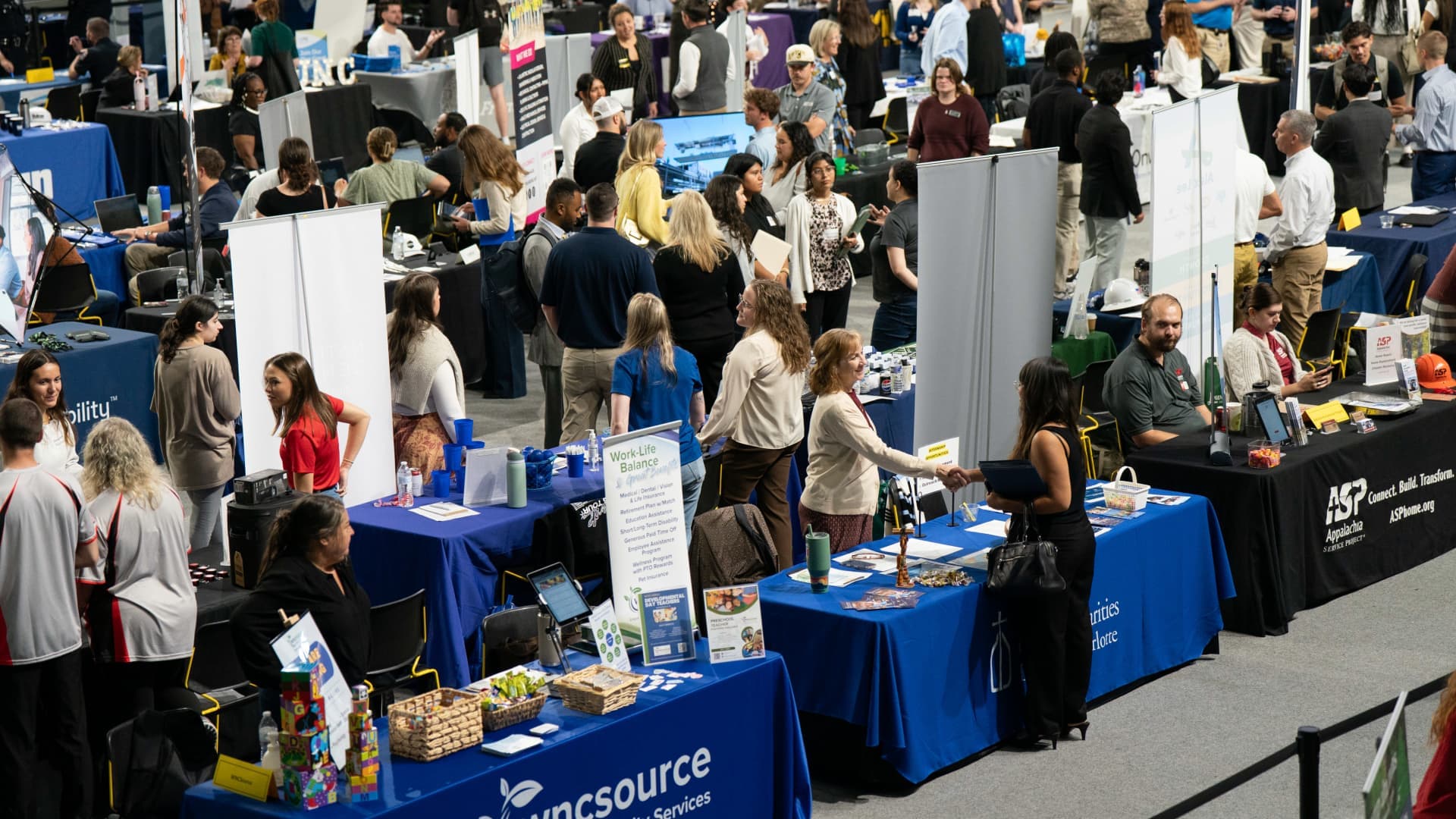
The first Friday of the month brings the closely watched Bureau of Labor Statistics nonfarm payrolls survey. That didn't happen because of the government shutdown.
Also: A combined warning about the stock market and bitcoin, the AI wave, and dividend compounders.