
加载中...
共找到 13,889 条相关资讯
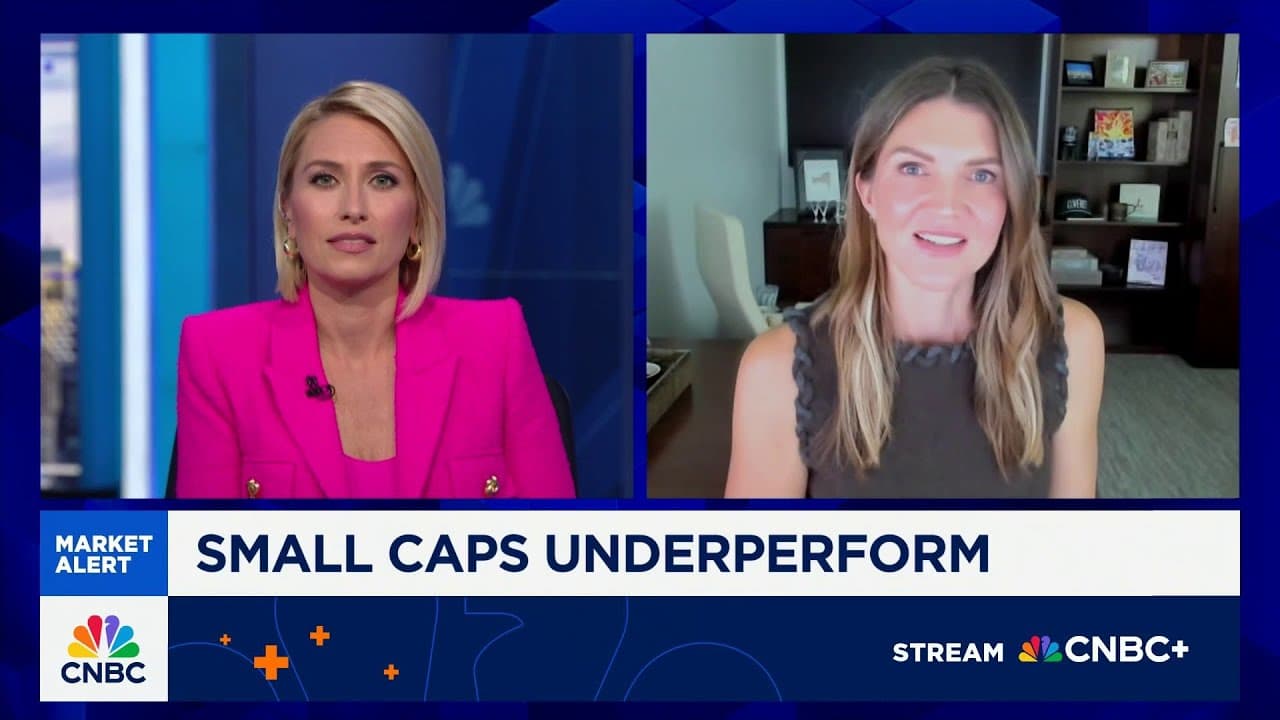
Nicole Webb, Wealth Advancement Group SVP, joins 'Closing Bell Overtime' to talk the day's market action, what to expect out of earnings, gold prices, and more.


President Donald Trump defended his tariff policies during a meeting with Canadian Prime Minister Mark Carney, citing years of trade imbalances with China and the EU.

Oracle shares dropped 2.5%, while gold hit another record.

AI bubble warnings are widespread, but history shows warnings of a bubble usually occur in its early stages, keeping many investors on the sidelines. Acting too soon on bubble fears risks missing significant gains; bubbles often persist for a year or more after overvaluation is recognized.

Smart money is a reference to institutional investors, whose moves can prove predictive and whose flows can be telling of moves in markets. While I track several kinds of smart money investors, family offices are a favorite because they tend to be very long-term focused and conservative with their investments.
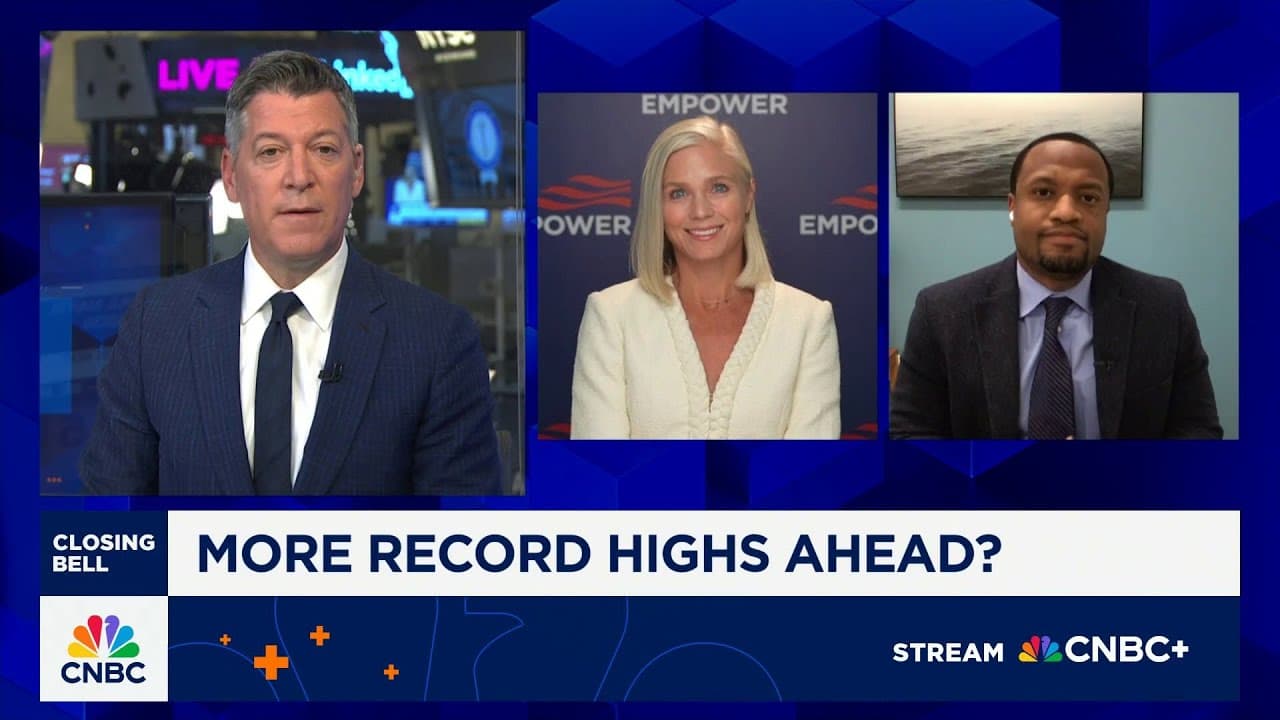
Empower's Marta Norton and Odyssey Capital's Jason Snipe join 'Closing Bell' to discuss the latest news affecting markets.

There's still time to profit despite a frothy market, Seaport Global says.
Faten Freiha: Good morning. This is Faten Freiha, Vice President of Investor Relations. Thank you for joining today's third-quarter earnings call. To accompany this call, we have posted a set of slides on our IR website, ir.mccormick.com. With me this morning are Brendan M. Foley, Chairman, President, and CEO, and Marcos Gabriel, Executive Vice President and CFO. During this call, we will refer to certain non-GAAP financial measures. The nature of those non-GAAP financial measures and the related reconciliations to the GAAP results are included in this morning's press release and slides. In our comments, certain percentages are rounded. Please refer to our presentation for complete information. Today's presentation contains projections and other forward-looking statements. Actual results could differ materially from those projected. The company undertakes no obligation to update or revise publicly any forward-looking statement, whether because of new information, future events, or other factors. Please refer to our forward-looking statement on slide 2 for more information. I'll now turn the discussion over to Brendan. Brendan M. Foley: Good morning, everyone, and thank you for joining us. Third quarter top-line performance was strong and marked our fifth consecutive quarter of volume-led growth, reflecting our differentiation and the benefit of continued investments in our brands, expanded distribution, and innovation. Due to the dynamic global trade environment, our gross margin was further pressured by rising costs. However, our effective execution on efficiency initiatives drove continued operating profit growth. We are executing with discipline on the actions within our control, while adapting quickly to the dynamics in the external environment and, at the same time, positioning McCormick & Company for sustained long-term growth. This morning, I will begin my remarks with an overview of our third-quarter results, focusing mostly on top-line drivers. Next, I will review how McCormick & Company is positioned relative to an evolving consumer landscape for the remainder of this year and into 2026. I will highlight some areas of success and the areas we continue to work on, as well as our growth plans. Marcos will then go into more depth and review our 2025 outlook, including an update on our tariff exposure and mitigation plans. Finally, before your questions, I will have some closing comments. Turning now to our results on slide 4. In the third quarter, total organic sales increased by 2%, driven by volume growth, primarily in the consumer segment, in line with our expectations. In global consumer, organic sales growth was volume-led and demonstrated continued momentum across key markets and core categories in the Americas and EMEA. In Asia-Pacific, our China retail business continued to deliver growth. However, our food service business, which is reported within China consumer, faced softer demand due to slower consumption in certain channels, such as high-end dining. Despite this unforeseen headwind, we remain confident in a gradual full-year recovery in China consumer for 2025. In global flavor solutions, despite soft industry trends, we grew underlying volumes as we lapped favorable growth related to the timing of customer activities in the prior year in the Americas. Softness in large CPG and branded food service customers' volumes was also more than offset by QSR growth in both Americas and Asia-Pacific. We are increasingly benefiting from continued momentum in health and wellness categories, driven by both high-growth innovators and private label customers. Lastly, in EMEA, QSR trends began to stabilize, marking an improvement relative to recent periods. Let me now share our current view on the state of the consumer and considerations for 2026. The environment remains challenging across our key markets, with market dynamics pointing to continued pressure into 2026. Consumers, especially low to middle-income households, are adapting to the economic environment by adjusting how they shop, making more frequent trips with fewer items per basket, choosing larger pack sizes to maximize value, and stretching meals across a number of occasions. In addition, they continue to cook at home more often and shop the perimeter for fresh foods to help lower overall meal costs. These behaviors reinforce the demand for flavor, particularly in our core categories, with herbs and spices continuing to lead center-of-store unit consumption. Health and wellness trends continue to gain momentum. Consumers are preparing healthier, more affordable meals at home while exploring new flavors and culinary creativity. High protein and healthy claims are driving purchase trends across retail and food service, alongside growth in functional foods that deliver great taste with added benefits such as protein, fiber, hydration, energy, and better sleep. Convenience, paired with flavor exploration, remains an area where consumers are willing to pay more, and e-commerce growth continues to accelerate across our core categories. These trends are fundamental, long-lasting, and support the continued demand for flavor, benefiting both the consumer and flavor solutions segments. With our broad global reach, strong local brands, ongoing innovation, and strategic pricing, we're well positioned to meet the needs of consumers and continue to deliver value through flavor. As we address immediate priorities in today's rising cost environment, it's important to reiterate that our strategy remains consistent. We remain committed to delivering volume growth and investing in our brands, technology, and digital transformation as we continue to reinforce the structural advantages that will drive our future success. We are balancing volume and profitability, and this year, we expect to offset rising commodity costs and tariffs as much as we can. Our global manufacturing location strategy, resilient supply chain, global sourcing capabilities, and collaborative efforts across the organization continue to be competitive advantages, enabling us to mitigate the impact of tariff and tariff-related costs and maintain business momentum. We are absorbing some incremental costs this year, which has a near-term impact on our profitability. This approach enables us to maintain our volume momentum and sustain investment in our growth initiatives while still delivering operating profit growth for the year. As a result, we reaffirmed our volume-led sales growth and expect to deliver at least the midpoint of the range. In addition, we revised our profitability outlook to the low end of the range provided in January. This reflects the updated net impact of rising commodity costs and tariffs since our second-quarter call. As we look ahead to 2026 and beyond, we will remain consumer-centric, committed to delivering value, flavor, and quality while maintaining our volumes and protecting our profitability. Let's move to slide 5, and let me highlight for the quarter some of the key areas of success. Across the global consumer segment, we continue to successfully execute on our plans. We have held steady or improved share across many core categories in key markets for the last five quarters. McCormick branded unit consumption growth continues to outpace the broader edible category in the U.S. In EMEA, unit and dollar consumption are outpacing branded and private label fast-moving consumer goods or FMCG food. Let me provide some additional color. Starting with spices and seasonings, we drove strong volume growth across all regions. In the U.S., volume growth continued to outpace private label for the fifth consecutive quarter. In Canada, we continue to grow overall share. In France and Poland, share gains in spices and seasonings are contributing meaningfully to EMEA's gains. This quarter, the strong performance in our grilling portfolio was supported by the rollout of our new consumer-preferred packaging for GrillMates, as well as increased Frank’s RedHot promotions and innovation. In mustard, we are pleased to see that our plans are continuing to drive great results. For the third quarter in a row, we drove dollar unit and volume share gains in the Americas. In EMEA, we drove unit and dollar share gains in mustard for the last two quarters. In hot sauce, we continue to achieve good results. In the U.S., we continue to drive unit share gains fueled by expanded distribution, as well as investments in differentiated brand marketing and innovation. In the U.K., we accelerated unit consumption, leading to dollar share gains. We continue to make progress on total distribution points, or TDPs. In the Americas, we expanded TDPs across spices and seasonings, recipe mixes, hot sauce, and mustard. In the Americas and EMEA, we continue to gain distribution in high-growth channels like e-commerce. In flavor solutions, we continue to see strength in our technically insulated high-margin product category, flavors. In flavors in the Americas, we continue to diversify our customer base by winning new customers and gaining share, increasingly benefiting from both high-growth innovators and private label customers. In addition, we are seeing an increase in reformulation projects, particularly with larger customers. Lastly, we outperformed the industry across many end categories, including nutrition bars, alcoholic and non-alcoholic beverages, and we continue to win business across snack seasonings and better-for-you categories. QSR performance remains strong in both the Americas and Asia-Pacific, and volumes have stabilized in EMEA relative to recent trends. In the Americas, performance was driven by innovation, customer growth, and continued share gains. In China and Southeast Asia, our customers' new products and promotions continue to drive strong volume growth. Let me now touch on some areas where we are seeing some pressure. Starting with global consumer. In recipe mixes, we continue to demonstrate underlying strength in our base business and strong consumer loyalty. We saw growth across many product lines. However, total growth was pressured by increased competition in the U.S., particularly within the Mexican flavor category. We expect these trends to improve as we launch new innovation, gain distribution, leverage our authentic Mexican brands like Cholula, and invest behind our brand marketing initiatives. In Asia-Pacific consumer, as I mentioned, the food service business faced softer demand in certain channels. Looking ahead to the fourth quarter, we continue to diversify into high-growth channels and expand our distribution. As a result, we remain confident in a gradual full-year recovery in China consumer for 2025. Moving to flavor solutions, in the Americas and in EMEA, within flavors, some of our large CPG customers continue to experience softness in volumes within their own businesses. We continue to work on offsetting these trends through innovation and collaboration and by winning new customers. In branded food service, foot traffic remains soft, which continues to impact our customers' volumes. We are seeing sequential improvement in our underlying business performance, driven by non-commercial customers. This includes places of employment, hospitals, and colleges and universities. As outlined on slide 6, our growth levers remain consistent to drive growth through category management, brand marketing, new products, proprietary technologies, and our differentiated customer engagement. These levers are supported and enhanced through data and analytics as we continue to accelerate our digital transformation. The strength of our base business continues across major markets and core categories, and we have a number of initiatives in flight that will continue to support our performance for the fourth quarter. I am excited about the growth opportunities ahead. In the consumer segment, our investments to drive volume growth remain in place, including increased brand marketing, innovation, and revenue management initiatives. They have driven strong and differentiated performance over the last six quarters. We continue to see strong consumption trends and expect continued volume growth for the fourth quarter. We expect distribution growth, accelerated innovation, and renovation across the portfolio, and brand marketing investments to drive increased purchase interest and velocity and support volume performance. Let me provide a couple of examples. We are seeing great early results from the relaunch of our McCormick gourmet line, with countertop-worthy new packaging, including a fiberglass cap that seals in freshness, provides a modern look, and highlights that we only use the best raw materials. In addition, we secured incremental distribution, which will support strong growth in the fourth quarter. In terms of new products, the Cholula line of cremosas and cooking sauces, in addition to our new McCormick finishing sugars that were launched for the holiday season, are also yielding great results. Shifting to EMEA, Schwartz air fryer seasonings continue to be successful, addressing consumers' increased appetite for air fryer-focused seasonings. In addition, our new all-purpose seasonings are performing well with younger consumers, meeting demand for enhanced flavor without being specific to one type of meal. Lastly, we are excited about the holiday season and are well positioned with our promotion and innovation plans. We are increasing our merchandising levels, supporting our portfolio with holiday brand marketing campaigns, and are expecting a strong holiday season. Moving now to the flavor solutions segment. Starting with branded food service, we are leveraging our iconic brands in the food away from home channel. For example, driving strong growth in Cholula hot sauce in the front of the house and increasingly in the back of the house, leading to share gains. French’s mustard continues to perform well, with share gains across regional and national chains for the last four quarters. Furthermore, we are fueling growth with operator-relevant non-trend innovation, with products like McCormick Blackened and Korean barbecue seasonings, and our flavor of the year, Aji Amarillo, as well as Cattleman's Memphis Sweet barbecue dip. Lastly, we are expanding distribution in growing channels, including cash and carry, non-commercial, and e-commerce, where we are seeing good momentum. Shifting to flavors, we are leveraging our culinary heritage, regulatory research and innovation, and product development expertise to support customers in navigating the evolving regulatory environment and meeting consumer needs for health and wellness with innovation. We are seeing an increase in reformulation projects, particularly with large CPG customers. Momentum is building, and the execution and impact are expected to materialize over time. This is due to extended validation and launch timelines of these projects. In terms of innovation, we are collaborating with large and emerging brands to flavor energy, hydration, protein-based beverages, protein or fiber snacks, and zero-sugar drinks. We are increasingly benefiting from growth in health and wellness categories, driven by high-growth innovator customers with emerging brands and private label customers. In addition, we are leveraging our expertise in functional ingredients and our technologies to help customers mask off-notes or enhance flavors as they add protein across categories, like protein-based snacks. Our win rate in health and wellness-related briefs is strong across our regions, and we continue to dedicate resources to where we have the right to win. To wrap up our growth plans and specifically our view for the remainder of the year, we remain confident in the long-term health of our business, our fundamentals, and in delivering on our plans to continue to drive industry-leading differentiated performance. Now, over to Marcos. Marcos Gabriel: Thank you, Brendan, and good morning, everyone. Let's start on slide 8. Total organic sales grew 2% for the quarter, driven by volume and mix. This reflects total volume-led growth for the last five quarters and underscores our differentiation and ability to drive growth, even in a consumer backdrop that remains challenging overall. Moving to our Consumer segment on slide 9, organic sales increased 3%, driven primarily by volume and mix, with minimal benefit from pricing. Consumer organic sales in the Americas grew 3%, with 3% volume growth and flat pricing. Volume growth was strong across our core categories and was driven by our investments in brand marketing, innovation, and category management. In EMEA, we grew consumer organic sales 4%, driven by a 1% increase in volume and a 3% increase in price, related to targeted actions taken as a result of increased commodity costs. We're pleased with the sustained volume growth in EMEA, despite price increases. Consumer organic sales in the Asia-Pacific region decreased by 1%. This decline was driven primarily by softness in the food service business in China that Brendan mentioned earlier. Turning to our Flavor Solutions segment on slide 10, third quarter organic sales were up 1%, driven by price contributions of 1% and flat volume and mix. The volumes for the quarter were impacted by unfavorable comparisons related to the timing of customers' activities in the prior year. Underlying volume was positive for the quarter. In the Americas, Flavor Solutions' organic sales increased 1%, reflecting a 2% price contribution, partially offset by a 1% decline in volume. Our results include the favorable comparison I mentioned earlier and reflect a strong performance with faster growing flavor customers and continued QSR growth, partially offset by softness in CPG customers' volumes. The price contribution is primarily related to currency in Latin America. In EMEA, organic sales decreased by 3%, including a 2% decline from price and a 1% impact of lower volume, reflecting soft CPG customers' volumes. We're pleased to see that volumes have stabilized in EMEA relative to recent trends. In the Asia-Pacific region, Flavor Solutions' organic sales increased 6%, with volume growth of 9%, driven by QSR customer promotions and limited-time offers, partially offset by a price of 3%. Moving to slide 11, adjusted gross profit margin was down 120 basis points in the third quarter due to higher commodity costs, tariffs, and costs to support increased capacity for future growth, partially offset by savings from our Comprehensive Continuous Improvement Program, or CCI. Overall, gross margins came in below our expectations, as we're seeing incremental cost pressures due to the global trade environment. In the fourth quarter, more of our mitigation efforts will come through, leading to gross margin improvement. Selling, general, and administrative expenses, or SG&A, decreased 100 basis points relative to the third quarter of last year, driven by lower employee-related benefits expenses, as well as CCI savings, including our SG&A streamlining initiatives, partially offset by continued investments in brand marketing and technology. For the quarter, adjusted operating income increased by 2%, with minimal impact from currency. This increase was driven by improved SG&A, partially offset by gross margin and increased investments to drive growth. Our third quarter adjusted effective tax rate was 16% and comparable with the year-ago period rate of 17%. Our tax rate in both periods benefits from favorable discrete tax items. Our income from non-consolidator operations in the third quarter decreased 6%, as the strong operational performance from our largest joint venture, McCormick in Mexico, was more than offset by the strengthening of the U.S. dollar against the Mexican peso. Turning to segment operational results on slide 12, adjusted operating income in the consumer segment increased 4% or 3% in constant currency. The increase was driven by sales growth and improved SG&A, partially offset by increased tariffs and commodity costs. In flavor solutions, adjusted operating income declined by 2%, with minimal impact from currency, as we lapped a strong quarter in the prior year and faced increased tariffs and commodity costs. These headwinds were partially offset by pricing and improved SG&A. Year to date, flavor solutions' adjusted operating income increased by 10% or 12% in constant currency, in line with our expectations. We continue to make progress in expanding our flavor solutions' operating margin and expect our total adjusted operating margin expansion for the year to be led by this segment. At the bottom line, as shown on slide 13, third quarter 2025 adjusted earnings per share was $0.85, an increase of 2% compared to the year-ago period, driven primarily by increased adjusted operating income. On slide 14, we've summarized highlights for cash flow and balance sheet. Our cash flow from operations through the third quarter of 2025 was $420 million, compared to $463 million in 2024. The decrease was driven by higher cash use due to the timing of working capital. We returned $362 million of cash to shareholders through dividends and used $138 million for capital expenditure. The timing of capital expenditure depends on the phasing of initiatives, including projects to increase capacity and capabilities to meet growing demand, advance our digital transformation, and optimize our cost structure. Our priority remains to have a balanced use of cash. This means funding investments to drive growth, returning a significant portion of cash to shareholders through dividends, and maintaining a strong balance sheet. We remain committed to a strong investment rate rating and expect to continue to deliver strong cash flow in 2025, driven by profit and working capital initiatives. Before turning to our outlook, let me provide an update on our tariff exposure and mitigation plans on slide 15. Since our last earnings call, new and higher tariff rates have been introduced. As this situation remains fluid, it's important to call out that our views reflect tariffs as they currently stand. As you can see on the slide, our current gross tariff costs for 2025 are now expected to be approximately $70 million, compared to the $50 million we provided on our last call. Our total gross annualized tariff exposure is now approximately $140 million, compared to $90 million we provided previously. For 2025, we continue to expect to offset most of the tariff impact, but it's worth noting that not all of our mitigation efforts are permanent, and these will need to be addressed next year. As we look ahead to 2026, we plan to offset as much of the incremental impact as we can with productivity savings across the P&L, alternative sourcing, supply chain initiatives, and, of course, leverage our revenue management capabilities, including pricing. As you know, this is a nibble-obey situation, and we'll continue to monitor how policies impact rates and, therefore, our costs. We expect to provide more color on this when we report our fourth quarter results in January and share our outlook for 2026. It's worth noting that we have begun implementing targeted tariff pricing, and we'll be monitoring elasticities to help inform our plans for 2026. As we said, we're taking a very surgical approach to pricing and leveraging robust analytics and planning tools to ensure we maintain volume growth and continue to meet consumers' and customers' needs for both value and flavor. We stay agile with mitigation plans across all lines of the P&L to protect our profitability. In summary, we see tariffs as a discrete headwind to work through. However, we remain committed to our strategic priorities to continue to drive a healthy top line, invest in the business, and maximize our profitability. Now, let's turn to our updated 2025 financial outlook on slide 16. We're maintaining our net sales and revising adjusted operating income and adjusted earnings per share guidance for the year to reflect our updated estimates on the impact of higher commodity costs and tariffs. Overall, in terms of currency, assumptions remain about the same. At the top line, we continue to expect organic net sales growth to range between 1% and 3% and expect to achieve at least the midpoint of our guidance range. Growth remains volume-led and primarily driven by our consumer segment, with flavor solutions continuing to be flat for the year. In terms of price, we continue to expect a contribution primarily through the flavor solutions segment, and tariff-related pricing will mostly come through in the fourth quarter. For China, our outlook continues to assume a gradual recovery, and we expect China consumer sales to improve slightly year over year. We saw this come through in the year-to-date period, and we expect it to continue for the rest of the year. In terms of inflation, excluding the impact of tariffs, our estimate has changed for the year to low to mid-single digits compared to low single digits in our prior outlook. Our 2025 gross margin is now projected to be flat for the year compared to our prior guidance of flat to 50 basis points. This reflects elevated costs of commodities and tariffs coming in higher than we had planned. As we look ahead to the fourth quarter, we expect gross margins to improve as more of our mitigation efforts will be in place. On SG&A, we expect CCI savings, inclusive of our streamlining initiatives, to be offset by investments in technology, as well as brand marketing to drive volume growth. We continue to invest in brand marketing in line with our guidance, and we're driving more efficiencies through the use of technology, as well as our CCI program. Adjusted operated income growth is now expected to be 3% to 5% in constant currency, compared to a prior range of 4% to 6%. The decrease of 1 point represents the incremental increase in tariff and commodity costs. It's worth noting that our revised range brackets the low end of our prior guidance, which was set back in January of this year, prior to the changes in the global trade environment. In addition, we want to maintain a balanced outlook that gives us the flexibility to continue to invest in the business while growing adjusted operated income. In terms of tax, we expect our tax rate to be approximately 22% for the year compared to 20.5% in 2024, where we benefit from a number of discrete tax items that are not expected to repeat in 2025. Our income from non-consolidator operations is expected to decline in the high single-digit range in 2025, reflecting the strengthening of the U.S. dollar against the Mexican peso, which is impacting the strong results of our largest joint venture, McCormick in Mexico. The business continues to perform well and is contributing to our net income and operating cash flow results. We continue to expect to close the McCormick in Mexico transaction early in 2026. In the meantime, we're developing plans to support our integration efforts, and we look forward to providing an update on our fourth quarter call. In summary, our 2025 adjusted earnings per share projection is now $3.00 to $3.05 compared to our prior guidance of $3.03 to $3.08 on a reported dollar basis, reflecting the impact of our updated adjusted operated income outlook. Year over year, adjusted EPS growth is impacted by currency headwinds and increased tax rates compared to the prior year. On a constant currency basis, adjusted EPS is expected to grow between 4% and 6% compared to a prior guidance of 5% to 7%. In closing, we remain on track to deliver volume-led constant currency top-line growth. Despite higher costs, we're investing strategically, executing with discipline, and driving efficiencies, enabling us to deliver operating profit growth and sustain our differentiation. We're confident in our ability to deliver on our updated 2025 outlook and long-term objectives. Brendan M. Foley: Thank you, Marcos. Before moving to Q&A, I would like to close with our key takeaways on slide 17. We expect to continue to execute our proven strategies in alignment with consumer trends and with speed and agility. The long-term trends that fuel our attractive categories, consumer interest in healthy, flavorful cooking, flavor exploration, and trusted brands, are enduring trends. We continue to drive differentiated volume-led top-line growth and share growth gains across our core categories. Our results demonstrate that we are investing in the areas that drive the most value, and we expect to maintain this momentum. Similar to many of our peers, we are facing rising costs due to the global trade environment, and we are leveraging our competitive advantages and cost-savings initiatives to lessen the impact of these costs, maintain our volume momentum, fuel our investments, and drive profitable growth. Importantly, we view tariffs as a discrete headwind to work through. However, we remain committed to our strategic priorities, sustaining a healthy top line, investing in the business, and maximizing profitability. Ultimately, we believe the execution of our growth plans will be a win for consumers, customers, our categories, and McCormick & Company, which will continue to differentiate and strengthen our leadership. Finally, I want to recognize all McCormick & Company employees for their dedication and contributions and reiterate my confidence that together we will continue to drive differentiated results and shareholder value. Now for your questions. Operator: Thank you. We'll now be conducting a question and answer session. If you would like to ask a question at this time, please press star one from your telephone keypad, and a confirmation tone will indicate your line is in the question queue. You may press star two if you would like to withdraw your question from the queue. For participants using speaker equipment, it may be necessary to pick up your handset before pressing the star keys. One moment, please, while we poll for questions. Thank you. The first question comes from the line of Andrew Lazar. Marc, please, you should see your question. Andrew Lazar: Great. Thanks so much. Good morning, Brendan and Marcos. Brendan M. Foley: Good morning. Andrew Lazar: Brendan, you reiterated again today your expectation for positive volume in the consumer segment in your fiscal fourth quarter. Volume in consumer was again positive in 3Q, but did decelerate sequentially from 2Q, and we see that a bit in the recent data too. I guess now that you'll have some incremental pricing flowing through in the fourth quarter, what's your visibility to a positive volume outcome, you know, given potential elasticity? What are you seeing in the quarter so far around elasticities, given you're kind of more than a month in? Brendan M. Foley: Thanks for the question, Andrew. This was another strong quarter of sales growth for us, and our consumer business continues to drive differentiated performance, really driven by volume. Our flavor solutions business is too. We can talk more about that if necessary. When I think about any deceleration that you might have noted, I think that's a function, first, just of overall food unit growth being down in the quarter, like almost a full %. That's going to impact us a little bit in terms of some element of deceleration. I see that less as a consequence of our plans and our activity, but more about what's just going on broadly in grocery and food in the industry. We definitely saw a deceleration overall in the third quarter. Having said that, we're working with our customers to identify the appropriate offset for the impact of tariffs. As we've been talking about pricing in consumer, we're focused on maintaining our volume momentum and ensuring that we have the right price at shelf that meets the consumer demand for value. We're pleased with the way those conversations have gone. It also demonstrates broad consumer customer alignment with our approach. I think both of us are committed to making sure that we maintain consumer affordability in our categories. That's an underlying element with regard to our consumer base. In the fourth quarter, the levers that remain in place will be continued increased investment in AMP. It'll be messaging that resonates and is targeted and digitally enabled. We'll continue to benefit from innovation launched in 2024. That's items like Frank’s squeeze bottles, new flavors of Frank’s RedHot, and Cholula Extra Hot is out there also on shelf. It's going to get some benefit year over year. Price gap management remains part of our baseline overall. What's been incremental to that is just expanded core distribution across our categories. As you heard on the prepared remarks, we continue to see growth in teams. Innovation and renovation launches are looking also quite strong. We're expecting strong and good growth from expanding Cholula in the U.S. We're expanding that into cremosas and cooking sauces. We have launched another year of McCormick finishing sugars, and people start to see that in stores right now. We've also started the relaunch of McCormick Gourmet with that countertop-worthy packaging, and that's starting to appear on shelf right now too. Even across in markets like in EMEA, we're seeing growth on things like air fry seasonings and all-purpose seasonings that are new to the market. If you look at this fourth quarter over last year, we also have a strong holiday merchandising plan overall. We have confidence in our plans broadly that we'll continue to deliver value to the consumers, which also means we're going to drive positive volume growth in the quarter. A lot of those price gap management efforts do remain in place. We've been very surgical and strategic as to how we've looked at pricing. We're using the same sort of very robust and disciplined analytics led by our revenue growth management team to make sure that we drive this offset as much as we can from a tariff standpoint in the areas where we think we can, certainly the elasticities can support it overall. We like our progress so far this year, and we keep running the same plays, and that's what's been driving, I think, a lot of our growth. Andrew Lazar: Thanks for that. Appreciate it. I know it's way too early to get specific on fiscal 2026, but obviously you would seem you'll still have some underlying inflation to deal with as well as incremental tariffs. At this stage, how do we think about the magnitude of potential further mitigation opportunities in both CCI and RGM levers, as we all sort of work through whether or not an algorithm year is reasonable to expect in fiscal 2026? Marcos, I think you mentioned some of your current mitigation efforts are not permanent, and so you have to kind of keep generating incremental ones as you go forward. Yeah, Marcos. Marcos Gabriel: Yeah, that's right, Andrew. Yes, it is a little bit early to predict what's, you know, the exact impact of tariffs for 2026. We wanted to provide an updated view of the growth number. There is $140 million now versus the $90 million that we provided before due to the new tariffs that were in place as of August. We'll continue to, you know, there are a lot of factors that we have to take into account as we think about next year. One is obviously closing the year, continuing to monitor the tariff rates and the situation around that. There could be potential changes there. Our own mitigation plans, we have very solid mitigation plans in place right now, as you saw, around productivity savings, alternative sourcing, as well as surgical pricing coming through. We're being relatively successful this year, offsetting most of the impact in 2025. Those will continue. We're going to scale that up into next year. They will continue. The objective is really to lessen the impact as much as we can going into next year. As I said before, we're pulling all the levers that we can across the P&L to minimize all these impacts. We'll continue to monitor the plans that we have now in place, some pricing now coming in Q4. We do have robust analytics, as Brendan mentioned, in terms of elasticity. We're going to continue to monitor elasticity. That will also help us refine the plans as we go into 2026. I would say we are confident that we are going to be able to lessen the impact as we move into 2026. Brendan M. Foley: Yeah, one thing to add to Marcos's remarks there, Andrew, is we meet on this weekly. We see changes every week as we continue to go through this and identify new opportunities and breakthroughs in terms of how we can think about next year. This is something that I think we'll continue to build over the next few months just to make sure that we have the best approach towards 2026 regarding the incremental tariff impact. Andrew Lazar: Thank you. Peter Galbo: Our next question is from the line of Peter Galbo with Bank of America. Please proceed with your questions. Peter Galbo: Hey, good morning, guys. Thanks for the questions. Marcos, I was hoping to start. You took the cost inflation guidance for the year up, even excluding the tariff in 2025. Maybe you can just unpack a bit of what actually accelerated through the quarter, what's kind of driving that change again, given that it seems like it's not solely tied to the increase in the tariff rate. Marcos Gabriel: Yes, Peter. No, thanks for the question. I mean, in Q3, just to take a step back, in Q3, our gross margin was down 120 basis points versus last year. A couple of buckets, I would say. The bucket number one is around increased commodity costs and existing and new tariffs that were in place, existing from April, new tariffs as of August. That is about two-thirds of the impact that you saw in the quarter. In addition to that, the remaining one-third was related to costs to support capacity for future growth, primarily related to our HEAT platform. That is investments that we're putting within supply chain. As I alluded to in the Q2 call, as well as in the last investor conference, we were seeing the rise of commodity costs in Q2, and they actually accelerated in Q3. Plus, the new tariffs in place made us revise the guide. It was, I would call it, a modest update to the guide to reflect those impacts. It is around commodity costs and tariffs primarily, but also we are seeing input costs in general coming through. Packaging is one example that we're seeing come through. All in all, we've revised the guide a little bit as a way also to provide the latest view that we have, but also to be able to continue to invest in the business and giving us the flexibility and the latitude to continue to invest in brand marketing in Q4. Peter Galbo: Thanks, Marcos. Maybe a follow-up also on the gross margin. I mean, I think even with the revised guidance that you provided this morning, it would imply that the fourth quarter gross margin needs to step up closer to something like 41% to hit comparable for the year-on-year. That would not only be a normal, I think, sequential step up into Q4, but it would be margins actually up versus the fourth quarter of last year. A, I just want to make sure that I have that right, or if there's any nuance as we think about the fourth quarter gross margin specifically. Thanks very much. Marcos Gabriel: Yes, Peter, you're seeing that right. I mean, we're seeing the flat to modest bps as a % of net sales expansion in the fourth quarter. Peter Galbo: Thank you. Tom Palmer: The next question is from the line of Tom Palmer with JPMorgan. Please proceed with your questions. Tom Palmer: Good morning. Thanks for the question. Maybe first, I just want to clarify on tariffs. A quarter ago, I think the expectation on kind of round one was to fully offset it both for this year and for next year. I know the number has moved higher. When we think about that initial number, does that still hold? You would expect to fully offset it. Now there are maybe more decisions still to be made in terms of your ability to fully mitigate the incremental step up that we've seen since. Marcos Gabriel: Let me just give you a little bit of color there, Tom. I mean, when we talked about the $50 million for in-year, the year-on-year impacts before, and the $90 million for 2026 at that time, we talked about offsetting 2025, the $50 million in 2025 only number with the mitigations that I mentioned before, and continue, obviously, to work through the mitigations going into 2026. We did not talk really much about 2026 or the annualized net impact going into 2026 as we're still working through those mitigation plans. Tom Palmer: Okay, understood. On the gross margin for 3Q, look, maybe the street misunderstood, but I think we were looking at more flattish year-over-year initially for the third quarter. It does sound like tariffs were an impact. I guess I'm trying to understand the timing of how it flowed through so quickly in 3Q. I think a lot of the step up was more August, and I would have thought more of a lag in terms of how it flowed through COG. What really was the incremental step up to think about in 3Q versus more of this increased tariff burden really kicking in come 4Q? Marcos Gabriel: Yeah, you're right. I mean, tariffs was a piece of that. The new tariffs was a piece of the impacts in Q3 as tariffs came in in August. The main impact was higher commodity costs that accelerated in Q3. When we were guiding Q2, we talked about guiding the profitability to be more weighted towards Q4. We were seeing some of the rise of commodity costs in Q2, and that would impact Q3. In fact, it accelerated, and we saw more inflation come through this quarter than we expected. Brendan M. Foley: Tom, just to build on a little bit of what Marcos said, when we think about this incremental commodity cost that we're definitely observing, I would say there's sort of two drivers to call out. There's broad uncertainty that's kind of driving suppliers to stand still. They're pausing and waiting for more information to see how the market moves. I think this slows down typical forces of supply and demand. That's definitely been an element that we've seen even as early as the second quarter. More recently, we certainly start to see that they're passing along their tariff impact, and it's expressed as our overall inflation, although indirectly, that impact coming through tariffs. We have a very diverse basket of commodities and input costs, and this is where we're seeing this come through. Tom Palmer: Okay, thank you for the details. Alexia Howard: The next question is from the line of Alexia Howard with Bernstein. Please proceed with your questions. Alexia Howard: Good morning, everyone. Brendan M. Foley: Good morning. Marcos Gabriel: Good morning. Alexia Howard: Can I start with the reformulation comments you made in the prepared remarks? Specifically, you talked about gaming customers on the flavor solutions side. Which customers or what types of customers, what types of categories are you gaming the customers in? I'm particularly curious about, Walmart announced last week that I think across the whole of their private label business, they're planning to eliminate 30 additives, which is much broader than the eight artificial dyes that have already been put on the chopping block for 2027. Do you expect to see an acceleration in private label and maybe branded CPG efforts to reformulate, particularly in light of that Walmart announcement? I have a follow-up. Brendan M. Foley: Sure, Alexia. There's a couple of vantage points in your question there. I'll try to address most of them if I recall them all. First of all, you asked where are we getting the new customers or where are we getting this increased share. A lot of that's happening with what we said earlier, which is high growth innovator, emerging brands, and even private label customers. We definitely see continued accelerated growth in that part of our customer portfolio. Even an increasing amount of that started to come through in the third quarter. That's consistent with what we've said previously when we think about where new customers are coming from overall. In terms of the heightened reformulation activity, this is consistent also with what we said in the second quarter. It's a focus on a shift from natural colors from synthetic ones. It's also reduced sugar, reduced salt, natural and healthy ingredients from artificial, eliminating ingredients of concern. That's the type of activity that we're seeing. It's somewhat expected, I think, with what you've seen broadly reported in the media in terms of where consumer concerns are. I would just say a lot of this is based in just staying close to the consumer. A lot of the food industry is focused around that. We've been looking at this and working on it for some time. Related to the announcement that you talked about, Alexia, I think that's good news in terms of an announcement from that large retailer. That's an example of the type of activity that I think that one will see. It's consistent with what other branded CPG companies have announced more recently. You said you had a follow-up question. Alexia Howard: Yes. I want to ask about acquisitions, and I'm trying to figure out how to answer this delicately. You obviously already got your Mexico JV announcement out there. That's set up for early next year. There's concerns that I've heard from investors about whether you might be interested in the very large taste elevation company that will be split off from Kraft Heinz's North American grocery business next year. Frankly, on paper, it's two and a half times the size of McCormick & Company. It's on both the top and the bottom line. It looks too big, even though the Heinz brand might be quite attractive. Could you talk about maybe just in broad terms what your acquisition strategy is and the magnitude of the types of deals that you might be prepared to take on, maybe taking that one off the table because it just looks so vast? Are you interested more in condiments at this point, maybe at a more bolt-on level, and/or other capabilities that you need to pick up on the flavor solutions side? I hope that was delicate enough, but anything you can say on that front would be helpful. Thank you. Brendan M. Foley: Appreciate the diplomatic question. When we think about M&A, we don't comment on any speculation going on out there or anything of that sort. I'm not speaking directly to any investor concern or whatever it might be. I would tell you just broadly to go back to what we said previously about how we think about M&A. Obviously, we think about both of our segments first, consumer and flavor solutions. I'll first unpack consumer and then I'll unpack flavor solutions because they're both important to us. We still believe in our two-segment strategy as we look at our business. We'll consider both bolt-on and transformative opportunities as they present themselves. This is something that we're working on all the time, as we said before. From a consumer perspective, the two areas that are of most interest to us as we think about our portfolios remain focused in flavor. In many ways, we express that through herbs, spices, and seasonings at a global level, as well as condiments and sauces at a global level. We're thinking about this across all of our regions overall. We like those two areas of category focus, and we believe there's a lot of opportunity still for us to think about it that way. It can be in any form, whether it be bolt-on or transformational overall. When we think about flavor solutions, we think about it through the lens of what enhances our ability from a technology standpoint, the taste competencies that we're particularly strong at. Can we reinforce those with not only great technology, but also great talent? We think about it that way in terms of what is a complementary or incremental fit to our business when we think about flavor. We think about those across all the regions in which we compete and operate in. That's another high area of interest that we have across our business. We have a broad set of opportunities that we look at. We like the fact that we have a broad set of opportunities to consider. Our most recent transaction we think is very much aligned strategically with what we're trying to accomplish. In the present moment right now, we're focused on making sure that we close that in early 2026, which is our plan. Alexia Howard: Thank you very much. I'll pass it on. Robert Moskow: Next question is from the line of Robert Moskow with TD Cowen. Please proceed with your questions. Robert Moskow: Hey, good morning. Thanks for the question. Hey, Brendan, it's very noticeable in the remarks that you're highlighting the importance of differentiated volume-led growth compared to food peers. You're heading into an environment where you definitely need more pricing to offset higher costs. I'm just curious if you could articulate your priorities. It sounds like if the priority is really volume growth, to what extent are you willing to let volume dip into negative territory, maybe even just temporarily, as you try to raise prices to offset costs? Brendan M. Foley: We try to balance all those two points that you brought up, Robin. We take a very long-term view. I'm not going to lay out here the certain numbers and where they can land, etc., in terms of growth or decline. Our goal right now is consistent with our goal for the last two years, which is to be volume-led in terms of our momentum and take a long-term view on making sure that we do what's right as we think about growth of the consumer, meeting their needs, meeting the benefits that they're looking for. We've seen a real convergence around value, but also health and wellness. Those are things that we think will continue to drive our categories. Yet we have to deal with the realities, obviously, of offsetting what is a reasonable amount of discrete new costs coming into our P&L as we think about 2025 and 2026. So far, we've been able to find a way to offset that in really productive ways, but yet still maintain that focus on really healthy volume-driven growth. As we go into 2026, our ambition is to do the very same thing. Do I know exactly what level that will be? I don't. I think it'll be in positive territory. I can't tell you right now how high. That's going to be part of what, as we wrap up our planning for 2026, we'll share at the end of our fourth quarter and our fourth quarter call in January. This is something that we talk about a lot within the company, leadership and across our business units, and think about the right balance that we need to strike. It's also a function of the conversations that we're having with customers. We're both looking at it in very much similar ways, which is we want to drive affordability for consumers. We also have to find ways to offset this cost. I'm not sure that we're going to offset all of the cost, but it is something that we are taking a very hard look at in terms of what's striking the right balance. Robert Moskow: Thank you for that. Maybe a follow-up. In those conversations with customers, I would imagine they're a little bit less willing to raise prices for tariffs, given that the tariffs may not be permanent. Is that part of the discussion too? Can you come up with temporary measures with customers that can be reversed if necessary? Brendan M. Foley: One adjustment to some of the assumptions you laid in your question there is whether or not tariffs are permanent. We're seeing it as a discrete one-time impact at this point, and we do view those as staying in the cost structure. Whatever we do, whether it's in the near term or in the long term, we look to offset that over time overall. In our conversations with customers, we think very collaboratively about how do we deal with what are real true input costs, but also thinking about continued volume growth with consumers. That mutual sort of alignment around priorities, I think, has helped us navigate what have been productive conversations with customers. Robert Moskow: Got it. All right. Thank you. Max Gumport: Our next question is on the line of Max Gumport with BNP Paribas. Please proceed with your questions. Max Gumport: Hey, great. Thanks for the question. I wanted to come back to what we're seeing in the U.S. scanner data and then thinking through how to square that with your still robust volume-led growth in Consumer Americas. Specifically, Consumer Americas, the volume growth still looks quite strong, running roughly 3%, roughly similar to what we saw in 2Q. I think it's fair to say that U.S. scanner data has shown some deceleration from 2Q to 3Q and now into the early starts of 4Q with regard to volume performance. I know you mentioned that you can attribute part of that to just what we're seeing in the broader U.S. food industry, but when we're thinking through why that gap is not showing up as fully in your Consumer Americas results, can we attribute it to other countries outside of the U.S., or is it non-track channels, or is it the stronger performance we're now seeing from private label? Just trying to get a sense for what's helping to blunt the gap that we are seeing or the slowdown that we are seeing in scanner. Thanks very much. Brendan M. Foley: Max, I just want to clarify what I think your question is, which is speaking specifically to U.S. perspective or broadly globally. Max Gumport: Yeah, it's really looking at, I think, what is a pretty clear slowdown in the U.S. scanner data for McCormick branded, but not as clear a slowdown in your Consumer Americas results. I'm trying to understand why those two are no longer as tightly correlated. What's propping up Consumer Americas when we are seeing a slowdown in McCormick's branded U.S. meal? Brendan M. Foley: I think my reply might get at the spirit of your question. In terms of, you know, sort of if you think about measured channels and unmeasured channels, we are seeing an acceleration in e-commerce as well as in the club store channel too. That might speak a little bit to, you know, what might be sort of any difference that you might see, Max, overall. Also, we have our Canadian business in there too, and it's also performing well. I think that those might, you know, from a, if you think about what might be the points to talk more about, I would just lay out those three. I might just sort of, you know, dwell a little bit on e-commerce. We're certainly seeing an acceleration there. We're seeing, what's interesting about value with consumers is they're willing to pay for this increased value on delivery, you know, the sort of ease of use with e-commerce and, you know, click and collect, etc. That has been part of our business that is only quarter by quarter, just continues to get stronger. It's certainly growing as a percentage of overall total net sales. I think this unmeasured versus measured channels might explain, you know, some of the points that you're talking about. Max Gumport: Okay, great. There was some more growth shift towards unmeasured. Brendan M. Foley: Right. Turning to cash flows, I realize you started off the year pretty far behind where you were a year ago. You're catching up now as of 3Q, but you're still a bit below where you were a year ago in terms of operating cash flow. You're still attributing it to higher cash needs for working capital. Can you just double-click on what exactly within working capital is driving this and how you expect to end the year of 2025? It sounds like you do expect this from cash flow year. We're just hoping to throw a little bit more color on the working capital needs and what you expect to see in 4Q. Thanks very much. Marcos Gabriel: Yes, Max, I mean, that's a good question. We have very strong confidence about the cash flow for the year. As you said, we are catching up now in Q3 year to date. We had a bigger lag in Q2. We got caught up a little bit more in Q3. We had a little bit more use of working capital through inventories. We purchased some inventories, bought some inventories, specifically from raw materials in the quarter. We expected this to normalize going into the back half of the year and continue to deliver very strong cash flow performance for the full year 2025. Just to recall, Q4 is our biggest quarter, not only in terms of P&L, but also in terms of cash. You will see that cash come through in Q4. Max Gumport: Great. Thanks very much. Stephen Powers: The next question is from the line of Steve Powers with Deutsche Bank. Please proceed with your questions. Stephen Powers: Thanks. Good morning, guys. Brendan M. Foley: Good morning. Marcos Gabriel: Good morning. Stephen Powers: I think we've been circling around this a little bit. I just want to get a little bit more sense of your planning posture around pricing as you begin to implement pricing in response to tariffs. Focusing on the consumer business, maybe a little bit more detail on what you've seen so far in early elasticity analytics and where you think consumers are likely to be more accepting of pricing versus more price sensitive. I guess just what your kind of going in base case expectations are around elasticity as you layer in this early pricing. Brendan M. Foley: Steve, it's really early. In fact, I don't even think we've got a whole lot of, we've got a little bit of data maybe on September that would maybe give us some indication. What I would share with you right now is it's too early to give you any sort of real insight around trends or outcomes regarding that. We believe in the analytics that we use to predict these things. I would say that right now we feel really pretty confident with what we think the impact will be, but it is very early. Stephen Powers: Okay. Maybe, you know, Marcos, as we think about 2026, and you talked about sourcing and productivity, cost savings, as well as pricing as the different levers you have to mitigate cost inflation and tariffs into next year. As a starting point, is your kind of working assumption that there's a balance, kind of an even balance between pricing and some of the sourcing and savings initiatives, or is it skewed towards savings, or is it skewed towards pricing? Just a little sense of early planning thoughts as you approach the year. Marcos Gabriel: Yeah, it is. It is, Steve. It is more skewed towards savings. You know, CCI savings overall. We talked about productivity savings as well as alternative sourcing, but also think about it as a way of all lines of the P&L, CCI across all lines of the P&L. You've seen this quarter as Shanay came in, it's strong for us. We continue to drive, you know, CCI savings in that part of our P&L. That should continue going into 2026. I would say it's more skewed towards savings and productivity initiatives that we have in place, with more to come. The residual will be through surgical price initiatives. Stephen Powers: OK, perfect. Thank you very much. Scott Marks: The next question is from the line of Scott Marks with Jefferies. Please proceed with your questions. Scott Marks: Hey, good morning. Thanks so much for taking our questions. First thing I wanted to ask about, you noted some softness in the China food service arena, still expecting a gradual recovery for the rest of this year. It sounds like maybe a little stronger for next year. Just wondering if you can share some thoughts on what you're seeing and what gives you the confidence in that gradual recovery continuing. First, our third quarter results were definitely impacted by what we saw as a reaction to these austerity measures that were put in place. A lot of it was focused on high-end dining and catering. We saw that consumption shift out into other out-of-home channels that might be either lower cost or greater value. We have diversified. That tended to impact the part of our food service business that serves that part of the marketplace. As we think about diversifying and also looking for more distribution, we're certainly following those trends in the marketplace. We're also seeing strength in our retail business. Our team identified a lot of high-growth opportunities as we think about the channel shifting that's going on in China. There's quite a bit of it, and it's been going on for at least the last year, if not longer. We continue to strengthen distribution in those areas where we think consumers are shifting to. In the case of our retail business, it happens to be more smaller format stores. Getting more distribution in those locations has helped us continue to drive growth, which we think, based on the data that we're seeing, is slightly stronger than the marketplace itself. That gives us the confidence to think about, for the total year, we think we're headed in that same direction with having that slight to gradual growth in our business in China. It's also worth adding that as we look at the fourth quarter, we're lapping an easier comparison relative to the fourth quarter of the prior year. Year to date, our results are in line with our expectations for this gradual recovery. I think we're up like 2% year to date within total Asia-Pacific. We do expect our business in China to improve slightly in the context of that. Long term, we believe in the opportunity of China. It's a strong market where we have good penetration right now, but we still have room for growth. We're strengthening our plans and capabilities to make sure that we serve the Chinese marketplace where we see opportunities. Scott Marks: Appreciate the answer there. Thank you for that. Just a quick follow-up, coming back to the topic of reformulation, wondering maybe if you can give us a sense of magnitude of impact, let's say, for the reformulations as it relates to maybe more pressure on some of the legacy branded products. Just trying to gauge how we should be thinking about offsets to what we see from broader food softness, let's say. Brendan M. Foley: I think about reformulations as broadly continuing to address what we hear from consumers and what they're looking for. That will have a positive impact on brands, whether it be so-called legacy brands or even new emerging brands. As broadly the food industry continues to address what consumers are asking for, we see that as having a positive outcome. The magnitude, I probably would maybe shift my reply into think about it from a timing perspective. It may take some time for some of these larger projects to go through validation and get out into the marketplace. I don't see it as being necessarily immediate or happening right away. In the case of announcements that have been made, people are suggesting 2027 as an example. Every company is going to be different in terms of what types of changes and reformulations we're trying to drive. I see this as a continuation of innovation within the industry. It's all about making brands relevant. Scott Marks: Thanks very much. We will pass it on. Bryan Adams: Thank you. Our last question is from the line of Brian Adams with UBS. Please proceed with your questions. Bryan Adams: Hey, morning, guys. Thanks for the question. Just a quick one here for me. On the 4Q growth, I think if you look at what you said, Marcos, about midpoint or better of the 1% to 3% top line guide for the year, it implies something like 2.5% or so growth for the fourth quarter or more. Just in terms of that improvement exiting the year, I assume that's mostly pricing net of any elasticity impact, along with maybe some of the easier 4Q Asia-Pacific comp that you just mentioned, Brendan. Beyond that, is there anything else I'm missing there in terms of what drives the conviction to step up in 4Q versus 3Q? Thanks, guys. Marcos Gabriel: Yeah, we talked about the midpoint of the guidance range on top line for the full year. That implies the same level of growth in the fourth quarter in constant currency, obviously. That will continue. We still, despite the price increases that we've taken in the Americas, also see volume growth in the Americas. We see growth across, I would say, pretty much all regions in the consumer segment going into the balance of the year. In flavor solutions, you will see more of a moderation of volume and price. We guided price to be, volume to be flat in flavor solutions for the full year, given a little bit more pricing there. That's how we're seeing Q4 play. Bryan Adams: Really helpful. I'll leave it there. Thanks, guys. Faten Freiha: Thank you. I'll now turn the floor back to Faten Freiha for closing remarks. Faten Freiha: Thank you. Thanks, everybody, for joining today's call. If you have any additional questions regarding today's information, please feel free to contact me. This concludes this morning's call. Thank you.

Operator: Greetings and welcome to the Constellation Brands Q2 Fiscal Year 2026 earnings call. At this time, all participants are in a listen-only mode. A question and answer session will begin shortly. You may be placed into the question queue at any time by pressing star one on your telephone keypad, and we ask you to please limit yourselves to one question. As a reminder, this conference is being recorded. It's now my pleasure to turn the call over to Blair Venema, Vice President, Investor Relations. Please go ahead, Blair. Blair Venema: Thank you, Kevin. Good morning all, and welcome to Constellation Brands Q2 Fiscal 2026 conference call. I am here this morning with Bill Newlands, our CEO, and Garth Hankinson, our CFO. We trust you had the opportunity to review the news release, CEO and CFO commentary, and accompanying quarterly slides made available in the investors section of our company's website, www.cbrands.com. On that note, as a reminder, reconciliations between the most directly comparable GAAP measure and any non-GAAP financial measures discussed on this call are included in the news release and website. We encourage you to also refer to the news release and Constellation's SEC filings for risk factors that may impact forward-looking statements made on this call. Before turning the call over to Bill and Garth, please keep in mind that as usual, answers provided today will be referencing comparable results unless otherwise specified. Lastly, in line with prior quarters, I would ask that you limit yourselves to one question per person, which will help us to end our call on time. Thanks in advance, and over to your questions. Operator: Thank you. We'll now be conducting a question and answer session. As a reminder, please limit yourselves to one question, and if you'd like to be placed into the question queue, please press star one at this time. If you'd like to remove your question, press star two. A confirmation tone will indicate your line is in the question queue. Our first question today is coming from Nik Modi from RBC Capital Markets. Your line is now live. Nik Modi: Yeah, thank you. Good morning, everyone. Hey, Nick. I just had a big picture question on volume growth. The debate across the industry has been primarily about structural versus cyclical. For Constellation Brands, there's just a bit more of a nuance within the cyclical bucket. You're dealing with the overall macro consumer slowdown, but also suppressed sentiment among Hispanic consumers. We did some work, and it showed there was a rapid drop-off in sales volume around March, April of this year for the brands and the pack sizes that really over-index the Hispanic consumers across your portfolio. That's right when the ICE activities started to pick up. The question, I guess, is this: do you think volumes would have grown in absence of the ICE activities based on everything that you've seen and all the data that you have? In other words, will volume growth resume when we start lapping these activities next year? Thanks. Bill Newlands: Yeah, thanks, Nick. You know, the key thing I think around that whole question is exactly what you put your finger on, which is what is the consumer sentiment? As you know, we are doing a monthly study of all consumers, both Hispanic and non-Hispanic. The thing that has stood out for us is that 80% of surveyed Hispanic and non-Hispanic consumers continue to express concern about the socioeconomic environment we face. 70% of those are specifically concerned about their personal finances, which goes right back to your point about cyclical versus non-cyclical. We've got a consumer base that's pulling in a bit, and they are not engaging. At the same time, you're seeing increased loyalty. Our loyalty is up with Corona in the general market. Our loyalty is up with Hispanic consumers for Modelo. You know, a lot of people ask the question about Gen Z often. We have twice the share of Gen Z as part of our overall mix versus the industry average. We're sitting in a good spot as the consumer turns around and gets more comfortable with where they are. At the moment, there's just a tremendous amount of concern about socioeconomic issues really across the board. In our view, that's the significant thing that's been challenging both for us and for the category in general. Operator: Thank you. Next question is coming from Nadine Sarwat from Bernstein. Your line is now live. Nadine Sarwat: Hi, thank you guys. I'd like to touch on CAPEX. You cut your top line guidance last month. You have not cut your CAPEX guidance. Can you comment on the rationale behind that? Is there scope to cut CAPEX for years beyond this fiscal year, given the weaker top line? Thank you. Garth Hankinson: Hey Nadine, thanks for the question. Let me try to answer that. There is a little bit of a near-term and a long-term answer there. First of all, consistent with our capital allocation priorities, we're going to continue to invest in the long-term growth in our business. Despite the near-term headwinds that Bill just highlighted, which we see as being primarily cyclical in nature, we're confident in the longer-term growth trajectory of the portfolio. We still believe that we need to invest in incremental capacity. The answer to that nuance is if we look at FY2026, we didn't adjust CapEx for FY2026 because, as we discussed last month, much of what you incur from a CapEx perspective in a fiscal year is related to longer lead items. Those are sort of committed dollars, if you will. As we look beyond FY2026, however, even though we do have confidence in the longer-term trajectory of the portfolio, we are being very mindful and looking at ways that we could slow down or avoid CapEx, if possible. We don't have anything to share with you on that. As we said last month, as it relates to anything beyond FY2026, we'll cover off on that later this year as we give guidance for FY2027. Operator: Thank you. Next question today is coming from Rob Ottenstein from Evercore. Your line is now live. Rob Ottenstein: Great, thank you very much. I just want to get a little bit more sense about, you know, what you mean by seeing more loyalty for Corona and Modelo, and particularly Corona. If we just, you know, from the outside, without your data, Corona, Corona Extra is down more than Coors Light or Miller Lite. Never seen that before. Corona is more general population. I think it's what, 20% or 30% Hispanic. Just like to understand what you're seeing in terms of loyalty. Perhaps connected to that, very interesting movement within the Corona portfolio, right, with Corona Familiar doing actually extremely well and maybe actually a larger brand than we may think. Maybe give us a little bit of sense of how big Corona Familiar is, what you're seeing within the Corona portfolio, and what's the data that's telling you about increased loyalty for Corona. Thank you. Bill Newlands: Sure, Robert. As you would expect, we measure our brand health metrics consistently over time and analyze what the intent to buy is, what the purchase intentions are for all of our brands and businesses. That's where we begin to talk about brand loyalty, what first choice consumers would have in buying within our franchise. Now, as you point out, Corona Extra has been somewhat challenged recently. The broader family has done very well. Corona Extra provides an exceptional halo for the overall brand family. Familiar is doing extraordinarily well and one of the top share gainers in the category. Sunbrew, as you probably know, is the number one new brand in dollars and the number four share gainer overall in the category this year. Corona Extra continues to provide the kind of halo for us for the broader market that has been very valuable for the overall franchise of Corona. You'll also notice, as an example, Corona has been focused on Major League Baseball. If you watch any of the playoffs, you probably would have noticed that Corona has been all over the baseball playoffs as the official import beer of Major League Baseball. We continue to feel that Corona Extra is going to be an important part of our business going forward, but it also, as you note, really is a tremendous halo for other SKUs within the franchise. Operator: Thank you. Next question is coming from Dara Mohsenian from Morgan Stanley Investment Management. Your line is now live. Dara Mohsenian: Hey, good morning. Bill, I just want to return to the first question. In your response to the question and prepared remarks, you continue to emphasize that the recent beer depletion weakness you think is caused more by macro factors. I certainly understand there's a big macro component, but you don't seem to attribute much of it to other more secular factors on the beer category, including health and wellness, particularly with RTDs, cannabis substitution, lower consumption from younger consumers than past generations. How much impact do you think you're seeing from factors beyond the macro component? I know you emphasize your strong brand equity and your share gains, but these factors do seem to be impacting the beer category more broadly. I just wanted to understand your thought process there as your thinking changed at all on those non-macro sort of drivers as you look at the trends in recent months. If I can slip in part B, just the corporate response to the weaker top line growth we're seeing, can you talk about strategy tweaks to drive top line growth within a tougher environment and any opportunities on further productivity beyond what you've already done as you think going forward here? Thanks. Bill Newlands: Sure. We continue to feel that the structural element is relatively minor in the scheme of things versus the cyclical element. As we've covered numerous times now, there just isn't a lot of evidence that GOP is having much impact whatsoever. I think cannabis could be, as you go forward, to be frank, because, you know, as consumers are constrained about their spending patterns, they make choices as to where they spend their discretionary funds. Again, today, that's also relatively minor in the scheme of things. Part of what you're seeing with our work, and Corona Sunbrew is a great example, is going after a younger legal drinking age, Gen Z consumer. Part of what we observed is consumers, particularly around spring break, were mixing orange juice and Corona. Our view was we could do something much better than that in real time, which we did. It's part of the reason why that is the number one dollar SKU this year and the number four share gainer in the category. Relative to your question about the top line, one of the things that you historically have seen in other downturns within categories is that some organizations pull back on their marketing spend. We have no intention whatsoever to do that. In fact, in many respects, we're spending more than we ever have. You've probably seen, as I mentioned on the prior question, Corona's presence in Major League Baseball, Modelo, with the NFL and with college football has been very aggressively positioned, and Pacifico is the number one voice in digital. I think the important point to all of that is we're continuing to invest in the long-term success of our business because we recognize at some point some of these socioeconomic elements will ease and we'll be in a great position to return to more traditional growth profiles that we've seen in the past. Given, even in this tough environment, we continue to gain share in the market and have been the number one share gainer. Hopefully that answers, that was a complex set of questions, but hopefully that answers them. Operator: Thank you. Next question is coming from Bonnie Herzog from Goldman Sachs. Your line is now live. Bonnie Herzog: Thank you. Good morning, everyone. I had a question on margins. I'd love to hear more color on the beer op margin expansion in the quarter, I guess, as well as key headwinds to margins in the back half, considering your guidance implies a decent step down versus 1H. Thanks. Garth Hankinson: Yeah, thanks, Bonnie. Look, I mean, I'd say we feel pretty good about the margin profile that we laid out last month in terms of what our expectation is for the year. If I think about all the elements to your question, let me just start by talking about headwinds for the second half. First of all, the second half of the year, as you know, is always kind of our lower volume year. Even though we change guidance for the full year, that doesn't change our expectations for how the first half of the year comes in versus the second half of the year from a volumetric standpoint. As you know, in the second half of the year, that's, as I say, the lower volume half. It's also when we do some of our maintenance. Just traditionally, that's going to be when we have our lowest margins of the fiscal year. As I think about, again, sticking on margin, the headwinds that we noted last month still remain. We have about 100 basis points of margin headwinds related to fixed costs and incremental tariffs. We have about 60 basis points related to keeping, as Bill just mentioned, keeping our marketing investment in line. Oh, by the way, I misspoke just now. There's 100 basis points with fixed overhead, and then there's another 60 points on incremental margins. Those are some pretty big, pretty big headwinds. They get offset a little bit by some lower comp and benefits in the second half of the year. That really is the margin profile for the full year. Operator: Thank you. Next question today is coming from Chris Carey from Wells Fargo Securities. Your line is now live. Chris Carey: Hey everyone. Garth, just to follow up, are you seeing a pickup in inflation in the back half, or is that specifically around the seasonal volume assumptions? Just to clarify something on Bonnie's question. The question that I had today was actually around the wine and spirits margins. I think going to the second half of the year, you need to believe that these margins are going to turn positive, more than a little positive, to get to the full year guidance. What do we have to believe in improvement from the first half into the back half to see that level of improvement to get to that full year outlook, maybe some of the key drivers? As you think about going into fiscal 2027, there was an expectation that this business could return to a low 20% operating margin, which seems to be embedded in consensus expectations. Is that still the right way to think about it? I would ask it in a similar vein as the back half of this year. What do we have to believe that outcome of substantial margin improvement in fiscal 2027 is achieved? Thanks so much. Garth Hankinson: Sure. Just on the first question related to the beer margins that fall off the body's question, we're not really seeing any tick up at inflation in the second half of the year. It really is just the drivers that I outlined. As it relates to wine and spirits for this fiscal year and the improvement that you'll see in the second half of the year, a couple of things are going on there, which make the full year and certainly the first half of the year a bit messy, if you will. First of all, the converse of what I laid out for beer is true for wine and spirits, which is the bulk of our volume and sales occur in the second half of the year. We will see benefits from additional volume in the second half. That also tends to be when you see vintage releases related to our DTC business, which tend to lead to higher sales and higher margins. Back to the messiness of the first half of the year, as we laid out at the beginning of this fiscal year, there are a number of factors driving performance this year, specific to the first half, related to distributor payments, as well as some post-transaction inventory trips between ourselves and with our distributor partners. Therefore, that's what's made the first half of the year sort of look like it is and why we feel confident that we can turn that in the second half of the year and achieve the operating profit that we laid out in April. Bill Newlands: Just to add on to that, you know, we made clear at the beginning of the year that the focus in the wine and spirits business this year was to get the top line in line and to beat the market. We have now beaten the market for six straight months. Our business in Q2, very similar to Q1, on an apples-to-apples basis, was up 2%, driven by Kim Crawford and Meiomi. Meiomi, you may remember, was a brand we started from scratch several years ago. The 12-week numbers in Circana show Ruffino up 2 points, The Prisoner up 4, Unshackled up 11, and Harvey and Harriet up roughly 23. While we're not going to give any specific guidance yet for fiscal 2027, I think we're very pleased with the development of the top line in the wine and spirits business. We've returned that business to a strong share-gaining position and have been presenting those results for the last several months. We feel pretty comfortable with how that is developing and how the team has executed against that strategy. Operator: Thank you. Next question today is coming from Andrea Teixeira from J.P. Morgan. Your line is now live. Drew Levine: Hey, good morning. This is Drew Levine on for Andrea. Thanks for taking our question. I wanted to ask on the beer inventory rebalance. Maybe you could provide some context on inventory on hand at distributors now versus before the rebalance, and what gives you confidence that this was sort of more of a one-time event, I guess, rather than something that we should be more concerned about going forward. With that visibility that ships and depletes, I think the guidance is to largely track in the second half. I think typically there's a bit more depletes second half versus first half. Just any comments on visibility to that? Thanks. Garth Hankinson: I can start and then Bill can weigh in. First of all, the ship dip trip that happened in Q2 related to our beer business was a result of a couple of things. One was that, as typical with every year, we tend to ship in more in Q1 and Q2 ahead of the key summer selling season. That's just normal operating procedure. This year, as we went through the summer selling season, the takeaway wasn't in line with expectations. Therefore, distributors had a little bit more than expected as we exited this summer. The second thing that drove it is the ship dip trip is that we typically overship in the first half of the year to ensure that there's product on the shelves. Then there's a little bit of rebalancing that occurs in the second half of the year, usually in Q3. We pulled that rebalancing into Q2 versus Q3. That's really what drove it. As we sit there and look at inventory levels with distributors, they're at a good spot right now. We feel good about where our inventory levels are relative to where they are historically. I think it's important for us to note that the ship, the rebalancing of the inventories really occurred strictly with distributors. There's been no retailer destocking. We continue to gain PODs in shelf space. We have very good confidence in our ability to continue to generate significant shelf share gains, as one would expect for a portfolio that's growing, as Bill highlighted before, in 49 out of 50 states, and with the number one beer brand by dollar sales. We feel good about where we are for our inventory levels, and that's why we have confidence that for the balance of the year, shipments and depletions will be aligned with one another. Operator: Thank you. Next question is coming from Bill Kirk from World Capital Partners. Your line is now live. Bill Kirk: Good morning, everybody. Price pack architecture was a big focus before this recent deceleration. How has the deceleration impacted the plans for different pack sizes and price points? Maybe if you had been further along in those price pack architecture plans, do you think depletions performance would have been better? Bill Newlands: Price pack architecture is something that we've said we're going to spend a fair amount of time on. You know, would we, if we had known all the socioeconomic issues, would we have gotten that out sooner? I hope the answer would have been yes. The reality is this is a good long-term play for the business. You know, many of you have heard us talk before. We think there are some exceptionally good businesses at putting that together, meaning when you go in a store, you have an opportunity, no matter how much money you have to spend, you have a product available to you. Our focus on price pack architecture and smaller sizes and things of that ilk makes sure that we would have something that our consumer would be able to buy depending on what they have available to them. We're working aggressively on that in a number of fronts and with a number of brands, and that process is going to continue because we think that's not only important now, but that's also important for the long run as well. Operator: Thank you. Next question is coming from Filippo Falorni from Citigroup. Your line is now live. Filippo Falorni: Hi, good morning everyone. I wanted to ask first on the beer margin and beer cost savings, particularly you realize $65 million in cost savings in Q2, $105 million year to date. Any sense of what's the target for the year, and if you can give a little bit more color on the opportunities there on the beer cost saving front? Just to follow up on the prior question on tariffs, can you give us a sense of how much you realized in the first half in terms of tariff headwinds and how much to expect for the balance of the year? Thank you. Garth Hankinson: Yeah, just on the cost savings, first of all, I'd say that this is just, we continue to reap the benefits of this evolution from being a builder to an operator. As you highlighted, since our investor day a couple of years ago, we've delivered over $500 million worth of cost savings. Again, as you noted, so far this year, we've delivered over $100 million in savings. We continue to find ways to make our operations more efficient. A lot of that so far is focused on supplier and sourcing optimization and material and cost innovation. Included in that would be our move to 60-foot rail cars and our double stacking within rail cars, as well as a big initiative around suppliers and terms, if you will. This is going to continue to be a focus for us over time. We continue to think that there will be opportunities for us in logistics and manufacturing optimization. We know we don't provide quarterly or annual guidance related to our cost savings initiatives, but we will continue to provide updates on a quarterly basis once we achieve those savings. Operator: Thank you. Next question is coming from Carlos Laboy from HSBC. Your line is now live. Carlos Laboy: Yes, thank you everyone. Bill, maybe you can go back a little bit and talk to us about the brand positioning of Corona itself. You know, how might you be refreshing or tweaking it? The reason I'm asking the question is because, you know, we've had over 40 years of beach, rest, and relaxation. I'm wondering, has that become too sedentary? An interpretation of beach for a premium beer consumer that's turning to more active lifestyle positionings. For example, Michelob Ultra, right? Even in other countries where the Corona brand is doing very well, it's sort of been reinterpreting beach more as an active lifestyle and as a regeneration concept. What are your thoughts on how you tweak that brand if it needs to be? Bill Newlands: We are going to start. We did not answer the last half of the last question. Garth is going to cover the tariff, and then I will come back and answer your question, Carlos. Garth Hankinson: Yeah, just on the tariffs, just to be clear on that, right? In our beer business, we're expecting the tariff impact to be about $70 million this year. On the wine business, for that to be about $20 million. I would say in terms of how that occurs throughout the year, that will largely track volume. That's the way to think about the impact on a half-year to half-year basis. Bill Newlands: Progressing to the current question relative to Corona, you may have noticed the evolution this year of the Corona advertising proposition to really return to the focus being on the beer. I would argue that we probably got a little too celebrity heavy for a window of time, and we've brought that Corona essence right back to where its iconic value has been, which is the beach. Now, the beach lifestyle, I would argue, fits into many things that consumers are looking for today. They're looking for refreshment. That's first and foremost what Corona is known for. They are looking for things that are different in experimentation, particularly a younger consumer. I'd say Sunbrew is a great example of us playing right into that speech and attitude. That goes right to a more active lifestyle that Corona Sunbrew has been presented against. I think the important part for this is, you know, one of the things that both Corona and Modelo, and currently Pacifico is developing, is we haven't flip-flopped our positioning over time. Many organizations have a tendency to flip-flop their positioning every couple of years whenever there's a change of brand management. Our approach has not been that. Our approach is to stay focused on what we feel are the strong essences of those brands with some minor evolution as part of the marketing development. I would argue Sunbrew is a great example of where we can leverage that sort of beach lifestyle and refreshment value of Corona Extra into a new and exciting piece of business for us in the form of Sunbrew. Operator: Thank you. Next question today is coming from Kaumil Gajrawala from Deutsche Bank. Your line is now live. Kaumil Gajrawala: I'd like to follow up on two questions. The first is, you know, you have these economic challenges in addition to the Hispanic consumer. If you're twice the share with Gen Z, Gen Z also has twice the amount of unemployment. It sounds like your responses to what to do is to keep up on marketing and such, but is there anything you're looking to do to make it more affordable, get them to go back out, just, you know, not necessarily on the marketing and the branding side, things sound fine there, but rather on the what can you do about it if they don't have as much money, they're not as willing to go out. The second question on margins, I get the 160 bps of sort of natural drag, which you talked about, but the spread between depletes and shipments isn't expected to be nearly as substantial. I'm just curious why the margin guidance is still maybe a bit lower than we would have guessed, given the beat this quarter. Thanks. Bill Newlands: Sure, why don't I take the first half, Garth, you can take the second. Relative to the whole question of affordability with where, when consumers are somewhat constrained, you probably all are quite aware, we have repositioned Modelo, because our belief is the light beer consumer is looking for a bit of a different value proposition than it would be for Core Modelo, as an example. We've done the same now with Premier, and we're positioning that, again, at a somewhat lower price point from where those have been historically. We believe those are going to be valuable. First of all, it speaks to where the consumer of high-end light beers wants to spend and at the price point they want to spend. I think that's going to position us well. Early days on Premier, which started earlier, have been quite positive. We're pleased to see that development, both in terms of consumer takeaway, as well as in terms of our ability to get more features and displays against that business. The last thing I would say, and it relates to one of the prior questions, is the price pack architecture. We briefly touched on that, but having the opportunity for the consumer who is financially constrained to find one of our iconic brands at a price point which they can afford at the current time is an important part of why price pack architecture is one of our key focuses now and will be going forward. Garth Hankinson: Yeah, as it relates to the margin profile, just to reiterate what we talked about earlier, just around the first half versus the second half. The second half always being a lower margin profile as it relates to lower volume through our breweries, as well as that's when we do our normal maintenance CAPEX. Operator: Thank you. As a reminder, if you'd like to be placed into question two, please press star one on your telephone keypad. In the interest of time, we ask that you please ask one question. Our first question today is coming from Kevin Grundy. Our next question, I should say, is coming from Kevin Grundy from BNP Paribas. Your line is now live. Kevin Grundy: Great. Morning. Thanks for the question, guys. I wanted to ask about the suitability of the 39% to 40% beer operating margin target. I think there's a lot of questions among investors about that and the sustainability of it. Very clear, I guess, in terms of positioning of management, in terms of it's cyclical and volumes are going to come back. What if they don't? What if volumes stay down low single digits? A couple of important points of context here. I think for a really long time, as you guys are well aware, volumes are outstanding, up high single digits. There's a certain degree of operating leverage in the business that you're able to sustain the 39% to 40%, but now it's down and potentially it could stay down. I think there was a worry over a long period of time, also as you guys are well aware, it was a constraint on the multiple, and that is the weak volume trends in the category, which had been in decline for the better part of, you know, 15 years. There was always a worry that you were going to get this mean reversion for Constellation Brands. How long can they continue to gain share? It's all kind of a big wind-up for here we are, category volumes are down mid-single, you guys are doing better than that, and the pace of share gains have slowed. What is the, what's, how plausible is it that you can sustain that level of margin if you're going to be facing year after year operating deleverage of volumes down sort of low single digits? Sorry for all of that, but I appreciate your thoughts. Thank you very much. Garth Hankinson: Thanks for the question. Look, 39% to 40% operating margins have been best in class, and even where we're going to be this year with some deleveraging, we'll still have best in class operating margins in all beverage alcohol, certainly within beer. As we think about the impact going beyond FY2026, I think we've been really clear that we're not in a position where we want to give guidance beyond FY2026 at this point. We want to see how the macroeconomic and socioeconomic conditions play out and then see how the consumer responds to that. Then we'll have a better sense for where margins go from here. Obviously, there are multiple things that will go into our margin profile, inclusive of depreciation that comes online with some of the investments that we've made and will make. As I mentioned earlier, we're looking at ways to, or we're reviewing our footprint, both our current footprint and our expected footprint, to see what the opportunities are there. We have a robust savings agenda every year that helps margins and certainly offsets things like inflation. We do think that we'll return to growth and that will be beneficial for margins going forward. There are a lot of things that the normal headwinds and the normal tailwinds should be available to us going forward. We'll provide more color on where we think margins are as we go through this year and again see how the environment plays out and how the consumer responds. Operator: Thank you. Next question is coming from Chris Pitcher from Rothschild & Co. Redburn. Your line is now live. Chris Pitcher: Thank you very much. Can I ask a question about the wine and spirits in the second half? It's obviously quite difficult trying to compare against a base that's disrupted by the divestments. Q3 last year was a big destocking quarter. Based on the positive depletions in the current quarter, is it a fair assumption to assume that inventories are at a good level at your wholesalers? Therefore, you could see quite a benefit in the third quarter just from a normalization of destocking. Thank you. Bill Newlands: Yeah, our inventory levels in our wine and spirits business are in quite a good spot. Part of what you heard Garth speak of earlier, which was some of the distributor alignment after the divestiture, part of what we focused our attention on is to getting and making sure that our inventory levels of our ongoing business were in the right spot, and they are. Again, our focus at this point, I don't think inventory is going to be an issue going forward in the least, but we're very focused on continuing to win in the market as we have for the last several months based on the strong performance of some of our critical brands like The Prisoner, Kim Crawford, Ruffino, and Meiomi in particular. That's really going to be the continuing focus of that business, as we said it would be at the beginning of this fiscal year. Operator: Thank you. Next question is coming from Robert Moskow from TD Cowen. Your line is now live. Victor: Hi, good morning. This is Victor on for Rob Moskow. I want to ask about the feasibility of the 1-2% pricing algo. Given the macro pressures around the Hispanic consumer, are these price increases more in low Hispanic markets? Also, on the negative mix impact from the prepared remarks, could you give some more color on what this was from? Could this be from, you know, Corona Familiar's strong demand in the brand's larger model size? Bill Newlands: Our expectation around pricing is what we have always done, which is we look at it SKU by SKU, market by market, and we still expect 1 to 2% to be what our overall delivery will be over the course of this fiscal year. A lot of that goes right back to what we've said before, which is there are pockets of opportunity, and we go after those pockets of opportunity. I think a great example, and I'd be remiss if I didn't point this out, that as Garth mentioned earlier, Modelo Especial remains the number one top-selling beer by dollars in the U.S. by track channels. It's at a roughly 10% share, and that's two full share points ahead of the next largest brand. Some of that also translates over into the on-premise. Excuse me, the on-premise has gone from number five to number two in terms of draft. Those kinds of things where you have that strong brand equity allow you to look specifically on a market-by-market basis and get to that 1 to 2% algorithm that we've consistently talked about. As you would expect, we always look at is the market available to us, and we will do the right thing on a market-by-market basis no matter what, but we still believe that 1 to 2% is sort of the algorithm that we expect to remain within. Operator: Thank you. Next question is coming from Chris Barnes from Deutsche Bank. Your line is now live. Chris Barnes: Hi, thanks for the question. I just wanted to follow up on your depletions expectations for the second half. I know I appreciate the 1% to 2% comment on pricing, but that and your expectation for shipments and depletions in absolute cases to track closely, that seems to imply a pretty material step down in the second half in depletions growth. Could you maybe unpack the drivers there? Thanks. Bill Newlands: Yeah, we don't give forward expectations on a quarter-by-quarter basis, but here's what we'd say. We've seen unprecedented volatility, and there's very mixed results. One of the things that we track very carefully is zip code data, and the results that you are seeing in high Hispanic zip code areas are significantly worse than what you see in the general market. We've seen some positive uptick in some of our top five states within the general market where those zip codes, where the general market zip codes are a higher proportion of the overall consumer base. We're cautiously, and I would stress that word again, cautiously optimistic that we've hit the bottom here, but the volatility, as I said, is unprecedented, and the results are very mixed. The state of California has been the single biggest problem as some of those 4,000 calorie jobs, as we often talk of, haven't materialized to the rate that we would have expected. Part of that question is going to be, will some of that construction opportunities reinvigorate? Because that's good for the beer business, and that's particularly good for us given our strength in that particular market. All in, we don't expect a radical change, nor are we projected, based on our overall guidance, a radical change in the back half of the year, but we're going to watch that very closely and see if there's any improvement in the volatility that's been going on in the overall marketplace over the last several months. Operator: Thank you. We reached the end of our question and answer session, and that does conclude today's question and answer session and our telecast. We disconnect the line at this time and have a wonderful day. We thank you for your participation today.
Richard William Fairman: All right. Good morning, everyone, and welcome to this live stream of CVS Group's full year financial results following the publication of those earlier this morning. I'm Richard Fairman, CEO. And alongside me, I've got Robin Alfonso, our CFO; and Paul Higgs, our Chief Veterinary Officer. We have delivered further growth across our group in the past year with improved U.K. operations and continuing expansion of our platform in Australia. Revenue increased by 5.4% to GBP 673.2 million. We faced some challenges particularly in the first half of the year with softer market conditions in the U.K., but it was pleasing to see significant improvement in the final quarter, leading to a positive full year performance with like-for-like growth of 0.2% across the group and 1% in our core practice division. And then improved trading continued into the first quarter of the new financial year. Adjusted EBITDA increased by 9.4% to GBP 134.6 million from both acquisitions and continued disciplined cost management, and adjusted EBITDA margin increased by 70 basis points to 20%. Adjusted operating cash conversion was 76.9% for the year, ahead of our stated ambition of circa 70%. And in light of these strengthened operating cash flows and also the proceeds from the sale of our Crematoria business at a 10x EBITDA multiple, we finished the year with leverage of 1.18x. We completed a further 7 practice acquisitions in Australia, and we've completed a further 2 acquisitions comprising 8 practice sites so far this new financial year. And that brings our total footprint in Australia to 51 sites. We're coming towards the end of the CMA market investigation. And whilst it was disappointing to face a further delay in the announcement of their provisional decision, we do look forward to receiving that very shortly. Now the strong market fundamentals remain attractive and we are well positioned for further growth. We've strengthened our company, and we're confident with the future growth prospects. So with that, I'd now like to open the call to questions from analysts. Now given this call is being live streamed, when you ask a question, please state your name and firm. And I think that will be helpful. Richard William Fairman: Charles? Charles Hall: Charles Hall from Peel Hunt. Richard, could we start on Australia? And can you just give a feel for how the market is trending there, now you've got plenty that have been under your belt for every year? Also discuss the synergies you're starting to see and a little bit on the cost of acquisitions and the pipeline. Richard William Fairman: Yes. So if I start with the overall performance in Australia. We've been quite selective, as you know, in terms of the acquisitions we've made. We're looking for high-quality, typically larger practices with 4 or 5 vets or more. And we're buying practices consciously in areas of high population and, therefore, areas where there are lots of pets. They also happen to be the areas where vets want to work and live. So that disciplined approach has served as well. We're pleased with the performance in Australia, and we've seen continued growth and the practices are performing in line with business cases. In terms of the market, demand has been good. The margins of those practices are above our group margin. And in terms of investments and financial returns, I'll probably pass over to Robin to comment. Robin Alfonso: Yes. So I think in terms of -- you asked a couple of questions around kind of cost of acquisition and pipeline. So our cost of acquisition largely are in two buckets. There's the cost of the DD and also Australia has stamp duty. But also in Australia, typically, when we value a business, I think we've said this before, 80% is paid upfront and then a proportion of 20% is deferred over a period of time. That gives us some protection but also leaves the vendor with some skin in the game and the opportunity to earn further value. There are -- that is a contingent consideration and that gets booked as a cost of acquisition through the P&L. In terms of pipeline, the pipeline is strong. I think in Australia, there are probably three major players. There's Greencross, there's VetPartners -- different from VetPartners in the U.K. and ourselves. And together, we have about 15% to 20% of the overall market compared to 60% in the U.K. So there's good opportunity. We spent just under GBP 30 million last year. To date, in the first quarter, we spent about GBP 23 million on two acquisitions, one larger acquisition of 6 sites. And we have a strong pipeline of opportunities where we've got agreed terms, we're just running through DD, and a much longer list of opportunities of people that we're talking to. So there's a really good strong opportunity for further growth in Australia. Charles Hall: That's great. And is there anything to highlight from the Sydney acquisition? Robin Alfonso: I think the main highlight for us is we were -- I mean, it's a decent group of practice in Sydney, the capital in Australia. What we were slightly -- we knew it was a premium asset. But actually, when we made the acquisition, there were a number of people even in the U.K. that said, we are aware of that group of practices, and it's really pleasing to see that you've acquired it and it's part of your portfolio. So I think, for us, what we have been seeing is as we acquire premium assets, veterinary is quite a small community. Vendors will speak to other colleagues, and we're finding that we're getting an increased kind of inbound traffic now into us in terms of potential further opportunity to acquire their practices in due course. Richard William Fairman: Kane? Kane Slutzkin: Kane Slutzkin from Deutsche. Just, guys, on the sort of exit rates going to '26. You've obviously spoken about a better second half. It looks like vet practices did sort of 2% in the second. But could you just talk about that exit rate going into this year, bearing in mind the Q4 comp was relatively soft for the cyber event? So anything you could help us with there? And following on from that, sort of just thinking more medium term, the 4% to 8%, you're still kind of reiterating as a target. I appreciate timing is uncertain. But what do you need to do to build back up to there? Richard William Fairman: Yes. And maybe I'll pick the second part first and Robin can pick up the first part. But in terms of our 4% to 8% medium-term ambition, absolutely, we are committed to that and confident we can get back to that level. I guess a number of factors at play there. One is hopefully improved consumer confidence in the U.K. We all eagerly await the announcement in November in the latest budget. But it does feel like consumer confidence is slowly returning, but we want that to continue. Certainty from the CMA process, I think, will help because the scrutiny the sector has been under over the last couple of years and some of the kind of press articles haven't helped the sector. And then there's the cohort of puppies and kittens born in their peak COVID period that are now typically kind of healthy animals, kind of 4 or 5 years old. But we all know they will age and, as like humans, more things go wrong in later life and more clinical care is required. So there's that kind of tailwind, if you excuse the pun, that will benefit our numbers in due course. In terms of the final quarter and leading into the first quarter of the new financial year, maybe just ask Robin to give a bit more color. Robin Alfonso: Yes. So Ken, we haven't shared like-for-like number in terms of the year-to-date like-for-like percentage growth. But we have given some, I suppose, data points. H1 was minus 1.1%. We said we didn't return to growth until Q4 and the full year landed at positive 0.2%. So simple math would dictate, we saw probably underlying 2% to 3% growth through the final quarter. And yes, we had a cyber event in that final quarter in our comparatives, but it's pleasing to see that growth continue into the new year. Kane Slutzkin: And maybe just one quick one. Just thinking now, we've got the guide is sort of -- seems consistent with consensus. Just wondering sort of how much inorganic growth -- I mean, I probably need to do the numbers myself, but while I'm here, if you could help me. Just sort of post period end acquisition, the bigger one you've announced, how much revenue and EBITDA is that? Is it sort of like GBP 10 million to GBP 15 million of rev and maybe GBP 2 million, GBP 3 million of EBITDA? I'm just trying to get a sense of how much -- it's becoming a little bit tricky now with all the acquisitions to kind of see what underlying is really nowadays. But yes, anything you can help me with there? Robin Alfonso: Yes. Well, maybe if I just provide you EBITDA numbers, if that's okay. So we spent GBP 23 million in year-to-date. I think we've shared before multiples in Australia are good. They are accretive levels. So it's about 8x multiple-ish on average, sometimes a little bit less, sometimes a little bit more. That would be about GBP 2 million to GBP 3 million annualized EBITDA. We did -- some of those acquisitions were made towards the back end of the quarter. So you just have to then prorate that. Richard William Fairman: And in terms of revenue, we've said margins in Australia is slightly better than the group. So you can perhaps solve that, yes. Andrew? Andrew Whitney: It's Andrew from Investec. Just following up on those questions actually. One on Australia. Do you have a sense what the rate of the market consolidation is there? I know the presentation says you're sort of 15% to 20% market consolidated. And what I'm trying to do there is just understand how much runway until we get to a situation similar to where we are in the U.K., right? And then obviously, being an analyst looking further, are there other -- or at what stage do you start to think about other geographies when you're comfortable that Australia is going in the way that you want? So that's question one. And then just following up on Kane's question on 4% to 8% like-for-like growth rate. Just trying to understand what the drivers are in the same way Kane was. Is that a continued value accretion? Are you continuing in with contextualized care? I'm just trying to think about what the answer is. Is it value, volume, mix? What's the big driver in getting to 4% to 8%? Richard William Fairman: Yes. And Paul, do you want to start with that part? And I'll pick up the first part of the question. Paul Higgs: Yes. I think you pick up a great point around how do you create that value. And we've got a big focus at the moment on client experience. And that's because as a profession, perhaps we've had a great focus on our ability to deliver fantastic care for animals, and I think we need to progress how we give that care to our clients, our pet owners in particular as well and really demonstrate the value of the care that we provide. So I have absolutely no doubt that our colleagues provide the best clinical care they possibly can. We can absolutely demonstrate that and demonstrate that value to our clients, and that's work that we're continuously doing. So I think that is a big action that we're taking at the moment, driving confidence in the consulting room. We have our new graduate program now. We have a new consulting skills program, which enables that communication with a real refocus from not necessarily a clinical outcome being the right outcome but shared decision-making, so ensuring that our pet owners leave that room with the absolute confidence they've made the right decision for them and for their animal, which is a slightly different shift potentially to always making the right diagnosis. It's a subtle reframing but it's an important one. Richard William Fairman: And in terms of the market share and the consolidation levels, Robin talked about the two major groups being VetPartners and Greencross. There's also a smaller private equity-owned consolidator called Vets Central. They're owned by Pemba Capital. So all three of those groups have actually more practices than we do. VetPartners is about 250; Greencross, under 200; Vets Central, I think, over 50. I think in terms of scale, given the size of our practices, we're probably third in terms of scale. But in terms of consolidation, we think the market is between 15% and 20% consolidated, so plenty of opportunity for continued expansion of CVS. We will continue to be disciplined, though, in that we want those high-quality larger sites because they derisk our entry in that if you lose a vet post acquisition, if you've got a larger team of vets, it's much easier to accrete into. And we've been pleased with the approach and performance so far. But we definitely see a strong pipeline of further opportunities. In terms of other people consolidating, there is competition for deals but probably less than it was in the U.K. a few years ago pre the CMA process. Andrew Whitney: Great. So you're not thinking you need other geographies at the moment? Richard William Fairman: Not yet. But equally, in due course, there may well be further opportunities for growth. Australia was really attractive because it's English-speaking and the approach to clinical care is very similar to the U.K. and the clinical standards are very similar. So it had very attractive features. And obviously, with low levels of consolidation, that was an added attractive feature. So that's not to say there won't be other markets in due course, but certainly not in the short term. Charles -- sorry, James? James Bayliss: James Bayliss from Berenberg. Just two, if I may. On the online platform, can you just talk us a bit through where you are in terms of the investments you've been making to improve kind of customer click through, the migration to cloud and how you see that then driving a recovery or kind of further performance on that side of the business over the next few years? And then secondly, in the context of vets up 4.5% year-on-year organically, can you just give us an update on what the kind of the wider backdrop is in the market in terms of recruitment, perhaps the differences between the U.K. and Australia in that regard? Richard William Fairman: And maybe Paul can pick up with the latter. In terms of the platform itself, we did invest in the first half of the last financial year in improving the Animed Direct website and the kind of customer journey. We have seen an improvement in revenue growth in the second half, and that will continue into the new financial year. But the market online is tough. We have seen some clients trade down from the premium pet food that we sell online, so the likes of Royal Canin and Hill's, et cetera. And some clients are buying kind of cheaper supermarket pet food. So there's definitely been a trade down of some clients. But we are continuing to invest in that platform, both in the experience for the client but also driving more repeat business as well. So subscriptions, for instance, is a new feature we've recently added. We will continue to try and optimize that platform. And hopefully, we do see a return to growth in the pet food side as well. Paul Higgs: If I pick up on that in terms of the kind of feeling within the workforce, there's no doubt that there still is a workforce shortage. And the Royal College have identified that they anticipate that shortage to become less relevant within the next few years, and we're certainly seeing a continuing improvement in the number of vets working in the U.K. Some of that is an increase in the number of vets coming through vet schools. We have new vet schools that have opened in the last couple of years. And we have larger cohorts of vet students coming through. Obviously, that's contributing to our less experienced number of vets in the U.K. But we're also seeing through the activities that we undertake around caring for our colleagues that we're seeing better retention within the profession. And in fact, we've seen a much easier recruitment into some of those tougher to staff areas in the country, so a lower reliance on locums, for example. And I think that increase of 4.5% really reflects on that, that actually we're able to recruit into some of these more challenging areas now. Richard William Fairman: Charles? Charles Weston: Charles Weston from RBC. A clarification question first, please. In terms of the guidance for this year, you said you're happy with consensus, which I think is GBP 141 million for EBITDA. Is that including the acquisitions that you've made in the first couple of months or excluding them? Robin Alfonso: I mean, I can't talk for every analyst on what's included in the numbers, Charles. I'd imagine it would include some of those acquisitions, yes, is my expectation. Charles Weston: I guess analysts probably don't include the acquisitions that you just announced. So is there... Robin Alfonso: Some may, some may not. And then they definitely don't include future acquisitions. Charles Weston: Okay. And then secondly, just on the cyber sort of softer comps for the second half, which I think was a couple of percentage points, effectively a tailwind. Is there a tailwind from cyber in the first few months of this year that's giving you a bit of a sort of a head start on a year-on-year basis? And if you think about the 4% to 8% that you expect in the medium term and the kind of roughly 0 that you had last year, could the like-for-like be sort of halfway in the middle of this year? Where should we be thinking on the like-for-like for '26? Richard William Fairman: Yes. I think the start of this year, the comp is far less soft than it was in the final quarter. I think the one disruption that we continue to face maybe in the first quarter of last financial year was that our teams are still getting used to their new practice management system. But by and large, that disruption was far less. The peak period of disruption and, therefore, softer comp was the final quarter when we had the cyber incident and then we rapidly migrated onto a new platform. And Paul can maybe comment on how vets are finding that system now. Paul Higgs: Yes. I mean, early adoption is always a challenge. But actually, you really only took 6 weeks to roll the majority of our practice out onto that, so very much within the end of the last financial year and previous financial year. Now we're seeing significant engagement with that. In fact, I think we asked our colleagues now how they would -- whether they would prefer this system versus the previous system. Hands down, they would prefer this system. It enables a much wider access to client records. For example, if you work in one of our night services now, you can access the records from any of our practices that are sending cases in, whereas previously that wouldn't have been possible overnight. So it's definitely freed up an awful lot for our colleagues. There are efficiencies within that system. So for example, there's a function there which is simply called Forms, which is a really simple way to input your clinical data and to also formulate that into, for example, a discharge sheet. So actually it's now bringing significant efficiencies into practice. Richard William Fairman: And in terms of the 4% to 8%, we are still confident of returning to that, as I said earlier. We talked about the building blocks to that. The one thing I didn't mention, I guess, is price. We have been quite conservative on price in the last couple of years, as you'd probably expect during the CMA process. But we absolutely believe that clients will pay for high-quality care. And we continue to invest in improving our practices and investing in our teams to provide that continued great care to our clients and their animals. So with some pricing, the return to consumer confidence, the investment in quality and also making sure that we service the increased demand that will come from that COVID cohort of puppies and kittens, there are a number of building blocks you can see that will hopefully get us back to that medium-term ambition. Charles Weston: And just last question from me, if I can. In the prepared remarks on the video, you said that there was an expectation that there may be U.K. M&A opportunities opening up at the end of the CMA investigation. Have you sort of had conversations with potential vendors already? Is that -- do you envisage that being more sort of trading between the groups or more of a sort of independence, perhaps selling up with perhaps additional pressure from CMA? Richard William Fairman: Yes. I think probably the latter in that. I suspect there are a number of independent practice owners that may have considered selling their practice and have possibly been frustrated over the last couple of years because we know Linnaeus bought a small group in the Rutland area, but there haven't been many transactions that have happened. We're all eagerly waiting the CMA findings, and they will apply across the entire sector, not just for the corporate groups. And therefore, we do expect some vendors will want to approach corporate groups and look to sell their practices post CMA process. We will continue to be selective. We would hope multiples have come down from the peak a few years ago. But we absolutely believe there are U.K. acquisition opportunities. And we have less than a 9% market share. So there are plenty of white spaces in the U.K. where we don't currently own practices or we own very little. And selective acquisitions can certainly augment the practices that we already own. Thanks, Charles. Sahill? Sahill Shan: Sahill from Singer Capital. Charles actually just got one of my questions in there. But just sort of building on the UK acquisition, how should we be thinking about your view on capital deployment going forward over the next few years or so? Because clearly, Australia has got good momentum at the moment. The multiples are attractive. Just sort of help me get a sense of that. Secondly, where are we in terms of greenfields in the U.K. and the ones you opened a few years ago? Just an update on that would be really helpful and plans going forward once we get clarity on the CMA. And probably one for Robin. Given last year, there was a lot of cost headwinds and you did really well in terms of improving margins, do you have a sense of what kind of like-for-likes you'll need this year to offset any cost inflation that you're anticipating in the current financial year? Richard William Fairman: Do you want to start with that one? And I'll pick up the capital deployment. Robin Alfonso: Yes. So as you rightly say, we faced in some national wage increases last year, some national insurance contribution increases. We said the annualized impact of that was between GBP 11 million to GBP 12 million. It started from April '25, so there's some annualization of those costs. Against that, we have been looking at our cost base. I suppose the areas that we've been looking at to kind of help drive, there's some efficiency savings in terms of headcount and we've delivered some of that already. We delivered sufficient to kind of offset those costs. There are also some purchasing synergies. We every day look at buying of drugs and make sure that we have the most optimum net-net price. But we actually think there's an opportunity right now for us to drive that harder, and I think that will help offset. And then we've locked in some favorable kind of utility cost savings. We forward buy our gas and electricity. So those three will offset, I believe, most of the cost inflation. We've not shared kind of a like-for-like guidance number, but I think the kind of the market consensus revenue and the like-for-likes will be sufficient to offset kind of cost inflation, plus those activities. Richard William Fairman: And then in terms of capital deployment, Sahill, we are in a good position, I guess, in our leverage reduced during the year. And we finished the year at 1.18x. So we have capital to deploy and we will continue to adopt our selective and disciplined investment criteria. In terms of those investments, we absolutely believe there's an opportunity too for further accretive acquisitions in Australia and, as I said, returning to U.K. acquisitions hopefully in this financial year. But we will continue to be selective in terms of the practices we acquire. We're also committed to improving our existing facilities in the U.K., and that's both the practices themselves and the space both from a client perspective but also for our teams, and also investing in high-quality equipment because obviously that allows us to provide that great care to our clients and their animals. So we will -- the three of us sign off on all investments, and we will continue to adopt that disciplined approach. But we do see options ahead in terms of further investment for growth and we're seeing good returns from that investment at the moment. In terms of greenfields, we have opened a few greenfields in the last few years. And that, I guess, if we don't see an acquisition opportunity in a certain area we want to expand, that can be helpful. I suspect in the U.K., our focus will be more on acquisitions rather than further greenfield sites. That's not to say there won't be any. But I guess, we do feel acquisitions will be back on the table this year. Any questions from the call? Operator: So there's no questions from the calls but we do have one from the webcast from Roland French from Penman Securities. How are you incorporating AI or machine learning into the practices and your broader processes? And is there an opportunity here? Richard William Fairman: Absolutely, there is. And I'll hand over to Paul, who's actually using some of the AI at the present. Paul Higgs: Yes. I think we need to probably separate out the AI and machine learning, which is a separate component. We certainly at the moment don't use machine learning from a clinical diagnostics perspective, and that's importantly from my perspective as Chief Veterinary Officer that, at the moment, we don't have sufficient evidence to be secure in the way that, that's functioning. So we're exploring it but not something that we're engaging fully with. What we are using AI with is support in the consulting room, again, to build in efficiencies. So we have a trial at the moment with a scribing AI function, which will record the consultation so that the vet has to make no notes at all, can fully engage with the owner. And it will then structure the clinical notes in the same format every single time. And it can then also automatically create a note for the owner take away, so what would have, within the profession, be termed at lay person's interpretation of the clinical notes. So it actually really builds in not just efficiencies in there but enables really great clinical record taking, which can be a challenge in the time frame that we have, but it also allows our colleagues to engage directly with owners and not have to worry about writing those notes at the same time. So that's the key element of AI that's in practices that we are using at the moment. Robin Alfonso: It's just worth adding, we also already use AI in terms of those processing of invoices through AP. That's something we've been using for some time already. Richard William Fairman: Brilliant. Any other questions? Operator: That's all the questions from the webcast. Over to you, Richard, for closing remarks. Richard William Fairman: Yes. Thank you. So first of all, thank you all for joining this presentation this morning, and thank you for your continued support. I'd like to close by thanking our fantastic team of colleagues because these results are all due to their contribution and significant focus on providing great care to our clients and their animals, and we really appreciate all of their hard work. And I look forward to sharing further success with you all in the coming months and years. Thank you.
Richard William Fairman: All right. Good morning, everyone, and welcome to this live stream of CVS Group's full year financial results following the publication of those earlier this morning. I'm Richard Fairman, CEO. And alongside me, I've got Robin Alfonso, our CFO; and Paul Higgs, our Chief Veterinary Officer. We have delivered further growth across our group in the past year with improved U.K. operations and continuing expansion of our platform in Australia. Revenue increased by 5.4% to GBP 673.2 million. We faced some challenges particularly in the first half of the year with softer market conditions in the U.K., but it was pleasing to see significant improvement in the final quarter, leading to a positive full year performance with like-for-like growth of 0.2% across the group and 1% in our core practice division. And then improved trading continued into the first quarter of the new financial year. Adjusted EBITDA increased by 9.4% to GBP 134.6 million from both acquisitions and continued disciplined cost management, and adjusted EBITDA margin increased by 70 basis points to 20%. Adjusted operating cash conversion was 76.9% for the year, ahead of our stated ambition of circa 70%. And in light of these strengthened operating cash flows and also the proceeds from the sale of our Crematoria business at a 10x EBITDA multiple, we finished the year with leverage of 1.18x. We completed a further 7 practice acquisitions in Australia, and we've completed a further 2 acquisitions comprising 8 practice sites so far this new financial year. And that brings our total footprint in Australia to 51 sites. We're coming towards the end of the CMA market investigation. And whilst it was disappointing to face a further delay in the announcement of their provisional decision, we do look forward to receiving that very shortly. Now the strong market fundamentals remain attractive and we are well positioned for further growth. We've strengthened our company, and we're confident with the future growth prospects. So with that, I'd now like to open the call to questions from analysts. Now given this call is being live streamed, when you ask a question, please state your name and firm. And I think that will be helpful. Richard William Fairman: Charles? Charles Hall: Charles Hall from Peel Hunt. Richard, could we start on Australia? And can you just give a feel for how the market is trending there, now you've got plenty that have been under your belt for every year? Also discuss the synergies you're starting to see and a little bit on the cost of acquisitions and the pipeline. Richard William Fairman: Yes. So if I start with the overall performance in Australia. We've been quite selective, as you know, in terms of the acquisitions we've made. We're looking for high-quality, typically larger practices with 4 or 5 vets or more. And we're buying practices consciously in areas of high population and, therefore, areas where there are lots of pets. They also happen to be the areas where vets want to work and live. So that disciplined approach has served as well. We're pleased with the performance in Australia, and we've seen continued growth and the practices are performing in line with business cases. In terms of the market, demand has been good. The margins of those practices are above our group margin. And in terms of investments and financial returns, I'll probably pass over to Robin to comment. Robin Alfonso: Yes. So I think in terms of -- you asked a couple of questions around kind of cost of acquisition and pipeline. So our cost of acquisition largely are in two buckets. There's the cost of the DD and also Australia has stamp duty. But also in Australia, typically, when we value a business, I think we've said this before, 80% is paid upfront and then a proportion of 20% is deferred over a period of time. That gives us some protection but also leaves the vendor with some skin in the game and the opportunity to earn further value. There are -- that is a contingent consideration and that gets booked as a cost of acquisition through the P&L. In terms of pipeline, the pipeline is strong. I think in Australia, there are probably three major players. There's Greencross, there's VetPartners -- different from VetPartners in the U.K. and ourselves. And together, we have about 15% to 20% of the overall market compared to 60% in the U.K. So there's good opportunity. We spent just under GBP 30 million last year. To date, in the first quarter, we spent about GBP 23 million on two acquisitions, one larger acquisition of 6 sites. And we have a strong pipeline of opportunities where we've got agreed terms, we're just running through DD, and a much longer list of opportunities of people that we're talking to. So there's a really good strong opportunity for further growth in Australia. Charles Hall: That's great. And is there anything to highlight from the Sydney acquisition? Robin Alfonso: I think the main highlight for us is we were -- I mean, it's a decent group of practice in Sydney, the capital in Australia. What we were slightly -- we knew it was a premium asset. But actually, when we made the acquisition, there were a number of people even in the U.K. that said, we are aware of that group of practices, and it's really pleasing to see that you've acquired it and it's part of your portfolio. So I think, for us, what we have been seeing is as we acquire premium assets, veterinary is quite a small community. Vendors will speak to other colleagues, and we're finding that we're getting an increased kind of inbound traffic now into us in terms of potential further opportunity to acquire their practices in due course. Richard William Fairman: Kane? Kane Slutzkin: Kane Slutzkin from Deutsche. Just, guys, on the sort of exit rates going to '26. You've obviously spoken about a better second half. It looks like vet practices did sort of 2% in the second. But could you just talk about that exit rate going into this year, bearing in mind the Q4 comp was relatively soft for the cyber event? So anything you could help us with there? And following on from that, sort of just thinking more medium term, the 4% to 8%, you're still kind of reiterating as a target. I appreciate timing is uncertain. But what do you need to do to build back up to there? Richard William Fairman: Yes. And maybe I'll pick the second part first and Robin can pick up the first part. But in terms of our 4% to 8% medium-term ambition, absolutely, we are committed to that and confident we can get back to that level. I guess a number of factors at play there. One is hopefully improved consumer confidence in the U.K. We all eagerly await the announcement in November in the latest budget. But it does feel like consumer confidence is slowly returning, but we want that to continue. Certainty from the CMA process, I think, will help because the scrutiny the sector has been under over the last couple of years and some of the kind of press articles haven't helped the sector. And then there's the cohort of puppies and kittens born in their peak COVID period that are now typically kind of healthy animals, kind of 4 or 5 years old. But we all know they will age and, as like humans, more things go wrong in later life and more clinical care is required. So there's that kind of tailwind, if you excuse the pun, that will benefit our numbers in due course. In terms of the final quarter and leading into the first quarter of the new financial year, maybe just ask Robin to give a bit more color. Robin Alfonso: Yes. So Ken, we haven't shared like-for-like number in terms of the year-to-date like-for-like percentage growth. But we have given some, I suppose, data points. H1 was minus 1.1%. We said we didn't return to growth until Q4 and the full year landed at positive 0.2%. So simple math would dictate, we saw probably underlying 2% to 3% growth through the final quarter. And yes, we had a cyber event in that final quarter in our comparatives, but it's pleasing to see that growth continue into the new year. Kane Slutzkin: And maybe just one quick one. Just thinking now, we've got the guide is sort of -- seems consistent with consensus. Just wondering sort of how much inorganic growth -- I mean, I probably need to do the numbers myself, but while I'm here, if you could help me. Just sort of post period end acquisition, the bigger one you've announced, how much revenue and EBITDA is that? Is it sort of like GBP 10 million to GBP 15 million of rev and maybe GBP 2 million, GBP 3 million of EBITDA? I'm just trying to get a sense of how much -- it's becoming a little bit tricky now with all the acquisitions to kind of see what underlying is really nowadays. But yes, anything you can help me with there? Robin Alfonso: Yes. Well, maybe if I just provide you EBITDA numbers, if that's okay. So we spent GBP 23 million in year-to-date. I think we've shared before multiples in Australia are good. They are accretive levels. So it's about 8x multiple-ish on average, sometimes a little bit less, sometimes a little bit more. That would be about GBP 2 million to GBP 3 million annualized EBITDA. We did -- some of those acquisitions were made towards the back end of the quarter. So you just have to then prorate that. Richard William Fairman: And in terms of revenue, we've said margins in Australia is slightly better than the group. So you can perhaps solve that, yes. Andrew? Andrew Whitney: It's Andrew from Investec. Just following up on those questions actually. One on Australia. Do you have a sense what the rate of the market consolidation is there? I know the presentation says you're sort of 15% to 20% market consolidated. And what I'm trying to do there is just understand how much runway until we get to a situation similar to where we are in the U.K., right? And then obviously, being an analyst looking further, are there other -- or at what stage do you start to think about other geographies when you're comfortable that Australia is going in the way that you want? So that's question one. And then just following up on Kane's question on 4% to 8% like-for-like growth rate. Just trying to understand what the drivers are in the same way Kane was. Is that a continued value accretion? Are you continuing in with contextualized care? I'm just trying to think about what the answer is. Is it value, volume, mix? What's the big driver in getting to 4% to 8%? Richard William Fairman: Yes. And Paul, do you want to start with that part? And I'll pick up the first part of the question. Paul Higgs: Yes. I think you pick up a great point around how do you create that value. And we've got a big focus at the moment on client experience. And that's because as a profession, perhaps we've had a great focus on our ability to deliver fantastic care for animals, and I think we need to progress how we give that care to our clients, our pet owners in particular as well and really demonstrate the value of the care that we provide. So I have absolutely no doubt that our colleagues provide the best clinical care they possibly can. We can absolutely demonstrate that and demonstrate that value to our clients, and that's work that we're continuously doing. So I think that is a big action that we're taking at the moment, driving confidence in the consulting room. We have our new graduate program now. We have a new consulting skills program, which enables that communication with a real refocus from not necessarily a clinical outcome being the right outcome but shared decision-making, so ensuring that our pet owners leave that room with the absolute confidence they've made the right decision for them and for their animal, which is a slightly different shift potentially to always making the right diagnosis. It's a subtle reframing but it's an important one. Richard William Fairman: And in terms of the market share and the consolidation levels, Robin talked about the two major groups being VetPartners and Greencross. There's also a smaller private equity-owned consolidator called Vets Central. They're owned by Pemba Capital. So all three of those groups have actually more practices than we do. VetPartners is about 250; Greencross, under 200; Vets Central, I think, over 50. I think in terms of scale, given the size of our practices, we're probably third in terms of scale. But in terms of consolidation, we think the market is between 15% and 20% consolidated, so plenty of opportunity for continued expansion of CVS. We will continue to be disciplined, though, in that we want those high-quality larger sites because they derisk our entry in that if you lose a vet post acquisition, if you've got a larger team of vets, it's much easier to accrete into. And we've been pleased with the approach and performance so far. But we definitely see a strong pipeline of further opportunities. In terms of other people consolidating, there is competition for deals but probably less than it was in the U.K. a few years ago pre the CMA process. Andrew Whitney: Great. So you're not thinking you need other geographies at the moment? Richard William Fairman: Not yet. But equally, in due course, there may well be further opportunities for growth. Australia was really attractive because it's English-speaking and the approach to clinical care is very similar to the U.K. and the clinical standards are very similar. So it had very attractive features. And obviously, with low levels of consolidation, that was an added attractive feature. So that's not to say there won't be other markets in due course, but certainly not in the short term. Charles -- sorry, James? James Bayliss: James Bayliss from Berenberg. Just two, if I may. On the online platform, can you just talk us a bit through where you are in terms of the investments you've been making to improve kind of customer click through, the migration to cloud and how you see that then driving a recovery or kind of further performance on that side of the business over the next few years? And then secondly, in the context of vets up 4.5% year-on-year organically, can you just give us an update on what the kind of the wider backdrop is in the market in terms of recruitment, perhaps the differences between the U.K. and Australia in that regard? Richard William Fairman: And maybe Paul can pick up with the latter. In terms of the platform itself, we did invest in the first half of the last financial year in improving the Animed Direct website and the kind of customer journey. We have seen an improvement in revenue growth in the second half, and that will continue into the new financial year. But the market online is tough. We have seen some clients trade down from the premium pet food that we sell online, so the likes of Royal Canin and Hill's, et cetera. And some clients are buying kind of cheaper supermarket pet food. So there's definitely been a trade down of some clients. But we are continuing to invest in that platform, both in the experience for the client but also driving more repeat business as well. So subscriptions, for instance, is a new feature we've recently added. We will continue to try and optimize that platform. And hopefully, we do see a return to growth in the pet food side as well. Paul Higgs: If I pick up on that in terms of the kind of feeling within the workforce, there's no doubt that there still is a workforce shortage. And the Royal College have identified that they anticipate that shortage to become less relevant within the next few years, and we're certainly seeing a continuing improvement in the number of vets working in the U.K. Some of that is an increase in the number of vets coming through vet schools. We have new vet schools that have opened in the last couple of years. And we have larger cohorts of vet students coming through. Obviously, that's contributing to our less experienced number of vets in the U.K. But we're also seeing through the activities that we undertake around caring for our colleagues that we're seeing better retention within the profession. And in fact, we've seen a much easier recruitment into some of those tougher to staff areas in the country, so a lower reliance on locums, for example. And I think that increase of 4.5% really reflects on that, that actually we're able to recruit into some of these more challenging areas now. Richard William Fairman: Charles? Charles Weston: Charles Weston from RBC. A clarification question first, please. In terms of the guidance for this year, you said you're happy with consensus, which I think is GBP 141 million for EBITDA. Is that including the acquisitions that you've made in the first couple of months or excluding them? Robin Alfonso: I mean, I can't talk for every analyst on what's included in the numbers, Charles. I'd imagine it would include some of those acquisitions, yes, is my expectation. Charles Weston: I guess analysts probably don't include the acquisitions that you just announced. So is there... Robin Alfonso: Some may, some may not. And then they definitely don't include future acquisitions. Charles Weston: Okay. And then secondly, just on the cyber sort of softer comps for the second half, which I think was a couple of percentage points, effectively a tailwind. Is there a tailwind from cyber in the first few months of this year that's giving you a bit of a sort of a head start on a year-on-year basis? And if you think about the 4% to 8% that you expect in the medium term and the kind of roughly 0 that you had last year, could the like-for-like be sort of halfway in the middle of this year? Where should we be thinking on the like-for-like for '26? Richard William Fairman: Yes. I think the start of this year, the comp is far less soft than it was in the final quarter. I think the one disruption that we continue to face maybe in the first quarter of last financial year was that our teams are still getting used to their new practice management system. But by and large, that disruption was far less. The peak period of disruption and, therefore, softer comp was the final quarter when we had the cyber incident and then we rapidly migrated onto a new platform. And Paul can maybe comment on how vets are finding that system now. Paul Higgs: Yes. I mean, early adoption is always a challenge. But actually, you really only took 6 weeks to roll the majority of our practice out onto that, so very much within the end of the last financial year and previous financial year. Now we're seeing significant engagement with that. In fact, I think we asked our colleagues now how they would -- whether they would prefer this system versus the previous system. Hands down, they would prefer this system. It enables a much wider access to client records. For example, if you work in one of our night services now, you can access the records from any of our practices that are sending cases in, whereas previously that wouldn't have been possible overnight. So it's definitely freed up an awful lot for our colleagues. There are efficiencies within that system. So for example, there's a function there which is simply called Forms, which is a really simple way to input your clinical data and to also formulate that into, for example, a discharge sheet. So actually it's now bringing significant efficiencies into practice. Richard William Fairman: And in terms of the 4% to 8%, we are still confident of returning to that, as I said earlier. We talked about the building blocks to that. The one thing I didn't mention, I guess, is price. We have been quite conservative on price in the last couple of years, as you'd probably expect during the CMA process. But we absolutely believe that clients will pay for high-quality care. And we continue to invest in improving our practices and investing in our teams to provide that continued great care to our clients and their animals. So with some pricing, the return to consumer confidence, the investment in quality and also making sure that we service the increased demand that will come from that COVID cohort of puppies and kittens, there are a number of building blocks you can see that will hopefully get us back to that medium-term ambition. Charles Weston: And just last question from me, if I can. In the prepared remarks on the video, you said that there was an expectation that there may be U.K. M&A opportunities opening up at the end of the CMA investigation. Have you sort of had conversations with potential vendors already? Is that -- do you envisage that being more sort of trading between the groups or more of a sort of independence, perhaps selling up with perhaps additional pressure from CMA? Richard William Fairman: Yes. I think probably the latter in that. I suspect there are a number of independent practice owners that may have considered selling their practice and have possibly been frustrated over the last couple of years because we know Linnaeus bought a small group in the Rutland area, but there haven't been many transactions that have happened. We're all eagerly waiting the CMA findings, and they will apply across the entire sector, not just for the corporate groups. And therefore, we do expect some vendors will want to approach corporate groups and look to sell their practices post CMA process. We will continue to be selective. We would hope multiples have come down from the peak a few years ago. But we absolutely believe there are U.K. acquisition opportunities. And we have less than a 9% market share. So there are plenty of white spaces in the U.K. where we don't currently own practices or we own very little. And selective acquisitions can certainly augment the practices that we already own. Thanks, Charles. Sahill? Sahill Shan: Sahill from Singer Capital. Charles actually just got one of my questions in there. But just sort of building on the UK acquisition, how should we be thinking about your view on capital deployment going forward over the next few years or so? Because clearly, Australia has got good momentum at the moment. The multiples are attractive. Just sort of help me get a sense of that. Secondly, where are we in terms of greenfields in the U.K. and the ones you opened a few years ago? Just an update on that would be really helpful and plans going forward once we get clarity on the CMA. And probably one for Robin. Given last year, there was a lot of cost headwinds and you did really well in terms of improving margins, do you have a sense of what kind of like-for-likes you'll need this year to offset any cost inflation that you're anticipating in the current financial year? Richard William Fairman: Do you want to start with that one? And I'll pick up the capital deployment. Robin Alfonso: Yes. So as you rightly say, we faced in some national wage increases last year, some national insurance contribution increases. We said the annualized impact of that was between GBP 11 million to GBP 12 million. It started from April '25, so there's some annualization of those costs. Against that, we have been looking at our cost base. I suppose the areas that we've been looking at to kind of help drive, there's some efficiency savings in terms of headcount and we've delivered some of that already. We delivered sufficient to kind of offset those costs. There are also some purchasing synergies. We every day look at buying of drugs and make sure that we have the most optimum net-net price. But we actually think there's an opportunity right now for us to drive that harder, and I think that will help offset. And then we've locked in some favorable kind of utility cost savings. We forward buy our gas and electricity. So those three will offset, I believe, most of the cost inflation. We've not shared kind of a like-for-like guidance number, but I think the kind of the market consensus revenue and the like-for-likes will be sufficient to offset kind of cost inflation, plus those activities. Richard William Fairman: And then in terms of capital deployment, Sahill, we are in a good position, I guess, in our leverage reduced during the year. And we finished the year at 1.18x. So we have capital to deploy and we will continue to adopt our selective and disciplined investment criteria. In terms of those investments, we absolutely believe there's an opportunity too for further accretive acquisitions in Australia and, as I said, returning to U.K. acquisitions hopefully in this financial year. But we will continue to be selective in terms of the practices we acquire. We're also committed to improving our existing facilities in the U.K., and that's both the practices themselves and the space both from a client perspective but also for our teams, and also investing in high-quality equipment because obviously that allows us to provide that great care to our clients and their animals. So we will -- the three of us sign off on all investments, and we will continue to adopt that disciplined approach. But we do see options ahead in terms of further investment for growth and we're seeing good returns from that investment at the moment. In terms of greenfields, we have opened a few greenfields in the last few years. And that, I guess, if we don't see an acquisition opportunity in a certain area we want to expand, that can be helpful. I suspect in the U.K., our focus will be more on acquisitions rather than further greenfield sites. That's not to say there won't be any. But I guess, we do feel acquisitions will be back on the table this year. Any questions from the call? Operator: So there's no questions from the calls but we do have one from the webcast from Roland French from Penman Securities. How are you incorporating AI or machine learning into the practices and your broader processes? And is there an opportunity here? Richard William Fairman: Absolutely, there is. And I'll hand over to Paul, who's actually using some of the AI at the present. Paul Higgs: Yes. I think we need to probably separate out the AI and machine learning, which is a separate component. We certainly at the moment don't use machine learning from a clinical diagnostics perspective, and that's importantly from my perspective as Chief Veterinary Officer that, at the moment, we don't have sufficient evidence to be secure in the way that, that's functioning. So we're exploring it but not something that we're engaging fully with. What we are using AI with is support in the consulting room, again, to build in efficiencies. So we have a trial at the moment with a scribing AI function, which will record the consultation so that the vet has to make no notes at all, can fully engage with the owner. And it will then structure the clinical notes in the same format every single time. And it can then also automatically create a note for the owner take away, so what would have, within the profession, be termed at lay person's interpretation of the clinical notes. So it actually really builds in not just efficiencies in there but enables really great clinical record taking, which can be a challenge in the time frame that we have, but it also allows our colleagues to engage directly with owners and not have to worry about writing those notes at the same time. So that's the key element of AI that's in practices that we are using at the moment. Robin Alfonso: It's just worth adding, we also already use AI in terms of those processing of invoices through AP. That's something we've been using for some time already. Richard William Fairman: Brilliant. Any other questions? Operator: That's all the questions from the webcast. Over to you, Richard, for closing remarks. Richard William Fairman: Yes. Thank you. So first of all, thank you all for joining this presentation this morning, and thank you for your continued support. I'd like to close by thanking our fantastic team of colleagues because these results are all due to their contribution and significant focus on providing great care to our clients and their animals, and we really appreciate all of their hard work. And I look forward to sharing further success with you all in the coming months and years. Thank you.

I have a high conviction that pre-shutdown macro supports staying long in US equities. August PCE rose 0.3% m/m (2.7% y/y) with spending up 0.6%, so growth held while inflation stayed contained.
Americans cut back on the use of credit cards in August in another sign of caution, as households grapple with stubborn inflation, a tougher job market and lingering economic uncertainty tied to U.S. tariffs.
Anne Walsh, Guggenheim Partners Investment Management CIO, joins 'Closing Bell' to discuss where to invest right now, key differences from the market of the 90s and much more.

Ashley MacNeill, Vista Equity, joins 'Closing Bell' to discuss MacNeill's thoughts on equity markets, if there's a bubble forming and much more.
Major stock indexes fell on Tuesday, with the S&P 500 easing after recent record highs, and investors eyeing political upheaval in France, Japan and a U.S. government shutdown, while gold futures hit $4,000 an ounce for the first time.

JPMorgan Chase CEO Jamie Dimon said he would welcome proposed changes to ease the US Securities and Exchange Commission's quarterly earnings report requirements, Bloomberg News reported on Tuesday.
Nikkei 225 hits new record high, rising 6.5% since 23 September 2025 amid optimism over Japan's incoming Prime Minister, Sanae Takaichi. Expansionary fiscal policy expected, with higher government spending and increased JGB issuance to boost wages and corporate profits.

A group of Swiss companies including energy trader Mercuria and private equity firm Partners Group has pledged over $6 billion in U.S. energy investments as part of efforts to lower U.S. tariffs on Switzerland, two people close to the matter said.
Here's what you may have missed on Opening Bid for Tuesday, October 7. Fear you've missed out on the AI trade?