
加载中...
共找到 13,944 条相关资讯
‘The Big Money Show' panel discusses President Donald Trump's calmer tone on China, the rebound in stocks and crypto after a volatile week and what his negotiation strategy means for investors moving forward.

Price increases driven by tariffs will likely prove temporary, according to Philadelphia Fed President Anna Paulson, who also threw her support behind further interest-rate cuts this year as the Fed responds to a slowing labor market.

A new set of tariffs rolled out on Friday is adding more costs to the U.S. supply chain. These new modifications could result in a tariff rate as high as 270%.

Large technology companies are spending furiously on artificial-intelligence infrastructure — despite the associated revenue not being there yet. That sort of backdrop has some on Wall Street wondering when they should worry.

U.S. President Donald Trump's new tariffs on kitchen cabinets, bathroom vanities, upholstered furniture and lumber are slated to take effect Tuesday, expanding the number of sectors facing his import taxes.

Escalating US-China trade tensions resurfaced as President Trump threatened 100% tariffs. The first downdraft has already resulted in liquidation margin calls in the most leveraged area of the markets.
AI-related capital expenditures contributed significantly to U.S. GDP growth, with 1.1% invested in the first half of 2025, largely from hyperscalers. Capacity, including crypto mining facilities transitioning into AI and HPC, has been valued upward to capture speed to market.
Almost 78%. That's how much silver prices have increased so far this year, outpacing gold, which has surged nearly 56% while setting numerous milestones.
A palpable sense of optimism is returning to Wall Street, as the long-dormant engine of high-stakes dealmaking roars back to life. Investment banking revenues at the financial district's five largest institutions, JPMorgan Chase, Bank of America, Citigroup, Goldman Sachs, and Morgan Stanley, which will be announced later this week, are poised to break through the $9 billion threshold in the third quarter for the first time since 2021.
The secret to long-term success in investing isn't brilliance; it's discipline. Charlie Munger said it best: “It's remarkable how much long-term advantage people like us have gotten by trying to be consistently not stupid instead of trying to be very intelligent.
Lately, headlines have been buzzing about the government shutdown and its potential impact on the economy and financial markets. Previous government shutdowns have had negligible effects on the broader economy and financial markets though delays in economic data releases (e.g.
The stock market's so-called fear gauge, the VIX, closed at 21.66 Friday. That's the highest close since May 23.
Ahead of Tuesday morning's earnings, JPMorgan Chase (JPM) said it will invest $10 billion in companies the U.S. deems critical to national security, which includes the A.I., defense, and quantum industries.
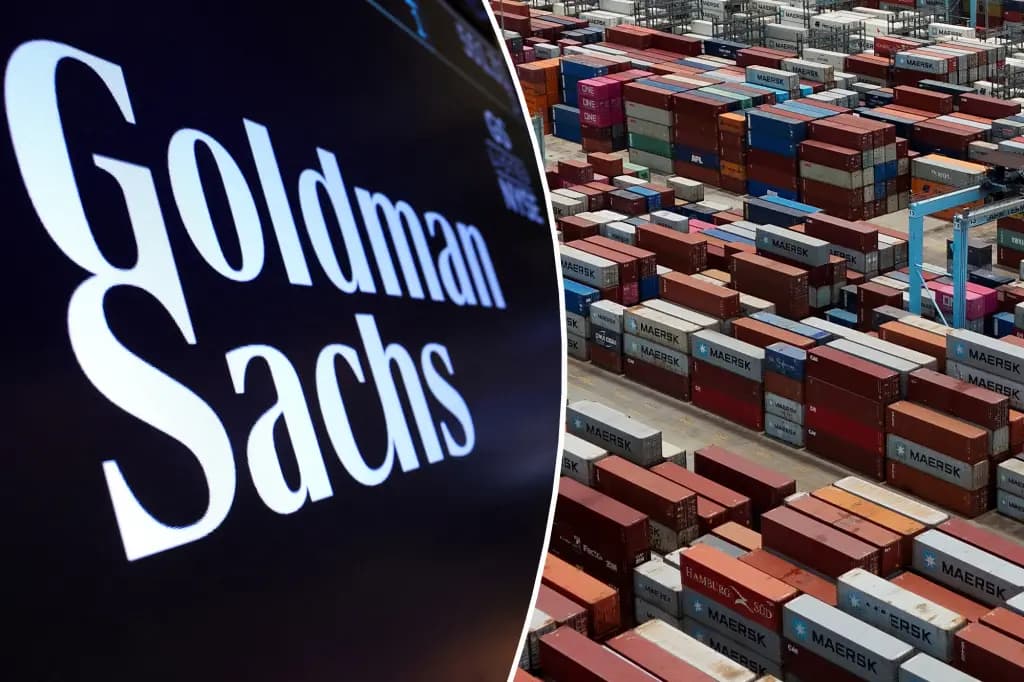
American consumers will shoulder 55% of tariff costs, while US companies will take on 22% and foreign exporters will absorb 18% by slashing prices on their goods, economists including Elsie Peng and David Mericle wrote in the note.
The trading week ending on Friday, 10 October 2025, saw the S&P 500 (SPX) drop over 2.4% from its previous week's close. All of that loss came on Friday, 10 October 2025, which fully qualified as interesting after President Trump indicated he was considering breaking off a meeting with China's premier and was considering new, large tariffs on China.
Stocks fell sharply on Friday after Trump said he would impose a new 100% tariff on imports from China in November after the country announced that was tightening exports of rare earths. The case for watching and waiting also arises from profiling global asset allocation strategies.
The tech industry boarded the AI "crazy train" this summer, and it shows no signs of slowing down.
The latest tussle is over rare earth minerals. Transcript: CAROLINE WOODS: It looks like U.S.-China trade tensions may be cooling off - at least for now.

Torsten Slok, chief economist at Apollo Global Management, joins 'Squawk on the Street' to discuss macro outlooks, what to make of Friday's market jolt, and much more.

Howard Marks, co-chairman and co-founder of Oaktree Capital, joins CNBC's 'Squawk on the Street' to discuss his latest memo, market outlooks, and much more.