
加载中...
共找到 14,297 条相关资讯
The surge in enthusiasm for artificial intelligence has led to concerns that the AI boom is a looming bubble that will eventually burst. The euphoria is drawing comparisons to the dotcom bubble of the late 1990s and the 2008 financial crisis.


The price of gold fell over 5% today, its worst day in more than a decade. Even so, it is still above $4,100 per ounce.
The Dow notched its 12th record close of the year as earnings season hits full swing. Plus, gold has a bad day.

The consumer-price index was above the 2.2% annual inflation economists had expected.
Coca-Cola and 3M led the blue-chip index higher after reporting results.

Vios Advisors' Michael Bapis and BNY's Alicia Levine join 'Closing Bell' to discuss the latest news affecting markets.

New Zealand will ease climate-reporting rules and lift thresholds for how big a company needs to be before it has to report how climate change impacts their business, in a bid to revive capital markets, Commerce and Consumer Affairs Minister Scott Simpson said.
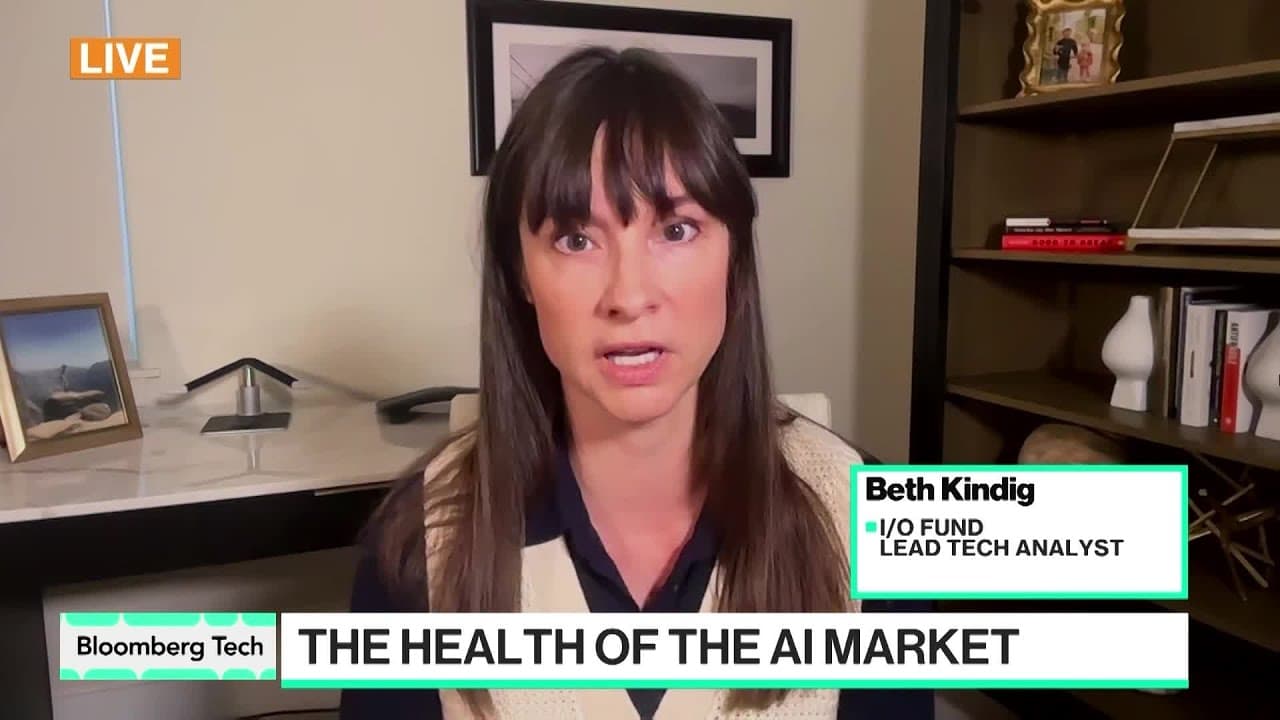
Beth Kindig, lead tech analyst at I/O Fund, says many global powers are concerned about keeping up chip manufacturing because demand is so high and AI is so powerful at growing GDP. She joins Ed Ludlow on “Bloomberg Tech.
Operator: Good day, and welcome to the Flexsteel Industries, Inc. First Quarter Fiscal Year 2026 Earnings Conference Call. All participants will be in listen-only mode. After today's presentation, there will be an opportunity to ask questions. Please note this event is being recorded. I would now like to turn the conference over to Michael J. Ressler, Chief Financial Officer for Flexsteel Industries, Inc. Please go ahead. Michael J. Ressler: Thank you, and welcome to today's call to discuss Flexsteel Industries, Inc.'s first quarter fiscal year 2026 financial results. Our earnings release, which we issued after market close yesterday, Monday, October 20, is available on the Investor Relations section of our website at www.flexsteel.com under News and Events. I'm here today with Derek Paul Schmidt, President and Chief Executive Officer. On today's call, we will provide prepared remarks and then we'll open the call to your questions. Before we begin, I would like to remind you that the comments on today's call will include forward-looking statements which can be identified using words such as estimate, anticipate, expect, and similar phrases. Forward-looking statements by their nature involve estimates, projections, goals, forecasts, and assumptions and are subject to risks and uncertainties that could cause actual results or outcomes to differ materially from those expressed in the forward-looking statements. Such risks and uncertainties include, but are not limited to, those that are described in our most recent annual report on Form 10-Ks as updated by our subsequent quarterly reports on Form 10-Q and other SEC filings as applicable. These forward-looking statements speak only as of the date of this conference call and should not be relied upon as predictions of future events. Additionally, we may refer to non-GAAP measures, which are intended to supplement but not substitute the most directly comparable GAAP measures. The press release, available on the website, contains the financial and other quantitative information to be discussed today. And with that, I'll turn the call over to Derek Paul Schmidt. Derek? Derek Paul Schmidt: Good morning, and thank you for joining us today. I am pleased to share with you our first quarter results. We continue to execute well and delivered strong sales growth and sizable year-over-year profit improvement in the quarter. While industry demand remains lackluster due to challenging macroeconomic conditions, we continued our growth momentum and delivered 6.2% sales growth in the quarter, representing our eighth consecutive quarter of year-over-year growth. Encouragingly, the sources of our growth remain diverse and balanced across our core market initiatives and new and expanded market efforts. In our core, new products and share gains with strategic accounts continue to drive growth. In new and expanded markets, growth is primarily driven by ramping sales in both our case goods and health and wellness product categories. We feel confident that our growth strategies are working and will continue to drive future sales increases propelled by focused investments in consumer research, new product development, innovation, and marketing. While I'm pleased with the success of our consistent line growth over the past two years, particularly considering industry headwinds, I'm also especially pleased with our progress driving meaningful year-over-year profitability improvement. Operating margin was 8.1% in the quarter, up 230 basis points compared to 5.8% in the prior year quarter, and represents our tenth consecutive quarter of year-over-year adjusted operating margin improvement. The levers driving our consistent profit improvement are unchanged and working well, and include benefits from sales growth leverage, effective cost control from strong operational execution and productivity gains, and disciplined product portfolio management, including improved margin profiles from new products. As we look forward to the remainder of our fiscal year 2026, our outlook for industry demand in the broader economy is restrained. While the U.S. economy remains resilient, and the prospect of additional Fed interest rate reductions and the relatively strong labor market, albeit slowing, provide some optimism for economic growth, a weak housing market combined with shaky consumer confidence are expected to be headwinds for the industry near term. Based upon feedback from our retail partners, weekly consumer traffic and sales were especially uneven during the recent quarter, suggesting that consumer sentiment remains fragile given mounting concerns about inflation and slowing employment growth. Additionally, tariffs present a major risk to U.S. furniture demand near term. While we successfully took pricing and cost reduction actions to largely mitigate the adverse impact of the reciprocal tariffs announced in August, on September 29, the White House issued new and larger Section 232 tariffs on imported timber, lumber, and their derivative products, including upholstered furniture. Although the new Section 232 tariffs will not stack on top of the existing reciprocal tariffs, they will be larger and have a broader impact on Flexsteel Industries, Inc.'s business than the previous reciprocal tariffs. For context, in recent quarters, the sourcing mix of our sales was roughly 70% from Asia, largely from Vietnam, which are mostly subject to a 20% reciprocal tariff, and the other 30% of our sales mix was manufactured at our facilities in Mexico and was exempt from tariffs, as our product is USMCA compliant. Under the new Section 232 tariffs, there is no exemption for USMCA compliant product, so all of our upholstered furniture sourced both from Vietnam and Mexico will be subject to the new 25% tariff effective October 14, which will subsequently increase to 30% at the end of the calendar year. Over 90% of our sales are currently classified as upholstered furniture under the Harmonized Tariff Schedule Code, so most of our portfolio will eventually be subject to the 30% tariff. While the new Section 232 tariff will have a dramatic impact on Flexsteel Industries, Inc.'s business, it is also expected to be highly disruptive to the entire U.S. furniture industry. While sourcing mix between furniture imports and domestic production varies by product category, it is generally estimated that imports comprise 65% to 70% of total U.S. furniture consumption. The availability of skilled labor in the U.S. produced furniture is already lacking, so scaling domestic production will be challenging near term in our opinion. As such, we anticipate the tariff change to result in broad price increases for furniture in the U.S., dampened consumer demand, and compressed industry margins in the short term for suppliers, manufacturers, and retailers. As a company, we've had to adjust to major external shifts several times over the past few years. For example, when 2019 tariffs were implemented on China, when upheaval occurred in global supply chains during the COVID pandemic, and when furniture demand dived following a remarkable pandemic-driven surge. As we've demonstrated in the past, our company is agile and ready to respond to major shifts in market dynamics while remaining steadfast in our execution of our growth strategies and key investments to continue gaining market share. We entered this tumultuous period with a solid balance sheet, healthy profitability, and a strong competitive position, and we are well situated to navigate this challenging environment while continuing to invest and gain share. While we're hopeful that either Vietnam or Mexico or both reach trade agreements with the U.S. that lessen the tariff exposure to furniture, we are aggressively pursuing a multi-pronged response plan to mitigate as much of the tariff impact on our business as possible. In the short term, we increased tariff surcharges on our impacted products this month to partially offset the increased cost of tariffs. We were thoughtful in our pricing decisions to maintain our competitiveness versus other market alternatives and to minimize demand declines. We are also prudently pulling back on discretionary expenses while still funding our most critical growth investments. In the midterm, we are evaluating larger structural cost reduction opportunities and alternative supply chain sources. In the near term, we expect the net impact of the tariff change and our subsequent pricing response to adversely impact demand and dilute margins. However, I'm confident that we will identify and execute the right strategies in the mid to long term to continue our current trajectory of profitable growth and shareholder value creation. Despite the near-term turmoil from tariffs, I remain optimistic about the fundamental drivers of long-term industry growth and Flexsteel Industries, Inc.'s position to continue gaining share. We remain committed to our existing strategies and investments to pursue new growth, many of which will be highlighted at the upcoming High Point Furniture Market, which kicks off this week. We will be showcasing another impressive round of new product introductions at market. In total, we're introducing 26 new product groups and 226 unique SKUs. New product has been a significant catalyst for our recent growth, and the magnitude of introductions in this market combined with successful new product launch at April market will put calendar 2025 on track for a record year of new product activations. There are many elements driving our new product success, but it starts with our increased investment in consumer insights. We listen closely to consumers, and we leverage that feedback to ensure every design is shaped by real insights and proven demand. That's why our furniture connects with everyday life. It's comfortable, durable, and stylish in ways that matter to consumers right now. Those consumer insights are also driving our innovation, and there will be several new innovations revealed this week at market. We're introducing our new sub-brand Pulse, which offers power motion furniture with a built-in immersive sound system that transforms seating into a high-performance entertainment experience. With precision-tuned theater-quality audio and synchronized vibration integrated directly into the furniture, Pulse surrounds you in sound that you can feel. Pulse was specifically developed with innovative engineering to differentiate our solutions through superior sound quality, ease of wireless connectivity, and dynamic acoustic distribution to optimize sound by application, such as movies, music, and gaming. We also continue to innovate in the health and wellness category, where our research shows growing demand for premium wellness-oriented seating. While we continue to expand our ZCLINER lineup solutions to address consumers' need for improved sleep, we are expanding beyond sleep to innovate in other health and wellness areas such as restoration. We're introducing our new Zen series, which will lead the way in creating a sanctuary in the home. People today are pulled in every direction: work, family, constant noise, and they rarely have a space to reset. What makes Zen unique is that it looks and feels like beautiful living room furniture while giving consumers a spa-like experience at home. It's our way of helping consumers find their zen, a perfect balance of everyday style and restorative wellness. The Zen series will bridge the gap between wellness and design, positioned between massage and traditional recliners. Zen provides consumers with a place to reset in their home with a perfect blend of comfort, style, and built-in wellness technologies like heat, massage, and ventilation. Lastly, we remain committed to growing our case goods business through our Statements sub-brand, positioned for its superior quality, design, and durability. Consumer research has validated these attributes as top considerations when purchasing case goods furniture. We're introducing seven new collections at market, all developed with distinct on-trend designs and unique features, including lighting, discrete power, hidden casters, and custom finishes and hardware. In addition to our investments in consumer insights, innovation, and new products, we are also elevating our success through powerful marketing in three distinct but complementary ways. First, we are using our consumer insights to tailor marketing positioning and messaging to support product launches targeting specific consumer needs. We've seen great success in retail adoption and consumer engagement from these efforts. Second, we are investing in driving consumer traffic to the stores of our retail partners. Flexsteel Industries, Inc. invested in paid search, paid social, and email demand generation activities to engage consumers and direct them to retail stores. We are partnering with our retailers in unique value-added ways to capture more consumers and mutually increase sales. And third, investing to improve the in-store brand experience. As we drive more consumers to retail stores, we are devoting time and energy to offering stronger point-of-sale materials to support the in-store experience. Our point-of-sale items clearly display our brand and value proposition, helping educate consumers and guide their shopping journey. As a result, we've seen exponentially higher sales of products supported by our point-of-sale materials versus those that are not. To summarize, I'm proud of our team's strong start to fiscal year 2026, encouraged by our outstanding execution of our growth strategies and investments, and confident in our ability to navigate the challenging conditions with tariffs near term to ensure we maintain our long-term trajectory of profitable growth. I'll be back momentarily to share my closing thoughts. With that, I'll turn the call over to Michael J. Ressler, who will give you some additional details on the financial performance for the first quarter and our financial outlook. Michael J. Ressler: Thanks, Derek. The first quarter net sales were $110.4 million, or growth of 6.2% compared to net sales of $104 million in the prior year quarter. As Derek mentioned, this marks our eighth consecutive quarter of sales growth compared to prior year periods and exceeded the upper end of our guidance range of $105 to $110 million. The increase was driven primarily by our Source Sauce Seating products, partially offset by lower unit volume in our made-to-order soft seating products and Home Styles branded ready-to-assemble category. The current quarter includes roughly $2.4 million in pricing from tariff surcharges. Sales order backlog at the end of the period was $66.7 million, which was relatively flat to backlog at the end of the prior quarter. From a profit perspective, the company delivered GAAP operating income of $9 million, or 8.1% of sales in the first quarter. The GAAP operating margin exceeded the top end of our guidance range of 6% to 7.3% of sales. The outperformance to our guidance range was primarily due to leverage on our fixed cost due to higher sales and $700,000 in favorable foreign currency translation on our peso-denominated assets in Mexico, resulting from the peso strengthening against the U.S. dollar in the quarter. As Derek mentioned, through pricing actions and cost reduction initiatives, we were largely able to mitigate the impact of tariffs in the quarter. Moving to the balance sheet and statement of cash flows, the company ended the quarter with a cash balance of $38.6 million, working capital of $116.9 million, and no bank debt. Higher profit and effective working capital management offset annual cash outflows for cash incentives, software, and insurance renewals. Given the level of uncertainty regarding the impact of tariffs on our business, we believe it is appropriate to pause on providing any forward-looking guidance at this time. As the impact of tariffs, pricing actions, consumer demand, and our cost savings efforts become clearer, we will continue to share more information. With that, I'll turn the call back over to Derek to share his closing perspectives. Derek Paul Schmidt: Thanks, Mike. While macro conditions will likely continue to suppress industry growth in the near term, and the new Section 232 tariffs on furniture will exacerbate demand uncertainty, I believe that our exceptional talent combined with our continued growth investments will enable us to effectively navigate the difficulties ahead while keeping us well-positioned to drive attractive top-line growth and earnings long term. Our organization is nimble, and our teams are moving urgently on a balanced response plan to tariffs to minimize the adverse financial impact on the company while still maintaining our growth focus and pace of investments to support continued share gains. We are also staying on the offense. Most of the U.S. furniture industry will be negatively impacted by the new tariffs to varying degrees, and in times of disruption such as this, we will look for opportunities to move faster and think bolder than our competition to further strengthen our position. With that, we will open the call to your questions. Operator? Operator: We will now begin the question and answer session. Please pick up your handset before pressing the keys. Michael J. Ressler: The first question comes from Anthony Chester Lebiedzinski with Sidoti. Please go ahead. Anthony Chester Lebiedzinski: Good morning, everyone, and thank you for taking the question. So certainly an impressive quarter given the operating environment that Derek, you talked about in the press release as well as on the call about uneven demand during the quarter. I was wondering if you could provide more details. Obviously, we had Labor Day in the middle of that quarter. So maybe you can just kind of speak to that as to the trends that you saw as you went from early July through September? Would love to hear your thoughts on that. Derek Paul Schmidt: Yes. What I was referring to there, Anthony, was really, I mean, weekly store traffic and sales as well as our orders were very volatile. And to give you an example, the weeks leading up to Labor Day were extremely weak. The week and the week after Labor Day were extremely strong. And then immediately after that, demand and store traffic dropped again. It's been difficult for us to get a strong pulse on really the overall health of, I think, the furniture consumer because there has been so much volatility, especially on a week-to-week basis that typically isn't normal, certainly in our business or kind of the industry. And I would certainly probably attribute that to, I mean, number one, the uncertainty around tariffs. But then again, there's some uncertainty around just the overall macro environment. And so I think consumer confidence, like I said, is a bit shaky. And so it's not entirely surprising that we saw stronger sales around the holiday period. I think strained consumers are looking for deals in this type of macroeconomic environment, and I think that will be true as we go into the holidays as well. Anthony Chester Lebiedzinski: Understood. Okay. All right. And then thinking about the new tariffs, you talked about putting in place tariff surcharges. Can you comment as far as like what the level of the surcharges was? And I know you're not giving guidance, but maybe you could just help us think about like as far as the impact of those surcharges may have on your sales and gross margins? If any kind of additional help would be certainly beneficial? Derek Paul Schmidt: Yes, Anthony, I'll give you two perspectives. Because we have different businesses, we have our in-stock source product business, and then we've got our made-to-order business out of our Aurora facility. So on our in-stock source business, when the 20% reciprocal tariff was in place, we had an 8.5% price surcharge on those products. And that increased to 15% to cover eventually when the tariff goes to 30%. So effectively, we're headed toward a 30% tariff, and we're passing half of that increase along through surcharges. And then similarly, on our made-to-order business out of our Juarez facilities, I mean, you understand prior to the October 14 Section 232 tariffs going into place, we were USMCA compliant. So there was no tariff on that part of our business. That is going to 30% here by the end of the calendar year. So we did similar to our source business, put a 15% pricing surcharge on those products. Anthony Chester Lebiedzinski: Okay. So I guess it's totally about the impact. Mhmm. Derek Paul Schmidt: Yes. Yes. I think certainly there will be some demand decline as a result of these price increases, not only for Flexsteel Industries, Inc., but I think across the industry. Certainly on the source side, we're seeing all of our competitors take similar, if not larger, price increases in the market. So I think that will certainly impact demand. To what magnitude, I think, is to be determined here in the coming weeks and coming months. Anthony Chester Lebiedzinski: Understood. Okay. And I know you guys have done a great job as far as focusing on new products. Can you speak to like as far as like do you guys have a goal in mind as far as what percent of your sales you want to come from new products or do we think about that? And as far as pricing on those new products relative to the core business, how should we think about that? Derek Paul Schmidt: Yes. I think our long-term goal is 30% to 40% of sales being derived from new products, and we define that as new products launched within the last three years. To give you context here in the first quarter, our sales comprised a little over 50% from new products. So we are certainly delivering on that goal. We know it's a huge catalyst for the success we've had over the last two years, and we're investing aggressively. In terms of how we think about pricing, when we introduce new products, we're constantly trying to cannibalize ourselves. So really the intent is to constantly bring new improved value to our retailers and to our consumers. So we're aiming for better quality, better comfort, better functionality, at a better value. And so in terms of price, it's really we're looking to bring better value to the market at similar, if not lower, prices than our current product. Anthony Chester Lebiedzinski: Got you. All right. And then you've done a nice job also with your case goods business. Certainly understand it's a relatively small piece of the overall business, but thinking about going forward, do you guys have a goal in mind as far as how much you want to increase case goods? What percent of sales could that be at some point? Derek Paul Schmidt: What I want to tell you, Anthony, we do have internal goals. I'm hesitant to share that too publicly just for competitive reasons. The case goods category, to be honest, has been more challenged than other product categories in the industry over the last couple of years. That said, it's still a very, very large category for overall U.S. furniture consumption. And I'm really pleased with the magnitude and the quality of new product that we've come out with over the last several years. So I still feel strongly that we're well-positioned here to gain our fair share. And I do believe that it's going to be a critical growth driver in the years to come. And I think as we start to ramp those up more significantly, I think we'll be more open to sharing details around how we think about our portfolio composition. Anthony Chester Lebiedzinski: Got you. Okay. And my last question, so the tax rate was lower than last year and lower than what we had expected. Was there anything significant in the quarter to affect that, and how do we think about the tax rate for the balance of the year? Michael J. Ressler: Yes, Anthony. In the quarter, there were a couple of discrete items. Number one, just a change in reserve for uncertain tax positions. And then also a little bit higher R&D tax credit and lower foreign taxes were kind of the driver. But I would just say on a go-forward basis, we expect the rate to be a little bit, a couple hundred basis points higher kind of for the remainder of the year. Anthony Chester Lebiedzinski: Understood. Well, thank you very much, and best of luck. And look forward to seeing the new products in High Point. Derek Paul Schmidt: All right. See you on Friday. Thanks. Operator: Our next question comes from William Joseph Dezellem with Tieton Capital. Please go ahead. William Joseph Dezellem: Thank you. Two questions. First of all, relative to your comment that competition is responding in a similar or larger way, would you please quantify the magnitude of price increases that you are seeing relative to your 8.5% to 15%? And then secondarily, I was a little confused when you referenced you had products that were USMCA compliant, but it sounds like the recent tariffs are changing that dynamic. Would you provide, I guess, some fuller picture and fill in the blanks on the dynamics there, please? Derek Paul Schmidt: Yes. Maybe, Bill, I'll start with your last question and then move to your first one. In terms of the USMCA compliance, so when the reciprocal tariffs were put in place, there was an exemption for USMCA compliant product. With Section 232 tariffs, that includes the ones that the White House has put on aluminum, steel, there is no exemption for USMCA compliance. So again, it's a matter of how the new proclamation was written. Certainly, hope is that as Mexico and Canada continue to negotiate with the U.S. administration, they can influence and potentially get an exemption for USMCA compliant. But as of now, the way the proclamation is written, there is no exemption. So that's why the change, specifically how the tariffs were written. In terms of your first question regarding pricing competitiveness, for our source products, again, I described how we're going from a current 8.5% surcharge up to 15%. We've gotten a plethora of competitive information, but we're seeing some of our main competitors go as high as 21% to 25% relative to our 15%. Now there's some other competitors that are slightly lower, but by and large, we're seeing the competitive set pass through these latest tariff increases almost 100% to retailers and consumers. So that at least gives us some confidence here that we are not weakening our competitive position versus other alternatives in the market. William Joseph Dezellem: Taking that one step further, have you heard from any portion of your retail customers that because you are taking prices up 15% versus these higher numbers that you may be getting more business from them? Derek Paul Schmidt: Certainly, it's a possibility. I think, Bill, it's too early to speculate on that. As I noted in my comments earlier, going into our semi-annual High Point market this week, we will have the opportunity to converse with hundreds of our retailers. And so I think we'll get a better pulse on how they're feeling about the changes and their view on how they think it's going to impact consumer demand. But I think it's going to take us probably another five, six, seven weeks here to really get our arms around how the consumer is going to respond to these pricing changes in the market. William Joseph Dezellem: Great. Thank you. Congratulations on a good quarter. Derek Paul Schmidt: All right. Thanks, Bill. Operator: This concludes our question and answer session. I would like to turn the conference back over to Derek Paul Schmidt for any closing remarks. Derek Paul Schmidt: In closing, I want to thank all of our Flexsteel Industries, Inc. employees for their hard work and dedication in driving the company's strong performance during the first quarter. I'm also thankful to all of you for participating in today's call. Please contact us if you have any additional questions. And we look forward to updating you on our next call. Thank you, and have a great day. Operator: The conference has now concluded. Thank you for attending today's presentation. You may now disconnect.

Operator: Good day. And welcome to the Steel Dynamics Third Quarter 2025 Earnings and Chief Operating Officer. The other members of our senior leadership team are joining us in the call individually. Some of today's statements, speak only as of this date, may be forward-looking and predictive, typically preceded by believe, expect, anticipate, or words of similar meaning. They are intended to be protected by the Private Securities Litigation Reform Act of 1995 should actual results turn out differently. Such statements involve risks and uncertainties related to integrating or starting up new assets in the aluminum industry, the use of estimates and assumptions in connection with anticipated project returns, and our steel, metals recycling, and fabrication businesses as well as to general business and economic conditions. Examples of these are described in the related press release as well as in our annually filed SEC Form 10-Ks under the headings Forward Looking Statements and Risk Factors. Found on the Internet at www.sec.gov and, if applicable, in any later SEC Form 10-Q. You'll also find any reference non-GAAP financial measures reconciled to the most directly comparing GAAP measures in the press release issued yesterday entitled Steel Dynamics Reports Third Quarter 2025 Results. And now I'm pleased to turn the call over to Mark. Mark D. Millett: Thank you, David. Well, good morning, everybody. Thank you for being with us on our third quarter 2025 earnings call. Some may suggest hyperbole but are often said we have the best teams on the planet. They proved it once again in the third quarter. Operationally, they executed incredibly well while keeping each other safe and achieved pivotal successes in furthering our significant growth projects. Financially, even with some interim market headwinds and flat roll, we achieved a number of key operational milestones. We had a record steel shipments of 3,600,000 tons. Revenues were $4.8 billion, adjusted EBITDA was $664 million and we had a healthy cash flow from operations of $723 million. At Sinton, we believe consistent operational execution has been achieved. It was a record quarter for shipments, Downstream coating and prepaint product quality has matured. And the value add product portfolio is expanding nicely. Industry participants are recognizing that this is the mill of the future. Our Lilleham team continues to make strong progress in commissioning and ramping operations. Receiving a number of quality certifications in September and October. In particular, our CAN sheet has been performing extremely well with equivalent results to competitive material. Much more to do, but incredibly exciting performance today. And our Biocarbon team shipped their first product in September, We're extremely excited to have this new tool in our decarbonization journey that will further reduce our carbon footprint. From an already industry-leading low level. I continue to be proud of the entire Steel Dynamics team because they are just the foundation of our company and they continue to amaze me. And so we're laser-focused on providing the very best for their health and safety. It is an everyday conversation at every level. Our world-class safety culture continues to mature and our team's dedication to our Take Control of Safety program is extraordinary and continues to produce strong results. Their commitment is inspiring. They consider themselves family and challenge the status quo each day to keep each other safe. But that said, there will always be more to do as we drive toward a zero incident environment as there is nothing more important for us. So with that, I'll hand it to Theresa and to Barry to give some color to the quarter. Theresa E. Wagler: Excellent. Thank you, Mark. Good morning, everyone. Thank you for joining us and thanks to the teams for an exceptional performance. Our third quarter 2025 earnings per diluted share were $2.74 with adjusted EBITDA of $664 million. Both third quarter 2025 revenue of $4.8 billion and operating income of $508 million higher than the second quarter results, driven by record steel shipments and metal spread expansion as scrap raw material costs declined more than steel prices. As we discussed our business this morning, we continue to focus and execute on our transformational growth initiatives. Our steel operations generated operating income of $498 million in the third quarter. 30% higher sequentially based on record shipments supported by an almost 20% improvement in shipments from Stanton and metal spread expansion. Average scrap cost declined $27 per ton, while average realized pricing only declined $15 per ton. For modeling purposes, this quarter's hot band shipments 1,097,000 tons, Cold rolled shipments were 120,000 tons, And finally, coated shipments were 1,486,000 tons. Additionally, we also highlight that our three flat rolled steel production divisions have planned maintenance outages in the fourth quarter, which could reduce volume by as much as 85,000 tons. For the third quarter, operating income from our mills recycling operations was $32 million significantly above our sequential second quarter results. Driven by near record shipments supported by domestic steel demand and steady nonferrous volume, coupled with metal spread expansion. The largest North American metals recycling processing ferrous scrap and nonferrous aluminum. Copper, and other metals. And we're growing to support our increased steel capacity and aluminum flat rolled operations through new and expanded supplier relationships and through the use of innovative separation technologies. Our metals recycling platform is a significant competitive advantage for all of our Our steel fabrication team achieved operating income of $107 million in the third quarter. 15% higher than second quarter sequential results due to increased volume coupled with relatively flat metal spread. Our joist and deck backlog extends through the 2026 with solid pricing. And federal programs, manufacturing growth and onshoring are expected to support domestic fixed asset investment and, therefore, related steel joist consumption in the coming years. Mark D. Millett: Congratulations. Theresa E. Wagler: To the aluminum teams in Columbus and San Luis Potosi. Hitting so many early quality milestones. The energy and momentum are contagious. Related startup operating loss of $57 million were somewhat higher in the third quarter than previously expected as the team's continued construction and commissioning of various areas, while also accelerating testing for beverage can and automotive products. We currently estimate comparative losses to be in the range of $40 million for the 2025. Based on current expectations, we continue to believe our aluminum operations will achieve monthly EBITDA breakeven or better in the fourth quarter of this year. During the 2024 five, as Mark mentioned, we generated strong cash flow from operations of $723 million Of that, operational working capital was a funding source of $126 million. We ended September with liquidity of over $2.2 billion. For the 2025, we believe capital investments will be in the range $200 million and early estimates for capital expenditures for the full year 2026 are in the range of 500,000,000 to $600 million During 2025, we've repurchased $661 million of our common stock or 3.4% of our outstanding shares. At September 30, $1 billion remained available for share repurchases. Since 02/2017, we've increased our cash dividend per share 223%, and we've repurchased $7.4 billion of our common stock. That's over 40% of our outstanding shares. All while maintaining investment grade ratings and growing. These actions reflect the strength of our capital foundation and consistently strong cash flow generation capability. Our capital allocation strategy prioritizes high return strategic growth with shareholder distributions comprised of a base positive dividend profile that's complemented with a variable share repurchase program. While we remain dedicated to preserving our investment grade credit designation. Our free cash flow profile has fundamentally increased over the last five years to $3 billion excluding our large strategic scented and aluminum investments. We've truly placed ourselves in a position of strength. Have a sustainable capital foundation that provides the opportunity for a meaningful strategic growth and strong shareholder returns. We recently announced that each of our company's steel mills achieved global Steel Climate Council product certification. For our customers, this means greater transparency and confidence when sourcing lower embodied carbon steel products from us. And I'm incredibly proud and excited to announce that our Biocarbon Solution team safely produced and shipped their first Biocarbon material in September. And it was successfully used as a carbon replacement at our Columbus Flat Rolled Steel division. Providing an even lower carbon supply chain for our steel customers in the future. The team plans to continue to refine operations and increase production into the first quarter of next year. This achievement marks a pivotal step in our decarbonization journey and further demonstrates our ability to translate innovative concepts into tangible results. A personal thank you to all 73 Biocarbon team members. Decarbonization is a meaningful part of our long term value creation and we're dedicated to our people, our communities, and our environment. We are committed to operating our business with the highest integrity. We uniquely have an actionable path forward that's intentional and manageable and, we believe, considerably less expensive than may lay ahead for many of our peers. We're squarely positioned for the continuation of sustainable, optimized long term value creation. Thank you. Barry? Thank you, Theresa. Barry T. Schneider: Our steel fabrication operations improved their sequential results as volumes increased 12% sequentially. More than offsetting slight metal spread compression. Order activity remained steady in the quarter and our backlog now extends the 2026. Pricing for steel joists and deck bookings remained relatively stable throughout the quarter. We continue to be optimistic for our steel joists and deck platform based on the continued onshoring of manufacturing, continued announcements of significant privately funded manufacturing projects, and public funding for infrastructure and other fixed asset investment programs. Long term uplift of this backdrop could be considerable for all of our platforms. Our steel fabrication platform provides meaningful volume support for our steel operations, critical and softer demand environments, allowing for higher through cycle steel utilization compared to our peers. It also helps mitigate the impact of lower steel prices. Earnings for our metals recycling operation were much higher in the third quarter as metal spreads improved and shipments were at near record levels. We believe scrap prices have stabilized and are likely to remain relatively steady throughout the of the year aside from typical seasonal fluctuations. Additionally, the team continues to expand its access to recycled aluminum for our aluminum flat rolled operations. North American geographic footprint of our metals recycling platform provides a strategic competitive advantage for our steel, aluminum, and copper operations and for our scrap generating customers. Our metals recycling team partners closely with our metals production and teams to expand scrap separation capabilities to advance process and technology solutions. This collaboration helps mitigate supply risk by making more grades of ferrous and nonferrous scrap usable for operating platforms and generally at a lower cost. Additionally, it positions us to significantly increase the recycled content in our products unlocking enhanced earnings capabilities. The steel team delivered a solid quarter with record shipments of 3,600,000 tons. In the 2025, the domestic steel industry operated at an estimated production utilization rate of 78%. While our steel mills operate at a notably higher rate of 88%. This consistently higher utilization reflects our value added steel product diversification. Differentiated customer supply chain solutions, and strong support from our internal manufacturing businesses. Our elevated through cycle utilization rate is a key competitive advantage underpinning our growing cash generation capability. Overall realized steel pricing slightly declined in the quarter due to lower flat rolled steel pricing tied to lagging contracts. Which more than offset increasing structural and railroad rail pricing. Overall, domestic steel inventories remain lean from a historical basis. However, coated flat rolled steel volume and pricing compressed during the quarter due to an inventory overhang related to imports received earlier in the year. Prior to the positive related trade ruling. We do believe that prices have bottomed out and will improve as we head into 2026. Last month, the ITC unanimously voted affirmatively on the final determination that imports of corrosion resistant steel from 10 countries injured The US steel industry. This uniquely positions us as we are the largest producer of nonautomotive coated flat rolled steel products in North America. Together with the announced section two thirty two steel tariffs, these developments are expected to positively impact demand for lower carbon emission US produced steel products. The underlying steel demand remains steady. However, customers continue to exercise caution in placing orders to ongoing changes in trade policies. That said, we believe steel prices have stabilized in the near term with potential for upward movement in 2026. Our Sinton, Texas flat rolled steel mill achieved higher earnings in the third quarter, driven by record shipments a continued efficiency and quality gains. Congratulations to the team. The team continues to make improvements in yield, cost reduction, and quality. They're also continuing toward additional product development to expand our current flat rolled steel capabilities. Meaningful progress has been made on unique high quality API pipe grades, high strength grade one hundred one ten, pressure vessel quality, and OEM qualification packages for our automotive customers. We are seeing increased shipments from SIN's value added coating lines, are strengthening the facility's product mix and boosting its through cycle earnings capabilities. Regarding the steel market environment, North American automotive production estimates for 2026 were released recently revised modestly upward. Yet currently remain modestly below 2025 forecast. Fortunately, our specific automotive customer base has not only remained stable, but have provided opportunities for growth. We have become a supplier of choice for many US based European and Asian automotive producers due to our superior carbon content capabilities. Additionally, numerous announcements have been made concerning a considerable volume of automotive production moving to The US from foreign locations in the coming years. We continue to grow market share in both flat rolled and SVQ steels within the automotive sector. Nonresidential construction should benefit for bond goering from ongoing onshoring activity. Recently announced domestic manufacturing projects, and continued infrastructure spending that are expected to further support fixed asset investment and construction related demand. In the energy sector, oil and gas activity remains steady, with solar continuing to be very strong as producers attempt to benefit from expiring incentives. Overall, we remain extremely optimistic concerning steel demand and pricing dynamics for the domestic producers in the coming years based on the expected demand from new manufacturing and U. S. Produced steel content requirements. With that, I'll return it to Mark Bellett. Super, mister Shire. I appreciate that. Mark D. Millett: Thank you, Theresa. After many years, I think it's clearly evident that our performance driven team based culture in combination with a proven, diversified, and value add business model drives superior financial metrics. This consistently strong operating and financial performance continues to support our cash generation and growth investment strategies. Allowing a very balanced cash allocation strategy that has delivered the highest shareholder returns only among our metals peers, but the best of domestic manufacturers. Our disciplined investment approach continues to support a strong and growing cash generation profile while maintaining a best in class return on invested capital. Our aluminum investments are now a reality and are extremely compelling. Initial operations and commercial activity are confirming our initial investment premise. We believe we will enjoy a unique commercial position. Unlike our entry into the oversupplied steel market some years ago, a significant domestic supply deficit of over 1,400,000 tonnes for aluminum sheet. And this deficit is forecasted to grow. Even before tariffs. In 2024, that deficit was supplied through high cost imports, which are now at an even higher cost as the tariffs increased from 10% in 2024 to the current 50% level. There's a clear alignment with many of SDI's core competencies. Construction capabilities have been once again proven Both Columbus and SLP are state of the art assets. If you just think about it for a second, shipped our first coil within twenty four months of groundbreaking. And here we stand today twenty seven months from groundbreaking and we're shipping prime product to the can sheet in automotive market. That's an absolutely incredible incredible performance My hats off to the team down there, to Glenn Pushers, and to to Greg Wiggum, everyone. For for making that happen. It's an absolutely beautiful, beautiful facility, work of art. We also lever our deep operational know how have an extensive and successful experience operating melting, casting, rolling type assets. And our performance driven culture will drive higher efficiency and lower cost operations. Just as we did when we entered the steel industry some thirty plus years ago. It's it's demonstrated and the teams will achieve We have an advantage commercial position. Two thirds of our carbon flat rolled steel customers also consume and process aluminum flat rolled sheet. Growth and penetration into the automotive sector will complement our existing steel position and give customers product optionality. The countercyclical beverage can market which in conjunction with the more stable earnings profile experienced through the years within the aluminum space, will further enhance the consistency of our through cycle cash generation. Our raw material platform will facilitate higher recycle content. We are the largest North American metal recycle including aluminum. We we recycle already around about half a billion pounds of aluminum per year. And we've successfully developed new separation technologies allowing us to have both more access to usable aluminum scrap at a lower cost. Operation experience thus far is is confirming our earnings differentiation. We've advertised and do believe that through cycle EBITDA, of 650 to 700,000,000 is absolutely achievable. Plus an additional 40 to $50,000,000 for our omni operations. The key areas of advantage remain labor efficiency, higher recycled content, higher yield and optimized logistics along with our low cost culture. There's no doubt, this strategic investment is a cost effective and high return growth opportunity. Providing SDI with additional countercyclical diversification further stabilizing and growing our cash generation capabilities. And for those that have been there, you understand it. The 650,000 metric ton project is no longer a vision. It's clearly here. As our aluminum growth has become a reality, our reputation permeates the industry, aluminum professionals with vast experience have joined us in this exciting project. They see the vision and are energized by our culture. Where they realize that they will be heard and can have a real impact. They have helped us build a phenomenal team. That combines in-depth knowledge of aluminum flat roll operations, commercial markets, process technology, and custom service. Complementing our SDI professionals that bring our performance driven entrepreneurial culture. We're finding the customer base is excited to have a new market that is known to be innovative, customer focused, and responsive to their needs. For us, as in with steel, business relationships are long term. Founded on trust and the continuous goal of creating mutual value. Not simply financial value, but new supply chain solutions new products, better quality, and better service. We are seen to react with surprising speed. Many customers have just seen that with the recent supply side challenges in the market. The timing of our ramp up has been fortuitous. Allowing us to help the market while accelerating our material qualification. We've received approvals for industrial and can sheet finished products, and for automotive aluminum hot band. Earlier this month. This accelerated certification should allow us to shift our product mix to a higher margin mix in 2026. Reaching optimization sometime in '27. Three of the four male cast houses are fully commissioned at Columbus, and have produced 3,000, 5,000, and 6,000 series ingots. For the industrial, can sheet and automotive sectors, for rolling mill commissioning, product development, and commercial shipment. The hot mill is completing its commissioning, having run three double o three and fifty fifty two industrial, thirty one zero four can sheet, and fifty seven fifty four auto grade material. The code reversing mill is in startup and is successfully producing three double three, 5,052, and 3,104 alloys. Tandem well number one will be starting up in November, and then tandem mill number two the cash line are on schedule to be available. In the 2026. And it is it's it's absolutely incredible if you walk through the plan. Because the team is incredibly excited with the earlier than anticipated product certification. It is a testament to the phenomenal talent we have on the team. And there's great energy, great momentum. We anticipate exit exiting 2026 at a rate of 75% capability. We expect to achieve monthly EBITDA breakeven sometime in the fourth quarter. And increasing thereafter as we continue to ramp and optimize our product mix. Across our business, evolving market dynamics provide an opportunity for us to further enhance our earnings potential. The renewed focus on strategic mercantilist policies to ensure fair and sustainable competition will further improve market strength. The recent coated flat rolled steel positive trade determination will further curb core and pre paint imports, and we're seeing that already. The administration continue to hold a firm position on 32 tariffs on steel and aluminum imports. And the inclusion of tariffs on steel content of derivative products including fabricated structural steel. Has played the domestic industry for years, will be a substantial benefit. One has to consider that in in twenty four, some 30 to 35,000,000 tons of steel came in through actual products. And then last year, obviously, the successful sunset reviews of section two zero one and three zero one trade cases. Will remain in place for some years. Stopping dumped Chinese steel from accessing our market. We will benefit from growing fixed asset investment correlates directly with increased steel demand. Risk mitigation to address numerous supply chains at dislocations is accelerated and reshoring of manufacturing by many OEMs. AI and cloud computing will support the need for more nonresidential construction along with data centers, chip factories, and battery plants. We believe that it obviously will be associated positive stimulus through the inevitable interest rate reductions should happen this year and next. And finally, decarbonization. Will materially steepen the global cost curve providing Steel Dynamics with a meaningful competitive advantage. To gain market share and increase margins. More importantly, we continue to be impassioned by our current and future growth plans. As they will continue to drive the high return growth momentum we have consistently demonstrated over the years. The earnings growth of these new projects is compelling. Capital spending for Sinton, the four value add lines, and Lumodynamics is largely spent for the projected future through cycle EBITDA contribution. Of over $1.4 billion Steel Dynamics has grown to an incredibly resilient cash generating business of scale and diversification. Driven by the best teams, as I already said. In the world. The model has now demonstrated itself year after year delivering financial metrics equivalent to best in class manufacturing com companies. We are fortunate, and at the heart of that good fortune, are our people. They are the foundation of everything we do and I want to personally thank each of them for their passion their commitment, unwavering dedication. And we're committed to them. And I remind those listening today that safety for yourselves, your families, and each other is our highest priority. Always. And I would also be remiss not to express my gratitude to our loyal customers many of whom have been with us since the beginning. These partnerships are built on mutual trust keeping our word and delivering innovative solutions that enhance your value. Our new aluminum partners can expect the same level of commitment and collaboration. And to our suppliers and service providers, thank you. We value continued support the strong relationships we've built together. Our culture and business model continue to differentiate our performance, leading best in class financial performance. And as a circular metals business, we are uniquely positioned to offer lower car supply chain solutions. Enhancing sustainability while helping to mitigate cash flow volatility through all market cycles. This positions us to deliver superior shareholder returns and create lasting value for all. Stakeholders. So we look forward to creating new opportunities for all of us and today and in the years ahead. And with that said, Ali, we would love to open the line for questions. Operator: Thank you. Mark D. Millett: The digit one on your telephone keypad. Operator: If you are using a speakerphone, please make sure your mute function is turned off to allow your signal to reach our equipment. If you pressed star one earlier during today's call, please press star one again to ensure our equipment has captured your signal. Also, we ask that you please limit yourselves to one question to facilitate time for everyone. Any additional questions can be addressed upon reentering the queue. Thank you. Our first question is coming from Katja Jancic with BMO. Your line is live. Katja Jancic: Hi. Thank you for taking my question. Maybe starting on the aluminum rolling mill and the quality qualifications for your the products you received so far you talk a bit more what that means for your commercial activities? Specifically, does that open the door for you to start negotiating more longer term contracts? Mark D. Millett: Well, I guess, firstly, the accelerated qualifications that we've been receiving is absolutely incredible, given where we are on our learning curve. As you might recognize. You know, can sheet, has been supplied to most of the principal can makers today. For qualification. Early performance is again, it's just incredible. And when the team sent me a video of the very first coil, going through a can line, with flawlessly. It was something to be someone to behold. Obviously, we are also having some good progress within automotive. I think what it does it accelerates the value or the product portfolio mix into next year. And, you know, we've always said that we hit our target mix in 2027. I think we'll see that earlier in '27 than we were expecting. Theresa E. Wagler: But to answer your other question, Katya, we are negotiating longer term contracts both in the sheet the can sheet, as well as in the automotive. So, yes, that has helped. But we had considerable traction, I think, throughout the third quarter as we were starting up. So more to follow on that. Maybe if I just can quickly squeeze one more. On the twenty sixth, how should we think about the mix between industrial, can, and auto? The most significant difference, Katja, is that earlier on, we wouldn't have expected to have very much volume in automotive. Specifically, and we have full confidence, and we were getting to think, appropriate amount of mix as it relates to can sheet in 2026. As you'll remember, the optimized mix for us is 35% automotive. I think is it 40%, Mark? Can Sorry? 45%. 45% can sheet and the remainder industrial. So we feel pretty confident in that can sheet mix for 2026. But what's changed is we would expect to not reach full optimization in automotive in 2026, but we'll provide more feedback as we get further certified. Because as Mark pointed out, for automotive right now, we're just certified on the hot band. Side. Perfect. Thank you. Operator: Thank you. Our next question is coming from Tristan Gresser with BNP Paribas. Your line is live. Tristan Gresser: Yes. Hi. Thank you for taking my question. Just following up on aluminum. If you could provide maybe an update on the target exit run rate for this year or maybe what you expect in Q1 so we can get a better sense on what you expect in terms of volumes And I think you were initially expecting positive EBITDA in Q4. So what drove the lower number? Any sorts of delay or anything you can share there, that'd be great? Theresa E. Wagler: So, Tristan, I just wanna clarify. So we are still expecting to be positive breakeven to sorry. EBITDA breakeven to positive in the fourth quarter. So that hasn't changed. What has changed is this the certification of the more complicated products is taking place more quickly than we expected. So there are some higher costs associated with that. So that was one of the things that I talked about in my opening comments as it relates to the third quarter impact. That said, we haven't been specific about how we're going to ramp in 2026. But what we have done is provided substantiation that we still are very confident in exiting the year at least at a 75% utilization. Rate. And as it relates to 2025, there's a lot of moving pieces right now. So we don't wanna get into utilization because it depends on the product mix to a large extent. Tristan Gresser: Okay. Alright. That's, that's fair. And maybe just a quick one on the free cash flow. I mean you have a very strong free cash flow outlook If you can talk a little bit about your priority in terms of capital allocation into next year. You mentioned CapEx will be between $500 million $600 million Is growth on the agenda for next year? And if so, what are the options you may consider as upstream steel, aluminum? Are you considering maybe different types of metallic asset that could be on play in the region? So any color there would be great. Thank you. Theresa E. Wagler: Mark can speak to, what things might look like, but just to give you some specificity around the 500 to $600 million, Tristan. As a reminder, our sustaining capital is generally around 200 to $250 million. And then we still will have a tail associated with the aluminum project and a little bit on the bicarbonate project as well. It just depends on the timing as we proceed through the end of this year. So that is a preliminary number. But, Mark, I don't know if you wanna give any context to what other growth opportunities we might be looking towards. Mark D. Millett: Which is generally on the cash allocation broadly, I think, you know, with our strong liquidity position and the through cycle cash generation that will come through next year. And the years after. We can retain our balanced cash allocation profile. So one can expect an increase in the dividend, I would think, you know, a positive profile will continue into next year. We feel that the company is selling at an incredible discount today? Relative to other potential investments one might make. So we'll continue to buy our shares back. Again, we're doing that not because necessary our shareholders just want us to, or where we think it's a flavor of the month It really is buying a company that is discounted, a quality company that we know with a phenomenal team, phenomenal assets. Expanding from that, we still have a team that is innovative and creative They've got a pipeline of organic possibilities. Both in steel and in aluminum. And that will access new products new product lines for us. Now those aren't massive $3 billion greenfield steel mills, but, smaller projects, but very, very high return, high reward. And then, obviously, there's the possibility of M and A activity out there. But you'll But just one on one highlight, I guess. But you will continue to see us adhere to our disciplined investment approach I think we have the highest return on invested capital in our space. For a reason. We're disciplined. And we buy we buy good assets with real return real future return. And you'll see that going forward. Tristan Gresser: Alright. That's clear. Thanks a lot. Operator: Thank you. Our next question is coming from Timna Tanners with Wells Fargo. Timna Tanners: Yeah. Hey. Good morning. I wanted to if I could on the aluminum question. So, you're, you know, you're starting up and getting qualified on hot band just when there's a player in the market that needs hot band. So could you address that ability to supply Novelis if possible? And then if you could just comment on the additional CapEx, I believe comparing the presentations that there's another $200 million that was attributed to the aluminum start up, if you could elaborate on that. Mark D. Millett: Well, Timna, again, thanks for your questions. We will not comment on where our material is going. I think the aluminum space is, is a lot more shielded from a confidentiality standpoint relative to steel. And so most of our relationships are under CA or NDAs. So I can't really speak to that. Other than it's absolutely phenomenal that, the team in such short period of time is accessing those sorts of sorts of markets. Relative to the CapEx, yeah, it did expand. And again, in all honesty, it's kind of the wind down of the project and just clearing up all the construction. Contracts. But I think more importantly, the last three months it has been in particular, it's been incredibly difficult to get electrical talent with all the data centers, etcetera, being built we found our contractors sort of drifting away from us. And there was a substantial increase in the cost to cover that and maintain our schedule. Timna Tanners: Got it. Thanks. If I could squeeze one more in, there was a comment yesterday that there's a view that customers would be switching away from aluminum back to steel because of the availability, not something we'd heard before, and just would be interested to get your thoughts on that as you're now in both markets. Mark D. Millett: Well, I think, obviously, if you're an aluminum consumer and you've seen the sort of supply chain risk that they've just gone through, you've got to ask that question. I think and you've heard us say this before. As we got into the aluminum space, and looking for oil just looking doing our due diligence for the ADI project. Automotive makers would have actually consumed more aluminum over recent years if there was more supply. So are they questioning aluminum? I don't think so. Aluminum is an incredibly important material. For their future plans. We coming on to or coming into the marketplace will allow them optionality and greater redundancies through the supply chain. So I think that issue or that question will sort of mitigate be mitigated going forward. Timna Tanners: Got it. Great. Thanks again. Thank you. Operator: Our next question is coming from Lawson Winder with Bank of America. Your line is live. Lawson Winder: Great. Thank you very much, operator, and good morning, Martrice and Barry. It's nice to hear from you. Thank you for the update, and sincere congratulations on the success at Aluminum Dynamics. What I wanted to do is just follow-up, Mark, on your comments on capital allocation and that you noted that you know, M and A might be a possibility. Can you give us a flavor of where there might be opportunities to improve the business through M and A, whether that be in downstream or upstream or raw materials or otherwise. Mark D. Millett: We would steer away from raw materials. I do believe. I think it's just it would be aligned or parallel our previous commentary in downstream strategic sort of pull through volume type opportunities. Where we can either lever, you know, or exploit our core strengths So downstream in coding you know, the painting, those sorts of value add opportunities for sure. In value add, sort of manufacturing to some degree? As long as the volumes are there and it makes sense. But no. Not upstream Our raw material space, it would with Omnisource, you know, with the largest North American recycler of Ferrocen non ferrous goods today. That's in great shape. You might see a little read from a regional standpoint, a yard here or there. But no major thing. So, yeah, downstream value add as we pursued in the past. Lawson Winder: Okay. Fantastic. Thank you. Operator: Our next question is coming from Phil Gibbs with KeyBanc Capital Markets. Your line is live. Philip Ross Gibbs: Hey. Good morning. Mark D. Millett: Good morning, Phil. Philip Ross Gibbs: Sounds like based on your comments that Rail is pretty strong. Any context just broadly you can give on that market and then maybe give us a feel for how much of the rail mix is a part of your structural shipments right now? Barry T. Schneider: Phil, this is Barry. We committed, many years ago to be in the real market because it's essential that they have a reliable, high quality supplier at all times. So when wide flange is strong, you might see a smaller ratio. But in general, we try to stay exactly where the customers need us to be. It remains, within percentage points of where it always is coming out of Columbia City. And we're resolving our contract relationships for next year right now, but we anticipate growth in that segment. And the team is doing an excellent job with availability of trains to get the product distributed easier, quicker. And quality wise, we're working on, even better products. Coming in the next year or so. Based on some trials they've been doing. It remains a good part of our business, but in a window that we always keep it. So it try not to surge it too much one way or the other. Philip Ross Gibbs: Thank you. And I just have a follow-up on the flat rolled side of the business. And specifically at Centen and just an update maybe on how the downstream lines are running and how much yield improvement you have left there. And then, Theresa, I also missed the comments you made on the flat rolled mix. Thanks very much. Theresa E. Wagler: Sure. No problem. I'll grab that, and then Barry can comment I'll comment on the downstream units. We're very excited about the quality that the team is getting out of the new lines that are added as well as the existing paint galvanizing line Galvalume is a very difficult product to make. The team is really risen to the occasion. There is a learning curve, and we went through that earlier this year. To the point where we are seeing excellent yields, excellent produce prime products, and our distribution system and our customer base is going through approvals. A lot of the product there goes into contract type business with OEMs, and those trials are ongoing and very good. So we believe Centen will have the full breadth of a product mix to offer as the markets return. As I mentioned, there's a little overhang and the galvanized still out there. We think that's diminished. We think it's gonna be behind us here in months. The imports coming in the country, have substantially, tapered off. We believe the playing field is gonna be level and based on good feelings, we think next year is gonna be outstanding for sending the really realize all the hard work they've been putting in. So, Phil, for the shipment, the hot band was a 97,000 cold rolled 120,000, and coated 1,486,000. Philip Ross Gibbs: Thanks, everyone. Theresa E. Wagler: Thanks, Phil. Phil, if I could just add, because the question around structural tended to be rail rail centric. Just looking at the long products market in general, we're finding that to be incredibly strong and robust. And believe that we'll certainly continue, you know, nonresidential is in good great shape And we see on the, you know, on the fabrication side, there's a lot of engineering sort of permitting detailing, work going on And it would be our view that, come the first quarter in twenty six, we're gonna see a nice return of that volume as well. Operator: Thank you. Our next question is coming from Carlos De Alba with Morgan Stanley. Your line is live. Carlos De Alba: Yes. Thank you very much. Hi. Good morning, everyone. So I wanted to check, Mark, you mentioned that you saw some headwinds in the flower business. Has the situation improved as we get into the fourth quarter? If you can give us a little bit more color as to how that part of your steel business is shaping out. Mark D. Millett: Yeah. I think the headwind obviously was principally the inventory overhang. Which as Barry just suggested is eroding and should be depleted by the end of this fourth quarter. And with the almost non existent import profile, first quarter should be in good shape. I think you started to see that hot band pricing soften through the quarter, yet in mid September, it kinda turned up And I think we will see sort of slow but positive move through the end of this year. And as Barry said, we are quite optimistic. Throughout the rest of Or robust for Q1 and Q2. '26. Carlos De Alba: Alright. Fair enough. And then just maybe complementing on the growth. I ahead. Given the early success that you have had on the aluminum business, and your comments on demand being limited perhaps by supply. Would you know that you didn't talk about potentially getting more into the aluminum business. Is this something that you might consider? Is it too early? Yeah. Any color there? Mark D. Millett: Well, we wanna make sure we walk before we run. I gotta say here, the team down there is starting to sprint. Because they're incredibly excited and I'm you know, I wanna see incredibly excited by what those folks are doing. It's an incredible mill. There's absolute opportunity Carlos, in aluminum. There's no doubt about it. We will see how things go over the next six eight months or so. But there is definitely growth opportunity there. Both in downstream we could envision, you know, sort of exploiting or leveraging our pre paint capabilities It's one of our highest margin product lines today. And the team would be incredibly effective to cope the thousands or millions of pounds of aluminum that gets painted every year. And then we do believe there's still clear room for a larger asset. The mill asset. Theresa E. Wagler: Yeah. Just as a reminder, Carlos, and I know some of you would have this top of mind, but for those that may not, you know, even prior to 50% tariffs, the deficit of flat rolled sheet in The US was over a million and a half metric ton. We're only adding 650,000, and then I think there's another project that might may add another incremental amount, but that deficit's growing. And that's without tariffs. So then when you place that 50% tariff into the equation, it just really does we would never invest based on that. But the point is that there's a real need structurally independent of trade action. Carlos De Alba: Thank you very much. Operator: Thank you. Our next question is coming from Andrew Jones with UBS. Your line is live. Andrew Ian Jones: Hi. Couple of questions. Just firstly, on Sindhin, just get an idea as to how much that's having to the to the EBITDA. Can give us any sort of breakout for profitability of that? And I've got second question on tax if you wanna start with first. Theresa E. Wagler: Sure, Andrew. And as soon as you said tax, both Barry and Mark looked away. Yeah. I think I wanna so sentence specifically, Andrew, as a reminder, said that they're through cycle EBITDA capability on an annual basis. But it's through cycle, so we're not making a determination where the market is at this point in time. It's between $475 million and $525 million. And what I wanna do is take a step back because I think there's a bigger picture item that it would be helpful to discuss a little bit. And that's that Mark mentioned, I mean, we've talked about in the past that in the last five years, the fixed asset investments in aluminum, in Sinton, and in the floor flat roll coating lines has been, you know, over $5 billion. Just about $5 billion. Associated with those three projects is about $1.4 billion of through cycle EBITDA capability. And we really haven't been able to utilize that up until this point. And so as we think about 2026, and we think about where the facilities will be from a maturity standpoint, including the ramping of aluminum Of that, you know, incremental additional earnings power, you know, we think that we should have the ability to access on a through cycle basis. So, again, we're not making a determination of what that market will be like. But if it were through cycle, we really think we would have the ability to access somewhere at least no less than 60 to 65%. Of that number. So there's a lot of earnings potential that people may not understand is incremental structure to Steel Dynamics because of the investments we've made over the last five years. Andrew Ian Jones: Yeah. No. No. We work that's that's why I'm asking West, I guess. I'm just wondering, you know, what the annualized contribution was in the third quarter. Therefore, what's the delta of symptom specifically? Going forward? Theresa E. Wagler: So we won't give that specific information Suffice it to say, Sentin was EBITDA positive, but not the magnitude of that through cycle number. And then you said you had a tax Andrew Ian Jones: Yeah. No. It's about the deferred tax movement on the cash flow, which boosted free cash this quarter. Just wondering if you could explain the origin of that and how you're what the moving parts are in the coming quarters with regard to tax. Because I guess you've got a few things. Obviously, you flagged this $2.50 mil impact for the, you know, for the Ali project, and you've also I mean, there's obviously this big, beautiful bill, accelerated depreciation stuff going on. I mean, can you just give us an idea for how we should think about, like, effective tax rates and the actual equivalent of the actual cash tax profile in the coming quarters? Theresa E. Wagler: Yes, certainly. So it was a big boost to the third quarter because that when we were able to adjust for the for the tax bill changes, which included additional research and development benefits as well as most importantly, the acceleration and depreciation as our aluminum assets are getting placed into operations. So that benefit of a $147 million you're referring to, most of that was in the third quarter. You won't see that magnitude of increase in the fourth quarter. The way you should model cash taxes for 2025 is probably at a rate of about eight to 9%. And then for 2026, I would model cash tax closer to 15 to 16%. And the effective rate probably closer to 23%. Andrew Ian Jones: Okay. That's super clear. Alright. Thank you. Mhmm. Operator: Thank you. Our next question is coming from Mike Harris with Goldman Sachs. Michael Dwayne Harris: Yeah. Thanks for squeezing me in. As we look at you consuming more bio carbon material to lower your carbon footprint, How should we think about what that could potentially do to your cost structure? Theresa E. Wagler: Oh, it's a good question, Mike. So from a cost structure perspective, it really probably won't have a material impact for you to be able to observe from the outside in. It is a joint venture, so we are, you know, transacting as we would at a market price. To our steel mills. The joint venture is with Aimmune who has the IP associated with it. But what it does offer is an opportunity for us to offer an even lower carbon product And we do believe we're already seeing some customers that are providing premiums Not something that we're talking about at this point more broadly in specifics, but we think it'll open the door for even more opportunity on market share, specifically in OEMs, specifically more in the flat rolled side of the business. So there's a lot more we'll talk about as it relates to bio carbon in the future. They should be operating continuously here starting in November, so it'll take a minute before we're supplying, you know, as much into the steel mills as we'd like. But you shouldn't see a dramatic impact on the cost side at this point. Michael Dwayne Harris: Okay. That's very helpful. And then just one last one if I could. Of the record shipments you saw in the third quarter, were there any material onetime sales included in that? Theresa E. Wagler: No. Nope. It was just ramping up of Sinton, and then we had some record shipments out a couple of them under of our flat roll facilities as well as really a lot of strength and demand, as Mark pointed out, in the structural arena. Michael Dwayne Harris: Okay. Perfect. Thanks a lot. Theresa E. Wagler: Yep. Thanks, Mike. Operator: Thank you. Our next question is coming from Bill Peterson with JPMorgan. Your line is live. William Chapman Peterson: Yeah. Hi. Good morning, and thanks for taking my questions as well. I wanted to talk about the steel mill shipments in the fourth quarter. You called up the eighty five ks planned maintenance, but guess, is there anything else that we should be taking under consideration For example, you know, things or seasonal trends, or also take into account imports, which seem to be at a very low level or maybe potentially abating further. Get a sense on how to think about shipments relative to maybe the last five years of flat to down 5%. Theresa E. Wagler: So you guys are so You always try to come at it from a different angle. And that's a compliment, Bill. For the fourth quarter, we just wanted to call out the maintenance because, generally, we don't have all the maintenance in the same quarter as we are this time. So we felt like it was impactful enough to call out. But, we do still believe there's going to be seasonality, whether it's the same as it's been the last five years, I can't really comment to that. But you will see seasonality in the volumes in addition to what you're seeing from a maintenance perspective. Barry, Mark, do you have anything to add? Barry T. Schneider: The outages are just our regular attempt to keep our assets performing at the absolute tip top condition. We plan them long in advance and this is strange that we have all the mills taking some time in the fourth quarter. But all are great projects that continue to make our shops the safest in the industry and most efficient possible. William Chapman Peterson: Okay. Thanks for that. And Not sure if this is crafty or not, but how should I think about your overall your overall strategy in auto? I know you're an emerging player in aluminum, but thinking about your steel, is this a market where you're looking to gain share? And if so, how should we think of that? And on unfolding in the coming years? Or is really this business going to kind of grow with your existing partners, assuming they grow their U. S. Footprint in order to avoid tariffs? Barry T. Schneider: We are, real excited about the automotive business that we're doing I think the opportunity for, our customers to purchase a low carbon content product really enhanced our relationship early. And since starting to do business with us, our teams operate very efficiently, very smoothly, and without much bureaucracy. So I believe our teams have a great position relationship They've been working really hard this past year with all the tariff changes. To allow us to continue to do what we do best for the automotive industry. We do see it growing when we built Sinton, that was part of the design to be close to, the automotive base with some high value steel products. The facility was designed with that in mind. So as that ramps up and, we have OEM packages in to all of our customers, from that facility. We anticipate the growth organically happening. We see it as good products, and we're appreciative that the customer base recognizes that. We received an outstanding award from Volkswagen in the second quarter, which was really surprised and we were absolutely thankful to receive that. But it really highlights our position. We have a very low carbon footprint. We have a very engaging position going forward that doesn't change our cost structure. We've engaged on renewable energy and nuclear energy across our flat roll platforms. So we are ideally situated to grow our business there. And we're gonna grow it where it makes sense and listen to our customers and have great discussions with them. William Chapman Peterson: Yeah. Thanks, Barry, and Mark, for all the great color on this call. Thanks again. Operator: Thank you. Our final question today will be coming from John Tumazos with Independent Research. Your line is live. John Charles Tumazos: Thank you. Mark D. Millett: Hi, John. You good afternoon. John Charles Tumazos: Could you explain the $27 drop in scrap cost given that the steel business is strong Calvert, Alabama, starts up a new melt shop right now, etcetera. Is it from lower iron ore and coal prices and China selling lots of slabs and other steel, etcetera. And then second, would a reasonable guess for aluminum be $2.40 to $2.50 a pounds sales realization with the big Midwest premium. And maybe a dollar 40 production cost with 93¢ UBCs. Mark D. Millett: Well? Taking a number one, the scrap dropping off $27 It obviously, John, as you know, scrap is the in my mind, the most transparent fluid commodity out there, and it's just supply demand. The and and and all of the and and 20 whether it's the $27 in the broad scheme of things, is not it's more noise than anything else. Directionally, I think it's important, but it's more noise. You know, in the old days, $10.15, $20 move would be monumental today. It's it it stopped. Not too much. Again, in the dynamics of scrap, with the segregation technologies that are today, the shred one and all these things. There's greater optionality of flow And I think that's just bearing fruit. And we've always said, or always suggested that we don't have a major concern that others have had over the years that, oh my goodness, Yeah. Yeah. Flat roll is gonna continue to grow and scrap is gonna be a problem. In fact, if you look at a lot of the new projects coming online, that they're most of them anyway are having some CRI type version I and associated with them. So even though the production capability of the domestic industry is increasing It's not at the scrap consumption is not at that same rate. We still remain confident that scrap will remain in reasonable at a reasonable level. And that going forward, spreads will remain very high if not increase to be honest, going forward. Relative to your question on aluminum, I will refrain. To be honest, and it's a little bit more complicated as you can appreciate also you know, it depends on which grade, you know, is it automotive, is it can sheet, is it industrial, It is all over the map. Suffice it to say, we do believe that our returns that we've advertised are more than achievable. John Charles Tumazos: I'm glad to be a shareholder. Thank you. Theresa E. Wagler: Thanks, John. John, we appreciate we appreciate you being a shareholder all those years. And challenging us. For sure. And just to finish up would like to thank all shareholders that support us that are on the call. As I have to joke to them, if you're not a shareholder, you should be. Because we will endeavor to perform and use your dollars just as though there are our dollars. Couple are just point I customers that are on the line. Thank you. Thank you for your support. Particularly, would like to welcome any Ali customers that are on the line. It's been a pleasure to engage with you. And just in the last three, four, five weeks of market chaos, in your space, it really has been refreshing for us and hopefully refreshing to you because we do bring a different approach. From a sort of a con customer relationship standpoint. We truly will partner with you going forward And lastly, any SDI, folks on the call, absolutely hats off to you. You do a phenomenal job each and every day. You do make a difference. You are the best deal metals team on the planet. Just make sure you keep safe and keep each other safe. Thank you all. John Charles Tumazos: Thank you. Operator: Once again, ladies and gentlemen, this does conclude today's call. We thank you for your participation, and have a great and safe day.
Operator: Good day, and welcome everyone to the Lockheed Martin Corporation Third Quarter 2025 Earnings Results Conference Call. Today's call is being recorded. At this time, for opening remarks and introductions, I would like to turn the call over to Maria Ricciardone, Vice President, Treasurer and Investor Relations. Please go ahead. Maria Ricciardone: Thank you, Sarah, and good morning. I'd like to welcome everyone to our third quarter 2025 earnings conference call. Joining me today on the call are James Taiclet, our Chairman, President and Chief Executive Officer, and Evan Scott, our Chief Financial Officer. Statements made today that are not historical facts are considered forward-looking statements and are made pursuant to the Safe Harbor provisions of federal securities laws. Actual results may differ materially from those projected in the forward-looking statements. Please see Lockheed Martin Corporation's SEC filings, including our 2024 Annual Report on Form 10-Ks, subsequent quarterly reports on Form 10-Q, for a description of some of the factors that may cause actual results to differ materially from those in the forward-looking statements. We have posted charts on our website today that we plan to address during the call to supplement our comments. These charts also include information regarding non-GAAP measures that may be used in today's call. Please access our website at www.lockheedmartin.com and click on the Investor Relations link to view and follow the charts. With that, I will turn the call over to James Taiclet. James Taiclet: Thanks, Maria. Good morning, everyone, and thank you for joining us on our third quarter 2025 earnings call. Lockheed Martin Corporation delivered strong operational and financial performance across all four of our business areas in the quarter. We secured a number of significant wins across a range of our marquee that drove our backlog to a record high of $179 billion. Our relentless attention to operational execution in every facet of our business resulted in elevated sales growth and substantial cash generation as well. Meanwhile, we are also positioning the company for what we see as even greater demand for the iconic Lockheed Martin Corporation products and systems needed by the U.S. and its allies to ensure deterrence from potential great power armed conflict. As I have said, Lockheed Martin Corporation is in the aerospace and defense industry but in the deterrence business. We are in active discussions with our customers in both the U.S. and abroad on scaling up development and production of the essential elements to deliver on the goal of peace through strength. These systems include air defense radars and missiles, space-based interceptors, state-of-the-art open architecture command and control systems, and the world's most advanced fighter aircraft as just a few examples. In every step of the way, we remain highly focused on enhancing program performance in terms of cost, quality, and schedule while reducing risk to internal production systems modernization and continuous improvement methods. As noted, in the third quarter, we've achieved a record backlog of $109 billion as demand for our reliable advanced solutions remains solid. Multi-year awards on PAC-3, JASSM LARASM, and CH-53K totaled $30 billion in the quarter and provide production rate visibility into the next decade. And shortly after the conclusion of the quarter, we definitized the F-35 Lot 18 and 19 contract with the Department of War's Joint Program Office adding $11 billion of contract value and another 151 aircraft into backlog. Our financial results in the third quarter reflect these trends. Sales increased 9% year over year and a solid 5% normalized for the Lot 18-19 impact in last year's third quarter. We generated strong free cash flow of over $3 billion in the quarter enabling our commitment to further invest in the business while simultaneously driving returns to shareholders through recurring dividends and our disciplined share repurchase program. Earlier in October, our Board approved a 5% increase in our quarterly dividend and increased our share repurchase authorization. This marks the 23rd consecutive year of dividend increase for the company and demonstrates our continued confidence in Lockheed Martin Corporation's stable financial performance. Looking forward, we are updating our outlook for the remainder of 2025 increasing expectations for sales segment operating profit and earnings per share. We remain focused on operational performance and capitalizing on the unprecedented demand cycle to deliver mid-single-digit top-line growth in 2025 while generating $6.6 billion of free cash flow. Evan will provide additional detail on the free cash flow elements and our full-year outlook in his prepared remarks. Circling back to the new business we secured this quarter, at Missiles and Fire Control, our expertise in developing and producing reliable control precision strike weapons and integrated air and missile defense solutions at scale continues to be highly valued by our customers. First on PAC-3, the U.S. Army awarded Lockheed Martin Corporation a $9.8 billion contract for the production of nearly 2,000 PAC-3 MSC interceptors and associated hardware. This marks the largest contract in MSC history and demonstrates the sustained demand for this advanced and proven interceptor from U.S. and international partners, some of which you've read is latest this week in the press. Our teams continue to proactively partner with suppliers and customers to invest in PAC-3 capabilities and production capacity to support the elevated and enduring demand we see this critical mission. Defending against ballistic, cruise, hypersonic, and airborne threats. Next on JASSM and LARASM, we definitized a large lot procurement contract for $9.5 billion with the U.S. Air Force and Navy customers. This multi-year award supports increased production quantities of these proven cruise missile systems and helps build a more resilient industrial base. We look forward to partnering with the U.S. Government to execute and deliver this long-range highly survivable and effective capability to our airmen, sailors, and marines for years to come. Moving to rotary and mission systems, the U.S. Navy awarded Sikorsky a $10.9 billion multi-year contract to build up to 99 CH-53Ks King Stallion helicopters for the US Marine Corps over five years. This is the largest quantity order to date for that aircraft and the largest contract award ever in RMS history. This ensures consistent deliveries of America's most powerful heavy lift into the next decade and enables long-term affordability optimized production efficiency and stability for our supply chain. In our space portfolio, we received additional contract value and funding on the Next Generation Interceptor program in the quarter. Helping to increase backlog for our space business to a new high of $38 billion. With NGI, we continue to advance the program as we progress through development and begin preparing for production. In addition, our space team secured multiple contract research and development awards this quarter. These CRAD awards, as they're known, demonstrate our ability to co-invest with the government partners and accelerate the delivery of revolutionary solutions. With each CRAD initiative strategically targeted to support key missions for the US government. Also of note in the quarter, the Fleet Ballistic Missile, or FBM system, conducted yet another successful flight test demonstrating its continued readiness to provide the world's most potent and survivable nuclear deterrent. This also marks 70 years of Lockheed Martin Corporation support to the US Navy on this critical program. Going forward, both NGI and FBM will benefit from the internal investment we are making in new state-of-the-art facilities to enable rapid, reliable, and cost-effective component production and assembly for these crucial systems. All in, these awards underscore the trust and confidence that our customers place in us. And which in turn underpins our company's long-term solid growth prospects. Shifting gears to F-35, During the third quarter, we delivered 46 aircraft. And now expect between 175 and 190 deliveries in 2025. That's essentially one aircraft delivery every working day of the year. Since program inception, we've delivered over 1,200 F-35 aircraft that have amassed over 1,000,000 flight hours. Providing control of the sky and seamless interoperability between US allied forces. The recent Lot 18 and 19 award reemphasizes the growing demand for the F-35, which is the world's most advanced fighter jet currently in production. Over the years to come, The US and 19 international allies will continue to progress toward a planned global fleet of over 3,500 aircraft. Moreover, we finalized the $15 billion air vehicle sustainment contract with the Joint Program Office. The four-year deal provides for aftermarket activities such as spare parts provisioning, maintenance repair, and other support services through 2028. This long-term agreement will support our key objective to improve the readiness of the aircraft fleet as it continues to expand in number and supports the revenue growth trajectory for our F-35 sustainment business. Finally, we are also heavily committed to support the ongoing modernization and upgrade of the aircraft's capabilities. Particularly the introduction of what's known as Block IV enhancements to a number of aircraft systems. At the same time, Lockheed Martin Corporation has already moved out on engineering analysis at my direction to design and bring even more advanced capabilities from our sixth-generation research and development efforts that we conducted our Skunk Works operation in California. We are aspiring to enhance the relevance and capability of our fifth generation the F-35 and the F-22, to provide the greatest aggregate level of air superiority capability at the most efficient cost and the fastest deployment. This is a total best value approach that we think will be best for the department. To that end, we are working closely with our customers to align our internal investments with their most important mission priorities for the F-35. For example, of these strategic enhancements could include advanced and expanded weapons compatibility, improved data links, autonomous drone wingman integration, superior sensors, and the latest electronic warfare capabilities. Now turning to the budget. We're all watching Congress work through the FY '26 appropriation bills and the government shutdown. We continue to see broad support through all of this for national defense priorities given the unsettled geopolitical situation. The strength of our backlog reflects the importance of Lockheed Martin Corporation Systems in deterring global conflict. We will continue to partner with the administration, Congress, and our customers to provide the absolute best defense technologies as this budget process is finalized. The Homeland Defense Mission, including Golden Dome for America, is one opportunity for which Lockheed Martin Corporation is ready and well-positioned with existing products, expertise, and production capabilities. Although details of the initiative's architecture and acquisition plan continue to take shape, the space domain is expected to play a vital role and Lockheed Martin Corporation continues to make significant progress to advance space-based defense. Earlier this quarter, the first NextGen GEO or NG missile warning system satellite was successfully completed. It's finished environmental testing. It's on track to provide the next level of global surveillance and detection of missile threats from space. We also submitted proposals for space-based interceptors and other emerging technologies And we're actually planning for a real on-orbit space-based interceptor demonstration by 2028. Further, led by RMS Lockheed Martin Corporation has built a prototyping environment at our Center for Innovation in Virginia. To support the collaborative development of a Golden Dome for America command and control capability. Through a series of demonstrations, Lockheed Martin Corporation's open systems architecture is already fusing existing and new C2 capabilities from seabed to space. And importantly, these capabilities are not limited to our own. We have a broad team of industry partners that are participating in the prototype system development, ensuring that the U.S. Government has access to the best available solution for each element of the eventual Golden Dome command and control system. At the same time, we're rapidly increasing production capacity across the missiles, sensors, battle management systems, and satellite integration opportunities that will be directly relevant to achieve the overarching objective of Golden Dome. And that is to strengthen deterrence against an attack against The US homeland and if necessary, defeat it. I'll now turn it over to Evan to share more about our financial results before we open up the call to your questions. Evan Scott: Thanks, Jim, and good morning, everyone. Today, I'll provide an overview of our consolidated financials, and highlight a handful of operational items in the quarter before handing it off to Maria Ricciardone who will cover business area results, and then I'll come back to discuss the updated 2025 outlook. Starting on Chart four, third quarter sales were $18.6 billion up 9% year over year driven by Aeronautics, missiles and fire control, and space. Adjusting for the F-35 Lot 18 award timing impact on revenue in Q3 of last year, the normalized year over year growth was still a solid 5%. Next, segment operating profit of $2 billion was up 9% year over year, resulting in 10.9% segment margins. Similar to sales, adjusting for F-35, normalized growth was 5%. Moving to earnings per share, we generated $6.95 in the third quarter up $0.15 year over year primarily driven by the higher segment earnings and lower share count partially offset by lower total FastCast pension adjustment and a higher tax rate. Taking a closer look at taxes, while the 16.5% effective rate in the quarter was up from the prior year, it was considerably lower than our prior estimate. The primary driver of the lower rate was increased research and development credits related to prior year favorable federal income tax audit resolutions. Overall, these benefits reduced the effective tax rate this quarter, with favorability expected to carry through to the full year. As Jim mentioned, in the third quarter, we saw strong bookings across the business. Totaling over $31 billion in orders, resulting in a 1.7 book to bill ratio. And we're off to a strong start to 4Q, the F-35 Lot 18-19 award additional funding associated with the PAC-3 multi-year award, and a contract modification on the TRIDENT-two D5 fleet ballistic missile life extension. Shifting to cash, we generated $3.3 billion of free cash flow in the third quarter bringing our year to date total to over $4.1 billion. The strength in the quarter was driven by working capital improvement, mainly on the F-35 program as part of the planned payments associated with the Lot 18 and 19 agreement. Lower cash tax payments also helped as we rolled through to the through the OBBA impacts. Finally, looking at cash deployment in the quarter, we continue to fund organic growth and innovation efforts with approximately $900 million going to capital expenditures and internal research and development activities. In addition, we returned approximately $1.8 billion to shareholders through dividends and share repurchases. Bringing the total year to date to $4.6 billion or 110% of free cash flow. We remain committed to our disciplined capital allocation policy and accordingly remain committed to returning capital to shareholders. Turning to some other highlights in the quarter. At Aeronautics, in addition to the F-35 Lot 18-19 award, Jim previously mentioned, international demand for the jet remains strong with Belgium and Denmark both announcing intentions to expand their fleets. Belgium seeking to procure an additional 11 aircraft, and Denmark expressing interest in adding 16 aircraft to their existing program of record. The steady demand from our international allies for the F-35 demonstrates the unmatched capability of the aircraft and gives us confidence in sustained long-term production. As for the classified program at Aeronautics, we will continue to proactively monitor and manage the risks and opportunities there were no additional charges recorded on the program in the quarter. Within MSC, we continue to advance our international strategy. The Global Mobile Artillery Rocket System or GMARS program completed a major milestone launching two Geomotive Surrounds at a live fire event at a White Sands missile range. Validating the launcher's performance ability to integrate the MLRS family munitions or MFOM. This successful test demonstrates Lockheed Martin Corporation's ability to adapt to regional needs in Europe, and partner to create something new, a precision fires launcher that is interoperable with NATO assets. We expect programs like GMARS to support the long-term international growth we anticipate with an MFC, and across the broader portfolio through the end of the decade. Moving to RMS and building upon Jim's comments regarding our work at the Center for Innovation related to Golden Dome, another growth prospect in the integrated and scalable C2 domain is the next generation command and control or NGC2 program. Lockheed Martin Corporation was awarded a prototype agreement to partner with the US Army and serve as a team lead to develop a data-centric NGC2 prototype. RMS will spearhead the collaborative effort, leveraging our c2 systems engineering and project management expertise to empower non-traditional innovators and commercial technology providers to scale their capabilities into our NGC2 offering. Finally, Space performed very well in the quarter, meeting key milestones on FBM, classified national security space, OPIR, and GPS III. On GPS, the ninth vehicle was transported to Cape Canaveral at the September. And more recently, Ocumaran delivered our first of 21 vehicles for space development agencies transport layer tranche one program. Successful program execution events like these, have helped Space once again deliver strong profit in the quarter resulting in segment margins of 9.9%. I'll now turn it over to Maria Ricciardone. Maria Ricciardone: Thanks, Evan. Okay, starting with aeronautics on chart five. Third quarter sales at ARO increased 12% year over year to $7.3 billion. The increase was primarily due to higher volume on F-35 production and sustainment contracts, as well as the absence of the $700 million impact of lot 18-19 contract delays in last year's third quarter. The increase was partially offset by lower volume at classified programs. Adjusting for last year's LOT18-19 award timing impact, sales at ARROW would have increased 1%. Segment operating profit increased 3% year over year in the third quarter to $682 million. The benefit of the profit on the higher volume was partially offset by lower profit booking rate adjustments. Which included an unfavorable adjustment of $40 million on C-130 programs this quarter. The photo to the right showcases Lockheed Martin Corporation Vektis. A Group five Survivable and Lethal Collaborative Combat Aircraft, with a highly capable, customizable, and affordable agile drone framework. Similar to the common multi-mission truck, this is another example of Lockheed Martin Corporation internally funding development of advanced technologies. In this case to create autonomous air dominance force multipliers, help customers outpace threats. Turning to Missiles and Fire Control on chart six. Sales at MFC in the quarter increased 14% from the prior year to $3.6 billion driven by higher volume due to production ramps. Including for multiple tactical and strike missile programs. Such as JASSM LARASM and PRISM. As well as for integrated air and missile defense programs, primarily PAC-3. PAC-3, pictured to the right, continues to ramp production, with the program eclipsing $2 billion in sales year to date. Which is 18% higher than last year. Segment operating profit in Q3 improved by 12% year over year to $510 million driven by the profit associated with the higher volume. Shifting to rotary admission systems on chart seven. Sales at RMS were comparable year over year in the quarter, at $4.4 billion primarily driven by higher volumes on Sikorsky Black Hawk and various C6ISR programs. These increases were mostly offset by lower volume at Integrated Warfare Systems and Sensors and various training, logistics, and simulation programs. Operating profit at RMS increased 5% in the third quarter versus prior year. Primarily due to favorable contract mix at Sikorsky. The photo here is of a Sikorsky CH53K King Stallion which as previously mentioned, received the largest award in RMS history during the third quarter. And on Chart eight, we'll conclude the business area discussion with space. Space sales increased 9% year over year in the third quarter. Due to higher volumes at Strategic and Missile Defense, driven by FBM and NGI programs. As well as at national security space. FBM, pictured to the right, continues to benefit from the life extension two activities. With sales up 14% year to date and driving accretive growth for the Space segment. Space operating profit increased 22% compared to Q3 2024. This increase was driven by favorable net profit booking rate adjustments, primarily on FBM, as well as profit associated with the higher sales volumes. Equity earnings from United Launch Alliance ULA were essentially flat versus prior year. Now I'll turn it back over to Evan. Evan Scott: Thank you, Maria. Turning to Chart nine and our outlook for 2025. As we approach year-end, we've refined our estimates to reflect increased expectations for sales, segment operating profit, and earnings per share. As well as clarifying our attentions on free cash flow and deployment activities. Building off the solid year-to-date growth, we're tightening the sales guidance range to $74.25 billion to $74.75 billion up $250 million at the midpoint and implying 5% organic growth year over year. We now expect segment operating profit to be in the range of $6.675 billion to $6.725 billion maintaining a midpoint margin of 9%. Business area detail can be found on truck 14 and backup appendix two but I'll touch on it briefly now. Three of the four business areas, aero, MSC, and space, are increasing their outlooks for sales by combined $750 million largely based on solid year-to-date performance and improved clarity on cost timing, production ramps, and throughput expectations in Q4. Meanwhile, RMS is lowering its forecast for sales by $500 million due to lower expected cost volume and slower production ramps at Sikorsky. Profit changes are generally in line with sales. Back to the company level, on earnings per share, we are increasing our estimate to a range of $22.15 to $22.35 Incorporating the $50 million of incremental segment mark operating profit as well as lower estimated full-year tax rate. Now estimated to be approximately 16.7%. And as our release stated, the EPS outlook excludes any non-cash impacts from the conversion of pension annuity contracts, that are currently under evaluation and could occur as early as the fourth quarter. Turning to cash, we've shifted to a point estimate our cash flow guidance this quarter. We have line of sight to solid cash generation through the end of the year and we intend to direct any incremental cash generated above the $6.6 billion free cash flow estimate for 2025 towards pre-funding a portion of the required $1 billion pension contribution in 2026. Our goal is to build financial flexibility in 2026 and beyond, to ensure we are best positioned to seize organic growth opportunities and create value for shareholders. In summary on chart 10, as Jim said, we're excited about the prospects for Lockheed Martin Corporation. We remain laser-focused on executing our record backlog to deliver on program commitments and drive favorable outcomes that create value for our customers, and shareholders. With that, Sarah, let's open up the call for Q and A. Operator: Thank you. Tone phone. You will hear an enunciator indicating you have been placed in queue. You may remove yourself from the queue at any time by pressing star then one again. We ask that you please limit yourself to one question. If you're using a speakerphone, please pick up the handset before pressing the numbers. Once again, if you have a question, it is star then one at this time. Your first question comes from Douglas Harned with Bernstein. Your line is open. Douglas Harned: Good morning. Thank you. Jim, when you look at this quarter, this quarter margins were good, essentially a clean quarter. And when you look back over the past year though and certainly, you know, last quarter, you've had some charges, fixed price development program issues and MFC and aeronautics and RMS. You know, how do you look at the when you look forward now, you know, how do we get comfortable that those issues are behind you? What have you done across those businesses so we can get pretty confident that this growth trajectory can be executed with strong margin performance. James Taiclet: Yes, Doug, good morning. Look, we've taken our best approach, our best people and we put them on these highlight programs which have been if you've been reading the Qs and Ks for the last ten years, they've been highlighted all the way through. And we're at a point where now our growth prospects are so strong that we just want to try to put every risk that we can quantify behind us in the company. Now, we can't predict 100% that we've covered every risk that every flight test is going to be successful, etcetera. But we've really wanted to take the lion's share of the risk put it in place, cover it, take the charges, and move on. That's the attitude. Again, can't guarantee perfection going forward. But that's been our attitude. And instead of like lugging these rocks behind us every quarter, the ones we knew about, the helicopter programs both of which could still do better than we're expecting. But we just wanted to take those two legacy risks off the table. And then when it came to MSC, that program needed to get past certain test points, if you will. It's gotten past them. We have a lot more confidence in that. And we took the charges we did because that risk had been carried all those years. And then finally on the ARO classified, we have basically drowned that program in talent and attention. We've got our chief engineer for the entire company now Basically, project engineer on p on the P95A program. Along with a lot of other talent too. So again, we rebaselined every single original assumption in that bid from 2018 And we think we've covered most of the bases that we can understand. But there's still technical risk in this, and what will come out the other side is something really amazing that will have lots more demand we think beyond the fixed price production lots that we are taking the charges for. So I do see a much more robust future for that program now that taken those charges again put that all behind us. But it's not 100% risk free. But I think in the end, all in all, I've been on top of all these programs myself too, at a detailed level, this will be very good for the company and very good for the country over the over the next number of years. Operator: The next question comes from Seth Seifman with JPMorgan. Your line is open. Seth Seifman: Hey, thanks very much and good morning. Evan, in the past on the Q3 call, the company's provided some color on expectations for the following year. Don't if there's anything you can say at this time, but given the backlog growth, would there be any reason not to expect mid-single-digit growth next year And also if you can anything you can say about mix and margin profile along with the cash flow outlook for 2026 that you talked about. On the last quarterly call and whether that's still the way to look at things? Evan Scott: Thanks for the question, Seth. So we are not changing our trending that we previously provided. But since we provided that trending, we are seeing some new opportunity emerge. Particularly around the munitions and Golden Dome and some of the others across the portfolio. Given that these items are fluid, we're going to continue to focus on them this quarter's specifically and we'll be in a much better position to give clear guidance on that in January, both on what upside to revenue that might drive and any investments that are required to unlock that revenue. Operator: The next question comes from Ken Herbert with RBC Capital Markets. Your line is open. Ken Herbert: Yes. Hi, Jim and Evan. Thanks for the question. MFC revenues, you've seen really strong growth now for several quarters. As you think about the outlook for sort of a high single, low double outlook over the next few years, with the very strong demand signals you continue to pull out point out, could you talk about confidence in the supply chain to ramp production over the next few years, whether it be solid rocket motors, seekers, any other focus areas that are constraints today or that you see as potential risks as you look at obviously executing to some of the major contracts you've announced? James Taiclet: Yeah. Hey, Ken, it's Jim. We've worked with our US government partners and our key suppliers on especially some of those items that you just pointed to. And I'm much more confident today than I was a year or so ago about the ability of those industry partners to step up to the kinds of rates of production increase that we're being asked to put into play. There's been I would say top-level interest in both the seeker provider and commitment to the government and to us. To make the kind of investments that will give us confidence that they will get there. On the solid rocket motor side, you know, we've got really three providers now. Aerojet Rocketdyne, has also stepped up with investment. Northrop Grumman made a big commitment again to investment on the SRMs. And we've got a joint venture now with General Dynamics where we will have an ability to have a third supplier to bolster those two in the future. So I'm much more confident about the supply chain than I was before. Having said that, there are a lot of parts and components in these devices. And we have to manage it every day like a wet blanket. We're all on top of our suppliers. And we're getting better and better at looking farther ahead to see where the issues might come and address them early. Evan Scott: Yeah, and I think I'll just add to reach the level of scale that's being contemplated, it really will take everybody operating the same direction. As Jim said, every single part needs to be on time and that is gonna take close coordination with our customer. And I think we're gonna get exactly that to scale across the entire supply chain because the goal is not only to meet current delivery requirements, which we're very focused on, but to potentially scale beyond that to customers demand And then have resiliency within those supply chains that be able to scale further as needed. And that's our big focus as we work on that this quarter. Operator: The next question comes from Gavin Parsons of UBS. Your line is open. Gavin Parsons: Thank you. Morning. Good morning. Morning. Thinking a little bit further about the capacity investment and CapEx spend over the past few years has pretty consistently been around 2.5% of revenue and you've grown kind of mid-single digits. Is there a way to quantify what say, 100 basis points step up in CapEx would convert to in terms of revenue growth? Or how do you guys think about it? Evan Scott: I think it's a little early to make that direct correlation I will say that the numbers you stated historically probably hold for the future based on the revenue projections we had given previously in terms of trending. To the extent that there is a significant ramp up to that demand and top line, there will be potentially more capital investment than we have maybe seen historically to unlock that. Given the potential scale of the minutiae ramps that we're talking about. And that will be able to give a much better clarity on when we report in January. Operator: The next question comes from Scott Deuschle of Deutsche Bank. Your line is open. Scott Deuschle: Hey, good morning. Evan, for the guidance reduction at RMS, is it CH-53Ks volume at Sikorsky that's trending lower than expected? Or is it Blackhawk? And then would you expect any of this year's pressure to get caught up next year such that you ultimately get better growth in RMS next year and land in kind of the same spot? Thank you. Evan Scott: CS53K is the largest driver as we work to scale production We have seen some strength in Blackhawk this particular quarter compared to quarter. So fourth quarter needs to continue to be a scaling quarter for us. And then next year for sure across both programs. So our intention is to get production scaled and in good shape next year and we'll be talking about that of course more specifically in January. But in terms of main drivers this year, I think you are thinking about it right. James Taiclet: Yeah. This is Scott. This is Jim. There's one thing that I'm been pushing for a few years and it's starting to get traction on the customer side now, which is autonomous Blackhawk. For contested logistics and air evacuation missions, those kinds of things. Where we could repurpose Blackhawks over the next couple of decades with about a $5 million per unit autonomy package that can free you up from pilot risk and also from pilot demand on pilots and keep those pilots available for the critical missions that they have to be in the cockpit for. So basically, it's a pilot optional Blackhawk. We've demonstrated these for the last two, three years. And I think there'll be some interest in the armed forces on those because the contested logistics environment is getting way worse instead of any better. Operator: The next question comes from Richard Safran with Seaport Research Partners. Your line is open. Richard Safran: Jim, Evan, Maria, good morning. Evan, if I may, I wanted to follow-up on your opening pension remarks. When we spoke, in August, I brought up pension offsets And while you weren't specific, you did seem to indicate there were some options for offsetting pension headwinds. Now I understand your comments about 25% cash flow by the pension offsets. But could you discuss your plans in a bit more detail and tell us if there's anything else being contemplated that could offset 26 or 27 free cash flow headwinds from pension. Thanks. Evan Scott: Sure thing, Rich. So just a run through of pension. So as stated this year, we're targeting to pre-fund a portion of 2026 required $1 billion cash pension. So anything above 6.6 we would look to put into prepayment of the pension. Just sort of baselining it, in 2025, you look at impact to cash from pension, we benefited from pension recoveries in excess of contributions because of the prior prepayments that we made. 2026 will also benefit from recoveries in excess contributions, but less so than 2025 as we intend to make some contributions next year. So the way to think about it is starting in 2027, we expect pension cash contribution be neutral to free cash flow as pension recoveries and pension contributions should be equal on an annual basis. So while we expect that to be net neutral cash impact in 2027, it could present a headwind year over year compared to 2026. However, our intention is to offset any of that headwind in 2027 with growth in operational cash. Operator: The next question comes from Pete Skibitski with Alembic. Your line is open. Pete Skibitski: Jim and Evan, obviously, F-35 visibility is improved now, I would think. At least through the midterm with the 2018 and 2019 definitization and the air vehicle sustainment contract. Could you kind of tie it up for us in terms of the growth outlook on that program and any margin opportunities? And but also the remaining risk on the Block IV development effort and how that might impact Dynamics? Evan Scott: Sure, I'll start. So we ended the third quarter with a backlog of two sixty five jets, and that's before adding the extra 151 that came in the first week of Q4. So we have seen strong support domestically and internationally. And so given, presuming that the strong advocacy we've seen from lawmakers and the focus on their superiority from the administration, that gives us confidence in maintaining the 156 a year rate. In terms of growth for the program, the largest growth driver will be sustainment. As we stand up new capabilities and deliver more jets. So that will pace overall F-35 growth on a percentage basis. We also see some margin opportunity across F-35 as we really hit a good groove on production. And that will continue to translate into operational results. And our top priorities are delivering out this year with a guidance of more like 1.75 to 1.9 and a big focus on completing Block IV development. James Taiclet: Yeah, and with block four, Pete, can speak to that, it's Jim here. In that we have with the incoming administration the highest level of collaboration and cooperation between government, Lockheed Martin Corporation is the prime contractor on the air vehicle and our supplier partners, many of which you would know by name. So RTX is the W sorry, RTX is the distributed aptra system BAE is the EW system. North of Grumman is our partner with the government on the radars, etcetera. So we have the best collaboration we've ever had and openness with the government, not only to work with us in a teamwork fashion, a all of those companies and the US government and the Joint Program Office, But also to remove barriers and delays on the government side, which heretofore hadn't been addressed that aggressively, I'll say. And so we're in a positive conversation with all the parties that are involved in this block IV modernization program, which is really, really important. To keep everything on time, to keep the production line going, So I'm confident that we will have a successful block four rollout. And one where government, industry, including the supply chain are collaborating in ways that we've never done before. So I'm optimistic about Block IV. It is super challenging, by the way. Some of the technologies that are coming onto the jet and having to be integrated are complex. But I do think that it's just gonna make the aircraft even more dominant than ever before. And any ex-pilot or current pilot can tell you you've got the best EW the best sensor suite, the best weapons, and the best radar, you're gonna win. And that's what we're out for. Operator: The next question comes from Myles Walton of Wolfe Research. Your line is open. Myles Walton: Thanks. Good morning. Curious on the fourth quarter implied margins at Space in the low 8% range Is there anything in particular driving that? And then Jim, you mentioned the space-based on-orbit prototype. Do you anticipate that to be a company-funded exercise And if so, what kind of R and D burden are you prepared to take for something that is, you know, if you build it hopefully the next administration will buy it. Evan Scott: I'll start, Miles, on your question on the space margins. So really, the only notable thing there really is less risk retirements and some dilution based on mix. So the implied margin 4Q, I would not use as necessarily a guide for ongoing into next year. Just happens to be a particularly low quarter from a risk retirement standpoint overall. James Taiclet: And so on SBI, we are changing the way we allocate our independent R and D at this company, Miles, And we've been evolving towards this for the last five years. But I think now we're basically at the mountaintop here, which is the previous way that the company tended to aggregate and fund IR and D was each of the business units would get sort of a slice of the pie, so to speak. And figure out what were the most important projects for their current or prospective pursuits, if you will, And they would internally almost allocate their piece within that. What we've done over the years is we've migrated that approach to one where it does care for the current needs, if you will, in the business areas. But an increasing proportion of the corpus, and the corpus hasn't grown that much larger, but it has increased over these years. But much of that corpus now goes to real highlight corporate level R and D programs. So I give you a couple of them. SBI, the space-based interceptor is one of those. We are building prototypes full of operational prototypes, not things in labs, not stuff on test stands. Things that will go into space or in the air or fly across a missile range. These are real devices that will work and that can be produced at scale. So the space-based interceptor is one we've been we've been pursuing already. And that's all I can say about that. Autonomous Blackhawk, I mentioned earlier, years in the making, ready to go into production. We have a production design that we are gonna be building the prototype for and flying in a year or so. Another is this notion of sixth-generation technology insertion into the F-35 and F-22. How do we take the Skunk Works activities that were designed to go into NGAD and other potential opportunities, some of which are classified and we can't talk about those either. But we develop these sixth-generation capabilities, whether it's stealth, propulsion, inlet designs, coatings, those kinds of things. In in in Palmdale and Skunk Works. Which we can actually backward integrate into F-35 and F-22 and are doing so. So those are a few of the you know, kind of the big bet home run heavy allocation to R and D where we are actually building prototype vehicles to demonstrate to the government perhaps alongside with the new entrants you could look at it that way, where we can show them a working vehicle that we can produce as scale that they can rely on. We're pivoting our company's approach to that. We're gonna keep answering RFPs and RFIs in the traditional way as well. But we are now in the business of self-funding prototypes at the corporate level which we can actually demonstrate real capability, leapfrogs to our customers. Operator: The next question comes from Kristine Liwag of Morgan Stanley. Your line is open. Kristine Liwag: Hey, good morning, everyone. First, on the F-35 lots eighteen and nineteen, Can you talk more about the pricing and expected margin of this? It sounds like the price per jet from previous years was less than the rate of inflation for what you've signed. And with Affirm, price inside the fee structure, how should we think about the margins of this lot versus the previous lots? And, ultimately, what are the key milestones, that would unlock that incentive fee for higher margin later down the road? Evan Scott: Good morning, Kristine. It's important to note that when Lot 19 are transitioning to a true firm fixed price contract relative to the FPAF that we've seen previously. So that's gonna give us the most opportunity to truly drive operational performance particularly with the investments that we've made in the aircraft and overall changes to digitizing our operations. So therefore, we believe we've got some margin opportunity in lot 19 relative to prior lots. Then additionally, as we work through some of the challenges we saw in TR3, that clears the deck in a sense of allowing kind of a more stable baseline for us to drive performance in F-35. So without getting to specifics on the margin expectation, we do see some opportunity on that 35 going forward relative to prior results. Operator: The next question comes from Gautam Khanna with TD Cowen. Your line is open. Gautam Khanna: Yes. Thank you. I was curious if you could talk a little bit about some of the bigger international campaigns you're pursuing right now. Across the segments? Thanks. Evan Scott: Absolutely. From an international perspective, we are looking really across the entire company. Each business area has key international pursuits. Clearly on the ammunition side, there's strong demand for air and missile defense. Products and potentially new customers emerging there as well. From an RMS perspective, international Black Hawk continues to be a focus for us as well as our radar programs. From a space perspective, we are looking at international satellite opportunities with some key competitions coming up in the next year. And from an aeronautics perspective, F-35 continues to be a big focus for us as well as C-130 and F-16. Anything you'd add, John? Operator: The next question comes from Rob Stallard of Vertical Research. Your line is open. Rob Stallard: So much. Good morning. Hey, good morning. Just wanted to follow-up on your answer to Myles' question earlier about R and D and some of the comments you made through the call on CapEx. It does sound like we could be expecting a structural step up in what Lockheed Martin Corporation has to invest as an individual company. In either CapEx or IRAD going forward. So do this mean we need to reconsider what, say, the percentage of revenues that goes into CapEx or the percentage of revenues that goes into company-funded r and d is likely to be going forward? James Taiclet: Rob, we're not intending to step up the percentages of revenue on either case. What we're doing is more material allocations of that corpus. Again, the corpus isn't necessarily changing in a material way. Is not our plan. It is allocating it in a better way to compete and meet what the government's requests are these days. And so there's less traditional contracting going on in the government at the moment. In some areas, not in all. I saw those huge awards we were getting. But we do want to compete in a more effective way And we've been working towards this, again, with the same proportions and percentages roughly of revenue allocated to IR and D and CapEx. And those are the those are the boundary conditions that we intend to stay in. On both of those investment scenarios. Operator: The next question comes from Michael Ciarmoli with Truist Securities. Your line is open. Michael Ciarmoli: Hey, good morning, guys. Thanks for taking the questions. Maybe just on the MS margin, fourth quarter, it looks like we're going to get a nice above 10% sequential step up in growth. The margins look like it could be for the low of the year. Is that related to the classified program? Or what's sort of the dynamic there given the volume growth on some of the core profitable legacy programs? Evan Scott: Yes. MMC margins continue to pace the overall company and be strong. We are scaling multiple munitions as you know. Comes a little bit of dilution on the upfront part of that scaling. Those programs still we expect that the normal margins we would see on prior production programs just with the very accelerated growth that's just creating a little bit of dilution on the front end and we've got long-term confidence in MFC overall performance. Operator: The next question comes from Scott Micas with Melius Research. Your line is open. Scott Micas: Morning, Jim and Evan. Morning. I wanted to get back to Doug's question specifically. Diving into the classified aeronautics program. think the most recent disclosure in the 10 Q that a portion of the charge was related to additional phases And I presume that's some sort of fixed price production options. Do you have those prices for those options locked in with suppliers? If not, I'm just kinda wondering what kind of inflation rate you're assuming for material on the broader supply chain. Evan Scott: We can't speak to exactly what each of those phases represent. But you're right that there's firm fixed price all the way through on this program. And a lot of it is suppliers. So we continue to partner with our suppliers on this to make sure that we have good line of sight to what our cost base is there with greater than 70% negotiated to date and allowance for any growth assumed in those EACs. So this will be a program we'll continue closely monitor and keep updated on But with respect to suppliers, not seeing any elevated risk on that program at this point. Operator: The next question comes from Sheila Kahyaoglu with Jefferies. Your line is open. Sheila Kahyaoglu: Good morning, guys. Maybe I wanted to clarify, I think it was Richard who asked, on the 26-27 free cash flow. Can we talk about just the moving pieces of that bridge inclusive of pension and CapEx? Evan Scott: Absolutely. So with respect to 2025, I want to make clear is that we are not showing any weakness in our free cash flow estimate compared to prior estimates. We're looking to do is give more clarity in how we intend to deploy that cash at the end of the year. And so still staying within the range we gave allow for prepayment of next year's pension which is right now required, are expected to be $1 billion. So no change to 2025. To date. Just more clarity on intentions. With respect to 2026, no change to our prior number that we had given As you noted, we do expect to have additional pension contributions next year. So right now, assuming no incremental, acceleration this year, 've got $1 billion penciled in for that next year. And so think of a portion that being offset by cash earnings which is why we will not be down the full billion dollars compared to this year with more clarity to come. Operator: The next question comes from Peter Arment with Baird. Your line is open. Peter Arment: Yes, thanks. Good morning, Jim and Evan. Jim, have you guys quantified Golden Dome in terms of the there's $27 billion of initial funding. And obviously, there's a number that's been thrown around at 1 and $75 billion. But Lockheed seems like it's really well positioned across so many existing systems. And have you guys quantified what you think that opportunity is? I know General Gulen will be out next month with his architecture, but I think there's a lot of existing systems that are in play here, and you guys have the capacity to support it. Thanks. James Taiclet: Yeah, so Peter, the only way to quantify the potential revenue opportunity is to actually see the mission technology roadmap over time. For homeland air defense, that's not available yet. And what I mean by that is what sites with what radius and what point of time do you want to defend and from what actual threats? Until that's all laid out, we actually won't have any sense of where the budget is being allocated for to actually create the contracts with industry to do that. Now, we think that we've got a very, very significant proportion of what the logical product sets would be. No matter how you lay out that architecture. And what order you put in the geographies, the domains, etcetera. Whether it's, again, it's radars, it's space assets, it's ground-based missiles, etcetera. Were very, very important player in each of those arenas. We'd love to be able to quantify and give you all ranges on this, but until that pattern is laid out, and the budget allocated right along with it, we can't make an estimate of it. Maria Ricciardone: All right. Great. Thanks, everybody. I think we've come to the top of the hour. So I'm just gonna hand off to Jim for some final comments. James Taiclet: Thanks, everyone for joining our call today. In closing, our record backlog, strong sales growth and our solid operational performance give Evan and I great confidence that we're going to finish the year strong. I want to thank our 120,000 Lockheed Martin Corporation employees for continuing to deliver these effective, reliable solutions that we've been talking about this morning. That keep America and our allies safe And I look forward to speaking with you again in January for our fourth quarter and full year earnings call. Operator: This concludes today's conference call. Thank you for joining. You may now disconnect.
Operator: Good morning, and welcome to the Mercantile Bank Corporation 2025 Third Quarter Earnings Results Conference Call. All participants will be in listen-only mode. Please note this event is being recorded. I would now like to turn the conference over to Nichole Kladder, Chief Marketing Officer of Mercantile Bank. Please go ahead. Nichole Kladder: Hello, and thank you for joining us today. Today, we will cover the company's financial results for 2025. The team members joining me this morning include Raymond Reitsma, President and Chief Executive Officer, as well as Charles Christmas, Executive Vice President and Chief Financial Officer. The agenda will begin with prepared remarks by both Raymond and Charles, and will include references to our presentation covering this quarter's results. You can access a copy of the presentation as well as the press release sent earlier today by visiting mercbank.com. After our prepared remarks, we will then open the call to your questions. Before we begin, it is my responsibility to inform you that this call may involve certain forward-looking statements such as projections of revenue, earnings, and capital structure, as well as statements on the plans and objectives of the company's business. The company's actual results could differ materially from any forward-looking statements made today due to factors described in the company's latest Securities and Exchange Commission filings. The company assumes no obligation to update any forward-looking statements made during the call. Let's begin. Raymond? Raymond Reitsma: Thanks, Nichole. Our results for 2025 build on the theme of commercial expertise generating a strong return profile. We continue to demonstrate top quartile ROA performance relative to our peers built upon the following traits. Trait number one, a strong and stable net interest margin. Over the last five quarters, the SOFR ninety-day average rate has dropped 96 basis points while our margin has dropped by a mere two basis points to 3.5%. This illustrates effective execution of our strategic objective to maintain a steady margin via match funding of our assets and liabilities and refutes the notion that we have an asset-sensitive balance sheet despite the relatively large portion of floating rate assets. Trait number two, very strong asset quality. Past due loans remain at the low levels typical of our company at 16 basis points of total loans. Non-performing loans to loans over the last five years plus the year-to-date period averaged 13 basis points. The allowance for credit losses stands at 1.28% of total loans as of 09/30/2025, providing very strong coverage relative to past due and non-performing loan levels. These numbers demonstrate our longstanding commitment to excellence in underwriting loan administration. Trait number three, improved on-balance sheet liquidity and loan-to-deposit ratio. Our loan-to-deposit ratio stands at 96%, compared to 102% on 09/30/2024, and 110% on 12/31/2023. Our deposit mix includes 25% non-interest-bearing deposits and 20% lower-cost deposits which have contributed to the stability of our net interest margin. Our previously announced planned acquisition of Eastern Michigan Financial Corporation will contribute positively to each of these measures. Trait number four, strong deposit and loan compounded annual growth rates. For 2025, annualized deposit growth was 9%. Our recent focus on deposit growth is not new to our bank. In fact, the last six year-end periods demonstrate a deposit compounded annual growth rate of 11.8%. Over the same time period, total loans demonstrate a compounded annual growth rate of 10%. From a third quarter 2025 perspective, loans contracted an annualized 7% as loan paydowns anticipated in the second half of the year concentrated in the third quarter. We believe this contraction is a one-quarter anomaly as the 09/30/2025 commitments to make loans totals $3.7 billion, an all-time high, exceeds the average of the prior four quarters by 32%. We expect that loan growth for 2025 in total will fall within the range of previously defined expectations of mid-single digits. Trait number five, continued strong growth in key fee income categories. Growth in commercial deposit relationships has supported growth in treasury management services, resulting in an 18% increase in service charges on accounts during the first nine months of 2025. Our payroll service offerings continue to report very consistent growth in the current year, with nine-month growth of 15% consistent with prior periods. Our mortgage team continues to build market share and generate a high portion of salable loans contributing to 12% growth in mortgage banking income during the first nine months compared to the respective 2024 period. Trait number six, stability in commercial loan portfolio mix. We have maintained discipline in our approach to commercial loan growth, maintaining a 55/45 split between C&I and owner-occupied CRE loans combined and all other commercial loan segments and prudent concentrations in categories such as office, retail, assisted living, hotel, and automotive exposures. In sum, these traits have allowed us to report a 20% quarter-over-quarter earnings per share growth, a 1.5% return on average assets, and a 14.7% return on average for 2025, and a 13% increase in tangible book value per share over the last four quarters. Additionally, our five-year tangible book value per share compounded annual growth rate of 8.4% and five-year earnings per share compounded annual growth rate of 10.4% each places us in the top two of our proxy peer group. We remain excited about the upcoming combination with Eastern Michigan Financial Corporation, which has financially attractive traits, including double-digit earnings accretion, mid-single-digit tangible book value dilution, and a mid-three-year earn-back period. That concludes my remarks. I'll now turn the call over to Charles. Charles Christmas: Thanks, Raymond. This morning, we announced net income of $23.8 million or $1.46 per diluted share for 2025 compared with net income of $19.6 million or $1.22 per diluted share for 2024. Net income during the first nine months of 2025 totaled $65.9 million or $4.06 per diluted share compared with $60 million or $3.72 per diluted share for the respective prior year period. Growth in net income during both time frames largely reflected increased net interest income and non-interest income, lower provision expense, and reduced federal income tax expense, which more than offset increased overhead costs. Interest income on loans was similar during the third quarter of 2025 compared to the prior year periods reflecting loan growth that was mitigated by a lower yield on loans. Average loans totaled $4.6 billion during 2025 compared to $4.47 billion during 2024, an increase of $210 million which equates to a growth rate of over 4%. Our yield on loans during 2025 was 31 basis points lower than 2024 largely reflecting the aggregate 100 basis point decline in the federal funds rate during the last four months of 2024 and the additional 25 basis point decrease during late third quarter 2025. Interest income on securities increased during the third quarter and first nine months of 2025 compared to the prior year periods, reflecting growth in the securities portfolio and the reinvestment of lower-yielding investments in a higher interest rate environment. Interest income on interest-earning deposits, a vast majority of which is comprised of funds on deposit with the Federal Reserve Bank of Chicago, increased during the third quarter and first nine months of 2025 compared to the respective prior year periods reflecting higher average balances that were partially offset by lower yields. In total, interest income was $2.2 million and $8.9 million higher during the third quarter and first nine months of 2025 compared to the respective prior year periods. Interest expense on deposits decreased during 2025 compared to the prior year period, in large part due to a lower average cost of deposits reflecting the aforementioned decline in the federal funds rate that more than offset growth in average deposits. Average deposits totaled $4.83 billion during 2025, compared to $4.34 billion during 2024, an increase of $489 million which equates to a growth rate of over 11%. The cost of deposits was down 32 basis points during the third quarter of 2025 compared to 2024. Conversely, interest expense on deposits increased during 2025 compared to the prior year period. Although the cost of deposits declined 18 basis points, growth in average deposits between the two periods of $544 million equating to a growth rate of over 13% resulted in a net increase in interest expense on deposits. Interest expense on Federal Home Loan Bank of Indianapolis advances declined during the third quarter and 2025 compared to the prior year period largely reflecting a lower average balance. And interest expense and other borrowed funds declined during the third quarter and 2025 compared to the prior year periods largely reflecting lower rates in our trust preferred securities due to the lower interest rate environment. In total, interest expense was $1.5 million lower during 2025 and $1.6 million higher during 2025 compared to the respective prior year periods. Net interest income increased $3.7 million and $7.3 million during the third quarter and 2025 compared to the respective prior year periods. Impacting our net interest margin over the last past couple of years has been our strategic initiative to lower the loan or deposit ratio, generally entails deposit growth exceeding loan growth and using the additional monies to purchase securities. A large portion of deposit growth has been in the higher costing money market and time deposit products while the purchase securities provide a lower yield than loan products. But despite that strategic initiative and the aforementioned decline in the federal funds rate, our quarterly net interest margin has been relatively steady over the past five quarters ranging from a high of 3.52% to a low of 3.41% averaging 3.48%. And our net interest margin forecast for 2025 reflects similar results. We remain committed to managing our balance sheet in a manner that minimizes the impact of changing interest rate environments on our net interest margin. Basic funds management practices such as match funding, combined with scheduled maturities of lower fixed-rate commercial loans and securities and higher rate time deposits along with scheduled rate adjustments on residential mortgage loans should provide for a relatively stable net interest margin in future periods. Our net interest margin declined two basis points during 2025 compared to 2024. Our yield on earning assets declined 33 basis points during that time period largely reflecting the aggregate 100 basis point decline in the Fed funds rate during the last four months of 2024 and the additional 25 basis point decrease during late third quarter 2025 while our cost of funds declined 31 basis points primarily reflecting lower rates paid on money markets and time deposits, which more than offset an increased mix of higher cost money market and time deposits. While average loans increased $210 million or almost 5%, for 2024 to 2025, average deposits grew $489 million or over 11% during the same time period. Providing a net surplus of funds totaling $288 million. We used that net surplus of funds to grow our average securities portfolio by $163 million and reduce our average Federal Home Loan Bank of Indianapolis advanced portfolio by $64 million. In addition, our average balance at the Federal Reserve Bank of Chicago increased $95 million. We recorded a provision expense of $200,000 and $3.9 million during the third quarter and first nine months of 2025 respectively. Compared to $1.1 million and $5.9 million during the respective 2024 periods. The reserve balance increased $800,000 during 2025 reflecting the $200,000 provision expense and net loan recoveries of $600,000 with the reserve balance increasing $4.7 million during the first nine months of 2025 reflecting the $3.9 million provision expense and net loan recoveries of $800,000. The reserve balance equals 1.28% of total loans as of 09/30/2025, compared to 1.18% at year-end 2024. The third quarter provision expense was primarily comprised of a $2.9 million increase in specific reserve allocations and a $900,000 net increase in qualitative factor allocations which were largely mitigated by a $2.3 million reduction associated with higher residential mortgage and consumer loan prepayments that shorten the average lives of those portfolio segments and a $900,000 decline from a reduction in total loans. Noninterest expenses were $2.4 million and $7.3 million higher during the third quarter and 2025 compared to the respective prior year time periods. The increase largely reflects higher salary and benefit costs including annual merit pay increases and market adjustments. Higher data processing costs also comprise a notable portion of the increased non-interest expense levels primarily reflecting higher transaction volumes and software support costs along with the introduction of new cash management products and services. Despite increased pretax income during the third quarter and the first nine months of 2025, compared to the respective prior year periods, we were able to reduce our federal income tax expense by $1.3 million and $3.6 million respectively. The reductions largely reflect the acquisition of Transferable Energy Tech credits during 2025 providing for reductions in federal income tax expense of $1 million and $2.6 million during the third quarter and 2025, respectively. Our federal income tax expense was further reduced by benefits associated with our low-income housing and historical tax credit activities which totaled $700,000 and $1.2 million during the third quarter and 2025. Respectively. The recording of these tax benefits resulted in third quarter and year-to-date 2025 effective tax rates of 13% and 15%, respectively. We are scheduled to close on another transferable energy tax credit by October, which will reduce our federal income tax expense by about $950,000. Additional acquisitions of transferable energy credits may be made from time to time, subject to our investment policy, tax credit availability, and tax credits derived from our low-income housing and historical tax credit activities. We remain in a strong and well-capitalized regulatory capital position. Our bank's total risk-based capital ratio was 14.3% as of 09/30/2025, about $236 million above the minimum threshold to be categorized as well-capitalized. We did not repurchase shares during the first nine months of 2025. We have $6.8 million available in our current repurchase plan. Our tangible book value per common share continues to grow, up $4.27 or almost 13% during the first nine months of 2025. The improvement primarily reflects retained earnings growth of $48 million and a decline of $21 million in after-tax unrealized losses on securities. On slide 25 of the presentation, we share our latest assumptions on the interest rate environment and key performance metrics for the remainder of 2025 with the caveat that market conditions remain volatile, making forecasting difficult. This forecast is predicated on a 25 basis point reduction to the fed funds rate on October 29. We are projecting loan growth in a range of 5% to 7% annualized during the fourth quarter. Despite the expected federal funds rate reduction, we are forecasting our net interest margin to remain relatively steady and within the range over the past five quarters. And we are projecting a federal income tax rate of 15% for the quarter. Expected quarterly results in noninterest income and noninterest expense are also provided for your reference noting that noninterest expense projections include the assumption that the acquisition of Eastern Michigan will be concluded by the end of this year. In closing, we are very pleased with our operating results and financial condition during the first nine months of 2025, and believe we remain well-positioned to continue to successfully navigate the myriad of challenges and uncertainties faced by all financial institutions. That concludes my prepared remarks. I'll now turn the call back over to Raymond. Raymond Reitsma: Thank you, Charles. That concludes the prepared remarks from management, and we will now move to the question and answer portion of the call. Operator: We will now begin the question and answer session. To ask a question, you may press star then 1 on your touch-tone phone. If you are using a speakerphone, please pick up the handset before pressing the keys. Our first question comes from Brendan Nosal with Hovde Group. Please go ahead. Brendan Nosal: Hey. Good morning, guys. Hope you're doing well. Raymond Reitsma: Morning. Morning. Brendan Nosal: Maybe starting off here on credit quality. I think you had net recoveries in seven of the past eight quarters. I'm just kind of curious, where are you finding recoveries at this point in the cycle? And just given how clean the book has been for a couple of years, like what do you think of as a normalized charge-off ratio given your credit box and portfolio mix at this point? Raymond Reitsma: Well, as it relates to where they come from, we've taken a pretty conservative stance over our company's history on what we charge off, and we're fairly relentless about recovering those once we do charge them off. So some of those go back a ways. And we just, you know, kind of never say die as it relates to a charge-off. As it relates to a normalized level, I'll let Charles answer that. Charles Christmas: Yeah. So I'll make one comment specifically on the third quarter. Part of that recovery was on a loan that we charged off in the fourth quarter of last year. And that credit remains in active recovery status. We typically budget between five and ten basis points of net charge-offs. I think from a historical perspective, Ralph, you know, obviously, excluding the Great Recession, that makes sense to us. Brendan Nosal: Okay. Okay. That's helpful color. Maybe turning to the net interest margin. Just kind of thinking conceptually about the margin a little bit beyond the fourth quarter. I guess, on the one hand, rate cuts are maybe a modest headwind for the margin, but you're going to be putting all that liquidity from Eastern Michigan to work across the next year. So how do those things balance out kind of in the direction the margin takes over the next couple of quarters? Charles Christmas: Yeah. I think you're spot on. Obviously, the acquisition will be beneficial to the net interest margin. That was clearly, you know, something that we saw and look forward to benefiting from. You know, I think part you know, we as I mentioned in my prepared remarks, we do have the lower rate loans and securities that will continue to reprice, you know, quite a bit. Even if the rates do market rates continue to come down, there's still quite a bit of significant opportunity there to gain some interest income. And, you know, we do have time deposits that are at higher rates than current market even today. So those will be you know, though everything we just talked about will be, you know, very strong tailwinds. You know, the one headwind is the reduction of the Fed funds rate. And, you know, part of the answer to your question is just how aggressive the Fed gets. But we believe on an overall basis that regardless of what the Fed does, our net interest margin will remain relatively steady. Because of all those things. Brendan Nosal: Okay. And then just as a follow-up, on that lower rate loan and repricing. Can you just size up that opportunity over the next twelve months? How much back book low rate stuff do you have coming due? And at what rate? Charles Christmas: Yeah. I would say probably well, I'm gonna go by memory here. So we have about $90 million in securities that have an average yield of about 1%. We're getting about three seventy-five to maybe 4% currently on that. We have about $160 million in commercial real estate loans that will mature next year. And those, I think, are at an average rate of about 4.5%. And then we also have some portfolio adjustable rate mortgage loans I don't know off the top of my head, but there's some that are coming up for initial repricing. And there's definitely some solid tailwind in those as well. Brendan Nosal: Okay. Alright. Well, thank you all for taking my questions. I appreciate it. Charles Christmas: You bet. You bet. Operator: And the next question comes from Daniel Tamayo with Raymond James. Please go ahead. Daniel Tamayo: Thank you. Good morning, guys. I guess first on just on the paydowns. You talked a lot about it in the prepared remarks. So did I hear this right that it was basically the paydowns that you're expecting for the back half of the year you recognized in the third quarter? And if that's the case, how should we think about that 5% to 7% loan growth guidance? I mean, it's about where it's basically where you guys have been historically. Is there a chance that's elevated in the fourth quarter and then back to normal next year? Or what's the thinking around that number and how the paydowns play into that? Charles Christmas: Yeah, Dan. This is Charles, and I'll take a first stab at it. And, you know, one of the things about paydowns is you know some of them are coming. You know, generally, we get the paydowns from the sale of the assets, the underlying assets. Or the refinance of the loan to the secondary market, and that's especially true for multi-family. And you kind of get an idea that they're coming, but clearly, we don't have any control over that. So the timing becomes, you know, relatively suspect. But, you know, sitting towards the end of the second quarter, the ones that we got in the third quarter, we knew they were coming. It was just a matter of at what month and in which quarter that was gonna take place. You know, we're always getting some level of paydowns from quarter to quarter because of the activity of our borrowers, and that's not going to change. I think we just kind of, you know, like our commercial loan funding, sometimes quarter to quarter, it gets a little bit bigger. It'll it's a little more lumpy as you go quarter to quarter. And so the same thing happens with fundings. The same thing happens with payoffs as well. As Raymond mentioned, we got a very, very strong pipeline right now. The big question regards to the fourth quarter is when does all of that close? We definitely have some expected closings here in the first half of the quarter. But we also have some fundings that are expected to close, you know, towards year-end. And, you know, whether that happens in December or whether that happens in January, that's just difficult to tell. So that's just relative to our lumpiness, and sometimes we get quarter to quarters that are a little bit more abnormally lumpy, if I can say that. I think in regards to the future, we're looking at continued, you know, mid-single digits loan growth. We tried to peg that. I tried to peg that at 5% to 7% for the fourth quarter knowing what I was just talking about. That there you know, that could be a little bit off. If it's gonna be off, it's probably more likely that the loan growth will be higher than that. With a lot of that coming at right at the quarter end. But, you know, as we start to prepare our budget, we really haven't started doing a lot with that yet. Again, the higher end of maybe five to seven, maybe 6% to 8% is kinda what we're thinking about for next year. Daniel Tamayo: Very helpful. Thank you. And then I guess you know, taking a look at the expenses, they're a little bit higher in the third quarter than I was looking for. And then the guidance takes a step up from that. Just curious if there's anything unexpected or unusual in the expense base or if that's a relatively clean number putting aside the acquisition to look at going into the fourth quarter? I mean 2026, sorry. Charles Christmas: Yeah, Danny. I would say the third quarter, you know, except for the ones that we highlighted, that the, you know, the acquisition costs and the contribution to our foundation, I think, you know, there's definitely you know, I think those are good run rates if you make those two adjustments. But I will say in the guidance that we gave for the fourth quarter, that includes about $1 million in acquisition costs. And that makes the assumption that the acquisition is closed by the end of this quarter. Daniel Tamayo: Okay. So that includes a million of acquisition. Alright. That's helpful. And that brings things back to kinda where we thought they were. Okay. Appreciate it. I was gonna so there's nothing on the tax line that is factoring in with the credits that that flows through expenses now. Right? That doesn't impact that. Charles Christmas: Yeah. The tax things that we talk about are just the impact on the federal income tax line item. They don't impact overhead. Daniel Tamayo: Okay. Great. Okay. I'll step back. Thanks, guys. Raymond Reitsma: Thank you. Operator: And the next question comes from Damon Del Monte with KBW. Please go ahead. Damon Del Monte: Hey, good morning, guys. Hope you're all doing well. Just to follow-up on the expense question there. Can you just remind us, Charles, the kind of the timing or the cadence of when you expect to realize the cost saves? As far as like systems conversion and kind of where you can really see some of that leverage from the cost savings from the Eastern Michigan deal? Charles Christmas: Yeah. So there's obviously two big things going on there. And, you know, there'll be some cost saves next year relative to the Eastern acquisition. Although, quite frankly, most of the cost saves are gonna start taking place in 2027. We're planning on the core merger the core conversion, I should say, will be in February 2027. And until that time, we'll actually be a two-bank holding company with Mercantile and Eastern both running continuing to run as they are today. So from and from a day-to-day operations standpoint, the cost saves are really a 2027 event. Now with the merger itself of the parent companies, there'll definitely be some cost saves, some overhead cost saves there. But as we talked about with the announcement is that cost saves are gonna be a little bit longer. Than typical because of the delay in the merging of the two banks together. Themselves. And then, like I said, the core conversion is set for February 2027. There will be some costs that will expense in 2026 relative to the preparation for that. We'll definitely highlight that in the income statement as it comes through. But once the conversion takes place, there'll be some pretty significant savings as we go forward from that. There's gonna be a little bit of a mistiming there as we prepare for the core conversion, Already started, but definitely through next year. There'll be some upfront costs, but the savings thereafter will be significantly higher. Than those upfront costs. Damon Del Monte: Got it. Great. Appreciate that color. And with regards to the tax rate, you know, how do you think about '26 if, like, you don't have any more purchase transferable tax credits. Or do you expect there to be some in '26 that would impact that number? Charles Christmas: Yeah. So, Damon, as I mentioned, we're just starting to get into the tax rates I think if you said, you know, we're you're not gonna do any energy credits, that's probably gonna be somewhere around an 18. Maybe 17 and a half percent. Somewhere in there. Don't quote me on that. But we are planning on doing some additional energy tax credits And, you know, right now, they're you know, we're closing one, I think, later this week or next week. They're still available. Obviously, there's a lot of due diligence that needs to go through that process. And we do have capacity to do them next year. We are planning on doing that. Next year. We'll even budget for that. If we're able to maximize what we can do from a tax perspective, our tax rate will probably be closer to 16%. Damon Del Monte: Got it. Okay. Great. And then just lastly, obviously, trends are pretty positive here. But as we think about the provision and growth kind of coming back online here in the fourth quarter, do we kind of use the first and second quarter as a good barometer for what we could look for a quarterly provision in the fourth quarter? Charles Christmas: Yeah. I think that's pretty good. You know, obviously, the credit quality remains very strong. And, you know, we're always chasing some credits in good times and bad times, but continue to do that and, you know, establish specific reserves when we think that's appropriate. To do. The prepayment speeds on the mortgage loans, which obviously had an impact in the third quarter, that's an annual event for us. For the most part. We look at it each quarter, but in general, we look at it comprehensively once a year. So not a you know, if rates change dramatically and we see some significant changes in prepayments, you know, from quarter to quarter, we'll definitely address it. But I would say on an overall basis, taking into account our asset quality and our growth expectations, I think your comment is accurate. Damon Del Monte: Great. Okay. That's all that I had. Thank you very much. Charles Christmas: Yep. Operator: And the next question comes from Nathan Race with Piper Sandler. Nathan Race: Hey, guys. Good morning. Thank you for taking the questions. Raymond Reitsma: Sure. Nathan Race: Going back to the margin discussion, curious, you know, how aggressive you guys can be in terms of, you know, reducing deposit rates on the $3.8 billion of funding that you call out on slide eighteen and if you could mention, Charles, maybe what the spot rate of deposits were at the end of the quarter relative to the $2.20 all-in cost in three two. Charles Christmas: Yeah. A lot of numbers there. I think one of the things that we have done in done this as part of bringing in money market accounts, which obviously we've seen a lot of growth in, is, you know, we've told the depositors that, you know, we change rates in that product relative to the change in rates in the Fed funds rate. So there's been no surprises there. As a matter of fact, some of those deposit accounts actually legally are tied to the fed funds rate. But that's how we manage all of the products within the money market account. So we've been you know, we would continue to either increase them basis point for basis point or reduce them basis point for basis point at least into the near future. Based on changes in the Fed funds rate. So that's immediate. So it matches up well. With the any changes, you know, with the changes that would happen on our commercial loans. Relative to any changes that take place with the Fed funds rate. So, you know, some solid matching there. You know, time deposits, a vast majority of our time deposits mature within one year. And I would say based on rates today, that's about 50 basis points. On average of a reduction in time deposits. So that would take into account the expected of next week's cut. And then, you know, most of the rest of the benefit is on the asset side. Nathan Race: Okay. Great. And, obviously, there was a notable M&A transaction involving, you know, two large competitors in your home state there. So just curious, bigger picture, where you may see opportunities either to maybe add production talent or just add you know, some high-quality commercial clients over the next couple of years as that integration unfolds. Raymond Reitsma: Yeah. I mean, historically, combinations of those types have been fertile ground for us in terms of developing business. And attracting more talent. And know, how this one plays out remains to be seen, but that has been the historical pattern. Nathan Race: Okay. Understood. And then one last one. I think you called out, you know, a $3 million specific allocation on the commercial credit that moved to nonperforming. 2Q. Just curious, expectations on potential loss there and timing as well, just given that specific allocation? Raymond Reitsma: Yeah. It's really too early to tell. And it's a process we're working through and it has our full attention. But as we get further into it, we'll make the decisions on those scores that are appropriate. Charles Christmas: I will add that we've been very aggressive in putting specific allocations against that credit. Nathan Race: Yeah. Understood. I appreciate all the color. Thanks, guys. Raymond Reitsma: You bet. You bet. Operator: Again, if you have a question, please press star and then 1. Our next question comes from Brendan Nosal with Hovde Group. Please go ahead. Brendan Nosal: Hey. Just one or two follow-ups here. Hate to beat the dead horse. On the expense number for next quarter. I just want to make sure I get the pieces. Does that number for the fourth quarter that you're providing include a partial quarter of run rate expenses from Eastern? Or is it just the merger charges? Charles Christmas: No. Just the merger charges. We're basically planning for a year-end consummation, so there would be no income statement from Eastern on our numbers. So the only thing would be there is about a million dollars anticipated million dollars or so basically, closing costs. Brendan Nosal: Okay. Perfect. And then just one on fee income just because it hasn't been asked about yet. The debit and credit sorry. The debit and credit card income line was up, like, 30% both linked quarter and year over year. Just kind of curious if there's anything funky going on in that line item this quarter and kind of where you expect that particular number to come in versus this quarter's $3.1 million. Charles Christmas: Yeah. Those numbers sound a little high to us as far as the increases go. I would say just in general, on the card program, it continues to grow quite well. You know, it's designed primarily for our commercial customers. It's a product that's well received and most importantly, well used. That's very much that line item is very much a volume-driven line item. And so the more that we can sell, but also ensuring that our that it's a solid product and one that our customers can and want to use. That's also very important because, again, it is a transaction-driven line that's been doing very well for us. And as we continue to get penetration of those programs into our existing base and of course, with the new growth, on the C&I side, plenty of opportunities to continue to grow that line item. Brendan Nosal: Okay. Alright. Thanks for taking the follow-ups. I appreciate it. Raymond Reitsma: You bet. Operator: This concludes our question and answer session. I would like to turn the conference back over to Raymond Reitsma for any closing remarks. Raymond Reitsma: So we want to thank you for your participation in today's call. For your interest in Mercantile Bank, and that concludes the call. Thank you. Operator: The conference has now concluded. Thank you for attending today's presentation. You may now disconnect.
Operator: Greetings. Welcome to Valmont Industries, Inc. Third Quarter 2025 Earnings Conference Call. At this time, all participants are in a listen-only mode. A question and answer session will follow the formal presentation. We ask that you please limit yourself to one question and one brief follow-up question and return to the queue. Please note this conference is being recorded. I will now turn the conference over to your host, Renee Campbell, Senior Vice President, Investor Relations and Treasurer. Ms. Campbell, you may begin. Renee Campbell: Good morning, everyone, and thank you for joining us. With me today are Avner Applbaum, President and Chief Executive Officer, and Tom Liguori, Executive Vice President and Chief Financial Officer. Earlier this morning, we issued a press release announcing our third quarter 2025 results. Both the release and the presentation for today's webcast are available on the Investors page of our website at valmont.com. A replay of the webcast will be available later this morning. To stay updated with Valmont Industries, Inc.'s latest news releases and information, please sign up for email alerts on our investor site. We'll begin today's call with prepared remarks and then open it up for questions. Please note that this call is subject to our disclosure on forward-looking statements which is outlined on Slide two of the presentation and will be read in full after Q&A. With that, I'd now like to turn the call over to Avner. Thank you, Renee. Avner Applbaum: Good morning, everyone, and thank you for joining us. I'd like to start with third quarter highlights and key messages summarized on Slide four. This quarter's results reflect the continued strength of our diversified portfolio and disciplined execution by the global Valmont team. We delivered net sales growth of 2.5%, with double-digit growth in Utility and Telecom. Operating margin improved 120 basis points and diluted earnings per share improved 21%. With these results, and the momentum across the organization, we are raising our full-year earnings guidance which Tom will discuss in more detail shortly. Our strategy continues to guide our decisions and deliver results. We've simplified the business. We're focusing where we lead. And we're directing resources to our best opportunities. United around our shared objectives, and a customer-first vision, our teams are driving innovation, and executing with greater precision. We operate in attractive markets, where our value proposition aligns with customer needs positioning us to capture long-term opportunities. We have the right structure now in place, and we have a strong foundation for sustained value creation. Looking ahead, we remain committed to accelerating growth, enhancing performance, and investing in high-return initiatives that strengthen our leadership and deepen customer impact. Turning to slide five. I'd like to provide a brief update on our 2025 critical objectives. Valmont Industries, Inc. is positioned to lead the North American utility market through an unprecedented investment cycle. We have a multi-pronged approach to growth expanding capacity, and strengthening operating capabilities. Most of our growth CapEx is directed to brownfield utility expansions that increase, upgrade, or repurpose our existing facilities enabling strong returns. We're also increasing throughput by addressing bottlenecks, improving material flow, and implementing new technologies. In agriculture, we're building a more resilient business to improve margins through the cycle. We've aligned resources around key growth areas. Aftermarket parts, technology, and international markets. Aftermarket parts sales grew year over year this quarter, driven in part by our new e-commerce system which all North American dealers now use. To provide industry-leading service and sales. An international rollout is planned in the upcoming quarters. These initiatives strengthen our leadership today and position us for faster growth and higher profitability ahead. Across the company, disciplined resource allocation, a relentless focus on safety, and the dedication of our team remains central to our success. I'm proud of how our employees continue to embrace change, and drive momentum with a continuous improvement mindset. Now turning to slide six, for an infrastructure market update, starting with utility, our largest product line. This business continues to benefit from powerful long-term demand drivers. Data center expansion, manufacturing onshoring, major oil and gas projects, and broader electrification are all contributing to significant load growth expectations. Rising energy consumption, aging infrastructure, and resiliency needs are driving multiyear increases in customer capital plans. Market forecasts call for transmission CapEx to grow at a 9% CAGR through 2029. Our customers continue to turn to Valmont Industries, Inc. to help them execute their multiyear plan across transmission, distribution, and substation as they expand and modernize the grid. We're winning projects because of the value we deliver through our scale, engineering expertise, and proven reliability. For example, Renee Campbell: we were recently awarded a $65 million extra high voltage project from a leading engineering and construction firm Avner Applbaum: in partnership with a large utility. This is one of several major wins that reflect Valmont Industries, Inc.'s trusted ability to execute complex large-scale work with consistency, and quality. Moving to lighting and transportation. The Asia Pacific market remains pressured alongside a softer lighting market in North America. Results were also impacted by operational factors. We know this business can perform better. And we've simplified the structure better aligned operations and commercial teams, and strengthen leadership. The long-term fundamentals of this business remain solid. And these actions are improving focus and accountability setting the stage for steadier performance ahead. The rest of the infrastructure business is performing as expected. We're focused on what sets Valmont Industries, Inc. apart. Our scale, deep engineering expertise, trusted customer partnership, and speed to market. Turning to slide seven for an update on agriculture. In North America, grower sentiment remained soft, As expected, record corn and soybean yields wan prices. The USDA expects 2025 crop receipts to decline about 2.5%, reflecting lower prices for both crops. In Brazil, the environment has turned more cautious. Growers are facing tighter credit, slower release of government financing, and ongoing trade uncertainty, leading many to delay large capital purchases including pivots. These near-term pressures are part of the normal cycle following several strong years, of farm profitability and investment. We know how to manage through cycles like this. That's why we're staying focused supporting growers' immediate needs while continuing to deliver customer-centric innovation, for the future. And we're demonstrating that commitment in the field. At recent farm shows, our Valley team showcased a new technology, including the ICON plus control panel a major addition to the Valley Tech Suite. It brings full Accent 365 functionality to any Pivot brand allowing growers to easily connect older or competitive machines. This expands our addressable market and drives growth in recurring revenue. In Brazil, the long-term opportunity remains exceptional. Farmers can grow two to three crops per year with mechanized irrigation, and the return on investment from Pivot is meaningful. With vast under-irrigated farmland, favorable growing conditions, and strong water availability, Brazil will continue to be a key growth market. In our other international markets, results reflect normal project timing. Several large Middle East projects shipped earlier this year, while last year's activity was more back-end loaded. Year to date, sales in the region are up double digits. Project demand remains strong. Government and corporate-led initiatives are longer-term and less affected by short-term crop prices. We've invested in our presence and dealer capabilities to capture this growth. Overall, the long-term fundamentals in agriculture remain strong. And the business continues to deliver solid returns even in a more challenging period. We remain focused on disciplined execution advancing innovation, and positioning us to lead as market conditions improve. In summary, our strategy is delivering results. Execution has been strong, and decisive actions across the portfolio are improving performance even in markets facing near-term macro pressures. With momentum established, and investment plans underway, our team is energized by the opportunities ahead and confident in the long-term fundamentals of the business. I'll now turn the call over to Tom to discuss our third quarter financial results and updated outlook. Thank you, Avner. Good morning, everyone. And thank you for joining us today. Our results are slightly better than expected. Particularly the 21.2% growth in earnings per share. And I want to thank our team for their execution this quarter. As well as the progress made advancing our value drivers. Operator: Catching the infrastructure wave, positioning agriculture for growth, Avner Applbaum: and disciplined resource allocation. We made progress in all three. Turning to slide nine. Our third quarter income statement. Operator: Net sales of $1.05 billion increased 2.5% year over year. Avner Applbaum: Sales growth in infrastructure, particularly utility, was partially offset by lower agriculture sales. Gross profit margin of 30.4% increased 80 basis points from last year. With improvements seen in both segments. Operator: SG&A expenses of $177 million were flat year over year. Avner Applbaum: Operating income increased to $141 million and operating margins of 13.5% improved 120 basis points driven by improved infrastructure results. Below the line, interest expense decreased due to lower debt. Our tax rate declined to 23.1%, due to a more favorable geographic mix of earnings. Operator: Diluted earnings per share was $4.98 a notable step up compared to historical Avner Applbaum: third quarter performance. Moving to our segment results on Slide 10. Infrastructure sales of $808.3 million grew 6.6% compared to last year. Tom Liguori: Utility sales increased 12.3% driven by pricing, and higher volumes. Sales in lighting and transportation declined 3.4%. Due to continued weakness in the Asia Pacific market softer North America lighting demand, and production challenges that reduced output. Coating sales increased 9.7% supported by healthy infrastructure demand. Telecommunications sales grew 37%. Growth was supported by our quick turn order strategy and the strong alignment of our wireless components business with carrier programs. Solar sales declined due to our decision to exit certain markets. Solar revenues are expected to be approximately 2% of total company revenues going forward. And, therefore, anticipate consolidating Solar into another product line for reporting purposes starting in 2026. Operating income was $143.4 million or 17.8% of net sales. An increase of 150 basis points as a result of our pricing actions growth in high-value offerings, and an improved global cost structure. Turning to slide 11. Third quarter agriculture sales decreased 9% year over year to $241.3 million. The North America market remains challenged. Resulting in lower irrigation equipment volumes. International sales declined mostly due to the timing of Middle East project sales. In Brazil, while third quarter sales were steady, the economic environment weakened late in the quarter, as farmers are facing significantly tighter credit. This also created some added pressure on customer payments. Conducted a review of the business. And determined it was prudent to record additional reserves. Including $11 million of bad debt expense. We continue to pursue collection of these accounts. Both operating income and margins declined, to $23.2 million or 9.7% of sales. Primarily due to the higher bad debt expense. Excluding that expense, operating income was 14.1% of sales. While the agriculture segment had a challenging financial quarter, we continue to invest in aftermarket, and technology projects. As we believe the long-term prospects are favorable based on the need to improve farmer productivity, feed a growing global population, and food security. Moving to slide 12. For cash, liquidity and capital allocation. We had another quarter of healthy operating cash flows. Generating $112.5 million. We ended the quarter with approximately $226 million of cash Renee Campbell: dollars and net debt leverage remains below 1x. Tom Liguori: During the quarter, we invested $42 million in CapEx, primarily for utility capacity expansion. We returned $39 million to shareholders including $13 million through dividends and approximately $26 million through share repurchases. At an average price of $374.33. Moving to slide 13. Last quarter, we provided a financial road map highlighting our key value drivers. Avner Applbaum: We remain sharply focused on execution. Tom Liguori: To catch the infrastructure wave, we continue to invest in capacity and efficiency improvements. And are starting to see the volume growth our revenue. Through the third quarter, we've deployed $78 million of CapEx in our North America infrastructure businesses. Our team made significant progress in capacity expansion in our Brenham, Texas Monterrey, Mexico and other North American facilities. Through these actions, we we've increased our annual revenue capacity in the infrastructure by $95 million. Avner Applbaum: With more coming online Tom Liguori: the fourth quarter. We're very pleased with the progress of our operations team and thank them for their efforts. Our close monitoring of industry capacity and the expansion plans of our peers reinforces our view that demand will exceed supply. And we're planning accordingly. Operator: In agriculture, Tom Liguori: we have comprehensive growth plans in technology adoption, aftermarket parts, and international markets. In the third quarter, aftermarket parts grew 15% year over year, to approximately $52 million reflecting the continued success of our e-commerce platform. Accent's revenues increased 8% year over year. Largely due to the productivity benefits farmers are receiving from our technology tools to manage their irrigation. These initiatives are gaining traction, and we are beginning to see the benefits in our financials. Lastly, our disciplined resource allocation initiatives are progressing. Third quarter corporate expense declined 6.4% to $25.1 million the lowest level in thirteen quarters. We benefited from the work to streamline the organization, and we continue to pare back our outside service provider cost. Renee Campbell: At the same time, Tom Liguori: we're investing in initiatives that will drive longer-term benefits. For example, we recently kicked off a project to simplify our legal entity structure. Which will improve internal efficiency, reduce compliance burden, and strengthen treasury management. On the capital allocation front, our share repurchase program continues. With year to date repurchases, Avner Applbaum: of $125.8 million or approximately Tom Liguori: 127,000 shares. Bringing it all together, we are making progress toward our path to deliver $500 million to $700 million in revenue growth and $25 to $30 in EPS over the next three to four years. Turning to our updated 2025 outlook on Slide 14. Net sales are projected to be approximately $4.1 billion which is the midpoint of the previous range. We're raising our full-year adjusted diluted earnings per share expectation to a range of $18.7 to $19.50 increasing the midpoint to $19.10. Before we close, we wanna thank the entire Valmont Industries, Inc. team for their focus on execution moving our value drivers forward. I also wanna welcome Eric Johnson, as our new chief accounting officer. Eric joined the team yesterday and brings a strong accounting and financial background. In large-scale manufacturing, and project businesses. From his prior roles at ConAgra, KeyWit, and KPMG. Avner Applbaum: We look forward to working with you, Eric. Tom Liguori: Tim Francis, who many of you know, accepted a position in our international infrastructure group. Tim, we wish you good fortune and much success in working with the international team in your new role. With that, I will now turn the call over to Renee. Renee Campbell: Thank you, Tom. At this time, the operator will open up the call for questions. Thank you. Operator: At this time, we'll be conducting a question and answer session. If you would like to ask a question, please press 1 on your telephone keypad. You may press 2 if you would like to remove your question from the queue. Before pressing the star keys. To allow for as many questions as possible, please limit yourself to one question and one follow-up. One moment while we poll for questions. Our first question is from Nathan Jones with Stifel. Please proceed. Avner Applbaum: Good morning. This is Adam Farley on for Nathan. Renee Campbell: I wanted to start on the Adam Farley: infrastructure margins. Very standout performer in the quarter at 17.8%. And I believe that's an all-time record I know you guys have had a number of ongoing margin improvement initiatives within the company over the last couple of years. Could you maybe talk about the most impactful of these initiatives and where the main opportunities remain to continue to expand margins. Tom Liguori: Sure, Adam. Thank you for the question. So if we if we go back the last two to three years, the margin benefits have been a combination of pricing and cost. You know, pricing, we are the market leader did provide value-added engineering. On-time delivery, and and scale, and and customers are are willing customers value that. Cost, you know, when Avner started, he took a number of cost actions. And they have dropped through the bottom line. So that's why you see you know, a good trend in our operating margins going forward. From here onward, it really gets back to the the value drivers. You know, our utility expansions, we're very excited about that. And every incremental revenue dollar contributes over well over 20% of operating margin But we also have good things going on in the agriculture group. You know, we have the aftermarket which is basically spare parts growing, and that's because of the e-commerce and ease of ordering that we've allowed with the farmers. And that's at higher margin product. We also have our Accent 365, which is a recurring revenue type model. And so if you think about it, it's really going forward higher mix, higher higher margin mix of of our revenue. And in general, when you look at the the value drivers, they are gaining traction but it's the early days. You know? I'd say we're in the the second innings of of really reaching the potential of those. So I hope that answers your question, Adam. Adam Farley: Yeah. Thank you for that color. It's very helpful. Yes. Maybe we can talk a little bit about the capacity additions in utility. It looks like the business might be tracking above the $100 million of additional revenue for every $100 million capacity. So maybe could you just talk about if if you're if that's true, and then maybe just if there's any potential upside to the capacity additions and utility. Avner Applbaum: Yeah. Absolutely. Let me let me take that question. And I'd like to unpack that a little bit and just just, there's a lot of questions around capacity, so I'd like to give a a bit of an overview. Well, to answer your question, first of yes, additional opportunity for us to drive continuous growth and overall while we gave the benchmark of $100 million we are on track to exceed that number. And invest over the next several years to drive increased output. But let me just address the capacity for for a moment. When you look at our capacity, I I bring it out to three layers. Right? There's the physical capacity, which is our plants, our equipment, available hours. There's the operational capacity, which is the efficiency of the flow and the supply chain performance. Then, of course, there's the commercial capacity. You talk about our ability to quote, engineer, and deliver quickly. And it's not static. It flexes every day based on product and customer make. And we are operating at a at a high level of utilization levels, Our plants are running efficiently. But we maintain flexibility to manage mix changes, respond quickly to surge in demand. So we never wanna be completely full that you lose your agility, and we continue to add to capacity as the demand grows. Through our brownfield expansions, through automation, process improvement, so we can stay responsive to our customer Tom Liguori: needs Avner Applbaum: while we still maintain efficiency. So with goal to protect our delivery performance, also we have to make sure that we could support our customers if they have storms or emergency or needs. So Tom Liguori: to stay ahead, we're we're continuing to invest. Avner Applbaum: We have plans to invest in 2025. We're really well on our way for our investment to drive growth in 2026, and beyond. To continue to drive We've shown that there's strong demand in that area, up around 9% in transmission, and our goal is to keep investing in that space. So to sum it up, capacity, it's a system. It's capital. It's people. It's technology. They all work together. We're running efficiency efficiently. Scaling intelligently, and we're positioning Valmont Industries, Inc. to capture the infrastructure growth while we maintain the agility that our customers depend on. Adam Farley: That's great color. Thank you for taking my questions. Operator: Our next question is from Chris Moore with CJS Securities. Please proceed with your question. Tom Liguori: Hey, good morning, guys. Thanks for taking a couple. Chris Moore: Yeah. May maybe just start on utility. I've very strong, 12.3% growth. You called out pricing and volume. Were they relatively equal contributors to that 12.3%? Tom Liguori: Yes. Yes. And the, you know, the pricing goes back do you remember the tariff? Actions we took in Q1? Part of the what enabled us to be profit neutral from tariffs is was on pricing. So know, those orders were placed in Q1. They were shipping in Q3. So half of this is pricing and half is volume. Chris Moore: Got it. And Go ahead. I'm sorry. Okay. Got it. Tom Liguori: No. I was just saying that would continue into Q4. Chris Moore: Very helpful. And for for SG&A, was know. It's 16.9%, something like that, of of of Operator: Is that sub 17%, is that a Chris Moore: Revenue in Q3. is that a target moving forward? Is that a is that Renee Campbell: know, Chris Moore: realistic, over the long term? Tom Liguori: That's realistic, and that's where we'd like to be. I mean, there will be ups and downs in any given quarter. But but, yes, Chris, that is realistic. Chris Moore: Perfect. I will leave it there. I appreciate it. Operator: Our next question is from Brent Thielman with D. A. Davidson. Please proceed. Tom Liguori: Hey, great. Thanks. Brent Thielman: Good morning. Great quarter. I guess just a question on the agriculture business. It looks like the backlog is lower, but I know the project business can be sort of episodic. Are you are you seeing sort of industry fundamentals right now Adam Farley: impacting the project Brent Thielman: business pipeline? In other words, are those opportunities sliding? Should we read too much into this backlog? Just trying to get a sense for that. Avner Applbaum: Yeah. It's a it's a good question. And you know, when you look at our project business let me start off with, like, there there there's no change in in the market environment. When the market environment continues to support the need for food security really in that region. And that's the demand driver, which is different than what we've seen in, like, North America and and Brazil, which is more the the crop prices. So the the market continues to be strength. Our pipeline is is strong. And, actually, we have a pretty good and diverse pipeline right now. So it's not just Middle East. It's not North Africa. It's South Africa. It's it's a more broader pipeline. We're really pleased where it is where where it stands right now. We'll support our 2026 goals. What we always need to keep in mind, there's always project timing Last year was more back-end loaded. This year was more front-end loaded. So these things move overall, but you know, we're happy year to date. We're we're up double digits. And we're looking forward to another strong year in the in that in that part of the world. Brent Thielman: Okay. Appreciate that, Avner. And I guess, Chris Moore: know, a lot of good things going on in the infrastructure segment. I guess I'll I'll pick on L and T just a little bit. I mean, when you look at your your backlog within the the overall group and or sort of order trends, lighting transportation? Is there anything Avner, to point to which might suggest some stabilization on the horizon? Or you're sort of expecting, you know, some softness to continue here? Avner Applbaum: Well, that that's a fair question. You know, we we've seen in in the lighting and transportation, continued softness in lighting, particularly in Asia Pac, as well as weaker construction activity. In North America, again, also, lighting's been a little weak, but transportation Brent Thielman: continues to Avner Applbaum: be steady driven by the need for for critical infrastructure. But but the reality is that this business should perform better We did have some operational issues. But we've we've made meaningful progress on reshaping this business. We have new leadership in place. We have a simpler structure. We have a strong alignment between our commercial and operations team. And focusing on our factory performance, delivery, and discipline. All of these areas are improving, and we're seeing early traction. Some of these elements are they they're not gonna be overnight. So some could take a little bit more time to play out. But, really, what matters is the foundation is solid. We have clear plans, and we're confident in the direct direction and the momentum we're building So overall, if I sum it up, I'd say transportation's healthy. Actions we're taking to strengthen the business are are in play. And these and then we will see growth as these challenge as yeah, as these challenges, take place. Tom Liguori: K. Great. Thank you. Our next question is from Brian Drab with William Blair. Please proceed. Brent Thielman: Hi, good morning. Thanks for taking my questions. I did want to go back to utility just Tom Liguori: for a minute. And Brian Drab: you know, the reason is just that the this is, obviously, a topic of of a lot of discussion right now for you given part, the, you know, the history of what what the last know, one of the last booms in demand for utility resulted in too much capacity coming online, and you really did a good job addressing that today. But I was just wondering if we could talk a little bit more about you know, why is the expectation and why why have you achieved, as Tom said, you know, well over 20% incremental margin operating margin on the utility capacity that's coming online. And I I maybe I should clarify too. You are talking about operating margin. And you know, in the past, it's been much lower than that. So, you know, can you can you just talk a little bit about why why is the margin that high? And and what you're seeing in a little more detail across the industry? That gives you confidence that people aren't bringing on too much capacity. Avner Applbaum: Perfect. I'll I'll I'll take I'll take that, and then Tom can share more information around the the margins. And and, actually, I'm glad you brought that up. Since I I spent already a time on the capacity, our internal capacity, but it is really important to understand the dynamics around the industry capacity because we do get that question a lot. So the simple truth is it's a high bar approval driven industry. It's not about building a plan. You know, it's it's about decades of of engineering know-how, certified well procedures, material science, and the ability to design and deliver, you know, the safety critical grid structures. And utilities, they don't add suppliers overnight. Every facility, every product line need to be qualified and approved. Before they can supply one transmission or or substation project. It takes time. You need proven field performance. You need deep customer relationship that build through for us, built through thousands of on-time delivery and problem solving in the field. And it's also an industry there's only a few players that have the financial strength, supply chain depth, technical engineering capabilities, to really meaningfully add capacity. Mhmm. They're long lead, high investment programs. You need capital to build. You need people to execute. And you need the customer trust. And we're one of those few players, and we're actually the leader in this space. And as I just mentioned, right, we have we have our our healthy utilization of capacity at this time. So overall, I'd say the barriers to entry here are real. Engineering, capital, manufacturing, supply train, and trust. And you know, we we manage and we monitor that, the industry capacity very close And we could see its balance today. And even if at some point, you know, the industry adds a little bit too much, demand will catch up quickly. So So overall, we we we feel good of where we are. We we good on where the industry is right now. And we're in a strong position to maintain our leadership in this space. So that's how we kind of we look at the industry capacity and Tom can just share a little bit about the margins. Sure. Brian, on the margins, very healthy margins. Tom Liguori: From capacity expansion. We have good pricing for the reason that Avenue just said. Our engineering capability, our on-time delivery, our scale, But also keep in mind, these expansion projects, they're brownfield. So we're taking our existing plants, and we're adding welding stations, break presses, and other capital equipment. So we're getting more throughput from existing plants. So we get the benefit of you know, basically better fixed cost absorption. So both pricing and for closer brownfield is why we get over 20% operating margin. Brian Drab: Okay. Thank you. And then for my follow-up, can can you just put a little bit of a finer point on what is driving current demand in utility across the different product lines in terms of maybe you know, large transmission structures substations, you know, and other categories and and you know, is is it are you start starting to see demand you know, specifically related to the you know, AI data center boom and tying those, to the grid. Avner Applbaum: Yeah. Thanks. So we're we're seeing strong demand across the board. Right? And and, first of all, in all product lines, transmission, distribution, substations, large projects, smaller projects, All these all these megatrends are real. You know, if you're talking about the electrification, Chris Moore: AI, Avner Applbaum: grid connectivity, resiliency, everything that we've been we've been talking, about, the the load growth that we we haven't seen in a while, And, of course, AI and and data centers are a key driver as well. We know they're they're a large consumer of of energy. So we we don't see slowness in in any area. All of our customers are are showing extremely strong demand where our backlog is well into, 2026. And and the the good thing right now, it's not one single driver. And it's not one single, customer. Right? It's it's very broad. And all indications are that this this will continue to for a while on all the transmission and then you'll add another legs to that when they're ready to focus more on on hardening and reliability and so, overall, to to sum it up, I mean, we are very excited around where the utility space is today with with the strong drivers and our ability to execute based on our relationship with our customers, our engineering, manufacturing, that that makes us a key partner to our customers. So overall, feel very positive. Brian Drab: Great. Thanks thanks very much. Operator: As a reminder, it is star one on your telephone keypad. If you would like to ask a question. Our next question is from Tomohiko Asano with JPMorgan. Please Brian Drab: Good morning, everyone. Avner Applbaum: Good Good morning. Brian Drab: Thank you for taking my questions. My first question is Tomohiko Asano: utility segment pricing. You mentioned recent favorable price in the U2D segment. But could you provide more color on outlook pricing trends, especially you talked about the three types of capacity expansions? And and competitors also expanding capacity going forward. How like, would we think about the stepping up for the pricing trends for 2026 or beyond? Could you could we get more color on this, please? Tom Liguori: Sure. So the pricing I told them, The pricing in this quarter most of it is because in the beginning of the year, with our tariff mitigation plans, it was both supply chain changes, but we passed it on pricing. And there's a delay from when you bid and and when these products ship. We're seeing, part of that. Going forward, you know, that will continue. You know, our head of utility often talks about the bid market. The bid market is very strong. The demand supply remains tight. We are quoting, you know, very healthy margins and winning projects. So know, I think pricing outlook remains strong for for at least the foreseeable future, if not for some time. Tomohiko Asano: Thank you, Tom. And my question's on agriculture margins. So regarding the decline agriculture margin, you mentioned it was due to lower sales and bad debt expense of $11 million Do you expect these levels of bad debt expense to continue in the fourth quarter and beyond? Tom Liguori: Yes. So that's a really good question. I'm glad you asked that. So we worked with the Brazil team this this quarter know, about exposures, and we did we thought it was prudent to to book the 11 million of receivable Chris Moore: reserves. Tom Liguori: But we are still attempting to to make those collections. You know, if we take that out, operating margins for ag are about 14%. So there are a few remaining issues that we're working to bring to resolution. In the fourth quarter, and that is reflected in our guidance. And our whole intent here is to get these exposures behind us financially and put in processes so that, you know, they don't repeat, and we we feel very good about that. So I think when you look at ag operating margins, you know, Q4 could be another challenging quarter. But when we get into Q1, we believe we'll have these issues behind us. And even with the Tomohiko Asano: the the current revenues, we had flat revenues in Q1. You would see a double digit Tom Liguori: operating margin, and that's what we would expect going forward. Thank Tomohiko Asano: That's all I have, and congrats on quarter. Renee Campbell: Thank you, Chamuku. Operator: We have reached the end of our question and session. I will now turn the call over to Renee Campbell for closing remarks. Renee Campbell: Thank you for joining us today. A replay of this call will be available for playback on our website and by phone for the next seven days. We look forward to speaking with you again next quarter. Operator: These slides and the accompanying oral discussion contain Jean Velez: forward-looking statements within the meaning of the Private Securities Litigation Reform Act of 1995. These statements are based on assumptions made by management considering its experience in the industries where Valmont Industries, Inc. operates. Perceptions of historical trends, current conditions, expected future developments, and other relevant factors. It is important to note that these statements are not guarantees of future performance or results They involve risks, uncertainties, some of which are beyond Valmont Industries, Inc.'s control, and assumptions. While management believes these forward-looking statements are based on reasonable assumptions, numerous factors could cause actual results to differ materially from those anticipated. These factors include, among other things, risks described in Valmont Industries, Inc.'s reports to the Securities and Exchange Commission, SEC, company's actual cash flows and net income, future economic and market circumstances, industry conditions, company performance and financial results, operational efficiencies, availability and price of raw materials, availability and market acceptance of new products, product pricing, domestic and international competitive environments, geopolitical risks, and actions and policy changes by domestic and foreign governments. Including tariffs. The company cautions that any forward-looking statements in this release are made as of its publication date and does not undertake to update these statements except as required by law. The company's guidance includes certain non-GAAP financial measures, adjusted diluted earnings per share and adjusted effective tax rate, presented on a forward-looking basis. These measures are typically calculated by excluding the impact of items such as foreign exchange, acquisitions, divestitures, realignment or restructuring expenses, goodwill or intangible asset impairment, changes in tax laws or rates, change in redemption value of redeemable non-controlling interest, and other nonrecurring items. Reconciliations to the most directly comparable GAAP financial measures are not provided. As the company cannot do so without unreasonable effort due to the inherent and difficulty in predicting the timing and financial impact of such items. For the same reasons, the company cannot assess the likely significant of unavailable information, which could be material to future results. Operator: This concludes today's conference. You may disconnect your lines at this time. And thank you for your participation.
Operator: Good day, and welcome to the Community Bank System, Inc. Third Quarter 2025 Earnings Conference Call. All participants will be in listen-only mode. Should you need assistance, please signal a conference specialist by pressing the star key followed by zero. After today's presentation, there will be an opportunity to ask questions. To ask a question, you may press star then one on a touch-tone phone. To withdraw your question, please press star then two. Please note that this event is being recorded and discussion may contain forward-looking statements within the provisions of the Private Securities Litigation Reform Act of 1995 that are based on current expectations, estimates, and production projections about the industry, markets, and economic environment in which the company operates. These statements involve risks and uncertainties that could cause actual results to differ materially from the results. Refer to the company's SEC filings, including the Risk Factors section, for more details. Discussion may also include references to certain non-GAAP financial measures. Reconciliations of these non-GAAP measures to the directly comparable GAAP measures can be found in the company's earnings release. I would now like to turn the conference over to Dimitar Karaivanov, President and CEO. Please go ahead. Dimitar Karaivanov: Thank you, Bailey. Good morning, you all, for joining our Q3 2025 earnings call. We had an excellent quarter. Strong and diversified revenue growth remains a core differentiator for our company. Market share gains across all of our businesses continue. We remain focused on expenses even as we are making a $100 million investment in facilities, talent, and technology across all of our businesses. Risk metrics remain excellent. The strength of our capital, liquidity, and credit continues to provide the base for our growth. All in all, record operating earnings per share of 23.9% year over year. I'd like to highlight a few recognitions to give you a better sense of where our businesses stand in terms of capabilities and reputation. Our Employee Benefit Services business, BPIS, was recognized again as one of the top five record keepers nationwide by the National Association of Plan Advisors. Our insurance services business, ONE Group, ranked as the 68th largest property and casualty broker in the country by the Insurance Journal. ONE Group is now the third largest bank-owned broker. In our wealth management services business, Nottingham Advisors was recognized as a five-star Wealth Management team by Investment News. Our banking business, Community Bank, was recognized by S&P Global as one of the top 20 banks in the country in their inaugural deposit rankings. Also importantly, the culture and values of our company and people led to our recognition by the United Way of Central New York with their Community Champion Award. All of these things matter. They make a difference. They make us who we are and lead to the results you see. We have deep national-level talent and capabilities, are now becoming nationally recognized. We have also been fortunate to have excellent capital deployment opportunities year to date. We are on track to deploy approximately $100 million in cash capital in transactions that push forward our strategic priorities. Diversified higher growth subscription-like revenue streams in insurance benefits or wealth, and for the banking business, strong funding and liquidity in attractive high-priority markets. You will note that this quarter, we also provided in the press release the tangible returns for each one of our businesses. I believe those speak for themselves and are largely self-explanatory for our capital allocation strategy. The pretax tangible returns for the quarter were 63% for insurance services, 62% for employee benefit services, 48% for Wealth Management Services, 25% for banking and corporate. We will continue to aggressively pursue similar opportunities to deploy capital at high tangible returns. I am optimistic that we will continue to do so, in particular in our insurance and wealth businesses. In addition, we also have the opportunity after our prior earnings release to buy back approximately 206,000 shares at what we believe was meaningfully below intrinsic value for our company. This largely eliminated any share dilution to our shareholders for the year. I will now pass it on to Mariah Loss for details on the financials. Mariah Loss: Thank you, Dimitar. Good morning. As Dimitar noted, the company's third-quarter performance was robust in all four of our businesses. GAAP earnings per share of $1.04 increased $0.21 or 25.3% from the third quarter of the prior year and increased $0.07 or 7.2% from linked second-quarter results. Operating earnings per share and operating pretax pre-provision net revenue per share were record quarterly results for the company. Operating earnings per share were $1.09 in the third quarter as compared to $0.88 one year prior and $1.04 in the linked second quarter. Third-quarter operating PPNR per share of $1.56 increased $0.27 from one year prior and increased $0.15 on a linked quarter basis. These record operating results were driven by a new quarterly high for total operating revenues of $206.8 million in the third quarter. Operating revenues increased $7.6 million or 3.8% from the linked second quarter and increased $17.7 million or 9.4% from one year prior, driven by record net interest income in our banking business. The company's net interest income was $128.2 million in the third quarter. This represents a $3.4 million or 2.7% increase over the linked second quarter and a $15.4 million or 13.7% improvement over 2024 and marks the sixth consecutive quarter of net interest income expansion. The company's fully tax-equivalent net interest margin increased three basis points from 3.3% in the linked second quarter to 3.33% in the third quarter. Higher loan yields and stable funding costs drove increases in both net interest income and net interest margin in the quarter. During the quarter, the company's cost of funds was 1.33%, an increase of one basis point from the prior quarter driven by a higher average of overnight borrowing balance, while the company's cost of deposits decreased two basis points and remained low relative to the industry at 0.17%. Operating noninterest revenues increased $2.3 million or 3% compared to the prior year's third quarter and increased $4.1 million or 5.6% from the linked second quarter, reflective of revenue growth in all four of our businesses. Operating non-interest revenue represented 38% of total operating revenues during the third quarter, a metric that continuously emphasizes the diversification of our businesses. The company recorded a $5.6 million provision for credit losses during the third quarter. This compares to $7.7 million in the prior year's third quarter and $4.1 million in the linked second quarter. During the third quarter, the company recorded $128.3 million in total non-interest expenses. This represents an increase of $4.1 million or 3.3% from the prior year's third quarter. The increase included approximately $2.3 million of expenses associated with the bank's de novo branch expansion and an increase in data processing and communication expenses included a $1.4 million consulting expense in connection with a contract renegotiation with our core system provider. The impact of a consulting item on total managers' expenses was offset by medical rebates and an incentive true-up, which drove a $1.5 million or 1.9% decrease in salaries and employee benefits. In the fourth quarter, we anticipate approximately $1 million of incremental expense driven by the prepayment of charitable contribution commitments in response to tax changes and incentive compensation adjustments contingent on final scorecard items. The effective tax rate during the quarter of 24.7% increased from 23% in the prior year's third quarter driven by increases in certain state income tax. The effective tax rate for the first nine months of 2025 was 23.3%, only slightly higher than the 22.9% for the first nine months of 2024. Ending loans increased $231.1 million or 2.2% during the third quarter and increased $498.6 million or 4.9% from one year prior, reflective of organic growth in the overall business and consumer lending portfolio. The company continues to invest in its organic loan growth opportunities and expects continued expansion into under-tapped markets within our Northeast footprint. The company's ending total deposits increased $580.7 million or 4.3% from one year prior and increased $355.1 million or 2.6% from the end of the linked second quarter. The increase in total deposits between both periods was driven by growth in non-time deposits across governmental and non-governmental customers. Non-interest-bearing and relatively low-rate checking and savings accounts continue to represent almost two-thirds of the total deposits, reflective of the core of the company's deposit base. The company did not hold any brokered or wholesale deposits on its balance sheet during the quarter. The company's liquidity position remains strong as readily available sources of liquidity total $6.6 billion or 240% of the company's estimated uninsured deposits net of collateralized and intercompany deposits at the end of the third quarter. The company's loan-to-deposit ratio at the end of the third quarter was 76.5%, providing future opportunity to migrate lower-yielding investment securities into higher-yielding loans. All the companies and the bank's regulatory capital ratio continues to substantially exceed well-capitalized standards. The company's Tier one leverage ratio increased four basis points during the third quarter to 9.46%, which is significantly higher than the regulatory well-capitalized standard of 5%. The company's asset quality metrics were generally stable during the third quarter. Non-performing loans totaled $56.1 million or 52 basis points of total loans outstanding at the end of the third quarter. This represents a $2.7 million or one-point increase from the end of the linked second quarter. Comparatively, non-performing loans were $62.8 million or 61 basis points of total loans outstanding one year prior. Those thirty to eighty-nine days delinquent decreased on a linked quarter basis from $53.3 million or 51 basis points of total loans at the end of the second quarter to $51.6 million or 48 basis points of total loans at the end of the third quarter. The company reported net charge-offs of $2.5 million or nine basis points of average loans annualized during the third quarter. This represents decreases of $300,000 from the prior year's third quarter and $2.6 million from the linked second quarter. The company's allowance for credit losses was $84.9 million or 79 basis points of total loans outstanding at the end of the third quarter, an increase of $3.1 million during the quarter and an increase of $8.8 million from one year prior. The increases were primarily attributed to reserve building in the business lending portfolio, reflecting the growth in size and volume of recently originated commercial loans. The allowance for credit losses at the end of the third quarter represented over 6x the company's trailing twelve months net charge-off. We are pleased with the third-quarter results and momentum behind recent initiatives that reinforce our commitment to scale as a diversified financial services company. We anticipate closing on the acquisition of seven Santander branches in the Lehigh Valley Market on November 7, which accelerates our retail strategy in the banking services business. A market we anticipate significant growth. Additionally, we are excited to announce a minority investment in Leap Holdings, Inc, which intentionally complements our insurance services business. Looking forward, we believe the company's diversified revenue profile, strong liquidity, regulatory capital reserves, stable core deposit bank, and historically good asset quality provide a solid foundation for continued earnings growth. That concludes my prepared earnings comments. Dimitar and I will now take questions. Bailey, I will turn it back to you to open the line. Operator: We will now begin the question and answer session. To ask a question, you may press star then 1 on your touch-tone phone. If you are using a speakerphone, please pick up your handset before pressing the keys. At any time your question has been addressed and you would like to withdraw your question, please press star then 2. At this time, we will pause momentarily to assemble our roster. The first question comes from Tyler Cacciatore with Stephens. Please go ahead. Tyler Cacciatore: Good morning. This is Tyler on for Matthew Breese. Morning, Tyler. Dimitar Karaivanov: Morning. Tyler Cacciatore: If I could just start on the minority investment in Leap, and I think you touched on it a bit in the prepared remarks. Should we look at this as a first step to something bigger, maybe a precursor to a larger investment if things work out? And are you able to provide what the impacts to revenues and expenses are, as we move forward? Dimitar Karaivanov: Thanks, Tyler. The way I would think about it is we invested in a business that we believe is highly attractive, growing at very high growth rates. But a tremendous team that fits squarely in our thesis to grow insurance services. So we took a stake in something that we really like and love. And, obviously, we would love to have more of it if we are so lucky sometime down the line. But I think at this point, we are where we are in terms of our investment in Leap. So we will see how well the future evolves for us. As it relates to financial impact, I think the best way to think about it is roughly neutral. You know, kind of some of these ins and outs of the way the accounting works kind of leads to that outcome. And kind of given its relative size, it does not really dramatically change things for us. So I would not really expect much in the way of contribution for 2026. Tyler Cacciatore: Great. Thank you. And then moving to deposit costs. If you could just talk about how deposit costs and how the legacy footprint is doing versus more concerted efforts in areas like Albany, Buffalo, and Rochester. Is there a notable difference in the cost of deposits there? And how should we think about the cost of deposits overall moving forward? Dimitar Karaivanov: Yeah. I do not think that we have seen any dramatic difference in the cost of deposits if you are referring to kind of our legacy footprint versus the de novo expansion. We are pursuing very much the same strategies. I will say we are a little bit more intentional around commercial growth in those de novo markets. So that kind of leads maybe a little bit on the margin of higher cost while the retail side kind of builds up, you know, small checking account at a time. And that will take just a little bit more time. That is kind of the strategy. With all of that said, as we have discussed before, our de novo initiative is not really moving the needle in the way of cost of deposits for the aggregate company because of its relative size. Right? So over ten years, we are hopeful that it is going to be a very meaningful contributor to us. But right now, it is not, and it is not going to be for a little bit. And by the time those ten years have come, we are going to have built the retail checking accounts, as I talked about, kind of one thousand dollars account at a time. So right now, our expectation is that the deposit costs are going to continue to trend down with the rate cuts as expected by the market. And the de novo issue does not really impact that trend for us. Tyler Cacciatore: That is helpful. Thank you. And then if I could just squeeze one more in. I was wondering if you are seeing any spread compression on incremental CRE loans and if so, to what extent? And then if you could provide us what your current CRE loan yields are. Dimitar Karaivanov: Yes. So the way I would think about loan yields is everything is priced roughly spread over three or five years, right? So if you look at the three things that we do, now I will touch on not just commercial, but kind of the overall portfolios. I am sure everybody has got a similar question here. If you look at, let us start with the commercial side. Basically have a fixed and kind of a variable component to those, particularly pricing somewhere to 25, you know, to 30, $2.40 all the, you know, pure five-year part of the curve. So as you can easily see, those parts of the curve have moved down dramatically since the beginning of the year. So if you are looking at $3.50 ish million on those rates in the market and you are putting real spread, now you are looking at that high fives. Now low sixes in terms of commercial originations. This quarter was a little bit higher. But I expect that we will continue to kind of see a downtrend in those rates as just the market is evolving. We do have some aggressive competitors on the CRE side in particular. In our markets, particularly in Upstate New York and to some extent, Vermont. And you are seeing, you know, rates there, promotional rates they are now in the mid-fives. That is not where we are, but that is what some folks are in our markets. If you look at our mortgage portfolio, you are typically pricing that kind of two sixty ish to 70 the ten year. So you can do the math. You are kind of in the mid-sixes right now. That clearly also has a trend towards lower. And I expect that we are going to continue to see that. Again, the back book in that product for us is five thirty ish. So there is still plenty of room for us to reprice mortgage cash flows up. And then in our consumer installment lending business, which is our auto business, we basically have new volume rates that are roughly in line with portfolio rates. So growth there is going to be driven by volume, not by rate. Tyler Cacciatore: Great. Thank you. That will be all for me. I appreciate you taking my questions. Operator: Our next question comes from Steve Moss with Raymond James. Steve Moss: Good morning. Morning, Dimitar. Morning, Mariah. Maybe just, you know, off on the loan growth side here, you know, good to see broad-based growth. Kind of as you were expecting here, Dimitar. Just kind of curious, you know, where does the pipeline stand and, you know, are you still as optimistic on growth just given maybe incrementally more competition? Dimitar Karaivanov: Yeah, Steve, we remain very constructive on the growth side. So if you look at our pipelines today, our commercial pipeline is at its highest level it has ever been. So I expect that that will do well, depending on the pull-through, of course. You know, timing matters. But a lot of that pipeline will come to fruition, you know, over the next couple of quarters. When you look at our mortgage pipeline today, the pipeline is actually higher than it was this time last year, which I think says a lot for the execution of our team on the mortgage side well, given the market we are in. And then on the consumer on the auto side, things are a little bit more unpredictable, but typically, the fourth quarter is a little bit slower, so we will see how that goes. If I was to ballpark it today, I would guess that the fourth quarter is plus or minus $20 million or $30 million in line with the third quarter. That will be kind of my high-level guess, but we will see where things shake out. So I think our kind of guidance for the year of 4% to 5% is very much intact. With an expectation for a strong fourth quarter as well. Most of the growth for us has been is and will continue to be market share gains. And we have talked about this before, but for us, I think if you look at how we are performing versus the majority of folks in our markets, we are outperforming. And that is because we are gaining a lot of market share from some of the larger super regionals that we compete with. And I expect that to continue. Steve Moss: Okay. And I guess on the margin front, still have relatively favorable yields with loans. You have got the Santander deposits coming in. Just kind of curious how you guys are thinking about the blended margin here for the quarter. I am assuming the deal might be a little bit more accretive just given loans are kind of trending the right way here, and you can deploy some of that liquidity potentially. Mariah Loss: Hey, Steve. I will take that one. So you are correct. We are thinking about things the same way. I think for us, we are still in the 3% to 5% range that we guided in Q2. As we continue to look at the balance sheet and bring all the moving parts together, including Santander. We continue to hold funding costs, we mentioned, at an industry level of 1.17%. That is really helpful for us as we go forward. We expect costs to stay at those levels and likely even to go lower. As we address exception pricing in line with Fed funds cuts and as Dimitar just noted, price our loan portfolios effectively. So we have been really successful from that perspective. And we do expect the results to come through in the margin with Santander coming on about halfway through Q4. We will have less overnight borrowings, which will be offset by some fixed assets pricing lower. But again, overall, we are pleased with the expansion year to date, and we do expect to see that in Q4 as well. Steve Moss: Okay. And then on the expense side here, Mariah, I think I heard you a $1 million increase in total expenses quarter over quarter, and I am assuming that is excluding Santander. Mariah Loss: Yes, that is correct. So just wanted to give a little guidance on what we are going to see in Q4, given that we are going to prepay some contribution commitments due to some tax changes, as I am sure you are aware. And then just looking at the compensation adjustments we accrued heavily in the first half of the year. And then as we trued up in Q3, we expect that that might increase again in Q4 as we get our final scorecard in line and everything looking like we are going to close-up. Steve Moss: Okay. And then, you know, on the fee income side here, you know, definitely continue to see good growth with employee benefit services. Just kind of curious, you know, Dimitar, I am assuming it is steady as she goes, but just you know, anything unique with that business that maybe adds a little more upside or I mean, the market has obviously been favorable to help in asset growth. So I am assuming, you know, pretty much regular investments and regular trends. Dimitar Karaivanov: Yes. I think on the Employee Benefit Services, Steve, we have a little bit more seasonality out in Q4. Because a couple of the acquisitions that we did over the past eighteen months that have a lump in revenue in October as they complete the work. That may even out a little bit more next year, but right now, I think Q4 assuming the market values stay where they are, I expect it to be better than Q3. Steve Moss: Okay. Great. So all my questions for now. I will step back in the queue. Operator: Our next question comes from David Conrad with KBW. Please go ahead. David Conrad: Yeah. Hey. Good morning. Just kind of a little bit of follow-up question on NIM. Just want a little bit of color on the investment portfolio. It looks like it went down quarter over quarter in yield and we are kind of down at the low 2% level. So maybe just an outlook there and maybe cash flows or what the duration is and where we can go from yields from here. Dimitar Karaivanov: I think David's on the investment portfolio, some of that noise is due to dividends that we receive from the FHLB or the FRP. So the timing of that kind of impacts some of those yields quarter over quarter. So we have not really made any meaningful purchases in that portfolio nor do we expect to do any meaningful purchases. The vast majority of it is treasuries. So they kind of yield what they yield. So generally, fairly steady. We are going to provide a little bit of refreshed disclosure in our investor deck that we are going to file in terms of the cash flows. But you can think of it as 2026. It is roughly $350 million cash flows. Heavily, heavily weighted towards the fourth quarter. 2027, we have over $600 million. '28, it is another $600 million. Net's another $300 to $400 million in 2029. These are all treasury maturities. So we know we are going to get, when we are going to get, and we know what it yields. So those will be the cash flows that for us ultimately, they are going to have two uses. Highest and best use is for us to redeploy those into loans. Which is Plan A. Plan B is if loan growth or opportunities are not attractive at that time, we are going to be paying down some of our HVLP borrowings. Also, we have turned out to match those cash flows in a meaningful way. So 2027, we have some FHLBs that are kind of in the mid-4s. We have similar in 2028. So if we are not deploying those funds from the treasury securities portfolio, which is kind of roughly one fifty, one sixty ish, you know, in terms of yields. If they are not going into loans, at the very least, we are going to be very additive just by paying down some of the eventual borrowings. And that is going to, if that happens, which is plan B, then you are looking at the balance sheet shrinking and margin going up by default as well. David Conrad: Got it. Okay. Thank you. Operator: Again, if you have a question, please press star then 1. This concludes our question and answer session. I would like to turn the conference back over to Dimitar Karaivanov for any closing remarks. Dimitar Karaivanov: Thank you, Bailey. And thank you all for joining us today. At a conclusion, I would like to note that while both Mariah and I attend a number of investor conferences and events during the year, we consistently find that dedicated one-on-one time with investors and prospective investors is the best way for us to have a well-prepared for and productive meeting. We are very open and available, so please reach out to us if our story is of interest and we will be happy to spend an hour with you. Thank you all, and we will talk to you again in January. Operator: This concludes our conference. Thank you for attending today's presentation. You may now disconnect.
Operator: Good day, and thank you for standing by. Welcome to the Philip Morris International 2025 Third Quarter Results Conference Call. At this time, all participants are in a listen-only mode. After the speakers' presentation, there will be a question and answer session. To ask a question during the session, you will need to press star, one one on your telephone. You will then hear an automated message advising your hand is raised. To withdraw your question, please press star, one one again. We do ask that you please limit yourselves to two questions per analyst, and we will take any additional questions if time allows. Please be advised that today's conference is being recorded. I'd now like to hand the conference over to your speaker today, James Bushnell, Vice President of Investor Relations. Please go ahead. James Bushnell: Welcome. Thank you for joining us. Earlier today, we issued a press release containing detailed information on our 2025 third quarter results. The press release is available on our website at pmi.com. A glossary of terms, including the definition for smoke-free products, as well as adjustments, other calculations, and reconciliations to the most directly comparable US GAAP measures for non-GAAP financial measures cited in this presentation are available in Exhibit 99.2 to the Forms 8-Ks dated 10/21/2025 and on our investor relations website. Today's remarks contain forward-looking statements and projections of future results. I direct your attention to the forward-looking and cautionary statements disclosure in today's presentation and press release for a review of the various factors that could cause actual results to differ materially from projections or forward-looking statements. I'm joined today by Emmanuel Babeau, Chief Financial Officer. Over to you, Emmanuel. Emmanuel Babeau: Thank you, James, and welcome, everyone. Following an excellent first half, we delivered very strong results in Q3. We are especially pleased with the performance of our global smoke-free business, with outstanding volume growth for all three of our flagship brands IQOS, ZYN, and VIVE, which together outgrew the global smoke-free industry by a clear margin on year-to-date IMS. Continued double-digit smoke-free top-line momentum and further scale and cost benefits enable us to achieve more than $3 billion in quarterly smoke-free gross profit for the first time. And an adjusted group operating income margin of over 43%, the highest in almost four years. This drove plus 17% growth in adjusted diluted earnings per share to a record 2.24. These impressive results were also delivered in a quarter with elevated commercial spending as we invest in the future growth of our brands. Our growth investments include geographic expansion, and our smoke-free products are now commercialized in 100 markets, including the launch of IQOS in Taiwan this month. We are increasingly deploying our multi-category strategy to enhance growth with all smoke-free brands now commercialized together in 25 markets. IQOS delivered excellent performance, including a very strong growth margin contribution. With Q3 HTU adjusted in-market sales growth, of plus 9% against the high prior year comparison. And plus 15.5% heated tobacco unit shipment growth. This reflects continued strong momentum in Europe, Japan, and global markets. The relaunch of these commercial activities supported a significant Q3 acceleration in U.S. offtake growth to plus 39% as estimated by Nielsen. Enhanced marketing and promotional intensity supported increased trial among legal age nicotine users, with promising level of repurchase intent. Driven by this strong performance in the fast-growing nicotine pouch category U.S. shipments grew by plus 37% to 205 million cans. Ahead of expectation. International can volumes increased by plus 27% or by over plus 100% excluding Nordic countries. In e-vapor, strong VEEV momentum saw total shipment more than doubling on a year-to-date basis. VIVE is now the number one closed spot brand in eight markets, with notably strong performances in Germany, Romania, and Greece. Combustibles delivered a good Q3 with better than expected volumes in both Turkey and Egypt, combining with further strong pricing to deliver a robust top and bottom line performance. Our Q3 performance reflects our position as the global category leader with the ability to drive strong growth and prioritize resources to invest significantly in our leading brands. The increasing overall profitability of our smoke-free business coupled with cost efficiency measures and combustible resilience, places us well on track for another year of double-digit adjusted operating income and earning per share growth in currency neutral terms and even stronger dollar growth at prevailing exchange rates. Turning to the headline financial for Q3. Positive shipment volume, strong smoke-free category mix and pricing resulted in organic top-line growth of plus 5.9% or approximately plus 7.3% excluding the Indonesia technical impact explained earlier this year. Within the high end of our plus 6% to plus 8% mid-term growth algorithm. Adjusted OI grew by plus 7.5% organically and plus 12.4% in dollar term to $4.7 billion with increasing profitability across smoke-free and combustibles, enabling good adjusted OI margin expansion of plus 120 basis points. Adjusted diluted EPS of 2.24 reflect adjusted net income of $3.5 billion and growth of plus 17.3% including a currency tailwind of $0.08 which includes around €0.03 of favorable transactional impact in the quarter. This better than expected delivery reflects the strength of our financial model, with both IQOS and ZYN performing at the high end of our expectation further supported by the resilience of combustible and a more favorable tax rate. Our progress on a year-to-date basis was outstanding with comparable growth above our mid-term targets on all metrics. Organic net revenue growth of plus 7.5% or around plus 9% excluding the Indonesia technical impact was driven by the same factor as the quarter. Adjusted operating income grew by plus 12.5% organically and close to plus 14% in dollar terms to $12.7 billion enabling EPS growth of plus 16%, both including and excluding currency impact. Our year-to-date adjusted effective tax rate was 1% lower than our forecast of around 22% rate for the year, with a higher rate expected in Q4. Turning to shipment volumes, where we again delivered positive growth of plus 0.7% in Q3, or plus 1.8% on a year-to-date basis. Q3 smoke-free volume growth of plus 16.6% was underpinned by the strong fundamentals of IQOS, where HTU shipments grew plus 15.5% to 41 billion units, above our prior expectation even when excluding a shipment timing benefit of around 1 billion unit. A year-to-date basis, HTU shipment grew plus 12%. The excellent volume trajectory of both ZYN and VIVE was again accretive to smoke-free product growth in both Q3 and year-to-date, notably including U.S. ZYN. Cigarette volumes declined by 3.2% in Q3, close to the more favorable end of our 3% to 4% forecast decline for H2, and reflecting better than expected dynamics in Turkey and Egypt. Emmanuel Babeau: Turning to Q3 net revenues in more detail. Growth of plus 7.3% excluding the technical Indonesia impact, reflect the strong smoke-free performance described alongside robust pricing. Total pricing contributed plus 3.1 points with convertible pricing of over plus 8% and a positive IQOS HTU variance offset by the impact of ZYN relaunch promotion in The U.S. The positive mix impact from Smokefree growth drove a further plus 4.7 points. Combustible geographic mix and other factors had an unfavorable impact of 1.2 points, Currency and scope effect had a positive impact of plus 3.5 points. The same dynamic drove strong year-to-date top-line growth, as our three pillars of growth, volumes, pricing, and mix, continue to deliver sustainably. Looking at the Q3 performance by category, both Smokefree and Combustibles delivered strong gross margin expansion. Q3 Smoke Free net revenues grew organically by plus 13.9%, and gross profit by plus 14.8%. Including the short-term impact of Eton U.S. Promotions. Gross margin expanded by plus basis points to 70% in Q3, exceeding combustible by 3.5 points at the current category and geographic mix. This performance was powered by IQOS, with a combination of strong volumes pricing scale and cost efficiency outweighing the dilutive impact of higher device sales in the quarter. While combustible volumes declined by 3%, the business delivered another strong quarter with organic net revenue growth of plus 1% or around plus 3%, excluding the technical impact in Indonesia and gross profit growing strongly by plus 4.8%. This performance epitomizes the continued resilience of our combustible business model with a combination of low single-digit volume decline, robust pricing and efficiency driving top-line and gross profit growth over time. We are well on track to deliver our target of gross margin expansion organically and in dollar terms for the year. The combination of sustained Smoke Free Momentum and combustible resilience drove plus 170 basis points of gross margin expansion overall, to reach 67.9% a record quarterly level since the pandemic recovery of 2021. Our year-to-date performance was outstanding, with the accretive impact of Smokefree growth clearly evident. Smoke-free gross margin expanded by plus three sixty basis points with IQOS again a significant contributor in addition to ZYN's superior U.S. Margin and a growing contribution from Viiv. Combined with a strong combustible performance, we delivered plus two sixty basis points of gross margin expansion for total PMI. Moving down the P and L to OI margin. We delivered a plus 60 basis point of organic expansion in Q3 or plus 120 basis points in dollar term to reach an excellent 43.1%. This reflects the plus 170 basis point gross margin expansion I just covered, partly offset by elevated SG and A cost as flagged last quarter. This includes a substantial planned commercial investment in international markets, beyond the expansion and brand equity of IQOS, ZYN and VIVE. It also includes stepped-up marketing and brand investment behind ZYN in The U.S, following the return to full availability and further investments in our U.S. Capabilities to support the future growth of ZYN and IQOS. We anticipate SG and A cost will increase slightly more than underlying net revenue for the year excluding currency, reflecting this strong reinvestment. Ongoing cost efficiency in both cost of goods sold and SG and A partially offset increased investment. And we remain well on track to deliver our planned $2 billion cost saving objective over twenty twenty four twenty twenty six. Focusing now on our global smoke-free business. Our portfolio is outpacing the industry in the 100 markets where we are present with over plus 12% estimated IMS volume growth year-to-date, compared to less than 10% for the industry. We estimate our volume share of smoke-free product in this market is around 60% And our year-to-date share of category growth is more than 10 points higher than this. With our portfolio of leading premium brands, our share of smoke-free in value term is notably higher. Than this 60%. Our multi-category portfolio is a key strength as we leverage equity and reach of high cost convert more legal edge nicotine user. IQOS generated more than $11 billion in net revenue last year, and its 75% plus share of the growing global heated tobacco category remains stable despite intensifying competition. ZYN, while still small in comparison, is growing notably faster than the category as we benefit from a strong leadership position in The U.S. And rapid progress in international markets supported by a different differentiated and long-term oriented portfolio. The same is true in e-vapor, brand loyalty and repeat purchase for Vive is accelerating growth. IQOS delivered a strong Q3 with plus 9% adjusted IMS growth against a strong prior year comparison, resulting in plus 10% growth year-to-date. As flagged last quarter, we expect double-digit growth in H2, and plus 10% to plus 12% growth in adjusted IMS for the year, including an acceleration in the fourth quarter. This is supported by continuous innovation on devices and including a high focus on brand engagement, an example being the rollout of the limited edition Celletti device in Japan, followed by other market, as part of our CurioSX campaign. Turning to ZYN. Can shipment grew by plus 36% on a global basis, with a presence now in 47 markets. This includes the Q3 launch in Spain, as well as the rollout of small scale pilot in Japan, within BAECO's billing on the strong brand equity and commercial presence of the world's leading smoke-free brand. In The U.S, can shipment grew by plus 37% with a strong acceleration in off take, which I will come back to. Outside The U.S, can shipment grew plus 27%, or over plus 100% excluding the Nordics, with rapid growth from The UK, Pakistan Poland and South Africa. We continue to enrich our ZYN product offering including the progressive rollout of lower strength variant as part of our dry lead portfolio, where we observe a substantial increase in repeat purchase for legal age smokers new to the oral category, versus higher strength product. Moving to e-vapor. This strong momentum continued. With the brand now holding the number one close spot position in eight markets. We delivered excellent Q3 volume growth of plus 91% despite unfavorable regulatory development in Poland. Strong year-to-date volume momentum, including an improved pods to kit ratio driven by repeat purchase, drove increasing operating leverage and scale benefit enhancing profitability. Reviewing now by geography, Europe is the most developed multi-category region with markets such as Italy, Greece, Spain and Romania posting excellent growth within all three smoke-free categories. IQOS continued its strong growth trajectory in Q3, with adjusted IMS up plus 7.3% against a tougher comparison, notably driven by Italy, and supported by innovation on new terrier variants and Livia capsules. PMI HTU shares of the combined cigarette and HTU HTU industry increased by plus 1.2 points to 10.7% with key cities such as Munich, Rome and Madrid all posting very strong growth. We expect a nice acceleration in adjusted AMS growth in Q4. After numerous launches and expansions across the region in the last one to two years, ZYN's excellent early traction continued with share gains across market, including Poland, Switzerland, Greece, and The UK. Within e-vapor, the consumer shift to closed spot continued to underpin growth. These volumes doubled, with the brand now holding the number one post position in seven European markets. In Japan, IQOS continues to grow very robustly, with Q3 adjusted IMS growth of plus 6% again against a strong plus 14% in Q3 last year, and plus 7.6% on a year-to-date basis. This primarily reflects the category growth rate, with twelve month segment share stable at around 70%, notwithstanding a very significant step up in competitive commercial investment and intensity and, as in similar periods in the past, some increased trial of discounted competitor product. As mentioned last quarter, IQOS delivered truly exceptional growth in 2023 and 2024, especially considering the size of the category, is approaching half of total nicotine offtake volume nationally, and more than half in 14 of the top 20 cities. The growth that our business has delivered so far in 2025 is essentially in line with the trend in the years prior. Q3 adjusted IQOS HTU share increased 1.8 points year on year to reach 31.7%, as we continue to innovate on IQOS and plant the first seeds of multi-category deployment with introduction of ZYN in select channels. And location. Turning now to The U.S, which made up around 7% of our global net revenues and 9% of our adjusted operating income year-to-date. Q3 ZYN volume performance was remarkable with an acceleration to plus 39% of the growth according to Nielsen, the fastest growth in the last five quarters. As the fastest growing category in the world's highest value nicotine market, excluding China, we are naturally investing in ZYN, and the category's future growth, where the brand continued to hold over 60% share of volume and two third of value. After posting plus 31% offtake growth across July and August. According to Nielsen. Our Q3 growth was amplified in September to plus 58% by the reacceleration of marketing and promotional support after several quarters of supply constraint. With the growth of ZYN now close to that of the industry, ZYN captured the majority of Q3 category growth in both volume and value terms despite a markedly lower average price for the quarter. Indeed, ZYN was a fast growing brand by dollar retail value across all category in The U.S. convenience channel on both the Q3 and year-to-date basis, as measured by Nielsen, with PMI U.S. Also the same on a manufacturer level as shown here. This emphasizes the strength and power of ZYN franchise with both our retail partners and LegalH Nicotine user, providing an excellent platform from which to drive further growth. As mentioned, we recently implemented a strong step up in overall marketing and brand building activities to support ZYN's presence at point of sale brand visibility, brand equity, and relative price positioning. In Q3, this add a notable skew to promotions. In the supply constrained 2025, only around 20% of these volumes were sold on promotion according to Nielsen, with competitors closer to 50%. With our return to full commercial activity, we expect to maintain a higher level of promotion than H1, as we continue to adapt our marketing mix to provide the appropriate level of support for the brand and the growth of the category. We naturally intend to maintain a clear premium positioning for ZYN, as the leading premium brand. We also look forward to reporting back on future commercial initiative with one example being limited edition variants based on our authorized product range. As part of our re activities, we also decided to launch a special September promotion to mark ZYN's return to full availability. This offered a free ZYN can for legal age consumer purchasing other nicotine product in select location and was designed to target legal age smoker and other nicotine users to increase awareness and trial. This is in line with Zin's mission to grow the nicotine pouch category over the coming years, and we are very happy with the results. The vast majority of those accessing the offer were smokers, or vapers, with improved brand perception and promising level of repurchase intent. This offer accounted for a single digit percentage of our Q3 shipment. Essentially, all the promotional costs of activating the special free can offer including retailer incentives, were booked in net revenues in the quarter. This largely explains the Lower Americas top line, when volumes were growing. With accumulation of relaunch activities this was an exceptional quarter of investment with around $100 million of Q3 specific investment and reduced revenues linked to restarting our commercial engine. The U.S. Nicotine pouch category has been growing at more than 40% over the last eighteen months. And today represents a high single digit percentage of the nicotine market by volume. We believe it has the capacity to become one of the largest category in The U.S. Over the coming years, where we estimate cigarettes are more than 40% of the market, and e vapor in the region of 30%. ZYN is America's number one smoke-free brand by value with a franchise which is second to none. We are investing to support ZYN's momentum both within and outside The U.S. We also hope for a positive outcome from FDA's recently announced plan to streamline the review process for nicotine pouches which should help clarify and level the playing field. As a reminder, the FDA has only authorized 20 nicotine pouch products to date, all of which are under the ZYN brand, and we expect the Tipsak hearing from ZYN MRTP application in the 2026. Altogether, we expect ZYN will continue to be an important growth driver of PMI net revenue and operating income. While the absence of a full commercial program in the first half of this year drove an exceptional level of U.S. Profitability, We expect ZYN to continue delivering best in class margins within PMI. On a more short-term basis, we continue to expect H2 shipment volume growth broadly in line with offtake growth before channel inventory movement. We anticipate a 20 million to 30 million can inventory reduction in the coming months, this impact being effectively delayed from Q3 given strong September promotional activity. We also continue to await the FDA authorization of ICOS ILUMA, which represents by far the most successful product globally in switching cigarette user completely away from smoking. In the meantime, we are continuing with iCO three pilots including the latest location of Jackson, Mississippi, as we also await the renewal of our IQOS three MRTP following the TPSAC meeting earlier this month. Outside of The U.S, Japan and Europe, all three of our Smooth Free category are delivering dynamic growth with Q3 shipments up plus 23% to over 12 billion units. This includes continued strong IQOS performance in South Korea, rapid growth in Pakistan and South Africa and very dynamic multi-category growth in global travel retail and Indonesia. We include further IQOS scarcity of tech shares in the appendix. Moving to combustibles. Our SIGAI portfolio continued to demonstrate its resilience, a strong performance from Marlboro gaining plus 0.4 points to reach a historic high share of 10.9%. International category share declined in the quarter, largely driven by Turkey, following supply chain disruption earlier in the year. However, our share is recovering well sequentially and was essentially stable year to date. Q3 pricing of plus 8.3% came in better than expected with contribution from all regions and notably from Indonesia, Australia, Turkey and Germany. While this was partially offset by unfavorable geographic mix, we now forecast full year pricing a little above plus 7%, with a slowdown in Q3 as expected due to timing factors. Most importantly, and as covered earlier, our combustible business continues to deliver a very robust contribution, with close to plus 5% year-to-date growth profit growth. This is fully in line with our objective of maximizing value over time and supporting the growth of our smoke-free business. This brings me to our outlook for the full year. We are on track for a very strong performance with another year of double-digit growth in adjusted operating income and adjusted diluted earnings per share. This starts with shipments, where we continue to target total PMI growth of around plus 1%. Our fifth consecutive year of volume growth including a cigarette decline of around 2%, smoke-free volume growth of plus 12 to plus 14%. Smoke reshipment growth is more likely to be in the lower half of this range, factoring in the potential inventory adjustments for ZYN I described, and expected IQOS HTU shipments of close to 38 billion units in Q4. This Q4 HTU forecast includes modestly lower channel inventory and a reversal of around 2 billion units, due to timing impact with HTU shipment growth thus broadly in line with our plus 10 to plus 12 adjusted IMS growth forecast for 2025 overall. We continue to forecast organic net revenue growth of plus six to plus 8%, driven by positive volumes smoke remix and pricing. Consistent with smoke-free volumes and given the top-line impact of U.S. Investment, the lower half of this range is also more likely. Excluding the technical impact of Indonesia, our forecast growth would be at or above the high end of our three-year growth algorithm. We expect another year of double-digit organic operating income progression, where we now forecast plus 10 to plus 11.5% growth for the year including the same factor as net revenues. We expect this growth to drive strong adjusted OI margin expansion to land firmly back above 40%. This above algorithm growth in a year of strong investment clearly demonstrates the dynamism of our global growth model. We are raising our adjusted diluted earnings per share forecast to the mid to upper end of our previous currency neutral growth range at plus 12 to plus 13.5%, which translate into plus 13.5% to plus 15.1% in dollar term. This includes an estimated Tencent currency tailwind and we would expect a similar size tailwind for 2026 all at prevailing exchange rates. The 2025 forecast includes an adjusted effective tax rate of around 22% for the year based on the latest assessment of tax dynamic and market. Mix. In Q4, we expect a continued strong performance from our Smokefree business, including an acceleration in 6% currency neutral adjusted diluted EPS growth. In addition, we are upgrading our full year operating cash flow forecast to more than $11.5 billion at prevailing exchange rate subject to year-end working capital requirement. This reflects strong full-year profit delivery and cash conversion and now includes a Q3 dividend payment from our deconsolidated Canadian affiliate. In terms of our balance sheet, we continue to target further deleveraging in 2025 with $0 currency movement, of course, having a potential influence on our ultimate year-end leverage ratio. Given our euro debt position. Importantly, we remain on track for our target ratio of around 2x net debt to EBITDA, by the 2026. Given our strong year-to-date and expected full-year performance, we are well on track to exceed our twenty twenty four twenty twenty six CAGR targets. Which already represent a best-in-class growth profile within Consumer Package Group. With such strong progress already delivered and an exciting growth outlook over the coming years, we look forward with confidence to 2026 and beyond. In summary, our year-to-date performance reflects the strength and momentum of our global smoke-free business, combined with the resilience of combustible. Our smoke-free business is increasingly profitable with IQOS and ZYN leading the way. We remain excited about our future growth potential as we continue to deploy multi-category strategy and invest in our category-leading premium brands. Our financial model is built on strengths across all categories, complemented by proactive measures on pricing and cost efficiencies. This drives our confidence in strong and sustainable adjusted diluted EPS growth in both currency neutral and dollar terms. Our focused capital allocation strategy allows us to not only reinvest at the optimal level to support and elevate our smoke-free portfolio, but also to reward our shareholders. In September, we raised our dividend for the eighteenth consecutive year to $5.88 per share, with growth of plus 8.9% the largest increase since 2013, reflecting our strong year-to-date performance and confidence in our outlook. We look forward to further rewarding our shareholder as our transformation continues. Thank you, and we are now very happy to answer your questions. Operator: And wait for your name to be announced. To two questions per analyst in the interest of time, and we will take any additional questions if time allows. Please standby while we compile the Q and A roster. Our first question comes from Eric Sirona with Morgan Stanley. Your line is open. Eric Serrano: Great. Thanks for the question. I'm hoping to start off with ZYN. I believe previously, you said the goal there was to, in the short term, grow in line with the category. I presume that's in volume terms. Could you clarify that? And, basically, with you know, sort of the extraordinary promos of September having eased a bit in October, We've seen the scanner data at least weaken in October. Not all that surprising, but maybe a little bit surprising in magnitude. So know, I guess, how are things tracking in October? Versus plan. And then, you know, on the IQOS business, you provide some additional color on the mismatch between HTU shipments and IMS. I know there was a pretty tough comp on the IMS side of close to 15%. But any additional color there, would be helpful into what's driving the overshipment. In the quarter. Emmanuel Babeau: Thank you, Harry. Good morning, and thank you for your two questions. So I'm going to start with Zeen and thank you maybe for allowing me to precise or repeat some of what I've been saying. Yes, of course, ZYN is the arch leader of nicotine pouch in The U.S. More than 60% market share in volume, two third in value. It is our role. It is our mission to grow the category, to develop the category, to create the awareness of the category. And of course, as a leader, we will benefit from that. And as I flagged in my remarks, we see a tremendous potential for the category, which over the last quarters have been growing between 30-40%. And the dynamism is still there. So indeed, with our special promotion I'm going come back to this special promotion in a second, we've been further accelerating, I would say, the growth of the category. But the dynamism of the category is absolutely tremendous. And of course, we are very happy as as we said we capture the majority of the growth both in terms of volume and in terms of value. I think what we've seen during this Q3, and that's the way I would summarize things, is on one side, normalization that I'm going to explain, and on the other side, let's be clear. I think we wanted to have a kind of blast effect because we were back with full availability. And, you know, when the leader is back in full force, you just want to let it know. That was his special promotion on on the free can. But first of all, let me comment on back to normal. I think people probably did not fully get it, but during a year of limitation in terms of availability for ZYN, we've been would say, flying at the level of profitability that was abnormal. Because the level of promotion was very low. We flagged the fact that in H1, level promotion was around 20% on price, when the rest of the category and the standard of the category more around 50%. It doesn't mean that we're gonna go to 50%, but it's just to show the difference. But if I look at actually Q3 twenty twenty four, we were with a single digit percentage of promotion, so almost no promotion. And what has been happening in Q3 is just now that we are back to full availability, we want, of course, to capture our fair share of the growth. We are a premium brand. We're still a premium brand. As I think Yatech flagged a few weeks ago, there was a big level of difference because of this low level of promotional activity and the very, I would say, aggressive discount activity from competition. And it was important for us to to go to a more normal level of promotional activity. Certainly not to close the gap, but just to reduce the gap to a more acceptable level in terms of premium. Bazin remain and will remain a premium brand. So this is what I call normalization that happened in Q3. We are going to a normal promotional activity. We is one, not the only, but one of the elements of the mix in order to develop 80% of this free can promotion went to smokers and vapers. And we know that the future growth will come notably from converting these smokers, these vapers to nicotine pouch. And we were happy to do that and we are very, very pleased with the with feedback we are getting from this promotion. Now we acknowledge that this is coming at at a cost, and I've been flagging in my remarks the fact that restarting this promotion, and all this, you know, I would say restart of the machine of pushing Xen at the right level has been costing around 100,000,000 of reduction in sales. And I would say this one, of course, is more exceptional by nature. So I I think really to two elements. One, we are now in a normal situation when in the past quarters we were not in a normal situation in terms of net price positioning. And this kind of one off special, necessarily repeatable promotion that happened in Q3. So that's for explaining what happened in Q3. Now you were asking, okay, what has been happening in terms of consumer offtake? So frankly, first two weeks, I think, have been above 30% or a bit below 30% in terms of consumer offtake. We stay with a very strong growth. And actually, if you look at Q3 without the special free can promotion, we were at 3% sorry, 30% plus growth. So it seems that we are starting the last quarter. On the same strong note as the third quarter in terms of evolution of consumer offtake. Your second question was on September, we are north of 12%. In fact, in terms of HTU shipment growth. So IQOS consumable shipment growth. When we are much closer to 10% in terms of IMS growth. So we expect an acceleration of IMS growth in Q4. But nevertheless, in Q4, we are also expecting to align clearly shipment and IMS. And even I'm not excluding the possibility to have as you know, we manage inventory level here and there. To have shipment a bit below IMS for the year. So that's what is going to happen in Q4. And of course, that is having an impact on the financial performance in Q4. But we are very pleased with the IQOS performance in terms of IMS, which is really the long term driver. And many markets where the brand is is doing superbly well. Thank you. Operator: Thank you. Our next question comes from Matt Smith with Stifel. Your line is open. Matt Smith: Hi, Emmanuel. Thank you for taking my question. Emmanuel Babeau: Good morning, Matt. Matt Smith: Good morning. Wanted to follow-up on your commentary regarding the U.S. ZYN business and better understand the comments in the release about expecting ZYN to maintain best in class or best in group margin structure. Relative to the performance we saw here in the third quarter. You think about the $100,000,000 of investment that took place in the quarter, is that a sustained level of investment or I should say a normalized level of investment that you face a tough comparison against until this time next year? Or are there other considerations we should take into account? Thank you. Emmanuel Babeau: Sure, Matt. Let me clarify again. The €100,000,000 is a one off. Okay? So this is all the cost of this special promotion on one side, relaunching the machine. So this is a one off and nonrepeatable. So that's one element. And then the other element as I said, is the fact that with a new level of promotion activity that's going to be a normal one. Again, I'm not saying we're going go to the rest of the category and the competition that is extremely aggressive, but we will have a significantly higher level of promotional activity versus, as I said, 20% in H1 and single digit in Q3 twenty twenty four. And this is what you should expect in the future. But taking that into account, I'm happy to repeat that we expect ZYN In this new normal or in this normal, I would say, situation to remain very nicely the best in class margin in the group. Matt Smith: Thank you for that clarification. And you talked about the single digit operating profit growth on an underlying basis in the fourth quarter. Can you you provide a little bit more detail behind the drivers behind that? How much of it is related to related timing for IQOS and ZYN versus investment levels remaining high in The U.S. Or other considerations? Thank you. And I'll pass it on. Emmanuel Babeau: Sure, Matt. I mean, the message, if I was to simplify it, is the momentum for the business is going to continue in Q4. So in terms of Smokefree portfolio, expect even IQOS to accelerate. We expect ZYN continue to grow very fast. Of course, we expect a good performance in The U.S, but it goes beyond The U.S. And we also expect this to continue to grow very nicely. So in terms of underlying consumer offtake growth, everything is the same. All the elements in terms of margin are exactly the same. And that there is nothing changed. So this is really what is going to impact the number and the reason why Q4 is going to be lower than the first nine months that, of course, are impressive in terms of growth. I would say, all level in terms of operating income and and adjusted EPS growth is really the move on inventory. Nothing has changed in the momentum. When it comes to combustible, and it's still 50% plus of the group, we expect to be again between 3% to 4% decline in volume, so nothing has changed in our vision of H2. What's going be a bit less favorable is price increase. Because indeed, we expect due to phasing of pricing and so on, a lower Q4. So that's going to impact the quarter. So I'm not saying it's going to be huge because we still have nice price increase expected in Q4, but that would be a bit less favorable than the first nine months. Then below that, expect us to continue to invest at a significant pace behind our portfolio, The growth the potential of growth is outstanding. We want to maximize course, it's coming with investment. And then I also flagged in my remarks that the tax rate will be significantly higher to lend us around 20%, which is our vision today. So that's gonna be significantly higher in Q4 than for the first nine months. To lend us on 22%. And of that is also a negative impact for the Q4. But to be clear, we're not expecting a change of momentum in the business. You have all this technical impact I've just been describing. Bonnie Herzog: Thank you. Operator: Our next question comes from Bonnie Herzog with Goldman Sachs. Your line is open. Bonnie Herzog: Alright. Thank you. Hi, Emmanuel. I am Good morning. I wanted to ask on guidance. You touched on this, but I guess I wanted to clarify a few things. The stepped-up investments in The U.S, is this all Zen related or are you also accelerating spend behind IQOS or the full planned, you know, rollout of Illumina? And is this in any way a pull forward from next year? Should we expect continued stepped-up spend in The U.S. Next year as well? And then as it relates to guidance, I guess I also want to understand the drivers behind your full year dollar EPS growth guidance raise despite the lower operating income growth guidance What are the drivers below the line? And I think I know, but how did those factors change since the beginning of the year? Emmanuel Babeau: Sure, Bonnie. So on the US step up of investment, I mean, is a growth market for us. Thank you for giving me the opportunity to repeat that In The U.S, we are in a unique opportunity. This is a market where we are smoke-free. Basically, we have today the leading brand of the most dynamic category. And hopefully, we are getting close to be able to launch 30,000,000 smokers in this market. So this is a market that is incredibly attractive and where we see a lot of growth in the future. And of course, in line with the potential that we see for this market, we are investing significantly in the country. We are, of course, supporting the ZYN's potential and the ZYN growth. We continue to build the team to be at the right level to promote and develop this very exciting portfolio. That is clearly, you're right, impacting 2025. But that is also certainly something we will continue in the future. So it's not that the investments are stopping in 2025, That will, of course, in all dimension, commercial presence, marketing investment, but of course, also presence in the country when it comes to capacity to work at the state level with the the with the right people. These are investment we are making gradually, and we are indeed continuing to invest behind IQOS to prepare the launch in the future. So all that is absolutely playing in The U.S. And impacting The U.S. On the full year guidance, so yes, obviously, everybody understands, if you take the EUR 100,000,000 and the revision, which is really the new element of this Q3 and the revision of the guidance. Everybody understand where the revision of the guidance is coming. Can I just nevertheless say that there is still the possibility that we finish above 11%, which was the previous guidance? So we'll see how Q4 unfold. And we are raising EPS I mean, let's be clear, we continue nevertheless to expect a very strong growth of OI. And we are also having some as we explained, slightly positive or better views on the tax rate. And I should probably add that interest costs are not evolving in an unfavorable manner, but rather in a favorable manner. So we could be a bit better than what we thought initially. But fundamentally, let's be clear, the EPS growth, the strong double digit, that is coming from the OI growth, okay? That that is a powerful engine that we have, and that is powering very nicely the the company. Well and I think on the cake on on top of that, indeed, you know, tax seems to be evolving in the in the right direction. Bonnie Herzog: Okay. That's helpful. And maybe a quick follow-up question on the free can promo in Zen. Emmanuel, you touched on it. You said it was it a success. Did it actually bring in new consumers to the brand? And if so, I mean, can you give us a sense of what percentage of the free can promo resulted in new consumers to the brand? And then I am curious to hear why you chose to run the promo the way you did versus a BOGO. I guess I'm asking because, you know, did you know, it it result in some of the competitive brands some volume left given your promo, the way it was run. Thank you. Emmanuel Babeau: Look. I'm not going to discuss, you know, how relevant is our commercial policy. And I think we're sharing a lot, frankly, versus that's the remark I was, you know, having the other day. I think that's I was reading what other are saying about what they do. I think we are sharing a lot. So on on the positive, it is, you know, clearly, it will we will need some time to have probably the the full impact. But, clearly, in term of creating the awareness, of the category and of the ZYN brand the understanding, first testing we have some feedback. And remember, you know, we stopped this promotion that many weeks ago, that are extremely positive. And, clearly, we are building new customer for ZYN. I'm not able to, yet at that stage, tell you Oh, but, actually, there are positive impact. On the the Vogo versus what we've been doing, we we could have a a a a discussion, but let's be back to what was here the objective of this free can objective. That was really let's make a big splash. Let's create the blast. We want people to have a first I would say, connection with this category. When you do a buy one, get one free. I mean, you are applying to your consumer, you're not recruiting. You're not creating awareness for new possible customer. I said, but I'm really happy to repeat the potential of the nicotine pouch category is enormous. The category is growing very fast. That is the category that has the potential to be one day as big as vaping, why not as big as combustible? As the leader, it is our role. It is our mission to make it known make it understood, and to contribute to the growth of the category. Are we contributing to other, you know, because they also sell nicotine pouch when we go the nicotine nicotine pouch category. Yes. Probably. But you know what? As the up leader of the category, we are the first beneficial of this promotion. Again, I'm not saying we're gonna repeat it every quarter. You I'm sure you understood that. Was a kind of exceptional moment. But, I think we are very pleased already. Bonnie Herzog: Alright. Thanks so much, Emmanuel. Operator: Thank you. Thank you. As a reminder, and wait for your name to be announced. Again, that is star one one to ask a question. Our next question comes from Faham Pai with UBS. Your line is open. Faham Baig: Hi, Emmanuel. Thank you for taking my hey. Thanks for taking my question questions. The first one from me will will start from heated tobacco. You called out some intensifying competitive activity. I presume you're you're referring to the two product launches in in Japan over the past couple of months. That that are being super supported by heavy promotional activity. I guess the question is, historically, these competitive competitor launches have had a limited impact on on IQOS's performance Do you think it will be similar this time and that IQOS can maintain its high single digit growth in Japan? Emmanuel Babeau: Thank you for the question, Faham. Look, this is not the first time that we see of course, trying things and coming with innovation and more investment. But I think I have to acknowledge that this time, it's probably in some areas. Taking even more intensity, which frankly, and that will be my first comment, we are happy to see because we've been, during a long period of time, the only one in the industry giving the feeling that we thought that it not burn was a fantastic category innovation for smokers with the capacity really to convert smokers and become a big part of the market among smoke-free products and really probably the best solution to convert smokers. So it seems that a growing number of players are getting there. They are improving their product. They work on on innovation. We always thought that, you know, it's a normal development in a category competition would improve and increase their investment. This is happening But at the same time, it's interesting to see that we are in Japan, like in other countries, I mean, we remain extremely stable in terms of overall share of this category. We are north of 75%, and we have been there for the last five, six years. Which is quite incredible because when you have a new segment innovation normally the leader stays the leader for, you know, a long period of time at a high level, but normally losing, you know, a bit of share as there is other offering and and also because lots of this offering is coming at a discounted price. And trying to fish at a low price position positioning, where we're very stable. And actually, Japan is making no exception. You see, and I think we've been showing the data, are very, very stable in terms of share of the category, which obviously is a tribute to the strength of IQOS, to the quality of what we offer, which I believe is a unique experience for the consumer. And therefore, I don't want to be complacent, but we certainly believe that we have the capacity to continue to be a strong leader and maintaining very strong leadership in Japan and in other markets. So there is certainly for us the vision that Japan will continue to be a market where we can grow very nicely. I'm not going to give a guidance now for 2026, but we certainly Japan as a growth market for the future. And I just want to conclude my comment again saying it's really good to see that the industry seems to be putting much more resources behind smoke-free globally. And Eat Notebrand in particular. And again, as a leader of this category, we think it's it's very good news for us. Thank you. Faham Baig: Thanks. Operator: Thank you. And our last question comes from Damian McNeil with Deutsche Numis. Your line is open. Damian McNeil: Just two quick ones from me, please. Just what degree of visibility do you have on the inventory adjustment that you're expecting in Q4 What's the confidence behind that? It's the first question. And then the second question, is what do you see as the sort of a long-term sustainable price premium falls in in The U.S, please? Emmanuel Babeau: Thank you for your question, Damian. First, on inventory adjustment. So again, on I guess your question was both on IQOS and on ZYN. On IQOS, as I said, we are expecting to align our shipment broadly with our end market sales. We expect acceleration in end market sales in in Q4. We are close to 10%, a bit above at the September. So that will drive the level of adjustment. Plus, as I said, the fact that notably in Japan and depending on the situation on logistic and how things evolve, but we we may want we may want to reduce a bit more. The level of inventory. I'm not saying it's going to be very material, but that means that we could have shipment even slightly below adjusted in market sales for the year, we'll see. And in my remark, I said that we expect around EUR 2,000,000,000 stick adjustment for Q4. So that's for IQOS. When it comes to ZYN, we flagged the fact that in this market coming back to normal, there was a higher level than normal of inventory at the level of wholesaler and distributor notably that we expect to adjust in the coming months 20,000,000 to 30,000,000 cans. We were actually expecting that to happen at the September. But given the fact that we were in high promotional activities, it did not happen. So I would tend to believe that this is going to happen in Q4, but what happened in September is pushing me to be a bit more cautious on the certainty that this adjustment that will happen ultimately is going with 100% starting to take place in Q4. But that would be nevertheless my my expectation. On the ZYN premium level I mean, of course, I I mean, that's know, something very sensitive. You don't expect me to to give a a number. But I think today's growth of ZYN and the price positioning of ZYN is certainly confirming that ZYN deserve and justify given the franchise, the strength of the brand, the emotional connection with The U.S. consumer that is unique deserves a very nice premium, and we intend to keep a very nice premium in the future. Of course, I won't elaborate on, what it is precisely. Damian McNeil: Yeah. Very clear. Thank you, Emmanuel. Operator: And we do have a follow-up from Faham Baik with UBS. Your line is open. Faham Baig: Sorry, Emmanuel. I just I did have one more question. I I do appreciate the operator bringing me back in. No problem. So my second question thanks, Emmanuel. The second question was on the potential launch of Xinultra in The U.S. So, as you sort of highlighted in your remarks, the FDA confirmed plans, to more efficiently review nicotine pouch applications. My question would be, when do you expect this, process to potentially conclude? We or could you consider launching the product ahead of an approval It seems like some of your peers are. And I just wanted to confirm that this product that is going to be launched in Ultra corresponds to the 2021 application covering the six milligram and nine milligram strengths and the 10 flavors. Emmanuel Babeau: Well, you know, I'm I'm not going to speculate. I think that FDA has been communicating on the on their program to accelerate and give clarity on on on on on some of application that it could accelerate. So I'm not going to speculate on what's going to happen. But certainly, we are hoping for the FDA to create a level playing field. And ensure that all competitors can come with their product and not, you know, be at a disadvantage because because some would be on the market and other will not be allowed. So that's something that we hope to happen as soon as possible and of course in the coming months. We are monitoring the situation. We see what other competitors are doing. We are considering all options, but as I said, I don't have anything else to to add. Again, for us, expectation of the FDA creating a level playing field is really our ask and our priority. I don't think we ever comment on the characteristic of the ZYN ULTRA PMTA. But certainly, these are products that would come with some differentiation versus Xen drive that today enjoy already a PMTA. Operator: Thank you. Faham Baig: Thank you. Operator: Thank you. This concludes the question and answer session. I would now like to turn it back to management for closing remarks. James Bushnell: Thank you very much. That concludes our call today. Thank you for joining us. And if you have any follow-up questions, please contact the Investor Relations team. Thank you again, and have a great day. Emmanuel Babeau: Thank you. Speak to you soon. Operator: This concludes today's conference call. Thank you for participating. You may now disconnect.
Gary: Good morning, and welcome to Peoples Bancorp Incorporated conference call. My name is Gary. I will be your conference facilitator. Today's call will cover a discussion of the results of operations for the three and nine months ended September 30, 2025. Please be advised that all lines have been placed on mute to prevent any background noise. After the speakers' remarks, there will be a question and answer period. If you would like to ask a question during this time, simply press star 1 on your telephone keypad and questions will be taken in the order they are received. If you would like to withdraw your question, press star 2. This call is also being recorded. If you object to the recording, please disconnect at this time. Please be advised that the commentary in this call will contain projections or other forward-looking statements regarding Peoples' future financial performance or future events. These statements are based on management's current expectations. The statements in this call, which are not historical facts, are forward-looking statements and involve a number of risks and uncertainties detailed in People's Securities and Exchange Commission filings. Management believes the forward-looking statements made during this call are based on reasonable assumptions within the bounds of their knowledge of Peoples business and operations. However, it is possible actual results may differ materially from these forward-looking statements. Peoples disclaims any responsibility to update these forward-looking statements after this call, except as may be required by applicable legal requirements. Peoples' third quarter 2025 earnings release and Earnings Conference Call Presentation were issued this morning and are available at peoplesbancorp.com under Investor Relations. A reconciliation of the nine generally accepted accounting principles or GAAP financial measures discussed during this call to the most directly comparable GAAP measures is included at the end of the earnings release. This call will include about fifteen to twenty minutes of prepared commentary, followed by a question and answer period, which I will facilitate. An archived webcast of this call will be available on peoples.com in the Investor Relations section for one year. Participants in today's call will be Tyler Wilcox, President and Chief Executive Officer and Katie Bailey, Chief Financial Officer and Treasurer. And each will be available for questions following opening statements. Mr. Wilcox, you may begin your conference. Tyler Wilcox: Thank you, Gary. Good morning, everyone, and thank you for joining our call today. Earlier this morning, we reported diluted earnings per share of $0.83 for the 2025. An improvement compared to the linked quarter. During the 2025, we sold approximately $75,000,000 of investment securities at a loss of $2,700,000 which negatively impacted our earnings per diluted share by $0.06 for the third quarter. We took this opportunity to sell some of our lower-yielding investment securities in an effort to increase our investment securities yields going forward. When compared to the linked quarter, some of our highlights for the third quarter included annualized loan growth of 8%, our net interest income increased nearly $4,000,000 while our net interest margin expanded by one basis point. Excluding accretion income, net interest margin expanded five basis points which marks our fifth straight quarter of core net interest margin expansion. We continue to produce stable fee-based income. Our quarterly net charge-off rate decreased by two basis points while our provision for credit losses declined by over 50%. Our noninterest expenses declined 1%. Our efficiency ratio improved to 57.1%, compared to 59.3%. Our tangible equity to tangible assets ratio improved 27 basis points and stood at 8.5%. Our book value per share grew 2% while our tangible book value per share improved by 4%. And our diluted earnings per share excluding the losses on investment securities we recorded, exceeded consensus analyst estimates for the quarter. As we mentioned last quarter, we anticipated a reduction in our provision for credit losses. For the third quarter, our provision for credit losses declined over $9,000,000 and our allowance for credit losses stood at 1.11% of total loans. Our provision for credit losses for the quarter was driven by net charge-offs, loan growth, and a slight deterioration in economic forecasts, which was partially offset by reductions in reserves for individually analyzed loans. For more information on our provision for credit losses, please refer to our accompanying slides. Our annualized quarterly net charge-off rate was 41 basis points, an improvement from 43 basis points for the linked quarter. The reduction was due to lower small ticket lease charge-offs as we had anticipated. Nonperforming loans declined nearly $2,000,000 compared to the linked quarter end with improvements in both loans ninety plus days past due and accruing. And non-accrual balances. At September 30, non-performing loans comprised 58 basis points of total loans, compared to 61 basis points at June 30. Criticized loans increased by nearly $24,000,000 compared to linked quarter end, while classified loans grew near nearly $34,000,000. We had a handful of downgrades during the quarter, However, we do anticipate some of these credits will be paid off or upgraded in the fourth quarter. The downgrades were among credits that are unrelated from an industry and geographic standpoint, and viewed as isolated issues. We continue to complete our extensive portfolio reviews while recognizing some softening economic indicators in recent quarters. At quarter end, our criticized loan balances as a percent of total loans was 3.99% compared to 3.7% at June 30. Classified loans as a percent of total loans grew to 2.36% at quarter end compared to 1.89% at the linked quarter end. Please refer to our accompanying slides trends in our historical criticized and classified loans. Our second quarter delinquency rates were stable, with 99% of our loan portfolio considered current at September 30 compared to 99.1 at the linked quarter end. We continue to monitor our loan portfolio for impacts from the recent changes in economic conditions and monetary policy and have not identified any systemic negative trends at this time. Moving on to loan balances. We have loan growth of $127,000,000 or 8% annualized compared to the linked quarter end. The most significant areas of growth were in commercial real estate and commercial and industrial loan balances. At the same time, we had declines in construction loans as those projects completed and moved into our commercial real estate portfolio. We also had decreases in our loan in our lease balances the reduction being mostly due to declines in our small ticket leasing balances. Our loan production this quarter arrived as anticipated. As we indicated last quarter, we expected and continue to expect payoff activity to be weighted to the second half of the year. Those payoffs have shifted to the fourth quarter and possibly into the 2026. Our year-to-date loan growth through the third quarter was 6%, and we expect it to come down during the fourth quarter but to remain in our guided range for the full year. Quarter end, our commercial real estate loans comprised 35% of total loans, 32% of which were owner-occupied. While the remainder were investment real estate. At quarter end, 43% of our total loans were fixed rate with the remaining 57% at a variable rate. I will now turn the call over to Katie for a discussion of our financial performance. Katie Bailey: Thanks, Tyler. Net interest income and net interest margin improved by 4% and one basis point, respectively, compared to the linked quarter. The increase in net interest margin was due to higher investment security yields compared to the second quarter. Our investment securities yield improved to 3.79% compared to 3.52% for the linked quarter as we made moves during the quarter to sell some lower-yielding investment securities at a loss and invest in an effort to be opportunistic with our portfolio yields. For the third quarter, accretion income declined to $1,700,000 and contributed eight basis points to net interest margin. Compared to $2,600,000 and 12 basis points for the linked quarter. Excluding accretion income, our net interest margin expanded by five basis points which is the fifth straight quarterly increase in core net interest margin. For the first nine months of 2025, our net interest income improved 1% while our net interest margin declined nine basis points compared to 2024. Our lower net interest margin was due to a reduction in our accretion income which was $7,800,000 for 2025 contributing 12 basis points to margin compared to $20,300,000 or 33 basis points to margin for 2024. Excluding accretion income, our net interest margin expanded 12 basis points. We continue to be relatively neutral in a relatively neutral interest rate risk position, and we will continue to take further action on our deposit costs as market interest rates decline. Moving on to our fee-based income. We had a 1% decline compared to the linked quarter, which was driven by lower lease income and partially offset by higher electronic banking and deposit account service charges. For the first nine months of 2025, fee-based income grew 7% compared to 2024. The improvement was due to increases in lease income, commercial loan swap fee income, and trust and investment income. As it relates to our noninterest expenses, we experienced a 1% decline from linked quarter and were within our guided range. This was driven by lower professional fees, which was partially offset by increases in marketing and franchise tax expense. For the first nine months of 2025, noninterest expenses grew $7,700,000 or 4% compared to 2024. The increase was due to higher salaries and employee benefit costs, coupled with higher data processing and software expenses. Our reported efficiency ratio improved to 57.1% compared to 59.3% for the linked quarter. This was primarily due to higher net interest income for third quarter compared to the linked quarter. For the first nine months of 2025, our reported efficiency ratio was 59% compared to 57.4% for the same period in 2024. The increased efficiency ratio was largely due to the impact of lower accretion income, coupled with higher non-interest expense compared to the prior year. Looking at our balance sheet at quarter end, we had another quarter of considerable loan growth, which was an annualized rate of 8% compared to the linked quarter end. The loan growth outpaced our deposit growth this quarter, bringing our loan to deposit ratio to 88% from 86% at June 30. Our investment portfolio shrank to 20.5% of total assets compared to 21.2% at June 30. This reduction was primarily due to our sales of around $75,000,000 of lower-yielding investment securities which resulted in a $2,700,000 loss we recognized during the quarter. We reinvested about half of the proceeds into higher-yielding securities and used the remainder to pay down our borrowing. We will continue to look for opportunities to improve the yield on our investment portfolio. Compared to June 30, our deposit balances were relatively flat. Increases in our money market interest-bearing demand and non-interest-bearing accounts did not offset declines in our brokered CDs governmental, and savings accounts. Typically, our governmental deposit balances grow in the third quarter. However, this quarter, the inflows were offset by outflows of tax payments. Demand deposits as a percent of total deposits remained flat at 34%. Compared to the linked quarter end. Our noninterest-bearing deposits to total deposits remained unchanged and stood at 20% at both September 30 and the linked quarter end. Our deposit composition was 77% in retail deposit balances, which included small businesses, and 23% in commercial deposit balances. Our average retail client deposit relationship was $26,000 at quarter end, while our median was around $2,600. Moving on to our capital position, Most of our capital ratios improved compared to the linked quarter end. This was due to earnings net of dividends, more than offsetting the impact of loan growth on risk-weighted assets for the quarter. Our tangible equity to tangible assets ratio improved 27 basis points to 8.5% at quarter end as higher earnings and reductions in our accumulated other comprehensive losses increased the ratio. Our book value per share grew 2% while our tangible book value per share increased 4% compared to the linked quarter end. Finally, I will turn the call over to Tyler for his closing comments. Tyler Wilcox: Thanks, Katie. We continue to develop our business organically as we await the right opportunity to grow through acquisitions. We are managing our net interest income and net interest margin through this interest rate cycle have recorded our fifth straight quarter of growth in net interest margin excluding accretion income. We posted 6% of loan growth through the first nine months of 2025, our provision for credit losses declined to a more normalized rate for the third quarter. We generated positive operating leverage compared to linked quarter. For the remainder of 2025, excluding noncore expenses, we expect to achieve positive operating leverage for 2025 compared to 2024 excluding the impact of the reduction in our accretion income, which declined faster than we had anticipated compared to the prior year. Assuming two twenty-five basis point reductions in rates, from the Federal Reserve in the fourth quarter, we expect our full year net interest margin to be in our guided range of between 4.2%. We continue to be in a relatively neutral position so that declines in interest rates have a minor impact to our net interest margin. We believe our fee-based income growth will be in the mid-single-digit percentages compared to 2024. We expect total non-interest expense to be between $69,000,000 and $71,000,000 for the 2025. We believe our loan growth will be between 4-6% compared to 2024. We expect a provision for credit losses similar to the third quarter excluding any negative impacts to the economic forecast. As it relates to 2026, I would like to give some preliminary high-level guidance, which excludes noncore expenses. We expect to achieve positive operating leverage for 2026 compared to 2025. We anticipate our net interest margin will be between 4.2% for the full year of 2026 which does not include any expected rate cuts. Each 25 basis point rate reduction in rates from the Federal Reserve is expected to result in a three to four basis point decline in our net interest margin for the full year. We believe our quarterly fee-based income will range between 27 percent and $29,000,000. Our first quarter fee-based income is typically elevated it includes annual performance-based insurance commissions. We expect quarterly total non-interest expense to be between 71 and $73,000,000 for the 2026 with the 2026 being higher due to the annual expenses we typically recognize during the first quarter of each year. We believe our loan growth will be between 3-5% compared to 2025. Which is dependent on the timing of pay downs on our portfolio which could fluctuate given changes in interest rates. We anticipate a reduction in our net charge-offs for 2026 compared to 2025 which we expect to positively impact provision for credit losses excluding any changes in the economic forecast. We will update this guidance in January at our next call. This concludes our commentary, and we will open the call for questions. Once again, this is Tyler Wilcox and joining me for the Q and A session is Katie Bailey, our Chief Financial Officer. Will now turn the call back into the hands of our call facilitator. Thank you. Gary: We will now begin the question and answer session. To ask a question, you may press star then 1 on your telephone keypad. If you are using a speakerphone, please pick up your handset before pressing the keys. To withdraw your question, please press star then 2. At this time, we will pause momentarily to assemble our roster. Our first question is from Daniel Tamayo with Raymond James. Please go ahead. Daniel Tamayo: Thank you. Good morning, Tyler. Good morning, Katie. Tyler Wilcox: Morning, Danny. Daniel Tamayo: Maybe one for you, Tyler, on, on credit to to start here. I think you said in the prepared remarks correct me if I'm wrong, on the class an increase in the the crit and the criticized and classified loans in the quarter that you expect to have some of that come back in the fourth quarter or or you know, near near term. Can you just provide some clarification or color on on what you what would cause you to to, think that and and kind of size the amount, you know, that 27% increase in classified loans, how much of that you would expect to to revert? Tyler Wilcox: Sure thing, Danny. Just generally, so we to see it's it's a broad variety of kind of results depending on the specific credits. Obviously, we have a a very granular view down into it. Expect some refinances. We expect some property sales. In in these cases. Just to give you a little bit of color in the criticized book, largely based on three loans. There's a, you know, a a varying varying types and varying sizes. In classified books, it's about four loans that comprises the increase. A couple of those three out of those four actually came from acquired portfolios. And we expect the, you know, kind of an orderly sale or an orderly exit from some of those that's timed in the fourth quarter. And so, you know, something on the order of, you know, based on what we now know now, you know, 35 to $55,000,000 in either upgrades or or payoffs in that in those buckets. Daniel Tamayo: Okay. That's helpful, Tyler. Thanks. And then maybe on the on the loan growth side, so you've got guidance coming down a little bit in 2026 at, you know, the 4% level, from what you've done, recently and what you're expecting here in the fourth quarter. Is that is there a particular driver behind that? Is there, like, a pay down assumption that's increasing or or or something else underlying the the loan growth? Odds for '26. Tyler Wilcox: Yeah, Danny. No. Thanks. We assume we get some good questions about that. I I say a couple. Things. One, you know, we're we're maybe slightly below this year's guidance, we're kind of in line with our historic three to 9% where we've been. As we look out in the coming year, obviously, we've been talking for a couple of quarters now about our the pay down activity accelerating, particularly in a in a falling rate environment. That can tend to accelerate you know, sales of completed projects. Refinance activity, investors moving projects to the permanent market, know, there's there's probably a small component of that in there of multi future expected multifamily projects. Cooling off to a degree. And and maybe it's such a consumer softening on the go forward basis as we see kind of increases in auto prices and and a little bit of weakness in the consumer I think the the consumer, I think, all the data would suggest that the kind of top 20% is driving a lot of the activity there. And tend to bank the 80%, you know, more thoroughly. So that's a little bit of the color on kind of where we see things. Daniel Tamayo: That's helpful. And then maybe last one here, just a small one. But know, as we think about the 10,000,000,000 threshold, getting closer to that now, do you have kind of updated thoughts on when you might cross that organically? Tyler Wilcox: We think that's a 2027 event. You know, Now let me say let me be very clear. Absent any other action, so we also think we before we have to move levers outside of just our normal organic growth, we would expect, you know, 2027 to be when we we would face the crossing issue. And then we would have options to obviously keep ourselves under there. You know, my hope is that we would, you know, potentially do a deal before then, but we retain the flexibility and the patients to know, not feel the need to you know, go forward with the deal just because, you know, 2027 is looming out there. Understood. Daniel Tamayo: Thanks for all the color. I'll step back. Tyler Wilcox: Thank you. Thanks, Danny. Gary: The next question is from Brendan Nosal with Hovde Group. Please go ahead. Brendan Nosal: Hey, good morning, Tyler and Katie. Hope you're doing well. Tyler Wilcox: Doing well, Brendan. Brendan Nosal: Just wanna circle back to to loan growth because this one might seem obvious, but just on the the growth for this year and for fourth quarter in particular, given that you're at 6% growth for this year to date and your your commentary around payoffs in the fourth quarter. Mean, fair to assume that spot balances are flat in the final quarter of the year? Tyler Wilcox: Yes. Yeah. The the payoff activity that we expected to kinda materialize in the third and fourth quarter is really kind of you know, bunched up into the fourth quarter and possibly into the first. And so we still think we have a a really good handle on that. We expect record production on this particular on the commercial side and record payoffs. On the commercial side, particularly in the fourth quarter. Brendan Nosal: Okay. That's helpful. And then maybe just kinda circling to the margin outlooks specifically the commentary around the impact of rate cuts I think you're saying three to four basis points per 25 bps I mean, that's if it happens, like, on January 1. Right? If we're getting a a midyear cut, the impact would be less than that. Is that fair to assume? Katie Bailey: That's exactly correct. Brendan Nosal: Okay. Good. We're gonna sneak one more in here. Just on asset quality as it pertains to North Star. Can you just update us on kind of that plateau commentary that you spoke to last quarter? Around North Star loss content And then if things go according to your plan, how do you envision lost content in that book evolving kind of quarter by quarter as we move through next year? Tyler Wilcox: Sure. And thanks for the question. I I think a couple of thoughts. One, we kind of demonstrated in our charts that the continued work as it relates to the high balance accounts, which as we've discussed, kinda correlated correlated highly with the losses in that portfolio. That high balance account, your portfolio is now down to about $1,516,000,000 dollars and continues fall. And obviously, we're not refilling that bucket. And so, you know, the outlook for the the fourth quarter and for the first quarter of next year are that that plateau will kinda continue you know, in the range of where it's been specific to to the North Star leasing charge offs. With our expectation that the portfolio or the plateau will begin to get a little bit of a slope down to it. In that second and third quarter and get to a normalized you know, rate. Right now, the production in that portfolio is obviously not staying the pace with the amortization and the charge offs. And, you know, that's by design as we make as we exercise some credit discipline and stick to our knitting there. So that's where we think we'll end up. Brendan Nosal: Okay. That that's a super helpful glide path. To to have for that part of the the business. Alright. Thank you for taking my questions. Katie Bailey: Thank you. Thanks, Brendan. Gary: The next question is from Nathan Race with Piper Sandler. Please go ahead. Adam Kroll: Hi. This is Adam Kroll on for Nathan Race. Good morning, and thanks for taking my questions. Tyler Wilcox: Hey. No problem. Adam Kroll: Yeah. So maybe just starting on the margin front, given the guide for 2026 for Katie, I was wondering if you'd be able to expand on what offsets you have to your floating rate portfolio if we were to get a few cuts in '26 and maybe what you have in terms of fixed rate loan repricing and securities cash flow rolling off? Katie Bailey: Yes. So as we've shown over the course of 2025, we have been continuously making taking action on the deposit portfolio and predominantly the retail CD product that's within that portfolio. We also have some floating rate borrowings that we'll look to as to provide us some optionality as rates fall. And then the other piece of your question was on the investment securities portfolio portfolio. It's generally trend $15,000,000 to $20,000,000 a month. Of normal cash flow. And I would just say, as you probably had seen in in the balance sheet, we did have some short-term funding in there too. So that chain that flex obviously. As does the variable rate loans. Adam Kroll: Got it. That's that's super helpful. Maybe just another one on North Star. I was wondering if you could quantify the charge off contribution from the high balance accounts specifically during the quarter? Just trying to get a sense of how large of a driver those accounts are as you've meaningfully reduced your exposure over the last few quarters. Tyler Wilcox: In the third quarter here, they were about 25% of the charge offs. We expect kind of 30% for the full year If you look at the, you know, full year projection of where those charge offs will be coming from. Adam Kroll: Got it. And then last one for me on the securities restructure. Is there any sort of earn back or any sort of metric you evaluate your decision-making process and is there any consideration for a larger one? Katie Bailey: So, yes, there is an earn back considered. I think we're about a year and a half on this one. We try to quantify it also from a loss perspective. We don't wanna flush through a significant loss in any given quarter. We want it to be manageable. As far as a more meaningful in size, loss trade, Surely, we have evaluated them. We don't see the need by which to have to do that transaction at this point, and so we have continued to just be opportunistic and periodically look at the portfolio. I would just note this this trade also was what we would call an odd lot trade. There was a lot of small pieces in our portfolio, and so to make it more manageable in number of securities, that was part of this transaction as well. Tyler Wilcox: We've we've done a few of these over the past couple of years, and we've kept them under two years. So we and, you know, kind of as a as a discipline. Katie Bailey: And on the loss side, generally, 2 to 3,000,000 is kind of our appetite in a in a given quarter? Adam Kroll: Got it. That was that was super helpful, and thanks for taking my questions. Katie Bailey: Thank you. Thank you. Gary: The next question is from Tim Switzer with KBW. Please go ahead. Tim Switzer: Hey, good morning. Thank you for taking my question. Tyler Wilcox: Good morning, Tim. Hey, Tim. Tim Switzer: The first one I have is there there's been some noise around the market around consumer behavior and the health of the consumer, particularly, like, the subprime end of, the market. It's just giving you guys exposure in both the deposit and loan side and your commentary about maybe slower growth for consumer in '26. Just curious if you guys have seen any indications of that at all? Or any changes in behavior. Tyler Wilcox: Well, the good news let me start with the good news. We have our our auto portfolio comprises about $700,000,000 and the subprime component of that is about $1,000,000. So we feel really good about our lack of exposure to subprime. Prime in the consumer side, and our average origination yield on the indirect side in the most recent quarter was close to seven fifty. So we're sticking to our knitting there. I will say Tim, that we have seen some, you know, increased surrender activity I think the affordability of vehicles, particularly as know, tariffs are helping finally drive up some of the pricing. Is challenging for consumers. And you know, from from a deposit standpoint, know, I think I don't I haven't seen any, you know, indications of you know, increased utilization of our you know, deposit protection services and overdraft protection services, but we'll obviously monitor that. That would be an outlet for you know, that kind of activity You know, I think there is a lot of pent up demand though for, you know, refis and if we see a falling rate environment, if mortgage rates do fall, see an increase in in refi activity and and probably an increase in home purchases. So, you know, debt to incomes are are kinda going down a little bit year over year. But, you know, we're we're watching it. It's it's, you know, the on the flip side, our indirect losses, I think, last year, we're running at about 88 basis points. And this year, at quarter to date, they're at 70. So, you know, there's you know, I would say that's a result of the discipline and the underwriting. Tim Switzer: Okay. Great. That was very helpful. I appreciate all the color there. And then on your your previous commentary about the $10,000,000,000 threshold not getting there until 2027, If we take the high end of your loan growth guidance for '26, that kinda gets you right to that $10,000,000,000 mark. You know, what are your plans if you have to kind of manage near that level for a while? Is it the you know, run down deposits in the securities book a little bit? Know, I'm just curious how you kinda going to approach that. Katie Bailey: Yeah. I think the securities books book is our first place to look. I think right now, ninethirty, we're at 20.5%. I think historically, we've guided an 18% to 20% range to assets. Obviously, there's some room there. We have some overnight funding and some funding there that we could help manage the asset side. So that those would be the first places we would look. Tim Switzer: Okay. Gotcha. And then one really quick last one. Can you remind us of the c the dollar amount of the seasonality for non-interest income and expenses, it's about 1 and a half million in insurance income in Q1, but wasn't positive about the expenses. Katie Bailey: Yeah. I think you're right. On the contingent or performance-based income we see in our insurance agency. It's generally 1.5% to $2,000,000 or about So that would be the revenue side. And on the expense side, it varies a bit and it's predominantly around contributions to employee health savings accounts some stock activity that happens in the first quarter, both with granting and vesting. So those I'd say that probably is close to the two, two and a half range. Tim Switzer: Great. Thank you, guys. Katie Bailey: Yep. Thank you. Gary: The next question is from Terry McEvoy with Stephens. Please go ahead. Brendan Root: Good morning. This is Brandon Root on for Terry. Tyler Wilcox: Hi, Brandon. Brendan Root: I first noticed quick on loan growth last quarter. Kind a two parter. For C and I loans, can you can you expand that with if there are any particular industries or regions that contribute to to that growth? And on the premium finance side, it looked like they were down year year over year. So was that more strategic, or is that just a reflection of what the market's offering now? Tyler Wilcox: Yeah. As to your first question, I'm happy to report that it's across a broad swath of industries and our geography. And so no no particular concentrations to to note on the CNI, just good broad-based solid C and I growth. Yeah. As to the premium finance, that's more of a timing issue. I think by the end of the year, you know, we'll see some some some growth in that business. And yes, premiums increase in a hardening market, the demand for their services obviously goes up. So we're not We really like that business. It's it's pristine from a credit standpoint. So there are there's no kind of strategic consideration there. On on a reduction. It's just yeah. I would say it's a timing issue as to where that fell in the quarter. Brendan Root: Okay. Got it. Let me try a second. We're I guess we're we're about a month now past the the last rate cut. Can you just discuss any actions taken since then? And then, client's willingness to to digest additional cuts and how that differs from the first 100 basis points? Katie Bailey: Sure. So we meet regularly as a pricing committee. Have taken action throughout the year even in light of the Fed not having moved earlier in the year. And so we're continually evaluating most notably, our retail CD promotional product, which I think right now is a five-month product. Over you know, they're last few years, it's ranged from a thirteen to a five-month product. So we continue to bring that rate down less significant when there aren't rate cuts, but still making taking action to lower that rate over time. And so we're seeing the re of that portfolio as that five-month term rolls off for various clients in any given month. Brendan Root: Got it. Okay. And then just my my last one, from the the benefit of fixed rate, fixed rate asset, repricing, particularly on the loan side, I think excluding accretion, loan yields rose about six basis points last quarter. Is that mid single digit basis point increase on a sequential basis? Is that kind of a good rate to use going forward? Katie Bailey: You're saying for the fixed rate, I think, specifically, so the 43% of the loan portfolio, is that that's what you're seeing that Right. Yep. I think it's dependent on the mix of the loan growth in a given quarter. You know, this quarter, I'll just that we did not have any meaningful growth in our small ticket leasing business, which has high yield. Our premium finance business also did not have growth. They have nice origination yields too. So I think it's dependent on the mix of loan growth in a quarter and, obviously, the pay downs thereof. But would expect it to continue to go up slightly but I can't say that it's 6% every quarter. It's a mix. Brendan Root: Okay. Got it. I I I appreciate you for taking my questions. Tyler Wilcox: Thanks. Yeah. Thank you. Gary: The next question is from Daniel Cardenas with Janney Montgomery Scott. Please go ahead. Daniel Cardenas: Hey, guys. Tyler Wilcox: Hey, Dan. Daniel Cardenas: So couple of quick questions. Just returning to the auto portfolio, if you could remind us what the average FICO score is on that portfolio? And then historical loss rates on it. Tyler Wilcox: Yeah. Average FICO is seven forty six. Dan, historic loss rates, let me pull the right number for you here. One moment. Sorry. I'm just shuffling papers. Daniel Cardenas: Yeah. No worries. And then and maybe as you're shuffling through the through your papers, if if you could give us, maybe an update on the on the health of your restaurant, exposure. Tyler Wilcox: Yeah. So as it relates to the indirect if you this year, it's I mentioned it's tracking at 71 basis points. Year to date, 24, eighty eighty basis points. Year to date, 23, 50 basis points. Year to date, 22, 30. So I think we've been talking about for, you know, basically a couple years now, kind of a a little bit more of a reality of of decline in that book notwithstanding the kinda continued strength of the you know, FICO scores. Your question was about the restaurant portfolio. The size of it. Size and and just the, you know, relative cost of the portfolio. Yeah. So the the McDonald's portfolio specifically is about $389,000,000 in commitments. The non McDonald's is at about $128,000,000 in commitments. You know, the the McDonald's continues to be a really high from for us from a credit standpoint. And, you know, the the the rest of it includes, you know, a broad variety including some acquired loans. You know, we don't really originate much on the restaurant side in the commercial space. So, you know, McDonald's is really our focus as we think about restaurants. Daniel Cardenas: And they're they're showing no no that's not causing you any concern at the moment? Tyler Wilcox: No. It's been it's been quite solid. I mean, it it always depends on, you know, specific operators and specific geographies and, we have had some cases where some of those moved into other buckets as we monitor and watch them. But know, never lost a dollar on a McDonald's deal thus far. And we have good partnership with corporate and good you know, good outlook and good insight into the operators and understanding how they operate. Daniel Cardenas: Great. Perfect. All my other questions have been asked and answered. Thank you, guys. Tyler Wilcox: Thank you. Gary: Again, if you have a question, please press star then 1. Next question is a follow-up from Brendan Nosal with Hobby Group. Please go ahead. Brendan Nosal: Folks. I just wanted to circle back. On North Star. How much of the current reserve balance is like allocated to North Star? And I ask you this because I'm trying to get a sense of, like, as you kind of work to cure that book, like, how much of a a reduction there could be, whether it's, you know, through know, working through the book or or outright reserve releases to get to, like, a a stable reserve to loan ratio? Tyler Wilcox: It's about $18,000,000, Brandon. Of the 75. Brendan Nosal: Okay. Alright. Fantastic. Thanks for you for taking the call. Tyler Wilcox: Yeah. No problem. Gary: The next question is from Ryan Payne with D. A. Davidson. Please go ahead. Ryan Payne: Hey, good morning. Most of my questions have been asked and answered, but, just just one for me here. On capital, I just wanted to gauge your appetite for buybacks and thoughts on m and a and how conversations have been going as we start to see an uptick in deal activity across the industry. So just any detail on priorities you'd offer as you build capital? Tyler Wilcox: Yes, thanks. I think as we think about capital, buybacks are probably we do have an active buyback program. We have you know, exercised it where where appropriate. Our I would say our priority is building up capital in preparation for m and a. And kinda supporting the the dividend. You know, as we think about, you know, m and a, I agree with you. There's a there's a a lot of conversations going on there. We we have a number of conversations, you know, taking place always at varying degrees of of seriousness. But would say we also look to be opportunistic as there's market disruption. We've had opportunities to hire employees. We've had opportunities to you know, look at market share in certain brand you know, in certain locations. And we've also we'll we will pursue, you know, the opportunity even potentially hire teams that are disrupted by, you know, m and a activity that overlaps with our market. So in addition to just being very interested, obviously, in in the using m and a as the catalyst across $10,000,000,000. But we have we have and will continue to exercise strategic patience. We think doing the right deal is a lot of more important than doing the next quick deal. And that's that's kinda how we think about it. Ryan Payne: Awesome. Thank you. I'll step back. Tyler Wilcox: Thank you. Thanks. Gary: At this time, there are no further questions. Mr. Wilcox, do you have any closing remarks? Tyler Wilcox: Yes. I want to thank everyone for joining our call this morning. Please remember that our earnings release and webcast of this call including our earnings conference call presentation, will be archived at peoplesbancorp.com. Under the Investor Relations section. You for your time, and have a great day. Gary: The conference has now concluded. Thank you for attending today's presentation. You may now disconnect.
Kevin Charles Clothier: Good morning. Joining me on today's call is Timothy J. Donahue, President and Chief Executive Officer. If you do not already have the earnings release, it is available on our website at crowncourt.com. On this call, as in the earnings release, we will be making a number of forward-looking statements. Actual results could vary materially from such statements. Additional information concerning factors that could cause actual results to vary is contained in the press release and in our SEC filings, including our Form 10-Ks from 2024 and subsequent filings. Earnings for the quarter were $1.85 per share compared to a loss of $1.47 per share in the prior year quarter. Adjusted earnings per share were $2.24 compared to $1.99 in the prior year quarter. Net sales in the quarter were up 4.2% compared to the prior year reflecting a 12% increase in shipments across European beverage, the pass-through of higher raw material costs, and the favorable foreign currency translation partially offset by lower volumes across Latin America. Segment income was $490 million in the quarter compared to $472 million in the prior year reflecting increased volumes in Europe, and strong results in our tinplate businesses as well as continued operational improvements across the global manufacturing footprint. For the nine months ended September 30, free cash flow improved to $887 million from $668 million in the prior year reflecting higher income and lower capital spending. The company repurchased $105 million of common stock in the quarter and $314 million year to date. When combined with dividends, we have returned more than $400 million to shareholders this year. The company achieved its long-term net leverage target of 2.5 times in September and remains committed to a healthy balance sheet returning excess cash to shareholders in the future. The company continued to perform well in the quarter, with year-on-year improvements in segment income, adjusted EBITDA, and free cash flow. We have seen limited direct impact from tariffs, and remain attentive to the indirect effects that tariffs have had on the global consumer and industrial demand. Considering our strong performance to date, we are raising our guidance for the full year adjusted EPS to $7.7 to $7.8 and project the fourth quarter adjusted EPS to be in the range of $1.65 to $1.75. Our adjusted earnings guidance for the full year includes modest changes to the following assumptions: We expect net interest expense of approximately $350 million, exchange rates assume the US dollar at an average of $1.13 to the euro. Non-controlling interest expense to be approximately $150 million and dividends and non-controlling interest are expected to be approximately $140 million. Remaining unchanged, we expect full-year tax rate of 25% depreciation of approximately $310 million. We now estimate 2025 full-year adjusted free cash flow to be approximately $1 billion after $400 million of capital spending and net leverage to remain close to our long-term net leverage target of 2.5 times. With that, I will turn the call over to Tim. Timothy J. Donahue: Thank you, Kevin, and good morning to everyone. I will be brief and then we will open the call to questions. As Kevin just summarized and as reflected in last night's earnings release, third-quarter results were better than expected. Consolidated earnings per share advanced 13% as the strength of our balanced portfolio drove higher segment income and cash flow in turn lowering interest costs. Strong demand in European beverage and an improving cost structure across the U.S. Tinplate businesses combined to offset weakness across Latin America. Two items to remind everyone of. First, delivered aluminum reached $2.1 a pound last Friday. That is up $0.74 a pound or 54% in the last ten months. Primarily from the increased United States delivery premium. We contractually pass through aluminum so the increased denominator effect will reduce percentage margins, not absolute margins. And this is primarily a North American issue and it had about a 1.25% impact on Americas beverage margins in the third quarter. Second, as most of you are aware, we operate our Brazilian operations through a joint venture. As Brazil profits go up or down, the minority interest that you see on the face of the income statement will also go up or down. The lower minority interest that you see in the third quarter is the result of the lower Brazilian income which is reported in the Americas Beverage segment income. Following numerous quarters of market growth, including 10% in last year's third quarter, Americas beverage volumes were down 5% in the quarter, the result of a 15% volume decline across Brazil and Mexico. The effects of an uncertain and tariff-weary Mexican consumer combined with the coldest Brazilian winter in twenty years subdued demand. We do expect the fourth quarter in Brazil to return to growth and 2026 in Brazil may be bolstered by government initiatives to lower interest rates and provide subsidies to the lower-income populations. As discussed earlier, the net earnings impact to the company is somewhat muted by the reduction in the Brazilian minority interest. North American volumes were mixed in the quarter down 3% after getting off to a slow start in July and August. However, activity rebounded firmly in September, was up 3% shipments to date in October have also been strong. For reference, North American volumes were up 5% Latin American volumes were up more than 18% in the prior year third quarter. European beverage posted a quarter with income 27% above the prior year on the back 12% volume growth. As has been the case throughout the year, growth was recorded in each region of the segment as the can continues to gain share across Europe while in The Gulf States, the emergence of local brands is driving outsized growth. Margins across Asia remained above 17 in the quarter despite lower Southeast Asian volumes at of 3% as Asian industries and consumers alike feel the pinch of higher tariffs to their economies. Transit packaging income remained level to the prior year as increased shipments and continuing cost efforts offset the impact of lower equipment activity. The industrial markets remain challenging, but the transit team is executing well to control costs and generate cash. North American food can benefited from firm harvest demand and efficiency improvements to recently installed capacity. Combined with a lower cost structure and aerosol cans and increased activity in can making equipment, results in other significantly exceeded the prior year third quarter. In summary, performance across the portfolio resulted in another strong quarter. Segment income up 4% and earnings per share up 13% against a very strong prior year third quarter. European beverage reflects the ongoing benefits from overall market growth and substitution. North American food continues to gain from new capacity brought online over the last two years. The balance sheet is strong and when combined with robust cash flow, the company remains well positioned to responsibly return cash to shareholders. And lastly, before we open the call to questions, we had an exceptional year in 2025. As the entire Crown family continues the mission to serve our brand partners and we sincerely thank them. So with that, Elle, we are now ready to take questions. Operator: Thank you, sir. We will now begin the question and answer session. To ask a question, please press star and then the number one. Please unmute your phone and record your name and company name clearly when prompted. You are required to introduce your question. And to cancel your request, please press star and then the number two. Our first question comes from the line of George Staphos of Bank of America. Your line is now open. George Leon Staphos: Thanks so much. Hi, everyone. Good morning. Thanks for the details. How are you? Congratulations on the progress. I guess the question I had, Europe, you grew 12%, as you stated. Share gains, I think, from a pack mix standpoint and underlying market growth can you give us a bit more color? And in particular, should we worry at all about pre-buying lapping tough comps at some point? How long do you see Europe growing at, you know, maybe not 12%, but, you know, at what's been the historical rate given what's been very, very strong growth through the first nine months, and that had one or two follow-ons. Timothy J. Donahue: Okay. So good question, George. It'll allow me to say something that I do want to get out on the call as well. So the third quarter of last year, I think Europe was up 6%, up 12% this year. And George, you've been around a long time like I have. Maybe I have more gray hair, but you know that 6-12% is not the history of the can business. Right? The can business is a low growth business with pockets of outsized growth requiring discipline cash flow is quite high and it gives you the opportunity to generate a lot of value. So anybody expecting the company to grow 12% quarter after quarter or expecting us to grow earnings per share 20% year after year that's not what the can industry is, right? It's certainly much more stable than that. But having said that, I don't think we would ascribe any volume growth that we this year in Europe to pre-buy. I think as we've said before and I know repeatedly Tom and Kevin have told you before the long-term growth rate in Europe has been on the order of 4-4.5%, 4% to 5%. Got a couple of open years in there perhaps when the Germans outlawed cans and some other things, but for the most part, over the last twenty to twenty-five years, it's been pretty consistent the amount of growth. And I just point out that while the segment was up 12% in the quarter. Continental Europe was up more than The Middle East. So this was a European driven growth phenomenon and I think it's largely to do with growth itself. Underlying growth and substitution as we've discussed before. George Leon Staphos: Appreciate that, Tim. Second question, as we think about the year and certainly what looks to be an up fourth quarter versus where we were and where consensus was, how are you thinking about The Americas EBIT overall? At one point in time, you mentioned $1 billion of EBIT. I think, if I'm correct, as being aspirational can you talk about what the outlook is for the year? If you can talk a little bit about in terms of the third quarter or however you want to frame it, what the profit impact negatively was from what you saw in Mexico and Brazil and how that's woven into the billion dollars. And then lastly, in other, and I'll turn it over, was there any pickup from spread? Or is it purely cost reduction and your volume increase that drove the outperformance? Thank you. Timothy J. Donahue: Alright. So you're going to have to stay on the line, George, because you asked a bunch of questions. The first one was long, so repeat the just get me started on the first one again. George Leon Staphos: Basically, the $1 billion of EBIT being Oh, $1 billion, the case and Brazil, Mexico, kind of what impact did they have And then Yes. Yes. Yes. So $1 billion I was prepared to to again tell you this morning it was aspirational. Kevin reminded me this morning that it looks like we will get there this year. Brazil, Mexico, Mexico, we own 100% of our operations, George. Brazil, is a joint venture If you look at the difference in minority interest, which is what, 12 to $15 million if you wanna want to say the impact of Brazil itself was more than $20 million in the in the quarter. And the impact from Mexico Mexican cans, glass was flattish to slightly up in the quarter Mexican cans was also an impact of about $5 million or $6 million in the quarter. More than the total decline in Americas beverage came from Mexico and Brazil. George Leon Staphos: Got it. And spreads in metal and I'll and steel, and I'll turn it over. Timothy J. Donahue: So I don't believe at this time we're benefiting in the third quarter from any spreads in steel, perhaps there were some spread benefit earlier in the year, but in the third quarter, believe we had any. Thanks, George. Operator: Thank you. Our next question will be from Ghansham Panjabi of Baird. Your line is now open. Ghansham Panjabi: Thank you, operator. Good morning, everybody. Morning, operator. Morning. Morning. I guess, you know, if we switch to North America, yeah, I think you said, Tim, volume's down 3%. You know? Sort of a mixed start to the quarter, ended the quarter much better. What do you what do you think the industry did during the third quarter? And and, you know, is is there is there anything else just going on in terms of you know, movement as it relates to promotional spending that's a little bit more episodic, and and so you're seeing that as as your customers adjust things? Or what do you think is going on in the market? Timothy J. Donahue: Does his best to estimate the market. Not everybody reports data, so we have to make some estimates As we said, we were down three in the quarter and Tom's best estimate is perhaps the market was up 2% in the quarter. So we will have underperformed the market Our underperformance is specific to one customer that we pruned at the start of the year. So I'll leave it at that. It was a complicated customer with short runs, a lot of label changes, Frankly, the pricing didn't warrant the complexity put on the factories the inefficiencies put on the factories. So we we didn't participate no longer participate in that account. What do I think is going on with promotions? You know, I well, I tell you, in the summer, Ghansham, it felt like they were they were much more aggressive promoting. Think through the third quarter, even through Labor Day, it didn't feel like promotions. Now you know, we we've got folks that are in supermarkets up in the Philadelphia area, and we're we're down here in the Florida area. So we're not covering the whole country, but it didn't feel like, you know, when you go to the supermarket and you look because it's one thing to your customers to tell you what they're doing nationally, it's another thing to actually walk into stores and seeing the promotions. Didn't feel like it was very they were heavily promoting. I think I think the strength in the market if the market is indeed up 2%, as Tom says, is more about the resilience of the beverage can is more about the experience that the consumer has with affordable pleasures in challenging environment. I think it's it shows the strength of the can and it shows the strength of our industry. And I'm not trying to be promoted when I say that, Ghansham. I just don't I don't see the promotions from our customers driving the growth. I see the consumer just the consumer demand for the product right now driving the growth. Ghansham Panjabi: Okay, fair enough. And then just related to that you know, so just based on what you said about pruning and, you know, some of the adjustments in the market, etcetera, what what's your base case as it relates to volume specific to North American beverage for 2026? I'm just trying to get a sense as it relates to if there's any spillover from the pruning and so on and so forth. And then for my second question on Europe, just given the strength, which has been phenomenal for multiple years. You know, how do you feel about capacity in the region? And and your specific footprint to align with that growth expectations having changed? Pretty nicely over the years. Yeah. So we like our footprint. We're we're very strong in the perimeter. There's some pockets in the central part of the European continent where we're smaller or not present You know, the only thing I would tell you is the the margin opportunity in those regions have not justified us putting capacity in. I think that and we've talked about this before. Because we're on the perimeter and and we're closer we're we're very strong across Mediterranean we do benefit when tourism is up and tourism was up this summer. So it it can go either way, Ghansham, but but this year, we were the beneficiaries of a strong tourism season. I do think again, I said to George, I don't think that and you've been around a long time as well, Ghansham. I don't think anybody should ever anticipate that 12% is a number that you should expect companies in the can business to print every quarter. We may get a quarter or two like that every so often, but but, you know, the the growth rate in Europe is as you said, it's been very nice. 4% to 5% for twenty plus years, we'll take that for the next twenty years. Capacity there are pockets of open capacity specific to one or two regions But by and large, the market is in pretty good shape and and from time to time, the hope is we're all responsible and we pick our moments as to when we want to add more capacity. Ghansham Panjabi: And Beverage North America 2026? Volumes? Timothy J. Donahue: I think as we've said we expect to be up next year. Ghansham Panjabi: Okay. Fair enough. Thank you. Thank you. Operator: Thank you. Our next question will be from Stefan Diaz of Morgan Stanley. Sir, your line is open. Stefan Diaz: Hi. Good morning, Tim. Good morning, Kevin. Hi. Yeah. Maybe just to begin, can you just give more details on the driver's for the better than expected performance and other? I know in the prepared remarks, you said that food cans are strong. Maybe you saw some, you know, green shoots in the equipment business. But maybe, like, on a go forward basis, you know, how should we think about the earnings power you know, in this business? Well, I it's a last year was not a very good year, right? So let's start with the comp is was low I never wanna say anything is easy, but the comp was low. We knew coming into this year we were going to do much better across food and aerosol. Food with some volume gains early in the year And we brought on three new lines over the last couple of years. Two two-piece lines and then and then we have a a three-piece line two three-piece lines that are co-located at a customer facility. And all are operating much better now than they were earlier. Volume growth let's say pet food in Q1, vegetables in Q2, pretty constant volume in Q3, but really a lot of efficiency gain here in Q3 in food. We did close an aerosol can plant last year, so the aerosol structure cost structure is much lower, so we're benefiting from that. And I almost use the term green shoots in my prepared remarks, but I thought better of it. Although I will tell you that equipment sales equipment and tool sales in can making are up In Q3 profitability is up There is growth globally in beverage can and beverage can equipment. It's in a lot of regions of the world that many Americans are not familiar with. But we do operate a global equipment business out of the headquarters in The UK. And green shoots, don't know, it might be too early to say that, but I think we're we're happy with where the business looks like it's going right now. Stefan Diaz: Okay. Great. That's that's helpful. And then maybe in Signode, me if I'm wrong, but I think you expected, like, a $25 million headwind due to tariffs. In that business. I mean, you were able to grow income there modestly. Is is is this headwind still the right way to think about 2025? And, you know, maybe just sticking with Signode, it it seems like revenue declines have been, you know, getting better over the previous few quarters. Do you think the business is in a position to maybe start growing top line as we look into 4Q and 2020 Thank you. Yeah. So just on the revenue, remember one thing, we also pass through material costs in Signode and by and large, that's steel, not tinplate steel, but steel and plastics. So as the price of those commodities move up or down, our revenues move up or down. But in total, volumes would have been lower. Equipment and tools would have been lower. They're higher value items that get sold and there are higher margin items that get sold offset by plastic strap, which was up nicely in the quarter. You know, I'll I'll I'll wait right now before I say we're at a bottom. I think they're there are some things that still need to be sorted out with tariffs and everything else before we get too confident on where we think cross border shipments of equipment are likely to be as we go forward. Tariffs, Kevin and I looked at this the other day. I would say we said that originally we expected $10 million of direct tariffs. I think we still expect that through three quarters we're in the $7 million $7.5 million range. So we expect the 10 Indirect, we said $15 million which was a function of lower order patterns from customers. Given uncertainty and or increased cost for some of the equipment that we make in Switzerland or Finland that would have to come into The U. S. And we are seeing lower equipment and tool sales that are made abroad that would otherwise come into The U. S. So I think that's still a good number. As I said, the transit team doing a really nice job of managing their cost structure, looking for ways to reduce cost, running more efficiently, running more responsibly, The one thing we have delivered to the Signode franchise since we've owned it now for seven years is we brought them back to understanding they are a manufacturing company. And as we try to do in our can business, we've we've put a number of the former can guys in the Signode who are helping them understand the positive benefits of of efficiency and lower spoilage and lower labor hours to make as many or more units. And I think it's paying off. So cost structure a lot lower The opportunity for us to benefit greatly when the industrial markets return is there. I just know, I I don't it's a little too early to call for that right now. Stefan Diaz: Thank you. I'll turn it over. Operator: Thank you. Our next question will be from Christopher S. Parkinson of Wolfe Research. Sir, your line is open. Christopher S. Parkinson: Great. Thank you so much. Tim, when we think about your global we've seen consistent improvements in operating profitability. Could you just do a quick fly by of how we should be thinking about that? In terms of 2026? And where you think you still could be seeing some opportunities obviously, given that just the asset changes in Asia, obviously be one of my one top of mind. And then also in The U. S, it just seems like some of your newer facilities in the last five years continue to operate. A little bit more efficiently. So if you could give us some color there would be greatly appreciated. Thank you. Timothy J. Donahue: Yeah. Listen, think that I think we're gonna continue to improve operations. I mean, it's not a you know, the manufacturing team has goals every year. And the goal is to get better every year. We've described to you before that we typically characterize our plants in one of three buckets, and if you're in the bottom bucket, you're expected to be in the top bucket prior the next year. So it doesn't always happen, but but that's the goal, continuous improvement. So from that standpoint, we always expect the manufacturing teams to do a better job. That's their job. Having said that, one thing that will happen as the price of quoted aluminum on the London Metal Exchange increases and and more specifically as the delivery premium stays higher, for longer we will have percentage margin impact especially in North America, that will flow through the Americas Beverage segment as we as pass through one for one the denominator gets bigger with the same dollar. You understand the denominator effect And then we'll see how we'll see how Mexico and Brazil do next year in the face of of a tariff environment that has consumers and customers alike a little uncertain to this point. And I should mention that across Asia, the tariff environment perhaps even more impactful than it is in Brazil. So you know, all in all, margins across our business are pretty healthy. Think in every every reportable segment we have, we're well into the double digits and even transit is a business right now where demand is low but they're making above 13% so we describe that as 12% to 15% business and historically, you look across packaging land, 12% to 15% in a low growth, low capital intensive business is is really quite nice because you generate a lot of cash and give the management team a lot of flexibility how to return the money to shareholders. So we're quite happy with the portfolio at this point. Just as a quick follow-up, when we're thinking about your free cash flow conversion, given your updated number for '25, how should we think about that 26 in terms of priorities now that you've hit your 2.5 times leverage in terms of buybacks and anything else you're considering? Thank you. Timothy J. Donahue: Yes. So Kevin does want to tell you that we probably got a little timing on CapEx flipping into next year, but we're still going to have cash flow next year and as we said in the press release, balance sheet is in really good shape. We'll responsibly return cash to shareholders. We might move debt down up or down a little bit, but we're going to be in and around two and a half times. And there's a lot of cash left over to to return. Christopher S. Parkinson: Thank you so much. Thank you. Operator: Thank you. Next question will be from Anthony Pettinari of Citigroup. Sir, your line is open. Anthony James Pettinari: Good morning. Just following up on the last question. So the CapEx that was lowered for this year, I guess, just shows up in next year. And I don't know if you had any kind of further comments about CapEx specifically in 2026. Just given that North America, Europe seems like the system is probably running pretty full, or I I'm not sure how you'd characterize it, but, any color you can give there. Timothy J. Donahue: Well, I'll I'll characterize it this because it's a good question. I would say they're running full enough for everyone to be responsible and have a good margin environment. Now the history of the world people get greedy and they try to take more than they need to But the systems are pretty full, and we we should find a way to operate and and improve. Every everybody should find a way to improve We originally said 450,000 of capital this year. We're going be about 400 So if we thought about $4.50 and $4.50, maybe next year's in the $4.50 to 500 range. Okay. That that's very helpful. And then just switching gears on transit. How did transit demand kind of hold up in 3Q? Kind of relative to the expectations you shared with us over the summer? And as we think about 4Q and finishing the year, I mean, demand improving? Is it deteriorating? Is it kind of in line with 3Q? Just any thoughts you can give there. Timothy J. Donahue: So I I would say that on the commodity side, that is steel and plastic strap, film, all the protective products, actually holding up and specifically in in India, and The United States, up much better than we had initially anticipated at the beginning of the year. And that's probably driving a little bit of the slightly better performance that we had in Q2 and Q3 than we might have otherwise expected. And it's offset by lower equipment and tools, which is much higher margin business. So equipment and tools impacted by the tariffs. And then perhaps in a reverse way tariffs are going to help our our commodity businesses because just becomes that much more expensive to bring commodity products in into the country from overseas. So know, I I all in all, I think holding up as we expected or just a touch better K. That's helpful. I'll turn it over. Kevin Charles Clothier: Thank you. Operator: Thank you. Our next question will be from Philip H. Ng of Jefferies. Sir, your line is open. Philip H. Ng: Strong quarter. Congrats. So, Tim, I guess, you know, when we think about North America this year, the market's up. A little noisy for you guys, but it sounds like you're seeing good momentum in the fourth fourth quarter. When you kind of look out to 2026, it sounds like you expect growth again. How are you positioned now? I know during the summer months, were sold out, inventory was pretty tight. Think you're gonna be in a position to better service that demand next year? And then you made the point that you know, everyone's got decent capacity. You should be able to make good money and profitability. So in that in in the spirit of that, believe there are some contracts that can be up for renewal in North America the next twelve to twenty-four months. Do you view that as a opportunity to sustain profitability at these levels and build off of it? Or are there some risk we should be appreciative? Timothy J. Donahue: Well, you know, the Phil, the the risk factor is that we're in a competitive business, and and not everybody has the same goals and aspirations as everybody else. And you know, we we we operate our business the way we operate our business, and I can't really comment on how other people operate their business, but I think we've done a nice job over the last several years bringing on capacity at reasonable margins and trying to get a return as quick as we can. For the amount of money it costs to build and run it a can plant. I think that you know, we'll see we'll see where the where the market takes us. But as I said earlier, we're not unhappy with our margin profile. Philip H. Ng: Got it. And then your ability to service that North American demand next year, it was a little tighter this year. No. We we we should be okay to service the demand next year. Timothy J. Donahue: Okay. Not an issue. Philip H. Ng: Okay. And then Europe, obviously, really strong growth. And to your point, capacity is pretty tight. Same question, your ability to kind of service that demand and lapping pretty tough comps, know, appreciating mid single digit growth is historically how it's grown. Is that still a good way to think about things when we look out to '26? Timothy J. Donahue: Yeah. We have we bought the German plant sometime early last year, I guess it was, and we're we're still trying to bring them through the crown learning curve as opposed to whatever learning curve they felt they were on before, but it is getting better. And and that yields more cans as you go through that process. And we are modernizing a facility in Greece And essentially, we're operating the old two old can lines currently. But we're building two new can lines on the same property. And then when they're done, they'll be much higher higher speed, obviously, greater output capacity. And we'll take down the old lines when we're done. So we are adding capacity in Europe as we speak. And there are other ways that we're looking at to incrementally add capacity if needed. Philip H. Ng: Got it. Remind me when did those two, new plants come online in Greece? Well, it's two lines, not two plants. I'm sorry. Two lines. Timothy J. Donahue: Yeah. They they should be done sometime early next year. Philip H. Ng: Okay. Appreciate the color. Thank you. Timothy J. Donahue: You're welcome. Operator: Thank you. Our next question will be from Matt Roberts of Raymond James. Sir, your line is open. Matt Roberts: Tim, Kevin, good morning. Let's take another Good morning. Let me take another stab here at twenty twenty-six, lest I berate the point. Based on the demand you're seeing now, do you continue to expect to build inventory in 4Q? And then more broadly, I mean, seems like at max last week, lot of customers seem to be showing off innovation or areas of growth. Are there areas of the portfolio where you'd like to lean into more in 2026? Or on the contrary, pockets of the portfolio that are becoming more competitive going into 2026 that you'd wanna diversify away from to protect price and margin? Timothy J. Donahue: I don't know if there's anything I'd say is becoming more competitive. The business is always been very competitive. And I don't think we really want to lean away from anything. I think you know, and I were talking earlier you know, the we we mentioned earlier to you the price of delivered aluminum right now at $2.10 dollars a pound. Most of that increase being made up by the increased delivery premium This is the highest that we ever remember and it it does remind us of mid to late two thousand and twenty-two. When a massive rise in the aluminum price to the delivered aluminum to the mid 4 thousands a ton did have an inflationary impact across the can business and and, you know, the one thing that our business survives very well is recessionary environments. Many businesses and demand, you do worry about inflation. So let's see before we get too excited about next year let's see what higher aluminum and higher inflation because of of aluminum means to not only our customers, but also to the consumers. But nothing that we're going to lean away from. It's just you're always mindful of inflation. Matt Roberts: That certainly makes sense. Thank you, Tim. And one more on Europe. You did note Continental did better than Middle East. Within Continental Europe, was that across the board for the market or more specific to your I call it, Southern Southern Europe exposure? For us, it was across the board. Okay. And you well, you didn't have tourism. I mean, it seems like some travel companies are saying tourism season is getting extended. Was that evident in October? Or does that impact seasonality in that business at all going forward? Just too minimal, all things considered? Timothy J. Donahue: No. Tourism is very big from, let's say, May to September. It is more seasonal. It's not an October phenomenon. Matt Roberts: Okay. Appreciate that. Maybe I could squeeze one last one in. It looks like you have some maturities due in 2026 just to refinance the euro notes. Plans to address remaining maturities or impact the interest in 2026 from Thanks for taking all the questions. Yeah. So, yeah, Matt, in terms of 2026 notes, if you look at the balance sheet now, we really have cash on the balance sheet to settle those notes and some of them have different call dates. So we'll look at the call dates and and take and address them as they can do. The in terms of interest expense for an year, I would think it's largely in line with this year. Is what I would forecast. Matt Roberts: Tim, Kevin, thank you again. Kevin Charles Clothier: You're welcome, Matt. Operator: Thank you. Our next question will be from Michael Andrew Roxland of Truist Securities. Sir, your line is open. Michael Andrew Roxland: Thank you, Tim, Kevin, Tom for taking my questions and congrats on a strong quarter. Tim, just wanted to get your thoughts around capital allocation for 2026. Given you've had a strong growth this year, increasing free cash flow generation, which you just increased with your updated guide, now you're targeting leverage level. So how should we think about capital return next year, particularly in light of some the expansion projects you've mentioned as well that you're pursuing in Europe? Timothy J. Donahue: Well, Nikki said this year capital is 400. We said next year's $4.50 to 500. That doesn't materially reduce cash flow. But, you know, if you wanna wanna say we got a billion this year and you're only happy with 900,000,000 next year, we'll be happy with $900 next year. We'll see where it comes out. But and as we said, the balance sheet is in pretty good shape and at the end of the third quarter, we're 2.5 times levered, whether we're 2.3 times or 2.7 or 2.5, I'm not sure in the world we're in right now it makes a whole lot of difference. I think it gives us the flexibility depending on the share price to be opportunistic how and when we want to return more cash to shareholders. Michael Andrew Roxland: I mean, I totally get it. I mean, do you think given accelerating free cash flow that you could repurchase $400,000,000 of shares, 500,000,000 worth of shares? Any number that you'd like to just give as a baseline given your strong performance? For 26% of this? Timothy J. Donahue: I could give you a whole lot of numbers. I don't want to give you a number because you're going write it down. But you you can I mean, you can do the math? Clearly, if you want to start with 900,000,000 dollars if we don't buy back a number like you just said, what are we gonna do with the cash? We can either pay down debt or buy back stock. So I I don't I don't mean to not give you an answer. I just I don't I don't wanna say I'm going to buy back a certain amount and if the price doesn't make sense, you know, we'll see what we get to. But there's there's adequate cash to allow us I don't want to say unlimited flexibility, but a lot of flexibility in what we Michael Andrew Roxland: Totally get it. And one quick follow-up just on the CapEx, the $450,000,000 to 500,000,000 is that solely related to the two new lines in Greece and the modernization of the German plant? And is there anything else that we should be mindful of with CapEx? And could that number actually wind up being higher if you decide to pursue other projects? Thank you. We also have a plant a third line that we're putting in a plant in Brazil that we've talked about earlier. So that's included in there and there may or may not be one other opportunity that we've not decided on, certainly not announced yet. Michael Andrew Roxland: Thank you. Thank you. Operator: Thank you. Our next question will be coming from Arun Viswanathan of RBC Capital Markets. Sir, your line is open. Arun Shankar Viswanathan: Great. Thanks for taking my question. Congrats on a very strong quarter there. I guess, first off, just in North America, I understand that think your volumes maybe I think you mentioned minus three. Industry may be a plus two. I think you attributed a a good portion of that to, some customer mix issues. By your own, intentions earlier in the year. So I guess, would you characterize the rest of your portfolio as somewhat in line with industry excluding that event or maybe ahead or behind? You know, I I think you guys are a little bit under indexed to energy versus your peers. Did that result in maybe less than industry performance? Or would you say that you guys were were in line and and seeing pockets of strength elsewhere? Timothy J. Donahue: No. I think you're I think the the customer pruned probably gets us pretty close to flat year over year. Then there is slight underperformance in You may want to attribute that to under indexing energy. The other thing I would tell you is that alcohol was stronger in Q3 than we've seen for some time. And as you know, we're under indexed to beer in North America. So that could have attributed some of it as well. Arun Shankar Viswanathan: Okay. That's helpful. So then if, we can that maybe, you know, you will post some growth, as you noted in Americas next year. Do you expect also continued growth in know, the other segments as well. I mean, European beverage really, you know, stand out performance. You know, but you are gonna be facing pretty tough comps there. And then Signode and and, non reportables or transit non reportables achieved, appear to have achieved a structurally higher earnings power level. Is that correct? Is that a fair characterization? And can you grow from from what you did this year, or is is this year more, transitory? Timothy J. Donahue: So I think we expect the European business to continue to grow volume and income wise. I think the can still has penetration available to it across Southern Europe and it certainly has substrate shift available to it across the entire continent. Transit the cost structure is significantly lower than it was a couple of years ago. That business is only waiting for industrial demand to pick up and there is embedded gains in that business. Now as I've said before, whether that's one, two or three years away, I can't answer it for you. But business from a cost standpoint is in excellent shape. Food business, I would say that as you know food is not a growth business so we expect food to be a very stable business. We do see the move from human food in cans shifting more to pet food in cans and that is ongoing and we have a very large and stable pet food presence. And we're going to continue to benefit from that. I think the growth that we're likely to see in the other segment comes from greater efficiencies on stable volumes in food and aerosol, combined with some recovery in the can making equipment business over time. Arun Shankar Viswanathan: And, I really appreciate Just on the Midwest premium and maybe even aluminum in Europe, I know that the percent margin may start to get impacted, but would that inflation also potentially start to impact demand at some point? Especially in Europe? As you, you know, potentially negotiate those price increases? Or how does that work? Timothy J. Donahue: Yeah. So, I mean, obviously, we did say North America, we are mindful of inflation the impact of inflation on the consumer specific to higher delivered aluminum, which is mostly related to the Midwest premium right now. The delivery premium in Europe is not the Midwest premium and it's not as elevated as the Midwest premium because they're not dealing with a tariff structure for imported aluminum. So we don't have the same inflationary element notwithstanding the London Metal Exchange price for aluminum. So I don't right now have the same concern with European demand that I do with North American demand. Arun Shankar Viswanathan: Great. Thanks. Timothy J. Donahue: Thank you. Operator: Thank you. Our next question will be from Joshua David Spector of UBS. Your line open. Joshua David Spector: First, I just want to ask a quick follow-up on free cash flow and deployment there. I think in response to an earlier question, you talked about paying off some of your debt coming due. Just curious, do you think you need to reduce your gross debt level from here? Or like, just trying to think about why do that versus refi and buybacks into next year and how you're thinking about it? Kevin Charles Clothier: So look, we give you a net net debt leverage ratio. Which is 2.5 times So the cash on the balance sheet right now is really there to pay off debt that's coming due. It's a net leverage, so it doesn't move. As we we think about it going forward, absolute debt levels we're comfortable with the absolute debt level because it's tells us net debt level because we're at the 2.5 times We do have to address the the the bonds that are coming due to to use the cash and refinance your effectively levering up at that point. So we're comfortable at the the net leverage ratio of 2.5 times. Yes. We don't expect any levering up to satisfy twenty twenty-six maturities. Just to summarize it, I think we're in and around the long-term target of 2.5 times If we took all the cash flow we generated next year and paid dividends and bought back stock, we'd still be levered in and around 2.5 times. Joshua David Spector: Okay. Appreciate that. And just to ask on, the Novelis fire that was reported earlier, I mean from this call, doesn't sound like that's impacting your volumes at all, but curious just does it have any impact for you or your view on what the impact there could be on the industry? So the direct impact to Crown from that fire is not as large as it is to others, including some of the customers, That does not mean there's not an indirect impact and Novellus' is looking to subsidize lost automobile production with can sheet production So we are monitoring that. But we're not a We don't have a lot of exposure to Novelis in total but we are mindful of the impact on some of the customers we have do buy directly from them. We don't see a negative impact to the company over the next several months. Joshua David Spector: Okay. Thank you. Timothy J. Donahue: Thank you. Operator: Thank you. Our next question will be from Edlain S. Rodriguez of Mizuho. Sir, your line is open. Edlain S. Rodriguez: Thank you, and good morning, everyone. I mean, Tim, so when you look at share repurchase, I mean, again, since earnings last quarter, you know, in July, there was like a long downspill in the stock. Was there any thinking of trying to be more aggressive with buying back shares? Over the past couple of months or was getting to the targeted leverage or higher priority? Timothy J. Donahue: I don't I don't think there was no priority to get to targeted leverage. I think we got to the targeted leverage a little earlier than we anticipated probably for three reasons. We generated a little bit more cash than we thought we would. Some of that was the result of more earnings than we thought we would have. And then I think currency helped us as well. So we do have a fair amount of debt that's denominated in euros and the euro did devalue a little bit Q3. So all of that helped us get to that leverage target a little sooner than we thought we would Whether we got to 2.5 times by the end of this year or sometime next year, was never really our concern. It was a was target and we had a clear pathway to get there over time. I you know, when we chose to buy back stock was more a function of as we got further through the third quarter and the and the big season, you get a little bit more comfortable where the season is going end up. That that was all it was. Edlain S. Rodriguez: Okay. And and one last one, on on Europe again. Clearly outperformed even your expectation, I believe. So over the past couple of months, as the quarter progresses, like what like where were the big surprises, like versus what you were expecting? Again, 12% volume growth and maybe I think you were expecting maybe could be like half of that a little a little more. Like, what were the big surprising items there for you? Timothy J. Donahue: Well, I think we always knew we were gonna have a real strong campaign in Europe. Know, we were at a conference in early September and All we did at that conference was tell people you know, the analyst at this conference put out a note that said the weather in Brazil was really lousy and demand was lousy. And we tried to remind everybody we have other businesses, namely we have a European business gonna do really well. So we did expect Europe to do really well. But I think it was broad based. Across our portfolio in Europe, which is, as as I said earlier, is perimeter based. And does benefit from tourism, and we just had a very strong season. Edlain S. Rodriguez: Okay. Thank you very much. Thank you. Operator: Thank you. Our last question will be from Jeffrey John Zekauskas of JPMorgan. Sir, your line is open. Jeffrey John Zekauskas: Thanks very much. In your share repurchase, did you buy your shares ratably through the quarter? And sequentially, I think your share count is down maybe 150,000 shares. Did you issue share in the quarter? Or is there an issuance number for this year? Kevin Charles Clothier: There were no shares issued in the quarter. Shares how many shares did you buy, Kevin? Million. We bought so we bought shares later in the quarter, Jeff. Now a little over almost 1,100,000.0 And they would have all been bought over a couple week period? Yeah. Jeffrey John Zekauskas: And then And no share no share ratio with Jeff We No share Mhmm. No. As you look in the fourth quarter, has the European strong volume trend continued? Timothy J. Donahue: We we expect Europe to be very firm in the fourth quarter as well. As I said earlier, should not expect 12% every quarter, but long-term compound annual growth rate for the for the region in the range of 4% to 4.5%, 4% to 5%. That's something reasonable to expect. Jeffrey John Zekauskas: Great. Thanks so much. Thank you. And, Al, I think you said that was the last question. So thank you very much, Al. And thank all of you for joining us, and we'll speak to you again in 2026. Bye now. Operator: Thank you. Thank you. And that concludes today's conference. Thank you, everyone, for joining. You may disconnect now, and have a great day.
Operator: Good morning, and thank you for standing by. At this time, I would like to welcome everyone to the Halliburton Company's third quarter 2025 earnings conference call. All lines have been placed on mute to prevent any background noise. If you would like to ask a question during this time, simply press star followed by the number one on your telephone keypad. To withdraw your questions, simply press star one again. I would now like to turn the conference over to David Goldman, Senior Director of Investor Relations. Please go ahead. David Goldman: Hello, and thank you for joining the Halliburton Third Quarter 2025 Conference Call. We will make the recording of today's webcast available for seven days on Halliburton's website after this call. Joining me today are Jeff Miller, Chairman, President and CEO, and Eric Carre, Executive Vice President and CFO. Some of today's comments may include forward-looking statements that reflect Halliburton's views about future events. These matters involve risks and uncertainties that could cause our actual results to materially differ from our forward-looking statements. These risks are discussed in Halliburton's Form 10-Ks for the year ended 12/31/2024, Form 10-Q for the quarter ended 06/30/2025, recent current reports on Form 8-Ks, and other Securities and Exchange Commission filings. We undertake no obligation to revise or update publicly any forward-looking statements for any reason. Our comments today also include non-GAAP financial measures. Additional details and reconciliation to the most directly comparable GAAP financial measures are included in our third quarter earnings release and in the Quarterly Results and Presentation section of our website. Now, I'll turn the call over to Jeff. Jeffrey Miller: Thank you, David, and good morning, everyone. I'm pleased with Halliburton's third quarter performance. I will begin today's discussion with our highlights from this quarter. We delivered total company revenue of $5.6 billion and an adjusted operating margin of 13%. International revenue was $3.2 billion, a decrease of 2% year over year. North America revenue was $2.4 billion, flat year over year. During the third quarter, we generated $488 million of cash flow from operations, $276 million of free cash flow, and repurchased approximately $250 million of our common stock. And finally, we took cost reduction actions that we expect will save approximately $100 million per quarter going forward. Before we dive into the geographic results, let me talk about the bigger picture for oil and gas. We share the well-accepted view that oil and gas demand will continue to grow over the long term. We also know there is a tremendous amount of investment required to maintain production at current levels, let alone to sustainably grow production. Recent estimates are that 90% of upstream spending simply offsets natural declines, underscoring the requirement for ongoing oil and gas investment. Near term, operators are navigating volatile commodity prices as OPEC plus spare capacity returns and trade concerns persist. The impact is most apparent in North America, where we expect customers to maintain the cautious posture they adopted in the second quarter. In international markets, activity remains broadly steady from here as we look forward to 2026. In this environment, we took steps to address the near-term conditions. First, we improved our cost structure by rightsizing our operations and overhead, which we expect will reduce quarterly labor costs by roughly $100 million beginning in the fourth quarter. Second, we reset our capital expenditures target for next year, and as a result, expect capital spending in 2026 to decline by almost 30% to around $1 billion. Third, we are actively managing our deployed capital, and we will continue to idle, relocate, or retire equipment that does not meet our return thresholds. Finally, and most importantly, we took these steps while maintaining a strong focus on our technology development, our growth engines, and our value proposition. I am super confident in the Halliburton team, our ability to execute, and the strength of our competitive position. Near-term conditions will not change our focus on delivering value for our customers and leading financial performance for our shareholders. Now let's turn to our geographic results. I'll start with the international markets, where Halliburton delivered quarterly revenue of $3.2 billion, roughly flat to the second quarter. For the fourth quarter, we expect international revenue to increase 3% to 4% on roughly flat activity levels with typical seasonal software and completion tool sales. Let me share some progress on our international growth engines, those businesses where we expect growth outperformance by Halliburton relative to the oilfield services market. These growth engines, production services, artificial lift, unconventionals, and drilling are central to our international strategy. We made solid progress this quarter, and here are a few updates. In production services, we won a major five-year contract from ConocoPhillips in the North Sea. To deliver this contract, we will transform a conventional offshore service vessel into an advanced stimulation platform complete with the first deployment of Octave Automation to an offshore environment. This demonstrates our leading technology and execution that maximizes asset value for our customers. In artificial lift, Kuwait Oil Company named Halliburton service partner of the year and awarded Halliburton a multiyear ESP contract, which further strengthens our position in Kuwait. Additionally, in Colombia, Ecopetrol awarded Halliburton ESP contracts in nine of 11 fields. In international unconventionals, we saw further adoption of our leading completions technology and set a new continuous pumping record in the Vaca Muerta. I'm encouraged by our technology penetration in this market as we deliver leading performance and maximize asset value. And finally, in drilling, we introduced iCruise Force in The UAE and Qatar with strong results in both markets. iCruise Force maximizes rate of penetration while utilizing advanced formation evaluation tools, delivering significant value for logging requirements and rig costs are high. Beyond our growth engines, I am pleased with the performance of our international business. Our value proposition to collaborate and engineer solutions to maximize asset value for our customers continues to win work and deliver results. We see this most clearly in deepwater. During the quarter, I met with customers in Latin America and Europe to recognize the performance we've achieved through our collaborative model. Together, we are reducing drilling times, improving well placement, and deepening our collective competitive advantage. The strength of our value proposition and the breadth of our technology offerings underpins my confidence in our offshore position, where we have leading technologies in formation evaluation, drilling automation, drilling fluids, cementing, well completions, and intervention. Offshore is roughly half our revenue outside of North America land today, and I expect that share to grow. To conclude my thoughts on the international market, our value proposition is winning with customers. We are demonstrating differentiated performance, both on and offshore, and our growth engines are delivering. I am confident in the future of our international business. Now let's turn to North America. Our third quarter revenue of $2.4 billion was above our expectations with 5% sequential growth driven by less than anticipated completions white space and strong activity in the Gulf of America. During the quarter, we executed our strategy to maximize value in North America. We stacked uneconomic frac fleets, expanded our leading automation offerings, and executed cost-out initiatives to reduce our operating costs and overhead. Looking to the fourth quarter, we expect greater than typical white space and seasonal activity to result in approximately 12% to 13% lower sequential revenue. Despite softer activity in the near term, technology demand remains strong across both divisions as our customers are focused on maximizing the value of their capital dollars. In completions, Zeus is the recognized leader in technology and performance. Year to date, we have introduced two additional Zeus electric fleets under contract, and today over half of our active North America fleet is Zeus, an important milestone. We also see strong demand for our Zeus IQ closed-loop fracturing offering. We expect meaningful growth of this service in 2025 and 2026, deepening our competitive advantage and reinforcing our leadership in technology, efficiency, and execution. In drilling services, we delivered solid sequential and year-on-year growth driven by iCruise. In the third quarter, we introduced the 778 iCruise CX, a highly sought-after hole size for the Permian Basin, with outstanding results. The system completes curve and lateral sections in a single run, replicating the proven success we've achieved in other hole sizes. This new offering broadens the iCruise product portfolio, and given the system's consistent performance and our advances in telemetry, automation, and rig integration, I am confident we will see rapid adoption by our customers and continued growth in our North America drilling services business. To close, North America is a tough market today. We are taking steps and executing our strategy to maximize value. This means we are prioritizing returns, technology leadership, and working with leading operators. I am confident that our strategy execution will drive further success. Now let me address our investment in VoltaGrid. As disclosed in our Form 8-Ks filed on October 14, Halliburton owns approximately 20% of VoltaGrid on a fully diluted basis. We invested early and increased our ownership over time because distributed power is a critical enabler for electrified oilfield service and a growing opportunity set beyond the oilfield. Last week, VoltaGrid announced an agreement to deploy 2.3 gigawatts of generation capacity to support Oracle's next-generation artificial intelligence data centers. This expands VoltaGrid's contracted backlog, broadens its revenue base, extends a line of sight to multi-year growth, and validates VoltaGrid's position as a leading provider of long-term behind-meter power solutions. I am also pleased to announce that we have signed an agreement with VoltaGrid to be their international partner for delivering distributed power solutions for data centers outside of North America. Through this agreement, we will combine Halliburton's global reach, design, manufacturing, and operating capabilities with VoltaGrid's distributed power expertise to deliver reliable power at scale. I expect this will be an important long-term growth opportunity for both VoltaGrid and Halliburton. Looking ahead, I'm excited by the opportunities for Halliburton and VoltaGrid. Before I turn the call over to Eric, let me close with this. Oil price volatility is likely to impact the near-term macro environment. While I firmly believe a recovery in activity is inevitable, the timing and shape remain uncertain. Near term, we will execute our collaborative strategy and advance our technology, invest in our international growth engines, maintain cost and capital discipline, including idling equipment when returns are not economic, and finally, remain focused on returning cash to shareholders. I'm excited about Halliburton, our strategy, our team, our customer relationships, and our technology. Our portfolio is highly differentiated. We lead in critical product lines both on and offshore. Our value proposition is validated by the work we are doing today and the customer discussions we are having about future work. And finally, our leadership team is focused on executing the strategies that deliver strong financial performance. With that, I'll turn the call over to Eric. Eric Carre: Thank you, Jeff, and good morning. Our Q3 reported net income per diluted share was $0.02. Adjusted net income per diluted share was $0.58. Let me start with some color on the charges taken this quarter. All the details are available in the press release, but a few items are worth highlighting. First, to address near-term market conditions, we took steps to reset our cost structure. As a result, we recorded severance and fixed and other assets write-offs of $284 million. We expect cash operational savings from the actions we took to result in approximately $100 million in quarterly savings. Second, because of the changes to U.S. tax laws, we recorded an additional valuation allowance expense of $125 million. As a result of these changes, we also expect a lower effective tax rate on our U.S. taxable income going forward. Now turning to operations, total company revenue for Q3 2025 was $5.6 billion, an increase of 2% when compared to Q2 2025. Adjusted operating income was $748 million, and adjusted operating margin was 13%. Our Q3 cash flow from operations was $488 million, and free cash flow was $276 million. During Q3, we repurchased approximately $250 million of our common stock. Now turning to the segment results. Beginning with our Completion and Production division, revenue in Q3 was $3.2 billion, an increase of 2% when compared to Q2 2025. Operating income was $514 million, flat when compared to Q2 2025, and operating income margin was 16%. Increased completion tool sales and higher artificial lift activity in North America were partially offset by lower completion tool sales internationally and decreased well intervention services in the Middle East. In our Drilling and Evaluation division, revenue in Q3 was $2.4 billion, an increase of 2% when compared to Q2 2025. Operating income was $348 million, an increase of 12% sequentially, and operating income margin was 15%. These results were primarily driven by higher project management and improved wireline activity in Latin America, increased drilling services in North America and Europe/Africa, and higher software sales in Europe/Africa. Partially offsetting these increases were lower activity across multiple product service lines in the Middle East. Now let's move on to geographic results. Our Q3 international revenue was flat when compared to Q2 2025. Europe/Africa revenue in Q3 was $828 million, flat sequentially. Improved completion tool sales in Norway and increased drilling-related services in Namibia were offset by lower completion tool sales in the Caspian area and lower fluid services across Europe. Middle East/Asia revenue in Q3 was $1.4 billion, a decrease of 3% sequentially, primarily driven by lower activity across multiple product service lines in Saudi Arabia. Latin America revenue in Q3 was $996 million, a 2% increase sequentially. This increase was primarily driven by higher project management activity across the region and increased drilling services in Argentina. In North America, Q3 revenue was $2.4 billion, a 5% increase sequentially. This increase was primarily driven by improved stimulation activity in U.S. Land and Canada, and higher completion tool sales and increased wireline activity in the Gulf of America. Moving on to other items. In Q3, our corporate and other expense was $64 million. We expect our Q4 corporate expenses to increase about $5 million. In Q3, we spent $50 million on SAP S/4 migration, which included milestone payments and is included in our results. For Q4, we expect SAP expenses to be about $40 million. Net interest expense for the quarter was $88 million. For Q4, we expect net interest expense to increase about $5 million. Other net expense in Q3 was $49 million, which included $23 million due to the impairment of an investment in Argentina and a mark-to-market gain on a derivative. We expect Q4 expense to be about $45 million. Our normalized effective tax rate for Q3 was 21.5%. Based on our anticipated geographic earnings mix, we expect our Q4 effective tax rate to be approximately flat. Capital expenditures for Q3 were $261 million. For the full year 2025, we expect capital expenditures to be about 6% of revenue. In Q3, tariffs impacted our business by $31 million. For Q4, we currently expect a gross impact of about $60 million, increasing quarter on quarter due to Section 232 tariffs. These impacts are included in our guidance. Now let me provide you with comments on our Q4 expectations. In our Completion and Production division, we expect greater than typical white space and seasonality in North America, partially offset by strong international results in the fourth quarter. As a result, in our Completion and Production division, we anticipate sequential revenue to decrease 4% to 6% and margins to be down 25 to 75 basis points. In our Drilling and Evaluation division, we expect sequential revenue to be flat to down 2% and margins to increase 50 to 100 basis points. I will now turn the call back to Jeff. Jeffrey Miller: Thanks, Eric. Let me summarize the key takeaways from today's discussion. Halliburton delivered solid Q3 results with $5.6 billion in revenue. We took steps that will deliver estimated savings of $100 million per quarter, reset our 2026 capital budget, and idled equipment that no longer meets our return expectations. Our international growth engines, production services, artificial lift, unconventionals, and drilling are performing well. In North America, Halliburton is executing its strategy to maximize value. Zeus electric fleets now make up over half of our active fleet, and iCruise CX is driving performance in key basins like the Permian, reinforcing our technology differentiation. Also, Halliburton and VoltaGrid agreed to launch an exciting new opportunity for international growth in data centers. And finally, we are committed to returning cash to shareholders, maintaining cost and capital discipline, and investing in differentiated technologies that drive long-term performance. And now let's open it up for questions. Thank you. Operator: Ladies and gentlemen, once again, if you would like to ask a question, if you would like to withdraw your question, press 1 again. We kindly ask everyone to limit themselves to one question and one follow-up. Your first question comes from the line of Arun Jayaram with JPMorgan. Arun Jayaram: Good morning, Jeff and Eric. Gentlemen, you've described how your relationship with VoltaGrid gives you a front seat to the emerging distributed power generation market. Was wondering if you could talk about your views on the evolution of that market over the last three, six, nine months, maybe talk a little bit about the strategic collaboration you announced last night, which I believe allows you to invest in project-level economics internationally. But maybe you could provide a little bit more detail around that. Jeffrey Miller: Yeah. Certainly. Look. The demand for power and for AI is like nothing I've ever seen in terms of demand growth. And that we've watched that. And we also know that not only in the U.S., but around the world, the rest of the world is a really big opportunity set for the same level of growth. And as we look ahead to what we've announced with Volta, this is where Halliburton invests in project economics. So we are sharing the economic value of projects together. And also it's an opportunity to effectively leverage what we each do really well. And you know, from a Halliburton perspective, we've got boots on the ground in 70 countries. We've got excellent execution skills, proven manufacturing, and we also have global scale, industrial global scale. Which I think is critical. And at the same time, VoltaGrid has solved for how to execute these projects, technically and at scale. And we built a strong relationship over five years as that technology has developed. We've worked closely with VoltaGrid and our own business, and that gives us a great deal of confidence in how they've gone about solving the technical requirements for data centers, and we're just super excited to be part of this whole venture going forward. Arun Jayaram: Great. And, Jeff, maybe my follow-up either North American revenue was up 5% sequentially, a lot better than we had expected and maybe you'd guided to and then relatively flat on a year-over-year basis. Can you talk about some of the drivers of the outperformance in North America and thoughts on what this could mean for 2026? Which obviously drove revenues better than what we would have thought. Jeffrey Miller: Well, look. We saw less white space than we expected in Q3. And I think it also gets to the strength of the customers that we work with. The solid programs that they have, and as I look towards 2026, it gives me a lot of confidence in Halliburton's positioning in the market, both how we execute and maybe even more importantly, the technology that we're bringing to market. And as we described, puts a couple of new Zeus fleets to work and, you know, see demand for not only the electric fleet, which is a fantastic piece of equipment, but maybe even more so Zeus IQ in terms of what that means to solving for EURs. Arun Jayaram: Great. Thanks, Jeff. Operator: Thank you. Your next question comes from the line of Neil Mehta with Goldman Sachs. Please go ahead. Neil Mehta: Jeff and team, I want to spend more time talking about the Middle East opportunity as it relates to power and why specifically is that the region you think makes sense to be spending time on? And talk about some of the constraints that might exist in the Middle East in terms of really scaling the AI opportunity set. And how do you intend to debottleneck them? Jeffrey Miller: Look, I think that it's the Middle East and rest of the world. I think our initial focus is the Middle East. We see a lot of opportunity there. Obviously, that's an economy that is developing capabilities every single day and very much focused on looking forward to investment. And so, you know, the other thing is there is certainly a lot of available energy in the Middle East, and there is also a lot of capital in the Middle East. And so those things all conspire to make that very attractive. Neil Mehta: Right. Super. And then Jeff, know it's too early to talk about '26. At this point, we'll get more color on the fourth quarter call. But just as you look at what is still a very uncertain macro for North America in particular, just any early thoughts in helping us think through the picture for '26 and based on early investor for early customer conversations. Jeffrey Miller: Yes. Look, it is really early. Customers haven't produced budgets yet at this point. We clearly are having discussions with customers. I'd step back and say 26% is overall flattish with some bright spots is how I would describe all of '26. North America, we did stack some fleets in the quarter. Those probably don't come back to work. But here's what's more important to think about for '26 in my view. It's gonna be looking at the mileposts as we go through '26 because I think some important things are happening now. Number one, OPEC plus barrels are getting into the market. We know that. North America, in my view, is probably below maintenance level spend. And so and then Mexico stays kind of probably where it is for a little while, but that decline in production there is also meaningful. So if we think about Mexico declining, North America likely rolling over, and all the OPEC plus spare capacity in the market, that creates a real inflection point. Now when precisely that happens is less clear, but oil content demand continues to grow. And that gives me a lot of confidence. And I think that with the OPEC barrels sort of behind us, it creates real tightness that, sort of undisputable tightness in the market that I think the snapback will be super strong for us. Neil Mehta: Right. Alright. Well, stay tuned as you have more investor customer conversations. Thanks, Jeff. Operator: Thank you. Your next question comes from the line of David Anderson with Barclays. Please go ahead. David Anderson: Hey, good morning. So I just have a question about the margins. Which are quite a bit stronger than we were expecting this quarter. You talked about taking $100 million of cost out per quarter. How much of that was in this current quarter? I'm just kind of curious as to how much it impacted the numbers. Eric Carre: Yeah. Let me give you some color, Dave, on the Q3 margin versus guidance. So the first thing we had about half of the beat that came from reductions in labor cost that actually we realized a savings earlier than expected as our operation teams move pretty quickly to get things done. Then in terms of what came out of between C&P and D&E, as Jeff just mentioned, very, very a lot less white space in North America land, strong performance from the Gulf of America team. And then overall, just a strong international performance primarily from Completion Tool and Cementing business. And on the D&E side, the strong result came from our project management business in Latin America. David Anderson: Okay. Thank you. So Jeff, you know I'm asking a pilot question here. So with the partnership here, I'm very a couple things. Obviously, we know VoltaGrid is bringing the power. So I guess maybe if you could just sort of simplify for us what Halliburton's bringing to the table here? And then sort of secondarily, what size projects are we talking about here? VoltaGrid just announced a big 2.3 gigawatt project. Are you talking about that size, or are you talking more like 100, like, 200, 400, that kind of range? And just kind of might as well throw this in there. What kind of timeline are we talking here? Are we talking, like, 2028? Is just kinda wondering about supply chain tightness and how that all lines up. Thanks. Jeffrey Miller: Well, let me start with maybe the last question. From a supply chain standpoint, VoltaGrid is in a fantastic position from a supply chain standpoint and comfortable with where they are. From a size of project, you know, we're aligned with VoltaGrid around projects of the size and scale that they're talking about. And so I think they, you know, I'm not gonna forecast size of projects, but feel comfortable they can be pretty big. And then what does Halliburton bring? And I think Halliburton brings some very important things, particularly, I would say, industrial scale and working internationally. And we've all seen how difficult that can be for companies as they scale internationally. We've seen a lot of them, you know, less than successful, as they scale, and I've, you know, put boots on the ground, managing projects, investing in projects, customer relationships. There's a long list of things that Halliburton brings to the international markets where we are clearly can be additive. And then from a VoltaGrid perspective, clear on what they're doing. David Anderson: Great. Thanks, Jeff. Appreciate it. Operator: Thank you. Your next question comes from the line of Saurabh Pant with Bank of America. Hi. Good morning, Jeff and Eric. Saurabh Pant: Good morning. Oh, Jeff, maybe I'll continue with that line of questioning on the power front, but pivot a little bit on the CapEx side of things because this business is pretty CapEx intensive. Not something that you are not used to, right, Jeff, over the past. But how do you think about that? How do you think you'll fund that? Not just at the VoltaGrid level, but how does the collaboration The U.S. Right? So The Middle East, like, you're targeting right now, how does that look like from a funding, from a CapEx standpoint? Eric Carre: Yes. So to be clear about how we're thinking about it, is so our CapEx budget for next year is $1 billion. Whatever we do around power with VoltaGrid in the international market is not included in that $1 billion. The overall intent is to share total project economics. So we will be funding this on a project-by-project basis over the $1 billion or whatever baseline CapEx we have for our oil and gas business. Saurabh Pant: Okay, okay. I got it. No, helpful, Eric. And then one for the North America market. Right? Like, noted on the call, your performance has been a lot better than a lot of us were thinking. It seems like, Jeff, correct me if I'm wrong, it seems like you are not trying to be everything to everybody. You're targeting the customers, the large sophisticated customers that value what you bring to the table. Right? But just maybe talk to that a little bit. How are you targeting the North American market with the aim of max value like you've been trying to do? Jeffrey Miller: Well, look. Maximizing value means that we are focused on efficiency and technology. And electric fleets bring that, but we continue to invest in technology in North America. I think that's where the point of bifurcation happens. And we've been clearly targeting customers that want to use that technology, both the electric and step forward into the subsurface and the control of sand and a lot of the things that Zeus IQ and the many things that we've built along the way allow customers to do. And we continue to deepen that competitive advantage in terms of how we help customers solve for EUR sand control, measure sand performance, all of those things in the subsurface. And so very deliberate. We don't compete in the spot market. We don't want to be competing in the spot market. You know, you've seen us stack some diesel dual fuel fleets in the quarter. For that very reason. And so, yeah, clearly, we are not gonna be everything to everyone. We're very pleased with the technology performance and pleased with the uptake on the technology. So there's really not a good reason to continue to burn up dual fuel equipment in a market that's not making returns. We have opportunities to send dual fuel equipment overseas, which we may do. Probably will do, or we just idle it and wait for later when things get tighter and we put it back to work then. Saurabh Pant: Makes sense. Makes sense. Okay. Jeff, I'll turn it back. And by the way, as much as I like the $100 million in cost savings, I'm waiting for the day when activity is going up and we are adding labor cost. But until then, thank you. Thanks a lot for that color. Jeffrey Miller: Alright. Thank you. Thank you. Operator: Your next question comes from the line of James West with Melius Research. Please go ahead. James West: Morning, James. Morning, James. So wanna be, guys have been dancing around the VoltaGrid relationship with their questions so far, but I was hoping to just create some clarity here. We obviously know they have a distributed power technology that is gonna be extremely useful. Understand The Middle East is energy-rich, but, really, outside of industrial scale, is it not the relationship that you bring to the table? I mean, nobody walks into the Kingdom of Saudi Arabia and says, hey, guys. Can I do business? Jeffrey Miller: Correct. And that's when I described global industrial scale. I'm including customer relationships, markets, knowledge of markets, history in markets, and history of execution in markets, that is well respected by most of the people in those markets, clearly by the people in those customers and governments and all the rest. James West: Exactly. That's what that's what that's exactly what we see. And then maybe on if we think about '26 and I know North America, can kind of leave that out for now because of the uncertainty. But, you know, it looks to me like Saudi's bottoming and it's gonna recover here in the first half, deepwater coming back in the second half. Is that consistent with what your customers are kind of alluding or telling you at this point? Jeffrey Miller: Yes. I mean, our deepwater business is getting traction now. And continues to strengthen as projects start and as we win projects, so that's sort of the view of that into '26 and beyond. Middle East, Saudi in particular, you know, I expect that picks up as we go into next year. Now I don't think that it springs back to maybe where it was. But not declining is a form of improving. And I think there will be some improvement on top of that as we go into 2026. And so, yeah, look. The international business looks solid. Our technical position internationally looks very solid in terms of growth engines I described, the contract wins we're having. And really, our value proposition is just continues to gain traction with customers all around the world. So very happy with that. James West: Got it. Great. Thanks, Jeff. Jeffrey Miller: No. Thank you. Operator: Your next question comes from the line of Doug Becker with Capital One. Doug Becker: It was a good segue, Jeff. You've been highlighting the growth engines. Earlier this year, you talked about those engines could add two and a half, maybe $3 billion of annual revenue, to five years. How do you think Halliburton is progressing relative to those targets? And assume you feel pretty comfortable that Halliburton should be growing, outgrowing the industry. Internationally given those growth engines. Jeffrey Miller: Yeah. They're on track, I mean, to do what we described. I pointed out a few of the anecdotes around the progress, but the progress is really deep-rooted in our value proposition. And so these are strategic opportunities that continue to gain traction globally, whether intervention you've seen the acquisition of OpTime, which is playing a more and more meaningful role. I know we've I think there was a press release just last night or yesterday around the application of that. And the North Sea with Doctor BP, but that continues to EROX gain traction really in all deepwater markets. I'm very excited about that. Artificial lift continues to gain traction throughout The Middle East, Latin America, so that's very much on track. Drilling technology continues to advance with automation and drilling done some just amazing work in terms of automated drilling controlling or automating not only the rig but the hydraulics. Which is a key technical differentiator for Halliburton. And then in unconventionals, continue to look. We applied the technology of censoring and continuous pumping in Argentina. Those are market firsts there. They have an impact in, you know, a positive impact for customers and for Halliburton. See The Middle East the same way. And we see a lot of opportunity even in Australia where we've done quite a bit of work. And international unconventional. So very much on track and super excited about the differential growth opportunity that Halliburton has in these areas. Doug Becker: Definitely sounds encouraging. Wanted to touch base on Brazil specifically. Halliburton recently received a completion and stimulation contract. Expected to start next year. We've been hearing some of the offshore drilling contractors have been having one-on-one discussions with Petrobras about reducing costs. Just what's your outlook for Brazil? And has Halliburton been approached about helping to reduce cost? Jeffrey Miller: Look. We're super positive about Brazil. We've got a strong position there, both with IOC work and with Petrobras. Again, continue to develop technology specific for that market. We're in all sorts of discussions with Simpest and look, I know. And in terms of the market in Brazil, we see growth in execution and technology uptake given the complexity of that deepwater market. Doug Becker: Got it. Thank you, Jeff. Operator: Your next question comes from the line of Scott Gruber with Citigroup. Please go ahead. Scott Gruber: Yes. Good morning. Jeffrey Miller: Morning, Scott. Morning. Scott Gruber: Morning. You guys have taken a very disciplined approach with respect to idling frac crews, you know, where you will make a reasonable return. I'm just curious, you know, kind of where do you stand in that process? Was it more weighted to go to three q or would idling be more weighted to four q when customers slow down? I'm just trying to think through your market comments around North America being down 12%, 13%, trying to separate the underlying market from the idling trend? Jeffrey Miller: Look, I think that we will we idled some crews probably later in the quarter. May see some of that in Q4. I think the and the white space in some respects go together. However, some of those crews that have been retired or not retired, but idle will stay idle until we see margins snap back on them. But I think what's important is we look at the mileposts that I described is that, you know, the first thing to snap back or recover will be North America. And it's been that way for a decade and a half. And we've seen it through several downturns. And so we fully expect that recovery will come quickly in North America when it comes we're gonna want those fleets available to fill in gaps and actually take on some bigger work. Scott Gruber: I appreciate the color. And then turning to the CapEx budget for next year, I think at $1 billion it's a bit below where expectations were at. But same time, your frac maintenance CapEx should be coming down a lot with the idling and investment in e frac. Can you discuss kind of within the budget your ability to continue to make the strategic investments in the DME toolkit and your growth verticals within CMP. It seems like those investments have borne a lot of fruit here in terms of share gains. Just kind of talk through the moving pieces in the budget next year and you know, your ability to still make those strategic investments. Jeffrey Miller: Look, let me start with the capital budget, the 30% reduction is still in line, I think, largely but it's look. As you described investment cycles, we just view it as we don't well, that's where we need to be. From a strategic perspective, we continue to invest in R&D. We continue to invest in the technology that's differentiating. We have quite a bit of that, but we also have the ability to manage that inside of the budget that we have. And I think that driving some tightness in equipment is a good thing and I expect that, you know, you'll continue to see Halliburton investing in the technology that makes the outsized market returns. Scott Gruber: I guess another way to kind of phrase it is, you think you can still deliver share gains? In DME and P&P with the billion-dollar budgets next year? Jeffrey Miller: Unequivocally, yes. Scott Gruber: Great. I appreciate it. Thank you. Operator: Thank you. Your next question comes from the line of Marc Bianchi with TD Cowen. Please go ahead. Marc Bianchi: Thank you. I wanted to pivot back to some stuff on Volta. Is the arrangement that was announced last night, this international collaboration, is that an exclusive arrangement where Halliburton is sort of exclusively deploying the Volta technology, or can they go work with someone else if they choose to? Jeffrey Miller: Well, look, it's exclusive in parts and I think where we're targeted, it's exclusive with certainty. Over a pretty good period of time. I'm not gonna get into all the mechanics of the agreement, but the relationship is such that I feel confident that we are the partner and, like I said, coinvesting and the work that we've done to get to where we are. Has all been important work. And so quite confident in where that goes. And so what I think the more important takeaway is, is this is a fantastic growth opportunity for Halliburton and for VoltaGrid internationally. Marc Bianchi: Indeed, Jeff. Thank you for that. And if there's some dollar of spend that needs to occur in 2026 on top of the $1 billion CapEx that have related to this? Like is there a certain percentage that Halliburton would be obligated to? Is it 50% obligation or anything like that? You can help us. So if we see a press release from Volta that they're spending $1 billion and we can sort of get a sense of what that might mean for Halliburton's requirement. Jeffrey Miller: Look. I think we'll be investing alongside them. I think the capital we know how to raise capital, and we know how to get capital. I think that these projects are imminently capitalizable. And so I don't see that as any kind of impediment whatsoever. And if you see them announcing capital investment around the world, we're likely more than likely we are part of that. Marc Bianchi: Okay. Thank you so much, Jeff. I'll turn it back. Operator: Thank you. The next question comes from the line of Derek Podhaizer with Piper Sandler. Derek Podhaizer: Hey. Good morning. I just wanted to go back to the theme around idling equipment. If we can a little bit more color, maybe help us understand how many fleets that you've idled. How many you expect to be permanently impaired, how many think might go back to work. Just trying to get a sense of the total market idling equipment. We've heard that from one of your peers last week. And how significant could this accelerated attrition really be for the market and create a better setup from a supply and demand perspective for 2026? Jeffrey Miller: Well, let me we're gonna idle things that aren't economic, and that's really the way we approach it. It's not so much a number of things. The way I think about attrition, and I think this is what we're really seeing in the marketplace. We in fact are idling things and they remain idle. They're not being bled back into the fleet to help shore up underperforming assets elsewhere for customers. And I think that is really the key when we think about attrition. So if we just look at the amount of horsepower on a simul frac, for example, we're fairly disciplined about that quantity. We probably won't have more than 65,000 horsepower on a location like that. If we go look at competitors performing, you know, that number could be 100, 120,000 horsepower. Effectively saying that that's attrition in motion. And I think when the market it doesn't need to recover much, if any, before we'll see real tightness in pricing in North America. Derek Podhaizer: Got it. That's helpful. And this one might be for Eric. I just wanted to ask about the free cash flow here in the quarter. It's a little bit light versus expectations. Working capital headwind. Should that slip to a tailwind in the fourth quarter? And then when we maybe some early indications around 2026 free cash flow expectations just given where CapEx is going down to $1 billion. Eric Carre: Right. So as it relates to 2025, Derek, we're still shooting for about $1.7 billion for the year. Q3 was indeed a bit lower than expected that came from high revenue, slightly lower collection than expected and then the cash part of the charge that we took. We're confident about the yearly numbers. Q4 is always the stronger quarter for collections. So we're not expecting that to change this year. As it relates to cash flow for 2026, it's really early to say. The big focus right now is obviously on ensuring and focusing on the strength of operation returns, etcetera. But I would say this, the cost reductions that we've undertaken everything else being equal will result in $400 million less cost. We have $400 million lower CapEx. So in a way, it's $800 million of additional liquidity as we get into 2026. That being said, as we talked about the macro environments, fairly volatile. So as we think about 2026, we may take a bit more of a conservative approach as to how we utilize the cash flow, particularly as it relates to buybacks. Derek Podhaizer: Got it. Okay, makes sense. Appreciate the color. I'll turn it back. Operator: Your next question comes from the line of Stephen Gengaro with Stifel. Please go ahead. Stephen Gengaro: Thanks. Good morning, everybody. Eric Carre: Morning. Stephen Gengaro: I think two things for me. One is just to kinda get your views as we sort of think about 26 a little bit. We're hearing that frac activity is below levels to sustain U.S. production. And I'm just curious kind of in your conversations and what you've heard how you think the E&Ps react to that as you go through 2026? Jeffrey Miller: Look, I think that E&P is gonna do what they need to do. I'm stepping back and taking a broad view and there are some that are slowing down and some that are maybe are speeding up. But I think that overall, based on our view, North America, and I don't think that I'm the only one that thinks this is the fact that North America is flattish to down a little bit next year just based on activity level and capital spend. And so, you know, I think every customer is going to do what they think they need to do. But I would say conserving capital is one of the things that they're doing. Stephen Gengaro: Thanks. And the other question I had is as pertains to some of the growth areas you've talked about like Lift and chemicals, how do you think the competitive landscape has changed in do you think that aids in your ability to continue to gain share in those areas? Jeffrey Miller: I do. I think that for well, in the lift area, certainly does and I think it's both performance and technology. We've got Intellivate is a key part of the software and AI around pumping. Our pumps artificial lift today are differentiating and we continue to grow that business. And if you recall, we didn't have any international footprint to speak of. We had none when we acquired Summit. And so what we're saying is outsized growth certainly for Halliburton. And I think ESP is broadly becoming more important tool as operators and governments and others seek to produce more oil from existing assets. So I think secular growth is in front of ESP. I think our unique position, both technically and from where we started, Halliburton an outsized opportunity for growth. Stephen Gengaro: Great. Thanks for the color. Thank you. Operator: Your next question comes from the line of Keith MacKay with RBC Capital Markets. Please go ahead. Keith MacKay: Just wanted to start out on the CapEx guide for next year. Appreciate the incremental color on free cash flow. But when it comes to CapEx, you've always messaged that we should think about it as a 5-6% of revenue type target. Is that still the case for next year or have things changed just given the market outlook? Eric Carre: No, I think you should take the $1 billion guidance as a number versus a ratio to revenue. And as Jeff gave some color, we've invested a lot in a couple of really key strategic initiatives around electric frac around the revamping of our technology for directional drilling. We continue to invest in these, but the rollout has progressed significantly. So we don't need to use the same amount of capital dollars in these two strategic initiatives. So you should be viewing this as being disciplined around our capital spend, but making sure that we can still deliver on growth and on all of our strategic initiatives. Keith MacKay: Got it. Appreciate the color. And just stepping back to the market, Jeff, you mentioned North America generally the first place to come back in as the cycle turns upward. Can you just talk to us how you're thinking a little bit more about how the drilling versus completion of that potential upswing might play out? I know some cycles it's been drilling first then completion and or vice versa. How do you see this one playing out? Jeffrey Miller: Look, I think the supply chain in North America is much better wired together than it's ever been. So you know, the idea that it's all drilling and then there are ducts and then there's fracking, I think operators and service companies have solved for how to execute more efficiently. And so I think what you would see is rig count and frac count coming back generally together. But it's so and timing of that, again, less clear. Keith MacKay: Got it. Appreciate the comments. Thank you. Operator: Thank you. And at this time, that is all that we have for questions. I will now turn the call back over to Jeff Miller, chairman, president, and CEO for closing remarks. Jeffrey Miller: Okay. Thank you, John. And before we wrap up today's call, let me leave you with a few thoughts. I'm excited about what's ahead for Halliburton. We have the right strategy, team, customer relationships, technology, and exciting new opportunity. Our value proposition is validated by the work we're doing today and customer discussions we're having about future work. We are focused on executing the strategies that deliver strong financial performance. I look forward to speaking with you next quarter. Operator: This concludes today's conference call. We would like to thank you for your participation. You may now disconnect your lines. Have a pleasant day.
Operator: Welcome to the Pentair third quarter 2025 Earnings Conference Call. All participants will be in a listen-only mode. After today's presentation, there will be an opportunity to ask questions. To withdraw your questions, you may press star and two. Please also note today's event is being recorded. At this time, I would like to turn the floor over to Shelly Hubbard, Vice President Investor Relations. Please go ahead. Shelly Hubbard: Thank you, operator, and welcome to Pentair's third quarter 2025 Earnings Conference Call. On the call with me are John Stauch, our President and Chief Executive Officer, and Bob Fishman, our Chief Financial Officer. On today's call, we will provide details on our third quarter performance as outlined in the morning's press release. On the Pentair Investor Relations website, you can find our earnings release and slide deck, which is intended to supplement our prepared remarks during today's call and provide a reconciliation of differences between GAAP and non-GAAP financial measures that we will reference. The non-GAAP financial measures provided should not be considered as a substitute for or superior to the measures of financial performance prepared in accordance with GAAP. They are included as additional clarifying items to aid investors in further understanding the company's performance in addition to the impact these items and events have on the financial results. Before we begin, let me remind you that during our presentation today, we will make forward-looking statements which are predictions, projections, or other statements about future events. Listeners are cautioned that these statements are subject to certain risks and uncertainties, many of which are difficult to predict and generally beyond the control of Pentair. These risks and uncertainties can cause actual results to differ materially from our current expectations. We advise listeners to carefully review the risks in our most recent Form 10-Q and Form 10-Ks. Please note that during the presentation today, we will be making references to record financial results. These references reflect the time period post the indent separation in 2018 unless noted otherwise. Following our prepared remarks, we will open the call up for questions. Please limit your questions to two and reenter the queue to allow everyone an opportunity. I will now turn the call over to John. John Stauch: Thank you, Shelly. And good morning, everyone. Thank you for joining us today. Please turn to the executive summary on slide eight. In Q3, we delivered sales growth and a record third quarter across adjusted operating income, return on sales, and adjusted EPS. Sales increased 3% driven by our pool and flow segments. Adjusted operating income increased 10%. ROS expanded 160 basis points to 25.7%, and adjusted EPS rose 14% to $1.24. In September, we acquired HydroStop, a leading specialty valve solutions provider for water infrastructure, for approximately $292 million in cash, or $242 million net of the anticipated $50 million of tax benefits. This acquisition enhances our commercial flow business with a strong financial profile and strategic fit. We are excited to welcome the HydroStop team and their customers to Pentair. Year to date, we delivered record free cash flow and we repurchased $175 million of shares. Lastly, we are increasing our full-year guidance driven by a strong third quarter and continued confidence in our execution. We now expect sales growth of approximately 2% and adjusted EPS of approximately $4.85 to $4.90, up 12 to 13% from 2024. Let's move to the strategic overview on slide nine. Over the last three years, our teams have successfully implemented our transformation initiative while continuing to drive strong execution leading to robust margin expansion. As we enter 2026, we feel confident that we've developed a flywheel that we expect will continue to drive efficiencies, opportunities, and profitability. Our 8020 actions are well underway and show early signs of success in driving top-line growth. Our businesses are in various stages of implementation on this multi-year journey. We plan to share more insights with you on our 8020 actions at an upcoming Investor Day in March. We continue to invest in focused growth initiatives where we see great opportunities to drive near-term and long-term growth. We are also investing in innovation through digital and product technology. In addition to investing for growth, our strong financial discipline and free cash flow have enabled us to make strategic acquisitions that align well with our current businesses and provide a platform for growth. As a dividend aristocrat, we have raised our dividend for forty-nine consecutive years, and we will have continued to repurchase shares. Collectively, we believe this is a smart use of capital deployment to drive future sales and earnings growth. Let's turn to slide 10. We have delivered approximately $56 million in transformation savings year to date and are on track to reach approximately $80 million in 2025. I want to remind you that this performance is net of strategic growth investments and is in addition to the $174 million of net performance we drove in 2023 and 2024 combined. As I mentioned earlier, we believe transformation and 8020 are creating a flywheel for continued sales growth and profitability. Let's turn to slide 11. There are several key themes that I wanted to share. We delivered another quarter of sales growth and double-digit earnings growth due to strong execution. We increased our full-year 2025 guidance driven by a strong Q3 and continued confidence in our strategy. We continue to build a foundation of optimal operational efficiency that we believe can be leveraged when volume returns to normal. We have a balanced water portfolio and a capital-light business model, with 75% of our business going through two-step distribution, and roughly 75% of revenue representing replacement sales. And we have strong free cash flow, a solid balance sheet, and a balanced capital deployment strategy that we expect will accelerate earnings and ROIC. Before I hand the call over to Bob, I want to acknowledge that we announced this morning that Bob will be leaving Pentair effective 03/01/2026. And embarrass him a little by complimenting him on having been an outstanding partner to me and Pentair. Over his nearly six years in what will be 23 quarters of dedicated service, Bob has driven deep financial competency throughout the organization. It shows in our operating performance, the level of commitment to results from the team, our transformation progress, our cash flow and ROIC performance, and of course, the total shareholder return that he has overseen as CFO. What makes Bob an even better teammate is his steady and measured communication style and his no-drama approach to challenges. We have seen tremendous operating performance throughout his tenure, despite us having had to deal with COVID, a period of supply chain instability, rapid inflation, and of course, tariffs. Bob has led us through all of it with a bold leadership style and a sense of humor. Now to nearly sixty quarters of being a public company CFO, he's moving on to his next chapter. Bob has built and developed a great financial team. As you get to know Nick, I'm confident you will see that he has a lot of Bob's skills plus unmatchable energy and drive. Bob will oversee a smooth transition process through 03/01/2026, ensuring that we do not miss a beat on our value creation journey. I will now pass the call over to Bob who will discuss our performance and financial results in more detail. Bob Fishman: Thank you, John, for the very kind words. I have thoroughly enjoyed my time at Pentair, our partnership, and working with all the great people in the company. We have very strong finance and IT teams at Pentair, which is evidenced by Nick's and Heather's promotion. Personally, I will be 63 in May, and I'm looking forward to spending more time with my family and enjoying my hobbies. It is comforting to know that not only is my team in a great place, but the company is expected to exit the year with continued momentum and is poised for significant success going forward. I look forward to continuing to work with Nick and Heather over the next few months to help ensure a smooth transition. Let's move to slide 12. As John mentioned, we delivered a third-quarter record in adjusted operating income, return on sales, and adjusted EPS. In Q3, we drove sales of $1.022 billion, up 3%, adjusted operating income of $263 million, up 10%, ROS of 25.7%, an increase of 160 basis points, and adjusted EPS of $1.24, up 14%. Core sales were up 3% year over year, driven by core growth of 6% in pool, 4% in flow, and water solutions approximately flat. Moving to adjusted operating income, transformation was the primary driver of 160 basis points of margin expansion in Q3. Price offset inflation and we delivered transformation savings of $12 million while continuing to invest in growth initiatives. Please turn to slide 13. Flow sales were up 6% year over year to $394 million. Within flow, residential sales were up 3%, commercial sales increased 5%, marking the thirteenth consecutive quarter of year-over-year sales growth, and industrial sales rose 10%. Segment income grew 15% and return on sales expanded 200 basis points to 24% driven by strong sales growth and transformation. Please turn to Slide 14. In Q3, water solution sales declined 6% to $273 million. Core water solution sales were flat. Commercial sales were down 6%, inclusive of a 9% negative impact from the sale of commercial services in Q2. Residential sales were down 6% year over year primarily due to portfolio exits. Segment income grew 6% to $68 million and return on sales increased 280 basis points to 25% primarily driven by transformation savings. The contribution of price slightly offset inflation. Please turn to slide 15. In Q3, pool sales increased 7% to $354 million driven by price, volume, and the Q4 2024 Gulfstream acquisition. Segment income was $116 million, up 3%. Return on sales decreased 120 basis points to approximately 33%. As a reminder, in Q3 2024, ROS reflected margin expansion of nearly 500 basis points resulting in a challenging compare. In Q3 this year, we continued to invest in growth initiatives, such as new products, sales plays, and digital solutions, to drive higher top-line growth in future periods. We expect pool margins to expand in Q4 and for the full year as we continue to drive a balanced approach of top-line growth and continued ROS expansion in the future. Please turn to Slide 16. We generated record free cash flow of $719 million year to date, up 14% year over year. Our balance sheet remains strong and our return on invested capital increased to 16.7% from 15.2% a year ago. Our net debt leverage ratio is 1.3 times, down from 1.4 times a year ago. This includes our recent acquisition of HydroStop for $292 million with an estimated $50 million of future cash tax benefit. Year to date, we have repurchased $175 million of shares. Our significant free cash flow generation has enabled us to strategically deploy capital through debt paydowns, dividends, share repurchases, and strategic acquisitions. We plan to remain disciplined with our capital and have additional flexibility to strategically allocate additional capital to areas with the highest shareholder return. Let's turn to our outlook on slide 17. For the full year, we are increasing our adjusted EPS guidance to approximately $4.85 to $4.90, which is up roughly 12% to 13% year over year. Also, for the full year, we are increasing our sales guidance to up approximately 2%. We expect flow sales to be up low single digits, water solutions to be down mid-single digits, with core sales down approximately low single digits, and pool sales to be up approximately 7%. We expect adjusted operating income to increase approximately 9% to 10%. We continue to expect to drive approximately $80 million in transformation savings this year, net of investments. For the fourth quarter, we expect sales to be up approximately 3% to 4%. We expect flow sales to be up approximately high single digits, which includes our HydroStop acquisition of approximately $10 million of sales in the quarter at approximately 30% ROS. We anticipate water solution sales to be down approximately mid-single digits with core sales approximately flat reflecting the commercial services sale in Q2. Core commercial water sales are expected to be up approximately low single digits. Pool sales are expected to be up approximately mid-single digits. We expect fourth-quarter adjusted operating income to increase approximately 4% to 8%. We're also introducing adjusted EPS guidance for the fourth quarter of approximately $1.11 to $1.16, up roughly 3% to 7%. Let's turn to slide 18. We continue to execute well and are offsetting the impact of tariffs through increased prices and other mitigation strategies. Our total 2025 tariff impact of approximately $75 million remains consistent with our outlook in Q2, but tariff uncertainty continues. Our 2025 guidance does not include further China and Mexico impacts, which could go into effect later this year. However, these are expected to be immaterial for this year. We expect to take mitigating actions as needed to offset these additional tariffs if they occur. We are very pleased with our performance in Q3 and year to date. Our teams have been hard at work to mitigate the impact of tariffs while continuing to focus on transformation and 8020 and continuing to deliver strong results. We are excited to welcome the HydroStop team to Pentair and look forward to driving continued success. We are in a solid financial position with a strong balance sheet and record free cash flow, which allows us to continue to invest to drive higher sales growth and profitability over the long term. I now would like to turn the call over to the operator for Q&A. After which John will have a few closing remarks. Operator: Operator, please open the line for questions. Bob Fishman: Thank you. Operator: Ladies and gentlemen, at this time, we'll begin the question and answer session. If you are using a speakerphone, we do ask that you please pick up your handset prior to pressing the keys to ensure the best sound quality. To withdraw your questions, you may press star and two. We do ask that you please limit yourselves to two questions. At this time, we will pause momentarily to assemble the roster. And our first question today comes from Steve Tusa from JPMorgan. Please go ahead with your question. Steve Tusa: Hey, guys. Good morning. Bob Fishman: Hey, Steve. How are you? Steve Tusa: Hey. Good morning, Steve. I think you addressed some of, like, the tough comp and pool on the margin, but I think the productivity was definitely weaker than we were expecting there. Could you just talk about what the trend is and then maybe how you're feeling about that number for the full year for the full company? And then secondarily, I guess it's good to see the volume picking up there. Is that kind of like signs of life of a little bit of a bounce in the kind of replacement of the age installed base, and then just talk about how you're measuring, you know, how you're kind of balancing that against price. Bob Fishman: Very good. Let me go ahead and start with that one. So, you know, in terms of transformation as a whole for the company, still driving towards that $80 million commitment we made at the beginning of the year net of investment. So feel good about that. Also, optimistic that Pool will rebound in terms of ROS expansion in the fourth quarter and drive transformation savings. Frankly speaking, when we compare pool performance in Q3 this year, last year, their ROS was sitting at 34%, up roughly 500 basis points. So we always knew that was gonna be a challenging compare. And then frankly speaking, we had the luxury this quarter to invest in pools to drive that top-line growth in the future. We started off the year very strong from a transformation, drove over half of our savings. So we could afford to invest in Q3, especially in pool. Flow had an amazing quarter in the third quarter. And, again, once again, that allowed us to invest in other businesses. So that investment in the quarter for Pool has really helped in terms of sales plays, new products, digital solutions. It's all about making the life of the dealers and the distributors easier by making those investments, creating an effortless pool experience for the end consumer, and then just driving an improved level of customer service. So I think it was money well spent. But again, from a ROS perspective, I expect pool will end the year very strong. They'll be very close to that 34% ROS. And when you think about the journey Pool's been on, six quarters in a row of strong top-line growth, and their ROS was 31% back in 02/2023. So to be approaching 34% this year, really an amazing trajectory for that business. Steve Tusa: Right. And then I guess just a follow-up on the volume and the source of upside there and then just how you're balancing out against price? John Stauch: Yeah. I would just say it felt like it was more predictable in Q3, Steve. And I think some of that is we're not seeing the levels that could find across the new pool build. And we're also not seeing some of the same challenges that we were seeing in the aftermarket side on when the price first went into place. Some of that was consumer shock and looking at substitution. So it feels stable. We're highly encouraged that we're gonna have a volume-based growth plan for pool next year. And prices are holding. I mean, clearly, don't know if we get this next wave of if China were to, you know, 100% tariffs, we're gonna have to go consider those prices again. But right now, the price cost is in line, and we're doing fine, and we feel comfortable with where we are. Bob Fishman: Just to add a few numbers to that, we talked last quarter, our view has not changed that price would read out about 4% for the company and about 5% for pool. So on track for that. And when you think about our guide, Steve, you know, up 7% this year for pool, think about 5% being priced, 1% to 2% being the Gulfstream acquisition, and the market generally flat from a volume perspective. Operator: Our next question comes from Andy Kaplowitz from Citigroup. Go ahead with your question. Andy Kaplowitz: Good morning, everyone. Congrats, Bob. Thanks for all your help. Bob Fishman: Thank you, Andy. Andy Kaplowitz: So you lowered your twenty-five year-over-year cold water solutions growth, I think, just a little bit down low single digits instead of flat. As commercial growth continues to lag a bit for you, I know you, I think, Bob, you said it will go to low single-digit growth in Q4. And then any preliminary thoughts on '26? For the segment? Bob Fishman: Yeah. You're right, Andy. It was the only full-year guide we tweaked down a little bit in terms of core water solution. You'll remember for Q3, we were saying commercial water solutions would be low to mid-single digits. That came in at low single digits. And we guided Q4 for core commercial water to be low single digits. So it's a little bit off where we like that business to be in kind of that low to mid-single-digit range. But to me, it's reflective of the food service industry in general. That's the type of growth we're seeing. We're gonna continue to drive optimization in that business from a bottom-line perspective. But it is a slower market right now. John Stauch: Yeah. And, Andy, I would just add to that. I think North America, we continue to do extremely well against the market backdrop, but we do have international sales. We've seen softness in 2025 for some of the sales into China. And we're still doing well despite that. And that'll level off as we look at next year, and I think we're encouraged by some of the recent value trends that we see in North America. Bob Fishman: Yeah, we did see in Q3 the ICE business hit mid-single-digit growth, which was encouraging for us. And in North America filtration, we also hit our eighteenth consecutive quarter of growth. So that's been a very impressive run for them. Andy Kaplowitz: It's helpful, guys. And then maybe you could give us an update on the 26% target in '26. It seems that you're still comfortable with that. As you know, transformation savings really slowed down now in three years as you said. Is it reasonable to think that at that March Investor Day, you could still talk about a significant transformation in 2020 funnel that lasts well past 2026 and drive margin higher? I know I'm asking for carp before the horse, but you go. Very comfortable with the '26. John Stauch: Start there. And very comfortable that when we come to invest today, we'll demonstrate a bundle that significantly improves from there. I think every time you we have success, we find opportunities that we need to continue to look at. I think we've been reactionary a lot on the tariff mitigation, but now we have an opportunity to study those supply chains more opportunistically of how we can drive further savings. And one of the encouraging data points in Q is we finally got labor and overhead productivity. You need volume generally to get that labor and overhead productivity, so as we start to bring volume back, we're very comfortable that we'll start to expand margins from a volume which we haven't seen for some time here. Andy Kaplowitz: Thanks, guys. Operator: Our next question comes from Deane Dray from RBC Capital Markets. Please go ahead with your question. Deane Dray: Thank you. Good morning, everyone, and I'll also add my congrats to Bob. Bob Fishman: Thank you, Dean. Deane Dray: Hey, can we just want to follow-up on some of Andy's questions on the transformation? Just kind of could you give us some context of where those savings are coming from, kind of what buckets SG and A? And how much more is there to go there? Bob Fishman: Yeah. I'll go ahead and start. And, you know, the transformation journey, you know, two years ago, we drove six seven of savings. Last year, a $107 million. This year, we're tracking 80, you know, on the way to that 26% ROS. So really pleased with the transformation reading out. In the early years, it was primarily in that sourcing space. Where we were working on, you know, wave one, wave two of our overall material spend. What we're seeing now is much better balance across all four pillars of transformation. So we're doing a really nice job with value-based pricing in the pricing excellence workstream. Within sourcing, we're on wave three. Which is looking at really make versus buy. Is there more product we should be making in our plan? Or is there less product we should be making? We're also at the point of revisiting wave one and wave two with more of an 8020 lens. So a lot of opportunity within sourcing. On the productivity side, we're looking at everything from factory automation, four-wall lean, looking at our operational footprint, and driving savings there. To John's point, we've set some pretty aggressive targets for each of our plants. Around labor and overhead, and we're starting to see that labor productivity start to read out. And then finally, on the org excellence piece, again, setting G and A targets, understanding where the spend is, holding the teams accountable for that spend. So I really think about it as balance across the four pillars that's driving the transformation savings. And you'll hear a lot more about that as part of Investor Day in March. Deane Dray: Paul, good to hear. And just second question, back on pool, there was no mention of an early buy. You know, you don't do that every year, but just, you know, is that not needed? And so just to clarify, that's not in your assumption. John Stauch: No. The early buys are always there. Seen every single year in pool. We would say that it was a normal early buy season, and we're experiencing, you know, carries forward here in as you know, that's the level of the factories, but there has been no abnormal efforts related early buy. Bob Fishman: Yeah. We're seeing, again, a very typical early buy for the fourth quarter. Think about a quarter's worth of revenue with roughly 50% shipping in Q4 and percent shipping in Q1. Very normal year is what we expect. Operator: Our next question comes from Damian Karas from UBS. Please go ahead with your question. Damian Karas: Morning. I want to so I wanted to get in the weeds a little bit on the flow segment. So you got three points of price overall. Could you just talk about, you know, was there much variation in that? Across residential and commercial versus industrial? And because that industrial solution's up 10% really stood out. So maybe you could just kind of talk about what you saw there. Bob Fishman: Yeah. Again, we were really pleased with the performance of flow in the quarter. To drive growth across resi, commercial, and industrial was excellent for us. We're seeing price reading out across all three of those businesses. We've told the story around commercial before in terms of expanding who they sell to, and that really paying off for that business. On the industrial side, just really pleased with both our food and beverage and sustainable gas businesses. Frankly speaking, those were easier compares. But as those businesses have improved their operational performance, we've allowed them to go after more top-line growth through standardized offerings. And that's really paying off. And then it's really nice to see the resi business starting to stabilize and even grow. And we had a good quarter in specialty as well. Damian Karas: Okay. That's really helpful. And, John, I think I heard you say pool pricing kind of has been holding up. Could you guys just confirm that you didn't see any sequential decrease in pricing in the full segment? Thank you. John Stauch: Well, I'm not going to address it sequentially because I look at them year over year. You know, we have two really busy seasons and pool quarters in pool and two softer ones. But you know, we would tell you that the price increases that we put in we held and we saw no challenges associated with it. But as a reminder, we didn't put the incremental one in. That would have captured the concerns of the incremental bump in the China tariffs that were mentioned before. So we timed our price increases with what known information we had, and therefore, we're very comfortable with what the way that we approached it and implemented it. Again, feel good about pricing in full. Read out about 5% ish year. In terms of price in Q3 of this year, it is bumping up against a large price increase. So these changes that we show in our waterfalls are year on year, and last year, Q3, was one of the larger price increases, so it had that compare to go up again. Operator: Our next question comes from Mike Halloran from Baird. Please go ahead with your question. Mike Halloran: Hey. Good morning, everyone, and congrats, Good morning. So just hearing carrying through on the pricing there. At this point, what is the carryover pricing in the next year from a percentage basis? So in other words, if you didn't implement any incremental price from here, what does that carryover look like? Bob Fishman: It's encouraging for us to, you know, kind of start the year with some of that momentum, not only in the overall business but also with price carryover at this point, we think it's one to two points. That would help us next year. Mike Halloran: Thank you for that. And then maybe just a thought on the tariffs. Are you seeing any benefits on the competitive side or anything notable on the competitive side? Associated with how those tariffs are rolling through your footprint versus others in the industries you cover or produce in? Any thoughts on the competitive dynamics. John Stauch: No, Mike. I mean, I think we're all, you know, even though we're all different with some of our supply chain sources, we're all chasing the same commodities and looking for the same access points. So I think we're all on a fairly common playing field regarding the competitive challenges. You know, as a reminder, and we haven't in our particular slide, we've whittled down our China purchase to roughly $100 million inclusive of some tariffs that were there from the 2017 timeframe. So I don't think as we continue to evaluate the global landscape, I think all of us are seeking alternatives. But we're also looking for the clarity of where the best alternatives will be. And so I'm reasonably pleased that we've been able to implement what we've done to cover them today. And we're working very, very hard to have alternatives if further challenges arise. Operator: Next question comes from Julian Mitchell from Barclays. Please go ahead with your question. Julian Mitchell: Oh, yes. Hi. Good morning. And thanks, Bob, for all the help. I guess my first question just around when we're thinking about the revenue outlook on organic sales for 2026, just sort of trying to understand the sort of entry rate into the New Year. You talked about I think, the sort of long-term algorithm of mid-single-digit growth on Slide five. It looks like you're exiting this year in Q4 with maybe low single-digit organic sales in the guide. So just wanted sort of any initial impression on that point. Bob Fishman: Without giving 2026 guidance at this early stage, I will make mention of the fact that we do feel like we have some tailwinds coming into 2026. So the businesses are performing well, and we have some top-line momentum in the back half that should carry forward into the new year. We've got the price carryover that we just talked about in the one to 2% range. We've got, you know, market recoveries that we're slowly starting to see from a relatively low starting point in many of our businesses. I'm also really pleased that the 8020 focus on our Quad one customers and over-serving those customers is really beginning to read out. We'll have transformation momentum ending the year with a large funnel. So those are all positive for us as we look at 2026. John Stauch: We also, though, have to be cautious in terms of looking at potential headwinds. Tariffs still create uncertainty for us. Interest rates are remaining high. General sentiment with end consumers, whether it's home sales or eating out with the families. And so for us, we're cautious entering 2026. Our goal has always been to build a plan around lower top-line growth and really lean in on transformation. And then if markets do recover more than what we had planned, we'll capture that upside. That's the way we're thinking about 2026 at this early point. Julian Mitchell: That's great. And then just my follow-up would be around the operating margins. So it looks like sort of guide for the fourth quarter implies less than 100 bps of operating margin expansion year on year. You've clearly done well above that year to date, and you have the pool business growing margins again in the fourth quarter. So just trying to understand, is that just kind of conservatism for the Q4 margin guide or any particular reinvestment effort underway or something like that in Q4 or something on price net of inflation that's a headwind? Thank you. Bob Fishman: I would say from a full-year ROS expansion story, again, it's extremely pleased. And even in the fourth quarter, we're seeing ROS expansion across the businesses. So pleased with what built into the guide, but it is just give us the opportunity to invest in the business as well to drive that balance going forward, the top-line growth, with ROS expansion. Again, pleased with the Q4 guide. Pleased with the ROS expansion story, and we end the year very strong. Operator: Our next question comes from Brian Blair from Oppenheimer. Please go ahead with your question. Brian Blair: Thanks. Good morning, everyone. Congrats. Bye. Bob Fishman: Bye, Brian. Brian Blair: Bob, you had emphasized, I think it was in response to Damian's question, kind of the broadened focus and growth vectors of the Flow business. And your team started to call that out publicly. As I recall, maybe a year ago. So extending reach a bit more into, you know, data center, institutional, municipal applications. Just wondering if you can speak to, you know, the traction to date, offer a little more detail on what that's meant to Flow's 2025 progression, how the funnel of opportunities looks into 2026. And then on the muni side, how HydroStop factors into strategy? Bob Fishman: I'll go ahead and start there. Yeah. Overall, for us with Flow, the significant top-line growth and again, we've guided to Q4 for Flow to grow high single digits. I think about roughly half of that is core growth, the other half benefiting from FX and acquisition of HydroStop. So the growth continues to be there. In commercial flow, really pleased with their ability to sell to different types of customers. Not necessarily, excuse me, doubling down on any one particular set. If a data center opportunity comes up, we'll take advantage of it, but we're not putting all our eggs in one basket. We're more diversifying across that customer base to drive that growth. John Stauch: I'd just add to it. We're looking to sell water supply, fire protection, and disposal. And we look at all commercial building opportunities. And what's been really building the momentum is getting more specified across our key product offerings with our specifiers and the end markets that we serve. And we're building momentum and that's allowing us to get more looks and we've also improved operational efficiencies that have allowed us to outperform some of the competition in those spaces. Feel really good about the progress there. And look forward to further capture of commercial building opportunities. Brian Blair: Understood, that's encouraging. And in terms of HydroStop, Bob, I believe you mentioned $10 million in contribution top line in Q4. I assume that that's seasonally a bit muted. Should we assume $50 million at 30% ROS for 2026 as a baseline? Or factor in, you know, any variance to those numbers? Bob Fishman: That would be a good number for you. Brian Blair: Understood. Thank you. Operator: Our next question comes from Nathan Jones from Stifel. Please go ahead with your question. Nathan Jones: Good morning, everyone. Good morning. Congratulations. Hi, Nathan. Bob. Nick's got big shoes to fill. I guess I'll start with a question on fall. You're obviously into the prebuy season, and that gives you, you know, some visibility into what your customers are expecting in 2026. Maybe I mean, I know the aftermarket side of your business is generally pretty consistent, but maybe you could give any preliminary commentary on what you're thinking about the new and refurbished side of pool in 2026? John Stauch: Yeah. It's a little early, Nathan. I think what we're encouraged by is the way we end up end the year is we're just not seeing the peak declines and decreases that we were seeing in the previous couple of years. I also think that it's an industry that doesn't usually see price decreases. We're getting stabilization and realization that the prices that are in the market today are roughly what they're gonna be in the future. Which allows people to quote pool, deliver the customer pool pads at trying to deliver, and have some continuity around that. So I think it feels more like a break and fix is being serviced appropriately. And as the remodels and the new pool builds come online, you know, we feel like we're well positioned with the dealers just to support them. So that's the way I would describe it. I mean, we'll get a better look as we close out the year here, and get some indications on new housing starts for next year and how pool attachment rates are there and what the potential opportunities are for us. But it's a little early to tell. Nathan Jones: Fair enough. Follow-up questions on 8020 and the comment that you made there about focusing on Quad 1 and growing there is really starting to read out. I find interesting. Typically, I think 8020 is usually associated with margin expansion. And focusing on Quad 4 to begin with. So I'd be very interested to hear a little bit more about the 8020 focus on Quad 1 and what kind of growth initiatives you're putting in there. And then maybe just a comment on how you're addressing Quad 4, as part of 8020 and the margin potential there. Thanks. John Stauch: Yeah. I mean, think really quickly, and we'll give quite a few business cases and share some insights in our March analyst meeting when we roll it out because I think it is time to share details and stories and share with you kind of where we're winning. But when you start a business, you generally start it and become successful with a set of core and you become great partners with them. But then typical public company mentality will be when you stretch to get volume growth and you need to make quarters, you bring on other customers and you give deeper discounts or you offer different ways to serve that new customer base, and you are not taking care of your top customers the way you should. And so by deemphasizing the quad four or the lesser customer day, you have an opportunity to go back to those top customers and say, how do we grow together and really think of our partnership that we had built together. So that's what we're talking about. And it's a leap of faith to say, I'm gonna give away my growth to the lesser performing customers, and I'm gonna get that double-digit growth to my core customers. When you start to see it, you start to build momentum, and then you build more programs with those individuals to be more successful. That's the stage we're at in some of our businesses. And that's building momentum and best case examples that we share across the rest of the portfolio. Operator: Our next question comes from Brian Lee from Goldman Sachs. Please go ahead with your question. Nick Cash: Hi, everyone. This is Nick Cash on for Brian Lee. Just one follow-up question on the HydroStop acquisition. You mentioned doing the company is doing $50 million in revenue in 2025. And I think in the previous answer, you said, you know, it's a decent number to model for fiscal year 2026. Are there any cross-selling opportunities or to accelerate that growth in 2026? And you guys given any color on what the growth was from 2024 to 2025? Thank you. John Stauch: Roughly high single digits on the growth side. That's been performing historically. We don't see a reason why that would slow down if we head into 2026. We do think there's cross-selling opportunities as we look at where they're specified and where they're currently providing value and where we're specified in providing value, and how do we go work with those specifiers to get an extended offering? Similar to what we did with Manitowoc and Evercure, when we put those businesses together. So it's a really nice adjacency. It's a unique product that allows water to run to critical application areas while you're trying to work on the infrastructure opportunities. We think that's gonna open up a great opportunity for us to cross-sell aggressively in 2026-2027. Nick Cash: Awesome. Appreciate it. Thank you. Operator: Our next question comes from Andrew Buscaglia from BNP Paribas. Please go ahead with your question. Andrew Buscaglia: Hey, good morning, everyone. Morning. Just want to follow-up on the data center comment. Just as I understand it, the pump valve market as it plays into that application can be competitive and wondering what you're finding in terms of margins and how you go about capturing volume, but at the right margin in this kind of market. John Stauch: Yeah, I want to be clear. I mean, I think you got to look at data centers as the infrastructure to support the data center. And then the product requirements inside the data center for their particular unique needs, primarily cooling. We're looking at a building, it doesn't matter if it's a hospital, doesn't matter if it's a commercial warehouse structure, doesn't matter if it's a manufacturing, or if it's a data center, and we're working with the engineers in the specifiers, to get water to those sites. Try to be the choice for fire inside of that building and fire protection, which is critical in all applications. And then be the water disposal partner as well as we extract water from that site or reuse the water from that site. And that's how we're looking at the build permit and the specification. Some of them have to be data centers, some of them have to be hospitals, some of them happen to be manufacturing spaces in the United States. And that's how we're trying to win. And you win those by local municipality specifications, you win by the engineers being localized to the builders in those regions. And you have to have an outward sales program to do that. Andrew Buscaglia: Yeah. Okay. Okay. Yeah. Maybe, Bob, first off, congratulations. But I wanted to check-in maybe one of the last few times on your capital allocation into year-end. Been pretty active with repurchases and M&A. And I'm wondering if you know, maybe we're seeing some increased activity on the M&A front with, you know, some optimism around interest rates. Don't know how are you seeing that balance of capital allocation into year-end and just into next year? John Stauch: Yeah. And by the way, Bob's gonna have his signature authority all the way through February. He's gonna have a tight hold on that checkbook. And he's continued to manage cash the way he has. And you know, I think you'll see that Nick, being the treasurer, under that playbook as well. Right now, we couldn't be more pleased with the balanced approach to the capital allocation story. We've got a little bit of M&A contribution here that we think was well spent. We continue to demonstrate buying back our stock, and we're continuing to pay a dividend as we mentioned forty-nine years. Next year is a big round number that we hope to continue. And we like that balanced approach. And I'm an ROIC person, so I think ROIC is the measurement of how you're performing on that capital allocation. And we're very proud of where we sit right now in the high teens. Regarding that, which demonstrates that we're putting cash to work and getting a return. So I don't think anything changes in this area, and I do think we're encouraged that there's more of an M&A pipeline to consider. But we're gonna be extremely disciplined as we look at those opportunities. Operator: Our next question comes from Andrew Crow from Deutsche Bank. Please go ahead with your question. Andrew Crow: Hi. Thanks. Good morning, everyone, and congratulations, Bob. Wanted to ask on the new elevated CIO role with Heather, and I think there's a little bit of a shift on focusing more on digital. Can you just level set us on what percent of sales right now you'd consider digital or digital-enabled? Maybe any views on where this could go over time? Thanks. John Stauch: Yeah. You know, I haven't ever quantified it that way. I do think that it is the time to consider how we're gonna use artificial intelligence, how we're gonna look at our enterprise product technology opportunities, how we're gonna digitize factories, and how we're gonna provide elite customer experiences. And I don't think you could do any of that without software that makes it easier for your to do business with you. And making sure that you have end-to-end usage of simple-to-use technology so that end consumers can work with the dealer partners to optimize those dealer routes. And we can help utilize our product to enable it. Obviously, pool does most of its product offering through an intelligence offering. And we're encouraged with some of the progress that we've had in our industrial solutions business, which is where a lot of the growth is coming from, measured performance, and then ultimately we're doing the same thing in ICE, in the expansion there. Our businesses need to create end-to-end digital strategies, and we're gonna work hard to do that. And then we have to have an accelerated way to implement the IT technology necessary to create those experiences. And so it's a great opportunity to look at it now and I think Heather's a great partner and a great contributor to the organization. Bob's done a great job stewarding and leading IT. But I think we're moving a little bit from the infrastructure and the foundational part and we need to invest in the digital front end of our business. And that's why she's gonna have a seat at the executive table. Bob Fishman: Yeah, I couldn't be more pleased for Heather so often sitting in the executive leadership team meetings. I'm thinking to myself, boy, it would be nice for Heather to hear this firsthand. As we, you know, try to make the lives easier for our distributors and our dealers. So I think this will allow faster decision-making and also better decision-making on that part. And while I am talking about my team, I am extremely proud. You know, earlier this year, we took a very strong corporate controller Jennifer Hensley, and promoted her to chief accounting officer. Heather now moves up to the executive leadership team and Nick is more than ready to take on the CFO role with his strength in the industry overall and its industry knowledge, FP and A, transformation in 8020. So we're just in a really good place from that perspective. Andrew Crow: Okay. Great to hear. And then the follow-up, Oman, could you comment a little on just inventory in the channel? Across your different segments? And just if you're seeing anything that seems a bit out of balance at this point. Thank you. Bob Fishman: No. Not seeing anything unusual and out of balance. We really are at historical levels in almost all of our industries that we serve. So in good shape as we, you know, turn the page into 2026. Operator: Next question comes from Nigel Coe from Wolfe Research. Please go ahead with your question. Nigel Coe: Oh, thanks. Morning, everyone. And I know you've covered a lot of ground here, so I'm just maybe a few more clarifications. John, last quarter, mentioned price fatigue and a bit more repair activity. Amongst the contractors. Are you seeing any change in that? There certainly seems like the price increases for next year seem to indicate that seems like quite a healthy environment. So just wondering if you can maybe just touch on those points. John Stauch: Yeah. I mean, I just want to recognize and acknowledge that if you take a look at cumulative price increase over the last several years, you wouldn't have been here in 2023 instead of price is gonna represent this much more of the cost per product. I do think I'm proud of the fact that we've been able to capture that and expand margins and generally produce profit for shareowners. But I think you gotta start looking at through value propositions, dealer enablement, and consumer lenses, and say you gotta make sure that your product still is the highest quality in the industry, that it has reliability, that matches that new price point. And that you're not having dealers come back with no dollar sales calls. Right? They have to generate revenue from every sales call because of the cost of inflation regarding wages and the cost of their route. So we just have to, as an organization, team, continue to give the best value and make sure that our products are cutting edge from a technology standpoint. Recognizing that things are a lot more expensive today than they used to be three years ago. That's the point I'm making. And, you know, we gotta have NPI lens on this, gotta have innovation. And we've gotta make sure that our dealers are getting the best value from Pentair when they work with us. That's what I meant, Nigel. Nigel Coe: Okay. No, that's fair. Been a lot of price going through. No question about that. And then my follow-on is for Bob. I want to throw in a couple of quick ones, for you before you disappear into retirement. On page 12 on the profit bridge, there's $48 million from price volume, net M&A, and we know there's $37 million from price, which $11 million from other things for x price. I'm just wondering if there's a big mix contribution in that number, just curious what gets us to 48%. Bob Fishman: Yes. We had a good mix count of these. Yeah. I tell you what, you know, when we get sales growth and volume, that tends to drive mix for us. With all of the work that we're doing in quad one. To over-serve those customers and focus on certain product lines. So that's a nice trend for us as we start to drive that top-line growth. Mix has been benefiting. Operator: Our next question comes from Joe Giordano from TD Cowen. Please go ahead with your question. Joe Giordano: Hey, good morning guys. Good morning. We've been here just given kinda building on what Nigel was just talking about. Just given the amount of price that's been put through over the last several years, we're hearing a little bit more about like, dealer or dealers and installers kinda using some more foreign products. And some like, low-cost products maybe from Asia, something like that. I'm just curious of what if you're seeing any of that and any color on the other. John Stauch: Short answer is yes. It's starting to emerge. Long answer is it's not gonna be a huge impact in the short run. But we have to make sure that we're offering better value to our customers. We're innovating. We're building content in all of our channels, and we're making sure that we're offering superior quality and in our brand stand for what we're positioning them to stand for. So it's a longer-term issue and we have to be very cognizant that when markets are more stable from a volume perspective and price starts to be introduced, people are gonna look for lower-cost alternatives. Especially when supply chains are disrupted and there's other opportunities. So nothing unusual but have to acknowledge that these entrants are gonna be here, and we've gotta outperform them. Joe Giordano: It? Targeted to a specific type of application set or product type, or is it kind of pervasive? John Stauch: I would say right now you're looking at more commodity-based products. More lower-end something that's not intelligent, or connected to technology, it's an easier substitution at that level. So, like, for instance, in pool, you might see it on the lower end of the filter. Right? So a filter is not doing the intelligence work. You might have other places that you're doing that water chemistry, and you're seeing it on lower-end applications. In filtration as well across the rest of our businesses. And we just have to be cognizant that our value promises and our efforts around what our brand is promising and our service levels and warranties are worth the difference in price. Operator: Our next question comes from Jeff Hammond from KeyBanc Capital Markets. Please go ahead with your question. Jeff Hammond: Hey, good morning, guys. I just just staying on price. It looks like your 26 pricing for pool is, you know, 6 and a half. Or 6 to 7 versus kinda normal 4. Just wondering what that contemplates for incremental tariffs. And then should we expect something similar from the other businesses where there's maybe an above-normal price increase because some carryover tariff impact? John Stauch: Yeah, so pool goes first, as you know, in the end of the pool season. September. You know, we went out with roughly six-ish price increases, which captured all the things we knew at that point in time. We don't always net that full amount, because we do work with our dealers and have dealer incentives that give them discounts on volumes, or certain levels that they achieve. And I think all the other businesses are looking at the same way. What do we know at the point of January 1 when we put those prices in, and what's fair and how do we feel we're gonna realize and net out price. Jeff? Hopeful that we see anything disruptive now and the end of the year, but if we do, we would have to adjust our prices accordingly. Jeff Hammond: Okay, thanks. Operator: Our next question comes from Scott Graham from Seaport Research. Please go ahead with your questions. Scott Graham: Hey. Good morning. Thanks for taking the question. Bob, congratulations. On really being part of a significant increase in earnings consistency. I think you guys have done a phenomenal job in the face of very little organic. What I wanted to kind of get into was the organic growth investments. It sounds to me like you're doing a lot on the front end, understandable, given your distribution sort of pie chart. So when your end markets improve, does that percentage of front end maybe shift toward a new product orientation? Or would that be incremental growth investment that you deem necessary? In better end markets? John Stauch: So I put it into three major categories. Scott, real quickly. I think we want to drive demand our dealer channel. Right? We've been a little past about last few years in letting the dealers find their own path towards creating the demand, we've gotta pull demand. Right? We've gotta have consumers that are interested in product upgrades, new technologies, and reach out to a set of dealers that we recommend. That helps create the demand in our industry. That'd be one area. Number two is the sales excellence. You know, how do we cover the markets and the regions of The United States and the world more effectively? And how do we incentivize our sales team to sign up dealers and promote our value proposition. Then it's marketing efforts. How do we build the momentum around value propositions, branding, etcetera? All of that has a digital lens to it, and all of that has an increase in talent. Still to it. The fourth component would be technology, right? Making sure that we're investing in both innovative technology for today and innovative technology for the future. Tools across our great businesses, they're prioritized as CWS, is our commercial water business, and basically C and I as the top three businesses. We want to hit the accelerator for organic growth and drive value in those three businesses. That's what we're doing, Scott. Scott Graham: Appreciate it. Thank you. John Stauch: Okay. Thank you for joining the call today. In closing, I want to reiterate some key themes on slide 19. We delivered our fourteenth consecutive quarter of margin expansion. And drove double-digit adjusted earnings growth as a result of solid execution and transformation. We increased our 2025 sales and adjusted EPS outlook and remain confident in our long-term strategy. We expect a long runway of productivity savings driven by transformation and 8020. Our focused water strategy and strong execution continue to build a solid foundation with optimal operational efficiency. Which we believe will drive long-term growth profitability and shareholder value. Lastly, we believe we are well-positioned to address opportunities from favorable secular trends in water with the right long-term strategy. We look forward to seeing you at our 2026 investor day in March. Thank you, everyone. Have a great day.
Operator: Good morning, and welcome to the RLI Corp. Third Quarter Earnings Teleconference. After management's prepared remarks, we will open the conference up for questions and answers. Before we get started, let me remind everyone that through the course of the teleconference, RLI management may make comments that reflect their intentions, beliefs, and expectations for the future. As always, these forward-looking statements are subject to certain factors and uncertainties, which could cause actual results to differ materially. Please refer to the risk factors described in the company's various SEC filings, including in the annual report on Form 10-Ks as supplemented in Forms 10-Q, all of which should be reviewed carefully. The company has filed a Form 8-Ks with the Securities and Exchange Commission that contains the press release announcing fourth quarter results. During the call, RLI management may refer to operating earnings and earnings per share from operations, which are non-GAAP measures for financial results. Moralized operating earnings and earnings per share from operations consist of net earnings after the elimination of after-tax realized gains or losses and after-tax unrealized gains or losses on equity securities. RLI's management believes these measures are useful in gauging core operating performance across reporting periods that may not be comparable to other companies' definitions of operating earnings. The Form 8-Ks contains a reconciliation between operating earnings and net earnings. The Form 8-Ks and press release are available at the company's website at www.rlicorp.com. Will now turn the conference over to RLI's Chief Investment Officer and Treasurer, Mr. Aaron Paul Diefenthaler. Please go ahead. Aaron Paul Diefenthaler: Thank you, Adam. Good morning, and welcome to RLI's third quarter earnings call for 2025. Thanks for joining us as we head into this home stretch of the year. We've got our usual lineup on deck, Craig Kliethermes, President and CEO, Jennifer Leigh Klobnak, Chief Operating Officer, and Todd Wayne Bryant, Chief Financial Officer. Here's the game plan for today's call. Craig will kick things off with big perspectives. Todd will run down our financial results. And Jennifer will follow with commentary on market dynamics and our product portfolio. After our prepared remarks, we'll open the line for questions. And Craig will close with some final thoughts. With that, let's get started. Craig? Craig Kliethermes: Thank you, Aaron. Good morning, everyone. We appreciate all that are participating in the call and look forward to your questions once Todd and Jennifer have had an opportunity to give you an overview of our results. We are pleased with our third quarter results which include an 85 combined ratio with underwriting profitability across all segments. Book value per share has grown 26% year to date inclusive of dividends on an 84 combined ratio and double-digit growth net investment income, resulting in a 20% plus return on equity. The top line continues to be relatively flat largely due to changing conditions in the commercial property catastrophe market over the last several years. And the significant softening that is now occurring. This presents a headwind to current growth, we look at it as a reflection of our willingness to grow when the market is in our favor, and dedication to our hallmark discipline in softening markets. We still have good underlying growth within most of our very diversified niche product portfolio. Despite the reset in the property catastrophe market. A significant amount of that growth is being driven by rate increases in our cash businesses. The industry continues to face a complex environment marked by increased market volatility, political uncertainty, alternative and inexperienced capital providers entering new spaces, and persistent legal system abuse. However, disruption creates opportunities for those with a steady hand and a deep expertise to navigate a rapidly evolving landscape. Vigilance, underwriting discipline, and adaptability are critical to long-term success. At RLI, we value being a stable market to our customers and consistency of financial results overtaking outsized tail risks. We also know you must keep investing in the best information placed at the fingertips of our expert underwriters and claim specialists at the time of decision making to continue to outperform. This is ingrained in our unique ownership culture and it is what we will continue to focus on as we have for the last sixty years. With that, I'll turn it over to Todd who will provide some detail on our financial results. Todd Wayne Bryant: Good morning, everyone. Yesterday, we reported third quarter operating earnings of $0.83 per share supported by solid underwriting performance and a 12% increase in investment income. As a final reminder, per share data reflects a two-for-one stock split that was due to shareholders at the 2024 and distributed in January. Underwriting income benefited from continued growth unearned premium and positive results on the current accident year were complemented by favorable development on prior year's reserves across all three segments. Our total combined ratio was 85.1 down from 89.6% last year. The improvement is largely reflective of the benign hurricane season experienced thus far in 2025. Like last quarter, on an overall basis, our top line was flat compared to the prior year but our casualty segment continued to grow nicely from both rate and exposure in areas our underwriters see profitable opportunities. Property was challenged given increased competition and rate pressure on catastrophe exposed business the returns on this business remain strong. On a GAAP basis, third quarter net earnings totaled $1.35 per share, versus $1.03 per share in Q3 2024. Underwriting and investment income as well as realized and unrealized returns on the equity portfolio all outpaced amounts posted from the same period last year. Turning to segment performance. Property experienced an 11% decline in gross premiums which was influenced by rate and exposure declines in U.S. Property. In other parts of the property segment, marine was flat for the quarter but up 4% for the year and Hawaii homeowners continued to deliver growth up 33% in the quarter and 35% year to date. Jennifer will provide additional detail on sub-segment market conditions shortly. Properties bottom line benefited from an absence of hurricane losses and $5 million in favorable prior year's reserve development primarily on marine. On a comparative basis, Q3 2024 included $37 million of storm and catastrophe losses. These losses were partially offset by $8 million in reduction to prior year's reserves inclusive of catastrophe related amounts. Attritional losses were up modestly in the 2025 but with a 26% loss ratio we are very pleased with this segment's results. All in, Property continued its strong performance posting a 60 combined ratio in the quarter. In casualty, gross premiums advanced eight and we posted a 98 combined ratio for Q3. The segment benefited from $8 million of favorable prior year's reserve development, and improved current accident year loss ratio compared to last year. You may recall that current accident year results for the third quarter last year were impacted by reserve additions to yield based coverages as well as hurricane losses within our package business. Prior use reserve benefits were realized across a number of products with notable contributions from general liability and excess liability. Surety's gross premium was down 3% over last year, driven by modest declines in commercial and contract. For the year, commercial and transactional surety are up 53% respectively. While contracted down 5%. The result for contract was influenced by a slowdown in small to mid market construction activity. The combined ratio for the quarter was 85 and underwriting income benefited from $2.7 million of favorable reserve development. The expense ratio rose reflecting higher acquisition costs and increased investments in technology and people. On the asset side of the balance sheet, our investment portfolio performed nicely as stocks and bonds rallied in the quarter offering a 3% return total return and a solid contribution to comprehensive earnings. Operating cash flow of $179 million and select sales of fixed income assets over the last three months facilitated purchase activity with average yields of 4.8% a 70 basis point advantage to our portfolio's current book yield. Beyond our traditional invested assets, investee earnings totaled $1.5 million in the quarter. Incorporating comprehensive earnings of $1.65 per share, and adjusting for dividends, book value per share increased 26% from year end 2024. All in, we are very pleased with our third quarter and year to date performance And with that, I'll turn the call over to Jennifer. Jennifer? Jennifer Leigh Klobnak: Thank you, Todd. The property segment delivered a strong 60 combined ratio. While premium declined 11% in the quarter. From a profitability standpoint, all products within the segment are performing well. We continue to find opportunities for growth. Hawaii homeowners is a great example, where premium was up 33% in the quarter, including a 16% rate increase. The market has been disrupted since the mine wildfire, we have been taking advantage over the last couple of years. We have an approved rate filing effective this month. That we expect will add 12% rate to the book over the next year. We're working on several initiatives for process improvements and automation help increase retention by making it easier for agents insurers to renew their policy. The attritional loss ratio has been steady and we appreciate the team's contribution to results in the quarter. Marine has made a notable contribution to the bottom line again this quarter. The top line was flat given choppy economic conditions and increased competition in the market. Particularly for cargo exposures where we have intentionally shrunk the book. The division broke their top line growth streak, that kept the more important streak going. They're working on their eighth consecutive year of underwriting profit. 20% for the quarter. To add some perspective on the scale of this business, we've written over $350 million in premium through nine months which alone would represent the third largest production year ever. Other than the last two years. During the last hard market, we leaned into this space in a sustainable way. Meaning we invested in our producer relationships, enhanced our form set for flexibility, and added more claim capabilities to service a larger book of business. Those investments provide a strong foundation to lean into other property market opportunities as they arise. New capacity has been entering the market ever since Hurricane Milton missed its target last year. They are chasing top line growth, as expensive portfolio quality. We remain selective. Our renewal rates for wind are down 11% in the quarter, but remain around 2.5 times higher than they were prior to the hard market in 2019. Our renewal retention is down a couple of points and new business is highly competitive. But the hurricane season is not over yet. Our exposure is down almost 10% for the year. Are comfortable that if and when an event occurs, we'll be able to handle the influx of claims and remain a reliable market to our insureds. Just like we've done in the past. Earthquake remains highly competitive as well. With many insurers choosing to retain this risk. Our submission count is down about 5% accordingly. Rates on renewals are down 9% for the quarter. We are prioritizing maintaining a well priced book sustainable terms and conditions over volume or market share. We have been investing in underwriting talent exploring new producer relationships, and building out product offerings to be ready when the market churns. We expect E and S Properties underwriting profit for 2025 to exceed what we used to write in top line premium. This demonstrates the success leading into the hard market. The surety segment posted an 85 combined ratio with premium down modestly for the quarter. While we're navigating some economic headwinds, our commitment to sound underwriting and long term results positions us well for sustained success. In the construction space, spending is down where we provide surety bonds. Primarily in the small to mid market public construction projects. Mixed messages from the government early in the year and budget constraints more recently have tempered bid activity. Although the average size of the projects we've been able to bond is reduced from last year, Our teams continue to find quality opportunities that align with our underwriting standards. Our commercial surety premium was also challenged by a slowdown in energy renewable projects, the perception that profits are easy to make in the surety business. Has led to a proud and highly competitive landscape. There has been some industry loss activity in both contract and commercial surety, that may bring more balance to the market. Potentially creating opportunities for disciplined players like us. We're confident in our strategy. Our investments in experienced underwriters who can attract new accounts and newer underwriters to perpetuate our expertise. Are helping counteract these headwinds. We've made investments in processes and systems in our transactional surety offering is freeing up underwriters' time for marketing and decision making. These investments will pay off over time, especially when market conditions warrant us leaning more heavily into growth opportunities in this space. Cash and premium grew 8% a 98 combined ratio for the quarter. One of the highlights is the performance of our E and S casualty brokerage group. Is responsible for an improving underlying loss ratio and a large contribution to the reserve release for the quarter. 12%, with a few more opportunities on the excess side versus the primary. Submissions were up around 20% for the group. Some standard markets have pulled back, particularly in the Northeast, which has created some opportunities. Although not all of the business matches our appetite. There is a construction we focus on, for example, office renovation, our growing showing some growth this year. Also staying in front of our producers on a regular basis. Which continues to drive new business solutions. We have a strong pipeline of pooled and project business around the country that we're waiting to buy. Decreasing interest rates will help financing move forward on these projects, as this group focuses on private construction business. An area we continue to monitor closely is our auto exposure. Our transportation division premium was down 1% for the quarter, while we achieved 15% rate increases. Competition remains fierce in this space despite the severity trends experienced in the industry. While a couple of our largest renewals have shopped their policies midterm, and canceled for lower cost alternatives, we remain focused on writing profitable business and leveraging our underwriting discipline to grow where it makes sense. There are still pockets of opportunity. Particularly in the public auto industry. We're hitting on these where our in house loss control identifies accounts with acceptable safety practices, we can get the rate we need. Our transportation staff is collaborating with our package business where we offer auto coverage. Loss control team has expanded services to these other divisions where it makes sense. Auto liability rate increases across the portfolio totaled 16% for the quarter. Up from 14% last quarter. Our actuaries and claims staff provide helpful feedback to our underwriting teams to ensure they understand what is driving loss where loss trends are coming in. We've already seen the benefit of this feedback move among our support teams and between business units. First, umbrella continues to drive our top line growth in the Casualty segment. Premium increased by 24% in the third quarter. This includes a 17% rate increase. New business count has slowed a bit as we implemented higher minimum attachment points in our largest states. We received approval for additional rate increases effective this quarter, that will continue adding rates to the book well into 2026. We believe our approved rate increases are outpacing loss trends, which provides a strong foundation for our growth strategy. Overall, while the top line is flat this quarter, premium is up 2% for the year, In an environment where many business units are experiencing increased competition, and softening terms and conditions. Taking a longer view, we have doubled our premium in the last five years while significant increasing our capabilities. We have invested in systematic ways to gather customer feedback. Translating into meaningful business improvements from simplifying online applications expanding partnerships across business units. And introducing new products. Grow new offerings slowly, ensure we have the coverage as needed at an accurate rate with processes that will support the producers and insurance who select us. Some examples of new coverages include a moving and storage focused transportation division, auto physical damage coverage in marine, and admitted storage tank coverage as part of our environmental liability offering These small products add to the diversity of our portfolio, will provide more opportunities to grow as market conditions change over time. We have also invested heavily in continuously improving the products and services we offer as well as the processes that support them. Sometimes that means simplifying how we work. Other times that means embracing automation. Currently, we are focused on identifying and implementing generative artificial intelligence where it has value. Creative employee owners have already introduced many tools that are reducing the time it takes to serve our business. Have armed our underwriters and claims staff with better information to support their decisions. And we're just getting started. Finally, we've invested in our community of employee owners, producers, and other business partners by increasing training for our staff, and investing in the partnerships we've formed we can be a stable carrier all phases of the market cycle. These investments may not show up in a single quarter's results, but we believe they will translate to long term profitable growth over time. We look forward to continuing to invest in the long term as we strive to achieve our thirtieth consecutive year of underwriting profit. And now I'll turn the call over to the moderator to open the line for questions. Thank you. Operator: And our first question comes from Michael Phillips from Oppenheimer. Michael, please go ahead. Your line is open. Michael Phillips: Thank you. Good morning. You've talked about recently how you've raised your attachment points from the first umbrella book. I think recently in California and then maybe more recently in Florida, clearly two of your biggest states there. Can you talk, I guess, about what that what you've seen that has done to your margins in that personal umbrella book? Also just kind of quick follow-up, where are you in that process in Florida? Jennifer Leigh Klobnak: Yeah. So, we've been at a higher cash report California for over a year now. And we recently, towards the beginning of this year, implemented that in Florida. So moving from traditionally a $250,000 attached point as an example up to a $500,000 attachment point required for new business. We added in September seven additional states where it's just our larger states that we're seeing again a little more frequency as those claims start to breach the five the more often, the $250,000 So moving up to the $500,000 level, think that will help from a frequency standpoint to some extent. Now some of those changes, as you can tell, are fairly new, it's pretty early in the book. But in working with our underlying carriers, we we we are taking advantage already of seeing better talent in the underlying claims staff that are handling those claims as they're have more money in the game. And we are seeing that overall, you know, our loss trends are improving on the book from this change as well as the other things that we've implemented over the last twelve to twenty four months. Michael Phillips: Okay, Jennifer. Thank you. A with Personal Umbrella for a second, I think you said a 17% rate increase there this quarter, hope I heard that right, which seems like a bit of an inflection from the last couple of quarters. Is that just a function of states where you've taken them? Or I think last quarter, you said nine. So it's a pretty big change there. So kind of what's driving that? It is. So Jennifer Leigh Klobnak: that works is, you know, we've got to file in all 50 things. And so in any individual quarter, can be influenced by a state coming online. For example, our Florida rate change was really effective. This quarter. It was substantial. And so that influenced that tick up in the rate change, whereas last quarter, we didn't have too much notable going in, so it's just kind of earning in from previous rate filing. Michael Phillips: Okay. Yeah. Perfect. Thanks. And and then lastly, Jennifer, sticking with your comments, Right before you started talking in the casualty about the auto exposure, you made a comment about some standard markets are pulling back. I think you said particularly the Northeast. It wasn't clear what you were talking about there. Can you clarify that? Jennifer Leigh Klobnak: Sure. There are some of the markets in the Northeast that were covering more artisan contractors. And that's not really a target for us on the primary side, but on the excess side of our, you know, cash group, we do offer that coverage. And so some of those insureds meet our risk appetite, some don't. We do see more submissions coming in and are hitting on some. And and that's a a positive trend in our book. Operator: Okay. Thank you. Thanks for your interest. The next question comes from Mark Hughes at Travist. Mark, please go ahead. Your line is open. Mark Hughes: Yeah. Thank you very much. Good morning. In the surety, in the good morning. The expense ratio, I think you talked about technology and some additional personnel expenses. Where should that head from here? Is this a good level for that surety expense ratio or will it taper off in coming quarters? Todd Wayne Bryant: Mark, Todd. I think we'll see as we continue to invest from that standpoint. And we talked last quarter, Jennifer mentioned kind of the visual side, the customer relationship management. All of those things. I mean, that has continued. And we're continuing to invest there. So I mean, it can ride itself a decent amount There's a little bit of pressure on commissions, I would say. Not a lot, but some. But that overwhelming influence in the quarter and really year to date. Is from those investments in technology. And people. Other thing to kind of take a look at, I think if you look on a relative basis to written premiums, you're going to see it look a little higher on a written basis in the quarter. Than on a year to date basis. But some of that is how the reinsurance sees there. But we're going to continue to invest there. Mark Hughes: Understood. How would you describe the property market now? It's obviously been in the state of flux, so a lot more capacity coming in. As we're getting near the end of the storm season and it looks pretty clear, Is there risk of a kind of another step function in terms of competition or perhaps on the other hand, is it stabilized? How would you characterize it kind of in the the near term here? Jennifer Leigh Klobnak: Yes. This is Jennifer. I would say, during the season, a lot of times, whatever strategy people start with, they kinda stick with. But as the season progresses, we get towards the end where it appears to be quiet, even though there are some there's some talk of some interesting waves out there right now. There are people who are are continuing to soften the market conditions, and we're seeing everything from admitted markets stepping up in the Midwest where you know, the issues from the Verecho several years ago have faded, and so they're coming back into the market a little to, you know, MGAs and other programs that are affecting the coastal states. Where they're, you know, decreasing rates and deductibles and expanding terms and conditions. To in our California market where you got market success, are just adding in if they're writing a fire policy, they might just that'll help them keep the policy. So we've seen that behavior as well. So there's tough market conditions out there, key for us is that even in the hardest market, we stayed open for business for new business from our producers the whole time. We worked with them to try to develop solutions when they couldn't find capacity. And that has really trickled into the current state where those producers appreciate what we've done, and they continue to to help us find new business and to give us a last look on our renewals. And so that is helpful. I think, you know, we will continue to look for getting adequate rate and sufficient terms and conditions that we'll understand what the claim will be if that claim happens. And so that's where we're focused on maintaining terms and conditions that we're comfortable with. So the market could continue to fly, which would pressure our book, but seeing a lot of opportunities around the country on individual accounts that we can take advantage of, and we'll continue to do that. It's a it's a fight out there, but we're up for it. Craig Kliethermes: Mark, this is Craig. I would just add one thing Obviously, a lot of reinsurance renewals are one-one and depending on what happens in the reinsurance market could will happen. Big influence on how competitive the market gets. Mark Hughes: Understood. Thank you very much. Operator: The next question comes from Meyer Shields at KBW. Meyer, your line is open. Please go ahead. Meyer Shields: Great. Thanks so much. Sort of staying on the same topic. Jennifer, you mentioned, I think, 11% win rate decrease in the third quarter. What was that in the second quarter? So you can just like scale where we're trending? Jennifer Leigh Klobnak: I think you said the wind rate decreased. It was 11% this quarter and 13% last quarter. It's 13% year to date. So you can see know, it just depends on what you're buying in a given quarter. On your renewal. Meyer Shields: Okay. Yep. Fair enough. When we look at, the reinsurance costs for Hawaii Hurricane, do they tend to follow pricing trajectories for Florida wind? Jennifer Leigh Klobnak: I would say, Hawaii hurricane isn't an emphasized risk by the reinsurers. I mean, it is absolutely diversifying from Florida. The probabilities that event to happen are lower given the geography of Hawaii, which is where it's at. And so it's not a huge topic of conversation in the reinsurance renewals. It's it's very much lumped in. Florida is really the focus. Meyer Shields: May I add? I'm Justin. Yep. Go ahead. I'm sorry. I was just gonna say hurricane is not a huge expo for us just because way that is sold out there, that's typically in a more cat you know, they buy it, they can buy it separately from the homeowners product. There's a lot of cat only players out there that will write the the hurricane exposure and California. Yes. Hawaii. Sorry. Yeah. A note on that. I mean, only about 20% of our Hawaii book actually buys wind coverage from us. So it's a much smaller exposure for us relative to the entire Hawaii book. Meyer Shields: Got it. That's very helpful. And just maybe a broader question. There seems to be a little bit of turmoil in the whole brokerage market because we've got I guess, Houdon looking to build The U. S. Retail platform. Can you talk about what that means for RLI, like the threats and opportunities in that? Jennifer Leigh Klobnak: Yeah. So, Meyer, our business model, as you know, is, to partner with our producers to try to help help them grow, help us grow. Right? And so we we do invest in our relationships. I'll say at the underwriter's death which means we encourage our underwriters to physically meet with our producers. That's, you know, a line broker, a line underwriter meeting on a semi regular basis in person. They tend to become friends or at least be well acquainted so that the relationship is strong at that level. And then we reinforce that relationship as it goes up the line so that like Craig and myself, you know, hang out with folks from the brokerage as well. You know, anytime there's expansion, there's a lot turmoil. Yeah. There's a wholesalers that are that are more mature here in this market. Be trying to hang on to their people, but a very fluid market with people moving around all the time. And it feels like they're moving around a lot right now. Obviously, housing is driving some of that. So we're happy to do business with you know, any wholesaler that we think has a profitable book of business that we can work together on. We also wanna protect our relationships that we've had. I mean, we're committed to people who have grown with us over the decades, and so it's kind of a a mixed bag there. But that's part of what we do is to just invest in niches that we think will make sense for us. And for them. Meyer Shields: Okay. Perfect. Thank you so much. Thanks, Meyer. Operator: The next question comes from Jamie Inglis from Fido Smith. Jamie, please go ahead. Your line is open. Jamie Inglis: Hi, good morning. Wanted to follow-up on Mark's question about the expense ratio and acquisition costs specifically. It seems as though acquisition costs are rising. Is that Is that a retail phenomenon, wholesale phenomenon? Product line, geography? What do you think is behind that? Todd Wayne Bryant: There's a number of things, really. I mean, I think there if you think of some of the smaller risk that we write, you think in terms of transactional surety, really from a premium standpoint, personal umbrella, there's pressure there certainly. That has been happening and it hasn't changed. Really, if you're trying to look at it on a segment basis, as we grow that umbrella book, which is a a great book for us, it comes at a slightly higher commission rate than the rest of the casualty segment. Now we do push back from that standpoint to our under do. So we're always looking to find that right balance. But the other thing on the acquisition, when pull it all together and think in terms of what we've talked about investments in the technology, investments in the people, our underwriters. Really, that that's all part of of of the total piece of what it takes to put things together. So those those are all moving up moving up a bit. Jamie Inglis: Got it. Got it. And what if you could touch on the surety business generally. And the competitive environment. I mean, you guys have had great results for forever. And And as you pointed out, are others that are that see that as easy and are coming into the market. How does at the end of the day RLI maintain its competitive advantage in the market. Jennifer Leigh Klobnak: Yeah. So our surety book, is made up of a few subsegments say. So if you start with the transactional surety, which is the smallest account, of the most around our business is really our our technology and our servicing of our producers. And, you know, we've spent a lot of time, effort, and dollars in with our producers to understand how to make this the easiest business to do. We we should be the easiest provider. And so we've we're rolling out something in the fourth quarter to, again, up our game in that respect. And so it's a continuous effort to understand how to get that business in as easy as possible. I think from from the account level side, which is both contract and commercial, some of our competitive advantages really are people. We have some very dynamic experienced folks who are focused on servicing the business. So they are extremely available to their producers. Are willing to listen to the story and try to come up with a solution. They meet with principals and brokers all the time. They are they welcome training people, new brokers up just to help you know, perpetuate that next generation, to help that that agency. So there's a number of things that we focus on around service, would say, in the account space. It's really our competitive advantage. We're not the biggest surety. We don't have the biggest capacity. And so we we can't compete necessarily on that. And so we have to find other ways to differentiate ourselves in that market. Craig Kliethermes: Sure. Jamie, I would just add more broadly than just surety. I mean, I mean, I think our people are are problem solvers, the type of people that we hire. As, you know, as owners, you're trying to solve problems. To try to make your business better. Mean, the comment the most common comment I get from producers when I meet with them is is the adjectives they define are underwriters and the people they deal with are authentic and genuine people. That, you know, that they'll tell them if they can they will do everything they can to try to solve the problem. But if they can't, they won't waste their time by saying maybe and then tell them three weeks later no. And and we think when we say relationships, that what we that's what we mean when we we say deep relationships with people. At the end of the day, these producers like doing business with people they like. And they tend to like our people. And that's a huge competitive advantage for us. The one other thing that I probably should have added earlier, but when you think about the discussion and the question gets asked of where is it going? Is that acquisition rate going? That that's a fair question. But but the concept behind a lot of this, whether it's relationships that that Craig and Jennifer mentioned or or the technology investments or or in our people, the idea there is that will all translate into more premium, more business. So we we would leverage leverage all this investment. So that that's where it gets a little challenging to say, where is it headed? Well, it's all designed to to increase top line. Revenue. So that's a big part of everything we're doing there too. Jennifer Leigh Klobnak: I would just say it's for a profitable premium. Todd, but that's that's not it. Fair point. Jamie Inglis: Perfect. Right. Right. Great. No. And I I appreciate it because it's and it's also the trade off with acquisition expenses versus loss ratio, which matters as well. Anyway, thanks a lot. Thank you. Jamie. Operator: As a reminder, that's staff load by one. The next question is from Andrew Anderson from Jefferies. Andrew, please go ahead. Your line is open. Andrew Anderson: Hey, good morning. Looking at the casualty underlying loss ratio in quarter about 65.5%, a little bit better than first half 2025 results. Can you just talk about some of the drivers there? Was that just mix shift? And do view that as kind of a good run rate into the rest of the Todd Wayne Bryant: Yes. It's Todd. As you look and compare to last year, I think I mentioned it in my opener, lot of it's had influence on the current accident year last year. When we added to to real space exposures. You do have a little bit of a benefit this year When we look at the current accident year, the actuaries view that they make any change They're gonna look all the way back to the beginning of the We have a little bit of benefit of some of the property coverage in that package business, but that's pretty small that has a a minor influence on the current accident. Loss ratio. It's really more of a story of of last year and the adverse that we've added on the new base cut, which is Andrew Anderson: Gotcha. And and maybe sticking with the the transportation I think to end 'twenty four, you're growing quite a bit in this line. And then the second quarter, you've started to cut some exposures. And continuing into the third quarter. Kind of where are we in the don't know if it's a re underwriting of this book or maybe just being diligent around rate and exposure units? Jennifer Leigh Klobnak: Yeah. This is Jennifer. I would say it is more about being diligent, but the other factor is that some of those larger accounts that we wrote last year have canceled midterm. Those are those are high six to seven digit accounts where know, budgets are tight for transportation companies. And so they shop their business. And if they found a cheaper quote, sometimes they would move their policy. So we've had some cancellations. That's been a bigger factor us this year. But I'd say, you know, we're constantly looking at risk selection because you can't address the severity entirely with rate, and so we recognize that the real key to our operations, that loss control unit that's evaluating you know, is this a safe account, and are they doing the right things, to do whatever they can to make you know, as few accidents and safe practices as possible. So that feedback loop there is is the most important thing in our book. Andrew Anderson: Thank you. Operator: Further questions at this time, but there's a final call that staff followed by one to ask a question today. Have no further questions, so I'll hand the call back to the team for any closing comments. Craig Kliethermes: Well, thank you all for your interest in our company and your questions today. At RLI, we have a strong balance sheet with very diversified product and investment portfolios. This offers security to our customers, flexibility and opportunity to our product managers, consistent profitability and growth in book value to our shareholders. It isn't easy being different having the fortitude to do the right thing when the discipline escapes others, but we are different at RLI. We are owners we will continue to make the decisions that are in the long term best interest of our customers and our shareholders. That allow us agility to respond in challenging and opportunistic markets. If our unique culture and vision resonates with you, we're a great home for owners who share our values. Being different is what we do best. And being different has delivered again for all of our key stakeholders. In close, I want to thank our employee for their hard work again, delivering the differences that works. See you all next quarter. Operator: Ladies and gentlemen, if you wish to access the replay for this call, you may do so on the RLI home at www.rlicorp.com. This concludes our conference for today. Thank you all for participating, have a nice day. All parties may now disconnect.