
加载中...
共找到 14,472 条相关资讯
"Bloomberg Real Yield" highlights the market-moving news you need to know. Today's guests: Schwab Center for Financial Research Chief Fixed Income Strategist Kathy Jones, BNP Paribas Head of US Credit Strategy Meghan Robson and Barings High Yield Portfolio Manager Michael Best.

U.S. stocks jumped Friday after September's consumer-price index came in below expectations, helping to support the case for Federal Reserve interest-rate cuts next week and in December. Yet there are reasons to be cautious about where inflation may be headed beyond the next handful of months.

The Investment Committee debate their strategies when stocks are at record highs.
We are seeing a modest rotation out of more offensive sectors and in to more defensive ones. Bond prices move in the opposite direction of bond yields, so that's being accompanied by a sharp drop in the latter.

The pressure is on top companies to keep reporting earnings that beat Wall Street's forecasts—and failure to do so could be met with severe consequences.
Inflation affects everything from grocery bills to rent, making the Consumer Price Index one of the most closely watched economic indicators. What does inflation mean at the micro level — specifically to your household?

2008 was the last time the "buy the dip" didn't work. That has skewed investors' memories.
All three major benchmarks are on their way to weekly wins , but it was far from the smooth sailing investors have gotten accustomed to.
Investors buying stocks with borrowed money suggests confidence that the market will keep rising. If only that were true.
U.S. stocks traded higher midway through trading, with the Dow Jones index gaining more than 500 points on Friday.
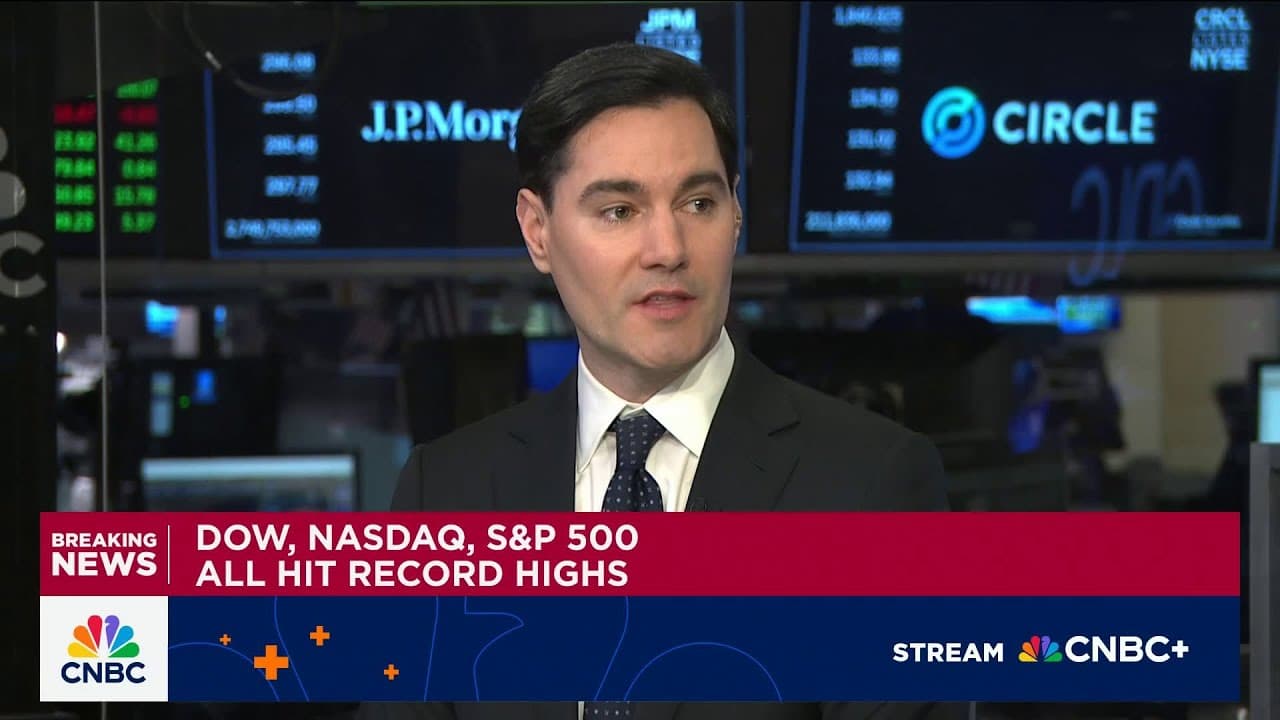
David Mericle, chief U.S. economist at Goldman Sachs, joins CNBC's 'Squawk on the Street' to discuss macro outlooks.
The velocity of the S&P 500 Index's 35% rally from the April lows has taken many investors by surprise, including us. Nearly all traditional valuation metrics suggest the market is expensive: the forward (next-12-month) P/E recently stood at 22.8x, a level previously only witnessed during the tech bubble of the late 1990s.

Paul Hickey, Bespoke Investment Group co-founder, joins CNBC's 'Squawk on the Street' to discuss market outlooks.

The first inflation data since the start of the October government shutdown offered the clearest signal in weeks on how prices continue to shape household behavior. Headline inflation rose 0.3% in September following a 0.

A decline in economic optimism in recent months is largely driven by consumers remaining “frustrated by the persistence of high prices,” according to the survey, which noted about half of respondents said their personal finances had worsened as a result. Joanne Hsu, the survey's director, said in a statement that consumers “perceive few material changes” in economic circumstances from September to October, though “inflation and high prices remain at the forefront of consumers' minds,” and there was “little evidence” an ongoing federal government shutdown deteriorated economic views.

Despite widespread bubble fears, historical data show market doubling is more likely than a 50% crash after a major rally. I maintain a tactical 'sell' rating due to high valuations, advocating gradual entry, risk control, and portfolio diversification.

What You'll Learn Why markets are now pricing in 75 basis points of rate cuts by year-end. How the latest CPI data and the U.S. government shutdown are shaping investor sentiment.

US consumer sentiment fell in October to a five-month low as people worry about stubbornly high prices and how they impact family budgets. Expectations about the job market were stable this month, though they remain at an unfavorable level.
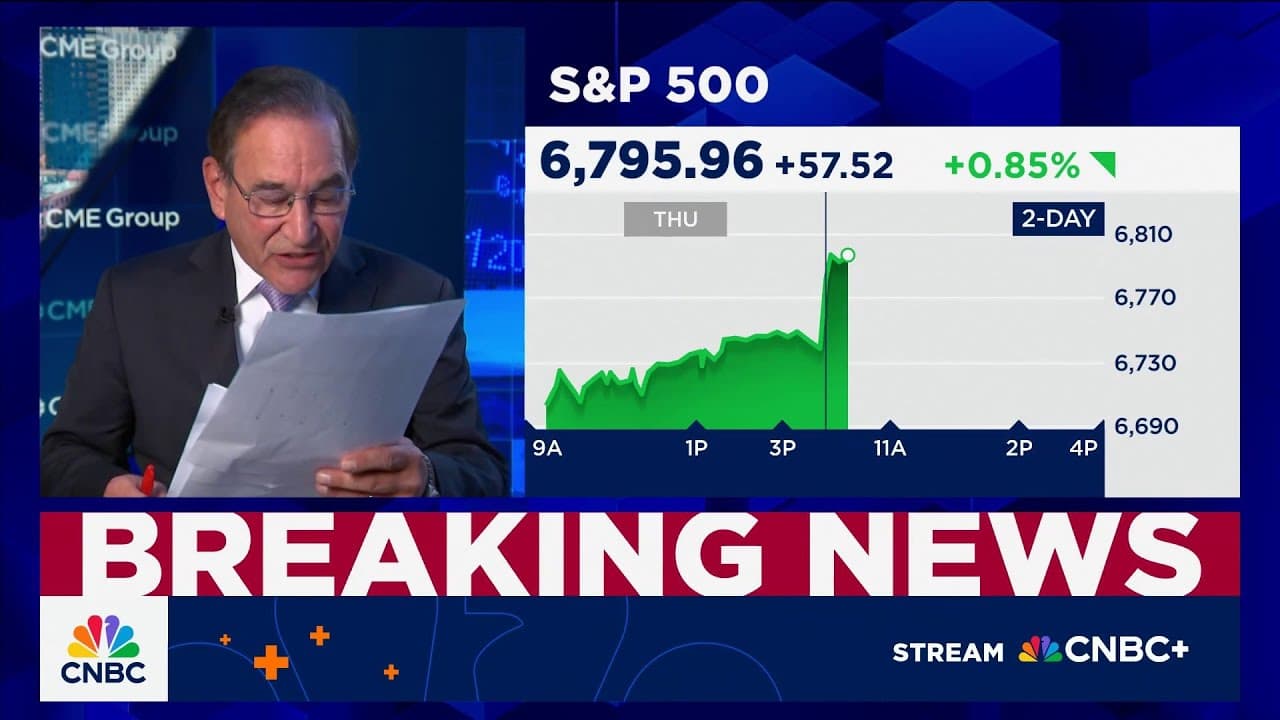
Rick Santelli breaks down the latest economic data to cross the tape.

Stubborn inflation is weighing heavily on shoppers' mood, according to the University of Michigan's survey.