
加载中...
共找到 14,510 条相关资讯

Market Domination anchor Josh Lipton breaks down the latest market news for October 24, 2025. The S&P 500, Dow Industrial Average, and Nasdaq all soared to new highs following the release of the September Consumer Price Index inflation data.


CNBC's “Closing Bell Overtime” team discusses next week's market catalysts with Adam Crisafulli of Vital Knowledge.
Wall Street's bonus pool is on track to smash records this year. New York's top banks are cashing in on a stock market surge and revived dealmaking — fueling profits and, in turn, the city's tax coffers.

All three indexes recorded new highs thanks to a cooler-than-feared CPI reading.
CNBC's “Closing Bell Overtime” team discusses markets, monetary policy outlook, upcoming earnings expectations and more with Neil Dutta, head of U.S. economics at Renaissance Macro Research, and Brooke May, managing partner at Evans May Wealth.

CNBC's “Closing Bell Overtime” team discusses crypto markets with Tom Lee of Fundstrat.
Comprehensive cross-platform coverage of the U.S. market close on Bloomberg Television, Bloomberg Radio, and YouTube with Romaine Bostick, Katie Greifeld, Carol Massar and Tim Stenovec. -------- More on Bloomberg Television and Markets Like this video?

It's a September surprise – monthly consumer price inflation came in a tick lower than forecast last month for both headline and core. But annual inflation is still rising.

Warren Pies, 3Fourteen Research, joins 'Closing Bell' to discuss how far stocks can continue to rise, the power of the retail investor and much more.

CNBC's Michael Santoli and Shannon Saccocia, Neuberger Berman, joins 'Closing Bell' to discuss the latest news affecting markets.
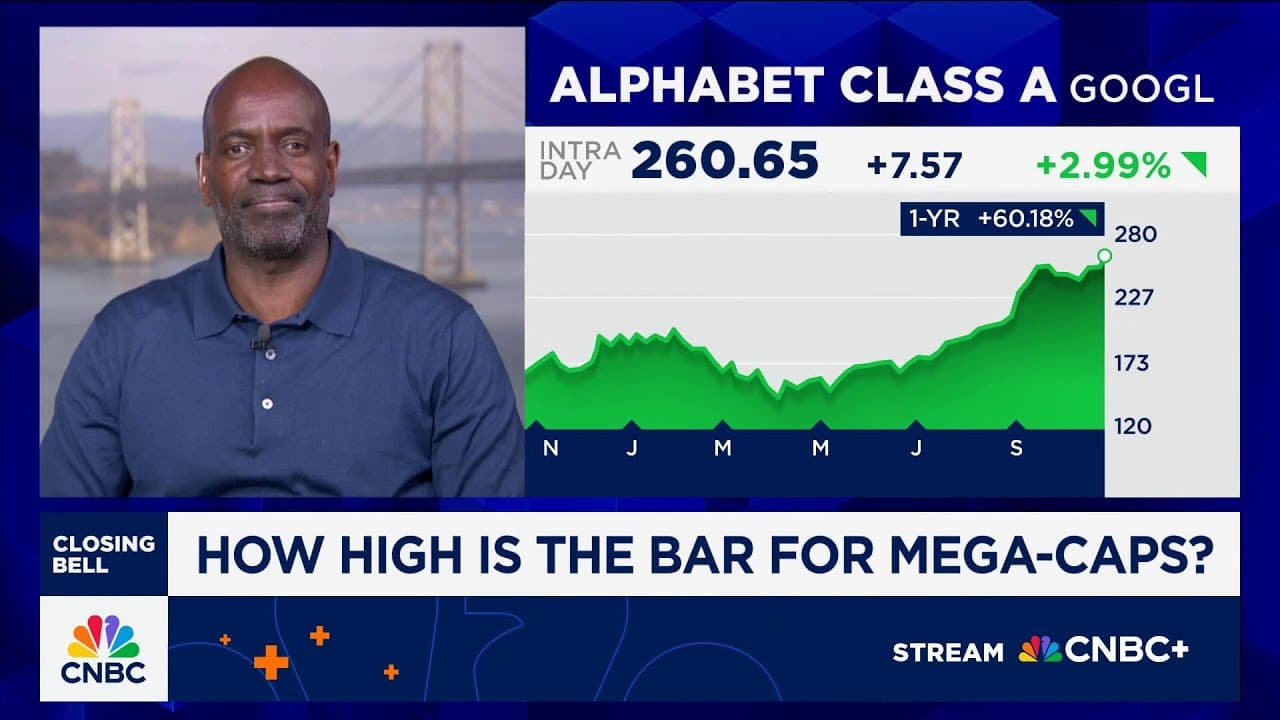
Lo Toney, Plexo Capital, joins 'Closing Bell' to discuss the megacap tech earnings next week, if it's too early to know more about AI profits and much more.

U.S. stocks closed at new heights on Friday as cool inflation data spurred optimism among investors that the Federal Reserve can stay on its rate-cutting path, boosting the U.S. economy and justifying higher valuations for equities.

CNBC's Sharon Epperson reports on news regarding retirement.

Nick Timiraos, WSJ, joins 'Closing Bell' to discuss the Federal Reserve's upcoming meetings, the labor market and much more.
Operator: Ladies and gentlemen, thank you for standing by. Welcome, and thank you for participating in the joint Media Analyst and Investor Call regarding Porsche AG's Q3 2025 results. This call will be hosted by Dr. Jochen Breckner, member of the Executive Board for Finance and IT. [Operator Instructions] At this time, it's my pleasure to hand over to Dr. Sebastian Rudolph, Vice President, Communications, Sustainability and Politics. Please go ahead. Sebastian Rudolph: Yes. Thank you, and hello, everybody, and welcome to our joint media analysts and investors call. We're talking about the results of the first 9 months of 2025 of Porsche AG. And with me today are our CFO, Jochen Breckner; and Bjorn Scheib, our Head of Investor Relations. Jochen will give you a brief overview of our business performance year-to-date, then after a short break, we will hold two Q&A sessions: first, with analysts and investors, then with the media. As always, you can find the press release in the Porsche newsroom. The investors deck and the quarterly report are available in the Investors section of the Porsche website. And with this, I hand over to my colleague, Bjorn. Björn Scheib: Sebastian, thank you very much. Good evening also from my side. And before we begin, please note that any forward-looking statements during this call are subject to the risks and uncertainties outlined in the safe harbor statement which is included in our materials. This introduction is also governed by this disclaimer. With this, I hand over now to Jochen. Jochen Breckner: Bjorn and Sebastian, thank you very much. Also thanks, everyone, for joining this call. Good evening, everyone. Let me walk you through Porsche's performance in the first 9 months of 2025 and the strategic actions we have been taking. Let's start with the big picture. Porsche continues to build on a strong foundation, a loyal customer base, a compelling and completely refreshed product portfolio and one of the most iconic brands in the world. Keeping in mind the current gaps in our product portfolio, our unit sales are resonating well. As you've seen in our press release two weeks ago, Porsche reported robust delivery figures with 212,500 vehicles delivered to customers worldwide between Jan and September. Here, the share of electrified vehicles significantly grew to 35.2%. In Europe, the share even reached 56%. Our region overseas and emerging markets and the USA achieved a new all-time record. North America remains our largest region with 64,000 deliveries and a 5% increase. Now let's skip from deliveries to vehicle wholesales Here, Porsche sold 198,000 vehicles in the first 9 months. This is a year-on-year decline of 11% with a mixed picture across model lines and regions. The Macan showed strong momentum, becoming the best-selling model with 61,500 units. That's 10% increase year-over-year and includes 33,900 units of the new all-electric Macan. Sales of the Cayenne declined by 22% due to a prior year catch-up effect. The 911 saw a 6% drop linked to stack-up launches of the new generation. The 718 was impacted by limited model availability due to new EU cybersecurity regulations. North America, excluding Mexico, recorded a 6% decline in the first 9 months. This reflected temporarily lower imports after the summer break following high inventory levels at the end of Q2. China, including Hong Kong, saw a 25% drop. This was driven by ongoing market challenges in the luxury segment, intensified competition and a strategic focus on value-oriented sales. In contrast, our overseas and emerging markets grew by 3% to almost 40,000 units, which demonstrates resilience and growth potential. Porsche's Global sales remain well balanced across key regions. This underlines the strengths of the brand, the appeal of our product portfolio and the resilience of our diversified market presence. Despite adverse market conditions, incoming orders remain robust. This reflects strong brand desirability and a favorable product mix. Demand for individualization options remains unchanged on a very high level. In the first 9 months of this year, Porsche generated group revenues of EUR 26.9 billion. This is 6% below the prior year period. The under-proportional and moderate decline was primarily driven by positive pricing, along with higher revenues in the Financial Services segment. This performance underscores the strength and diversification of Porsche's business model even in a challenging market environment. Let's now take a closer look at our expense development in the first 9 months. Total expenses including cost of goods sold, distribution and administrative functions increased by EUR 2.3 billion year-over-year, reaching EUR 27 billion. Despite temporary relief from lower production volumes on cost of goods sold, Porsche's broad-based cost increases driven by several structural and external factors. These are the persistent inflationary pressure across the supply chain. A significant increase in R&D expenses, primarily due to reduced capitalization and higher depreciation and amortization, geopolitical challenges beyond our control, most notably the U.S. import tariffs and significant costs associated with our strategic transformation initiatives. To counterbalance these headwinds, our comprehensive profitability program Push-to-Pass delivered targeted efficiency improvements. This initiative reflects Porsche's disciplined execution and long-term commitment to innovation, regulatory preparedness and cost resilience in an inflationary environment. Nevertheless, group operating profit declined to EUR 40 million. This corresponds to an operating return on sales of 0.2%, a result that clearly falls short of our expectations. It is important to note, however, that this figure includes substantial extraordinary charges. Year-to-date, Porsche recognized approximately EUR 2.7 billion in extraordinary expenses related to its strategic realignment, portfolio adoptions and battery activities. In addition, tariff-related costs imposed a burden over EUR 500 million, which further impacted profitability. These charges also had a significant impact on the automotive segment, which reported a year-to-date operating loss of EUR 200 million. Let me emphasize, excluding the extraordinary effects from the strategic realignment and the U.S. import tariffs, the underlying performance of the automotive segment remains robust. This strength is driven by favorable pricing, the successful execution of our Push-to- Pass initiatives and a temporarily favorable foreign exchange and quality environment. Reflecting the operational strength of our ongoing business, Porsche's automotive net cash flow increased to EUR 1.3 billion by the end of the third quarter of this year, up from EUR 1.2 billion in the prior year period. This corresponds to a net cash flow margin of 5.6% compared to 4.8% a year earlier. This also highlights our continued focus on disciplined spending and effective working capital management. The strong cash flow performance in Q3 was supported by disciplined investment and spending practices as well as rigorous working capital management. Notably, based on our value-oriented production approach, we achieved a significant reduction in temporarily elevated inventories in the United States and China, which had built up by the end of Q2. Year-to-date, automotive net cash flow also reflects extraordinary outflows of approximately EUR 900 million. These are primarily related to our strategic realignment initiatives and tariff-related expenses. With that, let me turn to the outlook. We plan to continue our model offensive and customer-focused product strategy. Porsche remains well positioned from both a product and pricing perspective. Our core assumptions regarding unit sales, supply chain stability and cost trends remain unchanged. Recent news flows underline that global supply chains are expected to remain volatile. The supply bottlenecks at the Dutch chip manufacturer and Nexperia continue for the time being to have no impact on production at Porsche. The Dutch company, Nexperia is not a direct supplier of the Volkswagen Group. However, some Nexperia components are used in vehicle parts with which also Porsche is supplied by its direct suppliers. The Volkswagen Group is currently examining alternative sourcing options in order to minimize possible effects on the supply chain. The company is also in close contact with potential suppliers in this regard. Porsche has also set up a task force. In light of the EU, U.S. agreement on import tariffs, our forecast for the full year reflects the 15% U.S. import duty effective August 1. We are proactively implementing mitigation measures such as targeted pricing adjustments to preserve margin integrity. Without the product-related portfolio decisions made last month, Porsche would have reaffirmed its original group return on sales outlook from Q2 '25, despite persistent market headwinds. As a result we expect group revenue in the range of EUR 37 million to EUR 38 billion, unchanged from our previous guidance. At the lower end of the bandwidth, we anticipate a slightly positive group return on sales and an automotive net cash flow margin of 3%. At the upper end of the bandwidth, the group return on sales is expected to reach 2% and an automotive net cash flow margin of 5%. The latter remains well within the range of our initial guidance from the end of April. The Group's return on sales guidance for full year 2025 reflects approximately EUR 3.1 billion in extraordinary expenses, primarily related to strategic realignment efforts. These include the repositioning of Salesforce Group and adjustments due to recent product portfolio decisions. Also, the Group's return on sales guidance incorporates a high triple-digit million euro impact from U.S. import tariffs. For the full year, automotive net cash flow margin outlook, we anticipate outflows related to our strategic realignment initiatives alongside tariff-related payments of approximately EUR 1.2 billion. Our cash flow guidance of 3% to 5% for the fiscal year reflects a tariff agreement reached between the EU and U.S. authorities. Assuming reimbursement would be recognized post December 31 only, current expectations support maintaining the guidance unchanged. We continue to pursue a disciplined currency hedging strategy. For 2025, substantial exposure has already been secured with significant coverage beyond 2025. This approach supports planning reliability and safeguards margin integrity. Before concluding, let me briefly address our capital allocation strategy. Driven by the new product initiatives aligned with our strategic realignment, we anticipate R&D spending to peak in the current and upcoming fiscal year, followed by a decline. Porsche remains committed to delivering a reliable dividend to our long-term shareholders. Supported by our strong balance sheet and robust cash flow, the Executive Board currently intends to propose a dividend for fiscal year 2025 that deviates from the medium-term policy. In absolute numbers, the proposed dividend is expected to be significantly lower than last year's payout. But it still would clearly exceed the level implied by our medium-term framework of 50% payout ratio. Final approval remains subject to the relevant corporate bodies. Porsche reduced its asset base by more than EUR 1 billion in 2025 compared to previous year. This reflects a significantly lower capitalization rates and reduced CapEx year-over-year. Combined with higher depreciation, amortization and impairments. Looking ahead, our capital asset allocation strategy will increasingly emphasize partnerships and licensing over ownership and vertical integration. This shift will not safeguard but enhance our agility and strategic flexibility. With this, we strive to better seize opportunities in a fundamentally transformed market environment. With a clear focus on involving customer preferences, we are expanding our portfolio to include additional combustion engine and plug-in hybrid models. This strategic move complements our commitment to electrification and ensures a broader offering across key segments. We also continue to execute our successful Halo strategy, anchored by high-impact lighthouse projects that elevate brand desirability and attract high-value customers. Models such as the Cayenne Turbo GT and the 911 Dakar exemplify our unique blend of performance and lifestyle appeal. They reinforce Porsche's identity in the exclusive segment. The latest result of this strategy, the 911 Turbo S has received strong demand and highly positive feedback from both media and customers. This underscores the enduring strengths of the 911 brand. Starting in 2028, a more balanced drivetrain offering will further strengthen our market position and support sustainable long-term growth. We remain also committed to electromobility and view decarbonization as a core societal responsibility. We scale our operations and strengthen long-term resilience, we have already taken decisive steps to align our cost structures and strategic footprint with future market realities. We have initiated a comprehensive workforce transformation targeting both direct and indirect roads in order to ensure organizational agility and efficiency. We are accelerating cost efficiency initiatives across the organization to unlock sustainable savings. In China, we are executing targeting strategic adjustments, including streamlining our dealer network and reinforcing our presence in high-demand regions. Where long-term profitability is no longer viable, we will responsibly reduce our footprint. Originally, we anticipated reducing our dealer network from approximately 150 dealerships down to around 100 by 2027. This target has now been revised downward to around 80 dealerships, reflecting a more focused and profitability driven approach. Additional measures are currently under evaluation. Let me also briefly address the discussions on our future package. As you are aware, management and the workers council are currently engaged in constructive dialogue to jointly shape this initiative. Our shared objective is to enhance the company's resilience, flexibility and agility. Thereby reinforcing our long-term competitiveness in an increasingly dynamic market environment. Importantly, we do not anticipate any significant extraordinary burdens arising from these negotiations. While all these measures will temporarily impact our financials in 2025, they are strategically sound and essential for long-term success. We are confident that this approach will strengthen our position in a dynamic market and support sustainable value creation. Porsche has a proven track record of navigating complex environments, and we are currently managing through another period of macro industry by challenges with strategic clarity and operational discipline. With our strategic realignment, we are executing a clear plan designed to strengthen our brand and to sharpen our product offering. Our focus remains on enhancing product portfolio flexibility, strengthening product individuality, increasing exclusivity, and driving desirability across our portfolio. These efforts are aligned with our long-term ambition to position Porsche for sustained high margin growth and Brazilian profitability. We expect 2025 to represent the trough in the current cycle. From 2026 onwards, we anticipate a meaningful recovery in performance supported by positive momentum from our product portfolio and the profitability measures from Push-to- Pass. And with that, let's turn to your questions. After a short break. Thank you very much. Operator: Ladies and gentlemen, we will now have a short break before starting the Q&A for analysts and investors. Please hold the line. [Break] Operator: Ladies and gentlemen at this time we will now begin the question and answer session for the analyst and investors. [Operator Instructions]. With that, I hand over again to Bjorn Scheib. Björn Scheib: Thank you very much. So we will start the Q&A session for analysts with Tim Rokossa of Deutsche Bank. And then next in the row will be Horst Schneider of Bank of America. Gentlemen, as said, this is a joint media and analyst call. As such, please limit yourself to one or [indiscernible] two questions. Thank you. Tim Rokossa: This is Tim from Deutsche Bank. I would have 1.5 questions then. So actually pretty good underlying margins and free cash flow numbers, the 12%-13% margin adjusted for one-offs and tariffs. Now tariffs will likely be the new normal, and that also feels like you still need to do some repositioning for the business, fine-tune here and there. Jochen, when can we expect the burden from one-offs to really go away and think about an underlying matching the stated figure? Is that '26 or already during Q4? And then when we think about Q4 and '26, is there any sound bias you can already give us? You sounded pretty confident in your statements. Can we assume that you can possibly improve as of today from the 5% to 7% EBIT margin range that we had previously? Is there any sort of major one-off still to be expected in Q4? Jochen Breckner: Tim, thank you very much. And as you said, we were really happy with our operational performance in this year for the first 9 months. And as discussed and just also elaborated on, we had various onetime effects that will go away in the future. As of now, we have posted EUR 2.7 billion until September. And this is expenditure. Your question was about cash, but let me start with that one. EUR 2.7 billion that we've already posted for the effects that you know strategic realignment that we committed at the beginning of the year, also organizational adjustments and then the latest decisions on the updated product portfolio. So these expenditures are already digested in Q3. We expect additional one-offs and special expenses in Q4 as we've guided for. So when we look at the full fiscal year 2025, we are very confident that we will reach the 0% to 2% profitability guidance corridor. For '26, no major one-off effects are expected. So the expenditures that we need for the strategic realignment for reorganization, the by far biggest part will be in the books in 2025. Now on the cash flow side, again, a very robust net cash flow by the end of Q3. We have optimized working capital. We have reduced CapEx spending as good as we could. And most of the additional expenditures we had for the one-off effects were not cash relevant until the end of September. Some of them are already gone as cash spending since we are talking about depreciation of capitalized R&D expenditures, for example, and other cash effects are expected to be an headwind in 2026. So again, by the end of this year, cash flow margin will be between 3% and 5% that we've guided for. And having said all that, for the end of 2025, we also will have first effects for the strategic realignment for 2026 pull forward into Q4. 2026, it's too early to guide that year, and we will do that as always, with the official forecast report with the annual press conference. But as I have communicated it earlier and also in this statement, we will be in a substantially better situation on reported numbers. 2025 will be the trough. But having said that, we do not expect on a return on sales level a double-digit performance in 2026. That is something that we will target for the years to come after 2026. Tim Rokossa: Would you confirm though, your previous statement that a high single-digit margin is possible with everything we know today, obviously, things can still change, right? Jochen Breckner: You're saying a high single-digit margin is possible for 2026. I would confirm that, yes. Björn Scheib: Next in the row is Horst of Bank of America, and he will be followed by Sam from Exane BNP. Horst Schneider: Yes, my first main question that is basically on the tariffs again. I think that's an item that surprised me the most on the upside in this release. So you say it was above EUR 500 million in year-to-date, which implies a burden of something like EUR 100 million, maybe EUR 150 million in Q3. I know the tariff came down, but it looks to me that the impact in Q2 was a little bit overstated. And in Q3, it was basically, there was a benefit from kind of tariff provision release maybe. So maybe you can explain that and also the magnitude of that? And is it right basically that the underlying tariff burden is something like EUR 250 million and not EUR 150 million a quarter? Jochen Breckner: Yes. Tariff situation was quite complex, Horst. So maybe just for everyone in this call to have everyone on the same sheet of paper. We are 27.5% as of April 3, then the reduction to 15% as of August 1. And on that assumption, we are also guiding the full fiscal year, so that tariffs will remain at 15%. Based on quarterly numbers, we communicated with the H1 numbers that we had effects from the U.S. tariffs around EUR 400 million. And by the end of Q3, cumulative numbers are a bit more than EUR 0.5 billion. And this is a complex math of the varying rates that we had, the 27.5% and the 15%. We did not have the 15% for the full third quarter. That's something that just kicked in by the end of July. So as August 1 and based on these assumptions and facts, by the way, in the actuals, we have made up the tariff numbers. For the full year, we expect a very high 3-digit number. You can do the math. I mean, having the number for the Q2 with the special effects also Q3, lower rate and first pricing mitigation numbers that we have there. So for the full year, we expect the tariff burden to be in the ballpark number, as I've communicated also in the last call. So this is something where we would see around about EUR 0.7 billion for the full fiscal year. Horst Schneider: Okay. That's great. Just a small follow-up. Would you be able to comment on price/mix in the third quarter? Because you raised prices, maybe you can give a wrap-up again overview by how much? And are any further price increases coming from here? Or you're basically done now with the tariff pricing? Jochen Breckner: Yes. We've increased pricing for the new model year 2026 across the board for all regions. So that's an effect that depending on the launch of these new cars already started to kick in, in Q3 and will further strengthen the pricing position throughout the year and then also for 2026. On top of that, we had an additional pricing hike in the United States for first compensation measure for the U.S. tariffs to keep our margins on a, say, decent level and coming through pricing as a mitigating effect on and measure on the tariffs, we are planning to have an additional price increase in the months to come. It's not communicated yet and not decided in full detail yet. So that's something you can watch out for, but we really plan to have a second step there. And the full effect of all these pricing measures will be seen in 2026. Horst Schneider: But just as I got it right on this tariff, you said EUR 0.7 billion for the full year, and you have not released provisions in the third quarter. Did I get that right? Or... Jochen Breckner: No, I said that for the full year, we expect EUR 0.7 billion as a tariff effect. And that includes and is based on the assumptions that we have paid the 27.5% until the end of July and that we have paid and will pay the 15% from August 1 through December 31. Björn Scheib: But to be clear, there is no release in any tariff provision or anything as such. Next in the row will be Sam, and he will be followed by Stephen from Bernstein. Samuel Perry: Building on Tim's question, frankly, around the reversal of one-offs into next year, which judging from your previous answer was that you basically expect them to fully reverse. What's the risk here that with the new CEO, we get further tilts in the strategy into next year and therefore, further one-offs? Or is the assumption that he's going to come in and then adopt the exact strategy that's already been laid out? That would be my first question. Then a quick question on China. Have you seen any impact of the luxury tax that's come in, in demand in August and September or any prebuy in July before it came in? Jochen Breckner: Yes. So on your first question, Sam, whether we would expect additional strategic realignment decisions with the new CEO coming to our company on January 1, Michael Leiters -- that's something that we will see when he is here. I mean he's not here yet. He's in a competitive situation with his former company, McLaren. So we have not started discussing professional issues and business issues as of now. Having said that, Michael is a well-known colleague. We've worked together in the past when he worked with Porsche, great collaboration, a great guy, and he knows Porsche very well. He knows our strategy, is from the automotive business. So of course, every time a new CEO joins the company, there will be a programmatic approach to that. But from today's perspective, would be early to expect more one-off expenses from my personal perspective. I think the major decisions have been made and are suitable and great decisions for the company. Second question was on China. The baseline for the luxury tax has been lowered to CNY 900,000, which affects our portfolio or some part of our portfolio. We have not seen prebuying effects because that new legislation was launched within 48 hours. So no customer had a chance to really run much into prebuying. So that effect was close to 0, I would say. After the effect, we have conserved prices and protected prices for the existing customers. So demand was on the level that we have seen. And looking forward, the increase of the luxury tax or the lowering of the baseline for the level when the luxury tax kicks in is something that we will monitor. We have looked at our portfolio, and we will come up with strategic decisions on how we can position the one or the other derivative to be in a more competitive situation. Björn Scheib: So next in the row will be Stephen of Bernstein, and he will be followed by Anthony of ODDO BHF. Stephen Reitman: My question is about the U.S. I asked on the last call about your the repeal of the IRA, which and the particular lease credit on your BEVs. Could you comment on what's been happening since then, in particular, the pricing and how you're pricing the leases of the Macan Electric and also the Taycan, which I noticed were some of the better performance in the third quarter, at least at the retail level, indulging by some of the data that we can see here. Jochen Breckner: Yes. You're referring to the $7,500 tax credit. The electric cars were to -- if they are not bought as cash buying -- this is brought on lease contracts. And of course, the deduction of that effect leads to higher lease rates on a monthly basis. And therefore, our products are getting more expensive than they have been. And there we see some minor effects on the demand side, but the effect is significantly lower than you might have expected that it could be given that USD [ 7,500 ] is a rather big number. But as of now, we are quite happy with how the demand developed also at the higher monthly payments that we have to communicate with our Porsche Financial Services offers we have. Stephen Reitman: And the second question, could you remind us as well what the time line is for the ending of production of the Macan ICE and also for the Cayman and the Boxster, please, ICE versions? Jochen Breckner: Yes. We still offer the ICE Macan in the regions out of Europe, out of the European Union. We will produce the car well into 2026, and that car will be on offer throughout 2026 and in some markets, even in 2027 based on final stocking that we will do, exact EOP, end of production date still to be decided and planned in the exact planning, but it will be more or less in the middle of 2026. But as I've said, customers will get their cars also throughout 2026 and some even in 2027. On the Boxster and the Cayman, the end of production is here to come. That will be in October. So we are producing the very last cars these days. And then it's the same situation as with the first Macan, the ICE Macan that customers will receive their products throughout the next month. Björn Scheib: Very good. So next then will be Anthony. And after Anthony, we have Michael. And please note in about 5 minutes, then we move over to the press. Anthony Dick: Yes. The first one is on just the general kind of margin environment for 2026. So it seems like there's quite a few tailwinds for you, of course, outside of the nonrecurring charges you had in 2025, but you might also be having lower tariff impacts based on that kind of EUR 150 million run rate and also some positive pricing and likely mix also. So I was just wondering what might be preventing you from reaching that double-digit margin in terms of what headwinds should we take into account for 2026? And then the second one is just a follow-up also on the free cash flow. So you mentioned EUR 1.2 billion of cash out this year for the restructuring and the tariffs. Could you actually maybe break that down between the restructuring and the tariffs? And also what remains in 2026 in terms of what cash out remains on the restructuring? And what kind of reimbursement should we expect for the tariffs? Jochen Breckner: Yes, a couple of questions. Let me answer it. So first, a question on why do we not expect double-digit return on sales performance in 2026, given the quite robust performance that we've seen if you do the reconciliation with all the one-off effects from 2025. In 2026, based on the substantial improvement that we will expect, we also have some headwinds that we have to take into account. First one is product offering. I've just commented on the ICE Macan and also on the runout of the 982, so the Boxster Cayman car, which will have [ last ] sales based on the production that we had so far. But from a portfolio perspective, we will have additional issues where we do not have supply. Second is we do not expect China to recover. So given the trend in China and also in some other markets, our assumption is that our sales will be -- unit sales will be lower in 2026 than expected for 2025. Also, from an FX perspective, as I've said, 2025, almost fully hedged. Also in the years to come, we have quite high and substantial hedging ratios, but there are some open positions and also in 2026, first effects will occur where our FX situation is a little bit weaker than it has been in 2025. And given these effects, we see a huge improvement, really a relevant one single-digit performance in return on sales, but it will take a bit more time to come back to the 2-digit performance. Net cash flow for Q3. So year-to-date Q3 outflows were about almost EUR 900 million. When it comes to U.S. tariffs, that's a bit more than EUR 500 million. And then we had additional spendings on the strategic activities and organizational realignment activities that gives you the number of almost EUR 900 million of special effects on the cash side for the one-offs and U.S. tariffs. Anthony Dick: For '26 remaining in terms of disbursements related to the realignment and reimbursements related to the tariffs? Jochen Breckner: But for 2026, we will have, from our perspective and based on our assumptions, a stable tariff situation of 15% import tariffs to the United States. So we will see that in the full year compared to 2.5% in the first quarter, 27.5% until July and then 15% from August through December. If you do the average for these different quarters in this year, for the next year, you will have a similar number that we expect for the next year. So tariffs, stable situation, 15%, more or less a burden as we have it in this year. And for the strategic realignment, the one-off expenses will be -- the really biggest part will be posted in 2025. So we do not expect material effects in 2026. Björn Scheib: Very good. So next then will be Michael, and then we will hand over to our colleagues of the media. And if we would have time at the end of this call, we will see if we can squeeze in the one or the other question. Unknown Analyst: A couple of quick ones, if I can. Just in regards to China, the work you're doing in China, can you talk about the cost of that? So shrinking from 150 dealers to 100 now to 80, what have you had to pay the dealers to have them walk away from the contracts that you've got with them? That's the first question. So China compensation, if you like. And then the second question is just around the tariff piece. If I remember rightly, you built inventory in the U.S. on your own books in the first half. Is that the reason why the tariff in the first half looks really high versus what looks to be a very low tariff in Q3 that you were actually burning off that inventory in Q3, which meant the actual tariff impact was smaller? Jochen Breckner: Yes. Thanks for the questions. On China and the restructuring work that we are doing in the dealer body from 150 to initially 100, and now we're targeting 80 dealers to set up a dealer network that is robust and financially viable and profitable. That's an activity that we are doing in really good cooperation and good talks together with our dealers because they have the same interest in coming up with a business model that works profitably in the Chinese markets as opposed to what we've seen during the last couple of months or years. That comes with the cost. That's clear. But these costs are not substantial compared to the other effects that we have communicated in terms of strategic realignment and restructuring of the company. If there would have been -- we would have incorporated that into our communication. So I'm not in a position to give you an exact number since we're also in negotiation position with our dealers. But as I said, very constructive talks, joint interest in adopting the -- and joint target in adopting the dealer network, the dealer body, and that's something that we can digest in our profitability in the current year and also in the next year when these actions will happen. On tariffs, of course, the cars imported by the end of Q2 had a 27.5%. We had to pay based on the import data that we have. And once you release these cars, of course, the tariffs are posted to the cost of goods sold when we reduce the working capital. So you have some effect there. But I think you should look at the tariff situation, as I commented on it on a yearly basis for the full year, EUR 0.7 billion, and that's also a good estimate for the year to come based on then 15% throughout the year. Björn Scheib: Before we hand over, may I only clarify one thing. When Jochen talked about lower unit sales next year, we are talking about unit sales to the degree of car sales, wholesales. This is no revenue guidance. This will all come next year, because I already got first questions if this is our revenue guidance. This is no revenue guidance. Jochen Breckner: Thanks, Bjorn. Sebastian Rudolph: Okay. colleagues, then we make a short break and then we're right back with the Q&A for the media. Operator: Ladies and gentlemen, we will now have a short break before beginning the Q&A for the media. Please hold the line. [Break] Operator: Ladies and gentleman, we will now begin the questions and answer session for the media. [Operator Instructions]. With that, I hand again over to Dr. Sebastian Rudolph. Please go ahead. Sebastian Rudolph: Yes. Thank you very much, and welcome back colleagues to the Q&A session for the media. We have limited time. It would be great if you limit your questions to one, if possible. And with this, I would say we start with the Financial Times and Sebastian -- just unmute your mic and the floor is yours. Unknown Attendee: I wanted to ask with respect to the U.S. tariff resolution last week, which has bought somewhat of a tailwind for U.S. carmakers. How do you feel this impacts your position and the position of European car makers relative to other manufacturers with a manufacturing presence in North America. Jochen Breckner: Sebastian, thanks for the question. If we got you rightly, you're asking about the U.S. tariffs and changes that you were referring to. So commenting on that one, I'm not aware of any relevant changes, as I've just communicated in the other call. We are planning our assumptions on 15% as persisting and remaining tariffs for cars to be imported. I know that there are some political decisions on the truck business where trucks might be affected, but it's not relevant for us as passenger car manufacturers. So again, we are paying 15% since August 1, and that's our assumption for the end of this year and also for the next year. Sebastian Rudolph: The next question goes to Rachel Moore of [ Reuters ]. Please, Rachel. Unknown Attendee: I wanted to ask if there is an update on the measures that will be required as part of the restructuring. You have the second package of measures currently under negotiation. Can we expect more job cuts? And what's the time line on that? Jochen Breckner: Rachel, we have started the negotiation on the second package. We call it the future package because that's a package that will really improve the competitiveness of our business model and our sites in Germany. We do that internally. The discussions and negotiations with our workers' council. So we are not in a position yet to communicate anything detailed because it's not agreed and we're not do not want to discuss this in public. We do that on ICE level with the partners from the works council. But what I can say is that we are targeting significant measures, and you were talking about job positions on that one, I would like to comment that a major part of the future package is not about job positions, but rather on salary levels and additional perks and compensation elements that we have in our current baseline. Sebastian Rudolph: Question goes to Stephen Wilmot, Wall Street Journal, Stephen, please. Unknown Attendee: Question, I just wanted to ask, can you give us any -- beyond the second package that you just talked about, what are you doing internally to reflect the strategic realignment that you've provided for in your financial results. Can you give us any kind of indication of what -- what is going on internally in terms of kind of teams being allocated to hybrids or other kind of projects that reflects the strategic realignment? Jochen Breckner: Yes. I mean we -- when it comes to our R&D work and our product portfolio work, we have a multi project planning approach and we are staffing the projects along our cycle plan and strategy as the projects come along and needs to be developed. And based on the later decisions that we -- that we would push out the new electric platform and the car projects, the heads, as we call them, that were planned to be on that platform. Of course, we've updated our multi-project planning approach and have redistributed, if I may say so, our colleagues and experts in R&D, but also in other areas of the company from that platform and that car projects into the other ones that we will develop to put our portfolio in a more flexible position starting as of '28. So that's a bit of a process of change, but it's nothing special in general. We do that regularly because projects come, projects go, projects are finalized. So engineers and all the other colleagues and experts need to be allocated to various tasks. And in with the latest decisions, it has been a little bit bigger than a task to execute it. But in general, that's a daily business, and we are executing that, yes, in a very stringent way, and colleagues are already working on the new cars on the ICE and plug-in hybrid drivetrains that we communicated. Maybe if I may add one thing. This has nothing to do with the second package. So this is, as I said, a daily work, reallocating experts, engineers resources the second package, the future package we're talking about is more about structural changes. Sebastian Rudolph: We have one more question on our list. That's why I repeat. [Operator Instructions]. So with this, Monica, Bloomberg, the floor is yours. Unknown Attendee: We've heard quite a bit from Mr. Blume already in previous calls about Porsche's intention to expand the [indiscernible] program, and that individualization and sort of higher-margin vehicles will play an important role in Porsche's future strategy. I was wondering if we could hear a bit more color or details on what structural changes or concrete measures are being taken to expand that program? And what would need to be offset for that expansion, specifically in Zuffenhausen physically, if facilities need to be expanded if more people need to be onboarded, et cetera? Jochen Breckner: Yes, Monica, thanks for that question. The exclusive and [indiscernible] manufacturer, as we call it, business is really key to our strategy is one key pillar for the brand, but also in that part of the business for highly profitable margins. We will expand that business as communicated earlier, and we will do that step-by-step in a very cautious way because in that area of our business model, it's really key that we keep scarcity and keep it as a luxury part of the business. So this is a step-by-step approach year-by-year. We have already increased significantly the capacity and also the output in that area throughout the last years and over the next 2, 3, 5 years until the end of this decade, substantial increases in terms of output will be organized in our operational model. This will come with additional capacity in that area of our business model, but we are not planning for a substantial additional hires to organize that one. That is something where we -- as I just said in the answer to the other question, our multi-project planning, given the staff and the workforce we have we will organize the increase in capacity in the [ Zonda bunch ] and exclusive manufacturer program. When it comes to assets, buildings, machinery, et cetera, again, our plant in Zuffenhausen is big enough to -- yes, to implement the increases in the Zonda bunch exclusive manufacturers. So there are no significant CapEx expenditures planned to organize that part of the business on the growth path that we've entered. Sebastian Rudolph: I would take 2 last questions. The first goes to [ Stuttgarter Zeitung ] then we finish with Dow Jones. So Matthias Schmidt, you go first, Stuttgarter Zeitung -- second, please. Unknown Attendee: Just one short question. Is the new CEO already involved in the negotiations on the second package? Jochen Breckner: I just repeat because it was acoustically hard to. It's the upcoming CEO already involved in the negotiations. We're talking about the [indiscernible] package. Yes. No, he's not. Michael Leiters will join the company on January 1. He's not with the company yet. Decisions have been made that he will join the company. We are looking forward to welcoming and a portion working together with him. But given the situation, competitive situation with also the other company that you used to work for, we are not in discussions in any direct work with him yet. We will start that as of January 1. And given the fact that he's been with Porsche for quite some years. And then afterwards, is a highly respected expert in the automotive industry, we really expect to have a fast start and the kick start in Jan 2026, but no actions so far. Sebastian Rudolph: Then we have the last question for today, Markus Klausen, Dow Jones. Unknown Attendee: One question regarding the analyst call. You said Mr. Breckner, to be 100% sure that next year, Porsche will reach high single-digit return. And then year ahead, 2027, a double-digit return is possible. And is it reasonable to assume that Porsche will once again achieve a return of 80% at some point in the future? Or is it no longer within reach? Jochen Breckner: Yes. So first, let me confirm that we are expecting high single-digit return on sales next year. That's correct. Second, we've communicated that our ambition is a 10% to 15% profitability, margin and range in the midterm. And whether the midterm starts in 2027 or maybe a bit later, that's something that we still have to see that's 2 years from now, so do not give exact guidance on that one. I can't comment on 2026 -- sorry, on 2027 more precisely. But I think the most important information is high one single-digit margin in 2026, not double digit, and then we take it from there. And as of 2028, the positive effects from our strategic realignment will start to kick in. Unknown Attendee: Okay. And 18% is within reach in some point in the future? Or is it no longer reachable? Jochen Breckner: Yes. I mean I just said that we communicated that our ambition is to have a return on sales in the midterm between 10% to 15%. That's a way to go. We have taken the decisions to get there and higher margins would have been even higher than the 10% to 15%. So from today's perspective, I would not confirm a target of 18%. That's why we communicated a range of 10% to 15%. Unknown Executive: And as a surprising factor, Jose, you had been quite tenacious patient and weighted in the queue right to the end. This is a sports company that is incentivizing this passion. So that was last in a row is Jose of JPMorgan Jochen Breckner: Jose, great to hear you, looking forward to your question. Jose Asumendi: Thank you so much and thank you very much for the opportunity, and apologies to yes, coming the last one here. Simple question, please. As we think about the next 6 months, 12 months, medium term, but a bit more like in '26. I'm sure you're launching new vehicles, right? So which vehicles do you think will drive the momentum in '26? When do you expect Cayenne electric to start helping a bit P&L in that sense. Jochen Breckner: Yes. From a model availability perspective, Jose, I've already commented on the fact that the 982, the Boxster Cayman is in the runout phase, also the H1 ICE car is still available in some markets out of the -- outside of the European Union in 2026, but that car is also starting its runout phase, but that will take a bit longer than with the Boxster and Cayman. A positive momentum we can expect from the completely newly developed full electric Cayenne, what we call internally the Cayenne E4 that car is about to be launched in 2026. And that's in addition to the existing Cayenne lineup. So we expect that we will gain some market share in the Cayenne segment then given the fact that we have the ICE plug-in hybrids and also electric cars. On top of that, we've just launched the very important derivative, the icon in the icon model line. I'm talking about the 911 Turbo S in the 911 model line in the Munich Auto Fair,and that car will be available by the end of this year and, therefore, will give us tailwinds, especially when it comes to margin and also brand and company positioning in 2026. And given all these effects, maybe also combined with a weaker demand in China that we expect will put us in a position to reach the 1-digit profitability margin I've just talked about. And Yes, that's how we look at 2026 from portfolio and also sales unit perspective. Sebastian Rudolph: And with this -- both of us say thank you to Bjorn. And for myself, I say thank you to Bjorn as well. And for your colleagues from the media and also analysts and investors for the joint call. Have a good weekend, and see you. Bye-bye. Jochen Breckner: Thank you, everyone, for joining. Thanks for your questions. Talk soon. Operator: Ladies and gentlemen, the conference has now concluded, and you may disconnect. Thank you for joining, and have a pleasant day. Goodbye.

Operator: Ladies and gentlemen, thank you for standing by. My name is Colby, and I will be your conference operator today. At this time, I would like to welcome you to the WSFS Financial Corporation Third Quarter Earnings Call. [Operator Instructions] I'd now like to turn the call over to your host today to Mr. David Burg, Chief Financial Officer. Sir, you may begin. David Burg: Great. Thank you very much, and good afternoon, everyone, and thank you for joining our third quarter 2025 earnings call. Our earnings release and earnings release supplement, which we will refer to on today's call, can be found in the Investor Relations section of our company website. With me on this call are Rodger Levenson, Chairman, President and CEO; and Art Bacci, Chief Operating Officer. Prior to reviewing our financial results, I would like to read our safe harbor statement. Our discussion today will include information about our management's view of future expectations, plans and prospects that constitute forward-looking statements. Actual results may differ materially from historical results or those indicated by these forward-looking statements due to risks and uncertainties, including, but not limited to, the risk factors included in the annual report on Form 10-K and our most recent quarterly reports on Form 10-Q as well as other documents we periodically file with the SEC. All comments made during today's call are subject to the safe harbor statement. I will now turn to our financial results. During the third quarter, WSFS continued to demonstrate the strength of our franchise and diverse business model. The company delivered a core EPS of $1.40, core return on assets of 1.48% and core return on tangible common equity of 18.7%, which are all up versus the second quarter. On a year-over-year basis, core net income increased 21%, core PPNR grew 6% and core earnings per share increased 30%. In addition, our tangible book value per share increased by 12%. Net interest margin expanded 2 basis points to 3.91% quarter-over-quarter. This reflects a reduction in total funding cost of 2 basis points with a deposit beta of 37%. Given the September rate cut, our exit beta for September is 43%, which reflects the repricing actions taken after the rate cut. Net interest margin for the quarter benefited from an interest recovery from a previously nonperforming loan, which added about 4 basis points. Core fee revenue was flat quarter-over-quarter as our results were impacted by 2 previously announced strategic exits in Wealth and Trust as well as the Spring EQ earn-out from last quarter. Excluding these items, core fee revenue grew 5% quarter-over-quarter, primarily driven by Capital Markets and Cash Connect. Our Wealth and Trust business continues to perform very well and grew 13% year-over-year. Total client deposits increased 1% linked quarter, driven by commercial business. On a year-over-year basis, client deposits grew 5%, driven by growth across consumer, commercial, wealth and trust. Importantly, noninterest deposits grew 12% year-over-year and continue to represent over 30% of our total client deposits. Loans were down 1% linked quarter, driven by the previously announced sale of the Upstart loan portfolio and continued runoff in our Spring EQ portfolio. Excluding these items, loans were generally flat this quarter, but we saw solid momentum in several areas. Our residential mortgage and WSFS originated consumer loan portfolios, both delivered strong growth with linked quarter increases of 5% and 3%, respectively. These results reflect the momentum of our home lending business as well as the learnings obtained from our partnership with Spring EQ. In commercial, new fundings this quarter were offset by lower line utilization and the payoff of problem loans, which supported improvements in our asset quality. Importantly, our commercial pipeline remains strong across both C&I and commercial real estate, increasing to approximately $300 million. We saw a meaningful improvement across our asset quality metrics during the quarter. Total net credit costs were $8.4 million this quarter, down $5.9 million compared to the prior quarter. Net charge-offs were 30 basis points for the quarter and 21 basis points when excluding NewLane. Importantly, we saw a decline in problem assets, delinquencies and nonperforming assets this quarter. NPAs declined by over 30% to 35 basis points, driven by 2 large payoffs with no additional losses, while delinquencies declined by 34%. In each of these areas, we are now at or below the lowest level in the past year. During the third quarter, WSFS returned $56.3 million of capital including buybacks of $46.8 million or 1.5% of our outstanding shares. Year-to-date, we have repurchased 5.8% of our outstanding shares. Despite these higher levels of repurchase, our capital position remains very strong with a CET1 of 14.39%, well in excess of our medium-term operating target of 12%. We intend to maintain an elevated level of buybacks in line with our previously communicated glide path towards our capital target of 12%. While retaining discretion to adjust the pace of these buybacks based on the macro environment, our business performance and potential investment opportunities. These results position us well to meet our previously announced full year outlook, even with an additional October rate cut, which was not previously included in our assumptions. While the half and timing of future rate cuts remains uncertain. It's important to note that the impact of additional rate cuts on our financial results will not be linear as we continue to manage our margins through deposit repricing our hedge program and securities portfolio strategy. As we have done in the past, we will provide a full year '26 outlook in January with the release of our fourth quarter 2025 financial results. We remain excited about the future and committed to continue to deliver high performance. Thank you, and we'll now open the line for questions. Operator: [Operator Instructions] Your first question comes from the line of Russell Gunther from Stephens Inc. Russell Elliott Gunther: I wanted to start kind of with the bigger picture question, David, and you kind of touched on it towards the end of your prepared remarks. But that medium-term target on CET1 challenging to hit, given just how much money you guys make. So it would be helpful to get a sense just kind of big picture in your mind, what's your base case scenario to achieving that target? And sort of what does that assume for organic growth rates over the next couple of years, acquisitive growth, be it depositories or fee verticals? And then you mentioned potentially flexing the buyback at a more accelerated clip. Just your base case to get there would be helpful to start. David Burg: Yes. Yes, absolutely, Russell. So yes, look, as you've seen this year, we are buying back at a clip that's significantly ahead of both the last couple of years. We're buying back approximately 100% of our net income. Given some of the balance sheet dynamics, the sale of the Upstart portfolio, for example, the runoff in some of the partnership portfolios our RWA has not increased, and therefore, our capital levels, despite these buybacks, our capital levels are still very high and actually increased since the beginning of the year. So that's the dynamic. And as well as the profitability levels that you mentioned, we do generate a lot of capital. So I think that if you look forward, even with a robust growth rate on our balance sheet, we still have a lot of dry powder to execute the buybacks at or above the level of 100% of our net income for a couple of years, for 2 to 3 years. And so that's really the strategic intention that we have. And depending on what happens with the balance sheet, we may accelerate that path. So I can completely see us leaning in more and doing even in excess of our net income on the buyback side. And obviously, as you said, we look at -- we continuously evaluate different investment opportunities. The first priority and the preference is always to invest the capital in the business where those accretive opportunities exist. But after that, we would look to return. Russell Elliott Gunther: Okay. Got it. And then just second question for me. So asset quality resolution and trends were really constructive this quarter. You guys have a healthy reserve and we just talked about the healthy CET1 for that matter. So I guess how are you thinking about reserve levels here amid what is still a somewhat volatile macro? And then could you share particular sectors of your loan portfolio where you continue to keep closer incremental eye? David Burg: Yes. I think on asset quality, generally, as you've seen in our numbers, we have good momentum and good progress. I think -- I would say a couple of things. I think, first and foremost, with respect to asset quality, one of the things that we try to do, obviously, is disciplined originations. It starts there, and we try to have recourse for most of our lending, vast majority of it and those type of actions to make sure we have good underwriting. And then we also try to be proactive around engagement with clients should things -- should there be unexpected bumps and bruises. We try -- we have a very kind of long forward-looking pipeline. We stress our portfolio for higher rates and with our issues -- where we think there are issues at maturity, we try to engage very early and proactively with our clients. And that's been the key to working through our pipeline and some of the migration that you've seen and the favorable trends that you've seen. And so I think commercial is always going to be lumpy and there may be 1 or 2 uneven situations. But generally, we feel good about our portfolio, and we feel good about continuing to make progress on resolving and working through the remaining NPAs. The consumer asset quality has been very strong, both within our home lending business and within the Spring portfolio. So we feel good about the trends, and we feel good about continuing to make progress. In terms of our reserve, I would say that we -- it's -- when you look at the pure -- when you look at the pure macro data that goes into the model, it would suggest that we have the capacity to release some reserves. But we have conservatively made some qualitative offsets where we see still potential volatility in the macro economy to keep that reserve where it is. So I think that's purely a function of all the volatility that we see with rates, potential inflation, some of the labor weakness and us being an erring more on the conservative side. So hopefully, that covers the question, but please let me know if I missed something. Operator: Your next question comes from the line of Kelly Motta from KBW. Your next question comes from the line of Christopher Marinac from Janney Montgomery Scott. Christopher Marinac: I wanted to dig in further to the Wealth and Trust business lines and just understand a little bit more about the future growth in terms of new accounts being opened versus just doing more business with existing accounts. I know you called a little bit of that out on the Bryn Mawr Trust, but I wanted to do more on the other pieces. David Burg: Sure. Chris, thanks for the question. So as you know, our wealth business is a pretty diverse business. And there are really 3 business lines within that business. There's the institutional services, there's the Bryn Mawr Trust of Delaware and then the private wealth management. And also about 60% of the revenue in that business is really not AUM-based revenue, not tied to AUM, but really tied to new accounts and tied to transaction activity. And so we've seen the places where we've seen a lot of new activity growth, new clients, new accounts have been both on the institutional services side and the BMT of Delaware side. When you look at year-over-year, institutional services is up about 30% this quarter, when you -- and BMT of Delaware is up about 20% this quarter. And so we're seeing growth in new accounts and transactions with existing clients. We're seeing a lot of activity there. Arthur Bacci: Chris, this is Art. I would tell you on a few things. I mean, the institutional services team just came back from the ABS East conference in Miami this week, and they're jazzed. I mean our reputation and our quality of service is really being recognized in the marketplace. There's been comments about deterioration in service with some other trustees. And so we are continuing to see a very robust pipeline with new clients and actually becoming the preferred provider for many clients. On the BMT of Delaware side, similar thing. We've seen a recent bank acquisition that one of the subsidiaries was a Delaware Trust, and we're seeing clients starting to leave that and coming to us. We're seeing opportunities on the international side of that business. So that team is really continuing to look to grow its business. And then on the private wealth management side, we've kind of got past the Commonwealth divestiture, if you will. And the last 2 months have been net client cash flow positive, and we're starting to see very good referrals from commercial. We're also really honing in on COIs and really trying to focus on getting more business from some of our COIs. So I think all in all, we have a really positive outlook going into 2026 with our Wealth and Trust businesses. Christopher Marinac: Great. And I guess, just to extend one more thought. You have operating leverage on all ends of the company, but is the operating leverage greater in the wealth space where you can create more earnings from that versus the bank operation? David Burg: Yes. I think the -- one of the things that goes to the diversity of the business model, when you look at our profit margins in the wealth business, I would say they're higher than the traditional profit margins that you may see in other wealth businesses. And it's really -- it really goes to that model. We do have a lot of operating leverage and a lot of opportunity for scale there for sure, particularly institutional services in BMT of Delaware. So I definitely would echo that comment. Arthur Bacci: And I think you can see it in our deposit base that comes out of the trust business because that's large deposits. They're not using our branch network. They're not using ATMs. It's a very scalable business for us. Operator: Your next question comes from the line of Janet Lee from TD Bank. Sun Young Lee: On Cash Connect business, as rates -- if rates were to come down, I would expect the revenue to get compressed, but then I believe that the funding side of it could offset. In terms of the NII benefit coming from the Cash Connect, how do you guys forecast in terms of the potential financial benefit coming from Cash Connect increasing? Or is it more compressed? David Burg: Yes. Yes, Janet, Happy to answer that. So I would say a couple of things on Cash Connect. One, I think the way you described it is exactly right. The Cash Connect revenue, the pricing is tied to interest rates. And so as interest rates come down, we would expect a reduction in our fee revenue in Cash Connect, but that will be more than offset in a reduction in expenses. And so basically, from a profitability perspective, we do benefit from rates coming down. And you can think of it as roughly for every 25 basis points, about a $300,000 kind of pretax profitability benefit. So that's -- as we've seen that play out over the last couple of cuts. And as we have the cuts, September is really not in the numbers yet, but as we have September, potentially the cut next week in December, all of those will flow in into the beginning of next year. I would say that's one dynamic with Cash Connect and we'll drive towards increasing profitability. The other thing which is if you look at our segment reporting and Cash Connect, one of the things we've been talking about is increasing the profit margins in that business in general. And that's not just because of rates but also because of pricing leverage that we think we have in the market, given our market share, that's also on the expense and efficiency side. So there are a few different levers to that. And that's been playing out nicely so far. If you look at year-over-year, the profit margin in that business was about a little bit under 6%. And this year, we're over 10%. Last quarter, it's important to note that there was an insurance recovery last quarter, which -- so the margins look a bit elevated. But if you normalize for that, last quarter was about 8%. So we went from kind of 6% to 8% to 10% on that trajectory that we were looking for, and that's -- so we're executing against that strategy. Arthur Bacci: And Janet, just as a reminder, the way we account for the bailment business, the benefit that David is talking about won't necessarily flow through NII. It's a combination of fee income and noninterest expense. Sun Young Lee: And just on -- so you maintain your low single digit, all guidance including the low single-digit commercial loan growth for the year. So that includes the problem loan payoff that you experienced in the quarter? And also, could you help us size the -- or size the pace of the payoffs coming from the consumer partnership going forward? Should it decelerate from the current like $140 million levels? How should I think about the total impact of the payments and the trajectory there? David Burg: Yes, yes. So Janet, let me take the consumer first and then I'll circle back around to the commercial question. On the consumer side, we had 2 things happened this quarter, and it's important to separate them. One was we closed the sale of the Upstart portfolio. And that was about $85 million that came off our balance sheet at the beginning of the quarter. As you know, that was a nonstrategic portfolio that was in runoff it had some elevated net charge-offs. And so we made the strategic decision to exit that portfolio, and we're also able to release some reserves based on that transaction. So that's the Upstart portfolio. Beyond that, the remaining runoff that you see is really in the Spring EQ portfolio, and that runoff for the quarter was about $50 million. And so that's the pace more or less that we would expect comes somewhere in the $15 million to $17 million per month is what we would expect in that runoff of Spring EQ. So we expect that to continue. However, we -- one of the -- I think one of the areas where we've been leaning into and we think we have -- we've had good momentum and we think we have continued momentum is in our Home Lending business, which is our mortgage business and our WSFS originated consumer loans, which are primarily HELOC, lines of credit and installment loans. And we've had really annualized double-digit growth for a few quarters there. And that's really more than offsetting kind of the Spring EQ runoff that you see. So we think we have -- we think positively about that growth continuing. We think we have some differentiated origination capabilities in that mortgage business, we've been growing our origination officers. And so we feel good about leaning in to that area. So that's on the residential side, on the consumer side, rather. On the commercial side, this quarter, as you said, this quarter was really impacted by a couple of things. One was the work, the payoff of the problem loans which obviously is a good thing. We like to see that, and that supports our asset quality improvement. We also saw line utilization being down this quarter. That's kind of a bit of a volatile number. That moves up and down. There's some of the economic uncertainty plays into that. But generally, that's just a function of kind of business activity. But generally, if you kind of separate that. We feel -- we continue to feel good about our pipeline altogether across the board, including C&I. I would say we're focused on definitely making accretive and profitable originations. There's a lot of competition in C&I. We don't want to be the low -- we're not the low price point in the market. We want to be very thoughtful around profitability. We want to be very thoughtful about underwriting. But having said that, we feel very good about our pipeline. Our pipeline now is at a higher level than it's been in a number of quarters at about $300 million in total. So we feel good about our pipeline. And I would also add that we are continuing to win talent in the market, which gives us a lot of confidence. For example, we had -- we recently announced a new Philadelphia Market President who was the Market President for one of the major super regional banks in the area for Philadelphia. And so I think winning talent like that gives us confidence, and I think demonstrates the confidence that others have in the franchise as well. So yes, we feel good about -- it's hard to predict quarter-over-quarter, but we feel good about being able to grow that business and continue to lean in to C&I, and that's really the relationship engine that we want to anchor to. Operator: Your next question comes from the line of Kelly Motta from KBW. Kelly Motta: Sorry about the technical difficulties -- maybe just piggybacking where you left off last. You noted recruitment of [ Philadelphia ] Market President. Clearly, organic growth is a focus. Where -- are there other areas where you're looking to add talent where you think there's room to bolster up either in terms of product line, wealth or the core bank or parts of the geography that look like attractive growth opportunities and places where you could add some folks? David Burg: Yes. The answer is yes. So we're -- just like I mentioned, the commercial example. We have other relationship managers joining the commercial team. That continues to be an area that we're looking to continue to increase. And so that is an area of focus as well as the wealth business. That's been an area of focus all along. We've had some very successful lift-outs of teams in the last 12 to 18 months there that are really starting to bear fruit and play out the thesis, but that's another area where we're continuously looking at talent, both from a lift-out perspective as well as we look at potential RA acquisitions that we've done in the past. And so we continuously evaluate talent across our footprint. And we think we have a lot of opportunity there. And Art mentioned earlier the referrals, but that's something that we really think is -- there's a significant amount of opportunity in the referral pipelines across our businesses. That's between wealth and commercial, it's between small business. It's between our home lending business and each of those. So there's really a lot of untapped potential there as well. Kelly Motta: Got it. That's helpful. And then maybe turning back to the margin. I apologize if I missed this, but you guys have done a really great job managing the margin, keeping an overall relatively level -- high level of margin and neutralizing some asset sensitivity. You get a couple of cuts here again this quarter. Do you think you have enough flex in the deposit base to absorb some of that? Or could there be some near-term pressure in that margin ahead? David Burg: Yes, Kelly, happy to go and to work through that a little bit. So I think there's -- I'll give you a short-term answer and a longer-term answer. From a shorter-term answer, we do have sensitivity in our net interest margin, as you mentioned. I would characterize that as about 3 basis points per 25 basis point rate cut. So that's really the near-term impact. So when you think about the net interest margin this quarter, we were at 3.91%. We had the one interest recovery. If you kind of normalize for that, we're in the high 3.80% and so with a couple of a few rate cuts that go into the fourth quarter, we would tick down to maybe about 3.80% around kind of in that ballpark. But the, I would say, the longer-term answer is that we have a number of tools that we use to offset that sensitivity after the initial impact in. The best evidence that I can give you of that is if you look at what's happened over the last year, where we've had 125 basis points of rate cuts, but our margins are up year-over-year over 10 basis points. And so that sensitivity that I mentioned of about 3 basis points per cut, will go to 1 to 2 basis points as we are able to take the actions that we take. And those actions are -- one is the deposit repricing that you mentioned. We continue to -- our exit beta for the quarter, the cut obviously happened at the end of September. But if you look at the exit beta at the end of the month, it was about 43% in the low 40s. We're going to run a similar playbook for the other cuts, and we think that we can be kind of in that low 40% beta for each of the upcoming cuts. That's #1. Two is we have, as you know, the hedging program, where we have floor options that mitigate and neutralize some of the asset sensitivity. We have about $850 million of those that are in the money right now. And with the next rate cut, another $250 million would come in the money. And if we have 3 more cuts you would have the entire $1.5 billion program actually in the money. So that would neutralize essentially $1.5 billion of variable rate loans and essentially neutralize that to look like fixed. So that's something that we continue to deploy. We're going to continue to utilize that program. throughout '26. We're thoughtful about maturities there and making sure that, that full $1.5 billion is going to be deployed. And the third thing, I would say that the third tool -- actually, 2 more things. The third tool that we've been using is obviously new to the extent that we've been growing new deposits, and we're able to reinvest it and you think about a steeper yield curve going forward, and you were able to originate those deposits and the low-cost deposits that we've been able to have and then reinvest them at the higher yields. That, of course, takes some time to play out, but that's a big supporter of the net interest margin. And the last thing that I will call out is our securities portfolio. As you know, our securities portfolio yields south of 2.5%. And it rolls off -- we have about $500 million of cash flow every year that comes off that securities portfolio that then we reinvest either into loans or potentially other securities. We reinvested and we pick up a lot of yield. There's 4 to 5 basis points of annual yield pickup from that rollover. So the combination of all of those things, that's what allowed us to really mitigate the impact more than what the kind of the paper math would suggest, and we'll continue to lean in and deploy those tools. Kelly Motta: Great. I really appreciate all the color on that. That's really helpful and it will be helpful to go back to just one point of tying up loose ends of clarification. Just can you remind me how much floating rate loans you have and maybe index deposits just to help manage our margin with that component? David Burg: Yes. So our floating rate loans -- our floating rate loans are a little bit over 50%. And so our loan beta is about 50%. But when you incorporate the hedges, the loan beta drops to a little bit over 40% -- so -- and that's really -- and so when you think about our deposit beta in that range as well, that's really -- that's how we try to neutralize the portfolio. That's how we think about it. So -- and on the deposit side, we -- as you know, we have the CD book, which is the time maturities that -- most of that CD book is in kind of the 6 months with a little bit of 11 months. And so that kind of matures on its cycle. The other deposits are mostly non-indexed. We have about $700 million to $800 million of kind of indexed deposits. Operator: And with no further questions in queue, I would like to turn the conference back over to David Burg. David Burg: Okay. Thank you very much, everyone, for joining the call today. If you have any specific follow-up questions, please feel free to reach out to Investor Relations or me. Have a great day. Operator: This concludes today's conference call. You may now disconnect.
Operator: Good day, everyone, and welcome to Kimberly-Clark de México Third Quarter 2025 Results. [Operator Instructions] Please note this call is being recorded, and I will be standing by. It is now my pleasure to turn the conference over to CEO, Pablo González. Please go ahead. Pablo Roberto González Guajardo: Hello, everyone. I hope you're doing well, and thanks for participating on the call. We'll go straight to results, and then we'll make some brief comments about the quarter and our expectations going forward. Xavier? Xavier Cortés Lascurain: Thank you. Good morning, everyone. Results for the quarter were better, with net sales growing and gross and operating profits recovering. During the quarter, our sales were MXN 13.4 billion, a 2% increase versus last year. Hard rolled sales impacted total volume, which was flat and price/mix was up 2%. Consumer Products grew 5%, 1% volume and 4% price/mix, while Away from Home remained flat. Exports were down 15%, impacted by a 32% decrease in hard rolled sales, while finished products grew 7%. Cost of goods sold increased 3%. Against last year, SAM, resins and virgin fibers were favorable. Recycled fibers were mixed, while fluff compared negatively. The FX was slightly lower, averaging 1% less. During the quarter, our cost of goods sold reflected the higher prices of raw materials from prior months and very significantly, the much higher FX, including the hedges as those trickled down the inventory layers. Our cost reduction program once again had very good results and yielded approximately MXN 500 million of savings in the quarter. These savings are mainly at the cost of goods sold level and are generated by sourcing, materials improvement and process efficiencies. Gross profit was flat and margin was 38.7% for the quarter. SG&A expenses were 4% higher year-over-year and as a percentage of sales, were up 30 basis points as we continue to invest behind our brands. Operating profit decreased 4% and the operating margin was 21.3%. We generated MXN 3.4 billion of EBITDA, a 3% decrease, but within our long-term margin range at 25%. As mentioned, the benefits of better raw material prices and a stronger peso take time to show up on the actual cost of goods sold, due not only to inventories, but also to contract transit time and particularly in this case, the currency hedges. Having said that, our gross margin did improve 50 basis points sequentially from the second quarter to the third quarter. That improvement does not go down to the operating profit or EBITDA level because the SG&A remained constant and was, therefore, higher as a percentage of sales because the third quarter sales are traditionally lower than the second quarter sales. Cost of financing was MXN 404 million in the third quarter compared to MXN 287 million in the same period last year. Net interest expense was higher at MXN 401 million versus MXN 290 million last year, despite our lower gross debt because we earned less on our cash investments. During the quarter, we had a MXN 3 million FX loss, which compares to a MXN 4 million gain last year. Net income for the quarter was MXN 1.7 billion with earnings per share of [ MXN 0.56. ] We maintain a very strong and healthy balance sheet. Cash position as of September 30 was MXN 11 billion. We have no debt maturing for the rest of the year and maturities for the coming years are very comfortable. Net debt-to-EBITDA ratio is 1x and EBITDA to net interest coverage is 10x. Over the last 12 months, we have repurchased close to 50 million shares, around 1.5% of shares outstanding, which brings the total payout to shareholders to approximately 7%. And with that, I turn it back to Pablo. Pablo Roberto González Guajardo: So we continue to operate against a soft consumer backdrop, but we managed to increase sales and post EBITDA margin within the target range. Growth in Consumer Products was significantly better supported by innovations and commercial initiatives, together with a strategic decision to reduce spending during the heavy summer promotional season to protect the value of our brands as well as reduce the negative price effects. Volume was slightly ahead of last year, an important improvement, but consumers remain stretched and cautious given the increased uncertainty, job growth deceleration, remittances slowdown and overall lack of economic growth. We see no significant catalyst for this to change in the short term and are strengthening strategies accordingly. Still more relevant and differentiated innovation, more effective engagement with consumers efficient execution hand-in-hand with our clients, and importantly, relentless focus on our most important opportunities by category, channel and brands will guide all our actions. In a market that's not growing much, gaining share and playing in areas where we haven't participated at least not aggressively, will be key to accelerate our growth. We look forward to sharing more details on the strategies as we get into 2026. The same holds true for Away from Home business, and we expect exports of finished products to continue to grow and accelerate in the coming years, behind a concerted effort with our partner, Kimberly-Clark Corporation. With respect to costs, we have yet to see the full effect of lower input prices on results and lower sequential volumes typical of the third quarter meant we had weaker operating leverage. Despite these headwinds, margins remain strong. As we get into the final stretch of the year and particularly into next year, we will see lower costs reflected in our numbers. We expect lower pulp prices, stable recycled fibers, lower resins and superabsorbent materials plus a stronger peso to be tailwinds going forward. In summary, our results continue to improve. And despite an expected continued weak consumer environment, we're executing strategies that will translate into stronger results in 2026 and the years to come. With that, let's turn to your questions. Operator: [Operator Instructions] We'll take our first question from Ben Theurer with Barclays. Benjamin Theurer: Congrats on the results despite the challenging environment. So I wanted to follow up a little bit on just the consumer sentiment and what you've been seeing across the different categories. So maybe help us understand and kind of like getting a bit closer into that 4% price/mix change. How are you able to kind of like implement that and at the same time, actually get about a 1% volume growth, just given the consumer is weak, but it felt like a very good execution on price mix with volume growth. So that would be my first question. Pablo Roberto González Guajardo: Sure, thanks for the question. Look, as I mentioned, we see a stretched consumer. And this is [ not news of ] uncertainty. And as I mentioned, job growth has decelerated, remittances have slowed down. I mean overall, the economy is pretty slow and consumers' sentiment is not at its best, if you will. So consumers are being very careful in how they are spending. We do see a fork, if you will, with consumers that continue to spend on premium products, but there are those who are trending down from value to economy products, not at a very marked rate, but there's certainly something happening there given the -- how the consumer is stretched. So the way we were able to put all of this together -- and let me say, by the way, the growth in our categories is pretty muted. Some of them, the categories that don't have such high penetration like kitchen towels and others are growing at higher rates. But even those the rates have slowed down a little bit. And the more, if you will, mature categories are flat or slightly growing when it comes to volume. So what we did is, one, Remember, we decided not to play as aggressively on the summer promotional season. Because what we were seeing over the past couple of years is that when you did that, the price would take a hit not only within the promotional season, but then beyond that, because consumers ended up with some inventory on their hands. So then it was a little harder to move volumes forth. So we were very careful on how we manage that, and I think we were successful in doing so. Plus the fact that we are through our revenue management -- revenue growth management capabilities found certain instances where we could adjust pricing and move forth. So that's how we were able to keep prices going and then volume really helped because of innovation and all of our commercial activities during the third quarter. So it was really a combination of executing on price and innovations that allowed us to put together both growth in price and for the first quarter in the year, growth in volume. Benjamin Theurer: Okay. And then just one quick follow-up. You've called out the softer hard roll sales volume. Was there a technical issue? Is it a demand issue on the export side? What's been driving that? Pablo Roberto González Guajardo: Really, I think what's happening there is that there's a lot of supply of hard rolls in the U.S., a combination of companies with excess capacity sending it to the U.S. and then maybe a little bit of companies buying before some of the tariffs came into effect. So there's paper out there that I think the system is going through. And hopefully, that will become more normalized, if you will, in the fourth quarter, certainly, I think by the first quarter of next year. But overall, just oversupply in the market of hard rolls in the U.S. Operator: We will move next with Bob Ford with Bank of America. Robert Ford: Pablo, I also was impressed by the growth in consumer given your intent to stay away from some of the summer promotions. Can you give some examples maybe of some of the more successful innovation and execution of efforts that are enabling you to improve pricing and take share? And with respect to the export mix between hard rolls and finished products, can you give us a sense both in volume and value in terms of the breakdown of those exports? And then how should we think about current capacity utilization rates for both pulp and finished product? Pablo Roberto González Guajardo: Thanks, Bob. Thanks for your question. Yes. Look, I mean, when it comes to innovation, as I mentioned earlier in the year, we have strong innovations for all of our categories throughout the year. And by the way, we have a very, very strong pipeline for the coming years. So we're very excited about that. And a couple of particular examples are on the diaper front, where we pretty much improved on every single tier of our offerings. And when you take a look at our shares, we're -- even though the categories, as I said, pretty flat, we're gaining share in pretty much all of the channels given the -- all of the channels and all of the tiers, given the innovations that we were able to put into the market. And again, those have to do with better observancy core, better fit, better stretch, better softness. So depending on the tier, again, we improved every single one of them, and that's a category where we see our shares improving nicely. Also, for example, in bathroom tissue in the premium tier, where we've introduced a couple of new features and new sub-brands under Kleenex, Cottonelle, and we're absolutely convinced we have the best product in market and products that can compete with products anywhere in the world. and they've been very, very well received by consumers. And as well, we also made some innovations to our economic product, particularly Vogue in the -- or [ Vogue ] in the wholesale channel, and we've been able to gain ground with that product consistently and significantly. So again, innovation at the core of everything we do and very, very excited with what we see for the coming years when it comes to innovation. With respect to the breakdown of our exports, I mean, hard roll sales represent 46% of the sales and finished product, 54%. And hard rolls, as I mentioned, hopefully, volumes will stabilize here in the coming quarters, and we expect that to continue to be -- hopefully, be a tailwind and if not, certainly not a headwind going forward. And on the finished product, we're excited. I mean we've had a couple of meetings with our partner, and we're looking at opportunities in the coming years to further integrate our supply chain. We've done a good job here in the past couple of years, but many more things that we can do, and we're working very closely together to make that happen, and we're excited with the opportunities we see for it. And as we move and are able to turn more of our capacity into finished product, then certainly, our hard roll sales will decline accordingly because, as you know, what we do is our excess capacity is what we turn into hard rolled sales and sell outside. So as this plans with our partner materialize, a little by little, we'll start to see lower hard roll sales, but finished product sales increase hopefully significantly. Robert Ford: And that was actually the idea behind the question on capacity utilization is we agree. We see this massive opportunity in exports of finished product. And as a result, we're a little curious in terms of where you are right now in terms of capacity utilization, both for pulp? And then how should we think about where you are today on finished product and we can make some estimates in terms of what you need to add. Pablo Roberto González Guajardo: Yes. And it's a great question, Bob, and we -- let me put it this way. We have enough capacity to grow on finished products aggressively together with our partner in the coming years. And not only what we're producing right now, but we're putting plans together so that we can get more throughput through our equipment or through our machines. So we will be able to support growth with them. And I think we will still continue to be able to put a decent amount of hard roll sales out there in the U.S. So I think the combination over the coming years will certainly be a support our growth and support our margins going forward. Operator: Our next question comes from Alejandro Fuchs with Itau. Alejandro Fuchs: I have 2 very quick ones. Pablo, maybe I want to see if you can discuss a little bit about competition, right? How do you see competition today in Mexico, given the increase in price and sales mix, are maybe the competitors following? Are they being more aggressive promotionally? And if you can also discuss maybe your expectations into next year, hopefully, with a better consumer environment in the country. Maybe you can talk us about what do you expect going forward? Pablo Roberto González Guajardo: Sure, Alejandro. Look, when it comes to competition, I mean, you know our categories have always been very competitive. And we maybe are seeing a little bit more from some participants, not all when it comes to their promotional aggressiveness. I wouldn't say it's something that it's radically different, but a little bit more as, again, the pie is not growing, some are losing share. So they're trying to recoup some of that and are being a little bit more aggressive on it. But not -- again, not something that it's too surprising or too different from other instances. And the fact also that our retailers are, one, continuing to keep inventories and overall working capital under control, they're putting a lot of pressure on that. And two, trying to keep prices, it seems to me a little bit more consistent. I mean that helps in terms of the aggressiveness of promotions not being even more so that it could have been in other instances when the economy is not growing. So a little bit more, but really nothing marked, if you will. Coming into next year, I mean, we hope that a lot of the -- or at least some of the uncertainty that is hanging over the economy can be resolved or at least we get a clear direction as to where it's going. Certainly, the uncertainty that's coming from the USMCA revision or renegotiation and what will happen with that. I mean, you've heard -- we've heard that in a couple of weeks, we'll be hearing from our government as to some of the agreements they've come to with the U.S. administration. So hopefully, that will start to settle down, and we'll know a little bit better where it heads. Hopefully, as we get into the first -- or the workings of the judicial reform, we start to see how it how it works, and we start to see some decisions that support, again, giving more certainty to investment. And again, just hopefully, some of this uncertainties start to play out and we start to get a better sense of what's going on. We know then what to expect. And if that happens, I think the economy will be able to start growing again at a faster clip, maybe come back to what we were doing before all of this uncertainty, about a 1.5%, 2% rate, which at this stands would be pretty good. Not what we need certainly as a country. I mean, we really should be working hard to take all of the obstacles away from investments so that we can start growing at 3% or higher rates, but that's going to take some time and uncertainty is key for that certainty. So that will hopefully play out by '27, but at least by '26, if we can get some uncertainty out, we'll see greater economic growth and then we might see a consumer that feels a little bit better about things and then domestic consumption can start to pick up again. That's our expectation. But let's see how quickly we can -- how quickly it unravels and happens. Operator: Our next question comes from Renata Cabral with Citibank. Renata Fonseca Cabral Sturani: Congrats on the results. So my first question is still about the consumption environment, but specifically to understand if consumers are making the trade downs and if you see a bigger penetration of private label in the categories that the company has? And the second question is related to cost. In the initial remarks, I understood that the company expects that the raw material prices should maintain for the upcoming months. I would like just to confirm if that's the view. And for the fourth quarter, if the company has any hedges or the effects? Pablo Roberto González Guajardo: I hope I can answer your questions. You were not coming through too clearly, but if I don't, please let me know. Again, when it comes to consumers, we're seeing a divergence. Those that buy premium products continue to do so. Those consumers that are used to buy either value or economy products, we see a little bit of trade down to the economy segment. not a big trade down, but a little bit of trade down given how stretched they are. And tied to that, we are also seeing growth in penetration of private labels in the country. And it's a combination of the economic situation and retailers being a little bit more aggressive when it comes to pushing their private label. When it comes to costs, again, we already have seen in our purchases lower costs of most of our raw materials, excluding fluff. And that's just taking a little bit of time to reflect on our cost of goods sold, but we expect that to continue to -- start to happen certainly in the fourth quarter. And no doubt early in 2026. And our expectations for costs in the 2026 is that we will come in with, again, most of them on a downward trend and that will certainly be tailwinds for our cost together with the exchange rate, which will compare very favorably in the first half of the year. So that should be very, very helpful going forward. And when it comes to hedges, no, we have no more hedges during this quarter, and we don't expect to hedge going forward. Operator: We will move next with Antonio Hernandez with Actinver. Antonio Hernandez: Just following up on [ Renata's ] question, should we expect given that because of the tailwinds from FX and maybe raw materials and so on, that maybe EBITDA margin, at least in the short term has already hit rock bottom. Is that like you see basically upside on going forward? Pablo Roberto González Guajardo: Yes, absolutely. And it's interesting how you put it rock bottom when it's 25%, and it's still one of the best EBITDA margins out there for any Consumer Products company in the world. But yes, we probably have hit rock bottom. And going forward, we should expect better margins, no doubt. Antonio Hernandez: Exactly. Yes. I mean, rock bottom considering the 25% to 27%. Pablo Roberto González Guajardo: I understand. I just -- quite frankly, I just used it to make a point, sorry. Antonio Hernandez: Exactly. It's all relative in the end, but yes, pretty good margins. Just a quick follow-up. In terms of innovation and how you're also treating these consumers that are willing to buy these premium products. Maybe if you could provide any color on how much do they represent or innovation in terms of sales? Anything like that would be helpful. Pablo Roberto González Guajardo: Look, I think most of our growth really is coming from products that -- where we've innovated. And again, we're very, very excited with what we've done, but even more so with what we have coming. And early in 2026, we hope to share a little bit more of our strategies when it comes to areas -- main areas of focus and opportunities by category, channel and brands and also the -- what we see would be some of the very exciting innovations that we're going to be putting into the market. So let's hold on that until the first quarter of '26, and we'll be able to provide you more insight and details into what it's done and how we expect it to contribute to our growth going forward. Operator: [Operator Instructions] We will move next with Jeronimo de Guzman with INCA Investments. Jeronimo de Guzman: Start with a follow-up on the cost side. You mentioned that there's no hedges impacting the fourth quarter, but I just wanted to understand how much did the FX hedges impact the third quarter? Pablo Roberto González Guajardo: I would probably say they did impact about 50% of our purchases for the second quarter and for the first part of the third quarter. So assuming that what we saw on the third quarter was mostly based on those purchases. You could say that approximately 50% of our dollar-denominated purchases were impacted by those hedges in the quarter. I don't know if that made sense. Jeronimo de Guzman: But only half -- but only for half of the third quarter... Pablo Roberto González Guajardo: Yes, because of the -- no, I would say for the full quarter, about 50% of our U.S. dollar purchases, which are about 50% of our costs were hedged. Jeronimo de Guzman: Got it. Okay. And what was the average FX for those hedges? Pablo Roberto González Guajardo: [ 20 70 ] something. Jeronimo de Guzman: That will be a big improvement. And then just want to understand, given the much better cost outlook and the fact that these hedges are less of a headwind going forward or not a headwind going forward, how are you thinking about pricing going forward? Pablo Roberto González Guajardo: Look, we continue to take a very close look at each category and each tier and each channel to see where there are opportunities for pricing because, yes, we see tailwinds when it comes to costs of raw materials. We see headwinds in other costs, for example, on labor costs, which have been increasing in Mexico for quite some years. And when you compound their impact over the years, it's becoming a little bit more impactful, if you will, and some other issues. And plus we want to continue to generate important margins and profit so that we can further invest behind our brands. So pricing will not be as maybe in the past where you would just [indiscernible] we're going to increase 4% in the diaper category in March and period. It's going to be more of a strategic analysis, again by tier, by channel, et cetera, to determine where the opportunities are together with a very important push behind mix for our brands given the innovation we have. And so we will continue to look for opportunities to price and opportunities to improve our mix going forward. Jeronimo de Guzman: Okay. Yes, that's helpful. So the 4% that you had this quarter year-on-year, how much of that was mix versus actual price changes? Or was it just less promotions versus a year ago, I guess, which is kind of a... Pablo Roberto González Guajardo: It was about half and half. It was about 2% price, 2% mix. Jeronimo de Guzman: Okay. Got it. Great. And just one other question on the competitive environment. I wanted to get your sense on market share trends in general, kind of where -- in what areas are you seeing maybe more pressure on the market share side and where you're seeing more more of the market share gains that you're having? Pablo Roberto González Guajardo: Overall, I think we have a very stable market shares, maybe except on diapers, as I mentioned, we see that share growing. When you take a look at bathroom tissue, we're fairly stable. Napkins, we're growing share. kitchen towels, we're growing share. Wipes, we're growing a little bit on value, not on volume. But that's a category where we have lost a little bit of ground to not only private label, but a whole bunch of offerings coming from Asia and other parts of the world at very cheap prices. So we've got plans to attack there and recoup some of the share. And I would say about that, I mean, facial tissue is is flat at about 92%. I mean, our shares are pretty stable overall. Jeronimo de Guzman: Okay. Sorry, one more question on the new JV, the penetration, any updates on that? Pablo Roberto González Guajardo: On what, sorry? Jeronimo de Guzman: The new business, the pet, animal [indiscernible] Pablo Roberto González Guajardo: Pet business. No, thanks for the question. Yes, we continue to make inroads. I mean we're getting cataloged in more retail chains and improving our reach within them. So getting more SKUs in there and getting into more stores. And again, the consumer reaction so far has been very, very good. The retail reaction has also been good. So right on track where we wanted to be, and hopefully, that will accelerate in 2026. Again, this is a long-term play, but we should be this -- we absolutely should see this business accelerate in 2026. Operator: We will move next with [ Miguel Ulloa ] with BBVA. Miguel Ulloa Suárez: It could be regarding the CapEx for next year and any changes in the repurchase program. Pablo Roberto González Guajardo: Miguel, CapEx will remain very likely in the $120 million range. Could be a little bit more if some of the opportunities for exports capitalize, but nothing that would change significantly the capital allocation. For buybacks, this year, we will complete our EUR 1.5 billion program. Still too early to talk about next year. We will definitely have retained earnings from the net income this year to grow the dividend. And as usual, whatever we have left, we will devote to to buybacks. So that we'll have to see after we end the year. Miguel Ulloa Suárez: That's helpful. And just one, if I may, is regarding further investments or big investments in line for capacity in coming years? Pablo Roberto González Guajardo: Right now, it doesn't look like we need to do anything beyond that 120 average CapEx. Again, if we see more opportunity, we could see a couple of years of ramp-up. And even if at some point, we need a tissue capacity, which at this point, it doesn't look like, but hopefully, that changes, then we would see a couple of years of 150, maybe somewhere around that. Again, nothing that should change significantly the capital allocation. Operator: And this concludes our Q&A session. I will now turn the call over to Pablo González closing remarks. Pablo Roberto González Guajardo: Thank you. Nothing else to say just thanks for participating in the call. I hope you all have a terrific weekend. And since this is our last call before the year-end, I know it's early, but I hope you all have happy holidays and a terrific New Year's and look forward to talking to you early in 2026. Thank you. Operator: And this does conclude today's program. Thank you for your participation. You may disconnect at any time.
Operator: Good day, everyone, and welcome to today's Fibra Danhos' Third Quarter 2025 Conference Call. [Operator Instructions] Please note, this call is being recorded, and I'll be standing by should you need assistance. Now I'll turn the call over to your host, Rodrigo Martínez. Please go ahead. Rodrigo Chavez: Thank you very much, Alvis. Hello, everyone. I am Rodrigo Martinez, and I run Investor Relations for the company. At this time, I'd like to welcome everyone to Fibra Danhos' 2025 Third Quarter Conference Call. We issued our quarterly report yesterday. If you did not receive a copy, please do not hesitate and contact us. Please be aware that they are also available on our website and in Mexico Stock Exchange website. Before we begin the call today, I would like to remind you that forward-looking statements made during today's call do not account for future economic circumstances, industry conditions and company performance or financial results. These statements are subject to a number of risks and uncertainties. All figures included herein were prepared in according to IFRS standards and are stated in nominal Mexican pesos, unless otherwise noted. Joining us today from Fibra Danhos in Mexico City is Mr. Jorge Serrano, CFO of Fibra Danhos; and Mr. Elias Mizrahi. Now I will turn the call to Jorge Serrano for opening remarks and financial and operating indicators. Jorge, please go ahead. Jorge Esponda: Good morning, everyone. Thanks for joining us today. Let me share some initial remarks on Fibra Danhos' third quarter results. It has been only 2 years since we announced our interest in industrial assets and Danhos is already a reference player in the CTT logistics corridors that services Mexico City. We have been recognized for our execution capabilities and high-quality construction standards. We have not only delivered our commitments on time and within budget, but we are also working in new opportunities that will translate into profitable growth. During the quarter, we signed build-to-suit lease agreements for more than 300,000 square meters on 3 additional industrial parks with best-in-class tenants that will generate cash flow by the end of next year. This is very relevant. Not only because it will translate into profitable adjusted risk returns, but also because it reinforces our strategy of diversification in industrial real estate and complements our traditional growth strategy on mixed uses and high-quality real estate developments. Our CapEx pipeline is additionally confirmed by Parque Oaxaca and Ritz-Carlton Cancún Punta Nizuc project, which are under construction and up and running. Sound financial results were supported by strong fundamentals. Total revenues of MXN 1.9 billion were 14% higher against last year, explained by increased occupation levels, positive lease spreads, higher overage, parking adjusted revenues and contribution of industrial assets. Total expenses increased 10%, keeping control on operating and maintenance expenses and dealing with labor-intensive services that have posted major increases. NOI reached MXN 1.5 billion, an increase of almost 15% year-on-year with a 78.6% margin that is 75 basis points higher than last year's. AFFO reached MXN 1.1 billion that accounted for MXN 0.69 per CBFI. Distribution was determined at the same level of MXN 0.45 per CBFI which amounts to MXN 722 million and represents a payout relative to AFFO of 66%. Retained cash flow, as you know, was used to finance our CapEx program, which was complemented with MXN 300 million of short-term debt. Balance sheet, however, remains strong with only 13% [indiscernible]. Our portfolio overall occupancy continued growing and reached 91%, with retail occupancy reaching 94%, office at 76% and industrial of 100%. Thanks. We may now turn to the Q&A session. Operator: [Operator Instructions] Our first question today comes from Alejandra Obregon of Morgan Stanley. Alejandra Obregon: The first one is on your CapEx and dividend payout. If you can perhaps provide some color on how to think of these 2 metrics in 2026 and 2027 as you move forward with Nizuc and Oaxaca. So that's the first question. And then the second one is in terms of your portfolio mix and perhaps if I'm allowed to think of it in a more long-term sort of way, maybe 3 or 5 years from here, how much do you expect industrial to represent of the mix in your portfolio and whether you see some recycling opportunities elsewhere. So how do you see your mix 3 or 5 years from here? That's the question. I'll stop here. Elías Mizrahi: Alejandra, this is Elias Mizrahi. Regarding distributions, so as you know, we've been investing very heavily on industrial assets. We're starting construction of Parque Oaxaca in the coming months. And obviously, we're also investing in the Nizuc project. So as long as we continue investing at this rhythm, we expect at least for 2026 for the dividend to remain the same. I think towards the end of next year, we'll probably have better color for 2027. But I think that this gives us the ability to reinvest our cash flows and give better returns for our long-term investors. Regarding the mix on our portfolio, I would say that we don't have a specific target on where we see or where we want to have the industrial assets as a percentage of our total portfolio. I think we're opportunistic. We will be looking at new development opportunities. And we're also investing in retail assets as well. So we don't expect only to grow in the industrial segment, but in all segments. So I think that more than targeting a mix, we'll be targeting solid projects with great risk-adjusted returns. Alejandra Obregon: Got it. And if I may follow up in terms of land and backlog, if you can talk about what you're seeing in the Mexico City and metropolitan area. Do you think there's more interest for you to continue growing here? And what -- and how does your land access look like from here? Elías Mizrahi: Yes. So first, I mean, we highlighted in our report and Jorge just mentioned the lease activity we had for the quarter. So we leased 300,000 square meters this quarter alone. We're very proud of that achievement. We already have 250,000 square meters operating and generating rent. And by year-end -- next year, we'll have more than 0.5 million square meters generating rent for the Fibra in basically 2 or 3 years since we basically announced the industrial component in our portfolio. So we continue to see strong demand. I think the market, as Jorge mentioned, welcomed Danhos, welcomed its development capacity and ability. And we're assembling land for future projects, which if we find the right land and the right opportunities, we will be able to develop them and continue growing. But we see the Mexico City market as strong and resilient for now. Operator: Our next question comes from Igor Machado of Goldman Sachs. Igor Machado: I have 2 questions here. And the first one is on the retail sales. So we saw some deceleration from department stores company. So any color that you could share with us like if you expect a retail deceleration for the next quarters, this would be helpful. And the second question is regarding the land for the industrial real estate assets. I'm just trying to better understand here who is selling the land and the terms of the selling. So that's it. Jorge Esponda: Igor, this is Jorge. Well, as you know, I mean, our retail portfolio has very positive occupation levels. I think we have a very strong tenant base. But it's true that we've seen some deceleration in the economy in consumption. However, we continue to have demand for our shopping centers. This is given the location we have. And that allows us to be quite defensive in a deceleration environment on the economy. So, so far, we're posting still very strong results in our retail portfolio. Operator: Our next question comes from [indiscernible] of JPMorgan. Unknown Analyst: Congrats on the results. My question is regarding any update on the office segment. Could you maybe walk us through how easy or hard it has been to renew the office properties? How sticky were these tenants with some minor decrease in the Toreo property? Elías Mizrahi: [indiscernible], I'm sorry, but there was some interference in the question. Can you repeat it, please? Unknown Analyst: Yes. My question was regarding the office segment. Maybe could you walk us through how easy or hard has it been to renew the office properties? And how sticky were these tenants? Elías Mizrahi: Yes. So at the beginning of the year, we had 2 major leases that -- actually this was pointed out, I think, in the fourth quarter of last year's or first quarter of this year's call. And both contracts were renewed. One was in Toreo, the other one was in Esmeralda. So in both cases, we were able to renew both big leases. And the smaller leases are also being renewed basically every quarter. So we're -- as we've mentioned, we're in the midst of keeping our tenants. Unknown Executive: [indiscernible] Elías Mizrahi: Yes. And leasing activity has picked up. In Urbitec, we leased this quarter 2,500 square meters. And also in [indiscernible] 3,500 square meters. So during the quarter, we leased approximately 7,000 square meters. Unknown Executive: [indiscernible] Operator: [Operator Instructions] Rodrigo, we have no questions at this time. I'll turn the program back over to you for any additional or closing comments. Rodrigo Chavez: Thank you very much, Alvis. Thank you, everyone, for joining us today. Please do not hesitate to contact us, Elias, Jorge or myself for any further questions. We are always available. We'll see you on our next conference call. Thank you very much. Operator: That concludes our meeting today. You may now disconnect.
Operator: Good day, and welcome to the Xtract One Technologies Fiscal 2025 Fourth Quarter Earnings Conference Call. [Operator Instructions] Please note this event is being recorded. I would now like to turn the conference over to Chris Witty, Investor Relations adviser. Please go ahead. Chris Witty: Thank you, and good morning, everyone. Welcome to Xtract One's Fiscal 2025 Fourth Quarter and Annual Conference Call. Joining me today is the company's CEO and Director, Peter Evans; and CFO, Karen Hersh. Today's earnings call will include a discussion about the state of the business, financial results and some of Xtract One's recent milestones, followed by a Q&A session. This call is being recorded and will be available on the company's website for replay purposes. Please see the presentation online that accompanies today's presentation. Before I begin, I would like to note that all dollars are Canadian unless otherwise specified and provide a brief disclaimer statement as shown on Slide 2. Today's call contains supplementary financial measures. These measures do not have any standardized meanings prescribed under IFRS and therefore, may not be comparable to similar measures presented by other reporting entities. These supplemental financial measures are defined within the company's filed management's discussion and analysis. Today's call may also include forward-looking statements that are subject to risks and uncertainties, which may cause actual results, performance or developments to differ materially from those contained in the statements and are not guarantees of future performance of the company. No assurance can be given that any of the events anticipated by the forward-looking statements will prove to have been correct. Also, some risks and uncertainties may be out of the control of the company. Today's call should be reviewed along with the company's annual consolidated financial statements, management's discussion and analysis and earnings press release issued October 23, 2025, available on the company's website and its SEDAR+ profile. And now it is my pleasure to introduce Peter Evans, Chief Executive Officer of Xtract One. Please go ahead, Peter. Peter Evans: Well, thank you, Chris, and welcome to all of our investors and analysts joining us today. We're going to start off by turning to Slide 4 and talk a little bit about the state of the business. I'm very pleased to say that we ended fiscal 2024 with a very strong Q4 that has positioned us well for the immediate and long-term future, particularly as our new Xtract One Gateway benefited from strong and accelerating demand across a wide variety of markets, most particularly education where we are rapidly cementing ourselves in a leadership position by offering the most efficient, most adaptable frictionless technology suitable for screening solutions in environments where the average individual has a much higher volume of personal items on them as they pass into a venue, items such as backpacks or laptops, tablets, metal water bottles and other items. We see this application not only for schools in the education market but also for places like convention centers, office buildings and hospitals, where we've seen a significant uptick in interest for our solutions. Following a record $16.1 million of total bookings during the fourth quarter, we began fiscal 2026 with a solid backlog, including pending installations of nearly $50 million. These are signed contracts soon to be installed. This is clearly the largest in our company's history and something we're very proud and pleased about. While revenue was negatively impacted by certain onetime events, which we'll talk about in a moment, these were customer-initiated delays and also times when we saw a customer doing a phased approach for some of our larger installations. We continue to work through these items with our customers and cannot be happier about where the company stands as we begin on the next stage of our journey as a company. I personally am looking forward to the coming year being one of higher revenue growth, significant conversion of the backlog into revenue and continuing improvement of our bottom line results as well as continued progress on our path to cash flow breakeven, a key objective for the company and myself and the other executives. Let's turn to Slide 5 for a moment. I'd like to provide some further commentary on the rollout of the Xtract One Gateway. The market continues to be very large and growing for this recently launched product. As evidenced by the number of announcements that we've made over the past few months, particularly in the education marketplace, including organizations and school districts like Manor Independent School District out of Texas, The Delmar School District in Delaware, Volusia County Schools in Florida and Mecklenburg in Virginia. It was a very, very active summer for us with several of these awards taking place just before the end of our fiscal year or just after the fiscal year and some additional contract wins that have continued to go and be booked soon after the end of the fiscal year. Many of these are not yet reflected in our backlog. That said, during the year and predominantly in the fourth quarter, the company signed contracts for Xtract One Gateway with multiple customers worth over $13.1 million serving a variety of markets, including education, some health care and some commercial enterprises. Since then, we've continued to win additional contracts and have now successfully begun commercial deployment of the Xtract One Gateway just subsequent to the fiscal year-end. And the initial feedback from those first customers has been extremely positive with many of them looking to expand. We see this as the tip of the iceberg for us in terms of overall demand as deployments, referenceability, client demonstrations and all further drive interest that we believe will continue to show growth and acceleration in 2026 and beyond. We have surpassed the original business plan that we built and that we envisioned for the first year of deployments for the Xtract One Gateway. And accordingly, we now have plans in place to double the manufacturing capacity very quickly for the Xtract One Gateway in fiscal 2026 in order to serve this inbound demand that we're seeing from organizations like schools and others. This is a nice sign of having a vision to deliver something different and actually delivering on that and the market responding incredibly positively. That positive market response has been in comparison to other solutions where essentially you need to introduce other technologies like x-ray machines and create an environment like a TSA screening activity in airport in order to have a comparison versus the Xtract One Gateway. It's for these reasons that the customers are so excited. As a reminder and a point often asked by investors, we would love to announce many, many more of these customer wins but due to competitive reasons or their preference of a particular entity or perhaps their nondisclosure agreements, we may not always be able to announce some of those new wins. This is why we promote and highlight that our backlog is a much better barometer and a good forward-looking indicator of the health of our business and the future success of our business. It's the best measure of our performance than the number of press releases that we put out. We continue to visit potential customers and host demonstrations on a weekly basis, multiple different demonstrations across the country every single week, and this is resulting in an expanding way of interested school boards and new previously untapped industries who are intrigued by our unique and groundbreaking capabilities. Our AI-enabled technology is truly the best-in-class at determining real threats in a world where the average individual is carrying a large number of large metallic items like laptops, phones, chromebooks, chargers, metal bottles and all sorts of other paraphernalia. I'd invite anyone on this call to think about your own experience when you have to divest of all those items versus the Xtract One Gateway where you just simply walk through with your rolling luggage, your backpack or whatever, and we can uniquely highlight that is a gun and that is a knife on the person and on the location. We continue to meet not only the school boards, but health care entities have now shown interest, warehousing and distribution companies who are looking to protect on both inbound and outbound. Commercial property organizations due to some of the unfortunate incidents such as what happened in New York a few months ago, has caused these marketplaces to open up to us. Other organizations like that similarly are looking to showcase our applications, which will then result in us securing new contracts. All of this does take time, particularly as the size of the orders grow. A typical school board is much larger or a school district is much larger than, say, a theater. And so the analysis that goes in takes some time for these organizations, but we're very pleased because that is increasing the size of our average order, and it's -- we're very pleased with the pace of introduction and even more excited by what the future holds for this solution. With rapid growth on the horizon, we're planning for the future and expect fiscal 2026 to be a year of significant change here at Xtract One on many aspects. Complementing this new and accretive growth that we're recognizing with the Xtract One Gateway, we continue to win new contracts for our SmartGateway at a strong, steady pace. The SmartGateway has proven itself to certain specific vertical markets and is performing extremely well. In the past few months, we've announced awards from organizations such as Temple University in Philadelphia, a global performing arts organization, San Mateo Medical Center in California and follow-on contracts, for example, with a multinational entertainment organization amongst others. These wins underscore the continued and strong demand for the SmartGateway product and its unique fit to serve those markets particularly well, particularly with this latter customer that I mentioned, where this entity, a known worldwide organization known for its theme parks and related properties chose to order additional SmartGateway units to accommodate expansion in its locations. With a planned spring 2026 deployment for a 3-year contract worth about USD 2.6 million in value, we'll increase the Xtract One's global footprint, particularly with SmartGateway and further support the entertainment organization's mission to deliver a safer guest experience at all of its venues. Both the SmartGateway and the One Gateway deliver specific capabilities that are key requirements for unique market segments and their needs. So this is not a one size fits all, it's a perfect fit for each segment. So each of those products is well positioned to serve their respective marketplaces, and we're very pleased with the response from those markets. This provides balance across our portfolio and more future business predictability as we have different kind of cycles of purchasing across different segments and of course, delivers a differentiated value that each customer acquires out of their screening solutions. Overall, as a business, we continue to grow the pipeline of opportunities. We have more than about USD 100 million currently in our qualified sales pipeline, customers that we're actively engaged in at various stages of selling cycle. And this is across both product lines. And this number continues to rise due to increasing threats, unfortunately, across the world and in geographies outside the United States as well as inside the United States. This improves our positioning and growing brand recognition of who we are and what our technology can actually accomplish. Given the current outlook for these and other opportunities, we're very optimistic about the quarters to come, and we believe the company is on a precipice of a step level change in terms of the volume and scale of our operations; therefore, why we continue to do things like I mentioned earlier, about doubling the capacity to manufacture the One Gateway. This obviously leads us to be very positive about the trend towards cash flow neutrality and we look forward to sharing those updates as we get further into fiscal 2026. I'd like to address some prior comments about revenue delays. We have experienced a handful of customer-initiated delays in their deployments of systems, which will cause onetime delays in our revenue recognition. Let me provide a few examples of these. We've signed a contract and there's a desire for an expanded contract with a major U.S. federal organization that due to federal government optimization activities that have taken place through 2025 has caused a lot of reorganizations of their organizational structure and how different people are responsible for different activities like IT infrastructure, budgets, financing and these sorts of things. While the contract is still valid and while that organization has a federal mandate that they will screen for weapons at all of their locations, they've had to pause as they've gone through these reorganization activities. So the requirement is still there and the order is still there and has not gone away, but we're working with that customer as new individuals come into play to start scheduling those deployments. Similarly, a very significant sports venue that we signed a contract with earlier has undertaken a new rebuild of their venue, and they have paused deployment of the systems until such time as they get closer to building occupancy. The good news here is that they have invited us to work closely with them and with the venues architects, for the best placement of the systems, where the conduits would go underground, how do they bring wiring in, how they bring power in and optimize the deployment of the systems into the venue design to ensure the maximum guest experience and deployment of our systems. So I'm pleased that we're working with them closely. I'd just like the building to be finished that much faster, so we can actually convert that order to revenue. On the other hand, we do have scenarios where we're very pleased where things are accelerating. We signed a contract with one of the top 5 major car manufacturers who wish to protect various venues. And they had delayed their deployments for sort of reasons. However, when we were starting to get a little bit frustrated with their delays, they called us up and said, we are ready to take shipment. And so we shipped those months -- those systems this past month after about a 12-month pause where they worked through some entrance redesign activities. So along the same lines, these orders have not gone away. Sometimes a customer needs to pause as they work through some internal activities. The summary here that like all our investors to take from this is the bookings backlog is solid, and we are still actively engaged with all of those customers as well as new customers. At this point, I'd like to turn it over to Karen, who can then provide a little more detailed discussion on our financial results, and then we'll move to Q&A. Karen, over to you. Karen Hersh: Thanks, Peter. I'm happy to review the financial highlights for what amounted to a very busy quarter, setting us up nicely for a strong fiscal 2026. Turning to Slide 7. Total revenue was approximately $3.3 million for the fourth quarter versus $5.6 million in the prior year period, reflecting certain customer-initiated delays, which Peter highlighted previously. We've been working with these customers and many of these installations have started to ramp up in Q4 and into fiscal 2026. We have also been instituting a phased deployment schedule for some of our larger, more complex installations. In particular, this is an approach that we use with school districts, delivering first for the high schools, then moving on to the middle schools and finally, elementary schools. While this approach may initially slow down our revenue in the short term, we believe that working with our customers to develop systematic deployment schedules and instituting rigorous training programs are positioning the company for long-term revenue generation and high customer satisfaction. Similar to previous quarters, revenue for the fourth quarter was spread across numerous customers and industries with the largest contributors being entertainment, education and health care. We've recently made many announcements about various new customer contracts and growing demand for Xtract One Gateway, which are expected to positively impact revenue in fiscal 2026. The mix of business will continue to fluctuate and diversify in the coming quarters given the order acceleration and interest in our products across an expanding array of industries, which I'll elaborate on in just a few minutes. We also remain committed to expanding our channel partner program, which is a valuable contributor to the company's growth. Channel partners accounted for approximately 52% of deployments for the entire fiscal year and this is expected to increase in fiscal 2026. Our gross profit margin was a record 71% for the fourth quarter versus 65% in the prior year period. Margins were also higher versus the third quarter of fiscal 2025 with the improvement both sequentially and year-over-year due to efficiencies achieved in our SmartGateway manufacturing and supply chain processes, as well as the use of advanced software tools like our view dashboard that allow for continuous and proactive monitoring of customer environments. We anticipate margins to be slightly negatively impacted in the near term by costs related to the initial production and installation of the Xtract One Gateway. However, we expect that this will improve over time with broader commercial deployment in fiscal 2026. Turning now to Slide 8. New bookings for the quarter were a record for the company at $16.1 million compared to the prior year quarter bookings of $5.6 million, of which approximately 74% were upfront contracts, meaning that the majority of these new contracts will translate to revenue relatively quickly. Bookings for the quarter were almost evenly split between direct sales and channel partners, as markets like education and health care are well suited for the channel. Total bookings for the year were $38.5 million, up from $29.8 million in the previous year. Anyone who's been following our story will know that our initial target markets were entertainment and sporting venues with a view of further expanding into other markets like schools and health care. Interestingly, in fiscal 2025, approximately 33% of our annual bookings were in the education sector, up from 14% in the previous year, primarily due to the recent launch of Xtract One Gateway. We are excited to see that several schools are now coming on board as evidenced by many of our recent customer announcements. Further, health care currently represents 17% of our bookings, and we expect this will grow in the coming year given the strong product market fit with our SmartGateway for these facilities. With the diversification of our gateway products, we expect our customer base will continue to expand into a multitude of industries in fiscal 2026. Moving on to Slide 9. Our contractual backlog and signed agreements pending installation rose to record levels as Peter previously mentioned. At the end of the quarter, our backlog collectively totaled $49.5 million as compared to $26.8 million last year, almost doubling the backlog year-over-year, which we consider to be an excellent indicator of future revenue. The backlog of $49.5 million at year-end was comprised of $15.5 million of contractual backlog with an additional impressive $34 million worth of signed agreements pending installation, the majority of which are expected to be installed within the next 12 months. Given our current total backlog of almost $50 million and a substantial pipeline of opportunities reflecting strong bid activity and expanding interest in both of our gateway products, we anticipate bookings to continue to increase, putting us on sound footing for fiscal 2026 and beyond. Now let's turn to Slide 10, which shows fourth quarter and full year operating costs year-over-year for each of our key expense categories. Sales and marketing expenses were $1.8 million in the quarter versus approximately $1.5 million in the prior year period, reflecting increased business development initiatives across a wider spectrum of industries while costs associated with R&D were $1.9 million in the quarter versus $2.3 million in the prior year period due to streamlined R&D activities. General and administrative expenses were approximately $2.2 million for the quarter in both years. Overall, operating costs were lower year-over-year even as we significantly grew our backlog and invested in the rollout of Xtract One Gateway. We have consistently managed our operating expenses while growing the company, demonstrating the scalability of our business model as we move forward on our path towards cash flow breakeven. Finally, on Slide 11, I'll discuss cash flow. During the quarter, the company had operating cash usage of $1 million compared with $1.7 million in the prior year period. And excluding changes in working capital, we spent approximately $2.7 million compared to last year's $1.3 million. For the year as a whole, we had operating cash usage of $6.5 million versus $8.1 million in fiscal 2024, primarily due to focused management of our working capital. During the quarter, we also completed a successful public offering of a bought deal, including the full exercise of the underwriter's overallotment option and raised just over $8 million to finance working capital requirements and for general corporate purposes. Our fourth quarter has been a busy but productive quarter. With the completion of our financing, the successful launch of Xtract One Gateway and the growth of our bookings and backlog, we are well positioned for growth in fiscal 2026. With that, Peter and I welcome any questions that investors may have at this time. Operator: [Operator Instructions] Our first question comes from Amr Ezzat from Ventum Capital. Amr Ezzat: Congrats on the very strong bookings number. I appreciate your comments on revenue recognition, and I think it's -- we all get excited with signed contracts that often forget that customers have challenges as well in taking delivery. I'm just wondering how do you feel this friction from the customer side is evolving relative to your comments last quarter and I mean, Q1, which ends next week. Are you guys seeing a bit of easing into Q2? Peter Evans: Yes. From my perspective, Amr, it's Peter here. We are seeing that easing. We do see that some of the contracts take longer to work their way through from trial to contract signing because they tend to be larger deals that we're dealing with because there's more, let's say, as an example, Fortune 500 companies that we're working with. And then those organizations might have multiple locations that they wish to deploy, multiple manufacturing plants, multiple high schools and middle schools. And they're not as interested in flash cutting, for example, 12 high schools and 20 middle schools all in one week. It's not the best approach. So we're seeing kind of these phased deployments. And we're actually starting to see things loosen up and accelerate now in terms of those deployments and in terms of that acceleration. So I'm feeling much better. We did have these onetime events, but we're starting to see that subside. Amr Ezzat: Fantastic. But if I'm sort of thinking about fiscal '26, is it fair to assume a stronger second half relative to the first half? Is that a fair assessment? Peter Evans: From my perspective, yes, primarily because we will be -- as we've seen so far, we're seeing some good momentum for the business and for One Gateway. We're also seeing steady, solid momentum for the SmartGateway, and those contracts will start converting over revenue as we work our way through fiscal 2026. Amr Ezzat: Okay. On the bookings, like, again, exceptional this quarter, and you did announce a flurry of wins post quarter end. I'm just confirming your bookings number probably doesn't capture a lot of these post-quarter wins that you guys announced. So we should be expecting another strong Q1 bookings print. Then maybe on the $16 million of bookings, if you could walk us through the split between verticals. I believe, Karen, you gave it for the full year. Peter Evans: Yes. So in general, we're continuing to see the momentum. And to your question about the flurry of announcements. Yes, where we can, as we said earlier, Amr, we are always interested in keeping our investor base aware of the activities in the company as much as we're allowed to do so by the customers. And where we can announce schools, hospitals, other locations, we will. But the announcements that have been made post Q4, in general, it's a safe bet to say that those are new deals that are occurring post the close of Q4. Some might have been from a Q4 time frame, but just due to timing of getting press releases approved, they might have rolled over into Q1. Amr Ezzat: Then, Karen, I'm not sure if you guys have the split handy for the quarter itself between the verticals? Karen Hersh: For Q4? Amr Ezzat: Yes, the bookings for Q4, the $16 million. Karen Hersh: For sure. So the general split by industry for Q4 was 60% for education in Q4 and entertainment was about 24%. So those were the 2 big ones and health care came in around 12% with the rest being some miscellaneous through other industries. So the overwhelming winner for Q4 was definitely education followed by entertainment. And those, I think you could evidence towards 2 of the larger press releases that we did, one for Volusia and the other for an entertainment organization. Those ones both fell within Q4, and so those represented a good portion of the bookings for that period. As Peter said, the deals tend to get larger that we've noticed, certainly with the Xtract One Gateway, and that's evidenced in Q4 where we're seeing a number of larger deals come through. Amr Ezzat: Fantastic. I was very pleasantly surprised with the gross margins coming in at 71%. Can you unpack what drove that? You spoke to, I believe, manufacturing efficiency. And I just wonder, is that a peak you feel? Then obviously, into Q1, what I understood from the comments is that we should expect some step back on One Gateway before margins scale again. I just want to confirm if I understood that correctly. Karen Hersh: I think you've understood it exactly correctly, which is we have said all along that we continue to bring efficiencies in terms of our [ BOM ], In terms of our support that we manage for our customers, and we've done numerous things to help improve those efficiencies over time. And so it's really nice for us to see that this has sort of translated into 71% margins, which are frankly quite impressive for our industry. You did pick up correctly on the comments about Q1. This is what happened to us with SmartGateway. You bring a new product to market. There's things to work out in terms of support. There's little adjustments that we want to make. We want our customers to be completely happy. And this tends to cause some degradation in the gross margin, at least temporarily until we work out those kinks. And so that's what we're anticipating for Q1 is a little bit of an adjustment as we get used to the Xtract One Gateway and bring it to market. And we're also continually already making changes to our [ BOM ] and making further efficiencies. It's going to take a few quarters to run through that cycle and get it really running the way that we -- similarly to our SmartGateway. Amr Ezzat: Fantastic. Then maybe one last one on OpEx. I think you spoke to what's driving that. But are we -- should we view this as a new run rate going into fiscal '26? Or maybe you could quantify how much of it has to do with the launch of One Gateway? Karen Hersh: Well, a lot of the One Gateway charges that were sort of one-off type of expenses, we did capitalize because we felt that there was a long-term future value of those. We'll start to amortize those costs in Q1 as we've brought the product to market. But similar to what we've said in the past, we believe that our operating structure is fairly stable. We have to continue to add to it to some degree to continue to address, for example, business development across more markets than we were initially targeting. And R&D is still going to continue to be a focus for us as we continue to innovate. We're not going to sit on our laurels. So R&D is going to continue to be a focus for us. But these changes are relatively small when you compare them to what we're expecting from a top line growth. So I think that scalability, which is really what you're talking about is, I think, going to continue on. And I think the changes that we have and the growth that we have in the operating base will be quite modest. Operator: Our next question comes from Scott Buck with H.C. Wainwright. Scott Buck: Peter, I was hoping, given the momentum you're seeing in education, if you could give us a bit of a reminder on how big the education opportunity here is in North America? And then maybe touch on some of the other higher growth segments of the business like health care as well. Peter Evans: Yes, absolutely, Scott. So simple math, Scott, there's 130,000 K-12 schools in the United States. That is a public K-12 that doesn't include private. And if you assume 1 to 2 systems per school, depending on the size of the school, depending on the number of entrances, maybe they've got entrance for bus drop-offs, another entrance for main entrants. And we see a variety. Some schools want as many as 3 systems. So you can argue that depending on the systems, the feature functionality and things like that for very simple round numbers, $100,000 to $200,000 a school for argument's sake. And those are just round numbers for simple math. So multiply that by 130,000 K-12 schools, you're in the range of $13 billion to, what, $25 billion or so for that marketplace. So I believe that between ourselves and our competitors, we've barely scratched the surface in terms of the numbers of schools and the numbers of opportunities. I think there are some things that take time to work through the schools, particularly budgets. Most of the schools have to fund these kinds of acquisitions of the systems through grant applications and grant funds, which is -- can be a bit of an arduous process. The money is there, though. Recently, Texas awarded several hundred million dollars for school safety and security, which has opened up, for example, the Texas marketplace. So the market is there. The market is large. The market is significant. It doesn't all happen overnight, though, depending on grant monies and these sorts of things. What we're pleased with, though, is for those schools like Volusia County that did extensive testing over a month-long period, and they were previously using one competitive solution and tested a second competitive solution versus us. It was very obvious what the best solution was for those schools. They could choose an x-ray machine and a screening solution and still have issues with alerts and weapons getting through or they can walk through the One Gateway with kids streaming in at 66 per minute. So we're very pleased with our position that innovation has delivered. We're very pleased to be serving that school industry, that $13 billion to $25 billion market. And all of our customers that we've deployed with so far are very happy and have become strong references for us. Does that answer your question, Scott? Scott Buck: Yes. No, that's perfect, Peter. I appreciate that. You mentioned one example there where you went in and displaced a competitor. Typically in the education space, is that more often than not you're displacing somebody else? Or are there a lot of greenfield opportunities in there as well? Peter Evans: I think we barely scratched penetration in the marketplace between ourselves and all the competitive opportunities. There are some schools you'll see -- I think there's higher penetration, quite frankly, Scott, of walk-through metal detectors that might have been deployed in some intercity locations 5 years ago. I think a place like downtown New York or Detroit or Chicago. But in terms of advanced screening solutions, in the case of this one place where we displaced a competitor, they're using that competitive solution for screening of football matches on Friday evening. And they had occasionally used it for screening students entering into the school. And I was very pleased to get a call from the Chief Security Officer one day where he said, well, I finally scrapped my last of product X and thrown in the dumpster after we've deployed now in 6 high schools with you. Scott Buck: Great. That's helpful, Peter. And then one last one. I want to ask about some of the commentary you had on channel partners and that becoming, I guess, a larger piece of revenue. Are you adding new channel partners at this point? Or are your partners just getting better at helping sell the product? Peter Evans: It's a little bit of both, Scott. We are adding new channel partners, but we're very selective of how we do this. Weapon screening solutions need to be deployed correctly. It is a people, process and technology question, not just dropping technology on the ground. People need to be trained correctly. You have to get the [ con ops ] and the flow right. Otherwise, it gets a little lumpy. And so we look to very good channel partners who can essentially replicate what we do with the high quality and the high touch and the high customer focus. So I'm less interested in having 500 partners versus having 5 really excellent partners. Now we have more than 5, okay? But as an example or an anecdote. And so we're continuously recruiting new partners, but being very selective about who they are. And then what we're finding is our existing partners, as they get their fourth, fifth, sixth deployment with their customers, they as a company are starting to replicate our level of knowledge and our level of engagement, and we're seeing the aperture of their pipeline expand also. So we've got growth with new partners. We've got growth with the existing partners become more fluent in the solution. Scott Buck: Okay. And just given the partnership network that you guys have built, we shouldn't expect any kind of deployment delays on your side, given any kind of capacity constraints at this point. Is that right? Peter Evans: Right now, we don't have any capacity constraints. But as I mentioned in my comments, because of the high demand for the One Gateway that's outstripped what we had our original business plan, we are already in the process of looking to double the capacity that we built into the manufacturing lines so that we can deal with that. So there may be some slight delays until we get that ramped up, but not something that we think is going to be meaningful or significant. Scott Buck: Good problems to have, right? Peter Evans: Yes. Operator: Our next question comes from [ John Hyde ] with Strategic Investing Channel. Unknown Analyst: Congrats on the bookings as the other analysts have said. My first question is around contract split between upfront and subscription. I know, Karen, you mentioned, I think it was 75% or so was upfront in these bookings. Can you give us maybe, let's say, like a split between what type of customers are choosing the different types of subscription versus upfront? Karen Hersh: Sure. It was -- 73% was upfront for Q4. And interestingly, for the full year, the upfront came in at 58% versus 42% for subscription. And so we look to that to see what's going on here. And I think you heard from Amr's question that we had a strong education quarter. And I think that was the main reason for the upfront. So what we're finding sometimes with schools or fairly often with schools is that they have grant money that comes in and they tend to work on an annual budget. And that lends itself well to the upfront contracts. So we often see upfront when we're dealing with schools. Similarly, when we deal with entertainment or stadiums, arenas, any sporting facilities, they tend to be very highly focused on their P&L, and they like to have security as a service. And so that lends itself extremely well to our subscription model, and that's what we often see when we're dealing with sports and entertainment. Health care, we find can go either way. They're often upfront, but at the same time, we do find some of our health care facilities do like to use a subscription model. I would say it's perhaps a little bit more leaning towards the upfront. But you're definitely seeing a preponderance of a market going towards one type of contract versus the other. But that being said, we always have exceptions. And from our standpoint, we're agnostic as to which one our customers choose. We just want to meet the customer with what suits them best for their needs, and that's why we offer that flexibility of both models, whereas some of our competitors in the market are much less flexible in terms of what they offer and they're often pushing customers into a subscription model when they are, in fact, better suited towards an upfront model. So I think that's the key takeaway from us, which is we're very happy to meet our customer from whichever model suits their purposes. Our margins are comparable on both scenarios. And therefore, we just do what's best for our customers. Unknown Analyst: Awesome. So -- and on kind of that topic, having a lot to offer for the customers. I know, Peter, you mentioned, and I think this kind of goes under the radar sometimes. I think you guys are really the only player in the space as far as advanced weapons detection that offers kind of 2 different tailored products, whereas I think your competitors mostly kind of just take their product and try to maybe add on a metal detector like you were saying. Is this something that is really kind of driving some of the advantage with having those 2 products? And if you can talk about maybe which particular customers really do appreciate that advantage? Peter Evans: Yes. So John, it's a great question. I guess the easiest way to describe it is there are -- for each market segment, there are certain critical key factors that they're looking for. And by having more flexibility in the portfolio, that allows us to be more aligned to what those customers' needs are. And I'll give you some examples in a moment versus kind of a one-size fits all. If all you've got is a square peg and you've got to push into a round hole, a hexagonal hole, a triangular hole of unique needs, you kind of have to hammer it in there, and it's not going to fit very, very well. In our case, think of it like we have got a solution with SmartGateway and what it does uniquely and the flexibility for various environments to address the needs of the square pegs and the hexagonal pegs and with the One Gateway, the round pegs. There are certain things that certain markets want. The #1 thing for schools is they want the kids just to flow in. They don't want them to have to divest their backpacks, their laptops, put them on an x-ray machine, walk on through all that sort of nonsense. We want the schools to be very welcoming and the One Gateway allows people to do that. In the case of hospitals, the bulk of the hospitals, the majority of them are very worried about edge weapons. And there's unfortunate incidents like what happened in Nova Scotia in January this year, where 3 nurses were stabbed and one needed life-saving surgery, and that was from a 2-inch blade. And so being able to detect those small edge weapons without alerting on 70% to 80% of the smartphones like other solutions would do, is a competitive advantage for the SmartGateway. And then that applies when you start to think about international markets where the preponderance of the issues are edge weapons, they are not firearms. And so for health care organizations or international markets, the ability to detect the smaller knives without the untenable numbers of alerts is critical. For other organizations like stadiums and arenas, there's all sorts of other capabilities in the SmartGateway, ease of portability. Let just tip it, roll it, drop it on the ground, turn it on and it works. And it's up and running, self-calibrating, self-managing. I don't have to worry about moving metal doors or rebar under the ground or all these other silly things that make it operationally complex for people. The arenas and stadiums have enough to worry about to get 17,000 excited Billy Joel fans in to go see Billy. And so making our systems very simple to use, particularly in an environment where you're using outsourced security guards who change over frequently. Now these are things that we've built into the platform in a manner that makes it very easy for arenas and stadiums and the SmartGateway perfect fits that, very easy for hospitals. I was at one hospital location where they were doing a demonstration and the vestibule between the 2 sets of sliding doors was about 6 foot by 7 foot, fairly small, and we fit into it perfectly where others couldn't. So the ability to fit and align to those different market needs for the different segments is what's giving us competitive advantage. Unknown Analyst: Awesome. One last question. I know you talked about the advantage with -- internationally with knives. I know that's a big thing, especially with the SmartGateway. With schools, though, I know a lot of the schools, obviously, in the U.S. have been picking up on these technologies and we kind of only expect it to continue. But internationally, are you guys seeing the same trend with schools wanting to add security systems like these? Or is it kind of particularly just certain markets like the U.S.? Peter Evans: I think the primary issue in the U.S. is with weapons and firearms. There isn't a week that goes by where we don't hear a story about some child bringing a gun to school. You don't have the same issues in outside of the U.S. because there's not same easy access to firearms. However, there are anecdotally certain locations like I believe in the south of France, they have now mandated that schools will start screening for weapons. So we are starting to see this coming a little bit at the forefront, usually driven by some sort of an event. I was in the U.K. a month ago, and there are certain school districts that are now starting to make it mandatory to start screening for weapons also, primarily driven by some sort of unfortunate event. What we see is in countries outside of the U.S., when there is an event, there's a much faster reaction and mandate to start driving weapon screening solutions. Operator: Our next question comes from, Jeffrey Bennett, a private investor. Jeffrey Bennett: I just wanted to get some visibility into Europe with Martyn's Law coming into effect. I know you just signed Carlisle Support Services and you've done some demos for the Premier Soccer League over there. What kind of revenues are you expecting out of that? I'll put on mute there. And for Karen, I wanted to know what kind of warrant conversions are currently taking place with your warrants? Peter Evans: So thank you for the question. The U.K. is a very strong and emerging market for us. We're very pleased with the engagements with assorted football clubs, theater organizations and other iconic venues. Obviously, we can't speak to them specifically because we're under a nondisclosure with those organizations, until such time as we've either signed a formal contract with them or until such time as we have got their agreement to actually put out a formal press release. So I can't name any specific names. I wish I could, but we can't right now. But the U.K. particularly is becoming a very nice market for us, and we're very pleased with the business acceleration that's occurring there right now. All I can really say is stay tuned, more announcements to come. Jeffrey Bennett: Karen, for the warrant conversions, what kind of conversions are you seeing? Karen Hersh: We have seen some conversions happening in September. We had [ $2.8 ] -- almost [ $2.9 million ] of warrants that were exercised. And this was primarily -- this was exclusively actually related to the financing that we just completed in June. So we've had some additional cash come into the organization from those conversions. And that extended into a little bit more going on in October. In total, [ $4 million ] warrants, give or take, have been exercised since year-end that has provided additional cash for the company. And I would note that there are a number of warrants that are still in the money and could potentially convert throughout the rest of the year. Operator: At this point, there are no further questions in the queue. I would like to turn the conference back over to Peter Evans, CEO, for any closing remarks. Peter Evans: Well, first off, thank you, everyone, for taking the time out of your very busy day to join us today for this presentation. We are very pleased with how we wrapped up the year strongly. There's a few bumps in the road last year, but those were quickly corrected, and we feel that we've got our momentum back, and we've got that strength back in everything that we're doing. 2026 is looking very, very good. I'm feeling very pleased about it right now. I couldn't be happier. I'm very thankful for our investors who continue to support the company. I'm unbelievably thankful to all the employees that we have in our company. We have got a fantastic group of individuals who are all very passionate about what we do. And most importantly, I'm very thankful to our customers who continue to support us, continue to renew with us and continue to go tell all of their friends about us and why they want to work with Xtract One. So with that in mind, I'd invite everyone to stay tuned. We are looking forward to our Q1 announcement coming up very soon, and we will continue the momentum and keeping everyone aware of what we're doing here at Xtract One. Thank you, everyone. Operator: The conference has now concluded. Thank you for attending today's presentation. You may now disconnect.
Operator: Good day, and welcome to the Third Quarter 2025 Comfort Systems USA Earnings Conference Call. [Operator Instructions] As a reminder, this call may be recorded. I would now like to turn the call over to Julie Shaeff, Chief Accounting Officer. Please go ahead. Julie Shaeff: Thanks, Michelle. Good morning. Welcome to Comfort Systems USA's Third Quarter 2025 Earnings Call. Our comments today as well as our press releases contain forward-looking statements within the meaning of the applicable securities laws and regulations. What we will say today is based upon the current plans and expectations of Comfort Systems USA. Those plans and expectations include risks and uncertainties that might cause actual future activities and results of our operations to be materially different from those set forth in our comments. You can read a detailed listing and commentary concerning our specific risk factors in our most recent Form 10-K and Form 10-Q as well as in our press release covering these earnings. A slide presentation is provided as a companion to our remarks and is posted on the Investor Relations section of the company's website found at comfortsystemsusa.com. Joining me on the call today are Brian Lane, President and Chief Executive Officer; Trent McKenna, Chief Operating Officer; and Bill George, Chief Financial Officer. Brian will open our remarks. Brian Lane: All right. Thanks, Julie. Good morning, and thank you for joining us on the call today. Our amazing teams across the country continue to deliver excellent results for our customers, and they have delivered financial results that far exceed even our recent outcomes. We earned $8.25 per share this quarter, which is double what we earned in the same quarter last year. Our mechanical business had a sharp increase in profitability, and our electrical segment was higher as well. We also had favorable developments in some late-stage projects that contributed to our great results. Construction is driving most of our results, but service revenue and profit also grew by double-digit percentages. Our bookings were strong, and our backlog at the end of the quarter grew to a new high of $9.4 billion. As a result of exceptional demand for our services, we achieved a second consecutive same-store backlog increase of more than $1 billion despite significant third quarter burn. We continue to book work with good margins and good working conditions for our valuable people. We entered the fourth quarter of 2025 with $3.7 billion more in backlog than last year at this time. I'm happy to announce the acquisition of 2 companies on October 1. FZ Electrical, a contractor with strong industrial capabilities located in Grand Rapids, Michigan; and Meisner Electric, a contractor based in Boca Raton, Florida, with strong capabilities in health care and other attractive markets. We are thrilled to have these 2 companies join the Comfort Systems USA family of companies, and we welcome them. Today, we increased our quarterly dividend by 20% to $0.60 per share, and we have actively purchased shares during 2025. With solid bookings and great demand, we expect continuing growth and strong results in 2025 and 2026. Trent will discuss our operations and outlook in a few minutes, and I will make closing comments after our Q&A. But first, I will turn the call over to Bill to review our financial performance. Bill? William George: Thanks, Brian. Our third quarter results were remarkable in every way with 33% same-store revenue growth, sharply higher margins, EPS up by over 100% from the prior year and a surge of over $500 million in quarterly free cash flow. We achieved more than $400 million in quarterly EBITDA for the first time ever, and that's a 74% increase over the same quarter 1 year ago. So we'll start with revenue. Revenue for the third quarter of 2025 was $2.5 billion, an increase of $639 million or 35% compared to last year. Electric segment revenue grew by 71% and mechanical revenue increased by 26%. Through 9 months, same-store revenue increased 23% and currently, our best estimate is that fourth quarter same-store revenue will grow in the high-teen range as compared to the same quarter last year. For full year 2026, we expect same-store revenue growth to continue most likely by a percentage in the low to mid-teens and weighed more heavily to the first half of the year. Gross profit was $608 million for the third quarter of 2025, $226 million higher than 1 year ago. Our gross profit percentage grew to a remarkable 24.8% this quarter compared to 21.1% for the third quarter of 2024. Quarterly gross profit percentage in our mechanical segment increased significantly to 24.3% this year compared to 20.3% last year. Margins in our electrical segment also grew to 26.2% as compared to 23.9% in the third quarter of 2024. Great ongoing execution augmented by favorable developments in certain late-stage projects drove us to higher margins in both segments. Our largest single discrete project development was recognizing $16 million of previously deferred revenue on a project as a customer emerged from bankruptcy. We currently expect that 2026 profit margins are likely to continue in the strong ranges that we have achieved and averaged over recent quarters. SG&A expense for the quarter was $230 million or 9.4% of revenue compared to $180 million or 9.9% of revenue in the third quarter of 2024. SG&A increased mainly from ongoing investments in people to support our higher activity levels. Our operating income increased by just over 86% from last year from $203 million in the third quarter of 2024 to $379 million for the third quarter of 2025. Our operating income percentage surged to 5.5% this quarter from 11.2% in the prior year. Our year-to-date tax rate was 20.9%. Our effective tax rate in the first quarter was lower due to interest we received on a delayed refund relating to our 2022 federal tax return. We expect our tax rate to continue to be around 23% for the rest of 2025 and into 2026. After considering all these factors, net income for the third quarter of 2025 was $292 million or $8.25 per share as compared to net income for the third quarter of 2024 of $146 million or $4.09 per share. Thanks to great execution by our people, EBITDA increased by 74% to $414 million this quarter from a strong $238 million in the third quarter of 2024. Our trailing 12-month EBITDA is now $1.25 billion. Free cash flow for the third quarter of 2025 was $519 million, and year-to-date, our free cash flow is $632 million. We purchased additional shares this quarter. And year-to-date, we have spent around $125 million, buying approximately 345,000 shares at an average price of $363.13 per share. At the end of September, our net cash position was $725 million. As Brian mentioned, we acquired 2 fantastic companies on October 1, Feyen Zylstra and Meisner Electric. We funded approximately $170 million in purchase consideration in the first -- fourth quarter, and these acquisitions are expected to provide over $200 million in incremental annual revenue and $15 million to $20 million of annual EBITDA. In August, we finalized an amendment to our senior credit facility that increased our borrowing capacity from $850 million to $1.1 billion on very favorable terms. The new maturity date is October 2030. Our balance sheet and cash flow have put us in a great position to continue to invest, grow and reward our shareholders. That's all I got. Trent? Trent McKenna: Thanks, Bill. I'm going to discuss our operations and outlook. Our backlog at the end of the third quarter was a record $9.4 billion, a large sequential and large year-over-year increase. Since last year at this time, our backlog has increased by $3.7 billion or 65% and $3.5 billion of the increase was same-store. On a sequential basis, backlog increased by $1.3 billion or 15%, all of which was same-store. Third quarter bookings were especially strong in the technology sector, both in our traditional construction business as well as the modular part of our business. We are entering the final quarter of 2025 with same-store backlog 62% higher than at this time last year, and our project pipelines remain at historically high levels. Industrial customers accounted for 65% of total revenue in the first 9 months of 2025, and they are major drivers of pipeline and backlog. Technology, which is included in Industrial, was 42% of our revenue, a substantial increase from 32% in the prior year. While our manufacturing revenues declined on a percentage basis, we continue to see good demand for manufacturing, but in many cases, data center opportunities are more compelling. Institutional markets, which include education, health care and government remain strong and represent 22% of our revenue. The commercial sector provided about 13% of revenue. Most of our service revenue is for commercial customers. Construction accounted for 86% of our revenue with projects for new buildings representing 61% and existing building construction 25%. We include modular in new building construction and year-to-date, modular was 17% of our revenue. We remain on track to have 3 million square feet of space in our modular businesses by early 2026, and we will prudently consider additional investments next year based on the strong demand we are seeing in modular. Service revenue was up 11%, but with faster growth in construction, it is now 14% of total revenue. Service profitability was strong this quarter, and service continues to be a growing and reliable source of profit and cash flow. I cannot say enough about the amazing team of craft professionals that we have working hard for our customers every single day. Thanks to the teams that are working across the country, we are optimistic about our future. I want to close by joining Brian and Bill in thanking our over 21,000 employees for their hard work and dedication. I will now turn it back over to Michelle for questions. Thank you. Operator: [Operator Instructions] Our first question comes from Adam Thalhimer with Thompson, Davis. Adam Thalhimer: Congrats on another wave of record results. I wanted to ask high level on the technology side. Does the bidding activity match the bookings and the revenue growth that you saw in Q3? Brian Lane: Yes, Adam, the opportunities, the pipeline is still robust, matching quarter 3. There's still more opportunities that then probably can be handled out there in the market at the moment. So we've seen no let up at all in the opportunities. Adam Thalhimer: And then I'm curious on capital allocation. Your free cash flow -- your net cash, I think, broke out to an all-time record in Q3. Just curious how you're thinking about that and if just accumulating cash from here wouldn't be the worst thing in the world? William George: Well, that's never the worst thing in the world. There are worse alternatives to accumulating cash. But we haven't changed our capital allocation thinking since 2007. We will -- to the extent we can find opportunities that we have conviction around, we will deploy most of our cash doing acquisitions. We will continually buy back our shares using a portion of our free cash flow, and we get aggressive on that when we feel like the stock has dipped to -- relative to our prospects. So for example, when it dipped earlier this year, we spent $100 million in a couple of weeks buying shares. And then we -- one point you might be making is there's so much cash now. Is it realistic for us to deploy it into acquisitions? And I think the answer is we've faced that problem on a couple of stair steps in our cash over the last few years. So far, our reputation as an acquirer and our commitment to great outcomes for the people we buy have allowed us to find good opportunities to deploy our cash. One thing people might not think about is we are growing, but the companies we're buying are growing as well. There's a certain amount of scaling going on. So I meet with companies regularly that are having -- that have results that are twice as big as they were 2 or 3 years ago. And so in a sense, the reality is the opportunity set that's facing a company with a great, deep, well-established workforce of pipe fitters or electricians is amazing. These companies are worth more today than they were 5 years ago just because of actually what's going on because of the investments they've been making in the meanwhile. And we're optimistic. We're going to just try to keep doing what we've been doing. And if we wake up with the problem of we just can't keep up with the cash, then we'll find ways to reward our shareholders in other ways. Operator: Our next question comes from Sangita Jain with KeyBanc Capital Markets. Sangita Jain: So a couple that I have. One is on the cash flow in third quarter, your free cash flow was especially strong. So I'm just trying to think how we should think about it for the whole year and if there were any material advance payments included in 3Q that we should be aware of? William George: So for one thing, there wasn't an extraordinary event like there has been a few times over the last few years where we get way ahead due to some specific event or we have a turnaround where that event is sort of recalibrated. I will say that you can always expect our cash flow to be roughly equal to our net income. We are a cash business. We pay our taxes in cash. So when you see a quarter where we have cash flow above our net income, at some point, we're going to give that back. When it's below our net income, then we have cash we'll collect in the future. Through 6 months, we were behind our net income. There were some specific reasons for that, that we've discussed. In the third quarter, we had a big catch-up. We're getting fantastic payment terms. As we can negotiate good pricing and good conditions for our workers, we can also negotiate good payment terms. So we just had a great cash flow quarter, but nothing fundamental has changed. We're going to cash flow our net income. Sangita Jain: Got it. And then if I can ask one on backlog growth. Obviously, your backlog suggests that you're booking out further than a year. Can you speak a little bit to that? And if it's primarily on the modular side or also on the traditional construction side? If it's just data center or also life sciences pharma work that you feel like you're booking out earlier and earlier? Trent McKenna: So when -- our bookings for the quarter, right, we were broadly across all of our businesses. And there were some -- the bookings that we had in modular, those are going to -- those are pushed out farther. So those aren't going to be exactly relevant to what I'm about to say. But for the rest of our bookings, all of those bookings are going to start sometime within the next year. They might be longer-term projects because of the size of the projects, but they are all projects that are slated to begin in 2026. So when we talk about bookings out further out, that's more of the modular side of the business. Operator: Our next question comes from Julio Romero with Sidoti & Company. Julio Romero: Just following up on the last question about the order acceleration. Historically, you guys are very prudent at kind of not taking on additional backlog and not getting out over your skis. I know, Trent, you mentioned a piece of the backlog growth was modular orders that were further out. But just help us think about the step-up in orders here for the last several quarters. Part of it is booking yourselves further out, but some of it is also, I guess, securing enough pricing in your bid margins to compensate for that additional risk of additional orders? Brian Lane: Yes. So Julio, we still have the same philosophy we've always had. We'll take on work we know we can do that we can handle with the skilled workforce that we have. So we look at each opportunity, particularly on the lodger side, make sure the timing is right, work for us that we can achieve a good product for our customers. So if you look at the timing of what we're winning, when it's coming in and can we handle it, we feel very comfortable with the workload that we have today. Trent McKenna: And I want to add too, Julio, the collaboration between our companies is really permitting a lot of this additional booking that you're seeing. It's the companies working together to share workforces so that they can tackle projects that would otherwise have been kind of outside of their ability scope previously. Brian Lane: And Julio, one thing that we do have going for us is that we have folks that will travel and you see some of this work, maybe get all the West Texas, Abilene, Amarillo that we can handle because we have people that will travel to these sites. Julio Romero: That's very helpful. And then I know a big emphasis is being selective with regards to the specific partners you work with. And I think you guys mentioned earlier, your partners are getting bigger. They're taking on additional work. But just throwing that question back at you guys, has the pool of partners that you work with increased? Or is this just more a function of you doing more with your existing partners? William George: So what Trent was referring to was our companies working together. We do work sometimes with -- we worked with some companies. We worked with a company we bought, called Ivey, before we bought them. We have selected situations like that. But I think overwhelmingly, we're really talking about companies that are Comfort Systems USA companies that are 50 or 100 or 10 or 50 miles from each other. Brian Lane: And it's really a great point for people to come and join us. They have opportunity to work with a lot of other companies in the same industry. under the same overall structure that we have. Julio Romero: Yes. And I'm sorry to rephrase my question, I meant when I said has the pool of partners increased, I meant has the pool of kind of the customers that you typically have worked with increased? Or are you doing more with existing customers? William George: I would say there aren't many people in the United States we haven't done work for in the past. If they've done work in the past, we've probably done it. So that's kind of a hard question to answer, but it's mostly -- there is a definite preference for people who we have a history of succeeding together with. We have rough projects, we don't want to do work with those people anymore. We want to do work with the people that we have great projects with over and over. Brian, did you -- I mean... Operator: Our next question comes from Brent Thielman with D.A. Davidson & Company. Brent Thielman: Congrats again, another great quarter. I guess, Brian, Trent or Bill, one of the questions that seems to come up often is just your ability to sustain the growth you're seeing outside of modular, just given sort of the industry labor constraints out there. You've grown same-store, call it, 20% or more for what looks to be a fourth year in a row here. And I know there's a lot of factors to the growth over the last few years. But maybe you could talk about just sort of how critical have your sort of internal recruiting, hiring efforts been in recent years in support of that growth versus job values getting bigger? And then also, I guess, is there any sort of slowdown or change you've seen in terms of your ability to bring in people to support the growth, I guess, outside of acquisitions? Brian Lane: Yes. So I'll go first, Brent. First and foremost, this is a good place to work, right? We treat people fair in what respect. We pay them well, and there's a good benefit package. So we're constantly recruiting. But as you can tell by our numbers, we're up over 21,000 access to another probably 35,000, 34,000 contract labors that we have. So all in all, we're constantly recruiting, but we do get people to come here and work. We also have a lot of work, which makes us a good place to work as well. So how much can we grow? We continue to train. We're improving productivity constantly. We're trying to pick the right jobs that we're good at planning them using BIM, prefab and modular help us. But the enhancement that we are achieving with the skilled workforce is the best I've ever seen in my career today. Brent Thielman: Okay. All right. And then the 3 million square footage of space in modular that, I guess, becomes available early 2026, I think you said Trent. Is that capacity or space already effectively sold out? Or do you expect it to be soon? Trent McKenna: Yes. The answer is yes. Brent Thielman: Okay. Just one last technicality, if I could. The $15.5 million write-up that you called out, I think, in the filing, is that all reflected in the mechanical segment? Or I'm just trying to level set what kind of normalized margin looks like. William George: So that happens to be in the electrical segment. But one of the things we were basically saying is we always get these questions, did you have anything special in the quarter? Did you have jobs that closed out especially well? We have a lot of jobs now. So we almost always do. But at this point, we did have some special closeouts this quarter that were particularly helpful. That was the biggest one. So in MD&A, you're required to give an example. We gave the biggest single example, but they happened in both electrical and mechanical. We're late in some jobs. The jobs are going well. The systems are being turned on and they work well. We're able to relieve contingency. So we did -- this would have been a great quarter without those. This would have been a record quarter even without some of those pickups. Some of those pickups pushed our results a little further, and we wanted to just let people know that. Brent Thielman: Okay. Sorry. And Bill, theoretically, you have these every quarter. It just varies. So even if we compare year-on-year, you might have had them last year? William George: But the last 3 or 4 quarters, we were frequently asked, did you have any special closeout? And we said nothing out of the usual. This time, we're saying we kind of had some a little more than we would -- we might normally count on having. So I would say we do have -- we had some really good stuff happened this quarter. Operator: Our next question comes from Josh Chan with UBS. Joshua Chan: Congrats on a really great quarter. I wanted to ask about the backlog question, but especially within the last 6 months because obviously, you've had a strong demand environment, you have labor constraint, you have labor sharing for a while now. But really over the last 2 quarters, you had these 2 consecutive $1 billion step-up in the backlog. And I was just wondering if anything is different in this last 6 months versus the longer period, I guess. William George: It's an interesting way you asked that question. Every quarter is different from every other quarter, right? We had some big bookings. Sometimes they're in pharma, sometimes they're -- it's never exactly the same because this is lumpy stuff, as we've said. We had a lot of really, really good opportunities get to the point where they were documented and could go into backlog this quarter. Year-to-date, it's the companies you guys know of and think about. There were some interesting ones this quarter. It's work we know are really companies that are doing work they've done over and over. So we feel great about it. But there's just such a good market. There's such a good opportunity. Our customers, they want us to commit early, so they commit early. It's just a fantastic market, and we have just unbelievably good companies. Joshua Chan: Yes. That makes a lot of sense. I appreciate the color there. And then on modular capacity, if you were to expand kind of incrementally from here, would there be a preference to serving existing customer or I guess, demand for that? Or would there be a preference to kind of grow with other types of customers within modular? William George: I would say we always have a preference towards meeting the needs of the people who have been great partners for us over years. And in the case of one of the ones you would be referring to more than a decade. So we'll always have a preference towards great customers as opposed to new customers. Having said that, we are -- we talk to new customers. We have opportunities. As you know, we added a customer. But if you were asking me the question, would our guys rather do work with people who they have a great relationship with or find out how good somebody else is, they'll take the sure thing. Operator: Our next question comes from Tim Mulrooney with William Blair. Timothy Mulrooney: I hate to go back to this backlog question and beat it to death, but I'm newer to the company here. So I just want to make sure I understand how this works. How much of your backlog, excluding that modular piece, would you expect to start at some point over the next 12 months? I'm just trying to understand how much of this backlog is actually being pushed out versus just elongated due to the larger projects? William George: So I'm really glad you asked. The majority of the backlog numerically is jobs that have already started. It's the work left to finish on jobs that have already started. When Trent says everything is going to start within a year, he means all the new bookings. We don't have new bookings. Really many of the new bookings have already started at some level in the sense that we're doing preliminary work, underground work. We have engineering we're billing for. But it is -- this is really a -- because the definition of backlog in sort of what's called a remaining performance obligation under GAAP is so strict. You really don't put something into the reported backlog number until you have a price, a scope and a legally binding obligation that can be audited. We are -- almost any project that we put into our backlog, it was awarded to us a quarter, 2 quarters, 3 quarters ago. We received a phone call saying, this is your work, long before it shows up in backlog. So I hope that helps because it's not like -- we're not like a manufacturing company that's selling stuff we're going to start producing far in the future. You can't really price the building until it's been designed. You can't really design a building until you're about to start it. So... Timothy Mulrooney: Yes. No, that's really helpful, Bill. I guess, a more firm picture for a more firm backlog. That's helpful. So my other question just really quick is actually something I don't hear discussed a lot on these calls, but I'm curious to learn more is that service revenue piece. I mean it's up 11%. You said it's like 14% to 15% of your revenue. It's not insignificant. I don't hear it talked about a lot. What's driving that strength in the revenue growth there, and it sounds like -- and in the profitability? And is there some sort of conversion like when your new construction is stronger that brings along some service? Or are those pretty much not correlated? Just any color on that piece of the business. Trent McKenna: So the service business continues to be strong. There's a lot of investment in sales force collaboration, making sure that we're going after the right parts of that market. Across the board, we're just seeing broad strength in that business, and it's execution driven. We have a lot of people -- the service business, it's really -- it's a day-to-day kind of bunt single doubles business. It's not like the construction business where you add a lot to your backlog at once. It's small maintenance contracts, pull-through work that comes from that. To your point, it's converting new work to service contracts over time. So it is the kind of business that just by its nature, doesn't grow quite as episodically as the construction business. But what you've got is you've got some real strength in that from the teams out in the field that are making it happen. Operator: Our next question comes from Brian Brophy with Stifel. Brian Brophy: Congrats on a nice quarter. Just wanted to follow up on some of this headcount discussion. I think the over 21,000 employees implies a little bit over 15% headcount growth since the end of 2024. It obviously seems to be an important enabler of some of the organic growth we've seen here this quarter. Just could you help us understand how sustainable that pace of hiring could be, assuming demand remains healthy here? William George: That number does include some acquisitions. So -- but I would say the majority of that was 15 points were added by our companies. And we don't -- we would never tell you, oh, we can regularly add 12% to our workforce of craft workers. We had a really good 9 months. We're confident we can -- we have -- on any given day, we have apprenticeship programs going on that we really are trying to get as many people as we can legally put into them involved in. There are like state-mandated ratios where you can only have a certain number of apprentices per journey persons. So we're trying to grow as fast as we can. I think high single digits is what we've accomplished over a long period of time. We're pretty proud of that, by the way, because that means you're creating or you're helping people create themselves as electricians and pipe fitters and that's good for them. That's good for us. That's good for the U.S. Brian Brophy: Okay. Yes, that's helpful. And then wondering if you could give an update on some of the automation investments you've made on the modular side. And just to what extent you're seeing some productivity benefits? Any color you can provide there would be interesting. William George: You want to -- Okay. Well, so more and more robots, right? So as we get more and more buildings implemented, we see the bills go by for robots we're buying. We've added turn tables. It's what Trent was saying, it's singles and doubles, but yes, no, there's a lot of automation going in. There's improvements in welding proficiency that's driven by better software, really AI-enabled software. There's just a million little things. I mean... Brian Lane: I'll also tell you, Brian, in terms of the history of construction, the amount of innovation and technology that's being developed and applied today leaps and bounds over what it's ever been. And it's going to be a huge help into helping us build stuff as we go forward safer, more productively and the quality is getting better every day. So... Trent McKenna: Yes. And one of the benefits Comfort Systems has is we have 48 different test beds where we can try new things and then move them throughout the enterprise if they work. And so it's a really excellent way to be able to test and innovate and then be able to do it in a controlled way and then move it out if it's effective in one operating unit, then it will be effective across. And it's a way for us to be able to innovate inside of a construction environment without significant risk. So it's a real benefit to our structure. Brian Brophy: Yes, that's really helpful. Last one for me. Pharma was mentioned very briefly. Just would you give us an update on kind of what you're seeing on the project pipeline side, particularly some of the onshoring opportunities that may be coming. Obviously, we've had a little bit more tariff discussion on pharma products. I'm just curious if you've seen any movement in that market. William George: Our biggest single booking, I think, in the last couple of quarters was in pharma, but the majority of our bookings today are in technology. It's not because there aren't pharma opportunities. It's because technology is competing for our resources and they're making a compelling case for our resources. I will also say, if you talk to -- we have a very, very strong pharma group of people that have done work in pharma for decades in the Mid-Atlantic. I've spent time with some of them recently. They say that there is a lot of planning going on projects with code names for construction along the Eastern Seaboard. But in our case, that would be the Mid-Atlantic area and especially the research triangle, the area around the research triangle. So there's a lot of work coming. Pharma has very, very long lead times. They they think and plan for years. So unless something like -- there are exceptions to that. GLP-1 boom, they're just building it as fast as they can. The COVID vaccines and all sorts of things that were needed for the COVID vaccines, very, very fast. But normal regular day-to-day pharma stuff, it develops over a long period of time. And that pipeline, the people, the smartest people in our company who know about it, say it's very, very good. Now the time may come when it's available to us, and that's not what we choose to do, right? But I think that the opportunity is out there. Operator: Our next question is a follow-up from Sangita Jain with KeyBanc Capital Markets. Sangita Jain: I just had a follow-up on -- as you see large data centers starting to get commissioned, I'm wondering if there's a change in the type of electrical or mechanical scope that you may be seeing because we're hearing that developers are now looking at DC power instead of AC power. And I wonder if that impacts you or if it just kind of stays outside the wall. William George: So we don't -- for us, electrons going through a wire, you just can't even imagine how generic that is to an electrician. He couldn't care if those electrons are -- he doesn't care if it's going to make pills or it's going to make data. So you'd be -- you just need electricians. That's a great thing about our positioning. Whatever you -- if you need to do something, you need us. And I haven't heard anybody saying that it's materially changing. The one thing you do hear is scale, like the amount of copper, the amount of switchgear, the density of cooling, just the sheer scale, people -- even very, very seasoned people are amazed by that in our organization. But as far as like those kind of tweaks, I'm not hearing anything. Trent? Trent McKenna: No. Operator: There are no further questions at this time. I'd like to turn the call back over to Brian Lane for closing remarks. Brian Lane: Okay. I just want to reiterate my gratitude for the amazing dedication and excellence of the teams we have across our nation, serving our customers every day. Demand is strong, and our people are rising to the challenge of addressing the unprecedented need for their unique skills. As Trent mentioned, we feel that conditions are good for us to continue to perform. And as Bill indicated, we have the resources and the commitment to lean into delivering for our employees, our customers and for you, our shareholders. As we embark upon the holidays that are coming up, we won't have another call. I wish everyone the best for the rest of the year and enjoy your time with your families as the holidays come upon us. Thank you for your confidence. Have a great weekend. Operator: Thank you for your participation. This does conclude the program. You may now disconnect. Good day.