
加载中...
共找到 24,966 条相关资讯

Kevin Warsh, President Donald Trump's pick to head the Federal Reserve, has earned over $1 million since 2020 as a member of the board of e-commerce company Coupang , now at the center of trade tensions between the U.S. and South Korea.


Gold was the top U.S. export for the second consecutive month – the only two months in at least the last 20 years, according to U.S. Census Bureau data released one day prior to its steep drop in price.

President Trump named his nomination for Fed Chair as Kevin Warsh on the final trading day of January. Marley Kayden and Sam Vadas talk about the pick and the market reaction that followed.

Thoma Bravo is exploring a sale of Imprivata, a digital identity software provider for the healthcare industry, according to three people familiar with the matter.

Rep. Bryan Steil, R-Wis., discusses President Donald Trump's Federal Reserve chair nominee Kevin Warsh and the deadline for a government shutdown on 'Making Money.

President Trump announced Kevin Warsh as his nominee to succeed Jerome H. Powell as chair of the Federal Reserve.

Loretta Mester, Fmr. Cleveland Fed President, joins 'Closing Bell Overtime' with reaction to Pres.

A double-whammy selloff of tech stocks and metals shook markets on Friday.

SpaceX generated about $8 billion in profit on $15 billion to $16 billion of revenue last year, two people familiar with the company's results said, providing fresh insight into the financial health of Elon Musk's space company that is expected to go public later this year.

Federal Reserve Governor Stephen Miran says he thinks Kevin Warsh is a "fantastic pick" to lead the central bank.
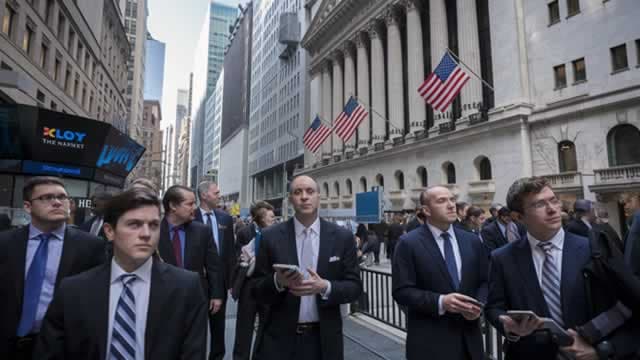
Business leaders praised Trump's nomination of Kevin Warsh as Federal Reserve chairman, citing his extensive experience and proven crisis management expertise.
Julia Coronado, founder and president of Macropolicy Perspectives, says President Trump's Fed chair pick Kevin Warsh understands the challenges of forging consensus at the central bank. Coronado speaks on "Bloomberg Open Interest.

Sen. Elizabeth Warren discusses President Trump's nomination for a new chair of the Federal Reserve, Kevin Warsh, and its potential impact on Fed independence.

Comprehensive cross-platform coverage of the U.S. market close on Bloomberg Television, Bloomberg Radio, and YouTube with Romaine Bostick, Katie Greifeld, Carol Massar and Tim Stenovec. -------- More on Bloomberg Television and Markets Like this video?

Brett Matsumoto, the next chief, has worked as an economist at the BLS since 2015.

CNBC's Steve Liesman and former Fed Vice Chairman Roger Ferguson join 'Closing Bell' to discuss Warsh's nomination to lead the Federal Reserve.

The ‘experts' predicted market crashes, massive inflation and recession. They were all wrong.

January 2026 delivered strong equity gains, with U.S. small/mid-caps and ex-US stocks outperforming, while bonds remained flat and bitcoin lagged. Resource sectors led early, but Financials underperformed post-earnings, signaling potential sector rotation to monitor in Q1.
Christopher David O'Reilly: [Interpreted] Thank you very much for taking time out of your busy schedule to join us for the earnings announcement for the third quarter FY '25 of Takeda. I'm the MC, O'Reilly from IR. [Operator Instructions] Before starting I would like to remind everyone that we'll be discussing forward-looking statements within the meaning of the Private Securities Litigation Reform Act of 1995. Actual results may differ materially from those discussed today. The factors that could cause our actual results to differ materially are discussed in our most recent Form 20-F and in our other SEC filings. Please also refer to the important notice on Page 2 of the presentation regarding forward-looking statements and our non-IFRS financial measures, which will also be discussed during this call. Definitions of our non-IFRS measures and reconciliations with comparable IFRS financial measures are included in the appendix to the presentation. Now we would like to start with the today's presentation. Today, we have Christophe Weber, President and CEO; Milano Furuta, Chief Financial Officer; Andy Plump, President of R&D; and Julie Kim, CEO-elect. They will present, and this will be followed by Q&A. We'll get started right away. Christophe Weber: Thank you, Chris, and thank you, everyone, for joining us today. Our fiscal year 2025 third quarter results are confirming the strength of Takeda fundamentals and our ability to maintain disciplined cost management and operational efficiency while continuing to focus on innovation and long-term sustainable growth. Milano will explain our financial results in detail in his presentation shortly. Fiscal year '25 remains truly a pivotal year for Takeda. We are in a phase of preparing for significant new product launch, making major step forward in our new growth trajectory. In particular, I would like to focus on oveporexton, rusfertide and zasocitinib, which are key assets in our late-stage pipeline that we expect to launch over the next 18 months. Oveporexton is the first orexin agonist to be submitted to the FDA and has a considerable first-mover advantage. Phase III results were statistically significant across all primary and secondary endpoints, demonstrating clinically meaningful improvement on daytime and nighttime symptoms. This reinforce our belief that this medicine can truly transform the life of patient with narcolepsy type 1. Rusfertide is an hepcidin mimetic that has demonstrated durable and sustained hematocrit control in patients with polycythemia vera or PV. Nearly half of PV patients remain untreated in the U.S. today, and those that are treated still have significant challenge in managing their disease. The Phase III data underscore the potential for rusfertide to transform the standard of care for these patients. We have filed a new drug application with the FDA for oveporexton and rusfertide and are awaiting formal acceptance. Finally, at the end of last year, we announced positive Phase III psoriasis data for zasocitinib, our highly selective TYK2 inhibitors. Full detail will be disclosed at the upcoming congress, but this once-daily oral therapy offers a compelling profile to help shift the psoriasis advanced therapy market towards oral treatment. Regulatory filing preparations are underway, and we expect to launch zasocitinib in the first half of calendar year 2027. The positive data for all the three programs met or exceeded our expectation. Now we are focused on preparing for launch. We will update the peak revenue potential for these three programs in the future. Combined, we believe this product could more than offset the anticipated impact of ENTYVIO biosimilar entry from the early 2030s onwards. And in addition to these three, our transformative late-stage pipeline includes five other innovative programs, two of which we have recently added through our strategic partnership with Innovent Biologics. Each of our eight late-stage program has the potential to transform the current standard of care, providing strong and sustainable growth drivers for Takeda well into the future. Andy will share more details about our pipeline advancement later in this call. Now I will hand it over to Milano, who will discuss our financial results and the outlook for the rest of the fiscal year. Milano, over to you. Milano Furuta: Thank you, Christophe, and hello, everyone. This is Milano Furuta speaking. Slide 6 summarizes our Q3 year-to-date results. As you know, this year, we are managing the significant impact of VYVANSE generic erosion. However, if you look at the performance quarter-by-quarter, the headwind from VYVANSE is steadily tapering off as the year goes by, and we are maintaining strong cost discipline to limit this impact to profit. Revenue for the 9 months period was just over JPY 3.4 trillion, a decrease of 3.3% or minus 2.8% at constant exchange rate or CER. Core operating profit, core OP was JPY 971.6 billion, a year-on-year decrease of 3.4% at both actual FX and CER. This is a meaningful improvement from our first half results. Reported operating profit was JPY 422.4 billion, an increase of 1.2%. Core EPS was JPY 428, and reported EPS was JPY 137. Cash flow has been very strong this period with adjusted free cash flow of JPY 625.9 billion, even after the upfront payment of USD 1.2 billion to Innovent Biologics in December. Slide 7 shows our growth and launch products, which represents over 50% of total revenue and grew 6.7% at constant exchange rate. This is a steady improvement on the 5% growth rate we saw in Q1 and Q2. In GI, ENTYVIO grew 7.4% at CER. Growth in the third quarter was particularly strong as expected, partially due to a onetime gross to net true-up in the period prior year. ENTYVIO Pen continues to be the main driver, helping us maintain leadership share in a competitive IBD market. We are also pleased to report that as of this month, ENTYVIO Pen is now on formulary with all three large pharmacy benefit managers with commercial coverage of more than 80%, in line with competing products. With this progress, we are on track to achieve our full year projection of 6% growth. In rare diseases, TAKHZYRO has slowed to 2.4% growth at CER. Although we continue to see strong uptake in international markets, this is being offset by the impact of new competing products in the U.S. In PDT, Q3 revenue growth marked an improvement on the first half. That said, we acknowledge some headwinds, particularly in albumin. IG growth was 4.3% year-to-date, driven by subcutaneous IG products, which grew double digits. IVIG sales have been impacted by Medicare Part D redesign in the U.S., which we expect to normalize in Q4. Albumin has returned to growth of 1.3%, but this is slower than expected due to softening demand in China, which is also putting pressure on other markets where supply is reallocated. While we anticipate additional tenders in Q4 to support an uptick in growth, there's a possibility we'd finish the year below our full year forecast. In oncology, FRUZAQLA continues to expand as well as we roll out global launches. Finally, in vaccines, QDENGA growth has accelerated to 22.1%, driven primarily by Brazil. On Slide 8, you can see how incremental revenue of growth and launch products and the impact of the VYVANSE loss of exclusivity contributed to total revenue performance. With each quarter, the gap is becoming smaller as the VYVANSE decline was heavily weighted to the first half of the year and the growth and launch products are performing better in the second half. Slide 9 shows year-on-year core OP performance. Here, you can see that the LOE of high-margin VYVANSE was the main reason for the year-on-year decline of 3.4% at CER. However, we have been able to limit the VYVANSE impact through operational efficiencies with R&D and SG&A expenses, both lower than the prior year. As we explained at the Q2 earnings call, we continue to tighten the belt on expenses, building on the progress of the cost efficiency program we started in 2024. This will be critical as we ramp up investment behind the three new product launches. We will not compromise on the necessary investments for long-term growth. We also have multiple programs in the late-stage pipeline that will require additional R&D investments in the coming years. At the same time, we will continue to pursue opportunities to offset these investments where possible to minimize the near-term impact on profit. Next, reported operating profit on Slide 10. This was flat versus prior year, with the lower restructuring expenses more than offsetting an increasing impairment of intangible assets. The main impairment item was booked in Q2 related to the cell therapy, and there were no major new items in Q3. Slide 11 shows our updated full year outlook. Starting with management guidance, we are revising only revenue guidance to low single-digit decline at CER, primarily due to stronger-than-anticipated VYVANSE generic erosion in the U.S. However, our commitment to OpEx discipline allows us to offset the gross profit impact from VYVANSE, and we maintain full year guidance for core OP and core EPS. For our reported and core forecast, we have revised our FX assumptions. As a result, our revenue forecast is now JPY 4.53 trillion, core OP forecast is JPY 1.15 trillion and core EPS forecast is JPY 486. We have also upgraded our adjusted free cash flow forecast. On Slide 12, we show more detail about the updated revenue and core OP forecast. For revenue, we are reflecting latest momentum of VYVANSE and other products, which includes plasma-derived therapies under TAKHZYRO. However, this is more than offset by FX upside, resulting in a net increase of our forecast of JPY 30 billion. For core OP, continued OpEx discipline fully offset the impact of VYVANSE. We also have FX benefit for a net increase to our forecast of JPY 20 billion. Thank you, and I will now pass over to Andy. Andrew Plump: Thank you, Milano, and hello to everyone on today's call. Takeda is entering an exciting new period of growth powered by our late-stage pipeline. As Christophe mentioned, in 2025, we were 3 for 3, delivering positive Phase III data readouts for oveporexton, rusfertide and zasocitinib. These exciting results are at the high end of our expectations, further strengthening our belief that these new medicines have the potential to fundamentally reshape their respective therapeutic landscapes, bringing transformative benefits to patients in the next 18 months. Let me begin with oveporexton, our expected first-in-class orexin 2 receptor agonist, which can transform the treatment paradigm for narcolepsy type 1. Approximately 85% of patients in the Phase III oveporexto trials saw measurable improvement, which brought them into the normative range on the Epworth Sleepiness Scale, or ESS, the gold standard measure of excessive daytime sleepiness. That means the majority of patients have the possibility of a normal day. In both Phase III studies, oveporexton achieved clinically and statistically significant improvements across all 14 primary and secondary endpoints with most participants reaching normative ranges. This normalization across such a broad range of NT1 symptoms, including daytime sleepiness, nighttime symptoms, cataplexy and cognitive function is unprecedented. Oveporexton doesn't just manage symptoms, it addresses the underlying orexin deficiency in NT1, offering patients a single, well-tolerated oral therapy that could restore how a majority of NT1 patients feel and function. We have submitted a new drug application to the FDA and are working to launch oveporexton this calendar year. Next is rusfertide, our hepcidin mimetic for polycythemia vera. One key data point from the Phase III study is the ability to maintain hematocrit control below 45% through 52 weeks. Real-world data shows that 78% of PV patients experience uncontrolled fluctuating hematocrit, leading to a fourfold increase in the risk of thrombotic events, including stroke, deep vein thrombosis, pulmonary embolism and acute coronary syndrome. Rusfertide targets the biology upstream, offering more stable and durable hematocrit control and fewer variable swings in hematocrit. Durable hematocrit control with impressive safety and tolerability also led to clinically meaningful and statistically significant benefits to patients' quality of life as measured by the PROMIS Fatigue Scale and myelofibrosis symptom assessment form. By reducing fatigue and other key disease-related symptoms as well as the need for phlebotomy, rusfertide enables patients to spend less time managing their disease and more time engaging in everyday activities. We have submitted an NDA to the FDA and are working to launch rusfertide in PV this calendar year. And finally, we have zasocitinib, our next-generation TYK2 inhibitor for immune-mediated diseases. In our Phase III psoriasis studies, zasocitinib worked fast with significant improvement in PASI 75 within 4 weeks. Patients, of course, want clear skin. At week 16, more than half of patients on zasocitinib achieved PASI 90 or almost clear skin, and approximately 30% achieved PASI 100 or completely clear skin. PASI scores continue to improve through week 24. These results are at the very high end of reported results for all therapies in development. Zasocitinib is a once-daily, well-tolerated pill that does not have any food interactions. We are looking forward to sharing the complete data at a medical conference in the near future and expect to launch zasocitinib in psoriasis during calendar year 2027. In addition, we remain confident in future indication expansion opportunities for zasocitinib, including psoriatic arthritis and inflammatory bowel disease. Together, oveporexton, rusfertide and zasocitinib represent three transformative medicines we plan to bring to patients over the next 18 months. They demonstrate the strength of our R&D engine, the speed and quality of our clinical execution and our commitment to delivering therapies that meaningfully change how patients live. Next slide, please. These first three approvals are just the beginning. I want to highlight some additional bright spots within our late-stage pipeline. Building on our success, a head-to-head study of zasocitinib versus deucravacitinib is fully enrolled and on track to read out in 2026. These data are not required for filing, but will be insightful to further differentiate zasocitinib from other oral psoriasis medicines. Last November, at the American Society of Nephrology Kidney Week, we presented new IgA nephropathy data from a proof-of-concept study for mezagitamab, our anti-CD38 monoclonal antibody. IgAN is a progressive autoimmune disease that causes irreversible damage to kidney function. Patients receiving mezagitamab demonstrated durable kidney function for about 2 years. This is an incredible 18 months after the initial 5-month treatment period, suggesting a disease-modifying effect sustained long after dosing that could allow for extended treatment holidays, very important for patients with this lifelong disease where many progress to kidney failure within 10 years. In addition to oveporexton, we are excited about the potential of our second orexin 2 receptor agonist, TAK-360, which is initially focused on patients with normal orexin levels like those with narcolepsy type 2 and idiopathic hypersomnia. Phase II studies in NT2 and IH are enrolling well, and we expect to have data this year to inform Phase III development. Next slide, please. Turning our attention to oncology. Late-stage highlights include elritercept, our activin A/B ligand trap that showed compelling data in myelofibrosis as presented at this past ASH meeting. Phase II myelofibrosis data showed clinically meaningful improvements in anemia and thrombocytopenia alongside favorable trends in spleen volume and symptoms when added to ruxolitinib. Elritercept remains a late-stage, potentially best-in-class approach across MDS and myelofibrosis. And lastly, we recently licensed two new innovative oncology drugs from Innovent Biologics, now called TAK-928 and TAK-921. TAK-928 is a potential first-in-class alpha biased IL-2 PD-1 bispecific antibody designed to selectively activate tumor-specific cytotoxic T cells through activation of the IL-2 alpha CD25 receptor while reducing the risk of exhaustion through immune checkpoint inhibition. In early-stage clinical studies, TAK-928 has demonstrated encouraging activity in heavily pretreated immunotherapy and chemotherapy refractory lung cancer as well as in immunologically cold tumors such as microsatellite stable colorectal cancer. We have seen compelling high-quality data in well over 1,200 Chinese patients and consistent early signals from ex-China populations. We have completed the rapid transfer of data and materials and are now executing with speed to generate global data sets that will supplement the China data shared last year at ASCO. This will allow us to advance TAK-928 to treat a broad range of solid tumors, including non-small cell lung cancer and microsatellite stable colorectal cancer. These go to Phase III decisions will start as soon as 2026 and into 2027. The shared investment in TAK-928 has a 60-40 split with Innovent and is stage gated by these go decisions. TAK-921 is a Claudin 18.2 targeted antibody drug conjugate that couples a selective antibody with a silenced Fc region to a topoisomerase payload. This approach is designed for potent, tumor-specific delivery of this preferred payload to patients with pancreatic and gastric cancers where unmet need remains high. The engineered Fc silencing reduces off-target toxicity in the GI tract and lung, potentially allowing for more robust dosing and the ability to combine with first-line regimens. Clinical data shows lower rates of GI adverse events relative to other Claudin 18.2 targeted antibodies in development. We plan to develop TAK-921 in first-line gastric cancer and first-line pancreatic cancer. And now I'd like to turn it back to Christophe and Julie for a few closing remarks. Christophe Weber: Thank you, Andy and Milano. Before we start the Q&A, I would like to share that this is my last earnings call as a main presenter. I will be on the full year earnings call, but in a supportive role as Julie Kim, our CEO-elect, take the lead and sets guidance for fiscal year '26 ahead of our formal handover in June. This is part of our intentional and coordinated transition. Starting this month, Julie began taking on more operational responsibilities to ensure that we remain focused on our upcoming launches without interruption. I would like to thank all of you for the important dialogue we had over the years about our business. I am proud of the work we have done to position Takeda among the global R&D-driven pharma leaders and poised for growth in the years ahead. It has been a wonderful journey, and I am excited about Takeda's future and confident in Julie's leadership in its next era. Julie, over to you. Julie Kim: Thank you, Christophe, and thank you for your leadership and guidance over the last 12 years. Hello, everyone, and thank you for your trust that you're putting in me to lead Takeda's next era of growth. As Christophe shared, our transition has been incredibly collaborative. And one of the benefits of being an internal successor is that we don't have to slow down, we can keep the momentum going and continue to move the organization forward. To that end, you may have seen our post today about changes to our organizational structure and executive leadership we are making effective April 1. These changes are designed to position us for competitiveness, growth and speed in the years ahead, particularly as we plan for multiple launches. As we implement these changes, we expect the teams will identify opportunities to simplify their work further as we continue to redesign our processes to adopt AI and other advanced technologies. Next quarter, I look forward to taking the lead on the earnings announcement and providing guidance for fiscal year 2026. I value our ongoing dialogue and will stay closely engaged with all of you in the months and years ahead. Thank you. And with that, I will turn it back to Chris for Q&A. Christopher David O'Reilly: [Interpreted] [Operator Instructions] Morgan Stanley, Muraoka-san. Shinichiro Muraoka: [Interpreted] This is Muraoka, Morgan Stanley. I hope you can hear me. Christopher David O'Reilly: Yes, we can hear you. Shinichiro Muraoka: Maybe it's too early to ask, but Milano-san, what are your thoughts about the next fiscal year? Contribution from the new product is probably small, and you'll be spending a lot of marketing expenses for those new launches, I understand that. But live situation is coming down, it's getting better, and profit will be maybe flat or slight decrease. And I'm thinking that you can continue to increase dividend. But can you give us some suggestions about what will happen in the next fiscal year? Christopher David O'Reilly: Milano, please go ahead. Milano Furuta: [Interpreted] Thank you, Muraoka-san. Yes, it's a little bit too early, you're right. Our guidance will be provided as usual in May. And the next fiscal year's budget is being finalized as we speak. So please give us some more time. With regard to the current momentum, I believe that we can give you some more information. Top line. Well, growth of growth and launch products versus the LOE impact, I think it's a balance between the two. We expect the growth products and launch products to continue to grow. But as you saw in the numbers in this fiscal year, they are beginning to mature. This cannot be denied. But the gap between LOE and growth and launch products is shrinking every quarter. So we need to see how this balance will work out for the next fiscal year. We are trying to figure that out now. So please give us some more time. As far as expenses are concerned, this fiscal year, the whole company endeavored on saving the costs, and we will continue to make this effort. But Muraoka-san, like you said, launch costs, three products we launched within 1 year. This means that there will be some load burden. But this uptick is very important for the future growth as well. This is a very important timing for us. So we will be discerning in terms of which investments are necessary, and we will not compromise in investing these launches. As far as R&D is concerned, this fiscal year, we have been trying to save the costs and also at the same time, continue to drive various projects through the Innovent partnership. We have introduced new assets for Japan and full-scale development is expected to start. Considering that impact, R&D expenses are likely to go up. I think that would be the correct way of reading it. But again, I would like to emphasize that we will continue to tighten the cost wherever we can, and I hope that you can evaluate that as well. Shinichiro Muraoka: [Interpreted] Do you have any comments about the shareholder return? Milano Furuta: [Interpreted] Well, dividend, yes. Progressive dividend is something that we have been talking about for a long time. So this is the basic policy. So either keep it flat or try to increase the dividend. This is the basis. Whether or not the dividend will increase and by how much? Well, in order to decide that we have to look at the core EPS and also reported EPS as well as cash flow generating power and the speed of a reduction of debt-bearing -- interest-bearing debt. So we'll pay attention to those and decide. Shinichiro Muraoka: [Interpreted] Understand. I have great expectations. I have another question about zasocitinib. UC CD Phase II outcome, when can we expect it? And also what about dosing? Phase II for UC was 50 milligram or 30 milligram? And what about the psoriasis safety data based on that safety data? Can you perhaps comment on this? Christopher David O'Reilly: So the question on timing for the UC and CD readouts for zasocitinib and which doses we are using. Andy, if you could comment on that, please? Andrew Plump: Thanks, Chris. Thanks, Muraoka-san. So we'll have data from both the UC and Crohn's disease Phase IIb studies this year. Both are dose-ranging studies. As we've mentioned -- we haven't disclosed the precise doses, but as we've mentioned, the 30-milligram dose that we've studied in psoriasis and that we'll be registering for psoriasis is the low end of the dose range in IBD. We have reason to believe that higher exposures will be necessary for efficacy in UC and Crohn's disease, and we have significant upwards headroom in dose to study. So those studies are ongoing. And then your last question was with respect to safety profile for psoriasis. So we've just commented at the top line in December when the Phase III studies read out. We'll be presenting at a medical conference in the near future. You could probably guess which conference we're targeting. And overall, the safety profile that we've seen in both Phase III studies is very consistent with the profile that we had seen previously in our Phase II study. Christopher David O'Reilly: [Interpreted] The next question is Yamaguchi-san, Citi. Hidemaru Yamaguchi: [Interpreted] Can you hear me? Christopher David O'Reilly: [Interpreted] Yes, we can. Hidemaru Yamaguchi: This is Yamaguchi from Citi, I have two questions. First of all, the first one is more of a broad question because MFN situation or medical policy in the United States seems to be are coming down because the major companies are now settled with the U.S. comment on MFN. But a Japanese company, including your company, are still excluded from this discussion. But what do you think about this sort of activity, which you need to do regarding MFN or U.S. policy in the near future? That's the first question. My second question is regarding the organization change, which you announced today, especially on the strategic portfolio development, which it sounds like you're trying to speed up on the some of marketing activity in those areas. Especially in the U.S., U.S. marketing is a key for next few years. And it depends on the products, but your marketing activity in the past are not necessarily executing better than expected, to be honest. But how are you going to change, especially in the U.S. marketing organizations or activities in the near future through the Kim-san's roles or our CEOs roles in the near future? Thank you. Two questions. Christopher David O'Reilly: Thank you, Yamaguchi-san. So the first question on MFN and latest U.S. policy updates. The second question regarding the organizational updates that we announced today. So I'd like to call on Julie to address both of those questions, please. Julie? Julie Kim: Yes. Thank you, Yamaguchi-san for the questions. First, in regard to MFN, as you've noted, the number of companies, 17 companies that had originally received the letters from the White House, they have all gone in for negotiated agreements in regards to how they will approach MFN, how they're going to be managing tariffs with the relief that they received and further investments in the U.S. So since those agreements have been made, there were also releases from the government in terms of the generous model, which details how these agreements can be actually implemented through Medicaid. And there have been a release of GLOBE and GUARD CMMI demonstration projects for commentary by the public. So at this point, we have assessed both the impact of generous and looking at the potential design of the two CMMI products on Takeda and Takeda portfolio. So we are evaluating those impacts and taking necessary steps to address that within our approach to MFN. But let me end by saying that in general, MFN is not an approach that we support. Having price controls and importing one component of health care systems that have very, very different structures does not make sense for the U.S. and can impact future innovation. So we are not in favor of MFN, but we will continue to address the challenges that may face Takeda going forward. In regard to the organization changes that were announced today, you will see that from a commercial standpoint, there are basically two key structures that we are trying to focus on. One is a therapeutic one. And so you will see that the oncology business unit is still a separate business unit. Both Andy and Christophe have talked about the assets that we have brought in, particularly the Innovent ones will be a key part of our oncology portfolio, and we are very much looking forward to launching rusfertide later this year. So maintaining our focus on oncology to drive that growth and the potential that we have in our pipeline now is absolutely critical. And then for the upcoming launches, creating two primarily geographic focus, one in the U.S., maintaining the U.S. focus given the size of the market and the dynamics that exist that we have to manage, that is part of being able to set ourselves up for success going forward in terms of the commercial approach to the U.S. as well as the international markets. So what may not be as visible through the org changes that are announced is the work that we're doing in terms of our marketing excellence and sales excellence and commercial operations. So we are working on all those aspects, again, to ensure that we are ready and can deliver successful launches going forward. Thank you. Christopher David O'Reilly: For the next question, I would like to call on Stephen Barker from Jefferies. Stephen Barker: Steve Barker from Jefferies. I have two questions, both about ENTYVIO. The third quarter sales were very robust. The global third quarter sales expanded 17% year-on-year on a reported basis, much better than the 3% growth reported in the second quarter. You said that you are now confident that you can achieve your 6% guidance for the full year, but that would imply a 2% decline year-on-year in fourth quarter sales. So would you agree that your -- that there's a decent chance at least that you can beat the current guidance for full year, 6% growth. And if you could just talk a little bit more about what's driving the good performance in the third quarter and if it is something that can be sustained into next year? That's the first question. And then second question. A couple of days ago, CMS announced that ENTYVIO has been chosen as one of the drugs for the third cycle of IRA price negotiations, meaning that it's likely to get a substantial Medicare price cut from the start of 2028. Any comments on how big that price cut might be? And if you can still achieve your peak sales guidance of $7.5 billion to $9 billion even with the price cut? Christopher David O'Reilly: Okay. Thank you, Steve. So the question on ENTYVIO sales trend, impact of IRA inclusion and the implications on peak sales. So I'd like to ask Christophe to start with this one and then perhaps Julie can add some comments as well. Christophe? Sorry, Christophe, I think you might be muted. Christophe Weber: Thank you, Steve. Obviously, ENTYVIO is operating now in a very competitive market. We know that, but we are pleased by the Q3 performance. One important point is that we have improved our coverage situation in the U.S. All the big 3, now PBM, are reimbursing and covering ENTYVIO Pen. Took a while, but we have now a coverage at the level of our competitors around 80% since January. So it's quite recent. So we are hopeful that the Pen will continue to progress in the U.S. as it has progressed in other countries. And long term, we still aim to have a 50-50 split between the IV and the Pen. So overall, a good performance in Q3. Long term, we project ENTYVIO not to gain market share, but to remain stable and to grow at market pace basically. While the Pen is developing, that's our current estimation, but the market is changing quite a bit, but good performance for sure in Q3. Julie Kim: And then Steve, in regards to the IRA selection of ENTYVIO. As we've shared in the past, this was anticipated. And so we've been preparing for this eventuality. As you know, from a timing perspective, we have a period of time in which we have to confirm engagement in the negotiation. And then towards the end of the year, we will actually find out what price will be set. I think you are also aware, it's not really a negotiation, but we will be submitting our best evidence package to support ENTYVIO. If you look at what's been happening over the previous two cohorts, the second cohort had higher price cuts than the first cohort. So it is too early to say whether that trend will continue into the third cohort or whether it will be similar to the second cohort. So it really depends on where we'd land with the final pricing on ENTYVIO in terms of when that peak sale could -- sorry, peak revenue could be and also if we end up in the 7.5% to 9% or not. So we will update later once we understand what our pricing situation will be for ENTYVIO. Christopher David O'Reilly: [Interpreted] Next question is from Matsubara-san, Nomura Securities. Matsubara: [Interpreted] This is Matsubara, Nomura Securities. First question is about TAKHZYRO. On a CER basis from the second quarter, the growth rate seems to be slowing down. And is it affected by the competitor DAWNZERA? And the transition from TAKHZYRO to DAWNZERA and HAE template showing some 65% decrease. So what about the prescription rate in existing patients or new patients? Could you comment on those? Second is, as Milano-san mentioned, oveporexton and zasocitinib will be launched and also R&D spending -- more spending will be necessary. And in the midterm viewpoint, as you try to increase the operating profit, how are you going to take measures? Christopher David O'Reilly: Thank you, Matsubara-san for your questions. So the first around recent TAKHZYRO trends -- prescription trends in the U.S., I'd like to ask Julie to comment on that. And then the second question, looking at our outlook for profit over the medium term. I'd like to ask Milano to comment on that, please. First, Julie? Julie Kim: Yes. Thank you for the question, Matsubara-san. When it comes to TAKHZYRO, I will share a few comments. First, in terms of the overall market, this is a market that has been maturing. The diagnosis rate is high and the penetration of prophylaxis treatment has been high as well. So TAKHZYRO continues to be the gold standard for HAE patients. And you are correct that we have seen an impact of the launches of the two competitive -- recent competitive entrants. And so we are seeing an impact in terms of new starts from these new competitive entrants. But I also want to point out that part of the lower growth is also due from the impact of Medicare Part D redesign that we are experiencing a bit higher impact from that in the U.S. than anticipated. Now when it comes to long-term efficacy, if you look at the real-world evidence that we have for TAKHZYRO, no other product is able to demonstrate the level of efficacy that we have when you look at the data from an attack perspective. We have patients that are attack-free for over a year at any given point in time. And so from an efficacy standpoint, our real-world data for TAKHZYRO, it can't be beat. So that is something that I would like to highlight, and it's something that we continue to defend and support from a TAKHZYRO standpoint. Milano Furuta: [Interpreted] Thank you very much, Matsubara-san. And I'd like to answer to your second question. At the beginning as Muraoka-san also asked, and I mentioned about the pressure of overall expenditure increase. And therefore, I'd like to touch upon the potential contribution of new products to the profit. And this is a general comment that whenever new products come out, then in the second year or the third year since its launch, we will see a contribution to the profit. It depends on the timing of the launches. Therefore, it is difficult for us to say anything concrete whether it's going to be next year or the year after the next and how much. But amongst the three products, oveporexton's uptake after the launch is expected to be fast. Whereas zasocitinib will have to play in a very highly competitive market. Therefore, I think for zasocitinib, I think we need to take time to monitor. And rusfertide is in between. It is a highly innovative product. But at the same time, the market access may not necessarily be so easy. Therefore, how that will demonstrate the uptake, we would like to monitor. But the speed of uptake will be impacting on to the timing that we start to see the product contribution to the profit. And also not just these three products, but five new pipeline assets, readouts are coming. And in forthcoming 5 or 6 years, they will continue to be launched. And as a result, overall, I think that the overall profit level should be able to be enhanced. At the same time, not just the core OP, but the reported operating profit is also monitored. For instance, VYVANSE, the intangible asset, the amortization will be complete. And as a result, there will be also a positive contribution in that sense. Thank you. Christopher David O'Reilly: Moving on to the next question, I would like to call on from TD Cowen, Mike Nedelcovych. Michael Nedelcovych: I have two. My first is also related to the IRA impact on ENTYVIO. I believe it is Takeda's base case that ENTYVIO Pen will be included in the IRA price negotiation. But I'm curious if that is a completely settled matter or not. Is there any chance that ENTYVIO Pen is ultimately excluded from the IRA price negotiation? That's my first question. And then my second question relates to the partnered AC Immune asset in Alzheimer's. It looks like data may be anticipated in mid this year. Should we expect that to be the time when Takeda decides if it wants to opt in or not? And Andy, I'm curious to hear your thoughts more broadly on prospects for Alzheimer's disease prevention or delay based on early amyloid plaque clearance? What are your general thoughts on this approach? Christopher David O'Reilly: Mike, so I think the first question, Julie, can comment on IRA ENTYVIO impact on -- potential impact on Pen. And then the second question to Andy on the AC Immune partnership and AD in general. Julie? Julie Kim: Thanks for the question, Mike. And in terms of the negotiation with the IRA, we do expect that Pen will be included. Andrew Plump: And Mike, on the AC Immune program, so we won't have data this year to drive a decision that will come in subsequent years. And thanks for asking more generally. Of course, I've been working in this industry for almost 3 decades now. And the first project I worked on was a project of a gamma secretase inhibitor designed to reduce A-beta production. It's been one of -- to me, one of the most exciting and promising, but also one of the most challenging areas in our industry. I'm a big believer that if we could clear a beta plaque early in the longitudinal course of Alzheimer's disease that we could drive even greater benefits than what we see from the passive antibodies that have been used in demonstrated efficacy. So we're quite excited about the vaccine program. Of course, the challenge with the -- historically with the vaccines has been threading the needle of safety and efficacy. We think we have a shot with the -- with our AC Immune partners and still working towards that. Christopher David O'Reilly: [Interpreted] The next question is Wakao-san, JPMorgan. Seiji Wakao: [Interpreted] This is Wakao, JPMorgan. I have two questions. Firstly, regarding PDT, how do you assess the third quarter progress on PDT? Compared with your guidance, PDT progress seems to have been somewhat slower. And could you share your outlook for PDT in fourth quarter and next fiscal year? This is the first question. And second question is about zasocitinib. Should we expect zasocitinib Phase III data to be presented at AAD in March? If so, what key aspects should we focus on? As Icotrokinra and [indiscernible] programs have shown favorable data or so, where do you see zasocitinib's key point of differentiation? Christopher David O'Reilly: Thank you, Wakao-san. So the first question on the PDT business performance and outlook, I'd like to ask Julie to comment on that. And the second question on zaso data, where will it be presented and what should we focus on in that data, I'd like to ask Andy to comment on that, please. Julie Kim: Thank you for the question, Wakao-san. In regards to PDT, as Milano was sharing in his part of the presentation earlier, we do see some slowdown in demand, particularly in regards to albumin in China. As you may be aware, the Chinese government has put in place utilization guidelines that are impacting demand for albumin in China. And it will -- it has slowed down the growth, and it will take time for growth to return in China. When you look at the overall outlook for PDT overall, there, we still believe we will have mid-single-digit growth for this year as previously shared and longer-term outlook is still strong. The quarter-to-quarter, as you know, because there are lots of variabilities in regard to tender timing, et cetera, we do -- as Milano mentioned, we do believe that there is a possibility we will have a shortfall, particularly in regards to albumin. But overall, we will be meeting the forecast for PDT. Seiji Wakao: So could you also comment on the immunoglobulin? Julie Kim: Sure. Yes. From an immunoglobulin perspective, again, long-term growth, we believe will remain steady. And from a short-term perspective, we are expecting to be on forecast for immunoglobulin. Andrew Plump: Wakao-san, this is Andy. So thank you for your question on zasocitinib. So we haven't disclosed yet the conference that we'll be presenting at, but AAD certainly is like is a possibility. I just suggest that you watch out for the abstract when they're released in mid-February for AAD. And then in terms of what to look for, it's pretty straightforward. It's fast onset of action. It's clear skin and it's ease of administration. We have a once-daily oral pill that's well tolerated with a strong safety profile. And then when you double click, you'll see that in the two Phase III studies, we hit on every single primary and secondary endpoint, and that's 44 total endpoints. So there'll be a lot of data that will be shared, and we're quite excited to get it out there. Seiji Wakao: So what is our competitive advantage? Andrew Plump: Well, it's has -- as we mentioned over the last hour, it has an efficacy profile that at 16 weeks is at the very high end of what's been seen for oral agents. It's ease of administration without having any food effects and it's the overall profile, and it's the rapidity with which we generate clear skin in an oral agent. We believe and we think the data will demonstrate that it's as good or better than any other oral option in the moderate to severe plaque psoriasis space. Seiji Wakao: Okay. I'm looking forward to see the data. Christopher David O'Reilly: Okay. Thank you very much, Wakao-san. I think we have just time for one final questioner. So I'd like to call on Tony Ren from Macquarie. Tony Ren: Yes. Thanks for the chance to ask the last question. My first one, and I'll go back to the -- again, for Andy, the zasocitinib regulatory pathway. So assuming that you will present the data at AAD in March, the standard FDA review takes about 10 months. So do you think you can actually launch it earlier than the 18 months of a time line guided? Are you being a little bit too conservative in estimating the time line? So that's my first question. The second one is probably to Julie about the ENTYVIO biosimilar. Have you -- as you're thinking about the biosimilar entry changed because of the subcutaneous Pen, I noticed that a recent conference in San Francisco, you guys are now saying 2030 and beyond. So just want to confirm whether the launch of the Pen and the wide adoption of the Pen has anything to do with the biosimilar entry. Yes. So that's my second question. Christopher David O'Reilly: Okay. Thank you, Tony, for your questions. So the first on zasocitinib regulatory pathway and potential launch timing, Andy can comment on that. And then the second question on the ENTYVIO biosimilar entry timing, I think Julie can comment on that, please. Andy? Andrew Plump: Thanks, Chris. Thanks, Tony. So just to put perspective on the filing time line. So there are three elements that define the time line for filing. There's the Phase III studies, which we've completed. Those are ready to go. There's the overall patient safety database. So we have to accrue safety in about 1,000 patients on active drug for a full year, and then the third is the CMC package. So when you put all three of those together, Tony, we're looking at a submission that's likely to occur sometime in this summer. And then, of course, the time line for the review will be something that will be in dialogue with the FDA and once we've made that submission. Julie Kim: Thanks, Tony, for the question on the ENTYVIO biosimilar timing. So we have not really changed our timing expectations here. As we've shared previously, we do have patents that cover various different aspects of ENTYVIO that go out to 2032. But as you are also well aware, there are biosimilars in development, and they could file with legal challenges -- I'm sorry, they could file and we would then pursue legal challenges. So that's why the timing could be 2030, 2032, and that's why you hear us saying that. Also from an overall market attractiveness perspective for ENTYVIO, as now ENTYVIO has been selected for IRA negotiation. The pricing expectations for biosimilars will also be impacted by that. Thank you. Christopher David O'Reilly: Thank you, Tony, for your questions. With that, we'd like to bring this call to a close. Thank you all very much for participating in the call today. This concludes our Q3 earnings call. Thank you. Good night. [Portions of this transcript that are marked [Interpreted] were spoken by an interpreter present on the live call.]

Suguru Miyake: Good afternoon, ladies and gentlemen. Thank you very much for coming to our third quarter results briefing for the fiscal year ending March 2026. And today, we also have a simultaneous translation. So we are communicating all around the world. For those in Europe, it must be in early morning. For those from the U.S., but I bet you are in very late at night. Thank you very much for joining this call for those hours. So I am the President of the company. And also, we also have Naraki-san and Takeuchi-san with me. Takamaro Naraki: I am the Vice President for the company. My name is Naraki. Naoki Takeuchi: And I am a Senior Managing Director. I am Takeuchi. Suguru Miyake: Okay. So let's get started. In 2026, we are having the 35th anniversary of the company. So we made the anniversary logo, which we put on the front page. The bird in the middle is a Mascot character. She is called MAppy, M and A and happy. And those 2 words were combined together to be named as MAppy. And let me first start with the summary. In this Q3, showing the 9 months total and Q3 alone, basically, we recorded the highest sales and recurring profit ever, and we were able to surpass 40% for our recurring profit margin. For 9-month total, we accomplished JPY 37.7 million, which is increasing by 26.5% year-on-year. And the recurring profit went up by 46.8% to be JPY 15.7 billion. The OP margin was 41.7%, which is up by 5.8 percentage points. The number of transactions closed increased by 9.8% to be 810 deals and also M&A sales per transaction increased by 15.3% to accomplish JPY 45 million. On a Q3 alone results was JPY 15.1 billion revenue, and that was a record high number, up by 34.6% year-on-year. And ordinary profit was JPY 7.1 billion, which increased by 51.5% and OP margin was 47.2%. And number of transactions closed was 322 deals, which are progressing pretty good. And M&A sales per transaction was JPY 45 million, maintained at a very high level. So where are we at for the overall against the guidance numbers? I think that is important to note it. And for the sales, our target was JPY 46.3 billion. We are at JPY 37.7 billion, which is 81.5% progress. And ordinary profit against the forecast of JPY 17 billion, we are at 15.7% with 92.5% progress. And even more, we are quite pleased to see a very steady progress in returning back to our growth cycle. So M&A jobs, we do see many different conditions and situations, and we do see a lot of extension of the deals. So in Q4, March, if we were to trying to target at Q3 to accomplish the target, then we tend to see some delays into the next year. So we need to accomplish the certain business performance while satisfying customers. We will need to bring up the high performance as much as possible in Q3. So we can work on more preparation work in Q4, so we can have a rocket start for the next fiscal year and matching and also receiving a lot of commission work. And so that way, we can accomplish the stable growth. And finally, I believe we were able to come back to such a business cycle, and that is the most pleasing information that I have for this time briefing results. And let me go one by one, a little bit more in detail on the sales of 37.7% -- sorry, JPY 37.7 billion. And of course, we saw increases both in the number of transactions closed and also the unit sales, and that helped to see a substantial increase in the sales. The best part was the number of consultants who accomplished budget. We saw a substantial increase in such a number, such members and also department who accomplished the budget increased drastically. At the same time, Takeuchi-san, who is the President of M&A Center, always talks about each individual will need to accomplish the target to be happy and also each department to accomplish the target to be happy. And as a result, the company to accomplish the budget to be happy. So he is always pursuing to accomplish both the individual and the whole group. And such a policy and thinking is now being understood and spreading among the employment -- employees, and that was accomplished this time. And I think now we were able to build a very solid foundation to accomplish that. And the number of transactions closed. I think we were quite successful in implementing a very scientific approaches. It wasn't the result of a coincidence to increase the number of success rate and also on time closure of the deals, and we implemented 2 measures to accomplish them. One, when we start the deal negotiation, we had -- we are now having kickoff meetings, both sellers and from the buyers, the person in charge and their managers and accountants, lawyers and tax accountants and all these professionals, they all got together to confirm the schedule. We also confirm the stakeholders, and we also confirm the challenges, which is more important. So we identified those challenges ahead of the project kickoff, and that is very important. And we are making a smooth flow in the deal procedure. We conducted an M&A audit. And if we were to find the challenges at the time, then that could actually cause a situation that people might wonder, maybe they were hiding this information or they were deceiving us. And such a concern will be rising. So at the beginning of the whole deal, we need to assume what the challenges are so that way, both sellers and buyers can prepare themselves to be able to take action towards them. And that will actually increase the trust in us and also trust in between sellers and buyers, and that helps to have a smooth process going forward. The other thing is, and since this scandal we had, we actually increased the number of managers drastically. Of course, some of the -- a lot of managers are still not fully experienced, but we created a role for the deal management in place. So every Monday, we instructed them to give right instruction of the deals to their subordinates. So those are the 2 actions we implemented, which supported us to have such successful results, which were led by the President Takeuchi as well as the sales General Manager and their leadership actually worked quite well to permit this type of thinking among all the staff members to increase the number of transactions closed as well. And we are also able to maintain a very high M&A sales per transaction. And as I've been talking in the past, we're not trying to grow the sales per transaction. That's not our main purpose. Our target is to maintain around JPY 40 million per deal. But as we grow the number of deals, the unit sales goes down. So to stop that, we basically trying to capture the mid-cap business deals as much as possible, and that was quite successful, and that's also sustaining good unit prices. And the number of large deal was 85 cases. We did see a huge increase, increased by 66%. So our volumes on the midsized deals are properly secured. And but also for small deals, actually, we passed those deals over to our affiliate companies, the companies by the equity method, the patents. We have patents to handle those smaller deals. And I think that was also effective at the same time. And because of that, the percentage of smaller deals are now declining with us, and that is actually helping to see a stronger performance. That's how we understand right now. And talking about the cost and expenses, I pass the floor over to Naraki-san. Takamaro Naraki: On this page, so we are showing the cost of sales and SGA expenses. So those costs and SGAs for this year, starting from March 2026, we have changed the classification of human resources that actually changed some of the number changes. And so we are talking about comparison after the reclassification change. Then cost of sales was increased by 19.1% to be JPY 13.7 billion. SGA expenses was JPY 8.37 billion, increased by 7.7%. Referral fees ratio was 13.1%, increased by 0.9 percentage point. For the SGA expenses, the IT cost was JPY 848 million, and it increased by 46.7%. And let me also touch on the overview of the expenses and numbers. This is the total income statement. And towards the top on the cost level in total as Line 3, JPY 13.725 billion, and it was 36.4% of the sales. Last year, it was 38.6% and this ratio went down year-on-year. And 2 lines down from here. the SGA and operational cost, so it was 22.5% with JPY 8.49 billion. It was 25.6% last year. So percentage reduced this year because of the sales increase. So as I mentioned, ordinary profit came out to be 41.7%. So now it's back in the 40s. Suguru Miyake: And next is talking about the commission status. So it's very important to understand how many that we are receiving as mandates. In total, we received 328 mandates, which is down by 3% year-on-year. Of that mid-cap mandates were the 58 deals, which is down by 10.8%. For the buy-side mandate was 383 mandates, which is down by 6.6%. And number of new transaction negotiations was 295 deals, which is down by 13.2% compared to last year. I will have more details to come later on. This is nothing really negative. Actually, in the first half last year, we did have a huge amount of mandates that we received. And based on that, we decided to focus on the business performance. We wanted to revive our business performance. That was the main purpose of this fiscal year. So the number of transactions closed, and we try to focus also on the track record of the closed contracts. So we did not focus too much on receiving mandates in the first half. But second half, we will focus more on the quality of the mandates. And that was the policy we had in the second half. For those with no possibility of getting concluded, we try not to pursue to conclude them and close them. And so that is why the number is declining, but this is not because of a negative situation. So I hope you can understand this is still a result of positive effort, and this is the overall flow. Mandates in the central area are in green. These are the mandates in the city areas. We've been acquiring city area mandates quite well and local area mandates are about 45% of the total. So revitalizing the local economy and also contributing to the central area I believe that we have a really good balance of achieving mission and achieving good results at the same time. And about the fourth quarter, when it comes to receiving mandates or matching, we will put in bigger efforts. So I believe that we will be able to have overall good performance in the whole year. And the summary of the status of acquiring mandates is this. These are detailed figures. So please take a look at this later. And about the number of new mandates we have acquired, we believe that we're not experiencing a deterioration. We think that we are in a transitional period. About last year, we, as a company, were finally trying to be revitalized. So our focus back then was on acquiring more mandates. We were going after volume. However, since the start of this fiscal year, our focus is more on closing mandates and eliminating troubles. Therefore, when it comes to acquiring mandates, we've been refraining from the mandates with limited possibility of closing them after -- later on. And also, there can be inappropriate buyers. So really delegate projects that are close to renewal type of mandates, we've been cautious in receiving those mandates to improve customer satisfaction rate and also to improve our productivity. So we've been raising our productivity, and we've also been trying to improve customer satisfaction. And also, we plan to further improve the quality of the mandates we receive. And at the same time, we plan to improve the quality of our business and our service and the customer satisfaction level. This is going to be our direction. And I would like to hand over to Naraki-san for summary. Takamaro Naraki: Okay. About our balance sheet assets. JPY 60.011 billion. And below that, total net assets, JPY 48.257 billion. So ratio of this was 80.4%. And we have the same for the previous fiscal year on the right-hand side, JPY 47.5 billion in net assets. The ratio of net asset was 77%. So there is an increase by 3.4%. And about headcount, as I said, we had a reclassification of employees. So at the top of this table, we have the role for M&A consultants. These are the sales representatives belonging to the sales headquarter of Nihon M&A Center and the sales staff at local -- foreign local entities. And as I said, we've been doing effective hiring in M&A consultants. However, we have the increase in turnover of our employees with tenure of less than 3 years. So we've been implementing measures to improve retention of our employees. And we plan to provide more information about that later. Next page, Page 14. This one is about our current fiscal year. This fiscal year, we've been showing numbers both as reported and both -- and also on a reclassified basis as well. Thank you. About our headcount. We've been doing a lot of things. And headcount is the area -- the only area where we feel there's an issue, especially turnover ratio of the employees with tenure of no more than 3 years is declining or rather it's worsening this fiscal year. So we have already started taking measures to address this. However, we have a lead time, about half year's lead time until we start to benefit from these initiatives. So until then, we are going to continue root cause analysis, and we've been taking measures. And we have multiple issues, but the issue of the increase in the turnover of the people with tenure of less than 3 years, this is the largest issue we think we have in our company. So we want to address this immediately. We want to reduce turnover. We want to have a net increase in sales representatives. Just having a net increase itself is not good because when there are a lot of turnover, that means that we have relatively beginners -- more beginners in the company that leads to lower productivity. So we have to reduce turnover while securing enough personnel. And we've been taking measures. So we think that we'll be able to have major improvement next fiscal year. Next, let me touch on the shareholder returns. So for this fiscal year, we try to face the change in the external environment and trying to go back to the accomplishing cycle that we used to do in the past. So we intend to continue sustaining the dividend JPY 29 same year. So we had JPY 29 for March 2025. Therefore, for March '26, we intend to go with JPY 29 with no change from the beginning. In during the midterm plan period, the dividend payout ratio is to be 60% or higher. So we maintain this basic policy as well. And next, the ROE trend. In 2024 March, we conducted share buybacks. And with that, we were able to get back on 20% -- and also March 2026, we expect to be at 22.9%. And next, shareholder situation and also the market cap trend. And shareholder mix is shown here. Individuals are decreasing. And now we see increases from institutional investors in this pie chart. Individuals showed 30.7%. And last year, a year ago, it was 33%, but it came down to 30.7%, down by 3.2 percentage points. For financial institutions, sales 30.2%. Last year, it was 25.1%. So it increased by 5.1 percentage points. The foreign investors -- foreign institutional investors was 28.9%. The last year, it was 30.4%. So it went down by 1.5%. And next, talking about the forecast number, there is no change to our forecast numbers. We maintain the same number. And so we can move forward according to the guidance numbers. In a midterm target, there is no change in our midterm target. And of course, we will make sure to have an upside to the midterm target to be accomplished. So we ensure to accomplish them, and we will try to have as much upside as possible so we can lead to the next phase from there on. And related activities. Currently, the other sales is about JPY 1.2 billion. This is only about 3.3% within total sales that's coming from fund business and PMI business. And so this is still a small business, and our intention is to grow this with other business. And also TOKYO PRO Market, we are making good progress. And this year, the number of IPOs were not that many. The listing to the market, it takes about 2 to 3 years for preparation. So those deals that came 3 years ago and 4 years ago are going to be IPO this year. With the scandal, right after the scandal, TPA commissioned project have decreased. So therefore, we see less IPOs this year, but we intend to accelerate the number of IPOs, and we do have enough backlog of the potential IPOs to come in, in the coming years. The most important thing is the PMI. Both FSA and SME agencies, they say not just closing M&A. What they need is having a successful PMI activities as well. That's their direction. And we think that we are the only company in Japan who is doing M&A consulting, but is also doing PMI support activities. And the plan for this fiscal year is to receive 120 mandates, and we have already acquired 95 mandates. 120. We think that we're going to -- we'll exceed 120 this fiscal year. And we think that this is going to be a major differentiating factor going forward for our company. So we're going to do more aggressive sales activities. And at the same time, we would like to enrich our activities or enrich our support to customers, but we cannot do this on our own. Therefore, we would like to do more collaborations of private, public and academia collaboration. And we have ASEAN-based local entities. And they have been working really well. they closed their financial years in December. And this fiscal year, they achieved their budget sufficiently. So from the next fiscal year, they are going to enter into the next stage of growth. So I have been really counting on this overseas business, and I am excited to see the development of this business going forward. And about our fund business, its contribution in terms of profit may be limited. However, A2G Capital, J-Search and Japan Investment Fund, they are all going quite successfully, respectively. And about J-Search, they have already established companies in 4 locations, and they've been working together with local banks. And Japan Investment Fund, they have launched their second fund that's been working effectively. And roll-up activities are done, which are the add-ons of generating synergies with companies with good affinity after acquiring a company. And we have done 2 of such roll-ups this fiscal year at the Japan Investment Fund. Topics. DX and AI usage, especially AI-based activities have expanded quite significantly. And Takeuchi-san has been talking about data-driven management. Bring out is a name of our analysis soft of conversations and discussions. With this AI-based software, we've been collecting a huge volume of various information that's used for our sales approach improvement. And we've been also accumulating customers' qualitative information. When it comes to quantitative information, we can accumulate the data by receiving financial documents. But when it comes to qualitative information, we have to do interviews to customers. And just like in human marriage, qualitative information can be more important than quantitative information. This is the same in M&A. So when we get more qualitative information, eventually, we believe that we will be able to have more accurate AI-based auto matching. So activities that we've been doing based on DX and AI are -- have huge potentials, and we've been doing all of what we can do. And about seminars, we've been holding physical marketing, and we've been getting a lot of applications. We had 80% more applications compared to the same time last year for these kind of events and 2 major reasons. One is that our planning has been quite getting better. And the second is that customers' interest in M&A are growing. And in the next fiscal year, we would like to do such real marketing more actively. And we've been having successful area marketing activities as well. For example, signage advertising that you often see at stations, railway stations, like you can find in the photo on this page, we've been doing advertising there. For example, in Tokyo, Osaka, Nagoya, Fukuoka, Hiroshima, Hokkaido, Okinawa as well. And it seems that we have one at Haneda Airport. I saw the video of our ad there. And also, we've been doing things that are based on the local communities. For example, local representative office with discussion desk. We now have one Yamaguchi, Niigata, Miyagi, Ibaraki, Shizoka and Yamaguchi finally. This is the fifth one that we have established. Thanks to customers' support and thanks to our efforts. We are recognized by Guinness World Records for 5 consecutive years. The number of closures last year was 1,088. This was the highest in the world. We would like to use such track records and awards for our branding activities. And the next one is about integrated report that I hope everybody will read. We publish them or we have published them at the same time in Japanese version and English version. And we plan to do the same in the same manner this year as well. And this is not just about senior management thinking. We have been including the dialogues and stories and thinking of the various people, including external directors, executive offices, et cetera. I hope that you will feel our culture and momentum. And about our industry trends, we are experiencing increasing the number of intermediary agencies and SME agency had the second revision of their guidelines and also introduction of qualification systems. So in such initiatives, they announced their skill map and qualification system committee was established and inappropriate buyers. We've been enhancing our activities to avoid getting involved by them at the M&A association. And also, we would like to be an exemplified or we would like to be a model in this industry. And our 3-party collaboration, tri-party collaboration, we've been doing that quite widely with University of Kobe, Kyoto, Waseda, Hitotsubashi, et cetera. We've been doing joint research with them. And also with Kwansei Gakuin University, we're going to do the same going forward. So we've been inviting many universities to do this. So the company is not an object. It is a place where we create and look at the lives of many different people. It's not just completing all the contract to be closed, but we hope to be able to be successful in accomplishing the best M&A to make everyone involved to be happy. So in order to accomplish such a success and the best closure, we intend to implement various measures, as I mentioned. So this is all for the results briefing. And now we want to move on to a Q&A session. Suguru Miyake: Thank you very much. So let's move on to the Q&A session. [Operator Instructions]. While we are waiting for your questions, first, we want to pick up some of the major questions that we received in our shareholder interviews in the Q&A session. This is a question first. So regarding your initiatives to maintain high retention, is there any issue in your hiring policy and hiring environment? Okay. Thank you for the question. This is the only challenge I am feeling the most and also the largest challenge that we are facing. And we are making a very detailed analysis and taking various actions. So we want to have Takeuchi-san to explain more details on this. Naoki Takeuchi: Thank you very much. Regarding the hiring environment, in the last time results briefing, so we are getting a good response in terms of receiving applications. But of course, we need to look at the conditions in market. So we have a close watch on the market situation. But currently, we are receiving good application, and we are selecting the right candidate. When it comes to hiring policy, so the turnover rate is on the rise. So -- what we did to address that for the past 6 months or 3 months, we try to understand the reason why they left the company and where they went. And what was the reason they decided to leave the company. So I myself went into more details to understand one by one. And the major reason for leaving the company was that they had an expectation for M&A Center before joining the company. But after joining the company, they saw a huge gap against the ideal they had. That's what we found, let's say, they thought, okay, they could do more, they could work a lot and hard. But due to the compliance and the governance, it wasn't really giving enough flexibility to do a lot of work. And some people thought this was a large company, but why do we have to be bound by certain behavioral rules. So those gaps, we thought that they were in the different directions. So basically, the major challenge was that in a final interview with those candidates, we needed to communicate our company core value to the full extent to them. So therefore, since February, every Friday, and I spent half day every week, I decided to be part of the final interview with a potential candidate, every interview. And we also had the channel General Manager as well. So in the final interview session, first, I'm trying to eliminate those gaps that they may have in the future. So that's why I'm now involved in a hiring process that we are able to improve the hiring situation. That is where we focus the most. May I add one more? Yes, there is one more thing. This is the biggest challenge I'm facing right now. So the other thing is once they join the company, once they start working, and then those who decide to leave the company. Of course, if they are not able to perform fully during the first year, they tend to leave. And what is the definition of being successful? So I think the important thing is to have closing the deal within a year. So last year, also the year before and even this year, for those who joined the company for the past year and only 60% of those members have accomplished closing deals. So we first want to raise this percentage to 80%. For those members who accomplished the first closure, those 60 members are not leaving. But the remaining 40 are the ones who are leaving. So that's why we are focused on increasing the number of success rate up to 80% during the first year. So as you can read on the slide, of course, I look at all the members, I see all the members through the hiring process interview. And then I myself will have an interactive communication with all the people so I can give them more confidence. And a year later, even with the channel General Manager, if they are having hard time getting closer, then we think about reassigning them to a different channel. So we want to show the value to those employees for the first year as a part of the flow. So we need to pay extra attention and proper care of those who joined -- who just recently joined the company and so we can develop their capability, and this will be led and adopt top-down manner. Suguru Miyake: Next question. M&A sales per deal has been trending at a high level. Is this a onetime trend? And how reproducible are mid-cap mandate-related initiatives? How do you see your current M&A sales per deal and the level you'd like to be in the future? Thank you. I have always been talking about JPY 40 million as our target M&A sales per deal. Our social mission is to grow in volume so we can save as many companies as possible. When we have more volume, it's natural that, that sacrifices our M&A sales per deal. That means lower productivity. So we want to acquire mid-cap mandates, both them so we can maintain M&A sales per deal. This is what we've been trying to do as mid-cap measure. And this measure has been actually been more successful than we had anticipated. Fortunately or unfortunately, it's not really coming from the mid-cap mandates per se. It's rather coming from the fact that we have established a team of mid-cap dedicated consultants and targeting all sales representatives, these mid-cap -- we have established a system where they can educate and instruct about acquiring mid-cap mandates. Actually, companies have only 2 ways of closing their business or getting acquired. These are the 2 only scenarios they have. However, with us, they have new options, for example, fund option and others or maybe handing over the business to their sons, owner, sons and so on, IPO possibly. So in order to convince customers, we need to create proposal documents and however, beginners are shy about those options. And we have established a consultant team that can make such proposal documents when they receive referrals about those mid-cap potential mandates. So this has been working effectively and leading to the improvement of our closure rate. Things have been more smoother -- more smooth than we had anticipated. And of course, increase in M&A sales per deal is something that we welcome. But we want to maintain this. And the level that we would like to be is JPY 40 million, in my opinion, basically JPY 40 million. So maybe JPY 42 million, JPY 43 million should be enough as our M&A sales per deal. So when it comes to JPY 45 million or JPY 46 million, I think that's too good for us. Next question. Could you tell us the number of the deals under negotiation, which are left open at the end of December? Thank you for the question. So the number of deals under negotiation, currently, there are about 944 -- right now, 449 deals, 449 deals are under negotiation. and 295 are newly opened deals. I believe this is a pretty good condition. We are coming to the end of the fiscal year in March. We are able to have enough negotiation. We have secured enough pipelines, which are those deals under negotiation. And for the next year, to have a rocket start in Q1, we want to actually increase more of such a pipeline. So in Q4, in February and March, we will be working more on matching activities that is going to be quite important. Next question, leading indicators that determine your business results from the next fiscal year. So the number of new negotiation starts and the number of consultants, these indicators are deteriorating for 2 consecutive quarters. Is there going to be any negative impact from this on the likelihood of exceeding your budget in the midterm plan? I don't have a concern about this because our productivity is increasing and our closure rate has been growing solidly, meaning that we are more capable of doing effective management than before. And also, the quality of our pipeline mandates or pipeline projects are improving as well. So I do not have a concern or anxiety about not being able to exceed our budget under the midterm plan. And about the number of new negotiation starts, I think there is limited possibility of not being able to achieve this indicator target. And even so, the shortfall -- potential shortfall can be covered enough by good closure rate. And also the number of consultants, I have a major concern about that. So we're going to reduce turnover rate enough, and we will establish a system where new people can grow sufficiently. And at the same time, we want to do more recruitment so we can have net increase. This cycle is something that we have been establishing in the recent 3 months. And we think that the level of success in this measure will impact the level of how much we can achieve our midterm guidance -- midterm plan targets. So we will do more about this. Next question. Regarding the decrease in number of sell-side mandates, do you think SME agency policy is affecting because they encourage the regional banks to be the intermediary for M&As. So can you tell us the current status of the direct network ratio in the sell-side mandates? And what do you think is the forecast? Regarding the first part, that is nothing to do with the situation. Actually, their policy is working on a positive way. The SME agency and FSA and they are talking regional banks to work on revitalizing regional economy and trying to accelerate M&As and also asking them to develop the businesses, which is making more than JPY 10 billion. And so regional banks are actually collaborating and working in tandem with us. So that's why the regional bank team in our company are going quite well so far. They're receiving a lot of mandates and having a lot of closures as well. So the decrease in number of sell-side mandate is because in the first half, as I mentioned earlier, so this year, we had -- this year will be almost a conclusion year coming out of the scandal. So it's going to be the year for recover from -- fully from the scandal 4 years ago. So first, we wanted to focus on the number of closures and also the amount, the yen amount as well. And so that's where we focused on first half. And that was affecting the result in the first half. But second half, now we are focusing on improving quality of the mandates, and that's what's also putting some pressure on the number of mandates. And so that's also causing a slight decline. But there is no major impact by them. And rather, we see a much positive impact on our business with those policies by the governments. And so the ratio between direct and network, the network is increasing for the mandates. And right now, in Q3 of fiscal '25, regarding sell-side mandates, in ratio-wise, 37% versus -- no, correction. 74% versus 26%. Network, 74% and 26% for direct. So ratio for network is increasing. And the network is increasing more. Of course, we need to increase the ratio -- direct ratio. But recently, pretty recently, direct market is exposed to very fierce competition. So, so many, too many boutiques out there in the market. And it's very difficult to obtain mandates. So that's why for network channels, we pretty much have an exclusive relationship, and we receive also the retainer fee as well from them. So we are receiving good revenue through the network. So that's where we can leverage on our strength. Next question. About dividend, do you have a plan to change your dividend of paying JPY 29, including special dividend of JPY 6? Thank you for the question. Of course, we have to make a decision to announce. So we cannot say anything definite on this occasion. But to share with you my thinking, we're not planning to cut dividends. At least when we are steadily growing and when our share price and our market cap are growing steadily, we would like to make sure that shareholders can enjoy capital gains. And until we go into that phase, we're not going to cut our dividends at least. So I would like our shareholders to be believed about the possibility of dividend cut. Next question. And so regarding returning to your normal performance achievement cycle, how do you think its repeatability or continuity for next year onward? Takeuchi-san, can you answer this question? Naoki Takeuchi: We next year beyond, repeatability and continuity have such a cycle. So this year, we are looking at this progress. And the answer could be a little abstract, but I think the people in the field did great work. You don't misunderstand this -- my comment, but I think it was actually too good to be true, but still, we are making such a great progress so far. And we have taken every strategy measures that we are able to take in details. The important thing is not to rush too much. If you rush too much, if you just try to accelerate the performance, that can actually cause too much pressure or the burden on the field members. So we need to avoid that. We need to focus on completing good quality M&A. And so the whole industry is focused more on safety and security and the responsibility accountability for the result. So we need to be seriously addressing that trend and what's been required by the society, and that will lead us over to a strong performance. So repeatability and continuity will be accomplished by pursuing this policy. Suguru Miyake: Next question. Your interim fee grew by 28% year-on-year. When does that lead to you receiving contingency fee or a success fee? If you go along with the flow that you were in, in the recent few years, I can assume that this level -- this increase in interim fee will lead to an increase in success fee in the next quarter. However, since your company seems to be able to get back to the customary cycle of achieving results earlier than planned, do you think that -- do you plan to carry this over to Q1 next fiscal year? This is not something that we're going to make a decision about because for M&A, we need a buyer and a seller. These are our customers and they have their schedule. They have their conveniences and they have emotions as well. So timing is not something we adjust. They determine the timing of M&A closure. So in accordance with the normal cycle, we tend to close deals in the following quarter. However, unlike major M&A, like an M&A between listed companies, they actually make decisions at respective Board meetings. So there is no change basically. But when it comes to M&A among SMEs, there can be pretty natural doubts. There can be a half month or 1 month deferral of closure and also buyer can be involved in a sudden major trouble and President of the buyer may have to go on a business trip to foreign country. So there are many cases where there is about a 1-month lag in closing deals. This can happen to us as well. There can be deals that can be closed smoothly by the end of this fiscal year. Takeuchi-san, what do you think? Naoki Takeuchi: I completely agree with what he has said. It's our customers who form and decide on market results. So of course, we pay attention to the expected results on a quarterly basis, but we pay attention to our customers. Our senior management will, at the same time, closely monitor our results. So I completely agree with what Miyake-san has said. Thank you. Suguru Miyake: Today, thank you very much for staying with us for a long time. We have explained our results for the third quarter, and we had a Q&A session as well. Thank you for staying with us till the end. And finally, from the appropriate incident, we experienced many things. And in FY '22, we had a shift to a compliance-based management, and we implemented many prevention measures. And in FY '23, we tried to be a more united company and a more cheerful company. And in FY '24, we received a huge volume of mandates in this fiscal year '25 is about recovering in our financial results and getting back to the primary customary cycle of achieving results. This has been the direction of our company's management. And thanks to these efforts, we had a rocket start, really good start in Q1 this fiscal year. And we had an upward revision in the second quarter. And in the third quarter, I think that we had good enough results that matches with what we have been doing, and we are now almost back to the customary cycle and the level of enthusiasm among our employees is quite high. It's been rising. And of course, we have some issues, including an issue of higher turnover rate. There can be some potential issues. However, we are trying to be transparent to shareholders and investors and we've been discussing with them about our issues. And we will continue to do the same as our manager company going forward. And our Q4, the next briefing session will be the full year briefing session -- full year results briefing session. So our company will be united and make efforts and also acquiring mandates, so we will be able to have a rocket start next fiscal year. We will not ease up on our efforts for that. Please continue to support us. Thank you. [Statements in English on this transcript were spoken by an interpreter present on the live call.]