
加载中...
共找到 24,981 条相关资讯

The tech sector has an outsize presence in loan portfolios, raising the risk of contagion.

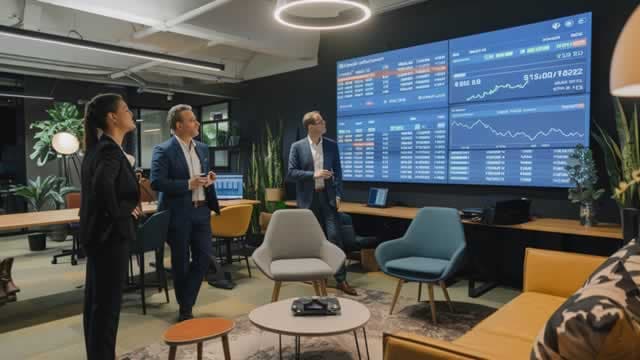
AI concerns have sparked a sell-off in tech and software stocks this week, dragging all three major indexes lower over the past several trading sessions. RBC Capital Markets managing director in software, Rishi Jaluria, sits down with the Asking for a Trend team to discuss why interpreting these AI advancements as the "death of software" is wrong.
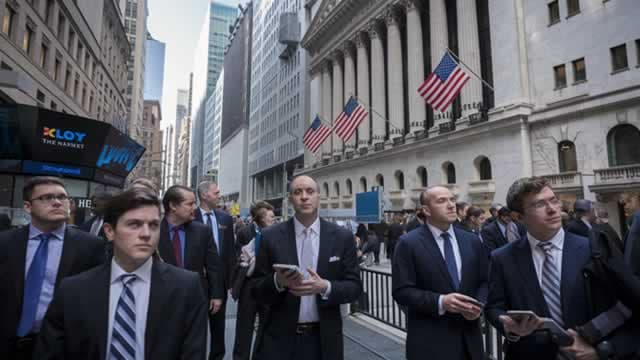
U.S. job openings fell to the lowest level in more than five years, another sign that the American labor market remains sluggish.

Capital market leadership is rotating from the overvalued S&P 500 and mega-cap tech to commodities, gold, and non-US equities amid currency debasement and inflationary pressures. Commodities, particularly monetary metals and miners, are positioned for secular outperformance due to supply constraints, central bank gold accumulation, and declining confidence in fiat currencies.

The resignation of Argentina's statistics chief over delays in updating the inflation index has stirred up memories of price meddling.

Hundreds of billions of dollars were wiped off the value of stocks, bonds and loans of companies big and small across Silicon Valley, with software stocks at the epicenter. The spark for the selloff was AI startup Anthropic.
Vanguard is encouraging some clients to consider allocating more than 50% of their portfolios to bonds, according to the mutual fund giant's chief investment officer.

Dan Ives of Wedbush Securities says he's never seen a structural software stock selloff like this in 25 years, but he's still bullish on tech stocks. He speaks on "Bloomberg The Close."

Challenger report shows 205% jump from December as healthcare, transportation and technology companies scale back workforce.

Weak job data and deepening AI anxiety pushed the S&P 500 into the red for the year.

As an investor, it's challenging to stay constructive when markets feel noisy, crowded, or overdue for a pullback. The instinct to brace for what might go wrong is natural.

Republicans on the Senate Banking Committee are raising doubts over the Justice Department's investigation into Federal Reserve Chair Jerome Powell. It's important because Senator Thom Tillis says he'll oppose any Trump Fed Chair nominee until the probe is over.

Reddit stock climbed late Thursday after the social media company reported fourth quarter results that beat expectations.

Tech is ailing while other sectors are holding up. How to stay safe and avoid the AI knife fight.

Mexican officials are evaluating how to send fuel to Cuba to help meet basic needs such as electricity and transportation without triggering reprisals from Washington, which has threatened tariffs against countries supplying fuel to the Caribbean island, four sources familiar with the matter said.
Operator: Good day, and thank you for standing by. Welcome to IREN Q2 FY '26 Results. [Operator Instructions] Please be advised that today's conference is being recorded. I would now like to hand the conference over to your first speaker today, Mike Power, Vice President, Investor Relations. Please go ahead. Mike Power: Thank you, operator. Good afternoon, and welcome to IREN Q2 FY 2026 Results Presentation. I'm Mike Power, VP of Investor Relations. And with me on the call today are Daniel Roberts, Co-Founder and Co-CEO Anthony Lewis, CFO; and Kent Draper, Chief Commercial Officer. Before we begin, please note this call is being webcast live with the presentation. For those that have dialed in via phone, you can elect to ask a question via the moderator after our presentation. I'd like to remind you that certain statements that we make during the conference call may constitute forward-looking statements and IREN cautions listeners that forward-looking information and statements are based on certain assumptions and risk factors that could cause actual results to differ materially from the expectations of the company. Listeners shouldn't place undue reliance on forward-looking information or statements and I encourage you to refer to the disclaimer on Slide 2 of the accompanying presentation for more information. And finally, during the course of today's call, we will refer to certain non-GAAP financial measures as a reconciliation schedule showing the GAAP versus non-GAAP results in the presentation. With that, I'll now turn over the call to Dan Roberts. Daniel Roberts: Thanks, Mike, and thank you, everyone, for joining us today. Fiscal Quarter 2 was an important quarter for IREN as we made meaningful progress as a vertically integrated AI cloud platform. Let me start with the highlights. Firstly, we secured underwriting commitments for $3.6 billion of GPU financing at an interest rate of less than 6%. Together with customer prepayments, this provides funding coverage for approximately 95% of the GPU related CapEx supporting our $9.7 billion AI contract with Microsoft. . Importantly, this financing package provides greater clarity to also advance a broader set of customer discussions. In that regard, customer demand remains very strong and we are continuing to sign and negotiate contracts for both new and prior generation GPUs. We have multiple advanced negotiations underway for larger-scale deployments and are also seeing hyperscalers and AI enterprises increasingly focused on air-cooled GPUs given the faster deployment time lines. Operationally, execution is tracking well across the portfolio, and we expect to deliver 140,000 GPUs by the end of 2026 positioning us to deliver $3.4 billion in annualized run rate revenue. Construction across Horizon 1 through to 4 is progressing to schedule. And in British Columbia, we continue to expand our AI cloud footprint with just under $0.5 billion of ARR now under contract for Prince George. Finally, we extended our growth runway again by securing a new 1.6 gigawatt site in Oklahoma, taking our total secured power to over 4.5 gigawatts. This reflects the strength of our internal development team in securing gigawatt scale sites in a power constrained market and supports continued conversion of capacity into customer contracts over time. So that's the quarter in summary. Those outcomes reflect the assets, capability and execution discipline we've built over time, which I'll cover next. Over the past 7 years, we've built a strong platform grounded in real assets, power, land, data centers and just as importantly, human capital. That foundation is what gives IREN a durable competitive moat. We have secured more than 4.5 gigawatts of power, stood up 810 megawatts of operating data centers signed billions of dollars of AI customer contracts and assembled a team of over 2,000 people to execute on them. These assets and capabilities are not easy replicable. They are the results of years of hard work. As a founder-led business, we have been fully committed to building a platform with lasting value. And Will and I are deeply invested in this platform along with the rest of the management team. That mindset matters as it shapes how we allocate capital, how we partner with customers and how we think about long-term value creation. In an industry moving at extraordinary speed, this combination of real assets, operational capability and founder led commitment is what sets IREN apart and positions us for AI cloud leadership. So the way we think about scaling the business is through what we call the 3 Cs capacity, customers and capital. The reason we focus on these 3 is simple. They reinforce each other. Capacity creates opportunity customer commitments shape the pace and scale of our investment and capital gives us the ability to execute. What's encouraging today is that we have all 3 working in parallel. First, on capacity. We have 810 megawatts of existing data centers that can be immediately leveraged for AI cloud deployments. In addition to the 3.6 gigawatts of greenfield data center sites and a 2,000-plus team to design, build and operate them end to end. Second, on customers. As I mentioned, we are in multiple about negotiations. And at this point, demand is not the constraint for us. The focus is on choosing the right long-term partnerships that support durable platform level growth. And thirdly, on capital, we continue to diversify our sources of capital to support capacity growth and customer deployment. We have multiple financing pathways underway that allow us to scale our data center and GPU footprint in a disciplined manner, while importantly, maintaining balance sheet stream. This includes additional GPU financing, data center financing and selective corporate initiatives, which Anthony will delve into. So when you step back, the picture for us is pretty clear. We have delivered capacity. We have strong customer demand, and we have expanding capital options, all moving together, which puts us in a position to continue scaling IREN into 1 of the world's largest AI cloud platforms. With that, I'll now hand over to Kent to walk through updates to our capacity and our customer work streams in a bit more detail. Kent Draper: Thanks, Dan. Vertical integration is 1 of IREN's most important competitive advantages. We design, build and operate our own data centers, supported by in-house engineering, procurement, construction, technology and operations teams. This structure gives us direct end-to-end control of our cloud offering and the ability to manage cost, time lines and service quality with far. Many of the constraints that we see across the industry today, whether it's long lead time procurement or skilled labor are areas that we've addressed in the past. So they're manageable for us and not disrupting our execution. That's why we remain on track against our plans today. And on that note, we continue to see strong, steady progress across our site portfolio with construction milestones being delivered on schedule. At Prince George, the data center fit-outs for air cooled NVIDIA B 200 and B 300 GPUs and and now complete and awaiting the delivery of the remaining GPUs on order. At Mackenzie and Canal Flats, our teams are actively preparing the sites for AI cloud expansion. There, we're leveraging the exact same playbook we successfully executed at Prince George. ASICs are coming out of those data centers and GPUs are going in. At Childress, construction across Horizons 1 to 4 is also progressing to schedule to meet Microsoft's GPU deployment time lines. and that Sweetwater procurement activities and civil works are now underway for the first phase of data centers to be constructed. Overall, what this demonstrates is an ability to consistently take large complex projects from planning through to execution. That delivery capability underpins everything we do and is 1 of the key reasons we have a license to engage with the largest technology companies in the world. The other factor that strengthens our position with customers is a scale of our secured power. As Dan mentioned, we have secured a new 1.6 gigawatt data center campus in Oklahoma. Further strengthening what is already 1 of the most differentiated power portfolios in the sector. The 2,000-acre Oklahoma site is a strong addition with low latency connectivity to major network exchanges and ramp schedule commencing in 2028. As with Sweetwater, the megawatts for this new site in Oklahoma remains secured, which enables commercial discussions to progress meaningfully anchored on firm deliverable capacity. It's also worth noting that this site is a result of work that has been underway for years. It reflects the depth of our internal development capability and our team's ability to consistently source and secure gigawatt scale grid connections in a power constrained market. Importantly, this new site does more than just add capacity. It broadens our U.S. data center pipeline beyond ERCOT into a market that's attractive to hyperscalers at a time when AI demand continues to outpace supply. As Dan mentioned, we're advancing multiple active negotiations with a range of hyperscale and non-hyperscale counterparties. And what we consistently see is that customers are focused on partners who have secured power can deliver full data center infrastructure on a defined time line and who can grow with them and scale over the long term. In other words, time to data center has become the key decision point in many of these commercial discussions. That dynamic plays directly to our strands. Our vertically integrated model combining in-house delivery capability with secured power gives customers a high degree of certainty on execution. We're also seeing hyperscalers and leading enterprises actively pursue both liquid and air cooled GPU deployments as they work to accelerate rollout. The increased focus on air cool deployments aligns extremely well with our existing footprint of 810 megawatts of already operational air cooled data centers. Importantly, all the demand and engagement that we're seeing is translating directly into contracted revenue. Today, we have approximately $2.3 billion of annualized revenue run rate under contract, including around $0.4 billion at Prince George which we expect to increase over the coming weeks as we finalize negotiations for the remaining capacity there. Based on capacity already contracted and the strong customer engagement for new deployments in Mackenzie and Canal Flats, we're on track to reach our targeted $3.4 billion ARR by the end of 2026. What's worth emphasizing is that demand is not the limiting factor for reaching this milestone. The market is extremely deep and engagement remains strong across hyperscalers and enterprises. Our focus is on selecting the right partners and structuring long-term relationship to create lasting value for IREN and as I alluded to earlier, we have the track record and capacity to drive customer acquisition. The takeaway from this next slide is the amount of runway that we have ahead of us. Our $3.4 billion ARR target for the end of calendar 2026 reflects utilization of only around 10% of our 4.5 gigawatts of secured grid-connected power capacity. That means the vast majority of our portfolio remains available to support additional deployments. With demand continuing to build that secured capacity gives us the ability to keep engaging customers on new large-scale opportunities and to extend growth well beyond the 2026 target. I'll now hand over to Anthony to give an overview of our Q2 results and discuss our strategy for financing our continued growth. Anthony Lewis: Thanks, Ken. Q2 financials reflected continued progress in the transition from Bitcoin mining to AI Cloud with capacity increasingly allocated to higher-value AI workloads and AI cloud revenues accelerating as deployments ramp. Total revenue was $184.7 million, down 23% on the prior quarter, primarily on account of lower bitcoin mining revenue, driven by a reduction in bitcoin mined. This was as a result of the AI transition, which lowered operating hashrate against the backdrop of an increasing global hashrate, together with lower average Bitcoin prices over the period. This was partially offset by growth in AI cloud revenue in line with commissioning of new GPUs at our Prince George side. On SG&A, that decreased $37.6 million. Primarily resulting from higher accelerated stock-based amortization recognized in the prior period and associated payroll tax accruals. As expected, adjusted EBITDA declined primarily on account of the lower Bitcoin mining revenue mentioned just now, partially offset by the lower payroll tax accruals and lower power costs. EBITDA and net income were also impacted by several significant noncash and nonrecurring items this quarter. These included unrealized losses on prepaid forwards and cap calls associated with our convertible notes following significant gains in the prior period as well as a onetime debt conversion inducement expense in connection with the equitization of a portion of our 2029 and 2030 convertible notes. Together, these amounts totaling $219.4 million. In addition, we recorded $31.8 million of mining hardware impairment associated with the transition to AI cloud versus $16 million in the prior period. These impacts were partially offset by an income tax benefit of $192.5 million, primarily reflecting the release of previously recognized deferred tax liabilities relating to the unrealized gains on financial instruments. Overall, these results reflect the ongoing transition of the business to AI cloud and we expect subsequent quarters to reflect a growing AI cloud contribution consistent with our ARR targets. Now turning to capital and funding. At our last update, we indicated an intention to raise secured finance of at least $2.5 billion to fund the GPU-related CapEx for the Microsoft contract. As Dan has highlighted earlier, we have now secured a $3.6 billion delayed draw term loan financing package from Goldman Sachs and JPMorgan. The financing has a number of attractive features. It is delayed draw to align with our CapEx profile. It matches the profile of the underlying contract, amortizing in full over the 5-year term and will be secured against the underlying GPUs and the contracted cash flows from Microsoft, which supports a strong credit profile and an attractive interest rate expected to be less than 6%. When combined with Microsoft's $1.9 billion in prepayments, this package covers 95% of the GPU related CapEx for Horizons 1 through 4 allowing us to now focus our efforts on funding further growth across the platform. Now turning to our capital strategy more broadly. Our capital strategy is designed to support continued rapid growth while maintaining a resilient balance sheet. We ended January with a strong cash position of $2.8 billion, and we continue to deepen our access to diverse sources of funding. Financial year-to-date we have now secured $9.2 billion from customer prepayments, convertible notes, including the $2.3 billion issued in December, GPU leasing arrangements and the dedicated GPU financing for the Microsoft contract. This diversity of capital sources allows us to scale with confidence. Looking ahead, a key priority will be to continue that work and expand our access further. This will include looking at efficient financing for our data centers, such as Horizons 1 through 4 when they come online. These will be extremely valuable long-term assets, which are currently being funded by the balance sheet and construction financing to support our broader development pipeline. As well, we'll also look at select corporate level facilities when aligned with our cost of capital and balance sheet management priorities. Of course, as we scale financing activities, we'll remain focused on an appropriate balance between debt and equity to ensure we maintain that balance sheet resilience. With that, I'll turn it back to Dan for concluding remarks. Daniel Roberts: Thanks, Anthony. So to recap, our strategy is straightforward, and it comes back to the 3Cs capacity customers and capital. We secure a large-scale, low-cost power and build quality data centers to create capacity. We pair that with long-term customer demand. and we support it all with disciplined, well-structured capital arrangements. That framework has guided our decisions for years, and it continues to shape how we scale today. Over the past several quarters, we've made meaningful progress across all 3 of those dimensions. We've removed a significant amount of execution risk by locking in capital for our largest deployment to date. We've expanded our power footprint. Sorry technical issue my screen just cut off, I can't see anyone -- and we've continued to deepen relationships with some of the largest technology companies in the world. What's important to emphasize is that we're still at an early stage of monetization relative to the size of our platform. With more than 4.5 gigawatts of power and only 10% required to support the $3.4 billion in ARR, we have a clear pathway for continued growth. With capital access now demonstrated at scale, we're able to engage customers with greater flexibility on how and when we bring new capacity to market while maintaining discipline around pricing and partner selection. That scale allows us to pace growth responsibly be selective in the customers we partner with and structure contracts and financing in ways that support durable long-term value creation. In summary, after more than 7 years of founder-led execution, IREN is now a scaled AI cloud platform with significant opportunity ahead. With that, we'll open the call for Q&A. Operator: [Operator Instructions] First question comes from Darren Aftahi from ROTH. Darren Aftahi: Congrats on the continued progress with Oklahoma. Two, if I may. There's a lot of noise around ERCOT. I'm sure people on the phone kind of want to know. But any change in those kind of amended rules with batch processing in terms of how that would potentially impact Sweetwater for you guys? And then I've got a follow-up. Kent Draper: Yes. Happy to jump in there, Darren. So the short answer is with respect to Sweetwater it is likely to be included in the batching process, and we believe that both SweetWater 1 and 2 would be included in batch 0, which would mean that the full 2 gigawatts of power is secured. So that's obviously a key important point there is that security of power in addition to that, there are other projects in our portfolio that are potentially also included in batch 0. So 1 of the advantages of, obviously, having a large internally developed portfolio is that we do have a number of projects that are going through this process. . Darren Aftahi: Excellent. I appreciate that. And then secondarily, so economics on colo have continue to creep up. I know you guys initially signed this cloud deal with Microsoft. Any kind of real-time thoughts on as you move forward with plans for Childress, Sweetwater, any other sites your views on AI cloud versus colocation? Kent Draper: Yes. I mean, as we've said before, we continue to be open-minded about how we allocate our megawatts and continue to observe what's happening in the market. We are observing, as you mentioned, what's happening in the colocation market but also seeing continued strength in demand on the cloud side as well. And I think when we look at the overall portfolio, Power is the scarce resource today. And so it's absolutely vital that you are maximizing the value of each of the megawatts within the portfolio. And today, we still see AI cloud as doing that in a more meaningful way than colocation. It's higher up, obviously, in the value chain than colocation, and you can capture materially better dollars per megawatt through cloud versus pure co-location. And obviously, at this point, we've demonstrated the capability and execution to be able to stand up these large cloud customers. And as we spoke about at length during the call, also seeing the capital side come together. So all the elements are there within the portfolio to allow us to continue to take advantage of what we have on a cloud services basis. Daniel Roberts: Maybe just to add to what Ken said, it is something we continue to evaluate. But 1 of the knocks on GPU Cloud was the capital intensity of GPUs. So with the announcement today of the GPU financing, we've now secured 95% of the cost of the GPUs at an average interest rate of around 3% when you factor into the prepayment. So we essentially got the GPUs for next to nothing. So I think in terms of capital intensity, it ticks that box. To further to Ken's point, time to power is critical, but time to data centers is actually the more limiting factor. And when you've got scarcity around how many data centers you can physically bring on live, every incremental 200 megawatts can deliver either $300 million-ish through a co-location or multiples of that in the billions under a cloud contract. So when we look at the monetization opportunity for our platform, and growth for shareholders and creating value, the cloud opportunity creates a lot more upside as we see it. And in terms of co-location versus cloud, we believe that AI is going to continue. We believe that data center demand is going to continue to compound. So recovering capital back in short order and mean out to compound those returns as distinct from holding effectively a bond exposure against the hyperscaler is the area we want to play. And if investors want bond-like exposures, they can buy colocation companies, they can buy bonds in the hyperscalers but we believe we are offering a high conviction for very well-managed risk exposure to the sector through this AI cloud business. Now again, we're not dogmatic. Things can change quickly. We get a compelling colocation deal. We will absolutely pursue it. But right now, AI Cloud, it's very compelling for all those reasons. Operator: Next question comes from Paul Golding from Macquarie. Paul Golding: And congrats on the additional site and all the progress. I just wanted to ask, as we think about the Oklahoma site and power market. I guess anything specific to call out about how that factors into the demand picture for HPC compute from a location perspective. Aside from, I know the low latency already mentioned, are there favorable power reliability dynamics or power pricing dynamics or just geographically relative to Tier 1 availability zones? And then I have a follow-up. . Kent Draper: Yes. So we think that site there has favorable characteristics on a number of levels. I did mention that low latency as you referred to earlier. It's a very large site, which gives us flexibility as we build out the capacity, it's located in Southwest Power Pool, which is a different market to ERCOT. So it provides us with some jurisdictional diversity. We think Southwest Power Pool is a very attractive market on the power side, a large penetration of renewables, low cost of power. We know that it's an area that is attractive to hyperscalers because there have been a number of hyperscalers that have been active in Southwest Power Pool more broadly, but also Oklahoma specifically. So overall, it exhibits all the characteristics that we would look for in terms of an attractive data center campus. Paul Golding: And then maybe a follow-up on the questions that have been asked around cloud versus colo or maybe more specifically about cloud. As you roll out these 2 different approaches to cloud even right with your British Columbia clusters versus the Microsoft clusters. How should we think about your software approach looking at the neo cloud space software is a topic that comes up quite a bit. I guess how should we think about your software offering for certain clusters where there's on-demand or smaller contracted deals versus, of course, the bare metal deals and how that development and the uptake from customers has progressed. . Kent Draper: Yes. Today, we're still seeing the bulk of our demand coming from hyperscalers, the largest enterprises, extremely advanced technology firms within the AI space, all of which are still looking for bare metal access. They want full ability to be able to take control of the GPUs, layer on their own software stack, set up the compute in exactly the way that they want to operate it and that is where the vast majority of our demand is coming. And as we referred to in the call, our ability to scale with them over time is 1 of the key elements. And I think the largest customers are those bare metal customers whereas the software really is typically more useful for smaller enterprise customers. that are looking for an easy user interface and easy single spin up, spin down, service but that is a small proportion of the overall compute demand that we're seeing out there today. It may well grow over time, and that's something that we continue to monitor as we look to our software strategy. But we continue to think that it is likely to be 1 of the areas in this space that gets commoditized, the fastest. It is relatively simple in comparison to finding power building data centers, setting up GPU clusters at scale and likely to be an area where you're going to see third-party offerings and commoditization, that we may well be able to take advantage of. So in short, continue to monitor that part of the market and what makes sense for us. But today, it is not a major driver for us because our demand is coming from bare metal customers . Daniel Roberts: And maybe just to give you some additional comfort around the way the world might go here, Paul, is we do have an internal software capability. I think we probably downplay it a bit, partly in response to the market seeming to overplay it, but we've got that capability. And to give you additional comfort, 1 of the contracts we are negotiated at the moment is a multibillion-dollar contract where we need to bring a software solution. So it is not holding us back. It will not hold us back. But the reality is exactly is what Ken said, you are dealing with the largest technology companies in the world to pretend that you can be better at software and jam something down their throat when that is their competitive moat and that is their expertise, it's just not on growth reality. Operator: Next, we have Michael Ng from Goldman Sachs. Michael Ng: I just have to First, as a follow-up to the question earlier around the ERCOT batch study processing. It was encouraging to hear that the IREN site slightly will be in batch 0. I was just wondering if you could provide an update around the SweetWater 1 and SweetWater 2 energization dates and whether the batch process has affected your ability to negotiate and sign contracts with customers for those sites and what that progress looks like. And then I have a quick follow-up. . Kent Draper: Yes. Thanks for the question. In terms of the energization date for Sweetwater 1, we're still on track to energize in Q2, and that's a full bulk substations. So that's capable of the full 1.4 gigawatts of power capacity at that site. So energization very much on track. Construction is well advanced, both with the on-site substation as well as the utility substation there. As it relates to customer engagement moving forward on those sites, obviously, very early since this matching process has been announced. But if anything, we would actually expect it to be helpful to us. We've said numerous times in the past. There are a lot of megawatts that are put out there into this market that are made up and I think what this process is going to do is really uncover, which megawatts are real and which are not real. And for us, we expect that to actually lead to better discussions with our customers over time. Michael Ng: Great. Wonderful. And I wanted to ask about the $2.3 billion of ARR, which I guess, the Microsoft contract plus the $400 million at British Columbia. When should we expect those revenues to start being recognized and commencing in the P&L? Is it kind of more ratably through the year? Is it more in '27? Just would love to get any thoughts about that? . Kent Draper: Yes. So at Prince George, we've obviously had capacity operating there for a while and continue to install new capacity and we'll do over the upcoming weeks. So a decent proportion of the $0.4 billion of contracted revenue that we talked about is already operational there. As it relates to the Microsoft contract, that will come online progressively over the course of the year, commencing we expect Q2 in terms of initial revenues flowing through Operator: Next, we have Brett Knoblauch from Cantor Fitzgerald. Brett Knoblauch: Congrats on all progress throughout the quarter. I'm curious in your conversations with customers relative to maybe the first big deal that you guys signed with Microsoft, what you are seeing from a pricing environment, I think we have a lot of data points on the colo pricing may be improving out there. But I'm curious if you guys are seeing something similar when it comes to the cloud deals. Kent Draper: Yes. We're seeing very strong ongoing demand, as we referred to earlier. And I think that is flowing through in a number of potential areas. We're seeing demand for longer tenures, I think the customers that are out there in the market realize that this may be a long-dated supply-demand imbalance moving forward. And there's certainly an openness that we're that we're seeing to longer tenures than we have in the past. Another factor that we mentioned earlier, we are seeing an increased interest in air cooled capacity. And that is primarily because that can feel immediate needs, especially within our portfolio because we have existing operational data centers on an air core basis that are capable of hosting GPUs in relatively short order with relatively minimal capital upgrades. We continue to see the ability to get prepayments from customers over time. So I think all of that leads us, as we said, to see a very strong demand picture and it is flowing through in some elements of the terms that we're getting under these cloud services contracts. Daniel Roberts: And I think also to add, to that. Price is 1 dimension of a commercial negotiation. There are other factors, as Kent alluded to, whether it's tenure and prepayments, but also the quality of the underlying contracts. We do manage risk very carefully. It's a founder-led business. This is our money. This is our platform. And we're not here to optimize revenue in the next 4 weeks compared to building something that's durable and long-term value. And to highlight what that means in tangible terms, look at the GPU that we did on the Microsoft contract. So to step back, $5.8 billion of GPU costs to deliver $9.7 billion in revenue over 5 years of the $5.8 billion the nature of the contract is in the quality of the underlying contract, the quality of the credit, the tender and the prepayments allowed us to get $5.5 billion out of the $5. 8 million financed at an average cost of 3%. And like that is not specifically linked in a GPU hour price, but that is specifically tied to value creation on the platform. Brett Knoblauch: Awesome. Very helpful. And then maybe just 1 more, ERCOT related question. I think you guys had using your words here that it's likely included in batch 0, whether that's A or B. I guess is there a time of when we would expect to know if it's included in batch 0. I know there's a meeting on the 12th and maybe on the 20th, but is that the time line that you guys are looking forward as well? Kent Draper: Yes. I think ERCOT will make announcements over time, Exact timing may change and whenever ERCOT makes announcements with respect to this, they do acknowledge it is in the works at their end, and they're actively working through it. So hard for us to put an exact date on it, but we do expect ERCOT to make public disclosures at some point in the relatively near future . Daniel Roberts: But to be clear on this guy, like crystal clear, that 2,000 megawatts is secure. Like none of this batch stuff, none of the market chatter is influencing whether or not this 2,000 megawatts is available. We've got the signed interconnection agreement. It was signed in 2023, it's been there for years. It's been built and commissioned in Q2 this year. There is no indication that 2,000 megawatts is absolutely secure. The only thing that this is likely to amount to is maybe working with utilities around load ramp. But the reality is we don't have 1,400 megawatts of Sweetwater 1 of data centers in April this year to energize. So in practical terms, it has very little if no effect on our business. The 2,000 megawatts is secure. We cannot reiterate that enough. . Operator: Next, we have Nick Giles, B. Riley Securities. Nick Giles: Good to see all the progress here. I like the concept of the 3 Cs capital is one. I think this is mainly around financial capital, but there's a growing narrative around the human capital requirements to ultimately bring data center capacity online. So are you seeing any constraints in terms of skilled workers? Or can you just speak to any advantages you may have from having EPC partners in place. Kent Draper: Yes. I mean the fact that we've been building continuously for the last 3 years means that we've built up not only a large existing labor pool at Childers, but also those relationships and the relationships extend not just across construction contractors and labor but also across equipment, procurement and supply chains. So that is 1 of the major advantages that we have and having done this for so long and having been continuously constructing is that we are in a position where we're able to call on those relationships we're well positioned with those partners in the sense that they are looking for continued steady work. And when they look at us and see a secured power portfolio with construction that is going to extend over a multiyear period, they're extremely willing and active in terms of helping us and making sure that they're serving our needs. And similarly, on the supply side, because we're continuously in the market and continuously procuring long-lead equipment, we get a very good read on where the constraints are in supply chains where the areas are that are tight, and that enables us to respond to those and be able to act well in advance. So that long lead items don't become a constraint for us in terms of our data center build out. So I think all of that history, the internal expertise we have is extremely important. And it's not just talk. I mean this is consistently delivered capacity against the targets that we've announced historically. Daniel Roberts: Yes. And again, just to add to exactly what Ken saying, like, this has been 7 years in the making of building a data center and technology platform, the very first data centers we built are now being used for NVIDIA GPUs for an AI cloud. We signed an MOU with Dell was at 5, almost 6 years ago to bring out diverse workloads to our British Columbia facilities in these data centers. So we've had a very long runway in terms of accumulating that human capital. And yes, there is more scarcity and more demand for human capital today, but we've been able to build that platform over a very long period of time and get the right people in the right roles. . Operator: Next, we have Joseph Vafi from Cannacord Genuity. Joseph Vafi: Terrific progress once again. Awesome to see it. Just revisiting the ARR number for the year, you clearly -- IREN is always want to overpromise and under-deliver and throwing that number out on top of revenues that would be coming from Microsoft kind of feels like you've got a pretty good line of sight on things just wanted to drill down on that a little bit on those customer ramps. And maybe is there a potential on some of these other customer ramps to also see maybe some prepayments to help fund their own GPU buys? And then I have a quick follow-up. . Kent Draper: Yes. Thanks, Joe. I hope you were referring to under promising and over delivering rather than the other way around. Yes. So as I mentioned earlier, Prince George, we already have a lot of operating capacity there and expect over the upcoming weeks to continue to install equipment, allowing us to get to the $0.5 billion annualized revenue run rate at that side. Mackenzie and Canal Flats the the works and our end in order to be able to accommodate GPUs, very well advanced. We would expect capacity to ramp progressively over the year there. . In terms of the additional 40,000 GPUs, which equates to around $1 billion of annualized revenue run rate. And then the Microsoft contract, as I referred to earlier, we expect to ramp progressively over the year. In terms of the 40,000 additional GPUs that we're expecting at Mackenzie, That, as I referred to the customer conversations before, we are still seeing customers very willing to make significant prepayments with respect to that. And there are a number of other areas of financing that we're looking at with relation to that, which Anthony, you may well want to touch on some of the options there as to how we can finance that. Anthony Lewis: Sure. We've obviously I guess, over the financial year-to-date proven access to both leasing-based sources of capital for GPU financing and obviously, the dedicated GPU financing that we recently procured for Microsoft. So there's a number of different pools of capital, which will obviously depend on the nature of the customer and the opportunity, but we feel well placed to continue to fund that growth efficiently. Joseph Vafi: And then just circling back on SweetWater, obviously, energization coming up here very quickly. And a lot of your peer companies would have likely announced at least there was colo, a tenant at that site by now Obviously, it's really big. There's a lot going on and not asking for a date on anything. But just getting in your mind maybe a little bit, Daniel, is it -- is it just getting your feet more wet in the GPU business and holding back there, waiting for better terms on colo maybe a multitude of things, just your thought process there on pulling a trigger on some of the sweetwater capacity. . Daniel Roberts: Sure. So I mean we've had an ongoing dialogue on that site for 12, 18, 24 months with various parties. And as we've tried to reiterate, it needs to be the right deal. And I think to date, our patience and conviction has been rewarded with the deals that we have been signing. If we look back to some of the structures being floated early in this kind of AI market narrative, where we are today, seems to be pretty objectively a better position. It is all about the 3 Cs and bringing those together and doing it in a way where you are maximizing the opportunity for shareholders. And there's only so much capacity that you can bring online that time to data center narrative. So there's a real opportunity cost of signing a bad deal. And that is relative, right? -- as relatively good. It's still probably a good deal colocation, but can you get better given that you're constrained by how quickly you can build out data centers. And that's why those 3 Cs are a really good framework because for any business trying to operate in this space, you have to bring those 3 Cs together to sell reinforce each other. If you haven't got the power and the capacity and the ability to execute, you're going to struggle to be a player. If you haven't got the access to customers and their faith and belief in you as an execution machine, it's going to be tough. And if you haven't got the capital, then you kind of get continue to be on 0. So sequencing all of that having not reinforce each other is really important. And I think that's why we're really pleased around the GPU financing result because it's kind of ticked that box. We're now on to the next one, and it also helps catalyze a lot of these other customer negotiations were having an advance into the next phase because we need capital and you can't build without capital. So the GPU financing is now done on to the next one. We've got the capacity, we've got the customers and the demand of the negotiations underway. And as Anthony said, we've got what we see is really good access to capital at the moment. Operator: Next, we have Michael Donovan from Compass Point. Michael Donovan: As on progress. So following up on questions around Sweetwater, assuming the batch process goes smoothly and getting the 3 Cs together, how should we think about ramping up phase for construction. Would this follow children's 50-megawatt tranches? Or do you have different plans? . Kent Draper: Yes. So in relation to that, yes, look, it's going to be a phased build out. It's a very large. That is a large amount of power and what we're continuously doing across all of our 4.5 gigawatts of secured portfolio is aligning customer discussions, availability of capital and our ability to build out data centers and that will influence how we actually build out. But as Dan referred to earlier, likely at the moment, the constraint is the actual pace of construction and ability to construct rather than power availability or capital availability at our end. So we'll be a phased approach, and we will continue to triangulate with the levels of customer demand that we continue to see. Michael Donovan: Appreciate that. And then on Oklahoma, can you provide some more color on what assets are currently there? And then what long-term lead assets are needed for the site build-out and what additional permitting or studies are or needed at the Oklahoma site. I appreciate it. Kent Draper: So we mentioned the 200 acres of land earlier. So all of that land is secured. The land is immediately adjacent to a major utility substation, which is where we will be connecting to the transmission grid. On the power side, the full 1.6 gigawatts there is secured. So all of the key elements as it relates to a data center campus are there. Over the upcoming months, we'll continue to work on the various development items, which include master planning, more detailed local permitting et cetera. But with power availability there from 2028, we feel extremely well placed with where we're at today. Operator: Next, we have John Torado from Needham. John Todaro: Congrats on the progress. I just have one, it relates to kind of these credit backstopping that you might see from NVIDIA. Just how do you think the competitive dynamic changes on the cloud side? You guys obviously have a ton of power but if some of these neo calls are able to get more kind of an NVIDIA back stop, they could get more contracted power as well. Just I guess how are you thinking about that? Kent Draper: Well, I'm not necessarily sure an NVIDIA backstop helps them secure more power. I mean, power and more pointedly to Dan's point earlier, data center capacity is the constraint. Now having a backstop can allow you to finance the build-out of a project, but you still need that access to power and unlinking necessarily the backstop sort of help with that. That is an entirely separate process relating more to development. And as we've spoken about before, that is becoming increasingly challenging as you move forward now for new projects. So 1 of the advantages that we have of having been doing this internal development of projects for years is that we got in early and we have secured what we think is an extremely differentiated portfolio on the power side, and that's something that can't be easily replicated and certainly not something that can just be bought if you somehow get access to a credit back stop. So I think credit backstops can be helpful in other context, but I don't think it's going to give people necessarily faster access to power or data center capacity. Daniel Roberts: And just to add to that, I think it would be very dangerous to assume that we haven't got the same access and conversations around all these different structures in the market, whether it's equity investments, whether it's credit back stops, whether it's offtake agreements to assume that we're not having those conversations that haven't been having those conversations. Yes, I'd be careful about that. . John Todaro: That's exactly what I was getting at, Dan. That's helpful. So I guess the takeaway from us is would Core and some of these others are having with NVIDIA, we should think you guys are right there in the same boat, right? You're right there with them? . Daniel Roberts: Yes. I can't obviously comment specifically on counterparties, but generally, the sector is a very small sector. We are a player. We've got a $10 billion contract with Microsoft. I would encourage it to be a safe assumption that we are having very similar, if not exact same dialogue with all these different counterparties about different structures. . Operator: Next, we have Mike Colonnese from H.C. Wainwright & Co. Michael Colonnese: Dan, congratulations on all the great progress you guys have made in the past couple of quarters. First 1 for me, and I'm sorry if I missed it, juggling a few calls here. Looking at the CapEx projections for the year versus the total amount of additional financing, we did to complete the full 140,000 GPU deployment. Can you just give us an update on that? I know you secured the $3.6 billion in GPU financing covers. It covers most of it. But how should we think about the progression of CapEx spend this year and the remaining amount of financing needed to get to your target? Anthony Lewis: Sure. Thanks for question.I'll take that one. So I guess, we guys, as you know, we've got the $5.8 billion CapEx on the compute for Microsoft. We've got the approximately $3 billion CapEx for the Verizon data centers, a material amount of which has been incurred or committed to today. And we've obviously raised the recent GPU financing package in addition to sources of cash on balance sheet. So I think we can -- effectively, that's all of the Microsoft related CapEx for the compute and DC spoken for. When we think about the CapEx required for the rest of the ARR growth target to the $3.4 million. We've previously talked about the CapEx required for that expansion at PG and Mackenzie. So taken together, that's about circa using round the circa $3 billion of CapEx a material amount of that, which has been incurred to date and financed through the lease-based financing that we've announced to date. But the focus for financing activities going forward will be obviously that residual amount for the expansion across BC and opportunistically as we look at further growth across the platform. Operator: Our last question comes from Ben Sommers from BTIG. Benjamin Sommers: You made a comment earlier about strong demand for older generation chips. I was just kind of curious, maybe is there a different kind of customer mix for older generation GPUs versus newer generation GPUs. And I guess kind of like how long do you see the tail going on to continue generating revenue off kind of older generation ships? . Kent Draper: Yes. I think in general, you tend to see newer generation chips being used more for training. Typically, in training scenarios somebody is training a model to actually get a product out to market and speed to market is important. So generally speaking, they want the highest power chips in order to speed up their production times. What we see as the chips get older is that the use case can shift more to the inference side. Now that's not to say they're not useful for training. You can absolutely still do training on older generations. But often, they are used more and more for inference over time. And inference continues to become a larger and larger portion of the over pine. I think we'll continue to do so over time. In terms of the second part of your question around economics and longevity of these chips, I mean, we still see very strong demand for older generations of chips. So I think you've got to think about the demand picture in aggregate and overall, it's still very clear that there is an undersupply relative to demand. And so what that means is people will take compute as it is available. And if that happens to be older generations of chips that they can get their hands on and they're absolutely willing and not only willing, but requiring that capacity. And if you look more broadly across the industry, if you think of A100, A100s, those are more than 5 years old and more than 3 years old, respectively, now those chips are still effectively 100% utilized across the industry and still earning very good rates of return against their original capital costs. So we continue to believe that these chips will have a long economically useful lifetime in excess of the contract length that we are signing, even the Microsoft 1 at 5 years. Operator: I see no further questions at this time. I will now turn the conference back to Dan for closing remarks. Daniel Roberts: Thanks, everyone, for joining. More than 7 years of execution has built IREN into a scaled AI platform grounded in real assets, delivery capability and disciplined capital structures with capital access now available at scale and strong customer demand, we're well positioned to bring on new capacity on terms that make sense economically over time. Importantly, having now absorbed the capital requirements associated with our Microsoft deployment, we're able to focus on converting a broader set of advanced customer negotiations into contracted revenue. When we discuss secured power, we mean fully secured. Power is not a constraint for us. And the ERCOT process is providing greater transparency around which projects are genuinely deliverable. That clarity reinforces the scarcity of firm megawatts and helps customers focus on capacity that can be brought to market with certainty. And IREN we remain focused on execution and on converting our capacity into high-quality customer contracts, and we look forward to updating you as we continue to deliver. Thanks again for your time and continued support. Have a good day. . Operator: Thank you for joining us today. This concludes today's conference call. Thank you for participating. You may now disconnect.

Operator: Good day, and thank you for standing by. Welcome to the Adaptive Biotechnologies Fourth Quarter and Full Year Earnings Conference Call. [Operator Instructions] Please be advised that today's conference is being recorded. I would now like to hand the conference over to your speaker today, Karina Calzadilla, Vice President, Investor Relations. Please go ahead. Karina Calzadilla: Thank you, Daniel, and good afternoon, everyone. I would like to welcome you to Adaptive Biotechnologies Fourth Quarter and Full Year 2025 Earnings Conference Call. Earlier today, we issued a press release reporting Adaptive financial results for the fourth quarter and full year of '25. The press release is available at www.adaptivebiotech.com. We are conducting a live webcast of this call and will be referencing to a slide presentation that has been posted to the Investors section in our corporate website. During the call, management will make projections and other forward-looking statements within the meaning of federal securities laws regarding future events and the future financial performance of the company. These statements reflect management's current perspective of the business as of today. Actual results may differ materially from today's forward-looking statements depending on a number of factors, which are set forth in our public filings with the SEC and listed in this presentation. In addition, non-GAAP financial measures will be discussed during the call, and a reconciliation from non-GAAP to GAAP metrics can be found in our earnings release. Joining the call today are Chad Robins, our CEO and Co-Founder, and Kyle Piskel, our Chief Financial Officer. Additional members from management will be available for Q&A. With that, I'll turn the call over to Chad. Chad? Chad Robins: Thanks, Karina. Good afternoon, and thank you for joining us on our fourth quarter and full year earnings call. 2025 was a remarkable year for Adaptive, marked by strong execution and meaningful progress across the business. As shown on Slide 3, in the MRD business, full year revenue grew 46% year-over-year, and we achieved profitability ahead of expectations. We also delivered several key catalysts in the year that position the business for sustained growth and continued margin expansion. These include accelerated EMR integrations, including the integration of clonoSEQ into Flatiron's Onco EMR, expanding access across the community setting. The launch of NovaSeq X+ to help scale operations and improve margins. Our first Medicare coverage for recurrence monitoring in MCL, expanding the lifetime value of each MCL Medicare patient, updates in NCCN guidelines across all reimbursed indications, which continues to deepen clinical validation and strong data generation, which was marked by an all-time high with over 90 abstracts presented at ASH, reinforcing MRD's growing role as an interventional tool in patient care. In the Immune Medicine business, we scaled our TCR antigen data and modeling capabilities, leading to our first 2 data partnerships, and we completed a preclinical data package for our lead TCR depleting antibody program in ankylosing spondylitis. Taken together, the strong MRD execution, the continued progress in Immune Medicine and the disciplined spending across the organization drove 55% total company revenue growth and a 68% reduction in cash burn, leading to a strong cash balance of $227 million at year-end. Let's turn to Slide 5 for a closer look at the MRD performance and future expectations, starting with clinical testing. ClonoSEQ clinical testing revenue grew 64% for full year 2025 and 59% in the fourth quarter compared to the prior year. As shown in the chart, volumes increased sequentially throughout the year, reaching a new record of 30,038 tests in the fourth quarter, up 43% year-over-year and 11% sequentially. Growth was broad-based across all reimbursed indications with DLBCL, MCL and multi myeloma driving the majority of year-over-year growth. Multiple myloma represented 44% of U.S. clonoSEQ volume followed by ALL at 30%, CLL and DLBCL, both at 9% and MCL at 5%. Volume growth throughout the year was driven by a combination of interrelated factors, including blood-based testing, community presence, EMR integrations, clinical guideline inclusion and ongoing data generation. In the fourth quarter, blood-based testing accounted for 47% of clonoSEQ tests, up from 41% a year ago. In multi myeloma, blood-based testing reached 27%, which is a 6% -- 6-point increase year-over-year, which is particularly meaningful given the bone marrow-based nature of the disease. Community testing also continued to expand with volumes up 18% sequentially and representing approximately 33% of total tests in the quarter. We further scaled our digital footprint, completing Epic integrations in 8 accounts during the quarter, bringing the total to 173 integrated accounts, which now drive approximately 40% of ordering volume. Finally, NCCN guideline updates and continued data readouts across marketed indications supported our commercial execution. Ordering HCPs increased 9% sequentially and 45% year-over-year in Q4, with particularly strong adoption in the community setting. Taken together, these drivers continue to increase both physician adoption and testing frequency per patient across indications. Turning to Slide 6. In addition to volume, clinical revenue growth was also driven by continued ASP expansion. We ended the year with an average ASP in the U.S. of $1,307 per test, up 17% year-over-year, and we exited the fourth quarter at about $1,350 per test. ASP growth during the year was driven by strong execution from our reimbursement team across several initiatives. These include the successful renegotiation of 8 major payer contracts with national and regional payers, including Humana, Aetna, Horizon and multiple Blue Cross plans as well as the signing of new agreements with Anthem, Centene, Florida and LA Care. We also expanded commercial coverage policies with new coverage wins in DLBCL and in CLL. In parallel, we delivered meaningful revenue cycle management improvements, including Medicaid collections, appeals, prior authorization processes and time to cash. These operational enhancements supported by AI-enabled workflows are driving higher paid claim rates more consistent realization and improved commercial payer cash collections year-over-year by 74%. Looking ahead, we expect these initiatives, together with 2 additional large national payer contracts, we anticipate closing this year to support our targeted average ASP of approximately $1,400 per test in 2026. Turning to Slide 7. Our MRD pharma business had a strong year with revenue growth of 20% year-over-year, including $19.5 million in regulatory milestone revenue. Excluding milestones, pharma grew 11%, and we ended the year with approximately $210 million in backlog. Several important shifts in our pharma portfolio are worth highlighting: First, multi myeloma remains the largest driver, accounting for roughly 70% of sequencing revenue and approximately 60% of backlog; second, CLL and ALL bookings more than tripled in 2025 supported by emerging data underscoring the need for higher sensitivity MRD to differentiate therapies in both disease states as well as updated NCCN guidelines for fixed duration regimens in CLL. Third, MRD is increasingly embedded directly into regulated interventional trials with approximately 60% of our portfolio, including MRD as an endpoint, up from about 40% in 2024. This shift has been driven by regulatory momentum including the ODAC recommendation and most recently, the subsequent FDA draft guidance supporting MRD as a primary endpoint in multi myeloma accelerated approvals. Of note, registrational trials that incorporate MRD carry higher economic value and have a halo effect in the clinical business. Overall, we're encouraged by the expanding role of MRD across hematologic oncology trials, and we believe broader endpoint adoption, increased testing time points and the need for greater sensitivity will continue to drive MRD pharma revenue growth. Turning to Slide 8. Our focus this year is clear: continuing driving top line growth while expanding margins building on the same durable growth drivers that powered performance in 2025. In 2026, we expect clonoSEQ test volumes to grow by more than 30% year-over-year, supported by a continued mix shift towards blood-based testing, which we expect to exceed 50% of total MRD volume, deeper penetration in the community setting, where we expect more than 35% of testing to originate, further scaling of our EMR integration effort adding approximately 40 with a focus on high to mid-volume accounts, and continued generation of clinically meaningful data across multiple indications to further expand interventional use and support the guideline evolution. From a pricing standpoint, we expect to increase ASP to an average of about $1,400 per test based on the initiatives described earlier. In pharma, we plan to increase the number of registrational and primary endpoint studies across multi myeloma, CLL and DLBCL, leveraging growing regulatory and clinical endorsement of MRD. We also expect continued margin expansion driven by higher volumes throwing through the NovaSeq X+ and operating leverage across our production and our commercial infrastructure. We believe these priorities position MRD as a scalable, durable and increasingly profitable growth engine for Adaptive in 2026 and beyond. Now let's turn to Slide 10 to discuss Immune Medicine. The premise of our Immune Medicine business is to generate large-scale, proprietary immune receptor data that allows us to understand how T cell receptors bind to antigens and how those interactions drive immune responses across cancer, autoimmunity and infectious diseases. Over the past year, we have continued to scale this data we now have more than 5 million paired TCRs spanning over 20,000 antigens and nearly 50 HLA types, a data set that is orders of magnitude larger than is one is publicly available. We believe this scale is sufficient to train predictive models of the adaptive immune response across diseases. In parallel, we are applying our platform to identify what we believe are likely disease-causing T cell receptors and their antigens in certain autoimmune conditions, including type 1 diabetes, celiac disease and multiple sclerosis. These insights have the potential for TCR-based target discovery to enable existing and future partners develop -- to develop immune-based therapeutics. Turning to Slide 11, I'll briefly review our 2025 achievements and how they set us up for our 2026 strategy. First, we began to monetize our data with 2 distinct licensing deals with Pfizer. One is a data licensing agreement in which Pfizer has access to a subset of our TCR antigen training data. Pfizer will use this data to develop and train its AI and machine learning models to accelerate research and drug discovery in multiple disease area. The second licensing deal focuses on target discovery and rheumatoid arthritis or RA. Here, we are applying our IM platform and capabilities to identify the specific autoreactive T cell receptors that are highly enriched only in RA patients. Pfizer will then use these data to accelerate its research and development of potential RA therapeutic candidates. Together, these partnerships continue to validate the strength of our differentiated platform and the value of our large-scale proprietary data. In addition, we completed a preclinical data package for our lead antibody program in ankylosing spondylitis. While potential next steps include initiating IND-enabling studies, we made the strategic decision to stop further investment in this program and instead prioritize capital toward data generation and AI modeling. These are key areas we believe leverage our core differentiation and represent the highest return on investment for Immune Medicine. Along with these key achievements, we also maintained a disciplined capital allocation, executing against our objectives while keeping annual Immune Medicine cash burn to around $30 million, as promised. Looking ahead to 2026, we plan to continue advancing on our TCR antigen data sets and our AI/ML modeling work with a lower target net cash burn of $15 million to $20 million. We continue to focus on securing additional data partnerships, which we believe have the potential to drive meaningful long-term upside for Adaptive. Now I'm going to pass it over to Kyle, who's going to walk through the financial results and our 2026 full year guidance. Kyle? Kyle Piskel: Thanks, Chad. Turning to our financials. First, I'll cover our reported results, which include the noncash revenue recognized from the amortization of amounts previously received under our Genentech collaboration. As you know, following the termination of the collaboration in August, all remaining amortization was accelerated and recognized in the third quarter. As a result, there are no ongoing Genentech collaboration economics in our results after Q3. Total company revenue for the fourth quarter was $71.7 million and for the full year was $277 million, representing 51% and 55% year-over-year growth, respectively. Total company adjusted EBITDA was $4.1 million in the fourth quarter compared to a loss of $16.4 million a year ago. For the full year, adjusted EBITDA was $12.2 million compared to a loss of $80.4 million in 2024. Interest expense from our royalty financing agreement with Orbimed was $3 million in Q4 and $11.8 million for the full year, while interest income was $2.1 million and $9.4 million for the same respective period. Net loss was $13.6 million for the quarter and $59.5 million for the full year. Now turning to Slide 12. The revenue and adjusted EBITDA figures I'll discuss from here on forward are presented excluding all noncash revenue from Genentech amortization at all period shows. On this basis, fourth quarter revenue was $71.7 million, which increased 63% year-over-year with 86% contribution from MRD and 14% from Immune Medicine. MRD revenue was $61.9 million, up 54% year-over-year with clinical and pharma contributions of 67% and 33%, respectively. ClonoSEQ test volume increased 43% to 30,038 tests, up from 20,945 in the prior year quarter. Immune Medicine revenue was $9.8 million, up from $3.8 million a year ago, driven primarily by our data licensing agreement with Pfizer. For the full year, total revenue was $235.7 million, up 42% year-over-year. MRD revenue was $21.2 -- $212 million, up 46%, including $19.5 million in milestone revenue. Excluding milestones, MRD revenue grew 45% versus 2024. Immune Medicine revenue was $23.4 million, representing a 17% increase from the prior year. Moving down the P&L. Sequencing gross margin, which excludes MRD milestones, Genentech amortization and the licensing revenue from Pfizer, was 71% in Q4, up 12 points year-over-year and 5 points sequentially. Full year sequencing gross margin was 66%, up from 53% in 2024. Lower cost per sample were driven by production efficiencies, labor leverage and the transition to NovaSeq X+. Total operating expenses, including cost of revenue, were $84.5 million in Q4 up 4% year-over-year, primarily due to higher MRD sales and marketing investment, primarily from EMR and market access initiatives, partially offset by lower Immune Medicine R&D. Full year operating expenses were $334.1 million, down 2% year-over-year. As shown in the segment table, MRD adjusted EBITDA was positive [ $15.2 million ] in 2025 compared to a loss of $41.2 million in 2024, driven by higher revenue. Immune Medicine adjusted EBITDA loss improved to $31 million from $37.9 million, reflecting lower operating spend and increased revenue. As a result of strong top line growth, improving efficiency and disciplined spending, we ended the year with $227 million in cash, cash equivalents and marketable securities. This amount excludes $13.1 million of cash held by digital biotechnologies. Now turning to Slide 13 for our full year 2026 guidance. We expect full year revenue for the MRD business to be between $255 million and $265 million. This includes $8 million to $9 million in MRD milestone revenue based on our current line of sight. At the midpoint, this guidance implies 22% year-over-year growth or 30% growth excluding milestones. We expect MRD revenue to be approximately 45% weighted to the first half of the year and 55% to the second half as clinical volume and ASP growth compound with sequential clinical volume growth anticipated throughout the year. We expect full year operating expenses, including cost of revenue to be between $350 million and $360 million, representing 6% growth year-over-year at the midpoint. This reflects merit increases in additional targeted investments in MRD sales and marketing to support continued market expansion while leveraging our existing commercial and operational infrastructure. In addition, we expect to achieve positive adjusted EBITDA and positive free cash flow for the whole company by the end of 2026. We -- of note, as in prior years, Q1 will be our highest quarterly cash utilization primarily due to annual corporate bonus payments. I am pleased and encouraged by the strong results we delivered in 2025 and look forward to providing financial updates throughout the year as we execute towards our goals. With that, I'll hand it back over to Chad. Chad Robins: Thanks, Kyle. To bring it all together, 2025 was an outstanding year for Adaptive on all fronts. In MRD, we achieved profitability and grew the top line by 46%, driven by strong clonoSEQ volume growth. In IM, we scaled our TCR antigen data and began executing on targeted monetization opportunities that build long-term strategic value. And importantly, we maintained our strong cash position giving us the flexibility to execute across both businesses. Looking ahead to 2026, we're focused on continuing to fuel MRD revenue growth, expand margins and deliver company-wide profitability. We have a great playbook in place, and we're executing against it. We're encouraged by the momentum we are seeing and are confident in our ability to execute and deliver on these priorities. I'll now turn the call back over to the operator and open it up for Q&A. Operator: [Operator Instructions] Our first question comes from David Westenberg with Piper Sandler. David Westenberg: Congrats on a very strong volume quarter in Q4. So actually, I want to start with that, that sequential step up in clonoSEQ volume. Can you discuss how to think about that trend? Is there any seasonality there? And can you discuss some of the weather-related issues you might see in Q1? And one of the things I want to get at is you have a higher base now, so growing that sequentially up on a percentage basis might be a little bit more difficult, obviously, given how big your volumes are starting to get. Susan Bobulsky: Sure. Thanks for the question, David. We were really pleased with the Q4 results. And certainly, I think it addressed any questions that folks had about whether there was deceleration in prior quarters. I think we like to see that Q4 number really as a testament to, I think, the long-term opportunity to grow this business at a strong rate. We are -- I think that we see seasonality at various points in the year. Typically, Q1 has been a strong quarter for us, and Q1 has been lighter just given holidays, weather, et cetera. We have seen some weather-related impacts, as you are well aware, in recent weeks, primarily on timing of sample arrival as opposed to volume, although some impacts, of course, on volume as well. FedEx was not delivering for some number of days, hospitals and practices closed down. But good news is samples are starting to flow back in, in large volumes, and we had a very strong start to the beginning of Q1. So we remain confident in the guide for the year, I remain confident in the forecast for the quarter and that we'll show another strong sequential growth quarter-over-quarter in Q1. David Westenberg: And I'll just ask one more and I want to kind of ask this a little bit more directly since I think you have a really good tech and a good position in blood. So how should we think about the penetration rates in DLBCL? You have a first major advantage in a lot of the blood cancers particularly the multiple myeloma, how do you parlay that massive lead in multiple myeloma, for example, to [ DLBCL ] where your penetration of late is a little bit lower. And there is some concerns about incoming competition. Susan Bobulsky: Sure. I mean, I think we've learned a lot from the myeloma experience. And as you noted, have established a really strong position there, 45% or so of our business comes from that indication and we've been able to post strong quarter-over-quarter growth repeatedly in that space, in part, thanks to the advancement of the assay in blood in addition to bone marrow. In DLBCL, I think the playbook looks similar in a lot of ways in the sense that we are starting with an underdeveloped market where people need to be convinced that MRD has a value. And that's been our major focus. And we've seen strong results in Q4. We saw 14% quarter-over-quarter growth sequentially in DLBCL, I think, 115% versus Q4 of the prior year. But we're still, like you said, only at 3% of penetration of the patient opportunity. We do believe that increased noise in this space has potential to really help expand the market. And so we'll be continuing to focus on the things that we think are the major drivers, which are data generation with our enhanced ctDNA assay that we launched early last year further advancing the guidelines, which made some significant initial progress a year ago, broadening commercial payer coverage, which will help boost our ASPs and deepening penetration with pharma, where the interest in MRD guided trial designs in DLBCL is really ramping up. And we'll continue to underscore the sensitivity of our assay, but also the specificity, which is really crucial both in the clinic and in interventional studies. We'll continue to rely on some of the other strengths and sort of head starts that we've built, including our reimbursement, our strong relationships with hematologists who are treating us both in the community and academia. And the data -- the head start in data that we've accomplished as other entrants come in and determine what their path forward will be. Operator: Our next question comes from Subbu Nambi with Guggenheim. Subhalaxmi Nambi: A competitor came out with the flow cytometer pay positioning as competitive to NGS for myeloma and probably a significant price advantage. Would love to hear your thoughts on this product from both sensitivity and pricing perspective. Susan Bobulsky: Sure. It's interesting to see that Quest has launched a product in the space. From our perspective, it's not particularly a new dynamic for us. There are competitors already offering next-generation flow products with similar sensitivity claims in our space. But what we know is that flow-based methods for MRDs are inherently less sensitive than clonoSEQ and they always will be for any given amount of sample material. Obviously, Quest hasn't published any data yet, but their claim that their sensitivity is comparable to clonoSEQ is hard for us to reconcile. Their stated sensitivity is [ 5x10 ] to the negative 6, which is equivalent to 1 in 200,000 with 10 milliliters of blood. And as you know, clonoSEQ can routinely achieve clinical sensitivity of 1 in 1 million, 5x higher with just 2 milliliters of blood, our validated sensitivity for our FDA label is even higher, around 1 in 1.5 million, and that's the same in both blood and marrow. So the assay that's being launched is at best 5 to 7x less sensitive in blood than clonoSEQ and I think there's 2 things to keep in mind with that. One is the myeloma landscape is evolving in a direction that requires more sensitivity, not less. Treatments are driving really deep responses. Most patients now are negative in marrow at a depth of 100,000 and 200,000. And two, for myeloma, MRD sensitivity is especially important when you're testing in blood. The biology of myeloma is such that disease burden in blood is, on average, 100x less than in marrow. And physicians know this. So they want to use an assay in blood that's maximally sensitive. So remember, in the community, in Q4, over 60% of clonoSEQ/myeloma MRD testing was done in blood. And in that setting, we're also broadly reimbursed. 90-plus percent of patients have 0 out-of-pocket cost and we're broadly EMR integrated in the community with Flatiron and other large integrations. So ultimately, we're talking about another next-gen flow assay that has some similar benefits as clonoSEQ, blood-based testing, turnaround time, broad availability, but with less sensitivity in a sample type where sensitivity is really key. So of course, there are a single-digit percentage of patients for whom a diagnostic marrow isn't available to run a clonoSEQ IP test. So that's a subset of patients, perhaps next-gen flow could be a backup option. Subhalaxmi Nambi: Super helpful. I have a question for Karl. I think as you think about ASP pacing this year. How should we face it just given the private figures are in advanced negotiation stage? Kyle Piskel: Yes. I mean I think at this time, it's best to think of it as a linear growth. There are some specific timing things that we've got it locked down as it relates to some of the key payer contracts, we're focused on on converting. But I think at this point, where we are in terms of the timing of the year, it's best to just think of it as a lending or growth. Operator: Our next question comes from Dan Brennan with TD Cowen. Daniel Brennan: Maybe just first on the EBITDA guide for 2026. So I think you said EBITDA positive, maybe exiting '26. Can you just flesh it out a little bit. Is that Q3, Q4? Was that for the full year? And any help between where MRD versus immune medicine goes and kind of implicit in that, like are you making any changes to the sales force and puts into that? Is there any more sales force expansion in '26. Kyle Piskel: On the EBITDA guide, I'd say right now, it's an exit on Q4 for the entire company. MRD obviously positive adjusted EBITDA at this point, but we expect to see that continue to grow. And some of the initiatives across the business we're putting in place give us confidence to be able to achieve it across the whole company. And I'll let Susan take the field force. Susan Bobulsky: Yes. Currently, we have about 65 reps in the field. They're split 50-50 between academic and community focus. And we believe this is the right number of reps for now as our territories are manageable in terms of potential. The reps are calling on the right number of accounts and HCPs. And most of the territories are reasonable size. So while I'm not saying we don't add a territory here or there opportunistically and also I will acknowledge that we will continue to evaluate new deployment strategies to address market dynamics as they evolve, which could justify additional hiring we're not anticipating in the plan for this year, any significant expansion in the sales team. Daniel Brennan: Terrific. And you rattled off a bunch of the progress you made on a lot of the volume drivers between blood community penetration and EMR. I'm just wondering, makes sense to not get ahead of yourselves, but I think blood really ramped, and I think you're only baking in a little bit of an increase in '26. Is that just because we're kind of capping out on what's realistic? Or is that -- is there a reason and some way, I think community, I think, really ramped in the fourth quarter, and it looks like you're baking in a little bit of an increase there. Just maybe speak to those 2 assumptions. And is there some reason why they wouldn't potentially increase further in '26. Susan Bobulsky: Right. So I think in both cases, there is no -- we're not capping it out, and we don't believe that there is any reasons they couldn't potentially increase further, but we are sort of looking historically at what the pace has been of progress and then thinking about balancing the various drivers and sort of being prudent around what we set up as expectations at the beginning of the year. But on the blood-based testing front, we were at 47% in Q4 overall blood-based testing and 27% -- no, sorry, 45% and then 27% for myeloma specifically. Myeloma is a really big opportunity to grow that. Additionally, if we continue to grow DLBCL and mantle cell in our lymphoma indications disproportionately to the rest of the business, we will see blood as a contribution to the total business continue to to ramp. So I think there is upside, but we are confident that we can get to above 50% in 2026. And same thing on the community side. The guide that we have is over 35% of the business coming from community. It was 31% in 2025, and we closed the year in Q4 at 33%. So we hope to exit above 35% by the end of this year. And it will be a big area of focus, and it is a disproportionate area of investment for us. It's where our competitors are likely to focus and it's where things like the key data sets like Midas that came out multiple myeloma, helping inform the potential avoidance of transplant. That's a really big deal in the community, favorable guideline updates, guidelines matter a lot to community clinicians. So we'll continue to focus on those things. And also continue to drive new testing pathways in large community practice networks that help us standardize utilization of the assay across indications. And those things will -- again, the drivers, combined with our Flatiron integration and the serial testing that we can achieve through that, which have some potential upside in 2026. Operator: [Operator Instructions] Our next question comes from Mark Massaro with BTIG. Mark Massaro: Congrats on a strong 2025. I wanted to start on gross margins. It looks like they came in at 66% sequencing for the full year, and you hope to expand that to over 70% in 2026. I guess there are a number of parts to this. And where I'm going with this is your ASPs are still rising. In fact, last month, you indicated a plan to get to 1,700 to 1,800 in ASPs by 2029. So I guess my question is, the over 70% level in 2026, my sense is that you're not fully loaded there of long term. So is there any way you could give me a sense that maybe 3, 4 years from now, you could be perhaps meaningfully above 70%? Or do you think that, that's a pretty good place to consider in the out years? Chad Robins: Yes, Mark, this is Chad. I'll start and then I can pass it off to Kyle, if you want to kind of double-click on anything that I'm saying. But first of all, at JPMorgan, we came out and kind of moved that number already, up from 70% to 75%. And so -- and you're absolutely right. We're not fully loaded in the sense that the transition to NovaSeq X+, if you recall, just happened in the back half of this year. So we talked about a 5% to 8% percentage increase in the first 12 months and over a 10% increase just attributable to the NovaSeq X+ transition. So you're going to get a significant amount of additional uplift from that as you layer more samples on the same sequencing run. So that's a big one. The second, as you noticed, as you mentioned, as ASP. So as you continue kind of growing on the top line, along with better cost per sample, that margin continues to increase. So I think there's probably some even upside further from there, but we're going to, at this point, sequentially walk it up as we have from 70% to 75% but we are very confident in long-term durable high margin profile, both at the gross and the operating margin level. Mark Massaro: That's super helpful. And then maybe just to drill into ASPs. I think you guys indicated that you exited 2025 at $1,350 a test, and you came in at $1,307 for the full year, which is up 17%. So can you maybe share why is $1,400 the right rate in 2026. That's a 7% growth. Are there any particular items you could point to that might sort of not create for a similar growth rate in '26 than '25. Kyle Piskel: Sure. Thanks for the question, Mark. Remember, in 2025, we saw a meaningful growth across a number of initiatives, but one of the biggest ones was the gap sell rate that went into effect right at the onset of the year for our Medicare business, our Medicare fee-for-service business. So that provided a decent amount of the growth in 2025. We're starting to get some traction on the commercial side as we've implemented contract rate renegotiations and new payer rates. I think as it relates to 2026, I think right now, hey, we want to be with where we are during the year. I want to be prudent around guiding around ASP. There are kind of 2 -- I'll say 2 major things we're really focused on. One is renegotiating with 2 large payers that kind of move a significant amount of our volume in upwards of 17% to 18% of our volume. And so getting those rates established at the appropriate rate is really important and the timing of that can drive variability and ultimately, the ASPs we realized for the full year. The second piece, as Susan mentioned, we're anticipating growth in DLBCL and MCL, but to the extent that growth is even better than we thought. We've got to kind of navigate the coverage dynamics on the commercial payer front, and hopefully, we can continue to see positive coverage decisions with regards to those indications. But again, we would just want to be prudent in managing that and monitoring it over time. Operator: Our next question comes from Sebastian Sandler with JPMorgan. Sebastian Sandler: Great. Can you walk us through where you see upside to the ClonoSEQ volume guide in the year, I think it implies pretty healthy community volume growth, looks like around 50% year-on-year depending on what you assume more than 35% of total volume means. But where would you point to there being the most potential upside, whether that's NeoGenomics contribution, guidelines, incremental recurrence, monitoring coverage. Just walk us through that. I think that would be helpful to get a grasp of it. Susan Bobulsky: Sure. I mean from a volume perspective, on the clinical business, I think one of the areas of upside just based on sort of early -- we're in early days and have limited experiences in terms of EMR integration. The Flatiron integration and the [ serial ] testing, which we've talked a little bit about over the last quarter or so, we're really just starting to see what the pull-through on serial testing looks like. And so far, we've been pleased to see that about 60% of serial tests are actually showing up as scheduled. And so we think there are opportunities to potentially continue to focus on that and see if we can improve it or at the very least, ensure that we continue to see strong contribution from serial testing, which could have upside to what we've forecasted and guided. Additionally, on the EMR side, we've increased the focus on already integrated sites to what we call optimize those sites. This is things like standardizing order sets to increase testing consistency or further reducing friction and integrated workflows, which will improve order pull-through. Those kinds of initiatives are new, but the early results from pilots that we've completed have been very strong. And so I think there's a lot of promise there and source of upside. I talked about potential for upside on our anticipated contributions on blood and on the community, and those will be areas of continued focus. The other thing is that on the ASP side, we have some key payer contracts that we're still in the process of renegotiating. So the timing of those can be a source of upside on revenue as can potentially the negotiations turning out more favorably than we think. But overall, I think we feel like this guide is very reasonable, and we are being prudent early in the year, but there are many different ways that this business can be driven and can be accelerated and all these things kind of work together. So it's one of the things that we like about this business and one of the reasons we're very confident that we can meet or exceed our goal. Chad Robins: Yes. And I kind of add a fine point to that because I mentioned kind of this playbook. And [indiscernible] common with all these things working together. There were 5 things last year that drove the business blood-based testing community data results -- data readouts guidelines and EMR integrations, and those are the 5 things we're reinvesting in this year, and those are the things that we are going to drive growth, not only drive growth, but also give us an opportunity to be extremely confident in our guide and hopefully outperform. David Westenberg: That's helpful. Maybe touching on the ASP guide for '26. It seems like $1,400 is dependent to some degree on those 2 contracts you called out. Can you give us a sense of any sort of execution risk there or whether those contracts are kind of locked down at this point? And then just if those contracts were less favorable than expected, can you quantify where ASP could land? And any sense on whether -- you said to keep ASP flat or kind of linear throughout the year, but any sense of whether this is more of a first half or a second dynamic -- first half or second half dynamic would be helpful. Kyle Piskel: Yes. I mean there's certainly some level of execution risk. Otherwise, I think we wouldn't be in the stage we're at. But we're confident in getting there in the long term, and we want to make sure we're establishing the right rate. That's really the priority with these payers. As it relates to the dynamics in terms of pacing, yes, I mean, it's probably more of a second half dynamic just given where we're at in January. But I think at the end of the day, if those things don't come in, it does represent some minor risk, but there's other levers within the business that we can pull on, but continue to grow ASP. Chad Robins: Yes. I mean just -- we're quite confident in the ASP guys, and we've got multiple levers to get there. One contract or another is not going to necessarily impact that we're going to get there. Operator: And then our final question comes from Bill Bonello with Craig-Hallum Capital Group. William Bonello: And I applaud you for the prudence. I'm going to go a different way here. But really -- given the pre-release, what really stood out to us were actually the comments on the IM business, which I know you don't talk about all that much, and you don't want people to get out over their skis. But clearly, the way you're positioning this is much less as a therapy development business and much more as a data and informatics business, and it was good to hear about a couple of big contracts. I know it's probably early days on this strategy, but would love to hear any thinking you have around sort of ways that you monetize this leading database that you've created and sort of ultimately how we might think about how a business like this could scale out over time. Chad Robins: Sure, Sharon, do you want to take that? Sharon Benzeno: Yes. Thanks for the question. So as you alluded to, we're excited by the two distinct Pfizer deal, including both of which were data licensing deals, and we certainly look forward to continuing and believe that we can sort of rinse and repeat similar or even sort of differentiated additional data licensing deals. And really, this stems from the fact that we've generated this really massive differentiated data sets that certainly there's value across applying in different immunology applications and solving different immunology problems. So it's early days, but more to come as the year progresses, and we're super excited and enthusiastic in terms of where we are and where we're going. Chad Robins: Yes. And further, I think the Pfizer deal represented 2 types of different types of data deals. One is we're just kind of licensing data for AI modeling by pharma companies and the second, where we're using our unique set of capabilities to do target discovery work. And so there's kind of multiple different types of kind of opportunities that can provide monetization from this really a unique data set. William Bonello: That's helpful. And maybe just as a follow-up, as you think of sort of how the data stands today, are there investments you need to make to sort of make it more accessible potentially to pharma clients and others and just to be able to sort of meet the kinds of demands you anticipate that they're having? Chad Robins: Yes, Bill, the investments we're making are [indiscernible]. Remember, there's revenue coming in from that business as well, which we consider a [ burn off offset ] to the investments that we're making. So all the investments we need to, we believe, generate kind of this robust data set are captured in that kind of $15 million to $20 million net burn of the investments that we're making this year. William Bonello: Okay. I was just thinking more probably in terms of timing of when a business like this could inflect if it could. Chad Robins: Yes. Yes. And we'll come back at that point if there's kind of future investments to be made with a business case on a high risk-adjusted return on the capital based on what we're doing, we will come back and kind of share what the plans are at that time. I'm just -- I'm talking about for kind of the current path forward. We're looking at this as a kind of $15 million to $20 million net burn for the year for the business. Operator: Thank you. I'm showing no further questions at this time. This concludes today's conference call. Thanks for participating, and you may now disconnect.
Claus Jensen: Good morning, everyone. Welcome to the conference call for Danske Bank's financial results for 2025. My name is Claus Jensen, and I'm Head of Danske Bank's Investor Relations. With me today, I have our CEO, Carsten Egeriis; and our CFO, Cecile Hillary. We aim to keep this presentation to around 20 minutes. And after the presentation, we will open up for a Q&A session as usual. Afterwards, feel free to contact the Investor Relations department if you have any more questions. I will now hand over to Carsten. Slide 1, please. Carsten Egeriis: Thanks, Claus, and I would also like to welcome you to our conference call, where I'm pleased to share the highlights of Danske Bank's financial results for 2025. Although the geopolitical situation overall continues to be challenging, the macroeconomic backdrop for our customers and thus our business in the Nordics continued to be stable and slightly improving during the year. This is clearly reflected in our financial results as 2025 has been a year of solid performance for Danske Bank. Measured in terms of profit before impairment charges, 2025 represented the best result ever. Net profit for the year came in at DKK 23 billion, equivalent to a robust return on equity of 13.3%. The result was based on improved income due to higher customer activity and furthermore evidenced by positive volume development. I'm pleased to see that despite the sale of our personal customer business in Norway and several rate cuts during the year, we were able to maintain net interest income at the same level as in 2024. The slightly lower net profit in 2025 was solely due to a more normalized but still a low level of loan impairment charges compared to net reversals in 2024. When comparing to the preceding quarter, core income came in better as a result of higher NII from an increase in lending and deposits and significantly higher fee income based on growth across all fee categories and in particular, from record high performance fees within Asset Management. Operating expenses came in line with expectations and credit quality remains strong. And as a result, net profit for Q4 amounted to DKK 6.3 billion, up 14% from the preceding quarter. And Cecile will comment on the details of the financial results later in this call. Let me talk about our strategy execution. It remained on track. And as we continue to see robust commercial momentum and invest in our business also as laid out in our strategy plan. During 2025, the scaling of our digital and our GenAI technological capabilities across the bank has been in focus, and we are now starting to see tangible results in our workflows, leading to improved productivity. And I'm really looking forward to presenting a more comprehensive update with our strategy update in connection with the presentation of our Q1 results on the 30th of April. And then I would like to comment on our capital distribution. Based on our strong earnings and our solid capital position, I'm pleased to announce the distribution of the full net profit for 2025. Ordinary dividend will account for 60% in accordance with our dividend policy. In addition, we propose an extraordinary dividend of 20%, taking total dividend per share to DKK 22.7 and a new share buyback program of DKK 4.5 billion in total, a payout ratio for 2025 of 100%. And then finally, on the financial outlook for 2026, which Cecile will elaborate on later, we expect a net profit of between DKK 22 billion to DKK 24 billion, driven by growing core banking income from continued efforts to drive commercial momentum. And then let me continue with the performance on the business units, and that's Slide 2, please. At personal customers, the financial performance has been solid with total income up 2% relative to the same quarter in 2024 and up 3% quarter-on-quarter. The performance was based on good customer activity that led to higher lending and deposit volumes, up 1% and 5%, respectively, relative to the level in 2024. The uplift in activity and volumes came from all our Nordic businesses, driven in particular by private banking and also home loans in Denmark and Sweden. In the Private Banking segment, 2025 was a year of strong momentum based on the continued execution of our strategic priorities. The investment business was supported by strong net sales, which helped lift assets under management to record high levels with Danske Invest retail funds reclaiming the market leader position in Denmark. In the housing market, activity improved in 2025. In Sweden, lending increased 1% in local currency with improving momentum towards the end of the year. The better traction in Sweden came from higher customer activity supported by a strengthened customer offering. In Denmark, housing market activity also improved in 2025, especially in the larger cities. Total lending was stable year-on-year, but our bank home loan product, Danske Bolig Fri grew another 12% compared to the preceding quarter and 44% year-on-year. The product now accounts for more than DKK 70 billion in lending, and the positive development is a testament to our flexible loan offering and ability to cater to the changing customer preferences. Furthermore, total income in Q4 was supported by a 14% increase in fee income, driven primarily by high refinancing activity for adjustable rate mortgages and by investment fee income. Costs came in higher in Q4 due to expected higher seasonal expenses, which explains the higher cost/income ratio. And then Slide 3, please. At business customers, 2025 was a year of solid financial performance based on strong customer activity that continued throughout the year. Total income was up 8% compared to the same quarter in 2024 and 5% quarter-on-quarter. And this was driven primarily by a positive development in net interest income based on a strong uplift in volume and activity-driven fee income. Lending as well as deposit volumes were up 5% based on growth in all countries. The increase in business momentum reflects the continued execution of our growth agenda as we welcomed new corporate customers. And as a result, we gained market share across all four Nordic countries. Return on allocated capital as well as cost/income ratio were in line with our targets. The increase in ROAC was supported by reversals of loan impairment charges on the back of continued strong credit quality. Business customers continues to be a key strategic focus for us. And in 2026, we will continue to strengthen our advisory capabilities, for instance, by investing in analytics to generate leads for advisers and improving the One Corporate Bank digital platform. And then Slide 4, please. Turning to our large corporate and institutions business. We are pleased that our continued focus on advisory solutions for our customers and our sustained efforts over the years to improve our business offering have shown positive results in 2025. Thanks to strong execution and customer focus, 2025 was a record year for LC&I. Firstly, we continue to see strong volume growth with corporate lending up 14% from the level in the fourth quarter of 2024, which supported a 15% increase in NII. Deposits, which by nature are more volatile, have seen a healthy overall trajectory, but also sizable fluctuations related to large corporate transactions. Secondly, in line with our strategy of growing our Nordic footprint, we are expanding our One Corporate Bank concept in the Nordic region. In 2025, we continue to win new house bank mandates within daily corporate banking. And in addition, 2025 has been an exceptionally strong year for our investment solutions. Assets under management grew 16% relative to last year and reached all-time high. Besides higher asset prices, we have successfully been able to grow net inflow and add new customer mandates within the institutional as well as the private banking segment. The impressive investment performance in asset management enables us to recognize performance fees of DKK 0.9 billion, up 27% from last year, which was already a year of strong performance. And then with respect to profitability and cost efficiency, the strong performance in 2025 has enabled LC&I to deliver significantly better compared to our targets. And then with that, let me hand over to Cecile for a walk-through for our financial results for the group, and that is Slide 5, please. Cecile Hillary: Thank you, Carsten. 2025 was a year of solid financial performance. Net profit for the group came in at DKK 23 billion compared to DKK 23.6 billion the year before. Total income improved mainly due to a 3% increase in fee income, reflecting increased customer activity and strong performance in asset management. NII was unchanged as the positive effects from increased volumes and a positive contribution from our structural hedge were able to mitigate lower rates. Operating expenses were in line with the level in 2024. Loan impairment charges came in at a more normalized but still low level, whereas we had net reversals in 2024. The results for Q4 came in at DKK 6.3 billion, up 14% from the level in the third quarter, mainly due to higher core income. NII benefited from positive volume effects. When excluding the tax-related contribution, NII was up 2%. Fee income was up 39% quarter-on-quarter as all fee income categories contributed positively with performance fees in asset management as the single most important source of fee income in the quarter. Trading income saw a decline in Q4, mainly due to seasonally lower customer activity in fixed income markets. Income from insurance activities was impacted by a model recalibration for the health and accident business that led to a net negative effect of DKK 200 million. The impact follows the annual update of model parameters as well as adjustments following an inspection by the Danish FSA. When looking at the net financial results in isolation, we saw a positive development from a better investment results. We continue to focus on repricing, preventive care and reactivation initiatives in the health and accident business to improve the financial outcome of insurance contracts and respond to current market trends related to long-term illnesses. Operating expenses came in higher in Q4 due to year-end seasonality related to performance compensation and severance costs. And finally, as credit quality continues to be strong, loan impairment charges were kept at a very low level. Slide 6, please. Let us take a closer look at the key income lines, starting with net interest income. NII for the full year remained stable as the headwind from deposit margins due to lower Central Bank rates was mitigated by an increase in lending and deposit volumes as well as improved lending margins and a positive contribution from the structural hedge, which grew to circa DKK 180 billion at the end of Q4. Relative to the preceding quarter, NII increased more than 4%, supported by a DKK 200 million tax-related effect. As interest rates were stable during the quarter, the impact from margins was insignificant; however, NII benefited from a continually positive development in volumes, particularly evident on the corporate side, whereas the impact from the structural hedge was similar to that in Q3. With respect to the deposit margin development, as I mentioned in Q3, the increase observed in Q3 relates to changes to our funds transfer pricing framework implemented in Q2 with the objective of allocating NII from the structural hedge to the business units. It is important to note, it is not driven by changes to customer pricing and does not impact group NII. Our NII sensitivity remains unchanged quarter-on-quarter. With respect to the outlook for 2026, we expect NII to grow, supported by stable rates and structural growth, particularly within lending. The outlook is, as always, subject to markets and balance sheet developments. Now let us turn to fee income. Slide 7, please. In 2025, fee income amounted to over DKK 15 billion, corresponding to a 3% increase compared to 2024. This represents a record high level for Danske Bank based on high customer activity and strong performance in asset management throughout the year. Relative to the third quarter, fee income was up 39% in Q4, mainly driven by sustained strong performance in asset management that led to record high performance fees, up 40% from the same quarter in 2024. In addition to higher performance fees, fee income was supported by continued growth in assets under management with positive net sales for all categories of clients. AUM ended the year at an all-time high of over DKK 1 trillion. Income from financing had a positive effect in Q4, driven by higher corporate activity and a seasonally solid refinancing activity at Realkredit Danmark. Within our Capital Markets business, fee income in Q4 benefited from a continuation of good DCM momentum and a rebound in activity in ECM. Next, let us look at net trading income. Slide 8, please. Overall, we have seen a stable development for trading income in 2025. With positive value adjustments in treasury, the headline number was up 8%. Stable customer activity, mainly within fixed income, further contributed to the results. In Q4, trading income came in lower due to seasonally lower customer activity at the end of the year. This concludes my comments on the income lines. Let's turn to expenses. Slide 9, please. Looking at the development for the full year, operating expenses are in line with our full year guidance of up to DKK 26 billion. We have managed our cost base as expected and mitigated the impact of inflation, which supported a slightly improved cost-to-income ratio of 45.5%. Relative to the level last year, costs were in line as the intended structural cost takeouts and the lower contribution to the resolution fund mitigated the impact of wage inflation and performance-based compensation. The relatively modest increase in digital investments in 2025 should be seen in the light of the significant ramp-up we made in 2024. Furthermore, we executed structural cost takeouts within our Financial Crime Prevention division. Going forward, ongoing efficiency in that division will mainly come from technology improvements with a limited reduction stemming for post-resolution rightsizing. Relative to the preceding quarter, Q4 costs were impacted by year-end seasonality, including performance-based compensation, severance costs and investments in our tech transformation. We intend to maintain the same focus on cost discipline in 2026 whilst continuing to invest in our digital and commercial agenda in line with our growth strategy. Accordingly, we expect expenses in the range of DKK 26 billion to DKK 26.5 billion in 2026. Slide 10, please. Turning to our asset quality and the trend in impairments. Throughout 2025, our well-diversified and low-risk credit portfolio benefited from a benign macroeconomic environment, particularly in Denmark, with sustained low unemployment, real wage growth, improving household finances as well as strong corporate balance sheets. In Q4, our strong credit quality underpinned another quarter of low impairment charges amounting to DKK 35 million, which took full year charges to DKK 294 million, equivalent to 2 basis points of our loan portfolio. Actual single name credit deterioration remains modest, and we continue to benefit from modest stage migration. Charges related to our macro models were negligible in the quarter, and we continue to apply both the downturn and a severe downturn scenario. With reduced external uncertainties in the commercial real estate sector, including lower and stable rates, our post-model adjustments review resulted in net releases of DKK 300 million in Q4. Although the PMA buffer has overall been reduced, we have bolstered the buffer related to global tensions further, and we continue to apply a prudent approach to cater for potential risks and uncertainties that are not captured through our macroeconomic models. We will continue to review the PMA buffer sector by sector going forward. I would also like to emphasize that our impairment guidance for 2026 of around DKK 1 billion remains below our normalized level but is not predicated upon significant PMA releases. Slide 11, please. Our capital position remains strong and has consistently been supported by a healthy capital generation throughout the year. At the end of Q4, the fully phased-in CET1 ratio was 17.6% when including the effects from the adoption of the new conglomerate directive that took effect on January 1. Furthermore, the ratio includes the full deduction of the additional 40% distribution of the net profit for 2025 announced this morning in addition to the already accrued dividend of 60%. The increase in risk exposure amount in Q4 relates to higher operational risk REA, which as per normal practice, is subject to an end-of-year calibration that reflects a higher top line and profitability as well as lending-related credit risk REA. We continue to operate with a healthy buffer to the regulatory requirements as we steadily execute towards our capital target of above 16%. We will provide more detail on our capital trajectory with our strategy update in connection with the presentation of our Q1 results. With that, let me turn to the final slide and outline our financial outlook for 2026. Slide 12, please. We expect total income to be around DKK 58 billion. This will be driven by growing core banking income and the continued commercial momentum and growth that we see in our markets. Income from trading and insurance activities remain subject to financial market conditions. We expect operating expenses in the range of DKK 26 billion to DKK 26.5 billion in 2026, reflecting our growth ambitions and continued investment spend alongside a sustained focus on cost management. Cost-to-income ratio is expected to be around 45%, in line with the target for 2026 announced at our strategy launch. We expect loan impairment charges to be around DKK 1 billion below our normalized loan loss ratio as a result of continued strong credit quality. We expect net profit to be in the range of DKK 22 billion to DKK 24 billion. Slide 13, please, and back to Claus. Claus Jensen: Thank you, Cecile. Those were our initial comments and messages. We are now ready for your questions. Please limit yourself to two questions. If you are listening to the conference call from our website, you are welcome to ask questions by e-mail. A transcript of this conference call will be added to our website within the next few days. Operator, we are ready for the Q&A session. Operator: [Operator Instructions] We will now take the first question from the line of Gulnara Saitkulova from Morgan Stanley. Gulnara Saitkulova: So my questions are on NII evolution. You saw a negative contribution from the structural hedge this quarter as well as the strong positive contribution from other income. Could you walk us through the key drivers behind the higher contribution in other income? And how should we think about it going forward? And looking ahead to 2026, how should we think about the main moving parts of NII, including the expected impact for structural hedge? And my second question also on NII. You mentioned that NII expected to grow in 2026. Based on current visibility, do you think the consensus estimates for this year NII are appropriately calibrated or the market may be over or underestimating the outlook? Carsten Egeriis: Thanks for that. Let me take the first more general question, and then I'll hand over to Cecile for the other income and the moving parts on NII evolution, including the structural hedge question. I think overall, we're guiding to higher core income. So we expect to see an increase both in NII and in fees and the higher -- the total income we've guided to around DKK 58 billion. So I think you can sort of roughly calibrate that against current consensus. Cecile, do you want to talk about the moving parts of other income and then the structural hedge? Cecile Hillary: Yes. No, absolutely. So obviously, beyond these effects that Carsten mentioned, I'll talk about the structural hedge and then I'll talk about the other income. On the structural hedge, look, the lift that you've seen year-on-year is obviously the one to focus on. I wouldn't focus too much on the quarterly effect in the sense that, look, we've got obviously a roll-off from our bond portfolio and those roll-offs happen in different quarters, right? So you might have slight ups and slight down in one quarter. But the overall effect for the year is the one to focus on, which leads me to talk about the structural hedge for 2026, and then I'll take the other income question. So the structural hedge for 2026. We will continue to provide lift. So year-on-year, you can expect a positive contribution from the structural hedge. I would note as well that you've seen that we've increased the structural hedge notional from DKK 170 billion as at end of Q3 to DKK 180 billion. So that's on the structural hedge. On the other income, and you can see indeed the other, including treasury of DKK 262 million from Q3 to Q4. Look, this is mainly the tax effect of DKK 200 million. And then the remainder -- so obviously, that tax effect is by definition a one-off, right, which you shouldn't assume going forward. And then the rest is a treasury effect. And obviously, we see ups and downs mainly down to the sort of market value impact of derivatives year-on-year. That's typically linked to the hedging we do on the cross-currency side. So that's on the other income. So obviously, again, 2026 in terms of your expectations, you should see an NII that is slightly up compared to the 2025 results overall. Operator: We will now take the next question from the line of Shrey Srivastava from Citi. Shrey Srivastava: Two for me, please. The first is, I believe you were at DKK 150 billion notional in Q2, and now you're at DKK 180 billion. So you've increased the size of the hedge quite significantly. Could I ask first for the rationale for this? And secondly, do you have a target notional for the structural hedge in terms of a percentage of stable and operational deposits? Or how do you think about it? And my second one is you've obviously done fairly well in large corporates. You've had double-digit loan growth for the year. And you previously remarked how you maintain -- you remain below your natural market share in certain segments. Can you talk a bit about what specific areas you expect to drive growth in the future? Carsten Egeriis: Yes. Thanks for that. Let me take the second question, and I'll hand over to Cecile for the for the question on the hedge increase and the target hedge and rationale. On the loan growth side of things, and now I talk across the sort of corporate banking business, so both our business customers and our large corporate institutions business. Our strategy is to continue to build a leading Nordic wholesale bank and a leading bank for business customers with more complex needs. That was the strategy we launched back in June '23. And we've seen solid growth and continued market share gains in those segments. And it's really all about how we bring to life our total One Corporate Bank and institutional platform, utilizing our strong product factories, utilizing our strong advisory capabilities and combined with our strong digital and technology platforms. And really, when you look at all the Nordic countries, we still believe that we have plenty of growth opportunities. Our market shares continue to be relatively small outside of Denmark. So we have much more opportunity to grow across Norway, Sweden and Finland. And then at the same time, we also believe that with a strong and growing economy in Denmark, we have opportunity to continue to grow there as well. And I think just again, in terms of like whether there are sectors, industries, et cetera, I mean, I would say it's pretty broad-based growth we've seen. There is no question that we believe that we're going into one of the larger investment cycles of our time, driven by energy transition, by defense, by the changes happening in technology. But at the same time, also, again, a pretty robust and healthy Nordic economy more generally. So broad-based growth, but clearly also some pockets of extra opportunity. Cecile? Cecile Hillary: Great. So I'll take the -- your structural hedge question, Shrey. So you've asked two questions. One about the rationale for increasing the hedge to DKK 180 billion in Q4? And then secondly, what is the target notional. So on the rationale, well, look, the structural hedge is well, exactly what it says, which is there to really hedge our stable deposits and liabilities. You've seen the increase on the deposit side, particularly in the retail sector, which is obviously part of our stable deposit base and the strong performance there, right, with 5% year-on-year on the deposit side in the PC sector. That increase in deposits and that stability allows us to continually look at the size of our structural hedge notional and that has led to the increase alongside our objective to be hedged for NII and provide the NII stability or NII uplift that you can expect in the current rate environment. So that hedging focus on the one hand and also the trajectory of our deposits explain where we are. On the target notional, look, I think at DKK 180 billion for the bond portfolio, we are well hedged. Having said that, I would also point out that we obviously have a loan hedge portfolio in addition to the bond hedge portfolio. The loan hedge portfolio is about DKK 200 billion. I would also point out that, that loan hedge portfolio has got some optionality. It's not as perfect a hedge as the bond hedge portfolio, which itself has a 3.5-year average life, but these are the details I can give you. So going forward in terms of the target notional, we're pleased with DKK 180 billion. Where will the trajectory go? Look, I'm not calling for any increase at this stage, although we may see some modest increases in 2026, but it will be either stable or potentially slightly increasing. We also have to see the trajectory on our deposits, of course. Operator: We will now take the next question from the line of Sofie Peterzens from Goldman Sachs. Sofie Caroline Peterzens: This is Sofie from Goldman Sachs. So my first question would be, we have elections in Denmark, if I'm not mistaken, in the second half of the year. There has been some noise in the local press about, I think one of your ministers is kind of suggesting that maybe the fees that the banks are charging are too high. Do you see any risk for any fee caps to potentially be introduced in Denmark? And what could that potentially mean for Danske Bank? And then my second question would be on price competition. We saw, I think, last week, both Nykredit and Danske cutting some of the pricing on the mortgage products. Could you just walk us through the competitive environment? What does these price cuts that you announced last week mean? And how should we think about the margin evolution in 2026? Carsten Egeriis: Sure. Thanks for that. I don't expect that there will be any intervention in terms of sort of price or usually caps. I mean the discussions in -- by the Business Minister has been around competition and increasing transparency and increasing ease of moving bank accounts. And those are all things that, in fact, we support in Danske Bank. So we continue to deliver very competitive products, continue to focus on how to make it even more transparent and easy to move banks. So we're not concerned about any intervention in terms of caps or the like. On the price competition in mortgages, we, in fact, continue to be very focused on competing in the segments where we believe that we can differentiate for our customers. And the mortgage market in Denmark is an important market in the sense that it's an important product for our customers, and we continue to be focused on delivering sort of a broad banking relation for our customers. And therefore, we have chosen to -- on a more sort of focused and targeted competitive approach to lower pricing on some of the fixed rate interest-only mortgage products. And we don't -- again, keep in mind, this is a relatively small pocket of the -- of our overall lending. And therefore, we don't see that this will impact margins. We -- looking into '26, I think at a very high level, we continue to believe that margins, and I'm talking overall now margins across deposits and lending will be fairly stable. Operator: We will now take the next question from the line of Tarik El Mejjad from Bank of America. Tarik El Mejjad: I just want to come back on your growth opportunities and with a focus on Sweden. In the past, you've been giving some snippets on -- hints on where you would grow. Can you tell us a bit where -- how do you see the corporate actually competitive environment in Sweden and how a franchise like yours can actually fit within this competition? And then second question on capital return. I know you will present all this with Q1. So it's more on the on the way you would think about distribution, not the quantum. A few banks now have moved into -- start to distribute the ongoing earnings earlier, like by executing buybacks earlier, which shows as well of confidence on earnings delivery. Is that something you would consider? Or it will be, let's say, '26 earnings with execution in '27? So just to understand whatever distribution you announced with Q1 results, how quickly this could be implemented? Carsten Egeriis: Thanks. Let me take the first one and then, Cecile, I hand over to you for the capital return dynamics and distribution dynamics. On Sweden, we have, over the last few years, increased our market share steadily across all of corporate banking and the institutional business for that matter as well. And we have seen since the launch of the new strategy, a larger inflow of new cash management customers than what we had targeted back when we launched the strategy. This is a very focused part of our strategy is to grow our customer base to get new cash management customers in and then again, to deliver our total One Corporate Bank for our clients in Sweden. The customer intake is really broad-based. There is some customers that are growing and therefore, need a second or third bank, and there are also some customers where we become their first bank. And also when I look at sector and industry, it's broad-based. We've continued to invest in advisory capabilities and talent in Sweden as well as continue to invest, of course, in our One Corporate Bank platform, which, of course, benefits all of our customers. So we see our strategy working. We see it in the market share. We see it in the activity. We see it in the customer satisfaction, where we're also strongly positioned on the Prospera customer satisfaction, not only by the way, in Sweden, but also across the Nordics. Cecile Hillary: So let me take your question, Tarik, on the capital return and the distribution. And let me outline how we view our regular capital distributions. Indeed, in terms of split, it's a 60-20-20. That's in line with last year, 60% ordinary dividend and 20% extraordinary dividend, 20% share buyback. As far as the rhythm of this regular capital distributions are concerned, they're annual. And really, this is not something that we've got any plan to change at this stage. Operator: We will now take the next question from the line of Mathias Nielsen from Nordea. Mathias Nielsen: Congratulations on the strong end to '25. So my first question goes a bit about cost and cost inflation. Like obviously, it seems a bit high in Q4, but I also understood the comments about compensation and seasonality. But you also guide for a bit higher cost inflation next year of between 0.5% and 2.5%. Is there anything that has changed there? And like how should we think about the point in time where we start to see productivity from AI investments and so on offsetting the investments, so to say, so like you get back on that? And then secondly, related to this and maybe a bit on private banking in general, it seems to lag a bit on the cost income target versus where you want to be. It also seems like the lending growth is a bit subdued compared to what we see in the other segments. Is there anything structurally that is not well working at personal customers yet? Or is it just a matter of time? Or how should we think about that before that is also on the same trajectory as we see in the other segments that you have? Carsten Egeriis: Thanks for that. Let me start by personal customers. In fact, since we launched our strategy, we see the following sort of really positive momentum, and that is we see customer inflow in private banking. We see customer inflow in the personal customers with more heavy advisory needs, and we typically segment those as customers with potential wealth above DKK 1 million that really require not just the product set, but also the advisory capabilities. So we see customer net flow in those areas inflow. And we also see market share gains on the investment side, and we overtook -- again, we took our first position as the largest investments market share in Denmark, which, of course, also has a very close link to the fact that both our private banking and the higher end of the personal customer segments are doing more business with us. We're also seeing increased insurance, Danica insurance penetration into those customer segments. And you see that really reflected, of course, in the solid fee income progress. Where we'd like to see more progress is on the mortgage side and is on the sort of mass retail flows. And there, you're right, it is something that takes a little bit longer. There's both sort of rebuilding reputation, continually being out there in the market from a marketing and positioning perspective. But we believe that our digital and technology platform, all the investments we've made, both on Panorama, which is our sort of comprehensive advisory platform to our mobile banking platform, including the housing portal in the mobile bank to our rollout of, for example, our AI chatbots, which provide a better customer experience. All those things, we believe, position us to be able to increase not only the growth in the focus segments, but also in the mass retail. Just a comment on cost, and then I'll also ask Cecile to comment on it. It is true that you see slightly higher costs into '26. '26 will be the largest investment year we've had. So we are investing heavily in our business, in technology, in advisory, in digital. At the same time, we are seeing beginning impact on productivity. I mean we've seen impact from productivity over the last few years, but we're seeing increasing impact of productivity as we roll out various different AI solutions. It is also something we'll talk a little bit more about when we get to our strategy update. So important to say we're investing heavily in the business. We are seeing productivity. We're also seeing continued benefits from lower costs on financial crime and other remediation. But perhaps, Cecile, you also want to comment on the costs. Cecile Hillary: Yes. Let me comment on the -- on the cost, Mathias, and I'll take your questions, which were about 2025 and Q4 specifically. And then, of course, the outlook into 2026, and I'll try and unpack a bit this guidance as well to give you more information there. So on the 2025 side, clearly, we're pleased to have ended the year on expenses in line with our guidance of under DKK 26 billion at DKK 25.85 billion as we guided all along. And as we guided as well in the last quarter, Q4 would be higher. You can see that we've had an increase of about DKK 350 million versus Q3 with respect to the staff costs, including severance and performance-based compensation, which obviously allow us to adapt our workforce to the new skills that we require and the new services that our clients also expect from us as well as beyond the staff costs, obviously, the investments, including digital investments, which you can see as well of above DKK 270 million, which we've done quarter-on-quarter. So as Carsten mentioned, our growth and our transformation strategy obviously require these investments, but also these staff costs, particularly when it comes to severance and performance-based compensation. So that's Q4. Now let me talk a little bit more about 2026 and our cost outlook. So you will see that we've provided effectively a dual guidance. One, we reiterate our circa 45% cost-to-income ratio. for 2026, which is the same as we guided at the launch of our strategy. So that hasn't changed. And then we gave a further range of DKK 26 billion to DKK 26.5 billion in terms of the cost outlook because we thought it would be helpful to effectively range bound the lower and upper bound of our costs for the year. So let me give you a little bit more insight into this cost range. So firstly, you can assume an inflation headwind around our cost from 2025 of about 3%. That inflation headwind will be fully mitigated by the efficiencies under the 428 strategy from our investments, which Carsten was mentioning. And as Carsten mentioned, we will go into these efficiencies and the tech and AI impacts, in particular, a little bit more during our Q1 update on the strategy side as well on 30th of April. Then beyond this inflation headwind of 3% mitigated by efficiencies, we, of course, have costs linked to our growth. So we assume growth in the business. But the rest is really investments, digital, including tech and AI as well as nondigital. And the approach that we have, which is why we wanted to show this range is a stage-gating approach. So effectively, depending on the momentum in the business, we will adjust our costs and our investments to be within this DKK 26 billion to DKK 26.5 billion and obviously meet our cost/income ratio target as well. Mathias Nielsen: Maybe just a follow-up on the Personal Banking. So when we look at the cost income like moving a bit above where you want to be, do you see that as an income issue or mainly a cost issue? How -- didn't really come across like Super clear, what is the delta to reach the target from your perspective? Cecile Hillary: Yes. No, absolutely. Look, a couple of things I would say. I mean, firstly, obviously, I would point you to the ROAC, which is extremely strong in that business. I mean you can see that it's actually above our target. And in terms of run rate in the fourth quarter ended up at 31%. So we're obviously very pleased with the profitability in that segment, which is led by all the initiatives and outcomes that we've seen, including in private banking that Carsten went through earlier. When it comes to the cost to income, look, we are investing, obviously, heavily in that area. These investments are clearly digital. We've upgraded our mobile app. For instance, we've provided some very significant tools that are already showing a very good amount of traction in terms of our relationship advisers and the tools that they have for their clients. And we will continue to invest. And that obviously is something that we're doing with an eye on the overall group costs, as I mentioned earlier, and again, on the ROAC of the area. Operator: We will now take the next question from the line of Martin Gregers Birk from SEB. Martin Birk: Just coming back to one of the last questions on volume growth and especially volume growth in this quarter and perhaps zooming in on large customers and also business customers, a quarter where you should have had quite decent benefit from FX. And it seems like Q-on-Q volume growth is fairly muted and it sort of breaks the trend from the previous three quarters. What's happening in this quarter specifically? And then also coming back to asset coming in -- talking about asset quality. Your impairment guidance is for lower than your normalized next year. I appreciate that you have reduced PMAs by roughly DKK 1.3 billion over the recent two years, but the DKK 5.4 billion still seems relatively high, both in Nordic and in a European banking context. Where would you see this go? Or what is it normalized level for this given your positive outlook on impairment charges? Carsten Egeriis: Thanks for that. I think on the volume growth Q4, on BC, in fact, we continue to see growth quarter-on-quarter. So pretty solid continued momentum. It's true that in LC&I, Q4 was more flattish, but it's not something that concerns us. I mean we -- when we look into 2026, we believe that pipeline and activity looks good. And again, of course, the stable Q4 is on the back of a growth rate of 14% year-on-year. On the asset quality, we see very solid asset quality. And as you also see in the staging, very solid sort of trends in Stage 2 and 3. So it is true that although we do have a little bit of release on the post-model adjustment side, it is still a high level of post-model adjustments that we have. If I sort of look at it through the cycle, that is very much driven, of course, by continued macro and geopolitical uncertainty. But as I've also said before, you should expect those PMAs to come down gradually as we get more certainty and visibility. That's, in fact, also what you've seen, particularly in commercial real estate as inflation and rates have come down and that, that has normalized more. So again, yes, continued view that it is on the higher end and that with the current economic environment, our base case, you should expect that to continue to come down somewhat. But again, also being very clear that there is an exceptional amount of geopolitical uncertainty. And therefore, we're also being cognizant of that, which is reflected in the PMAs. Martin Birk: And you wouldn't say that the volumes development that you see in Q4 is a function of particularly one player increasing its appetite on Swedish SME and corporate markets. I didn't hear that, sorry. Carsten Egeriis: No, no, I wouldn't say that. Claus Jensen: Operator, can we have the last question, please? Operator: We will now take the last question from the line of Riccardo Rovere from Mediobanca. Riccardo Rovere: Two, if I may. The first one is on the capital target. You technically have more than 16%. That is unchanged, but your common equity Tier 1 ratio stays more or less in line with the rest of the Nordic bank anywhere between -- in the range of 17.5%. So I was wondering how should we read the more than 16% because I would guess that this is interpreted at maybe 16.5%, but your common equity is way ahead of that. The second question I have is not clear to me if you have -- if your guidance on losses includes the use of PMAs or some of the use of PMAs in '26. And then if I may, a final one, the new conglomerate direction gives you some more headroom or some regulatory advantage in -- for bolt-on acquisitions in the asset management or insurance space eventually? Carsten Egeriis: Yes. I mean just a short comment on the last one. It's not something that we are looking at actively. Of course, we have a life insurance company in Denmark. But otherwise, it's not something that we're actively looking at, but there could be benefits in the future from accounting, but it's not something we're focused on. On the loss guidance, the loss guidance excludes any changes for post-model adjustments and the loss guidance of DKK 1 billion, much in line with last year is our best view given kind of the benign macro environment that we're looking into and the benign asset quality that we're seeing. And then Cecile, maybe you can comment on the capital targets. Cecile Hillary: Yes, absolutely. So on the capital targets, obviously, Riccardo, it hasn't changed, right? So it's still above 16%, and we're not going to -- we're not planning to change it at this stage. You are right that at a CET1 of 17.6%, we obviously have excess capital, which is something that we've obviously discussed and it's a regular topic of discussion with analysts and investors alike. We are planning to address this topic and the glide path when it comes to our capital in the context of our Q1 results. So that will be on the 30th of April. So I will ask you to bear with us until then. But look, I mean, I think in terms of capital, obviously, we benefit from a very strong capital generation year-on-year. That's been the case certainly since we launched our strategy, and we've been constantly quarter-on-quarter hovering between the sort of 250 and 300 basis points annualized capital generation, which is obviously a positive thing. So the 17.6%, just to confirm, obviously includes fully loaded, so the impact of the conglomerate directive as well. And I will also -- just one last thing. Obviously, you know that our capital requirement is 14.8%, right, on the risk side. So above 16% is obviously the target. Carsten Egeriis: Okay. Well, thank you very much, everyone, for your interest in Danske Bank and your questions. Much appreciated. And as always, please reach out to Claus and our IR department if you have any other questions. Thanks very much.
Operator: Good day, and thank you for standing by. Welcome to the REA Group Limited Half Year 2026 Results Conference Call. [Operator Instructions] Please be advised that today's conference is being recorded. I would now like to hand the conference over to your speaker today, Alice Bennett, Head of Investor Relations. Ma'am, please go ahead. Alice Bennett: Good morning, and welcome, everyone. My name is Alice Bennett, Head of Investor Relations, and I'd like to thank you for joining REA Group's 2026 Half Year Results Presentation. Before we commence, I'd like to acknowledge the traditional owners of country throughout Australia and recognize the continuing connection to land, waters and communities. We pay our respect to Aboriginal and Torres Strait Islander cultures and to Elders past and present. So today, you'll hear from REA's CEO, Cameron McIntyre; and Janelle Hopkins, REA's CFO. Cam will talk to our overarching financial performance and strategic highlights for the half. He will then hand over to Janelle to talk to our financial results in more depth. And then following this, we'll, of course, be happy to take your questions. With that, I will pass to Cam to get us started. Cameron McIntyre: Thank you very much, Alice, and good morning, everyone. Look, as I usually do, as I'm stepping through the slide deck, I'll just mention each slide as I get to it, just so you can keep up. So look, I mean, to begin with, REA's delivered a good first half result underpinned by double-digit residential yield growth. It was the half that saw new AI-led experiences for consumers, product enhancements for customers, record audiences and growth in our market leadership position. Overall, the Australian property market landscape remained healthy with strong demand across the country and improvements in Sydney and Melbourne listings in Q2. So let's start with Slide 4, and just looking at our financial results. So for the half, and we saw revenue up 5% on PCP to $916 million. EBITDA, excluding associates, up 6% on PCP to $569 million, and net profit after tax up 9% to $341 million. Boards also determined to pay a fully franked interim dividend of $1.24 per share, which is a 13% increase on PCP. And in addition, we've also announced today an on-market share buyback of up to $200 million, and that reflects REA's strong balance sheet, the confidence we have in our future outlook, and the balanced approach we have to capital management, enabling us to return surplus capital to shareholders while continuing to retain flexibility to invest in growth opportunities as they arise. So before I move into our operational highlights, I'd just like to touch on market conditions. So looking at Slide 6 and listing volumes in Sydney and Melbourne kept pace with very strong prior year comps, while volume in our smaller capital cities softened. Nationally, we are seeing a 2-speed market resulted in a decline in new buy listings, which were down 6% for the half. As you can see in the chart on the left-hand side, listing volumes in the December quarter strengthened against the softer comps with Melbourne and Sydney leading the charge here. And the predominantly steady interest rate environment, that helps support the buoyant levels of demand that we saw with buyer inquiries surging to 4-year highs across the nation. So let's jump into Slide 8, and looking at our numerous H1 highlights. And it was a transformative half. Our technology -- we rapidly extended our AI capability. We delivered excellent new experiences and products, which we'll talk through a little bit more as we step through the presentation. Supporting our visualization strategy, we acquired a 61% stake in Canadian-based iGUIDE in October, last year. And in India, we strategically refocused the business on Housing.com. Our personalized and immersive experiences were key to the record audience levels that we saw and deep consumer engagement with 38% year-on-year growth in seller leads for the half, and we achieved a record Pro -- Premiere+ depth penetration in residential and record Elite Plus penetration in commercial, which was fantastic. On to Slide 9 and just taking a closer look at our record audience levels and high-quality engagement. As you can see here, more people than ever visited our flagship site, realestate.com.au. Record average of 12.7 million people visited the platform each month, and we achieved a record 146.1 million average monthly visits. But look, the real value is in a very large audience that lies with our deep engagement of our consumers. And looking back over the past 2 years, our audiences continue to consistently extend each half, and more importantly, key engagement metrics have also strengthened as well. Like our active member base, the number of properties tracked by owners and sellers and buyer inquiry volumes as well. The strength of our brand, the quality of our experiences and access to unique data and content ensures Australians continually return to and spend more time on realestate.com.au than any other property site in the country. Looking at Slide 10, and I'm sure most of you have seen this 1 before, but REA's purpose is to change the way the world experiences property. And our strategy centers on engaging the largest consumer audience delivering superior value to our customers, and leveraging unique data and insights as we expand our core business and build next-generation marketplaces. Moving on to Slide 11, and you've heard us say this before as well that REA has been investing and innovating with AI for some time. It's a clear strategic focus and a significant opportunity. It's embedded in our existing strategy as an enabler, that's enhancing the execution and supporting our delivery of product. Our unparalleled audience and proprietary data provides strong foundations and unique leverage for harnessing AI as we continue to change the way people buy, sell and rent property. AI has been applied across all of our operations. We've delivered several key AI-led initiatives and partnerships in the last half, which I'll talk to you a little bit more about in a moment. So let's turn to Slide 12, and just talk a little bit about consumer experience. And during the half, after a successful 12-month trial, we've -- where we're progressively rolling out natural language search, which is now available to half our website visitors. This new way of search, it really offers consumers a choice between traditional search with filters map or natural language search. In terms of the next evolution of AI search, a conversational search trial is running on realestate.com.au. And that's now live for 10% of our web audience. And for those of you that are interested in having a look at that, you can contact Alice and she can give you some directions on how to get on to that one. But this really is an intelligent search experience that's going to encourage consumers to take action, such as saving or sharing a listing. And it also may encourage consumers to think outside their set filters. So I mean, for example, if you're looking for a property for sale in Kew, the tennis court, let's say, and there aren't any -- well, search results using this sort of search engine may result in you looking at large properties with big enough backyards to install one your own, and estimate the cost for an upgrade, for instance. So level of intent data available through conversational search will increase exponentially and this is going to be incredibly valuable to customers. In the middle of that slide there you can see supporting our visualization strategy to engage consumers in a new way. And we launched a great new video hub in November. And on the right-hand side of the slide there, you'll see we launched our new AI-led conversational assistant, which is a great tool designed to support owners to better understand their real estimate valuation. Let's also now look at Slide 13 and just talking a little bit about our customers. And we saw record Premiere+ penetration support yield growth in our core residential business. During the half, we introduced the serious buyer metric exclusive to Premiere+ listings. And this metric is powered by PropTrack. And what it does is it analyzes hundreds of behavioral signals to identify consumers showing true purchase intent and that predictive score empowers agents with data to optimize campaign strategy and enhance their vendor conversations that they have. Our audience extension offering, Audience Maximiser. I mean that was invigorated in 2025 and new features, price points and additional value helped drive record penetration in the half with that product. And on the right-hand side of the slide there, you'll see, we've added additional value to our high-performance listing solution, Luxe, which is proving to have market appeal, which is great, and we're seeing its penetration continue to build as well. On to Slide 14, and the value in our Pro subscriptions is in both enhanced brand exposure and access to exclusive products and tools that help generate new business. Agency groups have recognized the value that we have in Pro with a number of customer groups signing enterprise wide Pro agreements now. And in addition, Australia's largest agency group, Ray White was the first customer to access our new Market Intelligence data suite in December. And that offering is enabling agencies to better benchmark with insight into market share and conversation trends or conversion trends or, I should say. Underpinning value for our customers is access to Ignite, and the self-service platform we have here is designed to bring deep insights, tools and leads together into the 1 place. Monthly active Ignite use increased 14% on PCP. And in the first example of generative AI in Ignite, during the half, we introduced AI smart summary for leads. And what that does is it provides a quick seller lead insights to help customers have more informed conversations with property owners. Now on to Slide 15 and realcommercial.com.au delivered record audiences with 2.9 million Australians visiting the platform on average each month, which was up 90% on the prior year. And our top-tier product, which is Elite Plus achieved record penetration and there's been strong uptake of Elite Plus Unlimited, which offers unlimited days on site. The value in Ignite's continued -- continue to increase for commercial customers. We saw a 59% PCP growth in monthly active users. In November, we also acquired Neighbourlytics, and that offers a unique view of demographics with real-time lifestyle and mobility data. Both Neighbourlytics and Arealytics are really good opportunities for our commercial business. Turning to Slide 16, and just talking about our financial services and improved market conditions, product innovation and brand investment delivered good revenue growth. Submission volumes continue to increase and they flowed through to a pleasing increases in settlement numbers. Enhancements for finance experience supported a 26% PCP growth in realestate.com.au generated broker leads in a good demonstration of the quality of these leads. The submissions from REA leads were also up 32% on PCP. We also continue to invest in our core broking platform and in AI training and tools, and they delivered ongoing value and supported productivity improvement for our brokers. And this includes access to Google Gemini, which is supporting brokers to efficiently automate their processes. From a consumer perspective, in partnership with Athena Home Loans, Mortgage Choice launched a new bridging finance solution called Freedom Move in the half, and that solution is designed to simplify the complex and costly process of buying and selling. On to Slide 17, and look, AI is clearly embedded with an REA strategy as you're seeing through this presentation. And our team, along with our key partnerships and investments are really, really significant enablers and continue to integrate AI across the business. The business is evolving to an AI primed company or AI prime company in terms of thinking and adoption. We're focused on empowering our people with the right tools and skills to harness the technology and boost capability, productivity and drive to efficiencies are also incredibly important. And this focus is delivering really strong results. Across the business, around 90% of our Australian employees have completed foundational AI training. And 85% of our team regularly uses AI, our internal AI assistant. We're seeing very strong adoption in our global tech team as well and 90% of our global tech team are leveraging AI daily. Look at a number of recent investments providers also with deeper AI and data capability. This includes our U.K.-based AI property portal Jitty and the Canadian-based iGUIDE business that I just mentioned. We're also really pleased to be partnering with global leaders in AI and have them help power some of our new AI-led products and experiences. So looking at Slide 18, and demonstrating our accelerated innovation. This slide really highlights recently delivered AI products, experiences and tech capability along with training support and tools for our customers and brokers. AI-led search and immersive experiences on our platforms are engaging consumers in completely new ways, and these experiences not only offer property seekers more choice, flexibility and personalization. They also unlock rich consumer and market insights underpinning customer value as well. And what's to come is really exciting. AI is going to continue to evolve, and we'll be very thoughtful in how we deliver that capability over time, too. In the coming months, consumers can expect to see deeper personalization with enhancements to conversational search, and exclusive content and video. Our customers can expect to see powerful AI integration into our self-service Ignite platform. And data and technology that underpin our products and experiences will strengthen and the foundation REA has to leverage in AI. So turning to our international businesses. And as we flagged previously, Housing.com's, REA India's strategic priority and -- is now solely focused there on moving forward. Our first strategy continues to deliver positive results with Housing.com continuing to lead app downloads in India. Focused improvements on the platform. We've also placed more relevant properties in front of the right consumers, which supported a 20% year-on-year growth in leads delivered to customers in the second quarter. We've also evolved our depth model as well with the introduction of a new top tier subscription product called Ultra, which provides customers with superior listing branding. Looking at Slide 21, we announced the acquisition of our controlling stake in Canadian-based Planitar, which is the maker of iGUIDE in October. iGUIDE what that does is it use AI to identify property features and produces immersive 3D virtual tours, precise floor plans and reliable property measurement data. It's the market leader in Canada with around 25% of all listings sold in the country in 2025 featuring an iGUIDE. Canadian revenue grew 23% in half 1, with strong growth in each of its 4 key markets, which are residential, insurance, construction and commercial. And the success of the business in Canada points to the opportunity that we have here in Australia where video and interactive content will become standard in property advertising. In the Australian market, the early signs are really strong with the first sales to customers in recent weeks, and we've been receiving really great positive feedback. In the U.S., REA has a 20% stake in Move, operator of realtor.com. Realtair introduced a number of innovative products and experiences in the half, including FlyAround, which provides consumers with a new way to explore neighborhoods from above, which is very cool. REA and Move are also collaborating on AI strategy amongst other things to facilitate faster delivery and reusability of AI capability across both the Australian and United States markets. Before I hand over to Janelle, I'd just like to share a quick few comments on the market as we look ahead. And I guess, ongoing strength in employment levels and population growth, they really continue to drive strong demand nationally, and they really contributed to the health that we have in the Australian property market. And while we saw an increase in interest rates this week, the prospect of rising rates was already widely flagged, and the underlying fundamentals of the market remain very strong. Supply has improved in Melbourne and Sydney with limited stock in smaller capital cities, resulting in some vendors delaying their listings. Anecdotally, across the country, our customers are telling us that they're seeing very good numbers coming through open for inspections, which aligns with that view of a buoyant of demand that we're seeing. Into the second half, we will continue to drive innovation, and it's an exciting time with AI presenting new opportunities and our team is embracing this capability, coupled that with the ongoing health in the property market, and we're well positioned to drive further growth for the remainder of FY '26. And just before I hand over to Janelle for more detail on our results, it is her final result with the business. And I'd just like to acknowledge her service and achievements as CFO, and thank her for her outstanding contribution to REA over those years. So thank you, Janelle, and over to you. Janelle Hopkins: Thanks, Cam, and good morning, everyone. REA has delivered a good result with strong buyer yield growth in the residential business despite lower listings. From our core operations, revenue increased 5% to $916 million. Operating expenses increased 3% to $347 million. EBITDA, excluding the results from our associates was $569 million, up 6%, and the group delivered NPAT of $341 million, up 9%. Our half year result includes the consolidation of iGUIDE, the divestment of PropTiger and the exit of Housing Edge from the second quarter. Excluding those items, on a like-for-like basis, revenue and operating expenses increased 8% and NPAT increased 10%. The group results from core operations differ from reported statutory results with a number of one-off items excluded. On Slide 37, we provide a summary of the reconciliation between the core and statutory results. Turning to our Australian residential business, which has had another strong half, delivering 7% revenue growth despite lower listings. National buyer listings declined 6% in the half, improving from an 8% decline in Q1 to a 3% decline in Q2 as comps became easier. However, as Cam discussed earlier, we saw a 2-speed market during the half, with Melbourne and Sydney both flat and up year-on-year in the second quarter, while markets like Brisbane and Perth were down 12% and 20%, respectively. Buy yield was strong, up 14% for the half, driven by a 7% average Premiere+ price rise, growth in add-ons, AMAX in particular, increased subscription revenues and increased depth penetration with a 1% positive impact from geo mix. Excluding geo mix, controllable yield growth was 13%. Our rent business saw continued growth with revenue driven by high single-digit yield growth, partly offset by a 2% decline in listings. The following slide shows both the penetration and mix of paid debt listings in the residential business. And while it's still early days for Luxe, penetration doubled from FY '25 to the first half '26, and is tracking in line with our expectations. We continue to see Luxe take-up across properties of all values with nearly 2/3 of Luxe listings on properties less than $3 million. Commercial and New Homes revenue increased 10% to $121 million. Commercial revenue increased by 9%, with yield growth driven by an average 7% price rise and increased depth penetration and listings broadly flat. And New Homes revenues were up 11% on the prior year, the first time in 5 years, we've seen double-digit growth for this business. This was driven by increased project profile volumes and average yield and higher display revenues. Other revenue was up 8% to $35 million, driven by growth in media display from increased spend from our direct customers and growth for campaign agent as the business continued to grow customer numbers. Please note PropTrack data revenues, which used to sit in other and are largely generated from financial institutions have now been included in financial services to align with an internal restructure. A reconciliation is provided in the appendix on Slide 40. On to Financial Services, which had an excellent half with revenue up 11% to $58 million and EBITDA increasing 14%. We saw double-digit growth for both our Mortgage Choice business and PropTrack. Mortgage Choice revenues were up 12%, benefiting from a 14% increase in settlements and continued improvements in broker productivity, partially offset by higher broker payout rates. Pleasingly, submissions were up 24% in the first half, which suggests settlement growth should remain strong in the second half. In our PropTrack business, we grew revenue 11% through new customer data contracts. Turning to our India and North American businesses. In India, Housing.com revenues were flat at $26 million for the half or up 3% on a constant currency basis, with customer growth and improved monetization in our Tier 2 cities, offset by continued competition in pricing and packaging, which has negatively impacted Housing.com's yields. India operating costs for Housing.com increased 3% or 6% in constant currency, which reflects the growth in tech costs due to license price rises and increased data usage, partly offset by lower employee costs as the cost base was reviewed post the business simplification. Housing.com EBITDA loss was $19 million. Moving to North America. As Cam mentioned, we acquired iGUIDE, which was consolidated from October '25. It generated revenue of $6 million, with underlying like-for-like growth in half 1 of 23% and was broadly EBITDA neutral. In the U.S., Move's revenue growth has accelerated, up 10% year-on-year, driven by higher sales of its RealPRO Select premium offering and continued revenue growth in seller, new homes and rentals. And pleasingly, lead volumes turned positive, up 5% in the half and up 13% in the second quarter. Move's equity accounted contribution was a loss of $10 million, a $1 million improvement on the prior year. And for more information on Move, please refer to the NewsCorp's results release. On the next slide is our core operating jaws. In Australia, jaws were closed by 1% with revenue growth of 8% and core operating cost growth of 9%. Australia operating cost growth reflected a number of key factors. The largest driver was employee costs impacted by wage inflation, and increased headcount driven by investment in strategic initiatives. This was followed by COGS, which increased due to more than doubling in our audience maximizer penetration, higher marketing costs in part due to the timing of Ready 25, which was not in the prior year and spend on the [ Ashes ] and our new Australian open sponsorship. And technology costs, which increased due to price increases of licenses and investments in AI tech. At a headline level, group jaws were opened by 2%, with revenues growing by 5% and OpEx by 3%. And on an underlying basis, jaws were flat with revenue and operating costs both at 8%. We've had a strong and consistent track record of continued investment in product development and platform health to drive better consumer experiences and deliver more value to our customers. You've seen this over the last 5 years with Australian CapEx growing 14% per annum compound. In half 1, this investment included a number of new products and experiences across all lines of business with a focus on AI, video and platform health. CapEx to revenue was 7% in the first half, and we anticipate a rate close to the middle of our 7% to 9% target range for the full year. FY '26 depreciation and amortization is expected to be in the range of $138 million to $147 million, modestly lower than our previous guidance due to the exiting of Housing Edge in India. Turning to our cash position. We ended the half with a strong closing cash balance of $478 million. The group delivered operating cash flows of $373 million, which allowed us to continue to invest in the business organically through M&A and continue to deliver strong shareholder returns in the form of increased dividends. The FY '26 interim dividend grew 13% to $1.24 per share, with DPS outpacing NPAT growth as we increased returns to shareholders in the form of a higher payout ratio. In addition, as Cam mentioned earlier, we have today announced an on-market share buyback of up to $200 million. Our balance sheet is incredibly healthy, and we believe we have the right balance going forward of returning capital to shareholders and flexibility for future growth ambitions should the right opportunities arise. Finally, on the FY '26 outlook. While comparables will become easier as we progress through the second half, the group now expects national residential Buy listing volumes to decline 1% to 3%, reflecting larger-than-expected year-to-date declines in the Perth and Brisbane markets. January listing volumes were down 8% year-on-year with Melbourne and Sydney declining 1%. The group anticipates 12% to 14% residential buy yield growth with the magnitude of growth potentially impacted by geo mix movements across the remainder of the year. Positive group operating jaws are targeted with Australian jaws expected to be open modestly. Expectations for mid-single-digit operating expenses growth is unchanged, reflecting high single-digit growth for Australia, the consolidation of iGUIDE, divestment of PropTiger and exiting Housing Edge. On an underlying basis, high single-digit cost growth is expected. And India and Associates guidance is also unchanged, with India EBITDA losses expected to be in the range of $40 million to $45 million and contributions from associates losses expected to be marginally improved in FY '26 compared to FY '25. In summary, we are very pleased with this result. We continue to execute our strategy, deliver on the things in our control and invest prudently for the long term. The whole team is excited by the new opportunities we see, leveraging AI to enhance our consumer, customer and employee experiences. It's great to have Cam's feet now firmly under the desk, and I've known Andrew Cramer for over 6 years now, and I'm confident he will do an excellent job. I have loved every minute of my time at REA and will really miss the incredible talent across the whole company with a special shout-out to my finance team. I will see most of you over the next few days on the roadshow, so I look forward to catching up with you all then. I'll stop here. Operator, can we now please open the line for questions? Operator: [Operator Instructions] Our first question will come from the line of Lucy Huang with UBS. Lucy Huang: Thank you, Janelle, and all the best for the new chapter ahead. I've got 2 questions. So firstly, the cost growth guidance is unchanged, but Australian jaws did narrow a bit in the first half. And I understand it was mainly listing driven. But can you give us some color around kind of your confidence on the ability to manage costs moving ahead, particularly given the ongoing AI investment pressure and tech price rises and maybe flesh out some areas in the cost base, which you can keep flexing to make way for AI investment. Should I ask the second question now or after? Janelle Hopkins: Yes. Why don't I take that 1 first off, Lucy, and thanks for your nice comment. Look, you're right, our guidance is unchanged. So we're very confident in the fact that we have been investing in AI and continue to invest in AI within that cost guidance that we've provided. I think 1 of the key points and a differentiator is that we have never underinvested in the business. We've always talked about that 7% to 9% CapEx to revenue ratio and our overall investment profile continues to grow as we deliver value to customers and consumers. When we think about the ability to flex costs, we've always been able to flex costs up and down should we need to. And the sort of things that we can do is -- and the things we have been doing is looking at our offshore service delivery centers in both India and Manila. We can tweak up and down should we want to the phasing of our investment. But overall, we're very confident in our ability to continue to target open jaws. And you're right, the question around the modest -- the fact that we're expecting jaws to be open modestly, it's just more on the fact that we've updated our estimation around listings, and that's playing through into the revenue. Lucy Huang: No, that sound quite clear. And then just my second question. Obviously, a lot of chat around kind of ChatGPT traffic. So maybe if you can talk through how much traffic you're now sourcing or getting from ChatGPT or how that trajectory has changed over the last few months? And I think offshore, we've seen some more deals recently from your peers partnering to be on the ChatGPT app. Is this -- like how are you thinking about that as a potential next step for REA, like are there merits to it now? Should we be doing it now? Just keen to hear your thoughts more broadly. Cameron McIntyre: Yes. Thanks, Lucy, I'll take that question. So look, in terms of overall traffic, I mean, it's a fraction of a fraction, and that fraction is -- has declined, not increased more recently. So it's -- you're talking sub-1%. In terms of how we think about it going forward, I mean, it's another growth path for us in terms of traffic acquisition. So longer term, we're encouraged by the partnership that we have with Open AI and look forward to, at some stage, having their app store open up to us. So I think that's an ongoing opportunity. But at the moment, it's a very immaterial component of our traffic. I mean some of the other AI innovation that we've deployed that you've seen through the pack is very encouraging. When it comes to things like realAssist and so on that you saw there, just very happy with how all those things are performing. But in terms of that ChatGPT, it's very, very small. Operator: Our next question will come from the line of Eric Choi with Barrenjoey. Eric Choi: And Janelle, I just wanted to echo Cam's thoughts as well. Thank you for your help over the last 7 years in making these conference calls and the numbers are a little bit more interesting and fun. But anyway, Cam and Janelle, did you want all the questions at once or 1 by one? Cameron McIntyre: I think 1 by one. Eric Choi: Okay. So maybe just on AI, I guess there's a lot of negativity. I just wanted to go the other way and talk about potential monetization opportunities. And specifically on FY'27, I know you haven't announced anything -- announced anything around pricing yet, but on top of whatever price increases you guys eventually announce and the tailwind from year 2 of your AMAX and Pro packages, I'm just wondering if you announced anything significant to drive depth and Luxe uptake, just because I know you guys are doing a lot of things on immersive listings and AI and developing in your slides today and some of your competitors might be trying to package things into their highest tier depth packages as well. So just wondering on your potential to do the same. Cameron McIntyre: Yes. I guess, holistically, Eric, as you know, the company when it thinks about prices to value, and -- as you can see in the deck, we've been heavily engaged around building innovative solutions throughout the organization. And limited -- unlimited to or not limited to things like even AI-based training for our customer base and delivering based integrations into places like Ignite and so on. And from our perspective, that all forms part of what we call value. So that's probably the answer to that question. Eric Choi: Got you. And sorry, just jaws is obviously a big talking point today in costs. I guess that first half cost growth was 9% is a little bit misleading because of timing and COGS. So I just wanted to make sure you guys are still gunning for positive Australian jaws into FY '27 and beyond? And you previously said you can invest in AI within the current cost envelope. That sounds unchanged. And then I guess that AMAX/COGS steps away next year as well. So yes, can you just confirm that to draw into the medium term? Janelle Hopkins: Yes. Absolutely. We will continue to target open jaws for Australia and for the group. And yes, as we've already said, yes, AI costs and investment is increasing. But on the flip side, there is additional productivity that is starting to come through. We're already evidencing it and will continue to come through into the future. So that gives us the ability to increase the velocity of what we deliver and/or if we wanted to, to drop it out to the bottom line. So that's why we're confident around being able to do more with AI within our cost envelope that we set. Eric Choi: Got you. Just the last one, just finally on capital management. Just -- can you just quickly talk us through the thinking behind the $200 million buyback? I suspect the share price is still too much and you guys have got $500 million of cash balances. So I suspect we shouldn't read too much into whether this makes M&A any more or less likely? Cameron McIntyre: No. I mean the rationale is clearly that we believe that we've got surplus capital. And given that we have a very strong balance sheet and cash flow, which you can see and the business generates. And it also, I guess, reflects the confidence that we have in the outlook of the company, while also enabling us to sort of continue to invest as opportunities arise in the future. So we think it's just -- it's a good tool to add in terms of delivering good outcomes for shareholders when it comes to capital management. But from our perspective, we keep our powder dry to when it comes to thinking about opportunities to invest in other things as we go along. Operator: Next question is going to come from the line of David Fabris with Macquarie. David Fabris: Look, my first question, can I just ask about the AI investment a little differently? I mean you guys have been making small acquisitions. But if acquisitions slow down or take a pause, does that mean you need to spend more to keep up and innovate, so OpEx and CapEx would theoretically increase? Can you clarify that, please? Cameron McIntyre: No, thanks for the question, David. I don't think so. I mean, if you look at the M&A that we've done more recently, it's adding incremental capability to the organization. It's adding nice to have a capability to the organization, particularly around data, which you can see through the likes of Arealytics and Neighbourlytics. So I think -- I don't think it changes the profile of CapEx or OpEx spend going forward. As you've seen, the transactions are small. And we've been investing in AI for a very long time. And you can see the CapEx to revenue ratio has not changed. In actual fact, it's come down in the last 6 months. So I don't think any M&A would change our profile. David Fabris: Yes. Perfect. And then just my second question. Look, there's been a lot of discussion out there in Australia at the moment about possible changes to capital gains tax on housing. Have you got any views on how this may impact listing volumes, be it positive or negative, if something does pass? Cameron McIntyre: I guess we seem to go through this debate or discussion every 5 years or so. I guess we won't know until we see regulatory change, but I guess from an REA perspective, any change that increases listing volume is good for us. So if capital gains tax changes and has people thinking about changing houses, well, that would be a good outcome for us if that was the case. Operator: Our next question will come from the line of Nick Basile with CLSA. Nicholas Basile: Cam and Janelle. Two questions from me. First one, just if I can get some comments or thoughts on how you're seeing the competition from, I guess, CoStar-owned Domain at the moment. What changes are they making and how you're responding? And then second one, just on AI. I guess, interested to know your thoughts on, I guess, what metrics matter in this environment? And of the various sort of improvements you've seen in terms of adoption of AI across your developer base or launch of products. How do we think about REA extending the current lead you have versus the competition? Cameron McIntyre: Thank you for the questions. Look, I guess, as a market leader, we're very focused on our strategy, our clear path, our direction and where we're heading as a business. And if I just focus on things like traffic, we've continued to build our traffic. We've continued to build engagement with our members. We've seen strong demand in terms of things like leads on the buyer side, yes, I think we're seeing the strongest buy-side leads that we've seen in 4 years, focused on sell-side leads as well, how we bring opportunities to our agents to sell homes. And so our focus is around addressing the needs of our customers and addressing the needs of consumers and providing them with better capability to reduce friction as time goes on. And so that's our focus as a business and what happens in the competition space is good for us. It keeps us sharp, but we're very focused on running our race. And just in terms of AI metrics that matter, I mean, you've seen some of the metrics in the slide pack. I mean, as an organization, we've been very focused on becoming an AI prime company, which means as individuals, as teams, AI is at the core of the things we do. And you can see that inside REA with things like our AI tools like Glean, and just the number of agents that are now in Glean, and the usage of Glean through the technology and the usage of many of the tools available to our tech team in the AI space and how they're being adopted and where they're being adopted. I mean they're all prime data points for us in terms of measuring how we're evolving as a company. And I guess the other thing that I tend to focus on too is just the speed at which we're now developing new capability. And with AI and the opportunity that we have with AI, what I'm seeing is that we're actually able to develop product much, much quicker than what we have historically done. And the quality of that product is very good. And a good example of that is just in terms of search. You saw in the slide pack just examples of conversational search and natural language search that we now have on the platform that we're experimenting with. I mean the time that it would have taken to build that sort of capability 10 years, it would have taken probably 2 years to build, and now it takes days to a month. And so what I'm seeing is acceleration of product deployment into market as being a prime metric that matters. And as we get product to market faster and address the needs of our customers and consumers faster, I think that sets us up for great outcomes into the future. Operator: Our next question will come from the line of Bob Chen with JPMorgan. Bob Chen: Two questions for me. Just the first one, just a follow-up on some of the earlier comments on AI monetization. I guess like what sort of pathways of AI monetization have you guys thought about? Like how will we be able to sort of measure that in sort of the medium term as you develop these new products and launch them into market? Cameron McIntyre: Yes. So I'll go back to my earlier response to Eric, which is, when we think about monetization, we think about it in the context of value that we're adding to our packaging. And so AI forms a component -- 1 of the components of that. And as we continue to build our AI capability through the business, we'll continue to add value for our customers in the AI space that they get to -- they get to leverage from over time. But I mean some of the other, I guess, indirect monetization that we see through AI is just some of the things that happened in the back end of the business as well. And -- if I think about what we're doing in the space of financial services and the automation that we're seeing there, and there's some illustration on that in the slide pack. I mean what that goes to is our ability to enhance the performance of our brokers, help them sell more finance in a more efficient and productive manner, and that all goes to monetization, too. So when we think about it, we think about it in the front end, and we also think about it in the back end, too. So... Bob Chen: Okay. Great. And then maybe just on the flexibility with the buyback and thoughts around M&A. I guess what is your current level of appetite for M&A? And are you thinking sort of smaller bolt-ons like we've been seeing over the last year? Or could there be a larger strategic M&A down the pipe? Cameron McIntyre: Look, I mean, I wouldn't make any comment on size, big or small. I mean, all I'd say is that REA remains a growth-orientated business. It's an acquisitive business, and you've seen us do acquisitions in the last 6 months as well. And what it comes down to is the opportunity and what that opportunity delivers to us, but more importantly, to shareholders in terms of returns to shareholders. And we're very focused on that as an organization. And so it will come down to opportunity. There's no 1 size that sort of fits all. Operator: Our next question will come from the line of Entcho Raykovski with E&P. Entcho Raykovski: Janelle, thank you for all the help over the years. Best of luck for the future. My question is, I mean, the first 1 is sort of obligatory AI-related question, but you've obviously launched a whole bunch of new products. I'm just curious, firstly, what sort of usage you've seen of realAssist and AI search to date since the launch? And just more broadly, in your view, is natural language search the future of search? Or do you expect there to be a high level of stickiness with filter-based search given that consumer experience. So that's the first question. I've got another one, but I might wait for the answer to this one. Cameron McIntyre: Okay. So look, I mean, the answer to search, and you can see we've got 2 forms of search that we're experimenting with, natural language and conversational search. Now for me, natural language search is a nice extension to traditional keyword search, but through a sentence as opposed to a key word. But the limitation with that is it tends to be searched by search. Whereas conversational search is quite a different experience because conversational search, you're -- it's contextual, it involves an AI agent that's responding and it generates a conversation, which takes you down interesting -- more interesting pathways. And I think it's more engaging from a consumer perspective. But we want to trial both because search, in particular, is an evolution, not a revolution. And you've got to allow consumers to evolve to it over time, and you don't want to rush it. If you rush it, you can come unstuck. So we're taking a very responsible approach to this to ensure that we're still maintaining and building on our traffic and engagement with consumers, which is why you're seeing multiple variations that we're testing. What was the other element of your question? I can't remember much? Entcho Raykovski: So just the comparison to filter-based search, which obviously is being used by a lot of consumers. So are you seeing a level of stickiness? Or are you seeing a willingness to adopt -- have a natural language or conversational search? Cameron McIntyre: Yes. I'll just say, too early to call on both. I think when we get to the full year, we will have much more data and insight to share with you. Entcho Raykovski: Okay. Great. And then the second one, I mean, I know you've spoken about this in the past, but I'm just conscious that sort of the environment is evolving. You've got a competitor out there who is, I mean, frankly, making some noise. So I'm curious on pricing for FY '27. Will it be impacted in any way by what your competitors do? Or do you view it as something completely independent of the competitive environment and effectively based on your product and what you see as your value proposition? Cameron McIntyre: You answered the question. As market leaders, we're absolutely focused on running our race. We're focused on delivering more value to our customers. We're focused on delivering more capability to our customers. And when we think about price, we think about value. So we -- and that's what we think about entirely. Entcho Raykovski: Okay. So I mean just for the avoidance of doubt, if you don't see hypothetically no price increases from some of the competitors, that doesn't sound like an impact to what you do. Cameron McIntyre: We think about our value. Operator: Our next question will come from the line of Roger Samuel with Jefferies. Roger Samuel: My first question is just on your yield growth. In particular, your guidance of 12% to 14% growth in FY '26. So you already did 13% in Q1, and you reported 14% today. So you're easily at the top end of that 12% to 14% range. I was just wondering, what are the moving parts? I mean you mentioned about geo mix before. Is there any reason to believe that geo mix could be a headwind in the second half? Or perhaps you need to think about your pricing in response to competition. And if I can just extend the question a little bit, are you still thinking about double-digit your growth going forward regardless of what the competition is doing? Janelle Hopkins: Yes. Thanks. Look, yes, we are targeting double-digit yield growth into FY '27, and that's -- we talk about yield deliberately, not -- which is price plus a number of other things. And look, on the 12% to 14% expectation, the moving part is geo mix. And that's really all it is. And the challenge we're seeing is that we saw it moves around. Q1 geo mix is flat. Q2 was up. We're seeing in the mix of where the overall listings are, it's very skewed, melt -- and it has been very skewed so far year-to-date. Melbourne and Sydney have been unbelievably strong in Q2, whereas Perth and Brisbane have been substantially behind where we thought they were going to be. Now at some point, that's got to start evening up. Now whether Melbourne and Sydney come back a little bit or Perth and Brisbane come up a little bit, that will have an impact on geo mix. And even within that, where the listings are in Melbourne and Sydney, are they in the high-yielding inner city or the lower yielding further out suburbs. So we're just flagging that. Our expectation at the moment is it's more likely that geo mix will be some form of a likely flat or drag. Very hard to predict that. Roger Samuel: Yes, just really the geo mix, then. Okay. My second question is maybe a slightly different question on AI. I mean what are you doing to improve the workflow of your customers being the real estate agents? Presumably their day-to-day activities would be impacted by new AI tools as well. Perhaps they're using some AI tools to improve their own workflow. But what can you provide potentially to that? Cameron McIntyre: Thanks, Roger. I'll do that one. So look, I mean, AI agents are at different levels of AI-based sophistication. And so you've got larger agent groups that have good technology, good thinking around AI and then there's a long tail of smaller agents that, frankly, probably don't have the time to think about AI. And our position is as market leaders, we need to lead, and we need to help the market understand and evolve with AI. And so we see it's our job to step in and where we can educate the market around what's coming with AI, where the opportunities are for them to generate productivity improvement from -- for their own -- within their own operations. So there's that element. There's the element, as I just mentioned before, delivering AI capabilities into areas like Ignite. And you'll see in the slide pack, there's some illustration of some of the things that we've already done for agents using AI. And you'll find over time that we'll just keep adding to that capability. But what we want to make sure is that the network understands AI -- they understand the opportunity and that we're helping them in that process of understanding it, too. That's probably the last question. Thanks, everyone, for joining the call this morning, and look forward to seeing you all over the course of the next couple of days. Thanks very much. Operator: This concludes today's conference call. Thank you for participating. You may now disconnect. Everyone, have a great day.
Operator: Good morning, ladies and gentlemen, and welcome to Modine's Third Quarter Fiscal 2026 Earnings Conference Call. [Operator Instructions] As a reminder, this conference call is being recorded. I would now like to turn the conference over to your host, Ms. Kathy Powers, Vice President, Treasurer and Investor Relations. Kathy Powers: Hello, and good morning. Welcome to our conference call to discuss Modine's third quarter fiscal 2026 results. I'm joined by Neil Brinker, our President and Chief Executive Officer; and Mick Lucareli, our Executive Vice President and Chief Financial Officer. The slides that we will be using for today's presentation are available on the Investor Relations section of our website, modine.com. On Slide 3 of that deck is our notice regarding forward-looking statements. This call will contain forward-looking statements as outlined in our earnings release as well as in our company's filings with the Securities and Exchange Commission. With that, I will turn the call over to Neil. Neil Brinker: Thank you, Kathy, and good morning, everyone. Before launching into our quarterly results, I'd like to take a moment to review some of the details from last week's announcement regarding the future of our Performance Technologies segment. Since launching our transformation at our first Investor Day, we have made significant progress evolving our portfolio of businesses by investing in high-margin, high-growth businesses while improving our lower-margin businesses and making strategic divestitures. This past summer, we launched a process to divest our remaining automotive business and instead identified an opportunity to accelerate our transformation by spinning off the Performance Technologies segment and combining it with Gentherm, a leading player in thermal management and pneumatic comfort technologies. Modine will receive approximately $210 million in cash and Modine shareholders will receive stock in the new business in a tax-free distribution equaling 40% of the combined ownership. The combined business will provide renewed focus on investment and growth for Performance Technologies business and create cross-selling opportunities for Gentherm across new attractive markets. This values the Performance Technologies business at $1 billion or 6.8x the 12-month trailing EBITDA. This recognizes and reflects the hard work we put into improving margins in the business and allows current Modine shareholders to participate in future synergies and the strong earnings conversion we expect from the business once market volumes improve. The transaction presented an exceptional opportunity to find an ideal home for our PT business while maximizing value for our shareholders and further accelerating our transformation. The remaining business will consist of our current Climate Solutions segment plus corporate support functions. This is a business where we've been focusing on our investments for growth, including 6 acquisitions over the past 3 years and the significant CapEx for expanding capacity for our data centers product. The transaction will allow us to further concentrate on these high-margin, high-growth businesses, allowing us to become a pure-play, highly focused diversified climate solutions company. This is the right transaction for Modine and for the shareholders at the right time, allowing us to further our vision of always evolving our portfolio of products in pursuit of highly engineered, mission-critical thermal solutions. Now turning to our quarterly results and the strategic updates. Please turn to Slide 5. Our end markets in the Performance Technologies segment continue to be challenged and volumes remained down this quarter. However, commercial execution and cost recoveries resulted in revenues increasing 1% from the prior year. The segment's adjusted EBITDA margin increased by 400 basis points to 14.8%, reflecting the hard work done over the past year to reduce costs and reallocate resources to the Climate Solutions segment. Now that we've reached an agreement with Gentherm, the next several quarters will be spent preparing the business to be spun off in anticipation of the combination. We will also be working on getting the necessary regulatory approvals for the transaction, which we expect to close in the fourth quarter of this calendar year. The Performance Technologies team has worked very hard to improve the business over the past several years and deserves the opportunity to grow. I'm confident that Gentherm will provide a great home for this business and the structure of this transaction will allow Modine shareholders to continue to participate in their success. We are at a major turning point for Modine. We are making unprecedented investments in the future of our company while simultaneously accelerating the transformation of our portfolio by merging our Performance Technologies segment with Gentherm. Please turn to Slide 6. Our Climate Solutions segment delivered another quarter of outstanding growth with a 51% increase in revenues, including the contributions from acquisitions. Organic revenue growth from the segment was 36%, driven by a 78% increase in data center sales. Our capacity expansion remains on schedule, supporting the sequential margin improvement we saw this quarter. We commissioned 4 new chiller lines this quarter, including the first 2 lines in Jefferson City, Missouri. We have 4 lines scheduled to come online in the fourth quarter, the final 2 lines in Grenada, Mississippi and the first 2 lines in Dallas. We have also launched initial production in Franklin, Wisconsin, providing additional capacity for the products currently produced in Calgary, including air handling units and modular data centers. We are often asked if we are concerned about ending up with too much capacity. And the simple answer is no, not at all. Our current projections fully support the capacity we're putting in place based on known demand with existing customers. In fact, we had record order intake this past quarter, further solidifying our confidence in our strategy and financial projections. Looking forward, if there's change in the mix of the products that we need to produce, we'll easily be able to pivot to other data center products on the same lines we are building today. A chiller line can be converted to produce modular data centers or large air handling units. This gives us flexibility to manage future demand and meet customer requirements in what continues to be a dynamic environment. We've also received many questions regarding the recent comments on the ability of next-generation chips to operate at higher temperatures and the potential impact to the future of data center cooling. First off, none of this was a surprise to us. We are constantly working with our customers to ensure that we are designing the data center cooling solutions they need today and into the future. Having a higher ambient temperature for water running through the liquid cooling loop is a positive development as it potentially reduces the energy required to run mechanical cooling processes by leveraging a hybrid technology utilizing free cooling options currently available on our chillers. In fact, we recently announced the launch of a new 3-megawatt turbo chilled chiller platform that is specifically designed to provide advanced free cooling heat rejection for high-density next-generation GPU-powered data centers. Power remains a focus for data center operations, so increasing PUE by reducing energy consumption in the cooling process is a major advantage and why we continue to gain market share. It is also important to realize that there are many different approaches to data center cooling, and our goal is to provide a full range of solutions that are customizable at scale. We see our market opportunities continue to grow as we continue to invest in both capacity and product development to cement our position as a technology leader in the market. We previously shared our target of delivering over $1 billion in data center sales this year, and we remain on track to deliver on that goal. We have also shared that our current capacity expansion will allow us to reach $2 billion in data center sales by fiscal 2028. And I'm happy to report that we remain confident in this target as well, further supported by our record order intake last quarter. We've recently updated our data center revenue projections and currently expect to deliver 50% to 70% annual growth in data center revenue over the next 2 years, which would put us comfortably ahead of this target. Our confidence in this target comes from understanding our customers' long-term strategic road maps. The industry is moving towards long-term supply agreements that lock up supplier capacity in advance. Our team is actively engaged in these discussions, which we expect to lead to multiyear orders. Our recent success and growth stems from our 80/20 focus and market-leading technology. The feedback from our customers is clear. Our products are the most efficient on the market, resulting in substantial savings from lower energy costs. This allows us to be a key partner in developing next-generation cooling products, cementing our role as a key strategic supplier. As we scale our production capacity, we are in a prime position to continue capturing market share. I'm very proud of all the hard work put in by the Climate Solutions teams this year. We've completed 3 strategic acquisitions and embarked on the largest capacity expansion in the history of the company, all squarely in line with our strategic goal of investing in high-growth, high-margin businesses. With that, I'll turn the call over to Mick. Michael Lucareli: Thanks, Neil, and good morning, everyone. Please turn to Slide 7 to begin reviewing the Q3 segment results. Performance Technologies revenue increased 1% from the prior year, including a 3% decrease in heavy-duty equipment, offset by a 6% increase in on-highway product sales. Despite typical Q3 seasonality and end market challenges, adjusted EBITDA improved 38% from the prior year, and the adjusted EBITDA margin increased 400 basis points to 14.8%. The margin increase was driven by significant cost reductions and improved operating efficiencies across labor, overhead and materials. Pricing was also a benefit in the quarter, driven by tariff recovery through surcharges and our normal pass-through mechanisms. In addition, with the reorganization of this business, SG&A expenses were nearly $7 million lower versus the prior year. As we look to Q4, we expect a sequential ramp in revenue, which will be primarily driven by the typical seasonal pattern. We remain focused on costs and operating efficiencies, which will allow us to drive higher operating leverage and margins when market volumes begin to recover. Please turn to Slide 8. Climate Solutions delivered another quarter of strong revenue growth, increasing sales by 51%. The main growth driver was data centers, which grew $130 million or 78% as we begin to capitalize on our investments and utilize the new capacity. As anticipated, there was a 31% sequential revenue growth for data center products in Q3, and we expect significant incremental volumes in the fourth quarter as well. HVAC Technologies sales increased $35 million or 48%, driven by our recent acquisitions and stronger heating product sales. Heat Transfer Solutions sales grew 14% or $17 million, mainly due to higher coils and coatings demand. Climate Solutions third quarter adjusted EBITDA improved 29% given the strong top line growth. We made good progress this quarter with sequential improvement in the adjusted EBITDA margin to 17.9%, and we continue to expect further margin improvement in Q4. The Q4 margin improvement is expected to be driven by the increasing data center volumes and leveraging our recent capacity investments, along with the ongoing integration of the last 3 acquisitions. Before moving on, I want to reiterate that as the demand for Modine data center solutions continues to grow, we are again increasing our revenue outlook for the current fiscal year. Now let's review the total company results. Please turn to Slide 9. Third quarter sales increased 31%, driven by revenue growth in Climate Solutions. Gross profit increased 24%, driven primarily by higher data center sales volume in Climate Solutions, along with the margin improvement in Performance Technologies. SG&A expenses increased 9% due to increases in Climate Solutions, which were partially offset by the Performance Technologies cost savings initiatives. Looking at earnings, I'm pleased to report a 37% improvement in adjusted EBITDA and a 70 basis point margin improvement to 14.9%. With regards to EPS, the adjusted earnings per share increased 29% to $1.19. Please note that this excludes the $116 million noncash settlement loss recorded in connection with the termination of our U.S. pension plan. I'm happy to report that this project was completed, removing a liability from our balance sheet, along with the time and expense of the ongoing administration. To summarize our consolidated results, Q3 represents another good quarter of revenue and earnings growth. As we look to Q4, we continue to expect that the adjusted EBITDA margin will sequentially improve and begin to reach more normalized levels as the data center production volumes ramp up. Based on this outlook, we expect to exit the fiscal year at the highest quarterly margin rate and expect further margin improvement next fiscal year. Now moving on to cash flow metrics. Please turn to Slide 10. Free cash flow was negative $17 million in the third quarter. As discussed last quarter, the lower cash flow is primarily due to inventory builds and higher CapEx in Climate Solutions. However, this represents much needed and temporary investments to prepare for additional sales growth for our data center products. Also, third quarter free cash flow included $24 million of cash payments primarily related to the U.S. pension plan termination and restructuring. Net debt of $517 million was $238 million higher than the prior fiscal year, including the 3 acquisitions completed earlier this year, along with the incremental data center investments. Our balance sheet remains quite strong with a leverage ratio of 1.2. And based on our earnings and cash flow outlook, we expect that it will decline further by fiscal year-end. We anticipate generating positive free cash flow in the fourth quarter and are now expecting CapEx to be in the range of $150 million to $180 million for the full fiscal year. From a timing perspective, we anticipate that some of the data center capital investments will now carry over into the next fiscal year. And looking ahead to next year, we anticipate that our free cash flow will rebound, aligning with our long-term goals of improving the free cash flow margin. Now let's turn to Slide 11 for our fiscal '26 outlook. As we enter the fourth quarter, we're happy to announce that we are raising the revenue and earnings outlook. For fiscal '26, we now expect total sales to grow in the range of 20% to 25%. For Climate Solutions, we're raising our outlook for full year sales to grow 40% to 45%, up from 35% to 40%, with data center sales expected to grow in excess of 70% this year. For Performance Technologies, we're holding our sales outlook with revenue anticipated to be flat to down 7%. We expect that the end markets will remain depressed over the next quarter. As expected, more favorable foreign exchange rates and material cost recoveries will support sales, but the underlying market volumes are not recovering yet. With regards to our full year earnings, we're raising our fiscal '26 adjusted EBITDA outlook to be in the range of $455 million to $475 million. This reflects the strong performance this quarter and further improvement in Q4. To wrap up, we're encouraged with our Q4 outlook and fully expect to deliver another fiscal year of record sales and earnings. The teams have worked very hard to execute on our strategy using 80/20 as a guide. And the recent announcement to spin off Performance Technologies is truly historic. We remain confident that these actions are setting the stage for long-term sustainable growth for Modine shareholders. With that, Neil and I will take your questions. Operator: [Operator Instructions] Our first question comes from the line of Matt Summerville with D.A. Davidson. Matt Summerville: So I want to understand a couple of things. Can you talk about kind of the puts and takes embedded in the margin outlook for both Climate and PT in the fourth quarter? On the last conference call, you had sort of led us down a path whereby Climate kind of ends the year in Q4 with further sequential margin improvement maybe in a range of 20% to 21%. So if you can kind of backfill on the margins across the 2 segments? And then also help us understand what defines kind of the high and low end of the algebra on that 50% to 70% CAGR because obviously, you extrapolate that out 2 years, it's a pretty wide range. Is it demand? Is it capacity? So a little bit of help there as well. Michael Lucareli: Yes. Neil, Matt, it's Mick. I'll go and then Neil can add on the CAGR comment. So yes, as we look at the outlook and for the balance of the year, I want to be clear about that. We are comfortable with the margin improvements in Climate Solutions after the 120 basis point sequential in Q3. We're still on track for a 200-plus basis point sequential improvement in Q4. So we still see Climate Solutions in that 20% to 21% range. On the PT side, we do expect a step down in the EBITDA margin. So that might be one thing that you're trying to model out. And we -- a couple of things happening there. One is we see this as a Q4 temporary dip. We've got some material pass-through mechanisms that will be catching up. We've had a spike in aluminum, copper, steel. We also have some timing of the tariff recovery and also some Q4 inventory cleanup write-off work that's been tied to our 80/20 PLS activities and some of the plant conversions we did from going from PT plants to data center plants. So we're comfortable. I should also say we're comfortable with analyst estimates and dollars that have been out there in Q4, and that would imply we're trending above the midpoint of the range -- so we are trending towards that above the midpoint of the range in dollars. But again, CS fully on track for a Q4 margin improvement, and that's being led by HVAC and data centers. And then a Q4 dip in margin for PT, and we expect PT to rebound in Q1 back to that 14-plus percent type range. So let me throw it over to Neil and then you can come back, Matt. Neil Brinker: No, I think that's covered well, Mick. Any other questions on that, Matt? Matt Summerville: On that note, if we can get to the kind of data center question on what defines kind of that high low-end range when you extrapolate out 50% to 70% growth off a '26 base of $1.1 billion plus, you get a wide range. Is it capacity? Is it timing? Is it demand? Maybe you can just help out a bit there, that would be great. Neil Brinker: Yes. When we think about that in terms of the capacity expansion, we're giving ourselves plenty of space there. As we get to further -- as we get further along in our project launches in the U.S., particularly in Jefferson City and Dallas, I think that we'll have -- we'll be at a tipping point of having the majority of capacity in place and online, and that would give us more confidence to tighten that range. Matt Summerville: Perfect. And then as a follow-up, can you maybe talk about how we should be thinking organically around the non-data center businesses in Climate over the course of calendar '26? Neil Brinker: Yes. At a high level, we're seeing good business, particularly in the HVAC side in our heating product line. We've seen great business in orders in the indoor air quality portion of the group. We've seen obviously, really good results from the acquisitions. And then we've seen some softness in the HTS business relative to the margins. There's been some pressure on the margins there as we've seen a spike in materials, and we've been able to obviously counter that through commercial activities like pricing, but we -- there's a lag there. So we've got a little bit of time to catch that up. Operator: Our next question comes from the line of David Tarantino with KeyBanc Capital Markets. David Tarantino: You mentioned record order intake in data center. Could you give us some color around the profile of these orders? How much of the growth is being driven by expanding relationships with customers and/or adding new ones versus your existing customer set? And what do you have embedded here in the longer-term growth profile around expanding these relationships beyond what you currently do? Neil Brinker: Yes. So that's a good question in terms of the profile and the concentration. This expansion is coming with our existing customer base primarily. Certainly, we are actively working with all the hyperscalers, but at different degrees and different levels. And there's potential for even greater upside when you think about some of these hyperscalers if we were to win orders at the order rates that we have with the ones that we have the longest relationships with. So this order intake and the upside that we see is with our strongest relationships with our longest customers, and we're still working through and doing quite well with the other hyperscalers and some of the N cloud providers as well. David Tarantino: Okay. Great. That's helpful. And then maybe just on free cash flow. The CapEx investments are pretty well documented. But could you talk about the working capital investment side of things related to the ramp and specifically what gives you the confidence that free cash flow begins to return to more normalized levels next year? Michael Lucareli: Yes, it's Mick. We've been trending about 19% to 20% working capital to sales. So I think that's going to hold relatively well. But 2 things that were happening that will kind of cause us to get back to more normal free cash flow levels was the rate of the ramp that when we did the expansion this year when we announced it beginning of the year, a lot of prebuy. So we actually have spiked above our normal inventory carrying levels. And then secondly, the amount of CapEx, whether you look at it as onetime spends or percentage of sales also had a spike. So I think what will happen, David, is we'll trend back down. I don't think it will be a step function. Inventory working capital will trend back towards normal ratios to grow with sales. And same with CapEx. We'll still have some CapEx carrying over into next year and elevated. But as a ratio or driver of capital, we won't have -- this year is probably $200 million. We probably had $400 million that we invested in capital spending and working capital builds. Operator: Our next question comes from the line of Noah Kaye with Oppenheimer. Noah Kaye: And good to see folks earlier this week at Expo. It was really helpful to get your commentary just now on the Climate Solutions margin outlook for 4Q. Basically, this is going to be then if you hit that a couple of quarters in a row where you get roughly, call it, 200 bps, 100 to 200 bps margin expansion sequentially even as you're adding a bunch of new chiller lines, right? So I guess the question is really how do we extrapolate this and thinking about where margins could be going here. You've talked about kind of mid- to high 20s as a longer-term target. But should we think about that kind of margin progression as continuing into the future quarters as you continue to add more lines but get better absorption? Michael Lucareli: A couple of things, Noah, that -- I wouldn't extrapolate and we're not implying that we'll have 200 bps sequentially every quarter. I think this was -- and we talked about it in Q2, we had a significant decline and was tied to the amount of fixed costs we added. So to climb back out, we said we'd expect it to be kind of 2 quarters to pick up whatever that was, 400, 500 basis points. And then from there, it's going to be more of a normal climb step by step up. We've been clear with Climate Solutions that the goal next year would be 20% to 23%. We'll provide some guidance in our Q4. And a reminder for the group when we announced our announcement on Performance Technologies, we're going to split and have 2 Climate Solutions segments. So we can provide some other color in Q4 for data centers. But I'd say short until we come out with specific guidance by the 2 Climate Solutions segments, I think next year being -- taking that midpoint of that range is a fair starting point, and we'll tighten that up and give you some more color in Q4. Noah Kaye: Very helpful. Neil, it's good to hear you talk about the record orders intake. Obviously, not historically disclosed orders. But can you talk a little bit about just sort of a sense of magnitude of that orders intake and also the composition, how diversified it is among the customer base? What does it imply about kind of your customer mix as we head into next year? Neil Brinker: Yes. Thank you. It's roughly 50-50 in terms of the products where 50% of it is with chillers and 50% is with the rest of the products that we have for the full solutions in data center. It's a larger -- more of the majority of the revenue is with our hypers. And what gives us great confidence is these are projects and programs that we've seen that have been in the funnel for a while, and they're starting to come to fruition in terms of purchase orders. So long-standing relationships, strong relationships with these customers, seeing these things progress through our probability funnel moving from 40% or 50% probability into the 80% to 90% category at a much heavier and faster rate than we've ever seen. So those are the things that give us confidence in terms of our customers who we're serving as well as the products, knowing that we have the capacity to keep and it consists with our ramp schedule that we're public about a couple of quarters ago. Operator: Our next question comes from the line of Chris Moore with CJS Securities. Christopher Moore: So obviously, as you talked about, the 50% to 70% growth in '27, '28 recognizes the market dynamic, the mix of products there might change. I think on the follow-up call on the PT spin-off, you talked about chillers potentially being better than 50% of the mix in '28. Maybe can you just talk a little bit about how the ultimate mix impacts your margins and kind of what the biggest wildcards are? Michael Lucareli: Yes. I'll go first and Neil can add. It's pretty uniform across the data center space. And so just take a step back, one thing I think Neil had covered and will help as we -- now that data centers has gotten to the scale, we think it's the right time to carve that out as a segment. But when you peel back the onion and Climate Solutions, what we've had over the last few quarters, right? So total segment is the 3 acquisitions we brought on and then Neil said on the coils or HTS side, we've had some lag effect on material pass-through. So kind of putting that off to the side, that's had some impact in the margins that you've all seen. Across the data center then product portfolio, it's a pretty uniform margin profile. Obviously, we really like the service element. So I don't think it's as much there. I would leave it at. It's a pretty uniform mix is not going to be as big of a driver for us. The other one then the factor, as you know, over the last 3 to 6 months was just the amount of fixed costs we brought on with greenfield facilities. So not to punt on your question, I think the main drivers are in data center capacity utilization and then less about product mix. Christopher Moore: Got it. I appreciate that. And maybe just a follow-up in terms of the capacity ramp. So is the expectation that by the end of fiscal '27, you will have the capacity in place to manage the high end, the 70% CAGR for both '27 and '28, '28 specifically. Is there more -- if you're doing that 70%, that implies in that $3 billion range in '28, Will you have that capacity in place by the end of '27? Neil Brinker: We would expect to have the capacity in place by the end of '27. However, they may not be at full utilization yet. Operator: Our next question comes from the line of Neal Burk with UBS. Neal Burk: Apologies if I missed this on capacity utilization, but I think your guidance based on my math at least has annual data center revenues kind of exiting the year at $1.6 billion. Is that the correct way to think about the annual number? And what is the kind of capacity utilization that, that assumes? Michael Lucareli: Yes. A quick -- I'll jump in on that where Neal, where you're going. Yes, our Q4 has implied a $400 million plus sales quarter. So yes, that would be an annualized run rate of $1.6 billion. Neil, do you want to add anything on capacity here? Neil Brinker: Yes. Again, capacity is in line with where we want it to be. We're -- it's as expected. We're getting more efficient. You saw it in the margin improvement this quarter, and we're very comfortable in terms of getting back into that 20% range as we continue to add more capacity to data centers. Neal Burk: All right. And one more follow-up, again, on the point of demand. I know you said record orders in the quarter, but maybe just like taking a step back, like the data center pipeline as you see it, can you talk about how that's trending? And like specifically, do you have more visibility on future orders and revenues than you did, say, 6 to 12 months ago? Neil Brinker: Yes. And that's an interesting question because I say yes to that every time that's asked every 6 to 12 months because it just gets bigger and bigger and the visibility gets broader and broader. So if you go back 3 years ago, we had 8 to 12 months visibility. And you go back a year ago, we had 24 months visibility, 36 months visibility. Now we're looking out as far as 5 years. And certainly, the top of the order funnel is swelling for sure. Operator: Our next question comes from the line of Jeff Van Sinderen with B. Riley Securities. Jeff Van Sinderen: Just kind of maybe this is a little bit premature, but given that your next fiscal year is upon us and you're ramping production, how do you think we might see the growth cadence of the Climate Solutions business trend in the next fiscal year? And might we anticipate sequential revenue growth for the next several quarters? Michael Lucareli: Total Climate Solutions. I want to make sure I understood your question. Yes. Yes. Well, I think I'd separate them again. I would expect, again, Neil can jump in that at the greater growth in order intake on the data center side, and that's becoming a much bigger piece, right, of the entire Climate Solutions segment, that we will see sequential growth for quite a while on data centers. I have to go back and study a little bit the HVAC side. We get seasonal patterns with heat. And then you have a coil HTS business that can be heavy replacement and also some of that tied to residential OE customers. So I think of that as more normal and that we've said that's probably a high single-digit organic grower annually. last thing I'd say, I don't want to be too repetitive, but it will help when we give you some more color in Q4, and I could split those 2 dynamics. HVAC is a very different dynamic, HVAC&R versus data center. So hopefully, that's enough color to give you some direction. Jeff Van Sinderen: Okay. And I'm sorry, just to clarify for Q4, are you going to start breaking out in the P&L, the 2 segments for Climate Solutions? Michael Lucareli: So beginning our Q1 with our new fiscal year, we will have 3 segments. We'll have a data center segment, a commercial HVAC segment. and obviously, Performance Technologies until that transaction closes. And we'll report as we have with our other segments, revenue and earnings. What we'll just do in our Q4 is we'll provide some guidance for the new year outlook. But to be clear, I won't be able to give you those segment splits until we hit our Q1. Jeff Van Sinderen: Okay. Fair enough. And then maybe for Neil, as you're talking to your data center customers, what is really top of mind for them at this point in determining their go-forward cooling needs? How are those needs evolving? And then I guess, as a result, how is Modine evolving its products for the future? Neil Brinker: So a few things. One is there's a lot of conversations about them now, which is securing capacity. How do we ensure that the strategic suppliers that they've selected are investing in capacity and investing in production and investing in their own internal supply chains so that they can keep up with the demand as you see the hyperscalers continue to raise their CapEx spend. Almost every quarter, they're raising their CapEx spend. So what are we doing now to ensure that we're in sync and locked in with their progress as well as their build-out? That's one. The next piece is around our innovation and technology. What are we doing to make sure that we deliver products that help them solve 2 critical problems. One is the lack of power, so energy consumption and the other is around water and the amount of water that's used typically in some data centers. So if we can continue to innovate and evolve with better use in terms of power and water, which are often measured through PUE and WUE, we can continue to improve their metrics and stay innovative in that regard. Those are 2 critical problems that we're trying to solve for in the industry in addition to keeping up with the breakneck speed of CapEx deployment. Operator: Our next question comes from the line of Brian Drab with William Blair. Brian Drab: First, I wanted to ask on the capacity expansion. You have the -- it sounds like $1.6 billion in revenue capacity for sure now as you're going into the fourth quarter. But to get to the $3 billion, how much additional investment is this going to take? Just trying to get this whole framework in place. I think that Nick made some comments on the call last week, but we're getting a lot of questions on this. Like how do you get to $3 billion? And does it -- how much additional investment beyond the $100 million that you talked about before -- and then also, are you just getting there from some higher utilization or increased pricing? Can you frame all of that for us? Neil Brinker: Yes. High level, we can get there on the amount of capital that we've been public about in terms of what we needed to spend to get to the $3 billion. But $40 million of that will carry over from this year into the next fiscal year. Michael Lucareli: Yes. And we'll have another -- we had about $40 million of capital spending in Q3. So just in Q4, and this is -- this will be equipment that won't even be producing really much in revenue. We'll have another $40 million to $50 million in Q4 and Neil just mentioned the $40 million plus amount that we'll spend in the new year. So one other maybe data point, if you take that, almost $100 million left of that spending that Neil talked about that we've laid out that isn't even in these production sales numbers yet that will be supporting future sales growth. Brian Drab: How many -- can I ask how many chiller lines would you be at as you enter fiscal '28 to execute on the plan? Neil Brinker: 20. Brian Drab: Got it. And last question is Neil, I don't know if you want to provide or if there's any update to provide on this, but you had talked late last year about a couple of new potential hyperscaler customers for chillers who had not purchased chillers in the past, looking for sample product. And I'm just wondering are you -- how many total hyperscaler customers are you working with? And then can you give a specific update on anything that's developed and potential new customers for chillers specifically? Neil Brinker: Yes. Obviously, we're working with all of them at different levels of engagement. And then if you recall from last quarter, I talked about one of the reasons that we had that miss in the margins in data centers was that we had to cut production with a couple of hyperscalers that we hadn't sold chillers to in the past, and they needed some pilot builds for fiscal year '27 and '28. So pending the results of the field trials, which we would anticipate to be in line with how we typically perform, we'll continue to grow with those other hyperscalers with chillers. Brian Drab: Do they give you any visibility to when you hear about the field trial results? Neil Brinker: Yes. Typically, it will be -- we'll hear about it all the time in terms of -- we'll get feedback regularly, but a decision won't be made for a couple of quarters. Operator: Our next question comes from the line of Matt Summerville with D.A. Davidson. Matt Summerville: I just have one follow-up here. Neil, Mick, how are you strategically thinking about LTAs long-term agreements? How much of your capacity will you ultimately be willing to have sort of spoken for over what kind of time frame? And I guess, in turn, what price kind of considerations are you thinking about? And would you be able to structure these almost as a take-or-pay arrangement such that you're not absorbing risk? Michael Lucareli: Yes. Well, it's not that we couldn't structure. It's not as if we could structure it in a way that it's completely risk-free. But certainly, it derisks substantially, and it gives you higher confidence and great confidence that the commitment of the customer is there as well, particularly long term. So certainly, I mean, we'd be willing to do LTAs for all of our capacity. Why wouldn't you, right? So we're -- that's definitely new and certainly a part of this capacity expansion equation that we're seeing with our large OEM customers. So those conversations are being had. I think you've seen evidence of this happening with other suppliers that these things can happen. And we strategically align ourselves behind our 80s customers that we believe are our best customers, and those would be the ones that we would lean in on in terms of providing more capacity with an LTA. Matt Summerville: Do you think, Neil, obviously, it's been tough for you to name -- use specific customer names. If you sort of begin to go down the road where LTAs start getting signed, maybe absent specific customer names, is this something we can expect to be publicly announced and communicated? Neil Brinker: Yes. Operator: Our next question comes from the line of Brian Sponheimer with Gabelli Funds. Brian Sponheimer: I'm curious, the heavy focus on data centers and yet within this past fiscal year, you found LB White and Climate by Design. I'm just curious about that pipeline, maybe outside of the data center set on Climate from an M&A perspective, you're going to end pro forma, you'll be less than 1x levered when this is all said and done with Gentherm. Neil Brinker: Yes, you're right. CDI, Absolute Air and LV White, certainly inside of that HVAC business as we continue to look at ways to diversify around some of these higher-margin businesses that are not typically in data centers. We believe we have what we need in the data center space. Right now, we continue to cultivate the funnel. We're often in conversations and at different milestones with many potential targets. Probably over the next couple of quarters, it's all hands on deck on our project with Gentherm but we can still work in the background on the active funnel that we currently have around additional businesses and technologies that we see would continue to help evolve our portfolio inside of the HVAC business for sure. Brian Sponheimer: Could you give -- I mean, with the understanding Gentherm probably happened fairly quickly, could you give any color as to what that pipeline looked like prior to you engaging with Gentherm? Michael Lucareli: Yes, it's Mick, Brian. It's good. It's -- there are some things we paused on when that accelerated. But that HVAC space has a lot of privately owned and fragmented businesses. So I'd say I classify it as there's a funnel of businesses from $50 million to $100 million sweet spot in revenue that we can relaunch discussions with. Operator: I'm showing no further questions at this time. I would now like to turn the conference back to Kathy Powers. Kathy Powers: Thank you, and thanks to all of you for joining us this morning. A replay of this call will be available on our website in a couple of hours. I hope you all have a great day. Thanks. Operator: Thank you. This concludes today's conference, and you may disconnect your lines at this time. Thank you for your participation.