
加载中...
共找到 25,356 条相关资讯

Tom Lee, Fundstrat, joins 'Closing Bell' to discuss the price action in equity markets, how AI is impacting markets and much more.

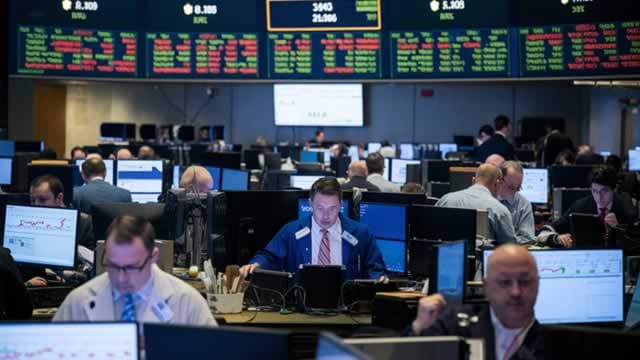
Bloomberg Television brings you the latest news and analysis leading up to the final minutes and seconds before and after the closing bell on Wall Street. Today's guests are Yardeni Research's Ed Yardeni, Robinhood's Vlad Tenev, NOVO Nordisk CEO, Mizuho Securities' Jared Holz, Schroders' Dan Suzuki, Strategy's Phong LeMizuho Securities' Nick Setyan, Nike's Elliott Hill, and Destiny's Sohail Prasad.
Comprehensive cross-platform coverage of the U.S. market close on Bloomberg Television, Bloomberg Radio, and YouTube with Romaine Bostick, Katie Greifeld, Carol Massar and Tim Stenovec. -------- More on Bloomberg Television and Markets Like this video?

Pakistan's new power price proposals will increase inflation and shift the International Monetary Fund-mandated (IMF) subsidy cuts onto middle-class households while easing pain for industries, analysts say.

Jeffrey Small explains that a resilient labor market and strong GDP forecasts are challenging the case for near-term rate cuts. While high valuations sparked recent volatility in stocks like Microsoft (MSFT) and Nvidia (NVDA), Small views the massive Mag 7 AI CapEx as a long-term investment cycle similar to Amazon's (AMZN) early days.

The Pentagon is undertaking a review of all major defense contractors. Those considered to be habitually late will be punished.
The Federal Reserve governor said he still thinks that an argument can be made for cutting interest rates following the better-than-expected January jobs report.
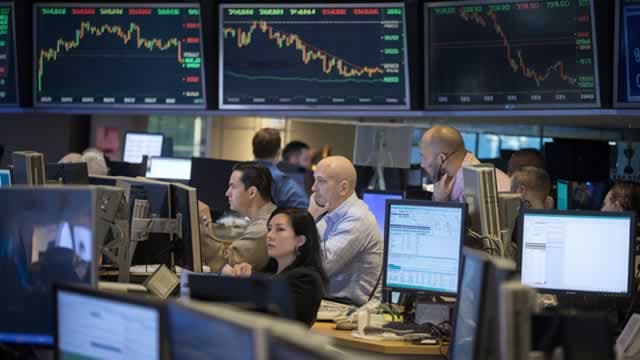
January's jobs report showed strong employment gains, with non-farm payrolls up 130,000 and the unemployment rate falling to 4.3%. Indexes of Aggregate Weekly Payrolls accelerated to 4.8% year-over-year, signaling robust nominal GDP growth and longer workweeks.
The economy adds 130,000 jobs

In this episode of ETF Spotlight, Sylvia Jablonski reveals how retail investors are driving market trends and where their money is actually flowing - from AI and quantum to space and next-gen infrastructure.

Financial stocks fall, as Wall Street's ‘schizophrenic personality' on artificial intelligence stalls momentum.

Markets will be closed on Monday to observe Presidents' Day, but the remainder of the holiday-shortened week will be busy, featuring previously delayed economic reports, the Federal Reserve's meeting minutes for January, the personal consumption expenditures (PCE) index, as well as manufacturing and services purchasing managers' index (PMI) readings.
Katie Mackenzie: Good morning, everyone, and welcome to the Elixinol Q4 FY '25 Results and Outlook Webinar. On our call today, we have Gavin Evans, the Chair; Natalie Butler, Executive Director and CEO; and Adam Dimitropoulos, CFO. And my name is Katie Mackenzie, Investor Relations for Elixinol. The presentation today will run for about 20 minutes, and then we will open up for Q&A. [Operator Instructions]. So now I'd like to hand over to Gavin Evans. Gavin Evans: Thank you, Katie, and good morning, everyone. Thanks for joining us today to listen to this presentation about the solid progress that we're making at Elixinol. Let me start by providing some context to my role in the business. I was appointed Chair of Elixinol Wellness in December 2025 at a pivotal time for the company. Most recently, I've founded OpenWay Food Co., where we built a vertically integrated category-leading portfolio of better-for-you brands, brands such as Red Tractor, Table of Plenty and Keep it Cleaner. That experience building brands, strengthening supply chains and integrating businesses to deliver scale is highly relevant to EXL today. Over the last 2 decades, I've developed strong relationships across food supply chains, retail distribution and the broader investment community. My focus is on financial and operational discipline, targeting scalable, high-margin categories and aligning our cost base to those core revenue drivers. I also bring proven experience in M&A. From my perspective, my mandate is clear; to create a solid foundation for scalable growth. We're now operating from a stronger, more focused position than we were 6 months ago. In 2025, we rebuilt the leadership team and simplified how the company operates. We've removed a layer of middle management, tightened decision-making and created a much nimbler organization. This is an experienced team, but it's also an entrepreneurial one. We're used to operating with discipline, speed and accountability, and that matters because every dollar we invest needs to work hard and needs to be invested into the right places. Natalie Butler, our CEO and Executive Director, brings strong commercial and operational experience in consumer health. Adam Dimitropoulos, CFO, has strengthened our financial discipline and reporting transparency. And Nat and Adam have been the key drivers of the improved performance you're seeing in Q4 2025 and will guide the business through 2026. You'll be hearing from both of them later in the presentation. We're also well supported by Pauline Gately as an Independent Non-Executive Director, providing strong governance and another important perspective as we reset for the future. So to that future, EXL has a bold, ambitious vision; to build a portfolio of premium branded health food assets supported by Australian manufacturing and positioned for global growth. Premium health brands are where sustained consumer growth is occurring, strong loyalty, better margins and long-term value. Australian manufacturer gives us quality control, supply chain resilience and authenticity, particularly for export markets and global growth ensures we can scale beyond Australia. This vision is about a tight thematic, scale and building a platform asset, not just a collection of products or brands. Australia's broader wellness market is around $160 billion today and forecast to exceed $300 billion by 2033, growing at roughly 7%. Within wellness, functional foods represent a $10.5 billion opportunity, growing steadily, while dietary supplements are smaller but growing faster at around 8% CAGR. Importantly, that growth is significantly outpacing other general grocery categories. Australia also ranks top 10 globally for per capita wellness spend at roughly $7,400 per person per year, which shows that wellness is already embedded in our everyday behavior. Our brands compete across functional foods, everyday wellness and supplements, giving us exposure to segments that are growing faster than traditional grocery rather than relying on a single category. This is a large, expanding and structurally supported market. The opportunity is real, and it is substantial. Retailers and industry commentators refer to this as an invest or tailwind category. So that's the opportunity. Let's talk about who we are today and how we're positioning EXL to be the platform for that vision. Elixinol Wellness is a sustainable nutrition and wellness company operating in Australia and the U.S. We run a vertically integrated model, controlling production, manufacturing and distribution. Our portfolio spans nutrition, wellness and super food ingredients. Products are sold through grocery, wholesale and e-commerce channels. And in the U.S.A., Elixinol branded hemp and nutraceuticals have been well supported in that market for around 10 years. Together, this gives XL a scalable, diversified platform to leverage growth domestically and internationally. I view it as a great foundation for us to build our vision on. So then to drill into that, EXL is a diversified platform built for longevity and everyday wellness. The business is structured around 3 key streams: nutrition products, dietary supplement -- sorry, functional foods and beverages, wellness products, dietary supplements and nutraceuticals and super and food ingredients, where we are a B2B supplier and utilize these products in our own branded products as a point of difference. This brand and product diversification captures multiple growth opportunities while maintaining high-margin scalable profits. We'll hear later from Nat how this aligns with the wellness tailwinds and megatrends. Our brand portfolio supports continued organic growth and also opens up the opportunity for targeted new product launches. We operate 6 core brands with the majority of revenue coming from the top 3 on this slide, Hemp Foods Australia, the Healthy Chef and Australian Primary Hemp. Those brands make up 75% of our revenue. Mt Elephant is being reset for growth via a strong innovation pipeline. Sooulseeds is a useful and modern brand targeting healthy snacking on the go. And while our U.S.-based Elixinol CBD business continues to contribute to the group, we're navigating through a changing regulatory environment before deciding if we reestablish a growth profile or proceed towards an exit. This portfolio allows us to leverage strong brands while innovating, supporting our premium health platform vision. We will cover some of that innovation later in the presentation. As you can see here, EXL operates diverse channels, spanning B2B and B2C. Retail partnerships include Woolworths, Coles, Costco, Aldi and independents like IGA and Harris Farms. Our e-commerce channels such as Shopify and Amazon are growing, giving us direct consumer access. We're also reestablishing our strong position in the B2B hemp supply, leveraging manufacturing capabilities and strong industry relationships. This multichannel strategy derisks the business and drives growth. So I know many of you are familiar with the business structure, our brands and channels, but in the context of it being a platform for growth, both organic and via M&A, it's important to remind everyone what that platform now looks like. For those new investors, I'm sure this provides context for the vision I outlined earlier. So moving on to our Q4 financials for FY '25, which is really the financial platform or the financial foundation for building that vision. This Q4 highlight slide shows the reset we have taken is now starting to deliver results. Revenue for Q4 was $4.1 million, up just under 10% quarter-on-quarter. FY '25 revenue increased 3.6% year-on-year, but it's the quality of that revenue that I'm happy about. Gross margins improved due to higher-margin products and channels. The e-commerce sales of the Healthy Chef grew 42% year-on-year, showing the strength of our direct-to-consumer strategy. With a structural cost base reduction, the business was both profitable for the quarter and underlying or normalized operating cash flow positive, creating that foundation for growth. And whilst more work needs to be done, we're now firmly on the path to profitability that we've been talking about for the last 6 months. On that note, I'll hand over to Adam, who will talk through the improvements in the revenue mix and cost reduction performance. Adam Dimitropoulos: Thank you, Gavin. Let me take you through our Q4 and full year 2025 performance, which demonstrates a clear improvement in revenue quality, margin profile and the resilience of the business. Q4 is our seasonally strongest quarter, and we delivered revenue of $4.1 million, up 9.5% quarter-on-quarter, giving us a strong exit run rate into 2026. For the full 2025 year, revenue was $15.5 million, representing 3.6% growth year-on-year. While top line growth was modest, the more important story is the quality of that revenue, which improved materially over the year. We have made a deliberate shift towards higher-margin products and channels, and this is clearly reflected in our revenue mix. E-commerce increased from 21% of revenue in 2024 to 38% in 2025, while lower-margin bulk ingredients reduced from 24% to 14%. This repositioning is driving better gross margins and more predictable cash generation. A key contributor to this shift is the Healthy Chef, where e-commerce sales grew 42% in Q4 compared to the prior year. This growth not only improves margins, but also derisked the business by diversifying us away from a small number of larger wholesaler and retailer customers. At the same time, we have successfully streamlined our SKU range across retail brands, removing underperforming products, improving inventory efficiency and allowing us to focus resources on the highest return products. In summary, 2025 marked a turning point in our business. We exited the year with a much stronger revenue mix, higher margins and growing direct-to-consumer exposure, which puts us in a solid position to drive improved profitability and scalable growth. Now let me take you through the progress we've made this year and how we have reset the business for profitability, starting with revenue. As you can see on the top chart, revenue has remained resilient and consistent throughout 2025, ranging between roughly $3 million to $4 million per quarter. We saw solid momentum into Q2, some expected seasonality in Q3 and then a rebound in Q4. This stability is important because it demonstrates that our cost actions were not taken at the expense of revenue generation. Now turning to EBITDA. The bottom chart really tells the story of the year. In the first half, EBITDA was clearly negative as we were still carrying a higher historical cost base. In Q3, we accelerated our cost reduction initiatives across staffing, marketing and corporate overheads with some transitional cost increases to achieve that change. These disciplined actions flow fully through the P&L in Q4, where we reached positive EBITDA slightly better than breakeven. This marks a critical step change for the business. On a year-to-year basis, our operating cost base in Q4 '25 was reduced by approximately 30% compared to the same period in '24. Importantly, this is a structural reduction, not a temporary pause in spend. As a result, our ongoing expense rate is now significantly lower than historical levels. We also delivered positive underlying operating cash flow for the quarter, reinforcing that this improvement is real and sustainable. During the second half, we completed a two-tranche capital raise totaling $2.5 million, which further strengthened our balance sheet and provides flexibility as we move forward. Taken together, we now have a leaner cost structure, improving profitability and a stronger capital position. This creates a solid foundation for both organic growth and selective M&A opportunities as we look to scale the business in a disciplined way. I'll now hand over to Natalie, our CEO, for the key business drivers of 2026. Natalie Butler: Thanks, Adam. Over the past year, we've been very deliberate about resetting Elixinol for the next phase of profitable growth, making sure we're putting capital into the right places. At a high level, we know we're operating in a market that supports long-term growth with 70% to 80% of consumers rating wellness as a high priority. Longevity or well aging is shifting health spend from reactive to preventative, and that supports repeat purchase and a longer customer life cycle with Gen X and Millennials now the fastest-growing spenders on wellness. Food-led wellness categories or functional food, where many of Elixinol products play grow more consistently than supplements alone because they're part of that everyday shopping habit. Up to 70% of consumers say clean label and natural ingredients influence their purchase decisions. And finally, diversified portfolios across both grocery and e-commerce like we have at Elixinol are far more resilient to market fluctuations. Different categories move at different speeds, but together, they reduce that volatility and risk. And these dynamics are guiding exactly how we're going to allocate our capital moving forward. The focus for 2026 and beyond is about converting these trends into revenue growth. Cost controls remain constant and capital needs to be directed to parts of the portfolio with the strongest mix of both growth and return. In D2C e-commerce, investment is concentrated on where the returns are the highest, and the Healthy Chef is the main driver of growth and margin for us, while the Elixinol U.S. brand refresh, which is in the process of being rolled out, is focused on improving both conversion and retention and then long-term growth. In retail, everyday nutrition drives scale and repeat purchase. Our innovation focus is on products that really earn that shelf space and will grow the categories that they're in. Hemp remains a core platform for us. Elixinol is currently the largest hemp brand and ingredient supplier in Australia and contracted volumes for 2026 are up on 2025, which is really positive. And our vertically integrated model supports steady growth into the future without that need for extra capital. So as the market demand for hemp continues to grow, our strength across private label and branded hemp positions us for strong organic growth. Leading our innovation pipeline is the Healthy Chef Metabolic Burn launching this month. GLP-1 medication has fundamentally changed how consumers think about metabolic health and weight loss. In Australia, there is currently 400,000 to 500,000 people currently already using GLP-1 medications. But as interest -- but the interest around GLP-1 goes much further than this. And for every active user, there are 2 to 3 more consumers who are curious, but not currently on the treatment. So this creates a very large pre-GLP-1 audience, and this audience is our focus. Metabolic health is relevant to around 9 million Australians who are looking for credible everyday solutions. Metabolic Burn is built for this moment. It's not a pharmaceutical replacement. It's a natural TGA-regulated bridge that supports energy, glucose and metabolism using a clinically informed formula. This puts Elixinol in the right place in the GLP-1 cycle, early enough to capture that demand and credible enough to earn the trust. Alongside the GLP-1 shift, we're seeing a strong demand for lighter ways to consume protein. Consumers are moving away from heavy shakes and towards clean drinkable formats that support hydration and daily protein intake. Protein water is now one of the fastest-growing protein segments, growing at 8% in a protein market forecast to reach $1.1 billion by 2034. The Healthy Chef Protein waters launched in 2025 position us early in this trend with a premium functional offer aligned with where the category is headed. Finally, Mt Elephant, our healthy baking range, shows how we're applying innovation-led thinking at a brand level. As supermarkets reduce their ranges, we've reduced -- we have repositioned Mt Elephant to compete more effectively at shelf level, moving from a niche free from queue to a clean mainstream whole food proposition. Growth is coming from innovation that earns its place on the shelf. World-first sustainable formats and smart brand collaborations bring genuine news to traditional baking categories. This strategy is built in close partnership with Coles, giving us confidence at Mt Elephant's sustained growth in grocery. You can see on the screen, we have our new Mt Elephant peanut butter Whole Food cookie on the left, which is a collaboration with Pic's Peanut Butter. And on the right, our 2 new pancake mixes, which come in a mix and pour tub, and all 3 of these products are rolling out in Coles in May. Our sustainable pancake shakers are a world-first and address a long-standing sustainability issue for the category. About 95% of pancakes sold in grocery are sold currently in plastic shakers. And with only 19% of plastic in Australia being recycled, the real impact comes from reducing plastic in the first place. These products also provide key PR opportunities for both Mt Elephant and Elixinol and cement our corporate positioning as a sustainable nutrition company. I'm going to hand back to Gavin to wrap up. Thank you. Gavin Evans: Great. Thanks, Nat. Those opportunities are really exciting for us moving forward. So following Adam and Nat's updates, I can now share with you that the FY '26 outlook is anchored on 4 pillars. Operational momentum; continue to improve performance of this rightsized cost base and continue to drive stronger margins. Cost efficiency; maintain a structurally lower OpEx run rate, which then gives us flexibility to invest in growth. Build a growth foundation as a platform for sustainable organic growth, leveraging the category strengths that we already have. And then four and finally, strategic opportunities; pursue value-accretive M&A and focus on core revenue drivers. EXL is now operating from a stronger, more efficient cost base, well positioned to capture the growth opportunities and deliver long-term shareholder value. Please review the customary disclaimers. And thank you very much for your attention and ongoing support. And now I'd like to hand back to Katie to facilitate Q&A. Katie Mackenzie: Great. Thanks so much, Gavin and Nat and Adam for a really interesting presentation about the company and all the exciting things that you're doing and the outlook moving forward. [Operator Instructions] We might sort of kick off with a common investor question just about the supermarket channels in Australia and the opportunities and challenges that, that presents. In the presentation, you talked about your focus on higher-margin revenue and SKU rationalization, the partnership with Coles. Many investors are aware that some niche retailers can have a difficult relationship with some of those supermarkets. Are you able to just give a little bit more detail about what's happening on the ground? Perhaps Nat will start with you and then Gavin, if you could add a little bit as well. Natalie Butler: Yes. Thanks, Katie. Look, it's a fair question. And the short answer is that the supermarkets are tough right now, but they're not completely closed. This affects us at Elixinol more with some products than others. Our hemp ingredients are reasonably stable. But it's -- for the more niche brands like Mt Elephant, it has been a challenging year. But with that said, they are really open to true innovation, and it's just how they're defining that innovation and working with the buyers to give them products that they know that they need and that they know are going to provide, I guess, excitement to the category and something new to the category and growth to the category. So that's really what we're focused on. And I think one of the great things about being a small and nimble organization is that you can move so much faster to respond to trends. And if a buyer can give us feedback in one review, we can deliver on the next. And that's really what we're focused at delivering at the moment, playing to -- I guess, playing to our strength. Gavin Evans: Yes. Good answer, Nat. I think as well as that collaborative innovation, we have a couple of other key advantages, Katie, and to the investors listing that we have over our competitors, and we've talked about that diversification of channels. So the growing e-commerce business primarily through the Healthy Chef, at least in part, insulates us from much of the range rationalization that's been done quite aggressively by the 2 majors in particular. So that's been part of that strategy. I think that helps a lot. I think secondly, in that hemp space, we hold that strong position in the supply chain. So we're -- as Nat said, we're either the branded option on the shelf or in a number of situations, we're also the ultimate supplier of the hemp seed that is in the private label. So again, that diversification really gives us a natural hedge, which strengthens our position. Katie Mackenzie: Okay. Thank you, Nat, and Gavin, that makes sense. Gavin, we've got another one here for you. At the start of the presentation you were talking about the fact that you've got a mandate to create that solid foundation for scalable growth. So can you talk a little bit more about your vision for the company and what sort of assets you would be looking at to potentially scale the business in the future? Gavin Evans: Yes. Good question, Katie. I think that mandate for scalable growth starts with aligning the business to those wellness market opportunities that we've referred to earlier in the presentation. But just to be really clear, we have some urgency to optimize the business performance right now in the short term to align the market value of EXL more with our peers. I mean in FY '25, we reported revenue of circa $16 million. We're tracking towards profitability, as we can see in Q4. And we benchmarked our market cap against some of our listed peers in the food space, and they're in the range of 1 to 1.5x revenue. We're currently around 0.3. So that market re-rating is the first priority. And obviously, we will continue to deliver with the underlying business performance to build that confidence. But as we move towards that, we'll continue to look for the right asset to achieve the vision that we've just outlined, and that is to build a portfolio of premium branded health food assets. Now that portfolio has to deliver consistent growth, strengthen EXL's market position, and it has to create long-term shareholder value. Those assets have to be compelling as value accretive on acquisition. And given I've spent the last 5 years assessing businesses in this space, I'm confident those assets are available in the market. The other opportunity here is that there's been a lack of transactions in the private markets as many of the people listening would be aware, and that creates opportunities to buy these assets at the right time and at the right price and really use the platform that we've got to build something that's got scale that can be in a strong position as a listed player. Katie Mackenzie: That's great. Thanks, Gavin for that extra content and extra context. [Operator Instructions] Just a final one here. We've got lots of questions from investors about the loan note and the sale, potential sale of the U.S. business. You, Nat or Gavin, can you just give investors a little bit of an update on what's happening on that front? Gavin Evans: Yes. Why don't roll with that one, Nat. So the status of the loan notes remains unchanged. The Board doesn't think it's the best use of shareholder funds to hold an AGM to make any changes to the terms of those loan notes. But we do have our AGM coming up in May, and that presents an opportunity for us to look at our capital management. We're always seeking to optimize capital management and our balance sheet strength. So I also acknowledge the security link of those loan notes to the U.S. entity, which brings me to the update there that you requested. So late last year, the regulatory framework for CBD shifted in the U.S. exactly where that lands and the future implementation of how that plays out in the market is being heavily debated and lobbied in the U.S. political system at the moment. Indications are that within the next 2 to 3 months, there'll be more clarity on that. In the meantime, we continue to run the business to optimize its contribution. We're also staying connected with some prospective buyers on that should the market position become clearer. So we keep an open mind to what's happening in that space. And as I said, we continue to run that business with a long-term view. But this regulatory situation, hopefully, will become much clearer in the next 2 to 3 months. Katie Mackenzie: Okay. Great. Thank you for that update. So with that, if there's no further questions coming through from investors, but if people have listened to the presentation have got any further questions, we've got Gavin's address details there and my contact details as well. So please feel free to reach out to us after. So Gavin, I'll just hand it back over to you just to wrap it up, and thanks, everybody, for joining. Gavin Evans: No. Look, really just thank you. I appreciate people being engaged and the ongoing support. We are working very hard to improve the position of the business, and we think we've made some really good inroads in Q4, but there's still lots of hard work in front of us, and we're committed to stay focused, aren't we Nat and Adam. Natalie Butler: 100%. Gavin Evans: Thank you. Katie Mackenzie: Thanks so much. Bye. Natalie Butler: Thank you. Bye-bye.

Operator: Greetings, and welcome to the Varex First Quarter Fiscal Year 2026 Earnings Conference Call and Webcast. [Operator Instructions] As a reminder, this conference is being recorded. [Operator Instructions]. It's now my pleasure to turn the call over to Christopher Belfiore, Director of Investor Relations. Christopher, please go ahead. Christopher Belfiore: Good afternoon, and welcome to Varex Imaging's earnings conference call for the first quarter of fiscal year 2026. With me today are Sunny Sanyal, our President and CEO; and Sam Maheshwari, our CFO. Please note that the live webcast of this conference call includes a supplemental slide presentation that can be accessed at Varex's website at vareximaging.com. The webcast and supplemental slide presentation will be archived on Varex's website. To simplify our discussion, unless otherwise stated, all references to the quarter are for the first quarter of fiscal year 2026 and to the year are for the fiscal year 2026. In addition, unless otherwise stated, quarterly comparisons are made year-over-year from the first quarter of fiscal year 2026 to the first quarter of fiscal year 2025. I would like to remind you that Q1 of 2025 was a 14-week quarter. Finally, all references to the year are to the fiscal year and not the calendar year, unless otherwise stated. Please be advised that during this call, we will be making forward-looking statements, which are predictions or projections about future events. These statements are based on current information, expectations and assumptions that are subject to risks and uncertainties that could cause actual results to differ materially from those anticipated. Risks relating to our business are described in our quarterly earnings release and our filings with the SEC. Additional information concerning factors that could cause actual results to materially differ from those anticipated is contained in our SEC filings, including Items 1A, Risk Factors of our quarterly reports on Form 10-Q, and our annual report on Form 10-K. The information in these discussions speaks as of today's date, and we assume no obligation to update or revise the forward-looking statements in this discussion. On today's call, we will be discussing certain non-GAAP financial measures. Beginning with the first quarter of fiscal 2026, we changed our non-GAAP policy with regard to equity method investments. We will provide more detail later in the call. A reconciliation of these changes is presented at the back of our earnings release and slide presentation for the quarter. Our non-GAAP measures are not presented in accordance with, nor are they a substitute for GAAP financial measures. We provided a reconciliation of each non-GAAP financial measure to the most directly comparable GAAP financial measure in our earnings press release, which is posted on our website. I will now turn the call over to Sunny. Sunny Sanyal: Thank you, Chris. Good afternoon, everyone, and thank you for joining us for our first quarter earnings call. I'm very pleased to announce a strong start to the year. First quarter revenue was $210 million, up 5% year-over-year and towards the high end of our guidance. Growth in the quarter was driven by strength in our cargo systems business, which contributed to a 17% year-over-year increase in Industrial segment revenue. Our Medical segment performance was stable year-over-year in what is typically our seasonally light quarter with continued strength in CT and growing engagement around next-generation system designs. Non-GAAP gross margin of 34% in Q1 was at the high end of our guidance, benefiting primarily from a favorable product sales mix in the quarter. Looking at a year-over-year comparison, total revenue was up 5% with Medical segment flat compared to last year and Industrial segment up 17%. Non-GAAP EBITDA of $29 million was up 12% compared to the same quarter last year. Non-GAAP EPS in the first quarter was $0.19, up $0.09 compared to $0.10 last year. Let me give you some insights into sales detail by modality in the quarter compared to 5-quarter average, which we refer to as the sales trend. Our Medical segment performed well in the quarter, driven by solid demand for X-ray sources, particularly in high-end CT as well as digital detectors. Customer activity and sales pipeline development around new platforms continued to gain momentum. Mammography modality exceeded its sales trend in the quarter. CT, fluoroscopy and radiography modalities were in line with their respective sales trends, while dental and oncology modalities were below their respective sales trend. Our Industrial segment delivered another solid growth quarter with broad-based strength across multiple platforms and verticals. Global demand for security screening remains strong, driving growth in both cargo security inspection systems and components. We also continue to see positive momentum in our nondestructive testing and inspection business, supported by strength in our high-energy linear accelerators and X-ray tube products, both of which are used in nondestructive testing applications. In addition, demand for photon counting detectors was solid across several industrial verticals and drove growth in our food inspection products. Overall, the Industrial segment remains an attractive growth opportunity for the company. We are collaborating closely with customers to address complex inspection problems by using X-ray imaging in real-time manufacturing and finding solutions that were previously difficult or impossible to achieve. At the beginning of December, we attended RSNA, the Radiological Society of North America's Annual Meeting. This is the world's largest medical imaging division and brings together over 38,000 radiology professionals and medical imaging OEMs from all over the world. RSNA is one of the most important events on our calendar each year because of the deep and broad engagement it enables with our customer base. We use the conference to showcase our newest technologies and more importantly, to work with customers on how these innovations can be designed into their current platforms and future systems. We held more than 150 customer meetings focused primarily on advancing design win opportunities and opportunities to upgrade their systems to our latest technologies. These meetings underscored increased customer engagement with a meaningful emphasis on innovation-driven discussions across all modalities. We view this increased level of activity as a positive signal for future demand. These engagements are translating into a growing pipeline of new business opportunities, which typically last for multiple product cycles and support durable long-term revenue streams. We felt a very strong reception to our new technologies, which reinforces our confidence that the investments we've made in innovation are positioning Varex well for sustained growth as customers move from technology evaluation to system development and ultimately commercialization. This year at RSNA, we introduced a more integrated modality-based approach to our value proposition. Across key modalities, including CT, general radiography, fluoroscopy, mammography, we showcased Varex's offerings, including tubes, detectors, generators, connectors, heat exchangers and software as fully integrated imaging chain assemblies and subsystems rather than as individual components. This modality-based approach represents a meaningful evolution in how we engage with customers. By taking a modality-based approach, we're able to deliver best-in-class performance and attractive total system economics while also enabling potential faster time to market for customers looking to bring new and differentiated imaging applications to market. We believe this approach further strengthens our position as a strategic partner to our customers and enhances our ability to drive long-term recurring revenue through deeper system-level design wins. We are encouraged by the enthusiastic receptivity to our approach, and we will continue these discussions with our customers with the intention of securing new design wins in fiscal '26 and beyond. Our Lumen family of radiographic detectors, combined with our Nexus software was a significant topic of discussions at RSNA. Customers and prospects were very interested in our regional manufacturing strategy, particularly with our factories in India, which they see as critical for their future growth in the region. We also had numerous conversations about our cutting-edge photon counting technologies and the progress that we are making there. For the past few years, our customers have been busy dealing with the fallout from COVID, chip shortages, followed by supply chain crisis and had to deploy R&D and growth capital towards taking care of maintenance problems. During the 2025 RSNA, we felt that our customers were returning to new product planning mode. And at this RSNA, we felt even more so that our customers were actively engaged in new product development and were in commercialization mode. In summary, RSNA was very positive for us and gave us a good feel for our customers' vision and where they were headed. While these design-in opportunities typically convert over time, several of the discussions we had at RSNA are tied to platforms that are currently already under development, particularly in general radiography modality. We are confident that some of these opportunities will convert this fiscal year with the revenue opportunities as early as fiscal '27. Moving to our Industrial segment. Our cargo security systems business continues to be a bright spot with multiple installations during the quarter in various countries. In addition, during the quarter, we received multiple orders for different products, including repeat orders from an existing customer. Our customer base has long considered our linear accelerator technology as best-in-class, and we view repeat orders like this as a testament to our success of deployment and performance of our new systems. We remain engaged on many tender offers and look forward to continued sales success in our cargo systems business in fiscal '26 and beyond. With that, let me hand over the call to Sam. Shubham Maheshwari: Thanks, Sunny, and hello, everyone. Turning to results for the first quarter. Our performance exceeded expectations. Revenues of $210 million were toward the high end of our guidance. Non-GAAP gross margin of 34% and non-GAAP EPS of $0.19 were also at the high end of expectations. Compared to the same period in fiscal 2025, total revenues increased 5%, driven by a 17% increase in Industrial, primarily from cargo system shipments. Medical revenue was stable compared to last year. Medical revenues were $145 million, and Industrial revenues were $65 million, representing 69% and 31% of total revenues, respectively. Analyzing regional performance. Americas grew 17%, driven by the strength in our Industrial segment related to the cargo systems business, EMEA rose 7% and APAC decreased 7% year-over-year. Sales volume to China remained steady, contributing 17% of total revenues, underscoring the continued resilience of our health care market position. Let me now cover our results on a GAAP basis. First quarter gross margin was 33%, down 100 basis points year-over-year. Operating expenses were $54 million, down $3 million year-over-year. We reported operating income of $15 million, net income of $2 million and GAAP EPS of $0.05 per diluted share based on fully diluted 42 million shares. Before I discuss Q1 non-GAAP results, I want to highlight a recent change to our non-GAAP policy. We review our non-GAAP policy annually to determine whether any changes should be made. As a result of this review, we've modified our non-GAAP policy to exclude gains and losses from our equity method investments. In making this decision, we considered a strategic shift at one of our equity method investees and also the fact that we do not control operations of our equity method investments. We determined that including the results of these businesses in our non-GAAP financials no longer provides information helpful to evaluate our ongoing operations. Going forward, this is our approach to report non-GAAP results as well as guidance for future quarters. Reconciliations for each quarter and full fiscal year 2025 can be found in the back of this presentation and earnings press release. Now moving on to non-GAAP results for the quarter. Gross margin in Q1 was 34% at the high end of our expectations, driven by favorable product sales mix. Gross margins were down 90 basis points year-over-year, primarily due to 130 basis points favorable impact from refunds of German customs duties and taxes in Q1 of '25. R&D spending was $22 million, a decrease of $1 million year-over-year and representing 10% of revenues. Please note, Q1 '25 included the final payment of $1 million for the transfer of technology from Micro-X. SG&A expense was $30 million, down $1 million from Q1 '25 and representing 14% of revenues. Operating expenses totaled $52 million, a decrease of $3 million year-over-year and represented 25% of revenues. Operating income was $19 million, an increase of $5 million year-over-year, and operating margin was 9% of revenue, up from 7% in Q1 '25. Tax expense was $3 million, flat year-over-year. Q1 tax rate of 27% was higher than our expectations due to income distribution across entities. We continue to expect full fiscal year 2026 tax rate to be around 23%. Net earnings were $8 million or $0.19 per diluted share, up 90% from $0.10 in the year ago quarter. Average diluted shares for the quarter on a non-GAAP basis were 42 million. Now turning to the balance sheet. Accounts receivable decreased by $10 million and days sales outstanding increased by 2 days to 64 days. Inventory increased $29 million to $328 million and days of inventory increased by 34 days to 214 days. The increase in inventory during the quarter will support anticipated demand across Industrial segment, including new product ramps and cargo system deliveries. As those programs progress, our aim is to normalize our inventories. Accounts payable increased by $9 million, driven by increase in inventory and days payable increased 9 days to 51 days. Now moving to debt and cash flow information. Net cash outflow from operations was $16 million in the quarter, primarily driven by the increase in inventory. We ended the quarter with cash, cash equivalents and marketable securities of $126 million, down $30 million compared to the fourth quarter of 2025. Gross debt outstanding at the end of the quarter was $370 million and debt net of $126 million of cash, cash equivalents and marketable securities was $244 million. Adjusted EBITDA for the quarter was $29 million or 14% of sales. Our trailing 12 months adjusted EBITDA was $127 million [Audio Gap] to outlook for the second quarter. Guidance for the second quarter is as follows: revenues are expected between $210 million and $225 million. Non-GAAP earnings per diluted share are expected between $0.15 and $0.25. Our expectations are based on non-GAAP gross margin of 33% to 34%, non-GAAP operating expenses of approximately $52 million, interest and other expense net in the range of $7 million to $8 million, tax rate of about 23% for the second quarter and non-GAAP diluted share count of about 42 million shares. I would now like to hand the call back to Sunny for some closing thoughts before beginning our Q&A. Sunny Sanyal: Thank you, Sam. We are very pleased with the solid start to fiscal '26. Looking ahead, we're encouraged by the depth and quality of the ongoing dialogue that we're having with our Medical customers, particularly around innovation and integration of our technologies into their next-generation imaging systems. On the Industrial side, our close collaboration with customers continues to drive new applications for products across a broad range of verticals, including oil and gas, food inspection and security screening. Across both segments, this engagement reinforces our confidence in the durability of our customer relationships and the long-term opportunities ahead. None of our progress would be possible without the dedication of our employees and partners around the world, and I want to thank them sincerely for their continued efforts. Together, we are advancing our strategy and strengthening the future of our business. Your commitment and passion continues to make a meaningful difference to Varex. In closing, the combination of a solid execution in the quarter, strong customer engagement around new platforms and increasing modality-based subsystem collaboration gives us confidence that we are well positioned as we move forward through fiscal '26 and beyond. With that, we will now open up the call for your questions. Operator: [Operator Instructions] Our first question is coming from Larry Solow from CJS. Lawrence Solow: I guess, Sunny, maybe first question for you, just kind of high level. You sound pretty optimistic, I guess, certainly, the pipeline stuff sounds great. Maybe you can give us a little more color just on the current environment, where we stand today? I know you only give guidance out for 1 quarter, but you sound pretty just optimistic in general on both sides of the business. So maybe you can give us a little more at least qualitative outlook for the rest of the year. Sunny Sanyal: Larry, yes, so let me start with Medical, right? First of all, in Medical, we feel like the headwinds that we faced in '24 and where we had signaled that in the second half of '25, that we would have those behind us. They're truly behind -- they feel behind us, and they continue to -- our customers continue to show orders activity. So we feel good that the problems of the past are -- we're past them. That's number one. So in general, Medical is stable. But within that, we continue to see strength in CT. There's no real -- anything that I can call out as weakness in CT and its strength globally. And we continue to look at Medical markets, CT markets and adoption rates of CT globally. All of that projects a positive indication for us, and our relationships with our OEM customers continue to be strong. That's Medical. All other modalities in Medical -- so that said, China is stable for us. China is stable, CT is strong, and all other modalities, we see normal cyclical patterns, nothing that alarms us or anything that I can call out as extraordinary or remarkable. So from that perspective, we feel good about Medical for the rest of the year. Same way as I look at Industrial, the order pipeline, the order activity, the engagement of our customers is very strong. We saw very strong orders for photon counting in Industrial, particularly in the food inspection space, and NDT, nondestructive testing, pipeline and activity remains strong. And then security, of course, we've talked ad nauseam about our traction there. We're very happy with how we're seeing the security orders pipeline funnel growing there. So this is the background for me feeling good about where we are. And then to top it off, look at RSNA, the customer interactions were very different. Two years ago, in 2024, there wasn't a single R&D conversation. It was all about one problem after another after another that our customers were facing, and that tone has shifted pretty dramatically. And so as I look at the engagement of the customers and I look at the type of design-in opportunities we're looking at, we're looking at opportunities that are not only long range. We're not just talking about photon counting, nanotubes and forward-looking technologies. We're talking about products that we currently have in the mid-tier, in the value-tier CT systems and what our customers need in emerging markets where they're going today, tomorrow. So that's why my comment was that we're expecting to close some of those in fiscal '26 with hope that we can get engaged with customers, particularly with radiographic, to ship them products in fiscal '27, '28. So this is what's going on, which makes me excited. Lawrence Solow: No, I can feel that enthusiasm. And you mentioned the India opportunity. I was going to ask you just about India, how it's progressing. I imagine it's still a little bit of a headwind to your business, but it sounds like it won't be for long, and it sounds like it's also creating a lot of opportunities for you. Maybe you can elaborate on that. Sunny Sanyal: I'll let Sam comment on add-on. Let me just start by saying the India factory, as you know, for detectors is open. We're shipping detectors from there globally. These are radiographic detectors, and it is tracking with what we had intended for that site in Vizag. Pune construction is coming along very well, but we're also shipping quite a few tubes that are marked made in India to all over the world. So the activity is going on. The new factory for tubes, factory will still take a little bit of time to come online, but there's progress being made, and I feel we're on track. And it's resonating with our customers. There's not a conversation that I have with customers where India doesn't come up. And the story is the same. Hey, we want to do business in India. We're expanding to India. India is favoring systems that have local content, domestic content, made in India. So we want you to supply us from India, and that becomes a differentiator for them. So this is exactly what we had planned for, and we're seeing that start to materialize. Sam? Shubham Maheshwari: Yes. So like Sunny said, there's a lot of excitement from the customer side on our India operations and ability to provide the product from there, not just for India consumption, but also for global consumption. And in terms of the bricks and mortar development in India, essentially, one factory is already producing detectors, and we are in the process of ramping up that factory. And the second one, the tubes factory, before we begin to ship tubes from there, it's still another 12 months. Building is largely complete. We are now moving in the equipment. So as we move in the equipment, then it will be followed by the qualification cycle of the equipment, followed by the qualification cycle of tubes that would be produced from there, and then we would be able to export tubes from there or ship to customers in India. So in terms of actual progress, it is tremendous in India at this time. From a P&L perspective, it is a burden in the sense we are ramping up some inventory, we are ramping up some costs on the P&L. So the P&L is seeing the burden right now, but it is truly an investment. And so that's what you're seeing right now. Lawrence Solow: Great. Sam, can I just squeeze one more in. Just on the guidance on the quarter. I know you like to give yourself a little room or just allow for a wider range. But the low end of your -- essentially, all your components, from sales down to margin, down to tax rate are actually kind of in line with this quarter, which was basically $0.20 or $0.19. So why would the low end of the EPS be $0.15 and not $0.20? What am I missing there? Shubham Maheshwari: Yes. So you would notice that we have reduced the range for the EPS as well as revenue. So that is one factor to play over there. Other than that, there isn't anything else there. So maybe I didn't capture your question? Or is that what you wanted to know? Lawrence Solow: Yes. No, I was just saying like you did $210 million this quarter. If I point that $210 million and like what you did this quarter, basically, it's actually above what you did in Q1. Now essentially, the low end of all your target ranges are essentially exactly what you did this quarter, and you did $0.19. So what would drive that down to $0.15, if you know what I'm saying? Shubham Maheshwari: Yes. So this last quarter, we produced about north of 33.5%, so 33.6% gross margin. But on the low end, we are baking it with 33% gross. So the guidance is 33% to 34%, that's why. Operator: Next question is coming from Young Li from Jefferies. Young Li: I guess to start, can I ask about the Industrial segment a little bit. Are there any incremental disclosures on the cargo orders that you can provide? Good to hear about the wins during the quarter and the repeat order. I think last year, quarterly orders ranged from like $14 million to $25 million-ish. Is fiscal 1Q orders still in that range? And just given the recent strong performance in that business, is it possible that industrials can grow double digits for this year? Shubham Maheshwari: Sure. So Young, last year, in FY '25, we announced more than $55 million of cargo business that we booked. And when we announced that, we were very early in the market, and we wanted to say that we are seeing good traction in that market. Going forward, our approach towards cargo systems and orders would be that we would not be announcing on every single purchase order that we received. We just wanted to say that this last quarter, we got business from multiple customers, multiple countries, multiple units. So the traction is pretty strong. In terms of overall number, what really matters is when we ship the product to the customer. So through revenue process, obviously, we would be talking about it in terms of our Industrial segment. So what I'm trying to say here is that you would not be seeing press release for every single purchase order from us unless it is material and then we need to disclose that specifically. So that's on the order side and how we are approaching. And then I do want to say that this business is tender-driven, and it is also somewhat episodic in the sense some quarters we win, we can win large amounts and then there may not be any tender that may close in the next quarter, for example. So the business is somewhat lumpy. However, our goal would be to smooth the revenue as much as we can. Of course, we have to keep the customer requirements and objectives first and foremost. And then your last question in terms of Industrial business growing double digit. Yes, the potential is certainly there. It can grow. We need to not just win cargo systems orders in a significant manner, but then also our customers would need to want to get that product before our fiscal year end. So those will be some of the puts and takes for our ability to grow double digit in Industrial this year. Young Li: Okay. Great. That's very helpful color. And then one on China. So 17% of rev, that's around $35.6 million. It's one of the bigger quarters in 2.5 years. I think you previously were expecting flattish to slight growth in fiscal '26. I guess if you just annualize the growth, it's like 10% growth or something like that. Can you maybe update us on your latest thinking on how much China can contribute in fiscal '26? Shubham Maheshwari: Yes. So Young, China quarterly revenues on a year-on-year basis, they were flattish, like we had said in the last earnings call. And we are expecting China to remain stable, flattish to maybe slight growth, but mostly, I would characterize it as flattish year-over-year. But keep in mind, the China dynamic in terms of quarterly seasonality, because of Chinese New Year, is always somewhat different than the rest of the business. China, typically, we've seen stronger in our fiscal Q1. And then because of Chinese New Year, our fiscal Q2, which is the March quarter, China generally is somewhat light. That is the typical pattern out of China revenues. So I would not do Q1 x4 for China. I would again say that from a full fiscal '26 China revenues perspective, we are looking at flattish to minor growth, something like that. Operator: [Operator Instructions] Our next question is coming from Suraj Kalia from Oppenheimer. Suraj Kalia: Sunny, Sam, Chris, congrats on a nice start to the year. So gentlemen, let me start out first. Sunny, if I got your comments right, at the RSNA, you said there was a lot of discussions about general radiography. Maybe if you could parse it a little more for us, Sunny. What do you think customers are gravitating towards, more price-sensitive products or higher-end products? I guess what I'm just trying to sift through is, use this as a proxy of what the macro level conditions are and where your consumer sentiment is. Sunny Sanyal: Yes. So Suraj, over the years, we had lost share in radiography. So for us, introduction of new products is a way for us to gain share back. And as you know, we created these low-cost products that are very functionally rich and very, very good products, solid products and priced very attractively with very good cost structure, also made in India. All of these things combined is what has been attracting our customers. These products, these radiographic detectors are best-in-class, absolutely best-in-class. They'll go toe-to-toe with any high-end products that we've made and some are even better. So with that in mind, there's a lot of interest in this segment, particularly because these are very, very lightweight detectors. And we're targeting segments of the market that can take on these products quickly both as stand-alone detectors, but also combined with our software package. We have a product line called Nexus, which is an acquisition workstation, which is ideal for someone trying to bring on a new application to market. If someone wants to bring a new mobile cart to market, the combination of our tube detector, high-voltage connector and the software gives them an imaging chain that pretty much drops in, so to say. And so there was a lot of interest from customers who are looking at markets like South Asia, India, Indonesia, Latin America that look at this as part of their analog to digital conversion of their installed base, and it's a very attractive proposition for them. So there are many conversations with those types of prospects. There are also conversations with customers who are our current customers, who are looking to expand their radiography portfolio. During COVID, there was an intense amount of purchases of mobile carts and other radiographic just regular DR systems. And then the industry went through a bit of a digestion in '21, '22, '23. And now we feel like the sort of the markets come back to being vibrant on radiographic as well. And the conversations weren't just about detectors. They were about detectors and tubes both. And the question kept coming up, when can we receive these from India? When can Made in India be ready? And so there was a lot of interest from our customers for the global markets. Suraj Kalia: Got it. And I'll pose my couple of questions together. One for you, Sam, one for you, Sunny. Sam, Med Device segment flattish. We understand the seasonality. Maybe I missed your comments about the composition within Medical Devices and the impact on gross margins. If you could just give us some color there would be great. And Sunny, for you, obviously, the analyst prior to me also asked about China. How do you plan for China just given the daily, my word, drama that we see on a macro level. What gives you the confidence really? And any additional color if you could give us on status of photon counting sort of from a market perspective. Gentlemen, congrats again. Sunny Sanyal: Thanks. Sam, do you want to go first? So Suraj, let me start with China. So we'd go crazy if we changed our plans for China based on what you see here on news every day. We look at China in 2 different ways. Think about China as a geography, right; Japan as a geography; India as a geography, and what does the end market there look like, end user demand? And we look at it from that perspective and see how we're doing, sending -- creating products and shipping products to all our OEMs who then sell into China. That's how we look at it and say, are we doing the right things, are we competitively playing the right way, are these the right products, et cetera, et cetera. And we stay focused on that as one consideration from a product management perspective. Second, keep in mind, every Chinese OEM, and I call them Chinese OEMs, they happen to be global OEMs who happen to be based in China, they're all selling their products globally. So our traditional OEMs that we refer to as Chinese OEMs, they're not just selling in China, they're selling elsewhere. So we are heads down with them figuring out how to get our newer solutions, everything designed in for them to win in those global markets. And guess what, those OEMs are winning in global markets. They are capturing share bit by bit in global markets. And I'm talking about particularly with CT in my frame of reference right now, just as an example, is CT. These OEMs are winning CT business globally. So I treat our OEMs that are based in Shanghai and Shenzhen and Suzhou and wherever they are, no different from our OEMs that are in Japan and the U.S. and other parts of the world. So we're really excited to continue to work with them. That has a longer horizon and a longer, I'd say, a different type of a view through the windshield versus the China demand as an end market and what's going on in there. So that's how we see China, okay? So I see Chinese OEMs as critical to our success in India. I see them as critical to our success in Latin America, South Asia, Africa, lots of places. And we look at the value-tier segment and how we can work with them closely to increase our value proposition for them and help them be successful in those markets. Photon counting -- so Suraj, that's my response to your question on China. And by the way, regardless of what our President says or regardless of what the Chinese Premiere says, they all have their chatter, but then our relationships with the customers haven't changed much, and the orders keep coming in and orders have remained pretty stable and strong and consistent. In terms of photon counting, we're making really good progress. All I can say at this point is the 2 OEMs that we're engaged with are knee deep in their product commercialization process. They're in that process of -- in their typical R&D cycles. I cannot comment on what stage they're in or what they're doing. All I can say is that they're heads down and charging forward full steam. At the same time, our other OEMs are also sort of -- that have been engaging with us, continue to engage with us and are continuing to look -- they're looking at the data. And we're in this mode where there's a bit of dearth of data in the sense that until our first few OEMs come out and expose themselves and talk about their systems, you're not going to -- we're going to only be able to share with them the type of data that we generate ourselves, and that's what we're doing. And they're using that to validate and do their own assessment of the technology, and that continues to move forward. So we're continuing to build a pipeline and interest of OEMs. Our goal is to democratize this technology. The early entrants in photon counting CT have targeted the very, very high end of the market. Our interest here is to say what can we do about a large swath of the CT market, and that's where we're headed. So think of it as we're in the game, but in a different sort of a way. Suraj Kalia: Got it. Shubham Maheshwari: And then, Suraj, I'll take your last question for me in terms of gross margin in Med Device. So in general, the more the complex product, then the more margins we have generally, because we are providing a lot more value in that given product. So when it comes to tubes and detectors, et cetera, in the Medical segment, generally, the products are more complex in CT and oncology modalities, so to say. So our margins are generally higher in those modalities. When it comes to RAD and dental, our margins are somewhat lower, particularly we are having some challenges in addressing the RAD market, radiographic market while producing the product out of Germany or the U.S. So in RAD, we do have a strategy to produce these products out of India and be able to be competitive in the market while still making good gross margins there. But this is still, at least at this time, for this last quarter, it's a journey in play. And in 12 months, we hope to have a very different story around that with the help of India coming online and fully ramped up. So that's on the gross margin for various segments in Medical Device. And then on the Industrial side, Typically, we are seeing very good traction in photon counting for Industrial applications. And it's a new product, new technology. At the same time, we've talked about a few times before in terms of our linear accelerators as well as cargo systems. Margins are a bit low when we ship the hardware, and when these products, after 18 or 24 months, they go into service, then we are able to capture a higher margin. So on the Industrial, I would say, service business, photon counting is higher margin than the rest of the business. Operator: Next question is coming from James Sidoti from Sidoti & Company. James Sidoti: Sam, can you talk a little bit about inventory? It was up pretty significantly in the quarter. Is that because of the surge in orders for cargo inspection systems? And where do you think that number goes over the next few quarters? Shubham Maheshwari: Yes. So that's a great question, Jim. So yes, some of the increase in inventory is clearly intentional as we get ready to ramp up cargo systems. And some of our products in cargo are first-time implementation. So we also need to produce the product, ship it over to the customer site and get it site accepted. So there is a bunch of product which is finished goods and actually is at site is going through qualification and overall final testing or final acceptance is what we call it. So some of the inventory is because of that. At the same time, given the strength in the business, we are also expanding our factory in Las Vegas. And at the same time, the finished assembly for cargo systems happens in the U.K. So we are expanding at both the places in terms of inventory. And then another reason for the increase in inventory is that we are beginning some of the qualification cycles for detectors in India. So there is inventory over there as well. So between, I would say, primarily cargo systems and the Industrial segment, that is what is driving the inventory increase. And then secondarily, it is India. And then there is another factor that there is now more tariff capitalized into the inventory. So that has also driven inventory up a little bit. So I would say our goal would be to bring this inventory down. It should get normalized. I would say inventory is probably $10 million, $15 million higher, and I would like to see it be brought down by those amounts in the next couple of quarters. James Sidoti: Okay. And in terms of your plans for refinancing, what's the next milestone there? And can you just give us some color on where you think you'll go, what direction? Shubham Maheshwari: Yes. So just to remind everybody, our high-yield debt that is due for maturity in September -- in October of 2027. And we would like to refinance it before it goes current, so more than 12 months before its maturity. So the way I'm looking at it is refinance it before October of 2026, which is this year. And so we've been working on it, and we are making good progress there. And so we'll share more information with you as and when it becomes the right time to share, but we've been working on that. James Sidoti: And what's the interest rate on that debt? Shubham Maheshwari: So right now, it is 7.875% interest rate right now. Hopefully, we are able to bring it down with the refinancing, but we'll just have to work on it and announce it and share with you as and when our decision becomes more clear. Operator: We've reached the end of our question-and-answer session. I'd like to turn the floor back over to you for any further or closing comments. Christopher Belfiore: Thank you all for your questions and participating in our earnings conference call today. The webcast and supplemental slide presentation will be archived on our website. A replay of this quarterly conference call will be available through February 24 and can be accessed at vareximaging.com/investor-relations. Thank you, and goodbye. Operator: Thank you. That does conclude today's teleconference and webcast. You may disconnect your lines at this time, and have a wonderful day. We thank you for your participation today.
Conversation: Katarina Rautenberg: Good morning, and welcome to the presentation of Investment AB Latour's year-end report for 2025. [Operator Instructions] With that, I hand over to CEO, Johan Hjertonsson; and CFO, Mikael Johnsson Albrektsson. Johan Hjertonsson: Thank you very much, Katarina. Welcome, everybody. I'm here together with Mikael. Today, the presentation will be divided into 2 sections. The first part is the usual one with we've always done. We'll walk through the Latour Group's development in Q4 and the full year. And we will be commenting on the development of the investment portfolio and the wholly owned operations. And then we will open up for questions. Then we have a new thing, a second part, where this time, we will make a deep dive into Latour Industries, which is 1 of our 7 wholly owned operations. We will then later rotate our 7 wholly owned operations on the quarterly report. So you will meet more colleagues later on. But today, we're inviting Tina Hultkvist, who is the CEO of Latour Industries for this section. And finally, we will have -- after Tina's presentation, we will have a Q&A session together on the Latour Industries. So thus, 2 Q&A sessions today. Good. Let's go into the Latour Group key highlights. We finished the year on a very positive note, delivering a record quarterly results with improved profitability. Continued strong performance across our operations despite the challenging business climate. We had an organic order intake growth in both Q4 and the full year, which indicates a positive underlying demand, although it does vary between industries and regions. On the one hand, we're facing a weak market environment driven by increasing geopolitical instability. On the other hand, we own companies operating in sectors shaped by global megatrends such as energy efficiency, accessibility and automation, which provide strong prospects for growth going forward. I will comment more on the financial outcome more in detail later in this presentation. And finally, the acquisition activity has been quite high during the quarter. We signed an agreement to acquire Alstor to Latour Industries and divested 2 companies within Latour Industries Mobility division, AAT and Batec. In addition, Latour Future Solutions made a minority investment in NOAQ. It is rewarding to see that all the efforts of our M&A teams, both centrally and within our businesses are paying off. Summarizing the year, we have completed 7 acquisitions, adding SEK 1.8 billion in annual revenue, a solid foundation as we enter into 2026. And here, I would like quickly to hand over to Mikael to present our net asset value. So over to you, Mikael. Mikael Albrektsson: Thank you very much, Johan. And if looking on the net asset value development during the year, we can conclude that it increased by 2.4% adjusted for dividends during the year and amounted to SEK 216 per share compared to SIXRX that increased by 12.7%. And the share price at the end of December was SEK 225, which means that there is a premium of 4% compared to how we present the net asset value. And as of yesterday, the net asset value was SEK 218 per share. And the share price on the same day closed at SEK 229, which gives a premium to our way of describing the net asset value of about 5%. The consolidated net debt decreased during the quarter from SEK 16.8 billion to SEK 15 billion, supported by a strong cash flow. And the net debt corresponds to about 10% of the market value of our investments, leaving headroom for further acquisitions going forward. And with that, I hand back over to you, Johan. Johan Hjertonsson: Thank you, Mikael. And then we have the dividend here. We have a good profit development in our holdings and a strong financial position. So the Board of Directors proposes an increased dividend to SEK 5.10 per share, which is an increase of 10.9%. And the proposal is in line with the dividend policy, which you can see here on the slide. And thus, we have a strong historic trend of increased dividends, as you can see on this slide that shows at least the last 10 years. So if we move on then into the investment portfolio. So there's no major changes within the listed portfolio during the quarter. Earlier in the year, however, we increased our holdings in CTEK to 35.3%. And value development during the year was 1.2%, where SIXRX was 12.7%. Some of our holdings have shown weaker stock market performance, while others have been strong. Until yesterday, February 10, the portfolio value was SEK 89.2 billion, and the total returns amount to 1.4% so far this year. And the SIXRX was 5.4%. And if we go to the next slide, looking at the underlying performance, it is clear that the greater part of our holdings have demonstrated positive growth and profitability over the years, also especially the last couple of years that has been quite tough business-wise. The majority of our companies have reported the Q4 results and performance has been strong for most of them despite challenging market conditions. Geopolitical instability continues to affect the markets though the impact varies depending on market exposure and geographic presence. The acquisition activities are high in our listed holdings. And one example among several is Sweco, who acquired assar architects during the quarter, thereby strengthening its position even more in Belgium. And if we take the next slide, just to show a little bit longer perspective on our listed holdings. As Latour is a long-term owner, it is worth evaluating the total return of the listed portfolio from a longer perspective, as I said. And during the last 15 years, the total return amounts to about 600% compared to SIXRX that amounts to 350%. We see this as a confirmation that the holdings in our portfolio are contributing to the positive shareholder value creation. And then I would like to comment on the wholly owned operations. And the wholly owned operations ended the year with a very strong quarter. Order intake increased by 7%, of which 8% was organic and net sales increased 6%, of which 5% was organic. The organic growth indicates an underlying good demand for our companies, but the picture is mixed. The construction industry remains weak, for instance, with the Hultafors facing the toughest market conditions. At the same time, long-term drivers as energy efficiency, accessibility, automation support growth opportunity, benefiting companies like Swegon, Bemsiq and Innovalift. Caljan also reported solid underlying demand driven by major logistic customers and Nord-Lock Group has performed strongly throughout the year, supported by its global industrial exposure and an increasing focus on safety. We have good cost control and profitability is increasing in the quarter. The adjusted operating result for the quarter is record high with an operating margin of 15%. And then to comment our wholly owned business on the full year. And our businesses have navigated their operations well throughout the year in markets marked by the geopolitical disturbances that you all know. Total growth order intake was 13% and net sales 9%. Various growth initiatives, combined with currency headwinds have put pressure on the operating margin. The Q4 outcome, however, indicates that we are moving in the right direction and that our investments are paying off. Adjusted operating profit amounted to SEK 3.9 billion compared to SEK 3.8 billion the previous year, and the EBIT margin was 14% compared to 14.6% in the previous year. Lastly, a strong cash flow generation accounting to more than SEK 3.7 billion in positive cash flow. So a strong result, especially in a turbulent year, and we are very happy and proud for that. And if I go over and comment on our acquisitions during 2025. And during the quarter, Latour Industries signed the agreement to acquire Swedish Alstor, which I mentioned, which was finalized in January of this year. And Alstor is a provider of compact forestry machinery for thinning and forest management. And with this acquisition, Latour Industries is entering a new segment, the market for forestry equipment. Latour Industry also divested AAT and Batec during the quarter. And with that, they left the Mobility division. In addition, after the reporting period, Bemsiq within Latour Industries increased their services offer by the acquired Scandinavian Sealing based in Sweden. In total, this year, we have finalized -- in last year, I should say, we have finalized 7 acquisitions. Should we include the 2 acquisitions finalized in January of this year, the acquisitions during the year adds to more than SEK 2 billion in net sales on an annual basis. And we're very happy with our M&A performance as well during 2025. So having said that, I hand back to Mikael to comment on our 7 business areas. Over to you, Mikael. Mikael Albrektsson: Thank you very much, Johan. And the regular fashion, we start by taking a closer look at Bemsiq Group. And Bemsiq had a continued good performance in the quarter. Order intake in line with last year, which is driven by both organic growth and acquisitions, although partly offset by negative currency effects. And the total organic growth in net sales was 12%, driven by the Building Automation division, while the Metering division is a bit slower. A strong performance overall, considering the challenging market within the real estate and construction industries. And the adjusted operating profit amounted to SEK 94 million with a good margin of 18.4%. And the margin was slightly negatively affected by growth initiatives ongoing and recent recruitments. With that said, we then turn the page and direct the focus towards Caljan. And order intake remained strong during the quarter, increasing by 20% when adjusting for currency effects, and the order backlog is at solid levels for the coming quarters. Caljan is now increasing the production capacity to meet the strong demand. Driven by the higher order intake during the year, net sales showed a very strong development in the quarter, growing organically by a very strong 38%. And the adjusted operating profit was very strong as well, amounting to SEK 109 million with an operating margin of 23.9%, which is a combination by good cost control, a strong gross margin and high volumes. With that said, we turn the page and take a look at Hultafors Group. And as Johan commented a bit earlier, the overall market conditions continues to be challenging for Hultafors Group, especially in North America. And the total net sales is organically down by 4% compared to the corresponding quarter last year. The profit margin is lower than last year, mainly due to a combination of long-term investments for future growth as well as lower volumes in the period. And the adjusted operating profit amounted to SEK 301 million with a margin of 16.8%, which is good under the circumstances. We then turn page and take a look at Innovalift. And for Innovalift, we saw order intake continue to grow, supported by acquisition and a very healthy organic growth. Total net sales grew by 37%, driven by both acquisition and organic growth and especially within the Components & Modernization segment as well as the direct service and sales segment. And the gross margin continues to improve step-by-step, and the cost controls remain strong, which allowed the operating profit -- the quarterly adjusted operating profit amounted to SEK 132 million with a margin of 13.8% and summarizes a very good year for Innovalift. With that, we turn the page and continue with Latour Industries. And Latour Industries business unit showed a mixed development with a sustained strong demand for REAC and MAXAGV while the remaining units faced somewhat softer market conditions. In total, order intake is growing organically by a strong 12% during the quarter. Net sales is down by 3% from last year, driven by REAC and LSAB. And the adjusted operating profit amounts to SEK 30 million with an operating margin of 6.4%. And the result is negatively affected by currency effects and the weak market climate as well as ongoing investment for future growth. And as we have commented, worth mentioning again, Latour Industries is currently -- has an under-absorption of the fixed cost on the central level following the distribution of Innovalift putting additional pressure on the margin for the time being. And as the heading of the picture states, the focus of Latour Industries continues to be on developing the existing holdings and to find new platform investments, which Tina will talk more about later in the presentation. And to briefly recap what Johan also had said earlier, the Mobility division was divested during the quarter and the acquisition of Alstor was signed in December and finalized in January. We then turn page again and take a look at Nord-Lock Group. That continues to develop strongly during the year and in quarter 4, despite the tough business climate, reporting growth across several metrics. Order intake grew organically by a strong 19% during the quarter. The net sales grew organically by a very healthy 10%, reaching an all-time high for a single quarter. All sales units contributed to the growth and the order backlog remains at solid levels going into the coming quarters. And the quarterly adjusted operating profit increased to SEK 139 million with a strong operating margin of 25.5% despite significant negative currency effects. But summarizing a very strong year for Nord-Lock Group overall. We then turn page again and look at our final business area, Swegon. And for Swegon, the market has stabilized somewhat during the quarter and order intake strengthened during the quarter and is up 10% organically from last year. Total net sales grew organically by 4%, driven by North America and the segment air handling, cooling and heating. Adjusted operating profit came in at SEK 307 million with a margin of 11.4%, supported by higher volumes and an improved margin. We can also once again comment that Andreas �rje Wellstam left his role as CEO of Swegon on February 1 and will assume the role of Chief Investment Officer of Latour in April. Very exciting and welcome back, Andreas, we say. And we can also comment that Eva Karlsson now is serving as Interim CEO for Swegon. So we want to take the opportunity to congratulate Eva to that appointment and wish you all the best in that position. And then to continue, we continue with the financial targets. And with that, I hand over back to you, Johan. Johan Hjertonsson: Thank you, Mikael. Excellent. So our financial targets. During the last 12 months, we have had a growth of 8.7%, EBIT margin of 14% and return on operating capital of 13.9%. This is an outcome that we're pleased with. The targets are to be seen over a business cycle, and we have been in some time in recession for some time now and growth is driven by both acquisition and organic growth, but with strong currency headwinds. We had about SEK 900 million in negative headwinds on the top line in the quarter -- no, in the full year. EBIT margin is a good level and return on operating capital is satisfying. So -- and then I go to the next slide here before the Q&A. To summarize, 2025 have been yet another year marked by the global uncertainties affecting the business climate. However, we are pleased with the outcome, and we are entering 2026 with a strong order backlog and an organization well prepared to meet both opportunities and challenges. Latour is a long-term sustainable investment company and a responsible owner creating value for our shareholders. We are financially strong and continue to invest in our holdings, both existing and new ones to enable future growth and create value for our shareholders. We have a strong corporate culture that we treasure, which is of great value while we move forward in a volatile and rapidly changing world. So with that, I'd like to thank you listening in so far, and we open up for the first Q&A session here together with myself and Mikael. Operator: [Operator Instructions] The next question comes from Linus Sigurdson from DNB Carnegie. Linus Sigurdson: So my first question is on Hultafors and the margin profile. And I agree that 16.8% margin is definitely strong in the face of these headwinds. But could you just help us pick apart how much of this headwind comes from the FX and the negative volumes? And how much is these strategic growth investments that you're undertaking? Johan Hjertonsson: I can start and then Mikael, maybe you can shed some more light on it. I think overall, on the full year on the industrial operations, it's about 3% negative headwind on the top line and about the same on the EBIT. So that translates to a little bit less than SEK 1 billion on the top line and some SEK 120 million to SEK 130 million on the EBIT in total. But then over to you, Mikael, if you want to comment a bit more specifically on Hultafors. Mikael Albrektsson: No, I can just -- I mean, for Hultafors, I think, I mean, the important -- the most important driver for Hultafors per se is the volume that is -- we are very confident looking at underlying margins that when volume comes, the EBIT margin profile is where we want it to be for Hultafors specifically. Linus Sigurdson: Okay. And then my second question is on Caljan since -- I mean, it's been a while, if ever, since we've seen sort of normal circumstances in this company. Should we think that this 20-plus EBIT margin level is reasonable to expect going forward if these market conditions persist? Johan Hjertonsson: Yes, I agree with you, Linus. It's been really roller coaster ride with Caljan. That's a little bit -- one is the nature of the business. It's a very project-oriented business with a very large projects. But it's also a business that is exposed to heavy CapEx type of investments with new clients, right? And then thirdly, I'd like to say -- they had an extreme peak during the pandemic when e-commerce was booming and then they had the equivalent reverse downward trend when the pandemic was over because there were overinvestments in the logistics sector. And now those investments are coming back. So I would say that last year, you would see that a more normalized year. Of course, the growth numbers are a bit crazy because you compare to very low numbers in the year before in 2024. Margin-wise, I think Caljan is a company that should operate somewhere on 20-plus EBIT margin on everything else the same over a longer period. Linus Sigurdson: Okay. And then my final question was on Swegon. I understand that volume growth is obviously a key driver here as well for margin improvements. But are there any other, say, notable actions that move the needle that you're taking in Swegon on the margin or cost side? Johan Hjertonsson: We always work with optimizing our cost. On a positive note, we have seen strong growth and indications that the market has turned in Q4 for Swegon. So, hopefully, we will see a stronger growth going forward. And also as a general comment, I would like to say that Swegon is very nicely positioned in the area of energy efficiency and also there is an increased interest in a healthy indoor climate,. And that's exactly what Swegon works with. So that plays very well in that sense. Something you want to add, Mikael on the margin? Mikael Albrektsson: No, not really. I think as you mentioned, Johan, the -- I mean, the increased demand for indoor air quality requires more advanced products, which plays well ahead for Swegon's offering and also that type of product is also more technology content typically offer healthy margins in that business as well. Operator: There are no more phone questions at this time. So I hand the conference back to the speakers for any written questions. Mikael Albrektsson: And we do not have any written questions in the activity feed. So I hand back to you, Johan. Johan Hjertonsson: Thank you, Mikael. So that ends our first Q&A. Johan Hjertonsson: Now into our new thing, we will, on our quarterly report presentations, do a quick deep dive into each business areas, and we will have a rolling schema coming up. And the first one is the Tina Hultkvist for Latour Industries. So I hand over to you, Tina, and I know that you have a presentation, and then the 3 of us will together take Q&A on Latour Industries after that. So over to you, Tina, please. Tina Hultkvist: Thank you, Johan. So then moving into a deep dive of Latour Industries. Latour Industries is 1 of the 7 companies in Latour's wholly-owned portfolio. The main mission for Latour Industries is to build new company platforms. We are the home where good companies are young, grow as teenagers and ultimately move away becoming new company groups in the Latour wholly owned portfolio. Actually, 3 out of 6 sister companies have grown within Latour Industries and then moved out forming new company groups. And that's Nord-Lock, which was quite a few years ago, then Bemsiq and last Innovalift roughly 2 years ago. If combining us, around SEK 10 billion out of the current wholly owned operation of Latour comes from previous Latour Industries companies. Altogether, we've made around 60 acquisitions and stands for around 30% of the value of the wholly owned portfolio. And this is just to show how building the new platforms has played out over time, forming the SEK 10 billion. The gray part is the portfolio currently reported as Latour Industries. And within here, we continue nurturing companies that have the potential to form new platforms, and we also develop companies that may be more relevant on a stand-alone basis. So when Latour Industries as such is small, we are most successful because by then, we have most probably recently let one of our company groups move away from home, and our work starts all over again. So creating new business areas is our main mission. We do this by proactively establishing and nurturing contacts with good companies. This is an area we have strengthened the last 2 years. And of course, we also engage in structured processes as they come out. By active business development to support growth and add-on acquisitions, we take the steps towards forming a new business area. Guiding stars in the acquisition process is, of course, the Latour Investment criteria, focusing on acquiring good companies with good growth potential. As mentioned, we have intensified the actions in proactive deal sourcing lately and are spending quite some time in building and growing relations with good companies. The current portfolio we have is a quite wide range of companies. With respect of time, I will just mention the last 2 acquisitions, the most recent one then being Alstor. Alstor designs and manufactures compact forest machines for customers ranging all the way from professional players to self-employed forest owners. And then before that, it was MAXAGV and MAXAGV designs and manufactures automated guided vehicles, combined with in-house developed software solutions for various kinds of industrial use cases. So coming back to what Mikael showed, what you see on the 5-year perspective to the right is the development of the companies still within Latour Industries portfolio. The 2 new business areas built during those 5 years are excluded here and reported separately, but have, of course, been a major part of the efforts made within Latour Industries. We have a quite widespread operations in the portfolio and the performance differs between the companies that we have today. As you know, 2 companies that we had has been divested during the quarter. And in addition to that, the underlying demand is good in REAC and MAXAGV, but we are exposed to currency fluctuations, and we do have some headwind in other parts of the portfolio. When looking ahead, we are striving for a high level of acquisitions. Historically, the pace of platform builds has been around 2 platforms in roughly 5 years. And this is a quite good indicator of the pace that we are aiming for going forward. We hope this has given a clear view of who we are in Latour Industries and what our value for the Latour Group is. And with that, we open up for questions. Johan Hjertonsson: Thank you, Tina, for an excellent and to the point and clear presentation. And therefore, we open up for the Q&A session with Tina and Mikael and myself. Operator: [Operator Instructions] The next question comes from Linus Sigurdson from DNB Carnegie. Linus Sigurdson: Hello again. Thank you for being on. I had 2 quick questions. The first one being, I mean, I understand, of course, that there's lower pressure on the companies within Latour Industries to sort of show immediate, say, profitability improvements, et cetera. But where do you draw the line where you would decide that you would divest a business in Latour Industries? Johan Hjertonsson: It's a good question. I can take a first cut on that and then Mikael and Tina, please join in. I would say we have the same pressure expectation on Latour Industry companies as all our companies. But naturally, we take a slightly higher risk in parts of Latour Industries when we enter a new segment and so on. And it can also be that when we come into a new segment, we learn a lot about the segment and we learn about that industry and we see things we like, and then we continue and we build and we see that our initial hypothesis was correct. And sometimes we see that it was tougher than expected, and we see that maybe it doesn't fit us in that sense. And that you could see them in the Mobility division was an example where we said we can't add value. There's more other interesting opportunities and then we go up. So it's not that we have fixed EBIT margin that you come -- it's where we feel that this is not long-term viable in that sense, that's where we exit. You want to add to that, Tina or Mikael? Tina Hultkvist: I think it's a good description. Maybe just adding there that we are, of course, very much looking into the potential also when looking at the profit. So where can we go with this kind of business. That's an important metric for us. And then to some extent, maybe we do have a little bit more patience also in developing the companies here within Latour Industries than what we usually have. Johan Hjertonsson: And many of many -- if I can add to that, many of the Latour Industry companies are naturally slightly smaller in size. And therefore, Latour Industries has a very professional central overhead, if I may say so, to support them, to support and develop in terms of business development, M&A, strategy formulation and so on. Linus Sigurdson: Okay. That's helpful. And then my second question was on if there are any sort of sectors or megatrends that you're actively working with currently, but that you don't have in the portfolio right now? Johan Hjertonsson: Good -- very good question. Do you want to say something on that? Tina Hultkvist: Of course, we are continuously looking into interesting sectors. And there were a few that we are maybe more interested in others. And let's see what happens with that. But I think we should not disclose that particularly here. But we are open to many new sectors as long as it is within the Latour investment criteria. So we are looking broadly, of course. And Latour Industries is the area where we can enter into completely new sectors. So that's why we are open to entering into anything new that is enough interesting and fits into the criteria. Johan Hjertonsson: But I think we can mention Tina, one acquisition that we just did as an example of how we think is Alstor then in the forestry sector. And we have identified that the forestry sector is a very long-term globally interesting sector to be in. It's an under trend, so to speak, of the whole green thinking of more -- you will build more with wood and energy and all of that, that comes from our forest. And then also you know, Linus, that has followed us a long time. We are also looking for a company with good technology that has an international potential. And within the forestry sector, actually globally, Sweden and Finland are the technology leading countries in the forest industry sector. So obviously, then we start with one company, and now we will learn this sector in depth. And hopefully, we can make add-on acquisitions and build something interesting within that. So I think that's the way we think, and I think Alstor is a good example of that, right? Operator: The next question comes from Oskar Lindstrom from Danske Bank. Oskar Lindström: Yes. Just a quick question on the execution of acquisitions within Latour Industries and when you do acquisitions in your companies, are these the same M&A teams carrying out all of these acquisitions? Or does Latour Industries have its own dedicated M&A team? That's my question. Johan Hjertonsson: Good question. It is a mix. We have Investment AB Latour has its own M&A team that works with many of our wholly owned businesses to help them with as internal consultants, you could also say, to help them with M&A. One of those business areas is Latour Industries. So Latour Industries draws its resources, so to speak, from the Latour team in that sense. Other business areas might also have their own M&A team. So the precise answer to your question, there is a mix between central team and the local teams, but they all work tightly together, of course. Oskar Lindström: If I may, a follow-up question. When you look at acquisition targets for Latour Industries, are you actively thinking about businesses that could, in the future, be merged with your other wholly owned companies? Or is that not really part of the consideration when selecting acquisition targets? Johan Hjertonsson: I can start and then, Mikael, if you want to comment. I think no, primarily, it is to find new areas. Obviously, Latour Industry will have a lot of inbound interesting cases, but they will be funneled directly to the other business areas where it's more appropriate in that sense. So we would not -- I think I understand your question. I think we would not buy something that we think would fit in Swegon and keep it in Latour Industries and then transfer it. Then we will ask for instance, to do the transaction directly. So Latour Industries is a transaction vehicle for the other business areas to be clear. Oskar Lindström: Good. So it's like a stand-alone incubator, not an incubator for the other wholly owned company. Excellent. Operator: There are no more phone questions at this time. So I hand the conference back to the speakers for any written questions and closing comments. Mikael Albrektsson: Yes, we do not have any written questions in the feed. So I think that concludes then the final segment Q&A. And I hand over to you, Johan. Johan Hjertonsson: Thank you, Mikael, and thank you, Tina, for this premier of an in-depth in one of our business areas. That was great. Tina, thank you for visiting us here on the call. And thank you, everybody, for listening in, and that concludes the complete presentation of the Q4 report and looking forward to talk to you and speak to you again when we have our Q1 presentation later on this year. So from Tina and from Mikael, thank you very much. Bye.
Operator: Ladies and gentlemen, thank you for standing by, and welcome to the Royalty Pharma Fourth Quarter Earnings Conference Call. I would now like to turn the conference over to George Grofik, Senior Vice President, Head of Investor Relations and Communications. Please go ahead, sir. George Grofik: Good morning, and good afternoon to everyone on the call. Thank you for joining us to review Royalty Pharma's fourth quarter and full year 2025 results. You can find the press release with our earnings results and slides to this call on the investors page of our website at royaltypharma.com. On Slide two, I'd like to remind you that information presented in this call contains forward-looking statements that involve known and unknown risks, uncertainties, and other factors that may cause actual results to differ materially from these. We refer you to our most recent 10-K on file with the SEC for a description of these risks. All forward-looking statements are based on information currently available to Royalty Pharma, and we assume no obligation to update any such forward-looking statements. Non-GAAP liquidity measures will be used to help you understand our financial results, and the reconciliation of these measures to our GAAP financials is provided in the earnings press release available on our website. And with that, please advance to Slide three. Our speakers on the call today are Pablo Legorreta, Chief Executive Officer and Chairman of the Board; Christopher Hite, EVP, Vice Chairman; Marshall Urist, EVP, Head of Research and Investment; and Terrance Coyne, EVP, Chief Financial Officer. Pablo will discuss the key highlights, after which Christopher will discuss our transaction pipeline. Marshall will then provide a portfolio update, and Terrance will review the financials. Following concluding remarks from Pablo, we will hold a Q&A session. And with that, I'd like to turn the call over to Pablo. Pablo Legorreta: Thank you, George, and welcome to everyone on the call. 2025 was truly a landmark year for Royalty Pharma, as we executed successfully towards our goal to be the premier capital allocator in life sciences with consistent compounding growth. Slide five summarizes a strong momentum over the year. Starting with the financials, we delivered strong double-digit growth in both portfolio receipts, our top line, and royalty receipts, which are our recurring cash flows. We raised our guidance three times in the year and delivered full-year results slightly above the top end of our most recent update. This tremendous momentum was driven by the strength of our diversified portfolio. We maintained strong returns in our business with a return on invested capital of 15.8% and a return on invested equity of 22.8% for the year. By combining strong growth and attractive returns, we believe we have a clear path to drive shareholder value creation. Looking ahead, our 2026 full-year guidance implies 3% to 8% growth in royalty receipts, which reflects the strength of our base business. As usual, our guidance is based on our current portfolio and does not include the benefit of any future transactions. In 2025, we also completed one of the most transformative steps in our company's evolution through the internalization of our external manager. This brought together our valuable intellectual capital and our unique royalty portfolio. We are already seeing benefits from improved alignment and governance as well as from a significant reduction in costs. Turning to capital allocation, we announced $4.7 billion of transactions on attractive therapies during the year and deployed capital of $2.6 billion. At the same time, we returned $1.7 billion of capital to shareholders. We repurchased 37 million shares for a total of $1.2 billion and paid over $500 million in dividends. And we increased our dividend by 7% in 2026, consistent with our mid-single-digit growth target. We are also delighted to see multiple positive clinical and regulatory updates across our portfolio, including FDA approval of Mycorso and positive Phase III results on TERNFIA. Looking ahead, we see the potential to unlock significant additional value from our large and, we think, underappreciated development stage pipeline, whereas Marshall will highlight we expect multiple pivotal readouts in the relatively near future. As many of you know, slide six is a particularly favorite of mine, as it demonstrates our consistent double-digit growth on average since our IPO. We have delivered this impressive record year in, year out, regardless of the market backdrop. This speaks to the quality of our asset selection and our unique business model. Slide seven underscores an important trend. In 2025, the biopharma market reached $10 billion in announced transaction value for the first time ever. The strong growth trajectory is clear. Over the past five years, the average annual value nearly doubled versus the prior five years and is nearly triple the level of fifteen years ago. This is a market that Royalty Pharma pioneered and that we continue to lead in both share and innovation. Most importantly, we expect this growth to continue, driven by the increasing recognition of the benefits of biopharma royalties, huge demand for capital in life sciences, and the incredible pace of scientific innovation. On slide eight, my final slide, we show that we are executing exceptionally well against our financial targets. On our 2022 Investor Day, we introduced clear targets for top-line growth and capital deployment. And I am pleased to report that we delivered on both. We achieved compounded annual portfolio receipts growth of 13%, squarely within our target range of 11% to 14% for the 10% or greater top-line growth over the decade as a whole. We have also reached our five-year capital deployment target of $10 billion to $12 billion approximately one year ahead of schedule. Furthermore, I am incredibly proud of the breadth and quality of the deals we have announced, and our transaction pipeline remains strong. I could not be more excited for the potential to scale our capital deployment given the strong fundamental tailwinds underpinning our business. Now before turning the call over to Christopher, I'd like to offer a bigger picture perspective on Royalty Pharma, particularly in an environment of significant uncertainty. Royalty Pharma is a unique compounding machine. We grow consistently, year in and year out, and delivered an impressive 16% growth last year. Our business delivers consistent returns to our shareholders. You will hear later from Marshall, we have also a number of potential value-enhancing pipeline readouts in the near term. Our business is resilient, and in a time of uncertainty, we believe we offer a very compelling investment proposition. And with that, I will hand it over to Christopher. Christopher Hite: Thanks, Pablo. It's my pleasure to give an update on our transaction pipeline and the growing demand for Symphony synthetic royalties, the attractive non-dilutive funding paradigm that we pioneered. Beginning on slide 10, this provides a broad overview of the investments we made in 2025 in our transaction funnel. As you can see, we were incredibly busy and reviewed more than 480 potential royalty transactions. This resulted in 155 confidentiality agreements signed, 109 in-depth reviews, and 35 proposals submitted. Our disciplined and highly selective approach resulted in us executing eight transactions for nine therapies, or just 2% of our initial reviews, for an announced value of $4.7 billion. Slide 11 expands on the funnel with a longer-term perspective on our investment activity. Since 2020, the year of our IPO, the team has nearly doubled the volume of initial reviews conducted and has more than doubled the number of in-depth reviews. The growth in our funnel has come during periods of both strong and more restrictive capital markets, highlighting how the benefits of royalties are becoming more widely recognized. Furthermore, we are encouraged that the growth in our in-depth reviews, which is where our team spends more time and due diligence, has kept pace with initial reviews, indicating that an increasing number of high-quality biopharma companies are evaluating royalties as part of their capital structure. Moving to slide 12, 2025 was our strongest year ever for synthetic royalty transactions, with four synthetic deals totaling more than $2 billion. This was over five times higher than the transaction value in 2020. In each of the four transactions, we acquired a royalty on a potentially transformative best-in-class therapy. And 2026 has continued in a similar fashion with its synthetic deal on Teva's potential vitiligo therapy, Teva 408, for up to $500 million. Let's look more broadly at the synthetic royalty opportunity on slide 13. 2025 set a new record for synthetic royalty transactions, with the market value jumping by about 50% versus the prior year to $4.7 billion. The graphic on the right shows that over the past five years, biopharma funding has been dominated by equity, licensing deals, and debt. Synthetic royalties have been a small part, just 5%. From our ongoing partnership discussions, we see synthetic royalties being routinely discussed at the board level and C-suites as an important and growing funding modality. Why is this? Simply put, synthetic royalties solve funding problems in a way that equity and debt can't, and are increasingly being recognized as an important part of a biopharma company's capital structure. More specifically, compared with traditional debt and equity financing, they offer greater flexibility, no operational restrictions, they are non-dilutive to equity holders, and they can be tailored to the individual needs of a company. This drove our groundbreaking transaction with Revolution Medicine. And given our leadership in this space, we believe we are optimally positioned to benefit from this important paradigm shift in biotech funding. So to close, we are confident that synthetics will be an important growth driver in the coming years. With that, let me hand it over to Marshall. Marshall Urist: Thanks, Christopher. I want to discuss two important aspects of our portfolio today. First, I'll look back at 2025 capital deployment to highlight some key themes. And then second, to look forward toward important 2026 events in our broad development stage portfolio. Slide 15 demonstrates how well we executed against our capital deployment strategy in 2025. Deployed capital of close to $900 million in the fourth quarter alone, highlighting our scalable and flexible diligent deal execution capabilities. We acquired existing royalties on approved products Ambutra, for ATTR amyloidosis, Epirizvi for SMA, as well as the synthetic royalty on the expected approval of Denali's groundbreaking therapy for a rare condition called Hunter syndrome. We also acquired existing royalties on Nuvalence's two lung cancer therapies that are expected to be FDA approved in 2026 and 2027. This busy quarter took our total capital deployment for the year to $2.6 billion, which resulted, as Pablo highlighted, in the achievement of our five-year capital deployment target of $10 billion to $12 billion one year ahead of schedule. Taking a step back shows how we were able to deliver balanced capital deployment to our shareholders year in and year out, with 67% of our 2025 investments in approved products and 33% in development stage therapies, right in line with our historical average. What's also remarkable is the diversity underlying our $4.7 billion in announced transaction value. As a reminder, announced value is a broader measure than capital deployment that includes potential future payments and obligations in addition to upfront amounts. 2025 was also the first year that synthetic royalties exceeded existing royalties in committed capital, reinforcing Christopher's comments about the important role of synthetic royalties in the biopharma funding ecosystem. Slide 16 summarizes the four exciting transactions that we completed over the last three months for a combined announced value of $1.4 billion. The first thing to note is that the transactions cover four very different therapeutic areas, marketers, and development stages, showing how our investment approach consistently produces diversity in our royalties. Second, two of the four transactions are synthetic royalty deals, including Denali and most recently, Teva's potentially transformative vitiligo therapy, TEV-408. The existing royalty transactions cover Nuvalence's two development stage drugs for small cell lung cancer, and the residual royalty in Roche's blockbuster Evirizvi. Third, these largely are or are expected by consensus to be blockbuster medicines. This highlights our disciplined focus on innovative, first or best-in-class medicines to drive our diversified, sustainable, and attractive growth profile. Next, I'll turn to our development stage pipeline and upcoming events. We're exceptionally well positioned for our next wave of value creation with one of the deepest and most innovative development stage pipelines in the industry. Slide 17 shows that our portfolio already delivered a number of successful Phase III readouts and regulatory approvals in 2025. Most recently, the FDA approval and launch of Cytokinetic Mycorso and Obstructive hypertrophic cardiomyopathy. And these events together will lead to several new royalty-generating launches this year. Now unlike many biopharma business models, Royalty Pharma is not defined by any single clinical trial outcome. Slide 18 shows that there is much more to come from our development stage pipeline, with multiple pivotal readouts expected over the next twenty-four months. 2026 will be an exciting year. We'll see the first phase three data on Revolution Medicine directs on Rasib in pancreatic cancer, a drug which has the potential to revolutionize this devastating disease. We'll also see the results of the first outcomes trial for our investments in the LP little a class of drugs with Novartis' policarcin. We continue to believe that the LP little a class could be the next major class of cardiovascular disease drugs, and we're perfectly positioned with the two lead pipeline products in pelicarcin and Amgen's olpasiran. We'll also see data for Biogen's litifilimab in lupus late this year or early next year. And while not on this slide, we expect to see data this year for Mycorso in nonobstructive hypertrophic cardiomyopathy, which is a potentially large new indication. In 2027, we expect pivotal data from Sanofi's rexalimab in multiple sclerosis and from J&J's seltorexant in major depressive disorder. We'll also see the LPA outcomes trial from opaciran. Each of these potentially transformative therapies would add very significant royalties to our top line. More broadly, we work look across our entire pipeline of 20 development stage therapies, we estimate combined peak sales of over $43 billion on a non-risk adjusted basis, which could translate to over $2.1 billion in peak annual royalties to Royalty Pharma. So to close, there is really significant but underappreciated potential in our pipeline. In the next two years, we'll see multiple events that could unlock substantial value. At the same time, this isn't it, and our ongoing capital deployment will allow us to expand and repopulate our pipeline in the years to come. And with that, I'll hand it over to Terrance. Terrance Coyne: Thanks, Marshall. Let's move to Slide 20. This slide shows how our efficient business model generates substantial cash flow to be reinvested. Royalty receipts grew by 17% in the fourth and 13% for the year, reflecting the strength of our diversified portfolio. When we add in milestones and other contractual receipts, portfolio receipts, our top line grew 18% in the quarter and 16% for the year. As we move down the column, operating and professional costs equated to 6.7% of portfolio receipts in the fourth quarter and 8.9% for the year. The quarter clearly demonstrates the benefit of cash savings from the internalization transaction, which we completed in May. Net interest paid was de minimis in the quarter, reflecting the semiannual timing of our interest payment schedule, with payments primarily in the first and third quarters together with the interest we received from the cash on our balance sheet. For the year, net interest paid was $242 million. Moving further down the column, we have consistently stated that when we think of the cash generated by the business to then be redeployed into value-enhancing royalties, we look to portfolio cash flow, which is adjusted EBITDA less net interest paid. This amounted to $815 million for the quarter and $2.7 billion for the year. Our margin for the year of around 84% again demonstrates the high underlying level of cash conversion and efficiency in the business. Capital deployment in the quarter of $887 million took us to $2.6 billion on a full-year basis, reflecting the high level of transaction activity you heard about earlier. Lastly, our weighted average share count declined by approximately 5% in the quarter versus the prior year period, and by 5% for the year, reflecting the impact of our share buyback program. Slide 21 provides more detail on the evolution of our top line in 2025. Royalty receipts, which we consider our recurring cash inflows, grew by 13%. Key drivers were the strong performance of Voronego, Trelegy, Tremfya, and the cystic fibrosis franchise, with very little contribution from new acquisitions made in the year. Portfolio receipts grew by 16% at the high end of our guidance of 14% to 16% and well ahead of our initial guidance of around 4% to 9%. Slide 22 updates our recently introduced portfolio return for the full year. Return on invested capital has been remarkably stable, at around 15% on average from 2019 to 2025, was 15.8% in 2025. Return on invested equity, which shows the impact of conservative leverage on our equity return, has been consistently in the low 20% range and was 22.8% in 2025. Both figures for 2025 included a benefit from the sale of the MorphoSys development funding bonds. As a reminder, we sold the MorphoSys development funding bonds in the first quarter for proceeds of $511 million, which resulted in an IRR of approximately 25% on our investment. As I have said previously, we are in the returns business, and these metrics show that we are continuing to invest at attractive returns that will drive long-term value for our shareholders. Slide 23 shows that we continue to maintain the financial flexibility to execute our strategy and return capital to shareholders. At the end of 2025, we had cash and equivalents of $619 million. In terms of borrowings, we have investment-grade debt outstanding of $9.2 billion, including the $2 billion of notes we issued in the third quarter, and the weighted average duration of our senior unsecured notes is around thirteen years. Our leverage now stands at around 3x total debt to adjusted EBITDA, or 2.8x on a net basis. We also have access to our $1.8 billion revolver, which is undrawn. Taken together, we have access to over $3.5 billion of financial capacity through cash on our balance sheet, the cash our business generates, and access to the debt markets. Turning to our capital allocation framework, we deployed $2.6 billion of capital on attractive royalty deals in 2025. At the same time, we returned a record $1.7 billion to our shareholders, including share repurchases of $1.2 billion and our growing dividend. Slide 24 provides our full-year 2026 financial guidance. We expect portfolio receipts to be in the range of $3.275 billion to $3.425 billion. This assumes growth in royalty receipts of around 3% to 8%, reflecting the strong underlying momentum of our diversified portfolio. Our guidance takes into account the loss of exclusivity for Promacta as well as the launch of biosimilar TYSABRI in the United States and the potential impact of IRS. It also reflects an expected decrease in milestones and other contractual receipts from $128 million in 2025 to approximately $60 million in 2026. Importantly, and consistent with our standard practice, this guidance is based on our portfolio as of today and does not take into account the benefit of any future royalty acquisitions. Payments for operating and professional costs are expected to be in the range of 5% to 6.5% of portfolio receipts in 2026. This significant reduction when compared with 8.9% in 2025 is primarily the result of cost savings from the internalization of the manager. Lastly, interest paid is expected to be around $350 million to $360 million in 2026. Based on our semiannual payment cycle, we anticipate interest paid to be around $175 million in each of the first and third quarters, with de minimis amounts payable in Q2 and Q4. The year-over-year increase reflects interest payments on the $2 billion in notes issued in September 2025, for which the first payment will be paid in the first quarter. This guidance does not take into account interest received on our cash balance, which was $34 million in 2025. As a final consideration, we expect to issue equity performance awards, which is our long-term incentive compensation program, due to the success of investments in 2020 and 2021. We expect equity performance awards to be approximately $85 million in 2026, with approximately half of that value reflected in the share count over the course of the year. This is very similar to the $81 million in equity performance awards that were earned in 2025. Slide 25, my final slide, drills down deeper into our 2026 top-line guidance. We expect royalty receipts to benefit from multiple growth drivers, including established royalty streams on Trelegy, Tremfya, and Evrysdi, as well as the strong launch trajectory of Voronega and the recent royalty acquisitions on Ambeltra and Ambutra. Together, we expect these drivers to allow us to absorb the impact of the LOEs on Promacta and Tysabri while still driving royalty receipts growth of 3% to 8%. Portfolio receipts, of course, include the more variable milestones and other contractual receipts, which are expected to be approximately $70 million lower in 2026, as I already noted. To close, we delivered a strong fourth quarter and full year, and our guidance for 2026 puts us well on track to achieve our long-term financial objectives. With that, I would like to hand the call back to Pablo. Pablo Legorreta: Thanks, Terry. To conclude, I would like to stress how delighted I am with our performance in 2025. I started out by saying it was a landmark year. On all key measures, growth, returns, strengthening our portfolio, and maintaining market leadership, we delivered. I want to close on Slide 27 with a reminder of why we believe we are well-positioned to drive strong value creation. First, we are the clear leader in the rapidly expanding biopharma royalty market with strong fundamental tailwinds, reflecting the huge demand for funding life sciences innovation. Second, we have a best-in-class platform for investing in the most transformative and innovative products marketed by premier biopharma companies, and we expect to remain the undisputed leader. And looking ahead, we are excited about the prospect of expanding our team and platform in China. So stay tuned. Third, we have an incredible track record of delivering consistent and attractive returns, including an IRR and return on invested capital in the mid-teens and a return on invested equity of over 20%. Lastly, we expect to deliver strong global utility top and bottom-line growth through 2030 and beyond. As a result, we are confident we are on track to generate annualized total shareholder returns of at least the mid-teens over the next five years. With the manager now internalized, our shareholders are positioned to benefit from durable value creation in 2026 and beyond. With that, we will be happy to take your questions. We will now open up the call to your questions. Operator, please take the first question. Operator: For your name to be announced. And to withdraw your question, press 11 again. The first question comes from Geoffrey Meacham with Citi. Your line is now open. Geoffrey Meacham: Alright. Great. Thanks for the question, guys. Just have two. The first on dividend and buybacks. Last year, you guys had a big step up. How sustainable is that looking to 2026? Do you feel like that could have been better spent on royalty deals? I guess I'm just trying to get a sense for how the deployment mix can evolve. And the second question is, have thawing of the capital markets this year. Is there an accretive way for royalty to get more involved in, say, privates or crossovers or even IPOs? I wasn't sure how you view the returns there versus a more mature process. Thank you. Pablo Legorreta: Sure, Jeff. Thanks for your question. Terry, why don't you take the first question, and then Christopher can answer the second one on capital markets? Terrance Coyne: Sure, Jeff. So at the time of the internalization, we laid out what we call our dynamic capital allocation framework, where we're thinking about how we're going to deploy capital based on the relative attractiveness of the royalty opportunities weighed against the relative value of our stock price relative to intrinsic value. So think when you look at 2025, it's a pretty good example of how we think about it. We started the year. Deal activity in the beginning of the year was a little bit slower. And our stock price was, we thought, at a really attractive valuation. And so we accelerated our share repurchases in the beginning of the year, particularly in the first quarter and also into the second quarter. And then as deal activity picked up a lot in the second half of the year, we dialed back our share repurchases. And we spent a lot of capital on new investments, which we think drove really, we will drive really attractive long-term returns. So I think going forward, we're going to continue to take the same approach. We're going to look at relative value. Right now, I would say, you know, we feel really, really excited about the pipeline and the opportunities for royalties. But we're going to continue to return capital to shareholders through share repurchases and dividends. But I think the priority right now is probably a little bit more biased towards the royalties. Christopher Hite: And on your second question, Jeff, following the capital markets, I mean, and whether we could get more involved potentially with private companies. We, you know, we're very focused on high-quality pharmaceutical products, biopharmaceutical products. And if they're housed within a private company, you know, we look at those all the time. And our focus really is on investing in high-quality assets. We have made some investments, you know, on private companies over the years, you know, small equity investments associated with potential royalties, and that's something we always do. But I think we're excited really with just the growth of the opportunity set, whether the markets are strong or weak. You've seen our reviews and our opportunity set grow in any environment in the capital market. So that's really the focus. You know, we're really hunting for really high-quality assets wherever they are. Geoffrey Meacham: Great. Thanks, guys. Operator: Thank you. And our next question will come from Michael Nedelcovych with TD Cowen. Your line is open. Michael Nedelcovych: Hi. Thanks for the questions. I have two. My first is on Alephrek. I know the arbitration around the royalty is ongoing, so my question is not about the royalty, but rather about the product's end market performance. We're now past one year into the launch of the drug. How has Vertex's conversion of CF patients over to Alifrac been tracking relative to your assumptions? At peak, Vertex expects to convert the majority of patients. Do you agree with that outlook, and how long do you think it could take? That's my first question. And then my second question relates to your view of the general medicine and cardiometabolic disease categories, which I know is kind of a broad topic. But there's something of a debate as to whether long-acting injectables or daily orals are best positioned to capture the largest slice of the commercial opportunity in diseases like high cholesterol, hypertension, and obesity. Do you have an opinion on this? If you were to wade more deeply into the chronic disease waters, should we expect Royalty Pharma to exhibit a strong opinion on drug delivery format, or would you try to diversify? Thank you. Pablo Legorreta: Sure. Thanks for your question, Mike. Terry, why don't you take the first one on alastrex, and then Marshall can take on the second question. Terrance Coyne: Sure, Mike. So it's a great question. When Alistair first launched, I think there was from investors a lot of debate about how rapid the conversion would be. And I think there were many that thought that the conversion would be pretty rapid. And we had a different view at the time that we thought that it would be gradual. And it's really because TRIKAFTA is just an amazing drug that's totally transformed that disease. And so, you know, it's sometimes hard to switch from something that's working really well. So I think by and large, it's been pretty consistent with what we thought. It has been gradual but steady. I think it's tough for us to speculate at this point on what percent will ultimately go to Elliptrak. But I think either way, what we laid out at our Investor Day I think is how we think about it long term. Where, you know, we think that by 2030, even with a lot of patients switching to a LiftTrak and under a downside case, where we are not successful in the arbitration, that we still would recognize portfolio receipt or royalty receipts from the CF franchise of around $800 million, which is above what our initial sort of downside range was a couple of years ago. So overall, we expect CF to remain a really important contributor over the long term, and it was great to see 2025, it actually grew our royalty receipts actually grew 7% for the year even in the face of, you know, conversion to ElivTrak where we're currently getting a lower royalty rate. Marshall Urist: Great. Mike, good morning. And to your question on general medicine products and the cardiovascular and the cardiometabolic market, specifically. You know, first of all, I'd just make a general comment, which is, you know, when we look at that whole area, general medicine, you know, cardiovascular disease, cardiometabolic disease. You know, we're certainly excited about that and see a lot of opportunity there in the future, and it's a place where, you know, we continue to look for opportunities, you know, like you've seen us do in the past. I think to your question specifically about, you know, what will sort of be a preferred delivery option, you know, I would point to the lessons that we've seen from, you know, current markets. Right? You know, you look at next-generation cholesterol agents. Right? You have kinda two very different dosing profiles there, and, you know, they've both found success. So I think the incredible thing about those markets is they're so big. There's such a diversity of, you know, patient need and preference that, you know, there's opportunities for lots of different profiles, and you'll see us approach it in the same way we've done in the past, which is, you know, finding a combination of a differentiated product that's important to patients in the hands of a marketer that we believe, you know, certainly with our partnership, could maximize the value of that product. And, you know, we continue to look for those opportunities and, you know, we'll bring the same discipline and patience that we have in the past. And when we find the right thing, we will certainly go after it vigorously. Michael Nedelcovych: Great. Thanks so much. Operator: Thank you. And the next question will come from Terence Flynn with Morgan Stanley. Your line is open. Terence Flynn: Great. Thanks for taking the questions. I had two as well. Christopher, you mentioned on one of your slides that this is the first year, I think, that synthetic royalties and announced value has exceeded traditional royalties. So just as you think about the trend this year, do you think that will continue on mix? I know it's a little bit opportunistic, but just how do you think about that going forward? And then one for Marshall, on LP, again, you know, you guys are levered to a few of the late-stage products here. Novartis' trial, as everyone knows, was delayed to the second half of this year. So just how do you think about that in terms of likelihood of success for maybe this trial, but then any implications for the second readout, which I believe we're gonna get from Amgen in '27. Thank you. Christopher Hite: Yeah. Thanks for the question, Terence. And actually, it was actually Marshall on his slide that he commented on the one pie chart where synthetics were a little bit larger than the existing royalty capital deployment, at least around the announced value of the deal to 44% last year versus 40% for an existing royalty. Look. The bottom line is we're super excited about the synthetic royalty market as we've said at our analyst day and on these calls. I think you're really seeing that come through. The Deloitte survey really highlighted, I think, the growth and the awareness of how we can work with companies and why synthetic royalties are a better solution in some cases and in a lot of cases, compared to debt or equity financing for companies. And so we see the excitement in the sector every single day. We're getting calls every single day around that opportunity, and for us, it's really always just maintaining discipline and investing in really high-quality opportunities. But, you know, the opportunity set is there, and we see the growth continuing for sure. Marshall Urist: And then, Terence, your question on LP, so no change in our enthusiasm there. As we've been highlighting, you know, we are really excited about the potential of this class. The news on the timing, I think as we talked about in the past, you know, when you run a first-in-class outcomes trial, you know, a big question is, of course, gonna be the event rate. And specifically, in this case, you know, this is a population where, you know, the exact event rate hasn't really been characterized. Certainly, in a group of patients who are, you know, pretty well treated in terms of other factors like LDL cholesterol. So, you know, in our mind, there was always a pretty significant range on what the event rate could be and what the timing would be. So, you know, to see it kinda shifting around a little bit here is not it doesn't come as a particular surprise to us and doesn't change our view. We're still eagerly awaiting the results from Novartis this year. Thank you. Operator, next question, please. Operator: And our next question will come from Asad Haider with Goldman Sachs. Your line is open. Asad Haider: Great. Thanks for taking the questions and congrats on all the continuing strong execution. I have two. First for Marshall, just on the broader portfolio, just appreciate all the framing on the catalyst part. But maybe just based on your own diligence and sizing of the markets and the opportunities, what assets do you think are still most underappreciated? And current Wall Street models? And then, I have one for Christopher. Christopher, you've talked in the past about the China opportunity as an area of strategic importance and focus. Any updates there would be helpful. When could these opportunities start to become a funnel into the transaction pipeline? Thank you. Marshall Urist: Great. Thanks, Asad. Good morning. So as we look at the pipeline, I think there are, you know, the biggest takeaway for us, and we think about how the world looks at our pipeline is, I think it's also just important to take a step back and think about the aggregate potential there. And I think that was one of the things that we wanted to highlight was, you know, there's very significant potential for value creation right now in our pipeline. As we mentioned in the prepared remarks, you know, about $2 billion or so of potential non-adjusted peak royalties. You think about that in the context of where our top line is today, you know, that's a very significant potential. And we'll continue to add there. We'll continue to add to the development stage portfolio and then, of course, the marketed portfolio as well. When you look across here, you know, we do get a significant number of questions on LC little a and revolution medicine. But the other ones, the other products we highlighted here, you know, Biogen ladafilumab, we'll have phase three results here coming up. Sanofi, brexalumab, we've highlighted the non the post c d 20 or non c d twenty part of the market in real need for new targets. In MS is exciting to us. And then another product that we highlighted was J&J's depression product that is a little that is off the radar, but, you know, but J&J has, you know, has put a lot of development resources into, and we'll update her for that next year. So, you know, what we really like is the diversity of it, the depth of our development stage pipeline. And, you know, taking a step back and thinking about the aggregate potential for value creation for our shareholders in the next few years. Christopher Hite: And then on the China question, you know, we are very excited about that opportunity. You know, I showed a slide in the Analyst Day that I think in 2020 there were only two out-licensing deals out of China into the Western sort of multinational companies that created royalties. And it's almost like every day you wake up and you're reading about a new deal where Western multinationals are in-licensing something out of China. So that opportunity set is, you know, we're very excited about it. Multiple teams have gone to China multiple times last year. And so then I think we did, you know, a deal last year with b one, which, yeah, certainly, I think a lot of the Chinese companies look at b one as a leader and a company that, you know, formerly was based in China. And they saw that transaction we did for Indaltra, which was, you know, $885 million upfront, and I think that definitely opened a lot of eyes of the Chinese companies that we've spoken to around the opportunity to monetize their royalty streams. And then I would just remind you that a lot of those transactions are at somewhat of the earlier stage in nature, you know, so we are really tracking and following those deals and how they progress within the multinationals, the western multinationals, clinical pipeline. And, you know, we are eagerly awaiting the opportunity to put those into the funnel to your point. And then lastly, I would just say, you know, we are looking at expanding our team and our platform in China and hope to have an announcement on that in the very near term. Operator: Thank you. And the next question comes from Christopher Schott with JPM. Your line is open. Christopher Schott: Great. Thanks very much. You recently did a deal with Teva for its IL 15. Can you talk a little bit more about what attracted you to that asset? And maybe as part of that, just bigger picture, think this is a bit earlier than historically Royalty Pharma has gone. And is that a trend we should be thinking about of royalty looking maybe more mid-stage assets as you get larger and kind of can diversify the portfolio more? The second one for me was on Verengio. That launch has ramped really nicely. I think it's an asset that's a little less understood by the Street. Maybe just elaborate a little bit more on just how you're thinking about growth for that product from here and how large of an asset that could become for Royalty Pharma over time? Thank you. Pablo Legorreta: Sure. Christopher, how are you? So Marshall will take the questions, but, you know, maybe yeah. Go ahead, Marshall. Marshall Urist: Sure. Christopher, thanks for those two questions. So first of all, on Teva. So what attracted us there? You know, it was a few basic things. You know, first was vitiligo is a market that has real unmet need, and there's real need in it that as an autoimmune indication where there just hasn't been enough innovation for patients. And two, you know, the science of it not to get too far into the details, but the target IL of the product that we invested in with Teva is, you know, is really kind of fundamental to the biology and pathophysiology of vitiligo. And so that, you know, made a really strong story for us. And then third, you know, like we said, you know, we got a sense of, you know, some, you know, looking at the available data and, you know, that that's certainly intrigued and excited us. And, you know, that came together to get us really excited about this market that, you know, is underappreciated and has blockbuster potential. And you asked about the structure, and are we thinking about, you know, is this any sign of moving earlier? You know, not at all. I think it's consistent with what you've seen us do, which is be creative in structure to where we can tranche capital over time. And that's really effective because you'd think about it, we're making a relatively small investment here to help fund the phase two b of $75 million. And then we will have, following that, the option to significantly scale up that investment to help fund the phase three. So, you know, that's a very powerful mechanism to us and a very powerful structure. You've seen us do it that allows us to access more innovation, be a better partner, be a more flexible partner in a way that doesn't at all change the kind of risk profile of our portfolio for our shareholders. So, you know, we think it's a very cool structure and another example of how we've been innovating, you know, with royalty-based financing to expand the opportunity and expand the role. Second question, thanks for asking about Voronego. You know, we couldn't be more thrilled with how that product is launched and how Servier has done with it. You know, that product, again, another great example of serving a profound unmet need. So, you know, it's had a very strong launch. We continue to be excited about its potential. You know, we've talked about how, you know, this is a drug that could have, you know, a very long duration of therapy as it kinda helps to control and helps to control the growth of these low-grade gliomas. And could be, you know, we saw very significant commercial potential there. I think at our last update, we've shown it's very well on its way to being a blockbuster product. And, you know, if you look at the trajectory there, I think we still feel great about the trajectory that it's on and excited to see what the future holds. Operator: The next question will come from Ashwani Verma with UBS. Your line is open. Ashwani Verma: Hi. Thanks for taking my question. I had a portfolio question and one on the P&L. So maybe just on the portfolio like Mycorzo, how are you thinking about the potential implication for this upcoming non-obstructive HCM study? There's a fair bit of heterogeneity in this patient population, and KEMZARIS has also failed. Just curious if you're thinking about it as sort of like an upside driver or expected to work. And then on the operating and professional cost, the run rate that you provided for 2026, is this a good way to think about just paying on a going forward basis? Or is there any additional phasing out of the impact that's not reflected on the internalization front? Thanks. Pablo Legorreta: Sure. Thanks for the question, Ashwani. Marshall will answer the first one on Mycorzo, and then Terry can address the question on P&L and operating expenses. Marshall Urist: Hi, Ashwani. Good morning. Thanks for the question on Cytokinetics and Mycorzo. So first, just I think it highlights, as we mentioned in the prepared remarks, you know, we're really happy to see that approval and it's a great example of how our development stage portfolio, you know, can continue to drive and contribute to our top-line growth in portfolio receipts. We are super excited to see, you know, commercialization in Cytokinetics has been a great partner for us, and they've put together a great team. You know, specifically to your question on non-obstructive cardiomyopathy, you know, our base case when we made this investment was it was premised on the currently approved indication of obstructive disease. So, you know, we did not assume that this trial turned out positively when we made the investment. That being said, I think, you know, the data that they've shown in phase two is compelling. They've had the opportunity, I think, to learn from, you know, learn from Camzius' experience there. And so, you know, I think we'll we are with you and the world waiting to see, you know, with excitement to see what this trial holds. But, you know, our basic thesis for this investment was really focused on obstructive disease. Terrance Coyne: And then, Ashwani, your question on operating professional costs. We're very pleased with how things are tracking. At the time of the announcement of the internalization, we said we expected to realize $100 million in savings in 2026, and we're on track to realize that. Looking out a little bit longer term, we continue to feel like we're on track to get to that 4% to 5% range over time. So things are going really well, and we are, you know, realizing a lot of the benefits financially of the internalization. Operator: Thank you. The next question will come from Umer Raffat with Evercore. Your line is open. Umer Raffat: Hi, guys. This is Mikey Furey in for Umer. Two questions for me. Thanks for taking my questions. The first on J&J, they're talking about what's next in immunology with their oral IL-23 icotide. Do you feel or view that as incremental market expansion or as a cannibalization risk to Tremfya over time? And my second question concerns Trelegy. GSK described Trelegy as a durable respiratory franchise and noted the Trelegy legacy team supporting the Nucalis COBT launch while they invest behind longer-acting options. How do you think about Trelegy's contribution to your portfolio over the next few years given what I just said? Thank you. Pablo Legorreta: Thanks, Mikey, for those two questions on two great products. Go ahead, Marshall. Marshall Urist: Yep. Hi, Mikey. So your first question on the IL-23 oral at J&J and whether or not we saw that as market expanding or would have an impact on Tremfya. We definitely see it as market expanding. I think, you know, that is a great product, but Tremfya is a great product as well, and you're seeing that in the very strong momentum in the inflammatory bowel disease launch for Tremfya. And I think that echoes J&J's comment that they see, you know, that they see very significant potential for both products when they look forward. So we're still very enthusiastic about Tremfya's trajectory. And, you know, we think an oral product just is a new option for patients, potentially even at different stages of their disease. Your second question was on another one of our another product we really like, and that's Trelegy. You know, GSK has one of the strong respiratory franchises out there. You know, you've seen that in the performance of Trelegy, which has, you know, I think, continued to outperform people's expectations in terms of the durability of that growth. And, you know, we are certainly excited about Trelegy's growth from here even as, you know, GSK does what you would expect, which is continue to deepen and broaden their respiratory franchise. And we don't believe that's gonna come. We don't believe Trelegy is gonna pay any kind of price because of that. Operator: Great. Thank you. And the next question will come from Jason Gerberry with Bank of America. Your line is open. Jason Gerberry: Hi. Good morning. This is Tina Ramadan on for Jason. Thank you for taking our question. Just had two follow-ups to prior discussion points. I guess, first on the China market. Could you characterize how future deal structures may differ in China from the way you've kinda done historical deals if at all? Like, are you finding that the diligence process comes with any added or expected process-related hurdles that impact normal efficiency? And then second is just on the on the LP lowering class readouts. How important in your view is the treatment effect size coming above or below 15% to 20% risk reduction due to the commercial peak sales opportunity? Thank you. Pablo Legorreta: Sure. Maybe I'll take your China question. And, you know, we don't foresee any change in the way we structure transactions and how we actually diligence them. You asked us about diligence. It's exactly the same process that we follow for products. You know, just realize that what is likely to happen in China deals is that we would be buying a royalty from a Chinese company that licensed a product to a company in the US or Europe, and they did that because, you know, the vast majority of Chinese companies do not have clinical and marketing infrastructure in the US and Europe. They need a partner to help them run the trials in the US, in Europe, and eventually to market the products. So the payer of the royalty will be a US or European company, like in the case of the deal we did with b one. The marketer is Amgen. And for us, you know, the payer is Amgen, the credit risk is Amgen, so, you know, we feel very comfortable. Now in terms of being effective in that market, you know, we have mentioned on this call that what we need is presence locally. And that's something that, you know, you will see very soon from us with a local team with exceptional people. And it's a market that we intend to build and really focus on because we do see, you know, very significant opportunities coming from China. Thank you for the question. Marshall Urist: And then your second question on scenarios around the effect size in the upcoming Novartis LP trial. There's no question, and you won't surprise me to hear us say that the effect size does matter. I think we should, given that, you know, we're a few months away at this point from seeing this data, you know, I think there will be a lot of discussion, I am sure, based on, you know, based on what it all shows. And I think it will matter, you know, in the range that you talked about. You know, the types of patients who benefited, were there any subgroups where there was particularly strong benefit or had a particular impact on benefit. And I think, you know, the physician community will work that out for who are the patients most likely to benefit. So, you know, again, you know, just I think it does highlight the incredible potential of our development stage portfolio. We're really excited to see this. You know, after waiting a few years at this point for this event, as you might imagine, we are eager to see it and discuss the data with everybody. Thank you. Operator: I am showing no further questions in the queue. I would now like to turn the call back over to Pablo for closing remarks. Pablo Legorreta: Thank you, operator, and thank you to everyone on the call for continued interest in Royalty Pharma. If you have any follow-up questions, please feel free to reach out to George Grofik and his team. Thank you, everyone. Operator: This concludes today's conference call. Thank you for participating. You may now disconnect.
Jonas Ström: Okay. Good morning, all, and a warm welcome to ABG Sundal Collier's Q4 results presentation. Before we kick off the presentation, I would like to mention that we will, as usually have a Q&A session after the presentation and should you want to raise a question, please use the Q&A function in Teams, and we will answer all your questions in turn. We ended the year on a high, and we are entering 2026 from a position of strength. We have continued to build momentum during the year, and we have proven our ability to deliver with market conditions in 2025 sometimes being helpful and sometimes being anything but helpful. We have continued to focus on what we can influence, namely, how we advise our clients, how we execute on our advice and our own growth strategy and how we resolve situations that arise either because of market conditions or client-specific circumstances. And we have continued to focus on ensuring our own profitability, also short term, enabling us to make long-term investments to take investment costs that will drive long-term profitability. Business-wise, we are happy to observe continued strength within our debt capital markets operations and not least within our M&A operations with record high revenues for us in 2025. Conditions in equity capital markets have gradually improved during the year and IPO activity picked up somewhat in 2025, especially in Sweden. Even though IPOs tend to be the product that is the most sensitive in our product portfolio to general volatility, either economically or politically induced, we observed that our backlog when it comes to IPOs is in a better shape entering 2026 versus 2025. We continue to improve our firm to become the Nordic investment bank of choice, the investment bank of choice for clients, talents and investors. We continue to focusing on strengthening our positions in our core operations as well as developing our business by broadening our offering to new client groups, such as private banking and alternative investments. On that note, strengthening our position, we are pleased with having succeeded in joining forces with FIH Partners in Denmark, the by far top-ranked independent financial adviser in Denmark for a decade. And we are doing that at a point in time with all-time high revenues in our current Danish operations. By continuing on this track, we are committed to our long-term targets of increasing revenue per head by at least 20% versus the 2024 level and to deliver a mid-cycle operating margin of at least 25%. So in the fourth quarter that just ended, this resulted in us if we flip to the next slide, looking at the numbers, please. Delivering revenue growth of 15% to NOK 720 million. This growth is a result of, especially in the quarter, a strength in our M&A operations. But looking at the entire year, we have had solid contributions from all geographies and product areas as well as sectors. In the full year, we ended up with revenues of NOK 2.172 billion, a top line growth of 12% with, as alluded to earlier, broad contribution from all geographies with Denmark delivering all-time higher revenues and solid growth from both Sweden and Norway as well. Continuing with our operating margin that increased with 2 percentage points from 21% to 23%. That includes -- the 23% includes costs for setting up our new business initiatives, private banking and alternative investments and that had a negative effect on the operating margin of some 3 percentage points in 2025 versus some 2 percentage points in 2024. We delivered earnings per share at NOK 0.26 in the quarter, up from NOK 0.21, an increase of 24%, highlighting the operational leverage in our business. Year-to-date, our EPS ended up at NOK 0.66 versus NOK 0.56 on a fully diluted basis last year, including the investments once again in our new business initiative, having a negative impact on EPS by NOK 0.07 this year and NOK 0.06 last year, respectively. So let's continue looking at the macro and market backdrop. The markets continue to be supported by low volatility in the quarter, even though we had some spikes in the quarter with VIX sitting well above the 20 level a couple of times, introducing short-term hesitation amongst the investor community. But we are at a low level, and we feel that the conditions have stabilized. Credit conditions have also continued to improve. Credit spreads, as illustrated on the right-hand side of this chart, continue to tighten, and we have seen the very strong conditions in debt capital markets in Q4 continuing into the start of this year. So with strong credit conditions, low volatility and a market that seems to be very, very reluctant to take everything that is stated from a political point of view. As granted, we feel that we have stronger conditions for us to deliver looking at the market situation 2026 versus 2025. Continuing with the next slide and looking at how our main markets within Investment Banking have performed in the Nordics during the year and the last couple of quarters and starting off with equity capital markets. The headline number is, of course, impressive with an increase of 77% to NOK 139 billion in total volumes in the fourth quarter, 2025. This is slightly distorted by one or two large transactions and the biggest one being the DKK 60 billion rights issue in Orsted in Q4, a transaction that is typically not part of our addressable market. Excluding that and maybe one other one-off, so to speak, transaction, ECM volumes were actually down both in the quarter and full year, as you can see, excluding these rights issues on the left-hand side of the chart. Debt capital markets on the contrary, the headline number is very representative for actual underlying performance in markets being very, very strong. 2025 was a record year in terms of volumes overall. And we are pleased with our own position within DCM, strengthening our position in Sweden to become the #1 player in DCM high-yield 2025. The uptick and recovery seen from 2021 is, to some extent, of course, cyclical, but not only that, it is a structural growth we are witnessing. The very vibrant Nordic DCM market has attracted many non-Nordic issuers as well looking to tap into the opportunities offered here. And finally, looking at the M&A market, that continues to be, well, stable or muted depending on how you want to look at it. In the absence of the expected pickup in activity levels, such as structured processes, not the bilateral ones we've seen dominating the arena so far, number of transactions is still rather muted. Volumes actually down by 5% in the quarter year-on-year. And more or less flat, up by 4% full year -- over full year last year. Okay. Moving over, looking to the next slide on how we performed against this backdrop. In our Corporate Financing operations, we delivered revenues at NOK 736 million in the full year, which is down by 7% versus 2024. As you can see on the right-hand side of this slide, we closed numerous transactions during the quarter with a widespread between both ECM and DCM sectors and geographies. A couple of IPOs during the quarter, one in India for Orkla and one in Norway and lots of secondary placings, our DCM operation was highly active, as you can see in the quarter with quite a few large transactions completed. Moving over to the next slide, please, looking at how we did in our M&A business. Well, we delivered what can be, I'd say, best described as a stunning set of numbers. Revenue accelerated during the year, with Q4 ending up at NOK 334 million, up by 55% and versus Q4 last year, and we reached a revenue level of NOK 829 million for the full year, which is up by 44%. This is by far a record in terms of M&A revenues for us, outperforming the general activity in the market. And as you can see on the right-hand side of this slide, we closed quite a few high-profile transactions during the quarter, yet again, with a decent spread between sectors and contribution from all geographies. Let's continue with looking at our Brokerage and Research operations. The headline number in terms of revenues has been remarkably steady over the last 4 or 5 years, with revenues around the NOK 600 million mark. We actually reached above the 2021 post-MiFID world record level with NOK 606 million in revenues, which is up by 7% year-on-year. But looking under the hood, there are differences, as always, between our different desks, locations and products, with Norway equity sales yet again, delivering impressive growth, not least from new brokerage clients and I'd say, stability elsewhere. I would also like to highlight the strong performance within our Research department. We cover some 400 companies, which is amongst the highest of all Nordic investment banks, which is crucial for our ability to deliver on both Brokerage and IPOs over time, of course. In the latest Prospera survey, we achieved top 3 positions in 23 sectors, including the #1 position in important sectors such as Bank and Financials in Sweden, and Shipping, Seafood, Materials, Real Estate and Construction in Norway. Well done, all. Okay. So over to the next slide, please, looking at our headcount that has been rather or very stable, I would say, over the last couple of years. We have a continued focus on growth of front staff. We have in these numbers included our new business initiatives of which private banking is the biggest one, which is in line with our strategy. But the average year-to-date of 332 FTEs is basically flat versus same period last year. We are ready to grow that number now. We have, meanwhile, slimmed -- continued to slim our Support and Operations division slightly, and we will continue to focus on leveraging our well-invested platform further, not least as illustrated by the acquisition of FIH in Denmark. And as you can see on the right-hand side of this slide, we have come a long way in our target of improving revenue per head by at least 20% versus 2024. The task ahead now is to keep and improved that level slightly while increasing number of FTEs, mainly on front operations. That is the most important definition for us when it comes to continued profitable growth. Okay. Let's continue looking at our operating cost level. That increased by 10% to NOK 1.681 billion, which is an increase by, yes, 10% basically. While we have kept the compensation to revenue ratio steady around 55-plus percent, the increased profitability obviously is the main driver for the increase in costs due to our variable remuneration model. IT systems, where inflation comes with a bit of a lag, increased costs for IT systems and increased activity levels on our front operation contributes further to that slight cost increase, as do our investments in our new ventures, even though the year-on-year effect is marginal. But looking at our underlying fixed cost base in Q4 eliminating the still negative effects from the weak and -- weaker NOK, especially in relation to SEK, the underlying cost base is flat year-on-year. So let's flip to the next slide and talk about -- a bit about our capitalization and the proposed dividend, which is NOK 0.55 per share. That proposal reflects our commitment to distribute excess capital back to shareholders through cash dividends and buybacks. It should be noted that the core capital effect from the acquisition of FIH, the goodwill effect, is some NOK 100 million or NOK 0.18 per diluted share. NOK 0.55 in dividend allows for both a healthy cash distribution and buybacks while maintaining solid capitalization, as you can see on the right-hand side of this graph. So before we conclude, I would like to draw your attention to our acquisition of FIH Partners. By joining forces with FIH, we will significantly strengthen our position in Denmark. We are joining forces with a firm that is #1 within Danish M&A and also has been ranked as the #1 financial adviser in Prospera for basically the last decade. This is a firm that has closed over 200 transactions with some EUR 110 billion in deal value. We are welcoming some 27 professionals to the ABG family with a combined plus 200 years of experience. If we continue with the next slide, yes, we are joining forces also with FIH at a point in time where, as I alluded to earlier, we are delivering our best year ever in Denmark. From our combined #1 position in Denmark, we can now offer a much broader product portfolio, such as bonds or IPOs, for instance, to a larger client group. We are convinced we are a perfect fit with both of us having a strong partnership culture and eagerness to win. We take nothing for granted, but our own ability to deliver top-notch services and advice to our clients as well as potential clients. By joining forces by -- with FIH, our clear ambition is to fortify the #1 position within Danish M&A and build a market-leading position within ECM and DCM. This is exactly in line with our strategic ambitions to strengthen our positions in core markets and to leverage our already well-invested platform. So with that, I'd like to summarize the key takeaways from Q4 and the full year. We had a strong year and a strong quarter, not least. In the quarter, revenue is up by 15% and 12% for the full year. This year, the main driver behind our growth, both in the quarter and full year is our remarkably strong M&A operations. Having said that, ECM conditions improved during the year and the IPO window reopened, particularly in Sweden. DCM continued on a high level, and we kept our strong position overall in the Nordic high-yield segment. Brokerage and Research continued to deliver stable and solid revenues throughout the year. And we demonstrated our ability to execute on our strategy with the acquisition of FIH, at the same time as ABG Denmark delivered its best year ever. The development over the last couple of years with better contribution and stronger positions across all geographies has strengthened our diversified business model further. So with that, I'd like to open up the floor for questions should there be any. Operator: Yes, we have received one. That is, what is your current pipeline visibility? Jonas Ström: Yes, that's a very good question. Pipeline is one thing in terms of gross numbers, the absolute number. Quality is another thing. And I think the best way to measure quality, high versus low, is to look at how diversified the pipeline is. Diversified in terms of products, sectors and geographies. And from that point of view, I'd say that we are in a better shape pipeline-wise than in a long time. As always, the obvious disclaimer is that market conditions short term can obviously be a bit of an obstacle. But once again, having such a diversified pipeline entering 2026 makes me comfortable we are on a continued path to growth. Operator: I believe that was it from the audience today. Jonas Ström: Okay. Yours truly and Kristian Fyksen, our CEO in Norway, are ready to take on any questions, should you have any follow-ups. We will be talking to media and we stuck short term, but please do not hesitate to reach out. I'd suggest that you contact Anna Tropp if you have any further follow-ups, and we will try to revert as soon as possible. Thank you for tuning in this morning.
Operator: Ladies and gentlemen, thank you for standing by. Welcome to the RADCOM Ltd. Results Conference Call for 2025. All participants are present in a listen-only mode. Following management's formal presentation, instructions will be given for the question and answer session. As a reminder, this conference is being recorded and will be available for replay on the company's website at www.radcom.com later today. On the call are Benny Eppstein, RADCOM's CEO, and Hadar Rahav, RADCOM CFO. Please note that management has prepared the presentation for your reference. That will be used during the call. If you have not downloaded it yet, you may do so through the link in the investor section of RADCOM's website at www.radcom.com/investorrelations. Before we begin, I would like to review the safe harbor provision. This conference call will contain forward-looking statements. Forward-looking statements in the conference call involve several risks and uncertainties, including but are not limited to the company's statements about its momentum, strategic direction and goals, market position, and trajectory. Future execution and delivery of values to customers and stakeholders, expansion within its existing customer base, and expansion of its footprint. Development of and enhancing strategic partnerships, and expected benefits and revenue from collaborations, the success of new technologies, including AI, to among other things, enhance automation pipelines, opportunities, and customer engagements, and the timing thereof, demand for its product, and solutions, and the ability to address new customer segments. And expand its market reach. Trends in the market, the expected benefit of its AI-driven assurance, and other solutions, its expectation with respect to gross margins, research and development, and sales and marketing expenses, expectations regarding the growth of 5G and AI, and its full-year 2026 revenue guidance future growth and profitability, resilience and long-term commitment. The company does not undertake to update forward-looking statements. The full Safe Harbor provisions, including risks that could cause results to differ from these forward-looking statements, are outlined in today's press release and the company's SEC filings. In this conference call, management will refer to certain non-GAAP financial measures, which are provided to enhance the user's overall understanding of the company's financial performance. By excluding non-cash stock-based compensation that has been expensed in accordance with ASC topic 718 financial income expenses related to acquisitions and amortization of intangible assets related to acquisitions, non-GAAP results provide information helpful in assessing RADCOM's core operational performance and evaluating and comparing the operations consistently from period to period. Presentation of this additional information is not meant to be considered as a substitute for the corresponding financial measures prepared in accordance with the generally accepted accounting principles. Investors are encouraged to review the reconciliations of GAAP to non-GAAP financial measures included in the quarter's earnings release available on our website www.radcom.com. Now I would like to turn over the call to Benny. Please go ahead. Benny Eppstein: Thank you, operator, and good morning, everyone. Please turn to Slide seven for our financial highlights. RADCOM delivered its sixth consecutive year of growth with a record $71.5 million in revenue, representing 17.2% year-over-year growth above the midpoint of our most recent revenue guidance of 15% to 18%. GAAP earnings per share increased by just over 65% year over year and we achieved the highest cash and short-term deposit balances in the company's history of $109.9 million with no debt. In terms of profitability, RADCOM reached record results across multiple KPIs, including earnings and operating margin, demonstrating tight cost control, strong operational efficiency, and a scalable business model. As shown on Slide eight, we delivered another strong fourth quarter with revenue up 16% year over year and $18 million. Our strong results demonstrate the solid foundation we have established for RADCOM. RADCOM continues to deliver profitability supported by our technology advantage, a top-tier customer base, and an exceptional team. Our focus now is to expand our customer base, specifically adding new Tier 1 customers to our roster to enable our next phase of profitable growth. Expanding our Tier 1 customer footprint remains a key priority, and we are actively engaged across a set of meaningful new prospects. We continue to see a healthy set of opportunities and demand remains strong. As is common with Tier 1 customers, timing can shift as engagements move from technical evaluation to proof of concept to closing. Given this momentum, we expect revenue to grow by 8% to 12% in 2026, way above the service assurance market growth. Achieving this outlook will require both new business and continued expansion within our existing customer base, and we remain confident in our ability to execute. Looking forward, our strong balance sheet is a strategic advantage, signaling to Tier 1 customers our resilience and long-term commitment. This also allows us to continue our product innovation and R&D investments, and over time, expand our footprint all while maintaining disciplined financial management and profitability. Our performance also validates the growing market value of our industry-leading solutions. We remain firmly committed to enabling exceptional user experiences while addressing our customers' evolving operational and business needs. Our results and improved profitability are a direct result of our focused execution of strategy and the ongoing value we offer to our customers, all driven by our highly skilled team. The continued advancement of our technology leadership positions us for accelerated scalable growth. Heading into 2026, we expect to maintain a disciplined focus on technology advancement, including in our 5G service assurance offering and AgenTiK AI capabilities. We will continue to support operators in optimizing their network operations, reducing costs, and driving network automation. We see continued and growing opportunities to build on our existing customer base and support sustainable long-term growth. Turning to Slide nine, where we look more broadly at the market environment, telcos are approaching a key inflection point driven by AI adoption. A recent GSMA survey conducted in partnership with RADCOM found that 71% of operators plan to implement AgenTiK AI this year. Yet, only 41% report having an end-to-end data that integrates information across the organization. This gap between AI ambition and data readiness presents a clear opportunity for RADCOM to add value by enabling operators to access reliable subscriber-focused data. This data supports multiple AgenTiK use cases and broader efforts to deliver consistently high-quality customer experiences. AI-driven demand continues to reshape network priorities. Operators are increasingly integrating AI across network layers to optimize capacity and efficiency as they continue the transformation to 5G. As we have seen, many have already moved from proof of concept initiatives to commercial deployment in 2025. In the area of AgenTiK AI, operator demand is increasingly shifting toward unified end-to-end platforms. In our recent survey, the majority of operators indicated that they are interested in deploying integrated end-to-end systems. RADCOM is well-positioned to address this need with a comprehensive solution that integrates smoothly with business and service management systems for customer support care and automation of operational workflows. This aligns well with the industry's shift toward more streamlined data-driven operations. Moving on to Slide 10, our product innovations. We continue to see growing customer interest in our advanced high-capacity data capture solution, which enables telecom operators to analyze massive amounts of data to understand the real customer experience at scale while significantly reducing infrastructure costs. We believe this solution can reduce the total cost of ownership by up to 75% compared to competing solutions, enabling broader visibility into the customer experience. As highlighted in our survey, operators are exploring AgenTiK across targeted use cases. Our focus is on developing telco-specific AI agents that deliver high accuracy, faster decision-making, and measurable operational improvements across specific domains. This capability not only enhances the value of our existing platform but also positions RADCOM to address new customer segments and expand our market reach. Turning to Slide 11, our new contract wins. In the fourth quarter, RADCOM announced a new customer win, One Global, which selected RADCOM AS to deliver next-generation AI-powered assurance across both subscribers and IoT, enabling 4G and 5G monitoring at scale for 43 million subscribers. We also expanded within an existing customer, a leading European operator, via Rakuten and Symphony to supply our network visibility solution. The solution will deliver accurate intelligent data collection across its network end-to-end. Regarding our installed base, Slide 12. RADCOM continues to support AT&T as it sustains leading network performance across the industry. In 2025, the mobility service revenues increased, reflecting ongoing customer demand and operational strength. AT&T finished the year with 120 million subscribers. One industry analyst noted that AT&T's network remains robust and is widely regarded as the most reliable network option in rural areas across the US. Within its fully virtualized cloud-native network, Rakuten Mobile continues to utilize RADCOM Assurance solutions to deliver high-performance, reliable network quality that supports scalable growth. The operator passed 10 million subscribers in December 2025 and ranked first in the 2025 Orycon customer satisfaction survey. Turning to Slide 13, we focus on our partners. We are continuing our partnership strategy with NVIDIA and ServiceNow. Our high-capacity user analytics solution is powered by NVIDIA data processing units. In field trials, it has reduced operational costs by up to 75% while maintaining full real-time visibility, making it a strong enabler of scalable 5G assurance in AIOps. We believe this partnership will start contributing initial wins over the course of 2026. Turning to ServiceNow on Slide 14. We continue to deepen our partnership and will showcase multiple joint demos at Mobile World Congress in March. Our RADCOM AIM AIOps solution is now fully integrated, certified, and available as a connector in the ServiceNow store, enabling real-time network monitoring, advanced automation use cases. We expect this collaboration to begin delivering initial wins during 2026. Go to market activities, Slide 15. In 2025, we strengthened our market presence by participating in key industry events, including Fuse in Dublin and NetworkX in Paris during Q4. We are preparing for upcoming high-impact engagements, including Mobile World Congress 2026 and NVIDIA GTC in March, to showcase our solutions, expand strategic relationships, and drive momentum. RADCOM's technology leadership continued to gain global recognition. Named to the 100 for 2025, RADCOM was recognized as one of the solution providers shaping the future of telecom and digital infrastructure. We were also finalists in the first network award for best network test and measurement and received the best AIML innovation award at the 2025 Global Connectivity Awards in London. These accolades validate our industry-leading solutions, reinforce our competitive differentiation, and highlight the value we deliver to customers and stakeholders worldwide. Before I wrap up, I want to briefly address the governance update. The board of directors has appointed board member Rami Schwartz as chairman, effective February 8, 2026, succeeding Sami Tota. Rami has served on RADCOM's board since '20 and brings deep experience in strategy leadership, governance, and scaling technology businesses. I've spent meaningful time with Rami over the last year at RADCOM and previous roles, and I'm confident in his ability to support the team as we remain focused on our growth strategy. I would also like to thank Sami for his support during my first year as CEO. Importantly, Sami will continue to serve on the board. From my perspective, the board provides the oversight and support our team needs. We are aligned on our strategy priorities and execution plan as we enter 2026, and we remain focused on expanding our Tier 1 customer footprint, advancing our technology roadmap, and delivering profitable growth. In summary, turning to Slide 16. 2025 was a solid year, defined by strong growth, disciplined operational and financial execution, and continued market momentum. We strengthened strategic partnerships with NVIDIA and ServiceNow while initiating discussions with additional collaborations. We secured a new customer, expanded our service offering, advanced AgenTiK AI solutions, and launched our high-capacity data capture solution. Turning to 2026, we remain focused on driving innovation, particularly in AgenTiK AI use cases, and delivering solutions that reduce the total cost of ownership for operators. With a robust pipeline of opportunities, we anticipate another year of double-digit revenue growth, reinforcing our leadership in 5G assurance. The company is committed to sustaining profitability, maintaining expense discipline, and leveraging its solid foundation to support long-term value operation. Our near-term focus is to continue to deliver strong operational and financial execution, converting a growing pipeline of opportunities into revenue while further expanding our presence within our existing customer base. We have established key strategic partnerships and expect to deepen these relationships to scale our business and expand our addressable market. AI remains a strong catalyst for our business, and we are investing in AI and automation to maintain our leadership in real-time network intelligence. Our customers recognize both the opportunities and challenges of AI, and RADCOM has proven its ability to deliver a total cost of ownership advantage over our peers' solutions. Operationally, we remain committed to delivering consistent profitability and cash flow while maintaining flexibility as we continue to scale organically. In conclusion, we enter 2026 with momentum and a clear set of goals. We have proven our business model and established a sound foundation for profitable growth. With that, I'll now turn the call over to our CFO, Hadar Rahav, to review the financial results in detail. Hadar Rahav: Thank you, Benny, and good morning, everyone. As a reminder, unless otherwise noted, I will refer to non-GAAP results. Reconciliation between GAAP and non-GAAP measures are provided in our press release and presentation. Additionally, all comparisons are year over year unless otherwise noted. Please turn to Slide 17 for our quarterly financial highlights. We are pleased with how our team closed the year, delivering growth in both revenue and profitability. RADCOM delivered another quarterly revenue record with total revenue of $18.9 million, up 16% year over year. At the same time, we continued to manage expenses effectively while increasing strategic investments in research and development. As a result, we delivered significant improvements in margins and record profitability. Gross margin in the fourth quarter was 77.6%, the highest since 2018. Please note that our gross margin may vary depending on the revenue mix. Operating income reached $4.3 million, surpassing the third-quarter record with an operating margin of 23%, the highest in eight years. Net income was $5.2 million or $0.31 per diluted share, compared to $3.8 million or $0.23 per diluted share last year. As shown in Slide 18, our gross R&D expenses for the fourth quarter were $4.9 million, an increase of 16.2% year over year. This growth reflects our focus on strengthening collaboration, fostering innovation, and expanding our portfolio. We plan to continue strategic investment in R&D to deliver advanced intelligent solutions with a focus on agent-to-agent and multimodal workflows while supporting our strategic partnership and productization efforts. Sales and marketing expenses for the fourth quarter were $4.2 million, a 1.4% year-over-year increase. We continue to invest in our sales capability and anticipate that sales and marketing expenses will gradually rise in the coming quarters to support pipeline growth and expansion in high-value regions. On a GAAP basis, as shown on Slide 19, our net income for 2025 was $3.6 million, a 62% year-over-year increase. GAAP earnings per share were $0.21 per diluted share compared to $0.14 per share last year. We ended 2025 with 325 employees. Hadar Rahav: Now let's review Slide 20, which presents the full-year results. In line with our full-year guidance, we finished 2025 with a record revenue of $71.5 million, an increase of 17.2% from 2024, above the midpoint of our projected 15% to 18% growth range. Our gross margin was 76.8% in 2025, up from 75.2% in 2024. Operating income increased by 55% in 2025, reaching an all-time high of $14.8 million or 20.6% of revenue, compared to $9.5 million or 15.6% in 2024. Net income for 2025 reached a record $18.4 million, accounting for 25.8% of revenue or $1.09 per diluted share. This compares to a net income of $13.5 million or 22.1% of revenue, equating to $0.83 per diluted share in 2024. Operator: As shown, Hadar Rahav: on Slide 18, our gross R&D expenses in 2025 were $18.5 million, an increase of $1.9 million from 2024, reflecting 11.1% year-over-year growth. Looking ahead to 2026, we plan to increase our R&D to further develop automation and AI capabilities and support our strategic partnership and productization goals. We received a total of $400,000 in grants from the Israel Innovation Authority during the year. To support our growth, sales and marketing expenses in 2025 were $17.3 million, up 10.5% from $15.7 million in 2024. G&A expenses for 2025 were $4.8 million, a decrease of $11,000 year over year. On a GAAP basis, as shown on Slide 19, our net income for 2025 reached a new high of $12 million or 16.8% of revenue or $0.71 per diluted share, compared to $7 million or 11.4% of revenue or $0.43 per diluted share in 2024. Turning to the balance sheet on Slide 21. We closed quarter four with a record $109.9 million in cash, cash equivalents, and short-term bank deposits, reflecting positive cash flow of $3.2 million in the quarter and $15.2 million for the year driven by our strong results. That concludes our prepared remarks. Thank you. And we will now pass the call back to the operator for your questions. Operator: Thank you. Ladies and gentlemen, at this time, we will begin the question and answer session. If you have a question, please press 1. If you wish to cancel your request, please press 2. Please stand by while we poll for your questions. The first question is from Alinda Li of William Blair. Please go ahead. Alinda Li: Awesome. Thank you. Benny, with $199 million in the balance sheet and no debt, how should we think about capital allocation in 2026, especially as it relates to M&A? Benny Eppstein: Hi, Alinda. Thanks for the question. Our first priority remains to look into M&A. And it's our first priority, this is what we are trying to accelerate, and this is what's prioritizing. So I answer your question. Alinda Li: Okay. Cool. And any changes in the guidance loss of And what are some of the assumptions in the 2026 guide? Benny Eppstein: Sure. We believe we are it's it's we're basically at the second half of our sales cycle. It's hard to pinpoint exactly when we're to close, and this is why we we we let the guidance eight to 12%. And we're assuming that we will close it in the in the first half of the year. Some of the some of the strategic opportunities. Alinda Li: Awesome. Thank you. Got it. Thanks. If there are any additional questions, please press 1. If you wish to cancel your request, please press 2. The next question is from Ryan Koontz of Needham and Company. Please go ahead. Ryan Koontz: Great. Thanks, guys. Wanted to ask about you've you've got a great run rate there with your large customer AT&T and look at your land and expand strategy. What are some of the key drivers for expanding your business with existing customers there? Is it their deployments of the 5G standalone core? Or is it adoption of AgenTiK AI? Or what are some of the key drivers we should think about for you to be able to grow the size of new accounts? Thank you. Benny Eppstein: Thanks, Ryan. I would say that we have lots of opportunities within our existing customer, including AT&T. AgenTiK is driving a lot of opportunities. Our unique dataset that we bring to the table is helping AT&T and other customers to promote their own AgenTiK plus and promote their own efficiency within operations. So this is still the main target to support our biggest customers. Ryan Koontz: Got it. And, you know, I I could certainly see how the the analytics angle know, is is a is an easy entry point for AI for for RADCOM. The AgenTiK element here, you know, how critical is that to you know, your break to to your breaking into an account today? Or is that really kind of a ladder sale kind of upsell for your basic capabilities? Benny Eppstein: I think it's a combination of both, Ryan. So it is the error analysis capabilities that are driving a lot of opportunities, including in North America and in demand, by the way. And while promoting our own core business, pushing our ACE product within existing new customers and prospects. But, definitely, the AI and the unique data set is a critical ingredient from our value proposition. Ryan Koontz: Got it. Thanks. And you know, with regards to your your data collection, I I assume these are on hardware hardware NICs for the network equipment. The NVIDIA BlueField, where is that in terms of introduction, and what sort of, you know, architecture to use if you're not using an NVIDIA based product? FPGA based? Benny Eppstein: We actually we actually using both NVIDIA based standard server and cloud-native solution in all fronts. And we still believe that our product, our software is the most efficient one out there comparing to our peer competition. Ryan Koontz: Great. Thanks. That's all I've got. Thanks, Benny. Benny Eppstein: Thank you, Ryan. Operator: There are no further questions at this time. Alinda Li: This concludes the RADCOM Ltd. Fourth quarter 2025 results conference call. Thank you for your participation. You may go ahead and disconnect.
Operator: Good morning, ladies and gentlemen, and welcome to Veru Inc. Investors Conference Call. All participants will be in listen-only mode. Please note this event is being recorded. I would now like to turn the conference call over to Mr. Sam Fisch, Veru Inc. Executive Director, Investor Relations and Corporate Communications. Please go ahead. Good morning. The statements made on this conference call may be forward-looking statements. Forward-looking statements may include, but are not necessarily limited to, statements of the company's plans, objectives, expectations, or intentions regarding its business, operations, regulatory interactions, finances, and development and product portfolio. Such forward-looking statements are subject to known and unknown risks and uncertainties, and our actual results may differ significantly from those projected, suggested, or included in any forward-looking statements. Risks that may cause actual results or developments to differ materially are contained in our 10-Q and 10-K SEC filings as well as in our press releases from time to time. I would now like to turn the conference call over to Doctor Mitchell Steiner, Veru Inc.'s Chairman, CEO, and President. Good morning. With me on this morning's call are Doctor Gary Barnett, our Chief Scientific Officer, Michele Greco, our Chief Financial Officer and Chief Administrative Officer, Phil Greenberg, General Counsel, and Sam Fisch, Executive Director of Investor Relations and Corporate Communications. Thank you for joining our first quarter fiscal year 2026 earnings call. Veru Inc. is a late clinical-stage biopharmaceutical company focused on developing novel medicines for the treatment of cardiometabolic and inflammatory diseases. Our drug development program consists of two new chemical entities, small molecules, Novosarm and sabizabulin. The first one, Novosarm, is an oral selective androgen receptor and is being developed as a next-generation drug that, when combined with a GLP-1 receptor agonist, as demonstrated in our company's recently completed Phase 2 quality study, makes weight reduction more tissue selective, focusing on fat loss and preservation of lean mass and physical function, which is intended to lead to greater weight loss compared to GLP-1 receptor agonist treatment alone, with a focus on older patients with obesity. Our second asset, cabozantinib, a microtubule disruptor, is being developed as a broad anti-inflammatory agent to reduce vascular plaque inflammation to slow the progression of and promote the regression of atherosclerotic cardiovascular disease. This morning, we will focus on the update of our obesity program and we will also provide financial highlights for fiscal 2026 first quarter ended December 31, 2025. GLP-1 receptor agonists have been shown to produce significant weight loss in patients who are overweight or have obesity. Unfortunately, this weight loss is tissue nonselective with the indiscriminate significant loss of both lean mass and fat. Of the total weight loss, up to 50% is attributable to lean mass. Although the GLP-1 receptor agonist treatment has resulted in profound weight loss for many patients, the strategy for the next generation of obesity drugs should be a combination therapy with a GLP-1 receptor agonist for patients to lose fat only while preserving lean mass and physical function and bone mineral density for the highest quality weight reduction. Veru Inc. has completed a positive Phase 2b quality clinical trial conducted on 168 older patients with obesity, providing a proof of concept that Novosarm could be that next-generation drug in combination with the GLP-1 receptor agonist to make the weight loss journey more selective for only fat loss while preserving lean mass and physical function during the active weight loss period, but also notably after semaglutide was discontinued and those on monotherapy significantly prevented the regain of both body weight and fat mass such that by the end of the 28-week study, there was greater loss of fat mass while preserving lean mass for higher quality weight reduction compared to the placebo group. In September 2025, we announced a successful FDA meeting providing regulatory clarity for the development of Novosarm in combination with GLP-1 receptor agonist for greater quality weight loss in the treatment of obesity. According to FDA feedback, there are at least two possible regulatory pathways for the development of the Novosarm in combination with GLP-1 receptor agonist treatment for obesity with preservation of lean mass, which are based on incremental weight loss. First, incremental weight loss with at least a 5% placebo-corrected weight loss difference at 52 weeks of maintenance treatment with Novosarm in combination with GLP-1 receptor agonist treatment compared to GLP-1 receptor agonist treatment alone may be an acceptable primary endpoint to support efficacy for approval. Second, if the incremental weight loss is less than 5% corrected weight loss, including similar weight loss at 52 weeks maintenance treatment with Novosarm in combination with GLP-1 receptor agonist treatment compared to GLP-1 receptor agonist treatment alone, but the Novosarm treatment group demonstrates a clinically significant positive benefit such as a statistically significant and clinically meaningful benefit in the preservation of physical function, this may also be acceptable to support efficacy for approval. FDA also confirmed that Novosarm three milligrams is an acceptable dosage for future Veru Inc. clinical development. Now coincidentally, on December 19, 2025, the FDA announced that total hip bone mineral density, that's BMD, assessed by DEXA scan qualifies as a validated surrogate endpoint for drug development in postmenopausal women with osteoporosis at risk for fracture instead of the current standard that requires Phase 3 clinical studies must use bone fractures as a primary endpoint. This is relevant for our Novosarm Obesity program as it's been reported in the scientific literature that GLP-1 receptor agonist therapy affects body composition by also reducing hip BMD. In fact, the semaglutide Wegovy FDA label has recently been updated to include the safety concern of increased risk of hip and pelvic fractures based on the SELECT cardiovascular trial, which is sponsored by Novo Nordisk in over 17,000 subjects. In the SELECT trial, four to five times more hip fractures of the hip and pelvis were reported on Wegovy than in placebo in female patients and in all patients aged 75 and older. The good news for our Novosarm obesity program is that in previously published preclinical studies and rat models of postmenopausal female osteoporosis, Novosarm has been shown to have both anabolic and anti-resorptive activities that resulted in increased bone mineral density. Consequently, this means that distinct from incremental weight loss, or muscle preservation and physical function as primary endpoints, improving BMD in postmenopausal women with obesity receiving a GLP-1 receptor agonist who also have osteoporosis could be another primary endpoint going forward for Novosarm to seek regulatory approval for improving body composition. Now let's turn to the current status of our planned Phase 2b PLATO clinical study. A common and serious clinical and therapeutic challenge of GLP-1 receptor agonist treatments is that 88% of patients with obesity after one year on GLP-1 receptor agonist drug hit a weight loss plateau with a stop losing additional weight. This is based on the Cervant 1 study conducted by Eli Lilly and Company. Unfortunately, 62.6% of these patients still have clinical obesity at the time they reach the weight loss plateau. One explanation might be that the loss of muscle stimulates appetite in patients receiving a GLP-1 receptor agonist to consume more calories, which may be an important reason why patients hit that weight loss plateau. Novosarm has been shown in clinical studies to directly burn fat, preserve muscle, increase physical function, and burn more calories, which would help break through the weight loss plateau leading to incremental weight reduction. Veru Inc.'s planned Phase 2b PLATO clinical study is a double-blind placebo-controlled study to evaluate the effect of Novosarm three milligrams on total body weight, fat mass, lean mass, physical function, bone mineral density, and safety in approximately 200 older patients aged greater than or equal to 65 years of age who have obesity with a BMI of greater or equal to 35 and are initiating semaglutide treatment for weight reduction. The primary efficacy endpoint of the study is the percent change from baseline in total body weight at 68 weeks. An interim analysis will be conducted at 34 weeks to assess the percent change of baseline in lean body mass and fat mass as measured by DEXA scan. The key secondary endpoints of total fat mass, total lean mass, physical function using the Stair Climb test, bone mineral density, and a patient-recorded outcome questionnaires for physical function, HbA1c, and insulin resistance. Semaglutide was selected as a GLP-1 receptor agonist for the Phase 2b PLATO study to build on Veru Inc.'s previous clinical experience using Novosarm in combination with semaglutide in the Phase 2 quality clinical study. Further, there's now an oral form of semaglutide which may be used in combination with oral Novosarm in future Phase 3 clinical studies, making the potential bridging of the future Phase 3 clinical studies data to the Phase 2b PLATO Novosarm plus injectable semaglutide data possible. In contrast, tirzepatide injectable does not have an oral formulation. The principal investigator for the Phase 2b PLATO clinical trial will be again Steven Heimsfield, MD, Professor and the Director of the Body Composition Metabolism Laboratory at the Pennington Biomedical Research Center in Baton Rouge, Louisiana. The clinical study is expected to begin this quarter. An interim analysis to assess change in lean body mass and fat mass measured by DEXA will be conducted at 34 weeks, which is anticipated to be in 2027. I will now turn the call over to Michele Greco, CFO and CEO, to discuss the financial highlights. Michele? Michele Greco: Thank you, Doctor Steiner. On October 31, 2025, Veru Inc. completed an underwritten public offering of 1,400,000 shares of our common stock, pre-funded warrants to purchase up to 7,000,000 shares of our common stock, accompanying Series A warrants to purchase up to 8,400,000 shares of our common stock, and accompanying Series B warrants to purchase up to 8,400,000 shares of our common stock at a public offering price of $3 per share of common stock and the accompanying Series A and Series B warrants. Net proceeds to the company from this offering were approximately $23,400,000 after deducting underwriting costs and discounts paid by the company. In the prior year period, on December 30, 2024, Veru Inc. sold the FC2 female condom business to Clear Future Inc. In our financial statements, all direct revenues, costs, and expenses related to the FC2 Female Condom business are classified within loss from discontinued operations net of tax in the statements of operations. Now let's review the results for the three months ended December 31, 2025. Research and development costs decreased to $1,300,000 from $5,700,000 in the three months ended December 31, 2024. The decrease is primarily due to a wind-down of the Phase 2b quality clinical study for Novosarm as a treatment to augment fat loss and prevent muscle loss, which was completed during fiscal 2025. General and administrative expenses were $4,100,000 compared to $5,200,000 in the prior quarter. The decrease is primarily due to a decrease in share-based compensation. We recognized a gain on the sale of NTAPI assets of $695,000 in the prior quarter, which is based on nonrefundable consideration related to promissory notes previously due to Veru Inc. As the promissory notes are now settled, no additional gain is expected in future periods. In conjunction with the sale of the FC2 Female Condom business, we recorded a gain on extinguishment of debt of $8,600,000 in the prior year's quarter related to the termination of the residual royalty agreement. During the prior fiscal year, the company entered into a settlement agreement with On Kinetic Inc., whereby the company received a cash payment of $6,300,000 in Series D preferred stock and a warrant, which had a combined fair value of $2,500,000. The loss associated with the change in fair value of securities held related to On Kinetics was $100,000 compared with $300,000 for the prior period. The bottom line result was a net loss of $5,300,000 or $0.26 per diluted common share, compared to a net loss of $8,900,000 or $0.61 per diluted common share in the prior year's quarter. For the prior period's quarter, the net loss included a net loss of $7,100,000 from discontinued operations. Now looking at the balance sheet. As of December 31, 2025, our cash, cash equivalents, and restricted cash balance was $33,000,000 compared to $15,800,000 as of September 30, 2025. On both December 31, 2025, and September 30, 2025, there was $100,000 of restricted cash related to the sale of the FC2 female condom business. Our net working capital was $29,700,000 as of December 31, 2025, compared to $11,100,000 as of September 30, 2025. The company is not profitable and has had negative cash flow from operations. Based on the company's current operating plan, our cash as of the issuance date of these financial statements is expected to be sufficient for the company to fund operations through the interim analysis in the Phase 2b PLATO clinical study to assess percent change from baseline in lean body mass and fat mass as measured by DEXA scan. During the three months ended December 31, 2025, we used cash of $6,200,000 for operating activities, compared with $11,300,000 used for operating activities in the prior period. There was no cash generated from investing activities in the current period. For the three months ended December 31, 2024, we generated cash from investing activities of $17,200,000, primarily from proceeds from the sale of the FC2 female condom business of $16,200,000. Net cash provided by financing activities for the three months ended December 31, 2025, was $23,400,000, which were the proceeds from the sale of common stock and warrants in an underwritten public offering net of commissions and costs. We used cash in financing activities for the three months ended December 31, 2024, of $4,200,000 related to the change of control payment to SWK pursuant to the residual royalty agreement terminated in conjunction with the sale of the FC2 female condom business. Now I'd like to turn the call back to Doctor Mitchell Steiner. Doctor Steiner? Mitchell Steiner: Thank you, Michele. With that, we'll now open the call to the question and answer session. Our first question comes from Edward Nash with Canaccord. Please go ahead. Hey, good morning, guys. Thanks so much for taking my question. I wanted to first just add just a couple of questions. One was why not use the oral semaglutide in this study as opposed to having the optionality in the Phase 3? Is it just because of its relatively new now, its lack of real-world data? I think the reason is that trying to minimize potential difference between what we saw in the Phase 2b quality study and what we want to see in the PLATO study. And so the oral form is not exactly the same as the injectable. The injectable is a little bit better. So that means that if we show what we need to show in the Phase 2b PLATO study, then we should see even better response with an oral semaglutide that doesn't do as well as the injectable. So really it's been calculated, took a step back and said, why do you want to change and add tirzepatide now? And since you created a completely different study with different outcomes potentially. We're trying to be safe as we move towards now. With that said, it's, you know, somatostatin is the active ingredient in both the injectable and the oral. And so that could be easily bridged and what you're trying to bridge is not the efficacy, because we're going to be testing the efficacy in the Phase 3, which you want to bridge is into all the safety. And you should be able to do that. Got it. Thank you. And just one follow-up is on the with regards to the function aspect, functional aspect of the FDA allowing that as a potential approval path preservation of function. Did you guys specifically discuss with the agency about stair climb test and the specific questionnaires that you're looking to employ to determine whether or not they consider those to be sufficient for that endpoint? Yeah. So we did speak to the agency specifically about stair climb. As you know, we've done five now with the quality studies, six studies previously done with Novosarm and done by our company here at Veru Inc. with 1,000 patients using StairClimb. So we have twenty years of experience with StairClimb. And it's not just talking to the agency with this trial and other trials, also every major scientific group. And stair climb still comes out as the best way to measure what's happening in this patient population. It's most sensitive to declines and it's very sensitive to anabolic intervention. With that said, the main comments that the FDA brought up was in the conduct of the study, they wanted to make sure that we did duplicate stair climb runs. In other words, the patient goes up the stairs once and goes up a second time and then you average that. And they also wanted to make sure that in addition to loaded that we did unloaded. What that means is that when a patient goes up the stairs, they unload it means they just go up just as they are. Loaded means that you add a backpack with some weight and the concept there is just kind of clever is we're trying to normalize weight. And the way you normalize weight is that you just add back the weight that they lost when they come back to that final visit. And you do that with the plates. And so this way, you're actually measuring and challenging the patient's muscle. So that's why it becomes such a sensitive measure of intervention. And so we had those kinds of discussions with the FDA. What's open is and what we're going to focus on in the PLATO study is also what happens with the patient-reported outcomes and how the patient-reported outcomes help to further define how patients function and feel. And so that's why the Phase 2 makes more sense than jumping into a Phase 3 because that will help with the clinical meaningfulness of what we're actually measuring objectively. Got it. Thank you very much. And the next question comes from Rohan Mathur with Oppenheimer. Please go ahead. This is Rohan on for Leland. Thanks for the question. I just wanted to ask on the interim analysis plans. Are there any pre-specified decision rules with respect to futility or alteration of the sample size that are part of the criteria there? Thank you. Sure. So I have Doctor Gary Barnett, our Chief Scientific Officer. And Gary? Yes. No, there is no futility analysis or sample size re-estimation associated with this interim analysis. And as you know, the primary endpoint is weight loss. And so the interim analysis is looking at lean mass and fat mass. And so the real purpose of it is to gain confirmation that we're heading in the right direction, meaning that you're seeing the lean mass preservation and the additional fat mass loss that would at 34 weeks, that should translate to 68 weeks, a weight loss benefit. And so from a statistical standpoint, by not looking at total weight loss, plus it's too early anyway, at 34 weeks, you're not taking a statistical penalty or an alpha hit at the interim, which will affect the amount of alpha spend you have at the end of the study. Got it. And just one more for me. You go down the route of assessing functional benefit and in the case that maybe less than 5% of weight loss is observed, is there any sense for what degree of weight loss needs to be seen and is that counterbalanced by the magnitude of functional benefit? Yes. So as I said in my public statements, that question has come up before. So greater than 5% alone is weight loss, incremental weight loss you're in. If it's less than 5% and the weight loss could be similar to the GLP-1 receptor agonist, meaning that you didn't see incremental weight loss difference at all. But to show the physical function benefit, then that can be a basis for approval going forward. Understood. Thank you. Ladies and gentlemen, this concludes our question and answer session. I would like to turn the conference back over to Doctor Mitchell Steiner for any closing remarks. Thank you. I appreciate everyone who joined us on today's call and we look forward to updating you all on our progress in our next investor call. Thank you again. The digital replay of the conference call will be available beginning 12 p.m. time today, February 11, by dialing +1 855-606-658 in the US and +1 (412) 317-0088 internationally. You'll be prompted to enter the replay access code which will be 7414536. Please record your name and company when joining. The conference call has now concluded. Thank you for attending today's discussion.
Jonas Ström: Okay. Good morning, all, and a warm welcome to ABG Sundal Collier's Q4 results presentation. Before we kick off the presentation, I would like to mention that we will, as usually have a Q&A session after the presentation and should you want to raise a question, please use the Q&A function in Teams, and we will answer all your questions in turn. We ended the year on a high, and we are entering 2026 from a position of strength. We have continued to build momentum during the year, and we have proven our ability to deliver with market conditions in 2025 sometimes being helpful and sometimes being anything but helpful. We have continued to focus on what we can influence, namely, how we advise our clients, how we execute on our advice and our own growth strategy and how we resolve situations that arise either because of market conditions or client-specific circumstances. And we have continued to focus on ensuring our own profitability, also short term, enabling us to make long-term investments to take investment costs that will drive long-term profitability. Business-wise, we are happy to observe continued strength within our debt capital markets operations and not least within our M&A operations with record high revenues for us in 2025. Conditions in equity capital markets have gradually improved during the year and IPO activity picked up somewhat in 2025, especially in Sweden. Even though IPOs tend to be the product that is the most sensitive in our product portfolio to general volatility, either economically or politically induced, we observed that our backlog when it comes to IPOs is in a better shape entering 2026 versus 2025. We continue to improve our firm to become the Nordic investment bank of choice, the investment bank of choice for clients, talents and investors. We continue to focusing on strengthening our positions in our core operations as well as developing our business by broadening our offering to new client groups, such as private banking and alternative investments. On that note, strengthening our position, we are pleased with having succeeded in joining forces with FIH Partners in Denmark, the by far top-ranked independent financial adviser in Denmark for a decade. And we are doing that at a point in time with all-time high revenues in our current Danish operations. By continuing on this track, we are committed to our long-term targets of increasing revenue per head by at least 20% versus the 2024 level and to deliver a mid-cycle operating margin of at least 25%. So in the fourth quarter that just ended, this resulted in us if we flip to the next slide, looking at the numbers, please. Delivering revenue growth of 15% to NOK 720 million. This growth is a result of, especially in the quarter, a strength in our M&A operations. But looking at the entire year, we have had solid contributions from all geographies and product areas as well as sectors. In the full year, we ended up with revenues of NOK 2.172 billion, a top line growth of 12% with, as alluded to earlier, broad contribution from all geographies with Denmark delivering all-time higher revenues and solid growth from both Sweden and Norway as well. Continuing with our operating margin that increased with 2 percentage points from 21% to 23%. That includes -- the 23% includes costs for setting up our new business initiatives, private banking and alternative investments and that had a negative effect on the operating margin of some 3 percentage points in 2025 versus some 2 percentage points in 2024. We delivered earnings per share at NOK 0.26 in the quarter, up from NOK 0.21, an increase of 24%, highlighting the operational leverage in our business. Year-to-date, our EPS ended up at NOK 0.66 versus NOK 0.56 on a fully diluted basis last year, including the investments once again in our new business initiative, having a negative impact on EPS by NOK 0.07 this year and NOK 0.06 last year, respectively. So let's continue looking at the macro and market backdrop. The markets continue to be supported by low volatility in the quarter, even though we had some spikes in the quarter with VIX sitting well above the 20 level a couple of times, introducing short-term hesitation amongst the investor community. But we are at a low level, and we feel that the conditions have stabilized. Credit conditions have also continued to improve. Credit spreads, as illustrated on the right-hand side of this chart, continue to tighten, and we have seen the very strong conditions in debt capital markets in Q4 continuing into the start of this year. So with strong credit conditions, low volatility and a market that seems to be very, very reluctant to take everything that is stated from a political point of view. As granted, we feel that we have stronger conditions for us to deliver looking at the market situation 2026 versus 2025. Continuing with the next slide and looking at how our main markets within Investment Banking have performed in the Nordics during the year and the last couple of quarters and starting off with equity capital markets. The headline number is, of course, impressive with an increase of 77% to NOK 139 billion in total volumes in the fourth quarter, 2025. This is slightly distorted by one or two large transactions and the biggest one being the DKK 60 billion rights issue in Orsted in Q4, a transaction that is typically not part of our addressable market. Excluding that and maybe one other one-off, so to speak, transaction, ECM volumes were actually down both in the quarter and full year, as you can see, excluding these rights issues on the left-hand side of the chart. Debt capital markets on the contrary, the headline number is very representative for actual underlying performance in markets being very, very strong. 2025 was a record year in terms of volumes overall. And we are pleased with our own position within DCM, strengthening our position in Sweden to become the #1 player in DCM high-yield 2025. The uptick and recovery seen from 2021 is, to some extent, of course, cyclical, but not only that, it is a structural growth we are witnessing. The very vibrant Nordic DCM market has attracted many non-Nordic issuers as well looking to tap into the opportunities offered here. And finally, looking at the M&A market, that continues to be, well, stable or muted depending on how you want to look at it. In the absence of the expected pickup in activity levels, such as structured processes, not the bilateral ones we've seen dominating the arena so far, number of transactions is still rather muted. Volumes actually down by 5% in the quarter year-on-year. And more or less flat, up by 4% full year -- over full year last year. Okay. Moving over, looking to the next slide on how we performed against this backdrop. In our Corporate Financing operations, we delivered revenues at NOK 736 million in the full year, which is down by 7% versus 2024. As you can see on the right-hand side of this slide, we closed numerous transactions during the quarter with a widespread between both ECM and DCM sectors and geographies. A couple of IPOs during the quarter, one in India for Orkla and one in Norway and lots of secondary placings, our DCM operation was highly active, as you can see in the quarter with quite a few large transactions completed. Moving over to the next slide, please, looking at how we did in our M&A business. Well, we delivered what can be, I'd say, best described as a stunning set of numbers. Revenue accelerated during the year, with Q4 ending up at NOK 334 million, up by 55% and versus Q4 last year, and we reached a revenue level of NOK 829 million for the full year, which is up by 44%. This is by far a record in terms of M&A revenues for us, outperforming the general activity in the market. And as you can see on the right-hand side of this slide, we closed quite a few high-profile transactions during the quarter, yet again, with a decent spread between sectors and contribution from all geographies. Let's continue with looking at our Brokerage and Research operations. The headline number in terms of revenues has been remarkably steady over the last 4 or 5 years, with revenues around the NOK 600 million mark. We actually reached above the 2021 post-MiFID world record level with NOK 606 million in revenues, which is up by 7% year-on-year. But looking under the hood, there are differences, as always, between our different desks, locations and products, with Norway equity sales yet again, delivering impressive growth, not least from new brokerage clients and I'd say, stability elsewhere. I would also like to highlight the strong performance within our Research department. We cover some 400 companies, which is amongst the highest of all Nordic investment banks, which is crucial for our ability to deliver on both Brokerage and IPOs over time, of course. In the latest Prospera survey, we achieved top 3 positions in 23 sectors, including the #1 position in important sectors such as Bank and Financials in Sweden, and Shipping, Seafood, Materials, Real Estate and Construction in Norway. Well done, all. Okay. So over to the next slide, please, looking at our headcount that has been rather or very stable, I would say, over the last couple of years. We have a continued focus on growth of front staff. We have in these numbers included our new business initiatives of which private banking is the biggest one, which is in line with our strategy. But the average year-to-date of 332 FTEs is basically flat versus same period last year. We are ready to grow that number now. We have, meanwhile, slimmed -- continued to slim our Support and Operations division slightly, and we will continue to focus on leveraging our well-invested platform further, not least as illustrated by the acquisition of FIH in Denmark. And as you can see on the right-hand side of this slide, we have come a long way in our target of improving revenue per head by at least 20% versus 2024. The task ahead now is to keep and improved that level slightly while increasing number of FTEs, mainly on front operations. That is the most important definition for us when it comes to continued profitable growth. Okay. Let's continue looking at our operating cost level. That increased by 10% to NOK 1.681 billion, which is an increase by, yes, 10% basically. While we have kept the compensation to revenue ratio steady around 55-plus percent, the increased profitability obviously is the main driver for the increase in costs due to our variable remuneration model. IT systems, where inflation comes with a bit of a lag, increased costs for IT systems and increased activity levels on our front operation contributes further to that slight cost increase, as do our investments in our new ventures, even though the year-on-year effect is marginal. But looking at our underlying fixed cost base in Q4 eliminating the still negative effects from the weak and -- weaker NOK, especially in relation to SEK, the underlying cost base is flat year-on-year. So let's flip to the next slide and talk about -- a bit about our capitalization and the proposed dividend, which is NOK 0.55 per share. That proposal reflects our commitment to distribute excess capital back to shareholders through cash dividends and buybacks. It should be noted that the core capital effect from the acquisition of FIH, the goodwill effect, is some NOK 100 million or NOK 0.18 per diluted share. NOK 0.55 in dividend allows for both a healthy cash distribution and buybacks while maintaining solid capitalization, as you can see on the right-hand side of this graph. So before we conclude, I would like to draw your attention to our acquisition of FIH Partners. By joining forces with FIH, we will significantly strengthen our position in Denmark. We are joining forces with a firm that is #1 within Danish M&A and also has been ranked as the #1 financial adviser in Prospera for basically the last decade. This is a firm that has closed over 200 transactions with some EUR 110 billion in deal value. We are welcoming some 27 professionals to the ABG family with a combined plus 200 years of experience. If we continue with the next slide, yes, we are joining forces also with FIH at a point in time where, as I alluded to earlier, we are delivering our best year ever in Denmark. From our combined #1 position in Denmark, we can now offer a much broader product portfolio, such as bonds or IPOs, for instance, to a larger client group. We are convinced we are a perfect fit with both of us having a strong partnership culture and eagerness to win. We take nothing for granted, but our own ability to deliver top-notch services and advice to our clients as well as potential clients. By joining forces by -- with FIH, our clear ambition is to fortify the #1 position within Danish M&A and build a market-leading position within ECM and DCM. This is exactly in line with our strategic ambitions to strengthen our positions in core markets and to leverage our already well-invested platform. So with that, I'd like to summarize the key takeaways from Q4 and the full year. We had a strong year and a strong quarter, not least. In the quarter, revenue is up by 15% and 12% for the full year. This year, the main driver behind our growth, both in the quarter and full year is our remarkably strong M&A operations. Having said that, ECM conditions improved during the year and the IPO window reopened, particularly in Sweden. DCM continued on a high level, and we kept our strong position overall in the Nordic high-yield segment. Brokerage and Research continued to deliver stable and solid revenues throughout the year. And we demonstrated our ability to execute on our strategy with the acquisition of FIH, at the same time as ABG Denmark delivered its best year ever. The development over the last couple of years with better contribution and stronger positions across all geographies has strengthened our diversified business model further. So with that, I'd like to open up the floor for questions should there be any. Operator: Yes, we have received one. That is, what is your current pipeline visibility? Jonas Ström: Yes, that's a very good question. Pipeline is one thing in terms of gross numbers, the absolute number. Quality is another thing. And I think the best way to measure quality, high versus low, is to look at how diversified the pipeline is. Diversified in terms of products, sectors and geographies. And from that point of view, I'd say that we are in a better shape pipeline-wise than in a long time. As always, the obvious disclaimer is that market conditions short term can obviously be a bit of an obstacle. But once again, having such a diversified pipeline entering 2026 makes me comfortable we are on a continued path to growth. Operator: I believe that was it from the audience today. Jonas Ström: Okay. Yours truly and Kristian Fyksen, our CEO in Norway, are ready to take on any questions, should you have any follow-ups. We will be talking to media and we stuck short term, but please do not hesitate to reach out. I'd suggest that you contact Anna Tropp if you have any further follow-ups, and we will try to revert as soon as possible. Thank you for tuning in this morning.