
加载中...
共找到 24,878 条相关资讯
In a major setback for President Trump's economic agenda, the court ruled that he could not invoke the International Emergency Economic Powers Act of 1977 to set tariffs on imports.


The Supreme Court ruled on Friday that Donald Trump did not have the authority to unilaterally impose tariffs, a rebuff of the president's central economic policy. The court ruled that the president lacked the justification to impose the tariffs during peacetime.
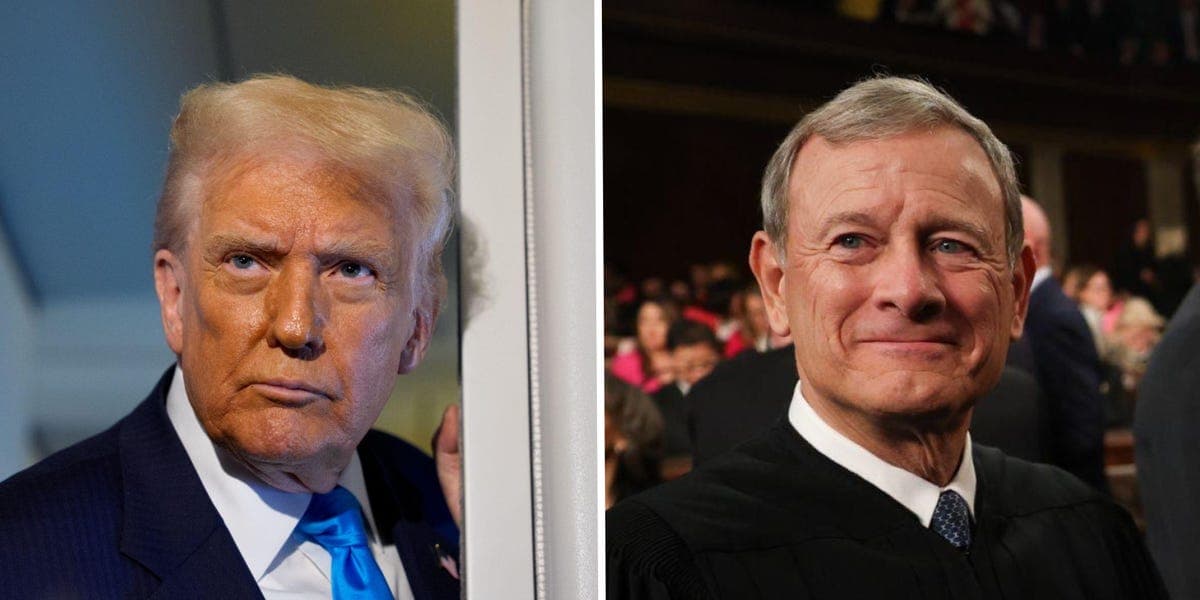
Supreme Court limits Trump's tariff powers under IEEPA emergency law. Court ruling coincides with a decline in US trade deficit due to tariffs.

Supreme Court strikes down Trump tariffs

The U.S. Supreme Court said President Trump exceeded his authority in using a 1977 law to justify a large swath of his tariffs, but that does not mean that he's now unable to slap tariffs on other countries' products.

Tariff refunds could boost retail stocks and long-term Treasury yields.
GDP grew 1.4% last quarter, down from economists' forecast of 3%, though AI and tax cuts could boost growth this year
Kevin Hincks notes it's hard to interpret the latest core PCE print, which showed an uptick in most headlines numbers. However, those numbers are from December.

The US economy grew less than expected at the end of last year, as inflation-adjusted gross domestic product increased an annualized 1.4% in the fourth quarter. Overall, the economy expanded 2.2% last year.

The Commerce Department released the PCE inflation report on Friday, which showed the Fed's favored inflation gauge remained elevated as consumers deal with price pressures.

The U.S. economy grew at a rate of 1.4% in the fourth quarter of 2025, according to an estimate released on Friday by the Bureau of Economic Analysis.

The U.S. economy grew at a rate of 1.4% in the last quarter of 2025, new government data showed Friday, significantly slower than the two previous quarters, with President Trump pointing to October's government shutdown as the culprit.

Key inflation metrics tracked by the Federal Reserve accelerated at the end of last year, underscoring why many Fed officials have turned cautious about supporting further interest-rate cuts.

US stock futures slipped further into negative territory after data showed the American economy expanded at an annualised rate of just 1.4% in the final three months of 2025, well short of the 2.9% economists had forecast. The Nasdaq is now expected to open 0.5% lower, with the S&P 500 and Dow pointing to falls of 0.33% and 0.25% respectively.

CNBC's Rick Santelli joins 'Squawk Box' to break down the latest economic data to cross the tape.

Canadians looked to have braved severe winter conditions in parts of the country to hit the stores last month, driving a strong rebound in retail sales to start the new year.

The U.S. expanded at a subpar 1.4% annual pace in the fourth quarter of 2025, depressed by a record 43-day federal shutdown that caused a big decline in government spending.

Gross domestic product grew at a 1.4 percent annual rate in the last quarter of the year, slowed by the effects of the government shutdown.

RSM's Joe Brusuelas joins Morning Movers with his perspective on the macroeconomic trends developing in the U.S. ahead of two key economic data prints: GDP and PCE. He breaks down the significance of 2025's government shutdown and how it could affect the 4Q GDP figures.

PCE shows inflation rose almost 3% in 2025