
加载中...
共找到 24,843 条相关资讯

Big banks are benefiting from the boom in data center construction, as they can accommodate the capital needs of hyperscalers and have investment banking arms that can run securitization offerings. Smaller banks can participate in the trend as well, via syndicated loans and by lending to companies that work on more modest projects.


The Dow Jones Industrial Average is barely hanging on to a gain for the month (+0.05%). If the gains for February hold, it would be just the sixth double-digit monthly winning streak in the Dow's history.

Markets remain volatile with anxiety heightened by financial sector weakness and recent defaults among private equity and tech firms. After cryptocurrencies, tech/software, and semiconductors, a more concerning wave is gripping financial markets.
US stock benchmarks got it harsh at the open after 1% gaps lower across the board. Dip buyers are coming back heavily, leading to a strong rebound towards midday.
Trade escalation and a hotter PPI print reintroduced policy uncertainty and pressured rate expectations, driving sharp rotations across sectors and market caps. AI infrastructure leaders delivered outsized growth and multibillion-dollar deployment deals, while disruption fears compressed software multiples - despite Nvidia's Jensen Huang arguing investors are misreading AI's impact on applications.

The U.S. tariff situation might be going from bad to worse. The biggest economic risk may have nothing to do with politics.
'Mad Money' host Jim Cramer looks ahead to next week's market moving events.

Bloomberg Television brings you the latest news and analysis leading up to the final minutes and seconds before and after the closing bell on Wall Street. Today's guests are Robinhood Markets' Stephanie Guild, Generate:Biomedicines' Mike Nally, S&P Global's Simon Gallagher, Inflation Insights' Omair Sharif, Lightshed Partners' Rich Greenfield, Fidelity's Jurrien Timmer, Institute for Advance Study's Alondra Nelson, Hornets Sports and Entertainment's Shelly Cayette-Weston, Raising Cane's Aj Kumaran, and Carnegie Endowment for International Peace Senior Fellow Aaron David Miller.

Stocks were caught up Friday in a whirlwind of market-moving headlines, making for a wild final trading day in a rough month for U.S. equities.

Morgan Stanley Private Wealth Management's Katerina Simonetti joins 'Fast Money' to talk the impact of AI on various sectors, the impact of inflation data on markets, and more.
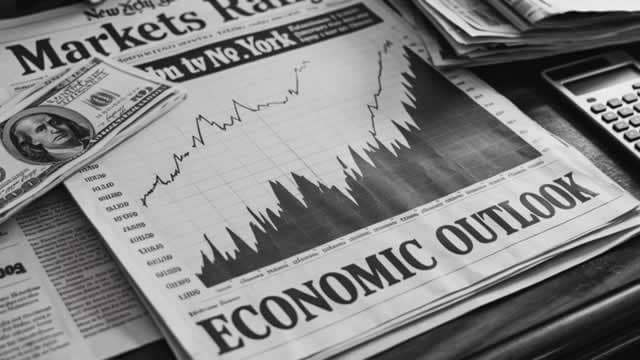
When Federal Reserve Chair nominee Kevin Warsh joined the Fed in 2006, the central bank had less than $850 billion in assets. It now has $6.6 trillion, or nearly eight times more.

Comprehensive cross-platform coverage of the U.S. market close on Bloomberg Television, Bloomberg Radio, and YouTube with Romaine Bostick, Bailey Lipschultz, Carol Massar and Tim Stenovec. -------- More on Bloomberg Television and Markets Like this video?

Stocks are falling, inflation is growing, the Fed may be hamstrung. What else could go wrong?
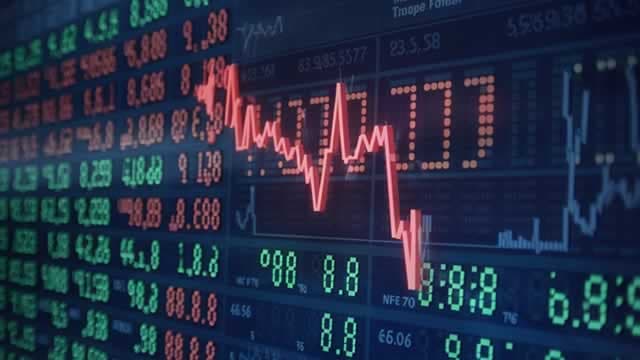
The stock market, including the Dow Jones, fell Friday as an inflation reading came in hot. President Trump issued an Iran threat.

The S&P 500 and the Nasdaq composite fell in February, dragged down by firms whose businesses might be disrupted
Warren Pies, 3Fourteen Ventures, joins 'Closing Bell Overtime' to talk why he is bearish on the markets due to the impact of AI on labor.

Oil prices turned higher Friday after nuclear negotiations between the U.S. and Iran stalled. Pakistan, Afghanistan go to war.
The macro environment has shifted from disinflationary to inflationary since 2022, with bonds signaling long-term inflation risk. Short-term and intermediate Treasury bonds offer interim opportunities, but when the inflationary macro kicks back in, bonds will not be desirable.
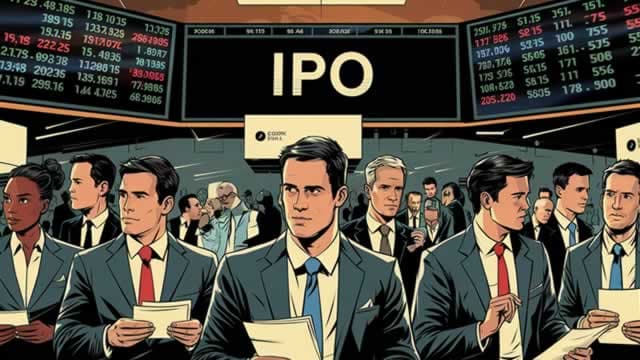
SpaceX is targeting filing confidentially for an initial public offering as soon as next month, according to people familiar with the matter. Bailey Lipschultz has more on "Bloomberg The Close.

The disruptive potential of AI has rattled markets for weeks in what traders are calling the "AI scare trade." Among the companies hit hardest were trucking and logistics stocks, which tanked after Algorhythm, a former karaoke company, said that its AI logistics platform is helping to make trucking more efficient.