
加载中...
共找到 25,029 条相关资讯

President Donald Trump's recently announced 15% global tariff will likely be implemented sometime this week, rising from its current rate of 10%, Treasury Secretary Scott Bessent said on Wednesday. Bessent also predicted that U.S. tariff rates would, by August, effectively return to where they stood before the Supreme Court recently struck down the often-steeper duties that Trump unilaterally imposed on most of the world's countries last year.


Federal Reserve Governor Stephen Miran says it's still appropriate to cut interest rates despite the war with Iran. He speaks on Bloomberg Surveillance.
February's jobs data. The Bureau of Labor Statistics' latest report on Friday is expected to show a slowdown in added jobs to 60,000, down from 130,000, and for the unemployment rate to settle at 4.3%.

Oppenheimer analyst Chris Kotowski says Blue Owl has become ‘a magnet for bad press.'
Brian Levitt, Chief Global Market Strategist at Invesco reveals which pullbacks are worth buying now and why cyclical sectors, mid‑caps, and non‑U.S. markets may lead the next move higher. 00:00 Introduction 00:10 New Highs Outlook 00:41 Return Expectations This Year 01:09 Fundamentals Behind the Rally 02:31 Tech Underperformance Outlook 03:25 Buying the SaaS Pullback 04:05 Magnificent Seven Outlook 05:19 Where to Put Money to Work 06:15 Non-U.S. Opportunities 06:53 Preferred Sectors 07:41 Dow vs.
The US aerospace and defense industry faces incremental, not transformative, growth opportunities from recent Middle East conflicts, with upside capped by supply constraints. Missile defense and counter-drone solutions see increased demand, but near-term growth is limited by production capacity rather than new orders.

Market leadership broadened in 2025, and this has continued in 2026, with emerging markets and some developed markets outperforming the United States. Asset-heavy sectors dominate, reflecting that AI infrastructure and national-security spending are driving a multiyear global capex cycle in data centers, power, defense, and supply chains.

Despite Middle East turmoil and surging oil, the S&P 500 showed resilience, narrowing steep losses as earnings momentum remains strong. Oil prices, though elevated, are not near recession-triggering levels; historical context suggests current levels are manageable for markets.

Treasury Secretary Scott Bessent said President Donald Trump's new 15% global tariff will take effect this week, also predicting tariff rates will eventually return to the levels they were before the Supreme Court struck down Trump's sweeping tariff policy.

ADP's monthly report on business payrolls showed the economy added 63,000 jobs last month, versus the 11,000 seen in January. Analysts surveyed expected 48,000 new private-sector jobs.

Large language models are advancing rapidly, delivering AI agents and enabling the creation of lightweight, task-specific applications in days rather than months. Market concerns have manifested in dramatic valuation compression, with underperformance driven more by multiple contraction than actual estimate revisions.
US futures were pointing to a flat to marginally lower open on Wall Street on Wednesday, with the mood seeming to be one of slightly weary stabilisation more than any real conviction. Dow Jones futures were off around 77 points, S&P futures down 5 points and the Nasdaq barely changed, before minutes later the Nasdaq was up 0.2% and the Dow was back to flat.

The figure reported on Wednesday is below economists' estimates of an increase of 50,000 jobs and higher than the prior month's revised reading of a gain of 11,000 jobs.

ADP said businesses created 63,000 new jobs in February — the biggest increase in four months — in another sign that a sluggish U.S. labor market might be slightly perking up.
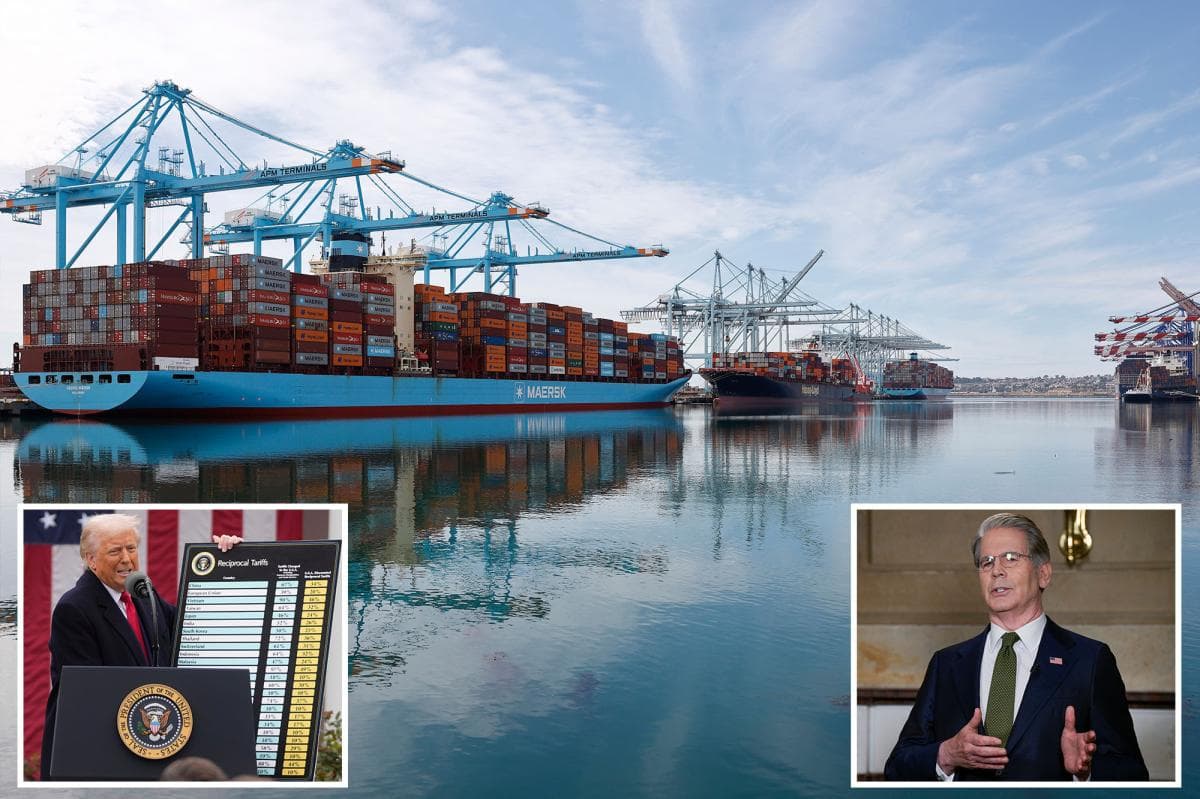
“It's my strong belief that the tariff rates will be back to their old rate within five months,” Bessent told CNBC.
The airline industry faces significant risks from the Iran conflict, primarily via higher oil prices and regional flight disruptions. Margins for major US airlines could fall from 6% to near break-even if oil prices remain elevated and costs cannot be passed to consumers.

A few weeks ago, I covered the Investors Intelligence (II) sentiment survey and noted that extreme bullishness from published stock market newsletters has historically been followed by market underperformance.
South Korea's KOSPI index crashed nearly 20% in two days, driven by energy dependency, FX weakness, and leveraged margin calls. Major tech stocks like Samsung (SSNLF) and SK Hynix (HXSC.F) suffered double-digit declines, triggering a cascade of forced selling and algorithmic trades.

Treasury Secretary Scott Bessent said President Donald Trump's recently announced 15% global tariff will be implemented this week. Bessent predicted that U.S. tariff rates will return in five months to where they stood before the Supreme Court struck down Trump's "reciprocal" duties.

During times of turbulence and uncertainty in the markets, many investors turn to dividend-yielding stocks. These are often companies that have high free cash flows and reward shareholders with a high dividend payout.