
加载中...
共找到 25,038 条相关资讯
U.S. retailers are beginning to cautiously re-evaluate their strategies as the tariff landscape shifts again, injecting fresh uncertainty into consumer spending patterns for the year.


Neils Christensen has a diploma in journalism from Lethbridge College and has more than a decade of reporting experience working for news organizations throughout Canada. His experiences include covering territorial and federal politics in Nunavut, Canada.

The U.S.-Iran conflict will likely continue commanding headlines this week, but Wall Street will still have plenty of economic data to unpack as well.

Supply chain challenges are causing consumer staples stocks to tumble as the flare-up of conflict in Iran impacts Wall Street, but could these defensive plays benefit from the prospect of a return to a high inflation environment?

President Donald Trump officially nominated Kevin Warsh to be the next chairman of the Federal Reserve. Warsh, if confirmed by the Senate, would replace Fed Chairman Jerome Powell.

After a choppy stretch for global equities, a fresh group of widely followed names has slid into deeply oversold territory, potentially setting the stage for sharp snapback moves if risk appetite improves.
Russian President Vladimir Putin suggested on Wednesday that Russia could stop supplying gas to European markets now and move to more promising markets.
The U.S.-Iran conflict has injected persistent logistics and geopolitical risk into global crude oil markets, with shipping disruptions and insurance costs tightening deliverable supply. Short-term oil price volatility is likely, driven by uncertainty in shipping flows through the Strait of Hormuz, with Brent potentially spiking to $90 if disruptions escalate.

The South Korean KOSPI index plunged almost 20% over the last two days, something @CharlesSchwab's Michelle Gibley attributes to a greater alliance on natural gas amid energy volatility. She adds that the storage chip supply shortage adds to complications for South Korea's economic picture.

Speaking in Sydney on Wednesday, Solomon noted volatility in US stocks but pointed to how investors haven't panicked despite Iran's shutdown of the Strait of Hormuz
South Korea was the world's best performer last year, logging a 74% gain. A big drop came because of the fighting in Iran.
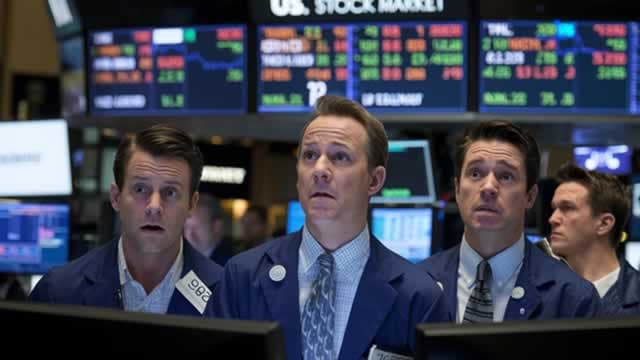
U.S. stocks traded higher midway through trading, with the Nasdaq Composite gaining more than 1% on Wednesday.
The near-collapse of London-based Market Financial Solutions (MFS) highlights structural vulnerabilities embedded in today's private credit ecosystem. The private credit markets are not large in relation to other financial markets — estimated at $2 trillion globally — but contagion is the prevalent concern, especially with markets already spooked about the radically transformative possibilities of artificial intelligence.
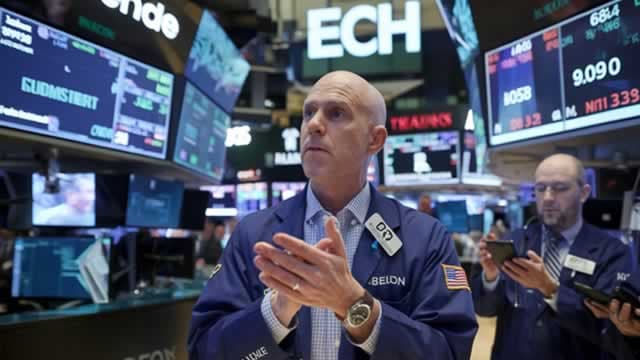
The chance of a 3% to 5% upside day is much greater than the chance for a downside day on a similar scale, argues @MarketRebellion's Jon Najarian. He points to crude oil's move being less than expected serving as a fulcrum for a bullish reversal.
Ondas, BlackSky Technology, and Iridium Communications could be set to benefit from the demand for drones and anti-drone technology.
The most recent weekend video, Chief Investment Strategist Fritz Folts and special guest Monica Chandra, President and Member of the Investment Committee, discuss the recent Citrini Research report that unsettled markets.
The U.S. stock market tends to take major geopolitical events in stride, LPL Financial analysts wrote Wednesday. Across more than two dozen events since World War II, the S&P 500 averaged a one-day decline of about 1%, analysts said, adding markets tend to “absorb shocks” quickly before stabilizing and recovering “within a matter of weeks.
March came in like a lion. Stock market futures plunged last Sunday night following U.S. and Israeli attacks on Iran.
It looks like regime change in Iran will be difficult to achieve, and even getting a more-flexible leader from the existing regime seems to be unlikely. Thus, we can expect a more aggressive war over the next few weeks, with oil spiking to $90-100 a barrel, and stock market falling sharply.
I see a bullish case for the S&P 500 despite recent volatility and investor nervousness. Rising put-call skew signals bearish sentiment is already priced in, creating contrarian opportunity for patient buyers.