
加载中...
共找到 25,595 条相关资讯
Price pressures remain top of mind for many firms, fueling the desire to improve profitability through increased business efficiency. The willingness to invest in strategically critical imperatives is reshaping capital allocation decisions.

This market brief examines the rapidly escalating AI agent platform war between OpenAI, Perplexity, NVIDIA, and Chinese tech firms, with a side-by-side comparison of OpenClaw and Perplexity Computer for users evaluating their options. It also explores the investment implications across AI tokens, U.S. equities, and the broader liquidity environment shaped by private credit stress.
Small cap outperformance narrows as caution rises. U.S. inflation steady; energy poses near-term risk.

In early Monday trading, 10-year Treasury yields were seven bps higher to 4.21%, though the more alarming moves were in the swaps market. The International Energy Agency has ordered the largest release of government oil reserves in its history to help calm the oil price shock triggered by the US-Israeli attacks on Iran.
The coordinated U.S.-Israel strikes on Iran on February 28 and Iran's subsequent retaliation have pushed the region into its most volatile military confrontation in decades. Damage to energy infrastructure and rapidly filling storage tanks have forced several Gulf producers to curtail output.

American shoppers will still feel the pain from climbing global oil prices, beyond what they pay at the pump.
Insurers providing war cover in Persian Gulf countries face higher risks as the US and Israel continue their air campaign against Iran. While Iran has targeted US military infrastructure in Gulf Cooperation Council countries, it has also hit civilian property, including hotels, airports and energy facilities.

Software stocks are having their business models challenged by AI. Companies with specialized or niche software may be better protected.

Discover our weekly market outlook, exploring themes and events that forged financial flows throughout the week. This week saw the commencement of large wartime impacts on volatility.
The Strait of Hormuz became the market's fault line –Tanker attacks, supply disruptions, U.S. military moves, and uncertainty around whether shipping lanes can be reliably reopened repeatedly drove oil and equity prices. The world opened the oil reserves, markets still didn't believe it – The IEA and its member countries agreed to release 400 million barrels from emergency reserves, but crude remained volatile and rose again as traders concluded that reserves cannot fully offset an active chokepoint disruption.
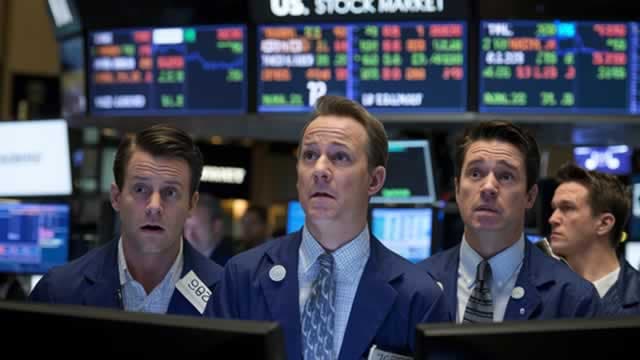
They face some of the wildest commodity trading on record, whipsawing oil prices and market swings

The stock market, including the Dow Jones index, fell Friday. Oil prices climbed again amid the ongoing Iran war.

Stocks slipped for a third straight week, with investors weighing the risk of a prolonged Middle East conflict on energy prices and economic stability. All three major indexes logged a weekly decline of more than 1.2%. On Friday, the S&P 500 fell 0.6%.
Fmr. Dallas Fed President Richard Fisher joins 'Closing Bell Overtime' with reaction to U.S. Attorney Jeanine Pirro's comments on a judge striking down subpoenas targeting Fed Chair Powell.

Big Tech hyperscalers like MSFT, GOOGL, and AMZN are transitioning from asset-light to asset-heavy, driving a structural market shift favoring capital intensity. Recent massive bond issuances by hyperscalers signal a real commitment to CapEx, positioning these firms for future appraisal as value over growth.

A federal judge on Friday blocked the justice department from serving subpoenas to Federal Reserve chair Jerome Powell in an inquiry purported to be about the management of the central bank's renovation.
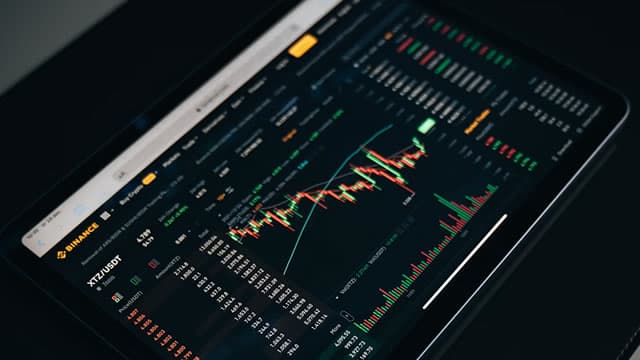
A key U.S. senator warned that Kevin Warsh's confirmation as the next head of the Federal Reserve faces a fresh delay amid a legal setback to the Justice Department's criminal investigation into current Fed Chair Jerome Powell.
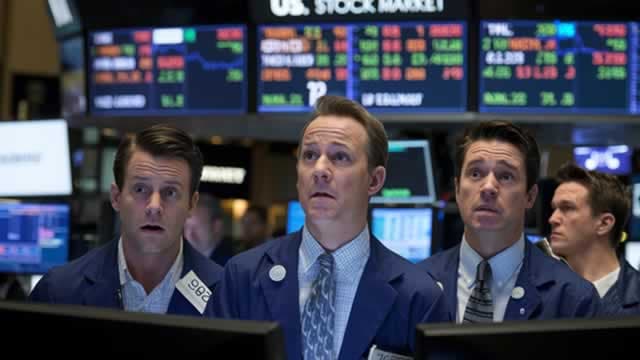
Below, I examine periods when normal market resets were mischaracterized as a bubble. I then discuss why today's AI cycle does not share those characteristics.
A federal judge rejected Justice Department subpoenas seeking records from the Federal Reserve Board related to its headquarters renovations and Chair Jerome Powell's comments to Congress. The judge said the government had no evidence to justify the subpoenas and they reflected an "improper motive" of retaliating against Powell over policy differences.

Comprehensive cross-platform coverage of the U.S. market close on Bloomberg Television, Bloomberg Radio, and YouTube with Romaine Bostick, Katie Greifeld, Carol Massar and Tim Stenovec. -------- More on Bloomberg Television and Markets Like this video?