
加载中...
共找到 25,606 条相关资讯
A possible delay to a meeting between Donald Trump and Xi Jinping may not derail the broader U.S.-China truce taking shape on trade and strategic issues.

President Donald Trump said Monday that some U.S. allies are not willing to join a coalition to protect tankers in the Strait of Hormuz. Trump said some countries have agreed to help, but he declined to name them.
Prediction markets on Kalshi and Polymarket correctly predicted most Academy Award winners, as trading volume tied to the Oscars surged.
The Trump Administration is shifting to Section 301 tariffs, targeting countries for alleged child labor, after Supreme Court setbacks on reciprocal tariffs. Section 301 offers a firmer legal foundation and more presidential discretion, likely resulting in tariffs with greater staying power and fewer immediate legal vulnerabilities.
The IPO market will be slow until big names like SpaceX, OpenAI, and Databricks go public, says Matthew Witheiler, head of late-stage growth at Wellington Management. He discusses what will drive some of these high value startups to go public and what potential returns are still to be had, with Caroline Hyde and Ed Ludlow on “Bloomberg Tech.
The Iran was isn't something to be ignored. It is big enough that it could actually stop the rally in its tracks, experts say.
Every day more than $4 billion worth of goods cross the United States' borders with Canada and Mexico—U.S. auto parts headed for car factories in northern Mexico, cartons of Mexican avocados bound for California supermarkets, Canadian aluminum destined to become cans of Campbell Soup.Much of this bustling cross-border commerce is duty-free, thanks to the US-Mexico-Canada Agreement, or USMCA, that President Donald Trump negotiated with America's northern and southern neighbors during his first term.But the future of the USMCA , which took effect July 1, 2020, is cloudy as the three countries begin what could be a tempestuous attempt to renew the pact this year. The United States is demanding changes to the treaty, and the top U.S. trade negotiator told Politico in December that Trump would be willing to pull the United States out of the pact if he can't get the deal he wants.
When geopolitical tensions flare up, the natural assumption is that gold should immediately surge.
It's time to get defensive with your portfolios, says Eddie Ghabour, with his firm turning underweight on tech and growing its investments in gold. He adds that a "lose-lose" scenario with the FOMC's stance on rate cuts, paired with heightening tensions in the U.S.-Iran War, will lead to a 10% correction in the S&P 500.

The BDC sector trades at near-historic P/NAV discounts, reflecting extreme bearish sentiment and perceived systemic risk. Recent high-profile bankruptcies and SaaS sector fears have been misapplied to BDCs, whose exposures are more diversified and structurally protected.
“Numerous countries have told me they're on the way,” says U.S. president.
Bill Gurley, Benchmark general partner, said he sees an artificial intelligence "reset" coming. Gurley said, "bubbles only exist when the actual wave is real," and the AI wave has made a lot of people rich quickly.
Justin Bergner, Portfolio Manager at Gabelli Funds says a 10-15% pullback could be ahead and shares exactly where smart investors should be investing before the market turns around.

One of the more unusual takeaways from the U.S. and Israel's war against Iran is which winners and losers are emerging in financial markets.
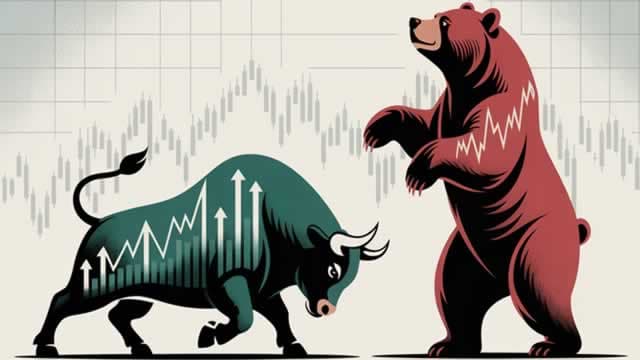
Defiance ETFs CIO and co-founder Sylvia Jablonski joins CNBC's Dominic Chu on ‘Halftime Report' from the 2026 Exchange Conference in Las Vegas. The two discuss the recent volatile market activity, and how ETF investors are managing their portfolios.

Investors expected another strong year for stocks. Slowing growth, higher oil prices, and rising Treasury yields are challenging that narrative.

Oil broke above $100 a barrel this month for the first time since 2022. The war in Iran has disrupted the Strait of Hormuz, gasoline prices are surging, and the S&P 500 just posted its first three-week losing streak in about a year.
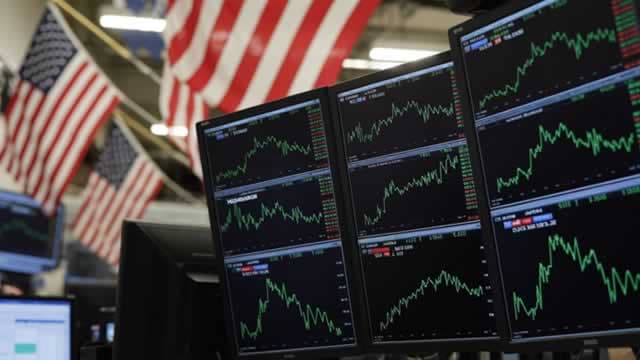
More private credit 'cockroaches' appear last week as Deutsche Bank disclosed a substantial €26 billion ($30 billion) exposure to private credit in its annual report. Several high profile private credit funds also 'gated' investors and only redeemed a portion of the funds requested.
Stephen Parker, co-head of global investment strategy at JPMorgan Private Bank, discusses how US and European markets are reacting to the Iran war.

Despite recent volatility, the benchmark S&P 500 index has rebounded massively from its 2020 pandemic crash. For investors who saw the drop as an opportunity, many are currently sitting on significant profits.