
加载中...
共找到 25,629 条相关资讯

Kelsey Berro, JPMorgan Asset Management fixed income portfolio manager, joins 'Squawk Box' to discuss the Fed's decision to hold interest rates steady, state of the economy, health of the labor market, interest rate outlook, and more.

Matt Powers, Managing Partner at Powers Advisory Group, Mark Zandi, Chief Economist at Moody's Analytics, and David Zervos, Chief Market Strategist at Jefferies, say markets remain resilient but rising oil prices risk inflation, consumer strain and recession.
Traders expect Europe's central bankers to raise rates several times this year to address a sharp increase in inflation because of higher energy prices.

Ian Lyngen, head of US rates strategy at BMO Capital Markets, says lower rates remains his base case for US Treasuries, while the 2-Year sector will “continue to struggle.”

The Leading Economic Index, or LEI, published by research group The Conference Board, inched down by 0.1% to 97.5, after a 0.2% decline in December.

In the fog of war, precise data is scarce and the battlefield is shifting too fast for investors, leading to gyrating oil prices.

Nearly all major developed market central banks kept rates unchanged this week, but emphasised their readiness to act to curb inflation should the energy shock caused by the U.S.-Israeli war on Iran drive a broader surge in prices.
Goldman Sachs has warned that bond markets may be too focused on inflation and not focused enough on the risk of a deeper growth scare, arguing that downside risks to yields are now underpriced after the latest surge in energy-driven volatility. In a new rates volatility note, the bank's analysts said March's inflation shock has so far been traded along hawkish lines, but that only tells part of the story.
The latest escalation may not last, since it goes against both sides' interests.
Treasury Secretary Scott Bessent said the U.S. won't intervene in oil futures markets, focusing on physical crude supply to offset Iran conflict disruptions.
The Federal Reserve is proposing a plan to ease capital requirements for Wall Street lending giants. The move could potentially unleash billions of dollars for lending, share buybacks and dividends.
This is a developing story.
U.S. stocks traded lower this morning, with the Dow Jones index falling more than 300 points on Thursday.

The Nasdaq (NQ) and S&P 500 (ES) futures have pulled back notably, reflecting a shift in short-term market structure. Following a steady advance from Sunday's open, price action has reversed, increasing focus on nearby support zones and liquidity areas.

The US market indices opened lower on Thursday, extending a broad risk-off sentiment across global markets as surging oil prices and persistent inflation concerns weighed on investor confidence. Dow Jones Industrial Average fell about 0.65% or 298 points while S&P 500 and Nasdaq 100 slipped roughly 0.81% and 1.13%, respectively.

Is the U.S. economy really losing jobs, as the February employment report found? Not according to the low number of people applying for jobless benefits.

Uncertainty builds surrounding the future of the U.S.-Iran War and crude oil prices, says Phil Streible. Until there's clarity on a timeline to the end of the conflict, he says crude oil will dominate the commodity trade, fuel price spikes at the gas pump, and limit upside in equities.
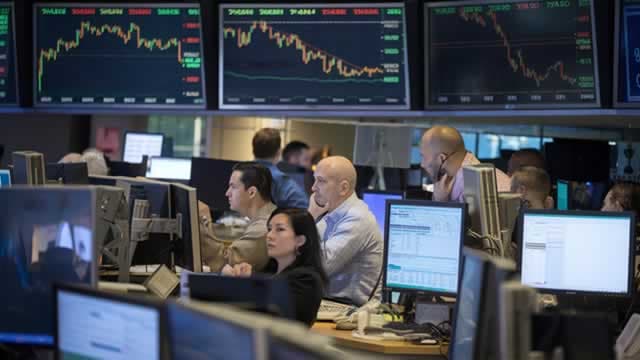
Analyst Days ramp up as companies outline strategy, growth initiatives, and long-term financial targets. Generac, Quanta Services, Constellation, Hershey, and FedEx events could offer clues on AI, energy, and consumer trends.

Leading nations in Europe said in a joint statement with Japan on Thursday they would take steps to stabilise energy markets and were ready to join "appropriate efforts" to ensure safe passage through the Strait of Hormuz.

All of the positive economic talk out of this week's Fed meeting had a negative impact on investors, who have now taken expectations for even one interest rate cut this year off the table. Market veteran Ed Yardeni called the reaction a "taper tantrum," an allusion to prior periods when investors revolted over the expectation of tighter Fed policy.