
加载中...
共找到 22,005 条相关资讯
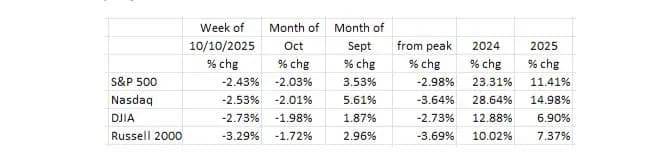
As the week ended, the equity markets sold off over trade issues with China. That country imposed a new “rare earths” export control policy where foreign entities must now obtain a license to export products that contain even a modicum of such rare earths.


Of the many newsworthy events and policy changes over the past quarter, few, if any, have rattled the markets. In high yield, the increased proportion of BB-rated bonds, now representing ~55% of the index, has helped to improve the overall credit quality of the index but has also made it more interest rate sensitive than in the past.

US stocks retreated on Tuesday, giving up the gains from the previous session, as renewed trade tensions between Washington and Beijing weighed on sentiment. The Dow Jones Industrial Average fell 416 points, or 0.9%, while the S&P 500 slipped 1.1% and the Nasdaq Composite dropped 1.6%.

Traders are focusing on the unofficial start of the earnings season. JPMorgan Chase & Co. fluctuated in the premarket after beating estimates for trading and investment-banking fees.
The S&P 500 and Nasdaq 100 surged 1.6% and 2.2%, respectively, on Monday (October 13), marking their best intraday rally since May. This is a swift reversal from Friday's (October 10) "flash crash" after President Trump threatened 100% import tariffs against China in response to Beijing's tightened rare earth export curbs.
More pressure pinned markets ahead of Tuesday's session as trade tensions reared their head again. Kevin Hincks reports from the @CboeGlobalMarkets to explain how this "back and forth" may be part of a larger negotiation.
Stock futures fell Tuesday as trade tensions between the U.S. and China intensified.

The U.S. economy hasn't suffered much so far from big increases in tariffs or a decline in the labor supply due to tighter immigration rules. But that might change.
The IMF's economic outlook forecasts global growth of 3.1% in 2026, down from prepandemic growth of 3.7%.

The lender expects world growth to slow to 2.6% this year from 3.6% last year, while it upgraded its U.S. outlook.

Wall Street executives predicted that windfall earnings from investment banking in the third quarter would continue for the rest of the year, buoying profits at U.S. banking giants.

Market rebound follows President Trump's softened tariff stance ahead of a key meeting with President Xi, easing immediate trade war fears. China's strong export growth offsets US tariff impact, signaling economic resilience and weakening the effectiveness of US trade threats.
In a world that clings to every labor data release for clues about potential shifts in monetary policy, the absence of official data adds a fresh layer of uncertainty for market participants.

The market capitalization of the S&P 500 (SPX) grew by 13% during the third quarter of 2025, more than double the pace it rose during the preceding quarter. The index's top-most valued stock, Nvidia, saw its market cap rise enough to account for 8% of the index by itself.

US stocks are tipped to open lower on Tuesday, as the market's confidence from the start of the week was knocked by China's latest moves in the trade war. Tech stocks are set to lead the decline, with Nasdaq 100 futures down 1.2% ahead of the opening bell, with the S&P 500 down 0.9% and futures for the Dow Jones slipping 0.7%.

As of Oct. 14, 2025, two stocks in the energy could be flashing a real warning to investors who value momentum as a key criteria in their trading decisions.

The executives of two oil companies warned this week that tariffs resulting from the U.S. administration's trade policies were driving up costs across the energy production chain and affecting investment decisions.
Chinese bank shares trade at the biggest discount to their consensus price estimates among peers in Asia-Pacific, according to S&P Global Market Intelligence data. A higher upside indicates that analysts see more value in a stock than its current market price, though stocks may not reach analysts' price targets.

Happy third birthday, S&P 500 bull market. And here are signs this market rally still has room to run.
During times of turbulence and uncertainty in the markets, many investors turn to dividend-yielding stocks. These are often companies that have high free cash flows and reward shareholders with a high dividend payout.