
加载中...
共找到 25,643 条相关资讯

Wall Street stocks are expected to start the week sharply higher after President Donald Trump claimed the US and Iran had held productive talks toward ending the conflict in the Middle East, even as Tehran flatly denied any contact had taken place. Dow Jones futures were up 1.6%, S&P 500 futures gained 1.5% and Nasdaq futures 1.45%, reversing out of the red into the green after Trump's posted on Truth Social that he had instructed the Department of War to "postpone any and all military strikes against Iranian power plants and energy infrastructure for a five day period, subject to the success of the ongoing meetings and discussions".


Futures saw volatile action within a couple hours prior to Monday's opening bell. Stocks initially rallied after President Trump said there were constructive talks with Iran over the weekend — comments that were denied by Iran itself.
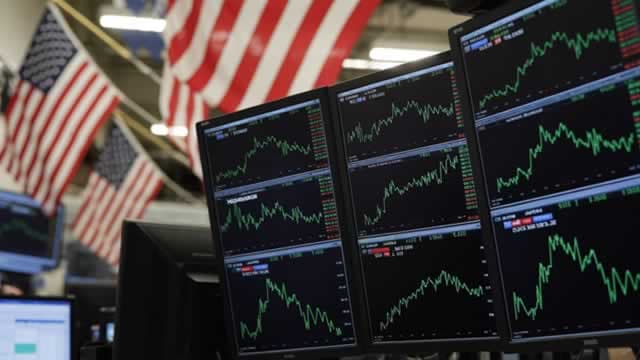
The 200-day moving average is the single most widely followed technical level in global financial markets, and the reason isn't mystical; it's institutional. On March 19, the S&P 500 closed below its 200-DMA for the first time since May 2025.

Following a record-breaking fourth quarter, AEO's Benzinga Edge Stock Rankings‘ value score rose week-on-week from 88.87 to 89.71. This upward shift in relative worth comes in stark contrast to the stock's recent market action, where shares have tumbled 34.70% year-to-date.

Investors responded to President Trump's latest threat, vowing to target power plants if the Strait of Hormuz isn't reopened. Meanwhile Iranian leadership warns it will respond by targeting energy and water facilities in the Gulf.
Dimitar Radev, Governor of the Bulgarian National Bank and ECB Governing Council member, discusses the ECB's latest decision to keep interest rates unchanged, the outlook for potential rate hikes amid geopolitical uncertainty, and Bulgaria's path toward adopting the euro.

US stock futures witnessed a sharp jump on Monday after US President Donald Trump said Washington and Tehran had held “productive” talks over the past two days . Dow Jones Industrial Average futures jumped 1,100 points, or 2.6%, while S&P 500 futures rose 2.7% and Nasdaq-100 futures gained 2.7%.

The U.S. will postpone strikes for five days following discussions between the two countries.

Iran war has sparked a supply chain mess, Trump sends ICE to airports, Musk unveils Terafab AI chips project, and more news to start your day.

I am adopting a HOLD stance due to heightened geopolitical risk around the Strait of Hormuz and the potential for an energy crisis. Historical precedent suggests a severe oil shock could trigger stagflation, prolonged market underperformance, and a decade of flat or negative real returns.

What matters in U.S. and global markets today

A bipartisan pair of U.S. senators are introducing legislation to prohibit CFTC-regulated entities from listing contracts related to sporting events.

Oil rose again and Treasury yields jumped as markets responded to weekend developments in the Middle East.

Canadian energy stocks. Impact of AI on Canadian markets.

EXCLUSIVE: As investors jettisoned expectations for rate cuts in Europe following the outbreak of war in Iran, the National Bank of Poland lowered borrowing costs, underscoring its confidence inflation will remain contained.

Hedge funds last week piled into bets against U.S. shares and emerging markets stocks in Asia, while wagering that European shares would rise, said a Goldman Sachs note to clients seen by Reuters on Monday.

Anna Edwards, Lizzy Burden, Tom Mackenzie and Mark Cudmore break down today's key themes for analysts and investors on "Bloomberg: The Opening Trade." Chapters: 00:00:00 - MLIV 00:00:02 - Iran War: Gold, Silver Price Drop 00:02:21 - Dollar Rises 00:03:03 - Extended Stock Selloff, S&P Futures -------- More on Bloomberg Television and Markets Like this video?

President Trump threatened to 'obliterate' Iran's power plants if it doesn't reopen Hormuz by Monday evening; Tehran said it would retaliate
The week opened with a bearish gap, as Nasdaq futures (NQ) moved lower compared to the previous Friday close. Price entered the 24,258.50–24,313.00 support zone, where strong demand appeared and initiated a move higher.

The surge in Brent oil prices above $100, now sustained for over a week, has shifted the macro narrative from a temporary geopolitical shock to a potentially persistent inflation risk. While markets remain split, with equities signaling resilience and rates pricing caution, the Federal Reserve faces a more complex trade-off between supporting growth and containing inflation.