
加载中...
共找到 26,101 条相关资讯
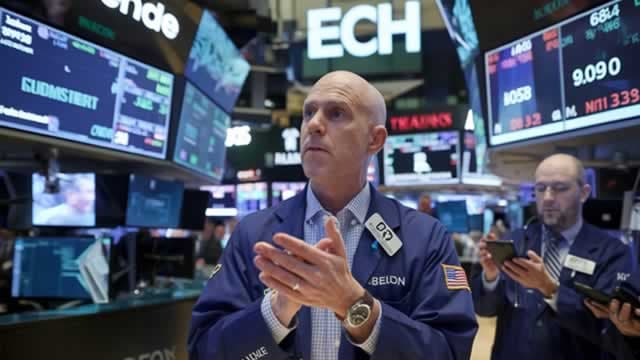
'Mad Money' host Jim Cramer weighs in on the markets reaching new highs.


Yardeni Research President Ed Yardeni says investors are looking past the war in the Middle East, treating the conflict as if it is over for the time being and focusing on market fundamentals. He speaks with Haslinda Amin on "Insight with Haslinda Amin.

California's gasoline inventories have declined to record lows as fuel prices have surged nationwide on the back of the war on Iran, and analysts warn that the full effect of supply disruptions tied to the closure of the Strait of Hormuz has yet to hit the Golden State.

US equity markets have staged a V-shaped recovery despite the ongoing Strait of Hormuz closure and severe energy crisis. Investor optimism is fueled by expectations of a swift resolution to the US/Israel–Iran conflict and reopening of the Strait.

The S&P is back in record territory

Nasdaq hits a fresh high on its 12th straight day of gains.

Former Treasury Secretary Henry Paulson on Thursday urged U.S. policymakers to prepare an emergency plan in case demand for Treasurys breaks down — warning that a crisis in the government bond market could trigger severe consequences across the economy.

Wall Street extended its rally on Thursday, with the Dow Jones Industrial Average rising alongside fresh record highs in the S&P 500 and Nasdaq Composite, as investors grew increasingly optimistic about a potential easing of geopolitical tensions tied to the Iran conflict. The S&P 500 rose 0.26% to close at 7,041.28, while the Nasdaq Composite gained 0.36% to settle at 24,102.70.

Treasury Secretary Scott Bessent said at CNBC's #InvestInAmericaForum on Wednesday that none of the Treasury's work shows a "systemic problem" with private credit. Bessent's comments come amid fears that private credit could become the next pressure point on Wall Street.

Former Treasury Secretary Hank Paulson called on US authorities to prepare a back-up plan to avert a potential collapse in demand for Treasuries. He speaks to David Westin in an interview for Bloomberg Television's Wall Street Week.

What had been a slow grind lower since the S&P 500's January peak was completely erased in the span of just a couple of weeks.
Operator: Good afternoon and welcome to the Alcoa Corporation First Quarter 2026 Earnings Presentation and Conference Call. All participants will be in a listen-only mode. After today's presentation, there will be an opportunity to ask questions. To ask a question, you may press star, then one on your phone. To withdraw your question, please press star then two. Please note this event is being recorded. I would now like to turn the conference over to Louis Langlois, Senior Vice President of Treasury and Capital Markets. Please go ahead. Louis Langlois: Thank you, and good day, everyone. I am joined today by William F. Oplinger, our Alcoa Corporation President and Chief Executive Officer, and Molly S. Beerman, Executive Vice President and Chief Financial Officer. We will take your questions after comments by Bill and Molly. As a reminder, today's discussion will contain forward-looking statements relating to future events and expectations that are subject to various assumptions and caveats. Factors that may cause the company's actual results to differ materially from these statements are included in today's presentation and in our SEC filings. In addition, we have included some non-GAAP financial measures in this presentation. For historical non-GAAP financial measures, reconciliations to the most directly comparable GAAP financial measures can be found in the appendix to today's presentation. We have not presented quantitative reconciliations of certain forward-looking non-GAAP financial measures, for reasons noted on this slide. Any reference in our discussion to EBITDA means adjusted EBITDA. Finally, as previously announced, the earnings press release and slide presentation are available on our website. Now I would like to turn over the call to Bill. William F. Oplinger: Thank you, Louis, and welcome to our first quarter 2026 earnings conference call. Today, we will review our strong first quarter performance, discuss our markets, and highlight the progress we are making on our strategic priorities. Let me start with the headline. We had a strong start to 2026 driven by execution. We are well positioned to deliver a strong second quarter and full-year 2026 performance. Starting with safety, we continued making progress with improved total injury rates in the first quarter. While we are never satisfied, both our leading and lagging indicators are moving in the right direction. Our focus remains clear: fatality and critical risk management combined with leader time in the field. Our leaders are expected to be on the production floor or mine site, interacting, coaching, and reinforcing standards. Safety is not an initiative. It is the foundation of everything we do. Operationally, we delivered. We maintained stable performance across the system and captured higher metal prices. Despite significant disruption in the Middle East, our teams ensured continuity of supply for our operations. Our flexible cast house network continues to unlock value-add opportunities, and the depth of our commercial, procurement, and logistics capabilities was evident this quarter. Strategically, we kept moving forward. In Western Australia, we advanced our mine approvals, completing responses from the public comment period and continuing to work collaboratively with stakeholders. We continue to anticipate ministerial approvals by year-end 2026, consistent with the timeline we have previously shared. We are in advanced discussions on the monetization of our former Massena East smelter site for a data center project. The potential developer has applied for public review. We are still finalizing terms and will not comment on value today, but we will provide additional details later in the process. Additionally, we are making progress on two other sites in parallel. Our momentum continues into the second quarter. On April 7, we successfully and safely completed the restart of the San Ciprián smelter. And on April 14, we issued notice to redeem the remaining $219 million outstanding of our 2028 notes—another clear example of disciplined capital allocation supported by our strong cash balance of $1.4 billion at the end of the first quarter. Looking ahead, we are focused on increasing profitability through higher shipments, continued operational performance, and realizing the benefit of strong market conditions in the Aluminum segment. At the same time, we will maintain momentum on the company's strategic initiatives aimed at creating value. Now I will turn it over to Molly to take us through the financial results. Molly S. Beerman: Thank you, Bill. Revenue decreased 7% sequentially to $3.2 billion. In the Alumina segment, third-party revenue decreased 33% due to typically lower first-quarter shipments, lower purchased and resold alumina to satisfy third-party commitments, as well as vessel constraints related to the Middle East conflict and vessel loading issues caused by Cyclone Narelle in Western Australia. Realized prices were also lower for both alumina and bauxite. In the Aluminum segment, third-party revenue increased 3% primarily due to an increase in average realized third-party price and increased shipments from the San Ciprián smelter. These impacts were partially offset by seasonally lower shipping volumes from other sites as well as timing impacts from proactively repositioning inventory within North America. The repositioning creates a timing difference deferring revenue recognition until the second quarter, while providing cast house flexibility for additional value-add product production and shipments which yield higher margins. Related to my comments on typically or seasonally lower first-quarter shipments in both segments, it is important to note that our first-quarter shipments are historically only 23% to 24% of the annual outlook and our fourth-quarter shipments are typically 26% to 27%, depending on portfolio changes. Coming off the strong fourth-quarter 2025 shipment levels, the first quarter of 2026 was mostly in line with our expectations even if consensus analysts projected higher. First-quarter net income attributable to Alcoa Corporation was $425 million versus the prior quarter of $213 million, with earnings per common share increasing to $1.60 per share. The sequential improvement reflects realized aluminum prices and a favorable mark-to-market change on the Ma’aden shares. These impacts are partially offset by the net unfavorable sequential impact from non-recurring items in 2025 including CO2 compensation recognition in Spain and Norway, the reversal of a valuation allowance on deferred tax assets in Brazil, and a goodwill impairment charge. On an adjusted basis, net income attributable to Alcoa Corporation was $373 million, or $1.40 per share, excluding net special items of $52 million. Notable special items include a mark-to-market gain of $88 million on the Ma’aden shares due to an increase in price during the period. Adjusted EBITDA was $595 million. Let us look at the key drivers of EBITDA. The sequential increase in adjusted EBITDA of $68 million is primarily due to higher metal prices, mainly driven by increases in LME and the Midwest premium, partially offset by lower sequential shipping volumes in both segments. The Alumina segment adjusted EBITDA decreased $52 million primarily due to lower alumina prices and lower bauxite offtake margins, partially offset by the non-recurrence of a fourth-quarter charge related to the announced agreements with the Australian federal government to further modernize the mining approval framework. The Aluminum segment adjusted EBITDA increased $174 million primarily due to higher metal prices and lower alumina costs. These impacts were partially offset by the non-recurrence of CO2 compensation in Spain and Norway recognized in the fourth quarter, lower shipping volumes including the impact of inventory repositioning which deferred EBITDA recognition on 30 thousand metric tons to the second quarter, and higher costs associated with the San Ciprián restart. Other costs outside the segment were unfavorable $54 million sequentially, primarily due to unfavorable intersegment eliminations. Moving on to cash flow activities for 2026. We ended March with a strong cash balance of $1.4 billion despite consuming cash as we typically do in the first quarter. The $595 million of adjusted EBITDA generated in the first quarter was mostly offset by an increase in working capital. The seasonal working capital build resulted from lower accounts payable, inventory replenishment, and higher alumina inventory due to shipping delays at the end of the quarter and an increase in accounts receivable primarily on higher metal prices. On a days basis, the working capital increase is consistent with prior years and is likewise expected to decrease as we move through the year. Capital expenditures were $119 million which reflect our typical trend of lower spending in the first quarter. We maintain our 2026 outlook for capital expenditures. Environmental and ARO payments were $85 million, which include progress on the Kwinana site remediation. Net additions to debt reflect short-term borrowings related to inventory repositioning, which will be repaid when the sale of the inventory is recognized in the second quarter. Now let us take a look at the key financial metrics for the first quarter. Return on equity through the first quarter was 21.9% reflecting a strong start to the year. During the quarter, we returned $27 million in cash to stockholders through our regular quarterly dividend. Free cash flow was negative $298 million for the quarter, primarily reflecting seasonal working capital build, capital expenditures, and environmental and ARO payments, offsetting the quarter's strong EBITDA. We finished the quarter with a cash balance of $1.4 billion and adjusted net debt of $1.8 billion. As announced on April 14, the company issued notice to redeem in May the remaining $219 million outstanding on our 2028 notes. The notes will be redeemed at par value. This announcement is aligned with our goal to delever and further strengthen our balance sheet. We will continue with disciplined execution of our capital allocation framework where excess cash will be evaluated in competition between value-creating growth opportunities and additional returns to stockholders. Now let us turn to the outlook. We have two updates to our 2026 full-year outlook. Interest expense will decrease slightly to $135 million with the redemption of our 2028 notes in May. Additionally, our estimate for environmental and ARO payments has increased to approximately $360 million, up from $325 million, to reflect the cash requirements from the announced agreements to modernize the mining approvals framework in Australia. For 2026 at the segment level, Alumina segment performance is expected to be unfavorable by approximately $15 million due to lower price and volumes from bauxite offtake agreements, and higher energy prices, primarily diesel, associated with the Middle East conflict. Aluminum segment performance is expected to be favorable by $55 million due to inventory repositioning actions taken in the first quarter, higher shipments and product premiums, and lower production costs due to the completion of the San Ciprián smelter restart, partially offset by seasonally lower third-party energy sales. Based on recent pricing, we expect second-quarter benefits from higher LME and Midwest premium pricing as well as higher shipments, but this results in higher Section 232 tariff cost on our Canadian metal imported to the U.S. We expect tariff costs to increase by approximately $35 million. Alumina costs in the Aluminum segment are expected to be favorable by $20 million. Regarding intersegment profit elimination, any further decrease in API prices is estimated to result in no intersegment profit elimination. If API increases, our prior guidance applies. Below EBITDA within other expenses, 2026 included favorable currency impacts of approximately $30 million, which may not recur. Based on last week's pricing, we expect the 2026 operational tax expense to approximate $110 million to $120 million. Now I will turn it back to Bill. William F. Oplinger: Thanks, Molly. Let us begin with the Alumina segment dynamics. The current environment remains challenging with the Middle East conflict exacerbating margin pressure across global refineries. FOB Western Australia alumina prices stayed relatively weak through the quarter. At the same time, disruptions tied to the Middle East conflict, including the closure of the Strait of Hormuz, have pushed energy and freight costs higher, while related demand losses are weighing on refinery margins outside of China. Our alumina cost position provides resilience in a low-price environment, and we have insulated ourselves from spot energy volatility through long-term contracts and financial hedges. In China, pressure on margins has been more muted. Higher domestic alumina prices, lower bauxite costs, and stable coal pricing, largely unaffected by the conflict, have supported refinery margins. That said, we do expect costs to rise as the caustic market tightens and higher freight costs begin to flow through seaborne bauxite supply. To date, in 2026 roughly 4 million metric tons of annual refining capacity has been curtailed in China. With cargoes originally intended for Middle East smelters rerouting into China, we expect pressure on China prices in the near term. Forthcoming supply from new refinery projects in coastal China and Indonesia, along with the weaker demand from Middle East smelters, will continue to weigh on the global alumina market through the first half of the year. Finally, on bauxite, prices remained weak through the first quarter on ample Guinea supply. Elevated freight rates related to the Middle East conflict have lent some support to CIF China pricing, despite soft FOB levels. And the market is now closely watching Guinea's export policy for the next directional signal. Now let us look at the conflict in the Middle East and why it matters to the Alumina segment. The Middle East is the largest alumina importing region in the world, with supply routes for raw materials heavily dependent on the Strait of Hormuz. Each year, roughly 8.8 million tons of alumina and 6 million tons of bauxite transit through the Strait. That changed on February 27. As a result of the conflict, more than 2.5 million tons of annual smelting capacity and nearly 2 million tons of refining capacity are offline year to date. That is a meaningful disruption to the global system. Alumina refineries in the region are integrated with aluminum smelters. However, approximately half the region's bauxite requirements are imported from outside the Middle East. This structure leaves the regional aluminum system particularly exposed to shipping disruptions and logistical constraints. And it does not stop at bauxite and alumina. Several smelters in the region also rely on imported anodes, calcined coke, and coal tar pitch. With transit through the Strait restricted, those materials are harder to move, raising costs and increasing uncertainty. Given the Middle East's important role in global green petroleum coke exports, these disruptions are already rippling through the global calcined coke market. The takeaway is clear: structural dependencies in the Middle East mean that disruption there does not stay local. It moves quickly through the aluminum value chain, tightening supply, increasing cost volatility, and elevating risk well beyond the region itself. Let us now move on to aluminum. LME prices rose approximately 10% sequentially and have continued to increase, recently exceeding $3,600 per metric ton, driven by tight inventories and supply disruptions. Announced curtailments have already tightened the 2026 balance; any further disruption in the Middle East has the potential to constrain supply even more. And that matters because the Middle East is the largest primary aluminum exporting region in the world. Disruptions to metal flows from the region are not only lifting LME prices, they are also driving higher regional premiums across Europe, North America, and Asia. Higher oil prices and the resulting impact on raw materials are increasing production costs globally. But importantly, these cost pressures have been more than offset by higher aluminum prices. For Alcoa Corporation, our exposure to spot electricity prices is less than 1% of our electricity consumption, thanks to our long-term power contracts and financial hedges. That gives us real margin advantage in this environment. These disruptions are occurring when the market was already tight following the announced smelter curtailment in Mozambique and disruptions in Iceland. Aluminum inventories were already at historically low levels, and have been further exacerbated by the disruptions in the Middle East. We expect global demand to grow sequentially this year driven by ex-China markets, albeit at a slower pace than previously anticipated as the conflict poses downside risks. However, given the scale of supply disruptions, softer demand will be outweighed by supply impacts in the market. Underlying market conditions remain largely consistent, with packaging and electrical markets leading demand growth while automotive and construction remain soft. Most importantly, our core regions, North America and Europe, remain in substantial deficit and are particularly exposed to potential supply disruptions due to their strong reliance on imports from the Middle East. Turning to our quarterly highlights, value-add product volumes increased sequentially alongside a rise in customers reaching out to us across both North America and Europe as they look to domestic supply in the face of ongoing disruptions and heightened supply uncertainty. North America and Europe are meaningfully exposed to Middle East supply, particularly for billet, slab, and foundry products. In North America, roughly half of imports come from the Middle East. In Europe, reliance is even more pronounced in certain value-add products. Since the escalation of the conflict, regional premiums have moved materially higher. In North America, foundry and billet markets are experiencing an uptick in spot demand as customers look to backfill Middle East supply. Similarly, in Europe, demand for billet, slab, and foundry is increasing, supported by the same driver. The full impact of the supply reduction has not yet been felt by North America customers since most of the aluminum manufactured before the Middle East conflict is just reaching North America now. Overall, the current environment reinforces the value of secure, diversified supply and highlights the strategic advantage of Alcoa Corporation’s regional footprint and ability to serve customers in our key regions with both primary metal and value-add products. Let me step back and connect the dots. In volatile markets, it is easy to focus on the headlines. At Alcoa Corporation, value creation starts with disciplined execution anchored in safety and operational strength. And that discipline is paying off. First, safety. We are driving a step change in our safety culture across the company. By reinforcing critical risk management and increasing leaders’ presence in the field, we are focusing on learnings and ultimately getting ahead of incidents. This is more than doing the right thing; it is also about operational excellence and reliability, resulting in long-term value. Second, license to operate. In Australia, we have advanced our mine approvals with confidence. We have completed responses from the public comment period, and we are working constructively with the WA EPA and the timeline remains unchanged. Longer term, the strategic assessment will provide a clear pathway for operations through 2045. And in Brazil, our partnership with government continues to support communities through social services and health care programs. This is how we build trust, and keep it. And finally, execution. ABS is delivering value every day. Disciplined execution, clear leadership, and accountability are embedded in how we operate. That integrated performance framework is driving productivity, supporting full-year financial targets, and helping us adapt quickly even in times of disruption. Here is the bottom line. A safer workplace, a stronger license to operate, and disciplined execution—that is how we create long-term value. Let me close with a simple summary. Execution matters, and we are delivering. In the first quarter, we got important things done. We strengthened safety, delivered strong operational performance, and stayed agile in the face of disruption in the Middle East, all while continuing to support our customers. We safely completed the San Ciprián smelter restart, and we proactively managed the balance sheet by issuing notice to redeem our 2028 notes. This is disciplined execution in action. As we look ahead, our direction is clear. We remain relentlessly focused on safety, stability, and operational excellence. We will continue to be a trusted supplier of choice, supporting our customers even in times of disruption. The message is straightforward: consistent execution and steady progress on our strategic priorities. This is how we create long-term value at Alcoa Corporation. We will now open the call for questions. Operator, please begin the Q&A session. Operator: Thank you. We will now begin the question and answer session. If you are using a speakerphone, please pick up your handset before pressing the keys. When called upon, please limit yourself to two questions. Our first question will come from Carlos De Alba with Morgan Stanley. Please go ahead. Carlos De Alba: Yes, hello, Molly and Bill. Thanks for taking the question. The first one is maybe can you comment on what is the impact of the Middle East smelters reducing operating rate for your cost alumina shipments. I think around 30% of your annual shipments go to that region. So it would be great to get color on how you are handling that. You kept your volumes unchanged for the year, but presumably you are redirecting shipments to Asia or other regions. Any impact on profitability or margins as you do that? And just to confirm, as you redirect these shipments to China, does the API pricing remain, or would you be changing to a different pricing mechanism? And any progress on the gallium project in Western Australia? William F. Oplinger: Carlos, thanks for the question. We are working with our customers to redirect those shipments. As you said, we held our full-year guidance consistent with where we were in January, and we are working with those Middle East customers who continue to take the product to redirect it. That is being redirected, as you mentioned, mostly into Asia, largely into China. There are no direct impacts on profitability from the redirection itself. Obviously, our profit in the alumina market is impacted by API pricing, and API pricing has declined, so our profitability in that segment follows the impact of API pricing, which you have sensitivity to in the back of the deck. But no impact other than that. And to your pricing question, we still price based on API. On the gallium project in Western Australia, we are making progress. We are continuing to work with the major stakeholders, which are the Japanese government, the Australian government, and the U.S. government, to finalize the documents. I am confident that we will progress the gallium project successfully. Operator: The next question will come from William Peterson with JPMorgan. Please go ahead. William Peterson: Yes, hi, good afternoon. Thanks for taking the questions and strong execution navigating everything that is going on right now. Within the second-quarter guidance of the Alumina segment, you mentioned that there are some unfavorable impacts of $15 million due to price as well as higher energy prices. Can you unpack this further—how much is pricing, how much is energy? And maybe stepping back on the cost side, carbon products, freight, and diesel were flagged as driving cost pressure. Where is Alcoa Corporation most exposed on these fronts, and how are you looking to mitigate? And second, you are keeping your production and shipment guidance for aluminum fixed. Do you see any opportunities within your footprint to increase production in light of the shortfalls from the Middle East—Alumar, San Ciprián, other sites—to meet the demand? Molly S. Beerman: Hi, Bill. I will take your question. First, on the Alumina segment guidance, we are going down $15 million—lower price and volumes from bauxite offtake agreements represent $10 million of that $15 million. Then on the energy prices, that is primarily diesel within our mining operations. On raw materials in general, we do not have concerns at this point on supply. Our procurement and logistics teams have done a great job navigating the challenges of the conflict. We only have a small portion of caustic soda that we were sourcing from the Middle East, and that has already been redirected to alternate supply. On the price side, in addition to that diesel price that we talked about, we do expect to have price increases in the second quarter, but because of inventory lags, those purchase prices will not flow through to the P&L until beyond the second quarter. If you look at caustic, we do expect rising prices with the lower petrochemicals processing that impacts chlorine production, where caustic is a byproduct. Caustic is on a five- to six-month lag. Carbon prices are also rising due to higher green petroleum coke pricing and availability dynamics, so we will have some exposure there, but not within the second quarter. We also have elevated oil prices that are impacting our freight. There is a portion of that that will flow through, but it will be fairly small. A lot of the freight cost goes into inventory; again the lag, so that will be experienced a bit later. Then we also have energy exposure within our São Luís refinery. We have some indexed fuel oil there, but we have under $5 million incorporated in the outlook. Even though we did not call it out because it was too small. William F. Oplinger: Thanks, Molly. I would also add to a comment that Molly made. We have had tremendous teamwork with our procurement, logistics, and commercial teams. When you consider the fact that we have a conflict in the Middle East that has massive impacts on shipping schedules, and in addition to that we had a cyclone that was nearly a direct hit in Western Australia, the teams have done a fantastic job of making sure that we do not stock out of anything across our entire portfolio, have ships available for shipping—which is a nontrivial task these days—and get product to our customers. In addition to that, as I alluded to on the CNBC call earlier, we are seeing a lot of spot order requests coming to us based on the disruption in the Middle Eastern supply chain. Both in Europe and North America, our commercial teams have been extremely busy trying to see whether we can match up our excess capacity with what our customers are needing currently. On your second question, we are increasing smelting production at Portland—adding pots in Australia. We are steadily increasing production in São Luís in Brazil. We have completed the restart at San Ciprián, which will have a full second-quarter benefit versus the first quarter. We have a similar situation as in Lista; we have been quietly restarting pots at Lista and getting that back to full production capacity. That is on the smelting side. But probably more importantly, what we are seeing today is on the value-add side. We are matching up some excess capacity that we have in places like Québec and to some extent in Europe with the needs of customers that have struggled given the supply chain disruptions. Operator: The next question will come from Katja Jancic with BMO Capital Markets. Please go ahead. Katja Jancic: Hi, thank you for taking my questions. Maybe just as a follow-up to the commentary about increasing production: I assume that is already embedded in the guide, or how should we think about it? And as a follow-up, I was saying that the upside there will probably be less prime P1020 production and higher value-add production, so higher premiums would be expected. And on San Ciprián, given that it is now restarted, in the current environment do the operations—both refinery and smelter—run profitably? Molly S. Beerman: It is embedded in the guide that we have provided. On your point about product mix, yes, that is right—less P1020 and more value-add supports higher premiums. The smelter is doing very well now that it has completed the full restart. Unfortunately, though, we are continuing to have significant losses at the refinery, and within 2026, the smelter will not generate enough cash flow to cover the refinery’s free cash flow losses. We remain on our plan, we are meeting our commitments under the viability agreement, and we are working toward our objective of achieving a neutralization of our cash flows there by 2027. But at current pricing, the refinery remains very challenged. William F. Oplinger: To tag on to that, the fact that we repositioned metal in the first quarter is looking smarter today than it did even when we did it because of the demand for value-add products. That allows us to free up our cast houses a bit to create incremental capacity for VAP for our customers. Operator: The next question will come from Nick Giles with B. Riley Securities. Please go ahead. Nick Giles: Thanks, operator. Good evening. Obviously, there is a lot of volatility, but Alcoa Corporation has the opportunity to generate a lot of cash in price environments like this, and net debt reversed a bit in 1Q, but you are ultimately nearing your target. How has the impact of the conflict changed the way you are weighing M&A versus shareholder returns? Could buybacks appear less attractive and M&A across refining appear more compelling, just as one example? And second, an update on the monetization of idled sites—if I heard you correctly, I think Massena East is furthest along, with two other sites in the works. Are terms still being worked through on Massena East, and should we assume the highest-value opportunities would be monetized first when we think about your $500 million to $1 billion range across multiple sites? William F. Oplinger: The conflict has not changed our capital allocation framework. To reiterate, first and foremost is to sustain the operations that we have—it is even more important today than it has ever been given the margins in the smelting business. Secondly, it is to maintain a strong balance sheet, and we have a strong balance sheet, but we have put out a range of $1 billion to $1.5 billion of target net debt, so we still have room to get into that. Beyond that, we will balance between shareholder returns and growth opportunities. So short answer, no, the conflict has not changed that, and we will balance those items. On the idled sites, do not assume that the highest value will be monetized first. Each site has a set of parameters to work with buyers on. In the case of Massena East, it is a buyer we have worked with in the past at the site, and that has accelerated the opportunity to sell Massena East. We are still finalizing terms and will provide additional details later in the process, and we are progressing two other sites in parallel. Operator: The next question will come from Daniel Major with UBS. Please go ahead. Daniel Major: Hi, thanks. Can you hear me okay? Operator: Yes. Daniel Major: Great, thanks. First question, just to follow up on how well you are covered with respect to fuel and other energy input costs. You mentioned financial hedges and supply contracts. What is the duration of those financial hedges? Secondly, how much inventory do you hold in Western Australia, in particular in the scenario that supply out of Asian refineries is constrained? William F. Oplinger: Before Molly gives you a more quantitative answer, I want to step back and make sure that everyone listening understands our major exposures to energy around the world. Smelting is electricity intensive, and we have less than 1% of our total electricity needs subject to spot purchases. That is the first and foremost largest energy use and we have a very small exposure to spot. On natural gas, we have rolling natural gas contracts in Australia. In Spain, we have hedged our natural gas exposure for the production that is running in San Ciprián, and we have hedged that out through 2027, which, in hindsight, looks really good given some of the dynamics we are seeing in energy in Europe. On fuel oil, we have some exposure in Brazil, but it is not significant. And lastly, we have diesel exposure, and we have baked our best knowledge around diesel into the second quarter. Right now, we have commitments from our suppliers that we will have diesel through May. I do not know that they have the foresight to be able to commit past that, but at this point we are feeling pretty good about our supply of diesel. Molly S. Beerman: On our energy contracts, 99% of them are on long-term commitments, and they do differ by date as disclosed in the 10-K. A couple of the nearer-term ones: we will have an upcoming price negotiation in Iceland for 2027, and we have our Canadian contracts coming up for renewal in 2029. The others are beyond those dates, and of course we just renewed at Massena recently, so we are set there for ten years plus another two five-year increments. Daniel Major: Okay, thanks. Just to follow up, specifically on the diesel in Western Australia, you have certainty on supply through May—is that what you said? William F. Oplinger: Yes, and just to put that in perspective, we are very focused on diesel in Australia. We would typically have that type of line of sight. I am suggesting we feel pretty confident about our diesel position in Australia. Molly S. Beerman: We are a preferred customer there, so we have a long relationship with the supplier. They know we will be first in the queue. Daniel Major: Okay, that is clear, thank you. And then a follow-up on value-add products: can you give us a breakdown of the $55 million positive benefit in the Aluminum segment? And on shipments versus premiums, what proportion of sales are exposed to the billet premium, and what assumptions have you embedded in the $55 million for premiums during 2Q? Molly S. Beerman: I have some of those details, but not all of them. In the $55 million that we guided favorable for the Aluminum segment, we have about $30 million of benefit coming from the inventory repositioning—actions that we took in the first quarter but that will result in sales in the second. Generally, higher shipments and product premiums together are $35 million. We will have better production cost after completing the San Ciprián restart—that will be about $10 million of the improvement. That is partially offset by seasonally lower third-party energy sales of about $20 million, split between our Warwick power plant resale and our Brazil hydro resales. Daniel Major: Very clear. Maybe just one follow-up. So that $30 million reposition of inventory—that is simply moving the lower sales reflected in 1Q into Q2? Molly S. Beerman: Correct. Operator: The next question will come from Alexander Nicholas Hacking with Citi. Please go ahead. Alexander Nicholas Hacking: Hi, thanks for the call. I apologize if I missed this, but did you quantify the cadence of aluminum shipments as we head into 2Q given the deferrals from 1Q? What should the delta be there? And any update on the Canada Section 232? It seemed like we were making some progress last year, but kind of radio silence—any comments around that? Molly S. Beerman: Alex, of course we had lower seasonal sales in the first quarter, but if we look at what was actually missed related to the Middle East shuffling as well as Cyclone Narelle, it was only about 60 thousand metric tons—on a revenue basis about $20 million. William F. Oplinger: On Section 232, no updates on specific progress. As we go into USMCA negotiations during the course of the summer, we will have to keep an eye on that. Clearly, when the administrations—both the Canadian and the U.S. administrations—talk to us, our position is we would like to see an integrated market across all of North America. That is our position because of the dedicated supply lines that go from Canada straight to our customers in the U.S. So no real updates on any Section 232 changes at this point. Operator: The next question will come from Glyn Lawcock with Barrenjoey. Please go ahead. Glyn Lawcock: Good morning, Bill and Molly. Bill, I just wanted to go back to the mine approvals. Obviously, in your comments, you said there is no change to the timeline, and you have been in discussions with the EPA. Any red flags coming up at all? And maybe just remind us of the timeline—is it still end of this year for approval? As a follow-up, I believe there is another mine move beyond Holyoake and Myara North for the other refinery—is that true, and what timeline does that come through? When would you start to apply for that—two or three years in advance as well? William F. Oplinger: The timeline is still targeting ministerial approval at the end of this year. We have done significant work to ensure that the comments from the public comment period have been replied to. We continue to provide information to the EPA and to work in support of their decision-making process, and at this point, we are continuing to hold to an expectation of ministerial approval by year-end. My recollection is that there is a Larego mine move in the early 2030s that will occur—that will commence in late 2031. We would have to get back to you on the specific timing of the application process for that move. Operator: The next question will come from Timna Tanners with Wells Fargo. Please go ahead. Timna Tanners: Hey, good afternoon, Bill and Molly. I wanted to circle back on some comments that Bill made last quarter about substitution of aluminum for copper. Do you have any observations on that dynamic given the change in prices, and anything you are seeing on substitution away from aluminum given the rise in price as well? And on capital allocation, the last couple of months’ dynamics have changed and potentially a bigger amount of free cash flow—any updated thoughts or any timeframe when you might have updated thoughts on allocation of that additional cash or key uses going forward? William F. Oplinger: Timna, thanks for the question. At a high level, with copper pricing where it is, there are still real reasons to substitute into aluminum. Aluminum prices have gone up sharply in this conflict, but we believe there are still good reasons to substitute into aluminum. On the other side, on the margin, we have seen some small substitution out of aluminum into steel for applications that can do that. But the larger automotive applications—because they are multiyear platforms—we have not seen that substitution yet. And when you consider things like packaging, the alternative is PET, and with oil prices at current levels, PET would not look attractive to substitute for aluminum. On capital allocation, I get excited about getting into our target net debt level. Our leverage ratios are low; getting into that range translates to the lowest WACC, and once you have the lowest WACC, you have the highest firm value. We are paying down debt—as of the April 14 notice—and in cash in the first quarter we did see a large working capital build. We typically see that, and over time working capital should come back out and into cash. So we will continue to delever and get into that range, which, to me, maximizes firm value. Molly S. Beerman: As we look at our outlook for the second quarter and the second half of the year, we see strong benefits in cash generation, and we expect to have growth options that will compete with shareholder returns in the rest of the year. Operator: The next question will come from John Tumazos with John Tumazos Very Independent Research. Please go ahead. John Tumazos: Thank you for taking my question. It is great that the Middle Eastern customers honor the contracts in this period of war and do not allege force majeure. Are you able to help them resell the alumina or redirect the cargoes, or do they do that on their own? How do they do it where the war disrupts about 400 thousand tons a month, and the shutdown of Mussafah disrupts about 100 thousand tons a month of alumina? It feels like it requires great skill. And separately, Kwinana was idled brilliantly a year or so ago—does everything you have now run full? William F. Oplinger: John, up until now, our customers are all honoring their commitments, and we assist them with timing of loading and shipping. If they need flexibility around when ships can be loaded, we provide that flexibility. We will also provide flexibility around size of shipments—if they need larger or smaller shipments, to the best of our ability we will do that. It is a pretty dynamic, fluid situation. Molly and I just reviewed today all of the forward bauxite and all of the forward alumina shipments out of Western Australia, looking at the laydays and making sure that the ships are coming in correctly. Up until now, we have been able to do that smoothly by supporting our customers. Everything we have now is ramping back up to full. Remember we had Cyclone Narelle—it was nearly a direct hit in Western Australia and shut down the gas system to a large extent. We curtailed our sites in Western Australia to conserve natural gas to be used in other parts of the community, and we are now in the process of ramping both Wagerup and Pinjarra back up to full volume. Spain, as we all know, runs at half volume—Spain is there to largely support the smelter restart. And Alumar has had a fantastic first quarter and had a fantastic fourth quarter; on the refinery, knock on wood, the smelter has very good stability. Operator: The next question is a follow-up from Nick Giles with B. Riley Securities. Nick Giles: Thanks for taking my follow-up. Can you clarify how you are thinking about Warrick in terms of a restart? What would it take from here for you to move forward, and do you have any rough estimate for the CapEx requirements? And on February’s significant revisions on downstream trade measures the other week, what are you hearing from your customers—any sensitivity to those changes? William F. Oplinger: Warrick—glad you asked. We talked about restarting capacity in Australia, the ramp-up in Brazil, ramping up capacity in Lista, and we just completed the ramp-up at San Ciprián. So you should be asking about those 50 thousand tons at Warrick. First, the condition of the curtailed line at Warrick is pretty poor. It will require about $100 million of capital, and we think it will be one to two years for that restart. There are some long lead time items, specifically around the electrical equipment, required to restart Warrick. On paper, the restart looks positive at this point. However, we are weighing availability of short-term and long-term electricity, and our ability to successfully run that plant at a four-line operation safely. If you have followed us long enough, you know we were running five lines, went down to three lines, ultimately went down to two lines, and restarted back to three lines. We have good stability and good safety there today, and we will factor all that into an analysis of a potential restart of that fourth line. On the downstream trade changes, my understanding is they allow downstream customers in the U.S. to have a level playing field with imports, and that has been favorably received. Operator: This concludes our question and answer session. I would like to turn the conference back over to Mr. Oplinger for closing remarks. William F. Oplinger: Thank you for joining our call. Molly and I look forward to sharing further progress when we speak again in July. That concludes the call. Thank you. Operator: The conference has now concluded. Thank you for attending today's presentation. You may now disconnect.

Jean Poitou: Hello. Good afternoon or good morning. Thanks for joining. Welcome to our first quarter results announcement session for 2026 at Ipsos. I'm Jean Laurent Poitou, the CEO of Ipsos, and I'm here with Olivier Champourlier, our Chief Financial Officer. What I'm going to be covering today are our results for the first quarter of 2026, an update on our strategy execution. Horizons is the name. You heard about it if you attended our January Capital Markets Day, and we talked about it a bit as we announced our full year results of 2025. I'll provide an update of where we are on the execution path. And then we will take a look at how we are considering the rest of 2026 with an outlook. But let me start with our first quarter 2026 results and our revenue, which stands at EUR 555 million. If we compare this with the same number a year ago, it's 2.4% less, which, in fact, if we didn't have a significant 5.4% negative currency impact would be a total growth of 3%. That total growth is broken down into 4.3% of impact of the acquisitions we made, particularly the BVA Family, minus the negative impact of having disposed of our Russian business or 80% of it as it happens. So it's not consolidated anymore. And then the organic growth is minus 1.4%, and the combination of all this is what drives the minus 2.4% total growth, but this is in the context of encouraging commercial momentum in Q1. I have had the opportunity to look at the order book for Q1 in many different dimensions, and I'll cover them in a second. Overall, our organic growth of our order book is 1% against the same quarter last year with an acceleration towards the latter part of the quarter in March, which means that the revenues for many of those orders, which happened late in the quarter will generate revenue further into 2026. Now as I look at the order book expansion, first by sector. One notable encouraging signal is the fact that our Public Affairs business, which we have had lackluster performance with in the years past and which dragged on our growth in '25 in particular, is back, rising demand, rising order intake. And I'll talk about it some more because it's so important. Solid traction with our consumer and packaged goods clients. They represent about 1/4 of our business. So it is very important for us that our computer -- our consumer and packaged goods clients, which are also the clients among which the AI solutions that we increasingly deploy in the market are resonating with most. If I look at this now by geography, our 4 largest market, North America, France, U.K. and China are driving our growth. And in particular, we have a very robust performance in China, which, as you may remember, has had some quarters of stability or a bit less. Now looking at it from the standpoint of our largest clients, the top 30 clients of Ipsos, the ones where we have dedicated client account leadership and campaigns. Those 30 drive our growth very significantly from a sales standpoint in Q1. So good performance across several dimensions of our business from a sales standpoint. Late in the quarter, this will translate gradually into revenue as also our strategy implementation accelerates and drives expanding order book through the quarter. So that's what I wanted to cover, generally speaking. Let me focus a little bit on Public Affairs because as you heard, we made among our strategic choices, one of them was to continue as a multi-specialist, in particular, continue to believe strongly in the power of having Public Affairs being the global player present in 66 markets serving public decision-makers, doing political polling and helping with policy assessment. That global footprint is one of our very, very differentiating assets as is the fact that we have our own proprietary panels, which serve us extremely well in the public sector. We also have the ability in many of our large markets and countries to do face-to-face interviews to knock on doors and ask real respondents about what their views are or what their voting intents are. And then finally, we have the ability to leverage some of the methodologies and some of the services that primarily have been borne out of our private sector business into Public Affairs, such as, for example, when we know how to interview and assess the engagement of employees in the private sector, we apply that in the public sector as well. So Public Affairs is back. We have won prominent government contracts across multiple geographies, which had struggled in quarters past, particularly in the U.S., but also in France and the U.K. So I have confidence that Public Affairs will be one of the drivers of our growth in 2026. Let me now hand it over to Olivier, who will comment on the numbers on a more detailed basis. Olivier Champourlier: Thank you, Jean-Laurent. Good afternoon, good morning, everyone. Let me go into the details of our Q1 revenue. As said by Jean-Laurent, the revenue was EUR 555 million in Q1, down 1.4% on an organic basis. There was a negative impact of currency of 540 basis points due to the appreciation of the euro against several currencies, in particular, the U.S. dollar, the pound sterling and APAC currencies. Acquisition net of disposals contributed positively to the growth in Q1 by 430 basis points, reflecting the impact of the 2025 acquisition, mostly the BVA Family that was acquired in June 2025, net of the disposal of our Russian operation in Q1 2026. As a reminder, Russia was accounting for around 2% of our total revenue. Factoring in those items, the total revenue was down 2.4% and excluding foreign exchange currency effect, it was up 3%. Moving on to the revenue by region. EMEA, our largest region, representing 52% of group revenue, delivered total growth of 5.3% on a reported basis, including 0.1% organic growth. The positive performance was mainly driven by the acquisition of the BVA Family because this business was mostly in France, U.K. and Italy, offset by the disposal of the Russian activities in Q1. In contrast, the Middle East, which represents around 3% of the total revenue of the group was impacted by the geopolitical situation in the region and posted an organic decline of its revenue of 4.4% in the first quarter 2026. In the Americas, which represents 1/3 of the total revenue in Q1, revenue declined by 4.1% on an organic basis. This is mainly driven by the U.S. However, commercial momentum has improved with a strong increase in the order intake at the end of the quarter in March, particularly. Several contract wins in Public Affairs sustained a recovery in the segment. As a result, the order book in the Americas was slightly positive at the end of March. In Asia Pacific now, the revenue was up 0.2% on an organic basis but declined by 6.3% on a reported basis due to the negative impact of many currencies in the region against the euro. The first quarter was encouraging with China returning to strong growth. We have indeed a strong momentum in China with large international local clients, especially in technology and automotive. China is one of the markets where we have seen a rapid adoption of our AI-driven offers. Let me now turn to the performance by Audience segment. Our Consumer segment revenue, which accounts for half of the revenue in the quarter posted a positive growth organically of 0.5%. We continue to see sustained demand from CPG clients for deeper understanding of consumer behavior in a volatile and rapidly changing environment. Our services in market positioning, innovation testing and brand health tracking are benefiting from this demand. This is also an area where our AI solutions and platform such as Ipsos Synthesio and Ipsos.Digital play a growing role in helping clients reacting faster and making better informed decision. The Clients and Employees Audience revenue was down 3.3%. This decline is mostly explained by timing effect in our Audience Measurement activities which will translate into positive growth over the coming quarters, thanks to a positive order book at the end of March. The Citizens segment now. The revenue, which include Public Affairs and Corporate Reputation, declined by 2.3% on an organic basis. As mentioned by Jean-Laurent previously, the first quarter marks an important turning point as we have seen the return of public sector orders in markets that had impacted our growth in the last few years, like the U.S. and France, where we see a rebound. During the quarter, we booked several significant multiyear contracts, which reinforce our confidence in the rebound of this activity later during the year. Finally, the Doctors and Patients Audience revenue was down 4.4% on an organic basis. This activity had a strong start of the year in 2025, where Q1 was plus 5.4%. So this, therefore, creates a tough comparison basis. In addition, we have experienced a slowdown at the start of this year in qualitative studies from the pharma industry clients, but we see an improvement trend based on our order book. Beyond those 4 Audiences, I would like also to underline the performance of our Do-It-Yourself platform, Ipsos.Digital, which recorded a double-digit growth in the first quarter of 2026. At the end of the first quarter, I would like to underline that our order book is growing by 1% and is in line with the historical pattern. More specifically, the order book at the end of March 2026 represents 55.6% of expected full year 2026 revenue at the end of the first quarter. Overall, this is consistent to the average of the last 4 years, where the total of the order book at the end of the first quarter was 55.5% of the full year revenue. Overall, this analysis supports our outlook for the remainder of the year. Turning now on profitability and cash generation. It's important to notice that our gross margin and our cash generation at the end of the first quarter are in line with our expectations. I will now hand over to Jean-Laurent, who will tell you more about how we have been able to execute our Horizons strategic plan. Jean Poitou: Thanks, Olivier. And before I provide some color on the outlook for the remainder of the year, let me say something about what's going to drive our growth for the remainder of the year and namely the switching to execution mode on the Horizons strategy, which we talked about back in January and which we highlighted the main components of during our Capital Markets Day. Those 6 items here are the 6 key strategic choices we made and the ones that we are starting to see bear fruits in our positive growth of the order intake in Q1, starting with the fact that we have confirmed our intent strategically to leverage our multi-specialist business offerings. I talked about what this means with the return and rebound of Public Affairs, but it is also very important to note that we are equipping our teams with a first set of 6 and more to come as those are successful, Globally Managed Services, powered by our Ipsos.Digital platform, systematically and consistently applied to services for each of them wherever the client we serve is based. Those GMSs led by Shaun Dix are already structured with representatives in the key markets where we have decided to grow them with specific accountabilities, budgets, the platforms are there. We are leveraging some of the past investments and adding more through the course of 2026. And then Ipsos.Digital, the platform, which is showing continued momentum in the market, led by Andrei Postoaca. The teams there have also been demultiplied by having specific leaders in our key markets to drive further growth of our digital platform, reinforced by the fact that it is the foundation on which many of our service line-specific, activity-specific AI solutions are based. Our global company with a local footprint, strategic choice starts to show us the first fruits of growth, particularly in the market you saw in China, where you saw Lifeng, our CEO there, in the Capital Markets Day, explain how he had already started to launch some of the initiatives, and that's what we are seeing translate into significant growth in that particular market. But also in the U.S., which is the other big market where we decided that we would have in addition to the core Horizons initiatives, some markets, particularly tech industry and technification specific initiatives in the U.S. Mary Ann Packo, our CEO; and Lindsay Franke, who you saw on the Capital Markets Day present that strategy are driving it aggressively, and I'm pretty confident that this will materialize in the quarters ahead into accelerated growth. Speed is an initiative where it will take time because it's the most profound from an operating and tooling standpoint, from a training and capability and skills evolution standpoint. So this will take a bit longer to materialize at scale. We have started on this. AI as a catalyst for market leadership is now being led from a technology standpoint by Nathan Brumby, our recently appointed Chief Technology and Platforms Officer. Nathan joined us close -- just over 2 months ago and is in full swing. And we have a road map, and I'll show you some examples of Ipsos AI solutions in a minute for Q2, Q3 and Q4 launches of AI-powered products. Also access to real people as a critically relevant competitive advantage is one of our key choices. I'm happy to report that we are seeing increasing level of in-sourcing. What we mean by this is using our own panels, our own respondents rather than outsourcing to third-party providers of such. And this is a key component of our operational transformation, which is led by Alexandre Boissy, our newly appointed Deputy CEO, joining us from Air France, where he had very important responsibilities. And we are happy to say that our operations transformation agenda is also starting to show signs of increased ownership of our own panels. And then if I think about our evolution to higher value-added services and in particular, our ability to expand our footprint at the clients we serve, our commercial excellence, I mentioned the fact that we are starting to see very superior growth at our top clients. And this is being led by Eleni Nicholas, who's driving an initiative across those large clients. So with Olivier now being formerly our Chief Financial Officer, he was named an interim, and we are happy to confirm it, and I'm very happy, Olivier, that we will be able to continue and work together in that capacity. And more importantly than those leaders, the whole of 20,000 or close there to people at Ipsos and many of our leaders across the globe are being mobilized to make the strategy execution happen at scale and at pace. So let me give you examples of some of the AI technologies and global services -- new services that we are launching or that we have already in store and that we are accelerating through the GMS model. First of all, an example of what we call behavioral measurement, looking at how people behave when they either buy or consume or use the products of our clients. Two examples of very large consumer and packaged goods players, one in the beverage industry, the other one in the home care industry, products for detergents and washing machines and the like. We are using AI technologies to help observe with clips and videos that people themselves provide us rather than checking diaries on paper saying how much coffee did I drink today or how many washing machines and how much powder did I use for each of them. So we're using videos to not just translate what was written into what's visible on the video, but also understand better the gestures, the expressions, the satisfaction, many subtle consumer signals that wouldn't be otherwise available to our clients. A second example is in social media. We are using AI technologies to examine at scale what videos are successful and why detecting patterns on social media. For example, in China, that would be RedNote, which is a very prominent video channel on social. And then we are using the insights generated by this video analysis of those clips to identify which influences, which patterns are the most likely to drive interest and ultimately, the brand awareness or decisions to buy. This is helping our clients decide faster where to target, which influencers to pick and what formats to use at scale. A third example is in China, which is, of course, one of the innovation hubs of the world, where we have now a very large consumer and packaged goods clients who's relying on Ipsos' synthetic consumer digital twins to replicate the personality traits and the behavioral logic of the clients of that CPG company. Now we are doing this because it helps answer sometimes simple, sometimes slightly more complex questions faster than a full-fledged survey, bearing in mind that we do that with a lot of care to the reliability and continuous update by recalibrating with real respondence and continuously validating the results of those digital twins. So those are 3 examples I wanted to give of how we're embedding technology and AI to create more value at our clients. Let me now turn to the numbers for 2026. First of all, it's very obvious that everything I'm about to project is based on factoring in what we know and acknowledging what we don't know about what's happening in the Middle East. What we know? In the Middle East itself, which as Olivier highlighted, is about 3% of our total revenue, we are seeing obviously an erosion of our revenues to the tune of several millions, and that's no surprise. But we believe that the outlook will turn as -- governments, in particular, and large spenders will return to growth as and if the crisis and the war slows down and ends, which we all hope for. We don't see significant consequences outside of the Middle East region, very few, if any, client cancellations, delays in decisions or postponements of contracts. So there's marginal examples here and there, but essentially limited observed consequences outside of the Middle East, which therefore means that barring escalation or prolonged conflict in the Middle East, we don't see at this stage, at this stage, significant impact on our group's full year outlook. Now the situation, as we all know, remains highly volatile, and therefore, both the monitoring, but also the contingency planning in case things deteriorate or escalate or continue in the long run are being prepared. We've done that in 2008. We've done that in 2020. So we know how to adjust and react in case we need to do so. On a more positive note, let me reiterate why we believe that the positive order book momentum of the first quarter is a good signal of accelerating order intake and therefore, gradual expansion of our revenues throughout the remainder of 2026. First of all, we launched the strategy. We're in full execution mode. But obviously, we're going to bear fruits increasingly as quarters after quarter things happen, particularly with Globally Managed Services, Ipsos.Digital, the impact of our commercial actions and so on and so forth. It's also reassuring to see that we're about at the same percentage of our full year outlook from an order book already in our books at this point of the year as we have historically over the last few years. But also, I have spent time with our leaders in the various markets. We are looking at it both from a pipeline analysis standpoint and from an outlook based on their knowledge on the front line closest to our clients. And this also reinforces the predictions that we have already highlighted for the year of a 2% to 3% estimated organic growth and an operating profit, which would be equivalent to 2025, which it was at 12.3%. And I have to highlight something here. Russia was a profitable business compared with the average of Ipsos, and it's now no longer in our numbers. BVA is a company that we acquired, and we're extremely happy with this acquisition, but it was in 2025, and it will continue for a good part of 2026 to be a drag on our profitability with the fact that it was 6 months only in '25, and it's going to be the full year in '26. So in fact, reaching an equivalent profitability in '26 to the one we observed in '25 is actually increasing the core profitability outside of those perimeter effects. So with that, I would like to thank you for your attention so far. I'm about to open to questions and answers, obviously, invite you to our May 20 General Meeting of Shareholders and also to our first half results announcement, which will take place on July 23. Thank you very much, and let's open it up to questions and answers. Operator: [Operator Instructions] The first question today comes from Davide Amorim with Berenberg. Davide Amorim: Two questions from me, please. Could you please give us a bit more detail on the organic growth decline in Q1? What exactly happened compared to your initial expectation at the start of the year? And what makes you confident that you can still achieve the full year guidance growth despite the more challenging environment? Secondly, Middle East is, I mean, approximately 3% of your group revenue and declined by almost 4.5% in Q1, even though the conflict only started in March. How should we think about the trend for the rest of the year? And how could be the impact on your profitability if the conflict continues? Jean Poitou: Thank you. I'll start on the Q1 1.4% negative organic growth first. Of course, the 2.4% is heavily impacted by currency effects to the tune of minus 5.4%. But the minus 1.4% in organic growth is, I guess, what your question is focused on. So on that point, it is in line with our expectations that we would have a negative Q1. That is not a surprise based on what we had calendarized for the year when we looked at the full year. We knew that horizons would kick in gradually throughout the year. So that was part of our expectations for the year. In terms of what makes us confident, I highlighted the fact that having an order book that is growing, having a percentage of the full year outlook at this point of the year, which is similar to what it has been relative to the previous full year's actuals, the fact that we see when we look at it country by country, service line by service line, we see confirmation that we will be in the bracket we have given guidance around are some of the parameters that I wanted to reinforce as positive signals towards meeting our initial growth expectations. I don't know, Olivier, if you want to provide additional color on this? Olivier Champourlier: Well, I would like to say that the order intake at the end of Q1 actually is slightly better than what we thought when we have built up our budget in 2026, so which makes us confident or slightly confident that we are in line with the way we calendarize the phasing of the order intake this year. So as you have seen actually, there is a lag between the revenue and the order intake. But this is really important to look at the way we recognize revenue over the full year because in our company, actually, depending on whether you recognize a short-term contract or long-term contract, it can create some phasing effects when you look at the quarterly revenue. So one of the KPIs that we are looking at is more the order intake and how it's going to translate into the full year revenue more than focusing on the single quarter itself. Lastly, on Middle East. So as we have disclosed, so the MENA region represents 3% of the revenue. For the moment, there have been a couple of million of impact. It's pretty small actually. We have reacted pretty quickly to mitigate the impact on the profitability of the region. There are a couple of actions that we can take place, hiring freeze and so on. There are a couple of measures. But it's pretty limited to MENA for the moment. We have spent a couple of days with all the management discussing the impact. And for the moment, we don't see any impact or any cancellation anywhere else. This being said, the macroeconomic environment is pretty volatile. It's true that if the conflict is continuing, we know that the consequence will be that the barrier will be high. There will be some further inflation and it may have an impact and it will have an impact on the global economy. But we are watching that very carefully. And we are used to this kind of macroeconomic condition like in 2008, 2020, and we are able to adapt our cost basis to mitigate any shortfall in the revenue that will come if the conflict will continue. Jean Poitou: But we are not -- to the latter part of your question on the what if it lasts for months and not weeks and what if it escalates and drives, for example, the global economy into recession in some of the major geographies we serve. We are not providing a guidance that assumes any of that at this point. If it was to happen, of course, we will adjust the cost base to mitigate the impact on profitability, but that's not something we're guiding to at this juncture. Other questions? Operator: The next question comes from Conor O'Shea with Kepler Cheuvreux. Conor O'Shea: Three questions from me. Firstly, on the Healthcare business, it was down in Q1. I think in the press release, you mentioned tough comps, but I think the comps were similar for the first 3 quarters of last year. So would you expect that activity to remain under pressure for at least another couple of quarters? That's the first question. Second question, in the clients and employees activity, in the press release, you mentioned some effects of timing, phasing lags that should unravel and improve in the subsequent quarters. Can you go a little bit more detail about that? I think it's in Audience Measurement. And then third question, just more generally, given the expected time horizon of some of the new initiatives to take hold and make a contribution to growth and so on. Would you expect the second quarter to potentially to be also negative in terms of organic growth at say, a constant macro outlook? Or would you be expecting to see at this stage an improvement already in Q2? Olivier Champourlier: Yes. I will answer the first question regarding the Healthcare business, which is actually the way we disclose it is not exactly the Healthcare business, but it's more the business with the pharma companies. So what happened this year, so that's true that we disclosed a negative growth, but we have seen the order intake improving gradually. There have been some clients in the pharma sector that are under restructuring and are taking longer to take a decision. We have also some program that have been confirmed last year at the beginning of the year for the full year, but the client, they confirm it more on a quarterly basis, so which drag -- drop in the revenue in H1. But overall, the order intake is improving month after month. So it should turn into more positive territory in the coming months. It's a similar pattern when it comes to Clients and Employees because we mentioned that the Audience Measurement activities, the revenue is declining in Q1. But when you look at the order intake, it's positive at the end of March because the way contracts have been confirmed by clients is different from last year, and this will translate into positive growth in the coming months. And last question is more about the phasing of the revenue. So as you can see, the first Q1 is minus 1.4%. And obviously, to finish the year in line with the guidance, which was between 2% to 3%, you will see an acceleration of the growth moving gradually in positive territory to finish in line with the guidance. Jean Poitou: And I think that's the key point. It's gradual recovery. What will exactly happen in Q2, we're not guiding by quarter. But yes, it is an acceleration throughout the year. And it is based on the speed at which we execute our Horizons strategy. It is based on the fact that we have mobilized the leadership of this company around the key initiatives I've referred to when reiterating what the main strategic pillars were and how we stand relative to each of them. The Globally Managed Services, the Ipsos.Digital, the commercial acceleration, the technology and AI investments will gradually add more solutions to our bag of tricks, and this will gradually allow us to expand our revenue and strengthen our growth. Conor O'Shea: Okay. Very clear. But I mean just to drill on the numbers. I mean, if the second quarter is better than the first quarter, but it's, as you say, a gradual process, but the first half is, let's say, flattish overall on organic, then the second half needs to be around 4% or so. The order book has improved, but we're talking about plus 1%, not talking about plus 4%. So is the pickup, let's say, month-over-month so significant that, that kind of second half trajectory is looking doable at this stage? Jean Poitou: The short answer is it is looking doable. As I said, we spend a lot of time also with the teams in every one of our markets and services looking at this, looking at obviously, the pipeline at a more granular level. Historically, as you will have witnessed, there are quarterly changes, which is why we're not -- it's not a perfectly constant 1 month after the next progression. There's always swings because some of the orders can be quite sizable and then they generate revenue later. Some of the orders we took in Q1 were actually in March. So they will generate revenue starting already now. So that's why we're not looking at it at a month-by-month or certainly announcing it at a month-by-month basis. But yes, the short answer is it is doable. Operator: The next question comes from Hai Huynh with UBS. Hai Huynh: It's Hai from UBS. Just again a little bit on the order book and revenue conversion. Can you help me a little bit on how the stronger March order intake translate into revenue? Is it going to be kind of Q2? Or is it more weighted towards half 2 in terms of the timing? And within that also, in April, have you seen an improvement sequentially in April so far versus March as well? That's the first question. And then the second one is, I know it's only the quarterly top line update, but you're still guiding for flat margins despite some dilutive effects from BVA Family. And you're investing a lot this year into in-sourcing, for example. So what are the offsets that makes you confident that you're actually going to be flat margins this year? Jean Poitou: Okay. On your second question first, maybe. We are taking, obviously, a number of measures. We are looking at our cost structure. We are looking at our pricing and everything. So yes, we are offsetting the impact of both losing the Russia accretive business and absorbing some of the remaining dilutive impact over 12 months against 6 of BVA through very disciplined execution on our cost base. But on the conversion and on the ability to say something about April, April, we're still very early to have any numbers worth disclosing here, but on the conversion pattern. Olivier Champourlier: Yes. And I would say about the order book, it was positive in March, and it will generate and translate into revenue from April to the remainder of the year. It's difficult to say at this stage of the year, if it will be more in Q2 or in the second half of the year, but it's going to be in the coming months for sure. This is true that you should have in mind that we have a growth trajectory that is going to accelerate. As far as all the investment that we are making in this Horizons plan, will deliver some fruit. We mentioned the GMS, the local country-specific plan. There are some regions that are more advanced than some other. In China, the plan started already at the end of last year, and we have seen that it's delivering already some fruit with a very good Q1 and good sales momentum in China, which is really encouraging us to continue in that direction in some other markets outside China. Operator: The last question today comes from Anna Patrice with Berenberg. Anna Patrice: A couple of questions from my side. First of all, when you talk about the organic growth in the order book of 1%, what kind of organic growth is it? So until when this organic growth? Does it mean that it implies that you already have in your pocket 1% organic growth for the full year 2026? Or where does it stop? That's the first question. Second question, you mentioned several times in China that there was a significant improvement. Can you maybe elaborate what was the organic growth in China last year, for example? And what is it already in Q1? And what was the comparison basis maybe? And then the last question is on the America performance, minus 4%. If you can elaborate which sectors are declining and which sectors are growing? Jean Poitou: Can you reiterate the first question, please? Anna Patrice: Yes. First question is on order book, 1% organic growth at the end of March. This 1% organic growth, what is it exactly? Is it 1% organic growth that you have in your books for the full year 2026? Or what exactly does it mean? Jean Poitou: So just to clarify, when we talk about the order book and the order book growth, it is the part of the orders we took that is delivering revenue in 2026, right? So there's 1% more in our order book for the year, right? Then some of them are shorter term than others, which can last all the way until December. Olivier Champourlier: Yes. So that means that at the end of March, the order book is plus 1% compared to the end of March last year. And the order book in the Ipsos definition is the sales that have been converted that will generate revenue on the full year. And as we mentioned it, at this stage of the year, we have in our order book 55.6% of the annual revenue. And it's in line with what we have seen in average over the last 4 years. Now answering your last question about what was the growth in Greater China in Q1 2029. So it was around minus 3%. So we have seen definitely a turning point in our activity in Russia, which started in China, which started already at the end of last year, but has accelerated and now it's quite strong in Q1 2026. Operator: This concludes our question-and-answer session. I would like to turn the conference back over for any closing remarks. Jean Poitou: Okay. Thank you very much. So in closing, our commercial momentum is strong in spite of a minus 1.4% organic growth Q1. And to use the words of one of the questions, the signals we see on the commercial front, not just that 1% increase, but also the pipeline, the comparison with prior years says that the growth we have suggested for the year is absolutely doable. So I want to thank you for your attention today, and we will be talking again in May. Thank you. Olivier Champourlier: Thank you very much.
Jean Poitou: Hello. Good afternoon or good morning. Thanks for joining. Welcome to our first quarter results announcement session for 2026 at Ipsos. I'm Jean Laurent Poitou, the CEO of Ipsos, and I'm here with Olivier Champourlier, our Chief Financial Officer. What I'm going to be covering today are our results for the first quarter of 2026, an update on our strategy execution. Horizons is the name. You heard about it if you attended our January Capital Markets Day, and we talked about it a bit as we announced our full year results of 2025. I'll provide an update of where we are on the execution path. And then we will take a look at how we are considering the rest of 2026 with an outlook. But let me start with our first quarter 2026 results and our revenue, which stands at EUR 555 million. If we compare this with the same number a year ago, it's 2.4% less, which, in fact, if we didn't have a significant 5.4% negative currency impact would be a total growth of 3%. That total growth is broken down into 4.3% of impact of the acquisitions we made, particularly the BVA Family, minus the negative impact of having disposed of our Russian business or 80% of it as it happens. So it's not consolidated anymore. And then the organic growth is minus 1.4%, and the combination of all this is what drives the minus 2.4% total growth, but this is in the context of encouraging commercial momentum in Q1. I have had the opportunity to look at the order book for Q1 in many different dimensions, and I'll cover them in a second. Overall, our organic growth of our order book is 1% against the same quarter last year with an acceleration towards the latter part of the quarter in March, which means that the revenues for many of those orders, which happened late in the quarter will generate revenue further into 2026. Now as I look at the order book expansion, first by sector. One notable encouraging signal is the fact that our Public Affairs business, which we have had lackluster performance with in the years past and which dragged on our growth in '25 in particular, is back, rising demand, rising order intake. And I'll talk about it some more because it's so important. Solid traction with our consumer and packaged goods clients. They represent about 1/4 of our business. So it is very important for us that our computer -- our consumer and packaged goods clients, which are also the clients among which the AI solutions that we increasingly deploy in the market are resonating with most. If I look at this now by geography, our 4 largest market, North America, France, U.K. and China are driving our growth. And in particular, we have a very robust performance in China, which, as you may remember, has had some quarters of stability or a bit less. Now looking at it from the standpoint of our largest clients, the top 30 clients of Ipsos, the ones where we have dedicated client account leadership and campaigns. Those 30 drive our growth very significantly from a sales standpoint in Q1. So good performance across several dimensions of our business from a sales standpoint. Late in the quarter, this will translate gradually into revenue as also our strategy implementation accelerates and drives expanding order book through the quarter. So that's what I wanted to cover, generally speaking. Let me focus a little bit on Public Affairs because as you heard, we made among our strategic choices, one of them was to continue as a multi-specialist, in particular, continue to believe strongly in the power of having Public Affairs being the global player present in 66 markets serving public decision-makers, doing political polling and helping with policy assessment. That global footprint is one of our very, very differentiating assets as is the fact that we have our own proprietary panels, which serve us extremely well in the public sector. We also have the ability in many of our large markets and countries to do face-to-face interviews to knock on doors and ask real respondents about what their views are or what their voting intents are. And then finally, we have the ability to leverage some of the methodologies and some of the services that primarily have been borne out of our private sector business into Public Affairs, such as, for example, when we know how to interview and assess the engagement of employees in the private sector, we apply that in the public sector as well. So Public Affairs is back. We have won prominent government contracts across multiple geographies, which had struggled in quarters past, particularly in the U.S., but also in France and the U.K. So I have confidence that Public Affairs will be one of the drivers of our growth in 2026. Let me now hand it over to Olivier, who will comment on the numbers on a more detailed basis. Olivier Champourlier: Thank you, Jean-Laurent. Good afternoon, good morning, everyone. Let me go into the details of our Q1 revenue. As said by Jean-Laurent, the revenue was EUR 555 million in Q1, down 1.4% on an organic basis. There was a negative impact of currency of 540 basis points due to the appreciation of the euro against several currencies, in particular, the U.S. dollar, the pound sterling and APAC currencies. Acquisition net of disposals contributed positively to the growth in Q1 by 430 basis points, reflecting the impact of the 2025 acquisition, mostly the BVA Family that was acquired in June 2025, net of the disposal of our Russian operation in Q1 2026. As a reminder, Russia was accounting for around 2% of our total revenue. Factoring in those items, the total revenue was down 2.4% and excluding foreign exchange currency effect, it was up 3%. Moving on to the revenue by region. EMEA, our largest region, representing 52% of group revenue, delivered total growth of 5.3% on a reported basis, including 0.1% organic growth. The positive performance was mainly driven by the acquisition of the BVA Family because this business was mostly in France, U.K. and Italy, offset by the disposal of the Russian activities in Q1. In contrast, the Middle East, which represents around 3% of the total revenue of the group was impacted by the geopolitical situation in the region and posted an organic decline of its revenue of 4.4% in the first quarter 2026. In the Americas, which represents 1/3 of the total revenue in Q1, revenue declined by 4.1% on an organic basis. This is mainly driven by the U.S. However, commercial momentum has improved with a strong increase in the order intake at the end of the quarter in March, particularly. Several contract wins in Public Affairs sustained a recovery in the segment. As a result, the order book in the Americas was slightly positive at the end of March. In Asia Pacific now, the revenue was up 0.2% on an organic basis but declined by 6.3% on a reported basis due to the negative impact of many currencies in the region against the euro. The first quarter was encouraging with China returning to strong growth. We have indeed a strong momentum in China with large international local clients, especially in technology and automotive. China is one of the markets where we have seen a rapid adoption of our AI-driven offers. Let me now turn to the performance by Audience segment. Our Consumer segment revenue, which accounts for half of the revenue in the quarter posted a positive growth organically of 0.5%. We continue to see sustained demand from CPG clients for deeper understanding of consumer behavior in a volatile and rapidly changing environment. Our services in market positioning, innovation testing and brand health tracking are benefiting from this demand. This is also an area where our AI solutions and platform such as Ipsos Synthesio and Ipsos.Digital play a growing role in helping clients reacting faster and making better informed decision. The Clients and Employees Audience revenue was down 3.3%. This decline is mostly explained by timing effect in our Audience Measurement activities which will translate into positive growth over the coming quarters, thanks to a positive order book at the end of March. The Citizens segment now. The revenue, which include Public Affairs and Corporate Reputation, declined by 2.3% on an organic basis. As mentioned by Jean-Laurent previously, the first quarter marks an important turning point as we have seen the return of public sector orders in markets that had impacted our growth in the last few years, like the U.S. and France, where we see a rebound. During the quarter, we booked several significant multiyear contracts, which reinforce our confidence in the rebound of this activity later during the year. Finally, the Doctors and Patients Audience revenue was down 4.4% on an organic basis. This activity had a strong start of the year in 2025, where Q1 was plus 5.4%. So this, therefore, creates a tough comparison basis. In addition, we have experienced a slowdown at the start of this year in qualitative studies from the pharma industry clients, but we see an improvement trend based on our order book. Beyond those 4 Audiences, I would like also to underline the performance of our Do-It-Yourself platform, Ipsos.Digital, which recorded a double-digit growth in the first quarter of 2026. At the end of the first quarter, I would like to underline that our order book is growing by 1% and is in line with the historical pattern. More specifically, the order book at the end of March 2026 represents 55.6% of expected full year 2026 revenue at the end of the first quarter. Overall, this is consistent to the average of the last 4 years, where the total of the order book at the end of the first quarter was 55.5% of the full year revenue. Overall, this analysis supports our outlook for the remainder of the year. Turning now on profitability and cash generation. It's important to notice that our gross margin and our cash generation at the end of the first quarter are in line with our expectations. I will now hand over to Jean-Laurent, who will tell you more about how we have been able to execute our Horizons strategic plan. Jean Poitou: Thanks, Olivier. And before I provide some color on the outlook for the remainder of the year, let me say something about what's going to drive our growth for the remainder of the year and namely the switching to execution mode on the Horizons strategy, which we talked about back in January and which we highlighted the main components of during our Capital Markets Day. Those 6 items here are the 6 key strategic choices we made and the ones that we are starting to see bear fruits in our positive growth of the order intake in Q1, starting with the fact that we have confirmed our intent strategically to leverage our multi-specialist business offerings. I talked about what this means with the return and rebound of Public Affairs, but it is also very important to note that we are equipping our teams with a first set of 6 and more to come as those are successful, Globally Managed Services, powered by our Ipsos.Digital platform, systematically and consistently applied to services for each of them wherever the client we serve is based. Those GMSs led by Shaun Dix are already structured with representatives in the key markets where we have decided to grow them with specific accountabilities, budgets, the platforms are there. We are leveraging some of the past investments and adding more through the course of 2026. And then Ipsos.Digital, the platform, which is showing continued momentum in the market, led by Andrei Postoaca. The teams there have also been demultiplied by having specific leaders in our key markets to drive further growth of our digital platform, reinforced by the fact that it is the foundation on which many of our service line-specific, activity-specific AI solutions are based. Our global company with a local footprint, strategic choice starts to show us the first fruits of growth, particularly in the market you saw in China, where you saw Lifeng, our CEO there, in the Capital Markets Day, explain how he had already started to launch some of the initiatives, and that's what we are seeing translate into significant growth in that particular market. But also in the U.S., which is the other big market where we decided that we would have in addition to the core Horizons initiatives, some markets, particularly tech industry and technification specific initiatives in the U.S. Mary Ann Packo, our CEO; and Lindsay Franke, who you saw on the Capital Markets Day present that strategy are driving it aggressively, and I'm pretty confident that this will materialize in the quarters ahead into accelerated growth. Speed is an initiative where it will take time because it's the most profound from an operating and tooling standpoint, from a training and capability and skills evolution standpoint. So this will take a bit longer to materialize at scale. We have started on this. AI as a catalyst for market leadership is now being led from a technology standpoint by Nathan Brumby, our recently appointed Chief Technology and Platforms Officer. Nathan joined us close -- just over 2 months ago and is in full swing. And we have a road map, and I'll show you some examples of Ipsos AI solutions in a minute for Q2, Q3 and Q4 launches of AI-powered products. Also access to real people as a critically relevant competitive advantage is one of our key choices. I'm happy to report that we are seeing increasing level of in-sourcing. What we mean by this is using our own panels, our own respondents rather than outsourcing to third-party providers of such. And this is a key component of our operational transformation, which is led by Alexandre Boissy, our newly appointed Deputy CEO, joining us from Air France, where he had very important responsibilities. And we are happy to say that our operations transformation agenda is also starting to show signs of increased ownership of our own panels. And then if I think about our evolution to higher value-added services and in particular, our ability to expand our footprint at the clients we serve, our commercial excellence, I mentioned the fact that we are starting to see very superior growth at our top clients. And this is being led by Eleni Nicholas, who's driving an initiative across those large clients. So with Olivier now being formerly our Chief Financial Officer, he was named an interim, and we are happy to confirm it, and I'm very happy, Olivier, that we will be able to continue and work together in that capacity. And more importantly than those leaders, the whole of 20,000 or close there to people at Ipsos and many of our leaders across the globe are being mobilized to make the strategy execution happen at scale and at pace. So let me give you examples of some of the AI technologies and global services -- new services that we are launching or that we have already in store and that we are accelerating through the GMS model. First of all, an example of what we call behavioral measurement, looking at how people behave when they either buy or consume or use the products of our clients. Two examples of very large consumer and packaged goods players, one in the beverage industry, the other one in the home care industry, products for detergents and washing machines and the like. We are using AI technologies to help observe with clips and videos that people themselves provide us rather than checking diaries on paper saying how much coffee did I drink today or how many washing machines and how much powder did I use for each of them. So we're using videos to not just translate what was written into what's visible on the video, but also understand better the gestures, the expressions, the satisfaction, many subtle consumer signals that wouldn't be otherwise available to our clients. A second example is in social media. We are using AI technologies to examine at scale what videos are successful and why detecting patterns on social media. For example, in China, that would be RedNote, which is a very prominent video channel on social. And then we are using the insights generated by this video analysis of those clips to identify which influences, which patterns are the most likely to drive interest and ultimately, the brand awareness or decisions to buy. This is helping our clients decide faster where to target, which influencers to pick and what formats to use at scale. A third example is in China, which is, of course, one of the innovation hubs of the world, where we have now a very large consumer and packaged goods clients who's relying on Ipsos' synthetic consumer digital twins to replicate the personality traits and the behavioral logic of the clients of that CPG company. Now we are doing this because it helps answer sometimes simple, sometimes slightly more complex questions faster than a full-fledged survey, bearing in mind that we do that with a lot of care to the reliability and continuous update by recalibrating with real respondence and continuously validating the results of those digital twins. So those are 3 examples I wanted to give of how we're embedding technology and AI to create more value at our clients. Let me now turn to the numbers for 2026. First of all, it's very obvious that everything I'm about to project is based on factoring in what we know and acknowledging what we don't know about what's happening in the Middle East. What we know? In the Middle East itself, which as Olivier highlighted, is about 3% of our total revenue, we are seeing obviously an erosion of our revenues to the tune of several millions, and that's no surprise. But we believe that the outlook will turn as -- governments, in particular, and large spenders will return to growth as and if the crisis and the war slows down and ends, which we all hope for. We don't see significant consequences outside of the Middle East region, very few, if any, client cancellations, delays in decisions or postponements of contracts. So there's marginal examples here and there, but essentially limited observed consequences outside of the Middle East, which therefore means that barring escalation or prolonged conflict in the Middle East, we don't see at this stage, at this stage, significant impact on our group's full year outlook. Now the situation, as we all know, remains highly volatile, and therefore, both the monitoring, but also the contingency planning in case things deteriorate or escalate or continue in the long run are being prepared. We've done that in 2008. We've done that in 2020. So we know how to adjust and react in case we need to do so. On a more positive note, let me reiterate why we believe that the positive order book momentum of the first quarter is a good signal of accelerating order intake and therefore, gradual expansion of our revenues throughout the remainder of 2026. First of all, we launched the strategy. We're in full execution mode. But obviously, we're going to bear fruits increasingly as quarters after quarter things happen, particularly with Globally Managed Services, Ipsos.Digital, the impact of our commercial actions and so on and so forth. It's also reassuring to see that we're about at the same percentage of our full year outlook from an order book already in our books at this point of the year as we have historically over the last few years. But also, I have spent time with our leaders in the various markets. We are looking at it both from a pipeline analysis standpoint and from an outlook based on their knowledge on the front line closest to our clients. And this also reinforces the predictions that we have already highlighted for the year of a 2% to 3% estimated organic growth and an operating profit, which would be equivalent to 2025, which it was at 12.3%. And I have to highlight something here. Russia was a profitable business compared with the average of Ipsos, and it's now no longer in our numbers. BVA is a company that we acquired, and we're extremely happy with this acquisition, but it was in 2025, and it will continue for a good part of 2026 to be a drag on our profitability with the fact that it was 6 months only in '25, and it's going to be the full year in '26. So in fact, reaching an equivalent profitability in '26 to the one we observed in '25 is actually increasing the core profitability outside of those perimeter effects. So with that, I would like to thank you for your attention so far. I'm about to open to questions and answers, obviously, invite you to our May 20 General Meeting of Shareholders and also to our first half results announcement, which will take place on July 23. Thank you very much, and let's open it up to questions and answers. Operator: [Operator Instructions] The first question today comes from Davide Amorim with Berenberg. Davide Amorim: Two questions from me, please. Could you please give us a bit more detail on the organic growth decline in Q1? What exactly happened compared to your initial expectation at the start of the year? And what makes you confident that you can still achieve the full year guidance growth despite the more challenging environment? Secondly, Middle East is, I mean, approximately 3% of your group revenue and declined by almost 4.5% in Q1, even though the conflict only started in March. How should we think about the trend for the rest of the year? And how could be the impact on your profitability if the conflict continues? Jean Poitou: Thank you. I'll start on the Q1 1.4% negative organic growth first. Of course, the 2.4% is heavily impacted by currency effects to the tune of minus 5.4%. But the minus 1.4% in organic growth is, I guess, what your question is focused on. So on that point, it is in line with our expectations that we would have a negative Q1. That is not a surprise based on what we had calendarized for the year when we looked at the full year. We knew that horizons would kick in gradually throughout the year. So that was part of our expectations for the year. In terms of what makes us confident, I highlighted the fact that having an order book that is growing, having a percentage of the full year outlook at this point of the year, which is similar to what it has been relative to the previous full year's actuals, the fact that we see when we look at it country by country, service line by service line, we see confirmation that we will be in the bracket we have given guidance around are some of the parameters that I wanted to reinforce as positive signals towards meeting our initial growth expectations. I don't know, Olivier, if you want to provide additional color on this? Olivier Champourlier: Well, I would like to say that the order intake at the end of Q1 actually is slightly better than what we thought when we have built up our budget in 2026, so which makes us confident or slightly confident that we are in line with the way we calendarize the phasing of the order intake this year. So as you have seen actually, there is a lag between the revenue and the order intake. But this is really important to look at the way we recognize revenue over the full year because in our company, actually, depending on whether you recognize a short-term contract or long-term contract, it can create some phasing effects when you look at the quarterly revenue. So one of the KPIs that we are looking at is more the order intake and how it's going to translate into the full year revenue more than focusing on the single quarter itself. Lastly, on Middle East. So as we have disclosed, so the MENA region represents 3% of the revenue. For the moment, there have been a couple of million of impact. It's pretty small actually. We have reacted pretty quickly to mitigate the impact on the profitability of the region. There are a couple of actions that we can take place, hiring freeze and so on. There are a couple of measures. But it's pretty limited to MENA for the moment. We have spent a couple of days with all the management discussing the impact. And for the moment, we don't see any impact or any cancellation anywhere else. This being said, the macroeconomic environment is pretty volatile. It's true that if the conflict is continuing, we know that the consequence will be that the barrier will be high. There will be some further inflation and it may have an impact and it will have an impact on the global economy. But we are watching that very carefully. And we are used to this kind of macroeconomic condition like in 2008, 2020, and we are able to adapt our cost basis to mitigate any shortfall in the revenue that will come if the conflict will continue. Jean Poitou: But we are not -- to the latter part of your question on the what if it lasts for months and not weeks and what if it escalates and drives, for example, the global economy into recession in some of the major geographies we serve. We are not providing a guidance that assumes any of that at this point. If it was to happen, of course, we will adjust the cost base to mitigate the impact on profitability, but that's not something we're guiding to at this juncture. Other questions? Operator: The next question comes from Conor O'Shea with Kepler Cheuvreux. Conor O'Shea: Three questions from me. Firstly, on the Healthcare business, it was down in Q1. I think in the press release, you mentioned tough comps, but I think the comps were similar for the first 3 quarters of last year. So would you expect that activity to remain under pressure for at least another couple of quarters? That's the first question. Second question, in the clients and employees activity, in the press release, you mentioned some effects of timing, phasing lags that should unravel and improve in the subsequent quarters. Can you go a little bit more detail about that? I think it's in Audience Measurement. And then third question, just more generally, given the expected time horizon of some of the new initiatives to take hold and make a contribution to growth and so on. Would you expect the second quarter to potentially to be also negative in terms of organic growth at say, a constant macro outlook? Or would you be expecting to see at this stage an improvement already in Q2? Olivier Champourlier: Yes. I will answer the first question regarding the Healthcare business, which is actually the way we disclose it is not exactly the Healthcare business, but it's more the business with the pharma companies. So what happened this year, so that's true that we disclosed a negative growth, but we have seen the order intake improving gradually. There have been some clients in the pharma sector that are under restructuring and are taking longer to take a decision. We have also some program that have been confirmed last year at the beginning of the year for the full year, but the client, they confirm it more on a quarterly basis, so which drag -- drop in the revenue in H1. But overall, the order intake is improving month after month. So it should turn into more positive territory in the coming months. It's a similar pattern when it comes to Clients and Employees because we mentioned that the Audience Measurement activities, the revenue is declining in Q1. But when you look at the order intake, it's positive at the end of March because the way contracts have been confirmed by clients is different from last year, and this will translate into positive growth in the coming months. And last question is more about the phasing of the revenue. So as you can see, the first Q1 is minus 1.4%. And obviously, to finish the year in line with the guidance, which was between 2% to 3%, you will see an acceleration of the growth moving gradually in positive territory to finish in line with the guidance. Jean Poitou: And I think that's the key point. It's gradual recovery. What will exactly happen in Q2, we're not guiding by quarter. But yes, it is an acceleration throughout the year. And it is based on the speed at which we execute our Horizons strategy. It is based on the fact that we have mobilized the leadership of this company around the key initiatives I've referred to when reiterating what the main strategic pillars were and how we stand relative to each of them. The Globally Managed Services, the Ipsos.Digital, the commercial acceleration, the technology and AI investments will gradually add more solutions to our bag of tricks, and this will gradually allow us to expand our revenue and strengthen our growth. Conor O'Shea: Okay. Very clear. But I mean just to drill on the numbers. I mean, if the second quarter is better than the first quarter, but it's, as you say, a gradual process, but the first half is, let's say, flattish overall on organic, then the second half needs to be around 4% or so. The order book has improved, but we're talking about plus 1%, not talking about plus 4%. So is the pickup, let's say, month-over-month so significant that, that kind of second half trajectory is looking doable at this stage? Jean Poitou: The short answer is it is looking doable. As I said, we spend a lot of time also with the teams in every one of our markets and services looking at this, looking at obviously, the pipeline at a more granular level. Historically, as you will have witnessed, there are quarterly changes, which is why we're not -- it's not a perfectly constant 1 month after the next progression. There's always swings because some of the orders can be quite sizable and then they generate revenue later. Some of the orders we took in Q1 were actually in March. So they will generate revenue starting already now. So that's why we're not looking at it at a month-by-month or certainly announcing it at a month-by-month basis. But yes, the short answer is it is doable. Operator: The next question comes from Hai Huynh with UBS. Hai Huynh: It's Hai from UBS. Just again a little bit on the order book and revenue conversion. Can you help me a little bit on how the stronger March order intake translate into revenue? Is it going to be kind of Q2? Or is it more weighted towards half 2 in terms of the timing? And within that also, in April, have you seen an improvement sequentially in April so far versus March as well? That's the first question. And then the second one is, I know it's only the quarterly top line update, but you're still guiding for flat margins despite some dilutive effects from BVA Family. And you're investing a lot this year into in-sourcing, for example. So what are the offsets that makes you confident that you're actually going to be flat margins this year? Jean Poitou: Okay. On your second question first, maybe. We are taking, obviously, a number of measures. We are looking at our cost structure. We are looking at our pricing and everything. So yes, we are offsetting the impact of both losing the Russia accretive business and absorbing some of the remaining dilutive impact over 12 months against 6 of BVA through very disciplined execution on our cost base. But on the conversion and on the ability to say something about April, April, we're still very early to have any numbers worth disclosing here, but on the conversion pattern. Olivier Champourlier: Yes. And I would say about the order book, it was positive in March, and it will generate and translate into revenue from April to the remainder of the year. It's difficult to say at this stage of the year, if it will be more in Q2 or in the second half of the year, but it's going to be in the coming months for sure. This is true that you should have in mind that we have a growth trajectory that is going to accelerate. As far as all the investment that we are making in this Horizons plan, will deliver some fruit. We mentioned the GMS, the local country-specific plan. There are some regions that are more advanced than some other. In China, the plan started already at the end of last year, and we have seen that it's delivering already some fruit with a very good Q1 and good sales momentum in China, which is really encouraging us to continue in that direction in some other markets outside China. Operator: The last question today comes from Anna Patrice with Berenberg. Anna Patrice: A couple of questions from my side. First of all, when you talk about the organic growth in the order book of 1%, what kind of organic growth is it? So until when this organic growth? Does it mean that it implies that you already have in your pocket 1% organic growth for the full year 2026? Or where does it stop? That's the first question. Second question, you mentioned several times in China that there was a significant improvement. Can you maybe elaborate what was the organic growth in China last year, for example? And what is it already in Q1? And what was the comparison basis maybe? And then the last question is on the America performance, minus 4%. If you can elaborate which sectors are declining and which sectors are growing? Jean Poitou: Can you reiterate the first question, please? Anna Patrice: Yes. First question is on order book, 1% organic growth at the end of March. This 1% organic growth, what is it exactly? Is it 1% organic growth that you have in your books for the full year 2026? Or what exactly does it mean? Jean Poitou: So just to clarify, when we talk about the order book and the order book growth, it is the part of the orders we took that is delivering revenue in 2026, right? So there's 1% more in our order book for the year, right? Then some of them are shorter term than others, which can last all the way until December. Olivier Champourlier: Yes. So that means that at the end of March, the order book is plus 1% compared to the end of March last year. And the order book in the Ipsos definition is the sales that have been converted that will generate revenue on the full year. And as we mentioned it, at this stage of the year, we have in our order book 55.6% of the annual revenue. And it's in line with what we have seen in average over the last 4 years. Now answering your last question about what was the growth in Greater China in Q1 2029. So it was around minus 3%. So we have seen definitely a turning point in our activity in Russia, which started in China, which started already at the end of last year, but has accelerated and now it's quite strong in Q1 2026. Operator: This concludes our question-and-answer session. I would like to turn the conference back over for any closing remarks. Jean Poitou: Okay. Thank you very much. So in closing, our commercial momentum is strong in spite of a minus 1.4% organic growth Q1. And to use the words of one of the questions, the signals we see on the commercial front, not just that 1% increase, but also the pipeline, the comparison with prior years says that the growth we have suggested for the year is absolutely doable. So I want to thank you for your attention today, and we will be talking again in May. Thank you. Olivier Champourlier: Thank you very much.
Operator: Hello, ladies and gentlemen, and thank you for standing by for JinkoSolar Holding Co Limited's Fourth Quarter 2025 Earnings Conference Call. [Operator Instructions] As a reminder, today's conference call is being recorded. I would now like to turn the meeting over to your host today, for today's call, Ms. Stella Wang, JinkoSolar's Investor Relations. Please proceed, Stella. Stella Wang: Thank you, operator. Thank you, everyone, for joining us today for JinkoSolar's Fourth Quarter 2025 Earnings Conference Call. The company's results were released earlier today and available on the company's IR website at www.jinkosolar.com as well as on Newswire services. We have also provided a supplemental presentation for today's earnings call, which can also be found on the IR website. On the call today from JinkoSolar are Mr. Xiande Li, Chairman and CEO of JinkoSolar Holding Company Limited; Mr. Pan Li, CFO of JinkoSolar Holding Company Limited; and Mr. Charlie Cao, CEO of JinkoSolar Company Limited. Mr. Li will discuss JinkoSolar's business operations and company highlights. Since our CMO, Mr. Gener Miao, is currently on a business trip, I will deliver the remarks on sales and marketing in his behalf. Following that, Mr. Pan Li will walk through the financials. After that, we will open the call for questions. Please note that today's discussion will contain forward-looking statements made under the safe harbor provisions of the U.S. Private Securities Litigation Reform Act of 1995. Forward-looking statements involve inherent risks and uncertainties. As such, our future results may be materially different from the views expressed today. Further information regarding this and other risks is included in JinkoSolar's public filings with the Securities and Exchange Commission. JinkoSolar does not assume any obligation to update any forward-looking statements, except as required under the applicable law. It's now my pleasure to introduce Mr. Li, Xiande, Chairman and CEO of JinkoSolar Holdings. Mr. Li will speak in Mandarin, and I will translate his comments into English. Please go ahead, Mr. Li. Xiande Li: [Interpreted] The global PV industry continued to experience volatility due to structural imbalances and shifting trade environment in 2025 impacting financials across the industrial chain. In this entering environment, we maintained disciplined operations and our technological leadership continuously driving upgrades of our n-type TOPCon technology and iterating our high-efficiency products. For the full year 2025, total module shipments reached 86 gigawatts ranking first globally for the seventh consecutive year, impacted by persistently low module prices, the elimination of obsolete production capacity and still evolving product mix and high-efficiency products ramp up. We incurred a net loss for the full year. In the fourth quarter, gross margin decreased sequentially, and our net loss expanded due to rising costs of raw materials such as polysilicon and silver as well as foreign exchange rate fluctuations. However, our energy storage business maintained its rapid growth trajectory, marking an important step in our ongoing transformation into an integrated energy solutions provider. Shipments of ESS grew significantly year-over-year to 5.2 gigawatts in 2025. This approximately 1.7 gigawatts hours recognized as revenue. Our deepening penetration into high-value markets is expected to more than double ESS shipments in 2026, serving as a primary driver for enhancing our profitability profile. Since the fourth quarter, government guidance supporting the high-quality development of the TV industry has continued to strengthen. A series of policy measures have steadily accelerated the phasing out of outdated capacity and the normalization of market competition. guiding the industry to gradually transition from competing on scale and price to quality and value. Leading companies have actively responded to this high-quality development directive pushing module prices back to reasonable levels. In the first quarter of 2026, driven by the pass-through of cost pressures from rising commodity prices, such as silver coupled with the impact of export tax rebates on demand, module prices rebounded significantly sequentially. As the industry's competitive landscape continues to normalize, and supply and demand dynamics marginally improved. Module prices are expected to remain relatively stable with high efficiency and differentiated products continue to command a premium. We continue to drive technological breakthroughs and lead the direction of industry innovation. As of the end of 2025, the maximum lab efficiency of our anti TOPCon cells reached 27.99% while conversion efficiency of our anti TOPCon-based perovskite tandem cell reached 34.76%. As a global leader for TOPCon technology, we held over 700 TOPCon patents by the end of the fourth quarter, surpassing most of our competitors. Furthermore, we partnered with Crystalline to provide the application of AI in R&D of perovskite tandem cell and accelerate the commercialization of next-generation technologies. We continue to drive product upgrades and performance iterations consistently enhancing product competitiveness. In the fourth quarter, shipments of high-efficiency products that exceed 640 wattP increased sequentially to approximately 3 gigawatts, a USD 0.01 premium compared to our conventional products. As our Tiger Neo, the third generation of Tiger Neo series which delivers maximum power output of 670wattp sequentially scales up production volume and shipments this year and accelerate market penetration across diverse application scenarios. The value proposition of our high-performance products will increasingly stand out and is expected to command a higher premium. We continued to enhance our cost control capabilities across market cycles offsetting the impact from raw material price fluctuations through supply chain optimization and technology core upgrades. Development of silver coated copper technology is progressing as planned with large-scale production expected to gradually ramp up in 2026. Our initiatives in smart manufacturing have already begun to generate initial results. Through our lighthouse projects represented by Shanxi Super Factory, our vertically integrated production model continues to improve production efficiency and cost competitiveness providing a replicable blueprint for our global manufacturing footprint. We view our energy storage business as a strategically vital second growth engine. We continue to strengthen our R&D for our core technologies, enhance our system solution capabilities and improved localized customer service and life cycle support, leveraging our global PV distribution channels, we are steadily scaling east shipments and greater synergies between our solar and storage solutions are increasingly materializing. Currently, our sign and high potential ESS orders exceeded 10 gigawatt hour in total. As the global energy transition advances and the demand for great flexibility increases, the role of energy storage with the renewable energy system continues to strengthen. Looking ahead to 2026, we will continue to deepen penetration into high-value markets and explore application scenarios, including 0 carbon industrial parks and data centers. We continue to optimize our global manufacturing and supply chain footprint, enhancing our ability to adapt to diverse market policies and customer needs. Our 2 gigawatts N-type module facility in the U.S. maintained high utilization rates as we continue to strengthen local manufacturing and service capabilities. We are also actively developing new models for long-term engagement in key markets to better address customer demand for high-efficiency products and solutions. 2025 mark the final year of the 14th 5-year plan during which cumulative installed capacity of wind and solar power surpassed the coal-fired power for the first time, becoming the largest source of electricity generation. At the same time, solar power generation has fully entered a market driving phase. The industry's development framework is shifting from scaled expansion towards greater emphasis on operational capabilities and comprehensive value creation, which read is the competitive bar for technology and products. At the same time, recent volatility in global energy markets has highlighted the critical need for energy security, we're enforcing the long-term value of renewable energy. Looking forward to the medium to long-term as the construction of new power systems advances and the new load demand growth from data centers, for example, application scenarios for solar and storage will continue to broaden, enhancing the value of the green power. Industry competition will gradually transition from being cost and skill driven to a model centered on technology called innovation, product competitiveness and the ability to deliver integrated solar/storage solution. We will continue to consolidate our technological leadership, deepening our global footprint accelerate the development of our integrated solar plus storage strategy and consistently improve our capabilities to deliver comprehensive solutions. This will steadily strengthen our long-term competitiveness and profitability at an industry landscape reship. Before turning over to Gener, I would like to go over our guidance for the full year of 2026. We expect a new integrated production capacity to reach approximately 100 gigawatts by the end of 2026, including 14 gigawatts from overseas facilities. We expect module shipments to be between 13 gigawatts and 14 gigawatts for the fourth quarter of 2026 and between 75 gigawatts and 85 gigawatts for the full year 2026. Gener Miao: Thank you, Mr. Li. We are pleased to report that both our robust global sales network and strong product competitiveness drove quarterly and annual module shipments to once again ranking first across the industry. Total shipments were 26 gigawatts in the fourth quarter with total motor accounting for nearly 93% of the mix. For full year, total module shipments were 86 gigawatts. Geographically, overseas markets remained our primary driver accounting for about 60% of total module shipments in 2025. We actively capitalized on growing demand across Asia Pacific and emerging markets, which together accounted for nearly 40% Shipments to the U.S. were in line with our expectations and accounted for approximately 5%. We continue to optimize our product mix increasing the proportion of high-efficiency product shipments and focusing on high-value application scenarios. This high efficiency models highlighted by the Tiger Neo, the third generation of Tiger Neo series have earned widespread recognition for their higher power generation and better LCOE. The order book for these modules has grown steadily since the fourth quarter, allowing us to command a premium over conventional products. As we continue to enhance our product competitiveness, our brand reputation and the customer recognition has strengthened in tandem. Internet's latest global energy storage Tier 1 list for the first quarter of 2026, we are recognized as a Tier 1 energy storage provider for eighth consecutive quarter. Furthermore, we achieved an S&P Global CSE score of 78 points, the highest one among PV module companies. And we were included in the 2026 surtainability year book. On the demand side, recent policy guidance and the discussions during China's 2 sessions and the subsequent industry forums have reinforced the strategic focus on energy efficiency carbon reduction and zero-carbon industrial parts. This provides a solid foundation for the continued growth in Chinese solar market during the 5-year plan. Globally, the ongoing global electrification process, the continuous growth of new power loads from data centers and increased focus on energy security following recent energy crisis are collectively driving demand. Local solar and solar plus storage solutions and their deployment flexibility are ideally positioned to address these issues. In healthy energy system resilience and facilitating seamless incremental power demand for countries. By the end of the fourth quarter of 2025, cumulative global module shipments surpassed 390 gigawatts with other sales network covering nearly to 100 countries and regions. Notably, total cumulative shipments of our Tiger Neo series exceeded 220 gigawatts ranking first in the industry as we continue to reinforce our global market leadership and a strong customer base. 2026 marks our 20th anniversary, and we are using this milestone as an opportunity to further strengthen our product, brand and customer service systems to continuously enhance our competitiveness in the global market. With that, I will turn the call over to Pan. Mengmeng Li: Thank you, Stella. In the challenging fourth quarter, we achieved a 20.9% sequential increase in solar module shipments and a slight sequential increase in total revenues. Our operating efficiency improved significantly from last quarter Operating cash flow was approximately $470 million in the fourth quarter and $280 million for the full year, $25 million hitting the target we set at the beginning of the year to reach positive full year operating cash flow. Looking ahead to we expect full year operating cash flow to remain positive. Looking at our fourth quarter financials in more detail. Total revenue was $2.5 billion, up 8.3% sequentially and down 15% year-over-year. The sequential increase was probably driven by increase in solar motor shipments, while the year-over-year decrease was mainly due to a decrease in average selling price of modules. Gross margin was 0.3% compared with 7.3% in the third quarter and 3.8% in the fourth quarter '24. The sequential decrease was mainly due to a higher revenue cost for products sold while the year-over-year decrease was mainly due to a decrease in average selling price of modules. Total operating expenses were $473.6 million up 28% sequentially and 21% year-over-year. The sequential and year-over-year increases were mainly due to an increase in the impairment of long-lived assets in the fourth quarter of '25. Total operating expenses accounted for 18.9% of total revenues compared to 16% in the third quarter. Operating loss margin was 18.6% compared with 8.7% in the third quarter. Now let me briefly review our '25 full year financial results. total module shipments were 86 gigawatts, down 7.3% year-over-year. Total revenues were about $9.4 billion, down 29% year-over-year. The decrease was mainly attributed to the decrease in the average selling price of solar modules. For the full year, gross profit was USD 201 million, a decrease of 86% year-over-year. Gross margin was 2.2% compared to 10.9% in '24, primarily due to a decrease in average selling price of modules. Total operating expenses were $1.48 billion, down 23% year-on-year, primarily due to a reduction in shipping costs driven by lower volumes of solar module shipments and declining average freight rate in 25 as well as lower employee compensation cost. Operating loss margin for full year of '25 was 13.6% compared with 3.6% for the full year of '24. Excluding the impact of the changes in fair value of convertible notes issued by JinkoSolar in '23, changes in the fair value of the long-term investments, share-based compensation expenses, the net loss resulting from a 5 incident at one of our production facilities in Shanxi province in 2024. And the impairment of the long-lived assets, adjusted net loss attribute to JinkoSolar Holdings ordinary shareholders were about for $8 million in 2025. Moving to the balance sheet. At the end of the fourth quarter, our cash and cash equivalents were $3.3 billion compared even at the end of the third quarter of '25 at $3.8 billion at the end of fourth quarter of '24. AR turnover days were 94 days compared with 105 days in the third quarter. Inventory turnover days was 75 days compared to 90 days in the third quarter. As these metrics show, operating efficiency is steadily improving. At the end of the fourth quarter, total debt was about $6.7 compared to $5.6 billion at the end of the fourth quarter of '24. Net debt was $3.44 billion compared to $1.76 billion at the end of the fourth quarter of '24. This concludes our prepared remarks. We are now happy to take your questions. Operator, please proceed. Operator: [Operator Instructions] Your first question today comes from Philip Shen from ROTH Capital Partners. Philip Shen: Wanted to get your outlook and assumptions for pricing for Q1 and Q2. I think in your prepared remarks, you said you expect the global ASP to be stable. But are you assuming $0.10 a lot in Q1 and Q2? And then can you also talk about your gross margin cadence as we get through the year? Do you think Q1 is low, is it lower than Q4? And can it go higher from here? Are you guys speaking? Did you guys hear my question? Haiyun Cao: Sorry, Philip, this is Charlie. I'm [ muting ] my phone. Can you hear me? Philip Shen: Okay. Yes, I can hear you now. We didn't... Haiyun Cao: Okay. Let's get back to your question. And if you look at the price index, the market pricing. And I think the module price is rebounding in the last 3 to 5 months and reflecting the cost inflation and as well as I think most of the Tier 1 companies is more disciplined. And as well as there's backdrop as anti-evolutions. And if I talk to specifically Q1, Q2 ASP, we expect quarter-by-quarter, the improve and gradually. And it's a combination of the price inflation in placing as well as we are marking the next-generation Tiger Neo 3 high-inflation products. And that is -- I think we get a lot of changing from our customers, and there is a price premium. So as a combination, I think the market price is up and players are more disciplined. and we have more mix on the high increasing products. Philip Shen: Great. And so we can see the pricing improves. So can you quantify at all? So Q1, do we see $0.11. Q2, do we see $0.12? And then can you also speak to Q1 and Q2? Haiyun Cao: Yes, I think we're not in a position to disclose detailed in ASP for looking. But if you look at the market price, I think you're right, it's kind of the price level depending on different products and different ratings. It's roughly in the range of, I think, 11.5% or maybe 14, depending on different markets, different products in different regions. Operator: Your next question comes from Rajiv Chaudhri from Sunsara Capital. Rajiv Chaudhri: I just have a few questions. The first 1 is on the gross margin impact of the 3 factors you mentioned the foreign exchange, the U.S. dollar rate, cost of silver and the cost of polysilicon. Can you break down for us the amount -- the significance of each of these factors. And just give us a sort of -- if these factors had not shifted from Q3, what the gross margin could have been in Q4, so we understand what the impact was? Haiyun Cao: Yes, I think -- so back to your question, I think if nothing changed, we expect the Q4 margin should be stable or maybe a little bit higher in the fourth quarter. But fourth quarter, there's some headwinds. And just -- you are talking about it's -- if we look at the magnitude, the first one will definitely the commodities, particularly the silver. And I think the price -- the market price is sold. It's up 250% to 300%, not a dramatic change. And second one will be the RMB appreciation. And the polysilicon is not -- the price a little bit higher in Q4, but it's not a significant impact. Rajiv Chaudhri: Okay. So silver was #1, the exchange rate #2 and polysilicon, much less. Great. Next question is on depreciation and CapEx. What were the depreciation and CapEx numbers for '25? And what is your target for '26. Haiyun Cao: The depreciation a year per year in 2025, it's roughly -- sorry, an USD 1 billion per year. So -- and the CapEx in 2025, I think roughly, it's the same number. It's USD 1 billion. It's a totally different number, okay, it's coincidence. And definitely in 2026, we will further cut the CapEx is roughly, I think, roughly RMB 5 billion and roughly USD 700 million. And we make the investment on the CapEx, particularly the last year. It's -- the purpose it upgrades the roughly 40 gigawatts capacity through the next-generation technology, we call it Tiger Neo 3, and we don't have any additional investment plan in 2026. By 2026 payment is the outstanding the payable to the suppliers. Rajiv Chaudhri: I see. Okay. And the other question is on market share and size of market. Can you give us an idea of what you think the market size was in 2025. And obviously, that will allow me to calculate your market share. But related to that is a question of your guidance and the market share that you expect to get in 2026. Haiyun Cao: We -- last year, we delivered roughly 85% roughly gigawatts and were the top 1 in the industry. I think roughly, we get 13%, maybe 13% to 14% market share. And we expect 2026, the global demand a little bit flat or maybe down a little bit small percentage given last year, China reached to the very high peak over 300 gigawatts. And -- but overseas market continued to grow in 2026 and it's kind of the short term, the market size, the total market size a little bit down in 2026 because China specific situations. But for the next year, long term, we are very optimistic. If you look at the conflict Middle East, I think more and more countries, including China, have more determination to push more renewable energy and the energy independence securities are more -- will become more first priorities and for a lot of governments. And for the '26, we guided to 85 gigawatts with a flat with last year, maybe a little bit lower, reflecting the total market size in 2026. I'm talking about that the total markets could be a little bit lower compared to last year. And basically, I think the market share will be relatively stable. But the key operational targets will be improved -- significantly improve our financial performance were healthy operational cash flows, and we will more focus on the high-value customers and from the Utility segment and the DG segment as well. Rajiv Chaudhri: I see. So would you expect in this scenario that your -- the share of international will be even higher than last year in your sales? Haiyun Cao: I think so. I think so because we are trying to lower our exposure in China. And definitely, China last year, it takes around 40% of our shipments in 2025 for Jinko. And I expect 2026, China the percentage will be will be lowered to 30%, maybe a little bit lower, and we're getting more market share from overseas market, particularly the markets with more disciplined and the customer would like to pay for the branding, the qualities and the high increasing products. Rajiv Chaudhri: So Charlie, if some of the Tier 3 and the weaker companies are getting out of the market shouldn't we expect your market share to grow in 2026 even if the market overall is down, are you just being very conservative here? Haiyun Cao: No. Unfortunately, it's not a conservative estimation. And we think this year is kind of the -- how to say, the transition year. And next year, we are looking forward to a lot of good opportunities. And we believe this year, you're right, a lot of Tier 2, Tier 3 even relatively bigger guys will be facing, I think, liquidation issues or maybe consolidation issues. And we -- what we want to do is we penetrate the market with customers who is willing to be a ratable price and we are able to get a reasonable, I think, reasonable profitabilities. Rajiv Chaudhri: Charlie, final question. On the exchange rate, obviously, you experienced a negative margin pressure because the dollar weakened -- sorry, the dollar weakened against the renminbi and your products are priced in dollars globally. Would you consider shifting that into pricing globally in so that in future, as the dollar continues to weaken against RMB that you will -- you are not punished for it because it seems to me that it makes sense to consider this as a strategic rethink. Haiyun Cao: Yes. We're trying to diversify the minimize the risk of facturation in the currencies. And if you look at the price determination in our sales orders, it really depends on the customers, how they view their exposures. Most of our customers, I think the PPA is still in U.S. dollars. So it's kind of a natural hit when they prop the modules from the module makers, but some customers are willing to pay RMB denominated. And we are encouraging the customers who is willing to switch to the to RMB to a little bit lower, the exposure -- currency exposures. And on top of that, I think currency hedging will continue to do that. It's a little bit difficult, but we're trying to minimize impact. And for the pricing impact, we periodically, we reassess the possible the exchange rates and put into the pricing for the future sales order. Operator: Your next question comes from Alan Lau from Jefferies. Alan Lau: So First of all, I would like to understand the company's view on its potential collaboration with the U.S. leader in its local plan in both the space-based solar and also in some huge local 100 gigawatts deployment heard that Ghana was on the ground with some progress. So I would like to know if the company would share updates on that front? And another thing is recently, it seems there's market discussion on China may be prohibiting or stopping the export of solar equipment as well. So would this impact that collaboration? Haiyun Cao: Thanks for the questions. And for the second question, I didn't have any information or comment. And I know there is some kind of message, even public news from overseas media channels. And -- but for the -- I think you are talking about the U.S., the Tesla SpaceX it's probably information Elon Musk is making very bullish and plan to build and 100 gigawatts by Tesla and 100 gigawatts by the SpaceX. And I think it's -- why do you have such bullish plan? I think particularly from Tesla perspective, public news show, okay, because the AI, it is -- there's a lot of demand for electricity, renewable energies and the U.S. is lack of electricity and renewable energy will be the final solutions. And I think we size simply we have visited a lot of equipment suppliers and manufacturing, including JinkoSolar. They have decided the technology to be TOPCon but we don't have any further information to disclose. But again, under Jinko is Pioneer and the innovators for the top content knowledge. And we have, I think, the most powerful capabilities to build integrated the capacities, the digitalizations and have a very strong powerful patterns as well in the gold. And we are quite open to explore the corporate rating opportunities and with partners in different countries. And you can -- so that is the information I think I can see. But in summary, I think the property information show, okay. The Tesla, SpaceX has a plan to build capacities. They are doing a lot of the work including visiting Chinese manufacturing. And -- but we -- from Jinko perspective, we didn't have any further information to these goals. And -- but we are open for the business opportunities, if any. Alan Lau: So good luck for the potential chance on collaboration. And then to follow up, is there any -- what's your view on the pattern -- popcorn patent loss raised by First Solar. So are you seeing this is impacting your shipment in the U.S. or it's not really affected. Haiyun Cao: Yes. We don't expect any disruption or impact in our business and ongoing business in the United States and the first solar litigations, and we have been actively engaged experienced lawyers and to Fight. And we don't believe we infringe relevant patents of First Solar, and we did the research for the producing process. We don't believe it's relevant. And on top of that, we have a very solid experience a couple of years ago, and to deal with 337 with [indiscernible] Solar and remain in the final. And -- but again, we do a lot of preparation work and -- but we are confident, and there is an impact for our operations in the United States. Alan Lau: Understood. Clear. So switching gear to the fee-related issue. So I would like to know, I think probably for this year, there are sufficient projects already safe harbor for this year. So I wonder if you may share with investors on your plan on meeting the fee requirement going forward? Like is there any progress in sourcing partner, et cetera? Haiyun Cao: Yes. I think there's a lot of the safe harbor, the downstream projects and the project will get through the construction and the connections in the next 2 or 3 years. And for the long felt compliance for the manufacturing in our Florida facilities and we are in the final stages and recent negotiations with potential investors. And if there are any is significant make too. We will make the announcement. And we expect it to be closed in the next couple of months. Alan Lau: Understood. That's very good news. And then I would like to switch gears to ESS, like I think the Chairman has guided on the shipment that in the shipment may be doubled. I wonder if you can share in which region are those shipments is going to be? And is there any AI data center-related deals that is being negotiated or in discussion. Haiyun Cao: For the storage business, ESS business and AIDC definitely it's a very hot topic, and we are actively in early stage and discussion with few potential customers. And return. And I think we -- hopefully, we are able to finalize some deals by the end of this year. And therefore, the stories segment by ratings and China really take our small precedes and is roughly 10% to 15%. And our focus will be the Europe, Latin America and some projects from Middle East and Asia Pacific regions. So that's the breakdowns. In the U.S., last year, received around 600-megawatt hours, and we are building solidify our teams. And hopefully, we can make significant breakthrough in the U.S. market in 2026 as well. Alan Lau: Understood. So is there an expected gross margin target on the ESS side of the business? Haiyun Cao: Yes. It's we estimate to be 10% to 15%. That -- we did have a very good backlog last year. And the industry is facing increase of the price of late. And -- but we are trying to manage and minimize exposures, but we estimate it could be in a range of 10% to 15%. Alan Lau: Understood. That's very clear. I think my last question is on the shareholders' return. I wonder if the company -- what's the pace of the buyback or the company? Like is there any further shareholders' return program for this year? Haiyun Cao: I think we will convene 1 make the investment return in the combination of the share repurchase and the dividend and -- it could be -- the magnitude we have not determined, but we'll definitely do that. Alan Lau: Resulting in the past, it was around like the plan was around $200 million per year, but I'm not sure if this is still the plan, different situation in the industry for now. Haiyun Cao: U.S. holding companies and I think now the U.S. company has around USD 200 million in cash. And -- but we're trying to make some investment on this so -- including solar, robotics and some relevant and industries. And so we need to allocate between equity investment and shareholder returns. But we have sufficient, I think, the cash and to return on investment and to investors maybe in the range of 50% to a year. Operator: Your next question is a follow-up from Philip Shen from ROTH Capital Partners. Philip Shen: I wanted to ask about the perovskite outlook. You guys have highlighted your efficiencies there in the laboratory and was interested in getting your perspective on when perovskite could be commercialized in your capacity footprint? Are we looking at maybe 2 to 5 years? Or do you think it's beyond 5 years? Haiyun Cao: So we did make some through the laboratory for the perovskite technology and it's reaching roughly 24% to 25%. But talking to commercial mass adjusting, we think still have a lot of R&D work to do. it will be in the next maybe 3 to 5 years and -- but it's not -- definitely, it's not in the near term. Philip Shen: Yes. Okay, Charlie. And then in terms of your shipments to the U.S. market I think you had in your deck 5% of your shipments went to the U.S. What is your expectation for shipments to the U.S. market in 2026? Haiyun Cao: It's 5% to 10%. And there's a little bit of talent because the shortage of the solar cell in supplies. And -- but we are trying to reach to at least the metal point. Philip Shen: The midpoint of the 5% to 10%, is that what you mean? Haiyun Cao: Yes, yes. Midpoint, yes. Philip Shen: Got it. Can you talk about the source of your non-fosales? Are you sourcing them from the Mid East? Or where are they coming from? Haiyun Cao: Yes, in general, there's several different players and manufacturing, I think, in Africa in different continents. And we I think we are able to secure some of the productions from the suppliers. Philip Shen: Okay. And then in terms of the war, I just wanted to if there are any impacts to the business at all? And then you have your large manufacturing facility here your building in Saudi Arabia. So I want to see if -- do you have any thoughts on that? Haiyun Cao: Thanks for the question. And the Saudi joint ventures, we didn't make any, I think, the break ground, and it's still in the early preparations and waiting for the implementations of the policies, local policies. So we didn't make any investment and significant investment in the joint ventures. And the Middle East contract that it has several impacts. I don't believe it's a long term. Firstly, it will have an impact on our shipment to the Middle East, and we take a sizable market in the Middle East. And given the logistic challenge, and we need to replan we work with our customers, we schedule the cement plants. And there is a significant push for the oil price. And it's a kind of the fundamental cost for a lot of materials, particularly the chemicals and as well as logistics cost. So there is some kind of push for the cost from shipment costs, EV and -- but we are trying to manage in a renewable level. But I don't believe that's a long term, but short-term, there is some kind of impact, but we can get it. Philip Shen: Right. Charlie, so how much do you plan -- like what's the plan for shipments to the Mid East before the war 2026 percentage of your '26 shipments were you thinking? Haiyun Cao: You mean by year? A year? Philip Shen: Yes. For the full year. Like prewar were you thinking like 20%. Haiyun Cao: Yes. I think it's roughly 20%. And -- but it's not is not impacting all the countries but impacts some countries. Philip Shen: Right, in the short term right? Right. So in the short term, maybe it's half of that is maybe challenged by the? . Operator: There are no further questions at this time. That does conclude our conference for today. Thank you for participating. You may now disconnect.
Operator: Good morning, ladies and gentlemen. Welcome to the 2026. At this time, I would like to turn the conference over to Ms. Abbe Goldstein, Senior Vice President of Investor Relations. Ms. Goldstein, you may begin. Thank you. Abbe Goldstein: Good morning, and welcome to The Travelers Companies, Inc. discussion of our first quarter 2026 results. We released our press release, financial supplement, and web presentation earlier this morning. All of these materials can be found on our website at travelers.com under the Investors section. Speaking today will be Alan Schnitzer, Chairman and CEO; Dan Frey, CFO; and our three segment presidents, Greg Toczydlowski of Business Insurance, Jeffrey Klenk of Bond and Specialty Insurance, and Michael Klein of Personal Insurance. They will discuss the financial results of our business and the current market environment. They will refer to the webcast presentation as they go through prepared remarks, and then we will take your questions. Before I turn the call over to Alan, I would like to draw your attention to the explanatory note included at the end of the webcast presentation. Our presentation today includes forward-looking statements. The company cautions investors that any forward-looking statement involves risks and uncertainties and is not a guarantee of future performance. Actual results may differ materially from those expressed or implied in the forward-looking statements due to a variety of factors. These factors are described under Forward-Looking Statements in our earnings press release and in our most recent 10-Q and 10-Ks filed with the SEC. We do not undertake any obligation to update forward-looking statements. Also, in our remarks or responses to questions, we may mention some non-GAAP financial measures. Reconciliations are included in our recent earnings press release, financial supplement, and other materials available in the Investors section on our website. And now I would like to turn the call over to Alan Schnitzer. Alan Schnitzer: Thank you, Abbe. Good morning, everyone, and thank you for joining us today. We are pleased to report an excellent start to 2026 with strong underwriting performance across all three segments and a strong result from our investment portfolio. We also continued to deliver on key strategic initiatives during the quarter. For the quarter, we earned core income of $1.7 billion, or $7.71 per diluted share, generating core return on equity of 19.7%. Over the trailing four quarters, we generated a core return on equity of 22.7%, driven by excellent underlying fundamentals. Underwriting income of $1.2 billion pretax benefited from strong levels of underlying underwriting income and favorable prior year development. Each of our three segments generated attractive underlying and reported margins. Turning to investments. Our high-quality investment portfolio continued to perform well. After-tax net investment income increased by 9% to $833 million, driven by strong and reliable returns from our growing fixed income portfolio. Our underwriting and investment results together with our strong balance sheet enabled us to return more than $2.2 billion of excess capital to shareholders during the quarter, including approximately $2 billion of share repurchases. Even after that return of capital, and having made important investments in the business, adjusted book value per share was 16% higher than a year ago. In recognition of our strong financial position and confidence in the outlook for our business, I am pleased to share that our Board of Directors declared a 14% increase in our quarterly cash dividend to $1.25 per diluted share, marking 22 consecutive years of dividend increases with a compound annual growth rate of 8% over that period. Turning to the top line. With disciplined marketplace execution across all three segments, we generated net written premiums of $10.3 billion in the quarter. In Business Insurance, we grew net written premiums to $5.8 billion. Excluding the property line, we grew domestic net written premiums in the segment by 6%. The declining premium volume in property continues to be a large account dynamic. Property premiums were higher in our small commercial business, and about flat in our middle market business. Renewal premium change in Business Insurance was 5.8%. Retention increased a point from recent quarters to a very strong 86% and was higher or stable in every line, reflecting deliberate execution on our part and a generally high level of stability in the market. Renewal premium change in our core middle market business was about unchanged sequentially, also with retention higher at 89%. In terms of the product lines, RPC in auto, CMP, and umbrella remained in the double digits. RPC in GL and workers’ comp was stable, and RPC in the property line was positive. New business in the segment was a record $775 million, a reflection of our strong value proposition. In Bond and Specialty Insurance, we grew net written premiums by 7% to $1.1 billion. In our high-quality management liability business, renewal premium change ticked up sequentially with excellent retention of 87%. In our industry-leading surety business, we grew net written premiums by 14%. In Personal Insurance, we generated net written premiums of $3.5 billion with solid retention and positive renewal premium change in both auto and homeowners. We will hear more shortly from Greg, Jeff, and Michael about our segment results. The results we released this morning are part of a larger story. They reflect a set of advantages that we have developed and that have compounded over a long period of time. Over the course of many years, we have managed through a wide variety of challenging conditions: the 2008 financial crisis, dramatic changes in interest rates, a major inflection in liability loss cost trends, the global pandemic, severe natural catastrophes, and periods of heightened geopolitical and economic uncertainty. We did not predict the full scope of any of those events. But by carefully balancing risk and reward on both sides of the balance sheet, we were positioned to manage successfully through all of them. We have consistently delivered growth in book value per share and earnings per share at industry-leading returns, averaging more than 1 thousand basis points above the ten-year Treasury over the last ten years, and with industry-low volatility. We have also built as strong a capital position as we have ever had. That track record is not a coincidence. It reflects a set of structural advantages that hold up regardless of the environment. Starting with the breadth of the franchise. We are a market leader across nine major lines of insurance, serving personal and commercial customers across the country and diversified across distribution partners, industry class, and customer size. That balance, which represents a bigger advantage than people sometimes appreciate, has resulted in our consolidated loss ratio being less volatile than the loss ratio of our least volatile segment. In an uncertain world, that kind of structural hedge is a meaningful source of stability. Where we operate also matters. More than 95% of our premiums come from North America. At a time of considerable geopolitical complexity, that concentration is a strategic advantage. And the domestic market offers substantial room for growth. With our broad product capability, our leading market position, and the execution you have seen from us over the years, we are well positioned to continue gaining share, as we have in our commercial businesses over the past five years. Equally important is our ability to navigate the loss environment. We have the data, the analytics, and the discipline to see changes in loss activity early and to reflect what we see in our reserves, our risk selection, our pricing, and our claim strategy. That capability is foundational, because until you have an accurate view of the loss environment, the many downstream decisions are working from the wrong inputs. Our early identification of the acceleration in social inflation is a good example. We adjusted before the market did, and since then, we have grown the business and significantly improved our margins. Our scale is also a significant and growing advantage. Our profitability and cash flow support our ability to invest more than $1.5 billion annually in technology, including in our ambitious AI strategy. Our size gives us the data to power AI and the resources to deploy it, creating a virtuous cycle of better insights, better decisions, and better outcomes. Our financial strength also enables us to absorb the increasing severity of weather losses, and all of these benefits position us as a preferred counterparty in the reinsurance market. Beyond that, our product breadth, risk control, claim expertise, and other capabilities that benefit from scale make us more relevant to our distribution partners, deepening those relationships and our access to quality business. Over time, companies that can leverage scale effectively will have a meaningful edge in consolidating industry premium. As for our investment portfolio, the principles that guide us are the same ones that have served us well for decades. We consistently manage for risk-adjusted returns, not headline yield. More than 90% of our portfolio is in high-quality fixed income, with an average credit rating of AA-. Issue of the day, private credit, is a nonissue for us. We manage interest rate risk by holding the vast majority of our fixed income securities to maturity and carefully coordinating the duration of our assets and liabilities. Our investing discipline has produced default rates that were a fraction of industry averages through every stress event in the past two decades. You cannot gracefully reposition a portfolio in the middle of a dislocation. The time to build that resilience is before you need it. In short, whether we are talking about underwriting or investing, the advantages we have built are designed to deliver across environments. And they have. Before I wrap up, I would like to share that a number of my colleagues and I have just returned from our The Travelers Companies, Inc. Leadership Conference, a multi-day event we host each year for the principals and senior leaders of our most significant distribution partners. As we have shared before, the vision for our innovation agenda includes enhancing our value proposition as an indispensable partner to our agents and brokers. We continue to make significant investments to ensure that we realize that vision through best-in-class products, services, and experiences. What we heard consistently is that our deep specialization across a wide range of modernized, simplified, and tailored products, along with a broad and consistent appetite and extraordinary field organization, the ability to deliver exceptional experiences and our industry-leading claim capabilities, are major differentiators in the market. To sum it up, we are off to an excellent start for 2026, and we are highly confident that the advantages that have driven our success will extend our strong record of outperformance. I will now turn the call over to Dan for the financial results. Dan Frey: Thank you, Alan. The Travelers Companies, Inc. delivered $1.7 billion of core income in the first quarter, resulting in a quarterly core return on equity of 19.7% and a trailing twelve-month core return on equity of 22.7%. First quarter earnings were driven by yet another very strong quarter of underlying underwriting income, which at $1.2 billion after tax marked our seventh consecutive quarter of more than $1 billion. Net investment income of more than $800 million after tax and net favorable prior year reserve development of $325 million after tax also contributed to the strong bottom line result. After-tax cat losses were just over $600 million. The all-in combined ratio of 88.6% was again excellent. The underlying underwriting gain reflected $10.6 billion of earned premium and an underlying combined ratio of 85.3%. Within the underlying combined ratio, the first quarter expense ratio came in at 29%. That is what we expected given the timing of expenses in Q1, and we still expect the full-year expense ratio to be in line with our prior guidance, right around 28.5%. The previously announced sale of most of our Canadian operations closed as expected on January 2, and I wanted to take a couple of minutes to summarize the impact of that sale on our first quarter results. Let us start with premium volume. The year-over-year comparison, with Canada’s business included in 2025 but not included in 2026, reduced the first quarter growth rate for consolidated net written premium and net earned premium by about two points each. The impact in both Business Insurance and Bond and Specialty was about one point, while the impact in Personal Insurance was about four points. The impacts on the growth rate of both written and earned premium will be similar for the remaining quarters of this year. To help with modeling the year-over-year impact for the rest of the year, we provided the quarter-by-quarter dollar impact on Slide 19 of the webcast presentation. Within net income for the quarter is a gain on sale consistent with our expectations when we originally announced the transaction last May. That gain does not impact core income. And finally, within the equity section of the balance sheet, you see a reduction in accumulated other comprehensive loss, which is primarily because the previously unrealized FX loss related to the sold Canadian entities became a realized loss upon sale. The move from unrealized to realized had no impact on total equity or on book value per share. Turning back to the rest of the quarterly results, catastrophe losses for the quarter totaled $761 million pretax, with the largest events being the winter storm that impacted much of the country in January, and a large tornado-hail event in March, both of which you can see in the table of significant cat losses in the MD&A section of our 10-Q. We reported net favorable prior year reserve development of $413 million pretax in the first quarter, with all three segments contributing. In Business Insurance, net favorable development of $162 million pretax was driven by commercial property and workers’ comp. In Bond and Specialty, net favorable PYD of $65 million pretax was driven by better-than-expected results in surety. Personal Insurance recorded net favorable PYD of $186 million pretax, with both auto and home contributing. After-tax net investment income increased 9% from the prior-year quarter to $833 million. Fixed income NII was higher than in the prior-year quarter in line with our expectations, benefiting from both higher yields and a higher level of invested assets. New money yields at the end of Q1 were about 70 basis points higher than the yield embedded in the portfolio. Our outlook for fixed income NII by quarter, including earnings from short-term securities, is consistent with the guidance we provided on our fourth quarter earnings call: expecting roughly $810 million after tax in the second quarter, growing to approximately $840 million in the third quarter and then to around $870 million in the fourth quarter. Net investment income from our alternative investment portfolio was also positive in the quarter, although down from a year ago. Given recent movement in the equity markets, this is a good time to remind you that results for our private equities, hedge funds, and real estate partnerships are generally reported to us on a one-quarter lag. And while not perfectly correlated, our non-fixed income returns tend to directionally follow the broader equity market. In other words, the impact of the decline in financial markets that occurred in the first quarter will be reflected in our second quarter results. Turning to capital management. Operating cash flows for the quarter of $2.2 billion were again very strong, as we generated more than $2 billion in operating cash flow for the fourth consecutive quarter. As interest rates increased during the quarter, our net unrealized investment loss increased from $1.5 billion after tax at year end to $2.4 billion after tax at March 31. Adjusted book value per share, which excludes unrealized investment gains and losses, was $161.60 at quarter end, up 16% from a year ago. Adjusted book value per share also increased 2% from year end, despite the very strong level of share repurchases during Q1. Share repurchases this quarter included $1.8 billion of open-market repurchases, in line with the guidance we shared last quarter. And as a reminder, $700 million of that $1.8 billion came from the closing of the Canadian business sale in January. We had an additional $185 million of buybacks in connection with employee share-based compensation plans, and we still have approximately $5.2 billion remaining under prior board authorizations for share repurchases. Dividends were $238 million in the quarter, and as Alan mentioned earlier, our Board authorized a 14% increase in the quarterly dividend to $1.25 per share. In summary, our first quarter results once again demonstrate significant and durable underwriting earnings power and attractive margins across our well-diversified book of business, along with steadily increasing NII from our growing investment portfolio. I will now turn the call over to Greg for a discussion of Business Insurance. Greg Toczydlowski: Thanks, Dan. Business Insurance had a strong start to 2026, delivering another quarter of excellent financial results and successful execution in the marketplace. Segment income of $839 million was a first-quarter record, benefiting from strong underlying underwriting results and net investment income as well as favorable prior year reserve development. For the fourteenth consecutive quarter, we delivered an underlying combined ratio below 90%. That sustained underwriting success reflects the strength of our risk selection, granular pricing segmentation, and field execution. Turning to the top line, we generated net written premiums of $5.8 billion. Domestic net written premiums were up 4% over the prior-year quarter as we grew our leading middle market and Select businesses by 5% and 3%, respectively. National property premium declined as we maintained our disciplined underwriting standards. Turning to production, we achieved renewal premium change of 5.8% for the quarter. Excluding the property line, RPC was nearly 8% and in line with the fourth quarter. Renewal premium change was positive in all lines and higher sequentially in the umbrella and auto lines. Retention increased to 86%, up sequentially from the fourth quarter, a reflection of our continued focus on retaining our high-quality book of business in generally stable market conditions. Strong new business of $775 million was a quarterly record. These production results benefit from the investments we have made in product and underwriting precision. Our new commercial auto product, TCAP, which contains industry-leading segmentation, is now live in 47 states. We also recently enhanced our property pricing models, refining catastrophe and non-cat segmentation. Our advanced analytics, market-facing tools, and sales enablement capabilities also played key roles in our success, reflecting the competitive advantages these investments continue to build. We are pleased with these production results and the excellent execution by our field organization. As for the individual businesses, in Select, renewal premium change was strong at 8.8%, while retention increased one point sequentially to 82%. As expected, we are seeing the benefit of having largely completed our targeted CMP risk-return optimization effort. New business of $157 million was strong and in line with last year’s record. These results underscore our continued investments in product, underwriting, and agent experience. BAP 2.0 is now fully deployed nationwide, completing a multiyear initiative that has transformed our small commercial offering. The recent rollouts of the product in California and New York were meaningful milestones. The industry-leading segmentation embedded in the product is contributing to profitable growth. We continue to enhance Travis, our digital quoting platform, which processes over 1 million transactions annually. In Middle Market, renewal premium change was 6.6%, while retention improved two points from the fourth quarter to a very strong 89%. Price increases remain broad-based, as we achieved higher prices on about three-quarters of our middle market accounts. New business of $468 million was up 7% compared to the prior-year quarter, reaching a new quarterly high. Once again, another great quarter for Business Insurance. We are energized by both the impact of the new capabilities contributing to our strong performance and by the additional capabilities we are currently building that will drive our continued success throughout the remainder of 2026 and into the future. With that, I will turn the call over to Jeff. Jeffrey Klenk: Thank you, Greg, and good morning, everyone. We are pleased to report that Bond and Specialty started the year with another strong quarter on both top and bottom lines. We generated segment income of $254 million, an excellent combined ratio of 83.3% and a strong underlying combined ratio of 88.9%. Turning to the top line. We grew net written premiums by a very strong 7% in the quarter to $1.1 billion. In our high-quality domestic management liability business, renewal premium change was slightly higher sequentially while retention remained strong at 87%. We are encouraged by our continued progress in achieving improved pricing through our purposeful and segmented initiatives while continuing to deliver strong retention. Turning to our market-leading surety business. We are very pleased that we increased net written premiums by 14% from the prior-year quarter. Bond premium growth came from both long-term accounts, many of which are relationships spanning decades, as well as high-quality new accounts recently added to our industry-leading portfolio. These new surety relationships reflect years of efforts spent by our outstanding field team earning trust as well as the strategic investments we have made over time to deliver value beyond the bond itself. Our portfolio of premier contractors is well positioned to continue to benefit from higher and broad-based infrastructure spending. So Bond and Specialty Insurance delivered strong results in 2026, driven by our consistent underwriting and risk management diligence, excellent execution by our field organization in delivering our leading products and value-added services, and by continuing to leverage our market-leading competitive advantages. And with that, I will turn the call over to Michael. Michael Klein: Thanks, Jeff. Good morning, everyone. In Personal Insurance, we delivered segment income of $704 million for 2026. Strong underlying underwriting income and favorable prior year development both contributed to this excellent bottom line result. The combined ratio of 82.9% was a terrific result in the quarter. The underlying combined ratio of 78.3% improved by 1.6 points compared to 2025, reflecting strong profitability in both Automobile and Homeowners and Other. Net written premiums for the segment were $3.5 billion. As a reminder, we completed the sale of our Canada personal lines business on 01/02/2026. The decrease in domestic net written premiums of 5% year over year reflects the impact of both auto and home actions we have taken over the past year to improve property pricing, terms, and conditions, and to reduce exposure in high-catastrophe-risk geographies. The decrease also reflects higher ceded premium related to the expanded coverage we purchased as part of the enterprise catastrophe reinsurance program, which renewed on January 1. Turning to Automobile. Bottom line results continue to be very strong. First quarter combined ratio was 82.9%, reflecting a very strong underlying combined ratio of 88.3% and a 6.3-point benefit from favorable prior year development. As a reminder, the first quarter is historically our seasonally lowest combined ratio quarter in Auto. In Homeowners and Other, first quarter combined ratio was an excellent 83%. The underlying combined ratio of 69.7% improved by approximately three points compared to the prior-year quarter, primarily related to the continued benefit of earned pricing. As another reminder, the second quarter historically has been the seasonally highest quarter for homeowners weather-related losses. Turning to production. In Automobile, retention of 82% was relatively consistent with recent periods, and renewal premium change continued to moderate, reflective of our strong profitability. We are pleased to note that both Auto new business premium and the number of new business policies written increased compared to the prior-year quarter. In Homeowners and Other, retention improved to 85%. Renewal premium change in homeowners moderated, reflecting our successful efforts to align replacement costs with insured values. We expect renewal premium change to further moderate into the mid-single digits reflecting improved profitability. We were encouraged to see new business premium higher year over year as we broadened our disciplined efforts to deploy property capacity. These production results reflect progress toward our objective of delivering profitable growth over time. We are executing a range of initiatives to generate new business growth in both Auto and Property, including continuing to enhance product and pricing segmentation, unwinding eligibility restrictions, lifting agent binding limitations, and increasing new agency appointments. We are focused on providing total account solutions that, together with continued investment in digitization and ease of doing business, make us an indispensable partner for our agents, and an undeniable choice for customers. To sum it up, we are operating from a position of strength. The underlying profitability in our personal lines business is excellent. Our multiyear efforts to improve returns and manage volatility in the property portfolio are largely behind us, and early signs of growth momentum in both Auto and Home are encouraging. And with that, I will turn the call back over to Abbe. Operator: Thanks, Michael. We will now open the call for questions. To ask a question, please press star followed by the number one on your telephone keypad. We ask that you please limit your questions to one. Your first question comes from Gregory Peters with Raymond James. Good morning, everyone. Gregory Peters: So for my first question, Alan and Dan, you have talked about your investment in technology every year for years now, and I am curious how it is affecting the culture of the company. I am thinking about this from two perspectives. First of all, a number of your peers have talked about the potential for headcount reduction. And then at the SBU or line of business level, there are risks, I suppose, of deploying new technology both on growth and margin, and maybe sometimes that might outweigh the benefits. So some perspective on those two points would be helpful. Alan Schnitzer: Greg, good morning. Thanks for the question. I love that question. I will take you back to, I think, 2017 when we came out and we said innovation is going to be a strategy for The Travelers Companies, Inc. What we have done in the intervening years really is hone our innovation skills. We are referring to the last, essentially, ten years as innovation 1.0, positioning us for innovation 2.0. But when you talk about the culture, that is a culture that, fortunately, we have developed and honed over a decade. That is everything from how you pick the right initiatives, how you assess performance along the way, how you measure results, how you prepare an organization to manage change, how you communicate to an organization in the middle of change. That has been a constant for us, and I do not think you can wake up on Monday morning and say, okay, we are going to be innovative today. It is a skill set, and we have a lot of hard-won know-how in doing it. I think that has shaped our culture, which is prepared for it. Gregory Peters: Okay. I guess related to looking at the Personal Lines results, again, Michael, just balancing profitability with possibly adjusted pricing to drive new business and growth. Just curious about how you are looking at that equation. Michael Klein: Sure, Greg. Thanks for the question. That is absolutely what we are trying to accomplish: balance growth with returns and generate profitable growth over time. Given the strong profit position, we have taken a number of actions across pricing, eligibility, and distribution management to drive growth. Importantly, we are doing that from a position of strength. The segment combined ratio and underlying combined ratio in Personal Insurance is the lowest first-quarter segment combined ratio in the last ten years. That gives us some flexibility to look at pricing segmentation. That gives us the opportunity to look at base rate levels in certain states to ensure that pricing is consistent with loss costs. Then, as I mentioned in the prepared remarks, we are executing a range of initiatives across distribution management, expanding eligibility, relaxing limitations, to support that growth. We are encouraged by the momentum we are starting to see. Gregory Peters: Got it. Thank you, everyone, for the answers. Alan Schnitzer: Thanks, Greg. Operator: Next question is from David Motemaden with Evercore. David Motemaden: Hey. Thanks. Good morning. I had a question just on the RPC within the Select business. I was a little surprised at the deceleration there. I was hoping you could unpack that a little bit and sort of what lines were driving that deceleration. Greg Toczydlowski: Hey, David. If you are referencing the RPC, first of all, let me point out that is a real strong number for Select, just under 9%. You can see that drove a real strong retention number also. Rate came in at 4% and down from the fourth quarter, but that really is a reflection of how we feel about the portfolio, the rate adequacy, and the very deliberate execution by our field organization. Alan Schnitzer: David, I would add to that. When you are looking at that pricing metric—any pricing metric—and I would say this for Select or, frankly, anywhere else, you really have to look at it as a package of what is the pricing, where are the returns, and where is the retention. When you look at that trio together and you look at Select, it is an excellent outcome. David Motemaden: Got it. And then maybe just for my follow-up. I thought the underlying loss ratio in BI was definitely better than I was looking for. Could you just talk through the moving pieces there? I think last year, you had talked about increased IBNR on liability lines. Any update there? And also, you had talked about some light non-cat property losses the first couple of quarters last year, and there were some questions if that is durable or not. Was wondering if you have any updated thoughts there that you might be reflecting in loss picks. Dan Frey: Yeah, David, it is Dan. Look, overall, we feel really terrific about the underlying profitability in Business Insurance. As Greg called out in his prepared remarks, that has been sustained for quite a while. I think we are in a really sweet spot, to the point Alan was just making about retention, pricing, and returns. Nothing really unusual in the quarter—sort of the normal suspects that you would expect, a little bit of mix impact—but nothing that we would call out as being particularly unusual, including non-cat weather or anything else. David Motemaden: You also talked about our comment last year on the casualty lines and putting a little bit of what we called, I think, an uncertainty provision— Dan Frey: —in both 2024 and 2025. I think we said that at the end of the 2025 year-end call, but I will repeat it here. We did again carry that into the 2026 loss pick. The losses have not performed poorly. We like the margins in this line, but, again, it is a pretty long-tail line. There is still a lot of uncertainty. There is still a lot of attorney representation. We are going to have a healthy respect for that uncertainty, and so we did include that provision again in the 2026 loss picks. David Motemaden: Got it. Thanks. That makes sense. Operator: Your next question is from Robert Cox with Goldman Sachs. Robert Cox: Just a question for you around AI exclusions from policy terms. We are hearing brokers talk about increasing inbounds around AI-related exclusions from policy terms. So I am just curious how The Travelers Companies, Inc. is thinking about underwriting exclusions for AI-related risks and if you are seeing this play out in the market at all? Greg Toczydlowski: Hey, Rob. Clearly, we review our policy language all the time when there are new perils or dynamics in the marketplace, and that is evolving right now. We have not had any material changes, but it is something we are watching very closely. Robert Cox: Okay. Great. Thank you. Then maybe I just wanted to check in on tort reform. I know we have talked in the past—Florida is kind of viewed as a success story there. There are a number of other states that have recently passed some fairly comprehensive actions. I am just curious if you think that these other states could have similar outcomes as Florida and if The Travelers Companies, Inc. would plan to proactively change strategy in those states with regards to underwriting and pricing, or would you wait to see an improvement before changing strategy? Alan Schnitzer: Rob, we have been very encouraged by what we saw in Florida, and we have seen other encouraging actions in some other states, as you have mentioned—Georgia, Texas, Louisiana, South Carolina, and so forth. It has been terrific to see, and I think in part attributable to a really strong ground game that we and the rest of the industry have put on—state by state—making sure that we are pounding the pavement together with other industries, just making the case for the impact of litigation abuse on affordability. We are really pleased to see early gains, and we hope to continue the momentum. It is hard to answer your question on how we are going to execute with a broad brush, but we will look at the dynamics in each state. We will look at the actions that states take and, either at the outset or over time, that will impact how we think about the opportunity there and how we execute. But we are hopeful that this is the beginning of some momentum. Robert Cox: Thank you. Alan Schnitzer: Thank you. Operator: Your next question comes from Andrew Anderson with Jefferies. Andrew Anderson: Hey, good morning. Within BI, as some of these lines continue to see firm pricing other than property, how do you think about the relative attractiveness of workers’ comp from either a growth or a margin perspective? Alan Schnitzer: The workers’ comp business is a fantastic business for us, and it continues to perform very well. You can look at the calendar year returns, and we are open—more than open—for business in workers’ comp. Andrew Anderson: Got it. And within surety, growth accelerated again. How would you frame the demand conditions relative to credit quality? Jeffrey Klenk: Hey, this is Jeff Klenk responding, Andrew. I would tell you that our growth in the quarter for surety was really broad-based. As I mentioned in the prepared remarks, it was new and existing customers. It was from several different segments within our surety business. We are really proud of the high credit quality of our book of business. We continue to look at that as we take new customers into that portfolio. We feel really good that our portfolio will continue to benefit from the broad-based infrastructure spending that is out there as we look ahead. Andrew Anderson: Thanks for the question. Alan Schnitzer: Thank you. Operator: Your next question comes from Josh Shanker with Bank of America. Josh Shanker: Yeah. Thank you for putting me in. I was curious about the expense ratio. It is a little higher than it has been in the past, on both the acquisition costs and the other expense ratio. Can you talk about the drivers and how we should think about that as the year progresses? Dan Frey: Sure, Josh. We are not at all surprised with the expense ratio. If you look at our results over the last five or six years, if you look at the quarters within any given full year, it is not at all unusual to see the expense ratio vary by a point or more from quarter to quarter. 2025 really did not, but 2025 was more of an outlier and just sort of happenstance. You mentioned compensation, commission—so things like at what point do you evaluate the level of accrual that you think you are going to need for profit sharing or contingent commission? In the first quarter last year, we were sitting here coming out of one of the largest cat events in the history of the industry with California wildfires and saying, look, at this rate, we probably do not need a whole lot of accrual for contingent commissions and profit sharing. That is a different situation this year given the profitability of the book in the first quarter. But as I said in my prepared remarks, first quarter came out pretty much where we expected it to be when we gave the guidance last year that we expected 28.5% for this year’s full year. Josh Shanker: And on Personal Lines, is there a difference in the complexion of the business that is churning out of your portfolio versus business that you are winning currently? Michael Klein: Thanks, Josh. I would say absolutely. The business that is churning out of the portfolio is not as high quality as the business that is coming in. When we look at the profile of the business lost versus the profile of the business added new, the profile of the business we are adding new is superior to the profile of the business that we are losing. Josh Shanker: And what are the qualitative features that make business better? Is it bundled? Is it higher-value homes? Is it more cars per home? Or what is the difference between those two cohorts? Michael Klein: The elements that we look at when we look at profile include all those things—credit quality, limit, bundling, number of vehicles, age of vehicle, age of home—really pretty much across the board. The profile characteristics of the business we are adding are better than the profile characteristics of the business we are losing. Josh Shanker: So can we say that you are churning the business you are losing with some intentionality, that that is actually a business you do not want anymore? Michael Klein: I would say we are very happy with the trade-off between what we are writing new and what we are losing. Remember, in Personal Insurance, the business is mostly systematized. There is certainly an element of business we are nonrenewing or declining to offer renewal for based on risk quality, risk characteristics, and our estimate of what the loss ratio relativity on that business is. But really, I think what you are seeing is the successful outcome of a pricing and segmentation strategy that is tuned to attract the business that we want. Josh Shanker: Thank you very much. Operator: Your next question comes from Yaron Kinar with Mizuho. Yaron Kinar: Good morning, everybody. I had two questions on Business Insurance. The first one: It seems like renewal pricing change is below loss trend for the first time in a while, at least based on the last long-term loss trend that the company provided a few years ago. Assuming that persists, how does that change the company’s approach to writing and retaining business? As an example, I think the last time we saw RPC in this range, retention rates were a bit lower than where they are today. Alan Schnitzer: Yaron, I am not going to respond to whether it is in fact expanding or shrinking on a written basis. But what I will say is we are thrilled with the book of business we have, and we are very happy about the business we are putting on the books. The way we think about the execution is not looking at retention as a headline number. It is executing at a very granular, account-by-account basis. When you are looking at the business we want to retain, you want to keep your quality business, you want to get the right price on it, and through a lot of hustle and franchise value, write new business. Given the quality of the book and the returns in this business, the retention and the fact that it ticked up is fantastic. Yaron Kinar: Okay. Got it. And then my follow-up, again in BI, more focused on Select accounts. I am trying to think about the impact of AI here, where on the one hand it probably offers an opportunity to increase TAM—you can drive scale and efficiency benefits. But at the same time, it could also mean that we see more of a shift of small commercial to larger brokers with more data and analytics capabilities, maybe greater negotiating power. How do you think about those dynamics, whether I am thinking about this correctly, and how you see the business develop over the coming years with the advent of AI? Alan Schnitzer: I honestly think it is a little too early to know how that is going to happen. We have acquired three digital agencies/brokers over the years—Simply Business, InsuraMatch, and others—expecting the digitization of small commercial to move up in size, and it really has not. For Simply Business, for example, the small commercial it writes is—I would describe it as micro. For whatever reason, we just have not had the take-up there the way we would have expected eight or ten years ago. Before we see how this business is going to transition from one size of distributor to another, you are going to have to see customers adopt digital distribution for research and purchasing. We just have not seen it. Greg Toczydlowski: And, Yaron, one thing I would throw out in addition—we are really excited about Gen AI within the independent agents channel and particularly in Select and in Middle Market. In Select, we have executed some Gen AI that helps us process the business, endorsements, and changes, and just remove the friction and allow it to be much smoother for our independent agent channel. I do not think it has applicability of just changing distribution channels. We think it can be a great facilitator in helping us be more efficient in our existing distribution channels. Just to go back to your question, to the extent small commercial does gravitate to the larger brokers, that is probably a good thing for us. We have those relationships, and it is probably a plus for The Travelers Companies, Inc. Yaron Kinar: Thanks so much. Operator: Your next question is from Elyse Greenspan from Wells Fargo. One moment for that last question. We can go to the next, and if Elyse jumps back in, we will take her later. Okay. One moment. Your next question is from Tracey Banque with Wolfe Research. Thank you. Good morning. Tracey Banque: Hey, a follow-up on AI and commercial lines distribution. I appreciate your comments on Simply Business and the lower take-up rate. But if I could take that in a different angle, rather than brokers being disintermediated, I am wondering over time, can commission structures change due to the advancement of AI? Alan Schnitzer: It is pretty early, I think, in the evolution of AI and the distribution of insurance to get into that, and it is probably a broader conversation for a different time, different day. Tracey Banque: Okay. Also have a big picture casualty reserving question. Are claim patterns normalizing post-COVID catch-up period? If so, does that inform your loss development factor selection? Dan Frey: Hey, Tracey. Compared to what we saw in COVID, I would say COVID probably disrupted payout patterns as much as we have seen. Normalized relative to that, yes. But the trend in payout patterns in the casualty lines, particularly the long-tail liability lines, has still been increased frequency of attorney representation and a general lengthening of the tail. The things that we talked about in 2024, when we made some adjustments to our loss picks for accident years 2021 through 2023 and then started to factor in that uncertainty provision I talked about in a question earlier today, are still relevant because we have not seen attorney representation rates slow down. We have not seen severity increases slow down. We have not seen payout patterns return to their pre-COVID patterns. It is an extended payout pattern that has, if anything, continued to slightly extend. Operator: Thank you. Your next question is from Elyse Greenspan with Wells Fargo. Elyse Greenspan: Hi, thanks. Sorry about that earlier. My first question, I wanted to ask just about M&A and capital, Alan. Given that things are starting to soften from a market and premium perspective, or continuing to soften, was hoping to get your current views on M&A—things that you might consider and how that fits into your capital priorities right now. Alan Schnitzer: Elyse, I will give you the same answer that I think I have given you for ten years consistently on that, which is we are always interested in M&A of potentially all shapes and sizes, and we are very active in looking at things. I think our shareholders should demand that we are active in looking at things. Whether that is larger transactions, bolt-ons, or acquiring capabilities, that is all within our thought process and within our regular activity. We do not need to do anything at all to continue to be successful. We have all the tools and capabilities that we need to be successful. But if we find the right opportunity that meets our objectives—and I have shared many times our objectives—obviously we are going to assess a transaction in a million different dimensions, but we are looking for transactions that either improve our return profile, lower volatility, or provide us with some strategic capability. We are actively looking for those. When we find them and can get them done at the right terms and conditions, we will do it. Elyse Greenspan: Thanks. And then my follow-up on Personal Lines: as we start to think about gas prices being elevated, given what is going on overseas—and I guess the offset could be potential supply chain issues, which would impact severity—gas prices are potentially helpful to frequency. Can you give some color on the outlook for margins within Personal Lines given some of the things going on in the market right now? Michael Klein: Sure, Elyse. The gas price dynamic really depends on duration. Short- to even medium-term increases in gas prices do not materially change commuting patterns and driving levels, so it does have to be a sustained elevation in gas prices to really impact miles driven. To be clear, if gas prices stay high for an extended period of time, that puts downward pressure on miles driven and is a benefit to frequency. That is the most straightforward dynamic that we could see. But, again, gas prices would need to stay high for an extended period of time to drive that. From a supply chain standpoint, it is a fast-moving, fast-changing situation. There are lots of different things that could happen. There are scenarios where elevated costs actually put downward pressure on consumers and reduce used car prices because there is not as much demand—as just one example of the type of scenario we could see. At this point, it would be speculative to go beyond that and pick a path. Operator: Your next question is from Michael Zaremski with BMO. Michael Zaremski: Hey. Thanks. A question on the home insurance side. Michael, I believe you said that pricing would start to move to mid-single digits. If we look at The Travelers Companies, Inc. historical loss trend in home, it looks like it is well into the double digits. Are you signaling that the loss cost trend is better after the changes you have made, or you are letting margins deteriorate a bit to accelerate growth, or a little bit of both? Especially if you look at the cat load increased guide over the last few years, it has been a bigger part of the equation. Thanks. Michael Klein: Sure, Mike. Taking those pieces and putting them together, the guidance for property pricing moving down towards mid-single digits really just reflects the fact that we have rate adequacy broadly in virtually every state across the country as we sit here today, and we are pleased with the profitability of the portfolio. Importantly, that has been driven by pricing but also by changes in appetite, terms and conditions, and business mix, including state distribution. What you saw between fourth quarter of last year and first quarter of this year was that we had caught up on insurance-to-value. We had gotten coverage limits where they needed to be on property policies, and so we have gone to a lower inflation factor on those property policies renewing in 2026. That explains most of the quarter-to-quarter drop in RPC. What I am signaling going forward is that rate will also start to moderate in response to that improved profitability. Underneath that is an assumption—based on what we have been seeing—that the elevated inflation you are referring to has returned to a more normal level, and that is aligned with that pricing expectation. Michael Zaremski: That is helpful. My follow-up, pivoting to Commercial Lines loss cost trend. If we look at your commentary about loss cost trend being mid-single digits plus in the past, and your reserve releases over the last year or more, it kind of implies that loss trend has been a bit below the historical stated trend. Would you agree with that? Or is loss trend maybe improving slightly versus your historical view? Thanks. Dan Frey: Yeah, Mike. If you look at Business Insurance in particular, a large part of the favorable reserve development we have seen over the last several years in general has been comp related. We have said on comp, each time that it has come up, there has been favorability both in frequency and in severity, particularly in medical cost trend severity. That does not really bleed over into the way we think about loss trend in Commercial Auto or Commercial Property or the General Liability lines as an example. I do not think that we have seen a sea change in the way we think about loss trend to the positive. There is still a lot of pressure on the liability lines, which is why we continue to talk about things like double-digit pricing in them—in umbrella. Fair question, but I do not think we have seen any big changes there. Alan Schnitzer: Mike, I would add that one of the reasons that we have gotten away from talking about loss trends is because it is a pretty narrow concept of frequency and severity. It is a very blunt instrument to think about what is happening across billions of dollars of premium. Each line has its own dynamic, and there are other things that impact margins. There are base year changes, exposure changes, mix changes, changes in our large loss assumptions, and other adjustments that we make for one reason or another. There is a lot of estimation in that number. We try to get away from it, but holistically speaking, what I would say is the loss picks we have reflect what we think is going on with loss trend and, on the whole, it behaved about as we expected. Michael Zaremski: Thanks. Operator: We have time for one more question, and that question comes from Pablo Zuan with JPMorgan. Pablo Zuan: Hi. Thanks for speaking with me. First, just a quick modeling question. You talked about the impact of the Canada sale on earned and written premiums. I think you had mentioned two points. Should there be a similar proportionate impact on the dollar run rate acquisition and G&A expenses? Dan Frey: I think the way we think about it, Pablo, is just think about combined ratio in general. There is a little bit of a mix difference between the way Canada performed relative to the other lines, but not so significant that we think we should call it out and tell you that you need to adjust the run-rate loss ratio. If you asked the same question about whether it is acquisition cost or G&A or loss ratio or claim and claim adjustment expense—sort of up and down the income statement—we do not think it is going to significantly change the profile of the profitability related to those dollars. Pablo Zuan: Understood. My second one, just a follow-up to Rob’s questions about AI and not entirely related to the quarter. The Travelers Companies, Inc. is one of the largest cyber writers in the U.S., and the question is, how are you thinking about your exposures there and risk management given recent developments with AI? Thanks. Jeffrey Klenk: Thanks for the question, Pablo. Absolutely, it is an underwriting consideration. We are thinking about artificial intelligence, and with some of the more recent announcements in the last few days about the strength of the LLM models and what that could mean. It is not just on the negative side—it also has the potential to be on the positive side from an investment in resilience and capability to actually address the threat. We are heavily invested and have continued to invest in our risk control capabilities to address the cyber risk issue. Ultimately, we will have to make sure we are staying on top of it in partnership with broader government entities, as we already are. The investments we have made in our cyber risk control team for the benefit of our customers—the really good news for them is that as this technology continues to expand and change, we are going to be in an even better position to help them identify and remediate vulnerabilities as they come about. Alan Schnitzer: Thanks for the question. Thank you very much. Operator: There are no further questions at this time. I will now turn the call back over to Ms. Goldstein for any closing remarks. Abbe Goldstein: Thanks so much. We appreciate you tuning in. We know we left some questions in queue, so as always, please feel free to follow up with Investor Relations. We appreciate your time. Have a good day. Operator: This concludes today’s conference call. Thank you for participating. You may now disconnect.
Operator: Hello, and welcome, everyone. Welcome to the Insteel Industries, Inc. Second Quarter 2026 Earnings Call. My name is Becky, and I will be your operator today. All lines will be muted throughout the presentation portion of the call, with a chance for Q&A at the end. I will now turn the call over to your host, H.O. Woltz III, to begin. Please go ahead. H.O. Woltz III: Good morning, and thank you for your interest in Insteel Industries, Inc. Welcome to our second quarter 2026 conference call, which will be conducted by Scot R. Jafroodi, our Vice President, CFO, and Treasurer. Before we begin, let me remind you that some of the comments made in our call are considered to be forward-looking statements that are subject to various risks and uncertainties which could cause results to differ materially from those projected. These risk factors are described in our periodic filings with the SEC. Despite falling well short of our expected financial performance in Q2, we believe the upturn in business activity we reported previously is still intact. Winter weather is a fact of life in our business; it happens that during Q2, conditions were severe and prolonged in many geographies, particularly compared to recent years. Project delays, while undesirable, are common in the industry. We are confident that short-term weather conditions and project delays do not create or destroy demand, and that postponed demand will be realized during the balance of fiscal 2026. I will now turn the call over to Scot to comment on our financial results, and then following his comments, I will return to discuss our business outlook. Scot R. Jafroodi: Thank you, H. Good morning to everyone joining us on the call. As we reported earlier this morning, our second quarter results were weaker than expected, reflecting the combined impact of winter weather disruptions, lower spreads, and higher unit conversion costs. Net earnings for the quarter were $5.2 million, or $0.27 per diluted share, compared with $10.2 million, or $0.52 per diluted share, in the same period last year. Shipments for the quarter declined 5.9% year-over-year but increased 6.9% sequentially from the first quarter. While the second quarter typically reflects some seasonal softness, conditions this year were significantly more severe. Following a solid start in January, we experienced extended periods of winter weather across most of our markets, which reduced construction activity and disrupted operating schedules for both customers and Insteel Industries, Inc., weighing on order flow and shipments. In addition, certain projects originally scheduled for delivery during the quarter were deferred to later in the year for reasons unrelated to weather. Although we are still early in the third quarter, recent order activity has been solid, with April shipments trending above forecasted levels. With that backdrop on volumes, let me turn to pricing. Average selling prices were up 14.2% year-over-year, driven by the pricing actions we put in place throughout fiscal 2025 and into the current year to offset raw material cost increases, Section 232 tariffs, and rising operating expenses. Sequentially, average selling prices were up 1% from the first quarter even as wire rod costs continued to move higher. For context, published prices for steel wire rod, our primary raw material, rose $90 per ton during the quarter. Although we implemented additional price increases during Q2, limited sequential improvement in average selling prices was influenced by product mix, existing contractual pricing, and softer volumes. We expect these recent pricing actions, along with the additional price increase implemented in April, to provide further benefit in the coming periods as they are more fully reflected in our realized pricing. Gross profit declined $8 million year-over-year to $16.5 million, and gross margin narrowed to 9.6%. The decline primarily reflects lower shipment volumes, reduced spreads between selling prices and raw material costs, and higher unit conversion costs resulting from lower production levels and weather-related operational inefficiencies. Sequentially, gross profit declined $1.6 million and gross margin contracted by 170 basis points as the slowdown in shipments delayed the tailwinds of recent price increases and extended the lag between raw material cost increases and realized pricing. As we enter the third quarter, we expect several factors to support a recovery in gross margin. Demand is improving as we move into the seasonally stronger portion of the year. Recent price increases are beginning to gain traction, and our current raw material carrying values are more favorable. In addition, higher operating rates across our facilities should enhance fixed cost absorption. Taken together, these factors are expected to support a gradual improvement in margin performance as the quarter progresses. SG&A expense for the quarter decreased to $9.7 million, or 5.6% of net sales, compared to $10.8 million, or 6.7% of net sales, in the prior-year period. The decline was primarily driven by a $1.1 million reduction in compensation costs tied to our return-on-capital-based incentive plan, reflecting weaker financial performance this year. SG&A expense was also affected by a $203,000 unfavorable year-over-year change in the cash surrender value of life insurance policies, reflecting the downturn in financial markets and its effect on the underlying investments. Our effective tax rate for the quarter was 23.3%, which is up slightly from 23.2% last year. Looking ahead, we expect our effective tax rate for the remainder of the year to be approximately 23%, subject to the level of pretax earnings, book-to-tax differences, and the other assumptions and estimates underlying our tax provision calculation. Turning to the cash flow statement and balance sheet, operating cash flow provided $4.8 million in the current quarter, compared with using $3.3 million of cash in the prior-year period, driven primarily by the change in net working capital. Working capital used $1.4 million of cash in the second quarter, reflecting a $6.8 million increase in receivables resulting from higher sales and average selling prices, partially offset by a $13.3 million reduction in inventory as we scaled back raw material purchases. Our quarter-end inventory position represented approximately 3.4 months of shipments on a forward-looking basis, calculated off of our third quarter forecast, down from 3.9 months at the end of the first quarter. As we mentioned on our Q1 call, we increased inventory levels early in the year as we supplemented domestic bar rod with offshore material, and that build naturally eased as we moved through the second quarter. Looking ahead, we expect a modest increase in inventory as we move into the seasonal busy period, positioning us to support higher shipment volumes. Additionally, our inventories at the end of the second quarter were valued at an average unit cost that approximates our second quarter cost of sales and remains favorable relative to current replacement cost, which will have a positive impact on spreads and margins as we move through the third quarter. We incurred $4.4 million in capital expenditures in the quarter for a total of $5.9 million through the first half of our fiscal year, and we remain committed to our full-year target of $20 million. Finally, from a liquidity perspective, we ended the quarter with $15.1 million of cash on hand and no borrowings outstanding on our $100 million revolving credit facility, providing us ample liquidity and financial flexibility going forward. Turning to the macroeconomic indicators for our construction end markets, the latest readings from our two leading measures—the Architectural Billing Index and the Dodge Momentum Index—point to an environment that remains uneven but generally stable. The Architectural Billing Index, which typically leads nonresidential construction activity by approximately 9 to 12 months, improved to 49.4 in February from 43.8 in January. While the index remained below the breakeven level of 50, the improvement indicates that the rate of contraction moderated, with fewer firms reporting declining billings compared with the prior month. Additionally, the Dodge Momentum Index, which tracks nonresidential building projects entering the planning phase, increased 1.8% in March. The gain was driven by a 7% improvement in commercial planning activity, which continues to be supported by strong data center construction. Monthly construction spending from the U.S. Department of Commerce suggests only modest growth in overall activity. In January, total construction spending on a seasonally adjusted annualized basis increased approximately 1% year-over-year. Nonresidential spending was essentially flat during the period, with public highway and street construction—one of our key end-use markets—remaining comparatively stronger, increasing around 4% from the prior year. As we close out the second quarter, we remain encouraged by the demand trends we are seeing across our core end markets, while the broader macroeconomic backdrop continues to evolve, including the risk of renewed inflation, uncertainty around the timing of interest rate cuts, potential changes in tariff policy, and geopolitical developments affecting energy and shipping costs. Our customers remain engaged, and projects continue to move forward. Our ongoing dialogue with customers, combined with recent improvements in several leading indicators, supports our confidence in the direction of the business. At the same time, we recognize that these external factors could influence the pace of activity in the near term. Even so, underlying demand conditions remain healthy, and we believe we are well positioned as we move through the second half of the fiscal year. That concludes my prepared remarks. I will now turn the call back over to H. H.O. Woltz III: Thank you, Scot. As I noted in my opening comments, we were affected during Q2 by weather-related and non-weather-related circumstances that resulted in our operating rate, shipments, and financial performance falling short of expectations. Making matters worse, we had staffed up at certain facilities ahead of the seasonally more active part of our year in anticipation of expanding operating hours, which would reduce lead times and result in increased shipments. We carried the cost of ramping up through the quarter but were unable to operate at expected levels. While we continue to believe that demand will be solid during 2026, we will reduce costs if this forecast fails to materialize. At this point, however, we do not expect to be in a cost-reduction mode driven by demand-related concerns. Turning to another subject, the steel industry may have been more affected by the administration's tariff policy than any other industry. The Section 232 tariff of 50% on imports of steel has caused market prices in the U.S. for hot-rolled wire rod, our primary raw material, to rise to a level that is 50% to 100% over the global market price. While last summer we questioned the effect of the derivative products tariff strategy implemented by the administration, we are glad to report a significant decline in the volume of imported PC strand that has entered the U.S. since the tariff was increased to 50% and derivative products, including PC strand, were covered. From August to December, the five-month period following the changes the administration made to the Section 232 tariff regime, PC strand imports fell by more than 50%. The application of the Section 232 tariff to PC strand, together with global uncertainty and higher transportation and insurance costs related to the conflict with Iran, clearly works in favor of domestic industry. Turning to the raw material environment, investors should understand that Insteel Industries, Inc. operates in a small segment of the domestic hot-rolled carbon steel market. Domestic production of steel wire rod, our primary raw material, is approximately 3.5 million tons per year, while U.S. production of all hot-rolled carbon steel is roughly 100 million tons per year. Difficult economic conditions in recent years for producers of hot-rolled wire rod resulted in the permanent closure of two producing mills and financial struggles together with significantly diminished output for a third producer. Altogether, these curtailments reduced actual domestic production of wire rod by more than 800,000 tons per year and reduced domestic capacity to produce wire rod by nearly 1.2 million tons per year relative to apparent domestic consumption of wire rod of approximately 5 million tons per year. By our calculation, capacity equal to nearly 20% of apparent domestic consumption is offline, most of it permanently. These capacity curtailments, together with changes to the Section 232 tariff, caused the U.S. market for wire rod to tighten significantly and created serious questions about the adequacy of domestic supply. Insteel Industries, Inc. therefore was forced to turn to the offshore market for a portion of its supply. The economics of offshore transactions, which include substantial freight costs, require the purchase of large quantities, with resulting impact on inventories and net working capital requirements as reflected on our balance sheet. Net working capital rose approximately $45 million over the last twelve months. We will continue to import a portion of our raw material requirements until such time as domestic availability improves, and we will incur excess net working capital requirements as compared to purchasing domestically, although we have some options to mitigate this adverse impact. Finally, turning to CapEx, as mentioned in the release, we expect to invest approximately $20 million in our plants and information systems infrastructure during 2026. Our investments will support the growth of our engineered structural mesh business, reduce our cash production costs, and enhance the robustness of our information systems. Consistent with past practice, we will provide quarterly updates on our investment activities and expectations as the year progresses. Looking ahead, we are aware of the substantial risks related to the state of the economy and the administration's tariff policies. Regardless of developments in these areas, we are well positioned to pursue growth-related activities, both organic and through acquisition, and to pursue actions to optimize our costs. We will now open the call for questions. Becky, would you please explain the procedure for asking questions? Operator: Of course. If you would like to ask a question, please press star followed by one on your telephone keypad now. If you feel your question has been answered or for any reason you would like to remove yourself from the queue, please press star followed by two. When asking your question, ensure your device is unmuted locally. Our first question comes from Julio Alberto Romero from Sidoti. Julio Alberto Romero: Thanks. Hey, good morning, H and Scot. Good morning. Could we start on volumes a bit and talk about the projects originally scheduled for the quarter that were delayed into later quarters? Any way you can help us better understand how much of this may have weighed on your shipments? And secondly, could you expand on the drivers of the project delays? I think you mentioned they were unrelated to weather. Just hoping you could elaborate a little. H.O. Woltz III: If you can envision a construction project, the owner and contractor would like to start the project and operate continuously until the finish of the project or a portion of the project, but they do not want to open up the site months ahead of having all of their other needed materials and suppliers in line. Therefore, the project that we are involved in was delayed, and we should begin shipping it in the current quarter. The delays are unfortunate, but they are not surprising at all. As we have emphasized, this is a delay of business; it is not a cancellation. We will sit tight and see that come to fruition in the current quarter, and this project will go through our fiscal year and end in 2027. Julio Alberto Romero: Okay, great. Very helpful. You talked about April shipments trending above forecasted levels. How much are those shipments related to project delays pushed to the right—maybe some catch-up from the February weather delays—or any other underlying demand trends at play? H.O. Woltz III: I do not think any of it is related to the project delay because it is still delayed, and we should see some benefits later in the quarter from that. The current shipping performance is solid relative to our expectations, and our pricing actions are taking effect as we expected them to. Julio Alberto Romero: Last one for me: you talked about project mix impacting the average selling price and maybe the spread. Can you talk about whether engineered structural mesh is playing a factor in that at all and, broadly, where ESM mix stands at the moment? Scot R. Jafroodi: Please ask that question again, Julio. Julio Alberto Romero: Sure. You have noted project mix impacting ASP and spreads. Is engineered structural mesh affecting that, and where does ESM mix stand now? H.O. Woltz III: Let me start at the beginning so you understand the difficulty we have in trying to quantify some of these things and why we do not spend a lot of time dissecting the reality of the market. In February, the adverse winter weather began in Texas and ended up in New England. It affected 9 of our 11 facilities, which is unfortunate, but that is how it happened. We had issues in various geographies of various types. In some cases, roads were not passable or stayed hazardous for extended periods. Setting aside road conditions, when it is very cold, you cannot pour concrete. People have various opinions about the temperature at which hydration becomes a concern, but at low temperatures, pouring concrete becomes not feasible. In North Carolina, for instance, we had multiple weeks of cold weather where the temperature did not break freezing. While roads were unpassable for a period, the sustained low temperature was probably of more significance. We did not go through every customer and every plant and try to quantify the impact; we are more concerned about getting our plants operating and covering the eventual demand that comes back as weather conditions improve. Operator: Our next question comes from Tyson Lee Bauer from KC Capital. H.O. Woltz III: Good morning, Tyson. Tyson Lee Bauer: Good morning. When you talk about freight expenses, are there two considerations? Increased freight costs to get your imported supplies in on the inbound side that you have to absorb, as opposed to making shipments from your facilities where you can do surcharges and recoup those freight costs, even if it may be at zero margin but recovered on the revenue line? In other words, is there one bucket you must absorb and another you can pass along? H.O. Woltz III: I would not look at it that way, Tyson. In terms of the raw materials we are importing, we are very well located for inbound freight cost purposes compared to our locations relative to domestic supplies, so I do not think we incur excess inbound freight cost because we are importing. Freight costs, whether inbound or outbound, have risen substantially following the conflict with Iran, and it happened extremely quickly. It coincided with other factors that reduced driver availability. The practical impact is much higher diesel costs and fewer drivers, which means our costs have gone up, and many of our loads have been rejected by carriers who can find loads that pay more. We are working through those issues. I was reading that in the flatbed sector, more than 40% of loads tendered to carriers have been rejected across the economy. We are dealing with something out of our control, but it is our responsibility to manage it from a cost point of view. We debated surcharges versus price increases, and we have elected to increase our prices. Tyson Lee Bauer: So you are recovering those now? H.O. Woltz III: I would not say we have recovered them retroactively. We absorb some of those costs until the effective date of price increases that will, among other things, serve to recover those higher costs. Tyson Lee Bauer: Regarding price increases, you did some early in Q1 and announced another in April. Any idea of the magnitude, and are we expecting additional price increases to get you whole? H.O. Woltz III: Our price increases are implemented to reflect what is happening in our marketplace, both with our raw material costs and with other operating costs. While official inflation statistics may look modest, the impact on our operations has been much more significant. Everything we consume—labor, chemicals, electricity, natural gas—has gone up substantially. Wire rod has continued to increase substantially as well. We are primarily looking to recover our costs by implementing price increases, and we have implemented three since the first of the year. When volume falls, as it did in Q2, we honor the commitments we have made to customers; we are not operating on the basis of price in effect at time of shipment. The next orders are affected by price increases. That is the way the business is done, and that is how Insteel Industries, Inc. is operating. Tyson Lee Bauer: On April 2, there was clarification on Section 232 for steel and aluminum. Would you provide your view on whether that provided clarity regarding foreign content, U.S. content, and different baskets that imports fall into at different rates? H.O. Woltz III: We are affected by two different types of tariffs. Section 232 is the primary effect on our business. There was confusion created by the administration's inclusion of derivative products last summer, and that confusion related to how you calculate the tariff on the product. To know for sure how the tariffs were being calculated, we went back to the entry documents and confirmed that in practically all cases, PC strand that was entering was being assessed a 50% tariff rate. We did not pick up that many importers of record were minimizing their tariff exposure, so the recent clarifications do not have much impact on us because we do not believe we were being under-assessed to begin with. So now any questions about how the values are calculated have been put to rest; we were not really a victim of that. On the other side, over the AIBA tariffs, the AIBA tariffs would have affected any capital equipment that we purchased as well as, primarily, our purchases of spare parts. Purchases of spare parts are not discretionary; we have to do it. The importer of record declares the value of that part and applies the tariff rate to it. In most cases, the tariff was a line item on our invoices. We are studying now the implications of the Supreme Court’s action on AIBA tariffs and the Court of International Trade requirement that those tariffs are rebated to the importers of record. That is not Insteel Industries, Inc., so we will be talking with our vendors about, first, their obligation to recover those tariffs, and second, what to do with any refunds that they obtain, because we actually paid those tariffs but will not be rebated by the government; that goes to the importer of record. All of that is overlaid by the question of where the money will come from. I understand that they have collected $160 billion of AIBA tariffs, and ostensibly all that has to go back to the people who paid it. I would bet a lot that it will not happen that simply. We will not be booking any receivables for tariff collections because it is highly improbable that it will happen in a simplistic way. Tyson Lee Bauer: Understood. Last question: data centers are a headline catalyst for nonres, but they seem prone to delays due to transformers, switches, and power-related components. There are a lot of announcements and expectations, but many have been pushed to the right for permitting and supply issues. Is this a great opportunity that may still be ripe for ongoing delays? H.O. Woltz III: I would look at it from a broader perspective. The good news is that we do not think the data center phenomenon goes away in 2026 or 2027. I think you have five solid years of data center activity. As we pointed out in our last earnings release and conference call, it is really good that it is here because the rest of the private nonres market seems to be weak. A delay is a delay. My guess is that, when we look back at it, it will be reasonably insignificant. The better news is that this will be a solid marketplace for a while. While we are doing business on-site with some of these projects, it is hard to tell how much data center business is included in our legacy business. We sell reinforcing products to customers who make wall panels or double tees, but we do not always know where those are going. There are more references in call reports to data centers that are consuming products out of our legacy business as well as from our cast-in-place business. Tyson Lee Bauer: That sounds good. Thanks a lot, gentlemen. H.O. Woltz III: Thank you, Tyson. Operator: Just as a reminder, if you would like to ask a question, please press star followed by one. We currently have no further questions, so I will hand back over to H for closing remarks. H.O. Woltz III: Thank you. We appreciate your interest in Insteel Industries, Inc. We look forward to talking to you next quarter and encourage you to call us if you have questions in the meantime. Thank you. Operator: This concludes today's call. Thank you all for joining. You may now disconnect your lines.
Operator: Welcome to ManpowerGroup's First Quarter Earnings Results Conference Call. [Operator Instructions]. As a reminder, this call is being recorded. If you care to drop off now, please do so. I would now like to turn the call over to ManpowerGroup's Chair and CEO, Mr. Jonas Prising. Sir, you may begin. Jonas Prising: Good morning, and thank you for joining us for our first quarter 2026 conference call. our Chief Financial Officer, Jack McGinnis; and our President and Chief Strategy Officer, Becky Frankiewicz, are both with me today. For your convenience, our prepared remarks are available in the Investor Relations section of our website at manpowergroup.com. I'll begin with a brief overview of the quarter, including how we're seeing conditions evolve across our markets, and then I'll share a few updates on how we're positioning Manpower Group to win in any environment. Becky will then provide an update on how we are driving commercial excellence and the opportunities for capturing with the eye, followed by Jack who will walk through the detailed financial results and our guidance for the second quarter of 2026. I'll close with a few comments before we open the line for Q&A. And Jack will now cover the safe harbor language. John McGinnis: Good morning, everyone. This conference call includes forward-looking statements, including statements concerning economic and geopolitical uncertainty, which are subject to known and unknown risks and uncertainties. These statements are based on management's current expectations or beliefs. Actual results might differ materially from those projected in the forward-looking statements. We assume no obligation to update or revise any forward-looking statements. Slide 2 of our earnings release presentation further identifies forward-looking statements made in this call and factors that may cause our actual results to differ materially and information regarding reconciliation of non-GAAP measures. Jonas Prising: Thanks, Jack. Our Q1 results reflect disciplined execution and continued stabilization of revenue trends across key markets. In the first quarter, we delivered reported revenues of $4.5 billion representing an organic constant currency growth of 3%. System-wide revenue, which includes our expanding franchise revenue base, was $5 billion. Adjusted EBITDA margin of 1.4% reflects improving demand trends as well as P&L leverage. We're also encouraged that top line growth exceeded our expectations, reflecting strong execution of our commercial initiatives. We are expanding our new business pipeline, increasing client engagement and continue to win in the areas where growth is strongest and most resilient. At the same time, the manufacturing environment is strengthening, particularly across Europe. Taken together, this is enabling us to drive continued momentum across the portfolio with strong manpower performance among key markets, including France, U.S. and Italy. We're also seeing stable underlying trends in Experis and solid performance in talent solutions, Papin MSP and Right Management, even as RPO remains more challenged. Our diversified portfolio, global scale and specialized brand expertise continue to position us well to win in the marketplace. As we move down the P&L, we have continued our relentless focus on driving operating leverage. During Q1, we reduced SG&A as adjusted by 4% in constant currency, while delivering continued top line growth reflecting the impact of our ongoing efficiency efforts, something I'll share more detail on shortly. Finally, we're closely monitoring developments related to the conflict in the Middle East. While it is still too early to assess if there will be a broader impact, like many global companies, we have become accustomed to navigating a fast-changing environment that includes geopolitical developments, alongside economic and labor market shifts. In the meantime, we have been focused on staying close to our clients and their evolving needs while managing the business with discipline. Against this backdrop, we're encouraged by the developing short-term momentum and equally excited by the long-term market opportunity. This is supported by improving business confidence in the U.S. as evidenced by the increase in CEO confidence reported by the conference board, rising manufacturing PMLA in the U.S. and Europe and strong business resilience. As conditions improve, we expect sustainable organic revenue growth to build progressively. Our intent is to be the architects of our own future and to proactively take actions that will position Manpower Group to lead the industry, win in any environment and drive long-term value creation. We are transforming our business model to drive growth and expand margins over time. As part of this commitment, we are announcing a transformation initiative that will reimagine how we operate and deliver value to our clients and candidates and provide significant cost optimization. Over the past year, we have been doing significant planning to launch this work, and we are pleased to share more details with you today. We have made targeted investments in automation and AI and build a modern global technology infrastructure, including our PowerSuite platform, which now serves as the backbone of our digitization strategy. With nearly 90% of our global business operating on this platform, we have created a unified technology stack with access to global data across all of our global businesses, enabling us to operate at the unique data scale, strengthen our insights and be better partners to our clients. As a result of these investments, we are launching a strategic global transformation program that we expect will deliver in permanent cost savings in 2028. There are 2 major components to our plan. The first, which I've talked about before, is the complete redesign of our back office operation, which is progressing well. The second is taking best practices and key learnings from our back-office transformation and executing a similar program for the front office. These redesign processes will be industry-leading and enable us to execute more effectively and move faster to fill roles. In addition to reducing our cost structure, this transformation will improve both client and candidate experience, positioning our brands to win in market share and better serve clients in a highly fragmented marketplace. We have begun this work in North America, redesigning end-to-end processes, embedding automation and AI where it simplifies work, creating best-in-class local world blueprints before extending globally. The goal is clear: Connect more people to work by selling more orders to drive growth while structurally lowering our cost to serve. I am also pleased to announce that we have recently hired a dedicated Chief Enterprise Transformation Officer who has joined our executive leadership team to drive the execution of this plan across the enterprise. At the same time, we continue to thoughtfully review our global portfolio to ensure that we have the right mix of businesses and brands across key markets. Prioritizing investments in core, higher return opportunities while evaluating opportunities to divest noncore assets to strengthen our financial position and support our long-term growth and margin ambitions. Ultimately, these actions will accelerate our path back to our historical margin profile and create a structural cost basis to expand margins further over time. Now before I hand it over to Becky, let me just say one more time how excited we are about the transformation underway to improve efficiency, reduce costs and create capacity to invest in growth. Core elements of this transformation is building new capabilities that align with where the market is heading. And this includes evolving how we bring innovative service to market, particularly with AI. We're also encouraged by the immense opportunities AI is creating as it enables us to shape the future of our industry, including how it is influencing client behavior and how they buy more for solutions. This shift creates a meaningful opportunity for us to evolve our business model so that AI becomes a sustainable tailwind by operating in new ways and developing new products for our clients. And with that context, let me turn it over to Becky to go deeper into our commercial initiatives and how we are leveraging AI. Becky Frankiewicz: Thank you, Jonas. Last quarter, I shared that my remit is focused on driving commercial excellence strengthening and expanding our core capabilities and accelerating AI across the business. Today, I am pleased to share more on how we are embedding AI as a growth multiplier and we'll highlight where AI is already driving measurable value in 3 areas: unlocking effective commercial scale, creating new ways to deliver a best-in-class talent experience and finally, monetizing new human plus agentic solutions for our clients through strategic AI partnerships. Let me start with how we are embedding AI into our processes to unlock effective commercial scale. The teams can focus on coverage where sales conversion and revenue impact are the highest. We expect this incremental revenue to increase significantly as we scale. Second, let me share how we are creating a differentiated talent experience. One that is critical to attracting and retaining the skilled associates and consultants our clients value most. To strengthen our talent experience, we recently announced an expansion of our PowerSuite technology platform to include our partnership with hubert.ai to deliver AI-powered screening and interview experiences. In the past 6 months, we've completed over 25,000 AI-led interviews and reduced screening time by 67%. The Automating early-stage interviews helps improve fill rates and time to hire and freeze our recruiters and talent agents to focus on higher-value relationship-driven work. At the same time, we are achieving 87% candidate satisfaction as more than half of this activity takes place outside of traditional working hours, meeting talent when and where works for them. These responsible, transparent AI capabilities now support markets, representing 40% of our global revenue with plans to scale to 70% by year-end. And third, monetization. I am delighted to share how we are bringing AI capabilities to market and creating a future where people can build more impactful careers and where companies can achieve greater profitable growth. Human plus agentic workforces are not a future concept. They are already here. In March, we announced a breakthrough partnership with Sound hold AI, a global leader in voice and conversational AI. Our Experis U.S. business is already helping companies across industries to review and redesign workflows and accelerate the adoption of AI and intelligent automation. This is the lead offering in our Accelerate AI services suite built on a simple and powerful premise that humans and agents can deliver more when working side by side. This partnership expands our presence in the human plus AI space, which is central to our strategy. We are starting in the U.S. to drive scale and market leadership and plans expand globally. Finally, we know we capture the impact of AI by ensuring that our teams are equipped to use it. We are pleased that tens of thousands of our employees around the world. have completed AI fundamentals training and over 80% of our workforce is already using AI in their workflows. Our approach is simple. Automate which should be automated, augment what should stay human and create entirely new ways to deliver workforce solutions to our clients. We are in progress to capture the full value of these initiatives and we expect AI to become an increasingly meaningful driver of growth, productivity and differentiation over time. We look forward to continuing to update you on our strategic progress and how we will move at pace. I will now turn it back over to Jack. John McGinnis: Thanks, Becky. I'll quickly first touch on the headline quarterly results, and I'm excited to give more details on our expanded transformation savings, Jonas announced at the beginning of the call. In the first quarter, we delivered reported revenues of $4.5 billion. System-wide revenue, including franchises was $5 billion. Our first quarter revenue results represented constant currency growth of 3%. The U.S. dollar reported revenues after adjusting for currency impacts, came in at the top of our constant currency guidance range. I will talk more about the revenue trend drivers in the business and geographic segment summaries. Gross profit margin came in below the low end of our guidance range, driven by lower bench utilization in Europe and mix shifts impacting staffing margin, while permanent recruitment came in as expected with sequential improvement. As adjusted, EBITDA was $61 million, representing a 5% increase in constant currency compared to the prior year period. As adjusted, EBITDA margin was 1.4%, up 10 basis points year-over-year and came in at the midpoint of our guidance range. Organic days adjusted constant currency revenue increased 3% in the quarter, which was favorable to our midpoint guidance range of 1% growth. Coming back to our transformation programs that Jonas referenced, we are excited to announce our path to expected savings of $200 million in 2028. We have previously discussed the implementation of our leading cloud-enabled power suite front and back-office technology platforms. These platforms are now being complemented with best-in-class end-to-end processes. We started with back office processes and are flipping to run rate savings in IT and finance costs during 2026, which build through 2028, representing 25% of the total cost savings. The strategic transformation will expand to the rest of the world in 2027 to drive expected net savings in 2028. The front office transformation, like the back office will include standardized processes, infused with leading automation and Agentic AI across all major businesses driving significant structural savings. We will continue to break out restructuring and strategic transformation program charges as we progress the program. We expect the ongoing 2026 run rate of these charges to be lower than the first quarter amount and estimate a range of $10 million to $15 million on average per quarter through the end of the year. Moving to the EPS bridge. Reported earnings per share for the quarter was $0.05. Adjusted EPS was $0.51 and came in just above our guidance midpoint. Walking from our guidance midpoint of $0.50. Our results included a slightly lower operational performance of $0.02 and a slightly lower tax rate, which had a positive $0.01 impact. A foreign currency impact, it was $0.01 worse and improved interest and other expenses, which was $0.03 better than our guidance. Restructuring costs and strategic transformation program costs represented $0.46. Next, let's review our revenue by business line. Year-over-year, on an organic constant currency basis, the Manpower brand had strong growth of 6% in the quarter, up sequentially from the 5% growth in the fourth quarter. The Experis brand declined by 9%, an expected decrease from the 6% decline in the fourth quarter, largely driven by the timing of health care IT projects in the U.S. The Talent Solutions brand declined by 1%, an improvement from the fourth quarter decline of 4%. Within Talent Solutions, our RPO business continues to experience a sluggish permanent hiring environment, but did see sequential revenue trend improvement. Our MSP business saw continued revenue growth and Right Management also grew during the quarter. Looking at our gross profit margin in detail, our gross margin came in at 16% for the quarter. Staffing margin contributed a 70 basis point reduction due to mix shifts in bench utilization in the first quarter. Permanent recruitment activity resulted in a 20 basis point decline. Other services resulted in a 20 basis point margin decrease. Moving on to our gross profit by business line. During the quarter, the Manpower brand comprised 62% of gross profit. Our Experis Professional business comprised 21%, and Talent Solutions comprised 17%. During the quarter, our consolidated gross profit decreased by 3% on an organic constant currency basis year-over-year, stable from the 3% decline in the fourth quarter. Our Manpower brand was flat in organic constant currency gross profit year-over-year relatively stable considering rounding from the 1% growth in the fourth quarter year-over-year trend. Gross profit in our Experis brand decreased 11% in organic constant currency year-over-year a decline from the 5% decrease in the fourth quarter, largely driven by the timing of health care IT projects in the U.S. Gross profit in Talent Solutions declined 5% in organic constant currency year-over-year, which was an improvement from the 12% decrease in the fourth quarter. The improvement in trend was driven by RPO as the rate of decline narrowed significantly. MSP rends also improved from the fourth quarter and Right Management had solid gross profit growth in the quarter on increased outplacement activity. Reported SG&A expense in the quarter was $695 million. as adjusted, was down 4% on a constant currency basis. The year-over-year constant currency SG&A decreases largely consisted of reductions in operational costs of $23 million. Dispositions were very minor and represented a decrease of $1 million, while currency changes contributed to a $38 million increase. Adjusted SG&A expenses as a percentage of revenue represented 15% in constant currency in the first quarter. Adjustments representing restructuring and strategic transformation program charges were $26 million. Balancing gross profit trends with strong cost actions while funding ongoing transformation to enhance EBITDA margin in both the short and long term remains one of our highest priorities. The Americas segment comprised 25% of consolidated revenue. Revenue in the quarter was $1.1 billion, representing an increase of 4% year-over-year on a constant currency basis. As adjusted, OUP was $26 million and OUP margin was 2.3%. Restructuring charges of $7 million largely represented actions in the U.S. The U.S. is the largest country in the Americas segment, comprising 59% of segment revenues. Revenue in the U.S. was $655 million during the quarter, representing a 5% days adjusted decrease compared to the prior year. as adjusted for our U.S. business was $9 million in the quarter. OUP margin as adjusted was 1.3%. Within the U.S., the Manpower brand comprised 26% of gross profit during the quarter. Revenue for the Manpower brand in the U.S. increased 5% on a days adjusted basis during the quarter, which represented strong market performance with 7 consecutive quarters of growth and a slight change from the 7% increase in the fourth quarter as we anniversary strong growth in the prior year. The Experis brand in the U.S. comprised 39% of gross profit in the quarter. Within Experis in the U.S., IT skills comprise approximately 90% of revenues. Experis U.S. revenue decreased 15% on a days adjusted basis during the quarter, down from the 10% decline in the fourth quarter as the business anniversaried strong health care IT projects in the prior year. Excluding the impact of health care IT project volumes in the prior year, Experis U.S. revenue decreased 9% on a days adjusted basis during the quarter, largely in line with the fourth quarter trend. Talent Solutions in the U.S. contributed 35% of gross profit and saw a 2% decrease in revenue year-over-year in the quarter compared to a 2% increase in the fourth quarter, driven by lower sequential MSP activity. This was partially offset by strong growth in Right Management outplacement activity and improving RPO year-over-year trends. We expect the U.S. business to flip to low single-digit percentage revenue growth in the second quarter on an improved Experis revenue trend. Southern Europe revenue comprised 47% of consolidated revenue in the quarter. Revenue in Southern Europe was $2.1 billion, representing 3% growth in constant currency during the first quarter. As adjusted OUP for our Southern Europe business was $58 million in the quarter, and OUP margin was 2.8%. Restructuring charges of $4 million represented actions in France. France revenue equaled $1.1 billion and comprised 51% of the Southern Europe segment in the quarter and was flat on a constant currency basis. As adjusted, OUP for our France business was $21 million in the quarter. Adjusted OUP margin was 2%. France revenue trends improved during the first quarter, and we expect a similar rate of revenue trend of flat to slight growth in the second quarter. Revenue in Italy equaled $475 million in the first quarter, reflecting an increase of 8% on a days adjusted constant currency basis. OUP as adjusted equaled $29 million and OUP margin was 6%. Our Italy business is executing well, and we estimate mid-single-digit percentage revenue growth in the second quarter. Our Northern Europe segment comprised 17% of consolidated revenue in the quarter. Revenue up $790 million represented a 1% decline in organic constant currency. As adjusted, OUP was negative $3 million in the quarter. This represents year-over-year OUP improvement during the last 2 quarters reflecting cost actions taken to date. The restructuring charges of $5 million primarily represent actions in the Nordics and the U.K. Our largest market in the Northern Europe segment is the U.K. which represents 34% of segment revenues in the quarter. During the quarter, U.K. revenues decreased 2% on a days adjusted constant currency basis, representing ongoing stabilization. The remaining countries in the region progressed as expected with largely stable to improving revenue trends. The Asia Pacific Middle East segment comprises 11% of total company revenue. In the quarter, revenues equaled $510 million, representing an increase of 8% in constant currency. As adjusted, OUP was $22 million and OUP margin was 4.3%. Our largest market in the APME segment is Japan, which represented 57% of segment revenues in the quarter. Revenue in Japan grew 4% on a days adjusted constant currency basis. We remain pleased with the consistent performance of our Japan business, and we expect continued solid revenue growth in the second quarter. I'll now turn to cash flow and balance sheet. In the first quarter, free cash flow represented an outflow of $135 million compared to an outflow of $167 million in the prior year. The cash outflow was negatively impacted by the end of the first quarter payment timing involving our MSP business and to a lesser extent, some isolated working capital utilization, and we expect these items to reverse in the second quarter. We expect free cash flow to be negative in the first half of 2026, which will be offset by strong free cash flow during the second half. At quarter end, days sales outstanding was 59 days, up 4 days from the prior year reflecting enterprise mix shifts and isolated quarter end timing on certain receivables. During the first quarter, capital expenditures represented $9 million, and we did not repurchase any shares. Our balance sheet ended the quarter with cash of $225 million and total debt of $1.1 billion. Net debt equaled $922 million at quarter end, an increase from year-end, reflecting first quarter seasonality. Our adjusted debt ratios at quarter end reflect total gross debt to trailing 12 months adjusted EBITDA of $2.86 and total debt to total capitalization at 36%. Detail of our debt and credit facility arrangements are included in the appendix of the presentation. Next, I'll review our outlook for the second quarter of 2026. Our forecast anticipates a continuation of existing trends, with that said, we are forecasting earnings per share for the second quarter to be in the range of $0.91 to $1.01. Guidance range also includes favorable foreign currency impact of $0.05 per share and our foreign currency translation rate estimates are disclosed at the bottom of the guidance slide. Our constant currency revenue guidance range is between a 1% increase and a 5% increase, and at the midpoint is a 3% increase. Considering business days are equal year-over-year and the impact of dispositions is very small. Our organic days adjusted constant currency revenue increase also represents 3% growth at the midpoint. EBITDA margin for the second quarter is projected to be up 10 basis points at the midpoint compared to the prior year. We estimate that the effective tax rate for the second quarter will be 43%. I will continue to carve out any restructuring and global strategic transformation program costs incurred, and they are not included in the underlying guidance. In addition, we estimate our weighted average shares to be 47.7 million. I will now turn it back to Jonas. Jonas Prising: Thanks, Jack. In closing, as the market continues to stabilize, we're operating well, staying focused and executing with discipline. Our team remains hyper-focused on delivering for the now while a dedicated group advances our transformation initiatives to position us for future opportunities. I look forward to keeping you updated on our continued execution as we build on the progress we've made and capture the momentum ahead. As always, thank you to our talented team for their relentless focus and to our candidates and clients for your continued trust. Operator, please open the line for questions. Operator: [Operator Instructions]. Our first question comes from Andrew Steinerman with JPMorgan. Andrew Steinerman: So it's good to be back to growth here and thinking about the guide of organic constant currency, same-day basis of 3%, it's pretty similar to the first quarter. So would you call Manpower business in a recovery mode, like leaning towards acceleration here? Would you more call it at a point of a stable growth? Jonas Prising: Good morning, Andrew. Yes. No, I think we're very pleased with the improving momentum in the Manpower business. You saw an acceleration between Q4 into Q1. We're now anniversary-ing strong growth again. And as Jack said, we've had 7 quarters of growth in manpower in the U.S., 4 quarters globally. So it's really nice to see the manpower business performing better and with momentum. And it's great to notice that despite all of the uncertainty and the volatility in the markets, the underlying economic activity is resilient, yet uncertain, and that is, as we know, a good opportunity for us to provide our services and workforce solutions to our clients under the Manpower brand. Andrew Steinerman: Can I just ask a follow-up to that unit. So obviously, moving forward in the still uncertain environment leans towards flexible labor solutions. One of the things I heard about when I presented at the Staffing Industry Analyst Conference is that companies are unsure of their medium-term plans for their workforce because of AI. And that might lean currently towards more flexible solutions as that's figured out. Do you think that's just a theory -- or do you think that's happening in the marketplace and kind of part of the growth leaning forward for manpower? Jonas Prising: From Manpower, that would not really be a factor because it's very resilient to any AI impact, and I'm sure we'll talk later on around the impact in other areas and the opportunities above all that we see with AI. I think it's basically an uncertainty related to the economic environment and outlook. Employers are getting buffeted by geopolitical events, tariffs, wars that are ongoing or started, and that clearly drives employer hesitation. So in our mind, the client hesitation is more related to those events than any particular concerns or possible impact of AI into their workforce. Operator: Our next question comes from Jeff Silber with BMO. Jeffrey Silber: Wanted to shift gears and focus on some of the transformation savings that you talked about. Is it possible to give us a bit more color either by geographic regions where we might see more of those transformation services and also the timing by geographic regions? Are there certain regions we're going to see it ahead of others. Jonas Prising: Thanks, Jeff. Yes, let me just before I hand it over to Jack to provide some more of the details, maybe take a step back and provide a bit of context around this global strategic transformation program. As we've talked about over a number of quarters, we've been investing very heavily in a digitization strategy that impacts all of our operations. So we're deploying global applications across our operations. We have also engaged in a significant back office transformation program and based on those investments and the experience and capabilities that we're accumulating, and as Becky mentioned in the prepared remarks, the increased confidence that we see in the role that AI can play in improving our operations and delivering better services and solutions to our clients and candidates we have been planning for a year now to really broaden this transformation program to also include our front office and really redesign our processes in a way that leads the industry and enables us to do things and drive our business in a very different way in the future. But so maybe, Jack, you could now give a little bit more detail around the announcement we made this morning. John McGinnis: Yes. And specific to your question, Jeff, on geography impact. So I think the way I talk about it, as you see, this is both the back office program, which we progressed nicely and as Jonas said, building on that, moving that to the front office processes. So you see in the chart that we provided on Slide 7 that the initial savings are coming through the back office. So that majority of the savings is coming from the European region, where we started a lot of our back office processes first. And that's both finance and IT coming through in terms of the standardization and centralization we've seen there on the technology, of course, that we've been talking about for quite some time. And as we move forward now with the front office, we're actually starting in North America. And so as you see the geography impact and you see the green in that bar chart, moving to front office savings, you'll see North America come through first in 2027. We're doing all that work now in 2026, and it's launched very well, and we're very excited about the progress so far. And then as we go to the rest of the world in 2027 following that blueprint from North America, you'll see more broader savings in the rest of the regions coming through in 2028. So and that's on the front office side. On the back office side, as I mentioned, starting in Europe, we're actually in the process of doing North America and wrapping up North America on the back office process now. And so that will contribute to some of those additional savings on the blue component of that bar chart into 2027. Operator: Our next question comes from Kartik Mehta with Northcoast Research. Kartik Mehta: Jack, if you just look at the gross margin trends, you talked about maybe the impact staffing it's having on it. And I'm wondering how much of that is just mix? Is it just enterprise demand versus SMB demand that you've seen in the past? Or is pricing having an impact now? John McGinnis: Yes. Thanks, Kartik. So let me talk to that. I guess what I'd take you back to is the second half of 2025. And at that time, we were seeing enterprise mix shift continue to have an average and have an impact on the overall staffing margin. And when we show the staffing margin walk, year-over-year, you can see that having an impact. And as we went from the third quarter to the fourth quarter, we actually saw that stabilize the level of staffing margin decrease from the enterprise mix kind of held steady and the issue at that time was more perm. Perm was coming in softer and was driving a bit of that GP margin decrease -- further decrease year-over-year. And so as we walk into the first quarter here, I think the story is perm actually has stabilized. Perm actually came in a little bit better sequentially than the fourth quarter. So that really wasn't the driver getting back to the staffing, really what happened in the first quarter. And the first quarter is traditionally when you will start to see maybe some of the bench impacts from the bench countries, and that's where absenteeism and sickness has a bit of a role. And we saw an outsized impact on that in the first quarter. So that went against us on the staffing line that drove roughly somewhere 10 to 20 bps of additional headwind. And as Jonas said, our growth was very strong. So that growth is predominantly enterprise. And so that growth came in a bit stronger and drove a little bit more pressure on just the averaging of the mix shift. But I'd say that's really what's happening, and that's what we're seeing right now. Enterprise continues to be the strongest part of the demand. And that's how I'd characterize what we're seeing. I do -- as you do see in my guide going from Q1 to Q2, we do see it strengthening. And that is after we removed the drag associated with the bench issues in the first quarter, which are traditionally more of a winter phenomenon as we move into the second quarter. Kartik Mehta: So Jack, just to make sure. So you don't think it's a structural issue right now. It's just more of a timing issue and maybe seasonality issue because of the bench countries.. John McGinnis: That's correct. That's correct, Kartik. At this point, pricing is always very competitive. But at this point, we continue to think pricing is rational. It's predominantly a mix shift with enterprise being the strongest demand at the current time. Operator: Our next question comes from Mark Marcon with Baird. Mark Marcon: Early in your remarks, you talked about the strengthening that you're seeing in Europe. I'm wondering if you could just provide a little bit more color and also what you're hearing from your European colleagues with regards to any concerns around the impact of the war and whether you think that continued that strengthening can continue? And then I've got a follow-up on the restructuring. Jonas Prising: Good morning Mark, yes. No, we've been very encouraged with the improvement that we've seen in a number of or countries in Europe. And largely, you could say that Southern Europe continues to be very strong in a number of markets. You've seen our results in Italy, again, the market-leading very strong growth. It's our third biggest market globally. So we're very pleased with that, but also other countries and very pleased also to see France come back to flat. And Northern Europe continued to improve. Still a lot of work to do for us in Northern Europe, but we're encouraged with the progress that we're making. And I think as you see our guide into the second quarter, you see we expect that improvement to continue. And a lot of that is underpinned by what we briefly mentioned earlier, which is this economic resilience, the labor market resilience, the improvement in PMIs in all of our major markets today, PMI is above the expansionary levels, so above 50%, which has been a long time coming, and we can see that. So despite the uncertainty that despite the volatility that companies are experiencing, they have become adapt to be agile in this environment. They are interested and believe that this volatility and these uncertainties will subside and they need to continue to move their business forward. And we're very pleased to see that they're doing that with us to a greater degree in the first quarter as well and looking good also into the second quarter. As it relates to the events in the Middle East this time, it's really too early to assess if there will be a broader impact. Today, we don't see an effect on customers, and we've been really encouraged by the resilience and adaptation to the rapidly changing environment more broadly. So companies have gotten used to a volatile environment, and they are looking past the noise to the signals, what they need to achieve as a business and they are moving forward. So, so far, as you can tell from our guide, we're not seeing and including any other effects, which, of course, we're monitoring. And should anything happen, of course, we will take the actions that you've seen us take in the past. We have an experienced management team. We are used to managing in this environment. And as you can see from our results, we're executing with discipline and adjusting to any changes that we see happen. But you had a follow-up question for Jack. Mark Marcon: Yes, over for you. In terms of just the restructuring, you mentioned the charges that you're anticipating through the end of this year. Would those do you foresee further restructuring charges going into '27 and '28. How should investors think about the cash flow impacts of those restructuring charges and the timing of those. And then as it relates to the savings, from a timing perspective, would -- when we talk about the $200 million, would that basically be kind of a run rate savings toward the end of '28? Or could we expect all of those savings to actually hit in '28? And what percentage of that would you actually expect to drop down to the EBITA line as opposed to being, potentially being redeployed for other uses? Jonas Prising: Mark, that is definitely a Jack question. You managed to work in 5 questions into that swap. So Jack... John McGinnis: No, thanks for the question, Mark. And so obviously, this is a big program for us. So I understand the questions on the charges. So the way I would answer it is, if you look at that split that I provided for 2026, yes, there is severance in the restructuring in the mix. A part of it and a big part of it is the program transformation costs, right, as well. So as we look at the rest of 2026, it's basically 1/3 restructuring and 2/3 program. And as I mentioned, that's lower than the run rate in the first quarter. The first quarter, we had a bit more restructuring that included Europe, of course, and some other things. As you think ahead to 2027 I would say, in terms of the program costs, that will continue, maybe even be a bit slightly higher restructuring at this stage is a little too early to tell. And I'll give further guidance on that as we get through 2026. There's a couple of different variables there. So if the environment stays very static and stable as it is today, then you should expect restructuring will increase. If we start to see some good recovery trends, then it could be very different as we redeploy people into higher growth processes, so that will -- that could reduce restructuring as we go to the rest of the world after 2026. So a bit too early, but with all of that kind of getting at the heart of your question, we're managing this very carefully based on cash and resources and we will continue to do that. So we continue to be very focused on improved free cash flow for the full year, and we're going to balance that, as I said in the prepared remarks, the ongoing cost reduction savings are going a long way to fund these activities, and that's going to continue to be our playbook as we go forward. So a very careful balance. Mark Marcon: I guess, getting to the heart of the question, like we would -- let's say we're in a constant run rate by the end of 28 with these programs being put in place, how should investors think about like what's a reasonable EBITDA margin target for Obviously, you're not giving guidance. But just if we're just taking a look at this program, how -- theoretically, how should we think about it? John McGinnis: Yes. And good point. I meant to answer that part of the question as well, Mark. So thanks for the reminder. So to answer your question, we anticipate the full $200 million coming in, in 2028. So not run rate in the fourth quarter of 28% for the full year based on the work we're doing this year and next year. That will flip to a $200 million run rate savings in 2028. And as I mentioned, a little too early to anticipate if there's additional restructuring that runs into 2028. We'll give updates on that in the future. But as we think about the impact of the program, that is what we anticipate to be the benefit to the cost structure. So in terms of the guide on, I guess, the financial target that we continue to be firmly committed to the 4.5% to 5%. As we've said in the past, you can do the math on this, but if you just apply the $200 million to where we've been in the last 4 quarters on a run rate basis, basically, that adds 110 basis points to our EBITDA margin in isolation. So right away, running -- if I look at last year, we're running at about 2% adjusted EBITDA margin at 110 basis points. So that, just in this environment, in this current environment, if we get operational leverage on a stronger recovery, our track record shows that if we start to get a strong recovery, we get very, very good additional operational leverage and we saw that going from '20 to '21 where our EBITDA margin expanded 90 basis points and then expanded another 40 basis points the year after as the recovery to coal. So that is -- that's the operational leverage additional part of it. But in isolation, this will go a long way into accelerating our path towards that EBITDA margin commitment. Operator: Our next question comes from George Tong with Goldman Sachs. Keen Fai Tong: I wanted to touch on the manufacturing environment specifically. You highlighted how manufacturing is strengthening, particularly across Europe. Can you provide country-specific details on the manufacturing landscape and drivers of the improvement in those countries? Jonas Prising: Thanks, George. Yes, as you heard me say earlier, you can see the manufacturing environment improving across both the U.S. and Europe by looking at the PMI, and we've really seen that be a positive evolution over the last 3 months or so. So I think that gives you an idea that there are different sectors, of course, that are stronger than others, one sector that we feel very good about is the aerospace and defense where we have a very strong position in Europe, and we expect that this is going to grow in terms of the share of our business with the increased spending on defense. So you can see a number of areas that are doing better. There are a number of industries that are struggling a bit, like automotive, logistics has been a bit weak in some of the markets across Europe. But more broadly speaking, the economy is resilient. The labor markets are resilient, and PMI from a manufacturing perspective is improving both in Europe and in the United States. John McGinnis: George, you asked about it at a little bit so maybe -- I'll give really take some color on the geography. So if I just look at our manpower business, which obviously, is very tied to manufacturing. As we talked about, the U.S. was up 5% and in the quarter, actually a bit impacted by weather, extreme weather in the quarter, probably was about a 1% drag, so it would have been about 6%. So the punch line, there's continued strong progress, momentum on manufacturing sector. France, as we mentioned, moved this predominantly Manpower business moved to flat Italy, very strong manufacturing concentration, up 8%. And Spain, very, very strong growth. You see the double-digit growth that we had in Spain as well. So I'd say pretty broad-based, as Jonas said, from a geography standpoint as well. And that's what's really contributing to that global Manpower business, 6% growth in the quarter overall. Operator: Our next question comes from Manav Patnaik with Barclays. John Ronan Kennedy: This is Ronan Kennedy on for Manav. If not mistaken, you referenced $200 million of incremental revenue in France from AI-powered sales -- how scalable is this globally and which markets represent the next largest opportunity? And then beyond that top line contribution, how is AI changing win rates, pricing discipline customer lifetime values. And when can we expect to see this reflected in margins? Becky Frankiewicz: Thanks, Ronan, this is Becky, and I'll take that for you. First, to France specifically, -- so we launched an AI-powered sales targeting engine that basically says what's happening in the market in real time, where do we have strength and our capabilities. We match the 2, and that's what has demonstrated our revenue growth there. We will scale to 50% roughly of our markets by year-end. So you'll see that sequence come out as we have future earnings calls. To your next question around how AI overall, as you heard in my prepared remarks, we are very active in that space in 2 parts. One, internally applying it to our processes, as you heard me talk about with very new strategic partnerships in the AI space with Hubert.AI embedded in our power suite and our recruiting processes, sales targeting, but also how we apply AI externally to create net new products. And so the SoundHound partnership I talked about that's focused on Experis in the U.S. is really breakthrough in our industry. So we're leveraging the fact I mentioned on the last earnings call that we have limited exposure to coders, which is a place that has been impacted. We are shifting that limited exposure to a tailwind for AI in our business by bringing agents and humans together to deliver value for our clients. And so we're active on a 2-part view with AI in our business and for our clients for new products. John Ronan Kennedy: That's very helpful, Becky. And then may I confirm the element of question on expectations for margin implications. Becky Frankiewicz: Yes. Thank you, Ronan, I mean to answer that for you. Yes, it's early, Ronan, and so early days for us. We're very encouraged, one, by our capabilities to bring these tools in quickly to form strategic partnerships in the AI space. We're encouraged by the margin potential that our early deals have shown, but early days, and we expect us to be able to scale, and I'll keep you updated as it does. Operator: Our next question comes from Tobey Sommer with Truist. Tobey Sommer: I wanted to ask you a relative question on your AI targeting tool as well as your systems investments and reimagining. Where do you think this puts you in terms of market share and, let's say, the lead on reimagining versus others after 3 or 4 years of declining market there are probably a lot of boards and management teams in front of a whiteboard trying to reimagine and where do you think you are relative to their visions of the future and actions? Jonas Prising: Well, thanks, Tobey. So as we talked about, we started this journey of creating a global data infrastructure really clearing our technological debt and replacing it with modern cloud-based SaaS platforms that we have now deployed globally, covering 90% of our revenues and 80% of our back office transformation. That is unique in our industry at our scale because we're doing this on single platforms. We have a global data lake that is covering 100 billion data points, and all of our applications are putting the data into the same data lake. And that has opened up this opportunity for us to really think about our business and how we run our business in a very different way. We have built experience and capability, of course, going through the back office transformation and reengineering processes there. as Becky will talk more about in a minute, how we're now starting to see AI has a bigger impact, both in terms of how we interact with clients, how we interact with the talent the kind of insights that we can now bring to our clients that provides added value is what's really, really exciting to us. And that's what's given us the confidence to say that this is something that we think can really reshape our industry can drive faster and higher fill rates and also drive further efficiencies. So Becky, if you take it from there. Becky Frankiewicz: Yes. Thanks, Tobey. So I lasted a little bit on how you asked the question about white boards because I spent a lot of time on whiteboards lately. Reimagining how this business can run in a totally different way. So the question is, how do we do what we do in a totally different way and add more value to our candidates and our talent and our clients. And so we are looking at AI as a growth and productivity multiplier. Like we need that 2-party equation, we're looking to automate what we can and should and keep human what we know our clients and our candidates want to keep human with a very heavy dose of governance on top of it to make sure that we meet the needs and demands of our clients and our candidates. And so we're encouraged. You asked about where we are in leadership. Obviously, we're not privy to what everyone is doing, but we feel very good that we are moving with speed in months versus years, and we've been doing this for a horizon. Tobey Sommer: And then if I could ask, if you feel like you're in a good spot relative to speed and sort of the pace in which you're executing against your own vision, who's losing if you, in fact, are winning? Becky Frankiewicz: Yes. So I would say, again, I don't quite know how to answer that question directly because what we focus on is our winning versus other people losing and winning to us is actually delivering more value to our clients and keeping our candidates central to our efforts. At the same time, making sure our employees are prepared for this new horizon. So you heard me say in our prepared remarks, we've invested significantly internally in time and of our people to make sure they're trained on using AI tools you've not heard a number from us on 80% of our workforce is now using AI on a regular basis. And so I would say to us, that feels like winning. Operator: Our next question comes from Trevor Romeo with William Blair. Trevor Romeo: Just one quick one for me. I was wondering if you could talk about whether you're seeing erosion get overall... Jonas Prising: Trevor, sorry, we could not hear any of that question. Could you please repeat the question? You were breaking up. No, we can't hear you. Trevor Romeo: Sorry -- is that here? Becky Frankiewicz: A little better. Trevor Romeo: Hopefully, this is better. I was trying to ask about the overall environment for Experis in the U.S., it sounds like you're expecting things to get that really professional.... Becky Frankiewicz: Yes. So Trevor, this is Becky. Unfortunately, you dropped out again after a very strong few words. But I believe you're asking about the environment for Experis in the U.S., and so I'll answer that, and you might try to move to a better place that we can hear you better. For Experis in the U.S., first, let me take a step back on the question that's top of mind, which is impact of AI on that business. So overall, for AI, we feel continued encouragement by the resilience of our manpower business, as you heard both Jack and Jonas refer to in the face of a lot of AI conversations. -- for our tech clients, they are cautious on AI spend. They're being careful about where -- are on their project spend. They're being careful about where they're investing their money and thoughtful and cautious and a little slow to say yes. But for Experis specifically to your question, we've been very encouraged. We have seen our pipeline grow specifically in health care, in life sciences over the quarter. So we exit the quarter with a robust pipeline we have seen our clients turn to us for advisory. And again, as mentioned, when we talked about the partnership with SoundHound, we're turning AI into a tailwind for us. So we are actually in a product now. We are selling a product that is agents plus humans. And so that is the future that we see for experience here in the U.S. Trevor Romeo: Right. I think that was basically the spirit of my question. Hopefully, you can hear me better now. Maybe just -- maybe just a very quickly follow-up. It sounds like you're expecting the U.S. to go back to positive year-over-year. Are you also expecting experience to go back to positive year-over-year? Or would that still be slightly down in Q2? John McGinnis: Trevor, great question. So you're right. In the guide, I have the U.S. I said, going to positive growth. And so that is definitely part of the Americas revenue growth that we're seeing. Experis, we see getting very close to flattish, so revenue trend in Q2 overall. And as I mentioned, what's really happening there is you see the health care project work, those go-lives. I've created a lot of bumpiness year-over-year, that pretty much works its way through as we go into the second quarter. And as I mentioned, on an underlying basis, the business actually has been quite stable. So we start to anniversary some of that and move closer to a flattish type result in Q2. So we have seen some good stability in the business. Looking at the weeklies, we're encouraged by some of the consultant headcount increases and we're taking that into Q2. Operator: Our next question comes from Josh Chan with UBS. Joshua Chan: So on the savings, could you just give more color in terms of what is actually being saved to result in the dollar savings? And then relatedly, kind of conceptually, why would the savings be higher in the front office and the back office. John McGinnis: Yes. So happy to talk about that. I think if you think about the savings, it's going to really follow a lot of what we've already done on the back office. So -- what -- the way to think about it, Josh, is if we had separate streams and workflow activities in every major business in terms of some of the historical back-office processes, and then we move into global business service centers, like we've talked about with our Porto center in Europe for our European locations. What we're able to do is centralize a lot of work into those hubs, and that is reducing a lot of the infrastructure that we need in country. And that's going to continue to be that model on the back office applied to the front office processes. So on the back office, it's been the finance and IT related functions that have improved their efficiency as a result of this centralization and standardization. And on the front office side, it's going to be recruiting. It's going to be sales. It's going to be service delivery. And when you look at the size of those functions, they're bigger. I mean it's 1 of the biggest parts of the business, right, as we think about the front office opportunity. So that's what's going to drive it. And so you're going to hear us talk a lot more about, you've heard us talk a lot about our back office, global business service centers. You're going to hear us talk more and more. That's going to be a really critical important part of our centralization of the standardization going forward, and that's going to benefit our efficiency in our major businesses going forward. So -- that's the way to think about it. It's continuing what we've already done on the back office through similar themes and applying that to big populations of the front office. And then of course, underlying all of that, as you heard from Jonas and Becky will be automation. Automation is a key element to all of this. and the opportunity of genic AI being infused in that is going to be a real efficiency driver on top of that. So all of that is how we get to those significant front office costs that you've seen broken out. Operator: Thank you. I'm showing no further questions at this time. I'd like to turn the call back over to Jonas Prising, for closing remarks. Jonas Prising: Thanks, Michelle, and thanks, everyone, for participating in our earnings call this morning. We look forward to speaking with you again at our Q2 earnings call in July. And until then, thanks very much. Look forward to speaking with all of you again soon. Operator: Thank you for your participation. You may now disconnect. Everyone, have a great day.
Operator: Greetings. Welcome to MIND Technology, Inc. Fiscal Fourth Quarter 2026 Earnings Conference Call. At this time, participants are in a listen-only mode. A question-and-answer session will follow the formal presentation. As a reminder, this conference is being recorded. It is now my pleasure to introduce your host, Zach Vaughan. Thank you, Zach. You may begin. Zach Vaughan: Thank you, operator. Good morning, and welcome to the MIND Technology, Inc. 2026 Fourth Quarter Earnings Conference Call. We appreciate all of you joining us today. With me are Robert P. Capps, President and Chief Executive Officer, and Mark Alan Cox, Vice President and Chief Financial Officer. Before I turn the call over to Robert P. Capps, I have a few items to cover. If you would like to listen to a replay of today's call, it will be available for 90 days via webcast by going to the Investor Relations section of the company's website at mine-technology.com or via recorded instant replay until April 23. Information on how to access the replay was provided in yesterday's earnings release. Information reported on this call speaks only as of today, Thursday, 04/16/2026, and therefore, you are advised that any time-sensitive information may no longer be accurate as of the time of any replay listening or transcript reading. Before we begin, let me remind you that certain statements made by management during this call may constitute forward-looking statements within the meaning of the Private Securities Litigation Reform Act of 1995. These forward-looking statements are based on management's current expectations and include known and unknown risks, uncertainties, and other factors, many of which the company is unable to predict or control, that may cause the company's actual future results or performance to materially differ from any future results or performance expressed or implied by those statements. These risks and uncertainties include the risk disclosed by the company from time to time in its filings with the SEC, including in its Annual Report on Form 10-K for the year ended 01/31/2026. Furthermore, as we start this call, please also refer to the statement regarding forward-looking statements incorporated in our press release issued yesterday, and please note that the contents of our conference call this morning are covered by these statements. Now I would like to turn the call over to Robert P. Capps. Robert P. Capps: Hey. Thanks, Zach, and thank you all for joining us today. Today, I will touch on our results for the fourth quarter and the full year and discuss the current market environment. Mark will then provide a more detailed update on our financials and I will return to wrap things up with some remarks about our outlook. A lot has transpired since our last earnings call. As you all know, we are a global company. Our customers work all around the world. We have not experienced any material impact to our operations or prospects due to the current conflict in the Middle East. However, this is a situation that we are following closely. Overall, our performance in fiscal 2026 reflects our ability to deliver resilient results despite the evolving and highly turbulent macro environment. All things considered, I am pleased to report another year of meaningful cash flow from operations and positive earnings and adjusted EBITDA. We are capitalizing on pockets of demand, maintaining our consistent execution, and benefiting from production efficiencies. There has been a good bit of uncertainty in the market for some time now, but our CMAP revenues remain elevated compared to historical levels and were essentially flat in the fourth quarter compared to the third quarter. As we discussed last quarter, overall interest and engagement remains positive, but we have seen some customers defer new order commitments given commodity price volatility and the current state of geopolitical affairs. This is not uncommon in periods of broad economic uncertainty. However, as the password indicate, we continue to view this as a short-term disruption and expect that customers will resume normal activities once conditions stabilize. Our long-term growth trajectory and operational momentum are still intact, and our large pipeline of opportunities supports our optimism for the future. Our backlog of firm orders as of 01/31/2026 was approximately $13.9 million compared to $727.2 million as of 10/31/2025 and approximately $16.2 million as of 01/31/2025. As a reminder, during the fourth quarter, we received long-anticipated orders totaling about $9.5 million. We were able to deliver roughly half of these orders during the fourth quarter and expect to make the remaining deliveries early in fiscal 2027. Our backlog is only down slightly year over year. We are finding that many customers, regardless of industry or end use, are taking a wait-and-see approach to larger system orders given the current climate. For the reasons I mentioned, this is not unexpected. However, there are signs of recovery, and the long-term outlook for exploration and survey work is trending in the right direction. We believe this bodes well for additional orders in future periods as the geopolitical instability in the Middle East may well drive exploration activity in other parts of the world. We have yet to see any immediate impacts from the dramatic increase in oil prices. That is something our customers are monitoring closely and has the potential to drive incremental activity. As a reminder, aside from the protracted customer decision-making process stemming from macro uncertainty and geopolitical turmoil, it is also not uncommon to see pauses in order activity throughout the year in a normal environment. We continue to monitor various external factors that might impact our business, but we maintain our belief that the long-term outlook in the marine exploration and survey industry is very positive and an uptick in activity is inevitable. Outside of our backlog, which is defined as orders for which we have a purchase order or a signed contract in hand, the pipeline of potential orders remains solid and is several times greater than our firm backlog. We are pursuing certain significant projects. Some of these opportunities involve new vessels for governmental organizations. These projects are often relatively large, $10 million or more to us, and require that successful bidders provide security bonds. You may have noted that we recently entered into a trade finance facility with HSBC. This facility provides flexibility to help pursue these more significant projects. We remain cautiously optimistic in our ability to convert opportunities into firm orders in coming periods. Our backlog and pipeline of potential orders consist primarily of our three main product lines: FinLink source controllers, BuoyLink positioning systems, and CLINX streamer systems. However, our backlog also contains some aftermarket orders. Together, these services are the foundation for our business. As a whole, our CMAT business continues to enjoy a strong market position. We have worked hard to carve out a niche within the marine technology industry and have established strong relationships with our customers. We also pride ourselves in finding innovative ways to capture demand. Growing contributions from our aftermarket activities are also providing a stable and recurring revenue stream that is supporting our overall results. This component of our business has become increasingly important. This aftermarket activity consists of spare parts, repairs, service, and other support activities. While this business is influenced to some degree by general activity level within the industry, it is more recurring in nature than orders for new systems. Customers might be slow to purchase new systems, but their existing equipment will need maintenance to keep operating. This benefits MIND Technology, Inc. We have established ourselves as a company that can do this kind of service and repair work quickly, efficiently, and reliably. Additionally, expenditures for aftermarket activity are generally operating costs, as opposed to capital expenditures. Therefore, customers will allocate funds for these activities differently than they might for a new system. Contribution of this activity as a percentage of revenue fluctuates from quarter to quarter based on product mix and the timing of larger system deliveries. However, in fiscal 2026, aftermarket business accounted for about 60% of our total revenues. Margins for this business also tend to be better than large system sales that might attract discounts. The installed base of CMAP products continues to expand, and with it comes the prospect for increased aftermarket activity. Additionally, we continue to ramp up activity at our newly expanded Hessville facility. Additional floor space at this facility enables us to efficiently take on larger manufacturing and product repair projects. This increased capacity will be used to further support our existing CMAT products, newly developed products, and services to third parties. Turning to our results, marine technology product revenues for the fourth quarter and full year 2026 were $9.8 million and $40.9 million, respectively. Quarterly revenue was flat sequentially and slightly lower than our internal expectations due to delivery of a few orders being pushed into fiscal 2027. But we continue to find ways to generate resilient results. I am pleased with our ability to navigate uncertainty within the market. We believe MIND Technology, Inc. remains well positioned to capitalize on opportunities in future periods to stimulate order flow and generate sustainable results. We have a differentiated approach, a best-in-class suite of products, and a unique aftermarket business that will continue to give us a competitive advantage and support our financial results for years to come. Now I will let Mark walk you through our fourth quarter and full year financial results in a bit more detail. Mark Alan Cox: Thanks, Rob, and good morning, everyone. Revenues from marine technology product sales totaled approximately $9.8 million for the quarter. Full year revenue amounted to approximately $40.9 million. As Rob mentioned, the delivery of about half of the orders that we received in December were pushed into fiscal 2027, and this had an impact on our results for the quarter and full year. Despite this, and the general uncertainty that persists in the market, customer interest and engagement remain strong, and our aftermarket business continues to provide significant recurring revenue that is supporting our results. Full year gross profit was approximately $18.7 million. This represents a gross profit margin of 46% for the year compared to 45% for fiscal 2025. The year-over-year margin improvement was primarily attributable to product mix, which included a greater proportion of spare parts and other aftermarket activity. We also continue to benefit from our cost structure optimization, which includes greater production efficiencies, and we expect these efforts to help maintain favorable gross profit and margins in future quarters. Our general and administrative expenses were $3.3 million for 2026. This was up both sequentially and when compared to the same quarter a year ago. The sequential and year-over-year increases are due primarily to higher stock-based compensation. Our research and development expense for the fourth quarter was approximately $389 thousand, which was down both sequentially and compared to 2025. Consistent with prior periods, these costs were largely directed toward the development and enhancement of our streamer systems and source controller offerings. Operating income for the fourth quarter and full year 2026 was approximately $78.0029 billion, respectively. Fourth quarter adjusted EBITDA was $1.1 million and full year adjusted EBITDA was $5.3 million. Net loss for the fourth quarter was approximately $271 thousand after income tax expense of $471 thousand. This resulted in net income for fiscal 2026 of approximately $750 thousand after income tax expense of $2.2 million. Our income tax expense results primarily from our operations in Singapore. As of January 31, 2026, we had significant working capital of approximately $37 million, including $19.1 million of cash on hand. The company continues to maintain a clean, debt-free balance sheet with a simplified capital structure. We believe our solid footing, significant liquidity, and operational flexibility will allow us to make moves in the coming quarters that will enhance stockholder value in future periods. I will now pass it back over to Rob for some concluding comments. Robert P. Capps: Thanks, Mark. We are operating in a complicated market environment that has fostered uncertainty. In some ways, that uncertainty creates opportunity for us going forward, but for now, it has slowed customer decision-making and delayed order commitments for larger systems. Despite this temporary pause in order activity, the underlying fundamentals for the marine technology industry remain intact. The long-term pipeline of opportunities continues to be very positive. Our prospects are plentiful; this presents compelling opportunities for MIND Technology, Inc. to address demand, capitalize on new areas of focus within the market, and deliver improved financial results. We remain very well positioned for the future, and I am optimistic that any near-term softness will abate in coming months. We remain focused on controlling what we can. In recent years, we have strategically structured the company so that we are operating lean and efficiently. This allows us to be more responsive to changing market conditions. As a reminder, it really does not take much to move our needle in a positive direction. As one or two large orders materialize, we can have a very different outlook. We continue to drive technological innovation and expand our capabilities to address new opportunities. We are also constantly evaluating ways to repurpose our existing technology for new applications. Given our current visibility, we expect our results for fiscal 2027 to be down when compared to fiscal 2026. Despite this view, we believe this will still be a positive year for MIND Technology, Inc. We may grow in other ways that may not immediately present themselves in our financial results. We recognize it will be difficult to replicate the systems order volume that we have enjoyed over the past two years given our recent customer discussions and their prevalent uncertainty. However, I believe we will be cash flow positive for the year even with lower revenue. We have built a better, more resilient business with a solid foundation and simplified capital structure that is equipped to weather periods of reduced order activity. We have also meaningfully grown our installed base over the last few years, which lends itself to our aftermarket activity and provides a substantial stream of recurring revenue. We will use our enhanced liquidity to position the business for improved financial results as activity across our end market returns. For the last year or so, you have heard me talk about the need for MIND Technology, Inc. to add scale. We recognize that we are a small company and that this presents challenges. I firmly believe that we need to be bigger to realize our full potential and enhance shareholder value. That being said, there are different ways we can achieve this growth. We can execute identified organic growth opportunities. We can acquire assets or businesses that are similar to our existing business. We can combine with other organizations. These are all options that we are considering and actively pursuing. While we are motivated to add scale and we have ample ability to act quickly and efficiently should an opportunity arise, we will not jeopardize the immense progress that we have made at MIND Technology, Inc. to chase an opportunity that does not fit with what we do. Our significant liquidity has broadened our opportunity set. However, we intend to be very disciplined in our approach to our capital allocation, weighing the expected return with the cost of capital. That brings me to our capital allocation strategy. The goal of this strategy is to add accretive scale and expand our offerings in order to enhance our value to our shareholders. I have outlined the various levers for growth that we have at our disposal. These include mergers and acquisitions, investments in organic growth opportunities such as the expansion of existing product lines, and strategic alliances with other industry partners. These levers are intended to be tools that we can use to create or enhance value. We can lean on any of these or a combination thereof as market conditions permit and the return on investment meets our threshold for value creation. Our view is that the marine technology industry is highly fragmented. This creates an opportunity for us to add products and services that fit MIND Technology, Inc.’s strategic capabilities and scale our business. We have a robust manufacturing footprint that is capable of producing sophisticated, technologically diverse products. This makes MIND Technology, Inc. a natural production partner or buyer for innovative technologies that can be sold alongside our existing suite of products. We continue to evaluate a number of such opportunities. We believe we are unique for a small public company. We have positive earnings and cash flow. We have no debt, and a simple streamlined capital structure and no material contingent liabilities. And we have liquidity. We think this positions us well to weather any storm and take advantage of the opportunities ahead of us. In closing, we remain committed to positioning MIND Technology, Inc. for future success, taking steps to strengthen the company and build a resilient platform with a solid foundation and a growing opportunity set. Our differentiated and market-leading suite of products gives us a competitive advantage as we partner with our customers to address various demand trends, such as power generation, energy transition, and subsea exploration. Going forward, we intend to use our liquidity to augment our business through additional investments with a focus on developing the next generation of marine technology products to meet the evolving needs of our customers. We also plan to be active participants in the industry consolidation, whether that be adding product lines or something more transformative. These efforts will help us realize meaningful financial improvement as market conditions normalize, which we expect to drive enhanced stockholder value. With that, operator, I think we can now open the call up for some questions. Operator: Thank you. To ask a question, please press 1 on your telephone keypad. A confirmation tone will indicate your line is in the question queue. You may press 2 if you would like to remove your question from the queue. And for those using speaker equipment, it may be necessary to pick up your handset before pressing the star keys. Once again, it is 1 on your telephone keypad to ask a question. Our first question is from Ross Taylor with ARS Investment Partners. Please proceed. Ross Taylor: Talk to us about what you see, where the financing is coming from for your customers. You said you have seen kind of a push off, a delay. What do you think is really driving this? We are seeing a lot more interest in subsea mining. We are obviously seeing, with the Strait of Hormuz, the need for being able to detect mines and other items underwater and things like that. I read somewhere the Chinese have aggressively mapped around Guam, around Taiwan, around the Philippines, and the like, and I would assume the US Navy probably needs to do something similar. Where is the capital coming from? And you said you are seeing a pullback on your buyers and it seems like the demand should be growing meaningfully given what is happening around the world right now. Robert P. Capps: I think that is right, Ross, in that what our customers have been doing—the people who have been buying from us recently—they have certainly been impacted. The pause last year in the energy markets or the uncertainty in the energy markets had an impact. And therefore, there was some M&A activity in the market as well. So some companies were consolidating and, frankly, looking to conserve cash just from a fiscally conservative basis. In talking to them now, they are seeing improvements in activity. For a while, they saw their customers were not placing orders. They were not entering new projects—just being more cautious. Some of the uncertainty in the wind markets caused some of that. That seems to be returning a bit, especially outside of North America. So I think it was, again, a pause for them trying to be fiscally conservative and fiscally responsible. But they see that on a longer-term basis, there is that need. That is the reason we think that as they see their pricing improve, they see their prospects improve, they are going to be coming back to us for the fixed-vane capacity. We see new entrants into the market, some new vessels as we alluded to earlier, which is a bit unusual for these past few years. So, again, I think longer term it looks pretty darn positive. But, again, if you go back to the energy side of it, ironically, the situation in the Middle East is probably a positive in that a lot of people think this is going to drive increased exploration activity outside of the Middle East, which is a positive for our customers and for us. As it goes into the military and maritime security side, that has less direct impact on us today, but I think that is also starting to expand the opportunities for our technology being used more and more for ocean-bottom survey and not just for exploration activity. It is tough to say when this hits, but I think if you look from a macro standpoint, it has got to turn around. Does that happen in two months or six months or nine months? I do not know the answer to that for sure. I do not think anyone does. Everyone I talk to in the industry is pretty bullish long term, but cautious in the near term. Ross Taylor: A couple different things. Looking at—you talk about having a year that is going to be somewhat under what you saw last year. I assume that is assuming that you do not see any of the improvements in any of the things that are kind of prospects become backlog. Robert P. Capps: Correct. That is right. Ross Taylor: You are talking about being able to generate free cash flow during the course of the year. Am I correct in that assumption that you said you will obviously be able to have EBITDA, but we should expect cash flow to be positive in the year? Robert P. Capps: We do expect that, yes. Ross Taylor: With your acquisition or your strategy to enhance value, it strikes me as one of the natural things is finding a division of a public company or something, and in essence, almost them using the MIND Technology, Inc. platform as a way to get public to gain value out of it—an acquisition that would effectively be able to pay for itself given its economics. Is that the type of thing that we should be looking to see out of you as we look ahead? And then also comment on, because you mentioned, some of what you are thinking about doing is building for others. What are the economics when you build for someone else as opposed to for yourself? Robert P. Capps: Sure. Let me take those in reverse order. Being a contract manufacturer—those margins are not very good historically. But if we can partner with someone and have more of an impact and more of an input into the technology itself, so we are bringing more to the table, that is the sort of thing we are looking for from a partnership standpoint—where we can sell to our customer base, produce out of our facilities, things like that. We are also looking at whether we can acquire technology or product lines from someone. That might entail actually acquiring an entity—the company—maybe a one- or two-product company, or it might entail acquiring just the technology from someone. So we are looking at all of those. But the key there is things that are close to what we do now that we can lever our existing capabilities and get those economies of scale and really drive the return on that. That is really important to us. We do not want to do something where we have to do a step-out and replicate production facilities somewhere else. That is not the sort of thing we are looking for. To the first point you raised, we are a bit of a unicorn for small public companies. As I said in my comments, we forecast positive results. We have no debt. We have a pristine capital structure and balance sheet. That enables us to do some things that I think make us an attractive vehicle for some entities to monetize what they have. Maybe there is a venture capital firm who has an investment they would like to monetize and this is a way they could do that. So I think there are some opportunities there. That is the sort of thing that we are looking to do. Ross Taylor: That would fit with how I would think—a big part of what I would be thinking—an acquisition that basically pays for itself and you allow an exit strategy, but also a way of that entity perhaps going public. Robert P. Capps: Exactly right. Ross Taylor: Obviously, at this stage, difficult outlook as we push ahead. Can you talk about—you have talked about having a number of these very large prospects. Could you talk a little bit more? Give us what is for you a very large prospect, and how long lead time do you need to fill it? Robert P. Capps: Call it $10 million-plus as a large prospect. We have done several $5 million to $6 million orders, but $10 million is large for us. From receipt of order to delivery, call it 16 to 24 weeks, something like that. Frankly, the process from when the bid is let until actually getting the award can be a longer process. You can very well chase these things for a year and a half before you actually make delivery. I would not expect that we would win and deliver a project of that size in this fiscal year. Possible, but it would have to happen pretty quickly. Ross Taylor: So you could win it this year, but given the other factors, it is unlikely that you would be able to fulfill it fully this year. Robert P. Capps: Right. Not impossible, but unlikely at this stage. Ross Taylor: And at what price in the stock do you actually consider the company itself to be a worthy investment? Robert P. Capps: I am not going to touch that. That is something we think about, and certainly we have said publicly, if our stock is the best use of capital, that will be our use of capital. But I do not think I want to touch that point. Ross Taylor: Okay. I will pass it on to others. Thank you. Good luck. Operator: Our next question is from Tyson Lee Bauer with Casey Capital. Please proceed. Tyson Lee Bauer: Good morning, gentlemen. Interesting that you had talked about new vessels possibly for government entities that could be up to $10 million. Would that be more scientific, or what portion of a government structure would that be geared toward? And that $10 million number seems rather large given that 40% of your overall revenues in fiscal 2026—$16 million of that—was system sales. One order could account for 60% of what you did the prior fiscal year. Were you hopeful that you may have something in place before this call? Did you expect it? Is there something in the hopper that may or may not materialize? Robert P. Capps: That is right. To answer your direct question, this is more scientific research-type institutes that we are looking at. That is the type of vessel and entity that is involved. They are multipurpose vessels and do lots of different things, so we are delivering lots of different stuff beyond just standard streamer systems and gun control systems for these things. You are exactly right—those are large—and as I said in my comments, it does not take a lot to move our needle. I am always hopeful, Tyson. I did not expect it, though. These things do take some time. They happen when they happen. There are more than one opportunities active right now that may or may not materialize. Tyson Lee Bauer: On the deals or potential deals, how important is your tax-loss carryforward asset in consideration as far as the payback of doing a deal or somebody with a related business being able to utilize that? Is the fact that you are US-domiciled a benefit in some of these assets that may want to have that location as opposed to maybe a foreign entity that may want to enter the US market? Robert P. Capps: It really depends on the nature of the counterparty and the structure of the deal, but it could be meaningful, and you could have a tax-neutral transaction fairly easily, I think. But, as you will appreciate, that is a complex situation which may or may not work out, but it potentially could have significant value. I would say being US-domiciled is probably a net positive for a couple of reasons. Number one, the US capital markets are available to us, so that is attractive to people as opposed to other capital markets. From an export or control standpoint, it is probably a positive overall. So I think it is a net positive for sure. Tyson Lee Bauer: In the quarter, of that $9.8 million, what percentage was parts, services, and repair versus system delivery? You are trending around that $6.0–$6.5 million per quarter—obviously can have some lumpiness—but is that recurring base revenue as we go forward? And given your comments before the Q&A, it sounds like $4 million or $5 million may have gotten pushed into fiscal 2027. Is the current backlog that you disclose made up entirely of systems? Robert P. Capps: Off the top of my head, it would have been probably 55%–60% aftermarket. I do not have the exact number in front of me, but it is in that ballpark. We have seen over the last year—really the last five quarters—that trend pick up, so I think that is right. Of course, the caveat is that can always switch a bit. Spares orders can be lumpy too, so that can switch, but it has definitely been trending up, and it makes sense as the installed base has been going up. On the push, yes, that is about right—about half of that large order we got in the fourth quarter did not get out the door. We had hoped at one point that we would be able to, but it did not come in soon enough, and there were lots of factors as to when the customer could pick it up and things like that. So we just did not get it out the door. The current backlog is not entirely systems—there is some aftermarket stuff in there too. Again, I do not have the breakdown in front of me, but it is a combination. Tyson Lee Bauer: SG&A—obviously we had stock comp of $714 thousand a quarter. You typically have some additional professional fees to start the year. Is a level closer to $2.08 million going to be a good modeling number as we go forward? Robert P. Capps: Probably ballpark, again, with some variations from quarter to quarter. The stock-based comp is going to continue for a while and then start to trend off over the coming quarters. We did have some unusual things last year early in the year which skewed the full-year amounts—some tax analysis, some franchise tax adjustments—things like that, which will not be recurring. So I think if you factor out the stock-based comp, you will see things stabilize and maybe trend down just a bit. Tyson Lee Bauer: Order timing—typically, capital budgets are set at the end of calendar years and then are gradually released the following year. Are those what give you cause for concern, or is it that the capital budgets have been allocated or they are not appropriated and you do not know if they will get fully appropriated as we go through this fiscal year? Robert P. Capps: I would caution that the budgets are not set in stone and then done. In this environment, you see things change during the course of a year. Capital budgets can go up or down. We certainly saw them go down last year during the year, so they can go both directions. Also, as we are dealing with some of these governmental agencies, they work on a different calendar than we do—often not the natural calendar year—so I would be cautious to put too much into that. Having said that, the general trend I am seeing is an uptick in inquiries and interest in additional equipment. What is uncertain to us right now—we have tried to emphasize—is how quickly those opportunities materialize. Does it happen next month, or is that nine months down the road? Hard to say right now. I think everyone is being cautious still, but I think they are making some preparations to maybe turn things loose a bit when things are a bit more certain. Tyson Lee Bauer: One thing I find interesting when you talked about the possibility of new vessels is, given your competitive dominance in certain niches of the industry, new vessels require long lead times and dry dock space. If you are the only game in town for some of these technologies or systems for those vessels, to procure it is almost a function of when, not if, for those orders. Am I framing that scenario correctly? Robert P. Capps: To a point, you are correct that there are certain aspects of the technology that are unique to us, so we are going to get that business almost certainly. There are other parts of those projects that we pursue that we do have some competition on, so those are not a foregone conclusion. Also, especially with foreign governmental entities, there sometimes are contractual requirements that we may not find palatable, so we may walk away from an opportunity because we just do not like the terms—they are too onerous. So you are right in that to some degree, if a project happens, we are going to get it, but not necessarily to the same magnitude of a $10 million order. Tyson Lee Bauer: Are you able to work directly with Chinese customers, or do you have to work with intermediaries such that the ultimate end does not really impact where your product ultimately ends up? Robert P. Capps: There are some things we cannot sell to the Chinese. There are some things where we have to limit the capabilities of what we sell to the Chinese. Other things, there are no limits at all. But yes, we deal directly with Chinese customers. Tyson Lee Bauer: The last question—probably the most important question for shareholders—is, how do we keep 2027 from becoming a lost year for shareholders? You may have expectations as of today of a lower fiscal 2027 compared to fiscal 2026 on financials, but if you grow the backlog throughout the year or if you do other activities that are favorable for shareholder value, obviously the investor community will look forward, which would give us a return and a reason to basically wait out this pause that you are seeing currently. Are you seeing that scenario where you are not saying that fiscal 2027 is a lost year for shareholders? You are, at this point, saying that financials look like they will be down, but as we progress through the year, we are going to see that your value proposition is actually growing as we traverse fiscal 2027? Robert P. Capps: Tyson, that is absolutely correct. We tried to allude to that—that there may be some things that happen that just do not reflect themselves in the financials right away. But I think there are lots of opportunities for us to create value, and that is what we are all about. Operator: We have reached the end of our question-and-answer session. I would like to turn the conference back over to management for closing remarks. Robert P. Capps: I would like to thank everyone for joining us today and look forward to talking to you again at the end of our first quarter in a few weeks. Thanks very much. Operator: Thank you. This will conclude today's conference. You may disconnect at this time, and thank you for your participation.
Operator: Good day, and thank you for standing by. Welcome to the Hooker Furnishings Corporation Fourth Quarter 2026 Earnings Webcast. At this time, all participants are in a listen-only mode. After the speakers' presentation, there will be a question-and-answer session. To ask a question during the session, you will need to press *11 on your telephone. You will then hear an automated message advising that your hand is raised. To withdraw your question, please press *11 again. Please be advised that today's conference is being recorded. I would now like to hand the conference over to your first speaker today, Earl Armstrong, Senior Vice President and Chief Financial Officer. Please go ahead. Earl Armstrong: Thank you, and good morning, everyone. Welcome to our quarterly conference call to review financial results for the fiscal 2026 fourth quarter and full year. Our 2026 fiscal year began on 02/03/2025, and the fourth quarter began on 11/03/2025, both periods ending on 02/01/2026. Joining me today is Jeremy Hoff, our chief executive officer. We appreciate your participation today. During our call, we may make forward-looking statements which are subject to risks and uncertainties. A discussion of the factors that could cause our actual results to differ materially from our expectations is contained in our press release and SEC filing announcing our fiscal 2026 results. Any forward-looking statement speaks only as of today, and we undertake no obligation to update or revise any forward-looking statement to reflect events or circumstances after today's call. During the fourth quarter, we completed the previously announced sale of the Pulaski Furniture and Samuel Lawrence Furniture Casegoods brands, part of our former Home Meridian segment. Consolidated net sales from continuing operations were $67 million, a decrease of $17.2 million, or 21%, compared to the prior-year period. The decline was partially attributable to the current fourth quarter being one week shorter than the prior-year period, which reduced net sales by approximately $5.5 million based on average daily sales. The decrease also reflects lower sales in our Hospitality business due to its project-based nature, as several large projects shipped in the prior year did not recur in the current year. Additionally, we estimate severe winter weather experienced in January 2026 in a significant part of the United States and in most of our largest markets reduced net sales for the quarter by $3 million to $4 million. Despite lower net sales, we reported operating income of $629,000 for the quarter. This was driven by operating income of $1.2 million in Hooker Branded and $617,000 in All Other, partially offset by an operating loss of $1.2 million in Domestic Upholstery. Notably, despite one week less of sales and severe winter weather, Domestic Upholstery reduced its operating loss by more than half compared to a $2.5 million loss in the prior-year fourth quarter. Hooker Branded operating income was consistent with the prior-year period despite fewer selling days and the weather disruptions. Net income from continuing operations for the fourth quarter was $874,000, or $0.08 per diluted share. Following the divestiture of Pulaski and Samuel Lawrence on 12/12/2025, results of these businesses are reported through that date. Discontinued operations incurred a net loss of $330,000 in the quarter. Consolidated net income for the fourth quarter was $536,000, or $0.05 per diluted share. For the full fiscal year of 2026, net sales from continuing operations were $278.1 million, a decrease of $39.2 million, or 12.4%, compared to the prior year. This decline was primarily driven by lower sales in the Hospitality business within All Other and, to a lesser extent, a shorter fiscal year and the severe winter weather we mentioned earlier. Gross profit declined in absolute dollars due to lower sales; however, gross margin improved by 180 basis points, reflecting margin improvements in the Hooker Branded and Domestic Upholstery segments. Continuing operations reported an operating loss of $16.5 million for fiscal 2026, primarily due to $15.6 million in noncash intangible asset impairment charges reported in the third quarter triggered by our stock price as of the end of the third quarter. These included $14.5 million related to goodwill in the Sunset West division and $556,000 related to the Braddington-Young trade name, both within Domestic Upholstery, as well as $558,000 related to the remaining HMI business in All Other. Additionally, continuing operations incurred approximately $2 million in restructuring costs primarily related to severance and, to a lesser extent, warehouse consolidation, all as part of our completed cost reduction initiatives. Net loss from continuing operations was $12.8 million, or $1.20 per diluted share. Discontinued operations included approximately ten months of activity in fiscal 2026. Sales declined due to ongoing macro pressures and tariff-related purchasing hesitancy among its customers, particularly large furniture retailers. Discontinued operations incurred a pretax loss of $19 million, including $3.9 million in restructuring costs, of which $2.4 million related to the Savannah warehouse exit, a $6.9 million loss from classification as held for sale, which included $2.6 million of trade name impairment, $3.5 million in fair value write-downs, and $735,000 in selling costs. Discontinued operations also incurred $1 million in bad debt expense related to a customer bankruptcy. Consolidated net loss for fiscal 2026 was $27 million, or $2.54 per diluted share. Now I will turn the call over to Jeremy for his comments on our fiscal 2026 fourth quarter and full year results. Jeremy Hoff: Thank you, Earl, and good morning, everyone. We are encouraged to report net income of $536,000 for the quarter. Fiscal 2026 was incredibly transformative as we navigated significant disruptive tariffs on our imports, opened a successful fulfillment warehouse in Asia, and exited two unprofitable divisions, all while reducing fixed costs by about $26.3 million, or 25%, of which approximately $17.5 million in fixed cost savings is related to continuing operations. At the same time, we delivered slight market share growth overall with key strength in key businesses offsetting isolated softness and launched our Margaritaville line, which is delivering on our expectations to be the most impactful product launch in company history. Today, we move forward as a leaner, higher margin business with a much lower breakeven point and the potential for significant profitability as demand returns. We believe we are positioned for a significant improvement in earnings in fiscal 2027, with our expectations bolstered by the early indications of strength within our Margaritaville product line, and we see a clear path to sustain profitable growth by focusing on our core expertise of better-to-best home furnishings. Despite significant headwinds, we are encouraged to report that the Hooker Branded segment reported $1.9 million in operating income for the year compared to a prior-year operating loss of $433,000. Additionally, despite a significant charge in the third quarter, the Domestic Upholstery segment showed improvements in the fourth quarter, reducing its operating loss by more than 50% as compared to the prior-year quarter due to cost reduction initiatives and operational improvements. I would like to also comment on import tariffs, which were a significant disruptor for Hooker and the industry in fiscal 2026. After our fiscal year-end in February 2026, the U.S. Supreme Court ruled that certain tariffs imposed under the International Emergency Economic Powers Act were not authorized by statute. In March 2026, the U.S. Court of International Trade directed U.S. Customs and Border Protection to implement a refund process for previously collected duties. We are evaluating the potential recovery of these amounts. Additionally, the administration appears poised to pivot to new tariffs under different legal authority within the next few months. We continue to monitor developments in this area. Now I want to turn the discussion back over to Earl, who will discuss highlights in each of our segments along with our cash, debt, inventory, and capital allocation strategies. Earl Armstrong: Thank you, Jeremy. At Hooker Branded, net sales decreased 2.9% for fiscal 2026, with the decline entirely driven by a $5.5 million decrease in the fourth quarter, primarily due to one fewer selling week as well as supplier delays and weather-related shipping disruptions. Unit volume declined, partially offset by a 5.7% increase in average selling price implemented to mitigate higher costs and tariffs. Despite lower sales, full-year gross margin expanded by 200 basis points, driven primarily by lower freight costs and pricing actions. Operating income improved to $1.9 million for the year compared to an operating loss in the prior year. Our fourth quarter operating income of $1.2 million was consistent with the prior year despite reduced selling days. Incoming orders were flat year over year, while backlog increased nearly 26%. Domestic Upholstery net sales decreased 2.7% for fiscal 2026, reflecting lower unit volumes in certain divisions, partially offset by growth in contract, private label, and outdoor channels. Gross margin improved by 230 basis points for the full year, driven by lower material costs, reduced labor and overhead expenses, and benefits from cost reduction initiatives. The segment reported an operating loss of $16.9 million for the year, largely due to $15 million in noncash impairment charges, compared to an operating loss of $5.4 million in the prior year. In the fourth quarter, operating loss was $1.2 million, reduced by more than half from the prior year, reflecting cost reduction actions despite lower sales. Incoming orders decreased slightly by about 2%, while backlog increased about 8% year over year. Regarding cash, debt, and inventory, as of the fiscal year-end, cash and cash equivalents stood at $1.1 million, a decrease of $5.2 million from prior year-end. However, amounts due under our revolver decreased by $18 million to $3.6 million at year-end. Cash generated from operations was used to repay $18.5 million of our former term loan, distribute $8.8 million in cash dividends, and fund $3.2 million in capital expenditures. Inventory levels decreased by $17.5 million from $66.2 million at prior year-end to $48.7 million at fiscal year-end. We received approximately $5.5 million in cash proceeds from the sale of the discontinued operations. Despite these outflows, we have maintained financial flexibility with $62.8 million available in borrowing capacity under our amended and restated loan agreement as of fiscal year-end; this is net of standby letters of credit. As of yesterday, we had over $12 million in cash on hand with over $64 million in available borrowing capacity, net of standby letters of credit, with $0 outstanding on our credit facility. Regarding capital allocation, late last year, we announced that our board authorized a new share repurchase program under which the company intends to repurchase up to $5 million of our outstanding common shares beginning in fiscal 2027. In connection with the repurchase authorization, the board recalibrated the annual dividend to $0.46 per share, which began with the company's 12/31/2025 dividend payment. As Hooker Furnishings Corporation transitions to a more focused growth-oriented company, the new share repurchase program together with the adjusted dividend enables us to return capital to shareholders while maintaining the balance sheet flexibility needed to invest in the business. We believe these actions appropriately balance capital returns with liquidity while supporting long-term shareholder value. I will turn the discussion back to Jeremy for his outlook. Jeremy Hoff: In the Hooker Branded and Domestic Upholstery segments, incoming orders have increased year over year for three consecutive quarters, adjusted for the extra week in last year's fourth quarter. Housing activity and consumer confidence remain weak, and the Department of Commerce's February advanced monthly estimates reflect that reality, showing that retail sales for furniture and home furnishings decreased by 5.6% as compared to the prior year and were lower than January 2026. We do not anticipate near-term meaningful improvement in conditions; however, with a more efficient cost structure and a streamlined portfolio, we believe we are positioned to report improved results even if current market conditions persist. Our advantage is a clear focus on our core businesses with the organization fully aligned to drive organic growth and deliver more consistent, sustainable earnings over time. Margaritaville product and gallery commitments continue to scale, with shipments expected to begin in 2027. This ends the formal part of our discussion, and at this time, I will turn the call back over to our operator for questions. Operator: We will now open the call for questions. Certainly. Press *11 on your telephone and wait for your name to be announced. To withdraw your question, please press *11 again. And our first question will come from the line of Anthony Lebiedzinski of Sidoti. Your line is open. Anthony Lebiedzinski: Thank you, and good morning, everyone. Thanks for taking the questions. It is certainly nice to see the return to profitability in the fourth quarter. So first, looking at the Hooker Branded segment, you had a gross margin of over 39%, which was certainly much better than what we had expected. Was there anything unusual that helped the quarter in terms of the gross margin, and how should we think about the sustainability of your gross margin at Hooker Branded? Earl Armstrong: On sustainability, I believe we said in the call just now gross margin was 200 basis points better year over year. So your question was how do we look at it going forward? Anthony Lebiedzinski: You are saying the 39% was—was there anything unusual in the fourth quarter, 39% versus 32% a year ago for the quarter? Earl Armstrong: No. We cannot think of anything unusual for the quarter that would be driving that, other than the things we have mentioned. Anthony Lebiedzinski: And then going forward, it sounds like you expect continued strong margins at Hooker Branded, right? Earl Armstrong: Yes. Anthony Lebiedzinski: Okay. Sounds good. Switching gears to the Domestic Upholstery segment, you had a nice year-over-year improvement there, though it was lower than what it was in the third quarter. Maybe if you could talk about the various puts and takes impacting the gross margin in Domestic Upholstery, and are you seeing any increases in cost there? There has been some talk of foam prices going up. Please touch on what you are seeing as it relates to foam and other raw material costs. Jeremy Hoff: On the foam—when we talk about Domestic Upholstery, I am going to talk about Bedford and Hickory, which has been Sam Moore and Braddington-Young. Shenandoah is a different part of that, of course, and then you get Sunset West, which is under that same reporting name. Regarding Braddington-Young and Sam Moore, we announced recently that we are combining both of those to become Hooker Custom Upholstery, which is part of a larger strategic initiative that is part of collective living, which means putting everything together and showing all of our strengths in one collection, for example. We believe we have figured out this is a much more powerful stance moving forward. As we have done that, we are combining things like frames that can cross over from fabric to leather across different factories. So factories have become a capability that can be utilized for the strength of the Hooker Custom line versus a silo here that makes leather and another that makes fabric. It is a very powerful unified message. In doing that, we have changed such a big part of that strategic direction that, with the timing of revenue and what is going on macro, revenue is really our only challenge in those divisions. The efficiencies of those factories are significantly improved, which is why you are seeing the improvements in the profit. We are not there yet, and we need more revenue, which we are working on, and that is why we are executing the entire strategy I just described. We feel really good about the direction, and we feel as good as we have felt about that part of our Domestic Upholstery since we purchased them. The additional costs are definitely coming at the industry. Foam, specifically, has seen some disruption. There was a fire in a major Texas facility that affected much of the industry supplied by that provider. There are things driving costs up in that way. And then, of course, the Middle East war has driven different chemicals and oil up, which flow through to raw materials, and that affects not just foam but overseas as well. There are a lot of moving parts with different costs that are rising, but we do not have enough data right now to tell you exactly what that could be, though it is definitely a factor. Anthony Lebiedzinski: Understood. With respect to Margaritaville, it sounds like you are still on track to start shipments in the back half of the year. Can you expand on the interest level you are seeing from retailers since your last call? Has it increased or been as expected, and could placements be even better than originally expected? Earl Armstrong: I believe we reported that we had over 50 committed galleries last call, and that number has grown, so we feel even better than we did about where it is positioned and how it is going to impact our organic growth in the second half and beyond of this year. When you think about the fact that at High Point Market not all dealers come to every market—it is probably a little over half who come to each market—a good number have not even seen Margaritaville yet in our showroom. We continue to be even more optimistic about where that is going to go and how it is going to help our growth. Anthony Lebiedzinski: Sounds good. Best of luck, and thank you very much. Jeremy Hoff: We appreciate it, Anthony. Thank you. Operator: And our next question will come from the line of Dave Storms of Stonegate. Your line is open, Dave. Dave Storms: Good morning, and thank you for taking my questions. I want to start with the weather disruptions that you mentioned. How much of that is recoverable, or does it just change the timing and maybe make Q1 look a little stronger than it normally would seasonally? Earl Armstrong: We had the same experience in Q1, unfortunately, in early February with a storm that was a little more severe than this. I would expect by the end of Q1 that backlog should be mostly caught up—the shipping backlog at least. Dave Storms: Great, thank you. And with shipping, given all the conflicts, are you seeing any second-order impacts to your shipping lanes, and any commentary around the general supply chain environment? Jeremy Hoff: We really are not. Dave Storms: Thank you. Lastly, on tariffs—you touched on this in your prepared remarks. With some of these Section 301/IEEPA-related tariffs, my understanding is they only have a 150-day runway. Are you seeing participants in the industry look through this, or did you see a bunch of ordering ahead? Any thoughts on what you saw on the ground regarding this change in the tariff environment? Jeremy Hoff: Due to the somewhat obvious nature of what has happened, people unfortunately have become used to the up and down. Our industry is somewhat used to disruption, if that makes sense. It is what it is, so we are managing through it as an industry, and none of us pretend to know what is going to happen next. We think something is brewing for how they will replace the tariffs that the Supreme Court shot down, but obviously no one knows what that is. Dave Storms: Understood. Thank you for taking my questions. Jeremy Hoff: Thank you. Operator: As a reminder, if you would like to ask a question, please press *11. Our next question will come from the line of Analyst from Pinnacle. Your line is open. Analyst: Good morning. Thanks for taking my questions. It seems like a lot of heavy lifting was done over the past year or so. Is there any other potential divestiture, plant closure, or warehouse closure that might be forthcoming in the future? Jeremy Hoff: Thank you. No. We feel very good about our position and the companies that we have at this point and the capabilities that we have. When you look at our overall strategic focus on better-to-best in the home furnishings industry, the companies we have are exactly that. We feel good about where we are. We do not feel like we have anything that is not eventually sustainably profitable and a great part of our strategic direction. Analyst: Regarding the tariffs, some companies have disclosed the amount of the rebate they are seeking. Could you put a number on the rebate that you might be attempting to recoup? Jeremy Hoff: It is material. We are not going to disclose that at this point. Analyst: Finally, what was the backlog at the end of the year, and what was the total number of orders for the year versus a year ago? Earl Armstrong: Order backlog at the end of the year was roughly $36 million. What was the second question? Analyst: Total orders for the year versus a year ago. Earl Armstrong: I do not have that in front of me. Analyst: Do you have orders for this order? Earl Armstrong: Actually, yes. Total orders in 2026 were $256 million, just slightly lower than the prior year at approximately $257 million. Analyst: Great. Thank you, and good luck. Earl Armstrong: Thank you. Operator: I am showing no further questions at this time. I would now like to turn the conference back over to Jeremy Hoff for closing remarks. Jeremy Hoff: I would like to thank everyone on the call for their interest in Hooker Furnishings Corporation. We look forward to sharing our fiscal 2027 first quarter results in June. Take care. Operator: This concludes today's program. Thank you for participating. You may now disconnect.