
加载中...
共找到 25,665 条相关资讯

With a 58% gain, CVS Health had its best year since 1982—and it wasn't the only strong performer.


Despite a sluggish last couple of weeks, all three major indexes finished 2025 with gains , marking their third consecutive year in the black.

CNBC's Eamon Javers reports on the latest tariff policy news, including pasta and furniture tariffs.

The Investment Committee debate the setup for stocks in 2026 and how investors should position their portfolios.

With stock prices near record levels, the easy ride they've enjoyed will be a lot tougher in 2026. Any slight disappointment is bound to cause prices to drop and volatility to spike.

In recent months, several Chinese chipmakers have announced plans to list, including Moore Threads and Biren Technology, while Beijing has increasingly encouraged domestic chip purchases and mobilized billions in public funds towards development. CNBC's Seema Mody reports the latest.
Lithium and steel outshined A.I. in 2025, at least when it comes to CNBC's exclusive Power City Indexes.

Nvidia Corporation continues to lead the AI-driven market surge, now commanding a $4.6 trillion market cap, roughly equal to the annual GDP of Germany. Equity markets remain highly sensitive to the continued health of the AI narrative, with the largest 10 stocks now comprising over 40% of market capitalization.

Elliott Investment Management on Friday told clients that Jason Genrich, who led many of the firm's technology investments, has left the hedge fund, according to two people familiar with the matter.
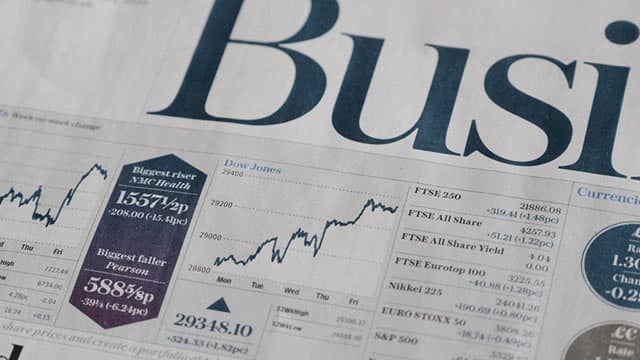
The year 2025 was scary good for investors.It was scary because the U.S. stock market plunged to several historic drops on worries about everything from President Donald Trump's tariffs to interest rates to a possible bubble in artificial-intelligence technology. In the end, though, it was a good year for anyone with the stomach to stick through the swings.S&P 500 index funds, which sit at the heart of many savers' 401(k) accounts, returned nearly 18% in 2025 and set a record high on Dec. 24.

2025 is in the history books, and the benchmark S&P 500 Index notched a 16.39% return for the year. Investors now face a stock market that's returned 80% over the past three years, mostly led by the same few big tech stocks.
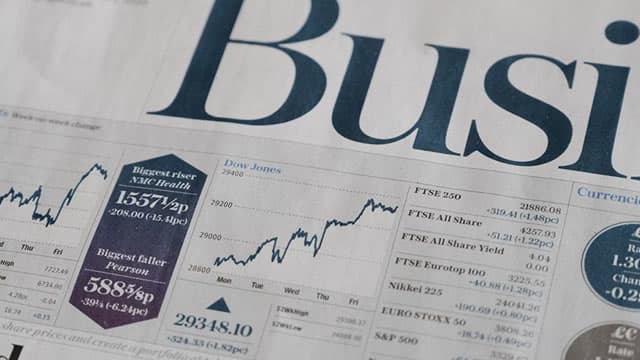
The U.K.'s FTSE 100 topped 10,000 points for the first time Friday, building on a strong year in 2025.
Citadel's flagship multistrategy Wellington fund, its largest, gained 10.2% in 2025, according to a person familiar with the firm's returns. The firm's tactical trading fund, which combines equities with quantitative strategies, advanced 18.6% in 2025, the person said.

Friday, January 2nd, 2026 We start the first trading day of the new year — Happy New Year, everybody! — in optimistic territory, following a modest December overall, which saw the Santa Claus Rally peter out and the tech-heavy Nasdaq close in the red for the month.

John Stoltzfus, chief investment strategist at Oppenheimer Asset Management, joins ‘Money Movers' to discuss why he remains bullish for 2026, the top sectors he's watching, and more.

U.S. jobs data for December and ISM data on U.S. manufacturing and services-sector activity will be the key focus in the coming week.

Michael Faulkender, former deputy secretary of the U.S. Department of Treasury, says Trump's Big Beautiful Bill Act and energy policies will boost the economy in 2026.

Yahoo Finance executive editor Brian Sozzi breaks down the latest market news for January 2, 2026. Our panel, which includes Dana D'Auria, Envestnet Solutions Co-CIO & Group President, Senior reporter Ines Ferre, and Ben Emons, FedWatch Advisors Chief Investment Officer & Founder, discuss the outlook for the AI trade in 2026, Fed rate cuts, and how markets could be impacted.

The Einstein of Wall Street, Peter Tuchman, joins Sam Vadas at the NYSE set to offer his perspective heading into 2026. He believes the stock market is "incredibly strong" after pushing back several volatility-heavy events in 2025.
With 2026 upon us, paychecks for minimum-wage employees will reflect increases in 19 states starting January 1. More than 8.3 million workers are expected to benefit from these changes, collectively gaining an estimated $5 billion in additional earnings nationwide.