
加载中...
共找到 24,790 条相关资讯
Daniel Baker: Good afternoon, and welcome to the NVE Corporation Conference Call for the quarter ended December 31, 2025. I'm Dan Baker, NVE's President and CEO. I'm joined by Daniel Nelson, our Principal Financial Officer; and Pete Eames, Vice President of Advanced Technology. This call is being webcast live via YouTube and Amazon Chime and being recorded. A replay will be available through our website, nve.com, and our YouTube channel, youtube.com/nvecorporation. [Operator Instructions] After my opening comments, Daniel Nelson will present our financial results. Pete will cover new products and R&D. I'll cover sales and marketing and then we'll open the call to questions. We issued our press release with financial results and filed our quarterly report on Form 10-Q in the past hour following the close of market. Links to the press release and 10-Q are available through our website, the SEC's website and X, formerly known as Twitter. Please refer to the safe harbor statement on your screen. Comments we may make that relate to future plans, events, financial results or performance are forward-looking statements that are subject to certain risks and uncertainties, including, among others, such factors as uncertainties related to the economic environments in the industries we serve, risks and uncertainties related to future sales and revenue and risks and uncertainties related to tariffs, customs duties and other trade barriers as well as the risk factors listed from time to time in our filings with the SEC, including our annual report on Form 10-K for the year ended March 31, 2025, as updated in our just filed 10-Q. Actual results could differ materially from the information provided, and we undertake no obligation to update forward-looking statements we may make. We're pleased to report a 23% increase in revenue and an 11% increase in earnings for the third quarter of fiscal 2026 compared to the prior year quarter, driven by broad-based growth across our revenue lines, including defense and nondefense sales as well as distributor and direct channels. Daniel Nelson will cover details of the financials. Daniel? Daniel Nelson: Thanks, Dan. As Dan said, revenue for the third quarter of fiscal 2026 increased 23% year-over-year. The increase was due to a 16% increase in product sales and a 335% increase in contract R&D revenue. The increases were across most of our product lines and channels. Gross margin for the third quarter of fiscal 2026 was 79% of revenue compared with 84% in the prior year quarter. The decrease in gross margin percentage was due to a less profitable product mix and increased distributor sales for the quarter. The increase in distributor sales is positive, although distributor sales typically have lower gross margin than direct sales. Total operating expenses decreased 12% for the third quarter of fiscal 2026 compared to the third quarter of fiscal 2025 due to a 9% decrease in R&D expense and a 19% decrease in SG&A. The decrease in R&D was due to completion of some of our wafer level chip scale packaging activities and reassignment of some R&D resources to manufacturing. The decrease in SG&A was primarily due to the timing of selling and marketing activities and reassignment of some SG&A resources to manufacturing and new product development. Interest income decreased 3% due to a decrease in our marketable securities portfolio as proceeds from bond maturity, partially funded dividends and fixed asset purchases. Other income decreased by $135,000, which is primarily from reclaiming precious metals used in our manufacturing process in the prior year quarter. Our effective tax rate, which is the provision for income taxes as a percentage of income before taxes increased to 20% for the third quarter of fiscal 2026 compared to 15% for the third quarter of fiscal 2025. The increase in our effective tax rate was primarily due to the noncash impact of tax law changes on certain tax deductions this fiscal year. We currently expect a full year tax rate of 16% to 17% in fiscal 2026 because we expect advanced manufacturing investment tax credits of between $700,000 and $1 million to offset the impact of other tax law changes. And net income increased 11% to $3.38 million or $0.70 per diluted share from $3.05 million or $0.63 per share. The increase was primarily due to increased revenue and decreased operating expenses, partially offset by decreased gross margin, a decrease in other income and an increase in our effective tax rate. Our profitability metrics remained strong. Operating margin was 60%. Pretax margin was 68% and net margin was 54%. For the first 9 months of fiscal 2026, total revenue increased 0.4% to $18.7 million from $18.6 million for the 9 months of the prior year as growth in the most recent quarter more than offset year-over-year decreases in the first 2 quarters of the fiscal year. The revenue increase for the first 9 months was due to a 0.8% increase in product sales, partially offset by an 8% decrease in contract R&D. Net income for the 9 months decreased 8% to $10.3 million or $2.12 per diluted share. Turning to cash flow items. Cash flow from operations was $12.2 million in the first 9 months of the fiscal year. Accounts receivable decreased $1.1 million during the first 9 months of fiscal 2026 primarily due to the timing of customer payments. Inventories decreased by $177,000 due to increased product sales. Prepaid expenses and other assets increased $323,000 primarily due to increased accrued bond interest and a decrease in federal and state taxes due. The decrease in taxes due was because we deducted previously unamortized research and development expenses in the quarter ended December 31, 2025, and as permitted under the federal budget reconciliation bill enacted July 4, 2025. We expect accelerated deductions of previously unamortized research and development expenses to reduce our cash taxes for the full fiscal year ending March 31, 2026 by approximately $1.1 million. Accrued payroll and other current liabilities decreased $366,000 primarily due to the payments of federal and state taxes balance due as of March 31, 2025, and decreased accrual for performance-based compensation. Fixed asset purchases were $2.18 million for the first 9 months of the fiscal year, including $1.05 million in the December quarter. We substantially completed spending on our 2-year multimillion dollar expansion. We expect to put the equipment into service in the current quarter. Pete Eames will discuss the new equipment. Now I'll turn the call over to Pete Eames, our Vice President of Advanced Technology to talk about our plans for the new equipment and to cover new products and R&D. Pete? Peter Eames: Thanks, Daniel. I'll cover new equipment and R&D. New equipment in the past year has increased our capacity, increased our capabilities and allowed us to do smaller and more precise wafer-level chip scale package parts in-house. We completed installation and calibration of a new equipment cluster in the past quarter in an expanded production area on the east end of our building. The new equipment allows extremely precise control of spintronic materials deposition to well within 1 atomic layer. This capability translates into more precise spintronic devices and expands our capacity with existing products. We've made good progress developing new advanced spintronic processes on the equipment. And as Daniel said, we expect to place new equipment into service by March 31. Our R&D strategy is to make the world's best electronics for high-value markets such as medical devices, electric and autonomous vehicles, advanced factory and humanoid robotics in highly automated Fourth Wave Factories using the artificial intelligence of things. We've had a continuous flow of new products as part of that strategy. Just yesterday, we announced a new wafer-level chip scale sensor a part that's just 0.65 millimeter square, about the size of the period at the end of our quarterly report and about as thick as the paper that it's printed on. The sensor is about 1/3 the size of the conventionally packaged version, and this tiny size allows for unmatched miniaturization and special sensitivity. There are demonstrations of our new products on our website and our YouTube channel. Now I'll turn it back over to Dan Baker. Daniel Baker: Thanks, Pete. I'll cover customers sales and marketing. Starting with customers. We're proud to supply products to some of the world's most demanding customers, including Abbott Laboratories. Abbott is a leading supplier of implantable medical devices. In the past quarter, we executed an extension to our supplier partnering agreement with Abbott. In recent years, the extensions have been for 1 year, but this extension is for 2 years through December 31, 2027. It provides for price increases for 2026 and 2027. The agreement was filed with the Form 8-K and their links in our just filed 10-Q on our website and the SEC's website. Turning to sales and marketing. We exhibited at the Medical Design & Manufacturing Trade Show in the past quarter. Medical devices are an important market for us. We have a convincing benefit proposition for medical devices with small size, low power and superb reliability. At the show, we highlighted new wafer-level chip scale parts for miniaturization of implantable medical devices and surgical robots, high-field sensors to enable MRI-tolerant medical devices, high-sensitivity sensors for medical device navigation and our best-in-class electrical isolators to ensure the safety of medical instruments. The show generated good leads, and we believe our investments and shows payoff and future sales. With the success of that show, we'll also exhibit at Medical Device & Manufacturing West for the first time. The exhibition starts February 3 in Anaheim, California and host attendees from all over the world. Now we'd like to open the call for questions. Daniel Baker: [Operator Instructions] Jeffrey Bernstein: Dan, it's Jeff Bernstein from Silverberg Bernstein Capital. So we talked during the quarter about this idea of magnetic navigation in GPS compromised areas and whether you're magnetometer sensors were appropriate for that kind of application. Can you just talk a little bit about that and if you made any contact with anybody in the BOW about this? Peter Eames: Jeff, this is Pete Eames. I'm happy to answer that question. We have looked at MagNav. And for those who aren't familiar with it, this is a new technology that replaces GPS in the defense applications that are susceptible to GPS jamming. So typically, NVE sensors are lower power and much smaller than the sensors that are used to detect the magnetic field anomalies and magnet systems. But it is an interesting application for us. It's evolving and it's one of the things that we keep an eye on in the defense community to see how it evolves. And hopefully, we have an opportunity there in the future. Jeffrey Bernstein: So do you have a part that you would deem appropriate for that application today or now? Peter Eames: Not exactly. MagNav is pretty new. It's still a relatively nascent technology. One of the problems with MagNav is that the maps that are being generated and used by sensors for this technology are still too imprecise. So it's still -- it's not a mature enough technology that we would chase it for example. But it's something that is interesting and fits within our defense systems and something that we think has a bright future. Unknown Analyst: Dan, this is [ Pete Prevett ] in Florida, how you guys. A couple of quick questions. Your new equipment up and running in March, I recall being at the shareholders meeting in '24, it'll be almost 2 years. Is that pretty much on the expected schedule that you thought? Daniel Baker: It is. Thanks for the question, Pete. As you saw, we just had a blank space when you were here and at the annual meeting in 2025, we had a much more finished blank space. And now we've got a piece of equipment that's up and running, and as Daniel and Pete both mentioned, we plan to deploy it in an accounting sense this quarter. So things are going well, and we were -- it's a complicated piece of -- set of equipment and a complicated process, but our guys have done a great job of getting it done on schedule. So we're pleased with how it's going. Unknown Analyst: That's great to hear. With that, is there an expectation that, that new equipment will help with new product sales like adding to new revenue and/or I guess, better profitability because it's packaging, right? Some of it's for packaging, so you don't have to outsource the packaging? Peter Eames: Yes. This is Pete Eames again. Yes, Pete, I think there is a lot of optimism surrounding the technology that we're developing with the new equipment. I talked about one of the sensors in our earlier remarks. We're definitely selling samples of those parts. And we're -- again, we're looking forward to continued sales there. So I think the optimism continues. Unknown Analyst: And do you guys see the distributors building up inventory? Again, I know that, that was an issue that they had lots of inventory and had sell that down. Is that starting to pick up again? Daniel Baker: Yes, it is. It's very positive. And Daniel mentioned that in the prepared remarks that our distributor sales are picking up and have been through the fiscal year. And that's an indication that some of those inventories that had built up during the semiconductor slowdown the last fiscal year and prior to that, have been depleted, burned off and end user demand is increasing. So we feel like we have the wind at our backs and we've got excellent products. and the inventory situation in the semiconductor industry as a whole is much better than it was. Unknown Analyst: That's fantastic. And let me ask you about the other company or one of the other companies in your space, Everspin. There seems to be a lot of interest in them lately and some talk about their intellectual property being valuable for quantum computing, possibly. How does NVE's intellectual property compare to what they have? And have you had any discussions with other companies about licensing your IP? Daniel Baker: We have had discussions about licensing from time to time over the years, including we had a license agreement with predecessors of Everspin technology, including Motorola going way back. So we believe we have excellent intellectual property. We deploy it mostly for anti-tamper and HUF. So we are in a different market than ever spin, but we do have technology that applies to MRAM. We continue to develop MRAM. And we've talked about it from time to time. Pete didn't talk about it on this call in the prepared remarks, but we continue to work on developing advanced MRAM mostly for defense applications, defense and anti-tamper applications. And we believe that the intellectual property has significant value, and we'll look for opportunities to monetize that through licensing or other means. Unknown Analyst: And I don't know too much about it, but with Flash memory, is MRAM a replacement of Flash? I on someone who mentioned something about memory and MRAM being a lot better with spintronics. Is there anything you could talk about there? Peter Eames: Yes. In general, MRAM is a nonvolatile memory, meaning it retains its information when the power is removed. And for some applications, that's a very powerful technology, and it's something that's already used in some embedded computing systems today. So it is very useful, and that's one of the things that, as Dan said, makes us believe that our IP is very valuable here. Unknown Analyst: Okay. Great. And last question. Dan, we love your post on Twitter. Do you employ or have a meeting company? Is there any plans to expand marketing? Not that we don't love your videos and stuff, but just curious about how you guys look at marketing to promote the company. Daniel Baker: Well, we've been spending more on marketing, doing more marketing. So we try to do more of what works and what's been working, as I mentioned in the prepared remarks, our trade shows work very well for us. So we're going to more trade shows than we ever have. And we are working more and more on demonstrations. So the videos are one manifestation of demonstrations, but we also provide demonstrations at trade shows and for a specific customer targeted applications. The newsletters are also very effective. We have a very high click rate, a very high response rate. So we measure our marketing activities, and we continue to boost the ones that work. So those are the kinds of things that we've been doing and we do get some response from Twitter. However, it's not a huge sales driver. Some of that is more fun and content that we have from other sources or for other targets such as trade shows. Unknown Analyst: Keep up the good work. I appreciate it. Jeffrey Bernstein: Dan, it's Jeff Bernstein again. Just wanted to check in on the application for rare earth magnets for position sensing? And what kind of traction you've gotten there? And have we seen any revenue actually come through from any design wins? Or what's the design win situation looking like? Daniel Baker: Yes, that's a good point. There's still a lot of concern in the supply chains about rare earth elements. And our sensors are uniquely positioned to use rare earth free ferrite magnets because of their high sensitivity. And we continue to offer ferrite magnets they do not use rare earth elements. They use iron and oxygen, which are 2 of the most abundant elements in the earth's crust. So we're well positioned in that, and we have gotten some sales, and we've gotten some interest in both the magnets and in the sensors that go with them. So we do see it as a promising application. And the concern about rare earth magnets has done nothing but increase. So it's hard to quantify exactly how many are targeted at rare earth replacement and how many we're getting or we wouldn't have gotten, if it were for the concerns about rare earth, but it certainly helps us. [Operator Instructions] Unknown Shareholder: Can you hear me? Daniel Baker: Yes. Unknown Shareholder: This is [ Christopher Chevski ], a private investor. I was just wondering if there's any comments you can make on the current quarter, especially I'm wondering about your defense business, which happens to be a little bit more volatile? Peter Eames: Yes. I can try to add a little bit there, Christopher. I think we've talked fairly about some of the past quarters and explained that things have been relatively weak there. And in general, I think we're optimistic going forward. I think it's safe to say that we'll be returning to somewhat of a more normal flow there if that's of any help. Unknown Shareholder: Yes. That's very helpful. And the rise in NRE revenues, does that pretend for additional future nondefense business? Daniel Baker: That's certainly the goal. When we invest in R&D. We invest heavily in R&D. Pete talked about some of the programs. We talked about some of the things that we're doing in the medical space for new products and for advancements especially in miniaturization. So that's been a significant portion of our R&D, and we've been pleased with the response of customers and prospects to those products. And we believe they're going to pay off in future sales, and that's why we make the R&D investments. Unknown Shareholder: Okay. And your 2-year agreement with Abbott, are there any market gains in that? Are you in any new devices? Daniel Baker: Unfortunately, we can't talk about what devices they use our parts in, they use our sensors and we're bound by confidentiality. However, they make some remarkable devices, medical devices, and we're pleased to be a partner with them. We've been a partner with them for many years. And we're proud of the role that we play in making devices that can change people's lives. We also have other medical customers that sometimes we can't talk about. And we're promoting and meeting more of them, promoting our products and meeting more of those prospects and customers at the trade shows such as MDM here in Minneapolis recently and in early February, MDM West. Unknown Analyst: Dan, this is Pete again. Just one last question. The company, obviously, has been very, very solid over many years of delivering good performance. Can you talk a little bit about what the potential of customers being recurring, right? So rather than kind of sawtooth revenues quarter after quarter, year after year, where you're going to eventually have recurring orders from the same customers and then revenues might hit $6 million, $8 million, $10 million, $12 million per quarter because you've got repeat orders from the same customers, can you just give some clarity as to what the product mix looks like and if there's potential of that type of expectation from these customers that would order consistently so all investments are just adding on to revenues quarter after quarter? Daniel Baker: Yes, that's a good point and a good question, Pete. So we look to increase our sales to our current customers with existing products and then we look to add new products to existing customers because we feel like our existing customers are our best prospects. They know us. They've seen the quality of the product we produce and the quality of the support that we provide. So we work on both. Our goal is to grow faster than our customers. We have to add customers we have to continue to add products and expand the products that we sell to existing customers. And so I just mentioned Abbott, which is a great example of a customer that we've had for 20 years at least and they continue to buy our products, and they've expanded over years, the number of products that they use. So that we see is driving growth. And then we've added additional new customers, and then we add products for existing customers, new products for existing customers. Jeffrey Bernstein: Jeff Bernstein. Just a follow-up question. As far as you guys have talked about in the past that at Abbott, you have exposure in the cardiac rhythm management area. You have exposure in the, I guess, neuromodulator area. In terms of the other medical customers that you're talking to, are these very similar kinds of applications? Or are there other applications I think you discussed medical robots and I'm kind of curious about why a big piece of equipment like that would need tiny parts like yours unless it's a sensitivity issue. But can you just flesh through that a little bit? Daniel Baker: Yes. So we cover a variety of medical products. We cover life support medical devices, which are the types of pacemakers and ICDs that Abbott makes. We cover non-life support medical devices, and we cover medical instruments. We sell products for medical instruments, which would be monitors, pumps and things of that nature. They require different types of products. They have different design cycles, but they share a common goal of miniaturization of low power high sensitivity, high accuracy. As far as the medical robots, which we talked about before, Pete touched on that with our wafer-level chip scale parts that the smaller parts Well, you're right, they might not need them because it's a relatively -- the robots are relatively large, but they offer more special sensitivity, which means that the robot can detect smaller displacement more precisely. And for medical robots, being able to do delicate operations is a key benefit, and our sensors enable that. Unknown Analyst: This is [ Ittai Abraham] from [ Principal Global ]. I just wanted to come back to the MRAM point. I'm curious if you can talk a little bit more if that's really just kind of an IP opportunity or if the added capacity can actually help you sell into some of MRAM and customers as well? And then I have one more. Daniel Baker: Okay. Thanks for the question, Ittai. Our strategy has been to not make large-scale memories. That often requires multibillion-dollar fabs. So what we've been doing is specializing in high value-added memories that are used in specialized applications such as crypto keys for anti-tamper devices but we believe that the intellectual property is applicable to larger MRAMs that would have broader applications. So that's how we would participate in that market by licensing intellectual property that we've developed over the years. Unknown Analyst: Got it. That's super helpful. And then my second question is on the new capacity, I'm curious if you could give us a high-level view on the current mix shift may shift in terms of end market and how the new capacity might change the end market mix? Daniel Baker: Right. So the new capacity is targeted at applications such as the Internet of Things and the artificial intelligence of things, which are emerging markets for industrial automation, merging the Internet of Things with artificial intelligence. So we see those as tremendous opportunities. They require inputs, which is what we do. We make sensors. And the future appears to have ubiquitous sensors, many very small sensors distributed in many robots and other locations in order to provide the information for smart factories that are that are self optimizing. So we see a historic opportunity there, and that's part of the reason why we were confident making such a large investment. Unknown Analyst: Got it. And congrats on the results. Daniel Baker: Well, if there are no other questions, we were pleased to report strong increases in revenue and earnings driven by broad-based growth. We look forward to speaking with you again in early May for our fiscal year-end call. A replay of this call will be available on the Investor Events page of our website, that's nve.com and our YouTube channel, that's youtube.com/nvecorporation. Thank you for participating in this call.

Operator: Good afternoon, and thank you for standing by, and welcome to the Fourth Quarter 2025 Earnings Results Conference Call. [Operator Instructions] Today's conference is being recorded. If you have any objections, you may disconnect at this time. It is now my pleasure to turn the call over to Mr. Rich Kinder, Executive Chairman of Kinder Morgan. Richard Kinder: Thank you, Michelle. Before we begin, as usual, I'd like to remind you that KMI's earnings release today and this call include forward-looking statements within the meaning of the Private Securities Litigation Reform Act of 1995 and the Securities and Exchange Act of 1934 as well as certain non-GAAP financial measures. Before making any investment decisions, we strongly encourage you to read our full disclosures on forward-looking statements and use of non-GAAP financial measures set forth at the end of our earnings release as well as review our latest filings with the SEC for important material assumptions, expectations and risk factors that may cause actual results to differ materially from those anticipated and described in such forward-looking statements. I have only 2 comments before turning the call over to our CEO, Kim Dang and the team. First, we believe our bullish outlook on natural gas demand remains grounded in reality, and we expect to see very strong growth over the rest of this decade and beyond. Now while there are several important drivers of that growth, the largest and most certain driver remains the need for additional LNG feed gas to service both expansions of existing export facilities and new greenfield projects coming online. We now estimate feed gas demand will average 19.8 Bcf per day in 2026, which is an all-time record, an increase of 19% from the daily average of 16.6 Bcf per day in 2025. And we see that demand increasing to over 34 Bcf per day by 2030. This astounding growth is enormously beneficial to the midstream sector and especially to companies like Kinder Morgan that have extensive pipeline networks along the Texas, Louisiana Gulf Coast, which is the location of most of the export terminals present and future. Our throughput agreements for delivery of the feed gas are essentially take-or-pay in nature which gives us great confidence in the resulting cash flow. My second comment is specific to Kinder Morgan. You will hear from Kim and the team that we finished 2025 very strong compared to 2024 and to our budget for 2025. And as you know from our earlier release of the budget for 2026, we expect more good performance this year. Once again, the chief driver of our success in both years is the extraordinary strength of our natural gas assets. And with that, I'll turn it over to Kim. Kimberly Dang: Okay. Thanks, Rich. As Rich said, we had a fantastic fourth quarter, producing record results for the quarter and the year. Much stronger than we anticipated when we announced our Q3 results. For the quarter, adjusted EBITDA was up 10% compared to the fourth quarter of last year and adjusted EPS grew 22%. Those are big numbers for a stable midstream business like ours. The biggest driver of the outperformance was natural gas. It had an outstanding quarter and year. Our project backlog has increased by approximately $650 million to $10 billion. We added a little over $900 million in new projects which was offset by $265 million of projects placed in service. The most 2 significant additions are Florida Gas Transmission projects, both supported by long-term shipper contracts. Our backlog multiple remains below 6x, which will drive very nice growth over the next few years. In addition, we're working on greater than $10 billion in project opportunities beyond the backlog. While we won't be successful on all of those, it gives you a sense of the tremendous market opportunity. We believe we will continue to find attractive opportunities for years to come. Wood Mac currently projects the U.S. natural gas market will continue to grow over the longer term, with an incremental 20 Bcf a day of demand growth between 2030 and 2035. Now a quick update on our 3 largest projects, MSX, South System 4 and Trident. We started construction on Trident last week. And for MSX and South System 4, we received our FERC scheduling order. The FERC anticipates issuing our final certificate by July 31, which is a schedule we requested, but ahead of our original expectation. There's still a lot of work ahead, but all 3 projects are on budget and on or ahead of schedule. Another positive last week, S&P upgraded KMI to BBB+. That shows our balance sheet is in great shape. On the management front, I want to take a moment to recognize Tom Martin, who will retire at the end of this month, for his wise counsel and the value he has helped delivered to our shareholders over his 23 years with the company. As we have previously announced, Tom will continue to serve as an adviser to the OCC and the Board, so we'll continue to benefit from his perspective. We're excited to have Dax, who many of you know from his long tenure at the company, step into the President's role. I'm looking forward to working with him closely as we continue to execute on our strategy. To sum it up, we had a great quarter and year. We also strengthened our balance sheet and advanced key projects with a $10 billion backlog and tremendous potential beyond that we are set up for a very exciting future. And with that, I'll turn it over to David -- Tom? Thomas Martin: Thanks, Kim. I appreciate the kind words. Starting with the natural gas business unit, transport volumes were up 9% in the quarter versus the fourth quarter of 2024, primarily due to increased LNG feed gas deliveries on Tennessee Gas Pipeline. For the full year transport volumes were up 5% over 2024. Natural gas gathering volumes were up 19% in the quarter from the fourth quarter of 2024 across all of our G&P assets with the largest impact being from our Haynesville system. Sequentially, total gathering volumes were up 9% and the full year 2025 gathering volumes were up 4% versus 2024. We experienced a significant ramp-up from our producer customers during the quarter to meet the growing LNG demand. Our Haynesville gathering system, for example, set a daily throughput record of 1.97 Bcf a day on December 24. Looking forward, we continue to see significant incremental project opportunities across our natural gas pipeline network. For example, we are in various stages of development to potentially serve more than 10 Bcf a day of natural gas demand in the power generation sector. In our Products Pipeline segment, refined products volumes were down 2% in the quarter compared to the fourth quarter of 2024. For the full year 2025, refined products lines are about equal to '24. Crude and condensate volumes were down 8% in the quarter compared to the fourth quarter of 2024. More than all of that decline is driven by taking HH out of service for the NGL conversion project early in the third quarter of 2025. Excluding HH volumes in both periods, crude and condensate volumes were up 6% in the quarter compared to the fourth quarter of '24. On January 16, 2026, KMI and Phillips 66 announced the start of the second open season on their proposed Western Gateway Pipeline system. Western Gateway Pipeline will connect Midwest and other refinery supply to Phoenix and to California with connectivity to Las Vegas, Nevada via KMI's CALNEV Pipeline. The second open season, which concludes on March 31, 2026 is for the remaining pipeline capacity and adds new access to the Los Angeles market via a joint tariff supported by the planned reversal of one of KMI's existing SFPP lines between Watson and Colton, California. In addition to expanding the offered destinations, the second open season adds additional origin points to enable supply diversification and optionality for our customers. We believe this project provides an attractive supply alternative for markets in Arizona and in California. In our Terminals business segment, our liquids lease capacity remained high at 93%. Market conditions continue to remain supportive of strong rates and the utilization of tanks available for use is 99% at our key hubs on the Houston Ship Channel and at Carteret, New Jersey. Our Jones Act tanker fleet remains exceptionally well contracted, assuming likely options are exercised. Our fleet is 100% leased through 2026, 97% leased through 2027 and 80% leased through 2028. We have opportunistically chartered a significant percentage of our fleet at higher market rates and have an average length of firm contract commitments of more than 3 years. The CO2 segment experienced 1% lower oil production volumes, 2% lower NGL volumes and 2% lower CO2 volumes in the quarter versus the fourth quarter of 2024. For the full year 2025, oil volumes are about 2% below '24 but finished strong in the quarter to be slightly above our plan for the year. With that, I'll turn it over to David. David Michels: Thank you, Tom. This quarter, we're declaring a quarterly dividend of $0.2925 per share, which is $1.17 per share annualized, up 2% from 2024. For the fourth quarter, we generated net income attributable to KMI of $996 million and EPS of $0.45, 49% and 50% above the fourth quarter of 2024. This quarter's results included a gain on an asset sale which we treat as a certain item. Excluding certain items, our adjusted net income and adjusted EPS still grew very nicely, both 22% above the fourth quarter of 2024. Our growth was driven by newly placed in service natural gas expansion projects, contributions from our Outrigger acquisition and continued strong demand for natural gas transport, storage and related services. For the full year 2025, we beat our budget by more than the contributions from our Outrigger acquisition. Outperformance came from our natural gas business, driven by greater value on transport capacity and ancillary services. Our Terminals segment also generated better-than-budgeted contributions. We budgeted to grow adjusted EBITDA by 4% and adjusted EPS by 10% from 2024. We actually grew adjusted EBITDA by 6% and adjusted EPS by 13%. Our 2025 EBITDA and net income were at all-time record levels for Kinder Morgan. Moving on to the balance sheet. As we continue to grow our cash flows and take a disciplined approach to capital allocation, our balance sheet continues to strengthen. Our net debt to adjusted EBITDA ratio improved to 3.8x, down from 3.9x last quarter and down from 4.1x at the end of the first quarter, which was immediately following the acquisition of Outrigger. Since the end of 2024, our net debt has decreased $9 million despite nearly $3 billion of total investments in growth projects and the acquisition. So we'll go through a high-level reconciliation. We generated cash flow from operations of $5.92 billion. We've spent -- we've spent $2.6 billion in dividends. We invested $3.15 billion in total CapEx, including growth sustaining and our contributions to joint ventures. We spent approximately $650 million on the Outrigger acquisition. We've received $380 million on divestitures, primarily the EagleHawk sale. And then we had all other items as a source of cash of about $100 million. That gets you close to the $9 million decrease in net debt for the year. The rating agencies have recognized our strengthened financial profile. Last week, S&P upgraded us to BBB positive. Fitch upgraded us to BBB+ during the summer of 2025, and we're on positive outlook by Moody's. So as has already been mentioned, but I'll mention it again, 2025 was an exceptionally strong year, a record setting year, in fact. We beat our budget and delivered double-digit earnings growth. We grew our backlog from $8.1 billion to $10.0 billion despite placing $1.8 billion of projects into service, meaning we added $3.7 billion of projects to the backlog during the year. We improved our balance sheet. We achieved credit rating upgrades and expect meaningful cash flow benefits from tax reform which will generate additional investment capacity. We have very positive momentum heading into 2026. And with that, I'll turn it back to Kim. Kimberly Dang: Okay, Michelle, if you'll come back on, and we'll take questions. Operator: [Operator Instructions] Our first caller is Julien Dumoulin-Smith with Jefferies. Julien Dumoulin-Smith: Look, if I can kick it off more on the data center front. You guys talk about the 70% number with respect to where you have exposure and aligned with data center opportunities. Can you talk a little bit about what you're seeing actively on that front? Obviously, we saw the FTC announcement here, perhaps that speaks to that a little bit. But how do you think about that regionally in terms of further data points we should be seeing through the course of the year? And I've got a quick follow-up. Kimberly Dang: Okay. I'm not exactly sure about the 70%. But if you look at our $10 billion backlog, about 60% of our backlog is associated with power projects. That's not just data center, that's anything associated with power. And if you think about the opportunities on the power side, I think a great example is if you look in the state of Georgia, where Georgia Power, recently, I think the end of November filed a revised IRP. And they're projecting 53 gigawatts of power demand between now and the early 2030s. And so from a gas perspective, if that was 100% gas, that would be like 10 Bcf a day, roughly, depending on the conversion metrics you use. And we expect that a significant portion of that will be gas, and that's just one utility in one state. And so what we're seeing across our network, whether that's in Georgia or South Carolina or Louisiana or Arkansas or Texas or New Mexico, Colorado, mean we are seeing similar stories just across our network. And the other thing is you look at power demand, we've got a higher power demand growth between 2025 and 2030. Wood Mac has in their most recent estimates increased theirs. And if you look at Wood Mac between 2030 and 2035, they think the power growth, at least in their projections, is greater between 2030 and 2035, than it is in their projections between '25 and '30. So this is something that is driving significant amount of projects. It's also a significant driver of the potential opportunities that we have, and we think will last for a decade. Julien Dumoulin-Smith: Excellent. If I can just firm up a little bit more on the SSE5 setup and timing. What are you looking to move forward on that? How are you thinking about timing? And then even more specifically, if you could speak to -- are you thinking about this as being a compression first or looping kind of project initially? And what level of signed utility load would unlock a more formal filing? Sital Mody: Yes, Julien, this is Sital. So look, in terms of timing, we see strong interest in the Southeast, and we continue to work with the customer base. In terms of what the final scope looks like, that all depends on final subscription. I do see it more than just compression. I think there could be some more brownfield looping. But once again, it's early. We're working through the demand dynamics with our customer base. We do see opportunity there, and it is competitive. So we will continue to report as we go along. But ultimately, the signed deal is what drives the announcement. Operator: Our next caller is Jackie Koletas with Goldman Sachs. Jacqueline Koletas: First, I just wanted to start on the next steps on the Western Gateway following the second open season launch last week. How do you think about allocating capital towards this project versus natural gas opportunity set? And how do those returns compare? Kimberly Dang: Yes. I mean on every project, we look at based on risk and return. And so I think we have a middle-of-the-road return that we expect and then we vary off that based on the stability, the duration and the creditworthiness of the cash flows. And so it's -- you've got stronger creditworthy parties and longer cash flows and take-or-pay, then you come off that return -- down from that return a little bit. And if you have those things are less and you go above that return. All these returns are significantly above our cost of capital. And so I think if we proceed on Western Gateway, we will have long-term shipper contracts there. And I expect those shipper contracts will be largely from creditworthy counterparties. And if not, we would have some credit support. So we don't, at this point, have limited capital. I think we can easily fund this project and do all the natural gas projects that we're talking about. Another point I'd point out on Western Gateway, which is we are contributing assets to that. And so our cash contribution will be less than we're going to -- we're setting up a 50-50 joint venture with P66. It would be less than half of the cost of the overall project because we're contributing value for -- contributing assets for part of our contribution. Jacqueline Koletas: Got it. That's helpful. And then just as a follow-up, leverage ended around 3.8x in the quarter. How do you think about maintaining leverage levels towards the midpoint of your long-term guide of 3.5 to 4.5x range versus leveraging up towards that high end if there are multiple CapEx opportunities? Kimberly Dang: Well, I'd say right now, what we've said is we're going to spend about $3 billion per year in CapEx. Now that won't be a perfect ground, $3 billion because you just have timing of spend, but roughly $3 billion a year. And we have the ability to fund that 100% out of cash flow. The other thing I'd point out is that as our $10 billion backlog of projects come online that our debt-to-EBITDA actually declines over time. And so that creates more balance sheet capacity. So for every 0.1x of leverage, that's $850 million of capacity. So I think we've got a ton of capacity even without leveraging up closer to the 4.5x. And I don't think we have intention of getting close to that level. So I think we've got plenty of capacities to accommodate the opportunities that we see out there. Operator: Our next caller is Theresa Chen with Barclays. Theresa Chen: Kim, I hear you loud and clear on the less than 50% of capital contribution on Western Gateway because you're contributing SFPP. When we think about the net EBITDA impact to Kinder, and I'm assuming this project moves forward, how should we quantify the displacement of existing SFPP EBITDA? How much is that contributing currently? Kimberly Dang: Well, I think, 2 things. One, Theresa, I think we're really early. And so we've got to get through the open season, we've got negotiations to do with our partner on the specifics. So I think -- and so I think we've got to finalize costs, et cetera. So I think it's too early to go through that at this point. Theresa Chen: Understood. Maybe turning to a different portion of your liquids business. Could you provide an update on the progress of the HH conversion? And in light of recent upstream developments in the Bakken and the increasingly challenged near-term outlook for the basin, how are you thinking about the expected NGL throughput and EBITDA contribution from this project? Kimberly Dang: Sure. I mean the project is going to come on probably late first quarter, early second quarter and that's Phase 1. And then with respect to the future phases, that's something we continue to work on. Sital Mody: Yes. I mean, Theresa, Broadly, though, I mean, we still -- given the recent pullback, it's just a matter of time. I think our initial phase is well contracted. We see the volumes behind it. These are coming from our plants, and so we have visibility there. So I don't think, as far as Phase 1 is concerned, and that is probably on the earlier side of the time frame that Kim gave you in terms of where we come in. I think as we look to the next phase, we continue to have discussions, positive discussions with our customers. We'll monitor the overall macro situation, and we'll make the investment decision accordingly. That being said, we still have that in front of us. Kimberly Dang: Right, and I think the other thing is GORs are growing in the Bakken. Operator: Our next caller is Michael Blum with Wells Fargo. Michael Blum: Yes, maybe if I could just ask maybe a different way at the same question to some degree, with Continental Resources effectively saying they're going to stop drilling in the Bakken. I'm wondering if you can talk about, at least for now, can you talk about how meaningful a customer they are, either your current business? Or where they were contemplated to be for HH and if that has an impact on the further expansion? Kimberly Dang: So yes, if you look at the EBITDA that we get from Bakken or EBDA, it's about 3% of Kinder Morgan overall. Obviously, Continental makes up a piece of that. We don't think that there's going to be any material impact from the Continental news. We think that the impact is very manageable, that's one because it's 3% of our EBITDA. But it's also because volumes came into the year a little stronger than we were expecting. And it's also because they're going to continue to complete wells through August and because they are just one of a number of customers we have up there. Michael Blum: Okay. Great. That makes sense. And then I just wanted to ask, in light of the asset sale that you did here in late 2025. Are there more noncore assets that you're actively looking to sell? And strategically, are there segments or areas of the business that you're more inclined to reduce your exposure to? Kimberly Dang: Okay. Yes. Let me talk about the EagleHawk sale first. First of all, on that, that's not an asset that we were looking or planning to sell. Our partner approached us because they were selling at least a portion of their interest and based on the price that we could achieve it made sense to sell. It's an 8.5x multiple on a nonoperated minority interest in the GMP asset. And when we looked at the reinvestment opportunity, meaning if we were buying at the price that we propose to sell and we look at the cash flows, those were going to be below our cost of capital. So -- and that included taking in into account any tax impact from the sale. So we thought it made sense. It was a good economic decision to sell that asset and recycle that capital. And so that's generally the way that we have been approaching sales of assets, which has been more opportunistic. As we say, our assets are for sale every day at the right price. And so we want to make good economic decisions about that. We like the portfolio of assets that we have today, 60 -- it's 2/3 natural gas and 26% is products, pipelines and terminals, very similar pipeline and storage business. So similar -- and then 7% is CO2, which is a little bit different, but we get great returns on that business, and we have an expertise that a lot of people don't have. So I think we're very comfortable with the suite of assets that we have, and this was just an opportunistic sale that made sense. Operator: Our next caller is Jeremy Tonet with JPMorgan. Jeremy Tonet: I was just curious for your thoughts, I guess, industry at large and what opportunities it could present to you down the road just if we think about Waha egress. One, we have some pretty cold weather coming up in -- during Uri, that presented opportunities for Kinder last go around. So just wondering if you could share any thoughts there. Sital Mody: Well, look, we -- as always here, when we look at the footprint, given our footprint, we're able to leverage basis dislocations that occurred. First and foremost, we want to serve our customers. And then to the extent that these opportunities present themselves, we've been taking a little more of a proprietary view on certain things in certain areas, strategically, small amounts. And so to the extent that, that presents itself, we'll be able to leverage that. Kimberly Dang: Yes. But I don't think -- this storm is not a Uri. Sital Mody: It's not a Uri. Kimberly Dang: I mean it's much shorter in duration and it's not going to be as significant. So... Jeremy Tonet: Understood. It seems like there might be another one on its heels. So we'll see what happens this winter again. Kimberly Dang: Generally, what I would say is that the gas transportation market is very tight. And so whenever you see dislocations in supplier demand in and around our assets, that is going to present opportunities for us. And that's part of what you saw in the fourth quarter of this year. Sital Mody: Yes. I mean a key component of that is storage for us, and we have a significant storage portfolio that will allow us to leverage some of that to the extent that it presents itself. Jeremy Tonet: Got it. And then just wanted to dial in on NGPL a little bit here, hearing more data center-driven opportunities in the Midwest, coal to gas switching as well, some of the other nat gas pipeline operators are seeing a lot of activity there. I'm just wondering if you could talk about what that could mean for Kinder -- for NGPL. Sital Mody: Yes. So look, we've -- we're quite a bit of -- there's significant discussions. You've been seeing some of the EBB postings we've been making out there. We've got interest along the pipeline in terms of not only just from power customers but also from organic markets that are trying to grow. Still early on some of these projects. We've got some binding commitments that we're looking to convert into full-fledged FID projects, as these develop, we'll bring them. But I mean, when you think about the corridor itself, we see a concentration up in the market area. We have some in the producing regions where folks are looking to site themselves. And so I think the opportunity set is there. It's just, once again, we're in this mode where folks are looking -- there's -- it's a competitive landscape, and so we want to make sure we secure the returns that we need to progress the projects to FID. Operator: Our next caller is Jean Ann Salisbury with Bank of America. Jean Ann Salisbury: You said in the prepared comments that MSX could be in service a couple of quarters early, I think. Is there any read across to a faster permitting process across the board? Or was that project specific? Kimberly Dang: No. I mean I think a couple of things on these projects. One is 871 is gone, and that happened, I don't know, 6 or 9 months ago. And that basically required us to wait 5 months between when we got our FERC certificates and when we could start construction. So that's gone. And then the FERC has acted within -- is going to act within roughly 1 year on our filing. And so previously, we've been seeing that take a little bit longer than that on big projects. And so the fact that the FERC process only took 12 months and we don't have 871 is speeding up our in-service on MSX from, call, the fourth quarter of '28 to the second quarter of '28. Jean Ann Salisbury: Great. That's very clear. And then one of your peers took an equity stake in a U.S. LNG terminal a few months ago. Is that something that KMI is actively looking at or would have interest in, especially, I guess, if you could back to back it with another counterparty to make it take-or-pay equivalent? Kimberly Dang: To make it -- well, I'll say a couple of things on that. Generally, what we've seen on the LNG front is the returns haven't been where we needed them to be to make those investments. And it's not something that we are accustomed to building. We do a small one, obviously, at Elba, but that was a relatively small facility. And so I think in general, what you should expect from us is that we are kind of sticking to our knitting, we're staying in our lane. We are serving those LNG -- that LNG demand through our pipelines. And right now, we serve 40% of that demand. As Rich said, that demand is expected to grow significantly, and we expect to get our fair share of that future demand, and that's driving very nice project opportunities for us. So I'm not saying we would never step out. It's just there hasn't been the opportunity where we thought the risk return profile was appropriate. And we haven't wanted to build these on our own. Richard Kinder: I think another thing we like on a risk-return basis is the fact that both on the LNG terminal side for feed gas and on the service to -- for electric generation purposes, we have, in general, take-or-pay contracts with utility grade -- investment-grade utilities. And that, we think, is a very good way to look at the risk that we are taking. And we think that minimizes any risk that we have as opposed to contracting directly with AI developers, for example. Operator: Our next caller is Keith Stanley with Wolfe Research. Keith Stanley: You updated the messaging on CapEx to at least $3 billion a year of growth CapEx for the next few years, up from $2.5 billion. Wanted to clarify, is that solely based on the sanctioned project backlog today? So if you keep FID-ing new projects and the backlog grows, CapEx could be above $3 billion a year for the next few years? Or is that already reflecting your best estimate over the next few years? Kimberly Dang: I'd say it's largely based on the $10 billion approved project backlog, but there is some view, there is a small portion that is based on getting some of the $10 billion in the opportunity set. So -- and look, I think that we updated it from $2.5 billion to $3 billion, given the $10 billion, given we continue to add to the backlog even after putting projects in service. So this year, when we were putting all those projects in service at the beginning of the year, we thought it might come down. It's continued to increase natural gas demand, we continue to see it grow between '25 and '30, but also beyond that. And so there may be the opportunity to extend that further, but we're not ready to do that -- or make it higher, but we're not ready to do that at this point in time. Keith Stanley: Got it. Second question, just wanted to follow up on the earlier one on Mississippi Crossing. So if you're 6 months early on that project and on -- potentially on some of the other bigger ones given the regulatory environment. Would your contracts kick in and you'd have pretty close to a full financial contribution right away at that earlier date? Or is that not the case? Kimberly Dang: It's a project-by-project analysis. In this case, the answer is no, the customers don't have to take it at that point in time. They can. I mean, they can elect to take it, but they don't have to. And I would say that being early on the regulatory front does not directly translate into day for day on the in-service. It's going to depend on the projects because once you move back that regulatory, once you get sooner approval from a regulatory perspective, you have to think about when you're getting pipe and when you're getting compression. And so, for example, we haven't seen that translate into much of an earlier date on South System 4 at this point in time. So it's project by project. But if our customers don't want that capacity, it will be available for us to use during that time. Sital Mody: And given the macro environment, Keith, I mean, you just think about the demand profiles that are coming our way, it's just -- you look at that as an opportunity to sell in the secondary markets. Operator: Our next call is Manav Gupta with UBS. Manav Gupta: Firstly, congrats on all the upgrades from rating agencies, reflects the strong quality of the management and execution. I wanted to ask you about the Florida Gas Transmission projects, both the projects. How did these come about? Can you give us more details? And then the last one year, what you have seen is you announced the project and then end up upsizing it. So if you could talk about the possibility of some upsizing here for these projects. Sital Mody: So Manav, this is Sital. So just in terms of the project itself, as you know, we're not the operator. Energy Transfer is the operator. So we'll let them talk about how it came about on the call. We've been working with them closely. Thematically, it's the same themes we've been talking about in the Southeast. We see that as a growth area, just broadly. And this is just another example of us getting incremental infrastructure to an area where there is significant growth. There's also a resiliency component there with the 2 projects. We think it makes sense in terms of whether or not the project gets upsized. We're in the process of having an open season right now. That open season closes here, I think, Feb 5, if I'm not mistaken. And based on the interest there, is it possible to upsize? Yes, if there's a demand for it. Kimberly Dang: Yes. I'd say both those projects are backed by long-term contracts with creditworthy counterparties. And so I mean, they are right down [Technical Difficulty]. Manav Gupta: Perfect. And my quick follow-up here is, at the start of the call, you mentioned that the 4Q turned out to be stronger than what you thought when you announced your 3Q results. So help us understand some of those tailwinds which help you drive the beat in 4Q? And are those still persistent out there? So should 1Q also turn out pretty strong, if you could talk about that. Kimberly Dang: Sure. So I mean, it was across the gas network. So it was our intrastate business, it was our interstate pipes and it was our gathering assets. And so as we said before, when you [Technical Difficulty] and this goes more to the outperformance on the intrastate. Operator: This is the operator, please standby. And speakers, please go ahead. The next question comes from Jason Gabel. Jason Gabelman: It's Jason Gabelman from TD Cowen. Hopefully, the storm isn't hitting you too hard down there. Maybe to start and to help everyone out, maybe we could just replay Manav's question because I was interested in the answer to it. I didn't quite hear. So just wondering what drove the earnings upside on the natural gas segment in 4Q. It sounded like some of it was driven by pull from LNG plants. So did some of these plants start up earlier than you had expected in the plan? Or were there other factors at play? Kimberly Dang: I mean, it was -- look, it was across the entire gas business. So it was a lot in our Texas intrastate market. It was in the Eagle Ford and the Haynesville on our gathering assets. And then it was also on the interstate markets more so in the Northeast than other areas. And so it's a function of having a very tight pipeline and storage network and that's going to create opportunities when you have supply or demand dislocations that could be weather, that could be LNG coming on or off, it could be a variety of factors, but that leads to volatility and upside for us. And there is the potential for that to happen again in 2026. Jason Gabelman: Great. And my follow-up maybe staying on the topic of LNG. It seems like the market is facing this upcoming global supply glut and maybe you get a bit of a slowdown in the pace of new liquefaction project sanctions here in the U.S. Gulf Coast. So just wondering how much of that project backlog, if any, is tied to servicing incremental projects? And I guess it's not the project backlog. It is the shadow project backlog and projects -- LNG projects that are associated with that shadow backlog. Kimberly Dang: Yes. So a couple of things. I'd reiterate the point Rich made a minute ago, which is -- the -- we have long-term take-or-pay contracts with these LNG facilities. And so those typically are 20- to 25-year contracts, and they pay whether they use that capacity or not. In our current backlog, about 12% of the $10 billion actual approved project backlog -- 12% of the shadow backlog is associated with LNG. So it's not a huge percentage. I think a lot of the shadow backlog, again, is going to be more on the power front. But the other thing I'd say is that when you look at these LNG projects, it's not always about adding a new facility. A lot of times, it's about an existing facility has some capacity and they want to reach further back to get more competitive supply. So to have incremental project, you don't have to have a new facility come online. It could be a need from an existing facility to try to get more competitive supply. Operator: And at this time, we are showing no further questions. Kimberly Dang: Okay. Thank you, everybody. Richard Kinder: Thank you. Have a good day. Operator: Thank you. This concludes today's conference call. You may go ahead and disconnect at this time.
Operator: Good afternoon. My name is Constance Constantine, and I'll be your conference operator today. At this time, I would like to welcome everyone to the Knight Swift Transportation Fourth Quarter twenty twenty five Earnings Call. All lines have been placed on mute to prevent any background noise. If at any time during this call you require immediate assistance, please press 0 for the operator. Speakers from today's call will be Adam Miller, Chief Executive Officer Andrew Haas, Chief Financial Officer and Brad Stewart, Treasurer and Senior VP of Investor Relations. Mr. Stewart, the meeting is now yours. Brad Stewart: Thank you, Constantin. Good afternoon, everyone, and thank you for joining our fourth quarter 2025 earnings call. Today, we plan to discuss topics related to the results of the quarter, current market conditions and our earnings guidance. We have slides to accompany this call, which are posted on our investor website. Our call is scheduled to last 1 hour. Following our commentary, we will answer questions related to these topics. In order to get to as many participants as possible, we limit the questions to 1 per participant. If you have a second question, please feel free to get back in the queue. We will answer as many questions as time allows. If we're not able to get to your questions due to time restrictions, you may call (602) 606-6349. To begin, I will first refer you to the disclosures on Slide 2 of the presentation and note the following. This conference call and presentation may contain forward-looking statements made by the company that involve risks, assumptions and uncertainties that are difficult to predict. Investors are directed to the information contained in Item 1A, Risk Factors, or Part 1 of the company's annual report on Form 10-K filed with the United States SEC for a discussion of the risks that may affect the company's future operating results. Actual results may differ. Now please turn to Slide 3, and I will hand the call over to Adam for some opening remarks. Adam Miller: Thank you, Brad, and good afternoon, everyone. During the fourth quarter, the truckload market saw demand that was generally stable, but lacking the typical broad-based seasonal lift in demand until late in the quarter. Seasonal project activity occurred in October, but wound down quickly in early November. As a result, truckload volumes were lower than we expected. While we did see some improvement in overall demand and a tightening spot market in December, it was a reduction in available capacity that seemed to be the primary driver of the tightening market. The pressure on capacity also may be affecting the secondary equipment market as we experienced slowing equipment sales trends and falling average prices during the quarter. Developments such as these are often a precursor to a more healthy market. Thus far in January, network balance is running better than typical seasonality as capacity continues to be under pressure. We are pleased that our people were able to deliver meaningful sequential operating margin improvement in our Truckload segment, even while demand was short of our expectation for much of the quarter. For the full year, our progress on structurally cutting costs out of the business helped us overcome a $125 million decline in truckload revenue, excluding fuel surcharge, but grew adjusted operating income $28 million in this segment. At the same time, the Truckload business overcame inflation pressures to hold its 2025 cost per mile flat with 2024 despite miles declining 3.6%. Our LTL team was able to produce year-over-year shipment growth for the fourth quarter in a lower demand environment even after lapping the DHE acquisition in the prior quarter as our expanding network continues to help us create new opportunities. This team also responded quickly to the changing environment, stepping up the intensity of our cost initiatives to deliver operating margin within 60 basis points of the prior year levels, even while shipment count growth fell well below that of the growth in facilities and door count year-over-year. As we move into a new year and with anticipation building for a turn in market conditions, we felt it would be helpful to review our company's profile and to highlight some of the things we are focused on to better position ourselves for earnings growth moving forward. I won't touch on every part of our business here, but I wanted to share a few thoughts. First, we operate the largest fleet in the truckload industry and roughly 70% of our fleet is deployed in one-way or over-the-road service. It is true the one-way market has been the most difficult place to be over the past 3-plus years as this market has felt the brunt of the influx of capacity since the pandemic, but one-way service is what typically improves first and most in a tightening market. Our unique ability to deliver responsiveness at scale and with industry-leading trailer pool flexibility are competitive differentiators that attract opportunities, especially in a tightening market. Second, the significant progress we have made cutting costs out of our truckload business has driven year-over-year earnings growth despite lower revenue. Further, while the deleveraging effect of lower miles has masked some of our progress in reducing cost per mile, we believe most of the fixed cost reductions are permanent and position us for better incremental margins as volumes and pricing recover. The incremental margin opportunity is further enhanced by the room to improve utilization on the existing fleet. While we have made meaningful progress on cost to date, there are still a number of opportunities to further improve and to scale our business efficiently. We have been investing in internal development and external products to facilitate tech-enabled efficiency gains as well as better revenue capture, including through AI and other methods. We expect the benefits to begin to be realized in 2026 as we more fully roll out these technologies and as an improving marketplace provides us opportunity to scale more efficiently. Finally, our entry into the LTL industry and subsequent expansion over the past few years is just the beginning of what we believe will be a multiyear journey with an attractive runway for reinvesting free cash flow towards improving revenues, margin and earnings stability. As we have grown our facility count faster than our shipment count over the past 2 years, this has weighed down margins, but we expect a more deliberate pace of network expansion in the near term will allow us to restore margins as we continue to grow into these investments. We believe the existing infrastructure has capacity to support annualized revenue of $2 billion. As we continue growing into these investments, the operating leverage will be further enhanced by building density and optimizing our cost structure to help us reach our goals of steady margin improvement. Then, when we look externally, there are a number of factors that increasingly indicate the truckload market could begin to grow stronger in 2026. Capacity reduction is clearly underway. Regulatory enforcement of qualifications and safety standards was arguably the most welcome development in 2025 for our industry. The influx of capacity from 2021 to 2024, much of which was played by a different set of rules and operating with different cost structures has distorted pricing behaviors and cyclical patterns. The ongoing efforts of the FMCSA and DOT to prevent and revoke invalidly issued CDLs, shut down noncompliant CDL schools and address hour of service abuses should, in our view, have an outsized impact on the lowest priced capacity in the one-way truckload market. Aside from the regulatory cleanup, capacity continues to erode, especially in the one-way truckload market where struggling carriers are running out of liquidity and large players continue to shift towards dedicated services. Second, market data trends have improved of late. Despite muted demand, rejection rates climbed in recent months and are hanging in above year ago levels in early January. Similarly, market spot rates and the spot versus contract spread improved exiting 2025 to the best level seen since early 2022. These market trends align with those seen within our own businesses. And finally, the inventory pull forward appears largely worked off as a result of solid holiday sales, and there is a potential for stimulative support for demand from the tax bill and Fed rate cuts. It appears the market has progressed to a point where even small increases in demand can cause disruption and our industry-leading over-the-road capacity is uniquely positioned to create value for our customers and capture opportunities for our business. The market and regulatory developments in the back half of 2025 give us increased confidence in the path to return our Truckload segment back to mid-cycle margins. We are not here to call the turn by any means, but we are closely monitoring market trends, bid developments and signals from our multiple nationwide truckload networks and are prepared to execute our playbook for deploying capacity towards the most valuable opportunities as the landscape shifts. We remain committed to thoughtfully deploying capital, intentionally leveraging our strengths and creatively unlocking synergy opportunities across our business. And with that, I will turn the call over to Andrew and Brad to review the results of the quarter and our guidance. Andrew Hess: Thanks, Adam. The charts on Slide 4 compare our consolidated fourth quarter revenue and earnings results on a year-over-year basis. Before getting into the comparisons, it's important to note that our GAAP results for the current quarter include $52.9 million of noncash impairment charges, primarily related to our decision during the quarter to combine our Abilene Truckload brand into our Swift business. Impairments have been adjusted out of our non-GAAP results as shown in the reconciliation schedules following this presentation. Revenue, excluding fuel surcharge, decreased slightly by 40 basis points and operating income declined by $51.5 million year-over-year, largely due to the $52.9 million of impairment noted above. Adjusted operating income declined 5.3% year-over-year as a result of lighter truckload and LTL demand environments compared to the fourth quarter of 2024. GAAP earnings per diluted share for the fourth quarter of 2025 were a loss of $0.04, primarily related to the impairments noted above. GAAP earnings per diluted share in the prior year quarter were $0.43, which included a $36.6 million benefit for a mark-to-market adjustment of certain purchase price obligations associated with the U.S. Xpress acquisition. Adjusted EPS was $0.31 for the fourth quarter of 2025 compared to $0.36 for the fourth quarter of 2024. Our consolidated adjusted operating ratio was 94%, up 30 basis points year-over-year and 20 basis points sequentially. The effective tax rate of 21.6% on our GAAP results was 820 basis points higher year-over-year. The effective tax rate of 23.1% on our non-GAAP results was 460 basis points higher year-over-year. Slide 5 illustrates the revenue and adjusted operating income for each of our segments for the quarter. Overall, truckload grew as a share of our consolidated revenue quarter-over-quarter as the fourth quarter is typically the strongest season for this business, while it is the softest [indiscernible]. We would anticipate LTL returning closer to its recent 20% share next quarter as LTL seasonality begins to improve. We have been enhancing our ability to generate revenue synergies across brands and lines of service. The key levers are intentional leadership to drive powerful collaboration and deploying technology to foster seamless connectivity. Leveraging excess capacity in one brand against excess demand in another effectively increases our ability to search and capture a greater share of market opportunities while solving internal network imbalances. To be certain, we have leaned on each other before, but for these advances -- but these advances make such practices systemic, more responsive and scalable. These are calculated investments designed and prioritized based on their ability to propel our business. Now we will discuss each of our segments, starting with our Truckload segment on Slide 6. As Adam mentioned, volumes in the Truckload segment were lower than expected with generally lower demand than the prior year period until late in the quarter. Additionally, seasonal project activities in October had shorter duration than in the prior year, likely due to some freight having been moved earlier than normal given trade and tariff disruptions throughout 2025. Additionally, blockades of the Mexico border during the quarter were a headwind to productivity, especially for our TransMex division. While demand did show some improvement late in the quarter, which helped support spot rates, this could only partially overcome the muted November results. The secondary equipment market weakened during the quarter, which appears to be at least partially related to the impact of regulatory enforcement on smaller carriers, which caused gains on sale to come in roughly $4 million below the prior quarter level and our expectations. On a year-over-year basis, revenue excluding fuel surcharge declined 2.4% and adjusted operating income declined $9.2 million or 10.7% year-over-year, largely as a result of the 3.3% decline in loaded miles. Revenue per loaded mile, excluding fuel surcharge and intersegment transactions increased 0.7% year-over-year and sequentially improved 1.4% over the quarter. The fourth quarter combined adjusted operating ratio was 70 basis points higher year-over-year. Excluding U.S. Xpress, the Legacy Truckload brands operated at a 91.6% adjusted operating ratio, while U.S. Xpress improved its adjusted operating ratio 430 basis points year-over-year to the mid-90s as the seasonal project participation was at its highest since the 2023 acquisition. Finally, during the fourth quarter, we decided to combine the Abilene trucking operations into our Swift business to improve efficiency and enhance the productivity by incorporating these assets and freight flows into a more robust network with more freight opportunities. We continue to make tangible progress improving our cost structure to position our business to generate meaningful returns as market conditions recover. Moving on to Slide 7. Our LTL business grew revenue excluding fuel surcharge 7% year-over-year with shipments per day up 2.1%, a lower growth rate than the previous quarter as we lapped the acquisition of DHE on July 30 and as market demand moderated at the beginning of October. Revenue per hundredweight, excluding fuel surcharge, increased 5% year-over-year. Adjusted operating income decreased 4.8% and adjusted operating ratio increased slightly by 60 basis points year-over-year. As Adam noted, in response to the moderating demand environment during the quarter, we stepped up the cost initiatives we had announced last summer to mitigate pressure on margin. We are taking action where prudent in the short term, but without sacrificing our ability to respond to growth opportunities through ongoing bids as discussions around bids currently in process are encouraging. During the fourth quarter, we opened one new service center and replaced another with a larger site, bringing our growth in door count to 10% year-over-year. We have opportunities to optimize our operations and cost structure as our network and business mix mature, and we have confidence in our plans to achieve this. Our solid service levels, growing customer base and ground to make up on pricing provides a compelling runway for the value to be generated by this business. Now, I will turn it over to Brad for a discussion of our Logistics segment on Slide 8. Brad Stewart: Thanks, Andrew. Logistics revenue for the fourth quarter declined 4.8% year-over-year as volumes were down 1%, while revenue per load was 4.1% lower due to mix change. Third-party carrier capacity grew noticeably more difficult to source during the quarter, which pressured gross margins. Gross margin of 15.5% for the fourth quarter declined 230 basis points from third quarter levels and 180 basis points year-over-year. Adjusted operating ratio was 95.8% for the quarter. Another recent trend is the increase in cargo theft in the industry. While fraud and theft in the industry has been on the rise over the past couple of years, channel checks indicate a rash of theft in the quarter, some of which appear to be related to operators being forced out of the business through either financial struggles or regulatory enforcement. If these trends continue, it could further encourage shippers to allocate more business to direct asset-based carrier relationships. For our part, we have been further tightening our already rigorous carrier qualification standards and narrowing the existing carrier base that we tender loads to. Also, if upward pressure on third-party capacity cost continues, this could cause further pressure on gross margin in the near term as capacity continues to erode. However, given the relationship between our Logistics segment and our Asset-Based Truckload segment, we believe these dynamics would ultimately benefit both our asset and logistics businesses over time. Our Logistics business has demonstrated its agility in navigating a volatile market the past few years by maintaining its operating margin close to target levels through disciplined pricing and cost management. This team is now further leveraging technology to take cost efficiencies to a new level as well as to improve our responsiveness and ability to capture opportunities in the market, which we expect will contribute to earnings in 2026. These enhancements, combined with its complementary relationship with our asset business, position our Logistics business to accelerate revenue growth and the return on our trailer assets in an improving market. Now on to Slide 9 for a discussion of our Intermodal business. The Intermodal segment improved its adjusted operating ratio 140 basis points year-over-year to 100.1%, driven by a 2.8% increase in revenue per load as well as structural cost reduction and improvement in network balance, which led to significant year-over-year reductions in empty repositioning, trade and chassis costs. Revenue declined 3.4% year-over-year on a 6% decrease in load count, partially offset by the increase in revenue per load. On a sequential basis, revenue grew 1.7% up 2.6% increase in load count, with both measures reaching their highest marks for the year. We look forward to leveraging the new chapter in our rail partnerships in an improving market. And in the meantime, we remain focused on delivering excellent service and driving appropriate returns through growing our load count with disciplined pricing, cost control, network balance and equipment utilization. Slide 10 illustrates our all other segments. This category includes support services provided to our customers, independent contractors and third-party carriers such as equipment sales and rentals, equipment leasing, warehousing activities, insurance and maintenance. For the quarter, revenue increased 17.7% and the operating loss in the seasonally slow period for this category improved $5.9 million or 37.3% year-over-year, primarily driven by growth in our warehousing and leasing businesses. Now on Slide 11, we have outlined our guidance and the key assumptions, which are also stated in the earnings release. Actual results may differ from our expectations. Based on our assumptions, we project our adjusted EPS for the first quarter of 2026 will be in the range of $0.28 to $0.32. In general, this guidance for the first quarter assumes current conditions remain stable and that we experienced some seasonal slowing in the truckload market and seasonal recovery in the LTL market. The key assumptions underpinning this guidance are listed on this slide. I won't take time to read through all of our assumptions here, but I do want to touch on a couple of the more significant moves other than the typical seasonality in truckload. We expect a strong bounce back in our all other segments category after its seasonal slow period in the fourth quarter, and we have significantly reduced the range for expected gain on sale based on the secondary equipment market trends that we noted in our earlier comments. Now this concludes our prepared remarks. And before I turn it over for questions, I want to remind everyone to please keep it to one question per participant. Thank you. Constantin, we will now open the line for questions. Operator: [Operator Instructions] Your first question comes from the line of Richa Harnain from Deutsche Bank. Richa Talwar: I guess maybe we can start with the outlook. Adam, you walked through some various items to be -- look forward to in 2026, some tailwinds. Maybe you can just elaborate on like in light of those tailwinds, why we're not seeing maybe a more robust outlook for Q1? And I understand that there's some seasonality, but maybe you can just talk about that. And then just generally speaking, like any sort of guidance on how we should think about Q1 relative to the entirety of the year? Has seasonality shifted at all? And given the incremental margin should maybe be better, given all the good work you did on costs, like how should we think about how margins could progress as the year goes on? Adam Miller: Yes. Okay. Thank you, Richa. We'll count that as one question. So just to go through the outlook here. Maybe I'll start with just maybe walking through Q4 and then how that kind of sets up in Q1 and then maybe how we're looking out beyond that. I won't give any guidance in terms of EPS beyond Q1, but I can give you my view of how I think the market may progress. When we came into the fourth quarter, I think on our last earnings call, we talked about having some projects in the queue, some of them we haven't seen in several years. And those did materialize in October. And typically, when you see projects like that materialize, you have other types of projects that just kick off during the fourth quarter where you have customers that have acute needs and those typically drive a stronger November and build up through Thanksgiving and then you have a little bit of a lull coming out of that and then you could finish the quarter strong. Once we got through our projects in October or maybe early November, we did not see the strength continue. And it was a bit disappointing the volumes in November, and it was just tough to overcome that even with some of the strength we saw in the back half of December. And we don't get too wrapped up in the spot market jumping up for a couple of weeks because we're still largely contractual, but we did see some of the lift, but it wasn't enough to overcome the slower November and then just the disruption you get in productivity during the holidays. But as we saw that market kind of continue in or bleed into the first part of -- the first couple of weeks of January, I think we became a bit more constructive on maybe the balance between supply and demand. And so as we sit in early January, we're feeling a bit better about our ability to push rates in the bid season and maybe find some ways to even get some spot -- some premium spot opportunities early in the first quarter, which has been some time since we've been able to do that. But when I look out to what that means for the first quarter, a lot of the work that we do in the bids, we don't really feel the benefit of that or see the benefit of that until you get into the second quarter, earlier or mid-second quarter and then throughout the back half of the year. So I think the first quarter, we may be in a period where we feel better than we look in terms of the results, but the confidence in our ability to start to push rates higher and to restore or begin to restore our margins. And I think we've started off the bid season with far more constructive conversations with customers where the discussions are starting around securing incumbent lanes with positive rates. Now I think what we'd be pushing for would be low to mid-single digits and improvements in contract rates and maybe closer to mid than low. And maybe that may not align with what our customers want to see in a prebid. And so some of this stuff is going to go into a bid to see where the market is from a balance standpoint. And we've already heard from several customers about wanting to shift a bit more volume from brokers to assets because of the spot market trends that we've been seeing and then some of the capacity that's been coming out of the market from a regulatory perspective. So I think that gives us more confidence in where this market is headed. But I don't know that we really feel the full benefit or see the full benefit of that in the first quarter. But again, we're not trying to call the inflection yet. It's -- we've seen head fakes before, but I think we're feeling better about where this market is headed. And we do feel better about what the DOT and the FMCSA are doing to clean up capacity in our industry. And I could tell you our Knight, our Swift and especially now our U.S. Xpress business is well positioned and prepared with the tools, even the culture around what we're going to do to find opportunities to really leverage the scale and the flexibility that we have in our network. And so we're encouraged about what that could mean here in the back half of this year. Andrew Hess: Richa, I mean, Q1s are always a hard quarter to really flex, right, just based on that seasonality. I -- you rarely and I don't expect rate will be much of a lift for us year-over-year in Q1. And we're operating on a smaller fleet than we were last year. So I think all those go together, we do expect continued progress on cost. And I think that's our expectation here in the first quarter, improvement in cost per mile year-over-year. And I guess the other side, we talked a lot about truckload but LTL, I mean, I think there's -- we're still watching how the volumes build back. And that's, to some degree, going to determine how this quarter plays out. We're encouraged as kind of we're watching the early build back of volumes here in January, but there's still a lot of kind of runway ahead of us to see really where volumes build to in the quarter. So our guidance range that we've provided does not -- we think reflects a reasonable kind of middle lane view of how the quarter plays out. But certainly, if market conditions improve or worsen, there is a degree of variation around the guidance we're providing here. Operator: Your next question comes from the line of Jonathan Chappell from Evercore ISI. Jonathan Chappell: Adam, as it relates to the priorities and the strategic goals, almost every single segment you highlight cost to serve, technology, automation, optimization, et cetera. So when we think about your margin progression from 1Q, do you kind of view this as all the things you're doing on the cost side and the efficiency side could make margins improve even without a true inflection of the market? Or is it more you need price, price kind of drives an exacerbated move in margins and kind of higher highs and higher lows. Adam Miller: Yes. I mean, really, John, we really want to see both. But if the market doesn't play out on the revenue side, like we're maybe expecting in the back half of the year. We're not going to be a victim of that. We're going to go after as much as we can on the cost side to improve margins on a year-over-year basis. But certainly, when you have a lift in rates in the spot market, that mean that's going to help you get to kind of normalized margins. I don't think you get to normalized margins just on cost alone. You'll need some lift in the market. But we look at it as, hey, we fight both battles on a regular basis. And really, the wins we've had have been more on the cost side in the last couple of years. And I think we're due on the revenue side, but our goal is to get -- to make progress on both. Andrew Hess: It's really a 3-pronged approach, right, to full repair margins. It's capturing price. It's bringing volume back into the business, and reducing our cost per mile. We expect each one of those independently to contribute in 2026 to margin improvement. And the price, obviously, is going to be very much market dependent and to some degree, the miles, but we expect cost alone should drive margin expansion in 2026. Operator: Your next question comes from the line of Brian Ossenbeck from JPMorgan. Brian Ossenbeck: Maybe if you can expand a little bit more what you're seeing in the LTL market. It sounded -- I mean, you guys called out things were softer than I think most others saw last quarter. So that seemed to play on October, but it hasn't really built back the way you might have thought. So I wanted to see if you can elaborate on that, if it's more of a market perspective or maybe something with the network as you expand it? And then just some quick color on, you mentioned expanding the length of haul for the network like how does that -- how long does that take? And what does that really mean from a margin perspective as you go throughout this year? Adam Miller: Yes. So I think we talked about how we saw a shift downward of demand starting early in October, and that really progressed throughout the quarter. And so we've had to make some adjustments on the cost side of the business to adjust for that. But also factoring in that with our expanded network now, we're now going to have an opportunity to bid with larger shippers that we just hadn't had an opportunity with before because we didn't have the breadth of the network that would support what they're looking for in a carrier. And so a lot of those loads may be heavier loads, may have a longer length of haul. And this is where we tap into the relationships that we have on the truckload side of the business to provide opportunities for our LTL business to bid on that volume. So it's kind of still a little too early to tell how is volume really -- is it really picking up? Are we seeing a shift from Q4 into Q1? I think the margins were okay to start, but we're looking for a greater lift. But we have a lot in the pipeline right now in terms of bids that we think could be impactful to the shipment volume of our LTL business because we just have new customers that we have opportunities to grow with. So we're kind of working through those, still early progress on that, and I think more to come. But we're just kind of balancing what you do on the labor front to manage your expense in a market where you have volumes lower than I know what we can handle, knowing that we could have an opportunity to see those volumes shift up, and we want to be prepared to handle that with a high level of service. Andrew Hess: Yes, Brian, maybe one point I would add to that is one of the things we identified last year was even though we had integrated from a back-end perspective and systems between the 3 businesses that we have combined, it was creating confusion in our sales efforts and as we took our business to the market. And so we announced in the third quarter, we're moving to a unified brand. We've already seen that really help us in our sales efforts that we can present a single face to our customers and get them comfortable with our ability to deliver across our network in a way that meets their needs. So we think that is enhancing our sales efforts. We think that's going to help in addition to just the design of our network that we're going through. I mean it is a process to really put our network as we understand how our freight is flowing with these customers, there's been a process of doing that network design that we've been going through. And I think we're getting to the point where we've managed a lot of those bottlenecks. It's really put in a position on bid on business that we have not been able to participate on before. And so there's a lot of tailwind here in terms of we think the strength that's going to build in our ability to sell and build volume into the business that we built this structure on. Operator: Next question is from the line of Ravi Shanker from Morgan Stanley. Ravi Shanker: Maybe as a follow-up to that, kind of in the past, I think you've said you're keeping the brands that you've acquired, protecting them so that you don't have any customer losses, driver losses and kind of other negative implications in taking those brands away. So, a, how do you protect against that? B, what does this mean for the other separate brands in your portfolio? And if I can squeeze a really quick one in, kind of you spoke about LTL bid season going well. Any early comments on TL bid season would be great as well. Adam Miller: Sure. I touched on TL already, but I'll come back to that to Ravi. Yes. So if I look over the last 2 quarters, we've made a couple of adjustments to our strategy around some of our brands. On the LTL front, I think what we realized going into the strategy we had with buying multiple brands is the outsized benefit you get on the LTL front when you have one distinct network, 1 pro number, just 1 voice to the customer. I mean that is what they long for. They don't like the interline approach. And even though we had the systems integrated, we had -- the visibility was similar across the different brands regardless of the website, it still didn't feel like one company and one carrier to them. And so we felt like we needed to shift that strategy around LTL to provide one brand, one voice to the customer in order to really maximize the potential of the network that we've built. And so that wasn't an easy decision. We put a lot of thought into it, but we still think that was the right approach. Now you may have seen or we did comment on rolling Abilene Motor Express into our Swift Transportation business. Abilene Motor Express was a smaller company that we purchased in 2018, and it had gotten down to around 300-plus trucks and was really struggling. And what we found was given the size of that company and maybe the lack of brand recognition with some of our customers, it was really tough for them to break through with freight opportunities that was going to support their network. And we had some change in leadership that came from the Swift business to help right the ship at Abilene. And ultimately, we made the decision that it would be best for the Abilene employees, the drivers in particular, to run under a more robust network under Swift, we're trying to convert as many of the Abilene customers that went direct with them to the Swift network. And we had a lot of overlap of customers. So we're in that process right now of keeping that freight within Swift, but then supporting Abilene with backhauls and things that allow them to be far more efficient from a network perspective. I would not -- we don't have another brand out there that we own that we believe we would ever need to take this approach with. This was one that really saw margins degradate over the last several years and didn't have a clear path to profitability, and we felt like this was the fastest way to get that business back to generating a reasonable turn for the assets that we have and then allow us to reduce some overhead and put our drivers in a position to be successful. So again, it wasn't -- this isn't something that we would take lightly, but this was the right decision for the situation we were in. And on the TL bid, again, it's early, but we've had constructive conversations with our customers around rates being positive. And we're not having discussions about having to reduce rates to retain volume. And now it's just a matter of where can we get comfortable about where rates need to settle out in the bids. And some may be done in pre-bid negotiation,s, others, it will probably have to go to the bid, so the customers can really vet where the market is. But I feel more confident going into this bid season that rates are -- contract rates are going to be up. And I think that will build as capacity continues to exit. I mean we have some cliff events coming potentially with capacity, Ravi, where we've already seen with English proficiency, nearly 12,000 drivers who've been put out of service since June. We have -- with California, there's 17,000 non-domicile CDLs potentially expiring in March. New York has a similar number that isn't further that far out from there. Really all states other than, I think, one are not issuing non-domicile CDLs. So you kind of shut off that funnel of capacity coming in. And then there are several countries where the temporary protective status is ending as well in Somalia, Epiopia, in Haiti, where I would believe actually, you're going to have some of those individuals that are driving the truck. That may not be legal to be able to do that any longer. And then I mentioned just in my opening remarks about all the schools that are being shut down. I think there were 3,000 schools recently removed because of noncompliance and another 4,000 schools that have placed on notice for noncompliance. And there are audits out there being completed. I mean we -- 2 of our schools at Swift were audited and hey, we passed with flying colors as we'd expect. So it is real. It is happening. And so I think, again, constructive on early bid, but I think we'll start to see rate improve as the bid season progresses. Andrew Hess: And I think maybe just one note to add to that is we've had customers share with us that one of their objectives out of the bid season is to increase their asset coverage -- and we are -- I think we're seeing customers looking at the market, looking at the regulatory changes and realizing that this could be particularly more strategic procurement organizations are looking at this as a chance to increase their coverage of asset. And I think that's helpful in our conversations in the bids. Operator: Your next question is from the line of Dan Moore from Robert W. Baird. Daniel Moore: I think everyone realizes that you're positioned -- first of all, that you're under-earning along with everybody else in the space. And secondly, that you're well positioned here from the standpoint of starting to get some momentum in terms of rate. I guess 2 questions, I'll call it one, 2 things that I'd like to get some perspective on is one, cost-out story. You guys have been very focused on cost, lane balance, improving your landed cost. Where are you with that? And then, i.e., how much is left? Or are you at a pivot point there where you really need to be more focused on rate? And then to the extent that the rate environment improves over '26, is there an opportunity to go back to customers in the early innings that try and lock in at rates that are noncompensatory? That's it. And I appreciate the time again. Adam Miller: Yes. So Dan, maybe I'll hit on rate, and I'll let Andrew talk about cost. Rate is pretty fluid in terms of how it works in our markets because you got to realize we're not locking up with guaranteed volumes with a customer on the over-the-road space. Now dedicated is a little bit different, but the 70% that we do over-the-road is pretty fluid. And when the market begins to shift and it becomes tougher to find capacity, even if we've done contractual rates, we're managing commitments. We start to get overflow volumes, which sometimes can be at a premium. You get backup rates where in a market like this would typically be higher than your contractual rate. You'll have spot opportunities that are ad-hoc on our customer load boards that sometimes can be a premium. And so we can move pretty quickly to adjust to the market if we see it changing. And so even if you've kind of locked up rates early in the bid cycle, there's still opportunity with that customer, even if it's not going back and changing what you've already agreed to, it's just doing more for them because it's tough for them to find capacity in a more challenging market, and that's where you can at times charge a premium. And so you've got to know what your commitments are, be able to adjust those, manage it very closely. And that's what Knight historically has always done. We brought that logic to Swift, and they've employed that extremely well. And that logic is there with U.S. Xpress now. And so I think we're well equipped to be able to react to the market. And again, we're watching this every single day. We have the network maps that are unique to each brand that we see trends before probably many in our space would see those trends. And we have API, we have algorithms that we can adjust on the fly if we see the market changing. And so I feel like we are -- we will be well positioned to get the most value out of the market if it does indeed does change. Andrews, do you want to hand the cost? Andrew Hess: Yes, maybe I'll give you a little perspective on cost and kind of how I rate our performance as I look back on 2025 and give you a sense for how much more ahead of us is in 2026. So when you look at an environment like 2025 when we got less than 1% on rate, you're not even covering inflation, which probably wants to be 3% to 4%. So you're not getting a lot of help from the market. And so if you look at our Truckload segment, where our costs are down something like $150 million, probably 2/3 of that reduction is variable, maybe 1/3 of that is fixed. And so you put that all together and you get about, I think, an 80 basis points improvement on OR year-over-year. And so when you think about the variable costs, it probably drove half of that OR improvement. So you've covered inflation plus some margin expansion from these areas. So at the beginning of the year, we put initiatives in place to drive cost out of what we viewed as the biggest opportunity, 3 variable cost areas of maintenance, fuel and insurance. And those -- all of those areas improved, obviously, from a dollar perspective. But I think even more meaningful is that each one was lower in 2025 as a percentage of revenue in 2024 and on a cost per mile basis. So real improvement, not just volume-driven reduction. So those projects are continuing. And just to give you a sense for some of the work we're doing there is we're working with our drivers to create new routing and fuel optimization processes to really get more efficient in our routes and identify the lowest cost fueling solutions. So we have technology that we are deploying that is largely going to benefit us in 2026. I would -- but also another project that we're really encouraged by some additional tools to drive advanced auto planning technology to just help us optimize our freight routing and load assignments. We think this has a chance to really help us drive driver and asset utilization and reduce deadhead and just improve our overall network efficiency. So we're going to continue to deploy these tools to drive variable cost per mile down. On fixed costs, gosh, we made so much progress there. Obviously, you lose 3% or 4% miles are really, it's hard to show up in your P&L because of the fixed cost leverage. But as a percentage of revenue, it also declined in 2025 versus 2024 even with that loss in volume. So we view these as structural in nature that won't come back. It will lever really well. And I think it's going to come in 3 areas: equipment and cost and productivity. There, you saw that in our utilization improving 2 or 3 percentage points last year over the year before. Our real estate costs, look, we've done some really smart, in my view, facility rationalization, we exited and sold, I think, 13 locations that we don't think -- we're looking at this very long term. These aren't things that are going to impair our ability to capture opportunities, but drove -- are going to drive cost out of our business just in how we manage our facility costs. Our facility maintenance costs are down about 4% last year. We want to do that again in 2026. Our overhead costs are the other big area we're focusing, I think our -- in the truckload space, we're about 5% down on nondriver headcount after doing 5% or so the year before. So a lot of the AI initiatives that we've made reference to or we're rolling out in 2026 are really going to help us identify opportunities in G&A. And we talked about Abilene. That's going to be an area that's also going to create some opportunity for more efficiency in the cost of our business. So the costs are a huge area of focus for us. We're attacking it from a lot of different angles, and we're optimistic about the momentum we're building on our strategy and costs. Operator: Your next question is from the line of Chris Wetherbee from Wells Fargo. Christian Wetherbee: I guess maybe kind of curious if you could elaborate a little bit on what you're hearing from shippers as you're going through the beginning of bid season here. I guess maybe specifically around capacity reductions, I guess, is there any sense of urgency from the shipper community to kind of think about covering some capacity needs as we -- and maybe doing that on the earlier side? Just kind of thoughts about how they're thinking about it. And then maybe related to that, I know you're doing a lot of work on the cost side. But as you think about the potential for driver wage increases through the cycle, obviously, the enforcement focus is on the driver side, and we're seeing that pool shrink. Do you think there's risk to the upside in terms of the traditional relationships that we think about a point of price getting a portion of that to the driver? Does that change at all as we go through the cycle given what this enforcement action looks like? Adam Miller: Well, so Chris, on the shipper commentary, I mean, look, we're in early bid season. So everyone is always negotiating at this point. So I think there are certainly some that acknowledge that there's potential risk. Some would push that risk out a little bit further into the year and may not feel some of that pain today. There's others that recognize that they most likely want to get ahead of it, especially if they have a higher percentage of their freight running through brokers where their real exposure is. But again, it's still kind of early on where it's more of a discussion point rather than then taking real action on it right now. So I think we'll -- again, we're going to watch that. We continue to have dialogue. And again, they may not always be so upfront with us because we're in the process of negotiating rates. On the driver front, this is always the question we get, hey, when rates go up, do you have to share that with driver wages? And I think historically, we would typically share -- it's probably around 25% to 30% of our revenue per mile would go to drivers. Now in this cycle, it may feel a little different. There's a lot of margin to restore given how low that margin has gotten over the last few years. And so I think we've got to take some of that margin to the bottom line before doing a blanket driver wage increase unless we feel like there's enough momentum where we're going to have plenty of revenue per mile to share. But we just watch, are we able to hire? Are we able to retain? I think our drivers get just a noticeable increase in pay just from running more miles on the truck. And so typically, when in an environment that's improving, you're going to get better utilization, which we're already seeing that out of our trucks, which is naturally raises the wages for our drivers. But hey, if we find the driver market gets really tough kind of given the -- where the -- with the tightness of capacity and we are compelled that rates are going to be improving, then yes, we may share with the drivers so we can ensure that we have enough capacity to meet the needs that our customers have in terms of operating loads. So it's pretty dynamic. And hey, we wouldn't -- we would look at it in pockets, and we would look at it specific markets rather than historically, we've done across-the-board approaches. We would be very dynamic based on the region and where we have challenges retaining and hiring, and that's where we put our resources. Operator: Your next question is from the line of Ken Hoexter from Bank of America. Ken Hoexter: Adam and team, just want to revisit a couple of your comments, right? So you said recent trends in truckload have continued into the early part of January, modestly better than typical seasonality. So I just want to understand, is that -- are you making a comment on anything demand led? Is that just the capacity side? Is that weather? So maybe dig into -- if there's anything in there on demand side as we go into the first quarter and your thoughts as we go forward. And I guess the same for LTL, it seems like you said same thing, modest volume improvement. Is that just share gains? Or are you making a demand commentary there, too? Adam Miller: Yes. I think on the truckload side, what I'm referring to is every day, we'll come in to the office, and we get a look at the market in terms of the relationship of number of loads versus number of trucks that we have available. And in the first quarter, a lot of times, you're having to dig out every morning needing additional loads to feed the trucks that are available to operate a load. And so every morning, we get these maps, we have -- it gives us an idea of the kind of the balance in the network. And so early part of January, those maps are far more balanced than we would typically see in the first quarter, meaning you have -- you're very close to relationship of having enough loads for every truck that you have available and you're not having to book as much same-day freight. It's hard to know if that's demand or capacity. I would lean towards capacity, Ken, simply from the third-party data that we have that's available out there where load tenders are still relatively low, even if you look at the last 3 years, yet rejections are higher. And that would align with what we're seeing in our rejections as well. Now our load tenders are still better. So I do feel like there's maybe a flight to quality in terms of customers shifting loads to the Asset-Based carriers. But from an industry perspective, I think it's more driven by capacity tightness versus demand, which I think is encouraging because that tells me any uplift in demand is just going to be that much stronger for the market. It will be that much more disruptive potentially. And then on the LTL side, I would say, I think it's just the -- we always see some real softness at the tail end of the fourth quarter, particularly with our customer base. We're a bit more retail than maybe some of the larger peers out there. And so we're just seeing that shipment count restore to kind of more normalized levels. But I don't know that we've really seen a big shift in demand that I would call out. And so for us, we're looking at through the bid season, can we pick up share through the customers that are newer to us, but again, that the larger shippers that now we have an opportunity to participate with. Operator: Your next question comes from the line of Scott Group from Wolfe Research. Scott Group: So Adam, just a bigger picture. If you look back at prior cycles, you've gotten a lot of price, but utilization usually goes down, maybe seated tractor counts go down or something like that, driver pay goes up a lot. It sounds like from one of the last questions, you don't think we have to give up maybe as much driver pay this time. And then maybe the other piece, like do you think you can get a -- can we get a pricing cycle where we also get utilization at the same time? And so if we have good price and utilization, maybe we don't have as much driver pay, it sounds like you're doing some stuff on technology productivity. Like could that relationship between price and margin be much better? Meaning like if historically, 10 points of price is 5 points of margin, do you think it's a lot better this time around? Adam Miller: So Scott, I mean, our goal, what we intend to accomplish is to get some utilization along with price. So then, yes, that price goes a lot further because you've got that utilization that also helps cover your fixed costs. And so I don't think we -- like if I look at the last cycle with COVID, I mean, the labor market was totally disrupted. And so I think that made it very challenging to source drivers. And so then obviously, rates were incredibly high. And even that shifted our network to where we were doing shorter length of haul at higher rates because that's where the needs were with the customer. So I think it really distorted the metrics if you're trying to look at it historically. I look at this as maybe a more typical cycle and the adjustment up. And I would think that we would be able to achieve better utilization with our equipment, the key is going to be what happens in the labor force. But we believe that with the academies that we have, the ability to train drivers at a very high level and reducing competition from other academies that I think are not compliant, that we'll be in a good position to source drivers, get volume while rates are improving. Andrew Hess: Scott, I would just make one point that one thing we've not had in prior cycles is we spent most of 2025 developing the capability to match up our demand between our different brands, between our large truckload brands and even LTL and truckload to find efficiencies where there's excess capacity in one place and demand, we can match them up. That is not a toolkit we've had at scale with the level of sophistication that we're going to go into this next cycle with. So I think that's going to help in filling some of those gaps to drive utilization up. Adam Miller: Scott, we appreciate you sticking to one question. So that will conclude our call. We appreciate all the interest and all the questions. If we didn't -- if we weren't able to get to your question, you can dial (602) 606-6349, and we'll try to get back to you as soon as possible. Thank you, everyone. Operator: Ladies and gentlemen, this concludes today's conference call. Thank you very much for your participation. You may now disconnect.

President Donald Trump said Wednesday he is nearing the end of a search to replace Federal Reserve Chair Jerome Powell and hinted he has his candidate in mind. "I'd say we're down to three, but we're down to two.


President Donald Trump announced Wednesday on social media that he would refrain from imposing tariffs on goods from European nations opposing his effort to take possession of Greenland, citing a “framework of a future deal." Mike McKee reports.

The potential market fallout loomed over oral arguments held on Wednesday.

Major stock indexes popped late in the trading day on Wednesday after President Donald Trump announced a “framework of a future deal with respect to Greenland” with NATO and the cancellation of planned new European tariffs, just one day after markets slid following threats of tariffs and trade wars over the Arctic territory.

Economists expect Thursday's report to show core PCE holding at 2.8%, reinforcing policymakers' cautious stance on rate cuts.

Supreme Court Justice Brett Kavanaugh on Wednesday expressed unease about President Donald Trump's bid to fire Federal Reserve governor Lisa Cook, saying that it would lead to a future where there was a Republican or Democratic central bank depending upon who was in the White House.

President Donald Trump talks with CNBC's Joe Kernen for an interview in Davos, Switzerland.

President Donald Trump answers CNBC's Joe Kernen's questions in Davos, Switzerland.

President Donald Trump announced that he will no longer move forward with tariffs on a group of European allies after reaching an agreement on a future framework for Greenland.

Craig Johnson, Piper Sandler chief market technician, joins 'Power Lunch' to discuss market technicals and momentum.

U.S. President Donald Trump on Wednesday withdrew a threat to impose tariffs on a number of nations for their stance on Greenland, saying he had reached the outlines of a deal with NATO on the island's future.
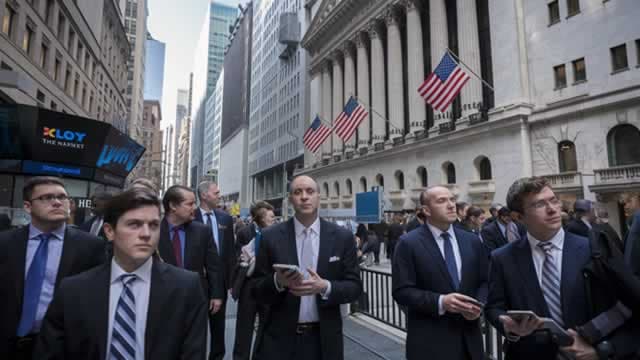
President Donald Trump on Wednesday said he and NATO Secretary General Mark Rutte have "formed the framework of a future deal with respect to Greenland." Trump said that as a result of that negotiation, he would no longer impose punitive tariffs on a slew of European countries that were set to begin Feb. 1.

CNBC's Eamon Javers reports on news regarding The White House.

Stock rebounded from their steepest one-day selloff in three months.

Breaking news hits the wire that President Trump and NATO agreed on a framework for the future of Greenland. Dave Mazza explains how this headline serves as just the latest as a way to play volatility in 2026.
Six out of nine US Supreme Court justices have indicated support for keeping a central bank interest rate-setter in her job, in defiance of the Donald Trump administration.

Wall Street staged a sharp midday rebound on Wednesday as President Donald Trump told the World Economic Forum he would not use military force to acquire Greenland. The remarks eased the most acute worry roiling markets since his tariff threats sparked the week's heaviest selloff on Tuesday.