
加载中...
共找到 24,783 条相关资讯

'Mad Money' host Jim Cramer discusses momentum in the market as stocks rally for second straight day.


Consumer prices rose at a slower pace, reflecting the Japanese government's measures and the peaking of food inflation.

Goldman Sachs Asset Management Fundamental Equity managing director Greg Tuorto discusses market outlook and economic activity on 'The Claman Countdown.'#fox #media #breakingnews #us #usa #new #news #breaking #foxbusiness #theclamancountdown #economy #economic #gdp #markets #stockmarket #inflation #business #finance #investing #wallstreet #growth #usmarkets

This morning brought a fresh wave of optimism to Wall Street. First, traders received an update from the Trump Administration regarding Greenland.

'Mad Money' host Jim Cramer discusses momentum in the market as stocks rally for second straight day.

Japan inflation cools to 2.1%, lowest since March 2022, but rice prices loom large ahead of election
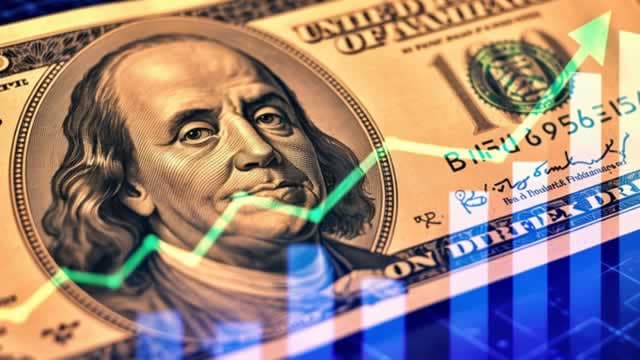
Tensions between the U.S. and its NATO allies over Greenland put some investors on edge

The Nasdaq composite regained a key level Thursday, as small caps hit a new high. Tesla stock made this bullish move.

Asking for a Trend anchor, Josh Lipton breaks down the latest market moves for January 22, 2026. Yahoo Finance Senior Reporter Ines Ferré joins Asking for a Trend as part of this rendition of the Investor Playbook.
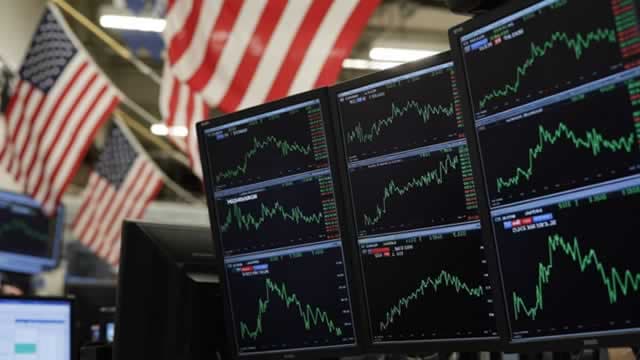
Everything from technology stocks to small caps advancing on Thursday, while longer-term Treasurys eased for a second day.

a16z's 'State of Markets' presentation projects strong AI-driven growth in both private and public markets through 2026. Private AI-focused firms are outpacing non-AI peers in revenue growth, though profitability remains elusive at this stage.
President Trump's Davos speech criticized EU energy and immigration policies, arguing that Europe is weakening itself and losing its identity. The Greenland issue could just be a way to highlight the need to be defended by the U.S. Strategically, Trump prefers negotiating with individual European nations over a unified EU, aligning with U.S. interests and National Security Strategy goals.

Nasdaq adds nearly 1% as tech shares build on Wednesday gains.

What studies show about returns after hitting “Top Dog” status

Stocks rallied after President Trump dialed back his threats against Greenland, reviving talk of the TACO Trade, a strategy intended to exploit the president's bombastic approach to policy.
ARK Invest CEO Cathie Wood says the AI boom will drive GDP growth up nearly seven percent by the end of the decade. Watch our full interview here: https://bloom.bg/4r8rhQT
Operator: Ladies and gentlemen, thank you for standing by, and welcome to the Freeport-McMoRan Fourth Quarter Conference Call. Later, we will conduct a question and answer session. If you wish to ask a question during the Q&A session, press 1 on your touch-tone phone. If you require assistance during the conference, please press 0. I would now like to turn the conference over to Mr. David Joint, Vice President, Investor Relations. Please go ahead, sir. David Joint: Thank you, Regina, and good morning, everyone. Welcome to the Freeport-McMoRan conference call. Earlier this morning, Freeport-McMoRan reported its fourth quarter and full year 2025 operating and financial results. A copy of today's press release with supplemental schedules and slides are available on our website fcx.com. Today's conference call is being broadcast live on the Internet. Anyone may listen to the conference call by accessing the webcast link on our homepage. In addition to analysts and investors, the financial press has been invited to listen to today's call. A replay of the webcast will be available on our website later today. Before we begin our comments, we'd like to remind everyone that today's press release and certain of our comments on the call include non-GAAP measures and forward-looking statements, and actual results may differ materially. Please refer to the cautionary language included in our press release and slides to the risk factors described in our SEC filings, all of which are available on our website. Also on the call with me today are Richard Adkerson, Chairman of the Board, Kathleen Quirk, President and Chief Executive Officer, Maree Robertson, Executive Vice President and CFO, and other members of our management team. Richard will make some opening remarks, Kathleen will review our slide materials, and then we'll open up the call for questions. Richard? Richard Adkerson: Thanks, David. Thank each of you for joining our call today. We're pleased to report positive results for our fourth quarter. 2025 was a truly eventful year. Recent copper prices have been strong in the face of uncertainties from global trade, tariffs, and geopolitical conflicts. The future for copper remains bright. Kathleen will report on the notable progress we have achieved during the fourth quarter following the September mudflow event at PTFI. It is impressive and provides our organization confidence about our future. PTFI has a well-designed plan to recover. Now we must execute, and we will. Our long-term strategy commitment for Freeport-McMoRan to be foremost in copper remains intact. With our high-quality assets, our strong financial position, and our highly motivated, confident global team, I'm personally enthusiastic and confident about Freeport-McMoRan's ability to create significant value for our shareholders and all of our stakeholders. Kathleen? Kathleen Quirk: Thank you, Richard. And I'm gonna be referring to our slide materials. We're very pleased to be here today to report on our fourth quarter results, review our 2025 performance, and update you on our initiatives, projects, and outlook for the future. Starting with Slide three and looking back on our performance in 2025, our team demonstrated resilience in overcoming challenges and achieved meaningful progress on several initiatives to support a strong foundation and position the company for a positive long-term future centered on value creation. As we look ahead, we're strongly positioned as an experienced global leader with compelling opportunities to enhance values through our ongoing operational initiatives and future prospects for substantial cash flow generation, which support investments in profitable growth and returns to shareholders. We show our annual information on Slide three, on copper sales, unit costs, and financial metrics. For the year 2025, we finished the year strong with copper sales and net unit cash costs slightly better than our adjusted guidance for the year. Despite the Grasberg incident, which impacted annual copper volumes by approximately 10% compared to our plan going into 2025, our consolidated unit net cash cost for the year of $1.65 per pound were within 3% of our guidance going into the year, and adjusted EBITDA of nearly $10 billion for 2025 was similar to 2024 levels. From a big picture standpoint, the results demonstrate the benefits of our diverse portfolio of copper assets. It's clearly evident in our strong fourth quarter financial results. Strength of our Americas business in this environment. I'm returning to our focus areas for 2026 where we summarize on Slide four our priorities. The first is execution. This is a hallmark of the Freeport-McMoRan culture. We're committed to maintaining Freeport-McMoRan's long track record for successful execution, carefully planning our work, and bringing relentless focus and energy on achieving our plans. The Grasberg incident was humbling, but our team has risen to the challenge and is dedicated to safely and sustainably restoring our operations as we go through 2026. Across the business, we're sharply focused on delivering our planned volumes, meeting our cost targets, executing capital projects safely and efficiently, and on maintaining discipline each day on the underlying metrics which drive our results. Managing risk, overcoming unforeseen challenges, and staying on top of what matters, for the short term and the long term. A second key focus area is crystallizing value in our Leach opportunity. This is a meaningful value driver for our business given the opportunity for near-term low-cost growth. The work we have done in recent years positions us to scale production in the coming years, and we're targeting a 40% increase in 2026 from this initiative on our path to achieving 800 million pounds per annum. Third, we're adopting innovation, automation, and new technologies to drive enhancements to reliability, efficiencies, and overall operational performance. These initiatives show promise for significant value as we work to reduce cost, enhance growth, and profitability of our US business. We have a robust profile of organic growth options and we'll continue to advance these initiatives during the year. We've got three projects, major projects in The Americas that provide optionality for future growth. And as we go forward, our team is focused on opportunities to increase margins and cash flows through greater efficiencies and disciplined investments in long-term growth. Turning to the markets on Slide five, prices on the LME during 2025 traded in a broad range between $3.87 per pound and $5.68 per pound, averaging $4.51 per pound for the year. On the US COMEX exchange, average prices for the year were slightly higher, although the differential is not significant. Year to date in 2026, prices have risen significantly in recent months with current LME prices approximately 30% higher than the 2025 average. During 2025, copper prices largely tracked macro sentiment. Market weighed US dollar weakness, expected US rate cuts, accelerating AI and technology-driven demand, and Chinese stimulus against mixed economic data, uncertainty around tariff and trade policy, economic pressures in China, and elevated geopolitical risk. At a micro level, demand benefited from secular demand trends associated with electrification and AI data centers and offset the impact of weakness in private construction and more cyclical sectors. Supply disruptions in copper and regional trade distortions which drove significant material to The U.S. also impacted copper markets during 2025. In The U.S., our customers are reporting that data center demand represents the most significant source of growth for power cable and building wire. This growing sector is offsetting weakness in traditional demand sectors, residential construction, and autos. Demand from China continues to be supported by significant investments in the electrical grid and continued growth in China's production of electric vehicles. China's demand for copper continued to grow during 2025. As you'll see in this chart, global inventories of copper on exchanges have risen in recent months during a period of sharp increases in copper prices. Most analysts are projecting that the market will be tightly balanced during 2026 with some projecting deficits and others small surpluses. Copper's superior conductivity makes it the metal when it comes to electrification. Massive investment in the power grid, renewable generation, technology infrastructure, and transportation are driving increased demand for copper and forecasts call for above-trend growth and demand for the foreseeable future. As we review the fundamentals, we continue to expect the market will require additional copper supplies to meet growing demand. And at Freeport-McMoRan, we're well-positioned to supply copper reliably and responsibly to a growing market. You've probably seen by now the recent report from S&P Global, which was released earlier this month. On Slide six and seven, we published some highlights of the report. It was a new study which evaluated the role of copper in the age of artificial intelligence. And we've summarized key findings which indicate that massive growth in demand for electricity will translate into above-trend growth in copper demand, pointing to a doubling of copper demand through 2040. The study projects a long-term annual growth rate in demand of 2.9% over this period, including significant growth in new secular demand drivers. The report is available from S&P Global, and we encourage everyone to take a look at it. Moving to our fourth quarter results on Slide eight. We've got a summary of the quarter. Our operating performance during the fourth quarter was favorable to our estimates going into the period. Production was in line with expectations, and sales were better than expected principally because of the timing of shipments in Indonesia. As indicated in our November update, we completed investigations on the Grasberg incident and restarted the Deep MLZ and Big Gossen mines during the fourth quarter. Since our November report, we've continued to make steady progress to prepare the Grasberg Block Cave to resume operations, and we're on track for a second quarter 2026 start-up. With strength in copper prices during the quarter, the performance of our U.S. business was quite strong with operating income 3.5x the level of the 2024 fourth quarter. This demonstrates a positive leverage of pricing at these operations with strong conversion to the bottom line. Moving to the operating statistics, on Slide nine, we summarize the highlights by geographic region. Starting in The U.S., production was up 5% versus both the year-ago fourth quarter and for the year 2025 versus 2024. This is notable given the declines that we faced in the prior two years, and despite the low grades, we've been working to increase volumes in The U.S. through efficiency gains through our leach recovery initiatives. We're targeting an 8% increase in volumes in The U.S. for 2026, in part related to adding scale in our innovative leach project. We're making excellent progress with our initiatives to improve efficiencies and cost performance. We're continuing to integrate new technologies to realize better performance in our basic mining functions, and we're successful in 2025 in converting our haul truck fleet at our Baghdad mine to autonomous. We're continuing to refine the autonomous process. We are optimistic that the value proposition of this technology can be applied on a broader scale. In South America, performance was in line with expectations. The Cerro Verde team will highlight finished strong to deliver another solid year. Our copper sales for South America for the year 2025 totaled 1.1 billion pounds. And the expectation is that we'll have a similar amount of sales from South America during 2026. Our unit net cash cost in South America for the fourth quarter averaged $2.57 per pound, and we expect a similar level in 2026. We're expecting stable production levels at Cerro Verde and some growth at El Abra, a project in Chile in partnership with Codelco. Over the next couple of years, there's a lot of activity at El Abra currently with a leach pad extension, and plans to conduct testing during 2026 of heated stockpile injections to enhance leach recoveries. We're also finalizing the preparation of an environmental impact statement for a major expansion at El Abra, which we plan to submit in the first half of this year. With our progress, you'll see we added reserves for the El Abra expansion of over 17 billion pounds of copper, and we're excited about this project as we progress through the regulatory process. In Indonesia, in line with our plans, we operated on a limited basis from the Deep MLZ and Bigas mines during the fourth quarter and continued our preparation for the planned restart of the Grasberg Block Cave. Sales for the fourth quarter exceeded production by about 60 million pounds of copper, which was a timing variance. Operations at one of two smelters resumed late in the year, and the new smelter remains in standby status with an expected restart later this year. We've made great progress to restore operations at the Grasberg Block Cave, which we'll cover in more detail on the next two slides. On Slide 10, we provide a refresher from our November call on the various work streams required to safely restart operations at the Grasberg Block Cave. As a reminder, the Grasberg Block Cave represents the most significant contributor in the district. We provided a schematic on the right showing the various production blocks within the Grasberg Block Cave. And as a reminder, the incident occurred in Flux Production Block 1C. Our plan incorporates a phased restart and ramp-up of the Grasberg Block Cave beginning in the second quarter, initially in Production Blocks 2 and 3, followed by Production Block 1S in 2027, and finally, Production Block 1C in 2027. With the successful ramp-up of production blocks two and three beginning in the second quarter, we expect to have 85% of production restored in the district in the second half of this year. The milestones for restarting production blocks 2 and 3 include cleanup of the mud in the tunnels, principally in the service area, the installation of cement plugs to isolate the panels in Production Block 1C, and to ensure there's no connection to the surface and replacement of the electrical and communication systems damaged in the incident. For Production Block 11S, the repairs are expected to extend beyond the restart of PB2 and PB3, principally to install additional productive barriers and replace the number of damaged shoes used to transport ore to the haulage level. We continue to target a restart of PB1, both PB1S and PB1C, during 2027. And we're gonna continue to progress the reopening plan as we monitor progress with various mitigation initiatives for the production block one. We're incorporating recommendations from the investigation to enhance our risk management and mitigation. The incident highlighted the need for more dynamic cave management plans tailored for various conditions and for more robust controls and operational procedures to address areas subject to risk from an external mud rush. In addition, we're continuing to adopt new innovative approaches to mud drainage solutions for the pit bottom. We've got those described on Slide 31. And to adopt emerging technology for imaging to improve cave shape monitoring, and those are all being advanced. We've got a scorecard on Slide 11. Very pleased with the progress that we've made to date. We're tracking the plan. Mud removals in the areas required to commence the start-up of PB2 and PB3 are substantially complete, and the barrier is being installed to isolate Production Block 1 are advanced and expected to be completed in the first quarter. With the installation of the protective plugs, infrastructure repairs are expected to move to completion by quarter-end, positioning the restart to commence in the second quarter. We remain confident in reestablishing large-scale production and in our ability to safely operate this great ore body over the long term. The progress to date continues to de-risk the plan, and in executing the restart, our team will be vigilant in prioritizing safety above all else. We're pleased to report on our reserve at year-end 2025. Those are reported on Slide 12. As you know, at Freeport-McMoRan, we benefit from a significant reserve and resource position where we have established operations and successful track records. A summary of the reserves is indicated here, where we continue to maintain long reserve lives and substantial resources to support long-term production and our growth opportunities. The reserve additions that we're reporting in 2025 are substantially in excess of our production, and those principally relate to the addition of over 17 billion pounds of copper for the El Abra project, which was previously considered a mineral resource. The reserves in Indonesia are included, and they're reported through 2041. And we note that an extension is in progress, and that would enable the report portion of the reported resource to be included in our longer-term reserve plans. In addition to the reserves, we have significant incremental mineral resources, with over half located in the United States. We'll point out the large resource in the Safford Lone Star District as we continue to advance studies to evaluate a major opportunity there. Slide 13, we wanted to update you on our growth plans. It's clear additional copper supplies will be required to support energy infrastructure, new technologies, and more advanced societies. Our projects at Freeport-McMoRan would provide significant copper which can be developed from our known resources in jurisdictions where we have an established history and experience. Our projects in Indonesia also benefit from the high gold content that goes along with the copper. Because these projects are brownfield in nature, we benefit from leveraging existing infrastructure and experienced workforce and relationships with key stakeholders to move more quickly with less risk than greenfield projects. We're now entering a period of growth in our Americas business with near and medium-term opportunities to scale our Leach initiative and double our production at our Baghdad mine. We have longer-term growth in the Saffron Lone Star District and an exciting project, as we mentioned, at El Abra in Chile. In approaching these projects, we're using innovative approaches to improve efficiencies, reduce costs, and capital intensity. And work to shorten lead times for our projects. Our high potential, low-cost innovative Leach initiative is a great example of doing this. We've talked about what we've done to date. We've produced over 200 million pounds from this initiative in 2025. We're targeting 300 million pounds in 2026. Some of the progress and milestones that we reached in 2025 was the initiation of deployment in the field of our first internally generated additive at Morenci. We've got encouraging results there. And we're planning to adopt it on a broader scale during 2026. We're continuing to be very encouraged by lab tests of additional additives, and those show even greater promise. We have projects in 2026 in our pipeline for the leach project to test injection of heated solutions in our stockpiles, which together with the additives have potential for significant recovery gains. 2026, we're looking at as a pivotal year for us in this initiative. As we work to scale to 400 million pounds in 2027 and to 800 million pounds by 2030. Our expansion opportunity at Baghdad is advancing toward an investment decision during the first half of the year. We're planning to advance engineering, retest the economics, and work with our vendors to secure fixed pricing on major components. We're also continuing to advance our work on tailings infrastructure to further enhance the optionality on timing. We're continuing our studies on Safford Lone Star District, as we mentioned, to evaluate optimal development options. And at El Abra, we have a great opportunity with our partner at Codelco to develop a large-scale expansion. Our total reserves at El Abra are getting close to the large position we have at Cerro Verde. This is a terrific opportunity for us. And we're looking forward to working with regulators as we commence the permitting process this year. Progress at Kuchin Liyar is also continuing in Indonesia, and this will allow us to sustain a low-cost long-term production profile in the Grasberg District. Before we get into our forecast for sales guidance and cost and cash flow, we want to highlight Freeport-McMoRan on Slide 14 as America's copper champion. Freeport-McMoRan is an important American copper producer and is by far the largest contributor to The U.S. copper market with an established and successful franchise dating back to the late 1800s. Our operations in The U.S. are fully integrated with smelting and refining facilities and leach processing that efficiently produce refined cathode. Freeport-McMoRan supplies 70% of the refined copper produced in The U.S. And as we pointed out, a large portion of our reserves, resources, and future growth are in The U.S. We're driving a series of initiatives to enhance our U.S. business through innovation, automation, and investment in expanded facilities. These initiatives are designed to add production at a low incremental cost and improve profitability and resiliency of our U.S. business. In an industry where development lead times can span more than a decade, our business in The U.S. is strongly positioned with the potential for an over 50% increase in copper production as we go through the next four to five years. We're very excited about these opportunities. And they most of all, they represent a significant value driver for Freeport-McMoRan. Maree is gonna cover our outlook, and then we'll circle back and open up the call for questions. Maree? Maree Robertson: Thanks, Kathleen. If you turn to Slide 15, we show our three-year outlook for sales volumes of copper, gold, and molybdenum. The plans are very similar to our last update in November. Our 2026 copper sales have been adjusted slightly to address the timing of sales between 2025 and 2026. As indicated, we expect growing volumes in 2027 and 2028 as we reach full recovery at Grasberg. We provide quarterly estimates on page 27 of the reference materials. We expect to be at a quarterly run rate of approximately 1 billion pounds per quarter in 2026. Unit net cash costs are expected to average $1.75 per pound for 2026, assuming by-product credits priced at $4,000 per ounce of gold, and $20 per pound molybdenum. With growing volumes, our first-half costs are expected to be above the average for the year, with second-half costs approximating $1.25 per pound. Putting together our projected volumes and cost estimates, we show modeled results on Slide 16. The EBITDA and cash flow at various copper prices, ranging from $4 to $6 per pound of copper. These are modeled results using the average of 2027 and 2028 with current volume and cost estimates, and holding gold flat at $4,000 per ounce, moly flat at $20 per pound. Annual EBITDA would range from approximately $11 billion per annum at $4 per pound copper to over $19 billion per annum at $6 copper, with operating cash flows ranging from approximately $8 billion per year at $4 to over $14 billion per year at $6 copper. The dotted line shows the 2026 estimates, which reflect the phased ramp-up at Grasberg. These amounts exclude potential recovery under our property and business interruption insurance coverage. The policy provides coverage for up to $700 million for underground losses. We show sensitivities to various commodities on the right. You will note we are highly leveraged to copper prices, with each 10¢ per pound change equating to approximately $400 million in annual EBITDA in the 2027-2028 periods. We'll also benefit from improving gold prices, with each $100 per ounce change in price approximating $120 million in annual EBITDA. With our long-lived reserves and large-scale production, we are well-positioned to generate substantial cash flow to fund future organic growth and cash returns under our performance-based payout framework. Slide 17 shows our current forecast for capital expenditures in 2026 and 2027. Capital expenditures for 2025 totaled $3.9 billion, half a billion dollars below our plan going into 2025, and are expected to approximate $4.3 to $4.5 billion in 2026 and 2027. We have added $150 million in capital in 2026 to advance engineering and early works at Baghdad to enhance optionality as we work towards an investment decision targeted in the second half of the year. The discretionary projects approximated $1.4 billion in 2025, and are expected to approximate $1.6 to $1.7 billion per year in 2026 and 2027, with roughly 50% related to the Piching Liard Development and the LNG Project at Grasberg. The balance includes acceleration of tailings and other infrastructure to support the Baghdad expansion, the Atlantic Copper Circular Project, which is expected to be completed during 2026, and capitalized interest. The discretionary category reflects the capital investments we are making in new projects, under our financial policy, are funded with the 50% of available cash that is not distributed. These projects are value-enhancing initiatives detailed on Slide 37 in our reference material. We continue to carefully manage capital expenditure and we'll continue to deploy capital strategically to projects with the best return and risk-reward profiles. And finally, on Slide 18, we reiterate the financial policy priorities, focusing on a strong balance sheet, cash returns to shareholders, and investments in value-enhancing growth projects. Our balance sheet is solid with investment-grade ratings, solid credit metrics, and flexibility within our debt targets to execute on our projects. We have no significant debt maturities during 2026, and have substantial flexibility for funding the 2027 maturities. We have distributed $5.7 billion to shareholders through dividends and share purchases. We have an attractive future long-term portfolio that will enable us to continue to build long-term value for shareholders. Our global team is focused on driving value in our business, committed to strong execution of our plans, providing cash to invest in profitable growth, and returning cash to shareholders. Thank you for your attention. We'll now take your questions. Operator: Ladies and gentlemen, we will now begin the question and answer session. If your question has been answered or you wish to remove yourself from the queue, please press 1 again. If you are using a speakerphone, please pick up your handset before pressing the numbers. We ask that you limit your questions to one. If you have additional questions, please return to the queue. Our first question will come from the line of Carlos De Alba with Morgan Stanley. Please go ahead. Carlos De Alba: Great to see progress in Indonesia. Just wanted to understand maybe a little bit the guidance for the outer years. Considering the opportunity in leaching that you have in North America, does the numbers, your guidance include the leaching reaching around 800 million pounds in 2028? Or is it not included in that official guidance? Kathleen Quirk: Good morning, Carlos. We've included in our outlook between 250 million and 300 million in 2026 and have not included anything beyond that for expansion. So it's around the long term. We've got around 250 million pounds in these numbers and have the opportunity. We expect to be at 300 this year, with an opportunity to scale to 427. So there's some upside in our numbers, obviously. The slide where we're showing what the potential is getting to 2 billion pounds in The U.S. includes the Baghdad expansion and getting the incremental volumes out of the leach program. So we have the potential to get to roughly 2 billion pounds in The U.S., but those aren't included in the 2027-2028 guidance at this point. Carlos De Alba: Alright. Great. Thank you. Operator: Our next question comes from the line of Katja Jancic with BMO Capital Markets. Please go ahead. Katja Jancic: The unit cash costs in South America are moving higher. Can you maybe elaborate on what's going on there and how we should think about costs there over the next few years? Kathleen Quirk: Yes. Patrick, in South America, we're forecasting net cash costs in the $2.58 range on average for 2026. Those are very similar to what we experienced during the fourth quarter of $2.57 per pound. When you look at the comparison to 2025, the increase relates mostly to labor and energy, power costs, as well as labor. You've got also a weaker dollar as well. So that's reflective, but it's very similar to what we've experienced in the fourth quarter, and we'll carry that run rate forward. Katja Jancic: Thank you. Operator: Our next question comes from the line of Alexander Hacking with Citi. Please go ahead. Alexander Hacking: Yeah. Thanks, Kathleen and team. The 2027 target to get costs in The U.S. down to $2.50 a pound. Could you maybe elaborate on how you plan to get there? Because costs last year were around $3.10, you're guiding to around $3 this year. Sorry, $3 this year, even with a nice increase in U.S. production. Like, how are you getting another 50¢ out by 2027? Thank you. Kathleen Quirk: It's really a target. And it assumes that we're successful with scaling our leach opportunity as well as continuing to drive efficiencies within The U.S. business. So it's really coming from adding volumes at a low incremental cost. We have a number of initiatives not only in the leach initiative, but we have a number of initiatives. Really, as we look at our U.S. operations, focused on minimizing downtime, improving, and just improving all of the efficiencies. And so we have really an opportunity to increase our volumes basically with the same operating rates that we have today. So that's the target that we have, and bringing in lower-cost volumes will bring down the average. Alexander Hacking: Thank you. Operator: Our next question comes from the line of Bob Brackett with Bernstein Research. Please go ahead. Bob Brackett: Good morning. I'd like to talk about Slide 14 where you highlight America's copper champion. We think rough numbers, The U.S. consumes 4 billion pounds of copper, 2 billion of which is imported. In that context, if you look at your targets, you'd be adding, you know, rounding up to 0.8 billion of that 2 billion of imports, which is a significant amount of those imports. And I'll highlight that the leaching initiative delivers refined copper, not concentrate. So I guess the question would be, can you do more? But also, the question is, how do you focus on this target in light of what copper tariffs could be going forward? Is that driving this production or just the unit economics in any world driving this production target? Kathleen Quirk: Thanks for those comments. And to highlight the leach initiatives, the exciting thing about these opportunities for us is that we're able to, with success, and we've got to have success on our additive work and with the heat injections that we're trialing this year, with success, the incremental cost of these pounds of copper that we're bringing on are very low cost, relative to the cost of what you'd have to do to actually mine the material and take it all the way through a smelter. So these are very low incremental cost pounds. They do not require significant capital. We already have the material that's been mined, and it's really the processing piece. And spending some incremental dollars to improve recoveries is what we're targeting. So that is really a very exciting value creation opportunity for us when you're talking about adding these kinds of volumes in a relatively short period of time. When you think about copper projects taking ten years or more, if we're successful here, we can be adding a new mine with very, very low operating costs and very insignificant capital expenditures. So that's a real opportunity for us. The Baghdad project is more of a conventional opportunity. As we've talked about, we've got a very significant reserve there. And what we have been talking about for a number of years now is the opportunity to build new processing facilities and bring that value forward. And we've been doing work on enhancing the optionality of that project. And as we look at that project today, it requires roughly a $4 average copper price to justify the investment. And, of course, copper prices are much higher than that today and support the project. You know, we look at a broad range of projects for copper prices when we qualify a project, but this is one we want to put our infrastructure where we have big reserve positions, and this is one where we believe it should be developed and can be developed within a short time frame. And so we're working to make sure that we have our arms around the capital and that we can execute the project efficiently. But that'll be a nice addition also to domestic production in The U.S. Bob Brackett: We're not really looking at tariffs to support this investment. It's hard to predict what those are. We're really looking at a broad range of absolute prices and how we can deliver a low operating cost mine and improve resiliency in The U.S. Bob Brackett: Great. Thanks for that color. A quick follow-up would be, in the past, you've talked about the next phase of leaching as being a phase three. In today's presentation, you're starting to take that phase three and tell us specifically how you're going to achieve it. Should I interpret that to mean that your level of conviction in the 600 million pounds target has increased over the last year or so? Kathleen Quirk: Certainly, with the additive work that we've done, prior to this past year, we were doing mostly lab testing. Now we're doing more work in the field where we're actually deploying additives on stockpiles in the field, gonna be doing that on a broader basis during 2026. And we've advanced these heat projects where essentially, we're taking the solutions that we apply on the stockpiles and heating those solutions as injecting heat into the stockpiles. And so what I say is 2026 is a pivotal year for us because we should have results on how heat and additives combine, and that really will set us up for scaling the opportunity. But you're right. We've made really good progress on the additives. We're excited to test this heat opportunity both at Morenci and El Abra this year, and that's gonna be very informative to us on our path. But we've made a lot of progress in converting some of the R&D work to early positive results. So the additive we end up with will likely be a little different than the additive we're using today. The additive we're using today is performing well. It is giving us incremental production. But we do believe based on what we've been seeing in the lab, that we'll use a variety of additives depending on the stockpiles to drive the best recoveries that we can get. And really think we're on to something. We've got more work to do, but this is a huge value creator for Freeport-McMoRan, particularly in our U.S. business. Operator: Our next question comes from the line of Lawson Winder with BofA Securities. Please go ahead. Lawson Winder: Thank you very much, operator. And, Kathleen, thank you for today's update. If I could just pick up on the comments you made on Baghdad 2X. Can you maybe give us a sense of a more precise timing this year for the update? That would be one. And then thinking about the CapEx, the slides highlight that the CapEx is still under review. What we've been seeing in the industry over the past several years is typical CapEx inflates at about 5% per year. Versus the 2023 dollars 3.5 billion. Is that a reasonable way to think about the level of CapEx inflation? And then are there any changes to the plan being contemplated with this latest updated study that could potentially change the approach or the overall mine plan or the CapEx? And then just finally, you highlight the attractiveness of this project at the current copper price. Given that it works at $4, what other factors will you consider when thinking about approving this project potentially later this year? So I know that's sort of four questions, but really it's just about Baghdad 2X and a few more details on that project. Kathleen Quirk: So as you pointed out, the 3.5 billion for the project was based on work that we had done at the end of 2023. And what we're doing in the first half of this year is continuing our engineering work and actually getting to a point where we can have enough of the engineering done to go out to our vendors to actually get fixed pricing. So that's really where we want to put ourselves as we go through the next six months. So that we have more concrete bids on what the project will cost. And so we're looking to make a decision on the project when we have this information, at midyear. And so we don't know the answer to your question yet about this 5% per annum. We know there is cost inflation. We've been trying to assess whether the tariffs will have any impact on some of the components that are involved here. And we'll continue to do value engineering to try to keep the capital intensity of the project as low as possible. But we want to do enough front-end work so that when we qualify the project for investment, we can deliver and execute on that plan. And that's what we're working on in the first part of this year. We're also doing some work on the power and making some deposits there. So we've added $150 million in capital associated with this project that will put us in a position to make a decision. In terms of the factors that we are looking at, in addition to the copper price, we want to look at the long term and the range of prices and how this project would perform. We also want to make sure that we have the right workforce set up, and we've been investing in infrastructure. Labor has been a challenge in The U.S. And that's what partially drove us to going to autonomous during 2025 to set up better optionality for Baghdad for expansion in the future. We want to optimize the performance of the autonomous fleet. We're not getting exactly what we expected to get from the performance of the autonomous fleet, but we've got progress ongoing to get us to a point where we're comfortable that the autonomous fleet is capable of running at these higher rates. So we've got some other things going on to de-risk the plan as we go through the first half, but those are the major factors: confidence in our ability to execute the capital plan, confidence in our ability to operate efficiently. Part of the goal here, in addition to bringing on additional volumes, is to bring on those volumes at a lower incremental cost than our current cost and take advantage of efficiency. So that work we're gonna be doing as well over the next several months as we get to an investment decision. But this is a project that is pretty straightforward. It's a relatively short lead time. And we just want to make sure that we can deliver on the economics that we set up at the start. Corey Stevens is on the call, and Corey, anything that you want to add there either on the Baghdad expansion, the Leach initiative, or our focus on bringing down our unit cost in The U.S.? We'd be happy to see if you have any insights that you want to add to that. Corey Stevens: No. I appreciate that, Kathleen, and yeah, just the comment on the Baghdad work. You know, the team is super energized. You know, we're through a lot of the incoming infrastructure requirements and designs and long lead items from, like, power upgrades and so forth. So and then in parallel, like we talked about, the autonomous work, very inspiring. You know, it's still early days there. You know, we really only went full autonomous in the late in the summer. So there's a bit of a learning curve there, but we're on a good track. And the team's gonna figure that out as we go forward. On the leach side, the ramp-up is really based on a lot of the initiatives that are coming to pass this year. So heat, you know, we talked about at Morenci, at El Abra. Those are big demonstration activities going on there. And then yesterday, as a matter of fact, we started another leach stockpile at our New Mexico operation at Chino. And there, we were using chemical heat. So we termed that one the perfect pile. It's an engineered piece that, you know, we build confidence around our lab work there that's really giving us a lot of excitement there that really can facilitate not only a benefit to Chino, but could change the way that we design future stockpiles going forward to enhance the ultimate activity that's coming out of those. So lots of moving parts, lots of activities, more to come this year. Lawson Winder: Excellent. Thank you both. Operator: Our next question will come from the line of Bill Peterson with JPMorgan. Please go ahead. Bill Peterson: Yes. Hi, good morning team, and thanks for taking the sounds like Indonesia is on track with the timing guidance from last year. I was wondering if you can add any incremental lessons learned at Grasberg since the November update. You know, you called PB2 and 3 on schedule for 2Q 2026. Any further granularity you could provide on timing where it could land in the quarter? Where you know, what would make it come in faster versus extended? Thanks. Kathleen Quirk: Thank you. And Mark Johnson's on the line, and he can add to these comments. But you know, we did an update in mid-November on the investigation, and we have learned a lot. And as I mentioned, we are adopting the recommendations from the investigation. The plan in terms of what we laid out in that time frame in November is very much the same. We've been executing on that plan. We've been achieving the results. As we mentioned, the mud removal within the mine workings has gone well. And we're 97% of what we need to be to start up production blocks two and three. We've just completed a cement pour at one of these protective barriers that we talked about that's needed to restart production block two and three. And so the work that we're doing between now and start-up really is related mostly to infrastructure. Now that we have these plugs in, we'll be able to advance that more. But we haven't given a specific date within the second quarter. But we would expect it would be in the first half of the second quarter at this point, and we're on track to do that. Mark, don't know if you want to add anything about that and also add maybe any comments about the overall risk management we're doing on mud removal from the surface. Mark Johnson: Yeah. The plan, as you stated, that we came up with in November, the team's done a great job of executing that. You know, it's primarily driven at first with the cleanup of the mud. That is essentially complete for the PB2, PB3 startup. Obviously, there were some challenges there that a lot of you know, it's not it's kind of a unique work environment. We dealt with some localized drainage issues. You know, it required pumping, and the team was quick to respond. Very happy also with the response from some of our key suppliers. A lot of this infrastructure that we're building is the communication systems that allow us to do the remote mining. So our suppliers on that end have risen to the challenge. So we don't see any problem with the supply chain side of things. We've continued to work with our consultants and verify our plan, make it more robust. We're looking at some new tools for our cave management that'll also play into how we look and mitigate risks, and all of that's progressing quite well. Really, I don't see any real hurdles at this point to be able to start up as we've planned. You know, any variation, I think, will be relatively minor. Plus and minuses. I think it's a very solid plan to start up. The ramp-up, you know, is something that we've spent time looking at as well. We have good history on that as to how we'll reopen some of these draw points, do it in a very cautious and safe manner, step by step, and observe and adjust as we go. Anyway, I'm very happy with the overall progress and where we are today. So PB2 and PB3, you know, is the lion's share of our production. And then, obviously, we're also working towards the PB1 area restart. Bill Peterson: Thanks for all the color. Operator: Our next question will come from the line of Liam Fitzpatrick with Deutsche Bank. Please go ahead. Liam Fitzpatrick: Good morning, Kathleen and team. Just a couple of follow-up questions on the GBC profile. It sounds like the initial start-ups of 2026 are going to plan. But in terms of 2027, is it possible that PB1S could be brought forward ahead of the mid-2027 start-up that you have? And then for PB1C, if you conclude that you can't restart production from that block, do you have the flexibility to open up other areas and bring those into production also by late 2027? Thank you. Kathleen Quirk: We haven't, with respect to our plans for PB1, the work that we've done to lay out this plan, we're continuing to expect that Production Block 1 South will be a mid-'27 start-up, and then we're gonna continue to evaluate the PB1C. Our focus really is getting the 85% up and running that we're talking about during 2026. And as we go through and in parallel, we're working on PB1. But our focus for the current period is to get the substantial amount of production restored, and then we'll look to see how to optimize and enhance it. But we're not, at this point, not looking at advancing PB1 South. But we'll be in a position to continue to evaluate that as we go. Liam Fitzpatrick: Okay. Thank you. Kathleen Quirk: With the question about the PB1C, do you want to comment on that? If we decide not to go back into PB1C? Mark Johnson: Yeah. We have some other, you know, we haven't had to face this yet, but some of the other opportunities there would be to change our sequence and go to PB1 North. We also have some options to incrementally add production from Deep MLZ. It would be at a lower grade if we did that. And, you know, the potential would be to continue to develop and ramp up PB2, PB3 beyond what we have in our plans. But all of those are, you know, forward-looking. We don't have any, our plan is still to proceed as we've shown. On Slide 31, a lot of those initiatives there on the mud removal are focused on PB1. So the execution of those and the results of those will very much drive how we look at what our options or what our future plans may look like. Liam Fitzpatrick: Just a quick follow-up. If you wanted to do PB1N, you could bring that in around a similar time, late 2027, early 2028. Mark Johnson: Yeah. We'd have to do some different development. It's a change in the sequence. It would be something that we'd have to work through. We've talked about it at a high level, but we don't have anything firm. And, you know, I'd hate to until I have that, I'd hate to respond on the timing, but we've got a lot of development capability. It's not, you know, it's adjacent to what we're already doing. We were in the process of developing all of the infrastructure around that. So that would be an option, but we don't have any firm plans. Liam Fitzpatrick: Okay. Thank you. Operator: Our next question comes from the line of Timna Tanners with Wells Fargo. Please go ahead. Timna Tanners: Wanted to ask in light of the sharp move in copper lately if you have any fresh thoughts about the recycling opportunity. I know that you have a plan and program at Atlantic Copper. Are there other potential initiatives that could leverage secondary material? And then along those same lines, any thoughts on substitution, copper for silver in solar, but also aluminum for copper in other applications? It'd be great to get your thoughts. Thanks. Kathleen Quirk: You pointed out the circular that we're doing in Spain at our facility, and Atlantic Copper, where we're completing a project to process scrap from electronics. So it's got a lot of precious metals associated with it. And so that project, we're completing the middle of this year. We do some scrap processing in The U.S. at our existing facilities. It's not, you know, we follow that business, but it's not the core of what we do. You know, our core really is around producing mining and processing what we mine. But we'll look on the margin if there's an opportunity, but it's not our, obviously not our business. In terms of substitution, that is a topic that people have long talked about. You know, we believe that the properties of copper because of its superior conductivity are compelling. You know, when you talk about data centers and that sort of thing, you know, copper still is a very, very important component of data centers. There will be substitution and thrifting as prices rise. But when you look at the big picture, you still need a lot more copper to be able to support the demand, the secular demand trends that are ongoing. So we're very confident that copper will still be viewed as a superior metal really from a conductivity standpoint, recognizing that there will be thrifting. There will be substitution that takes place as that relative value changes. Richard Adkerson: Yeah. I'd appreciate it. But that's inevitable, but it will be in the context of a higher copper price. Timna Tanners: Sure. Thanks. Operator: Our next question will come from the line of Brian MacArthur with Raymond James. Please go ahead. Brian MacArthur: Two questions on Indonesia. First, in the fourth quarter, I see there's no export duties when I look at your guidance going forward, TCs are up to $0.43 versus historical levels. Can you just tell me how you're accounting for that, whether there are export duties in that guidance going forward or what's going on, or whether that's just inter-transfer of costs as you go to the new smelter as things ramp up? And my second question has to do with KL. Obviously, it's getting bigger. Is that all additive post-2030, i.e., the higher production at KL, you still have the mill capacity, you have to do anything? And I see capital has gone up. Is that just inflation? Or is that given the KLR is a little more complicated and you have to do something else? Thank you. Kathleen Quirk: In terms of the question around export duties, we're no longer exporting concentrates. And so we don't have any export duties in our numbers. The TC number is really just the internal smelter cost. The operation of the existing smelter as well as the tolling fees that we pay or the operating cost of the new smelter and the tolling fees we pay at PT smelting. So they're really kind of internal costs. Of course, it doesn't include, you know, when you're comparing selling concentrate to a third party, that rate reflects all of the byproducts in the free metal. So going forward at CTFI, you're gonna have the cost to the smelter in that processing line, that TCRC line, but all the benefits that you get from the free metal, the byproducts, etcetera, will be in the revenue line. So it's a little different than historically when we've been just, you know, selling most of our concentrates. And Brian, we can follow up more with you on that if that's, I didn't fully answer it. But on the Kuchin Liyar, this is actually a positive here. We've been looking for some time at what's optimal between Grasberg Block Cave and Kuchin Liyar operating rates to look at what is optimal from an NPV standpoint. And as you know, the footprint of KL is very big, and a lot of it was carrying forward after 2041. But in looking at the Grasberg Block Cave and Kuchin Liyar, and the need potentially to invest in pyrite handling and processing facilities for certain types of ore, we developed a plan that allowed us to defer a significant amount of pyrite processing that would have been associated with Grasberg Block Cave and actually defer that out. And so you see KL rates going from where we were projecting 90,000 tons a day to 130. So we've added production from KL. Grasberg Block Cave is slightly smaller. All of this is just timing because with an extension, we'll get those reserves over time. But this plan allows us to defer processing for pyrite. Brian MacArthur: Got it. So you wouldn't have to make, I mean, the mill will be, what, 240 or whatever at its max like it used to be before. You're just substituting A for B in this process. Kathleen Quirk: Right. Exactly. And what it allows us to do is defer the time frame when we need to spend capital on the pyrite handling. Brian MacArthur: Great. And just back, we can take the rest of this offline. But just that 43¢ for Indonesia this year for treatment charges, is that inflated this year because we have a lower production rate and it's a ramp-up, i.e., on an ongoing basis, would it be better than that? Kathleen Quirk: Yes. Brian MacArthur: Okay. Thank you very much. Operator: And I will now turn the call back over to management for any closing comments. Kathleen Quirk: Thanks, everyone, for participating, for your questions. And if you have any follow-ups, David Joint is available, and our management team is available. And we look forward to reporting our progress as we go through the year. Operator: Ladies and gentlemen, that concludes our call for today. Thank you for your participation. You may now disconnect.

Operator: Good day, and thank you for standing by. Welcome to the Independent Bank Corporation Fourth Quarter 2025 Earnings Call. At this time, all participants are in listen-only mode. After the speakers' presentation, there will be a question and answer session. To ask a question during the session, you will need to press star 11 on your telephone. You will then hear an automated message advising your hand is raised. To withdraw your question, please press star 11 again. Please be advised that today's conference is being recorded. I would like to hand the conference over to your first speaker today, Brad Kessel, President and Chief Executive Officer. Please go ahead. Brad Kessel: Good morning, and welcome to today's call. Thank you for joining us for Independent Bank Corporation's conference call and webcast to discuss the company's fourth quarter and full year 2025 results. I am Brad Kessel, President and Chief Executive Officer. And joining me is Gavin Mohr, Executive Vice President and Chief Financial Officer, and Joel Rahn, EVP, Head of Commercial Banking. Before we begin today's call, I would like to direct you to the important information on Page two of our presentation, specifically the cautionary note regarding forward-looking statements. If anyone does not already have a copy of the press release issued by us today, you can access it at the company's website, independentbank.com. The agenda for today's call will include prepared remarks followed by a question and answer session, and then closing remarks. I am pleased to report on our fourth quarter and full year 2025 results as we advance our mission of inspiring financial independence today with tomorrow in mind. Our vision is a future where people approach their finances with confidence, clarity, and the determination to succeed. Our core values of courage, drive, integrity, people focus, and teamwork are the blueprint our employees live by. We strive to be Michigan's most people-focused bank. Independent Bank Corporation reported fourth quarter 2025 net income of $18.6 million or $0.89 per diluted share, versus net income of $18.5 million or $0.87 per diluted share in the prior year period. For the year ended 12/31/2025, the company reported net income of $68.5 million or $3.27 per diluted share compared to net income of $66.8 million or $3.16 per diluted share in 2024. Highlights for the year include an increase in net interest income of $1 million, that's 2.2% over 2025, a net interest margin of 3.62%, that's eight basis points up on a linked quarter basis. A return on average assets and a return on average equity of 1.35% and 14.75% respectively. Net growth in loans of $78 million or 7.4% annualized, that's from 09/30/2025. Net growth in total deposits less brokered deposits of $57.5 million or 4.8% annualized. An increase in tangible common equity ratio to 8.65% and the payment of a $0.26 per share dividend in common stock on 11/14/2025. Our fourth quarter performance marked the culmination of another remarkable year with our organization excelling on all fundamentals. Over the past year, we increased tangible book value by 13.3% and delivered near-record earnings. Meanwhile, our dividend payout ratio was 32% for the year as we continue to recognize the value of returns for our shareholders. During the fourth quarter, we realized continued net interest margin expansion, strong loan growth, and increased non-interest income. In addition, our credit quality metrics remain positive with watch credits and nonperforming assets below historic averages. In anticipation of continued strong earnings, we repurchased shares and executed a tax credit transfer agreement during the fourth quarter which is expected to reduce tax obligations and enhance earnings per share. Looking ahead to 2026, our confidence is bolstered by a robust commercial loan pipeline and our ongoing strategic initiative to attract and integrate talented bankers into our organization. Moving to Page five of our presentation, deposits totaled $4.8 billion at 12/31/2025. An increase of $107.6 million from December 31, 2024. This increase is primarily due to growth in savings and interest-bearing checking reciprocal and time balances that were partially offset by decreases in noninterest-bearing and brokered time deposits. On a linked quarter basis, business deposits increased by $20.4 million, retail deposits increased by $64.1 million, offset by a $28.6 million decrease in municipal deposits. The deposit base is comprised of 47% retail, 37% commercial, and 16% municipal. All three portfolios are up on a year-over-year basis. On Page six, we have included in our presentation a historical view of our cost funds as compared to the Fed fund spot rate and the Fed effective rate. For the quarter, our total cost of funds decreased by 15 basis points to 1.67%. At this time, I would like to turn the presentation over to Joel Rahn to share a few comments on the success we are having in growing our loan portfolios and provide an update on our credit metrics. Joel Rahn: Thank you, Brad, and good morning, everyone. On page seven, we share an update of loan activity for the quarter. We continue to experience solid loan growth in the fourth quarter with total loans growing by $78 million or 7.4% annualized, as Brad just referenced. For the year, we increased our loan portfolio by $237 million or 5.9%. Our commercial portfolio led the way with $276 million or 14.2% growth. Commercial loan generation continued its strong trend in Q4 with $88 million in quarterly growth or 16% annualized. Our residential mortgage portfolio grew by $7.2 million, and our installment loan portfolio decreased by $17 million for the quarter. Our strategic investment in commercial banking talent continues to supplement our loan growth. During the fourth quarter, we added an experienced banker in Metro Detroit, and in total, we have 49 bankers comprising eight commercial loan teams across our statewide footprint. During the year, we added a net of five experienced bankers to the team. Looking ahead, we believe we will continue low double-digit growth of our commercial loan portfolio in 2026. Our pipeline remains solid, comparable to January 2025. We continue to see market opportunities from regional banks in both talent and customer acquisition, and we are seeing steady organic growth from existing customers. Looking at the commercial loan production activity on a year-to-date basis, the mix of C&I lending versus investment real estate was 57% and 43%, respectively. And for our commercial portfolio, our mix is 67% C&I and 33% investment real estate. Page eight provides detail on our commercial loan portfolio concentrations. There has not been any significant shift in our portfolio over the past year, with the portfolio remaining very well diversified. Our largest segment of the C&I category is manufacturing, $183 million or 8.3% of the portfolio. In the investment real estate segment of the portfolio, the largest concentration is industrial at $202 million or 8.8%. We outlined key credit quality metrics and trends on page nine. We continue to demonstrate strong credit quality. Total nonperforming loans were $23.1 million or 54 basis points of total loans at quarter-end, up slightly from 48 basis points at September 30. It is worth noting that $16.5 million of this total is one commercial development exposure that we discussed last quarter. We continue to work through the challenges of this particular project and are appropriately reserved for any loss exposure. Past due loans totaled $7.8 million or 18 basis points, up slightly from 12 basis points at September 30. It is not reflected on the slide, but worth noting that we realized net charge-offs of $1.6 million or four basis points of average loans for the year. This compares to $900,000 or two basis points in 2024. At this time, I would like to turn the presentation over to Gavin Mohr for his comments, including the outlook for 2026. Gavin Mohr: Thank you, Joel, and good morning, everyone. I am going to start on Page 10 of our presentation. Page 10 highlights our strong regulatory capital position. I would like to note our tangible common equity ratio has moved back into our targeted range of 8.5% to 9.5%. Additionally, 407,113 shares of common stock were repurchased at an aggregate purchase price of $12.4 million in 2025. Turning to page 11. Net interest income increased by $3.5 million from the year-ago period. Our tax-equivalent net interest margin was 3.62% during 2025 compared to 3.45% in 2024 and up eight basis points from 2025. Average interest-earning assets were $5.16 billion in 2025 compared to $5.01 billion in the year-ago quarter and $5.16 billion in 2025. Page 12 contains a more detailed analysis of the linked quarter increase in net interest income and the net interest margin. On a linked quarter basis, our fourth quarter 2025 net interest margin was positively impacted by two factors. Change in interest-bearing liability mix added nine basis points and a decrease in funding cost added 13 basis points. These were offset by a change in earning asset yield and mix of 13 basis points as well as interest charged off on a commercial loan that was negative one point. On page 13, we provide details on the institution's interest rate risk position. The comparative simulation for 2025 calculates change in net interest income over the next twelve months under five rate scenarios. All scenarios assume a static balance sheet. The base rate scenario applies to the spot yield curve from the valuation date. Shock scenarios consider immediate, permanent, and parallel rate changes. The base case modeled NII is slightly higher. During the quarter due to nine basis points of model margin expansion. The NIM benefited from mix shifts in both assets and liabilities. On the asset side, solid commercial loan growth was funded by runoff in overnight liquidity, investments in lower-yielding retail loans. Funding costs benefited from growth in non-maturity deposits and a decline in wholesale funding. The NIM further benefited from a reversal of excess liquidity in the fourth quarter 2025. The NII sensitivity position is largely unchanged for rate changes of plus and minus 200 basis points. The bank has slightly more exposure to larger rate declines minus three and four hundred and larger benefit from larger rate increases plus 300 or 400. The shift in sensitivity for larger rate moves is due to shifts in non-maturity deposit modeling. Primarily caused by 50 basis points of Fed cuts during the quarter. Currently, 38.3% of assets repriced in one month and 49.2% repriced in the next twelve months. Moving on to page 14. Noninterest income totaled $12 million in 2025 compared to $19.1 million in the year-ago quarter and $11.9 million in the third quarter 2025. Fourth quarter 2025 net gains on mortgage loans totaled $1.4 million compared to $1.7 million in the fourth quarter 2024. The decrease is due to lower profit margins and lower volume of loan sales. Mortgage loan servicing net was $900,000 in the fourth quarter 2025 compared to $7.8 million in the prior year quarter. The change due to price was a gain of $200,000 or $0.01 per diluted share after tax in 2025 compared to a gain of $6.5 million or $0.24 per diluted share after tax in the year-ago quarter. The decline in servicing revenue compared to the prior year quarter is attributed to the sale of approximately $931 million of mortgage servicing rights on 01/31/2025. As detailed on page 15, noninterest expense totaled $36.1 million in 2025 as compared to $37 million in the year-ago quarter and $34.1 million in 2025. Compensation expense decreased by $300,000, primarily due to lower performance-based compensation expense, lower medical-related costs, and lower payroll tax expense, and higher deferred loan origination costs due to higher commercial loan production. That was partially offset by higher salary expense. Data processing costs decreased by $300,000 from the prior year period, primarily due in part to a reimbursement from the core provider for billing overages and other credits received. That was partially offset by smaller increases in several other solutions and one-time charges relating to special projects. Income tax expense included a $1.8 million benefit or $0.09 per share resulting from the execution of a tax credit transfer agreement related to the purchase of $22.9 million of energy tax credits during the three-month and full year ended 12/31/2025. Compared to no such benefit in the prior year. I am going to move on to page 18. This will summarize our initial outlook for 2026. The first column is loan growth. We anticipate loan growth in the mid-single-digit range and are targeting a full-year growth rate of 4.5% to 5.5%. We expect to see growth in commercial with mortgage loans remaining flat and installment loans declining. This outlook assumes a stable Michigan economy. Next is net interest income. We are forecasting growth of seven to 8% over 2025. We expect the net interest margin expansion of five to seven basis points in the first quarter 2026 with successive quarterly increases of three to five basis points, primarily due to decreasing yields on interest-bearing liabilities that's partially offset by a decrease in earning asset yields. This forecast assumes a 0.25% cut in March 2026 and August 2026 while long-term interest rates increased slightly from year-end 2025 levels. A full-year 2026 provision expense for allowance for credit losses of approximately 20 to 25 basis points of average portfolio loans would not be unreasonable. Moving to page 19. Related noninterest income, we estimate a range of $11.3 million to $12.3 million quarterly. We estimate the total for the year to increase three to 4% as compared to 2025. We expect mortgage loan origination volumes to decrease six to 7% and net gain on sale to be down 14% to 16% compared to the full year 2025 results. Our outlook for noninterest expense is a quarterly range of $36 million to $37 million with the total for the year five to 6% higher than 2025 actuals. The primary driver is an increase in compensation and employee benefits, data processing, loan and collections, and occupancy. Our outlook for income taxes is an effective rate of approximately 17% assuming the statutory federal corporate income tax rate does not change during 2026. Lastly, the board of directors authorized share repurchases of approximately 5% in 2026. Currently, we are not modeling any share repurchases in 2026. That concludes my prepared remarks, and I would now like to turn the call back over to Brad. Brad Kessel: Thanks, Gavin. We have built a strong community bank franchise, which positions us well to effectively manage through a variety of economic environments and continue delivering strong and consistent results for our shareholders. As we move through 2026, our focus will be continuing to invest in our team, investing in and leveraging our technology while striving to be Michigan's most people-focused bank. At this point, we would now like to open up the call for questions. Operator: As a reminder, to ask a question, you will need to press 11 on your telephone, and wait for your name to be announced. To withdraw your question, please press 11 again. Our first question comes from the line of Brendan Nosal of Hodde Group. Your line is now open. Brendan Nosal: Hey, good morning, everybody. Hope you are doing well. Good morning. Let me just start off here kind of on your market outlook here in Michigan. Can you just kick it off by offering your latest thoughts on the opportunity set you are seeing, particularly in Southeast Michigan given the M&A dislocation? And I guess, if you added five commercial bankers in 2025, like, what would the ambition set look like for banker ads in '26? Joel Rahn: Well, I will take it. And Brendan, this is Joel. Good question. I would think in terms of our talent acquisition expectation, it is similar. We will have some departures with retirements, etcetera, that we have to cover. But I think a net add of four to five bankers this year would be reasonable to expect. And in terms of opportunity in Southeast Michigan, we do think there will be opportunity there. It is just beginning. And so typically, the account side window opens first and can be some time before the customer feels the impact. But we are watching it closely and feel that it will be accretive for us. Brendan Nosal: Okay. Thanks, Joel. Maybe one more from you before I step back. Just on the loan growth outlook for, I guess, 5% at the midpoint. I guess, like, typically, I think of your bank as a high single-digit organic grower. So I guess just given the market opportunities you see, what is pushing that range down to the mid-single-digit area? And is there upside if payoffs behave a little more rationally in '26? Brad Kessel: Brendan, this is Brad. I will jump in there, and I would just say that over the last few years, we have actually reshaped the balance sheet. And particularly with the loan portfolios and our strategic emphasis. So of course, we have got the rundown in the investment portfolio, which has been funding our loan growth. But within the loan portfolios, the largest emphasis and where we have been investing in talent has been in Joel's group, that is the commercial banking team. And that has driven what I would call the outsized growth rate for our company for that line of business. At the same time, we still have a very strong and robust lending talent and teams in the consumer and mortgage banking groups. Yet we are just putting less on in those categories on our balance sheet. And in fact, we forecast in '26 some shrinkage in the consumer portfolio. And that is not so much coming out of the branch channel. The shrinkage is really coming off of less originations from our indirect lending group. Which is, as we have shared in the past, has always two focuses. One is marine, and the second is an RV. And we really have just not seen the same volume that we saw several years ago coming through the RV channel. The marine is still pretty good, but so when you add that all up, what ends up happening is you have double-digit growth in commercial, but the lower level of net growth in mortgage consumer gets us to that somewhere mid-single-digit overall loan growth projected for 2026. Does that make sense? Brendan Nosal: Yeah. No. That is a helpful framework to view it through. I guess just I will sneak in one more on a related topic then. Just given how much of the loan growth has been funded by securities, cash flows in the recent past, what is the outlook for that dynamic this year? Gavin Mohr: Thanks. Yes. So we have got about $120 million of forecasted runoff in securities for 2026. And that will fund loan growth. So we again, continue to intend to continue to remix that asset mix into next year. Through next year. Brendan Nosal: Fantastic. Thank you for taking my questions. Gavin Mohr: Thank you. Operator: Thank you. One moment for our next question. And our next question comes from the line of Damon DelMonte of KBW. Your line is now open. Damon DelMonte: Hey. Good morning, Hope everybody is doing well today, and thanks for taking my questions here. First one, just on the margin and the guidance provided around that. Gavin, just wondering if you could kind of walk through the cadence again for kind of what you expect here in the first quarter and then the forthcoming quarters after that? And then what were some of the drivers behind that, for a rising margin? Gavin Mohr: Yeah. So, we are looking at five to seven basis points of expansion in Q1, and then Q2, '3, and four, we are forecasting three to five basis points of expansion each quarter. And that gets you to the overall forecast of, you know, 18 to 23 basis points on a year-over-year, full-year basis. What is going on there is a couple of things. One, just the benefit of we have two rate cuts in the forecast of March and August. We feel really good about our ability to see that 40% plus beta on the repricing down of deposits. The yield curve shape right now in terms of the forward yield curve is beneficial. The mid the five to seven point of the curve is actually drifting a little bit higher. So we are getting some more slope in that respect. And then also, it is the continued repricing of below-market assets as we go into 2026. Does that make sense, Damon? Damon DelMonte: It does. Yep. I appreciate that color. And then kind of just broader on capital management, just kind of given where capital levels are and you do have a buyback in place, just kind of wondering. I know it is not in your guidance and your forecast, but just kind of wondering what your appetite is for buybacks. And then also, you know, how do you view the M&A landscape right now? Are there any interest in trying to pursue a merger with another company? So just kind of curious on your thoughts around that. Thanks. Gavin Mohr: I will start with capital and then hand it over to Brad. I would just say that we are really excited about the capital build and outlook for the organization. And you know, that provides us with a tremendous amount of flexibility, and that is really what we are focused on. Obviously, the dividend is very important. We just announced a significant increase over seven and a half percent. The board approved. And we want to continue to have a stable and growing dividend. But with that capital build, it is going to allow us the flexibility to do share repurchase when we think the price makes sense. So I am really excited about the capital position today. For Brad? Yeah. Very good. Brad Kessel: Gavin. And in regards to the M&A in the Michigan market, of course, you have got the Fifth Third Comerica, which while that is not directly impacting us, indirectly, as it goes back to Joel's remarks, we think there is an opportunity for talent and customer acquisition. Across the state, today, we have 80 plus or minus independent Michigan-based community banks. I think we will see consolidation at a similar pace to what we have seen historically in Michigan. And that is probably somewhere between 4-6%. Who they are, I am not sure. Our appetite, we would be very interested, depending on the specifics. And so that would include sort of strategically or geographically, how does it fit the footprint, the overall size, you know, and not wanting to maybe well, want to be cognizant of all the other good work we have got going on organically. So I think the culture would be very important. The metrics need to work, and it needs to materially add to EPS and at the same time, we are very respectful of not wanting to dilute our existing shareholders. So I would just step back and just say M&A for Independent, it could very well happen but is not a requirement for us to continue the success that we have experienced historically over the years. Damon DelMonte: Great. That is excellent color. I appreciate that. That is all that I had. Thank you very much. Brad Kessel: Thanks, Damon. Operator: One moment for the next question. And our next question comes from the line of Nathan Race of Piper Sandler. Your line is now open. Nathan Race: Hey, guys. Good morning. Thanks for taking the questions. Gavin, just going back to the margin discussion, could you update us just in terms of how much cash flow you have come off the bond portfolio each quarter and what the magnitude of or the amount of loans that you have that are repricing higher and what that amount looks like in terms of that yield pickup? Gavin Mohr: Yeah. Give me one sec. So the bonds, the run for the run rate for 2026 is $120 million. And I think it is fair. You could model that as pro forma to the or split it up equally per quarter. On the loan side, let me get through my notes here. Maybe to ask another question while you dig that up, Gavin. Do Great. Nathan Race: Maybe Brad, just thinking, you know, more holistically about the balance sheet composition. Just curious what the appetite is to maybe trade some of your excess capital. Obviously, you guys are going to be building capital at pretty strong clips just given the profitability profile this year. But just what the appetite is, maybe trade some regulatory capital to maybe reposition the securities book, whether it is on the AFS or HTM side of things. Brad Kessel: You know, so that is a good question, Nathan. And revisit that strategy regularly. Historically, we have sort of nibbled at selective investment sales and, generally where we can earn it back within a reasonable time frame. But we have had a book. It is running off. And I am not sure you are really going to see Independent needing to accelerate that taking losses and I just that is not really in the strategy at this point. Nathan Race: Okay. That is helpful. I appreciate that. Maybe one more from me. Just in terms of what you are seeing or expecting from a charge-off perspective, I appreciate the provision guide, and, you know, charge-offs have been really well behaved over the last several quarters now. But just any thoughts maybe, Joel, in terms of, you know, any normalized expectations around charge-off range going forward? Joel Rahn: Yeah. We do not see we see it being very similar to the past few years. We really do not see any big change in that profile. And cannot recall, Gavin, if in your guidance, if you had any specific range there. We did not. Well, we said provision would be Yeah. 20 to 25 basis points. Yeah. And that provision is going to be a function of more loan growth than anything. But I think the charge-off history, you know, recent history has been really, really well. And I think probably is unrealistic to expect that indefinitely. The charge-offs really to date have been in the consumer loan portfolio. And the biggest driver has been quite frankly, due to a customer passing away and then getting the collateral back in and then disposing of it. But I think somewhere in our recent history, maybe a little bit higher, could be modeled on a go-forward basis. Nathan Race: Agree with that. Nathan, I have your the details for your question on cash flow repricing. Nathan Race: Mhmm. Gavin Mohr: Average for the quarterly for 2026 is going to be about $105 million. At an exit rate of on average of $5.50. So at current speeds, CPRs. Nathan Race: Okay. And that is on the commercial book or just overall, Gavin? Gavin Mohr: That is fully I mean, that is the entirety of our fixed-rate portfolio. So that includes mortgage, commercial, is going to run about let us see, for the year, it is about $80 million. I am sorry. Excuse me there. It is $228 million. My totals were off. Let me Nathan Race: Do not worry about it, Gavin. Yeah. So yeah. Yeah. We are good. We are good. Appreciate it. Yeah. Can Gavin Mohr: It is yeah. You are good. It is 200 and total commercial is around $220 million for the year to May. So it is yeah, Nathan Race: Okay. Quite substantial then. Yeah. That is all I had. I appreciate all the color, guys. Thank you. Gavin Mohr: Thanks, Nathan. Operator: Thank you. One moment for our next question. And our next question comes from the line of John Rodis of Janney. Your line is now open. John Rodis: Hey, morning, guys. Gavin, just following up on the securities portfolio. You said runoff of roughly $120 million. Does that all I mean, are you looking to reinvest any into the securities portfolio at this time? Or I think looking at my prior notes, I think you said sort of targeting securities portfolio, you know, 12 to 15% of assets. Is that still sort of the thought process? Gavin Mohr: That is, John. And we I do not think we will get through 2026, without doing any securities purchases. John Rodis: Okay. Okay. But if you look I know 2027 is a long way away, but could you maybe hit a bottom then, I guess? Or Gavin Mohr: Yeah. Yeah. I anticipate in 2027. Do not make me give you a month in 2027, but within 2027, we will have four out and we will start to reinvest. Yeah. So I you know, we have not met 12 to 14% of total assets is still a target for us in terms of triggering investment purchases. So that is still the strategy. They are John. John Rodis: Yeah. Okay. Thanks, Brad. Brad, maybe just a follow-up on the M&A question. And you guys talked about through the normal course of business sort of adding a handful of bankers each year. I mean, you be open to you know, picking up a team of lenders or anything like that? I know it gets a little bit tougher when you add teams as far as culture and stuff like that, but what are your thoughts? Brad Kessel: Yeah. I mean, that has not been the pattern historically. But I would say we would be open to that. Joel, what are your thoughts on that? Joel Rahn: Yeah. I am certainly open to it. That does not happen very often. It is fairly rare. And we have just we have had really good success in, in just, you know, going after one banker at a time. And so I think would expect that is where the majority of our ads will continue to come. Sort of one bank credit and then building a team. John Rodis: Correct. Yeah. Yeah. Yep. Okay. Thanks, guys. You are sort of breaking up a little bit, but I think I get the picture. Thank you. Brad Kessel: Thanks, John. Operator: Thank you. I am showing no further questions at this time. I will now turn it back to Brad Kessel for closing remarks. Brad Kessel: In closing, I would like to thank our Board of Directors and our senior management for their support and leadership. I also want to thank all our associates. I continue to be so proud of the job being done by each member of our team. Each team member in his or her own way continues to do their part toward our common goal of guiding customers to be independent. Finally, I would like to thank each of you for your interest in Independent Bank Corporation and for joining us on today's call. Have a great day. Operator: Thank you for your participation in today's conference. This does conclude the program. You may now disconnect.
Operator: Greetings, and welcome to the LSI Industries Inc. Fiscal 2026 Second Quarter Results Conference Call. At this time, all participants are in a listen-only mode. A question and answer session will follow the formal presentation. If anyone should require operator assistance, please press 0 on your telephone keypad. As a reminder, this conference is being recorded. It is now my pleasure to introduce Jim Galeese, Chief Financial Officer. Please go ahead. James Galeese: Welcome, everyone, and thank you for joining today's call. We issued a press release before the market opened this morning detailing our fiscal 2026 second quarter results. In addition to this release, we also posted a conference call presentation in the Investor Relations section of our corporate website. Information contained in this presentation will be referenced throughout today's conference call. Included are certain non-GAAP measures for improved transparency of our operating results. A complete reconciliation of GAAP and non-GAAP results is contained in our press release and 10-Q. Please note that management's commentary and responses to questions on today's conference call may include forward-looking statements about our business outlook. Such statements involve risks and opportunities, and actual results could differ materially. I refer you to our safe harbor statement which appears in this morning's press release for more details. Today's call will begin with remarks summarizing our fiscal second quarter results. At the conclusion of these prepared remarks, we will open the line for questions. With that, I'll turn the call over to LSI President and Chief Executive Officer, Jim Clark. James Clark: Thank you, Jim, and good morning, everyone. I appreciate you joining us today. This morning, we'll be reviewing our second quarter results for fiscal 2026. As you likely saw in our earnings release, we delivered solid second-quarter results that were in line with our expectations. Revenue was essentially flat year over year at $147 million while profitability and free cash flow improved. Given the strength of the prior year comparisons, particularly within Display Solutions, I'm pleased how this quarter performed and how our teams executed throughout the quarter. Jim Galeese will walk through the financial details in a few minutes, but I want to spend some time on a few areas that I think were important as we move into the second half of the year. As we've discussed previously, the second quarter of last year benefited from unusually strong event-driven demand, most notably in the grocery vertical, following the resolution of a failed merger between two large grocery chains. The release of pent-up demand drove exceptional growth of 100% in our Display Solutions segments, with 50% of that being organic growth in Q2 of last year. This demand pattern in groceries has returned to a more normalized level. And against that backdrop, flat consolidated sales and improved margin represents solid execution. More importantly, we continue to see healthy customer engagement, active planning discussions, and increasing order trends as we exit the quarter. Lighting delivered another strong quarter with sales growth of 15% year over year and meaningful margin expansion. This follows 18% growth in the first quarter, and we're encouraged by the consistency of performance across multiple end markets. Several factors have contributed to the strength in lighting, including the addition of aluminum poles to our steel pole product line, an increase in large project shipments, continued momentum in our national account strategy, and solid traction from recent product introductions as we remain focused on product vitality. As we exit the second quarter, lighting orders were up approximately 10% year over year, resulting in a book to bill above one. This gives us continued confidence as we look ahead. In Display Solutions, we maintained a high level of execution across several large multiyear customer programs. Particularly in the refueling area, convenience store, quick-serve retail, and casual dining restaurant verticals. While revenues declined slightly year over year due to the prior year comparisons, orders improved sequentially and were up year over year supporting an improved backlog entering into the third quarter. What's particularly encouraging is how the opportunity set within display solutions continues to evolve. Historically, much of our growth in food services has come from quick-serve restaurant customers. These programs often involve large numbers of sites, sometimes hundreds at a time, with individual product values ranging from $20,000 to $40,000 per location. This work remains an important and durable part of our business, and we continue to win and execute well in that space. While at the same time, we are now seeing meaningful traction beyond traditional QSR into the casual dining space and premium food services. With these programs, they typically involve fewer locations and the value per site is significantly higher, often ranging from $250,000 to $1 million per location. These opportunities align well with our capabilities in custom fabrication, integrated design, and program execution, and they represent a natural extension of the platform we've built over the past several years. We're also encouraged by improving activity in the international market, particularly in Mexico and the islands. Conditions strengthened during the quarter after several softer periods. Based on what we're seeing today, we expect activity to remain elevated into fiscal and calendar year 2027. Over the last two quarters, I've emphasized that our focus for 2026 and what will continue into 2027 will be our people. That commitment remains unwavering. Talent management through thoughtful role design, succession planning, and deeper cross-team integration are not just priorities, they're essential to creating a single unified organization we continue to bring JSI and EMI together under the LSI umbrella. While there will be opportunities for operational consolidation in the future, the greatest return on our investment will continue to come from empowering our people. Aligning them around shared goals, and enabling them to collaborate more seamlessly. The core objective of this integration is to unlock meaningful cross-selling opportunities by breaking down silos, improving transparency, and ensuring our teams are working as one cohesive commercial engine. A few months ago, we brought on a senior sales leader within our display solutions group specifically targeted to enhance visibility into our current sales activities, pipeline development, and near-term conversion opportunities. Just as importantly, this role is helping us to strengthen alignment between sales, operations, and execution, ensuring that we are not only identifying opportunities across brands, but we act on them quickly, consistently, and with a unified customer experience. Next week, we will take another important step forward as we host our sales meeting here in Cincinnati. Bringing together nearly 120 sales employees and marketing professionals from across the organization, we will be spending several days together, including time over the weekend, focused on collaboration, alignment, and building the relationship that makes true cross-selling and coordinated execution possible. This time together is not just about strategy and planning. It's about reinforcing our shared purpose, our culture, and continuing to work on becoming one integrated team moving forward as one organization. From a customer perspective, we continue to see increasing engagement from large, sophisticated organizations that place a premium on supplier scale, geographic coverage, and manufacturing depth. In several cases, customers have specifically cited our ability to design, fabricate, and deliver across multiple regions as a key differentiator. This capability continues to elevate the types of programs we're invited to pursue. Profitability and cash generation were highlights of the quarter. Adjusted EBITDA increased year over year to $13.4 million, and margin performance benefited from disciplined project pricing, productivity improvements, and effective cost management, which together helped offset ongoing cost inflations. Free cash flow was strong at $23 million, driven by profitability and continued working capital discipline. We used that cash flow to reduce our total debt by $22.7 million during the quarter, ending with a net leverage ratio of 0.4. The balance sheet strength supports our fast-forward strategy, allowing us to invest in our organic growth, pursue operational improvements, and maintain optionality around future acquisition opportunities, all while continuing to return capital to our shareholders through our dividends and other programs. Execution across the organization continues to reflect LSI's high SAGE ratio and culture. Our team stayed focused during a quarter that required careful management of mix, margin, and timing. I'm proud of how they delivered. The collaboration between sales, operation, design, and supply chain continues to be strong, and that alignment is showing up both in execution and in customer confidence. Looking ahead to the '6, we expect continued progress on our goals supported by improving order trends and backlog. We remain confident in the secular growth outlook across our key vertical markets and in our ability to grow above the market through a differentiated solutions-based approach. In closing, I want to thank you for your continued support in LSI. We're executing well, we're financially strong, and we remain focused on building long-term value through disciplined growth and operational excellence. With that, I'll turn the call back over to Jim Galeese for a more detailed review of our financial results. James Galeese: Good morning, all. LSI Industries Inc. generated sales of $147 million in Q2, consistent with the prior year, successfully offsetting challenging prior-year comps. Adjusted net income and adjusted EBITDA were modestly above the prior year and all were double-digit above the same quarter fiscal 2024. Adjusted earnings per share were $0.26 for the quarter. Cash flow in the quarter was higher than expected at $23 million following a timing-related softer first quarter. The strong cash flow lowered our debt to EBITDA leverage ratio to 0.4 times, providing significant capital allocation flexibility. With our amended financing facility, LSI has cash and availability of approximately $100 million. Next, a few comments on our two reportable segments. As mentioned, Lighting had an outstanding quarter, realizing sales growth of 15%. This represents the third consecutive quarter of double-digit growth as compared to the prior year quarter. Referencing various reports on non-resi construction, our double-digit growth rate continues to outperform the market. As a result of volume and effective margin management, adjusted operating income increased 29%, with the adjusted gross margin rate improving 190 basis points versus last year. One of the growth opportunities identified for Lighting was increasing our business with national accounts. We felt our operating model capabilities aligned closely with satisfying strict customer requirements, so investments were made to support this initiative. Results reflect significant progress in gaining new customers and sales. This, along with the health of our key vertical markets, is driving our strong growth rate. We expect favorable momentum to continue into the '26 as lighting orders for Q2 were 10% above the prior year, a book-to-bill ratio above one on strong shipment quarter and an improved backlog. Shifting to Display Solutions. Jim did an excellent job providing context to the current quarter's performance for Display, and how to interpret comparisons to the prior year. I'll just add a few additional comments. For the grocery vertical, second-quarter sales reflect a return to normal seasonal demand. Implications were lower sales this quarter versus the pull-forward of last year, but also a return to more predictable demand flows, allowing us to plan and fulfill customer programs more efficiently. For example, Q2 adjusted gross margin improved 30 basis points despite lower production volume, reflecting improved productivity enabled by more stable production scheduling. Orders also followed a return to seasonal demand patterns, Q2 grocery orders increased double digits year over year, generating a strong book-to-bill ratio of 1.2 versus under one last year in building backlog. We expect sales growth in grocery in the '26. Activity remains high in the refueling c-store vertical, as we continue to execute against several large customer programs. In addition to our established foundation of large customers, we recently added multiple mid-sized projects, representing a combination of new and existing customers and brands. Building relationships with new customers provides the opportunity to expand our sustainable, repeat business model successfully built and executed. Over time, growing growth in our service business is also providing cross-selling opportunities. For one refueling c-store customer, where we are currently active with service at over 140 sites, the opportunity to present our broader solution set resulted in a significant number of sites specifying our Archer perimeter lighting system, generating an expansion of revenue per site. The QSR vertical has been sluggish as large chains manage multiple priorities, inflation, leadership changes, and shifting consumer habits. Our teams, however, are very busy working with customers on numerous programs in the concept and development phases. So future investments are planned, the timing of release remains unclear. In summary, LSI delivered a solid Q2 in 2026, and we remain encouraged by the level of activity in the majority of key vertical markets. Work to market the value of our LSI solution set is ongoing, and we expect to generate growth in Q3 and the second half of the fiscal year. I'll now turn the call back to the moderator for the question and answer session. Operator: Thank you. We will now be conducting a question and answer session. If you would like to ask a question, please press 1 on your telephone keypad. One moment while we poll for questions. Our first question is from Aaron Spychalla with Craig Hallum. Aaron Michael Spychalla: Yes. Good morning, Jim and Jim. Thanks for taking the questions. Maybe first on refueling in C store. You talked about onboarding multiple projects given some more targeted sales initiatives. So it sounds like a little bit more consistent growth is expected there. Can you just maybe help frame that opportunity a little bit for us more on what that looks like and just, you know, some of those initiatives? James Clark: Yes. Aaron, it's Jim Clark. Thanks for the question. I think that the word I'd use is steady. I can think about this call last year, this time, and we were looking at a project that we knew in the refueling sector was gonna run out into fiscal year 2026, and that has proven true. Right now, I would say we have a number of those projects, smaller in scale, but the same kind of makeup where we have received the order, we're looking for the releases, and we've got a nice path in front of us gonna bring us through the remainder of '26 and into '27. So I can't give specific color on any one particular project. They're all a little bit different, but I would say they're geographically spread, both internationally and domestically. The business is healthy in both its content and its pace. James Galeese: Yes, Aaron. Jim G. here. I'll just add on to Jim's comments that we have this very strong foundation with our large core, repeatable customers that we've done business with multiple cycles for years. Some of these mid-sized customers indicate two things. Number one, the health of the vertical, the level of activity going on there, and secondly, it's a combination of having done business with some of these customers before, but several of them are new, and some of those are actually non-domestic entities. It is an opportunity for us to further develop relationships and build on this foundation that we have. It sends a positive signal about the health of the vertical. Aaron Michael Spychalla: Yeah, that's helpful. Thanks. And then maybe on Mexico, good commentary on activity levels there. Can you just talk about some of the market drivers you noted elevated demand into FY '27? Maybe just at what level has that business been for you, and where can it get to if we look out into FY '27? James Clark: You know, I think that, in general, relatively conservative. We look the best we can when we start to forecast out six, nine, twelve, or eighteen months. It gets difficult for us, but I'll comment on this: if you look at that market in general, and it's just one of the markets, right? I don't want to get overly focused on c-store because we've got grocery in there, we've got QSR, we've got casual dining that I just talked about today. We've got auto, we've got a number of other segments. We talk a lot about grocery and C store, but they are not our only verticals, and I feel good about the momentum in all of them right now, to tell you the truth. What we're seeing is a competitive environment that's accelerating. If you look at companies like Wawa's, Sheetz, Casey's, and conversations around Circle K and 7-Eleven, it says a lot in that particular vertical about the pace of that industry, the competitive forces that have come to play, and new construction is driving remodel. Remodel is driving remodel. And this pace to continue to refresh their location, refresh the aesthetics of the location, the capabilities both in food services and other services, it bodes really well for us. We see this going on for many years, and that's just within that vertical. We think the things that returned to normal have a nice upward curve to them. We believe that the competitive forces in grocery also have the same dynamics we talk about in c-store, which are competitors raising the game, and the foundation in those industries raising their game along with it. That bodes very well for us. Someone asked me just the other day to recap new construction versus remodel. We love new construction, but it's a smaller component, 20, 80, 20. It's 80% remodel. That remodel is on a nice curve where it's trending kind of five year remodels right now. People are investing in those stores and putting money in them to be competitive with all these new starts and the changing environment. Aaron Michael Spychalla: Okay, that's helpful. And maybe on the non-U.S. or the Mexico component, just how does that potentially look as we move out, like, pipeline and just maybe what that business can become for you? James Clark: Yeah. I think that basically, Mexico, all the chaos, the global chaos of trade and duties and immigration caused a lot of question marks over heads in Mexico. I think a lot of that has normalized now, and folks are ready to get back to their original plans. I would argue that we're far behind based on their plans, and now it's just a matter of how much effort they start and try to go on their plan from day one or start and try to catch up with some of the things that were in arrears. That will materialize over the summer, and we'll have a better vision on that. James Galeese: And Aaron, I would just add that the deregulation of the external retail or environment's been a nice win for LSI. It's had its ebbs and flows and probably will continue to have some ebbs and flows, but one thing is certain. Our partners, oil company partners who entered Mexico, it truly reflects that we are partners with them. So it's not a supplier relationship. We bring some experiences to them as they enter and grow in that market, and vice versa. Right now, that activity is on an upswing, and in the intermediate term, we see that upswing as positive to continue. James Clark: And we're in the second inning on that, by the way. To even say we've scratched the surface would be an overstatement. Aaron Michael Spychalla: Okay. Yeah. Understood. And then maybe just one on EMI, the integration. Can you just talk about where margins stand today as we get closer to that two-year mark? Talk about some of the operational initiatives there and maybe more broadly across the business as well. James Clark: Well, first of all, we love EMI, we love the whole team, and it fit in well. I think we've talked about this before, but when we look at M&A, we don't just look at the financials. We look at culture and everything else associated with the business as much as we look at any element. I want to underline the culture part. What I usually say is we look at the operational efficiency, the sales synergies, the balance sheet with as much weight as we look at culture. Our thinking behind that from an M&A perspective is if we're a square and they're a triangle, that takes a lot of work to kind of get them into our company and get them operating in the same rhythm. They demonstrated, the people there and their culture, are very close to LSI's culture. So it was a real win-win together, just like JSI was, just like Canada's Best is. We've talked about it before. They've had better than 200 bps of improvement in their margin, and we're continuing on that. I think that for us to reach, to get them up to that 10.5 and better, we probably still got a full year left in that journey, but I'm very pleased with the progress. Aaron Michael Spychalla: Understood. Thanks for the color. I'll turn it over. Operator: Okay. Our next question is from Christopher Glynn with Oppenheimer and Company. James Galeese: Thanks. Good morning, Jim. You know, wanted to go into your comment about the premium food services, get a better picture of what that entails. And I had a couple of other opportunities in mind. I don't know if they fit into premium food services or other, but how do you look at, like, the campus meal plan infrastructures and maybe hotel buffets? James Clark: Yes. So Chris, thanks for the question. I wanted to kind of highlight what we're going to just kind of moniker as premium food services, and it was really to delineate and differentiate between QSR. We've always had a very strong position in QSR. We remain in that. We see a lot of growth opportunities, particularly on our display solutions side, and across the gamut—our digital menu board, our refrigerated products, our food-grade countertops, all of that. We love QSR. But we've always had a spot in this premium food services, and I want to break it up into two pieces. One, we'll call casual dining. Those are restaurants that are, you know, think about waiter-waitress service, a restaurant that you're gonna come in, typically a chain, and some of them are larger, some of them are smaller. But the numbers tend to be smaller than QSR, but the investment inside the store is measurably bigger. Right? So we were just looking at a project last week that's gonna tip over a million dollars just for this restaurant interior. We have steady business in that, and there are indications that it's improving. On the campus side and on the food services side, particularly related to refrigeration, we have been making inroads there. We sat down just over two years ago to double our effort there. We have a steady business, but we don't have the volume that I think we deserve. And they've been working across EMI and across JS. They've been working very hard to put themselves in those spots. The difference between our core business, where we have multiple projects that span across multiple years, when we get into this premium food services side, a campus for a college, cafeteria plans, these casual dining restaurants, hospitality, the number of locations tends to be smaller. If we get a project, a lot of times it's a project of one, or maybe a regional project of five or twelve or something like that. But the scale of the project is much bigger—10, 20 times the size of our smaller projects. Same kind of development time, but we think that our spot is unique to their demands because we're able to come in and truly be a one-stop-shop, from refrigeration to countertops to steel, to lighting, to graphics, to millwork. It's a nice fit, and I think that the work we're doing in these other sectors has created more visibility for us and more credibility. So we come in much more credible, much more recognized, and I think we're starting to see the beginning of that as a viable market for us, one that we can continue to grow exponentially. Christopher Glynn: Yeah. Thanks. Seems like campus could be a nice-sized vertical at some point. And then you've talked about the three acquisitions today and the one-point integrated team. Appreciate that explanation. Messaging is really well packaged, and obviously suggests the opportunity to continue to do the appropriate consolidation. So I was just curious about how you think about what might be an appropriate leverage ratio range for the right kind of deal? James Clark: When we're talking M&A, what do we look at for multiples? Is that what you were saying? Or you were talking about leverage? Christopher Glynn: No. I was talking about your balance sheet. James Clark: Yeah. We've talked about this before. I mean, certainly anything below three, we're comfortable with, and we sleep even better when it's below two. Right now, we're at 0.4. We've had a demonstrated history of using our debt revolver, using debt inside the company to go and make acquisitions and then quickly put ourselves into a leverage ratio where we're comfortable. But generally, we want to be, certainly below three. If we had something extraordinary, we always talk about it in terms of incremental or exponential. Right? So incremental is something we do within our debt revolver, and it's, you know, 50, 80, 100, 125 million maybe. We're very much there. And then we look at exponential, which might be something that pushes us into the threes. I can't see a scenario where the first number wouldn't start any greater than a three. But, yeah, that would be exponential, and we're always on the look for that. We just haven't found the right fit for us at this point. James Galeese: Yeah. Chris, you know, we feel very strong about our cash flow generation. As you saw, we had an excellent cash flow quarter. We're on pace now for our fourth consecutive year of cash flow exceeding free cash flow exceeding $30 million. So we're comfortable at looking at M&A transactions of sizes and then the ability to bring that leverage ratio down pretty quickly given our cash flow generation capabilities. Operator: Thank you, guys. Our next question is from Alex Rygiel with Texas Capital. Alex Rygiel: Thank you. Good morning, everyone. Very nice quarter. First question here, could you give us an update on the Canada Best acquisition integration activities and the traction, in particular, on entering the banking vertical in the U.S.? James Clark: So Alex, thanks for the question. Canada's Best has worked out very well for us. Again, I just talked about it a minute ago about culture, and they were just another good fit. I couldn't underline that enough, that we look at the balance sheet, but we look at culture with as much diligence and as much focus as we look at anything else in the business. These guys have been great. They hustle, they are proud and energized to be part of LSI and part of a bigger team. But I gotta tell you, they're true entrepreneurs. The whole team up there, they look for opportunities. They are more emboldened with the financial strength of LSI and the capabilities. I didn't talk about this specifically, but JSI has a facility up there in Collingwood. Our Canada's Best facility is just outside of Toronto. We're in the process right now of integrating those two, making them a stronger Canadian operation under one umbrella. So it has worked out very well for us. We have begun to talk to retail bank environments here in the U.S. These projects typically, when we're talking about hundreds or thousands of sites, it's not unusual for the gestation period to be twelve, eighteen, or twenty-four months for us to get involved in a large project. I can't say we've had any meaningful wins yet, but we're investing time. They will have a spot at our sales meeting next week to talk about the markets they're in, the diversity, and how they're addressing those markets. We have teams collaborating on that. We're hopeful we're able to talk about retail banking as another top five, top 10 market for us, within the next twelve months. So, in summary, activity started. We've had some small wins, and we're looking to push that forward. Alex Rygiel: And then secondly, more broadly on price increases. I believe your last price increase might have been around March. Can you talk to us if there have been any recent price increases or if there's a need for price increases given tariff implications or other raw material cost inflation? James Clark: Yes. When you look at the two segments, Display Solutions is minimally impacted by tariffs. I'm not giving specific numbers, but I would broadly say no more than 10% or 15% of any material or any product we use in display solutions has been impacted by tariffs. Lighting is a little bit more because of the sourcing locations on some key components and things like that. But in terms of pricing, we make price adjustments now as opposed to price changes. Some categories and products are more susceptible, and others are more stable. We're always looking for the opportunity. We're disciplined in pricing, and we respect fairness. We are market competitive and make it difficult for others to breach. Pricing is one of them, but we're disciplined. We don't want to overstep our bounds and bring different competitive forces into our customer environment. We are price disciplined and focused on it. Most of what we're doing now is price adjustments as opposed to blanket price changes. James Galeese: Yeah, just to reinforce Jim's comments. We are principally a project-based business. Given that, it gives us the opportunity, on a regular basis, to examine pricing and make sure we are aligned with what's going on with our cost structure, particularly our material input costs. Our team does an excellent job of maintaining current cost. When making project quotes, we are accurate and make pricing decisions that optimize our margin management. James Clark: And I will just add on the closing comment. We always reserve the right for price review. Even when we win an award, have a three-year project, we are not locking ourselves in on pricing for three years. We have good relationships with our customers. We're upfront about negotiations and project costs. That discipline around price goes both ways. We want to ensure we're good stewards for LSI and we want to ensure we're good partners for our customers. Alex Rygiel: And then lastly, you talked a little bit about some operational improvement opportunities. Are there any notable CapEx needs associated with that over the next twelve months? James Clark: Nothing notable. Our CapEx is relatively small. We don't see anything material impacting that, at least in the foreseeable future. But I will say, not related to that question but not specific to spending, we are looking for these opportunities. We always talked a few years back about building a better company before we built a bigger company. We've built that better company, we've built a bigger company. Now we're going back and making those improvements and doing it in respectful ways for the people within our company, for our customers, to ensure we're not doing anything disruptive. We are after all of those improvements and consolidation and rationalization, and all of the opportunities are hidden in it. James Galeese: You know, Alex, I would just broaden your comment that it's not just about capital spend but also about investment. We invest in multiple ways, not just CapEx, like looking at our facilities footprints, our talent structure, new product introductions, development costs, etcetera. We are aggressive in having our team put forth proposals to us in all those categories. We invest accordingly, and I think those investments are showing up in some performance areas across our two reportable segments. Operator: Very helpful. Thank you. Our next question is from George Gianarikos with Canaccord Genuity. George Gianarikos: Hi. Thank you for taking my questions. Maybe to focus first on your statement here in the press release that you expect above-market growth for the year. Can you sort of talk a little bit about the competitive environment and what you're seeing there that gives you the conviction you can grow faster than the competition? Thank you. James Clark: Yes, good morning, George, and thanks for the call. I think we hit on it a little bit earlier, and I appreciate bringing it up again. We think there's a lot of dynamics going on in the spaces we're playing in. You know, we purposely, if you remember the whole story of how we constructed our first plan and then the fast-forward plan, it was about narrowing the aperture and looking for markets where we thought we could make an impact and differentiate ourselves. But the other component, the other leg of the stool, was identifying those markets with some type of disruption for long-term growth, which we define as five or ten years. I underline that new entrants in the convenience store space are very aggressive, they're committed to the customer environment in those stores, aligning well with what we're delivering. The grocery market, the work and investment they're putting in for shopper experience, branding, and customer experience, it's key. Lighting plays a big role in this. But our entry has been Display Solutions, which gets us in the door. The combination of products, the uniformity of it, our ability to deliver, our services component, I think it puts us in a category of one. I feel like we have the opportunity to not only win those projects but accelerate our win rate with those projects. George Gianarikos: Thank you. And maybe just one last question for me. Focusing on the M&A opportunities, that you've been focusing on and have executed on, I'm curious as to what the return dynamics look like with the bump up in rates here that we've seen and your willingness and desire to use debt as a way to finance them. What has that done to the pipeline and the available pool of acquisitions in the marketplace? Thank you. James Clark: Yes, I don't want to poke the bear here, but obviously, I don't like that the rates are higher. But I do feel like there's been a leveling effect, particularly regarding private equity. The multiples are more realistic, and the conversations are more business-oriented. I don't feel there's as much of the fever pace as there was a couple of years ago. Deals were just getting done sometimes, one, two, three turns higher multiple than we would even consider. So even with higher rates, the environment’s better for strategic acquirers like us. It just comes down to the selection process. We're picky buyers, right? I talked about it a couple times on the call today. It can't just be the company performance or the products. The culture has to be there. We don't want to go in and try to rework anyone or fight an opposing or different culture. It doesn't mean theirs isn't good, but ours is better. We want to have similar thoughts, goals, and tools. It makes it trickier because we are so selective. But, to be completely honest, the rates aren't that bad as we look at them. And I do think they have helped turn conversations more realistic and more business-oriented. I wouldn't mind lower rates, don't get me wrong, but I feel better in this environment than I did when it was free money. George Gianarikos: Thank you so much. James Clark: Thank you, George. Operator: Our next question is from Sameer Joshi with H.C. Wainwright. Sameer Joshi: Hey, good morning, Jim and Jim. Thanks for taking my question. Congratulations on a better than expected quarter. Really good performance in the Display segment here. Most of the questions were answered already, but just digging a little deeper into the implications of meaningful traction in the casual dining and the premium fast food services, where there are large projects. I think you mentioned the timing is similar, so that is good. But in terms of visibility and profitability, how does it compare with QSR? James Clark: First of all, Sameer, thank you for the question. Very good to hear your voice. I was hesitant to even bring up casual dining because when you look at QSR, typically, the projects we're involved in are multi-site, hundreds and hundreds of sites. And when we talk about them, we talk about a project award, and a project deployment or release schedule tends to go on for six months or a year. It's much easier for us to get the visibility and talk about it. But at the same token, I felt like we were underselling the work we were doing, particularly because we see the real cross-selling happening more in this casual dining space more quickly, I should say. And I wanted to draw attention to it. The casual dining space is going to be counted in the dozens, as opposed to the hundreds. The project sizes are going to be much larger, and they tend to be larger. The combination of goods and services we offer tends to be much bigger. I would just say it's a work in progress, developing and picking up speed. If you give us two or three more quarters to talk about it, I'll have more visibility and maybe a stronger story to tell. But we've always been in this space. I don't want anybody to think it's new or that it represents a significant turn. But I did want to bring it up because I just feel momentum building in it. The project sizes are much bigger, which I think reflects on our cross-selling opportunity. And just in general, I think we see some more accelerated market activity right now, which could end tomorrow with one bad quarter of sales in that casual dining spot. But right now, looking ahead for the rest of 2026 even though it's just January, I feel pretty good about it. Sameer Joshi: Thanks for that color. Bringing this out gives us better insight into the inner workings of the company. Thanks for that. And then just one immediate question. I know Q3, the fiscal Q3, is historically a low quarter, especially in the Display segment. Are things any different for the current year fiscal third quarter? James Clark: Well, I'm not going to hide the fact that I said it in my comments. I’m enthusiastic about what Q3 could be, but I'm moderate in the sense that I think it's going to track similar to our other Q3s. On a comparative to any other quarter, Q3 is always our toughest. But on a comparable basis to prior year, I have very little doubt we will outperform prior year. How much we'll do that? I’d like to say that we have opportunities. I feel good about Q3. But if it’s Q3 and bleeds into Q4 or is more moderated over Q3 or Q4, I can't tell right now. But I feel good. Sameer Joshi: That's fine. And that's good to hear. Thanks a lot for taking my questions. James Clark: You're welcome. Thank you. Operator: There are no further questions at this time. I'd like to hand the floor back over to Jim Clark, President and CEO, for any closing remarks. James Clark: I'd just like to say that we're proud of the accomplishment of the team in Q2. Myself and Jim are two people out of 2,000 that are here. We're very happy with the work they're doing, we're very happy with the confidence our customers have in us, and we're encouraged by what we see in front of us. That's a good quarter, and we're looking for even better ones in the future. Thank you for your time and attention and your interest in LSI Industries Inc. Operator: This concludes today's conference. You may disconnect your lines at this time. Thank you for your participation.
Operator: Thank you for standing by. Welcome to NovaGold Resources Inc.'s 2025 Year-End Report Conference Call and Webcast. As a reminder, all participants are in listen-only mode. The conference is being recorded. After the presentation, there will be an opportunity to ask questions. Webcast viewers may submit questions through the text box in the lower right corner of the webcast frame. I would now like to turn the conference over to Melanie Hennessey, Vice President, Corporate Communications. Please go ahead. Melanie Hennessey: Thank you, Ayesha. Good morning, everyone. We are pleased that you have joined us for NovaGold Resources Inc.'s 2025 Year-End Webcast and conference call and also for an update on the Donlin Gold project. On today's call, we have NovaGold Resources Inc.'s chairman, Doctor Thomas Kaplan, president and CEO, Greg Lang, and Peter Adamek, NovaGold Resources Inc.'s vice president and CFO. At the end of the webcast, we will take questions by phone. Additionally, we will respond to questions received by email. I would like to remind you, as stated on slide three, any statements made today may contain forward-looking information, such as projections and goals, which are likely to involve risks detailed in our various EDGAR and SEDAR filings and forward-looking disclaimers that are included in this presentation. With that, I will now turn the presentation over to Doctor Kaplan. Thomas Kaplan: Thank you very much, Melanie. When we start on slide four, I would just like to point out something which in this era of volatility and resource nationalism, it is important to understand that NovaGold Resources Inc. and our partners at Paulson are building the path to what will be America's largest single gold mine. That's an extraordinary statement. And candidly, one that would have seemed to many people a year ago something that would be very hard to imagine. And yet here we are at a perfect time to be building America's gold mine. If we go to slide five, I would like to speak to the most important event that took place last year. And that was the transaction that has already shown itself to be catalytic. And yet, on the other hand, for reasons which I will state, I believe that we are really in just the first inning of the revaluation of NovaGold Resources Inc. And the reason is simple. For the first time, NovaGold Resources Inc. is perfectly aligned with its partner. People used to ask me, Tom, you own gold assets, silver assets, and you never joined the public boards, why this one? And my answer to that is because I enjoy it. I love working with the people, and by temperament, I'm interested in something, I tend to go all in. My interest in NovaGold Resources Inc. has been metaphysical. From the time that I first saw it in the public markets to the time when on 12/31/2008, Igor Levantal negotiated an agreement that effectively had us come in as the savior of NovaGold Resources Inc., which was going to go out of business. It had a lot of problems. We turned them around. But along the way, our first shareholder has become something of an angel. And that's John Paulson. He was the first investor in NovaGold Resources Inc. after the Electrum Group took it over. And it was a fantastic journey, as some of you will read Greg Lang's own story of how he came to NovaGold Resources Inc., when John sent his analysts to see whether I could possibly be right, when I posited that we think it's possible that NovaGold Resources Inc. just on the 5% of the land package that's been explored, is a pure play on the next 80 to 100 million ounces of course, he found that that was highly improbable. He sent his analysts to visit. They came back. He called me. And he said, do you wanna do? And I said, I'd like a $100 million. He said, done. And I said, what changed? And he said, our analyst came back, we can see what you see. Congratulations. Up until about 2020, I think I can say that it really was a lot of fun. And then, unfortunately, we had some glitches. I'll get to that in a moment. But suffice to say, that since John Paulson took the extraordinary step of investing $800 million personally to take a 40% stake in Donlin, the market has understood that this may well have been the best single buy in the gold mining space, since Barrick itself bought Goldstrike which was the company maker for that company and certainly one of them as well for Franco Nevada. The market reception that we've had from a low of $2.50 early last year to well, where we are today, certainly shows that people understand not just the quality of the asset, but that we are due for a major, major revaluation which, as far as we're concerned, hasn't really even taken place yet. Next slide, please. On slide six, what you can see is a very interesting story. We were partners for a very, very long time. The Barrick partnership preexisted my coming into the story in 2008 to 2009. But from the time that we applied our team approach, NovaGold Resources Inc. was one of the premier rated assets in the GDXJ. And we believe that it has the potential to be that once again, maybe the premier asset in the play. And what you see is a very, very nice progression up until about 2020 when there was a change in management at Barrick. Well, the next several years were not as fun as the previous ones. However, by the time that last year or the year before rolled around, it was very clear that our partner's agenda was not going to work. And, fortunately, Mark, Bristow, and I were able to reach an agreement to buy Barrick's half of Donlin. With John Paulson buying 80% of that stake and NovaGold Resources Inc. increasing its stake from 50 to 60%, we went from having years of nonalignment with our partner whose eyes had wandered very much to copper, and in some very interesting jurisdictions. To being in a position where we could once again reboot and take us back to where we were. Well, if you look at this chart, we were a $12 stock. In 2020. So many things have happened since then. And I would argue and I think John Paulson would heartily agree, that based on where we should be, where we would have been without the delay, we would be multiples higher than where we are today. One thing I can tell you is that I will be working with management and also with the Paulson Group, for us to regain that lost ground and multiply where we should be. Because to my mind, that lost ground took place in sub $2,000 gold. And we are in a completely different place. And one of the reasons why I am so confident about that is that we are literally in the right place. People talk about world class but as somebody who really made his fortunes in countries like Bolivia, Zimbabwe, South Africa. I sold Kibali. To Mark Bristow. I really do believe that in order to be able to get the premium rating, you have to be in a place where people can sleep well at night, where when they go to sleep, they know that when they wake up in the morning, what they thought they owned they still own. In other words, you want all the leverage to an underlying thesis but in a jurisdiction that will allow you to keep the fruits of that leverage. It really doesn't get any better than Alaska. So for all of those reasons, I believe that we are really just in the first inning. We haven't really even taken back to where we should be at $2,000 gold. Next slide. Now let me talk a bit about the advantage that we have from being partners with John Paulson and his team. They are proven talents in the mining industry at a time when very few generalists have the kind of expertise that they have shown not just in picking the right assets, but also where necessary becoming activists. John Paulson, of course, is very famous for having been perhaps the greatest benefit of identifying the macro trade that coincided with the financial crisis. And as George Soros put it at the time, he not only identified the trade, identified the very, very best vehicles, be able to make from 10 to 100 times on the investments for his clients. I am very proud to say that John who has been an investor in NovaGold Resources Inc. since 2010, it's our longest standing and most active shareholder. But the fact that John, who is as I've been, a very, very well known public advocate for gold ownership. Has decided to make such an investment. He's basically said the macros, I know. I'm bullish on gold. I want more exposure to it. And as far as I'm concerned, Donlin is the single best way for me to play it. In other words, the same thesis that accompanied his views on how to be able to deal with subprime and the housing crisis are embodied in the stake that he has taken in Donlin. He didn't have to do it. He saw an opportunity. And, again, I really do believe and all credit to him, that this will be the single savviest investment having been made in the gold space in many, many decades. One other factor that I'd like to add is not only does Paulson bring acumen, and strategic depth to the project, but also they have extraordinary access to financing that, not necessarily my frame of reference. So in Electrum, we have several sovereign wealth funds, which are the only outside owners in what is essentially a family and employee owned business. And my strong suit is in the sovereign wealth funds. John's is in The United States, and as we've seen with the success of Perpetua, he knows how to be able to bring capital to an equation to be able to lower the cost of capital. And there are many, many upsides in the financing opportunities which we can look towards. There are a number of countries including Japan, Korea, The Emirates, Saudi Arabia, which really have pledged to invest well over a trillion dollars in The United States. I would venture to say that the largest gold mine in The United States on the Pacific Coast might very well be attractive to countries like Japan, where you have very, very strong gold demand for a country like Korea. Where the central banks the central bank has said that they're going to resume gold purchases. Well, Japan has pledged $550 billion, and last I saw, Korea, $350 billion. And then, of course, you have the Emiratis, who are partners with me, Saudis, who are partners with me. It's a whole different world to be able to finance the largest gold mine in The United States. Paulson brings advantages to us in that respect. And there are many, many upsides that could take place. Possibly, we could merge. And on a 100% basis, be a one and a half million ounce gold producer. Whatever is in the interest of NovaGold Resources Inc., we will always consider and most important take into consideration our shareholders who, have been fantastic guides. But the point is there are upside cases on financing stories that really didn't exist until a year ago. So, again, watch this space. Now I'd like to go into something which on slide eight may look like a little bit of self aggrandizement, there are others who've been bullish on gold, not as many who have basically, you know, put all of their wealth into gold and silver mining assets. You know, we are called Electrum. Because it is a naturally occurring ally of alloy of gold and silver. And we have been all in. And, obviously, what's transpired over the last year or two has been wonderful. But when I go out on the road, because I have been, gold's evangelist or one of them for a number of years, I'm very often asked where I see gold going. So if I can take a step back so that it gives me the opportunity without selective or selective hypothesizing for years. I expressed that I thought the first equilibrium level for gold would be between $3,000 to $5,000. I expressed this publicly as early as when gold was $550. And that, of course, took a lot of people by surprise. I expressed I was going to sell. What I then had is the fastest growing privately held natural gas producer in The United States. We sold that in 2007 to pivot entirely into the one money that I believed in. And still believe in. Gold one point o, has been great. Candidly. Crypto and calling it gold two point o has expanded gold one point o's reach. To so many places that I normally don't even have to speak to most people about why they should own gold. I just tell them where I think it's going. In May 2019, I did a Bloomberg peer to peer interview with David Rubenstein, that night. Gold was at about $1,900, actually, that's not true. It was $1,280. And David asked me, so you see it going past $1,900? Would was a previous high? And I told him, I believe that when it goes past $1,900, we're talking about $3,000 to $5,000. But I also added this, which was, if not a lot higher, depending on macro circumstances that today seem dim. But which I can't really quantify. Now at that time, I was already formulating a different thesis, on where I saw gold going. A lot changed. Since the early two thousands, and my thesis had changed, but I really didn't think it was prudent for me to say that. Publicly, you know, it was already enough when gold was at $1,280 to say I see it going from $3,000 to $5,000. But now I wanna walk you through my thesis which is born out of the fact that I'm no more a gold bug than I was a silver bug. A hydrocarbon bug, a platinum bug, or any other insect. It's just that this is my belief, and you can take it for whatever it's worth. On slide nine, I think it's very clear now that gold is here to stay. It has been revitalized as an asset class. I'm not going to spend too much time on the things that make it attractive. Gold has been thriving whether you have inflation fears, deflation fears, whether you require a safe haven or you don't, the gold industry itself has dwindling discovery rates or grades you know, are now plunging to below a gram. Central buyers have been have been buying upset for years. The central banks are not dumb money. They actually know better the lack of credibility of so much of the assets that they own on their balance sheet that by buying gold as an act of choice, an act of volition, they are doing as much as anyone to be able to show you that you should own it, and, clearly, everyone who's been buying gold as a central banker, and they're not paid two and twenty to take bold decisions is obviously looking like a genius. That also goes with the other aspect that I've always said, since gold was at $500, which is whenever the Indians and the Chinese are competing over a scarce asset you must want to own it. So you have Chinese and Indian demand, you have central bank demand, and you now have new investors who are coming in to compete with the official sector. This environment is perfect. I should add that I never used to resort to talking about the fear factors, in, pushing for why people should own gold. I spoke about economics one zero one. Supply and demand, why one wants to have a money that can't be debased by fiat, you know, a lot of good logical factors. But I didn't go into the four horsemen of the apocalypse or any of the things that sometimes people veer into. When they talk about gold. However, after 2022, and the combination both of the real displacement in the world order the Russian invasion of Ukraine and the displacement of financial order with, the freezing of Russian assets outside of Russia, that really was a game changer. It was a game changer for a lot of central banks. It was a game changer for a lot of investors who want to preserve their capital. Both as a safe haven and also because gold is something that when you own it, it doesn't represent someone it doesn't represent someone else's liability to repay you. So all of these things which seemed a little bit esoteric all of a sudden came into sharp relief. And you see gold taking off. Well, I do believe this is the early stage of a complete revaluation. On slide, 10, this is where I believe, we're going to see gold going. Now that chart is a chart of the Dow Jones Industrial Average since 1975. Here's what happened in the Dow. Up until about 1980, essentially, thirty years, the Dow was in a trading range. And if it came to a thousand or peaked above it, you know, smart people said, well, you know, sell it. It's at the top of the trading range, and that worked. For a while. The problem is that reversals essentially mean that at some point, you can actually say this time it's different. Otherwise, it's not a reversal. So normally when people hear this time it's different, they think, uh-huh. Well, that's a bubble about the burst. Very often, it is. But sometimes it's just representing new facts. And this is what happened with the Dow. Now I happen to remember, I was working for someone in London in '87 while I was doing my PhD. And I remember the crash of eighty seven. I'd like you to try to see if you can see it on this chart. A crash which took the Dow down from the 2 thousands to think, $161,700. It seemed like the sky was falling in. You cannot see it. It was a downdraft essentially in the passage of time meant to wipe out weak hands as it started to make its climb to 45,000. I don't know where the goal needs an 87 moment. If it happens, you just have to buy it and buy it and buy it. It could be brief. It could be short, and it may not even happen at all. Because the reality is that the fundamentals for gold are so strong and literally, get reinforced almost with every tweet. It is reinforced on a weekly, if not daily, basis, why everyone should have gold in their portfolio. Problem is there really isn't enough gold to go around. Except at much, much higher equilibrium prices. So with the $3,000 to $5,000, area having been met, by the way, people sometimes say, why 3 to 5? I say, because it could go to 5, and then correct down to 3, before going past 5, to 2 or 20. In any event, I'd like to cite Ray Dalio, who is someone that I deeply, deeply respect. Ray is extraordinary, and if there's a public service announcement, read his books. He's the best what I would say, market related applied historian in the world today. So at a certain point, not long ago, Ray said gold is now the second largest reserve currency behind the U. S. Dollar. To understand why, you need to look at the history of fiat currencies like the dollar and hard currencies like gold. The way I see it, we're currently facing a classic currency devaluation to what we saw in the nineteen seventies or in the nineteen thirties. In both of those cases, fiat currencies around the world all went down together and also went down in relationship to hard currencies like gold. Up until about a year or two ago, for decades, when people asked me which currencies should I own, I said, on the US dollar, because although I do believe that all paper currencies are toilet tissue, the US dollar is double ply. It has factors that make it better than its other paper currency comparables. Not that I believe in it, but if you need a paper currency, the dollar. Of course, there's always room for the Swiss franc and a couple of other esoteric things, but you get the idea. The dollar and gold. And I said, for me, it's all about gold, not the dollar. But for most investors, you know, they can't be as all in as a private investor like myself. Suffice to say that The US is doing everything it can to debase the cornerstones of its being not just first among equals, but the superpower. Those chickens will come home to roost, and I'm sorry to see it, The United States obviously has factors. That make it unique. It has the ability to project power, all over the world in a way that until the Chinese catch up, is unique to itself. It well, it had a multilateral alliance system that the Chinese could not compete with and therefore was, quote, the boss. In return, for this leadership, people were willing to buy the dollar despite America's bipartisan commitment to spending so much more money than it has, and they were willing to go along with the convenient fiction, which is to say, if you defend us, you are the economic superpower, and that's a trade we're willing to make. It was a trade off. Well, we are starting to witness shifts in that which I'm not saying are going to immediately displace the dollar, but for a variety of reasons, you will see not only adversaries now, but friends look to be able to have more financial autonomy. One thing, however, I do have to say for those who are buying gold because they think that the dollar will weaken, that's not necessarily true. I remember when I sold my energy company, we got a lot of money. I remember saying, George Soros, said that the existential decision for any investors in which currency to denominate themselves. I chose gold, but also I had other paper currencies. The dollar euro at that time in November 2007, was about $1.47. The dollar has strengthened to $1.15, let's say, and gold has gone from $600 to nearly $5,000. In other words, you do not need a weaker dollar. To buy gold. Does it help? Yes. But those who shuck off that mythology will do a lot better. I knew that the gold in the dollar could go up in tandem, so, really, when you're looking at that analysis, don't make that the central pivot, in my opinion. If it helps the analysis, no problem. But there are a lot of myths about gold which have been dispelled. That now people really do understand. You didn't need strong oil. When I sold my energy company, oil was at a $120 a barrel. It's half of that gold was at $600. Are a lot of myths. The point is this is a bull market. And you're going to play it if you're not in it. And you're going to be increasing your allocation as other people come into it for the first time. The mining equities are tremendously undervalued, and the reason for that is after so many years of dismissing gold as a barbarous relic, people almost can't believe what they're seeing. They can't believe it's it's gold really going to be $3,000, $4,000, $5,000? Well, if it is, the gold miners are truly, truly value plays. Something to consider. If I move to slide 11, very simply put, if you look back over twenty five years, which is not unreasonable since the turn of the century, gold has done a brilliant job as an asset class. As we know that people do like to look back I think people are investors are going to be encouraged more and more to have gold in their portfolio as portfolio diversifiers. Not to mention the other myriad factors owning gold in today's world. Slide 12. So this, for me, has been one of the great reasons why I love Donlin. The leverage to gold the leverage to what we see as 45 million ounces now in all resources. With the potential for that to multiply along strike. You know, the 45 million ounces is only three kilometers of an eight kilometer mineralized belt. Which itself is only 5% of the land package. 95% of Donlin is unexplored. That's going to turn around. We are now, for the first time, systematically going through our land package. We believe that it is possible, although this is a wildly forward looking statement, that the next Donlin could be a Donlin. The chances that there's nothing else big there are very small. Having said that, even if nothing else was there, we do believe that we can see, the existing resource multiply. But assuming never none of that happens, this is the leverage that we have to gold. And it shows NPV fives, which are perfectly fine, and it also shows NPV zeros. And the reason why I say that is because up until the early nineteen nineties, US assets were valued at a 0% discount rate. I believe we're going to get back to that. If you have the right jurisdiction and you have exploration potential, and you have so many of the other attributes that Greg will be describing in just a couple of minutes. I really do believe that we will be closer to the right of the right hand side. But be that as it may, you can clearly see that the beauty of Donlin is that it gives you all the leverage you could possibly want to gold but in a jurisdiction that will allow you to keep it. At Donlin, you can sleep well at night. And be exposed to tremendous good news while being short jurisdiction risk. And so with that, I'm going to hand the baton over to Peter Adamek to talk about our financial results. Thank you. Peter Adamek: Thank you, Tom. Turning to our operating performance on Slide 14, NovaGold Resources Inc. reported a fiscal 2025 fourth quarter net loss of $15.6 million. This represents an increase of $4.7 million from the comparable prior year primarily due to higher site activity at Donlin Gold, and higher general and administrative expenses. NovaGold Resources Inc.'s fourth quarter results also reflect the company's second consecutive quarter with a 60% interest in Donlin Gold. For the full year, NovaGold Resources Inc. reported a net loss of $94.7 million during fiscal 2025, which included a $39.6 million noncash nonrecurring charge for warrants issued as consideration for a backstop commitment in support of the Donlin Gold transaction. Excluding this, one time charge, general and administrative expenses during the fiscal 2025 were largely unchanged from prior year while Donlin Gold expenditures were $9 million higher due to the 2025 field program. On Slide 15, our treasury during fiscal 2025 increased by $13.9 million which left us with $115.1 million at the end of the year. During the year, we closed a public offering and a private placement generating net proceeds of $259.6 million. We also acquired an additional 10% of Donlin Gold for consideration and transaction costs totaling $210.1 million at the start of the 2025. Corporate G and A cash spent during the year increased by $1 million versus prior year and our share of Donlin Gold funding increased by $10.1 million due to increased site activity in 2025 and the company's 10% increase Donlin Gold funding obligation. Moving to Slide 16. As discussed on the previous slide, our treasury sits at a robust $115.1 million at the end of the 2025. Our 2025 cash expenditures of $41.2 million were below our overall 2025 guidance by $800,000 due to slightly lower than anticipated spending on debt spending at Donlin Gold and marginally higher G and A costs at NovaGold Resources Inc. as a result of higher professional fees following the closing of the Donlin Gold transaction. Looking ahead to 2026, our anticipated expenditures for 2026 are approximately $98.5 million which include $78.8 million for NovaGold Resources Inc.'s 60% of Donlin Gold expenditures and $19.7 million for corporate G and A. With that, I will now turn the presentation over to Greg. Greg Lang: 2025 was a very active year at the Donlin site. We completed an 18,000 meter drill program. Throughout this program, the safety record was impeccable, and we hired over 80% of our employees from villages in and around the Donlin Mine Site. The results from this program will be used to enhance our geologic modeling resource conversion, geotechnical drilling to support the designs of the project facilities. We recently updated our technical report for regulatory compliance pending the completion of the feasibility study. This report, more than anything else, really demonstrates the robust nature of the mineralization at Donlin. We're also very active in the communities this year with the renewed progress at the site. Garnered a lot of interest. We hosted many community visits, regulatory visits, as well as additional analyst tours. So a very active year at the site. Our team in Alaska also finalized shared value statements with additional villages bringing the total to 20. We completed a restoration program at Snow Gulch and Henrique Fernandez, one of the Donlin employees, was recognized by his peers for his contributions to this undertaking. Turning to the next slide. What I really wanna highlight here is just to remind everybody, we have completed the federal permitting process, and we have substantially completed the state permitting. We're one of the few projects that is not relying on permitting and the decisions impacting the timing are solely in the hands of the owners. As shown on slide 20, we continue to support the state and federal agencies in defending the permits they have issued. The court rulings to date have validated that the agencies did a thorough job preparing the environmental impact statements and the associated permits. We're continuing to advance the design of our tailings dam and other water retention structures. This work has been submitted the regulatory agents in Alaska, and we expect them to be responding the near future. Our federal permit, turning to the next slide, was remanded for a small additional study by the courts. This requires a supplemental EIS. During the permitting, we evaluated the tailings release. And the court asked that we study additional releases. This work is well advanced. And this supplemental EIS has been incorporated into the fast 41 program. This is a program that creates schedules and deadlines for the agencies to follow. In processing a permit. Doesn't change anything in our designs, but it just focuses the agencies on getting this work done in a timely fashion. My next few slides will talk about why one might consider investing in NovaGold Resources Inc. Yeah. Donlin is you know, it is just simply a unique asset. In terms of its production profile. It will average over a million ounces a year in a mine life of almost three decades. There aren't many mines in the industry of this size anymore. At 40 million ounces, we've got a huge endowment at two and a quarter grams. Know, great grade for an open pit deposit. You know, the exploration potential at Donlin is tremendous. We know the ore body is open ended at strike, at depth, and along the three kilometers of the eight kilometer gold bearing system has only lightly been explored. When the time is right, we will resume exploration on the project. We also know that there's tremendous potential on our land holdings at Donlin. The area of the known mineralization represents about 5% of our land holdings there. You know, Alaska is a great place to do business. They've got a well established tradition of responsible mining and are the second largest gold producer state in The US. Another great factor about Donlin, it is located on private land. Owned by two days native corporations. As I mentioned earlier, our permits are in hand and we're wrapping up the state permitting. We've maintained a great environmental and safety record at our site, and we're committed to responsible mining. You know, the team at NovaGold Resources Inc. has the expertise it takes to bring a project like Donlin into fruition. Moving to the next slide. When you look at the other development projects that are being advanced in the industry, the output of them is less than a half million ounces a year. You know, clearly Donlin would be far and away the largest new gold mine to be built. Its first ten years will produce about 1.3 million ounces a year. Truly in a class of its own. Greatness also a very key attribute at Donlin. The industry grades are approaching a gram per ton. At two and a quarter grams, Donlin is twice that. And it's that grade that gives Donlin very competitive cash costs. And this slide just highlights the potential of long trend. The ACMA and Lewis deposits are less than half of the eight kilometer belt. We've got gold bearing drill holes all up and down the trend, and we will resume exploration when the time is right. You know, this year's drill program included results of over 26 grams per ton demonstrating the quality of the resource and the potential for significant grades when we continue exploring. Moving to the next slide. Were up in Alaska. We've been there for many years. We're very comfortable operating in the state. It's got a great regulatory environment. There is a responsible active mining industry in Alaska. And we're really privileged to be there. When you look at their jurisdictional risks, of other mining jurisdictions, Alaska is third globally on the Fraser Institute index. As I mentioned earlier, we are on private land. Chelista Corporation owns the mineral rights. And TKC owns the surface rights. Both of these entities have been staunch allies and advocates for the project as we navigated the permitting process. We have life of mine agreements in place with both of these entities. Donlin will provide a meaningful impact to these businesses, and they look forward to the economic opportunities that the mine will bring. Another development in Alaska that we're following very closely is the planning to bring gas down from the North Slope into the Cook Inlet. Is being championed by Glenfarm. And they are working to secure funding to advance this. Know, gas resources up in the North Slope have been known for many years. But it was the difficulty getting them to market. Was the challenge. With the administration's new focus on US energy independence, I think the time is getting close. To bring this gas into the Cook Inlet. For use in Alaska as well as the export. Markets. This is very important to us, and I think you might have noticed we have signed a nonbinding letter of intent with Glenfarm, the champion of this pipeline project. The parties will advance discussions on the supply agreement with Glenfarin. As their plans materialize to build the gas pipeline from the North Slope. You know, NovaGold Resources Inc. enjoys strong institutional support. We've been very fortunate have a shareholder base. It's been with us many, many years. The top 10 shareholders represent almost two thirds of our outstanding stock. It's great to have such blue chip investors behind us. We value their support and long term relationships. That have guided us for many, many years. Turning to the next steps at the project and some of the catalysts that'll be coming up. Yeah. Within the next few weeks, we anticipate that we will announce an engineering firm to complete the bankable feasibility study. This work is expected to take about eighteen months and the firm will be certainly well known to many of you that follow the construction activities in the mining industry. We've also hired Frank Arquise. He is the project manager. He brings extensive experience to the project, and we're very fortunate to have a man with his background. We will also be exploring future sources of financing as we advance the feasibility study. Looking ahead, we look forward to updating all of our shareholders and stakeholders on the progress we're making. We'll now open the line for questions. Operator: Thank you. To join the question queue, you may press Webcast viewers may submit questions to the text box in the lower right corner of the webcast frame. The first question comes from Raj Ray with BMO Capital Markets. Please go ahead. Raj Ray: Thank you, operator, and good morning, Doctor Kaplan, Greg, and the NovaGold Resources Inc. team. Have three questions, if I may. The first one is, well, congratulations on getting the non binding LOI signed with the Glenfarm. I know it's early days of negotiations, but is there anything you can share with us with respect to what's the ideal structure of that agreement that NovaGold Resources Inc. would like to have. That's the first. The same question is on your RF for the VFS. That you have sent out to various engineering funds. Look. I know it's there's a lot of good engineering firms, but given the fact that commodity prices across the board are running, you also important to have the best teams within those engineering firms. So as we are starting to talk to them, what's the feeling you're getting about the capacity they have and your ability to have not only the top firm, but also the best team within the firm? And my last question is on the technical report. Report update. It's great to have that very informative. I did see that there's a slight pickup in the strip ratio. I just wanted to get a sense whether some of the geotech drilling you have done, if that's informing that increase in the ratio or if you can share any additional details. Thank you. Greg Lang: Alright, Raj. Well, thank you for joining the call this morning. You know, I think I've could cover all your questions. You know, beginning with the pipeline and our discussions with Glenfarm. You know, it's a clean slate. You know, Glenfarm is quite interested in all aspects of what we're doing. You know, they've expressed interest in building and operating the pipeline for us. And we think that's really a logical piece of the project to carve out. So we're really just, like I said, an open slate. We're discussions will continue. And I would, watch Alaska for the next, month or so and look for announcements on their success in financing the pipeline. And it's important to note that, you know, this is not a new project, and it's already permanent. And it will follow the existing Trans Alaska oil pipeline. Very exciting developments there, and it's great that Donlin has a seat at the table. As their plans advance. You know, on the RFP for the feasibility study, you know, we were very select in the firms that we brought into the bidding process. You know, we only wanted to consider firms that had one experience to take on a project of this scale. And the capacity of people to do it. So we kept the field very narrow and you know, we anticipate releasing that news in the next few weeks. But I think part of the selection process addressed the very issue you talked about, and that was we went with the firm that did have the capacity to take on a big project. And finally, on the technical report, you know, the strip ratio has ticked up a bit, and that's driven, you know, by two factors. I think one, we've taken a put some areas of the pit. We've flattened the slopes a little bit. And we've also taken a little different view of dilution. And, you know, these are areas that we will revisit when we are advancing the model that will support the feasibility study. Raj, did that cover great. Raj Ray: Yes. Yes. That covers all my questions. Thank you very much. And all the best. Pleasure. Operator: The next question comes from Saundaria Iyer with B. Riley Securities. Please go ahead. Saundaria Iyer: Hi, team. Congratulations on the quarter. I just have two questions. One is on the bankable feasibility study. So I'm trying to understand, like, how the current budget that the $78 million that has been you know, budgeted for the upcoming Donlin activities. How that allocated between, like, feasibility work and the ongoing exploration? It's been my my actual question is how do we look at it as a do we look at it as a single year budget, or is it, like, through the feasibility study that's gonna take twelve to eighteen months? Greg Lang: Well, the work the work program at Donlin 2026 will be very active. You know, the bankable feasibility study will obviously be a large component of that. You know, in addition to the bankable feasibility study, we're also in final discussions on firms on several unique parts of the project. For example, these would be the autoclaves. There's some companies out there with deep experience in this processing technology. So we'll have a separate contract for that as well as the gas pipeline and other components of the infrastructure. Those are also included in the Donlin budget for next year. You know, we continue to be very active in the communities and we've increased our budget in the communities to reflect the increased activity as the project is moving forward. Of course, it's getting more and more interest. So we're gonna, you know, really be out in the the villages and throughout the state and in our nation's capital actively talking up the project and keeping everybody informed of our plans. So that's the main components of the Donlin budget. The feasibility study, we've guided. It'll take about eighteen months to complete. And we'll be you know, once we announce the firm that we've selected, we'll update everybody on the schedule. Saundaria Iyer: Thank you. Just one more from me. I mean, there's a lot of potential in the Donlin land package with just like 5% explored so far. So as we move into feasibility and then eventual construction, Nick, how are you guys thinking about advancing that exploration optionality in the near term. Will that be a concurrent event along with the feasibility study? Greg Lang: Well, we will you know, last year, we did a pretty extensive soil sampling program along the known mineralized trend. As I noted earlier, that's just a very small part of our land holdings at Donlin. So we will be, you know, working with our partner developing plans for future exploration. Yeah. But right now, you know, really, it's all hands on deck. Getting the feasibility study kicked off. And once we get that work well underway, we'll turn our attention to the exploration and other matters. But certainly, the potential is vast at Donlin and yeah, we look forward to updating everybody on that work. But I think the immediate potential exists in and around the known ore bodies. So it'll be an exciting time to be exploring it up in Alaska. Saundaria Iyer: Thank you. Thank you, and congratulations. I'll turn it over. Greg Lang: Thank you. Melanie Hennessey: Thank you. We have a few questions coming in from the webcast, and I'll start with a question coming in from Eric Shinseng. Is the tailings design now effectively locked or still at risk of material change? Greg Lang: That's a good question. Let me you know, first off, remind everybody that the tailings dam at Donlin is a downstream rock construction anchored into the bedrock. It's also a fully lined structure and that's really that state of the art. That's the most stable dam being built and the liner is just added protection. So the design of the tailings dam is really not impacted at all. It's finalized, and we've submitted the design packages to the state. We've not don't anticipate any changes at all. Melanie Hennessey: Great. The second question, what are the project economics NPV and IRR that you're targeting as part of the BFS? Greg Lang: I think, you know, that's you know, that will be addressed in, you know, the feasibility study sensitivities. You know, looking at our recent technical report, and I encourage everybody when they have time to to give it a review. You know, the economics at gold price of about $2,100 were, you know, double digit rate of return. And it's you don't have to stretch your imagination, you know, that you know, from 2100 to where we sit today, that's almost better than a twofold increase in price. So I think you know, the economics at much lower gold prices are robust, as you've noted in all of our presentations, we have tremendous leverage to upside. And at the current projects, of course, it's amazing. Cash flow generator. Melanie Hennessey: The next question is for Tom. It's actually more of a statement from Matt Kovacs. Doctor Kaplan, I have been listening to you and NovaGold Resources Inc. for many years. How does it feel to be right and see your predictions and the price of gold coming to fruition? Thomas Kaplan: It's not really a function of satisfaction of being right. Obviously, being right is essential, for the way that we do business. We always start with a macro view, on an underlying commodity or, as I would put it, in the case of precious metals, currencies. And the reason why we start with macros for the good reason that I'm not a mining guy, I've been in the business for thirty three years. And I've surrounded myself with the best of the best geologists, people who've been there and done that, like doctor Larry Buchanan. You know, who's still our chief geologist since 1994. You know, or a Greg Lang and a Richard Williams, who both brought in Cortez and Pueblo Viejo, on time, on budget, when they were at Barrick. If you surround yourself with great people, and you have assets that have superlatives attached to them, you're going to be right. The question is, how long does it take? If I have that kind of conviction, which is some part to his metaphysical certitude, about a thesis like I'd have had with gold and silver. And I have the right vehicle with which to be able to get the greatest leverage to that, especially today, in a jurisdiction that allows you to keep the fruits of the leverage. I can hold forever. I don't get frustrated. So by the time people come around to my point of view, it's not like I feel vindication. It's, well, I'm glad that they came around, and that, you know, offers me the opportunity to reward the people who've been with us with outsized gains. To me, business is personal. I mean, I have multiple passions in life, but, you know, over the last thirty three years, we've only really focused on maybe half a dozen, six, seven, assets. But if you look at our track record, from first investment to exits, the annual track record is into the eighties of percents, that was actually over a 100%, you know, around the time of the financial crisis. But, you know, the last ten years or so have been almost like watching paint dry in the mining industry. But fortunately, you know, the fundamentals always will out. I've never had a doubt about gold. And if I don't have a doubt and by the way, I'm always questioning myself. I'm always saying, have the circumstances changed? In fact, in 2007, when I made that statement at a private equity conference that I was selling my energy company. Fastest growing natural gas producer in North America, to go into gold and silver. And remember, I'm in a petro state. And they said, what is your target? And I said, my first equilibrium level is between three and five thousand. And then the next question was a very, very intelligent one. Which was, what can go wrong with your thesis? You obviously have so much conviction. And I said for the first time in my life, in my career, I can't find how I'm wrong, and that scares me. And for years, I was looking around, you know, for people to challenge me, like, you know, an ancient Greek with a light, you know, Diogenes with a lamp, looking for an honest man. And I was never persuaded out of my position and god only knows or excuse me. Heaven knows there is nothing that has happened either within the realm of gold specifically or the macro circumstances in which we find ourselves that has done anything to dissuade me from my firm beliefs, which are, as you've seen, that gold will do as the Dow has done, in terms of the breadth and long waves and sweep of the bull market, and it may happen much faster than the Dow for reasons that are almost self evident at this point. So it's not really so much about being right, it's about doing the right thing, and candidly, golden because I felt it was the best way to protect my family's wealth. And the fact that we express that through mining companies means that other people can join in if they like what we're doing. But first and foremost, it was out of personal interest. And so being right is not about crowing about it. It's about knowing that we allocated capital properly, for our kids. I hope that answered well. You made a statement. But I hope that that just gave a little bit more context to it. It's not so much about being right. It's about doing the right thing. And that can sometimes seem different. Melanie Hennessey: The final commentary is worth sharing, and I'll just read it. It comes from the line of Jim, Jamison. Mister Lang, Doctor Kaplan, and Mister Paulson, my wife and I have been NovaGold Resources Inc. shareholders and related Trilogy shareholders since 2011. I have been a true believer from the get go. My wife, not so much. Thank you all for saving my marriage. Just kidding. Seriously, thank you for your blood, sweat, and tears, your extraordinary efforts, patience, resilience, and foresight have brought us this far. We can't wait for the next eight innings. Best wishes, Jim. Thomas Kaplan: Thank you, Jim. You made you made you certainly made our week. Greg Lang: Thank you. Yeah. I'm glad it worked out for you. Melanie Hennessey: That ends our Q&A. So back to you, Ayesha. Operator: All right. Well, everybody, thank you. Thomas Kaplan: Thank you, everyone. Thank you. Operator: This brings to a close today's conference call. You may disconnect your lines. Thank you for participating and have a pleasant day.