
加载中...
共找到 24,977 条相关资讯

The government shutdown deadline came and went. Investors responded by pushing the S&P 500 to its highest level on record.

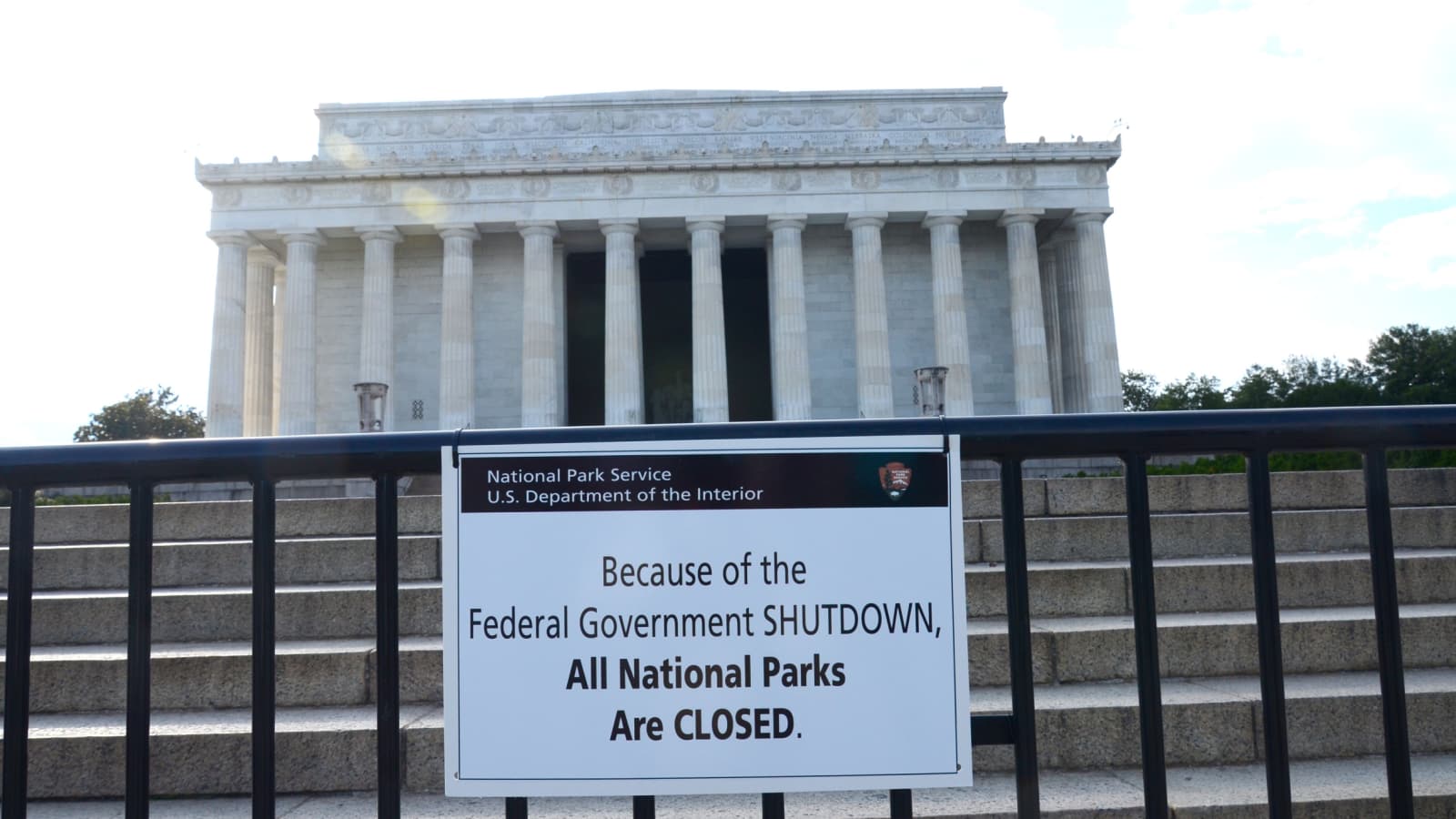
The government shutdown is just noise

The U.S. government shut down on Wednesday — which means the Federal Reserve will be flying more blind than usual without key government data. CNBC's Steve Liesman breaks down how this could impact the Fed when it comes to setting interest rates.

Afsaneh Beschloss, RockCreek CEO, joins 'Closing Bell Overtime' to talk how AI is powering gains beyond the U.S., why some emerging markets like Korea, China, and Colombia are surprising on the upside after years of weakness, what recent trade data means for Europe, and more.

Investors look past the shutdown, but might shift focus soon to missing data.

ZipRecruiter's Labor Economist breaks down the truth about today's job market.
City Index Senior Market Analyst Fiona Cincotta discusses the latest Trump administration policy moves that are affecting market sentiment. She joins Ed Ludlow and Caroline Hyde on "Bloomberg Tech.

Wall Street's main stock indexes closed higher on Wednesday, with the biggest boost from the healthcare sector, as investors looked past weaker-than-expected private payrolls data and uncertainty around the first day of the U.S. federal government shutdown.

The federal government just shut down for the first time in six years, and the stock market—characteristically—took it in stride. But could that change?

City Index Senior Market Analyst Fiona Cincotta discusses the latest Trump administration policy moves that are affecting market sentiment. She joins Ed Ludlow and Caroline Hyde on “Bloomberg Tech.

Merger and acquisition activity could intensify in the fourth quarter, as companies embrace the current White House administration.

October has a reputation in the crypto world, earning it the name "UPtober" because it has historically been one of Bitcoin's strongest months. But this year, it's not just crypto that's flashing green.
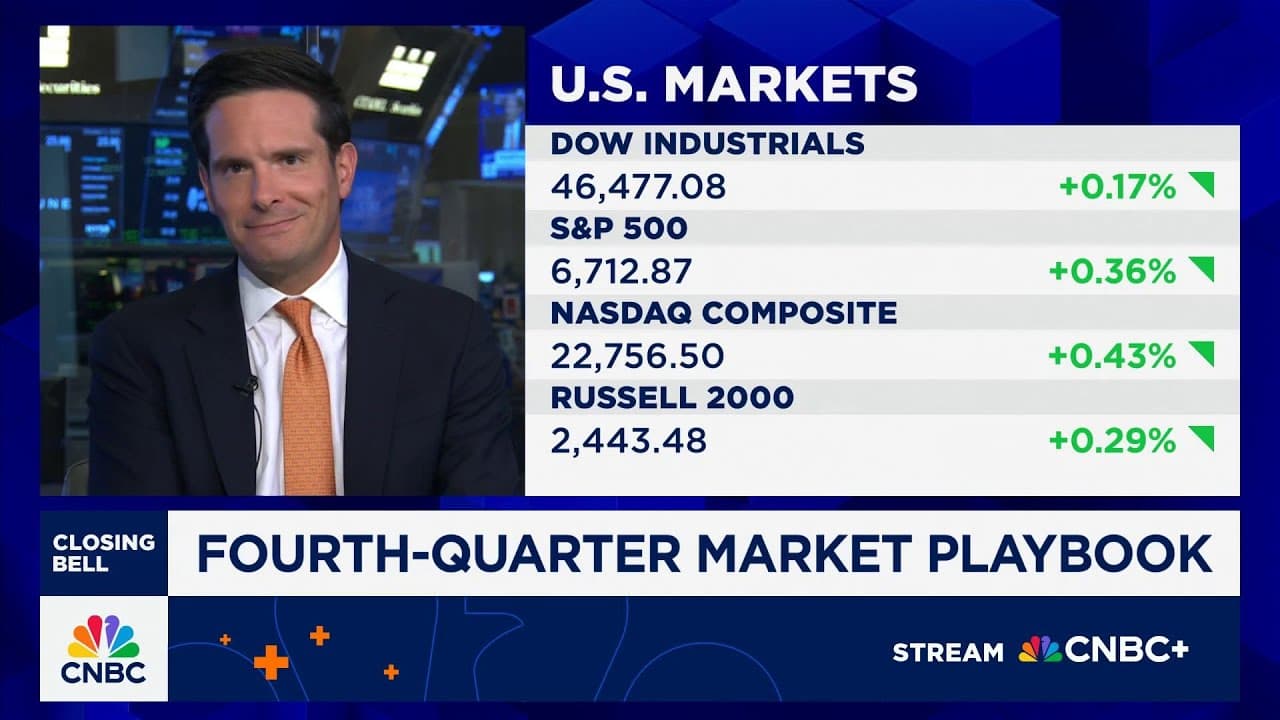
Chris Verrone, Strategas, joins 'Closing Bell' to discuss how Verrone feels about markets heading into the end of the year, why certain financials haven't performed and much more.
Operator: Good morning, and welcome to the conference call for Tate & Lyle's First Half Pre-closing Statement. Today's call is hosted by Nick Hampton, Chief Executive Officer; and Sarah Kuijlaars, Chief Financial Officer. I will now hand over to Nick Hampton. Nick Hampton: Thank you, operator, and good morning, everyone. Welcome to the conference call. I will make some introductory comments, and then Sarah and I will be happy to take your questions. First, I want to look at the bigger picture. We continue to make very good progress delivering the benefits of the CP Kelco combination. Customers are increasingly recognizing the strength of our combined portfolio, especially our expertise in mouthfeel. And this has led to a very encouraging early cross-selling successes with the value of the pipeline more than doubling in the last 2 months alone. The strong interest our combined offering and reformulation expertise is generating with customers clearly demonstrates the strategic logic of bringing Tate & Lyle and CP Kelco together, and reinforces our confidence in the growth potential of the combined business. While the level of customer engagement is high, we are operating in a tough market and have seen a slowdown in demand as the first half progressed, particularly over the last 2 months, which in turn has slowed our recent performance. We are seeing different dynamics across each region. In the Americas, we expect revenue in the first half to be slightly lower, reflecting softer consumer demand, notably in North America, still have largest market. In Europe, Middle East and Africa, revenue is expected to be mid-single-digit lower despite slightly higher demand. In Asia Pacific, revenue is expected to be broadly in line after absorbing the impact of tariffs, which we continue to navigate well. Against this more challenging backdrop, we are accelerating a series of steps to drive delivery of top-line growth. These include investing in enhanced customer segmentation, further strengthening our customer-facing capabilities such as solution selling, applications and marketing, working even more closely with customers to accelerate innovation through technology and optimizing capacity in our manufacturing network to accelerate productivity. The margin of the CP Kelco portfolio is expected to improve further in the first half. Planned revenue and cost synergies, and delivery of savings from our productivity programme remain on track and demand for sucralose continues to be strong. Overall then, for the first half in constant currency and compared to the pro forma comparatives, we now expect Group revenue to be 3% to 4% lower. Reflecting this top-line softness, the investments we continue to make for growth, and the planned weighting of cost synergies into the second half, EBITDA in the first half is now expected to be high single-digit percent lower. We will provide a more detailed update on the business and the actions we are taking when we announced our half year results on the 6th of November 2025. Turning to the full year outlook. While we anticipate the near-term market demand environment will remain challenging, we expect performance to improve as we move into the fourth quarter. This will be driven by the acceleration of actions we are taking to drive delivery of top-line growth and increasing benefits from the CP Kelco combination, including an acceleration in cross-selling, the migration of distribution relationships to a direct service customer model, and delivery of cost synergies. Therefore, for the year ending 31st of March 2026, in constant currency and compared to pro forma comparatives, we now expect revenue and EBITDA to decline by low single-digit percent compared to the prior year. In summary then, in April, we started to operate as one combined business. Since then, we have made real progress setting up the business for future growth, while also operating in a period of considerable economic volatility. The benefits of the combination appear to see. Looking ahead, the fundamental growth drivers of our business remain strong. Consumer demand for healthier and more nutritious food and drink continues to grow. And our expertise in food and drink reformulation and our leading positions across sweetening, mouthfeel and fortification, mean we are well-positioned to capture this growth. To conclude, we are determined to accelerate top-line growth and are fully focused on successfully delivering the benefits of the CP Kelco combination. With that, I will open up the call for questions. Operator: [Operator Instructions] We will now take our first question from Matthew Webb from Investec. Matthew Webb: I wonder if I could start off by just asking about the split of the revenue decline, both in H1 and expected for the full year between volume and pricing. And I suppose I'm particularly interested in the extent to which the weakness in volume demand has had the knock-on effect on pricing and what sort of the competitor behavior has been as well as a result of that weakness? That's my first question. Nick Hampton: Obviously, overall we're seeing a lack of consumer confidence in sluggish markets and the dynamics across regions are somewhat different. So in North America, we're seeing pretty broad-based category softness fueled by inflation and tariffs, I think. But we're seeing relatively balanced pricing environment, but broadly in line, slightly positive. In Europe, as we said when we did our full year results, we consciously invested some price in driving volume momentum. So in Europe, we're actually seeing a slight volume momentum, but some pricing decline. And in Asia, we're seeing relatively muted demand with some pricing pressure, especially driven by softness in China. Matthew Webb: And then I wonder if you could perhaps try and separate out the impact that tariffs have had here on the reduced guidance. Is that a big factor? And I suppose there, I mean even more about the direct impact of tariffs on you rather than the sort of broader impact of tariffs on consumer demand? Nick Hampton: You're asking the right question, of course, because the second order impact on consumer confidence is difficult to measure but clearly, we're seeing that, especially in North America. And overall, the team is navigating the tariff situation well, given that it's still bumping around a bit, it's relatively uncertain, and we're focused on customer supply security, recovery of tariffs where possible and alternative supply routes. So if you look at it around the world, we said at the full year that it routed about 2% of our revenue shipped into China was being impacted. There's a little bit going the other way. The other thing that's happened is the significant imposition of tariffs on Brazil and [indiscernible] out of Brazil into North America. So we think -- and again, it's very difficult to be precise when you look at supply routes, probably 3% to 5% of our revenue pre -- any mitigation is being impacted by tariffs because of the flow of goods. As I said, we're mitigating that in various ways. So I would think about it in that kind of... Matthew Webb: And then sorry, final question. I mean clearly, the deterioration in the market environment, as you said, has been a relatively recent thing at least has become worse of late. And I wonder, therefore, how much sort of confidence and visibility you've got in the ability to improve your performance in Q4. It just sort of feels like you're slightly swimming against the tide there. How confident can you be that we will see that improvement? Nick Hampton: So we're not assuming any near-term improvement in the market environment until we see that, and we shouldn't be building that into our assumptions. However, what we are clearly going to see in Q4 is the benefits of the combination starting to flow through. So if you remember, we always said the cross-selling benefits, the distribution to direct benefits would only start to flow towards the end of the year and we have very clear line of sight to those. And we're also seeing the pipeline building on our solution selling portfolio because of the benefits of bringing the 2 portfolios together. So we're really assuming any improvement in quarter 4 is coming from the benefits of combination flowing through more fully and the actions we're taking to accelerate growth regardless of the environment we're operating within. Operator: We'll now take our next question from Patrick Higgins from Goodbody. Patrick Higgins: A couple of questions, if I may. Firstly, just in terms of, I guess, that innovation pipeline, and you touched on it there, Mark, but Nick, sorry, but maybe you could just elaborate one of the things we've heard from a lot of customers of yours or peers is the pipeline and the demand from an innovation perspective, particularly in the U.S. as reformulation really starts to kick in, has never been stronger, so I'd be interested to hear your comments on that. And secondly, look, apologies, I didn't hear all of your prepared remarks, but on sucralose, could you maybe just give us a comment in terms of how that business is trending and how much of the softness you've called out today is related to that business? Nick Hampton: So let me take your second question first on sucralose. We're still seeing very strong demand for sucralose, this is what we do. We talked about this a number of times and let me put simply, we're pretty much selling everything we can make. And while there's been some noise on sucralose in the market recently, we're seeing very strong robust demand and continue to see that, so that's pretty clear. On your first point, yes, we are seeing strengthening of the pipeline. And a lot of that is to do with the benefits of bringing the combination together as well. I think the question we're still asking ourselves internally is how fast that pipeline converts in an uncertain consumer environment because what we're seeing at the moment is a lot of relative pricing in the market versus innovation, so the question we can't answer yet is the pace of conversion of that pipeline. The win -- success rate is very good actually in the pipeline when we look at that. When those products come to market, it is still less certain, I would say. Operator: We'll now move to our next question from Joan Lim from BNP Paribas Exane. Yuan Lim: A couple of questions from me, please. So you mentioned you are taking a series of actions with customers. I was wondering if you could help providing more color as to how the conversations look like, what else you're doing with the customers? So that's my first question. And second question was the categories. In terms of categories, I know you said broad-based softness in North America, but I wondered if there were any like beverages or specific categories you could call out in terms of latest color on market trading? Nick Hampton: So let me take the second question first. We're actually seeing pretty consistent softness across our key categories currently. I wouldn't call any out specifically at a sort of macro category level. Clearly, when you go double click one level below into subcategories, we're seeing more slightly healthier demand for the better-for-you type part of the portfolio. But overall, net-net, there isn't a significant difference across the core categories that we always talk about serving and we're obviously continuing to track that closely as we go forward. In terms of what we're doing, the benefits of the portfolio clearly allow us to think differently about how we serve our customers. And a big part of that is, frankly, working through which customers we want to double down our efforts on and where do we see the most growth and how do we deploy our resources with the right ammunition to accelerate growth with the customers where we see most opportunity. So we're doing a lot of work on segmenting our customers both globally and locally to deploy our resources as effectively as possible. And at the same time, making sure that based upon what we're seeing in terms of consumer demand and consumer trends, we're building the ammunition and the solutions focused on those areas of consumer opportunity. And we'll talk more about that when we do our half year results in November. Yuan Lim: Sorry, can I just follow up on that? So you mentioned customers locally and globally. Are you seeing a difference between the local and regional customers and the bigger customers? Nick Hampton: Always when you come across the world, you see different behaviors. I wouldn't call out a specific trend that's global versus regional. It's just more importantly for us, it's about making sure in each region, we're working with the right customers because of how they're building their businesses locally. And that can vary global customers versus regional. Yuan Lim: Because I think the global customers have been losing share to the local and regional, who might be growing faster. So I wonder if there were any... Nick Hampton: Why it's important that we build a balanced focus across all customer types to make sure we're focusing on where we see most growth potential. Yuan Lim: And then on your broad-based category softness, was it just in North America? Or was it across regions? Nick Hampton: Specifically referencing to North America in the more recent months, I mean we are seeing varying cash flow dynamics across the world. In Latin America, we're seeing stability in Brazil, some softness in Mexico. Across Asia, we're seeing relatively muted demand, but there are opportunities in places like health and wellness. In Europe, we're seeing relatively stable demand with opportunities in categories like dairy and clean-label, so the point I made earlier in some way about customer segmentation, you have to look at it region by region and get on the surface where the key trends are. Operator: We'll now take our next question from Alex Sloane from Barclays. Alexander Sloane: Two for me. One is a follow-up in terms of the assumptions in the second half. So it sounds like you're not assuming much in the way of improvement inflection in underlying market conditions from a sort of a volume perspective. What are you assuming in terms of the pricing round? So obviously, I guess, kind of weaker demand probably doesn't bode that well there. So have you been conservative in your assumptions there? And I guess sort of the overarching question there is how confident can we be that this is kind of one and done? Or is there more risk to the revised full year guidance? And then second question, I think in your prepared remarks, you talked about CP Kelco margins moving higher in the first half despite obviously the fact that kind of the group profits are going to be down high single digits. So is it fair to assume that sort of more of this pressure is being felt in the legacy-tight FBS business than CP Kelco? Nick Hampton: So on your first question, Alex, obviously, we're very early in the framework agreements we're building for next year with customers and that process will continue through the next few months. We've been relatively conservative in our assumptions for the contracting round at this point in the year. And as always, we'll give you more color on that as the round evolves. On the CP Kelco margin point, we are seeing improvements at the gross margin level. You have to remember, of course, that we're not measuring profit margins separately across the 2 businesses at the moment because they're integrated. So to some extent, some of the investments we're making in the business sit below the gross margin level. But it would be fair to say that we have seen some pressure on the legacy-tight Lyle business, especially because of the pricing which has put back into the market in the last round. Alexander Sloane: And maybe just if I could squeeze in one more. Just in terms of the Brazil tariff situation, obviously kind of relatively lower I think those kicked in, in August. Could you give a bit more color in terms of how you're mitigating that and what impact that had -- I guess what impact you're assuming that has for the full year? Nick Hampton: So roughly about 1% of our revenue is shipped out of Brazil into North America. We are shifting supply routes to source more out of Europe because we've got [indiscernible] manufacturing in Brazil and in Europe. And obviously, where possible, we're passing tariffs through. So we've assumed a rebalancing between Brazil and Europe and an appropriate level of cost associated with the tariff shipping into the U.S. that's built into the overall assumptions we've given you today. Sarah, do you want to add anything to that? Sarah Kuijlaars: No, I think that's absolutely. I think [indiscernible] maybe linked to that, as we navigate through tariffs, obviously, we are really focusing on having the right products for the customer in the right place which impacts our supply chain. And I think that leads to an inventory level which is not yet optimal. And that will come later. But obviously, it's that -- the prime focus is the right products in the right place for our customers. Alexander Sloane: And sorry, just one more. Obviously, you've done well over the last few years in terms of driving productivity savings. If the outlook actually does deteriorate further, is there more you can look at on this front? Nick Hampton: Absolutely, we will continue to drive productivity hard. As you say, we've got a very successful track record and overall, the program that we announced a couple of years ago is running ahead of target, so we'll continue to double down our efforts on that. And of course, as we learn more about the potential of the combined business, we'll -- I'm sure [indiscernible] more opportunities that will help with fueling the business. Operator: We will now take our next question from Damian McNeela from Deutsche Numis. Damian McNeela: A few for me, please. Firstly, just on the sort of the demand outlook, I think in North America, you're ascribing the slowdown to broadly economic factors. I was just wondering to what extent do you think GLP and consumers just eating less is impacting this? And how we should think about that when we think about our medium-term expectations in that business is the first question? Second question is on sucralose. Now I hear what you said around the sort of current trading of sucralose. But what do you think the risks are around changing regulatory sentiment towards high-intensity sweeteners and how sucralose positioned to deal with that? And then I guess the final question is perhaps for you, Sarah. Given the sort of downgrades we're sort of looking at today and the sort of increased talk about destocking across the sector, how should we think about cash generation for the full year? Nick Hampton: So on the demand outlook, I would say I mean the facts that we're seeing are significant consumer inflation in price in North America. So if you look at the retail sales data, while volume is down, value is up quite significantly. And that's always a big driver of relative demand. On GLP-1, no doubt it's changing the way people eat. And as we talked about in our capital markets event a couple of months ago, we see that as an opportunity for reformulation over time because of the need to provide more nutritionally balanced and dense food for those on GLP-1 and then to provide healthy alternatives when they come off the drug. So we're looking at through the lens of opportunity. And obviously, we'll see how that plays out. When I look at the data, it looks like the price inflation is driving a significant piece of the volume softness in the near term. And on your question on sucralose, there's been a continual [indiscernible] pressure on high-intensity sweeteners for a number of years. And we continue to see the demand for sucralose especially to be very robust and growing across the world. And that's a trend we've seen for the last 10 years. So we're very confident about the outlook for our sucralose business, especially as we are very focused on customers who really value what we do and we are capacity constrained at this point. However, whether a decrease in demand for high-intensity sweeteners, that's the power of the portfolio because we have other sweetening solutions in the business that can replace high-intensity sweeteners and provide the same kind of impact, albeit that there's often a cost trade-off there. So if you take a high-intensity sweetener out, you've got to put something else in and natural sweetener solutions like stevia can really play against that trend should that happen. So I think the portfolio balance here is really important and the way we position that sucralose business is really important when you think about the future. Sarah Kuijlaars: And then Damian, on cash, of course, we continue to focus on cash and continue to focusing on target cash conversion of 75% and the reduction of our leverage. However, as per one of the earlier answers, we've got to acknowledge that the working capital is going to take a bit of time to be optimized because given the volatility in the tariff environment, that doesn't help optimizing our inventory position at the moment; absolutely, we're focusing on getting inventory in the right places to support the customers. And obviously, we'll talk more about where cash lands on November 6 for our H1 results. Operator: [Operator Instructions] We'll now move to our next question from Lisa De Neve from Morgan Stanley. Lisa Hortense De Neve: I have 2 questions, and one is a bit of a follow-up on the demand comments you've made. So can I just ask you to which extent -- I mean, CPGs are being here much more cautious in their purchases and are either mimicking the underlying market? Or are they actually being a lot more cautious than perhaps the softness we're seeing in the market? I'm just trying to understand and disentangle what's driving this demand weakness? Because my understanding is that the North American market and global food and beverage market is trending broadly flattish with CPGs, the big ones being down. And I'm just trying to understand, is it just CPGs being even more cautious on their purchases and managing their inventories? Is it specific ingredients that -- where you see softer demand? I mean it would be great to get a little bit more granularity on this. And then secondly is a bit of a follow-up on the free cash flow question. In the light of the sort of softer year for you, and it's very much across the sector, but just talking about you, I mean, how committed are you to the dividend? Nick Hampton: So on your point on CPG and overall demand, we've clearly seen a decline in volumes in North American retail in the last quarter. So that's a clear trend we're seeing. Whether that's then impacting customers' inventory levels and how they think about that is a bit early to tell. But we're certainly seeing a reduction in demand in the near term. As you rightly correct, more broadly across the [indiscernible], things are relatively more stable, not growth but stable. Now that's a gross generalization because you have to look market by market. But the thing we've really seen in the recent couple of months or so is a notable slowdown in North America. On your question on the dividend, the Board has a very clear capital allocation structure framework and has been committed to a progressive dividend for the last 10 to 15 years. So we're absolutely committed to the dividend, and the Board will continue to appraise the capital allocation framework as normal as we go forward. Operator: It appears there are currently no further questions today. So with this, I'd like to hand the call back over to Nick Hampton for any additional or closing remarks. Over to you, sir. Nick Hampton: Thank you, operator, and thank you for your questions. So in summary, we continue to make good progress delivering the benefits of the CP Kelco combination. Customers are increasingly recognizing the strength of our combined portfolio and the cross-selling pipeline has more than doubled in value over the last 2 months. A slowdown in market demand has impacted our recent performance, and we are accelerating actions to drive a top-line growth. Looking ahead, the fundamental growth drivers of our business remain strong. Consumer demand for healthier and more nutritious food and drink continues to grow, and our expertise in food and drink reformulation mean we are well positioned to capture this growth. We are determined to accelerate top-line growth and are fully focused on successfully delivering the benefits of the combination. Thanks for your time and questions, and I wish you all a very good day. Operator: Thank you. This concludes today's conference call. Thank you for your participation, ladies and gentlemen. You may now disconnect.

Operator: Good morning, and welcome to the Acuity Fiscal 2025 Fourth Quarter and Full Year Earnings Call. [Operator Instructions]. Please be advised that today's conference is being recorded. I would now like to hand the conference over to Charlotte McLaughlin, Vice President of Investor Relations. Charlotte, please go ahead. Charlotte McLaughlin: Thank you, operator. Good morning, and welcome to the Acuity Fiscal 2025 Fourth Quarter and Full Year Earnings Call. On the call with me this morning are Neil Ashe, our Chairman, President and Chief Executive Officer; and Karen Holcom, our Senior Vice President and Chief Financial Officer. Today's call will include updates on our strategic progress and on our fiscal 2025 fourth quarter and full year performance. There will be an opportunity for Q&A at the end of this call. As a reminder, some of our comments today may be forward-looking statements. We intend these forward-looking statements to be covered by the safe harbor provisions of the Private Securities Litigation Reform Act of 1995, as detailed on Slide 2 of the accompanying presentation. Reconciliations of certain non-GAAP financial metrics with their corresponding GAAP measures are available in our 2025 fourth quarter earnings release and supplemental presentation. Both of which are available on our Investor Relations website at www.investors.acuityinc.com. Thank you for your interest in Acuity. I will now turn the call over to Neil Ashe. Neil Ashe: Thank you, Charlotte, and thank you all for joining us this morning. Our fiscal 2025 fourth quarter performance was strong. We grew net sales, expanded our adjusted operating profit and adjusted operating profit margin and increased our adjusted diluted earnings per share. Throughout fiscal 2025, we have demonstrated our ability to deliver growth and consistent operating performance that created stakeholder value and compounded shareholder wealth. Acuity Brands Lighting delivered sales growth and improved adjusted operating profit and adjusted operating profit margin in the fourth quarter. This performance was driven by the execution of our strategy and the aggressive actions taken over the last 2 quarters to manage margins despite the dilutive impact of the combination of higher tariff costs and corresponding price increases. We have the most dynamic and resilient supply chain in the industry, and we have adapted faster and more effectively than our competitors. We have leveraged our multinational footprint to move away from higher tariff environments and optimize our supplier relationships. We accelerated productivity efforts, including the evaluation of operating expenses and our organizational structure and ABL, and we continue to strategically manage price. I have spent the last couple of quarters describing how our electronics portfolio is a unique offering in the marketplace, extending from the drivers that power our luminaires to the sensors, controls and software which control light in a space and connect with the cloud seamlessly through our Atrius DataLab. We're developing market-leading solutions that drive productivity for us and for our partners. A good example of this is the TLS, Twist-to-Lock sensor by SensorSwitch that offers time-saving solutions to contractors. TLS is an occupancy sensor designed for industrial spaces like warehouses and manufacturing facilities. It gives contractors the ability to easily add controls to any project, saving time and reducing complexity on the job site without the need for wires or separate installation. Our visual suite of applications are automating manual processes across the key phases of a project, design, installation and optimization. These digital tools are designed to boost productivity, encourage collaboration and build contractor preference. Visual lighting and visual control help designers create lighting solutions by mapping digital floor plans, automating design audits and offering smart recommendations. Visual installer gives installers real-time access to their design plans, enabling collaboration that results in an accelerated install and programming time line. And Visual Cloud optimizes project management, providing site access and team contacts, leading to simplified collaboration and an overall reduction in costs. This end-to-end support improves the end user experience through increased productivity and lower costs. As part of our ABL growth algorithm, we are making organic investments for future growth, prioritizing verticals where we have not historically competed or where we are underpenetrated. This year, we strengthened our offerings across health care by launching the care collection and developing our Nightingale range of products. Care Collection is a curated portfolio of lighting and lighting control solutions that have been designed for use in a health care environment, making it quicker and easier for customers and agents to select the products that they need. We introduced the Nightingale brand to expand our health care offering into in-room patient care. Our team developed a series of lighting solutions that combines the functional needs of caregivers with the environmental needs of patients. In addition to Nightingale Embrace that we previewed last quarter, we launched Respond and Observe. Respond is a multifunctional patient bed luminaire with ambient, exam, night observation and reading modes. Respond can be paired with sensor switch. Observe is a skylight that can be used in common areas and patient rooms and can switch between exam, ambient and sky modes also using sensor switch. Nightingale has already received recognition from the industry. In the fourth quarter, it was one of several of our brands that were highlighted by the IES Industry Progress report awards that celebrates advancements in lighting products, research publications and design tools from the past year. Other products recognized include the IVO cylinders and Deep Regressed Downlights, HOLOBAY by Holophane, REBL Round High Bay and Wander Pathway by Hydrel. Now switching to Acuity Intelligent Spaces, which had another strong performance this quarter. Through Atrius, Distech and QSC, we have unique and disruptive technologies that are driving productivity for people experiencing spaces and for the people who are providing those spaces. Atrius and Distech control the management of the space, and QSC manages the experiences in that space. Over time, we will use the data that they generate to enhance productivity outcomes through data interoperability. During the quarter, Atrius, Distech and QSC each delivered strong results and are continuing to collaborate to explore new and interesting ways of working together. QSC is building the industry's most innovative full-stack AV platform that unifies data, devices and a cloud-first architecture to deliver real-time action, experiences and insights. The addition of QSC has evolved the geographic footprint of our AIS business, accelerating our multinational expansion. One of the markets where we have already benefited from this is India, where we compete commercially and have an experience center that we expanded during the quarter. The center includes product demonstrations for various room types in high-impact spaces as well as design workshops and training for our ecosystem partners. This center also serves as a hub for Intelligent Spaces to develop collaborative use cases for future workspaces and is the first experience center to feature the integrated Acuity Intelligent Spaces offering. Now I want to take a moment to review where our business is today and our view of how we are positioned for the future. Acuity Inc. is a leading industrial technology company comprised of Acuity Brands Lighting, which is the best-performing lighting and lighting controls company in the world, and Acuity Intelligent Spaces, which is a dynamic and growing building management and full stack AB business. We have transformed the company from principally a luminaires business to a data and controls and luminaires business, and position ourselves well for long-term growth. Fiscal 2025 was an important year for us. We renamed our company, Acuity Inc., reflecting our evolution and aligning to our strategy of using technology to solve problems and create impactful experiences that shape how people live, work and connect. We continue to make our Acuity Brands Lighting business more predictable, repeatable and scalable. We realigned the business into luminaires and electronics and delivered improved financial performance. ABL is a high-quality strategic asset and a core pillar of our company. In Acuity Intelligent Spaces, we acquired and integrated QSC. We have scaled AIS into a larger part of our overall company. At Acuity, we are doing things differently. Our values are at the core of who we are, guiding how we serve our customers, associates and communities. Each of our associates understands how we create value. We grow net sales, we turn profits into cash and we don't grow the balance sheet as fast. And we are empowered by our better, smarter, faster operating system to work in a structured and consistent way. The combination of these things allows us to operate more productively with greater distribution of responsibility and accountability throughout the company. It is how we are able to react aggressively to changes in the macro environment this year and how we were able to quickly and successfully integrate QSC. In Acuity Brands Lighting, we are focused on product vitality, elevating service levels, using technology to improve and differentiate both our products and how we operate the business and driving productivity. Our growth algorithm is clear. We will grow with the market, we will take share, and we will enter new verticals, and we have the opportunity to continue to expand margins. In Acuity Intelligent Spaces, we are making spaces smarter, safer and greener. We have unique and disruptive technologies that are driving productivity for people experiencing spaces and for the people who are providing those spaces. Our focus in AIS will continue to be on growth with the opportunity for margin expansion. We are effective capital allocators. We have grown our business organically and through acquisitions. We have rewarded our shareholders with increased dividends, and we have been opportunistic in repurchasing more of our outstanding shares. Acuity is positioned for long-term growth. We are innovators, disruptors and builders who are creating stakeholder value and compounding shareholder wealth. Now I'll turn the call over to Karen, who will update you on our fourth quarter performance. Karen Holcom: Thank you, Neil, and good morning, everyone. We ended fiscal 2025 with strong fourth quarter performance. We grew net sales, improved our adjusted operating profit and adjusted operating profit margin and increased our adjusted diluted earnings per share. For total Acuity, we generated net sales in the fourth quarter of $1.2 billion which was $177 million or 17% above the prior year. This was driven by growth in both business segments and includes 3 months of QSC sales. During the quarter, our adjusted operating profit was $225 million, up $47 million or 26% from last year. This improvement was due to the growth of AIS, including the acquisition of QSC and the result of actions taken at ABL to control operating expenses. Adjusted operating profit margin during the quarter expanded to 18.6%, an increase of 130 basis points from the prior year. This quarter, there are a few additional non-GAAP adjustments to call out. First, there is a noncash charge of approximately $31 million, resulting from the derisking of our qualified pension plans in the United States and Mexico. As we said last quarter, over the last few years, we have taken steps to simplify and minimize the future impact of our pension obligations on the company. Through our investment policies and capital allocation decisions, these pension plans were overfunded. And as a result, we transferred the majority of the related obligations to a third party. Our U.K. pension plan transfer is anticipated to be completed in the first quarter of fiscal 2026, and we expect to take an additional noncash GAAP charge of around $10 million at that time. This quarter, we also recognized a onetime tax benefit of $8 million. After non-GAAP items, our adjusted diluted earnings per share was $5.20, which was an increase of $0.90 or 21% over the prior year. ABL delivered sales of $962 million, an increase of $7 million or 1% versus the prior year driven by growth in our independent sales network of $25 million or 4%, partially offset by declines in corporate accounts and our direct sales network. Adjusted operating profit increased $22 million to $194 million, and we delivered adjusted operating profit margin of 20.1% which was up 210 basis points compared to the prior year. This improvement was driven largely by the intentional actions we took in the third quarter to reduce operating costs and our increased focus on productivity. Now moving to Acuity Intelligence Spaces. Sales for the fourth quarter were $255 million, an increase of $171 million. Atrius and Distech combined grew approximately 13%, while QSC grew approximately 15% year-over-year. Adjusted operating profit in Intelligent Spaces was $55 million with adjusted operating profit margin of 21.4%. Now turning to our cash flow performance. During the fiscal year, we generated $601 million of cash flow from operations, which was $18 million lower than last year, primarily due to the acquisition-related items, the timing of tariff payments and accelerated inventory purchases driven by the tariff policy. In fiscal 2025, we continue to allocate capital effectively and consistent with our priorities. We invested for growth in our existing businesses, allocating $68 million to capital expenditures. We invested over $1.2 billion in acquisitions and repaid $200 million of our term loan, including an additional $100 million this quarter. We increased our dividend by 13% and allocated around $119 million to repurchase approximately 436,000 shares at an average price of around $270. Since the beginning of the fourth quarter of fiscal 2020, we have repurchased approximately 10 million shares at an average price of around $150 per share, which was funded by organic cash flow. This amounts to about 25% of the then outstanding shares. I now want to spend a few minutes on our outlook for 2026. Consistent with our prior practice, we are going to provide annual guidance anchored around net sales and adjusted diluted earnings per share. We will also provide you with certain assumptions, which you can find in the supplemental presentation available on our website after the conclusion of this call. For full year fiscal 2026, our expectation is that net sales will be within the range of $4.7 billion and $4.9 billion for total AYI. This is based on the assumption that ABL will deliver low single-digit sales growth and AIS will generate organic sales growth in the low to mid-teens. We expect to deliver adjusted diluted earnings per share within the range of $19 to $20.50. In summary, we delivered strong performance in fiscal 2025. We grew net sales, improved margins and increased adjusted diluted earnings per share. We generated strong cash flow from operations and allocated capital effectively. We are positioned well to deliver another strong year in fiscal 2026. Thank you for joining us today. I will now pass you over to the operator to take your questions. Operator: Our first question comes from Chris Snyder at Morgan Stanley. Christopher Snyder: Maybe starting with a bigger picture question here, Neil. It's been maybe almost 8 months since the QSC acquisition. It seems like integration is going really well. Can you kind of just talk about the M&A pipeline? And if there are categories within kind of the smart building ecosystem that is attractive to the company? Neil Ashe: Yes. Thanks, Chris. Well, first off, obviously, we're pleased with the addition of QSC to the portfolio. As you know, we have a different theory of the case for Acuity Intelligent Spaces is that we can consolidate the data state of a built space, how the building operates, the experiences in that building, who is in that building, other elements of that data state. So we have a consistent pipeline of potential acquisitions that would continue to expand that portfolio as well as opportunities to continue to expand organically in that portfolio. So we feel like the path of travel for Intelligent Spaces is pretty clear. Both with deploying capital as well as organically. Christopher Snyder: I appreciate that. And then maybe just following up with more of a near-term one on the quarter itself. If we look at ABL, it seems like the sequential ramp in Q4 came in below seasonality despite incremental price, I would imagine quarter-on-quarter coming through. That is just a function of the pull forward that you guys highlighted on Q3? Does it signal that some of the end markets are softening. And then just kind of any color or thoughts on the channel inventory level as we start fiscal '26. Neil Ashe: I'll start, Karen, add anything that I leave off. So you'll remember back in the last call, we suggested that it would be prudent to evaluate the second half of the year given the changes in tariff policy, the resulting actions we took to modify the supply chain to reduce operating expenses and then the corresponding price increases as well. So basically, if you take the third quarter plus the fourth quarter, ABL is exactly where we expected it to be. And I think we can be proud of the performance that the unit has delivered through all of these. As you pick apart the disaggregated revenue, we have remained strong with both the independent sales network, combined with our direct sales network. So really around the project business in the quarter and in the year, the corporate accounts business was down versus last year. So as we've said consistently, that's a really good piece of business, but it's not a very consistent piece of business because it relies on the capital decisions of a concentrated group of customers. So taken on the whole, I think the ABL performance is really strong, both from a top line as well as from a margin perspective. Our belief is that we have outperformed the industry. So numbers will come out over time, but our belief is that we've outperformed the industry. Operator: Our next question comes from Tim Wojs with Baird. Timothy Wojs: Maybe just a bigger question to start off with Neil. Just on AIS. I guess as you've kind of thought about kind of integrating the front of the house with QSC and kind of the back of the house with Distech and Atrius. What are some of the key kind of milestones that we should look for? We think about as you kind of maybe develop a more wholesome solution. Neil Ashe: Yes. Thanks, Tim. So just to kind of continue to build on the strategy there. Basically, we have outstanding and disruptive technology that is powered both in -- on the control side and Distech as well as in QSC. Those businesses on a stand-alone basis will continue their path of taking share in their specific pieces of the market. Atrius DataLab then is the data integration effort that we are undertaking to combine those data elements for, as you point out, the front of the house or the back of the house or IT and OT combination as some others are using so that we can deliver unique experiences and outcomes in those spaces. What's really interesting to us is the power of our controls platform. So the build space by definition, each building is different and so having that position in the space is incredibly valuable. So from a milestones perspective, you can expect that each of the 3 businesses will continue their organic development, number one. Number two, you can look for us to start to commingle some of their products in their implementation and application and then over time, you'll start to hear end users and customers start to talk about the ability to do things that they didn't realize were possible through the combination of both of these hardware solutions as well as the data and software solutions that we're developing. Timothy Wojs: Okay. That's helpful. And then just kind of a 2-part around guidance. I guess the first is within the low single-digit ABL guide, is there a way to just contextualize how much price is just given all the moving pieces with tariffs. And then second, just on margins, I'm kind of backing into kind of an implied adjusted EBIT margin of 17% to 18%. Just is that kind of the ballpark level there on margins? Just anything to call up below the line? Karen Holcom: Yes. Let me hit the one on ABL and the price first. So just to take a step back, Tim, over the past few years, we've been really strategic about pricing at ABL and focusing on the value that our products are bringing to the end user. And yes, we've had several price increases over the past couple of quarters to offset the increase in the tariffs. But we didn't take these peanut butter over our portfolio of Contractor Select, Design Select and made the order. We've taken some prices up and some prices down depending on where we've seen opportunity to be strategic in the marketplace. So I would sum it up by saying all the pricing actions have been about in the low- to mid-single digits, intending to offset the dollar impact of those tariffs. Neil Ashe: Okay. And then I want to take, Tim, the opportunity. We like to use the full year call to kind of contextualize where I think we are on a long-term basis. And so I don't want to miss the opportunity to highlight the dramatic margin improvement in the company and then in the lighting business specifically. So from where we've come from fiscal '19, fiscal '20 to where we are today is pretty dramatic and is significantly in advance of the competition. As a point of disclosure, we took the decision this -- with the end of this year and then going forward to provide both gross margin and operating profit margin at the segment level so that you will understand the performance of those businesses even more clearly. And the path of travel is very clear, as I said earlier, we continue to take share. We continue to expand margins in both the lighting and lighting controls and on the AIS side. Obviously, expectations will continue to rise and they will converge with our performance over time, and we're -- but we feel really, really good about where we are. Operator: Our next question comes from Ryan Merkel with William Blair. Ryan Merkel: So Neil, the market has been soft for a while here, flat to down. Any signs that orders and demand is improving or do you think we need lower interest rates before you start to see an uplift in the lighting market? Neil Ashe: Yes, Ryan. On the lighting side, so we've been waiting for economic kind of stability for a while now, and we continue to grind out performance in the absence of that economic stability. So as you know, we were pretty data intensive. So as we look forward, our expectation from a kind of economic context perspective is that it's really more of the same. And we don't have -- we are not modeling in expectations of improvement at this point. So I think the -- I'm not an economist, obviously. And so I'm not going to put a finger on what I think the drivers are of that change. But I will emphasize that our growth algorithm on the ABL side is really clear. And we're demonstrating that in a tepid economic environment like this one, we can perform. So with the combination of the market performance, the taking share and expanding in new verticals, we're generating the -- we're demonstrating rather the ability to consistently kind of grow. As you saw in the third quarter, if we get a little bit of a tailwind through market growth, that just adds obviously to that and would be an accelerant. But it's a -- we're demonstrating, I think the emphasis here is we're demonstrating the ability to continue to deliver these results no matter the context. Ryan Merkel: All right. So to put it in my own words, it doesn't sound like a lot has changed on the market. And for ABL to be up low-single-digits for '26. It assumes the market is flat to down. Is that fair? Neil Ashe: I would say that's fair. It's more us than the market in our expectation. Ryan Merkel: Right. Okay. And then I had a question on gross margins for the outlook. I know you won't give specifics, but I think the Street is modeling gross margins in '26 down a little bit. Now I know you've done some productivity things. And I think on the last call, you said you thought you could return gross margins to 50% using productivity. So just any color on gross margins and if 50% is still a reasonable target at some point to get back to? Neil Ashe: So let's break that down into kind of its component parts. So there's the whole company, which is -- which will continue to expand on 2 fronts. One is mix; and two, is continued improved performance at ABL. So as I've said, the -- we're moving down that direction. We'll continue to move down that direction. As Karen indicated in her prepared remarks, the dollar impact of the combination of tariff cost and price increase is neutral. The margin percentage impact is negative. So that takes back the -- some of the margin expansion for a period of time at ABL. So that's in the -- depending on how the periods fall out, that's in the 50 to 100 basis points of impact kind of range. So we need to digest that as we continue to move forward. But the strategy and our longer-term expectations remain the same and are clear. Operator: Our next question comes from Joe O'Dea with Wells Fargo. Joseph O'Dea: Wanted to start on QSC. Any color on the margins in the fourth quarter? It looks like it could have been kind of around 20% and legacy AIS around 23%. So really, just looking if that's kind of a reasonable expectation and then understanding the steps that you've taken. So it looks like you've already moved those QSC margins from mid-teens to low 20s. And then how you think about the time line on the path to get them to kind of align with legacy margins? Karen Holcom: Yes. Thanks, Joe. As Neil mentioned earlier, we really are pleased with the progress of QSC as they become part of Acuity and of AIS. So, we've seen really strong performance across all of AIS. And when we did the acquisition, we expected that we would bring QSC's performance more in line with the legacy business, which is really what we've demonstrated over the past 2 quarters. They've had strong sales growth this quarter and last quarter. And so that's contributed to the margin improvement. And then they've also benefited from adopting our better, smarter, faster operating system and ways of working, which has helped them drive productivity not to add additional cost to get that growth. So I think the margin is strong. We're really pleased with where we are and our focus on AIS is going to continue to be on growth. And over time, we will make some investments to deliver that mid-teens type growth. Joseph O'Dea: You still see QSC as a margin expansion opportunity in '26? Karen Holcom: Over time, I think it will be. It will continue to expand. But again, the focus will be on growth in AIS in total. Joseph O'Dea: Okay. And then, Neil, you made some comments around the cost side of things and talked about a dynamic supply chain advantage that you have that you moved away from higher tariff environments. And also, it sounds like some cost actions, in particular, within ABL. So can you just elaborate on some of the steps that you've taken on the cost side, inclusive of sizing what China as a percent of sourcing now versus where it was previously? Neil Ashe: Yes. So let's start with material pricing. Obviously, that has -- that's where the impact of the tariff is. So we've moved, I think the majority of that away to either other Asia or -- and as much of that obviously to within our footprint as we can. So that remains -- so -- and we did that basically within the first month after -- well, in the month of April after the April 2 announcements. So that was accelerated and impactful. I don't have an exact percentage of the material spend that is -- that we currently get from China, but obviously, we've taken that way down. Over the last 5 years, our total exposure to China is in the range of 20%-ish of what it was at one point. So we've dramatically changed that. So on the sourcing side, we are as we've indicated, dynamic on how we're sourcing. And that really applies to all of our components. And we've got interesting work underway to continue that process, which we're really pleased with. And then on the ABL side, we took the opportunity in the third quarter to reevaluate our operating expenses and our organizational structure as a result of sales not materializing the way that we had predicted that they would for the back half of the year. So we took the opportunity to accelerate some productivity efforts that we had underway, so specific projects, which were intended to deliver productivity. And second, we reevaluated the organizational structure and eliminated a chunk of employees to realize some of those cost savings. So again, as I said earlier, I'm pleased with the work that the team has done there in this environment to deliver these results. Joseph O'Dea: And then sorry, just a clarification. The pull-forward impact you talked about in Q3, is that isolated to the back half of last year and really no anticipated impact on '26. Neil Ashe: Basically, so I'll just reprise what we said on the last call, which is that when we have an order ahead of that like that happened in Q3, essentially what happens is backlog swells a little bit, and then we ship that on a relatively consistent basis over the following period. So there's a little bit of that, that happens between the fourth quarter and the first quarter as well. But on a normalized basis, we are basically where we expect, like on a consistent basis to be. Operator: Our next question comes from Christopher Glynn with Oppenheimer. Christopher Glynn: Nice to tune in to the continuing exciting story and developments here. So considering markets are relatively listless out there, directionless, you have a pretty confident revenue guide. I understand what you're talking about taking share. It's been a consistent story. But I'm wondering if, aside from product, if you could talk about on a more granular level, any angles or zones in the commercial RFP environment where you feel are the most demonstrative of relative competitive momentum. Neil Ashe: Yes. Thanks, Chris. So back to the growth algorithm for a second, the market taking share and new verticals. So the new vertical performance is obviously really strong. And as we look forward, we'll continue to be health care refuel and sport lighting are each opportunities for us to continue to add to that. That's probably in the order of, I don't know, 50 to 100 basis points of addition to the top line on a net basis. Then on the take-share front, our Contractor Select portfolio performed really well in the fourth quarter. And so we're being aggressive with the changes in the marketplace there to press our advantage there. And then I'd highlight something that we haven't talked about in a long time, where we've had real strength, but is in the specifier -- in our specifier brands, which have also performed well and are taking share. So, to your broader context of the overall puzzle, it's -- we're executing pretty effectively across the ABL portfolio. So we're delivering, as we said, these results in a relatively tepid end market environment. Operator: Our next question comes from Brian Lee with Goldman Sachs. Brian Lee: I had a couple of questions. Just first on guidance. I know a lot of questions on the margins. I appreciate you guys breaking out the segment margins here. But I guess it does beg the question. There's a lot of moving pieces, both in ABL and also kind of some of the comments around AIS building for growth, maybe the margin expansion story in the near term. So thinking about this directionally, it almost sounds like ABL, you're holding the line on margins, maybe seeing a bit of expansion into '26 and then AIS really focused on growth, but do we see a little bit of backsliding on the gross margins just in that segment? And if that is the case, kind of what are some of the moving pieces there? Is it just increased investment growth or what are some of the drivers around that margin profile? Neil Ashe: Right. I'm not sure what you mean about so many moving pieces. So I'll just break it down pretty simply. So ABL for the last 5 years and for the next 5 years, we'll continue to move forward on productivity improvements that are driving margin. The impact there at ABL is the percentage margin impact of the combination of tariff costs and price increases. So that, as I indicated earlier, on a full year basis would be in the range of 100-ish basis points as we continue to drive dollar margins. And so that's what we were trying to explain pretty clearly. I think Karen also was really clear on where AIS is going. So we're growing in the low to mid-teens. We have a continued margin expansion opportunity. When faced with the choice between expanding margins or continuing the growth, we will invest for growth. And so when you sum those across the enterprise for FY '25, obviously, we had a really strong performance where we demonstrated the dexterity in ABL and the power of QSC joining our enterprise and their margin expansion. And over the next kind of year or years, we would expect that general direction to continue. Brian Lee: Okay. Fair enough. But just triangulating, I mean, obviously, the tariffs or the impact on ABL. But for AIS, the deliberate strategy to focus on growth in the near term it does sound like we shouldn't necessarily be expecting margin expansion in that segment over the next 12 months, but on a longer-term basis, clearly, direction is still higher. Is that fair? Neil Ashe: Well, Brian, we've added 500 basis points of margin to QSC in 8 months. So I feel like we're kind of directionally in a pretty good place. So yes, we will continue to grow AIS, and those margins will continue to grow over time. Brian Lee: Okay. And then on the data monetization front, it sounds like there's a lot of opportunity there. I don't know if you've ever anticipate being able to break that out or wanting to break that out at a high level. Can you kind of speak to sort of what data monetization opportunities you either currently have or expecting to sort of be able to execute toward in that AIS segment? If any quantification, that would be great as well. Neil Ashe: Yes. So short-term and long-term with AIS as I indicated, both with all of the Atrius Distech and QSC we're -- our control position and our portfolio are incredibly strong in their respective areas, and those will continue to grow. The initial impact of data will be through the outcomes we are delivering as we expand those experiences. So there are specific software opportunities that we're in the marketplace with now and the more that will be coming over the course of the next 12 to 24 months. And then finally, the data monetization will over time, manifest in 2 ways. One will be the continued acceleration of that software-focused revenue and the outcomes that they deliver. And maybe over time, we introduce data-specific products. But in the immediate term, we will continue where we're growing, which is around our control platforms and the increased impact of software on those over the next 12 to 24 months. Operator: Our next question comes from Jeffrey Sprague with Vertical Research Partners. Jeffrey Sprague: Just a couple of loose ends or points of clarification for me, I guess, after all that. First, just on kind of the tariff situation, Neil or Karen, given that you guys have taken so many counteractions, sourcing otherwise, are you in a position now relative to your competitors that I guess, for lack of a better phrase, your pricing for tariffs, you're no longer exposed to as we roll into 2026. Is there sort of an embedded margin opportunity there? Neil Ashe: Yes, Jeff, that's a good question. So we've been relatively conservative in our expectations to this. So we're trying to mitigate as much of the tariff impact from either productivity or transitions as you've described, first. And we've minimized that in pricing impact, second. So the -- as Karen indicated that when we talk about pricing strategically, that means some places we're taking prices up, and some places we're taking pricing down. So what we're balancing is trying to optimize share gain for margin expansion opportunity. The margin expansion opportunity, we are confident in over the kind of the foreseeable future. So we'll really try and dial that as an opportunity to -- if we had a bias there, we would take some more share probably as opposed to add an incremental margin piece at ABL. Jeffrey Sprague: Right. And then I guess, conversely, you're never going to stop pushing for productivity. But was there anything in these actions in 2025 that are sort of temporary in nature that need to come back from a cost standpoint as we look into '26, particularly if the top line is beginning to pick up? Neil Ashe: So not specifically the actions that we took. Those are accelerated productivity and kind of permanent changes, not short-term Band-Aid. On the OpEx side, we will continue to invest in technology. So -- and so as I've said on some calls in the past, so the geography of the -- specifically on the ABL side, the income statement may continue to change a little bit as the technology expenses are in OpEx, which drive gross margin impact over time. So -- but we're -- so that would be the balance. So yes, the changes that we made are effectively permanent. Now we move into the next cycle, merit increases, health care cost increase, all that kind of exciting stuff. But the investment areas, especially on the ABL side, are going to be in technology to drive productivity. Jeffrey Sprague: And then just finally for me, just on inventories, Neil or Karen. Your days inventories have been moving up, tried to scrape out the QSC impact best I could. But still seems somewhat elevated, maybe speak to where we're at relative to what normal inventory should be? Is there any kind of absorption benefit or anything that's occurred here that needs to normalize as we look into next year? Karen Holcom: Yes. Jeff, there's really 2 things going on with inventory. The first would be just the elevated cost and the inventory from the impact of the tariffs. So you're seeing a higher dollar amount of inventory that's impacting the total, but then also and more impactful is we've also had to -- decided to bring in some of the inventory that we could to protect us from some of the higher cost over time from the increasing tariffs. So it's really those 2 things that play a little bit of higher cost of inventory and bringing some more in to deal with the elevated tariff costs. You'll see that play down over the course of this year. So it shouldn't remain at the elevated levels that we are at the end of August. Operator: And I'm showing no further questions in queue at this time. I'd like to turn the call back to Neil Ashe for any closing remarks. Neil Ashe: Great. Well, first of all, thank you all for joining us today. As we've indicated, we believe fiscal 2025 was a strong year for Acuity. We operated effectively in a relatively dynamic environment. The performance at ABL continues to be, by far, the best in the world and we're confident in its ongoing continuous improvement. On the AIS side, we're really excited about what we're building here. We -- with Atrius, with Distech and QSC and then the combination of those 3 things, we think we're building an innovative and disruptive business that has the potential to do some pretty exciting things in the future. So with all that taken together, we're pleased with '25. We're hard at work already on '26. We appreciate your interest, and we look forward to talking to you again in the next quarter. Operator: This concludes today's conference call. Thank you for participating. You may now disconnect.
Operator: Thank you for standing by, and welcome to The Warehouse Group Limited FY '25 Annual Results. [Operator Instructions] I would now like to hand the conference over to Dame Joan Withers, Chair of The Warehouse Group. Please go ahead. Joan Withers: [Foreign Language] and good morning, everyone. Welcome to The Warehouse Group's full year results presentation. First, to Slide 3, the chairs update. Thank you all for joining us today. I'm Joan Withers. I'm Chair of the Board. And on the call with me today are Mark Stirton, our Group Chief Executive Officer; and Stefan Knight, our Group Chief Financial Officer. During the presentation today, I'll begin with the chairs update. Then I'll hand over to Mark to give an overview of the group's performance, the work that is underway to restore profitability, and he'll also talk to our outlook. Stefan will then share a more in-depth summary of our financial results. And as always, there will be an opportunity to ask questions at the end of the presentation. To Slide 4, the year in review. FY '25 has been another challenging year for the company, shaped by extremely tough economic conditions and a sharp decline in consumer confidence. With unemployment rising and households tightening their budgets, discretionary spending has slowed significantly. Retail competition has also become increasingly intense. Despite these headwinds, group sales held steady. Reported sales were up 1.6%, reaching $3.1 billion. It is important to note that FY '25 included an additional trading week, so on a like-for-like basis, sales were flat, which reflects resilience in a difficult market. The real pressure came through in our margin performance gross profit margin declined, particularly in the Warehouse, driven by a highly promotional environment and changes in category mix. While we made progress on cost control, there was not enough to offset the margin decline. Operating profit came in at $1.3 million, and we have reported a net loss of $2.8 million. Given this financial performance, the Board has elected not to declare a dividend for FY '25. That is deeply disappointing, and I want to acknowledge the impact on our shareholders. We continue to take decisive action to restore profitability so we can once again deliver value back to our shareholders. During FY '25, under John Journee's leadership as interim Group Chief Executive Officer, we made the important changes that were foreshadowed last year. We have reshaped the organization and returned to a brand-led model with better execution across core retail capabilities. These necessary changes are already making a difference, particularly in the Warehouse. Customers are responding well to our refreshed ranges and to sharper pricing, and we saw a stronger sales performance in the second half. Cost management has also improved across the organization and CapEx and project expenditure have reduced significantly. Mark Stirton stepped into the role of Group Chief Executive Officer on the first of August this year, following 16 months in the group CFO role. The Board is confident in his ability to take the business forward and Mark brings commercial strength, strategic clarity, a sharp focus on execution and highly relevant retail experience with the Mr Price Group in South Africa. So while meaningful progress has been made, there is still much more work to do. But our direction is clear. The leadership is strong and the initial signs of progress are encouraging. I'll now hand over to Mark. Mark Stirton: Thank you, Joan, and good morning, everyone. I'm Mark Stirton, Group Chief Executive Officer. It is a privilege to speak to you today in my first results presentation as CEO. I want to begin by thanking Dame Jones and our incoming Chair, John Journee for their steadfast support as I've stepped into the role. I'm grateful for their leadership as we continue to navigate this important phase of the group. FY '25 has been a reset year for our business, a year of discipline, simplification and laying the groundwork for sustainable growth. We have made tough decisions, simplified our structure and focused on execution. While our financial performance is not yet where it needs to be, we have built momentum and are moving with speed into FY '26. As Joan spoke to, the New Zealand economic environment remains extremely challenging and this backdrop has had a direct and significant impact on our margins. GDP fell 1.1% over the year to June, and GDP per capita dropped similarly. Unemployment is rising now at 5.2% nationally and in Auckland, our biggest market, it has reached 6.1%, the highest in 8 years. Inflation is sitting at 2.7%, right at the top of the Reserve Bank's target band. Interest rates have come down by 225 basis points since last September, but the relief has not yet been enough to offset the pressure felt by households. Cost of living increases have been sharp. Local authority rates are up more than 12%. Electricity is up over 8% and housing costs remain elevated. These are not small shifts. They are having a material impact on how customers spend. Consumer confidence fell to 92 in August, the lowest level in 10 months. That is not just a number, it reflects how people are feeling. And when confidence is low, discretionary spend is the first thing to go. Retail competition has intensified and the fight for share is tougher than ever and led to a highly promotional environment. FY '25 was a reset year for the group. We reshaped our operating model, returned to retail ways of working. We reset pricing, improved product and introduce tighter controls on cost and capital. These changes were necessary to position the business for long-term recovery and growth. Despite the economic headwinds I outlined earlier, our sales held steady -- that result is significant. It reflects strong customer response to the changes we've made across our brands. I want to acknowledge the team in a year like this, holding ground is no small feat. Traffic conversion improved and unit sales growth was strong across all three brands. We saw encouraging sales momentum in the second half, particularly in the Warehouse and Noel Leeming. Profitability, however, was impacted. Gross margin declined by 140 basis points, which materially affected the group's bottom line. In the warehouse, price resets, combined with a shift in category mix towards lower-margin products placed pressure on margins. In the second half, category mix improved. Unit growth for the year lifted across the group by 4.6%, supported by sharper pricing and more relevant on-trend products. Key categories such as home, apparel, toys and beauty performed well, and we launched several new brands as part of our range refresh. Cost control remains a clear focus and grew slower than sales. Our cost of doing business decreased 40 basis points to 32.2% of sales despite inflationary pressure experienced on rent, utilities and employee costs. Costs within our control, like head office costs were down 7.8% and depreciation down 7.4% compared to the prior year. We exercised discipline in capital management. Projects were rationalized, elevated IT spend tapered off and capital expenditure reduced to $12.4 million, down from $39 million in FY '24. Our brand-led strategy is gaining traction. We delivered more targeted and engaging marketing, improved store experiences, launched new ranges and introduce new layouts such as the Beauty Zone. We now have a new leadership team in place, aligned on our goals, focused on execution and committed to rebuilding profitability and unlocking the full potential of our brands. Even in the year is challenging as FY '25 we remain committed to looking after our people, our communities and our environment. It's fundamental to who we are as The Warehouse Group and part of our DNA. We maintained 100% gender pay equity and our employee Net Promoter Score rose to 36, up from 18.2 last year. That's a strong signal that our teams feel more engaged as we work to build a high-performance culture. Together with our customers, we raised $2.4 million for New Zealand charities. That impact matters, especially in a year when many households and communities were doing it tough. We also made strong progress on our environmental commitment. 66% of private label sales now use sustainable packaging. Our Scope 1 and 2 emissions are down 45% compared to FY '23. More than 150 stores and sites are now powered by Lodestone Energy solar farms, and we've diverted 79% of operational waste from landfill. These are meaningful steps that reflect our long-term commitment to sustainability and our belief that doing good is not separate from doing good business. As we look ahead, one thing is clear. The potential of our brands is enormous and this slide reflects the scale of opportunity we have in front of us. Our private label portfolio remains a core strength with 27 well-established brands that deliver quality and value and when repositioned, will be a key source of growth for our future. H&H, our apparel brand is a staple in millions of Kiwis' wardrobes. And in FY '25, we sold over 37 million Living and Co Home products, a clear sign of the trust customers place in our brands. Veon, our private label TV brand is now the second largest TV brand in New Zealand, showing we can lead in categories beyond everyday essentials. This year, we introduced Poppi, a fresh, affordable beauty brand designed for younger customers. Its early success reflects our ability to spot trends and respond quickly and at scale. The Warehouse has made significant gains in consumer brand preference, which is a difficult dial to shift. In FY '25, we reclaimed the #1 spot in consumer preference for toys with toy sales up 8% for the year. We also shifted consumer preference across several key categories. Home was up 5%, apparel was up 2%, pet care was up 5% and party and suppliers up 6% and sports and outdoors up 5%. These shifts reflect the impact of our products, pricing, marketing and visual merchandising improvements. Our reach remains a strategic advantage. Over 85% of TVs live within a 20-minute drive of one of our stores. And 1 in 3 New Zealanders visit our stores each week. I'm delighted to share that this morning, we are opening the doors on a new Warehouse stationery store in Central Wellington on Tory Street with a refreshed look and layout. These strengths give us confidence they show that our strategy is gaining traction and reinforce the opportunity ahead as we continue to unlock the full potential of our brands. Since stepping into the CEO role in August, I've focused on setting the playing field. In my first two months, I've aligned the organization around clear goals and performance expectations and set the direction for the group. Our group purpose is to build exceptional retail brands that customers love, our teams take pride in and deliver sustainable shareholder returns. Our group ambition is to get back to being a highly desired retail stock to own. Our strategy will be anchored in restoring profitability and positioning the business for sustainable growth. Our group values, "Think Customer, "Do Good" and "Own It" continue to guide our culture and decision-making. Our strategy will revolve around strengthening and growing our three New Zealand retail brands, enabling each to lead in this market while leveraging shared services, platforms and capital efficiencies. Later in FY '26, we will share a longer-term strategy for the group and individual brands. To improve execution across the organization, we've made several key appointments to the executive team. We struck a strong balance. We've promoted exceptional internal talent, brought in fresh capability and retained experienced leaders to ensure continuity. Stefan Knight joined as Group Chief Financial Officer in August, bringing deep expertise in finance and performance. He's sharpening our focus on cost control, margin improvement and operational discipline. Shayne Tong also joined in August as Group Chief Digital and Transformation Officer. He will lead our digital transformation and systems modernization. We've also promoted two outstanding internal leaders. Carrie Fairley is now acting Chief Merchandise Officer for the Warehouse and the Warehouse Stationery and Silv Roest has been appointed Group Chief Legal and Corporate Affairs Officer. This team is aligned, focused and ready to drive the next phase of our strategy. I will now hand over to Stefan to take you through our financial performance. Stefan Knight: Thank you, Mark and Joan, and good morning, everyone. My name is Stefan Knight, and I'm the CFO. For those on the call, I haven't met, I joined the Warehouse Group in August this year, and I spent my first few weeks getting around the business visiting some of our stores, the distribution centers and meeting the team. Joan and Mark have laid out where we are, and it's no secret that we are facing economic headwinds that are challenging our business. But having seen what I have since starting, I'm encouraged by the changes we are already putting in place and the enthusiasm of the team. We are absolutely focusing on the right things what we can change and control and to turn around the profitability of the group. Before we get into the numbers, I would just remind you of the anomaly in this year's reporting period. So FY '25 was a 53-week financial year ending Sunday, the third of August 2025 compared to 52 weeks in FY '24. Where appropriate, we've competed FY '25 revenue on a 52-week same-store sales basis with FY '24 so this removes the final 53rd week of FY '25. It excludes online and Noel Leeming commercial and the impact of opening and closing of stores in each period. All the other financial commentary is unadjusted and compares 53 weeks in FY '25 with 52 weeks in FY '24. So you can refer to Appendix Slide 27 for a sales summary by brand and we've -- in that slide, we've laid out the 53 weeks reported, the 52 weeks like-for-like and also a 52-week same-store sales basis. So on to Slide 13. As mentioned, top line reported sales increased 1.6%, and this was flat on a 52-week same-store basis. So really pleasing to be able to hold sales in such a tough economic environment. This was underpinned by a movement of two halves. Sales declined 1.6% in the first half but delivered a turnaround in H2 with sales growth of 1.6% on a like-for-like 26-week basis, removing the 53rd week of the year. Within the warehouse, our everyday low price reset earlier in the financial year and the hard work our buying teams have done to deliver on trend products have contributed to group units sold up 4.6%, which was then offset by group average sales price decline of 4.4%. Tough retail conditions were felt throughout the period in a low economic growth environment and have resulted in gross profit margin declining 140 basis points in the year. Although the declines in margin were less in H2 than what we've seen in H1. Overall, group gross profit margin decline was further impacted by the relative strength of Noel Leeming sales contribution. To offset these margin impacts, we are focused on controlling what we can. While cost of doing business was up 0.2%. This is largely due to the 53rd week, with cost of doing business growth slower than sales growth and reducing 40 basis points as a percentage of sales. So looking at group gross margin in more detail as this has been the biggest impact on profitability this year. As Mark has alluded to, the competitive retail environment, combined with the cost of living crisis has continued to put pressure on retail pricing and margins in the year. Group gross profit margins decreased due to four key contributors: A strategic price reset of everyday low prices, particularly in the warehouse; secondly, lower inventory sell-through resulting in increased clearance activity; third, growth in sales from lower margin categories; and finally, sales growth in Noel Leeming contributing to a higher percentage of group gross margin. FY '25 H2 did see a reduction in the decline in margin from improved inflow margin in category mix. FY '26 will target further margin improvement as the strategic reset of everyday low prices move through the buying cycle with an increased focus on home and apparel in the Warehouse. So on to cost of doing business on Slide 15. We've seen in the last year that controlling operating costs would be a huge focus for us, and we are pleased to say that we've made some progress this year. While cost of doing business increased 0.2% in the year, this is largely attributable to the 53rd week. Cost of doing business was held below sales growth, resulting in a 40 basis point improvement as a percentage of sales. Employee expenses increased 2.8%, primarily due to the extra week and higher wage rates. But while we saw the increase in employee expenses at a brand level across stores and distribution centers, head office employee expenses decreased by 6.8%. Depreciation and amortization decreased 7.4% as large capital projects, which have been capitalized roll off. Lease expenses increased 2.7% but held relatively flat on a 52-week basis, below inflation and a testament to our property team managing our store and property assets. Across the group, brand-specific costs increased, namely in store labor, buy now and pay later commissions and DC operating costs. But the hard work we have done improving our retail operating model, improving efficiencies and reorganizing our ways of working has decreased overall head office costs by 7.8%. And now moving on to the brands and starting with the Warehouse on Slide 16. Sales increased 1.4% on a reported year basis and increased 1.2% on a 52-week same-store sales basis compared to FY '24. As seen across all brands, we've seen an improvement in sales in the second half. So while sales declined 2.2% in the first half, sales recovered in the second half with growth of 2% based on 26 weeks. Foot traffic conversion increased 2.5% and the number of units sold increased across most categories, including home and apparel. While average selling price increased in FMCG, this decrease in home and apparel resulting in average selling price down 4.5% across the brand and contributing to overall lower basket value and lower gross profit margin. Gross profit margin decreased 180 basis points, and I'll go through this in more detail on the next slide. So while we drove savings in some cost of doing business areas, including head heat office costs, this was not enough to offset the significant decline in gross profit margin, resulting in an operating profit decline from profit of $17.7 million in FY '24 to an operating loss of $12.2 million in FY '25. This is a disappointing result, and we are acutely focused on driving improvement in both gross profit margin and the cost of doing business to return to profitability here. The group reluctantly closed two Warehouse stores during the year, Pakuranga and Tory Street, exiting these locations due to lease reviews and external factors outside our control. Looking at the warehouse gross profit margin movement in more detail on Slide 17. This is where the decline in the Warehouse and the group operating profit came from. As mentioned, we invested in an everyday low price reset in the Warehouse earlier in the financial year. When you do this after you've already bought the product 6 to 12 months ago, that has an immediate impact on your margins, and that is what we've seen this year. But this is now moving through the buying cycle and that reset pricing impact will reduce. The pricing reset does mean we have seen less promotional activity compared to last year but the highly competitive retail market, combined with some slow-moving inventory sell-through, particularly in winter apparel, increased the clearance activity required. Pricing, clearance and promotional activity had a combined negative impact of 1.3% on gross margin. We've talked about category mix and the fact that consumer spending was weighted towards everyday categories like FMCG and less towards discretionary spending like home and apparel, and that had a negative impact of 0.8%. Rebates from suppliers did increase in the year, improving margin, thanks to increased unit sales in FMCG and toy categories. And lastly, increased freight and container detention costs eroded margin by a further 0.3%. So now moving to Warehouse Stationery on Slide 18. Sales were down 2.5% on a reported year basis and down 3.2% on a 52-week same-store sales basis compared to FY '24. While sales declined 6.8% in the first half, the second half showed an improving trend with a 1.6% decline compared to FY '24 H2 based on 26 weeks. Print and create categories continue to grow and at strong margins, achieving another record sales year but were offset by a decline in higher value office furniture in computers. We know New Zealand businesses are finding it tough and business components are still not overly positive. Our BizRewards channel sales underperformed as these SME customers manage their costs. But we continue to have a powerful base in this area of 12,000 active customers. Warehouse Stationery gross profit margin decreased 110 basis points due to the reduction in everyday low prices throughout this brand also and higher sales and lower margin categories. While cost of doing business held flat, the decline in margin and increase in cost of doing business as a percentage of sales contributed to the decline in operating profit from $12.9 million to $8.2 million. During the year, we moved the Warehouse Stationery stand-alone store in Sylvia Park to within the Warehouse store next door, and both these stores continue to perform well. So moving to Slide 19 in Noel Leeming. Noel Leeming has recovered its sales momentum after the decline in FY '24 with sales growth of 3.3% on a reported 53-week-year and sales growth of 1.4% on a 52-week comparable period. Noel Leeming and Commercial experienced significant growth in the year, up 40% on prior year. 52-week same-store sales, excluding Noel Leeming and commercial, which are not transacted in store, declined 1.6% compared to FY '24. Sales were resilient with sales growth of 0.8% in the first half, improving further to sales growth of 2% in the second half. Sales increased in gaming, small appliances and computers, but decreased in big ticket items such as TVs as customers continue to be purposeful with discretionary spending. Gross profit margin held relatively steady decreasing 20 basis points as a result of the competitive market and higher sales and lower margin categories. So our sales were relatively strong. The small decline in margin and an increase in brand cost of doing business impacted operating profit decreasing to $11.7 million. So on to the balance sheet and looking at movement in net debt and working capital. Inventory increased slightly on prior year but was split between inventory on hand, which was down 4.3% in goods and transit, which was up 59%. Group weighted average stock turn held steady at 4.6x while aged inventory did increase to 23.1%, but this is primarily a continuity product. The graph on the left shows the movement in net debt from $50.7 million last year to $96.1 million at this financial year-end. Operating cash flow of $72.3 million comprises of trailing EBITDA of $197 million, the movement in working capital of $81 million and bank and lease interest paid of $44 million. The biggest impact here was working capital. And as you can see in the table, the biggest impact within that was the movement in trade payables. Trade payables decreased $84.5 million due to the month-end supplier payment in the 53rd week of the FY '25 financial year. Due to the timing of year-end and significant cash outflow in the 53rd week, net debt would have been approximately $13 million at year-end had it been at the same time as FY '24. As a result of the reduction in operating cash flow and timing of the payments I've just described, cash conversion ratio was minus 50.5% and free cash flow was minus $45.2 million. Adjusting for the timing of net cash outflows in that 53rd week, cash conversion ratio would have been approximately 80% and free cash flow would have been approximately $38 million. So moving to Slide 21 in capital expenditure. Capital expenditure has been managed tightly this year following five years of elevated capital and project expenditure, particularly in IT and replacing legacy core systems, we're pleased to see this come to an end. Total project expenditure was $21 million in FY '25, significantly below FY '24 spend of $73.4 million and below the FY '25 spend we indicated at the half year. A number of nonessential information system projects have been deferred while store development projects have come in below budget. Within project expenditure, capital expenditure comprised $12.4 million compared to $39 million in FY '24. Our future investments will focus on improving merchandise buying and planning capabilities to lift margins and strengthen inventory management, implementing new automation in our distribution center to improve our efficiencies and enhancing our store customer experiences. And lastly, touching on earnings and dividends on Slide 22. It is clear that earnings and shareholder returns in the form of dividends and not where we want or need them to be. We have faced significant economic headwinds this year but have also invested in price and categories to set ourselves up for success in the future. We are committed to significantly improving financial performance and profitability in order to return to paying sustainable dividends. And with that, I'll hand back to Mark. Thank you. Mark Stirton: Looking ahead, we believe the retail environment will remain challenging. Low consumer confidence and ongoing cost of living pressures continue to impact household spending, and we expect these conditions to persist through the remainder of 2025. Trading for the first 7 weeks of FY '26 show sales and growth profit at similar levels to last year. Foot traffic is slightly down, but conversion is up across the group which reflects the strength of our offer and the improvements we're making in stores. With our new leadership team now in place and direction set, our recovery in FY '26 is about disciplined delivery. We are targeting margin recovery, cost reduction and working capital unlocks. Margin recovery will depend on scaled improvements in higher-margin categories, particularly in the warehouse. Cost management remains a priority with work underway to reduce our cost of doing business to below 31% of sales. Capital investment will be directed to the most impactful projects and we are actively pursuing selected space growth opportunities. As I mentioned earlier, later in FY '26, we will share further detail on our refreshed strategy for the group and our brands. Before I close and hand back to Dame Joan, I want to thank our team for their resilience and commitment and our customers for their continued support and our shareholders for their trust and patience. We have the right foundations in place, and we are now accelerating our progress. Thank you. Joan Withers: So before we move to questions, I want to take a moment to acknowledge that this is my final annual results presentation as Chair of the Warehouse Group. Although I'll formally step down after the Annual Shareholders Meeting in November. This is the last time I will lead a full year result for the organization. Over the past 9 years, I've had the privilege of leading this iconic New Zealand business through times of strong positive momentum and through some of the most difficult challenges we have faced. The past few years have been especially tough. I know the impact on our shareholders has been profound, and I want to acknowledge that directly. It has weighed heavily on the Board and on me personally. Despite these challenges, I remain proud of the resilience of this company. We are not yet where we want to be, but we are making progress. We have clearer focus, stronger leadership and a renewed determination to deliver for our customers and our shareholders. I am delighted that John Journee will succeed me as Chair. His appointment brings continuity and confidence as the group moves into its next phase of growth. To our shareholders, our customers, our team members and my fellow directors, thank you. Your support, your belief and your commitment have meant a great deal to me. It has been an honor to serve as Chair, and I look forward to supporting a smooth transition over the coming months. Thank you. Now we'll move to questions. Operator: [Operator Instructions] And your first question today will come from Guy Hooper with Jarden. Guy Edward Hooper: I know It's just -- buying -- particularly planning had been a challenge in recent years. And I know I should've called it out as a focus for improvement for next year. Just with aged inventory up and inventory levels flat generally year-over-year. What can we expect to see in terms of clearance levels still required through the first half of next year? And then just more generally, the direction of working capital? Joan Withers: I'll hand that over to Mark, but I think most of our aged inventory is in the continuity space, but we've definitely been discussing that, Guy. Mark Stirton: It's a great question. As we've discussed many times, the planning discipline is a key focus of mine, and it is part of the working capital unlock that we've spoken about before. And we've got a new leader in there that is doing good work so far and he's already starting to make a difference. So I think that is encouraging. We also made some changes in our buying team. You would have seen our leadership change there. I'm really positive about that change and what's going to happen through the combination of that buying and planning role and the strong buying and planning leadership. So working capital unlock, we are definitely not at the stock levels we should be. On the aged element, the continuity -- like Joan mentioned that over six months sort of inventory is mostly continuity product. What we mean by that is it's on replan, which means it's the same product would be bought over many times. And so all you need to do there is actually just cut your forward order book so that you don't buy more. So it's not sort of things that go off if you want to put that in inverted commerce. So that's -- we're managing that actively as we're obviously managing the sales line because as the sales line is still in these type sort of conditions, we have to manage our forward order book. I hope that answers your question. Guy Edward Hooper: Yes, it certainly does. And maybe just follow-up or some additional color. I mean where should that aged inventory number be then? I mean 20% suggests there's quite a lot of extra. I mean, if you just look at the inventory number, that's close to, I guess, $100 million of maybe excess inventory. I mean, does that give us a sense of what the working capital unlock could look like? Mark Stirton: I definitely think so. Guy, I think you have a business like ours with that level of over six months inventory is not where I would want to run the business, and it's definitely a key focus area of mine. A good business should be a very little past six months, and we shouldn't have very much over six months. So that's a key focus for that unlock, you're 100% right. And that would take us out of debt. Guy Edward Hooper: Yes. No, that's some use some color. Joan, the consumer preference shifts that you've called out all look fairly positive and are in categories you've called out as focus previously. Can you give us a bit of a sense of maybe where those consumer preferences or consumer perceptions of the brand have kind of gone over the last couple of years and maybe where they're coming from year-on-year? Mark Stirton: I think what happened, the apparel and home wear categories for us essential to our contribution for the business. And those two categories really got a little bit boring and predictable and stale. And what happened there is that we took a lot of color out. We took a lot of -- let's call it trend, we're never going to be a high-fashion business, but we definitely need to have a level of trend in our business. And said I felt our customers were seeing too much of the same thing over and over again. And so what we've done is we've injected new options into the assortments which has now started to show a lot more life and customers are starting to see those new trends, new colors coming through, some in apparel, they call it silhouettes, which is really the shape of the garments are changing. So we're getting a lot more trend there. I think what is really exciting is how -- and it's actually taken us all by surprise, and it's going to be a big area of focus for us in the future is really our health and beauty section of our business. It's really a space that we deserve to play in, and we haven't really done justice to the opportunity, and that's a key focus of mine into the coming months is really how we're putting that, the team actually in the midst of -- I've just been overseas on a big buying trip. So we're putting a really comprehensive range across which I'm quite excited about. I think it's -- we will have a great offer and we're going to change our in-store experience on that. As you know, Guy, that's a huge category. I think out of all core retail at the moment. I think Health and Beauty is growing at about 12%. So when you think about the rest of core retail is growing at very pedestrian level. So that is a huge unlock for us, and we're really barely participating. But the growth that we are seeing and the ranges like Poppi, we spoke about, [ Days ], which is another brand that we've just launched from one of our suppliers. It's going really, really strongly. And so we're starting to get a lot more of that the younger customer coming in, and that's really for us a key unlock that we can get the younger customer in through the doors looking at our beauty, then we can start to introduce them to our power ranges and stuff. And as those refresh, we're hoping there's a multiplier effect across. I think at home, we haven't done justice to. We've actually got a really good product, but we're not displaying it well enough. Our visual merchandising standards need to improve. And that's really the storytelling in our stores. Our customers are telling us our stores. We like you, but you're a bit boring and you're a bit functional. And so that's the big job to do for us. It's not -- I'm not suggesting we're going to have huge CapEx projects. But actually, there's a lot of treatments you can just do into your store that's more decorative than it is necessarily big capital projects. And that's really, I think, once we get that more excitement back into our stores, I believe that our customers -- we've got the fit. We've got -- and once people start talking about us in a positive way because of the changes we want to make. I'm really hopeful that, that will come through strongly. Guy Edward Hooper: That's good to hear. In terms of the allocation of categories across the first space, particularly within red. I mean you're calling out a few areas that you're increasing or targeting improvements in one area that has been growing in recent years as FMCG. Can you give us a little bit of an update about how you're thinking about that category in that store? Mark Stirton: Yes, FMCG is part of, obviously, our biggest store mix, because we are a multi-category business. We obviously have to make sure we're managing space for every category. It has done really, really well for us. But FMCG for us is not just grocery. It's -- we actually got pet, We include pets in there, we include baby. Both of those have done really, really well. And you would have seen, as I called out, the net preference uplift, you had seen that both those preferences have increased a lot. And within that FMCG, we sort of loosely -- we're calling at grocery. And as these other categories have emerged, they're actually starting to really perform well. And again, health and beauty is included in that grocery category. So I think we will -- we alluded to in next year, we'll come out with a proper strategy on each of the brands. And we are, at the moment, looking at a merchandise strategy, which will basically shape up each job to do for every category. And once I've got that, I can give you a better answer. Operator: Your next question today will come from Kieran Carling with Craigs Investment Partners. Kieran Carling: First question from me is good to see sales stabilizing over the second half. But if we look at your cost of doing business finished the year broadly flat after being down in the first half. You've sort of called out cost reduction as a priority. But beyond that $40 million relating to the simplified tech stack over the next five years, are there any other levers that you can be pulling? And can you give us a bit of a steer on how cost of doing business is expected to track in FY '26? Mark Stirton: Yes, I'll take that, and then I'll hand over to Stefan if he wants to add some more color. You're right, we did -- we've done a good job on our sale at our SSO level, which is what we call our support center level. We said this was down 7.8%, which is no mean feat. We've really looked at roles, we've looked at the way we spend money across the group really started to rationalize a lot of excess parts of the business, which are discretionary in nature. Stef's got a program on at the moment, which is we're really going to start to delayer the business even further at a cost layer basis, just really looking at what's actually driving some of these costs in a deeper way. And the relationship with TCS is really to help us deliver that what they're going to bring to the party is a lot more capability that actually help us unlock a lot of the opportunities that are deeper in the business. So we're going through an exercise with them that will address not only the systems, the process and the people, elements of all of our whole ecosystem, which will then give us a greater sort of insight as to how we can extract cost out of the business, Kieran. But at a brand level, we -- there is some constraints around our leases because obviously, those are contractual mostly in nature, whilst we've obviously negotiated hard and as Stef alluded to, the fact that we've done well in that regard. And this year, our employment costs at a store level, obviously, bargaining related. And so we've got some contractual commitments there that we're trying to -- we obviously got to manage within. But all other costs at the store-related level, we look at extremely hard. And if we gave you that color, you would see that there is quite good reductions in that regard. So we're looking at it across the board. And as we said, we're trying to target below that 31 level in the medium term. So at this stage, I can't give you more than that. So Stef, I don't know if you want to add anything more? Stefan Knight: Yes. Thanks, Mark. Kieran, really, when we're thinking about the cost reduction, I guess there's two areas that we're -- looking at the brand costs, as Mark mentioned, a lot of that is harder to implement things like wage levels are impacted by click to bargain agreements and leases are longer term. So our focus is very much in the SSO space. If you look at the reductions that have been made over the last year, it's quite significant in years like employee costs, they're down 6.8%. Licensing is already down a level and also things like the exit of the market has been a driver. So when we look ahead, we'll be continuing to look for further opportunities in those space. The other thing I would point out is it's not just in the cost of doing business. Clearly, the other place where margin improvement would come from is active in around our gross margin improvement. And there's some pretty significant programs we're look at in the cost of goods sold, so very much around sourcing strategies, which Mark has already talked a bit to around which we are buying, particularly ongoing stock flow management, and ultimately, that should deliver lower clearance levels. So a combination of those factors are all the things that we are acutely rapidly focused on. Kieran Carling: I guess just regarding your comment around getting to below 31% of sales in the medium term. if I could recall correctly, at the half year result, you were talking about that goal in the near term. Is that more just a function of the sales trajectory of the group not being as strong as you're expecting? Or have you sort of missed on some of the cost out that you were predicting? Mark Stirton: No, I think it is a bit of the top line, Kieran. I mean, when you're in at the tough top line, like you said, I think it's we did well to keep the top line positive, which in this environment is tough. But yes, it is obviously infinitely harder if you've got inflationary pressures on all your costs and your sales aren't holding abreast of that. You do have a negative influence on your -- on that ratio. But we're not standing back and thinking that that's the only thing in our control. If you actually just look and you step back, irrespective, the business is making 32.2% margin and it's 32-point something on cost, and that's just not an acceptable shape even if you just do a standstill evaluation. So we're looking very hard at the cost layer irrespective. But like Stef said, it can all come from cost. We should be earning much better GP margins, and that is a function of each of the brands is looking -- steering hard into that. And that's a combination like what Stef said. When you have [indiscernible], I think I alluded to it, when you've got stock that's sitting in age buckets like we have. And there's inefficiencies all around your business. There's an efficiency through your DC, there's inefficiencies through your supply chain. There's working capital cost of holding stuff all of that, as we improve our planning and buying part of our business, which is really about our stock flow. And all of the consequential costs that relate to that will also start to drop out the business. And I'm really positive that, that is actually a large portion of also what's holding up these costs of doing business. Kieran Carling: No, that's very helpful. And then I guess just talking about that aged inventory, and I guess to elaborate on Guy's point. I mean aged inventory is up. You had a bit of a price reset in red, and that's all played into some of that gross margin reduction through '25. But can you just talk us through your expectations for gross margin in '26 and how much of that inventory sell down is still to come? Mark Stirton: I think, Guy, in this year, we -- what we did is we provided for a large chunk of that aged inventory. I think if -- when you look at our financial results, you would have seen that we've improved what we've added more to our provisions. And that's a function of, obviously, the risk that potentially is already in that. So if you think about it, some of that's already baked into the provisioning that we've already got. But you shouldn't have to mark down continuity-based product. If it's a white sheet, it's a white sheet all day long. So we don't believe there's huge clearance that's anticipated into the assortment. The only thing that I would caution is that when you're in a tight environment and you need what they call open to buy in planning, when your stock, all your money sitting in the wrong stock, it all comes down to how quickly you can sell that stock in order to give yourself money to buy new stock. And that sometimes is the catalyst to induce a markdown that we might need. I don't think at this point, we will need it. Obviously, you can never have a crystal ball into the future, and you don't know how the key trading period, this golden quarter or trade. But that's a key -- that will be a key influence in terms of whether we have extra clearance or not. But we're not anticipating high level of clearance. Our budget doesn't foresee that. But we are trading in tough conditions than we anticipated. So there's a function that is coming through in the -- as Stef alluded to, in the first 7 weeks, it is really tough when we're still having to get through inventory, particularly the winter inventory from last year, which is now the winter inventory is pretty much done. Kieran Carling: What do you think of a base case then would sort of be looking at flat gross profit margins? Or are you able to sort of give any indication of that? Mark Stirton: We haven't given guidance. So I don't want to -- yes, I can't say anything at this point, yes. Kieran Carling: Okay, sure. And then maybe just the final one. In your outlook statement, you've talked about profitability recovery being dependent on scale improvement and higher margin categories. Can you just elaborate a bit on that? And talk about what steps you need to take to make that happen? Mark Stirton: Yes. I think what's -- when I alluded to, I think in the Red business, what were the [ red sheds ] what we have alluded to is that our home and apparel categories are nearly 50% of our turnover. So when those are not performing at the levels we anticipate the way we expect them to perform at. They have a disproportionate influence on our margins. So what we're doing is the key gold work, which we've been speaking of for a while now, but because of the buying cycles and how long it takes to actually get new products in, remember that you buy seasons ahead of time in the manufacturing, that takes a while to get through the system. So we still will be experiencing some of that now. And I'm hoping by winter next year, we will really be in our strides in the place we really want to be. But we've -- this summer, we're going to trade probably trade on similar sort of levels with really managing our stock and our clearance levels. So that's a key part of the unlock of the GP, you mentioned a little bit earlier in those categories. But we're doing a lot of work on our sourcing. There's also a lot in the type of products we are offering, and we're going to get into much better sort of assortments on home and apparel products, which have better margin. So hopefully, there's a mix element that comes through on both of those scores. Stefan Knight: Can I just add a point to -- Also, I'd just add on Noel Leeming, if you look at the composition of the sales this year, it's been quite heavily skewed towards some of those the smaller items, which really reflects the pressure that our customers are under given the economic environment, so much more small appliances. Obviously, the higher margin areas for us are things like TV and White wear and with forecast interest rate drops, it will be really interesting to see how that plays through into the economy. So that's something we're keeping a really active eye on because that will be a key part of what we need to see to help drive that turnaround. Mark Stirton: And the same actually story, Stef is on the blue business. A big portion of the blue sales this year that got affected was our furniture sales. We know we are a big office furniture business in the country, and that office furniture has been really an -- albeit that we actually hold market share, we actually gain market share on furniture, but it was in a declining market. So as that sort of comes back online and small businesses feel more confident, they'll update their offices and with the destination for that. So all of these are mix issues that we're fighting against, which hopefully, as economy improves, those will all be in our favor. Operator: Your next question today will come from Paul Koraua with Forsyth Barr. Paul Koraua: Sorry, I'm going to dig in on the margins again, if that's all right. And it really comes down to red, if you look at that Slide 17 that you guys provided on the gross margin waterfall between '24 and '25 and you look at the EDLP reset, that feels like that's a structural shift in group margins. The category mix, yes, you guys are doing some stuff to work on apparel and home, but that takes, as you say, a few years to wash through. So it does feel like the margin story for '26 is still going to remain under some pressure? And I guess the clearance is anything that constrained? Is that sort of a fair synopsis of what's happening? Mark Stirton: Yes, I think that's fair. The clearance part is probably more than 50% or just over 50% of the 1.3%. So -- and then the sort of the price resets was probably the other 50%. So the price resets you can get back through better buying and that sometimes can take half a season. But like you say, you obviously trade for a full year. So some of that is taking a little bit longer to extract because you've got to find different supply bases, you got to do those sort of things, but that's all opportunity for the future. And then the clearance is a function of your planning and buying better and tiering at the rates that you anticipated. So that's within your gift if you buy better and you buy the right quantities. So the mix issue like you said as you get the home and apparel stronger, remember the dollar version, the dollar contribution of those two categories to GP is significant. So you have to sell a lot less T-shirts than you have to sell grocery, for instance, at much lower margins. So if you get right and you get your offering right, it can swing for you really nicely. So yes, I hope that answers your question. Paul Koraua: Yes. That sort of does, and it sort of leads to my next question, right? So if we're thinking about -- you guys made a loss in red this year and gross margins have come down and it feels like there's structurally going to be lower going forward. And you guys have lost a little bit of leverage on the cost base, so your cost of doing business as a percentage of sales in red is up at 36%. Like what is the path to profitability here? Are we -- do we have to wait for sales to come back to regain leverage on that cost base? Because as you sort of alluded to, you can't really take cost out at the brand level. Or is this -- because I sort of struggle to see how this makes any sort of operating profit over the near term anyway. Mark Stirton: Yes. I mean it has to be a sales story. You can't save yourself to prosperity, but we've obviously got costs within our base that we've got to -- we can still extract -- because remember, some of it's contractual, not just lease contractual, but there's other contractual elements that you obviously are stuck into, which will obviously move. But the GP story is critical to this business and the turnaround of this business. And I think that's what I alluded to in my outlook is the GP -- you hit the nail on the head, it's contingent on us nailing these home and apparel categories and categories like beauty, for instance, is significantly different margins to our FMCG part. So while our FMCG part or the broader FMCG part of which food is quite a high contributor. While that continues to grow and outstrip the growth of those other categories, it has a disproportionate influence on the business. So my job is to make sure that we're scaling that or we will appropriately putting that in its right cadence and growing the other categories. Paul Koraua: Yes. And then maybe how are you guys thinking about the home category in red and where you want to position that business in light of IKEA opening later this year? Mark Stirton: Yes. I think we've been on Home wares for quite a while, and I feel that the more I will ground our stores, the more I'm more confident that our offer is a great offer. And IKEA is particularly strong in furniture. It is part of our offer. It's not the main part of our offer. And so I think whilst we also recognized last year, IKEA has been coming for some time now. And we've been doing some work on our ranges to try and combat their influence, but they're a great business. They're in one location, and they do have distribution points around the country. But I think maybe our advantage at the moment is that we've got the 86 stores that sell furniture and sold those same products. So for us, they're a great competitor and they help us get better. So we're just seeing it as that. Operator: There are no further questions at this time. I'll now hand back to Joan for closing remarks. Joan Withers: So thank you all very much for joining this morning's call. And I'm sure, like me, you'll be watching the group's progress through this upcoming peak season that we're about to enter into. And I guess we're all hoping for exactly the same thing that the economic situation in New Zealand improve some rapidly and gives us the sort of 2026 that we all need it to be. But thank you very much for your ongoing attention. Thank you. Operator: That does conclude our conference for today. Thank you for participating. You may now disconnect.
Operator: Thank you for standing by, and welcome to The Warehouse Group Limited FY '25 Annual Results. [Operator Instructions] I would now like to hand the conference over to Dame Joan Withers, Chair of The Warehouse Group. Please go ahead. Joan Withers: [Foreign Language] and good morning, everyone. Welcome to The Warehouse Group's full year results presentation. First, to Slide 3, the chairs update. Thank you all for joining us today. I'm Joan Withers. I'm Chair of the Board. And on the call with me today are Mark Stirton, our Group Chief Executive Officer; and Stefan Knight, our Group Chief Financial Officer. During the presentation today, I'll begin with the chairs update. Then I'll hand over to Mark to give an overview of the group's performance, the work that is underway to restore profitability, and he'll also talk to our outlook. Stefan will then share a more in-depth summary of our financial results. And as always, there will be an opportunity to ask questions at the end of the presentation. To Slide 4, the year in review. FY '25 has been another challenging year for the company, shaped by extremely tough economic conditions and a sharp decline in consumer confidence. With unemployment rising and households tightening their budgets, discretionary spending has slowed significantly. Retail competition has also become increasingly intense. Despite these headwinds, group sales held steady. Reported sales were up 1.6%, reaching $3.1 billion. It is important to note that FY '25 included an additional trading week, so on a like-for-like basis, sales were flat, which reflects resilience in a difficult market. The real pressure came through in our margin performance gross profit margin declined, particularly in the Warehouse, driven by a highly promotional environment and changes in category mix. While we made progress on cost control, there was not enough to offset the margin decline. Operating profit came in at $1.3 million, and we have reported a net loss of $2.8 million. Given this financial performance, the Board has elected not to declare a dividend for FY '25. That is deeply disappointing, and I want to acknowledge the impact on our shareholders. We continue to take decisive action to restore profitability so we can once again deliver value back to our shareholders. During FY '25, under John Journee's leadership as interim Group Chief Executive Officer, we made the important changes that were foreshadowed last year. We have reshaped the organization and returned to a brand-led model with better execution across core retail capabilities. These necessary changes are already making a difference, particularly in the Warehouse. Customers are responding well to our refreshed ranges and to sharper pricing, and we saw a stronger sales performance in the second half. Cost management has also improved across the organization and CapEx and project expenditure have reduced significantly. Mark Stirton stepped into the role of Group Chief Executive Officer on the first of August this year, following 16 months in the group CFO role. The Board is confident in his ability to take the business forward and Mark brings commercial strength, strategic clarity, a sharp focus on execution and highly relevant retail experience with the Mr Price Group in South Africa. So while meaningful progress has been made, there is still much more work to do. But our direction is clear. The leadership is strong and the initial signs of progress are encouraging. I'll now hand over to Mark. Mark Stirton: Thank you, Joan, and good morning, everyone. I'm Mark Stirton, Group Chief Executive Officer. It is a privilege to speak to you today in my first results presentation as CEO. I want to begin by thanking Dame Jones and our incoming Chair, John Journee for their steadfast support as I've stepped into the role. I'm grateful for their leadership as we continue to navigate this important phase of the group. FY '25 has been a reset year for our business, a year of discipline, simplification and laying the groundwork for sustainable growth. We have made tough decisions, simplified our structure and focused on execution. While our financial performance is not yet where it needs to be, we have built momentum and are moving with speed into FY '26. As Joan spoke to, the New Zealand economic environment remains extremely challenging and this backdrop has had a direct and significant impact on our margins. GDP fell 1.1% over the year to June, and GDP per capita dropped similarly. Unemployment is rising now at 5.2% nationally and in Auckland, our biggest market, it has reached 6.1%, the highest in 8 years. Inflation is sitting at 2.7%, right at the top of the Reserve Bank's target band. Interest rates have come down by 225 basis points since last September, but the relief has not yet been enough to offset the pressure felt by households. Cost of living increases have been sharp. Local authority rates are up more than 12%. Electricity is up over 8% and housing costs remain elevated. These are not small shifts. They are having a material impact on how customers spend. Consumer confidence fell to 92 in August, the lowest level in 10 months. That is not just a number, it reflects how people are feeling. And when confidence is low, discretionary spend is the first thing to go. Retail competition has intensified and the fight for share is tougher than ever and led to a highly promotional environment. FY '25 was a reset year for the group. We reshaped our operating model, returned to retail ways of working. We reset pricing, improved product and introduce tighter controls on cost and capital. These changes were necessary to position the business for long-term recovery and growth. Despite the economic headwinds I outlined earlier, our sales held steady -- that result is significant. It reflects strong customer response to the changes we've made across our brands. I want to acknowledge the team in a year like this, holding ground is no small feat. Traffic conversion improved and unit sales growth was strong across all three brands. We saw encouraging sales momentum in the second half, particularly in the Warehouse and Noel Leeming. Profitability, however, was impacted. Gross margin declined by 140 basis points, which materially affected the group's bottom line. In the warehouse, price resets, combined with a shift in category mix towards lower-margin products placed pressure on margins. In the second half, category mix improved. Unit growth for the year lifted across the group by 4.6%, supported by sharper pricing and more relevant on-trend products. Key categories such as home, apparel, toys and beauty performed well, and we launched several new brands as part of our range refresh. Cost control remains a clear focus and grew slower than sales. Our cost of doing business decreased 40 basis points to 32.2% of sales despite inflationary pressure experienced on rent, utilities and employee costs. Costs within our control, like head office costs were down 7.8% and depreciation down 7.4% compared to the prior year. We exercised discipline in capital management. Projects were rationalized, elevated IT spend tapered off and capital expenditure reduced to $12.4 million, down from $39 million in FY '24. Our brand-led strategy is gaining traction. We delivered more targeted and engaging marketing, improved store experiences, launched new ranges and introduce new layouts such as the Beauty Zone. We now have a new leadership team in place, aligned on our goals, focused on execution and committed to rebuilding profitability and unlocking the full potential of our brands. Even in the year is challenging as FY '25 we remain committed to looking after our people, our communities and our environment. It's fundamental to who we are as The Warehouse Group and part of our DNA. We maintained 100% gender pay equity and our employee Net Promoter Score rose to 36, up from 18.2 last year. That's a strong signal that our teams feel more engaged as we work to build a high-performance culture. Together with our customers, we raised $2.4 million for New Zealand charities. That impact matters, especially in a year when many households and communities were doing it tough. We also made strong progress on our environmental commitment. 66% of private label sales now use sustainable packaging. Our Scope 1 and 2 emissions are down 45% compared to FY '23. More than 150 stores and sites are now powered by Lodestone Energy solar farms, and we've diverted 79% of operational waste from landfill. These are meaningful steps that reflect our long-term commitment to sustainability and our belief that doing good is not separate from doing good business. As we look ahead, one thing is clear. The potential of our brands is enormous and this slide reflects the scale of opportunity we have in front of us. Our private label portfolio remains a core strength with 27 well-established brands that deliver quality and value and when repositioned, will be a key source of growth for our future. H&H, our apparel brand is a staple in millions of Kiwis' wardrobes. And in FY '25, we sold over 37 million Living and Co Home products, a clear sign of the trust customers place in our brands. Veon, our private label TV brand is now the second largest TV brand in New Zealand, showing we can lead in categories beyond everyday essentials. This year, we introduced Poppi, a fresh, affordable beauty brand designed for younger customers. Its early success reflects our ability to spot trends and respond quickly and at scale. The Warehouse has made significant gains in consumer brand preference, which is a difficult dial to shift. In FY '25, we reclaimed the #1 spot in consumer preference for toys with toy sales up 8% for the year. We also shifted consumer preference across several key categories. Home was up 5%, apparel was up 2%, pet care was up 5% and party and suppliers up 6% and sports and outdoors up 5%. These shifts reflect the impact of our products, pricing, marketing and visual merchandising improvements. Our reach remains a strategic advantage. Over 85% of TVs live within a 20-minute drive of one of our stores. And 1 in 3 New Zealanders visit our stores each week. I'm delighted to share that this morning, we are opening the doors on a new Warehouse stationery store in Central Wellington on Tory Street with a refreshed look and layout. These strengths give us confidence they show that our strategy is gaining traction and reinforce the opportunity ahead as we continue to unlock the full potential of our brands. Since stepping into the CEO role in August, I've focused on setting the playing field. In my first two months, I've aligned the organization around clear goals and performance expectations and set the direction for the group. Our group purpose is to build exceptional retail brands that customers love, our teams take pride in and deliver sustainable shareholder returns. Our group ambition is to get back to being a highly desired retail stock to own. Our strategy will be anchored in restoring profitability and positioning the business for sustainable growth. Our group values, "Think Customer, "Do Good" and "Own It" continue to guide our culture and decision-making. Our strategy will revolve around strengthening and growing our three New Zealand retail brands, enabling each to lead in this market while leveraging shared services, platforms and capital efficiencies. Later in FY '26, we will share a longer-term strategy for the group and individual brands. To improve execution across the organization, we've made several key appointments to the executive team. We struck a strong balance. We've promoted exceptional internal talent, brought in fresh capability and retained experienced leaders to ensure continuity. Stefan Knight joined as Group Chief Financial Officer in August, bringing deep expertise in finance and performance. He's sharpening our focus on cost control, margin improvement and operational discipline. Shayne Tong also joined in August as Group Chief Digital and Transformation Officer. He will lead our digital transformation and systems modernization. We've also promoted two outstanding internal leaders. Carrie Fairley is now acting Chief Merchandise Officer for the Warehouse and the Warehouse Stationery and Silv Roest has been appointed Group Chief Legal and Corporate Affairs Officer. This team is aligned, focused and ready to drive the next phase of our strategy. I will now hand over to Stefan to take you through our financial performance. Stefan Knight: Thank you, Mark and Joan, and good morning, everyone. My name is Stefan Knight, and I'm the CFO. For those on the call, I haven't met, I joined the Warehouse Group in August this year, and I spent my first few weeks getting around the business visiting some of our stores, the distribution centers and meeting the team. Joan and Mark have laid out where we are, and it's no secret that we are facing economic headwinds that are challenging our business. But having seen what I have since starting, I'm encouraged by the changes we are already putting in place and the enthusiasm of the team. We are absolutely focusing on the right things what we can change and control and to turn around the profitability of the group. Before we get into the numbers, I would just remind you of the anomaly in this year's reporting period. So FY '25 was a 53-week financial year ending Sunday, the third of August 2025 compared to 52 weeks in FY '24. Where appropriate, we've competed FY '25 revenue on a 52-week same-store sales basis with FY '24 so this removes the final 53rd week of FY '25. It excludes online and Noel Leeming commercial and the impact of opening and closing of stores in each period. All the other financial commentary is unadjusted and compares 53 weeks in FY '25 with 52 weeks in FY '24. So you can refer to Appendix Slide 27 for a sales summary by brand and we've -- in that slide, we've laid out the 53 weeks reported, the 52 weeks like-for-like and also a 52-week same-store sales basis. So on to Slide 13. As mentioned, top line reported sales increased 1.6%, and this was flat on a 52-week same-store basis. So really pleasing to be able to hold sales in such a tough economic environment. This was underpinned by a movement of two halves. Sales declined 1.6% in the first half but delivered a turnaround in H2 with sales growth of 1.6% on a like-for-like 26-week basis, removing the 53rd week of the year. Within the warehouse, our everyday low price reset earlier in the financial year and the hard work our buying teams have done to deliver on trend products have contributed to group units sold up 4.6%, which was then offset by group average sales price decline of 4.4%. Tough retail conditions were felt throughout the period in a low economic growth environment and have resulted in gross profit margin declining 140 basis points in the year. Although the declines in margin were less in H2 than what we've seen in H1. Overall, group gross profit margin decline was further impacted by the relative strength of Noel Leeming sales contribution. To offset these margin impacts, we are focused on controlling what we can. While cost of doing business was up 0.2%. This is largely due to the 53rd week, with cost of doing business growth slower than sales growth and reducing 40 basis points as a percentage of sales. So looking at group gross margin in more detail as this has been the biggest impact on profitability this year. As Mark has alluded to, the competitive retail environment, combined with the cost of living crisis has continued to put pressure on retail pricing and margins in the year. Group gross profit margins decreased due to four key contributors: A strategic price reset of everyday low prices, particularly in the warehouse; secondly, lower inventory sell-through resulting in increased clearance activity; third, growth in sales from lower margin categories; and finally, sales growth in Noel Leeming contributing to a higher percentage of group gross margin. FY '25 H2 did see a reduction in the decline in margin from improved inflow margin in category mix. FY '26 will target further margin improvement as the strategic reset of everyday low prices move through the buying cycle with an increased focus on home and apparel in the Warehouse. So on to cost of doing business on Slide 15. We've seen in the last year that controlling operating costs would be a huge focus for us, and we are pleased to say that we've made some progress this year. While cost of doing business increased 0.2% in the year, this is largely attributable to the 53rd week. Cost of doing business was held below sales growth, resulting in a 40 basis point improvement as a percentage of sales. Employee expenses increased 2.8%, primarily due to the extra week and higher wage rates. But while we saw the increase in employee expenses at a brand level across stores and distribution centers, head office employee expenses decreased by 6.8%. Depreciation and amortization decreased 7.4% as large capital projects, which have been capitalized roll off. Lease expenses increased 2.7% but held relatively flat on a 52-week basis, below inflation and a testament to our property team managing our store and property assets. Across the group, brand-specific costs increased, namely in store labor, buy now and pay later commissions and DC operating costs. But the hard work we have done improving our retail operating model, improving efficiencies and reorganizing our ways of working has decreased overall head office costs by 7.8%. And now moving on to the brands and starting with the Warehouse on Slide 16. Sales increased 1.4% on a reported year basis and increased 1.2% on a 52-week same-store sales basis compared to FY '24. As seen across all brands, we've seen an improvement in sales in the second half. So while sales declined 2.2% in the first half, sales recovered in the second half with growth of 2% based on 26 weeks. Foot traffic conversion increased 2.5% and the number of units sold increased across most categories, including home and apparel. While average selling price increased in FMCG, this decrease in home and apparel resulting in average selling price down 4.5% across the brand and contributing to overall lower basket value and lower gross profit margin. Gross profit margin decreased 180 basis points, and I'll go through this in more detail on the next slide. So while we drove savings in some cost of doing business areas, including head heat office costs, this was not enough to offset the significant decline in gross profit margin, resulting in an operating profit decline from profit of $17.7 million in FY '24 to an operating loss of $12.2 million in FY '25. This is a disappointing result, and we are acutely focused on driving improvement in both gross profit margin and the cost of doing business to return to profitability here. The group reluctantly closed two Warehouse stores during the year, Pakuranga and Tory Street, exiting these locations due to lease reviews and external factors outside our control. Looking at the warehouse gross profit margin movement in more detail on Slide 17. This is where the decline in the Warehouse and the group operating profit came from. As mentioned, we invested in an everyday low price reset in the Warehouse earlier in the financial year. When you do this after you've already bought the product 6 to 12 months ago, that has an immediate impact on your margins, and that is what we've seen this year. But this is now moving through the buying cycle and that reset pricing impact will reduce. The pricing reset does mean we have seen less promotional activity compared to last year but the highly competitive retail market, combined with some slow-moving inventory sell-through, particularly in winter apparel, increased the clearance activity required. Pricing, clearance and promotional activity had a combined negative impact of 1.3% on gross margin. We've talked about category mix and the fact that consumer spending was weighted towards everyday categories like FMCG and less towards discretionary spending like home and apparel, and that had a negative impact of 0.8%. Rebates from suppliers did increase in the year, improving margin, thanks to increased unit sales in FMCG and toy categories. And lastly, increased freight and container detention costs eroded margin by a further 0.3%. So now moving to Warehouse Stationery on Slide 18. Sales were down 2.5% on a reported year basis and down 3.2% on a 52-week same-store sales basis compared to FY '24. While sales declined 6.8% in the first half, the second half showed an improving trend with a 1.6% decline compared to FY '24 H2 based on 26 weeks. Print and create categories continue to grow and at strong margins, achieving another record sales year but were offset by a decline in higher value office furniture in computers. We know New Zealand businesses are finding it tough and business components are still not overly positive. Our BizRewards channel sales underperformed as these SME customers manage their costs. But we continue to have a powerful base in this area of 12,000 active customers. Warehouse Stationery gross profit margin decreased 110 basis points due to the reduction in everyday low prices throughout this brand also and higher sales and lower margin categories. While cost of doing business held flat, the decline in margin and increase in cost of doing business as a percentage of sales contributed to the decline in operating profit from $12.9 million to $8.2 million. During the year, we moved the Warehouse Stationery stand-alone store in Sylvia Park to within the Warehouse store next door, and both these stores continue to perform well. So moving to Slide 19 in Noel Leeming. Noel Leeming has recovered its sales momentum after the decline in FY '24 with sales growth of 3.3% on a reported 53-week-year and sales growth of 1.4% on a 52-week comparable period. Noel Leeming and Commercial experienced significant growth in the year, up 40% on prior year. 52-week same-store sales, excluding Noel Leeming and commercial, which are not transacted in store, declined 1.6% compared to FY '24. Sales were resilient with sales growth of 0.8% in the first half, improving further to sales growth of 2% in the second half. Sales increased in gaming, small appliances and computers, but decreased in big ticket items such as TVs as customers continue to be purposeful with discretionary spending. Gross profit margin held relatively steady decreasing 20 basis points as a result of the competitive market and higher sales and lower margin categories. So our sales were relatively strong. The small decline in margin and an increase in brand cost of doing business impacted operating profit decreasing to $11.7 million. So on to the balance sheet and looking at movement in net debt and working capital. Inventory increased slightly on prior year but was split between inventory on hand, which was down 4.3% in goods and transit, which was up 59%. Group weighted average stock turn held steady at 4.6x while aged inventory did increase to 23.1%, but this is primarily a continuity product. The graph on the left shows the movement in net debt from $50.7 million last year to $96.1 million at this financial year-end. Operating cash flow of $72.3 million comprises of trailing EBITDA of $197 million, the movement in working capital of $81 million and bank and lease interest paid of $44 million. The biggest impact here was working capital. And as you can see in the table, the biggest impact within that was the movement in trade payables. Trade payables decreased $84.5 million due to the month-end supplier payment in the 53rd week of the FY '25 financial year. Due to the timing of year-end and significant cash outflow in the 53rd week, net debt would have been approximately $13 million at year-end had it been at the same time as FY '24. As a result of the reduction in operating cash flow and timing of the payments I've just described, cash conversion ratio was minus 50.5% and free cash flow was minus $45.2 million. Adjusting for the timing of net cash outflows in that 53rd week, cash conversion ratio would have been approximately 80% and free cash flow would have been approximately $38 million. So moving to Slide 21 in capital expenditure. Capital expenditure has been managed tightly this year following five years of elevated capital and project expenditure, particularly in IT and replacing legacy core systems, we're pleased to see this come to an end. Total project expenditure was $21 million in FY '25, significantly below FY '24 spend of $73.4 million and below the FY '25 spend we indicated at the half year. A number of nonessential information system projects have been deferred while store development projects have come in below budget. Within project expenditure, capital expenditure comprised $12.4 million compared to $39 million in FY '24. Our future investments will focus on improving merchandise buying and planning capabilities to lift margins and strengthen inventory management, implementing new automation in our distribution center to improve our efficiencies and enhancing our store customer experiences. And lastly, touching on earnings and dividends on Slide 22. It is clear that earnings and shareholder returns in the form of dividends and not where we want or need them to be. We have faced significant economic headwinds this year but have also invested in price and categories to set ourselves up for success in the future. We are committed to significantly improving financial performance and profitability in order to return to paying sustainable dividends. And with that, I'll hand back to Mark. Thank you. Mark Stirton: Looking ahead, we believe the retail environment will remain challenging. Low consumer confidence and ongoing cost of living pressures continue to impact household spending, and we expect these conditions to persist through the remainder of 2025. Trading for the first 7 weeks of FY '26 show sales and growth profit at similar levels to last year. Foot traffic is slightly down, but conversion is up across the group which reflects the strength of our offer and the improvements we're making in stores. With our new leadership team now in place and direction set, our recovery in FY '26 is about disciplined delivery. We are targeting margin recovery, cost reduction and working capital unlocks. Margin recovery will depend on scaled improvements in higher-margin categories, particularly in the warehouse. Cost management remains a priority with work underway to reduce our cost of doing business to below 31% of sales. Capital investment will be directed to the most impactful projects and we are actively pursuing selected space growth opportunities. As I mentioned earlier, later in FY '26, we will share further detail on our refreshed strategy for the group and our brands. Before I close and hand back to Dame Joan, I want to thank our team for their resilience and commitment and our customers for their continued support and our shareholders for their trust and patience. We have the right foundations in place, and we are now accelerating our progress. Thank you. Joan Withers: So before we move to questions, I want to take a moment to acknowledge that this is my final annual results presentation as Chair of the Warehouse Group. Although I'll formally step down after the Annual Shareholders Meeting in November. This is the last time I will lead a full year result for the organization. Over the past 9 years, I've had the privilege of leading this iconic New Zealand business through times of strong positive momentum and through some of the most difficult challenges we have faced. The past few years have been especially tough. I know the impact on our shareholders has been profound, and I want to acknowledge that directly. It has weighed heavily on the Board and on me personally. Despite these challenges, I remain proud of the resilience of this company. We are not yet where we want to be, but we are making progress. We have clearer focus, stronger leadership and a renewed determination to deliver for our customers and our shareholders. I am delighted that John Journee will succeed me as Chair. His appointment brings continuity and confidence as the group moves into its next phase of growth. To our shareholders, our customers, our team members and my fellow directors, thank you. Your support, your belief and your commitment have meant a great deal to me. It has been an honor to serve as Chair, and I look forward to supporting a smooth transition over the coming months. Thank you. Now we'll move to questions. Operator: [Operator Instructions] And your first question today will come from Guy Hooper with Jarden. Guy Edward Hooper: I know It's just -- buying -- particularly planning had been a challenge in recent years. And I know I should've called it out as a focus for improvement for next year. Just with aged inventory up and inventory levels flat generally year-over-year. What can we expect to see in terms of clearance levels still required through the first half of next year? And then just more generally, the direction of working capital? Joan Withers: I'll hand that over to Mark, but I think most of our aged inventory is in the continuity space, but we've definitely been discussing that, Guy. Mark Stirton: It's a great question. As we've discussed many times, the planning discipline is a key focus of mine, and it is part of the working capital unlock that we've spoken about before. And we've got a new leader in there that is doing good work so far and he's already starting to make a difference. So I think that is encouraging. We also made some changes in our buying team. You would have seen our leadership change there. I'm really positive about that change and what's going to happen through the combination of that buying and planning role and the strong buying and planning leadership. So working capital unlock, we are definitely not at the stock levels we should be. On the aged element, the continuity -- like Joan mentioned that over six months sort of inventory is mostly continuity product. What we mean by that is it's on replan, which means it's the same product would be bought over many times. And so all you need to do there is actually just cut your forward order book so that you don't buy more. So it's not sort of things that go off if you want to put that in inverted commerce. So that's -- we're managing that actively as we're obviously managing the sales line because as the sales line is still in these type sort of conditions, we have to manage our forward order book. I hope that answers your question. Guy Edward Hooper: Yes, it certainly does. And maybe just follow-up or some additional color. I mean where should that aged inventory number be then? I mean 20% suggests there's quite a lot of extra. I mean, if you just look at the inventory number, that's close to, I guess, $100 million of maybe excess inventory. I mean, does that give us a sense of what the working capital unlock could look like? Mark Stirton: I definitely think so. Guy, I think you have a business like ours with that level of over six months inventory is not where I would want to run the business, and it's definitely a key focus area of mine. A good business should be a very little past six months, and we shouldn't have very much over six months. So that's a key focus for that unlock, you're 100% right. And that would take us out of debt. Guy Edward Hooper: Yes. No, that's some use some color. Joan, the consumer preference shifts that you've called out all look fairly positive and are in categories you've called out as focus previously. Can you give us a bit of a sense of maybe where those consumer preferences or consumer perceptions of the brand have kind of gone over the last couple of years and maybe where they're coming from year-on-year? Mark Stirton: I think what happened, the apparel and home wear categories for us essential to our contribution for the business. And those two categories really got a little bit boring and predictable and stale. And what happened there is that we took a lot of color out. We took a lot of -- let's call it trend, we're never going to be a high-fashion business, but we definitely need to have a level of trend in our business. And said I felt our customers were seeing too much of the same thing over and over again. And so what we've done is we've injected new options into the assortments which has now started to show a lot more life and customers are starting to see those new trends, new colors coming through, some in apparel, they call it silhouettes, which is really the shape of the garments are changing. So we're getting a lot more trend there. I think what is really exciting is how -- and it's actually taken us all by surprise, and it's going to be a big area of focus for us in the future is really our health and beauty section of our business. It's really a space that we deserve to play in, and we haven't really done justice to the opportunity, and that's a key focus of mine into the coming months is really how we're putting that, the team actually in the midst of -- I've just been overseas on a big buying trip. So we're putting a really comprehensive range across which I'm quite excited about. I think it's -- we will have a great offer and we're going to change our in-store experience on that. As you know, Guy, that's a huge category. I think out of all core retail at the moment. I think Health and Beauty is growing at about 12%. So when you think about the rest of core retail is growing at very pedestrian level. So that is a huge unlock for us, and we're really barely participating. But the growth that we are seeing and the ranges like Poppi, we spoke about, [ Days ], which is another brand that we've just launched from one of our suppliers. It's going really, really strongly. And so we're starting to get a lot more of that the younger customer coming in, and that's really for us a key unlock that we can get the younger customer in through the doors looking at our beauty, then we can start to introduce them to our power ranges and stuff. And as those refresh, we're hoping there's a multiplier effect across. I think at home, we haven't done justice to. We've actually got a really good product, but we're not displaying it well enough. Our visual merchandising standards need to improve. And that's really the storytelling in our stores. Our customers are telling us our stores. We like you, but you're a bit boring and you're a bit functional. And so that's the big job to do for us. It's not -- I'm not suggesting we're going to have huge CapEx projects. But actually, there's a lot of treatments you can just do into your store that's more decorative than it is necessarily big capital projects. And that's really, I think, once we get that more excitement back into our stores, I believe that our customers -- we've got the fit. We've got -- and once people start talking about us in a positive way because of the changes we want to make. I'm really hopeful that, that will come through strongly. Guy Edward Hooper: That's good to hear. In terms of the allocation of categories across the first space, particularly within red. I mean you're calling out a few areas that you're increasing or targeting improvements in one area that has been growing in recent years as FMCG. Can you give us a little bit of an update about how you're thinking about that category in that store? Mark Stirton: Yes, FMCG is part of, obviously, our biggest store mix, because we are a multi-category business. We obviously have to make sure we're managing space for every category. It has done really, really well for us. But FMCG for us is not just grocery. It's -- we actually got pet, We include pets in there, we include baby. Both of those have done really, really well. And you would have seen, as I called out, the net preference uplift, you had seen that both those preferences have increased a lot. And within that FMCG, we sort of loosely -- we're calling at grocery. And as these other categories have emerged, they're actually starting to really perform well. And again, health and beauty is included in that grocery category. So I think we will -- we alluded to in next year, we'll come out with a proper strategy on each of the brands. And we are, at the moment, looking at a merchandise strategy, which will basically shape up each job to do for every category. And once I've got that, I can give you a better answer. Operator: Your next question today will come from Kieran Carling with Craigs Investment Partners. Kieran Carling: First question from me is good to see sales stabilizing over the second half. But if we look at your cost of doing business finished the year broadly flat after being down in the first half. You've sort of called out cost reduction as a priority. But beyond that $40 million relating to the simplified tech stack over the next five years, are there any other levers that you can be pulling? And can you give us a bit of a steer on how cost of doing business is expected to track in FY '26? Mark Stirton: Yes, I'll take that, and then I'll hand over to Stefan if he wants to add some more color. You're right, we did -- we've done a good job on our sale at our SSO level, which is what we call our support center level. We said this was down 7.8%, which is no mean feat. We've really looked at roles, we've looked at the way we spend money across the group really started to rationalize a lot of excess parts of the business, which are discretionary in nature. Stef's got a program on at the moment, which is we're really going to start to delayer the business even further at a cost layer basis, just really looking at what's actually driving some of these costs in a deeper way. And the relationship with TCS is really to help us deliver that what they're going to bring to the party is a lot more capability that actually help us unlock a lot of the opportunities that are deeper in the business. So we're going through an exercise with them that will address not only the systems, the process and the people, elements of all of our whole ecosystem, which will then give us a greater sort of insight as to how we can extract cost out of the business, Kieran. But at a brand level, we -- there is some constraints around our leases because obviously, those are contractual mostly in nature, whilst we've obviously negotiated hard and as Stef alluded to, the fact that we've done well in that regard. And this year, our employment costs at a store level, obviously, bargaining related. And so we've got some contractual commitments there that we're trying to -- we obviously got to manage within. But all other costs at the store-related level, we look at extremely hard. And if we gave you that color, you would see that there is quite good reductions in that regard. So we're looking at it across the board. And as we said, we're trying to target below that 31 level in the medium term. So at this stage, I can't give you more than that. So Stef, I don't know if you want to add anything more? Stefan Knight: Yes. Thanks, Mark. Kieran, really, when we're thinking about the cost reduction, I guess there's two areas that we're -- looking at the brand costs, as Mark mentioned, a lot of that is harder to implement things like wage levels are impacted by click to bargain agreements and leases are longer term. So our focus is very much in the SSO space. If you look at the reductions that have been made over the last year, it's quite significant in years like employee costs, they're down 6.8%. Licensing is already down a level and also things like the exit of the market has been a driver. So when we look ahead, we'll be continuing to look for further opportunities in those space. The other thing I would point out is it's not just in the cost of doing business. Clearly, the other place where margin improvement would come from is active in around our gross margin improvement. And there's some pretty significant programs we're look at in the cost of goods sold, so very much around sourcing strategies, which Mark has already talked a bit to around which we are buying, particularly ongoing stock flow management, and ultimately, that should deliver lower clearance levels. So a combination of those factors are all the things that we are acutely rapidly focused on. Kieran Carling: I guess just regarding your comment around getting to below 31% of sales in the medium term. if I could recall correctly, at the half year result, you were talking about that goal in the near term. Is that more just a function of the sales trajectory of the group not being as strong as you're expecting? Or have you sort of missed on some of the cost out that you were predicting? Mark Stirton: No, I think it is a bit of the top line, Kieran. I mean, when you're in at the tough top line, like you said, I think it's we did well to keep the top line positive, which in this environment is tough. But yes, it is obviously infinitely harder if you've got inflationary pressures on all your costs and your sales aren't holding abreast of that. You do have a negative influence on your -- on that ratio. But we're not standing back and thinking that that's the only thing in our control. If you actually just look and you step back, irrespective, the business is making 32.2% margin and it's 32-point something on cost, and that's just not an acceptable shape even if you just do a standstill evaluation. So we're looking very hard at the cost layer irrespective. But like Stef said, it can all come from cost. We should be earning much better GP margins, and that is a function of each of the brands is looking -- steering hard into that. And that's a combination like what Stef said. When you have [indiscernible], I think I alluded to it, when you've got stock that's sitting in age buckets like we have. And there's inefficiencies all around your business. There's an efficiency through your DC, there's inefficiencies through your supply chain. There's working capital cost of holding stuff all of that, as we improve our planning and buying part of our business, which is really about our stock flow. And all of the consequential costs that relate to that will also start to drop out the business. And I'm really positive that, that is actually a large portion of also what's holding up these costs of doing business. Kieran Carling: No, that's very helpful. And then I guess just talking about that aged inventory, and I guess to elaborate on Guy's point. I mean aged inventory is up. You had a bit of a price reset in red, and that's all played into some of that gross margin reduction through '25. But can you just talk us through your expectations for gross margin in '26 and how much of that inventory sell down is still to come? Mark Stirton: I think, Guy, in this year, we -- what we did is we provided for a large chunk of that aged inventory. I think if -- when you look at our financial results, you would have seen that we've improved what we've added more to our provisions. And that's a function of, obviously, the risk that potentially is already in that. So if you think about it, some of that's already baked into the provisioning that we've already got. But you shouldn't have to mark down continuity-based product. If it's a white sheet, it's a white sheet all day long. So we don't believe there's huge clearance that's anticipated into the assortment. The only thing that I would caution is that when you're in a tight environment and you need what they call open to buy in planning, when your stock, all your money sitting in the wrong stock, it all comes down to how quickly you can sell that stock in order to give yourself money to buy new stock. And that sometimes is the catalyst to induce a markdown that we might need. I don't think at this point, we will need it. Obviously, you can never have a crystal ball into the future, and you don't know how the key trading period, this golden quarter or trade. But that's a key -- that will be a key influence in terms of whether we have extra clearance or not. But we're not anticipating high level of clearance. Our budget doesn't foresee that. But we are trading in tough conditions than we anticipated. So there's a function that is coming through in the -- as Stef alluded to, in the first 7 weeks, it is really tough when we're still having to get through inventory, particularly the winter inventory from last year, which is now the winter inventory is pretty much done. Kieran Carling: What do you think of a base case then would sort of be looking at flat gross profit margins? Or are you able to sort of give any indication of that? Mark Stirton: We haven't given guidance. So I don't want to -- yes, I can't say anything at this point, yes. Kieran Carling: Okay, sure. And then maybe just the final one. In your outlook statement, you've talked about profitability recovery being dependent on scale improvement and higher margin categories. Can you just elaborate a bit on that? And talk about what steps you need to take to make that happen? Mark Stirton: Yes. I think what's -- when I alluded to, I think in the Red business, what were the [ red sheds ] what we have alluded to is that our home and apparel categories are nearly 50% of our turnover. So when those are not performing at the levels we anticipate the way we expect them to perform at. They have a disproportionate influence on our margins. So what we're doing is the key gold work, which we've been speaking of for a while now, but because of the buying cycles and how long it takes to actually get new products in, remember that you buy seasons ahead of time in the manufacturing, that takes a while to get through the system. So we still will be experiencing some of that now. And I'm hoping by winter next year, we will really be in our strides in the place we really want to be. But we've -- this summer, we're going to trade probably trade on similar sort of levels with really managing our stock and our clearance levels. So that's a key part of the unlock of the GP, you mentioned a little bit earlier in those categories. But we're doing a lot of work on our sourcing. There's also a lot in the type of products we are offering, and we're going to get into much better sort of assortments on home and apparel products, which have better margin. So hopefully, there's a mix element that comes through on both of those scores. Stefan Knight: Can I just add a point to -- Also, I'd just add on Noel Leeming, if you look at the composition of the sales this year, it's been quite heavily skewed towards some of those the smaller items, which really reflects the pressure that our customers are under given the economic environment, so much more small appliances. Obviously, the higher margin areas for us are things like TV and White wear and with forecast interest rate drops, it will be really interesting to see how that plays through into the economy. So that's something we're keeping a really active eye on because that will be a key part of what we need to see to help drive that turnaround. Mark Stirton: And the same actually story, Stef is on the blue business. A big portion of the blue sales this year that got affected was our furniture sales. We know we are a big office furniture business in the country, and that office furniture has been really an -- albeit that we actually hold market share, we actually gain market share on furniture, but it was in a declining market. So as that sort of comes back online and small businesses feel more confident, they'll update their offices and with the destination for that. So all of these are mix issues that we're fighting against, which hopefully, as economy improves, those will all be in our favor. Operator: Your next question today will come from Paul Koraua with Forsyth Barr. Paul Koraua: Sorry, I'm going to dig in on the margins again, if that's all right. And it really comes down to red, if you look at that Slide 17 that you guys provided on the gross margin waterfall between '24 and '25 and you look at the EDLP reset, that feels like that's a structural shift in group margins. The category mix, yes, you guys are doing some stuff to work on apparel and home, but that takes, as you say, a few years to wash through. So it does feel like the margin story for '26 is still going to remain under some pressure? And I guess the clearance is anything that constrained? Is that sort of a fair synopsis of what's happening? Mark Stirton: Yes, I think that's fair. The clearance part is probably more than 50% or just over 50% of the 1.3%. So -- and then the sort of the price resets was probably the other 50%. So the price resets you can get back through better buying and that sometimes can take half a season. But like you say, you obviously trade for a full year. So some of that is taking a little bit longer to extract because you've got to find different supply bases, you got to do those sort of things, but that's all opportunity for the future. And then the clearance is a function of your planning and buying better and tiering at the rates that you anticipated. So that's within your gift if you buy better and you buy the right quantities. So the mix issue like you said as you get the home and apparel stronger, remember the dollar version, the dollar contribution of those two categories to GP is significant. So you have to sell a lot less T-shirts than you have to sell grocery, for instance, at much lower margins. So if you get right and you get your offering right, it can swing for you really nicely. So yes, I hope that answers your question. Paul Koraua: Yes. That sort of does, and it sort of leads to my next question, right? So if we're thinking about -- you guys made a loss in red this year and gross margins have come down and it feels like there's structurally going to be lower going forward. And you guys have lost a little bit of leverage on the cost base, so your cost of doing business as a percentage of sales in red is up at 36%. Like what is the path to profitability here? Are we -- do we have to wait for sales to come back to regain leverage on that cost base? Because as you sort of alluded to, you can't really take cost out at the brand level. Or is this -- because I sort of struggle to see how this makes any sort of operating profit over the near term anyway. Mark Stirton: Yes. I mean it has to be a sales story. You can't save yourself to prosperity, but we've obviously got costs within our base that we've got to -- we can still extract -- because remember, some of it's contractual, not just lease contractual, but there's other contractual elements that you obviously are stuck into, which will obviously move. But the GP story is critical to this business and the turnaround of this business. And I think that's what I alluded to in my outlook is the GP -- you hit the nail on the head, it's contingent on us nailing these home and apparel categories and categories like beauty, for instance, is significantly different margins to our FMCG part. So while our FMCG part or the broader FMCG part of which food is quite a high contributor. While that continues to grow and outstrip the growth of those other categories, it has a disproportionate influence on the business. So my job is to make sure that we're scaling that or we will appropriately putting that in its right cadence and growing the other categories. Paul Koraua: Yes. And then maybe how are you guys thinking about the home category in red and where you want to position that business in light of IKEA opening later this year? Mark Stirton: Yes. I think we've been on Home wares for quite a while, and I feel that the more I will ground our stores, the more I'm more confident that our offer is a great offer. And IKEA is particularly strong in furniture. It is part of our offer. It's not the main part of our offer. And so I think whilst we also recognized last year, IKEA has been coming for some time now. And we've been doing some work on our ranges to try and combat their influence, but they're a great business. They're in one location, and they do have distribution points around the country. But I think maybe our advantage at the moment is that we've got the 86 stores that sell furniture and sold those same products. So for us, they're a great competitor and they help us get better. So we're just seeing it as that. Operator: There are no further questions at this time. I'll now hand back to Joan for closing remarks. Joan Withers: So thank you all very much for joining this morning's call. And I'm sure, like me, you'll be watching the group's progress through this upcoming peak season that we're about to enter into. And I guess we're all hoping for exactly the same thing that the economic situation in New Zealand improve some rapidly and gives us the sort of 2026 that we all need it to be. But thank you very much for your ongoing attention. Thank you. Operator: That does conclude our conference for today. Thank you for participating. You may now disconnect.
Operator: Good morning, everyone, and welcome to the Cal-Maine Foods First Quarter Fiscal 2026 Earnings Conference Call. [Operator Instructions] Please note, this call is being recorded. I will now turn the call over to Sherman Miller, President and Chief Executive Officer of Cal-Maine Foods. Please go ahead. Sherman Miller: Good morning, and thank you for joining us today. We appreciate your interest in Cal-Maine Foods and the opportunity to share our results and outlook. This is an important milestone for us as it marks our first ever earnings call. It's an important part of our commitment to a more robust Investor Relations strategy aimed at increasing visibility into the institutional investment community and providing stakeholders with increased transparency into our business. Before we begin, I want to remind everyone that today's remarks may include forward-looking statements. These are based on management's current expectations and are subject to risk and uncertainties described in our SEC filings. I want to start the call today with an expression of humbleness and gratitude. I'm humbled each morning in realizing the dedication and strength of our Cal-Maine family. I'm truly grateful to have the opportunity to represent each and every one of them on this call today. I'd like to recognize a few folks who have been a huge part of building the Cal-Maine foundation, which is the platform that we operate from today. Cal-Maine has always been about people, our over 4,000 employees, our customers, our communities and our shareholders. Every day, our team demonstrates the discipline, accountability and frugalness that have defined this company from the very beginning. We stand on the shoulders of our Founder, Fred Adams, and leaders like Dolph Baker, who remains an important guide as Board Chair. Also, there is a long list that have mentored both me and our management team as a whole. I'd like to name just a few. Steve Storm, Bob Scott, Jack Self, David Jenkins, Marc Ashby, all previous vice presidents of operations; Bobby Raines and Tim Dawson, previous CFOs; Jeff Hardin and Ken Paramore, both previous Vice President of Sales. Ken Looper, former President; Joe Wyatt, former Vice President of Feed Mills; Charlie Collins and Mike Castleberry, both former Controllers. There are many more to thank, but for the sake of time, I just want to say a very simple and humble thank you to all of our employees, both past and present. Each has contributed to building a strong foundation that is in place today. The cornerstones of that foundation are simple. We have broad scale, which provides us significant benefits. Our vertically integrated model allows us to manage every step of production, which keeps costs low, enables supply reliability, safeguards quality and food safety, and gives us the flexibility to optimize output. This is also a significant competitive advantage. Our culture, what we refer to as the Cal-Maine Way is one focused on operational excellence. We define operational excellence as an unwavering focus on the fundamentals. That means investing in modernization, embedding biosecurity and applying the Cal-Maine way of accountability across our operations. With respect to biosecurity, we've invested more than $80 million in equipment, procedures and training to safeguard flock health and mitigate the risk of highly pathogenic avian influenza since 2015. Unfortunately, high-path AI remains a reality for the industry. Financially, we're operating from a position of strength with a great balance sheet and enough cash to opportunistically pursue acquisitions in furtherance of our strategy. Finally, as I mentioned, we have a fantastic team with significant depth and experience. Speaking of our team, I'd like to welcome Melanie Boulden and Keira Lombardo to Cal-Maine. Melanie, who joins our Board of Directors has deep expertise in the food and beverage industry and nearly 3 decades of global business management, brand building and experience at companies like Coca-Cola, Kraft and most recently, Tyson. Keira was recently appointed as the company's first-ever Chief Strategy Officer. Like Melanie, Keira has significant experience working with consumer-facing companies. She will work with our senior leadership team to further accelerate and shape enterprise priorities, building on Cal-Maine Foods' leadership role in a rapidly changing marketplace. Our foundation and strong business momentum allowed us to deliver the strongest first quarter in our history and also reflects the benefits of diversification, the strength of our operations and the progress we've made in positioning Cal-Maine for the future. Specifically, our results were driven by strong growth in specialty eggs and the expansion of our prepared foods platform, supported by solid performance in conventional eggs. Together, specialty eggs and prepared foods accounted for nearly 40% of net sales, underscoring their central role in Cal-Maine's strategy and long-term financial performance. These results show Cal-Maine advancing as a diversified consumer-driven food company. Our conventional egg business continues to provide stability and scale, while specialty eggs and prepared foods are increasingly shaping the future of our portfolio. Specialty eggs and prepared foods are positioned as growth engines, shifting our mix toward higher-value categories. And across it all, our vertical integration and financial strength ensure that we can execute with discipline and resilience. With that, let me turn the call over to our Chief Financial Officer, Max Bowman, to drill down into our results for the quarter and discuss our capital allocation framework. Max? Max Bowman: Thanks, Sherman, and good morning, everyone. Thanks for tuning into our first live earnings call. This is a new format to us and is part of an increased focus on our part to deliver increased transparency to all of our stakeholders. As a reminder, we published our earnings release and 10-Q this morning. Additionally, we have published a brief earnings presentation on our website. These documents contain detailed information on our financial results. I'll touch on the highlights for the first quarter of fiscal 2026. Net sales were $922.6 million, up 17.4% from $785.9 million last year. The increase was driven by increase in shell egg sales and from contributions from our recent acquisitions in the prepared foods space. Shell egg sales were $789.4 million, up 6.5%, driven by a 3.9% increase in net average selling price for shell eggs and a 7.5% increase in specialty egg sales volume. Shell eggs represented 85.6% of total net sales. That's down 880 basis points from last year as our portfolio mix diversified into prepared foods. Specialty eggs generated $283.5 million in sales, up 10% with double-digit growth in cage-free and pasture-raised. Specialty eggs account for more than 30% of net sales. Conventional egg sales generated $505.9 million in sales, up 4%. Prepared foods delivered $83.9 million in sales, an increase of over 800% with Echo Lake Foods contributing sales of $70.5 million. Prepared foods represented more than 9% of our net sales this quarter. This shift in mix demonstrates how specialty eggs and prepared foods are shaping our portfolio towards higher-margin categories. Gross profit was $311.3 million or 33.7% of net sales, up from $247.2 million or 31.5% of net sales last year. This nearly 26% improvement in gross profit was driven primarily by higher shell egg selling prices, growth in our specialty egg sales volume, lower feed costs and contributions from prepared foods. Operating income was $249.2 million or 27% of net sales compared with $187 million or 23.8% a year ago, a 320 basis point improvement. Net income was $199.3 million or $4.12 per diluted share, up from $150 million or $3.06 per diluted share last year. These improvements were driven by higher average selling prices for shell eggs and the incremental contributions from prepared foods. Turning to cost and expenses. Our feed costs were actually a source of support this quarter. On a per dozen basis, feed costs decreased about 4% year-over-year, driven primarily by lower soybean mill prices. That reduction translated into roughly $6 million of savings in cost of sales. SG&A expenses increased modestly, up about 12% from the prior year. This was largely tied to higher sales volumes and the integration of Echo Lake Foods, which drove higher delivery expense and other overhead. Marketing was essentially unchanged. Importantly, these added SG&A costs have directly supported growth in both shell eggs and prepared foods. In fact, SG&A as a percentage of sales decreased slightly from the prior year. On the production side, capacity expansion and rebuild post HPAI is also supporting our growth. Breeder flocks increased 46%, chicks hatched were up 77%, and the average number of layer hens rose 10%. We sold 2.5% more dozens year-over-year, with specialty dozens increasing 7.5%. Our growth is not only driven by pricing, but also by real volume expansion supported by long-term investments in our capacity. We continue to see tangible benefits from our modernization initiatives and in-line facilities. These investments enhance yields, improve our productivity and reinforce our low-cost positioning. The Cal-Maine Way, embedding best practices and process innovation remains central to our ability to operate efficiently. Operating cash flow was very strong at $278.6 million, more than double last year's level of $117.5 million. We ended the quarter with $252 million in cash and equivalents and $1 billion in investments, and we remain virtually debt-free. Our capital allocation approach is centered on maximizing total shareholder return, and we view it through five lenses. First, our dividends. Consistent with our standing dividend policy, we will pay a dividend of $1.37 per share payable November 13 to shareholders of record on October 29. Second, share repurchases. We plan to take an opportunistic approach to share repurchases, guided by our broader commitment to disciplined capital deployment. Depending on circumstances, we may use different methods to execute buybacks such as open market purchases, accelerated programs or prearranged trading plans. Third, earnings per share growth. This is supported by disciplined reinvestment in our business, particularly in modernization, margin expansion initiatives and efficiency programs. Fourth, M&A. We are focused on related areas, geographic expansion and opportunities that meet strict financial return thresholds while strengthening our supply position. Prepared foods is a great example of this, where the best investments is in our sales and the fast-growing subcategories we are building. And finally, multiple expansion. Over time, as we shift our mix and deliver higher quality, more predictable earnings, we believe Cal-Maine Foods will be positioned for a valuation that reflects that improvement. In short, our strong cash generation allows us to fund growth, support our dividend, be opportunistic on repurchases and pursue disciplined M&A. In turn, these actions create even more cash flow for future deployment. That concludes my review of the financial results. I'll now turn the call back to Sherman for additional commentary on where we are going strategically. Sherman Miller: Thanks, Max. Let me close by reinforcing a few themes. Cal-Maine is the largest egg producer in the United States with significant scale and vertical integration that delivers efficiency, lower cost and supply reliability. But scale alone is not enough, consumers are demanding more choice, more convenience and more protein-rich foods. Our mission is to meet that demand with a diversified portfolio that ranges from conventional eggs to specialty eggs and increasingly into prepared foods. Specialty eggs and prepared foods are not promises for tomorrow, they are delivering today. Over time, we expect them to continue to improve the quality of our earnings and lead to margin expansion. We are executing a strategy to create a stronger, more predictable Cal-Maine. That strategy, of course, has the strong M&A component embedded in it, supported by a robust pipeline of disciplined accretive opportunities. Echo Lake is a great example of how we're executing. Since the acquisition in June, utilization has ramped quickly, and we are on track to exceed every financial and operational expectation we set forth at the time of the acquisition. We've already approved a new $14.8 million investment in a high-speed pancake production line at our Burlington, Wisconsin facility, which will expand capacity, add automation and improve packaging to capture accelerating customer demand. Projects like this will increase efficiency and scale, and they demonstrate our approach to disciplined investments in extensions and subcategories with attractive returns supported by strong consumer demand. We're becoming a house of brands from Egg-Land’s Best, Land O'Lakes, Farmhouse Eggs, 4Grain, Sunups, Sunny Meadow, MeadowCreek Foods to Crepini, reaching consumers across national, regional and private label programs. We account for roughly half of all Egg-Land’s Best sales, which remains the #1 brand of specialty eggs in the United States. Our scale, vertical integration and financial discipline provide a strong foundation, while specialty eggs and prepared foods are proven growth engines delivering higher quality, more consistent earnings. Together, these strengths make Cal-Maine a compelling combination of both value and growth in today's food sector. At the same time, our mission is clear. We provide one of the most nutrient-dense, affordable sources of protein available. That matters today more than ever. Eggs are purchased by 97% of U.S. households and remain one of the lowest cost sources of high-quality protein. Consumers are eating more protein overall with high-protein diets ranking as the most common eating pattern for the third consecutive year. Eggs fits squarely into that trend because they are fresh, versatile and cost-effective. Specialty formats and ready-to-eat products extend that value proposition, giving people more ways to include eggs in their diets. This is not just about chasing trends, it's about meeting fundamental needs for nutrition, affordability and value in the American diet. Looking forward, our strategy is clear. We will, number one, expand specialty and prepared foods; number two, leverage vertical integration and operational excellence to remain a low-cost reliable supplier; and number three, pursue disciplined M&A to drive mix uplift, expand geographically and create long-term stockholder value. Cal-Maine combines scale, vertical integration and financial strength with proven growth from specialty and prepared foods. Conventional eggs provide a strong foundation, while consumer demand for protein and the relative affordability of eggs create powerful tailwinds. Our disciplined capital allocation and operational excellence reinforce this advantage. We are confident that the initiatives we're executing today will translate into durable growth, stronger margins and higher returns for our shareholders. I want to close by thanking the entire Cal-Maine team for their dedication, our customers for their trust and our stockholders for their continued support. With that, I'll turn the call back over to the operator to begin the Q&A portion of today's call. Operator: [Operator Instructions] Our first question comes from the line of Heather Jones with Heather Jones Research. Heather Jones: I want to start with saying I appreciate you all starting these calls, they're very helpful. I guess my first question is just on pricing. Just wondering if you -- this quarter, your price capture relative to industry benchmarks was materially lower than it has been in the past. And so I was just wondering if you could share some quantitative or qualitative color as to the shift that's gone on in your mix as far as cost plus versus market-based, just so that we can try to be more accurate in our projections going forward. Sherman Miller: Heather, this is Sherman, and thank you for that question. I'll start, then I'll call on Max to finish up here. But I want to start this conversation just talking about how important our customers are and us keeping their trust and their support and us always thinking about the long term. And each and every customer has their own go-to-market strategy, and there's certainly a multitude of different pricing structures out there. But I think what you're indicating, Heather, is some topside slippage and what we would encourage you to think about is just balance that with the downside, the mid-cycle uplift that comes with that. And over time, market realization actually improving for the long term, the reduction of volatility and certainly the longer-term arrangements that come with that. So we think there's a lot of appeal in this shift. And certainly, it's not complete because if you look in our Q, we do indicate that the majority of our conventional eggs are still priced off of the market framework. So there's still a lot of our history in our pricing agreements, but certainly, certain customers have different thought patterns on their go-to-market strategy. And once again, upside opportunity is balanced with the downside protection here. And always, we strive for true partnerships to be the type of partner that they can rely upon not only for supply but for meeting their other needs. So Max, I'll pass it to you if you have any other comments to add there. Max Bowman: Sherman, I think you covered it. It's just all about customer alignment and positioning ourselves as best we can for the long term through the cycle. Heather Jones: And then my follow-up is on Echo Lake. Those results were stronger than expected across the board, just the sales and the margins. And so just, one, should we be expecting significant sequential revenue growth for that business? And secondly, was there anything related to cost, timing, et cetera, that affected margins? Or is this a good gross margin to use going forward? Sherman Miller: Heather, another great question. And it's hard to express the amount of excitement that we have when you say not only Echo Lake but prepared foods and just the growth opportunity that we have, the focus on higher value, higher quality more consistent and then margin expansion over time. It opens lots of doors for us for additional organic growth and M&A, and we do feel good. The color that we added in our Q is that we feel very strongly that they're meeting and exceeding all of the initial goals that we set for them. And Echo Lake is strong. We spent a lot of time in due diligence, not only looking at the business, but looking at the team and the team is what I really like to brag about, just extremely solid team that has a mind for growth, a mind for perfection and achieving goals. So very excited there. Max, I'll see if you have any comments to add. Max Bowman: Yes, Heather. I think it's in line or exceeding, as Sherman said, some of the benchmarks that we threw out in the initial investor presentation for Echo Lake. And as Sherman said, no bias or more. We're feeling great about Echo Lake and feeling good about where it's positioned for the future. We are -- we did call out the synergies early on, and we had said $15 million. I think we're on track to achieve those and potentially more. And we're already working on reinvestment at Echo Lake with an announced additional investment there. Sherman Miller: Yes, and that's significant, Max. It's almost a 10% growth in their annual volume. So you can see how much we're believing in it, Heather. Operator: Our next question comes from the line of Pooran Sharma with Stephens. Pooran Sharma: Just wanted to say congrats on the quarter and on getting your first earnings call here. Maybe for the first question, wanted to understand a little bit about the supply situation. It looks like we've had a pretty good sequential build back in the layer flock over the last couple of months. I know in our past conversations, we've talked about how long it will take to get back to about 325 million hens. And I think the industry projections called for about 305 million to 315 million by year-end. But we have been hearing some expansion amongst smaller contract farmers may not be fully captured in the latest USDA figures of about 300 million hens. So just wanted to get your thoughts on how to think about supplies over the next few quarters from here. Sherman Miller: Pooran, thank you for that question. And the USDA hen numbers that came out September 1 indicated 101.4 million -- 301.4 million. And that certainly is a number well lower than the 5-year, but I think we would challenge you to think a little bit broader than that. There's a general rule of thumb that it takes one chicken for each person in the U.S. And the U.S. population hovering somewhere around 340 million indicates that we're well short of the potential that the market could use. And there's certainly lots of things on the demand side. But unfortunately, there's some early indicators that the high-path avian influenza certainly has not gone, and this is a lot bigger than the U.S. problem. It's a global problem and the global indicators indicate the same thing that there's lots of challenges sitting at the doorstep with high-path avian influenza. And unfortunately, about 3.1 million hens has been taken away from that 301.4 million already and numerous turkey flocks also depopulated. And the migration is certainly turning the volume up as we speak. And so there's lots of things that are concerning about the migration and about how this fall could play out. We have no exact indicators what that would be, but certainly, just looking and listening to the experts, there's lots of concerns around future high-path avian influenza. And you pair the supply with demand. And certainly, there's always seasonality that comes into play. The last few years has been a roller coaster. Normal seasonality has been disrupted by loss of birds during those times, which has kind of muddied the waters, but supply stabilization is just one of the important pieces to think about whenever marketing programs work most effectively, it's when they can count on supply. And the tailwinds that are sitting there for the demand side are extremely favorable, and we're excited about them. FDA now lets us put the word healthy on an egg carton. American Heart Association recommended eggs as a part of a heart healthy diet. American Academy of Pediatrics, they're recommending eggs from conception to 2 years of age because of choline. These GLP-1 drugs are certainly a catalyst. People looking for clean, unprocessed foods and eggs just become a spotlight as 97% of households buy eggs. And of course, the United Nations is pushing eggs still, but at the end of the day, eggs fit very well into the healthy trends, the convenient trends, and they're still affordable on a per gram of protein serving. And they also -- some of the other spotlights against foods containing sodium, sugar and saturated fat were either low or 0. So we think there's tremendous tailwinds to pair with this supply. And unfortunately, over the last 3 years, it's been one step forward, two steps back. And we're all hoping for a much better fall than what the early indicators show. Max? Max Bowman: I think you covered it, Sherman. Pooran Sharma: Great. I appreciate the color there. Just wanted to maybe hone in on HPAI. We had the 3.1 million case in Wisconsin. And I think in the northern states, you've been hearing about some turkey flocks that had been impacted by the virus. It seems a little bit earlier than expected, early in the migration period, as you called it. Do you think the industry is better prepared this year than last? I know you talked about your own biosecurity measures, your own investments into your biosecurity. But just from an industry kind of perspective, do you think they're better prepared this time around than last time? And do you think we could see the potential for a similar magnitude just given where the industry is at? Sherman Miller: I can't predict the magnitude, but what I do feel confident in is a lot of work is went into biosecurity and preventing the lateral spread. The big question mark still comes from these point source introductions, and that ties back to not only migrating birds, but also the pair of domestic species that are around farms, and just a huge need for concrete epidemiology to know how this virus is not only getting on to farms but getting into chicken houses. And there's work certainly being done on that, but the silver bullet of here's the problem, here's how to solve it is still out there. We've got to find it. And certainly, biosecurity is top of mind. We have invested over $80 million. It's something that we've been very serious about since 2015 and beyond that even. So unfortunately, I can't give you a prediction of how it's going to play out, but the early indicators are that the birds are certainly carrying it as they migrate, and it's certainly a virulent strain that's still well capable of infecting chickens and turkeys. Max Bowman: I think, Poorn, we can't -- as Sherman said, we can't speak for the industry and wouldn't pretend to. But I think it's evident that everyone in the industry has taken it very seriously. We just continue to focus on what we can control, and we know and trust in our scale and diversity of our operations that give us advantages. But we know at the same time, we've got to execute and remain diligent every day. You're only as good as your worst day when it comes down to it. So consistency is very important in our operations. And I think all of our locations are they talk about it literally daily and are focused on it, and that's what we're going to depend on going forward. Operator: Our next question is from Leah Jordan with Goldman Sachs. Leah Jordan: Sherman and Max, thanks for hosting this call. Really appreciate all the detail. I wanted to ask about specialty eggs. You called out double-digit growth in cage-free and pasture-raised. Just any more detail on the trends you're seeing in specialty? And how are you thinking about capacity growth for that segment going forward? And ultimately, where would you like to land in terms of mix between conventional and specialty longer term? Sherman Miller: Leah, great question. As you pointed out, pasture-raised double-digit growth year-over-year in dollars and volumes. And Leah, one thing that we continue to focus on is the word choice. We want to produce what the customer, the consumer wants to purchase. We focus on a very broad range so that we make sure that we service all customers. We also love to talk about the strength of Egg-Land’s Best, the #1 branded specialty eggs that we produce over 50% of the dozens for Egg-Land’s Best, huge, huge tailwinds for us. The way we think about it is that we want to move at our customers' long-term pace. We don't make short-term decisions. We've been in this business a long time, and we think very forward on how different categories play out, and that circles us right back to choice. So we invest broadly, and we make sure that we're positioned for the long term. But we certainly see growth that's happening both in branded and private label, in pasture-raised and certainly cage-free as well. And we really focus hard on our long-term enterprise value to increase that over time. So we will continue to invest in cage-free, we will continue to invest in pasture-raised as well as the other items, and the customer will be our guide on the pace and scale that we do that at. Max Bowman: Yes. I mean Leah, long term, we focus on capacity growth in specialty, particularly. that's typically around double digits, 10% or so, and we continue to keep focusing there. And over time, it's hard to predict exactly that mix. I mean, obviously, acquisitions could play into that. We've purchased some nice acquisitions in the last 3 years that had some significant conventional production. So those numbers go up. But over time, we believe and think that the specialty will continue to grow as a percentage of the overall mix. Leah Jordan: That's very helpful. And then maybe just sticking with the theme of shifting the mix of your business. I wanted to go back to the Echo Lake discussion. What have been the initial learnings or key surprises over the past few months? And then just on the longer-term growth, any more color there? I guess, how many more opportunities like the recently announced line extension for pancakes are there? Sherman Miller: We do believe there are more, which would definitely fall under the organic growth. But the other exciting part of this, we've added a lot of scale to our company through M&A. And this opens the door to a new channel of M&A, and we think there will be some opportunities there. And no surprises with Echo, we knew that there was a tremendous team coming with Echo, and they've absolutely delivered in every area. A lot of key initiatives out of the gate, working on leadership and labor, reliable manufacturing, operational excellence, sales planning, gross margin management, net margin management, market expertise, just everything about the business that we should be touching the team is driving forward on and extremely exciting. And we're excited about showing the growth that we did this quarter, but we certainly believe that there's opportunities as we mentioned earlier about the approval of $14.8 million for a new pancake line. That's almost a 10% increase in our volume right out of the gate. So good things to come there. Max? Max Bowman: Sherman, again, I think you covered it well. I will remind everyone, Leah, we're less than a full quarter into this, I mean June 2 was the closing date. I know we've got some exciting meetings planned to really drill down with the Echo Lake team on longer-term plans. And what I think we've been very excited about, as Sherman said before, is just learning more about the capability of that team, the very disciplined approach and logical approach that they're taking, strategic approaches to both maintaining the business they have and structuring the business for -- and positioning for more growth in the future. So more to come. But as we said from the outset, Echo Lake has been everything that we projected and maybe a little more. You can go back to those initial investor decks and kind of see what was there, and you can get a good idea of the margins and from what we showed this first quarter. So we're really excited about the future for Echo and our old prepared foods. Not to leave out, MeadowCreek is sort of beginning to achieve, I think, a good base to go from. They're getting their volumes up, and Crepini has got some exciting developments as well. So we'll be continuing like try to grow and invest in our sales in that important area of our business. Operator: Our next question comes from the line of Ben Mayhew with BMO Capital Markets. Benjamin Mayhew: I guess just on your comments on share repurchases, you only did the $50 million so far this year. You still have quite a bit left on the authorization. And you mentioned a couple of options in your prepared remarks. So I just wanted to dig into that a little bit more. Do you think share repurchases are going to become a bigger piece of your allocation strategy? And is your goal to defend shares against commodity swings as you grow your value-added business? Or how are you thinking about utilizing that? Sherman Miller: I'll start and pass it to Max pretty quick. But Ben, we're excited to have share repurchases in our capital allocation strategy. It's certainly a solid tool, and we know that, I think the investor community is as well. And we've not given any formal guidance on what the buyback criteria will be, but I will assure you that we have our eyes wide open and we've described it as opportunistic. And certainly, we're waking up every morning keeping our eyes wide open and being ready. Max, any other color you want to add? Max Bowman: Yes. Ben, you're well aware of the authorization that we have out there. And as you said, we spent $50 million against that authorization. The keyword we're talking is opportunistic primarily through -- we're thinking at this point, open market type purchases. When we feel the time is right, as Sherman says, we're watching things very closely. A lot happening in our industry and people are trying to figure out kind of where we're going. We've already talked about a lot of the factors this morning that will affect the future from a supply side, what happens with HPAI. And so we've got a lot to factor in there. But believe me, it's at the height of our thought process. I can't leave this point without talking about -- I mean, that is an important part of our capital allocation, just having that share repurchase there. It's a tool that we historically have not had. We'll continue to use it. But we're always going to lean into some of the other triggers that we like to talk about, which are acquisitions and organic growth and those things that are very important in our capital allocation strategy. Benjamin Mayhew: Great. And then I'll just ask one more. When you think about the relative price of competing proteins, right? So record beef prices, chicken prices that are high relative to historical averages, pork prices that are high. How do you feel about where eggs kind of sit in that relative competitive basis or landscape? And headed into this holiday season, could we see more consumer trade down into eggs? How are you looking at the demand environment over the next 1 to 2 years? Do you think eggs will outperform from a consumer value perspective? And that will be my last question. Sherman Miller: Yes. So Ben, great question. And certainly, eggs are competing exceptionally well being the lowest on a per serving a protein basis, except for milk. And we feel really good about it because a lot of focus is being put on ultra processed and of course, eggs are not, you get to crack an egg. And certainly, the products that are created in prepared foods, they're clean, healthy. These things are awesome, the expansion of different formats as well as dayparts. Eggs are good each and every part of the day, and that's one of my favorite things to do at night is to cook an egg. And so I think that carries over well into what you described. There's lots of things going on with other proteins, but the focus is being put on health and ultraclean as well as the sodium, sugar and saturated fat. It just keeps elevating eggs as a better choice for consumers. Max Bowman: Yes. Great comment, Sherman. It's just all part of those tailwinds that we like to talk about. And this is, in my judgment, one of the most important ones. I mean we've got a lot of people to feed in this country and then around the world. Choice is a big part of that, as Sherman has said already many times today, but we're really excited about expansion into some of these additional formats in daypart, prepared foods just gives us another platform to move into -- to really give more convenience and more access and making it easier for consumers in general to consume eggs. And we're excited about that future. Operator: Our next question comes from the line of Heather Jones from Heather Jones Research. Heather Jones: I just wanted to -- I have two follow-ups actually. Just wanted to ask about the current market. It's honestly surprised me how much pricing has dropped given the numbers you mentioned, Sherman, as far as the layers on the ground. I mean, clearly, there's been a rebuild from the spring lows. But -- so I guess I was just wondering if you think that's either, a, demand destruction? Or do you think maybe the USDA has undercounted the numbers that are on the ground? And then I've got a follow-up to that. Sherman Miller: Heather, I would tie it more back to seasonality. I think there's certainly so many disruptions that's happened over the last couple of years. It's kind of easy to forget about normal eating patterns and seasonality. But I think another huge piece of it is just tied back to the supply stabilization factor that to plan business, to plan features, to showcase eggs that are so important with being a $65 difference in a basket in the grocery store if eggs are in the baskets or not in the baskets. I don't see the demand destruction, but certainly, supply stabilization is key because if you're going to market eggs and move eggs, you've got to have #1 eggs on the shelf. And there's been some very strained times over the last few years where there's just simply not been enough eggs. And the price points they're sitting at today should be very attractive for the end consumer, especially paired with all these tailwinds that we've talked about. So see good things happening back in 2015, there was certainly some demand destruction on the liquid side where some reformulations happened, and that was very difficult to get eggs put back in some formulas, but the liquid side has remained extremely strong. So that should have prevented any demand destruction on that side. Max Bowman: The point there, Sherman, I think, obviously, the imports of eggs played into that liquid side staying strong because all those eggs that were brought into the country were further processed and put into that channel. So while that's not our -- hasn't been historically our main focus, it certainly helped with the overall balance in supply of eggs. So we don't see a lot of demand destruction at this point. In fact, I think we would say just the opposite, we think there's the tailwinds that we keep talking about. And as we move out of October or into late October, early November and we move towards the normal seasonal periods that really show demand. And remember, we're in our first quarter, which we typically think of it -- and our fourth quarter is our weakest quarters. So we think we've got a good year ahead given the current supply levels. Heather Jones: Okay. And then my follow-up is going back to your comments, Sherman, about leveraging your vertical integration to remain the low-cost producer. And I suspect you're not going to quantify this specifically, but just more of a qualitative idea. Thinking about the Echo Lake, your other prepared foods, your further processed eggs, is it part of your strategy to divert more and more of Cal-Maine's production, owned production into those products and leave less to have to sell in the open market? Or how should we be thinking about that and the cadence of it over the next 2 or 3 years? Sherman Miller: Great question. Vertical integration is important to us to be able to have control over each step of the process to create efficiencies in each step of the process and to ultimately ensure supply for our customers. It's very important to us. And we've even thought of it as a skyscraper approach, each step along the way, adding another floor to that skyscraper. And every floor, it creates efficiencies, it creates value for the end consumer that we all benefit from and leveraging low cost. We have a great capacity to learn with the broadness of our -- and diversity of our locations. And that learning can be shared among our locations, and we all benefit in a hurry from it. And as far as the Echo Lake piece, we certainly have some agreements in place at the time of the acquisition that we absolutely honor for sourcing eggs. And the thing that we really think we bring to the table is stabilizing their supply during some of these crazy periods over the last few years where supply was there and then wasn't there. We do have the breaking capacity to supply these. And for sure, we want to ensure that they have the eggs that they need to continue to grow that business. So we'll continue to develop our long-term plan, but ensuring they have supply is one of the key factors there. Operator: [Operator Instructions] All right. This will conclude the Q&A session. I will pass it back to Sherman Miller for final remarks. Sherman Miller: Once again, thank everybody for their time. We'd look forward to this day to have our first call, and we look forward to having greater visibility going forward. And thanks for all the thoughtful questions today, your continued interest in Cal-Maine Foods. And operator, we're ready to conclude the call. Operator: Thank you so much. This concludes today's conference call. A replay of today's call will be available beginning at 12:00 p.m. Eastern Time on October 1, 2025 for 1 year and can be accessed on the Events and Presentations page in the Investor Relations section of Cal-Maine's website. A transcript of today's call will also be posted in the Investor Relations section. Thank you all for participating. You may now disconnect.
Operator: Good afternoon, and welcome to the NAHL Group Plc Investor Presentation. [Operator Instructions] Before we begin, I'd like to submit the following poll. I'd now like to hand you over to James Saralis, CEO. Good afternoon, sir. James Saralis: Thank you, Lilly, and good afternoon, everyone. I am James Saralis. I'm CEO of NAHL Group, and I'd like to welcome you to NAHL's interim results presentation. This covers the 6 months to the 30th of June 2025. We released our interim results on the 24th of September, and we're going to give you a bit of an overview of those results today and try and answer your questions. So with me here today is Chris Higham, the Group's CFO. And we're going to work through the presentation, which should be on your screen now and is also available in the Investors section of our website. That's www.nahlgroupplc.co.uk. I'm going to take us through the highlights for the first 6 months of the year. And for those of you who are new to the business, I'll give you a short introduction into who we are and what we do. I'll then hand over to Chris to present more detail on our strong growth in profitability and cash generation. Then we'll dig into the results of each of our 2 trading businesses in more detail, and we'll finish with an outlook. There should be plenty of time for questions at the end. And in fact, I can see that we've already had some questions come through. So if you do want to submit a question, please do so, and we'll try to answer as many as we can. So without further ado, let's get started. So first of all, I'm pleased with NAHL's solid performance in the first half. The group has delivered a performance in line with the Board's expectations, with strong growth in profitability and cash generation as well as a reduction in net debt to a 10-year low. Revenue for the group was in line with the previous year at GBP 19.2 million, and profit before tax increased by 289% to GBP 1.9 million, which included an 89% increase in the operating profit for our Consumer Legal Services division. Basic earnings per share was up 3p -- sorry, was 3p, and that was up over 300% on last year. And cash generation remained very strong, buoyed by the growth in cash from settlements in NAL, with free cash flow up 119% at GBP 1.5 million. This allowed us to reduce our net debt to a 10-year low of GBP 5.6 million. That was down from GBP 7.1 million at the start of the year. If I look at the operational highlights for our 2 divisions, well, in our Consumer Legal Services division, the turnaround of our Personal Injury business continues. And I'm pleased to report that lead generation has stabilized after a challenging year in 2024. I mentioned that underlying operating profit was up 89% to GBP 1.6 million and GBP 1.4 million of that came from our Personal Injury business, which was double what it did in the first half of 2024, having rebounded well in the year. Our integrated law firm, National Accident Law, or NAL is having a strong year. NAL settled 1,648 claims in H1, which generated GBP 5.3 million of cash. That was 33% more than last year. The business also delivered a 57% increase in average settlement values, which we'll talk more about later on. As I said earlier, the lead generation has stabilized after a challenging year last year, and the team have effectively managed inquiry acquisition costs to under historical levels, saving GBP 1.3 million in marketing costs. In total, the business generated 6,552 new inquiries and a total of 2,200 new inquiries were passed into NAL, which we estimate will be worth GBP 2.9 million in future revenues and cash by maturity. Turning to our Critical Care division then, and revenues, operating profit and cash from operations all increased in the first half, and the business maintained its strong operating profit margins at 31.5%. I'm pleased to report that our expert witness services continue to experience high demand. And in case management services, while the market has been more challenging, but the management team has taken several steps to address these challenges, and we're monitoring progress with these closely. One of these initiatives that I'm particularly excited about is the launch of a new proposition called Bush & Co. Kids, which is designed to deliver outstanding child-focused support for our younger clients, and I'll expand more on that later in the presentation. So those are the highlights so far in 2025. And before I hand over to Chris to talk through the results in more detail, I thought, I'd provide you with a brief recap of who we are and what we do, particularly for those of you who are new to our business. Well, NAHL is a leader in the U.K. consumer legal services and catastrophic injury market. We help people who've had an accident or suffered medical negligence that wasn't their fault to get their lives back on track. In our 30-year history, we've helped over 1 million customers access over GBP 1 billion in compensation by providing legal support and rehabilitation services. We provide services and products to individuals and businesses through our 2 divisions, which we call Consumer Legal Services and Critical Care. In Consumer Legal Services, we're one of the U.K.'s leading providers of Personal Injury advice, services and support. And we have a strong heritage in this market. In fact, we've helped more people injured in accidents in the U.K. than anyone else. Through our trusted brands, National Accident Helpline and Underdog, we guide accident victims through the steps of making a Personal Injury claim. We triage those claims. And for those that we think have legal merits, we either process those claims in our own fully integrated law firm, National Accident Law, or we pass them to one of our panel of specialist third-party law firms or to our joint venture, which is called Your Law, for processing. Now distributing claims to the panel provides us with access to quick profit and cash flow with firms typically paid in 30 days. However, appetite for this service has declined over the past 10 years due to regulatory pressures on law firms, which ultimately led to us launching our own law firm in 2019. And if we process these claims ourselves in National Accident Law, then we achieve higher levels of profit, but with a longer working capital cycle as the claims take an average 2 to 3 years to process, and the joint venture helps us to balance those 2 extremes. Also in this division, we operate a small, but profitable property searches business called Searches UK. Now in our other division, Critical Care, our Bush & Co. business is a market leader in expert witness reports, immediate needs assessments and case management rehabilitation services in the U.K. We support children, young people and adults following a catastrophic injury or clinical negligence. And Bush & Co. deals with the most serious injuries, often leading to life-changing disabilities. And these include acquired brain injuries and spinal cord injuries, with claim settlements exceeding GBP 500,000 and usually into millions. We also launched an award-winning care proposition in 2021, which is growing rapidly and offers peace of mind for customers who directly employ nurses and carers and happens generally after their claim is settled. So those are our 2 trading divisions. We also have a centralized Shared Services division, which provides strategic leadership and support with fund and governance. And over the years, we've built an inclusive and supportive culture with a strong focus on employee engagement, and that helps us to recruit and retain top talent across the U.K. We're proud to have been recognized externally for this culture, having been awarded the gold standard by investors and people and included in Best Small Companies list in recent years. So hopefully, you should now have a good overview as to who we are and the progress that we've made so far in this year. And I'm now going to hand over to Chris, who's going to take you through a review of our financial results. Christopher Higham: Thank you, James. Starting with the P&L. Revenue was broadly flat with the first half of last year at GBP 19.2 million. We saw a 2% growth in Critical Care, whilst Consumer Legal Services were 3% lower. And within that Consumer Legal Services number, Personal Injury revenues were 5% lower, and this was partially offset by a 7% increase in our Searches business. In underlying profit terms, profit grew by over 70% to GBP 3.2 million, with underlying operating profit margin improving from 9.6% to 16.5%. A key contributor to this was the Consumer Legal Services division, which grew operating profit by 89% to GBP 1.6 million in the period. This was largely driven by cost savings alongside continued improvements within the law firm. Operating profit in Critical Care was up 1% at GBP 2.6 million, and we saw a GBP 0.5 million reduction in amortization relating to business combinations following full amortization being reached in 2024. We incurred GBP 0.2 million in exceptional costs relating to the aborted sale process for Bush & Co, and this took statutory operating profit to GBP 3 million. Profits attributed to noncontrolling interests was slightly lower than last year at GBP 0.8 million, and net interest has fallen 50% to GBP 0.2 million in the period due to the reduction in net debt. This all related -- this all resulted in an underlying operating PBT of GBP 2.1 million, 287% higher than the GBP 0.6 million delivered in the first half of 2024. Statutory PBT was up 289% to GBP 1.9 million. Moving on to cash. We enjoyed another strong period on cash generation. Free cash flow, as James has already outlined, was 119% higher than last year at GBP 1.5 million. Underlying cash generated from operations grew 33% to GBP 3.2 million and cash conversion was again strong at 102%. We continue to manage cash in the Personal Injury business with investment in new cases, and the business was again cash generative, delivering GBP 0.6 million of cash after drawings paid to the LLP members. This is in part driven by continued increase in cash collection from settlements, which were up again 32% to GBP 5.3 million in the period. We generated GBP 2.3 million of cash in the Critical Care business, that was 7% higher year-on-year, and there were GBP 0.4 million in cash savings from the Shared Services division. Finally, the free cash flow, as James already outlined, meant our net debt reduced further to that 10-year low of GBP 5.6 million, and that compares to the GBP 9 million we saw at the end of the first half last year and the GBP 7.1 million we saw in December 2024. I'll now pass back to James to give an overview of the Consumer Legal Services division. James Saralis: Thanks, Chris. Turn to the next slide. So our strategy for growth in the Personal Injury market remains to build a sustainable integrated law firm, growing the value of claims that we process ourselves in NAL to generate higher returns. And we're making good progress. But coming into the year, I felt like we could do even better. And for that reason, I made a number of changes to the leadership team in this business and established a new senior management team comprising of heads of the departments to help drive change in the business. And that team are focused on delivering 7 strategic priorities. This includes maximizing the return on our marketing spend. It includes developing more value from our book of claims in NAL, realizing the full panel opportunity and delivering exceptional service to our customers. And I'll give a more detailed update on these priorities with the final results. But I'm pleased to report that we're making good progress, and you can start to see that in the results that we're achieving. And revenues in the first half decreased modestly to GBP 11 million. That was due to a 5% reduction in revenues from the PI business, whilst Residential Property revenues grew by 7%. But our underlying operating profit, as Chris said earlier on, increased 89% to GBP 1.6 million, with Personal Injury contributing GBP 1.4 million. And after deducting the noncontrolling interest, which relates to our joint venture, the division generated profit before tax of GBP 0.8 million, and both of our Personal Injury and Residential Property businesses were cash generative. I talked earlier in the year about challenges that the business faced in lead generation in 2024, and these were caused by a contracted market and really compounded with a series of major changes to Google's search algorithms, including the launch of AIO. Now these had a really significant impact on the organic search results for firms across our sector, but also, in fact, across all sectors. And at NAH, while we fared relatively well through these changes, and we held our search ranking positions, many of our competitors across the industry responded by aggressively investing in paid search, and that led to a spike in costs for everyone. And we were impacted by this in NAH and also through some of our partnerships, and that resulted in inquiry acquisition costs increasing to levels that we've never seen before in our 30-year history. So that's a bit of a recap, I suppose, about some of the challenges that we've been facing in the last 18 months. Now we responded to this challenge, and we've been augmenting that response further in the first half of this year. And just to give you a bit of a flavor for what we've been doing. We've invested in our internal marketing team. We've recruited a Marketing Director who started with us in January to help us develop our marketing strategy, and we recruited a Head of CRO and SEO who started this month and further strengthened our paid search team. Secondly, we have developed a much more targeted approach to Google search, focused on the quality of leads rather than quantity by tracking those through to claims and improving our understanding of the outcome of those claims so that we can create a feedback loop to prioritize our search criteria. Thirdly, we've been invested in organic search, and we've rewritten the content across our website. And we've started investing incrementally in brands with the relaunch of our Underdog website, which will help us to drive more volume in 2026. And finally, we've developed a number of new partnerships that should help us to reduce the risk of disruption from Google changes in the future. So we've covered a lot of ground in the last 12 months, but there's certainly lots more work to be done in this area. Our focus in the first half was to stabilize and reduce acquisition costs. I'm pleased to say that the team's efforts have had a positive effect. And you can see on the chart on the bottom right of this page that acquisition costs peaked around September 2024 at a level that was around 1/3 higher than the historical trend. And since then, through the steps that I just mentioned, we've managed to get that back down, and we ended the period at around 5% lower than that historical average. With regards to volume, well, I've explained previously that the panel opportunity has reduced materially over the past 10 years, and it was that which led us to launch our own law firm in 2019. However, whilst fewer in number than before, we continue to work with several high-quality third-party law firms, and we distributed over 2,700 inquiries to the panel in the first half of the year. And demand was fairly consistent throughout the first half, but it was significantly lower than last year. So whilst we satisfied all of that demand we received, that was the main reason that the total inquiry numbers reduced in the chart on the top right of the page. We continue to distribute work to Law Together, LLP, our joint venture law firm, which is operated in partnership with HDC Solicitors, and Law Together performed really strongly in the period, and we distributed over 1,600 inquiries into the firm that compared to over 1,900 in the equivalent period last year. And 2,200 new inquiries were passed into NAL processing, which represented 34% of the total, that compared to 27% last year. And overall, this was lower than the number of new inquiries placed into NAL last year, but we have to try and manage the recovery in lead generation and balance that with short-term profitability as well. And finally, I'm pleased to say that because we are being more targeted in our search criteria, we're seeing an improvement in the quality of work that we're generating, which means that claims that we're generating are more valuable, and this is better for our panel firms, better put all together and it's better for us in NAL as well. So I'm now going to hand back to Chris, who's going to take us through the performance of the claims book in NAL. Chris? Christopher Higham: Thank you, James. Yes, once the inquiry passes across to -- well, some of those inquiries, 2,200 of them passed across to NAL in the first half of this year, we track the performance on those on a cohort basis. And I think just looking into the chart, I think it's worth saying that we've witnessed further improvement within the case performance over the past 6 months. We've seen that across all cohorts. I've already trailed that a little in the GBP 5.3 million cash that we collected in the first half. We're also seeing the individual value of the claims that are settling deliver higher returns than we initially expected. So the chart on the screen, I'll just spend a few minutes taking you through that, what it means regarding the book of cases that have been worked within NAL. Some of you will be familiar with these charts already, but for those who haven't seen them before, I'll just explain what they're showing. So when we look at the case progression performance of the law firm, we do this by grouping the cases that have been taken in on a cohort basis. And the cohort is based on the year that the claim started. So in this case, on the screen, it's all the case -- all the inquiries that went into the law firm in 2019. So in that year, we placed 2,415 new inquiries into the law firm, and we expected those successful claims -- we expected the successful claims from those cases when they settled to generate us GBP 2.3 million in future revenue and cash when they settled. And you can see that from the pink bar to the left-hand side. The gray bars, they show the amount of cash that's actually been collected. So James outlined earlier on that these cases have a long life cycle. Some of them can take many years to settle. So this tracks the kind of maturity of that cohort, if you like, when the cash came through. So for example, GBP 0.2 million in 2019 was the first year and GBP 0.9 million in 2020 and so on. To date, we've collected GBP 3.2 million of cash from 1,225 settled claims in this cohort. And you'll already realize that, that's far surpassing the GBP 2.3 million initial expectation. We've already seen this by the time we got to December's results and previously uplifted our estimates by GBP 1 million on this cohort. But given there are still 136 claims ongoing, and we continue to see strong underlying case values, we have uplifted the valuation expectation by a further GBP 0.1 million. That takes the total revaluations on this cohort to GBP 1.1 million and the overall cohort value to GBP 3.4 million overall. So those 136 ongoing claims need to generate us GBP 0.2 million in future cash to reach that new expectation of this GBP 3.4 million. Also shown the 2020 cohort, just for context really, it's a similar story that we've seen in 2020. Volumes are slightly higher. We placed 3,587 into law firm in 2020 and expected those to generate GBP 3.8 million in future revenue and cash. Since then, we've collected GBP 4.7 million. So again, this surpassed the value of the initial estimate, and that's from over 1,700 settled cases so far. And that included GBP 400,000 cash collected in the first half of 2025. There's 231 claims still to settle and the estimated outturn of that cohort has been uplifted by a further GBP 400,000 in the period, taking the total revaluation to GBP 1.2 million overall, and that moves the total cohort value to GBP 5 million. Similar sort of value still to come. So the GBP 200,000 that we're still expecting to generate from this cohort from those remaining 231 claims, but again, really strong consistent performance that we've seen across both of those years. We've included the charts for the cohorts relating to 2021 to '24 in the appendices that you can look at your leisure, but you'll see it's a fairly similar picture that's building across each of those, which is really pleasing. In terms of the overall picture, so this is a consolidated view of the cases. So this chart tracks the expected value of the new claims when we take them on and then against the cash that we actually generated from settlements in those calendar years. So you recognize some of these figures already. So those in the 2019 section, the GBP 2.3 million in 2019, the GBP 3.8 million in 2020 from the previous 2 slides, they were the initial expectations for all those cohorts when we put the cases in. In 2019, we generated GBP 0.2 million of cash. We generated GBP 1.3 million in 2020 and so on. And what you'll see is from the early years of the law firm, as we invested in new cases, it took some time for the cash to come through and the value of the new claims added was higher than the cash generated in those particular years. We see -- we saw that change last year where cash collected exceeded the value of new cases added for the first time, and we've seen a similar trend in the first half of 2025. James already mentioned, we added 2,200 new inquiries into the law firm, and we expect those -- successful cases from those inquiries to generate us GBP 2.9 million in future revenue and cash. At the same time, we've generated GBP 5.3 million of cash from the settlements of older cases. I spoke about the increases to cohort expectations relating to 2019 and 2020, but we've seen a similar dynamic in all the other cohorts, and that's taken the revaluation in the period to GBP 1.1 million. This has been driven by an improvement in case settlement values. We witnessed that improved 57% year-on-year. So that's a huge increase that we're seeing come through, and that's partly delivered by increased litigation rates that we're seeing in the law firm. So we're becoming a lot more tactical in terms of how we're deploying that litigation. So these are 2 impacts, really drives higher settlement values for our customers, but equally drives higher revenues for the law firm. And the total revaluation that we've seen to date since the law firm started is now stands at GBP 6.2 million. So it's really pleasing. At the end of the period, NAL was processing 7,530 ongoing claims. That's around 11% lower than the figure in December 2024. And these claims have an expected embedded value of GBP 13.1 million of future cash to come and around GBP 9.6 million of future revenue yet to be recognized. Overall, it's really pleasing to see the performance metrics in the law firm continue to improve and the material impact that this is having on case revenues. As volumes have been lower in the past 12 to 18 months, the number of open cases has fallen, and to stop this falling further and for NAL to reach its medium-term potential, the business would require investment in a greater number of inquiries going forward. I'm going to pass back to James who will cover off Critical Care. James Saralis: Thanks, Chris. So let's now turn our attention to our other operating division, which is Critical Care. Bush & Co. had another 6 months of growth, with revenues up 2%, operating profit up 1% and cash from operations up 7%. And just to remind you that much of this revenue, the revenue that's in the business is recurring revenue as we provide clients with case management and care services over a number of years. We deliver some of our services through self-employed associates, and we've had a continuous focus over the past few years in recruiting the best and more experienced associates in key specialisms across the country. And I'm pleased to report we've had another successful 6 months of delivering against this. At the end of June, we were working with 226 expert witness associates, 15% more than the start of the year and 142 associate case managers, which is 8% higher in the period. The business continued to experience high demand for its expert witness services with revenues for this service line growing 11% in the period. The number of expert witness reports completed and issued to customers increased by 13% to 719 reports. And we have a strong pipeline of future work with new instruction numbers for expert witness reports broadly level with last year at 667 instructions. But the most important numbers on this page are the unbelievably strong customer advocacy scores with 98% of customers saying that they were satisfied with our work, and 100% of our customers saying that they wouldn't hesitate in instructing us again, which is really pleasing. So clearly, the demand is there. It's fueling our growth and our services are highly valued by our customers. And that's why it's so important that we continue to grow our capacity by increasing the network of associate expert witnesses in key specialisms and we're going to continue to focus on that. In case management services, while the market has been more challenging, but the management team has taken several steps to address these challenges, and we're monitoring progress closely. Revenues were down 9%, and the business delivered 210 initial needs assessment reports or INAs in the period. Instruction numbers at 237 were broadly unchanged from last year. And at 30th of June, the business was servicing 1,157 ongoing case management clients. That was down from 1,388 a year prior. Now that number is important and it's the ongoing clients that generate recurring revenue. Pleasingly, the team again delivered remarkably high satisfaction levels from our customers and 98% advocacy scores. Now, just to dig a little bit deeper into case management for a minute. The reduction in case management revenues that we're experiencing was down to 2 factors. So firstly, we'd experienced a gradual decline in new instructions over the past few years. And instructions drive INAs and the majority of these INAs go on to result in ongoing case management. So it's a key metric. Secondly, I referenced the recurring revenue stream earlier, but we've witnessed an increase in the rate of discharges from ongoing case management over the past couple of years, which reduces the number of cases that our case managers can work on and subsequently bill on. Now our analysis suggests that new instructions from insurers, in particular, fell, that they fell by 28%, which appears to be driving a lot of this trend. And the work that we've been getting from insurers tends to be less complex, which results in earlier discharges or a shorter recurring profile. And the management team has taken several steps to address these challenges, including the recruitment of a new account management role to better support our insurer customers. We've been providing them with the MI that they require, ensuring that we get on their panels, et cetera. And this should all help to increase instruction numbers. Also, I mentioned earlier that we're focused on growing the number of associate case managers, which has increased from 132 to 140 during the period, and ensuring that we recruit the right individuals with the right experience and in the right regions to support our customers. We've also implemented an improved triage process for matching associates to new inquiries, and that's helped us to improve conversion rates from inquiry to instruction. But I think the most promising new initiative for me is the introduction of Bush & Co. Kids proposition that was launched at the end of last year. And this service aims to deliver really outstanding child-centered support for our clients that's safe and effective and gives the child or the young person a greater voice through their rehab. It's been designed to complement our partnership with the Child Brain Injury Trust, where, together, we offer the U.K.'s leading case management service focused solely on childhood acquired brain injury. And the reason that this focus on children and young people is strategically important is because these cases are generally more complex and require more specialized case management support for longer. And this results in higher levels of monthly billing and longer case durations as well. Now Bush & Co. have worked on children's cases for years. You've heard me talking about this previously. But we hope that pulling it all together as a more coherent proposition with increased focus and recruiting more people who specialize in this area should result in accelerated growth in this really important segment of the market. And so far, the response from our customers has been quite encouraging. Finally, in Critical Care, Bush & Co Care Solutions has also had a good first half and grew revenues by 26% to GBP 0.4 million. The number of ongoing care packages, which result in monthly recurring revenues, they increased from 31 at the start of the period to 34, and the team continued to provide a great service and to build a great reputation in the marketplace. Just to remind you, they won the Support of the Industry Award at the 2024 [ PIs ]. So that's a quick overview of the results for the first half. If I turn to the outlook, well, we've been encouraged so far by the performance in the second half, and we remain confident in delivering on market expectations for the full year. So in July and August, in Consumer Legal Services, we generated 2,452 new inquiries. That was 12% higher than the monthly average in the first half, and we did add a lower inquiry acquisition cost. And NAL collected cash from settlements of GBP 1.5 million compared to GBP 1.4 million in the same period last year. In Critical Care, we issued 230 expert witness reports in July and August compared to 239 in the same period last year and 81 INA reports compared to 88 last year. We've also further strengthened the Bush & Co. Management team with a new divisional Finance Director, who will support our growth plan for case management. And at a group level, net debt has fallen further to GBP 5.5 million at the 31st of August. That was down from GBP 7.1 million, just to remind you, at the start of the year. So that brings the formal presentation to an end. I'd like to thank you all for joining Chris and I for NAHL's interim results today. We've got some time to take questions. But for the moment, I'm going to hand you back to Lilly. Operator: James, Chris, thank you very much for your presentation this afternoon. [Operator Instructions] Just while the company take a few moments to review those questions submitted today, I'd like to remind you that recording of this presentation along with a copy of the slides and the published Q&A can be accessed by your investor dashboard. As you can see, we have received a number of questions throughout today's presentation. Can I please ask you to read out the questions and give responses where appropriate to do so, and I'll pick up from you at the end. James Saralis: Okay. Thanks, Lilly. We've received a number of questions. So thank you very much for those who have sent in questions. The first one says, could you please provide an update on the time line for the ongoing strategic review and outline the options currently under consideration? Well, since the conclusion of the Bush & Co. sale process, the Board has been working with its advisers to explore alternative options to accelerate value for shareholders. And in terms of those options, I'd say that nothing is off the table. I think we've got a number of strategic opportunities to add scale to our businesses, and we need to carefully consider the best place to deploy our capital. I'd say good progress has been made in our Personal Injury business, which has returned to profitability. But as you saw from the chart that Chris talked you through earlier on about NAL's book of claims, over the past couple of years, we've been realizing more cash from the book than new claims going in, and NAL would require higher levels of investment in new inquiries and case processing if it were to reach its medium-term potential. And at the moment, we're balancing that ambition with selling work to the panel in order to maintain profitability and cash generation. So invested in accelerating our investment in more claims is something that we need to consider very carefully. And in Critical Care, while there's several exciting acquisition opportunities that have come across our desk, it's been quite hard to deliver in the past in this area as we've been capital constrained. But with net debt falling to the levels that we've talked about, I think this now opens up new possibilities. We've also looked at divestments in the past as well. So some exciting opportunities. I'd like to thank all of our shareholders for their feedback. That's always welcome. Their input is always welcome. We're moving at pace on this, but we're not going to be rushed. It's an important piece of work, and I'm not going to put a date on it, but we'll update shareholders as soon as it's appropriate to do so. So the next question is about Bush & Co. The results of Bush & Co. are not as strong as they were last year, and it looks like the market has turned more challenging. Do you think the sale process was a distraction for the team? Well, last year was a very strong year for Bush & Co. and I'm pleased that we're delivering growth again in 2025. I think you're right to say the market is more challenging, particularly in case management. And I've heard that from a number of our competitors, too. We've got some plans in place to try and turn those trends around. We talked about those a moment ago, but we need a bit of time before we see some results. And with regards to the sale process, well, it was unfortunate that we were forced to announce that process so early, but we put a lot of effort in communicating with our people and reassuring them about the future. But whenever you're planning change, there's uncertainty. And I think that it's inevitable that uncertainty about the future of the business is going to serve as a distraction to the team. But that's in the past now. We've been having some great conversations with the management team about the future of the business, and I'm very excited about the future of Bush & Co. and prospects over the coming years. So hopefully, we can pass that now. The next question is, what's the growth potential of Bush & Co. Kids and Care Solutions in the medium term? And how material could these become to group revenue? If I have a go at that, Chris, you can add in as you like. So I'd say, Bush & Co. Care Solutions, that's been growing at 25% to 30% growth rate since we launched it back in 2021. It did GBP 0.4 million in the first half. I think our immediate target is to get that up to GBP 1 million, and I certainly hope to do that over the next 12 months. Bush & Co. Kids, I think the opportunity there really remains to be seen, but we hope that, that's going to lead to more INAs. Those INAs go on to hopefully convert into ongoing case management. And the benefit there is those cases are more complex. So we get more complex cases that we can [ bill ] more for and they last for a longer duration as well. So I think it's an exciting opportunity. That's what I say that. Christopher Higham: I think that the key point, really, I think for me is the longevity of those cases and the fact it gives us a predictability of revenue going out into the future. So definitely the right area for us to be focusing on. James Saralis: The next question is from Martin. Given the mixed performance across the divisions, what are management's top priorities to ensure the delivery of full year expectations? Do you want to share your priorities and I can maybe add in as well? Christopher Higham: Yes, yes. More of the same really, I guess. So we've seen a strong first half on cash. There's more to do. So I think the broker has an estimate or an expectation out there around [indiscernible] coming down to about GBP 3 million at the end of the year. We think that's doable. Yes, so we continue to drive for the same metrics we have in the first half, really. It's push for cash. It is to get as many of those settlements through the law firm as quickly as we can. So we're trying to stop operational leakage wherever we possibly can, and that gives us a profit and a cash benefit. And then in the Critical Care business, yes, the expert witness side of things has been going really well in terms of the growth that we've seen each of the last couple of years. Case management, hopefully with the help of Bush & Kids will start to unlock some of that. That's probably less of an impact on this year and more into the future, but I guess a lot of the initiatives are the ones we've already kind of trialed in this session. James Saralis: Yes, absolutely. I think, for me, in Critical Care, I think the focus has to be on expert witness, which is driving growth. I think that's something that we need to continue that growth profile, particularly in the short term. Case management, I think it's going to take a little while longer to see the benefit of those changes that we've made, but I'm confident they will come through. And in Personal Injury, it's what we've been doing really, as Chris said. So keeping a strong grip on acquisition costs, incremental volume growth and making sure our continued issuing and the sort of more tactical approach to issuing claims and setting claims as well. Thanks for the question. The next question is around -- so it's what confidence do you have in sustaining earnings growth into FY 2026? Any comments on that, Chris? Christopher Higham: Yes. So again, I guess a bit of a repeat of some of the early answers really. So in the Bush & Co. business, I think it continues in every [indiscernible] witness growth that we're seeing, there's a lot of demand for work. It's making sure we've got the right experts in place to be able to fulfill that demand. Case management, the Bush & Co. Kids area, the extra investment we've put in the team help unlock some of the case management growth becomes important. So that's, I guess, I could see here, I'd say, on the Critical Care side. On the Personal Injury side, it's a slightly different dynamic on PI, I think it's -- so we aren't putting as many inquiries into the law firm at the moment as we have done in recent years. We are balancing that demand for profit alongside the cash investment that we need to make to grow that book for the longer term. That said, there's still 7,500 ongoing claims that we're working. There's a cash value of GBP 13 million there and profit value -- the revenue value of just under GBP 10 million. And the law firm is performing really well in terms of the operational measures we're seeing. We're seeing higher values come out. We're seeing cases settle a bit quicker than we have done in the past as well. But the tipping point in that business is scale is our friends. There's quite a big cost to being a law firm. You have a big regulatory costs and the back office costs that you need to be in a regulated business. The more we can put in, the more we dilute that fixed cost overhead that we have and the more we can grow the margin. So yes, it comes back to a question of where do we deploy our capital really and should they go to the Bush & Co. business or should they go to the Personal Injury business. And that, again, talks back to the strategy piece that James outlined earlier. James Saralis: Yes. I would agree with all that. And I think in PI, in particular, at the moment, we do have a good grip on the cost of acquisition, and we've got some further plans to deploy incremental investments to derisk the Google risk around that, around paid search. And in NAL, the business is fairly consistent now in terms of the revenue it generates every month and the claims that settles every month and the cash that, that results in. The question for me is how much investment, how much do we invest in that business because we are gradually running down that book. And if we're to realize the potential in that business, we need to invest a bit more. So that comes down to the decisions that we're taking at the moment, where do we deploy capital, how much we invest in that business and in Critical Care as well. Okay. Next question is about something different. It's about AI and automation. So how much incremental margin uplift could AI and automation deliver across NAL's claim processing? That's a great question. It's a very topical question. And in fact, we are already utilizing AI tools across the business in certainly in pockets across the business, largely to automate repetitive tasks. In marketing, we're using it to enhance some of the copy that's in our website and social media posts. We are using it to compare our website with those of our competitors and identify opportunities to improve. We're using it to try and analyze and block fraudulent clicks on our website to try and drive down the cost of acquisition. In IT, we are using it to deploy code to the website, a number of different areas. Actually, we've developed a key chatbot in our customer service part of the business. We have developed an e-mail data extraction tool to extract attachments from e-mails and file them with claims in our case management system. So there's lots of different pockets that we've been using it. But what we want to do in the second half of the year is take a more strategic view to AI, and we are doing a piece of work around that and just trying to understand where the bigger opportunities are. And so we need to do that work and develop those use cases and the business cases that sit alongside that. But I think it is a really exciting area to develop. I think legal processes are sort of right for this kind of thing, this kind of efficiency tool. And I think we're all quite excited about the opportunity to do that. So that is something we're going to start looking at in the second half of the year in a more strategic sense. And the last question we've got at the moment is from Joshua. Would potential acquisitions and investments in NAL be paid for through cash flow or taking on further debt? So I think up to now, we've been making small investments across the business, and we've been doing that through cash flow and through utilizing our revolving credit facility, which we have, but you would have seen through the slides that Chris put up with our net debt, I'll just bring that up actually. You can see how we've successfully driven down our net debt over the past few years. You can see there the net debt at period end being driven down. So we have quite a bit of debt capacity at the moment, I'd say, given the profitability of the business. And I think that could be utilized to either do potential acquisitions or organic investments. That's part of the conversation we're having at the moment about the future strategy. I think there's a number of opportunities that we've got. But I think whether we spread that capital across multiple parts of the business or we try and focus on one part of the business and have more impact, that's something else we need to consider. So that's very much the focus of what we're talking about at the moment. But we do have debt capacity and there's lots of exciting opportunities I think we've got to deploy that capital. So that brings our questions to an end. We don't have any more questions, but thank you very much for those of you who did submit questions, and I'm going to hand back to Lilly. Operator: James, Chris, thank you for answering all those questions you have from investors. And of course, the company can review all questions submitted today and we'll publish those responses on the Investor Meet Company platform. Just before redirecting investors to provide you with their feedback, which is particularly important to yourself and the company, James, could I please just ask you for a few closing comments? James Saralis: Yes. I'm pleased with NAHL's solid first half performance. We delivered strong growth in profitability and cash generation, and we reduced net debt to a 10-year low. The continued turnaround of our Personal Injury business and the stabilization of lead generation has been particularly pleasing. And in Critical Care, the division increased revenues, operating profit and cash from operations in the first half. I'm further encouraged by the group's performance so far in the second half, and I'm pleased to confirm that the Board remains confident in delivering our market expectations for the full year. Operator: James, Chris, thank you for updating investors today. Can I please ask investors not to close the session as you'll now be automatically redirected to provide your feedback in order that the management team can better understand your views and expectations. This may take a few moments to complete, and I'm sure will be greatly valued by the company. On behalf of the management team of NAHL Group Plc, we'd like to thank you for attending today's presentation, and good afternoon to you all.
Operator: Good morning and welcome to the Futura Medical plc Investor Presentation. [Operator Instructions] Before we begin, I would like to submit the following poll. And I would now like to hand you over to Interim CEO, Alex Duggan. Good morning. Alexander James Duggan: Good morning, and welcome to the Futura Medical 2025 Interims Presentation. Many of you will have seen Board changes announced over the last 3 months, and I'm the new face to the team. I'm Alex Duggan. I'm appointed as the Interim CEO since August of this year. I've got 25 years' experience working in consumer health care and pharma businesses, taking leadership roles in both small and midsized public and private businesses. My remit as Interim CEO is to conduct a full review of the performance and the strategy and put in place strategic and leadership plans that best benefit the shareholders and all other stakeholders of Futura. Before we start today, can I just draw your attention, please, to the disclaimers shown here. These, along with the presentation and the recording today will be available on our website for you to review. H1 has been a very active time for Futura on many fronts. So our agenda today is perhaps a little longer than normal for our interims as we'd like to update you as much as possible on where we are. First, Angela will provide us with an update on the first half financial update and trading update. Then I will follow giving some reflections on what I've seen in my first 60 days and an update on our market launches and a summary of our focus to improve business performance. Ken will then talk through our NPD pipeline and an update on the status of the patents. And after the summary, we will answer any questions that may have been received during the presentation. So just before I hand over to Angela to provide the financial update, these are the key outtakes for today. First, we've seen further market launches during H1 in 7 countries but we are seeing challenges around sustaining consumer uptake. What we see in all markets is the initial trial seems strong, which is very positive. But for various reasons, repeat underlying sales are not coming through as expected. This has had a direct impact on our supply volumes and our royalty streams. And so the full year 2025 performance is likely to be significantly below market expectations. As announced on my appointment, a strategic review has commenced with initial findings coming through now and some of these findings I can share with you today. As per the recent RNS on the 19th of September, the shift in performance versus prior expectations has put the company in a challenged position. However, the Board does remain confident that there is value in the group assets. And development plans for both the Intense and WSD4000 development products will continue to progress. Although there is always a risk in any R&D project, early indications for these 2 projects are quite positive. Evidently, my job and that of the Board is to ensure that we do all we reasonably can to protect our stakeholders and shareholders to derive as much value as possible from our current products and from our new development products. I will come back to this again. But first, I'd like to hand over to Angela to cover our H1 financial update. Angela Hildreth: Thanks, Alex. So let me take you through the results for the first half of 2025. We generated just over GBP 1 million in revenues during the period. Around half came from royalties in the U.S., nearly half from sales across the EU, including the U.K. and a small contribution from LatAm and the Middle East. The lower sales this year reflect the channel fill and the stocking that took place during 2024, which our commercial partners and customers are still working through. On those sales, we delivered an initial gross profit of GBP 0.7 million. However, given the continuing lower demand, we took the prudent step of providing for potential inventory obsolescence on stock that was manufactured last year to meet minimum order quantities when we transitioned to our new supplier. This provision was GBP 0.49 million. R&D spend remained broadly in line with last year and that was focused on progressing Intense and WSD4000. And our core G&A costs were GBP 2.6 million. This is down from GBP 3.4 million last year, showing the benefit of some cost reductions we've put in place. But that said, with lower demand expected in the U.S., we reviewed our manufacturing assets and identified indicators for impairment. As a result, we have impaired the U.S. plant and equipment and provided for the final installment due later this year and this has resulted in an exceptional charge of GBP 3.6 million. After these items, the loss after tax for the period was GBP 6.6 million. On a preexceptional basis, that loss was GBP 2.6 million. If you strip out the GBP 0.64 million of noncash share-based payment charge, the adjusted loss after tax comes to around GBP 1.9 million. Cash at the end of the period was GBP 3.69 million. If we then move on to the trading update released in recent weeks, this provided further clarity on revenue expectations for the full year, which we have confirmed will fall short of market expectations. Alex will talk in more detail about market specifics later in the presentation. But in summary, we continue to see slower in-market sales of Eroxon than both Futura and our commercial partners have anticipated ahead of launch. Based on initial partner forecasts, 2025 sales were expected to reach around GBP 5 million. This included a $2.5 million milestone payment, approximately GBP 1.9 million, linked to the granting of the U.S. patent. We now expect that to be received in 2026 and Ken will cover off the U.S. patent point in more detail as well. In our recent announcement, we guided that the full year sales for 2025 are now expected to be between GBP 1.3 million and GBP 1.4 million. As part of that same update, we also disclosed that cash at the end of August stood at GBP 2.7 million. Under current plans and taking into account the cost reductions we've implemented as well as the cost of implementing those measures, this provides runway into January 2026. We are actively exploring a number of commercial and financing options to extend this runway and we will update the market when we're able to. I'll now hand you back over to Alex. Alexander James Duggan: Angela, thank you very much. I'm going to share my view now of my first 60 days at Futura and to give an update on the business as it is today. As announced on my appointment, the Board and I have initiated a strategic review, which is now in progress, covering sales and marketing strategies, product performance and efficacy, the costs associated with running the business and other potential strategies and strategic options open to the company. It's now clear to me what the key issues are, which face the company and its products and our commercial partners. The key challenge to the company today is that previous forecasts, which themselves were based on our commercial partners' forecasts are no longer realistic based on current data. Launch forecasts, of course, are notoriously hard to get right, especially for a product in a new subsector like Eroxon. Futura is a small and concentrated business. Its commercial performance is strongly geared to the in-market performance of a single product currently via our 4 current commercial partners. The downturn we've seen in forecasts versus our partners' launch expectations has had a significant impact on our business and it is this impact we are urgently navigating now. Our partners have continued to launch Eroxon into the new markets. And as you can see in the time line below, Eroxon now is present in 25 markets with 7 new markets launched in H1 of this year, 6 in Europe through Cooper and 1 in the Middle East by Labatec. Despite a shared recognition that in-market performance has not been as expected initially, we do continue to have an open dialogue with each of our commercial partners. We are currently in early-stage discussions around the launch in Brazil with our existing partner, Labatec and with new potential partners in markets, including Taiwan and China. Once there is any material certainty around new launches, of course, an announcement will be made in the usual way. Whilst we're limited in the level of information we can share for reasons of both commercial and partner confidentiality, the table here shows a summary of progress through each of our current 4 Eroxon commercial partners. First, in Europe, we've seen a decline in in-market performance driven by a comparison with a strong H2 in 2024, which itself was driven by heavy investment, particularly in France, Spain and Portugal by Cooper leading to quite a high selling in market. And although it's too early to assess true like-for-like trends, the drop is steeper than had been expected and consumer repeat sales are not yet coming through at the level required by Cooper. Cooper do, they remain engaged and expect to meet all contractual obligations. In the Middle East, selling across the region has declined compared with the previous 6 months, where high sell-in activity from the local sales force in Saudi Arabia drove strong volumes. Labatec has expanded distribution of Eroxon into Kuwait this year in May and we await initial results from that launch. In the U.S., following a high-impact launch in October '24, as previously announced, in H1 of this year, we've seen slower-than-anticipated repeat sales. While distribution levels remain strong, both in e-commerce and brick-and-mortar, market performance has not yet met initial Haleon or company forecasts due to lower repeat sales. And to minimize theft risk, which is a growing U.S. trend, brick-and-mortar stockists are increasingly using locked displays in around 1/3 of Eroxon distribution points. Haleon also remains committed to meet their contractual obligations. And lastly, in LatAm, following the August '24 launch in Mexico, H1 saw continued growth in retail distribution and a significant expansion of M8 digital campaign, albeit with consumer sales below the partner's forecast. Discussions are currently underway around a potential launch in Brazil and we expect feedback within H2 regarding their appetite to launch Eroxon in LatAm's #1 consumer market and what those time lines would look like. As I've said, global demand for Eroxon and topical treatments for mild to moderate erectile dysfunction clearly exists. So how do we access it? Data from all of our market launches is clear. Initial sales are strong. Clearly, there's an appetite for a nondrug topical product for those who do not wish to take PDE5 inhibitors due to their side effects or for other reasons. Our learnings show that the low level of repeat consumer purchases showing in the initial data is due to 4 key factors, the positioning gap with potential consumer overexpectation of Eroxon's benefits, consumers thinking it will act like a PDE5 inhibitor, usage, imperfect consumer understanding of when or how to use the product correctly and why it's important to use the product in full flow. A binary efficacy perception exists. So for many men, Eroxon either works, you get an erection or it doesn't, which is unlike many consumer health care products where usually a modest improvement would be considered a successful outcome. And fourthly, the accessibility advantage where no prescription or HCP is required in the transaction means the product is widely available. However, this does mean that Eroxon is open access to all consumers, which could lead to either misuse or unrealistic expectations. So what are we doing and what are our partners doing with these learnings? We are reviewing our product positioning so that we have a clear positioning that will set realistic expectations versus PDE5 inhibitors. We are reviewing consumer targeting strategies to focus on audiences where Eroxon is most effective, where possible, trying to filter out consumers with severe ED, where Eroxon may be less likely to help. We are enhancing consumer education through HCP engagement, either in pharmacy or other settings. A health care professional can advise both on product suitability and usage. E-com communication improvements will inform consumers better and potentially filter users and improved usage instructions to ensure proper integration into foreplay and to advise on using 3 or 4 times for longer-term successful outcomes. As you can see, we are now working on several areas to improve the underlying product performance in market. In addition, the Futura team is busy with R&D projects in 2 specific areas and Ken will now provide an update for you on our latest progress. Kenneth James: Thank you, Alex. In the field of consumer health care, it's important to fuel the categories in which you operate with innovation. And as we previously disclosed, we've got 2 exciting developments that we're working on. The first one, if you could move to the next slide, is what we -- a new variant, which we call Project Intense because it's designed to provide a more intense sensorial effect than the existing product. And the reason for this is that whilst a number of men like the sensorial effect that they get from the existing product, there are a group of men who would prefer a stronger sensorial effect from the product. And we've conducted a couple of studies already to support the concept. The first one was a fairly small study, which is depicted in the slide and the graph here. And it showed that there was a stronger sensorial effect at 15 seconds through to 10 minutes with the new variant. And that's an important period of time, obviously, because that's usually the period by which intercourse occurs. If you move on to the next slide, you can see a time line of progress that's been made. The study that I've just referred to was reported in early part of this year, 2025 in April. And we are currently in the field to conduct a larger study in 200 subjects. And that basically will support the premise that we have a really exciting product that improves the overall sensorial effect and therefore, the impressions of efficacy of the formulation in those group of men who want such an effect. We are well on the road to achieving regulatory approval for the development in both the key territories of the EU and the U.S. and we anticipate getting such approval by the end of this year. If I can move on to the other development, which is we feel very exciting, has a tremendous amount of potential and it's for the treatment of sexual response and sexual function in women who have impaired function. And the reason that we're excited about it is that no such product currently exists in the OTC category, certainly with regulatory approval and strong claims supported with clinical data and strong IP protection. So when we look at the market opportunity for WSD4000, you can see that it's a really exciting opportunity. We know that between 40% and 50% of women suffer from the problem that we're trying to treat here and at least 60% have suffered from at least one symptom of impaired sexual response and function in the last 12 months. But only 1 in 4 of the women seek professional help. And very few women experience an improvement in their symptoms. And in fact, the opposite happens that 37% say that their symptoms get worse over time. And importantly, as I've mentioned, there is currently no regulatory approved topical treatment for impaired sexual response and function in women available over the counter. So the progress that's been made, we have conducted a successful home user study and we showed that there was a significant improvement in most of the 6 symptoms affecting women, which is very encouraging data, early data. We are in the process of designing a larger study to support that premise by way of proof -- further proof of concept. Meanwhile, it's important that we bring the key regulators with us on the journey that we're undertaking. We've had 2 meetings already with the U.S. FDA who have been very supportive and given us good guidance on how to design our program to bring the product successfully to market in the key geography of the United States. We have, in the fourth quarter, a third meeting arranged with the FDA, which will hopefully guide us to the exact design of our clinical study, which we will plan to kick off from 2026 onwards. And we also, under the previous guidance of the FDA, have been encouraged to conduct an early feasibility study really to test the overall functionality of the product to make sure it does what it says on the tin but also to check out our clinical trial endpoints to make sure that they're both valid and going to give us the information that we need. So that study has now been initiated and it's due to report in the early part of next year. So exciting progress with the early feasibility study as well. If I can move now on to our patent update. And with a small company, it's important that we protect our assets with key intellectual property. And I've highlighted a number of key areas here. You can see that overall, there's a lot of activity going on in the patent area but particularly in China, we expect to get notice of allowance quite shortly for our patent in China. We already have a granted patent in Hong Kong. In Europe, we already have a granted patent covering Eroxon and Intense. And last but not least, the United States, we've received an initial patent of fairly narrow scope but we have a continuation patent where -- which we expect to be granted in the first, second quarter of next year. And as Angela has referred to, that should trigger a milestone payment from one of our key partners in the United States. So if you move on to the patent coverage of WSD, you can see that we have filed internationally with the PCT. So with our new asset coming forward, the female product, we plan to have robust patent protection for that as well. So I'll now hand you back to Alex for a summary. Alexander James Duggan: Thank you very much, Ken. As you can see, although R&D projects can never be fully guaranteed, there is genuine excitement in the company about these new developments and we're taking all the necessary steps to bring to market new efficacious products, which will resonate with consumers in this growing category of consumer sexual health. In summary, I'm clear about the issues facing the company and its products and we're working with our key partners where possible to improve underlying in-market product performance. The company is in a challenged position currently, as you have seen. And as previously announced, we initiated a cost-cutting exercise and we are exploring a number of different avenues to extend our cash runway further, including considering commercial options such as licensing or divestments and/or opportunities for financing. The Board does believe that there is significant long-term value in the group's assets and so development plans for both Eroxon Intense and WSD4000 will continue to progress. We continue to undertake a thorough review of our business and its operations to deliver a clear view on how best to take the Futura business forward and you can expect a full update by the end of quarter 1, 2026. Now I fully appreciate that some of the messages today are difficult to hear for our long-standing, supportive and patient shareholders. It's regrettable that this patience is going to be further tested. But I can assure you that the company will do all it can do to get the best value from both our current and our new products. Clearly, there is an appetite for products like Futura's and the data all supports this. We will continue to press for a return from these innovative products. As and when there are any further updates, we will, of course, announce in the usual way. But for now, I'd like to thank you all for your time today and thank you for your continuing support. Operator: [Operator Instructions] Alex, Angela, Ken, we have received a lot of questions throughout today's meeting. And if I may just get started with the first one, which reads as follows. Are you reviewing the relationships with all partners? Alexander James Duggan: Good morning, everybody. So we -- as part of our review, obviously, we are considering all options. My view in life is very much that any business relationship has to benefit both parties. And it's evident that some of the results are not as expected so far by our partners or by us and we're doing all we can to remedy that with the strategies that we've talked about a few minutes ago. So as part of a wider review, then yes, we are considering all options right now. But we remain confident in our current partners. And obviously, all of our partners are committing to their contractual obligations. Operator: The next question is, what marketing is Haleon currently doing? Alexander James Duggan: So I can take that. They -- so Haleon has done, as you would imagine, from a company like Haleon, they have had an excellent launch. They put a lot of pressure, particularly in the early phase of the launch at the end of 2024. And they've had a fully integrated campaign using TV, social media, digital influencers, HCP support and they've invested heavily into the product. So -- and that's continued through into 2025. So we are hopeful, obviously, that, that will continue and they have certainly done a great job so far in the initial launch phase. Operator: How much stock do partners have? How long will this last at current sell-through rates? Alexander James Duggan: So I think that is an area that we can't go into too much detail on. But we, as part of the ongoing review, it's one of the areas we need to consider because obviously, we need to provide at some point some guidance for next year. But the -- it's under review very much at the moment. Operator: Moving on to the next one. What launches are planned for the second half? Alexander James Duggan: So we don't have any -- our partners don't have any launches in H2 of this year. As we alluded to earlier, we are in discussion in LatAm for a potential launch in Brazil. That does require some regulatory agreement and a suitable commercial plan agreed with our partner there. Beyond that, we are in discussion, in early stage discussion in a number of markets, Taiwan and China, for example. And that's where my focus will be going forward on the larger markets, which can move the needle. Operator: Outside the U.S., which territories are the next in importance for scale of opportunity? Alexander James Duggan: I think as I just mentioned, I mean, obviously, the U.S. is the #1 consumer health care market in the world. So it's important that we get that market right. And the second largest consumer health care market globally is China. And I'm confident that if we can get through the regulatory hurdles in China and we can find a partner that is suitable and we launch in the right way, then this has a -- the Eroxon and potentially the WSD4000 products going forward would have great opportunity in that market. Operator: Next question with 2 parts. What are the next steps for each of the new products? How quickly can you launch them and generate revenue? Alexander James Duggan: Ken, would you like to pick up on that? Kenneth James: Good morning, everyone. So if I start with Project Intense, as I showed on the slide, regulatory approval in the EU and the U.S. is scheduled to occur by the end of this year. That's an important and necessary step on the journey. But you will appreciate that post approval, there are a couple of areas where we have to get things in place before we can consider launching. The first of that is to ensure that we've got an adequate shelf life. And the minimum, generally speaking, for a consumer health care product is a 24-month shelf life. And the data for that will be available towards the middle, third quarter of next year. The second area is manufacturing logistics. You have to ensure that you have the supply chain all geared up and a critical part of that is ensuring that you've got labeling, which is consistent with the regulatory approval. So you can't initiate the construct of that labeling until after you've got regulatory approval. So the manufacturing supply chain is another critical factor. So we anticipate the earliest that we could launch the Project Intense would be third, fourth quarter of next year. Insofar as WSD4000 is concerned, it's a longer time frame. The reason for that, as I explained, is we think the only viable way to success with the product is to have very strong claims, which are clinically supported with strong IP and regulatory approval. Any potential shortcuts to market would compromise any of those 3 things and the company decided that we won't do that because it will lead to failure. So when you look at the critical path there, the clinical study is definitely on that critical path, as is regulatory approval. And therefore, we anticipate launch of WSD4000 being in the latter half of 2028. Operator: Next one here. Will the cost cutting extend your cash runway past January 2026? Angela Hildreth: So it is unlikely that the cost reduction plans that have been implemented already and are underway to further implement will materially extend the runway beyond January '26. Some of them have already been factored into that runway and some of them we won't receive the benefit from until beyond January. There's also a balance in terms of the cost reductions that we are making versus retaining value in the business. So the runway is likely to -- the extension of runway is likely to come more from commercial or from financing options, which we're currently exploring. Operator: And the next one for Alex. Will you not be staying as CEO? Alexander James Duggan: Thank you. So I've watched Futura's development from the sidelines for a number of years and I've always been impressed by the R&D capability of the team. And I do genuinely believe that there is a terrific market for products like those of Futura and despite the first challenging results from the market, I do believe there is a strong future. I stepped in as the Interim CEO in August to help with an urgent short-term leadership gap. And the basis for me joining was to conduct an immediate review and assessment of the strategic plan for the company. So as you might imagine, part of that review and that strategic plan will be to put in place a leadership team that is appropriate for the company going forward, however we deem that should look. So I don't want to avoid the question but actually, between the Board and myself, we need to determine who is the best person to lead the company forward and that absolutely forms part of that review. Operator: And next one here. I note that you are in discussions with M8 regarding a H2 launch. Can you please confirm whether you have now received approval from ANVISA or the expected approval? Alexander James Duggan: Ken, would you take that up? Kenneth James: Yes. We're making good progress with ANVISA. They've conducted inspection of contracted manufacturing plant. That audit has gone very well. And it's our belief that we will be getting approval from ANVISA in the not-too-distant future. Operator: Have you considered -- explored a partial percentage sale of the company? Alexander James Duggan: So I think we can't really get drawn into too much detail on questions like that but I appreciate where the question is coming from. What we've said and we have announced is that we will consider all options as part of our review. So there's nothing off the table. But at all times, first and foremost in our minds is how do we deliver best value to all stakeholders and to our shareholders. Operator: Can the company survive long enough to gain potential benefits from the new products? Alexander James Duggan: That is absolutely our ambition. Operator: Should you have launched Eroxon Intense and not Eroxon given its issues and the adverse impact this will have on Eroxon launch with commercial partners and customers? Alexander James Duggan: So I think in a launch like this, hindsight is wonderful. What we've shown clearly is that there's absolutely an appetite for this type of product. We have seen in the market that the real-world performance does differ slightly from the clinical results that we achieved and our partners achieved prior to launch. So our expectation -- but it is obviously tests are underway at the moment. Our expectation and hope is that the Intense product will be slightly better in terms of sensorial effect than our original first Eroxon product but that is yet to be determined. So we've listened to the market. We have developed the Intense formulation and strategy on the basis of feedback from the market. In consumer health care, continual development is essential. And so we will continue to do that. And no doubt there will be other products beyond the Intense as well. So I think -- watch this space. We've said that we're expecting results during quarter 4 for that Intense product. And when there's any material information to release and update the market, we will do that. Operator: Another question on partners. Are your partners asserting that Futura has failed to meet any of its obligations? Alexander James Duggan: So that's not the case, no. And obviously, I can't divulge confidential information between us and our partners. But evidently and clearly, Futura will meet its contractual obligations. Operator: Moving on, has Futura considered adding a QR code that links to a detailed instructional video on how to use it? Alexander James Duggan: Interesting idea. One of the areas that we have picked up on is that we need to provide clearer guidance, I think, to consumers to try to help them get best effect from the current products and we will take that forward to our -- those learnings forward to how we apply to our new products as well. So whether tactically we use a QR code or other means, the intent very much is there to ensure that consumers have got best knowledge and understanding of how to use the product to get best outcomes from it. Operator: A couple more questions here. The next one on U.S. tariffs. Are you impacted by the new U.S. tariffs? And if so, how are you adjusting to the situation? Alexander James Duggan: So at the moment, the production for the U.S. market is done in the U.S. but it's done under license and so Haleon manufacture that themselves and pay us a royalty. And we're not importing products from the U.S. Operator: Are your partners revising their marketing campaigns to convey the proper ways to use Eroxon and to have realistic expectations for results? Are you working with them on this? Alexander James Duggan: So I think we've covered that off. We are -- we continue to have a very open dialogue with all of our partners. And I have seen over the last few months, the messaging through our partners have adapted a little bit, as you would expect in a launch phase with learnings from the market. And I expect that will continue. Operator: And will you increase the dosage per volume of Eroxon Intense? Alexander James Duggan: Again, the clinical data supports very much the doses that we currently use. Ken, you might have a view on this from a technical point of view. Kenneth James: Yes, I do. The short answer is no because you then would run into potential safety issues. It's a very fine balance between achieving high consumer acceptability in terms of safety and achieving efficacy. And we think we've got the dose right. As we've explained with Project Intense, we think the way forward is with a new variant, which creates a stronger sensorial effect through the same dose as previous. Operator: And perhaps one last question here. What do Futura believe went wrong with the U.S. launch to downgrade expectation significantly within 5 months? How will launch of Eroxon Intense, WSD4000 be different? Alexander James Duggan: So that's quite an involved question. I think that in the U.S., what we've seen is a large company, Haleon going out and doing a great job of launching the product in a high-intensity way. They've managed to achieve terrific distribution across the U.S., across all brick-and-mortar accounts and very strong on Amazon. And they have pressed hard on the launch to make it as effective as possible. The mismatch that we see between the clinical results -- the studies done by Futura but also prelaunch studies done by our partners, including in the U.S., we believe that's really down to a number of factors. It could be the product itself a little bit but it's also down to the positioning and the usage, which we've touched on. And so we continue to work with Haleon in the U.S. as with our other partners to try to make sure that, that positioning is adapted and the usage is adapted so that we can get best results in the market. Operator: Fantastic. Well, look, Alex, Angela, Ken, thank you for addressing all those questions from investors today. And of course, the company can view all questions submitted today and we'll publish those responses on the Investor Meet Company platform. But Alex, before I redirect investors to provide you with their feedback, which I know is particularly important to the company, could I just please ask you for a few closing comments to wrap up? Alexander James Duggan: Thank you. I think I just want to just repeat my thanks to you all for joining today and for your interesting questions. I hope that we've been able to clarify at least some of the questions and the points that you may have. I appreciate that they are quite uncertain terms -- uncertain times. But I do want you to be assured that the Board and the company is doing all it possibly can to get the best return possible for all of our stakeholders, including our shareholders who have -- many of you who have been very patient for many years and we do appreciate that. So we're looking at a number of angles in our review, our strategic review. And as soon as we have an update, we will announce that to the market in the usual way. So thank you again for your continued support and I hope you have a good rest of your day. Operator: Thank you very much, Alex, Angela, Ken, for updating investors today. Could I please ask investors not to close this session as you now be automatically redirected to provide your feedback in order that the Board can better understand your views and expectations. This will only take a few moments to complete and I'm sure will be greatly valued by the company. On behalf of the management team of Futura Medical plc, we would like to thank you for attending today's presentation and good morning to you.